EP2063573A1 - Procédé de transmission, système et dispositif d'information de surcharge - Google Patents
Procédé de transmission, système et dispositif d'information de surcharge Download PDFInfo
- Publication number
- EP2063573A1 EP2063573A1 EP08700104A EP08700104A EP2063573A1 EP 2063573 A1 EP2063573 A1 EP 2063573A1 EP 08700104 A EP08700104 A EP 08700104A EP 08700104 A EP08700104 A EP 08700104A EP 2063573 A1 EP2063573 A1 EP 2063573A1
- Authority
- EP
- European Patent Office
- Prior art keywords
- overhead
- code block
- information
- block
- code
- Prior art date
- Legal status (The legal status is an assumption and is not a legal conclusion. Google has not performed a legal analysis and makes no representation as to the accuracy of the status listed.)
- Withdrawn
Links
Images


Classifications
-
- H—ELECTRICITY
- H04—ELECTRIC COMMUNICATION TECHNIQUE
- H04L—TRANSMISSION OF DIGITAL INFORMATION, e.g. TELEGRAPHIC COMMUNICATION
- H04L25/00—Baseband systems
- H04L25/38—Synchronous or start-stop systems, e.g. for Baudot code
- H04L25/40—Transmitting circuits; Receiving circuits
- H04L25/49—Transmitting circuits; Receiving circuits using code conversion at the transmitter; using predistortion; using insertion of idle bits for obtaining a desired frequency spectrum; using three or more amplitude levels ; Baseband coding techniques specific to data transmission systems
- H04L25/4906—Transmitting circuits; Receiving circuits using code conversion at the transmitter; using predistortion; using insertion of idle bits for obtaining a desired frequency spectrum; using three or more amplitude levels ; Baseband coding techniques specific to data transmission systems using binary codes
- H04L25/4908—Transmitting circuits; Receiving circuits using code conversion at the transmitter; using predistortion; using insertion of idle bits for obtaining a desired frequency spectrum; using three or more amplitude levels ; Baseband coding techniques specific to data transmission systems using binary codes using mBnB codes
-
- H—ELECTRICITY
- H03—ELECTRONIC CIRCUITRY
- H03M—CODING; DECODING; CODE CONVERSION IN GENERAL
- H03M5/00—Conversion of the form of the representation of individual digits
- H03M5/02—Conversion to or from representation by pulses
- H03M5/04—Conversion to or from representation by pulses the pulses having two levels
- H03M5/14—Code representation, e.g. transition, for a given bit cell depending on the information in one or more adjacent bit cells, e.g. delay modulation code, double density code
Definitions
- the present invention relates to the block coding technology in communication transmission, and in particular, to a method, system, and device for transmitting overhead information.
- block coding is generally used to determine the border of data processing, namely, the border of the bytes required for CPU processing, and differentiate the user load information from the control information.
- the frame structures of a PDH signal, ATM signal, and packet-switching packets count as block frames;
- the frame of the E1 signal is a 32-byte block frame composed of 1 row and 32 columns, and
- an ATM signal is a block frame composed of 53 bytes.
- the 64B/66B is a block coding mechanism widely applied to the high-speed data transmission process. The objectives are to determine the border of the data block, and provide control codes in the data stream. Currently, the 64B/66B is primarily applied in the 10G Ethernet, and is also applicable to the 100G Ethernet.
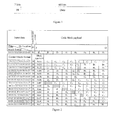
- Figure 1 shows a 64B/66B code block. It is evident that the code block is composed of a 2-bit synchronization code and 64-bit control data.
- Figure 2 shows a coding mode of the 64B/66B applied in the 10G Ethernet in the prior art.
- the 2-bit synchronization code of the 64B/66B code block is "01" or "10".
- "01” means that the 64 bits subsequent to the 2-bit synchronization code are 8 data bytes; and
- 10 means that the subsequent 64 bits are decided by the 8-bit data next to the 2-bit synchronization code.
- the whole coding process of the 64B/66B is: using the 66-bit data to represent the 64-bit user information and 8-bit user control information.
- a method for transmitting overhead information is provided in an embodiment of the present invention to improve the transmission performance of OAM information on the physical layer.
- An overhead information transmission system and device are also provided in an embodiment of the present invention to improve the transmission performance of OAM information on the physical layer.
- a method for sending overhead information includes:
- An overhead information receiving method includes:
- An overhead information transmission system includes:
- An overhead information sending device includes:
- An overhead information receiving device includes:
- An overhead information transmission device includes:
- the configured overhead information is encoded into a 64B/66B code block, and the code block is marked as an overhead code block, at the time of sending overhead information.
- the receiver can identify the overhead code block in the code stream after receiving the code block, the overhead code blocks are sent together with the 64B/66B code blocks which carry customer information, and it is sure that one of every N code blocks is an overhead code block.
- the overhead code blocks are identified according to the identifier of the overhead code block in the received code stream, and the overhead information is extracted.
- the customer information code blocks are decoded based on the 64B/66B, and the customer information is transmitted to the application layer for resolving.
- the capability of transferring the overhead information is provided by inserting overhead blocks fixedly.
- the insertion of the OAM information on the physical layer is certain. Therefore, the data or OAM information is identifiable on the physical layer through the timing relation, certain time and location relations can be obtained, and stable bandwidth of the overhead code blocks (including OAM information) is ensured.
- the size of the overhead code blocks is fixed, the performance detection function which needs measuring of the information with a fixed length can also be performed normally, and the detection performance enabled by OAM information is not restricted. In a word, the transmission performance of the OAM information is improved. Because the lowest-layer code block carries the overhead information, the link detection data on the physical layer can be extracted without participation of the customer layer.
- N is flexibly adjustable so that the bandwidth occupied by the OAM information can be adjusted conveniently.
- Figure 1 shows a 64B/66B code block
- Figure 2 shows a coding mode of the 64B/66B applied in the 10G Ethernet in the prior art
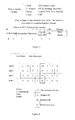
- FIG. 3 shows how an Ethernet packet header carries OAM information in the prior art
- FIG. 4 shows how to use the Ethernet Inter-Frame Gap (IFG) to carry OAM information in the prior art
- Figure 5 is a general flowchart of a method for sending overhead information according to an embodiment of the present invention
- Figure 6 is a general flowchart of a method for receiving overhead information according to an embodiment of the present invention.
- Figure 7 is a flowchart of a method for sending overhead information according to a first embodiment of the present invention.
- Figure 8 is a flowchart of a method for receiving overhead information according to the first embodiment of the present invention.
- Figure 9 shows a structure of an overhead information transmission system according to the first embodiment of the present invention.
- Figure 10 is a flowchart of a method for sending overhead information according to a third embodiment of the present invention.
- Figure 11 is a flowchart of a method for receiving overhead information according to the third embodiment of the present invention.
- OAM information is inserted into a high-speed data transmission system in three modes. Through thorough research, the inventor finds the following defects of the three modes:
- the embodiments of the present invention provide a method, system and device for transmitting overhead information.
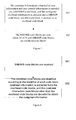
- Figure 5 is a general flowchart of a method for sending overhead information according to an embodiment of the present invention. As shown in Figure 5 , the method includes:
- Step 501 The customer information composed of user information and user control information is encoded into a 64B/66B code block.
- the configured overhead information is encoded into a 64B/66B code block, and this code block is marked as an overhead code block.
- Step 502 The 64B/66B code blocks are sent, where M of N 64B/66B code blocks sent are overhead code blocks.
- M and N are positive integers, and M is smaller than N.
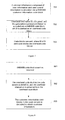
- Figure 6 is a general flowchart of a method for receiving overhead information according to an embodiment of the present invention. As shown in Figure 6 , the method includes:
- Step 601 The 64B/66B code blocks are received.
- Step 602 The overhead code blocks are identified according to the identifier of each overhead code block, overhead information is extracted from the overhead code blocks, and the customer information code blocks other than the overhead code blocks are decoded to obtain the customer information.
- the code blocks that carry the overhead information are marked in different modes: marking the overhead code blocks through a specified field, marking the overhead code blocks through integrity processing for the overhead information in the overhead code blocks, and marking the overhead code blocks through the location of each overhead code block in the code stream.
- the received overhead information is identified according to the specific identification mode of each overhead code block: identifying the overhead code block according to the contents of the specified field in the overhead code block, identifying the overhead code block by checking integrity of the information in the code block, and identifying the overhead code block according to the location of the overhead code block in the code stream.
- the overhead information may be carried in the code blocks.
- the carried overhead information includes OAM information.
- OAM information In this way, a stable bandwidth utilization ratio of the OAM information is ensured, and the OAM information is obtained to implement performance detection of the physical-layer link without participation of the customer layer.
- Embodiments of the present invention are elaborated below, where different identification modes are applied.
- an overhead code block is marked through a specified field in the code block.
- Figure 7 is a flowchart of a method for sending overhead information according to the first embodiment of the present invention. As shown in Figure 7 , the method includes:
- Step 701 The customer information composed of user information and user control information are encoded into a 64B/66B code block, which is called "customer information code block”.
- the mode of encoding the customer information into a code block is the same as the 64B/66B coding mode in the prior art.
- Step 702 Overhead information is configured, and the generated overhead information is encoded to a 64B/66B code block, which is marked as an overhead code block.
- the overhead code block is in a control block format, and a specified field in the control block format is used to mark the overhead code block.
- the specific overhead information is input to a location next to the block type field in the code block payload.
- Table 1 shows the specific coding rules, which cover the overhead code blocks and customer information code blocks, with the block type field of the overhead code block being set to 0x00. Alternatively, another value may be selected to mark the overhead code block only if the selected value is different from the value of the block type field of the user information.
- the overhead code block may further include other information such as Error Check Code (ECC) of the overhead information.
- ECC Error Check Code
- Step 703 The code blocks are sent, where M of every N sent code blocks are overhead code blocks, and M is smaller than N.
- the values of M and N may be selected as required only if M is smaller than N. Because M of every N sent code blocks are overhead code blocks, the bandwidth occupied by the overhead code blocks is M/N. Once M and N are determined, the bandwidth occupied by the overhead information remains stable and unchanged. By adjusting M and N, the bandwidth occupied by the overhead code blocks may be adjusted conveniently.
- step 701 and step 702 are not sequence-sensitive. That is, step 702 may also be performed before step 701 or the two steps are performed concurrently.
- the block type field may be changed in this way: In the 8-bit block type field, the bit closest to the 2-bit synchronization code may be used to distinguish the overhead code block from the customer information code block. If this bit is 0, the block is an overhead code block; if this bit is 1, the block is a customer information code block. That is, the first bit of the block type field is used to mark the overhead information block.
- the block type field of such customer information code blocks needs to be re-defined because the first bit in the block type field of some customer information code blocks is 0.
- the coding format shown in Table 2 may apply.
- Figure 8 shows a flowchart of the overhead information receiving method provided in this embodiment. As shown in Figure 8 , the method includes:
- Step 801 The 64B/66B code block streams are received.
- Step 802 The overhead code block in the code stream is identified, and the overhead information is extracted from the overhead code block.
- the mode of identifying the overhead code block in this step is: judging the value of the specified field indicative of the overhead code block in the code block; and, determining the code block as an overhead code block, if the value of the specified field in a code block is consistent with the value indicative of the overhead code block.
- the contents of the corresponding field in the code block may be extracted as overhead information.
- the mode of identifying the overhead code blocks in this step is: If the synchronization code is 10 (namely, the code block is in the control block format) and the value of the block type field is a specific value indicative of an overhead code block, the code block is determined as an overhead code block. For example, at the time of sending overhead information, if the block type field in the overhead code block is 0x00, the control code block with a block type field set to 0x00 in this step is determined as an overhead code block.
- the mode of extracting overhead information is: The contents carried in the 56 bits subsequent to the block type field are extracted as overhead information.
- the mode of identifying the overhead code block is: If the synchronization code is "10", and the first bit of the block type field is "0", the code block is determined as an overhead code block. In this case, the mode of extracting overhead information is: The contents carried in the 63 bits starting from the second bit of the block type field are extracted as overhead information.
- the extracted overhead information may further undergo an error check to ensure reliability of the overhead information.
- Step 803 The customer information code blocks in the code stream are decoded to obtain customer information.
- the extracted overhead information may be sent to the corresponding overhead function processing unit for processing, so as to know the performance information of the physical layer and implement performance statistics and fault notification of the physical layer.
- the decoded customer information may be sent to the upper-layer customer information processing unit for processing.
- Figure 9 shows a structure of an overhead information transmission system according to the first embodiment of the present invention.
- the system includes a sending device 910 and a receiving device 920.
- the sending device 910 represents the overhead information sending device provided in this embodiment.
- the receiving device 920 represents the overhead information receiving device provided in this embodiment.
- the sending device 910 includes: an overhead coding unit 911, a customer information coding unit 912, and a sending unit 913.
- the receiving device 920 includes: a receiving unit 921, a code block type identifying unit 922, an overhead information extracting unit 923, and a customer information decoding unit 924.
- the overhead coding unit 911 in the sending device 910 is adapted to: encode the configured overhead information into a 64B/66B code block, mark the code block as an overhead code block, and send the overhead code block to the sending unit 913.
- the customer information coding unit 912 in the sending device 910 is adapted to: encode the received user information and user control information into a 64B/66B code block which is called "customer information code block", and send the customer information code block to the sending unit 913.
- the sending unit 913 in the sending device 910 is adapted to: receive the overhead code blocks of the overhead coding unit 911 and the customer information code blocks of the customer information coding unit 912, and send the code blocks to the receiving unit 921 in the receiving device 920, where M of every N sent 64B/66B code blocks are overhead code blocks (M and N are positive integers and M is smaller than N).
- the receiving unit 921 in the receiving device 920 is adapted to: receive the 64B/66B code block sent by the sending unit 911 in the sending device 910, and send the received code block to the code block type identifying unit 922.
- the code block type identifying unit 922 is adapted to: identify the overhead code block according to the identifier of the overhead code block, send the identified overhead code block to the overhead information extracting unit 923, and send customer information code blocks to the customer information decoding unit 924.
- the overhead information extracting unit 923 is adapted to: receive the overhead code block from the code block type identifying unit 922, and extract the overhead information from the overhead code block.
- the customer information decoding unit 924 is adapted to decode the customer information code block received from the code block type identifying unit 922.
- the sending device may generate an overhead code block, insert the overhead code block into the 64B/66B code stream, and send it to the receiving device through the network.
- the receiving device identifies the overhead code block in the corresponding mode, and extracts the overhead information.
- device B in the system performs the function of receiving the overhead information once a device at any side of the system sends or receives the overhead information.
- device A in the system performs the function of sending the overhead information. In this way, the transmission of the generated overhead information in the transmission system is unidirectional. That is, the transmission is from device A to device B.
- the function of sending and receiving overhead information can be performed between both sides of the system.
- device A may send overhead information to device B, and may also receive overhead information from device B and extract the overhead information.
- device B may receive overhead information from device A and extract the overhead information, and may also send overhead information to device A.
- the overhead information transmission device for implementing the foregoing function is also provided in this embodiment.
- the device includes a sending module and a receiving module, and implements both sending and receiving of overhead information.
- the sending module is adapted to: encode the customer information composed of user information and user control information into a 64B/66B customer information code block; encode configured overhead information into a 64B/66B code block, and mark the code block as an overhead code block; and send out the customer information code block and the overhead code block, where M of every N sent 64B/66B code blocks are overhead code blocks (M and N are positive integers and M is smaller than N).
- the receiving device is adapted to: receive the external 64B/66B code block; identify the overhead code block according to the identifier of the overhead code block and extract the overhead information from the overhead code block; and decode the customer information code blocks other than the overhead code blocks and obtain the customer information.
- the structures of the sending module and receiving module are the same as the internal structures of the sending module and receiving module in the foregoing transmission overhead information system except this difference:
- the sending unit in the sending module sends the generated customer information code blocks and overhead code blocks to the outside, whereas the receiving unit in the receiving module receives customer information code blocks and overhead code blocks from the outside, as not detailed here any further.
- the overhead information in the system can be transmitted in both directions.
- an overhead code block is marked through integrity processing in the overhead code block.
- the operation procedure in this embodiment is the same as the operation procedure shown in Figure 2 except that the coding mode of the overhead information and the mode of marking the overhead code block in step 702 are different.
- integrity processing is performed for the contents in the coding block through an integrity algorithm.
- the integrity algorithm may be a 16-bit Cyclic Parity Check (CRC16) algorithm.
- the contents processed through the integrity algorithm may be the whole 66-bit code block or the 64-bit data subsequent to the synchronization code.
- Table 3 shows the coding rules in this embodiment. As shown in Table 3, the synchronization code of the overhead code block is "10" in order to reduce the probability of algorithm conflict.
- the overhead information and other optional information occupy 48 bits, and the remaining 16 bits are calculated out according to the CRC 16 algorithm.
- the data in other code blocks is random, and the probability that the data exactly meets the integrity processing requirement is very low.
- the value of the synchronization code in the overhead code block may also be the same as the value of the data code block, namely, "01".
- the value of the code block payload in the data code block is completely random, the probability of meeting the integrity algorithm is high, and the transmission amount of the data code block is huge, so the aggregate which meets the integrity algorithm is greater. Therefore, it is not recommended to set the synchronization code of the overhead code block to "01".
- the general operation procedure in the case of extracting overhead information is the same as the operation procedure shown in Figure 8 except that the mode of identifying the overhead code block is different. Specifically, if the received 64B/66B code block completely complies with the integrity algorithm, this code block is determined as an overhead code block.
- the mode of encoding the customer information code block is not changed.
- two values may be defined for each block type. If the combination of the block type selected first and the subsequent user information meets the integrity algorithm exactly, the second block type may be selected.
- the receiver identifies the overhead code block still by checking whether the code block complies with the integrity algorithm, and the code block which complies with the integrity algorithm is an overhead code block.
- the user information is decoded according to the rules about the block type field in Table 4.
- the system, sending device, receiving device, and overhead information transmission device in the first embodiment are also applicable to the overhead information transmission system for implementing the method in the second embodiment.
- an overhead code block is marked through the location of the overhead code block in the code stream.
- Figure 10 is a flowchart of a method for sending overhead information according to the third embodiment of the present invention. As shown in Figure 10 , the method includes:
- Step 1001 Customer information is encoded into a 64B/66B code block, and a customer information code block is generated.
- Step 1002 Overhead information is configured, and the generated overhead information is encoded into a 64B/66B code block.
- the overhead code block does not necessarily have a synchronization code, and all 66 bits are used to indicate the overhead information. If permitted, a check bit and other information may be added.
- Step 1003 M overhead code blocks and (N-M) customer information code blocks are combined into a major block, the overhead code block is set into a fixed location of the major block, and integrity information is added into the major block and sending it out.
- the overhead code block is identified in this way: M overhead code blocks and (N-M) customer information code blocks are combined into a major block, and the overhead code block is identified through the fixed location in the major block, where M and N are positive integers and M is smaller than N. That is, the overhead code block is always in the fixed location in the major block, and may be the first, intermediate, or last code block.
- the integrity information added into the major block may be Forward Error Correction (FEC) information. Meanwhile, depending on the specific integrity algorithm, the calculated integrity information may be distributed in the whole major block, or appended as a whole to the major block.
- FEC Forward Error Correction
- Step 1001 and step 1002 may be performed concurrently, or step 1002 is performed before step 1001.
- the method for sending overhead information in Figure 10 the method for receiving the overhead information at the receiver is shown in Figure 11 .
- the method includes:
- Step 1101 The major block carried in the received code stream is delimited through an integrity algorithm.
- Step 1102 The code block in the specified location in each major block is determined as an overhead code block, and the overhead information is extracted.
- the mode of identifying the overhead code block in this step is: determining the code block in the corresponding location in the major block as an overhead code block. The information in this code block is extracted as overhead information.
- Step 1103 Other code blocks in the major block are decoded to obtain customer information.
- Step 1102 and step 1103 may be performed concurrently, or step 1103 is performed before step 1102.
- an overhead code block may use all the 66 bits to carry overhead information so that more overhead information contents can be carried in a code block. By adding check information into the overhead code block, the transmission reliability of overhead information is further ensured.
- the method in this embodiment may be implemented in the overhead information transmission system and overhead information transmission device in the first embodiment.
- the data and inserted overhead information are multiplexed periodically, the data or OAM information is surely identifiable on the physical layer through the timing relation, and certain time and location relations can be obtained. Moreover, stable bandwidth of the overhead code block (including OAM information) is ensured, and the performance detection function which needs measuring of the information with a fixed length can also be performed normally, and the detection performance enabled by OAM information is not restricted. In a word, the transmission performance of the OAM information is improved.
Landscapes
- Engineering & Computer Science (AREA)
- Physics & Mathematics (AREA)
- Spectroscopy & Molecular Physics (AREA)
- Computer Networks & Wireless Communication (AREA)
- Signal Processing (AREA)
- Theoretical Computer Science (AREA)
- Data Exchanges In Wide-Area Networks (AREA)
- Detection And Prevention Of Errors In Transmission (AREA)
Applications Claiming Priority (2)
| Application Number | Priority Date | Filing Date | Title |
|---|---|---|---|
| CN200710000244.XA CN101227450B (zh) | 2007-01-16 | 2007-01-16 | 一种开销信息的传输方法、系统及设备 |
| PCT/CN2008/070080 WO2008086751A1 (fr) | 2007-01-16 | 2008-01-10 | Procédé de transmission, système et dispositif d'information de surcharge |
Publications (2)
| Publication Number | Publication Date |
|---|---|
| EP2063573A1 true EP2063573A1 (fr) | 2009-05-27 |
| EP2063573A4 EP2063573A4 (fr) | 2010-02-03 |
Family
ID=39635667
Family Applications (1)
| Application Number | Title | Priority Date | Filing Date |
|---|---|---|---|
| EP08700104A Withdrawn EP2063573A4 (fr) | 2007-01-16 | 2008-01-10 | Procédé de transmission, système et dispositif d'information de surcharge |
Country Status (4)
| Country | Link |
|---|---|
| US (1) | US20090190595A1 (fr) |
| EP (1) | EP2063573A4 (fr) |
| CN (1) | CN101227450B (fr) |
| WO (1) | WO2008086751A1 (fr) |
Cited By (1)
| Publication number | Priority date | Publication date | Assignee | Title |
|---|---|---|---|---|
| WO2016074591A1 (fr) * | 2014-11-10 | 2016-05-19 | Huawei Technologies Co., Ltd. | Ajout d'informations oam (informations d'exploitation, gestion et maintenance) dans un code à 66 bits |
Families Citing this family (28)
| Publication number | Priority date | Publication date | Assignee | Title |
|---|---|---|---|---|
| CN101436955B (zh) | 2007-11-12 | 2012-04-04 | 华为技术有限公司 | 以太网物理层oam开销的发送、接收方法及发送、接收装置 |
| US9113227B2 (en) * | 2012-03-12 | 2015-08-18 | Broadcom Corporation | Reduced complexity transcoding |
| CN103534968B (zh) * | 2013-04-01 | 2016-09-28 | 华为技术有限公司 | 一种以太网物理层的编码、解码方法和装置 |
| US9621907B2 (en) * | 2014-08-15 | 2017-04-11 | Lattice Semiconductor Corporation | System and method for transcoding data |
| CN105721391A (zh) * | 2014-12-02 | 2016-06-29 | 国家电网公司 | 一种远动信息的传送方法及设备 |
| CN105871502B (zh) * | 2015-01-22 | 2020-01-03 | 华为技术有限公司 | 一种利用以太网信道传输业务信号的方法及通信设备 |
| US10111269B2 (en) | 2015-03-18 | 2018-10-23 | Lattice Semiconductor Corporation | Multi-gigabit wireless tunneling system |
| US10091026B2 (en) | 2015-03-18 | 2018-10-02 | Lattice Semiconductor Corporation | Full duplex radio in wireless tunneling system |
| US10104706B2 (en) | 2015-03-18 | 2018-10-16 | Lattice Semiconductor Corporation | Apparatus for role identification and power supply control in a wireless tunneling system |
| CN106160912A (zh) * | 2016-07-19 | 2016-11-23 | 华为技术有限公司 | 一种编码方法、相关设备及系统 |
| CN108809861A (zh) * | 2017-04-27 | 2018-11-13 | 中兴通讯股份有限公司 | 报文发送方法和报文接收方法及装置 |
| CN109257093B (zh) * | 2017-07-14 | 2021-09-14 | 华为技术有限公司 | 一种光网络中光监控信道处理的方法和装置 |
| CN114726479B (zh) * | 2017-07-18 | 2024-12-27 | 华为技术有限公司 | 一种检测块发送和接收的方法、网络设备和系统 |
| CN109391461B (zh) * | 2017-08-11 | 2021-08-13 | 华为技术有限公司 | 透传业务频率的方法和设备 |
| CN112134651B (zh) | 2017-09-21 | 2023-05-09 | 中国移动通信有限公司研究院 | Oam消息传输方法、传输设备及存储介质 |
| CN107798065B (zh) * | 2017-09-21 | 2020-07-07 | 平安科技(深圳)有限公司 | 一种客户号编码方法、应用服务器、系统及存储介质 |
| CN110505035B (zh) * | 2018-05-16 | 2022-04-29 | 华为技术有限公司 | 数据处理方法和装置、通信系统 |
| CN110768742B (zh) * | 2018-07-27 | 2022-04-05 | 中兴通讯股份有限公司 | Oam消息的传输方法、发送设备、接收设备及可读存储介质 |
| CN110830153B (zh) * | 2018-08-07 | 2021-04-09 | 华为技术有限公司 | 接收码块流的方法、发送码块流的方法和通信装置 |
| CN110932923B (zh) * | 2018-09-20 | 2022-04-01 | 中国移动通信有限公司研究院 | 计算带宽利用率的方法及设备 |
| CN109728948B (zh) | 2018-12-26 | 2022-05-13 | 苏州盛科通信股份有限公司 | 一种运营维护管理信息处理方法和装置 |
| CN109768976B (zh) * | 2019-01-14 | 2021-06-01 | 盛科网络(苏州)有限公司 | 用于灵活以太网的发送与接收oam信息的方法、及装置 |
| CN111865475B (zh) * | 2019-04-24 | 2022-08-30 | 烽火通信科技股份有限公司 | 分组交换方法及系统 |
| CN111082858B (zh) * | 2019-12-16 | 2021-03-02 | 烽火通信科技股份有限公司 | 一种基于uvm的高复用性开销仿真系统及方法 |
| CN112511919A (zh) * | 2020-03-24 | 2021-03-16 | 中兴通讯股份有限公司 | Oam信息发送方法、装置、设备和存储介质 |
| CN113765619B (zh) * | 2020-06-05 | 2023-05-05 | 中国移动通信有限公司研究院 | 64b/66b码流发送方法、64b/66b码流接收方法及设备 |
| CN115632752B (zh) * | 2022-09-30 | 2025-08-19 | 紫金山实验室 | 数据传输方法、装置以及电子设备 |
| CN120263860A (zh) * | 2024-01-02 | 2025-07-04 | 中兴通讯股份有限公司 | 64b/66b编码块的传输方法、电子设备及可读存储介质 |
Family Cites Families (7)
| Publication number | Priority date | Publication date | Assignee | Title |
|---|---|---|---|---|
| CA2145017C (fr) * | 1994-03-31 | 2000-02-15 | Masaru Murakami | Multiplexeur a fonction de decoupage pour cellules |
| KR100640464B1 (ko) * | 2002-10-31 | 2006-10-30 | 삼성전자주식회사 | Oam 패킷 데이터 전송 방법 및 이를 위한 컨트롤멀티플렉서를 포함하는 이더넷 수동형광가입자망 |
| US7047475B2 (en) * | 2003-02-04 | 2006-05-16 | Hewlett-Packard Development Company, L.P. | CRC encoding scheme for conveying status information |
| US7570643B2 (en) * | 2003-02-12 | 2009-08-04 | Cisco Technology, Inc. | Efficient framing procedure for variable length packets |
| CN1275437C (zh) * | 2003-12-05 | 2006-09-13 | 清华大学 | 一种接收以太网数据的方法 |
| US7440513B2 (en) * | 2005-05-24 | 2008-10-21 | Avago Technologies General Ip (Singapore) Pte. Ltd. | Coding and decoding packetized data |
| US7649913B2 (en) * | 2006-10-20 | 2010-01-19 | D&S Consultants, Inc. | Method and system for mitigating traffic congestions in a communication network |
-
2007
- 2007-01-16 CN CN200710000244.XA patent/CN101227450B/zh not_active Expired - Fee Related
-
2008
- 2008-01-10 EP EP08700104A patent/EP2063573A4/fr not_active Withdrawn
- 2008-01-10 WO PCT/CN2008/070080 patent/WO2008086751A1/fr not_active Ceased
-
2009
- 2009-04-03 US US12/417,867 patent/US20090190595A1/en not_active Abandoned
Cited By (2)
| Publication number | Priority date | Publication date | Assignee | Title |
|---|---|---|---|---|
| WO2016074591A1 (fr) * | 2014-11-10 | 2016-05-19 | Huawei Technologies Co., Ltd. | Ajout d'informations oam (informations d'exploitation, gestion et maintenance) dans un code à 66 bits |
| US9654250B2 (en) | 2014-11-10 | 2017-05-16 | Futurewei Technologies, Inc. | Adding operations, administration, and maintenance (OAM) information in 66-bit code |
Also Published As
| Publication number | Publication date |
|---|---|
| WO2008086751A1 (fr) | 2008-07-24 |
| US20090190595A1 (en) | 2009-07-30 |
| CN101227450B (zh) | 2013-04-24 |
| EP2063573A4 (fr) | 2010-02-03 |
| CN101227450A (zh) | 2008-07-23 |
Similar Documents
| Publication | Publication Date | Title |
|---|---|---|
| US20090190595A1 (en) | Method, system and device for transmitting overhead information | |
| EP3678330B1 (fr) | Procédé et dispositif de transmission de message oam, et support de stockage | |
| US7949782B2 (en) | Extended link monitoring channel for 10 Gb/s Ethernet | |
| US11539607B2 (en) | Detection block sending and receiving method, and network device and system | |
| US9876727B2 (en) | Physical-layer signaling of flow control updates | |
| US20120257887A1 (en) | Method and device for indicating an uncorrectable data block | |
| CN109728948B (zh) | 一种运营维护管理信息处理方法和装置 | |
| US20150046775A1 (en) | Encoding and Decoding Schemes to Achieve Standard Compliant Mean Time to False Packet Acceptance | |
| WO2002035761A2 (fr) | Procede de superposition d'un numero de sequence dans un code de detection d'erreur dans un reseau de donnees | |
| EP4160956B1 (fr) | Procédé et appareil destinés à déterminer une perte de bloc de code | |
| WO2019015462A1 (fr) | Procédé d'envoi de bloc de détection, procédé de réception de bloc de détection, dispositif de réseau, et système | |
| EP1648133B1 (fr) | Procédé d'encapsulation d'un flot de données | |
| US8145973B2 (en) | Data processing apparatus and method, and program | |
| US20080267281A1 (en) | Method, device and network element for decoding an information word from a coded word | |
| KR101509496B1 (ko) | 단방향 데이터 송수신 시스템 | |
| CN111937329B (zh) | 传输数据的方法和转发设备 | |
| CN121770691B (en) | Dynamic serial port communication coding and decoding method and system based on auto-negotiation data bit width | |
| WO2021017890A1 (fr) | Procédé de communication et dispositif de communication | |
| CN116260553B (zh) | 数据重传的方法、装置及系统 | |
| CN121770691A (zh) | 一种基于自协商数据位宽的动态串口通信编解码方法及系统 | |
| CN121262220A (zh) | 一种通信方法、通信装置和电子设备 |
Legal Events
| Date | Code | Title | Description |
|---|---|---|---|
| PUAI | Public reference made under article 153(3) epc to a published international application that has entered the european phase |
Free format text: ORIGINAL CODE: 0009012 |
|
| 17P | Request for examination filed |
Effective date: 20090330 |
|
| AK | Designated contracting states |
Kind code of ref document: A1 Designated state(s): AT BE BG CH CY CZ DE DK EE ES FI FR GB GR HR HU IE IS IT LI LT LU LV MC MT NL NO PL PT RO SE SI SK TR |
|
| AX | Request for extension of the european patent |
Extension state: AL BA MK RS |
|
| RIC1 | Information provided on ipc code assigned before grant |
Ipc: H04L 25/49 20060101ALI20091221BHEP Ipc: H04Q 11/04 20060101ALI20091221BHEP Ipc: H04L 12/44 20060101AFI20080804BHEP |
|
| A4 | Supplementary search report drawn up and despatched |
Effective date: 20100105 |
|
| 17Q | First examination report despatched |
Effective date: 20100115 |
|
| DAX | Request for extension of the european patent (deleted) | ||
| STAA | Information on the status of an ep patent application or granted ep patent |
Free format text: STATUS: THE APPLICATION IS DEEMED TO BE WITHDRAWN |
|
| 18D | Application deemed to be withdrawn |
Effective date: 20130305 |