EP2063677B1 - Verfahren und Vorrichtung für die Radiozugangsnetzwerk-unterstützte Standortaktualisierung - Google Patents
Verfahren und Vorrichtung für die Radiozugangsnetzwerk-unterstützte Standortaktualisierung Download PDFInfo
- Publication number
- EP2063677B1 EP2063677B1 EP08103168A EP08103168A EP2063677B1 EP 2063677 B1 EP2063677 B1 EP 2063677B1 EP 08103168 A EP08103168 A EP 08103168A EP 08103168 A EP08103168 A EP 08103168A EP 2063677 B1 EP2063677 B1 EP 2063677B1
- Authority
- EP
- European Patent Office
- Prior art keywords
- message
- location information
- location
- bsc
- wireless device
- Prior art date
- Legal status (The legal status is an assumption and is not a legal conclusion. Google has not performed a legal analysis and makes no representation as to the accuracy of the status listed.)
- Ceased
Links
- 238000000034 method Methods 0.000 title claims abstract description 31
- 238000004891 communication Methods 0.000 claims abstract description 75
- 230000008859 change Effects 0.000 claims abstract description 27
- 230000011664 signaling Effects 0.000 claims description 15
- 230000001413 cellular effect Effects 0.000 abstract 1
- 230000008569 process Effects 0.000 description 8
- 230000006870 function Effects 0.000 description 3
- 230000003287 optical effect Effects 0.000 description 3
- 230000005540 biological transmission Effects 0.000 description 2
- 238000010586 diagram Methods 0.000 description 2
- 238000005516 engineering process Methods 0.000 description 2
- 239000000835 fiber Substances 0.000 description 2
- 230000000977 initiatory effect Effects 0.000 description 2
- 238000010295 mobile communication Methods 0.000 description 2
- 238000012545 processing Methods 0.000 description 2
- 238000011084 recovery Methods 0.000 description 2
- 230000002411 adverse Effects 0.000 description 1
- 238000013459 approach Methods 0.000 description 1
- 230000009286 beneficial effect Effects 0.000 description 1
- 238000004590 computer program Methods 0.000 description 1
- 230000001934 delay Effects 0.000 description 1
- 238000006073 displacement reaction Methods 0.000 description 1
- 230000008520 organization Effects 0.000 description 1
- 230000000737 periodic effect Effects 0.000 description 1
- 238000012552 review Methods 0.000 description 1
- 238000012546 transfer Methods 0.000 description 1
Images



Classifications
-
- H—ELECTRICITY
- H04—ELECTRIC COMMUNICATION TECHNIQUE
- H04W—WIRELESS COMMUNICATION NETWORKS
- H04W4/00—Services specially adapted for wireless communication networks; Facilities therefor
- H04W4/06—Selective distribution of broadcast services, e.g. multimedia broadcast multicast service [MBMS]; Services to user groups; One-way selective calling services
- H04W4/10—Push-to-Talk [PTT] or Push-On-Call services
-
- H—ELECTRICITY
- H04—ELECTRIC COMMUNICATION TECHNIQUE
- H04W—WIRELESS COMMUNICATION NETWORKS
- H04W76/00—Connection management
- H04W76/40—Connection management for selective distribution or broadcast
- H04W76/45—Connection management for selective distribution or broadcast for Push-to-Talk [PTT] or Push-to-Talk over cellular [PoC] services
-
- H—ELECTRICITY
- H04—ELECTRIC COMMUNICATION TECHNIQUE
- H04W—WIRELESS COMMUNICATION NETWORKS
- H04W68/00—User notification, e.g. alerting and paging, for incoming communication, change of service or the like
-
- H—ELECTRICITY
- H04—ELECTRIC COMMUNICATION TECHNIQUE
- H04W—WIRELESS COMMUNICATION NETWORKS
- H04W72/00—Local resource management
- H04W72/30—Resource management for broadcast services
-
- H—ELECTRICITY
- H04—ELECTRIC COMMUNICATION TECHNIQUE
- H04W—WIRELESS COMMUNICATION NETWORKS
- H04W76/00—Connection management
- H04W76/10—Connection setup
Definitions
- the invention relates to wireless communications, and more particularly, to locating a wireless device within a wireless telecommunication system for communication purposes.
- Push-to-talk (PTT) capabilities are becoming popular with service sectors.
- PTT can support a "dispatch" voice service that operates over standard commercial wireless infrastructures, such as code division multiple access (CDMA), frequency division multiple access (FDMA), time division multiple access (TDMA), and global system for mobile communications (GSM).
- CDMA code division multiple access
- FDMA frequency division multiple access
- TDMA time division multiple access
- GSM global system for mobile communications
- endpoints end user devices
- a single instance of this type of communication is commonly referred to as a dispatch call, or simply a PTT call.
- a PTT call is an instantiation of a group, which defines the characteristics of a call.
- a group in essence is defined by a member list and associated information, such as group name or group identification.
- each group is formed by the combination of separate point-to-point connections between each endpoint and application server.
- Each endpoint is also known as a PTT member.
- the PTT call would be a direct call between these two members.
- FIG. 1 illustrates a prior art architecture 100 supporting PTT communications.
- the architecture includes the deployment of a single application server 112 region in conjunction with a carrier's CDMA infrastructure and packet data network. Each region of the application server 112 is deployed over a specific portion of a carrier packet data network ("PTT Regional Network") 110.
- the application server 112, also known as PTT server, within the region may be routing traffic between one or more Packet Data Service Nodes (PDSNs) 107 in the carrier network (Service Provider Regional Network) 108.
- a communication device 102 that supports the PTT feature is in communication with a base station controller (BSC) 104, which typically includes a base station (BS). Each BSC 104 may be in communication with one or more base station transceiver (BTS) 114.
- BSC base station controller
- BSC base station controller
- BS base station
- Each BSC 104 may be in communication with one or more base station transceiver (BTS) 114.
- BSC base station controller
- the BSC 104 is in communication with a high-speed network 106 and PTT communications received from the communication device 102 is sent through the BSC 104 and the high-speed network 106 to a PDSN 107.
- the BSC 104 may communicate with a package control function (PCF) 105 for processing data packets between the communication between the PDSN 107 and the communication device 102.
- PCF package control function
- the PDSN 107 communicates with the high-speed network 106 and an application server's 112 carrier network 108, which is connected to a PTT regional network 110.
- the PDSN 107 forwards the PTT communications to an application server 112 in the PTT network 110.
- the application server 112 handles PTT communications among members of a PTT group.
- the application server 112 receives a PTT communication from one member and forwards it to all members of the PTT group.
- the PTT communication is usually received as data packets from the PTT network 110, and the PTT communication sent out by the application server 112 is also in data packet format.
- a PDSN 107 and a connected BSC 104 established through a BTS 114 have a dedicated traffic channel to transmit the PTT communication to a receiving PTT communication device (a PTT member) 102.
- PTT communications are commonly used in public safety and disaster recovery scenarios in which a large number of public safety officers and rescue workers communicate among themselves through PTT communications.
- One of problems related to call set up for the PTT communications between a large number of users is the latency during the call set up process.
- the call set up involves locating a targeted PTT communication device 102 and allocating resources for each PTT communication and establishing a traffic channel to support each PTT communication.
- the location of each PTT communication device 102 is commonly tracked through location update messages sent from each PTT communication device 102 through a reverse traffic channel to the application server 112.
- location update messages sent from each PTT communication device 102 through a reverse traffic channel to the application server 112.
- European Patent Application Publication No. EP 1 701 575 discloses a method for updating a location of a mobile communication terminal.
- European Patent Application Publication No. EP 1 670 268 discloses a method, system and chip card for tracking the location of a mobile station.
- the present invention relates to a method for updating location information of a wireless communication device in a wireless communication network and a base station controller apparatus for transmitting location information of a wireless device received through a message over a wireless communication network to a network server, as set out in the appended claims.
- the apparatus and method described herein enables efficient establishment of PTT communications among a plurality of wireless devices.
- the efficiency is achieved by:
- a method for updating location information of a wireless communication device in a wireless communication network over the access channel includes receiving a location update message from a wireless communication device capable of push-to-talk (PTT) communication, retrieving from the location message a location information for the wireless communication device, comparing the retrieved location information with a stored location information for the wireless communication device, and if the retrieved location information is different from the stored location information, transmitting the retrieved location information for the wireless communication device to an application server.
- PTT push-to-talk
- This embodiment requires wireless network components (BSC and PDSN) to translate 1xEV-DO route update messages into application layer (as defined in the OSI model) messages which are sent to the application server over the Internet Protocol.
- BSC and PDSN wireless network components
- application layer as defined in the OSI model
- the granularity of the location information is a sector, and that any displacement of the wireless device while receiving service from the same sector is not captured in the location updates.
- the apparatus includes a network interface unit for receiving the location information of a transmitting wireless device and transmitting the received location information to the network server, a storage unit for storing a previous location information of the transmitting wireless device, and a controller unit for comparing the received location information with the previous location information and determining whether the transmitting wireless device has moved from one location to another location, the controller further being capable of sending the received location information in a notification of location change message to the network server if the transmitting wireless device has moved from one location to another location.
- FIG. 1 is a prior art architecture of a wireless communication network.
- FIG. 2 is an architecture of an exemplary wireless communication network with improved location update of PTT member devices.
- FIG. 3 a message flow chart of a location update in the present invention.
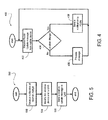
- FIG. 4 illustrates an exemplary base station controller process for updating PTT member device location.
- FIG. 5 illustrates an exemplary PDSN process in the present system.
- FIG. 6 is a block diagram for one embodiment of a base station controller supporting the present system.
- the terms “communication device,” “wireless device,” “wireless communications device,” “PTT communication device,” “handheld device,” “mobile device,” and “handset” are used interchangeably.
- the terms “call” and “communication” are also used interchangeably, so are the terms “base station” and “base station server.”
- message or location message may refer to an access channel or traffic channel or signaling type data message.
- application as used herein is intended to encompass executable and non-executable software files, raw data, aggregated data, patches, and other code segments.
- exemplary or “configuration” means that the disclosed element or embodiment is only an example, and does not indicate any preference of user. Further, like numerals refer to like elements throughout the several views, and the articles “a” and “the” includes plural references, unless otherwise specified in the description.
- the system and method enables a highly efficient scheme to update the location information of a wireless device by efficiently sending the location information from the wireless device of a PTT group to a location server in communication with an application server.
- the location of the wireless devices 102 served by an application server 112 is tracked by the location server 202 and FIG. 2 illustrates one configuration of an architecture 200 supporting the present invention.
- the wireless device 102 communicates with a BTS 114, which is connected to a BSC 104, by transmitting route update messages through the access channel or the traffic channel of a radio access network (wireless access network).
- the route update messages are used to track the location of wireless device 102 at a sector level and maintain the radio link between the wireless device 102 and the radio access network.
- the location information can be kept up to date while the wireless device 102 is in traffic. As route update messages are sent over the traffic channel as well, no additional steps are required.
- the BSC 104 might already be aware of the location of the wireless device 102 as it is exchanging data with it through a set of sectors. However, as the application server 112 needs to be apprised as well, processing the route updates that come in regularly can be equally effective. In the absence of timely reception of the route update messages on traffic channel, the BSC 104 can use other handoff related information, if available. For example, the BSC 104 can use choose the sector through which it last received signaling or data from the wireless device 102.
- the BSC 104 tracks the location of the wireless device 102 through route update messages that are received periodically from the wireless device 102 through the access channel or the traffic channel. This periodicity may be time based as well as event based. For instance, the wireless device 102 can update the location information every 't' seconds. Also, the route update can be sent to the BSC 104 whenever the active set (the set of strongest pilot signals) changes. When the wireless device 102, initially located in one sector of a cell area, moves from one covered sector to another covered sector (or alternatively, the active set changes), the BSC 104 may detect such movements through the route update messages received from the wireless device 102 and sends a notice of location change to a PDSN 107.
- the notice of location change maybe sent, for example, using an A11 signaling message.
- the A11 interface and the A10 Connection Setup Airlink Record as specified in the 3GPP2 Interoperability Specification (IOS) for cdma2000 Access Network Interfaces contains a field called BSID (Base station identifier). This field may be used to convey mobility information from the BSC 104 to the PDSN 107.
- BSID Base station identifier
- the PDSN 107 sends a location update message in the Internet Protocol format to a location assist server (LAS) 202.
- the LAS 202 may be located in a network 212, such as the Internet, or alternatively may be co-located within the PDSN 107.
- the wireless device 102 generally needs to be registered with the LAS 202, and the LAS 202 tracks the location of the wireless device 102. In one configuration, this registration is required as the LAS 202 needs to know which application server 112 should be notified regarding the location updates for the wireless device 102 in question. In another configuration, the LAS 202 and the application server 112 maybe one combined unit, thus making the communication between the LAS 202 and the application server 112 easier.
- the registration between the wireless device 102 and the LAS 202 can be done through SIP (Session Initiation Protocol) or other similar protocols.
- the wireless device 102 generally also needs to register the LAS 202 with the PDSN 107, so the PDSN 107 can properly communicate with the LAS 202. In the scenario where the PDSN 107 and the LAS 202 are collocated (the functionality is realized in the same component), this registration is not generally required. If, however, the registration is required, the registration may be done via an extension for A11.
- the standard allows for critical vendor/organization specific extensions.
- the LAS 202 after receiving the location update message from the PDSN 107, the LAS 202 updates the location of the wireless device 102 and sends a re-packaged location update message (over Internet Protocol) with additional information retrieved from the LAS 202 for the wireless device 102 to the application server 112. For instance, updating the location information on the application server 112 through location information received by the BSC 104 from the route update messages eliminates the need for the wireless device 102 to send a dedicated location update message directly to the application server 112. There is no need to establish a traffic channel between the wireless device 102 and the BSC 104, although a traffic channel could still be established if desired.
- a traffic channel between the wireless device 102 and the BSC 104, although a traffic channel could still be established if desired.
- FIG. 3 illustrates a message flowchart 300 for a LAS operation.
- a wireless device 102 sends messages 302, such as periodic route update messages, to a BSC 104.
- the network carrier can configure the policy that triggers the route update message using appropriate registration zone boundaries and timers.
- the wireless device 102 may be located in isolated sectors, or in regions with coverage from multiple sectors.
- the BSC 104 can choose to represent these regions using a group of sectors, or can break the tie by selecting the strongest pilot strength as the metric.
- the BSC 104 determines which sector(s) the wireless device 102 is located.
- the BSC 104 can choose the serving sector(s) based on the pilot strengths included by the wireless device 102.
- the BSC 104 can select the sector from which it last received a message that was initiated by the wireless device. This approach could be beneficial in handoff scenarios where the wireless device 102 is in traffic.
- the information in the messages change such that the BSC 104 can determine the new location of the wireless device 102 through the information embedded in the messages.
- the BSC 104 sends a message 304 to the PDSN 107 indicating a location change for the wireless device 102.
- the PDSN 107 sends a location update message 306 to a LAS 202 with which the wireless device 102 is registered.
- the LAS 202 sends a location update message 308 over the Internet to the application server 112.
- FIG. 4 is a flowchart 400 that illustrates one configuration for a BSC process.
- the BSC 104 maintains contact with a wireless device 102 by sending and receiving messages to and from the wireless device 102.
- the BSC 104 determines, based on the information in the route update message, whether the wireless device 102 has moved to a new location, step 404. If the wireless device 102 has not moved to a new location, the BSC 104 will process the route update message as it usually does, step 406. If the wireless device 102 has changed its location, the BSC 104 will send a location change message to an application server 112 through the PDSN 107, step 408.
- FIG. 5 is a flowchart 500 for an exemplary PDSN process of the present system.
- a PDSN 107 receives a notification of location change from a BSC 104, step 502 the PDSN 107 identifies the wireless device 102 and retrieves from a database the information about the LAS 202 associated with the wireless device 102, step 504. After identifying the LAS 202, the PDSN 107 can then send a location update message to the LAS 202, step 506.
- the PDSN 107 is an end point for the Point-to-Point (PPP) protocol and an interfacing point for PPP packets and IP packets. For instance, the notification of location change arrives in PPP packets and the location update message is sent through IP packets.
- PPP Point-to-Point
- FIG. 6 illustrates a block diagram 600 of a base station controller 104.
- the base station controller 104 receives, through a network interface 604, information related to audio and data calls from an application server 112 and transmits the received information as radio signals through a radio interface 606 to wireless communication devices 102.
- the base station controller 104 also receives communications from the wireless communication devices 102 and transmits them to a remote server 112. For example, the base station controller 104 receives a location change message from a wireless communication device 102.
- the transmission of communications to the wireless communication devices is through radio signals, and the radio signals may be transmitted in multiple time slots. These time slots are resources that a controller 610 in the base station 104 assigns to each communication.
- the controller 610 also tracks the position of each wireless device 102.
- the controller 610 can analyze the messages received from the wireless device 102 and determine if the wireless device 102 has moved to a different sector.
- the wireless device 102 registers with an application server 112.
- the wireless device 102 also registers with a LAS and a PDSN and a PPP session is established between the wireless device 102 and the PDSN 107.
- the registration may be done out of band after the traffic channel is up.
- the registration needs to be done once per PPP session and can be done using an open protocol such as Session Initiation Protocol.
- the information of the LAS 202 is registered on the PDSN 107 using LCP/NCP protocols or by forcing a PPP re-negotiation.
- the PPP re-negotiation is accomplished by tearing down the old PPP session and establishing a new PPP session.
- the wireless device 102 While the wireless device 102 is idle, the wireless device 102 continuously sends route update messages to the base station controller. These route update messages help the wireless device to maintain the radio link with the base station controller and also allow the base station controller to track the location of the wireless device.
- the route update messages may be sent according to Route Update Protocol.
- the wireless device After the wireless device moves from one sector to another sector, the wireless device sends a route update message to the BSC.
- the change of sector is detected by the wireless device after a change in information received through broadcast messages received from the BSC.
- the BSC after receiving the route update message from the wireless device, the BSC notifies the PDSN about the location update by sending an extended A11 signaling message.
- the PDSN determines the identity of the registered LAS and forwards the location update information to the registered LAS.
- the LAS has the parameters for the wireless device and the LAS can identify the application server serving the wireless device.
- the LAS 202 then sends a location update message to the identified application server 112.
- the sector that the BSC 104 is leaving and the sector that the BSC 104 is moving into may belong to the same cell site.
- the sectors may also belong to different cell sites but be served by the same BSC 104.
- the sectors may also belong to different cell sites served by different BSCs. If the new BSC is being serviced by the same PDSN 107, in one configuration, an A10/A11 connection will be re-established between the PDSN and the new BSC, but the IP address previously assigned to the wireless device 102 and the PPP end-point will stay the same (as the PDSN has not changed). After moving to the new sector, the new BSC will send location update messages to the PDSN just like the old BSC.
- the wireless device will establish a new PPP session with a new PDSN, and the A10/A11 connection will also be established.
- the wireless device will do a "rediscovery" of the LAS and register the application server to which the location update messages need to be sent.
- the wireless device determines the LAS' address through an SRV look up and the wireless device proceeds to register with the LAS co-located with the PDSN using the LCP/NCP protocols or by forcing a PPP re-negotiation.
- the wireless device sends a route update message to the BSC.
- the change of sector is detected by the wireless device 102 after a change in information received through broadcast messages received from the BSC 104.
- the BSC After receiving the route update message from the wireless device, the BSC notifies the PDSN about the location update by sending an extended A11 signaling message.
- the A11 signaling message is received by the PDSN and the information about the location update is extracted from the signaling message and made available to the co-located LAS.
- the LAS has the parameters for the wireless device and the LAS can identify the application server serving the wireless device. The LAS then sends a location update message to the identified application server 112.
- the system and methods optimize communication between a wireless device and a base station controller.
- the method can be performed by a program resident in a computer readable medium, where the program directs a server or other computer device having a computer platform to perform the steps of the method.
- the computer readable medium can be the memory of the server, or can be in a connective database. Further, the computer readable medium can be in a secondary storage media that is loadable onto a wireless communications device computer platform, such as a magnetic disk or tape, optical disk, hard disk, flash memory, or other storage media as is known in the art.
- the method may be implemented, for example, by operating portion(s) of the wireless network, such as a wireless communications device or the server, to execute a sequence of machine-readable instructions. Though the steps are illustrated in sequence, the method may be implemented in difference sequence or as an event driven process.
- the functions described may be implemented in hardware, software, firmware, or any combination thereof. If implemented in software, the functions may be stored on or transmitted over as one or more instructions or code on a computer-readable medium.
- Computer-readable media includes both computer storage media and communication media including any medium that facilitates transfer of a computer program from one place to another.
- a storage media may be any available media that can be accessed by a computer.
- such computer-readable media can comprise RAM, ROM, EEPROM, CD-ROM or other optical disk storage, magnetic disk storage or other magnetic storage devices, or any other medium that can be used to carry or store desired program code in the form of instructions or data structures and that can be accessed by a computer.
- any connection is properly termed a computer-readable medium.
- the software is transmitted from a website, server, or other remote source using a coaxial cable, fiber optic cable, twisted pair, digital subscriber line (DSL), or wireless technologies such as infrared, radio, and microwave
- the coaxial cable, fiber optic cable, twisted pair, DSL, or wireless technologies such as infrared, radio, and microwave are included in the definition of medium.
- Disk and disc includes compact disc (CD), laser disc, optical disc, digital versatile disc (DVD), floppy disk and blu-ray disc where disks usually reproduce data magnetically, while discs reproduce data optically with lasers. Combinations of the above should also be included within the scope of computer-readable media.
Landscapes
- Engineering & Computer Science (AREA)
- Computer Networks & Wireless Communication (AREA)
- Signal Processing (AREA)
- Multimedia (AREA)
- Mobile Radio Communication Systems (AREA)
Claims (23)
- Ein Verfahren (400) zum Aktualisieren von Positionsinformation von einer drahtlosen Kommunikationseinrichtung (102) in einem drahtlosen Kommunikationsnetzwerk, wobei das Verfahren aufweist:Empfangen (402) einer Nachricht von der drahtlosen Einrichtung an einem Basisstationscontroller, BSC (= base station controller) (104);Abrufen bzw. Wiedergewinnen, von der Nachricht, einer Positionsinformation für die drahtlose Kommunikationseinrichtung;Vergleichen (404) der abgerufenen Positionsinformation mit einer gespeicherten Positionsinformation für die drahtlose Kommunikationseinrichtung; undfalls die abgerufene Positionsinformation von der gespeicherten Positionsinformation verschieden ist, Senden bzw. Übertragen (408) der abgerufenen Positionsinformation für die drahtlose Kommunikationseinrichtung von dem BSC an einen Anwendungsserver.
- Verfahren nach Anspruch 1, wobei Empfangen der Nachricht vor dem Aufbau bzw. Herstellen eines Verkehrskanals für die drahtlose Kommunikationseinrichtung ist.
- Verfahren nach Anspruch 1, wobei die Nachricht eine "Route Update"- bzw. Routenaktualisierungsnachricht ist.
- Verfahren nach Anspruch 1, wobei die Positionsinformation abgeleitet wird unter Verwendung der Identität von dem Sektor der zuletzt die Nachricht im Auftrag von der drahtlosen Kommunikationseinrichtung weitergeleitet hat.
- Verfahren nach Anspruch 1, wobei Senden der abgerufenen Positionsinformation ferner aufweist:Senden einer Mitteilung einer Positionsänderungsnachricht an einen Netzwerkserver;Zusammenstellen der Mitteilung einer Positionsänderungsnachricht in eine Signalisierungsnachricht, und zwar an dem Netzwerkserver; undSenden der Signalisierungsnachricht von dem Netzwerkserver an den Anwendungsserver.
- Verfahren nach Anspruch 5, wobei der Schritt des Sendens einer Positionsänderungsmitteilung ferner Senden der Positionsänderungsmitteilung durch eine A11-Nachricht aufweist.
- Eine Basisstationscontroller- bzw. BSC-Vorrichtung (104) zum Senden bzw. Übertragen von Positionsinformation von einer drahtlosen Einrichtung (102), Empfangen durch eine Nachricht über ein drahtloses Kommunikationsnetzwerk, an einen Netzwerksserver, wobei die Vorrichtung aufweist:Mittel (604) zum Empfangen der Positionsinformation von einer sendenden drahtlosen Einrichtung durch die Nachricht;Mittel zum Speichern einer vorherigen Positionsinformation von der sendenden drahtlosen Einrichtung;Mittel (610) zum Vergleichen der empfangenen Positionsinformation mit der vorherigen Positionsinformation und Bestimmen, ob die sendende drahtlose Einrichtung sich von einer Position zu einer anderen Position bewegt hat, wobei die Mittel zum Vergleichen ferner geeignet sind zum Senden der empfangenen Positionsinformation in einer Mitteilung einer Positionsänderungsnachricht an den Netzwerkserver, falls die sendende drahtlose Einrichtung sich von einer Position zu einer anderen Position bewegt hat; undMittel (606) zum Senden der empfangenen Positionsinformation an den Netzwerkserver.
- BSC-Vorrichtung nach Anspruch 7, wobei die Empfangsmittel ferner geeignet sind zum Empfangen der Nachricht vor dem Aufbau bzw. Herstellen eines Verkehrskanals für die drahtlose Einrichtung.
- BSC-Vorrichtung nach Anspruch 7, wobei die Sendemittel ferner geeignet sind zum Senden der empfangenen Positionsinformation in einer A11-Nachricht.
- BSC-Vorrichtung nach Anspruch 7, wobei die empfangene Positionsinformation durch eine Route-Update- bzw. Routenaktualisierungsnachricht empfangen wird.
- BSC-Vorrichtung nach Anspruch 7, wobei die Positionsinformation abgeleitet wird unter Verwendung der Identität von dem Sektor, der zuletzt die Nachricht im Auftrag von der drahtlosen Einrichtung weitergeleitet hat.
- BSC-Vorrichtung nach Anspruch 7, die ferner Mittel aufweist zum Empfangen einer Mitteilung einer Positionsänderungsnachricht an dem Netzwerkserver, und zwar geeignet dafür, Mittel zum Zusammenstellen der Mitteilung einer Positionsänderungsnachricht in eine Signalisierungsnachricht und Mittel zum Senden der Signalisierungsnachricht an den Anwendungsserver.
- Eine Basisstationscontroller- bzw. BSC-Vorrichtung nach Anspruch 7, die aufweist:eine Netzwerk-Interface-Einheit (604) angepasst zum Empfangen der Positionsinformation von der sendenden drahtlosen Einrichtung durch die Nachricht;eine Speichereinheit, angepasst zum Speichern der vorherigen Positionsinformation von der sendenden drahtlosen Einrichtung; undeine Controller-Einheit (610), angepasst zum Vergleichen der empfangenen Positionsinformation mit der vorherigen Positionsinformation und zum Bestimmen, ob die sendende drahtlose Einrichtung sich von einer Position zu einer anderen Position bewegt hat, wobei der Controller ferner angepasst ist zum Senden der empfangenen Positionsinformation in der Mitteilung einer Positionsänderungsnachricht an den Netzwerkserver über die Netzwerkinterfaceeinheit (604), falls die sendende drahtlose Einrichtung sich von einer Position zu einer anderen Position bewegt hat.
- BSC-Vorrichtung nach Anspruch 13, wobei die Netzwerkinterfaceeinheit (604) ferner angepasst zum Empfangen der Nachricht vor dem Aufbau von einem Verkehrskanal für die drahtlose Einrichtung.
- BSC-Vorrichtung nach Anspruch 13, wobei der Controller (610) ferner angepasst ist zum Senden der empfangenen Positionsinformation in einer A11-Nachricht.
- BSC-Vorrichtung nach Anspruch 13, wobei die empfangene Positionsinformation durch eine Route-Update- bzw. Routenaktualisierungsnachricht empfangen wird.
- BSC-Vorrichtung nach Anspruch 13, wobei die Positionsinformation abgeleitet wird unter Verwendung der Identität von dem Sektor, der zuletzt die Nachricht im Auftrag von der drahtlosen Einrichtung weitergeleitet hat.
- BSC-Vorrichtung nach Anspruch 13, wobei der Netzwerkserver ferner geeignet ist zum Empfangen einer Mitteilung einer Positionsänderungsnachricht, zum Zusammenstellen der Mitteilung einer Positionsänderungsnachricht in eine Signalisierungsnachricht und zum Senden der Signalisierungsnachricht an den Anwendungsserver.
- Ein computerlesbares Produkt, das aufweist:ein computerlesbares Medium, das aufweist:einen Satz von Instruktionen zum Empfangen einer Nachricht von wenigstens einer drahtlosen Kommunikationseinrichtung (102) an einem Basisstationscontroller, BSC (104);einen Satz von Instruktionen zum Abrufen bzw. Wiedergewinnen, von der Nachricht, einer Positionsinformation für die wenigstens eine drahtlose Kommunikationseinrichtung (102);einen Satz von Instruktionen zum Vergleichen der abgerufenen Positionsinformation mit einer gespeicherten Positionsinformation für die wenigstens eine drahtlose Kommunikationseinrichtung; undfalls die abgerufenen Positionsinformation von der gespeicherten Positionsinformation verschieden ist, ein Satz von Instruktionen zum Senden der abgerufenen Positionsinformation für die wenigstens eine drahtlose Kommunikationseinrichtung von der BSC an einen Anwendungsserver (112).
- Computerlesbares Produkt nach Anspruch 19, wobei der Satz von Instruktionen zum Empfangen der Nachricht vor dem Aufbau von einem Verkehrskanal für die drahtlose Einrichtung ist.
- Computerlesbares Produkt nach Anspruch 19, wobei die Nachricht eine Route-Update- bzw. Routenaktualisierungsnachricht ist.
- Computerlesbares Produkt nach Anspruch 19, wobei die Positionsinformation abgeleitet wird unter Verwendung eines Satzes von Instruktionen zum Identifizieren des Sektors, der die Nachricht im Auftrag von der drahtlosen Einrichtung zuletzt weitergeleitet hat.
- Computerlesbares Produkt nach Anspruch 19, das ferner aufweist:einen Satz von den Instruktionen zum Empfangen einer Mitteilung einer Positionsänderungsnachricht an einem Netzwerkserver;einen Satz von den Instruktionen zum Zusammenstellen der Mitteilung einer Positionsänderungsnachricht in eine Signalisierungsnachricht an dem Netzwerkserver; undeinen Satz von den Instruktionen zum Senden der Signalisierungsnachricht von dem Netzwerkserver an den Anwendungsserver.
Applications Claiming Priority (1)
| Application Number | Priority Date | Filing Date | Title |
|---|---|---|---|
| US11/943,822 US8019347B2 (en) | 2007-11-21 | 2007-11-21 | Method and apparatus for RAN assisted location update |
Publications (2)
| Publication Number | Publication Date |
|---|---|
| EP2063677A1 EP2063677A1 (de) | 2009-05-27 |
| EP2063677B1 true EP2063677B1 (de) | 2011-04-20 |
Family
ID=40380681
Family Applications (1)
| Application Number | Title | Priority Date | Filing Date |
|---|---|---|---|
| EP08103168A Ceased EP2063677B1 (de) | 2007-11-21 | 2008-03-28 | Verfahren und Vorrichtung für die Radiozugangsnetzwerk-unterstützte Standortaktualisierung |
Country Status (5)
| Country | Link |
|---|---|
| US (1) | US8019347B2 (de) |
| EP (1) | EP2063677B1 (de) |
| AT (1) | ATE506818T1 (de) |
| DE (1) | DE602008006331D1 (de) |
| WO (1) | WO2009067447A1 (de) |
Families Citing this family (14)
| Publication number | Priority date | Publication date | Assignee | Title |
|---|---|---|---|---|
| US8364117B2 (en) | 2008-02-21 | 2013-01-29 | Centurylink Intellectual Property Llc | System and method for updating location information of voice-over-internet protocol based devices for E911 service |
| US8538370B2 (en) * | 2008-07-03 | 2013-09-17 | Centurylink Intellectual Property Llc | Emergency message button and method on a wireless communications device for communicating an emergency message to a public safety answering point (PSAP) |
| US8306508B1 (en) * | 2008-08-21 | 2012-11-06 | Sprint Communications Company L.P. | Motion-based event notification |
| KR20110020161A (ko) * | 2009-08-21 | 2011-03-02 | 엘지전자 주식회사 | 이동통신 네트워크 내에서 제어 평면(Control Plane)을 담당하는 서버 및 SIPTO 기반의 세션을 제어하는 방법 |
| US9977819B2 (en) * | 2010-08-09 | 2018-05-22 | Ianywhere Solutions, Inc. | Sharing data on mobile devices |
| US9215270B2 (en) | 2010-08-09 | 2015-12-15 | Servicenow, Inc. | System and method for determining a topology of at least one application in a computerized organization |
| US9544943B2 (en) * | 2010-11-04 | 2017-01-10 | Qualcomm Incorporated | Communicating via a FEMTO access point within a wireless communications system |
| US20140162693A1 (en) * | 2012-06-15 | 2014-06-12 | Qualcomm Incorporated | Methods and systems for providing location based services in a venue |
| US9578115B2 (en) | 2012-06-15 | 2017-02-21 | Qualcomm Incorporated | Indoor location server provision and discovery |
| US10419890B2 (en) | 2012-06-15 | 2019-09-17 | Qualcomm Incorporated | Client access to mobile location services |
| US11265673B2 (en) | 2012-06-15 | 2022-03-01 | Qualcomm Incorporated | Client access to mobile location services |
| WO2014012567A1 (en) * | 2012-07-18 | 2014-01-23 | Unify Gmbh & Co. Kg | Method of conveying a location information representing a physical location of a communication device, a computer program product for executing the method, and the communication device for conveying the location information |
| CN110881203A (zh) * | 2018-09-05 | 2020-03-13 | 电信科学技术研究院有限公司 | 一种定位资源协调方法、装置、网络节点、终端及基站 |
| US11228863B2 (en) * | 2019-06-11 | 2022-01-18 | At&T Intellectual Property I, L.P. | Passive location change detection system for mobility networks |
Family Cites Families (9)
| Publication number | Priority date | Publication date | Assignee | Title |
|---|---|---|---|---|
| US20030153343A1 (en) * | 2002-02-14 | 2003-08-14 | Crockett Douglas M. | Communication device for initiating a group call in a group communication network |
| US6829473B2 (en) * | 2002-07-25 | 2004-12-07 | Utstarcom, Inc. | Roaming and hand-off support for prepaid billing for wireless data networks |
| US20040019539A1 (en) * | 2002-07-25 | 2004-01-29 | 3Com Corporation | Prepaid billing system for wireless data networks |
| US20050085239A1 (en) | 2003-10-21 | 2005-04-21 | Openwave Systems Inc. | System and method for mobile-based location information |
| US7395075B2 (en) * | 2004-09-09 | 2008-07-01 | Nextel Communications Inc. | System and method for collecting continuous location updates while minimizing overall network utilization |
| ATE446660T1 (de) | 2004-12-08 | 2009-11-15 | Gemalto Sa | Verfahren, system und chipkarte zum verfolgen des standorts einer mobilfunkstation |
| KR100690791B1 (ko) | 2005-03-09 | 2007-03-09 | 엘지전자 주식회사 | 이동통신 단말기의 호 수신율 향상 방법 |
| WO2006122495A1 (en) * | 2005-05-16 | 2006-11-23 | Huawei Technologies Co., Ltd. | A method for switch between the activation status ans in hrpd network and the system thereof |
| US20070237114A1 (en) * | 2006-03-30 | 2007-10-11 | Motorola, Inc. | Wireless data session handoff using location update message |
-
2007
- 2007-11-21 US US11/943,822 patent/US8019347B2/en not_active Expired - Fee Related
-
2008
- 2008-03-28 AT AT08103168T patent/ATE506818T1/de not_active IP Right Cessation
- 2008-03-28 EP EP08103168A patent/EP2063677B1/de not_active Ceased
- 2008-03-28 DE DE602008006331T patent/DE602008006331D1/de active Active
- 2008-11-18 WO PCT/US2008/083914 patent/WO2009067447A1/en not_active Ceased
Also Published As
| Publication number | Publication date |
|---|---|
| WO2009067447A1 (en) | 2009-05-28 |
| EP2063677A1 (de) | 2009-05-27 |
| US8019347B2 (en) | 2011-09-13 |
| ATE506818T1 (de) | 2011-05-15 |
| US20090131072A1 (en) | 2009-05-21 |
| DE602008006331D1 (de) | 2011-06-01 |
Similar Documents
| Publication | Publication Date | Title |
|---|---|---|
| US8019347B2 (en) | Method and apparatus for RAN assisted location update | |
| CN101218843B (zh) | 用于切换同时的话音和数据会话的方法及基站控制器 | |
| JP5134086B2 (ja) | ワイヤレス通信ネットワーク内でのマルチキャストグループのマルチキャストグループメンバーからの肯定応答送信の管理 | |
| US9730131B2 (en) | Method and system for managing handover in radio access networks | |
| US8213381B2 (en) | Mobile communication system, core network node selection method, and base station and mobile station used therefor | |
| KR101527637B1 (ko) | 이동국의 무선 액세스 기술 능력에 관한 정보의 수신 | |
| US9148836B2 (en) | Method and system for vertical handoff with target traffic channel setup conveyed via source channel | |
| EP1670275B1 (de) | Verfahren und Vorrichtung zur Benachrichtigung eines Funkzugangsnetzwerks eines gewählten Kernnetzes durch ein Nutzergerät in einem Netzwerk teilenden System | |
| US8155086B2 (en) | Handover method between systems of multi-mode terminal | |
| EP2272262B1 (de) | Leitungsvermittelte domain-codec-liste für einzelfunk-sprachanrufkontinuität | |
| US7986669B1 (en) | Communication type and congestion based switching of air interface protocols | |
| US7065062B2 (en) | Mobile IP mobility management at dormant hand-over in CDMA IP-based cellular packet-data network | |
| US20050201324A1 (en) | Method, apparatus and computer program product providing quality of service support in a wireless communications system | |
| US20030053431A1 (en) | Method for performing handoff in a radio telecommunications network | |
| KR20030059547A (ko) | 이동통신시스템에서 단말에 의해 방송서비스를 개시하기 위한 장치 및 방법 | |
| JP2007520936A (ja) | An間hrpdハード・ハンドオフを実行するための方法及び装置 | |
| JP4959711B2 (ja) | 遠距離通信装置及び方法 | |
| TWI338527B (en) | System and method for resolving contention among applications requiring data connections between a mobile communications device and a wireless network | |
| KR20100082362A (ko) | 이동 통신 시스템, 무선 제어 장치, 이동 단말기, 및 메시지 송신 방법 | |
| US7817574B2 (en) | Inter-packet-node paging between communication networks | |
| JP4542143B2 (ja) | ワイヤレス通信ネットワークにおいて移動体デバイスの位置を高速に発見して、移動体デバイスにデータを送信する方法 | |
| KR101168842B1 (ko) | Ran 지원 위치 갱신을 위한 시스템 및 방법 | |
| JP2012523798A (ja) | 無線通信システム内でマルチキャスト中にアクセス端末をハンドオフすること | |
| JP4997285B2 (ja) | Hrpdネットワークパケットデータサービスの確立方法 | |
| JP4352276B2 (ja) | ネットワークハンドオーバのためのシステムおよび方法 |
Legal Events
| Date | Code | Title | Description |
|---|---|---|---|
| PUAI | Public reference made under article 153(3) epc to a published international application that has entered the european phase |
Free format text: ORIGINAL CODE: 0009012 |
|
| AK | Designated contracting states |
Kind code of ref document: A1 Designated state(s): AT BE BG CH CY CZ DE DK EE ES FI FR GB GR HR HU IE IS IT LI LT LU LV MC MT NL NO PL PT RO SE SI SK TR |
|
| AX | Request for extension of the european patent |
Extension state: AL BA MK RS |
|
| 17P | Request for examination filed |
Effective date: 20091124 |
|
| AKX | Designation fees paid |
Designated state(s): AT BE BG CH CY CZ DE DK EE ES FI FR GB GR HR HU IE IS IT LI LT LU LV MC MT NL NO PL PT RO SE SI SK TR |
|
| GRAP | Despatch of communication of intention to grant a patent |
Free format text: ORIGINAL CODE: EPIDOSNIGR1 |
|
| RIC1 | Information provided on ipc code assigned before grant |
Ipc: H04W 64/00 20090101ALN20101012BHEP Ipc: H04W 4/10 20090101AFI20101012BHEP |
|
| RTI1 | Title (correction) |
Free format text: METHOD AND APPARATUS FOR RAN ASSISTED LOCATION UPDATE |
|
| GRAS | Grant fee paid |
Free format text: ORIGINAL CODE: EPIDOSNIGR3 |
|
| GRAA | (expected) grant |
Free format text: ORIGINAL CODE: 0009210 |
|
| AK | Designated contracting states |
Kind code of ref document: B1 Designated state(s): AT BE BG CH CY CZ DE DK EE ES FI FR GB GR HR HU IE IS IT LI LT LU LV MC MT NL NO PL PT RO SE SI SK TR |
|
| REG | Reference to a national code |
Ref country code: GB Ref legal event code: FG4D |
|
| REG | Reference to a national code |
Ref country code: CH Ref legal event code: EP |
|
| REG | Reference to a national code |
Ref country code: IE Ref legal event code: FG4D |
|
| REF | Corresponds to: |
Ref document number: 602008006331 Country of ref document: DE Date of ref document: 20110601 Kind code of ref document: P |
|
| REG | Reference to a national code |
Ref country code: DE Ref legal event code: R096 Ref document number: 602008006331 Country of ref document: DE Effective date: 20110601 |
|
| REG | Reference to a national code |
Ref country code: NL Ref legal event code: VDEP Effective date: 20110420 |
|
| LTIE | Lt: invalidation of european patent or patent extension |
Effective date: 20110420 |
|
| PG25 | Lapsed in a contracting state [announced via postgrant information from national office to epo] |
Ref country code: LT Free format text: LAPSE BECAUSE OF FAILURE TO SUBMIT A TRANSLATION OF THE DESCRIPTION OR TO PAY THE FEE WITHIN THE PRESCRIBED TIME-LIMIT Effective date: 20110420 Ref country code: SE Free format text: LAPSE BECAUSE OF FAILURE TO SUBMIT A TRANSLATION OF THE DESCRIPTION OR TO PAY THE FEE WITHIN THE PRESCRIBED TIME-LIMIT Effective date: 20110420 Ref country code: PT Free format text: LAPSE BECAUSE OF FAILURE TO SUBMIT A TRANSLATION OF THE DESCRIPTION OR TO PAY THE FEE WITHIN THE PRESCRIBED TIME-LIMIT Effective date: 20110822 Ref country code: NO Free format text: LAPSE BECAUSE OF FAILURE TO SUBMIT A TRANSLATION OF THE DESCRIPTION OR TO PAY THE FEE WITHIN THE PRESCRIBED TIME-LIMIT Effective date: 20110720 Ref country code: HR Free format text: LAPSE BECAUSE OF FAILURE TO SUBMIT A TRANSLATION OF THE DESCRIPTION OR TO PAY THE FEE WITHIN THE PRESCRIBED TIME-LIMIT Effective date: 20110420 |
|
| PG25 | Lapsed in a contracting state [announced via postgrant information from national office to epo] |
Ref country code: SI Free format text: LAPSE BECAUSE OF FAILURE TO SUBMIT A TRANSLATION OF THE DESCRIPTION OR TO PAY THE FEE WITHIN THE PRESCRIBED TIME-LIMIT Effective date: 20110420 Ref country code: LV Free format text: LAPSE BECAUSE OF FAILURE TO SUBMIT A TRANSLATION OF THE DESCRIPTION OR TO PAY THE FEE WITHIN THE PRESCRIBED TIME-LIMIT Effective date: 20110420 Ref country code: AT Free format text: LAPSE BECAUSE OF FAILURE TO SUBMIT A TRANSLATION OF THE DESCRIPTION OR TO PAY THE FEE WITHIN THE PRESCRIBED TIME-LIMIT Effective date: 20110420 Ref country code: BE Free format text: LAPSE BECAUSE OF FAILURE TO SUBMIT A TRANSLATION OF THE DESCRIPTION OR TO PAY THE FEE WITHIN THE PRESCRIBED TIME-LIMIT Effective date: 20110420 Ref country code: IS Free format text: LAPSE BECAUSE OF FAILURE TO SUBMIT A TRANSLATION OF THE DESCRIPTION OR TO PAY THE FEE WITHIN THE PRESCRIBED TIME-LIMIT Effective date: 20110820 Ref country code: GR Free format text: LAPSE BECAUSE OF FAILURE TO SUBMIT A TRANSLATION OF THE DESCRIPTION OR TO PAY THE FEE WITHIN THE PRESCRIBED TIME-LIMIT Effective date: 20110721 Ref country code: ES Free format text: LAPSE BECAUSE OF FAILURE TO SUBMIT A TRANSLATION OF THE DESCRIPTION OR TO PAY THE FEE WITHIN THE PRESCRIBED TIME-LIMIT Effective date: 20110731 Ref country code: FI Free format text: LAPSE BECAUSE OF FAILURE TO SUBMIT A TRANSLATION OF THE DESCRIPTION OR TO PAY THE FEE WITHIN THE PRESCRIBED TIME-LIMIT Effective date: 20110420 Ref country code: CY Free format text: LAPSE BECAUSE OF FAILURE TO SUBMIT A TRANSLATION OF THE DESCRIPTION OR TO PAY THE FEE WITHIN THE PRESCRIBED TIME-LIMIT Effective date: 20110420 |
|
| PG25 | Lapsed in a contracting state [announced via postgrant information from national office to epo] |
Ref country code: NL Free format text: LAPSE BECAUSE OF FAILURE TO SUBMIT A TRANSLATION OF THE DESCRIPTION OR TO PAY THE FEE WITHIN THE PRESCRIBED TIME-LIMIT Effective date: 20110420 |
|
| PG25 | Lapsed in a contracting state [announced via postgrant information from national office to epo] |
Ref country code: CZ Free format text: LAPSE BECAUSE OF FAILURE TO SUBMIT A TRANSLATION OF THE DESCRIPTION OR TO PAY THE FEE WITHIN THE PRESCRIBED TIME-LIMIT Effective date: 20110420 Ref country code: EE Free format text: LAPSE BECAUSE OF FAILURE TO SUBMIT A TRANSLATION OF THE DESCRIPTION OR TO PAY THE FEE WITHIN THE PRESCRIBED TIME-LIMIT Effective date: 20110420 |
|
| PLBE | No opposition filed within time limit |
Free format text: ORIGINAL CODE: 0009261 |
|
| STAA | Information on the status of an ep patent application or granted ep patent |
Free format text: STATUS: NO OPPOSITION FILED WITHIN TIME LIMIT |
|
| PG25 | Lapsed in a contracting state [announced via postgrant information from national office to epo] |
Ref country code: SK Free format text: LAPSE BECAUSE OF FAILURE TO SUBMIT A TRANSLATION OF THE DESCRIPTION OR TO PAY THE FEE WITHIN THE PRESCRIBED TIME-LIMIT Effective date: 20110420 Ref country code: RO Free format text: LAPSE BECAUSE OF FAILURE TO SUBMIT A TRANSLATION OF THE DESCRIPTION OR TO PAY THE FEE WITHIN THE PRESCRIBED TIME-LIMIT Effective date: 20110420 Ref country code: PL Free format text: LAPSE BECAUSE OF FAILURE TO SUBMIT A TRANSLATION OF THE DESCRIPTION OR TO PAY THE FEE WITHIN THE PRESCRIBED TIME-LIMIT Effective date: 20110420 Ref country code: DK Free format text: LAPSE BECAUSE OF FAILURE TO SUBMIT A TRANSLATION OF THE DESCRIPTION OR TO PAY THE FEE WITHIN THE PRESCRIBED TIME-LIMIT Effective date: 20110420 |
|
| 26N | No opposition filed |
Effective date: 20120123 |
|
| REG | Reference to a national code |
Ref country code: DE Ref legal event code: R097 Ref document number: 602008006331 Country of ref document: DE Effective date: 20120123 |
|
| PG25 | Lapsed in a contracting state [announced via postgrant information from national office to epo] |
Ref country code: IT Free format text: LAPSE BECAUSE OF FAILURE TO SUBMIT A TRANSLATION OF THE DESCRIPTION OR TO PAY THE FEE WITHIN THE PRESCRIBED TIME-LIMIT Effective date: 20110420 |
|
| PG25 | Lapsed in a contracting state [announced via postgrant information from national office to epo] |
Ref country code: MC Free format text: LAPSE BECAUSE OF NON-PAYMENT OF DUE FEES Effective date: 20120331 |
|
| REG | Reference to a national code |
Ref country code: CH Ref legal event code: PL |
|
| PG25 | Lapsed in a contracting state [announced via postgrant information from national office to epo] |
Ref country code: LI Free format text: LAPSE BECAUSE OF NON-PAYMENT OF DUE FEES Effective date: 20120331 Ref country code: CH Free format text: LAPSE BECAUSE OF NON-PAYMENT OF DUE FEES Effective date: 20120331 |
|
| PG25 | Lapsed in a contracting state [announced via postgrant information from national office to epo] |
Ref country code: BG Free format text: LAPSE BECAUSE OF FAILURE TO SUBMIT A TRANSLATION OF THE DESCRIPTION OR TO PAY THE FEE WITHIN THE PRESCRIBED TIME-LIMIT Effective date: 20110720 |
|
| PG25 | Lapsed in a contracting state [announced via postgrant information from national office to epo] |
Ref country code: MT Free format text: LAPSE BECAUSE OF FAILURE TO SUBMIT A TRANSLATION OF THE DESCRIPTION OR TO PAY THE FEE WITHIN THE PRESCRIBED TIME-LIMIT Effective date: 20110420 |
|
| PG25 | Lapsed in a contracting state [announced via postgrant information from national office to epo] |
Ref country code: TR Free format text: LAPSE BECAUSE OF FAILURE TO SUBMIT A TRANSLATION OF THE DESCRIPTION OR TO PAY THE FEE WITHIN THE PRESCRIBED TIME-LIMIT Effective date: 20110420 |
|
| PG25 | Lapsed in a contracting state [announced via postgrant information from national office to epo] |
Ref country code: LU Free format text: LAPSE BECAUSE OF NON-PAYMENT OF DUE FEES Effective date: 20120328 |
|
| PG25 | Lapsed in a contracting state [announced via postgrant information from national office to epo] |
Ref country code: HU Free format text: LAPSE BECAUSE OF FAILURE TO SUBMIT A TRANSLATION OF THE DESCRIPTION OR TO PAY THE FEE WITHIN THE PRESCRIBED TIME-LIMIT Effective date: 20080328 |
|
| REG | Reference to a national code |
Ref country code: FR Ref legal event code: PLFP Year of fee payment: 9 |
|
| REG | Reference to a national code |
Ref country code: FR Ref legal event code: PLFP Year of fee payment: 10 |
|
| REG | Reference to a national code |
Ref country code: FR Ref legal event code: PLFP Year of fee payment: 11 |
|
| PGFP | Annual fee paid to national office [announced via postgrant information from national office to epo] |
Ref country code: FR Payment date: 20180223 Year of fee payment: 11 Ref country code: IE Payment date: 20180223 Year of fee payment: 11 |
|
| PG25 | Lapsed in a contracting state [announced via postgrant information from national office to epo] |
Ref country code: IE Free format text: LAPSE BECAUSE OF NON-PAYMENT OF DUE FEES Effective date: 20190328 |
|
| PG25 | Lapsed in a contracting state [announced via postgrant information from national office to epo] |
Ref country code: FR Free format text: LAPSE BECAUSE OF NON-PAYMENT OF DUE FEES Effective date: 20190331 |
|
| PGFP | Annual fee paid to national office [announced via postgrant information from national office to epo] |
Ref country code: DE Payment date: 20210210 Year of fee payment: 14 Ref country code: GB Payment date: 20210311 Year of fee payment: 14 |
|
| REG | Reference to a national code |
Ref country code: DE Ref legal event code: R119 Ref document number: 602008006331 Country of ref document: DE |
|
| GBPC | Gb: european patent ceased through non-payment of renewal fee |
Effective date: 20220328 |
|
| PG25 | Lapsed in a contracting state [announced via postgrant information from national office to epo] |
Ref country code: GB Free format text: LAPSE BECAUSE OF NON-PAYMENT OF DUE FEES Effective date: 20220328 Ref country code: DE Free format text: LAPSE BECAUSE OF NON-PAYMENT OF DUE FEES Effective date: 20221001 |