EP2065954A1 - Batterieelektrodenstruktur - Google Patents
Batterieelektrodenstruktur Download PDFInfo
- Publication number
- EP2065954A1 EP2065954A1 EP08400053A EP08400053A EP2065954A1 EP 2065954 A1 EP2065954 A1 EP 2065954A1 EP 08400053 A EP08400053 A EP 08400053A EP 08400053 A EP08400053 A EP 08400053A EP 2065954 A1 EP2065954 A1 EP 2065954A1
- Authority
- EP
- European Patent Office
- Prior art keywords
- electrode
- recess
- battery
- electrode tab
- cathode
- Prior art date
- Legal status (The legal status is an assumption and is not a legal conclusion. Google has not performed a legal analysis and makes no representation as to the accuracy of the status listed.)
- Granted
Links
Images
Classifications
-
- H—ELECTRICITY
- H01—ELECTRIC ELEMENTS
- H01M—PROCESSES OR MEANS, e.g. BATTERIES, FOR THE DIRECT CONVERSION OF CHEMICAL ENERGY INTO ELECTRICAL ENERGY
- H01M50/00—Constructional details or processes of manufacture of the non-active parts of electrochemical cells other than fuel cells, e.g. hybrid cells
- H01M50/50—Current conducting connections for cells or batteries
- H01M50/531—Electrode connections inside a battery casing
- H01M50/536—Electrode connections inside a battery casing characterised by the method of fixing the leads to the electrodes, e.g. by welding
-
- H—ELECTRICITY
- H01—ELECTRIC ELEMENTS
- H01M—PROCESSES OR MEANS, e.g. BATTERIES, FOR THE DIRECT CONVERSION OF CHEMICAL ENERGY INTO ELECTRICAL ENERGY
- H01M10/00—Secondary cells; Manufacture thereof
- H01M10/05—Accumulators with non-aqueous electrolyte
- H01M10/052—Li-accumulators
- H01M10/0525—Rocking-chair batteries, i.e. batteries with lithium insertion or intercalation in both electrodes; Lithium-ion batteries
-
- H—ELECTRICITY
- H01—ELECTRIC ELEMENTS
- H01M—PROCESSES OR MEANS, e.g. BATTERIES, FOR THE DIRECT CONVERSION OF CHEMICAL ENERGY INTO ELECTRICAL ENERGY
- H01M50/00—Constructional details or processes of manufacture of the non-active parts of electrochemical cells other than fuel cells, e.g. hybrid cells
- H01M50/50—Current conducting connections for cells or batteries
- H01M50/531—Electrode connections inside a battery casing
- H01M50/54—Connection of several leads or tabs of plate-like electrode stacks, e.g. electrode pole straps or bridges
-
- Y—GENERAL TAGGING OF NEW TECHNOLOGICAL DEVELOPMENTS; GENERAL TAGGING OF CROSS-SECTIONAL TECHNOLOGIES SPANNING OVER SEVERAL SECTIONS OF THE IPC; TECHNICAL SUBJECTS COVERED BY FORMER USPC CROSS-REFERENCE ART COLLECTIONS [XRACs] AND DIGESTS
- Y02—TECHNOLOGIES OR APPLICATIONS FOR MITIGATION OR ADAPTATION AGAINST CLIMATE CHANGE
- Y02E—REDUCTION OF GREENHOUSE GAS [GHG] EMISSIONS, RELATED TO ENERGY GENERATION, TRANSMISSION OR DISTRIBUTION
- Y02E60/00—Enabling technologies; Technologies with a potential or indirect contribution to GHG emissions mitigation
- Y02E60/10—Energy storage using batteries
-
- Y—GENERAL TAGGING OF NEW TECHNOLOGICAL DEVELOPMENTS; GENERAL TAGGING OF CROSS-SECTIONAL TECHNOLOGIES SPANNING OVER SEVERAL SECTIONS OF THE IPC; TECHNICAL SUBJECTS COVERED BY FORMER USPC CROSS-REFERENCE ART COLLECTIONS [XRACs] AND DIGESTS
- Y02—TECHNOLOGIES OR APPLICATIONS FOR MITIGATION OR ADAPTATION AGAINST CLIMATE CHANGE
- Y02P—CLIMATE CHANGE MITIGATION TECHNOLOGIES IN THE PRODUCTION OR PROCESSING OF GOODS
- Y02P70/00—Climate change mitigation technologies in the production process for final industrial or consumer products
- Y02P70/50—Manufacturing or production processes characterised by the final manufactured product
Definitions
- the embodiments of the present invention relate to batteries, more specifically, to an electrode structure for lithium secondary batteries.
- the design of an electrode structure is critical in determining the output of the electrical current, and can effectively influence the rate of discharge and other safety aspect of the battery.
- the design of the electrode structure can greatly impact the electrical performance of the battery and the overall operation and performance of the electric vehicle as well as other electrical devices.
- the electrode structure currently used in most batteries has an electrode tab fastened to an electrode lead using screws, rivets or other mechanical means. These techniques, however, lead to increased internal resistance because of the poor contact between the electrode tab and electrode lead and as such, are not conducive to improving the battery's current output.
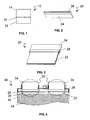
- Fig. 1 illustrating a prior-art electrode structure 10 for a laminated battery.
- the electrode structure 10 includes an electrode tab 12 coupled to an electrode lead 14, the coupling facilitated by multiple sintering or welding spots 16 as shown in the figure.
- the welding leads to increased contact between the electrode tab 12 and the electrode lead 14 thus effectively lowers the internal resistance and increases the amount of battery current output and improves the battery's current output characteristics.
- the electrode tab 12 is typically a very thin piece of aluminum, metal debris can be produced and can fall on the cell core of the battery thereby internally shorting the electrical circuit.
- welding can lead to partial hardening and possible fracture between the electrode tab 12 and the electrode lead 14 thus affecting the normal operation, performance and safety of the battery.
- a first embodiment of the present invention discloses an electrode structure for a battery comprising: at least one electrode tab; an electrode lead having a recess, the recess adaptable to receive the electrode tab; and a pressurized means configured to couple the electrode tab to the recess.
- the pressurized means includes hot-pressure treatment, high pressure treatment and mechanical compression.
- the depth of the electrode tab received within the recess is about 5 to 95 % of the length of the recess.
- the structure can further include a bonding means for securing the electrode tab to the recess of the electrode lead.
- the bonding means includes laser welding, ultrasonic welding and electron-beam welding.
- a second embodiment of the present invention discloses a lithium-ion battery comprising: an electrolytic solution; a cell core having cathode, anode and separator films; a battery shell configure to house the electrolytic solution and the cell core; and two electrode structures disposed within the battery shell, each electrode structure having: at least one electrode tab; an electrode lead having a recess, the recess adaptable to receive the electrode tab; and a pressurized means configured to couple the electrode tab to the recess.
- the structure can further include a bonding means for securing the electrode tab to the recess of the electrode lead.
- the cathode, separator and anode films of the cell core are configured in a cascading arrangement, and wherein the cathode and anode films are each coupled to the at least one electrode tab.
- the presently disclosed electrode structure embodiments provide at least one electrode tab being received within a recess of an electrode lead via hot-pressure treatment or mechanical compression. The resulting coupling leads to enhanced electrical contact between the electrode tab and the electrode lead. Unlike traditional electrode structures having rivets, screws and other fasteners for connecting the electrode tab with the electrode lead, the present embodiments provide lowered internal resistance and enhanced current output. Additionally, the electrode tab and the recess can also be bonded with known welding techniques thereby further enhancing electrical connectivity and lowering internal resistance. And because the electrode tab can be protected by the recess and the electrode tab during the welding process resulting in lowered likelihood of metal shavings being produced and hardening phenomena, the presently disclosed electrode structure further ensures that the battery can operate normally and with enhanced safety.
- the electrode structure 20 includes an electrode lead 24 having at least one electrode tab 22, wherein one end of the electrode tab 22 makes electrical contact with a portion of the electrode lead 24.
- the electrical contact between the electrode lead 24 and the electrode tab 22 includes a recess 28, wherein one end of the electrode tab 22 extends into and can be received within the recess 28.
- the electrode tab 22 and the recess 28 may be coupled together by hot-pressure treatment or other mechanical means.
- the depth of the electrode tab 22 within the recess 28 can be about 5 to 95 % of the length of the recess 28. Meanwhile, the length and width of the recess 28 can be substantially similar to that of the electrode tab 22, with the recess 28 being slightly larger than that of the electrode tab 22 to facilitate ease of the electrode tab 22 being inserted into and received by the recess 28.
- the coupling between the recess 28 and the electrode tab 22 can incorporate techniques known by one skilled in the art including without limitation hot-pressure treatment or mechanical compression to increase the electrical contact between the electrode tab 22 and the electrode lead 24.
- hot-pressure treatment the electrode tab 22 and the recess 28 of the electrode lead 24 can still retain sufficient tensile strength.
- the electrode tab 22 coupled to the recess 28 of the electrode lead 24 can be further welded to the recess 28 to further enhance the electrical contact and reduce the internal resistance between the electrode tab 22 and the electrode lead 24.
- the techniques of welding the electrode tab 22 to the recess 28 can incorporate known methods including without limitation laser welding, ultrasonic welding or electron beam welding.
- the electrode tab 22 when the electrode tab 22 has been inserted into the recess 28 of the electrode lead 24 and is being welded to the recess 28, the electrode tab 22 is being protected by the electrode lead 24 and therefore is less likely to produce metal shavings and hardening phenomena thus further ensuring safety and normal operation of the battery.
- the battery electrode tab 22 there can be at least one battery electrode tab 22 in the battery electrode structure 20.
- the electrode tab 22 and the electrode lead 24 can incorporate different kinds of conductive materials including without limitation copper, nickel and aluminum.
- the presently disclosed battery electrode structure 20 can be implemented as a cathode electrode or an anode electrode for a lithium-ion battery.
- the battery 40 includes a battery shell 42, cell core 44, electrolyte and two battery electrode structures 20 representing cathode and anode terminals.
- the cell core 44 and the electrolyte can be housed within the battery shell 42, with the cell core 44 having a cathode film, an anode film, and a separator film for dividing the positive and negative terminals.
- Each battery electrode structure 20 includes an electrode lead 24 having at least one electrode tab 22.
- One end of the electrode tab 22 makes electrical contact with one end of the electrode lead 24, while the opposite end of the electrode tab 22 makes electrical contact with the cathode or anode film within the cell core 44.
- the opposite end of the electrode lead 24 that does not make contact with the electrode tab 22 extends outside of the battery shell 42.
- the electrode tab 22 can be coupled to the electrode lead 24 via a recess 28 such that a portion of the electrode tab 22 can be housed and received by the recess 28, and wherein the electrode tab 22 and recess 28 can be coupled by known thermal and mechanical techniques.
- the cell core 44 includes cathode, separator, and anode films, whereby the films can be stacked, wounded, cascaded, layered or laminated by known methods in forming the battery.
- the cathode and anode films are able to be coupled to at least one electrode tab 22, with the electrode structure 20 being welded to the cathode or anode film to provide the desired electrical conductivity.
- the composition of the cathode film may include a conductive substrate (sometimes referred to as an electrical collector) coated and/or filled with cathode active substance.
- the conductive substrate can be fabricated with aluminum or other suitable materials.
- the cathode active substance includes cathode active materials, adhesives and binder materials, the cathode active materials being LiCoO 2 , LiFePO 4 , and other suitable cathode active materials for lithium-ion batteries.
- the adhesives and binder materials can include polyvinylidene fluoride (PVDF), polytetrafluoroethylene (PTFE), and the likes.
- PVDF polyvinylidene fluoride
- PTFE polytetrafluoroethylene
- the amount of binder material to be used may be about 0.1 to 8 % relative to the weight of the cathode active materials.
- Additives including conductive agents may be further added to the cathode active substances, the conductive additive being one or more of the following: acetylene black, conductive carbon black, conductive graphite and other conductive agents known by one skilled in the art. Relative to the cathode active materials, the amount of conductive agent can be about 0 to 15 weight percent.
- the composition of the anode film may include a conductive substrate coated and/or filled with anode active substance.
- the conductive substrate can be fabricated with copper or other suitable materials.
- the anode active substance includes anode active materials and adhesives or binder materials, the anode active material being selected from suitable anode active materials for lithium-ion batteries including without limitation natural graphite and artificial graphite.
- the adhesive or binder material can include polyvinylidene fluoride (PVDF), polytetrafluoroethylene (PTFE), polyvinyl alcohol and the likes.
- PVDF polyvinylidene fluoride
- PTFE polytetrafluoroethylene
- the amount of binder material to be used may be about 0.01 to 10 % relative to the weight of the anode active material.
- the electrode films, conductive substrates, active materials, adhesives, binder components and conductive additives for both the cathode and anode terminals, it will be understood by one skilled in the art that other materials, compositions and methods of fabricating the lithium-ion battery can be incorporated in the present invention.
- a separator film having the ability to insulate and maintain the performance of cathode and anode fluids can be disposed between the cathode and anode films.
- the nature and types of separators may be those generally used for lithium-ion batteries including without limitation polypropylene felt, vinyl polyethylene felt, polyolefin micro-porous membrane, glass fiber felt or ultra-fine glass fiber felt.
- the cathode film can be prepared using techniques understood by one skilled in the art.
- the cathode active substance and solvent may be mixed to provide cathode slurry, which can subsequently be applied and/or filled on the cathode conductive substrate, dried, with or without die pressing, to produce the desired cathode film.
- the solvent can be N-methylpyrrolidone (NMP) or dimethylformamide (DMF) with an amount that is about 40 to 90 % of the weight of the cathode active material within the cathode slurry.
- NMP N-methylpyrrolidone
- DMF dimethylformamide
- the slurry can be dried at about 50 to 160 °C, the drying and die pressing processes being carried out in suitable fashion.
- the anode film can be prepared in a substantially similar method to that of the cathode film with the exception that anode active substance and suitable solvents are used for the anode slurry.
- the materials and methods of preparing the anode film can utilize those known by one skilled in the art and will not be further elaborated herein.
- the electrolytic solutions for the battery can include a mixture of lithium salt electrolyte and non-aqueous organic solvent or other solutions.
- the lithium salt electrolyte may include one or more of the following: lithium hexafluoro phosphate (LiPF 6 ), lithium perchlorate, lithium tetrafluoroborate, lithium hexafluoro arsenate, halogenated lithium, lithium chloroaluminate and lithium fluoride alkylation acid.
- the organic solvent may include a mixture of chain ester and ester ring solutions, with the chain ester being dimethyl carbonate (DMC), diethyl carbonate (DEC), ethyl methyl carbonate (EMC), methyl propyl carbonate (MPC), dipropyl carbonate (DPC) and other chain esters containing fluoride, sulfur and unsaturated organic chain esters.
- the ester ring includes ethylene carbonate (EC), propylene carbonate (PC), vinylene carbonate (VC), g-butyrolactone (g-BL), methyl lactone and other ester ring containing fluoride, sulfur and unsaturated organic ester rings.
- the concentration of electrolyte that can be injected can be from about 0.1 to 2.0 mol/L.
- the battery can be stacked, wounded, laminated or constructed in any suitable fashion as known by one skilled in the art. As such, the processes and methods of going about assembling such battery will not be discussed in further detail.
- the cathode and anode electrode structures will utilize those of the presently disclosed embodiments, which will be discussed in further detail below.
- the electrode tab 22 and the electrode lead 24 can be fabricated with aluminum or other metallic materials, the electrode tab 22 being 30 mm in length, 60 mm in width, and 0.016 mm thick with the electrode lead 24 being 35 mm in length, 65 mm in width, and 5.0 mm thick.
- a recess 28 can be formed within the electrode lead 24, the recess 28 being 61 mm in width, 1.0 mm in length, and 8 mm in depth.
- the electrode tab 22 can be mechanically pressed and received within the recess 28 thereby coupling with the electrode lead 24 to produce the battery electrode structure 20.
- the exterior of the recess 28 can be further welded with a high-power laser welding machine. The process can be repeated to provide two sets of battery electrode structures 20 for the cathode and anode terminals.
- the battery electrode structures 20 of EXAMPLE 1 can be used to fabricate a laminated battery as follows:
- the cathode film - Mix 100 weight portion of cathode active material LiFePO 4 , 7 weight portion of conductive additive graphite, 7 weight portion of binder element PVDF in 60 weight portion of NMP to form a paste. Apply the paste uniformly onto an aluminum foil with a thickness of 0.016 mm, bake, compress, and die cut into a 200 mm long, 143 mm wide and 0.125 mm thick cathode film, which contains 7.6 g of cathode active material LiFePO 4 . Repeat process to provide 50 cathode films.
- anode film Fabrication of the anode film - Mix 100 weight portion of anode active material artificial graphite and 7 weight portion of binder element PTFE in 60 weight portion of NMP to form a paste. Apply the paste uniformly onto a copper foil with a thickness of 0.012 mm, bake, compress, and die cut into a 205 mm long, 148 mm wide and 0.120 mm thickness anode film, which contains 3.6 g of anode active material natural graphite. Repeat process to provide 50 anode films.
- LiPF 6 with EC and DMC to provide LiPF 6 having a concentration of 1 mol / L (volumetric ratio of EC : DMC being 1 : 1) to derive an electrolytic solution, the amount of solution being 11.5 grams.
- each of the cathode and anode films derived above to electrode tabs 22 of the battery electrode structures 20 of EXAMPLE 1.
- the 50 cathode films and 50 anode films can be stacked to a width of 155 mm with a 0.040 mm thick polypropylene insulating film dividing the two sides. Position both sets of films into a 230 x 160 x 25 mm battery shell 42, allow the electrode leads 24 to extend outside of the battery shell 42, add the electrolytic solution above, and seal to provide the desired battery.
- an aperture can be punched on one end of the electrode lead, while multiple ends of the electrode tab can be similarly hole-punched and coupled with rivets. The multiple hole-punched electrode tab can subsequently be coupled with the hole-punched electrode lead with rivets.
- a threaded aperture can be formed on one end of the electrode lead, while multiple ends of the electrode tab can form similar threaded apertures and coupled with rivets. The multiple threaded apertures electrode tabs can subsequently be coupled with the aperture-threaded electrode lead with screws.
- Example 1 Using an intelligent DC low internal resistance measuring instrument, the electrode tab and the electrode lead structures of Examples 1, 3 and References 1-3 are used as internal resistance between the cathode and anode films made in accordance with Example 2. Results are shown below in Table 1. TABLE 1. Test results of Examples 1, 3 and References 1-3. Sample Internal resistance of the cathode electrode (m ⁇ ) Internal resistance of the anode electrode (m ⁇ ) Example 1 0.016 0.010 Example 3 0.042 0.012 Reference 1 0.019 0.015 Reference 2 0.040 0.017 Reference 3 0.041 0.023
- Example 1 the internal resistance of the anode electrode using the presently disclosed battery electrode structures (Examples 1 and 3) are significantly lower than other technology in existence (References 1-3).
- the internal resistance of Example 3 is comparable to that of References 2 and 3 with that of Reference 1 being much lower.
- the internal resistance of Example 1 is clearly lower than all the other samples. Accordingly, the lower the resistance, the better the battery's discharge performance, specifically the discharge rate.
- laminated battery A (Example 2 using electrode structure of Example 1) has clearly better discharge capacity ratio than laminated batteries C-E (References 4-6 using electrode structures of References 1-3, respectively).
- laminated battery B (Example 4 using electrode structure of Example 3) does not have better discharge capacity ratio than laminated battery C, battery B still has better discharge capacity ratio than batteries D and E indicating that the electrode structure embodiments of the present invention, in general, provides batteries with better discharge performance.
Landscapes
- Chemical & Material Sciences (AREA)
- Chemical Kinetics & Catalysis (AREA)
- Electrochemistry (AREA)
- General Chemical & Material Sciences (AREA)
- Connection Of Batteries Or Terminals (AREA)
- Secondary Cells (AREA)
Applications Claiming Priority (1)
| Application Number | Priority Date | Filing Date | Title |
|---|---|---|---|
| CNU2007203101048U CN201122624Y (zh) | 2007-11-30 | 2007-11-30 | 一种电极引出结构及包含该电极引出结构的电池 |
Publications (2)
| Publication Number | Publication Date |
|---|---|
| EP2065954A1 true EP2065954A1 (de) | 2009-06-03 |
| EP2065954B1 EP2065954B1 (de) | 2012-05-02 |
Family
ID=40009864
Family Applications (1)
| Application Number | Title | Priority Date | Filing Date |
|---|---|---|---|
| EP08400053A Active EP2065954B1 (de) | 2007-11-30 | 2008-11-26 | Batterieelektrodenstruktur |
Country Status (4)
| Country | Link |
|---|---|
| US (1) | US20090142659A1 (de) |
| EP (1) | EP2065954B1 (de) |
| CN (1) | CN201122624Y (de) |
| AT (1) | ATE556444T1 (de) |
Cited By (1)
| Publication number | Priority date | Publication date | Assignee | Title |
|---|---|---|---|---|
| CN109103409A (zh) * | 2018-08-23 | 2018-12-28 | 上海派能能源科技股份有限公司 | 一种新型锂离子电池组 |
Families Citing this family (27)
| Publication number | Priority date | Publication date | Assignee | Title |
|---|---|---|---|---|
| CN101425678B (zh) | 2007-10-30 | 2011-11-23 | 比亚迪股份有限公司 | 电池保护方法和系统 |
| CN201178103Y (zh) | 2007-11-24 | 2009-01-07 | 比亚迪股份有限公司 | 一种锂离子电池隔圈和含有该隔圈的锂离子电池 |
| CN201122609Y (zh) | 2007-12-03 | 2008-09-24 | 比亚迪股份有限公司 | 电池壳体和包括该电池壳体的电池 |
| EP2631030B1 (de) * | 2010-10-19 | 2018-07-25 | Nissan Motor Co., Ltd | Laserschneideverfahren |
| KR101211794B1 (ko) * | 2010-10-22 | 2012-12-12 | 에스비리모티브 주식회사 | 이차 전지 |
| JP5472207B2 (ja) * | 2011-05-30 | 2014-04-16 | 株式会社デンソー | 電池、電池の製造方法および電池の製造装置 |
| CN102340035A (zh) * | 2011-10-12 | 2012-02-01 | 江苏乐能电池股份有限公司 | 一种锂离子电池极耳的制作方法 |
| US10446828B2 (en) | 2011-10-21 | 2019-10-15 | Blackberry Limited | Recessed tab for higher energy density and thinner batteries |
| US9142840B2 (en) | 2011-10-21 | 2015-09-22 | Blackberry Limited | Method of reducing tabbing volume required for external connections |
| EP3161899A4 (de) | 2014-06-30 | 2017-12-27 | Black & Decker Inc. | Batteriepack für schnurlose elektrowerkzeuge |
| CN105428582B (zh) * | 2015-12-30 | 2017-11-28 | 苏州科纽普新能源科技有限公司 | 一种电池组内部电池快速连接结构 |
| US11383213B2 (en) | 2016-03-15 | 2022-07-12 | Honda Motor Co., Ltd. | System and method of producing a composite product |
| US11171324B2 (en) | 2016-03-15 | 2021-11-09 | Honda Motor Co., Ltd. | System and method of producing a composite product |
| US11081684B2 (en) | 2017-05-24 | 2021-08-03 | Honda Motor Co., Ltd. | Production of carbon nanotube modified battery electrode powders via single step dispersion |
| US10658651B2 (en) | 2017-07-31 | 2020-05-19 | Honda Motor Co., Ltd. | Self standing electrodes and methods for making thereof |
| US20190036102A1 (en) | 2017-07-31 | 2019-01-31 | Honda Motor Co., Ltd. | Continuous production of binder and collector-less self-standing electrodes for li-ion batteries by using carbon nanotubes as an additive |
| US11201318B2 (en) | 2017-09-15 | 2021-12-14 | Honda Motor Co., Ltd. | Method for battery tab attachment to a self-standing electrode |
| US11121358B2 (en) | 2017-09-15 | 2021-09-14 | Honda Motor Co., Ltd. | Method for embedding a battery tab attachment in a self-standing electrode without current collector or binder |
| KR20190084765A (ko) * | 2018-01-09 | 2019-07-17 | 주식회사 엘지화학 | 전극 탭-리드 결합부에 적용된 플라스틱 부재를 포함하는 전극조립체 및 이를 포함하는 이차전지 |
| US20200083560A1 (en) * | 2018-09-06 | 2020-03-12 | Honda Motor Co., Ltd. | Flexible lithium-ion battery |
| US11535517B2 (en) | 2019-01-24 | 2022-12-27 | Honda Motor Co., Ltd. | Method of making self-standing electrodes supported by carbon nanostructured filaments |
| US12381275B2 (en) | 2019-01-30 | 2025-08-05 | Honda Motor Co., Ltd. | Stretchable and flexible lithium ion battery |
| US12142771B2 (en) | 2019-01-30 | 2024-11-12 | Honda Motor Co., Ltd. | Flexible battery as an integration platform for wearable sensors and processing/transmitting devices |
| US11325833B2 (en) | 2019-03-04 | 2022-05-10 | Honda Motor Co., Ltd. | Composite yarn and method of making a carbon nanotube composite yarn |
| US11352258B2 (en) | 2019-03-04 | 2022-06-07 | Honda Motor Co., Ltd. | Multifunctional conductive wire and method of making |
| US11539042B2 (en) | 2019-07-19 | 2022-12-27 | Honda Motor Co., Ltd. | Flexible packaging with embedded electrode and method of making |
| JP7670495B2 (ja) * | 2021-02-01 | 2025-04-30 | 本田技研工業株式会社 | 電池 |
Citations (6)
| Publication number | Priority date | Publication date | Assignee | Title |
|---|---|---|---|---|
| JPS56167267A (en) * | 1980-05-26 | 1981-12-22 | Shin Kobe Electric Mach Co Ltd | Manufacture of assembled element for lead acid battery |
| JPS59121778A (ja) * | 1982-12-28 | 1984-07-13 | Yuasa Battery Co Ltd | 鉛蓄電池の製造法 |
| US5796588A (en) * | 1994-09-29 | 1998-08-18 | Sanyo Electric Co., Ltd. | Electrical apparatus containing batteries |
| DE10100626A1 (de) * | 2000-01-10 | 2001-08-02 | Delphi Tech Inc | Lithium-Ion-Batterie und Behälter |
| US20030129479A1 (en) * | 2001-12-18 | 2003-07-10 | Noriyoshi Munenaga | Cell |
| US20060088761A1 (en) * | 2004-10-26 | 2006-04-27 | Nissan Motor Co., Ltd. | Battery module |
Family Cites Families (7)
| Publication number | Priority date | Publication date | Assignee | Title |
|---|---|---|---|---|
| US6440604B1 (en) * | 1998-09-08 | 2002-08-27 | Japan Storage Battery Co., Ltd. | Cell |
| JP3591523B2 (ja) * | 2002-04-11 | 2004-11-24 | 日産自動車株式会社 | 組電池 |
| CA2384215A1 (en) * | 2002-04-30 | 2003-10-30 | Richard Laliberte | Electrochemical bundle and method for making same |
| US7179562B2 (en) * | 2003-02-14 | 2007-02-20 | Quallion Llc | Battery electrode assembly and fabrication method therefor |
| CN101425678B (zh) * | 2007-10-30 | 2011-11-23 | 比亚迪股份有限公司 | 电池保护方法和系统 |
| CN201178103Y (zh) * | 2007-11-24 | 2009-01-07 | 比亚迪股份有限公司 | 一种锂离子电池隔圈和含有该隔圈的锂离子电池 |
| CN201122609Y (zh) * | 2007-12-03 | 2008-09-24 | 比亚迪股份有限公司 | 电池壳体和包括该电池壳体的电池 |
-
2007
- 2007-11-30 CN CNU2007203101048U patent/CN201122624Y/zh not_active Expired - Lifetime
-
2008
- 2008-10-23 US US12/256,769 patent/US20090142659A1/en not_active Abandoned
- 2008-11-26 EP EP08400053A patent/EP2065954B1/de active Active
- 2008-11-26 AT AT08400053T patent/ATE556444T1/de active
Patent Citations (6)
| Publication number | Priority date | Publication date | Assignee | Title |
|---|---|---|---|---|
| JPS56167267A (en) * | 1980-05-26 | 1981-12-22 | Shin Kobe Electric Mach Co Ltd | Manufacture of assembled element for lead acid battery |
| JPS59121778A (ja) * | 1982-12-28 | 1984-07-13 | Yuasa Battery Co Ltd | 鉛蓄電池の製造法 |
| US5796588A (en) * | 1994-09-29 | 1998-08-18 | Sanyo Electric Co., Ltd. | Electrical apparatus containing batteries |
| DE10100626A1 (de) * | 2000-01-10 | 2001-08-02 | Delphi Tech Inc | Lithium-Ion-Batterie und Behälter |
| US20030129479A1 (en) * | 2001-12-18 | 2003-07-10 | Noriyoshi Munenaga | Cell |
| US20060088761A1 (en) * | 2004-10-26 | 2006-04-27 | Nissan Motor Co., Ltd. | Battery module |
Cited By (1)
| Publication number | Priority date | Publication date | Assignee | Title |
|---|---|---|---|---|
| CN109103409A (zh) * | 2018-08-23 | 2018-12-28 | 上海派能能源科技股份有限公司 | 一种新型锂离子电池组 |
Also Published As
| Publication number | Publication date |
|---|---|
| EP2065954B1 (de) | 2012-05-02 |
| ATE556444T1 (de) | 2012-05-15 |
| US20090142659A1 (en) | 2009-06-04 |
| CN201122624Y (zh) | 2008-09-24 |
Similar Documents
| Publication | Publication Date | Title |
|---|---|---|
| EP2065954B1 (de) | Batterieelektrodenstruktur | |
| US7651820B2 (en) | Gel electrolyte and gel electrolyte battery | |
| JP5217076B2 (ja) | リチウムイオン組電池 | |
| US6733925B2 (en) | Non-aqueous electrolytic solution secondary battery with electrodes having a specific thickness and porosity | |
| US6051343A (en) | Polymeric solid electrolyte and lithium secondary cell using the same | |
| EP2238643B1 (de) | Lithium-sekundärbatterie des beuteltyps | |
| KR101154881B1 (ko) | 바이폴라 셀을 포함하는 이차전지 | |
| JP4041044B2 (ja) | 電気化学デバイスの製造方法 | |
| KR101489993B1 (ko) | 2차 전지용 전극 | |
| US20100119940A1 (en) | Secondary battery | |
| KR101643593B1 (ko) | 전해액 함침성이 향상된 스택-폴딩형 전극조립체 및 이의 제조방법 | |
| KR101686600B1 (ko) | 전해액 함침용 홀을 포함하고 있는 전지셀 | |
| JP5173095B2 (ja) | 密閉型電池 | |
| KR20180061064A (ko) | 레이져 유도 그래핀 탄화층을 포함하는 분리막 및 상기 분리막을 포함하는 리튬-황 전지 | |
| US20230307791A1 (en) | Power storage device | |
| US20050058896A1 (en) | Non-aqueous electrolyte secondary battery | |
| KR102856167B1 (ko) | 전극 조립체 및 이를 포함하는 이차 전지 | |
| KR102149874B1 (ko) | 이차전지의 전해액 함침도 측정방법 | |
| JP2005174691A (ja) | バイポーラ電池 | |
| CN2717037Y (zh) | 锂离子电池 | |
| KR101519372B1 (ko) | 전지셀 제조 장치 | |
| CN2598160Y (zh) | 方型锂离子二次电池 | |
| CN100527492C (zh) | 集电体、包括该集电体的锂二次电池及它们的制备方法 | |
| KR102663587B1 (ko) | 바이폴라 리튬 이차전지 | |
| KR101515672B1 (ko) | 2 이상의 양극 및 음극을 포함하는 전극 조립체 및 이에 의한 전기 화학 소자 |
Legal Events
| Date | Code | Title | Description |
|---|---|---|---|
| PUAI | Public reference made under article 153(3) epc to a published international application that has entered the european phase |
Free format text: ORIGINAL CODE: 0009012 |
|
| 17P | Request for examination filed |
Effective date: 20081223 |
|
| AK | Designated contracting states |
Kind code of ref document: A1 Designated state(s): AT BE BG CH CY CZ DE DK EE ES FI FR GB GR HR HU IE IS IT LI LT LU LV MC MT NL NO PL PT RO SE SI SK TR |
|
| AX | Request for extension of the european patent |
Extension state: AL BA MK RS |
|
| AKX | Designation fees paid |
Designated state(s): AT BE BG CH CY CZ DE DK EE ES FI FR GB GR HR HU IE IS IT LI LT LU LV MC MT NL NO PL PT RO SE SI SK TR |
|
| 17Q | First examination report despatched |
Effective date: 20110623 |
|
| RIC1 | Information provided on ipc code assigned before grant |
Ipc: H01M 2/26 20060101AFI20110930BHEP Ipc: H01M 10/052 20100101ALN20110930BHEP Ipc: H01M 10/14 20060101ALI20110930BHEP |
|
| GRAP | Despatch of communication of intention to grant a patent |
Free format text: ORIGINAL CODE: EPIDOSNIGR1 |
|
| RIC1 | Information provided on ipc code assigned before grant |
Ipc: H01M 10/058 20100101ALI20111130BHEP Ipc: H01M 2/26 20060101AFI20111130BHEP Ipc: H01M 10/052 20100101ALI20111130BHEP |
|
| RIN1 | Information on inventor provided before grant (corrected) |
Inventor name: SHEN, XI Inventor name: LAI, QING Inventor name: ZHU, JIANHUA |
|
| GRAS | Grant fee paid |
Free format text: ORIGINAL CODE: EPIDOSNIGR3 |
|
| RIN1 | Information on inventor provided before grant (corrected) |
Inventor name: ZHU, JIANHUA Inventor name: LAI, QING Inventor name: SHEN, XI |
|
| GRAA | (expected) grant |
Free format text: ORIGINAL CODE: 0009210 |
|
| AK | Designated contracting states |
Kind code of ref document: B1 Designated state(s): AT BE BG CH CY CZ DE DK EE ES FI FR GB GR HR HU IE IS IT LI LT LU LV MC MT NL NO PL PT RO SE SI SK TR |
|
| REG | Reference to a national code |
Ref country code: GB Ref legal event code: FG4D |
|
| REG | Reference to a national code |
Ref country code: AT Ref legal event code: REF Ref document number: 556444 Country of ref document: AT Kind code of ref document: T Effective date: 20120515 Ref country code: CH Ref legal event code: EP |
|
| REG | Reference to a national code |
Ref country code: IE Ref legal event code: FG4D |
|
| REG | Reference to a national code |
Ref country code: DE Ref legal event code: R096 Ref document number: 602008015346 Country of ref document: DE Effective date: 20120712 |
|
| REG | Reference to a national code |
Ref country code: NL Ref legal event code: VDEP Effective date: 20120502 |
|
| REG | Reference to a national code |
Ref country code: LT Ref legal event code: MG4D Effective date: 20120502 |
|
| PG25 | Lapsed in a contracting state [announced via postgrant information from national office to epo] |
Ref country code: SE Free format text: LAPSE BECAUSE OF FAILURE TO SUBMIT A TRANSLATION OF THE DESCRIPTION OR TO PAY THE FEE WITHIN THE PRESCRIBED TIME-LIMIT Effective date: 20120502 Ref country code: PL Free format text: LAPSE BECAUSE OF FAILURE TO SUBMIT A TRANSLATION OF THE DESCRIPTION OR TO PAY THE FEE WITHIN THE PRESCRIBED TIME-LIMIT Effective date: 20120502 Ref country code: IS Free format text: LAPSE BECAUSE OF FAILURE TO SUBMIT A TRANSLATION OF THE DESCRIPTION OR TO PAY THE FEE WITHIN THE PRESCRIBED TIME-LIMIT Effective date: 20120902 Ref country code: CY Free format text: LAPSE BECAUSE OF FAILURE TO SUBMIT A TRANSLATION OF THE DESCRIPTION OR TO PAY THE FEE WITHIN THE PRESCRIBED TIME-LIMIT Effective date: 20120502 Ref country code: LT Free format text: LAPSE BECAUSE OF FAILURE TO SUBMIT A TRANSLATION OF THE DESCRIPTION OR TO PAY THE FEE WITHIN THE PRESCRIBED TIME-LIMIT Effective date: 20120502 Ref country code: FI Free format text: LAPSE BECAUSE OF FAILURE TO SUBMIT A TRANSLATION OF THE DESCRIPTION OR TO PAY THE FEE WITHIN THE PRESCRIBED TIME-LIMIT Effective date: 20120502 Ref country code: NO Free format text: LAPSE BECAUSE OF FAILURE TO SUBMIT A TRANSLATION OF THE DESCRIPTION OR TO PAY THE FEE WITHIN THE PRESCRIBED TIME-LIMIT Effective date: 20120802 |
|
| REG | Reference to a national code |
Ref country code: AT Ref legal event code: MK05 Ref document number: 556444 Country of ref document: AT Kind code of ref document: T Effective date: 20120502 |
|
| PG25 | Lapsed in a contracting state [announced via postgrant information from national office to epo] |
Ref country code: GR Free format text: LAPSE BECAUSE OF FAILURE TO SUBMIT A TRANSLATION OF THE DESCRIPTION OR TO PAY THE FEE WITHIN THE PRESCRIBED TIME-LIMIT Effective date: 20120803 Ref country code: PT Free format text: LAPSE BECAUSE OF FAILURE TO SUBMIT A TRANSLATION OF THE DESCRIPTION OR TO PAY THE FEE WITHIN THE PRESCRIBED TIME-LIMIT Effective date: 20120903 Ref country code: LV Free format text: LAPSE BECAUSE OF FAILURE TO SUBMIT A TRANSLATION OF THE DESCRIPTION OR TO PAY THE FEE WITHIN THE PRESCRIBED TIME-LIMIT Effective date: 20120502 Ref country code: HR Free format text: LAPSE BECAUSE OF FAILURE TO SUBMIT A TRANSLATION OF THE DESCRIPTION OR TO PAY THE FEE WITHIN THE PRESCRIBED TIME-LIMIT Effective date: 20120502 Ref country code: SI Free format text: LAPSE BECAUSE OF FAILURE TO SUBMIT A TRANSLATION OF THE DESCRIPTION OR TO PAY THE FEE WITHIN THE PRESCRIBED TIME-LIMIT Effective date: 20120502 |
|
| PG25 | Lapsed in a contracting state [announced via postgrant information from national office to epo] |
Ref country code: BE Free format text: LAPSE BECAUSE OF FAILURE TO SUBMIT A TRANSLATION OF THE DESCRIPTION OR TO PAY THE FEE WITHIN THE PRESCRIBED TIME-LIMIT Effective date: 20120502 |
|
| PG25 | Lapsed in a contracting state [announced via postgrant information from national office to epo] |
Ref country code: NL Free format text: LAPSE BECAUSE OF FAILURE TO SUBMIT A TRANSLATION OF THE DESCRIPTION OR TO PAY THE FEE WITHIN THE PRESCRIBED TIME-LIMIT Effective date: 20120502 Ref country code: SK Free format text: LAPSE BECAUSE OF FAILURE TO SUBMIT A TRANSLATION OF THE DESCRIPTION OR TO PAY THE FEE WITHIN THE PRESCRIBED TIME-LIMIT Effective date: 20120502 Ref country code: EE Free format text: LAPSE BECAUSE OF FAILURE TO SUBMIT A TRANSLATION OF THE DESCRIPTION OR TO PAY THE FEE WITHIN THE PRESCRIBED TIME-LIMIT Effective date: 20120502 Ref country code: AT Free format text: LAPSE BECAUSE OF FAILURE TO SUBMIT A TRANSLATION OF THE DESCRIPTION OR TO PAY THE FEE WITHIN THE PRESCRIBED TIME-LIMIT Effective date: 20120502 Ref country code: DK Free format text: LAPSE BECAUSE OF FAILURE TO SUBMIT A TRANSLATION OF THE DESCRIPTION OR TO PAY THE FEE WITHIN THE PRESCRIBED TIME-LIMIT Effective date: 20120502 Ref country code: RO Free format text: LAPSE BECAUSE OF FAILURE TO SUBMIT A TRANSLATION OF THE DESCRIPTION OR TO PAY THE FEE WITHIN THE PRESCRIBED TIME-LIMIT Effective date: 20120502 Ref country code: CZ Free format text: LAPSE BECAUSE OF FAILURE TO SUBMIT A TRANSLATION OF THE DESCRIPTION OR TO PAY THE FEE WITHIN THE PRESCRIBED TIME-LIMIT Effective date: 20120502 |
|
| PG25 | Lapsed in a contracting state [announced via postgrant information from national office to epo] |
Ref country code: IT Free format text: LAPSE BECAUSE OF FAILURE TO SUBMIT A TRANSLATION OF THE DESCRIPTION OR TO PAY THE FEE WITHIN THE PRESCRIBED TIME-LIMIT Effective date: 20120502 |
|
| PLBE | No opposition filed within time limit |
Free format text: ORIGINAL CODE: 0009261 |
|
| STAA | Information on the status of an ep patent application or granted ep patent |
Free format text: STATUS: NO OPPOSITION FILED WITHIN TIME LIMIT |
|
| 26N | No opposition filed |
Effective date: 20130205 |
|
| PG25 | Lapsed in a contracting state [announced via postgrant information from national office to epo] |
Ref country code: ES Free format text: LAPSE BECAUSE OF FAILURE TO SUBMIT A TRANSLATION OF THE DESCRIPTION OR TO PAY THE FEE WITHIN THE PRESCRIBED TIME-LIMIT Effective date: 20120813 |
|
| REG | Reference to a national code |
Ref country code: DE Ref legal event code: R097 Ref document number: 602008015346 Country of ref document: DE Effective date: 20130205 |
|
| REG | Reference to a national code |
Ref country code: CH Ref legal event code: PL |
|
| PG25 | Lapsed in a contracting state [announced via postgrant information from national office to epo] |
Ref country code: CH Free format text: LAPSE BECAUSE OF NON-PAYMENT OF DUE FEES Effective date: 20121130 Ref country code: BG Free format text: LAPSE BECAUSE OF FAILURE TO SUBMIT A TRANSLATION OF THE DESCRIPTION OR TO PAY THE FEE WITHIN THE PRESCRIBED TIME-LIMIT Effective date: 20120802 Ref country code: LI Free format text: LAPSE BECAUSE OF NON-PAYMENT OF DUE FEES Effective date: 20121130 |
|
| REG | Reference to a national code |
Ref country code: IE Ref legal event code: MM4A |
|
| PG25 | Lapsed in a contracting state [announced via postgrant information from national office to epo] |
Ref country code: IE Free format text: LAPSE BECAUSE OF NON-PAYMENT OF DUE FEES Effective date: 20121126 |
|
| PG25 | Lapsed in a contracting state [announced via postgrant information from national office to epo] |
Ref country code: MT Free format text: LAPSE BECAUSE OF FAILURE TO SUBMIT A TRANSLATION OF THE DESCRIPTION OR TO PAY THE FEE WITHIN THE PRESCRIBED TIME-LIMIT Effective date: 20120502 |
|
| PG25 | Lapsed in a contracting state [announced via postgrant information from national office to epo] |
Ref country code: MC Free format text: LAPSE BECAUSE OF NON-PAYMENT OF DUE FEES Effective date: 20121130 Ref country code: TR Free format text: LAPSE BECAUSE OF FAILURE TO SUBMIT A TRANSLATION OF THE DESCRIPTION OR TO PAY THE FEE WITHIN THE PRESCRIBED TIME-LIMIT Effective date: 20120502 |
|
| PG25 | Lapsed in a contracting state [announced via postgrant information from national office to epo] |
Ref country code: LU Free format text: LAPSE BECAUSE OF NON-PAYMENT OF DUE FEES Effective date: 20121126 |
|
| PG25 | Lapsed in a contracting state [announced via postgrant information from national office to epo] |
Ref country code: HU Free format text: LAPSE BECAUSE OF FAILURE TO SUBMIT A TRANSLATION OF THE DESCRIPTION OR TO PAY THE FEE WITHIN THE PRESCRIBED TIME-LIMIT Effective date: 20081126 |
|
| REG | Reference to a national code |
Ref country code: FR Ref legal event code: PLFP Year of fee payment: 8 |
|
| REG | Reference to a national code |
Ref country code: FR Ref legal event code: PLFP Year of fee payment: 9 |
|
| REG | Reference to a national code |
Ref country code: FR Ref legal event code: PLFP Year of fee payment: 10 |
|
| REG | Reference to a national code |
Ref country code: DE Ref legal event code: R079 Ref document number: 602008015346 Country of ref document: DE Free format text: PREVIOUS MAIN CLASS: H01M0002260000 Ipc: H01M0050531000 |
|
| P01 | Opt-out of the competence of the unified patent court (upc) registered |
Effective date: 20230527 |
|
| PGFP | Annual fee paid to national office [announced via postgrant information from national office to epo] |
Ref country code: DE Payment date: 20251118 Year of fee payment: 18 |
|
| PGFP | Annual fee paid to national office [announced via postgrant information from national office to epo] |
Ref country code: GB Payment date: 20251120 Year of fee payment: 18 |
|
| PGFP | Annual fee paid to national office [announced via postgrant information from national office to epo] |
Ref country code: FR Payment date: 20251120 Year of fee payment: 18 |