EP2066117A2 - Terminal mobile et son procédé de balayage de chaîne - Google Patents
Terminal mobile et son procédé de balayage de chaîne Download PDFInfo
- Publication number
- EP2066117A2 EP2066117A2 EP08017506A EP08017506A EP2066117A2 EP 2066117 A2 EP2066117 A2 EP 2066117A2 EP 08017506 A EP08017506 A EP 08017506A EP 08017506 A EP08017506 A EP 08017506A EP 2066117 A2 EP2066117 A2 EP 2066117A2
- Authority
- EP
- European Patent Office
- Prior art keywords
- channel
- mobile terminal
- area
- information
- broadcast
- Prior art date
- Legal status (The legal status is an assumption and is not a legal conclusion. Google has not performed a legal analysis and makes no representation as to the accuracy of the status listed.)
- Granted
Links
Images










Classifications
-
- H—ELECTRICITY
- H04—ELECTRIC COMMUNICATION TECHNIQUE
- H04N—PICTORIAL COMMUNICATION, e.g. TELEVISION
- H04N5/00—Details of television systems
- H04N5/44—Receiver circuitry for the reception of television signals according to analogue transmission standards
-
- H—ELECTRICITY
- H04—ELECTRIC COMMUNICATION TECHNIQUE
- H04N—PICTORIAL COMMUNICATION, e.g. TELEVISION
- H04N21/00—Selective content distribution, e.g. interactive television or video on demand [VOD]
- H04N21/40—Client devices specifically adapted for the reception of or interaction with content, e.g. set-top-box [STB]; Operations thereof
- H04N21/41—Structure of client; Structure of client peripherals
- H04N21/414—Specialised client platforms, e.g. receiver in car or embedded in a mobile appliance
- H04N21/41407—Specialised client platforms, e.g. receiver in car or embedded in a mobile appliance embedded in a portable device, e.g. video client on a mobile phone, PDA, laptop
-
- H—ELECTRICITY
- H04—ELECTRIC COMMUNICATION TECHNIQUE
- H04N—PICTORIAL COMMUNICATION, e.g. TELEVISION
- H04N21/00—Selective content distribution, e.g. interactive television or video on demand [VOD]
- H04N21/40—Client devices specifically adapted for the reception of or interaction with content, e.g. set-top-box [STB]; Operations thereof
- H04N21/43—Processing of content or additional data, e.g. demultiplexing additional data from a digital video stream; Elementary client operations, e.g. monitoring of home network or synchronising decoder's clock; Client middleware
- H04N21/433—Content storage operation, e.g. storage operation in response to a pause request, caching operations
- H04N21/4334—Recording operations
-
- H—ELECTRICITY
- H04—ELECTRIC COMMUNICATION TECHNIQUE
- H04N—PICTORIAL COMMUNICATION, e.g. TELEVISION
- H04N21/00—Selective content distribution, e.g. interactive television or video on demand [VOD]
- H04N21/40—Client devices specifically adapted for the reception of or interaction with content, e.g. set-top-box [STB]; Operations thereof
- H04N21/43—Processing of content or additional data, e.g. demultiplexing additional data from a digital video stream; Elementary client operations, e.g. monitoring of home network or synchronising decoder's clock; Client middleware
- H04N21/434—Disassembling of a multiplex stream, e.g. demultiplexing audio and video streams, extraction of additional data from a video stream; Remultiplexing of multiplex streams; Extraction or processing of SI; Disassembling of packetised elementary stream
- H04N21/4345—Extraction or processing of SI, e.g. extracting service information from an MPEG stream
-
- H—ELECTRICITY
- H04—ELECTRIC COMMUNICATION TECHNIQUE
- H04N—PICTORIAL COMMUNICATION, e.g. TELEVISION
- H04N21/00—Selective content distribution, e.g. interactive television or video on demand [VOD]
- H04N21/40—Client devices specifically adapted for the reception of or interaction with content, e.g. set-top-box [STB]; Operations thereof
- H04N21/45—Management operations performed by the client for facilitating the reception of or the interaction with the content or administrating data related to the end-user or to the client device itself, e.g. learning user preferences for recommending movies, resolving scheduling conflicts
- H04N21/4508—Management of client data or end-user data
- H04N21/4524—Management of client data or end-user data involving the geographical location of the client
-
- H—ELECTRICITY
- H04—ELECTRIC COMMUNICATION TECHNIQUE
- H04N—PICTORIAL COMMUNICATION, e.g. TELEVISION
- H04N21/00—Selective content distribution, e.g. interactive television or video on demand [VOD]
- H04N21/40—Client devices specifically adapted for the reception of or interaction with content, e.g. set-top-box [STB]; Operations thereof
- H04N21/47—End-user applications
-
- H—ELECTRICITY
- H04—ELECTRIC COMMUNICATION TECHNIQUE
- H04N—PICTORIAL COMMUNICATION, e.g. TELEVISION
- H04N21/00—Selective content distribution, e.g. interactive television or video on demand [VOD]
- H04N21/40—Client devices specifically adapted for the reception of or interaction with content, e.g. set-top-box [STB]; Operations thereof
- H04N21/47—End-user applications
- H04N21/472—End-user interface for requesting content, additional data or services; End-user interface for interacting with content, e.g. for content reservation or setting reminders, for requesting event notification, for manipulating displayed content
- H04N21/47214—End-user interface for requesting content, additional data or services; End-user interface for interacting with content, e.g. for content reservation or setting reminders, for requesting event notification, for manipulating displayed content for content reservation or setting reminders; for requesting event notification, e.g. of sport results or stock market
-
- H—ELECTRICITY
- H04—ELECTRIC COMMUNICATION TECHNIQUE
- H04N—PICTORIAL COMMUNICATION, e.g. TELEVISION
- H04N21/00—Selective content distribution, e.g. interactive television or video on demand [VOD]
- H04N21/40—Client devices specifically adapted for the reception of or interaction with content, e.g. set-top-box [STB]; Operations thereof
- H04N21/47—End-user applications
- H04N21/482—End-user interface for programme selection
-
- H—ELECTRICITY
- H04—ELECTRIC COMMUNICATION TECHNIQUE
- H04N—PICTORIAL COMMUNICATION, e.g. TELEVISION
- H04N21/00—Selective content distribution, e.g. interactive television or video on demand [VOD]
- H04N21/40—Client devices specifically adapted for the reception of or interaction with content, e.g. set-top-box [STB]; Operations thereof
- H04N21/47—End-user applications
- H04N21/485—End-user interface for client configuration
-
- H—ELECTRICITY
- H04—ELECTRIC COMMUNICATION TECHNIQUE
- H04N—PICTORIAL COMMUNICATION, e.g. TELEVISION
- H04N21/00—Selective content distribution, e.g. interactive television or video on demand [VOD]
- H04N21/40—Client devices specifically adapted for the reception of or interaction with content, e.g. set-top-box [STB]; Operations thereof
- H04N21/47—End-user applications
- H04N21/488—Data services, e.g. news ticker
- H04N21/4882—Data services, e.g. news ticker for displaying messages, e.g. warnings, reminders
-
- H—ELECTRICITY
- H04—ELECTRIC COMMUNICATION TECHNIQUE
- H04N—PICTORIAL COMMUNICATION, e.g. TELEVISION
- H04N21/00—Selective content distribution, e.g. interactive television or video on demand [VOD]
- H04N21/80—Generation or processing of content or additional data by content creator independently of the distribution process; Content per se
- H04N21/83—Generation or processing of protective or descriptive data associated with content; Content structuring
- H04N21/84—Generation or processing of descriptive data, e.g. content descriptors
-
- H—ELECTRICITY
- H04—ELECTRIC COMMUNICATION TECHNIQUE
- H04N—PICTORIAL COMMUNICATION, e.g. TELEVISION
- H04N5/00—Details of television systems
- H04N5/44—Receiver circuitry for the reception of television signals according to analogue transmission standards
- H04N5/50—Tuning indicators; Automatic tuning control
-
- H—ELECTRICITY
- H04—ELECTRIC COMMUNICATION TECHNIQUE
- H04W—WIRELESS COMMUNICATION NETWORKS
- H04W4/00—Services specially adapted for wireless communication networks; Facilities therefor
- H04W4/06—Selective distribution of broadcast services, e.g. multimedia broadcast multicast service [MBMS]; Services to user groups; One-way selective calling services
Definitions
- the present invention relates to a terminal, in particular, to a mobile terminal and channel scanning method thereof.
- a terminal in particular, to a mobile terminal and channel scanning method thereof.
- the present invention is suitable for a wide scope of applications, it is particularly suitable for a mobile terminal having broadcast receiving and outputting functions.
- a mobile terminal may be configured to perform various functions. Examples of such functions include data and voice communications, capturing and displaying images and video via a camera and a display, respectively, recording audio, and playing music files via a speaker system. Mobile terminals may also be used for playing games and multimedia. More recently, some mobile terminals have been configured to receive broadcast and multicast signals which permit viewing of contents such as videos and television programs.
- a channel list which shows channels available for broadcast receptions, is displayed after channel scanning is completed.
- such terminal in the related art is not able to generate and display a channel list during channel scanning.
- a method of providing information on channels unavailable for broadcast reception has not been proposed.
- One embodiment of the present invention is to provide a mobile terminal which includes a wireless communication unit configured to receive channel information and scan at least one channel; a controller configured to generate a channel database using the received channel information and generate a channel list according to a result of real time channel scan using the channel database; and an output unit configured to display the channel list according to the result of the real time channel scan under control of the controller.
- the channel information includes channel identification information or a frequency assigned to the at least one channel.
- the channel information is related to a specific area in which the mobile terminal is located.
- the wireless communication unit receives the channel information if it is determined that the channel database previously generated by the controller needs to be updated.
- the wireless communication unit receives relevant broadcast information and the controller generates the channel database by matching the received relevant broadcast information to the channel information.
- the controller generates the channel database by reflecting at least one of a channel supported in a specific area, a channel assigned to a frequency, a channel scan result, a channel genre, viewer age discretion information for a channel, presence or absence of a preferred channel, an audience rating, or broadcast schedule information.
- the at least one channel is sorted in accordance with a reference using the generated channel database under control of the controller.
- the at least one channel is selected from the channel list under control of the controller.
- the wireless communication unit scans at least one channel available in a second area under control of the controller if the mobile terminal moves into the second area from a first area.
- the wireless communication unit scans a channel used for a broadcast in a first area among at least one or more channels available in a second area and the output unit outputs a broadcast signal provided from the scanned channel without interruption under control of the controller if the mobile terminal moves to the second area from the first area while outputting the broadcast.
- the channel list includes at least one of reception availability, reception strength, or broadcast schedule information for each channel in the channel list.
- the output unit outputs a broadcast signal provided from a selected reception-available channel and the wireless communication unit scans the at least one channel selectively while outputting the broadcast signal under control of the controller when the reception-available channel is selected from the displayed channel list during a channel scan.
- the output unit outputs a broadcast signal provided from a selected reception-available channel by switching from a channel outputting the broadcast to the selected reception-available channel when the reception-available channel is selected from the displayed channel list while outputting a broadcast.
- the controller searches identification information on a specific program to find a matching channel in a second area and reschedules at least recording or viewing for the specific program when the mobile terminal moves to the second area from the first area after scheduling the at least recording or viewing for the specific program in the first area and the search for the matching channel is performed using the channel database and the rescheduling is performed by replacing a channel previously assigned to the specific program in the first area with the matching channel assigned to the specific program in the second area using the searched identification information.
- Another embodiment of the present invention is to provide a method of scanning channels in a mobile terminal and the method includes receiving channel information; generating a channel database using the received channel information; scanning at least one channel; and displaying a channel list generated using the channel database by reflecting a result of real time channel scanning.
- the method also includes receiving relevant broadcast information and the channel database is generated by matching the received relevant broadcast information to the received channel information.
- generating the channel database includes reflecting at least one of a channel supported in an area, a channel assigned to a frequency, a channel scanning result, a channel genre, viewer age discretion information for a channel, presence or absence of a preferred channel, an audience rating, or broadcast schedule information.
- the method may also include sorting the at least one channel in accordance with a reference using the generated channel database and selecting the at least one channel from the displayed channel list.
- the method may further include scanning a channel used in a first area among at least one or more channels available in a second area and outputting a broadcast signal provided from the scanned channel if the mobile terminal moves to the second area from the first area while outputting a broadcast.
- the method may further include selecting a reception-available channel from the displayed channel list while scanning the at least one channel; and outputting a broadcast signal provided from the selected reception-available channel, wherein the at least one channel is scanned selectively depending on whether a scanning operation is to be maintained.
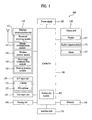
- FIG. 1 is a block diagram of a mobile terminal according to an embodiment of the present invention.
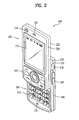
- FIG. 2 is a perspective view of a front side of a mobile terminal according to an embodiment of the present invention.
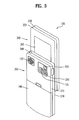
- FIG. 3 is a rear view of the mobile terminal shown in FIG. 2 .
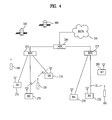
- FIG. 4 is a block diagram of a CDMA wireless communication system operable with the mobile terminal of FIGs. 1 to 3 .
- FIG. 5 is a flowchart illustrating a channel scanning method of a mobile terminal according to one embodiment of the present invention.
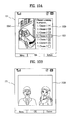
- FIGs. 6A to 6J illustrate screens of a process of executing a channel scanning operation in a mobile terminal according to one embodiment of the present invention.
- FIG. 7A and FIG. 7B illustrate screens of a process of executing a channel scanning operation in a mobile terminal according to one embodiment of the present invention when the mobile terminal moves from one area to another area.
- FIG. 8A and FIG. 8B illustrate screens of a process of displaying channel information and relevant broadcasting information corresponding to a channel in a mobile terminal according to one embodiment of the present invention.
- FIGs. 9A to 9D illustrate screens of a process of executing a selective channel scanning operation for broadcast output in a mobile terminal according to one embodiment of the present invention.
- FIG. 10A and FIG. 10B illustrate screens of a process of selecting a channel and outputting a broadcast when executing both broadcast output and channel scanning in a mobile terminal according to one embodiment of the present invention.
- FIG. 11 illustrate screens of a process of scheduling recording of a broadcast program in a mobile terminal according to one embodiment of the present invention when the mobile terminal moves from one area to another area.
- FIG. 1 is a block diagram of mobile terminal 100 in accordance with an embodiment of the present invention.
- the mobile terminal 100 may be implemented using a variety of different types of terminals. Examples of such terminals include mobile phones, user equipment, smart phones, computers, digital broadcast terminals, personal digital assistants, portable multimedia players (PMP), and navigators.
- PMP portable multimedia players
- FIG. 1 shows the mobile terminal 100 having various components, but it is understood that implementing all of the illustrated components may not be required and greater or fewer components may alternatively be implemented.
- FIG. 1 shows a wireless communication unit 110 configured with several commonly implemented components.
- the wireless communication unit 110 typically includes one or more components which permit wireless communication between the mobile terminal 100 and a wireless communication system or network within which the mobile terminal is located.
- the broadcast receiving module 111 receives a broadcast signal and/or broadcast associated information from an external broadcast managing entity via a broadcast channel.
- the broadcast channel may include a satellite channel or a terrestrial channel.
- the broadcast managing entity generally refers to a system which transmits a broadcast signal and/or broadcast associated information.
- the broadcast associated information examples include information associated with a broadcast channel, a broadcast program, and a broadcast service provider.
- the broadcast associated information may include an electronic program guide (EPG) of digital multimedia broadcasting (DMB) or an electronic service guide (ESG) of digital video broadcast-handheld (DVB-H).
- EPG electronic program guide
- ESG electronic service guide
- the broadcast signal may be implemented, for example, as a TV broadcast signal, a radio broadcast signal, or a data broadcast signal.
- the broadcast signal may further include a broadcast signal combined with a TV or radio broadcast signal.
- the broadcast receiving module 111 may be configured to receive broadcast signals transmitted from various types of broadcast systems.
- broadcasting systems include digital multimedia broadcasting-terrestrial (DMB-T), digital multimedia broadcasting-satellite (DMB-S), digital video broadcast-handheld (DVB-H), the data broadcasting system known as media forward link only (MediaFLO ® ) and integrated services digital broadcast-terrestrial (ISDB-T).
- MediaFLO ® media forward link only
- ISDB-T integrated services digital broadcast-terrestrial
- Receiving multicast signals is also possible.
- Data received by the broadcast receiving module 111 may be stored in a suitable device, such as a memory 160.
- the mobile communication module 112 communicates wireless signals with one or more network entities, such as a base station or Node-B.
- Such signals may represent, for example, audio, video, multimedia, control signaling, or data.
- the wireless Internet module 113 supports Internet access for the mobile terminal 100.
- the wireless Internet module 113 may be internally or externally coupled to the mobile terminal 100.
- Suitable technologies for wireless Internet may include, but are not limited to, WLAN (Wireless LAN)(Wi-Fi), Wibro (Wireless broadband), Wimax (World Interoperability for Microwave Access), and HSDPA (High Speed Downlink Packet Access).
- the short-range communication module 114 facilitates relatively short-range communications.
- Suitable technologies for short-range communication may include, but are not limited to, radio frequency identification (RFID), infrared data association (IrDA), ultra-wideband (UWB), as well as the networking technologies commonly referred to as BLUETOOTH ® and Zigbee ® .
- the position-location module 115 identifies or otherwise obtains the location of the mobile terminal 100.
- the position-location module 115 may be implemented using global positioning system (GPS) components which cooperate with associated satellites, network components, and combinations thereof.
- GPS global positioning system
- the audio/video (A/V) input unit 120 is configured to provide audio or video signal input to the mobile terminal 100. As shown, the A/V input unit 120 includes a camera 121 and a microphone 122.
- the camera 121 receives and processes image frames of still pictures or video.
- the microphone 122 receives an external audio signal while the portable device is in a particular mode, such as phone call mode, recording mode or voice recognition mode. This audio signal is processed and converted into digital data.
- the mobile terminal 100 and specifically the A/V input unit 120 may include assorted noise removing algorithms to remove noise generated in the course of receiving the external audio signal.
- Data generated by the A/V input unit 120 may be stored in the memory 160, utilized by the output unit 150, or transmitted via one or more modules of the communication unit 110. If desired, two or more microphones 122 and/or cameras 121 may be used.
- the user input unit 130 generates input data responsive to user manipulation of an associated input device or devices. Examples of such devices include a keypad, a dome switch, a touchpad such as a static pressure/capacitance, a jog wheel and a jog switch. A specific example is a user input unit 130 configured as a touchpad in cooperation with a touch screen display, which will be described in more detail below.
- the sensing unit 140 provides status measurements of various aspects of the mobile terminal 100.
- the sensing unit 140 may detect an open/close status of the mobile terminal 100, the relative positioning of components such as a display and keypad, a change of position of the mobile terminal or a component of the mobile terminal, a presence or absence of user contact with the mobile terminal, or the orientation or acceleration/deceleration of the mobile terminal.
- the sensing unit 140 may sense whether a sliding portion of the mobile terminal 100 is open or closed if the mobile terminal is configured as a slide-type mobile terminal.
- the sensing unit 140 may also sense the presence or absence of power provided by the power supply 190, and the presence or absence of a coupling or other connection between the interface unit 170 and an external device.
- the interface unit 170 may be implemented to couple the mobile terminal 100 with external devices. Typical external devices include wired/wireless headphones, external chargers, power supplies, earphones, microphones and storage devices configured to store data such as audio, video, and pictures, earphones, and microphones.
- the interface unit 170 may be configured using a wired/wireless data port, audio input/output ports, video input/output ports, or a card socket for coupling to a memory card, a subscriber identity module (SIM) card, a user identity module (UIM) card, or a removable user identity module (RUIM) card.
- SIM subscriber identity module
- UAM user identity module
- RUIM removable user identity module
- the output unit 150 may include various components that support the output requirements of the mobile terminal 100.
- the display 151 may be implemented to visually display information associated with the mobile terminal 100.
- the display 151 may provide a user interface or graphical user interface that includes information associated with placing, conducting, and terminating a phone call if the mobile terminal 100 is operating in a phone call mode.
- the display 151 may additionally or alternatively display images associated with a video call mode or a photographing mode.
- One particular implementation of the present invention includes the display 151 configured as a touch screen working in cooperation with an input device, such as a touchpad. This configuration permits the display 151 to function both as an output device and an input device.
- the display 151 may be implemented using known display technologies including a liquid crystal display (LCD), a thin film transistor-liquid crystal display (TFT-LCD), an organic light-emitting diode display (OLED), a flexible display and a three-dimensional display.
- the mobile terminal 100 may include one or more displays 151.
- An example of a two-display embodiment is one in which one display 151 is configured as an internal display viewable when the terminal is in an opened position and a second display 151 configured as an external display viewable in both the open and closed positions.
- FIG. 1 further shows the output unit 150 having an audio output module 152, which supports the audio output requirements of the mobile terminal 100.
- the audio output module 152 may be implemented using one or more speakers, buzzers, other audio producing devices, or combinations thereof.
- the audio output module 152 functions in various modes such as call-receiving mode, call-placing mode, recording mode, voice recognition mode and broadcast reception mode.
- the audio output module 152 outputs audio relating to a particular function or status, such as call received, message received, or errors.
- the output unit 150 is further shown having an alarm 153, which may signal or otherwise identify the occurrence of a particular event associated with the mobile terminal 100. Typical events include call received, message received and user input received.
- a signal provided by the output unit 150 is a tactile sensation.
- the alarm 153 may be configured to vibrate responsive to the mobile terminal 100 receiving a call or message.
- vibration may be provided by the alarm 153 responsive to receiving user input at the mobile terminal 100 in order to provide a tactile feedback mechanism. It is understood that the various signals provided by the components of the output unit 150 may be separately performed, or performed using any combination of such components.
- the memory 160 is generally used to store various types of data to support the processing, control, and storage requirements of the mobile terminal 100. Examples of such data include program instructions for applications operating in the mobile terminal 100, contact data, phonebook data, messages, pictures, and video.
- the memory 160 shown in FIG. 1 may be implemented using any type or combination of suitable volatile and nonvolatile memory or storage devices. Examples of memory types are random access memory (RAM), static random access memory (SRAM), electrically erasable programmable read-only memory (EEPROM), erasable programmable read-only memory (EPROM), programmable read-only memory (PROM), read-only memory (ROM), magnetic memory, flash memory, magnetic or optical disk memory, card-type memory, and other similar memory or data storage device.
- RAM random access memory
- SRAM static random access memory
- EEPROM electrically erasable programmable read-only memory
- EPROM erasable programmable read-only memory
- PROM programmable read-only memory
- ROM read-only memory
- magnetic memory flash memory
- flash memory magnetic or optical disk memory
- card-type memory card-type memory
- the controller 180 typically controls the overall operations of the mobile terminal 100. For example, the controller 180 performs the control and processing associated with voice calls, data communications, instant message communication, video calls, camera operations and recording operations.
- the controller 180 may include a multimedia module 181 that provides multimedia playback.
- the multimedia module 181 may be configured as part of the controller 180, or implemented as a separate component.
- the power supply 190 provides power required by the various components for the mobile terminal 100.
- the power may be internal power, external power, or combinations thereof.
- embodiments described herein may be implemented in various ways.
- the embodiments may be implemented in a computer-readable medium using computer software, hardware, or some combination thereof.
- the embodiments described may be implemented within one or more application specific integrated circuits (ASICs), digital signal processors (DSPs), digital signal processing devices (DSPDs), programmable logic devices (PLDs), field programmable gate arrays (FPGAs), processors, controllers, micro-controllers, microprocessors, other electronic units designed to perform the functions described herein, or a selective combination thereof. Such embodiments may also be implemented by the controller 180.
- ASICs application specific integrated circuits
- DSPs digital signal processors
- DSPDs digital signal processing devices
- PLDs programmable logic devices
- FPGAs field programmable gate arrays
- processors controllers, micro-controllers, microprocessors, other electronic units designed to perform the functions described herein, or a selective combination thereof.
- controller 180 may also be implemented by the controller 180.
- the embodiments described herein may be implemented with separate software modules, such as procedures and functions, each of which perform one or more of the functions and operations described herein.
- the software codes can be implemented with a software application written in any suitable programming language and may be stored in memory, such as the memory 160, and executed by a controller or processor, such as the controller 180.
- the mobile terminal 100 may be implemented in a variety of different configurations. Examples of such configurations include folder-type, slide-type, bar-type, rotational-type, swing-type and combinations thereof. For clarity, further disclosure will primarily relate to a slide-type mobile terminal 100. However, such teachings apply equally to other types of mobile terminals 100.
- FIG. 2 is a perspective view of a front side of a mobile terminal 100 according to an embodiment of the present invention.
- the mobile terminal 100 is shown having a first body 200 configured to slidably cooperate with a second body 205.
- the user input unit 130 (described in FIG. 1 ) is implemented using function keys 210 and a keypad 215.
- the function keys 210 are located on the first body 200 and the keypad 215 is located on the second body 205.
- the keypad 215 includes various keys, such as numbers, characters, and symbols to enable a user to place a call, prepare a text or multimedia message, and otherwise operate the mobile terminal 100.
- the first body 200 slides relative to the second body 205 between open and closed positions.
- the first body 200 is positioned over the second body 205 in the closed position such that the keypad 215 is substantially or completely obscured by the first body.
- User access to the keypad 215, the display 151 and the function keys 210 is facilitated in the open position.
- the function keys 210 are conveniently configured for a user to enter commands, such as start, stop and scroll.
- the mobile terminal 100 is operable in either a standby mode or an active call mode.
- the mobile terminal 100 is able to receive a call or message and to receive and respond to network control signaling in the standby mode.
- the mobile terminal 100 typically operates in the standby mode in the closed position and in the active mode in the open position. This mode configuration may be changed as required or desired.
- the first body 200 is shown formed of a first case 220 and a second case 225.
- the second body 205 is shown formed of a first case 230 and a second case 235.
- the first cases 220, 230 and second cases 205, 235 are usually formed of a suitably rigid material, such as injection molded plastic, or formed using metallic material, such as stainless steel (STS) and titanium (Ti).
- One or more intermediate cases may be provided between the first case 225 and second case 225 of the first body 200 or between the first case 230 and second case 235 of the second body 205.
- the first body 200 and second body 205 are typically sized to receive electronic components necessary to support operation of the mobile terminal 100.
- the first body 200 is shown having a camera 121 and audio output module 152, which is configured as a speaker, positioned relative to the display 151.
- the camera 121 may be constructed such that it can be selectively positioned relative to first body 200, such as by rotation or swiveling.
- the function keys 210 are positioned adjacent to a lower side of the display 151, which is shown implemented as an LCD or OLED.
- the display 151 may also be configured as a touch screen having an underlying touchpad which generates signals responsive to user contact with the touch screen, such as with a finger or stylus.
- the second body 205 is shown having a microphone 122 positioned adjacent to the keypad 215 and having side keys 245, which are one type of user input unit 130, positioned along the side of second body.
- the side keys 245 are configured as hot keys, such that the side keys are associated with a particular function of the mobile terminal 100.
- An interface unit 170 is shown positioned adjacent to the side keys 245.
- a power supply 190 in a form of a battery is shown located on a lower portion of the second body 205.
- FIG. 3 is a rear view of the mobile terminal shown in FIG. 2 .
- FIG. 3 shows the second body 205 having a camera 121 with an associated flash 250 and mirror 255.
- the flash 250 operates in conjunction with the camera 121.
- the mirror 255 is useful for assisting a user to position the camera 121 in a self-portrait mode.
- the camera 121 of the second body 205 illustrated in FIG. 3 faces a direction opposite to a direction faced by the camera 121 of the first body 200 illustrated in FIG. 2 .
- Each of the cameras 121 of the first body 200 and second body 205 may have the same or different capabilities.
- the camera 121 of the first body 200 in one embodiment operates with a relatively lower resolution than the camera 121 of the second body 205. Such an arrangement works well during a video conference, for example, in which reverse link bandwidth capabilities may be limited.
- the relatively higher resolution of the camera 121 of the second body 205 is useful for obtaining higher quality pictures for later use or for communicating with other parties.
- the second body 205 illustrated in FIG. 3 also includes an audio output module 152 located on an upper side of the second body and configured as a speaker.
- the audio output modules 152 of the first body 200 and second body 205 may cooperate to provide stereo output.
- either or both of these audio output modules 152 may be configured to operate as a speakerphone.
- a broadcast signal receiving antenna 260 is shown located at an upper end of the second body 205 in FIG. 3 .
- the antenna 260 functions in cooperation with the broadcast receiving module 111 illustrated in FIG. 1 .
- the antenna 260 may be fixed or retractable into the second body 205.
- the rear side of the first body 200 includes a slide module 265.
- the slide module 265 slidably couples with a corresponding slide module located on the front side of the second body 205.
- first body 200 and second body 205 may be modified as required or desired.
- some or all of the components of one body may alternatively be implemented on the other body.
- location and relative positioning of the components are not critical and, therefore, the components may be positioned at locations which differ from those shown in FIGS. 2 and 3 .
- the mobile terminal 100 of FIGS. 1-3 may be configured to operate within a communication system which transmits data via frames or packets, including both wireless and wired communication systems and satellite-based communication systems. Such communication systems utilize different air interfaces and/or physical layers.
- Examples of air interfaces utilized by the communication systems include frequency division multiple access (FDMA), time division multiple access (TDMA), code division multiple access (CDMA), the universal mobile telecommunications system (UMTS), the long term evolution (LTE) of the UMTS, and the global system for mobile communications (GSM).
- FDMA frequency division multiple access
- TDMA time division multiple access
- CDMA code division multiple access
- UMTS universal mobile telecommunications system
- LTE long term evolution
- GSM global system for mobile communications
- a CDMA wireless communication system having a plurality of mobile terminals 100, a plurality of base stations (BS) 270, a plurality of base station controllers (BSC) 275, and a mobile switching center (MSC) 280.
- BS base stations
- BSC base station controllers
- MSC mobile switching center
- the MSC 280 is configured to interface with a conventional public switch telephone network (PSTN) 290.
- PSTN public switch telephone network
- the MSC 280 is also configured to interface with the BSCs 275.
- the BSCs 275 are coupled to the base stations 270 via backhaul lines.
- the backhaul lines may be configured in accordance with any of several known interfaces including E1/T1, ATM, IP, PPP, Frame Relay, HDSL, ADSL, or xDSL. It is to be understood that the system may include more than two BSCs 275.
- Each BS 270 may include one or more sectors, each sector having an omni-directional antenna or an antenna pointed in a particular direction radially away from the base station. Alternatively, each sector may include two antennas for diversity reception. Each BS 270 may be configured to support a plurality of frequency assignments each having a particular spectrum, such as 1.25 MHz or 5 MHz.
- the intersection of a sector and frequency assignment may be referred to as a CDMA channel.
- the BSs 270 may also be referred to as base station transceiver subsystems (BTSs).
- BTSs base station transceiver subsystems
- base station may be used to refer collectively to a BSC 275 and one or more BSs 270.
- the BSs 270 may also be denoted as “cell sites.” Alternatively, individual sectors of a given BS 270 may be referred to as "cell sites.”
- a terrestrial digital multimedia broadcasting (DMB) transmitter (BT) 295 is shown broadcasting to the mobile terminals 100 operating within the system.
- the broadcast receiving module 111 illustrated in FIG. 1 may be configured to receive broadcast signals transmitted by the BT 295. Similar arrangements may be implemented for other types of broadcast and multicast signaling as discussed above.
- FIG. 4 further depicts several global positioning system (GPS) satellites 300 that facilitate locating the position of some or all of the mobile terminals 100.
- GPS global positioning system
- Two satellites 300 are depicted, but it is understood that useful positioning information may be obtained with greater or fewer satellites.
- the position-location module 115 illustrated in FIG. 1 may be configured to cooperate with the satellites 300 to obtain desired position information. It is to be appreciated that other types of position detection technology may alternatively be implemented, such as location technology that may be used in addition to or instead of GPS location technology. If desired, some or all of the GPS satellites 300 may alternatively or additionally be configured to provide satellite DMB transmissions.
- the BSs 270 receive sets of reverse-link signals from various mobile terminals 100.
- the mobile terminals 100 perform calls, messaging, and other communications.
- Each reverse-link signal received by a given BS 270 is processed within that BS.
- the resulting data is forwarded to an associated BSC 275.
- the BSC 275 provides call resource allocation and mobility management functionality including soft handoffs between the BSs 270.
- the BSCs 275 also route the received data to the MSC 280, which provides additional routing services for interfacing with the PSTN 290.
- the PSTN 290 interfaces with the MSC 280, which interfaces with the BSCs 275.
- the BSCs 275 control the BSs 270 to transmit sets of forward-link signals to the mobile terminals 100.
- the mobile terminal 100 receives channel information from an external server via the wireless communication unit 110 (S510].
- the channel information may include available area information for each channel, frequency information assigned to each channel, and channel identification information, such as a channel name, a channel ID, and a channel assignment number.
- the external server may provide the channel information.
- the external server may be provided separately or included in a broadcast server that generates and provides a broadcast signal and broadcast information.
- the mobile terminal 100 receives channel information via a broadcasting network, a mobile communication network, a data network, Internet, or a short-range communication network in order to receive the channel information (S510).
- the broadcast receiving module 111 receives channel information via a data or broadcast channel of the broadcasting network (S510).
- the mobile communication module 112 receives channel information via the mobile communication network or data network (S510).
- the wireless internet module 113 receives channel information via Internet and the short-range communication module 114 receives channel information via the short-range communication network (S510).
- the channel information may be received (S510) periodically or randomly.
- a user may request to receive channel information such that the mobile terminal 100 sends a request for channel information to the external server via the wireless communication unit 110 and receives corresponding channel information from the external server (S510).
- the mobile terminal 100 When the mobile terminal 100 is located in a specific area, the mobile terminal receives channel information (S510) regarding a channel which is supported in the specific area.
- the position-location module 115 recognizes its location using coordinated information provided by a satellite of GPS system or network or base station position information.
- the mobile terminal 100 determines whether the terminal has entered a new area, which is different from the previous area and supports different channels, and receives channel information (S510).
- the mobile terminal 100 stores channel information regarding previous channels, which were supported in the previous area before entering the new area in the memory 160 and determines whether the previous channels are also supported in the newly entered area.
- the mobile terminal 100 may store the channel information in advance. If it is determined that the channel information stored in the memory 160 in advance needs to be updated, the mobile terminal 100 receives channel information (S510).
- the channel information may be received (S510) in the following situations: when channel information regarding a channel available in first to fifth areas is stored in advance, when an area other than the first to fifth areas is newly entered, when a new channel, which is different from a channel corresponding to the previously stored channel information, is supported in a random area, when the previously stored channel information is changed, and when a user selects to update the channel information.
- the mobile terminal 100 may store the received channel information in the memory 160. Since the mobile terminal 100 stores the channel information on channels supported in the location or area previously entered at least once, the mobile terminal may not receive the channel information (S510) if the previously entered location or area is re-entered.
- the mobile terminal 100 After receiving the channel information (S510), the mobile terminal 100 receives relevant broadcast information via the wireless communication unit 110 (S520).
- the relevant broadcast information is information that is relevant to a broadcast program provided via a channel.
- the relevant broadcast information may include at least one of channel identification information, broadcast program identification information, broadcast program broadcast time information, information on an interactive service interconnected to the broadcast program or broadcast program content information, such as a title, a synopsis, a preview broadcast, and character information.
- the relevant broadcast information may be provided in a format of an electronic program guide (EPG), an interactive program guide (IPG), or an electronic service guide (ESG).
- EPG electronic program guide
- IPG interactive program guide
- ESG electronic service guide
- the mobile terminal 100 receives relevant broadcast information regarding channels supported in the specific area. Then, the mobile terminal 100 generates a channel database (S530) using the received channel information to provide a user with stored relevant channel information. Specifically, the mobile terminal 100 generates the channel database (S530) by matching the relevant received broadcast information to the received channel information.
- a channel database S530
- the mobile terminal 100 generates the channel database (S530) by reflecting at least one of a channel supported in a specific area, a channel assigned to a frequency, a channel scanning result, a channel genre, a viewer age discretion information of a channel, presence or absence of a preferred channel, an audience rating, and broadcast schedule information.
- the channel supported in the specific area and the channel assigned to the frequency may be obtained from the channel information.
- the channel scanning result and the presence or absence of the preferred channel may be obtained from a scanning operation and a broadcast viewing operation, respectively.
- the channel genre, the viewer age discretion information of the channel, and the broadcast schedule may be obtained from the relevant broadcast information.
- the audience rating generated per channel or broadcast program may be separately provided from the external server.
- the channel database is stored in the memory 160 and if at least one of the channel information, an operational pattern of the mobile terminal 100 and the relevant broadcast information is changed, the channel database may be updated automatically or upon a user's request.
- the mobile terminal 100 scans one or more channels using the wireless communication unit 110 (S540).
- the mobile terminal 100 performs a channel scanning operation via the broadcast receiving module 111.
- the mobile terminal 100 displays a channel list generated using the generated channel database via the output unit 150, specifically, via the display 151 (S550).
- the mobile terminal 100 displays the channel list according to a real-time scan result of the scanned channels (S550).
- the mobile terminal 100 may scan the channels (S540) and the display the channel list (S550) simultaneously. Therefore, while the scanning is in progress, a user may confirm a scan result of a scanned channel. Further, the user may also confirm channel information, such as a channel name, on a channel not yet scanned via the channel list.
- the mobile terminal 100 may scan at least one channel sorted in accordance with a prescribed reference using the relevant generated channel information. For example, the mobile terminal 100 extracts the channel database in accordance with a sorting reference directly input by the user, or in accordance with a default sorting reference and then scans at least one channel corresponding to the extracted channel database.
- the mobile terminal 100 scans for a channel supported in the second area. If a channel supported in the first area and the channel supported in the second area differ from each other, the mobile terminal 100 scans the channel supported in the second area.
- the mobile terminal 100 If it is determined that the mobile terminal 100 has moved into a second area from a first area by the position-location module 115 while outputting a broadcast via the output unit 150, the mobile terminal scans a channel providing the same broadcast channel as in the first area among at least one or more channels supported in the second area. The mobile terminal 100 then outputs a broadcast via the output unit 150 based on a signal output from the scanned channel. Accordingly, the user views the broadcast provided from a specific channel without any interruption even if the mobile terminal 100 has moved to an area in which supported channels are different from supported channels in the previous area.
- the mobile terminal 100 When displaying the channel list (S550), the mobile terminal 100 displays a channel list including at least one of reception availability per channel, reception strength per channel, and broadcast schedule information per channel according to the scanning result.
- the mobile terminal 100 scans at least one channel selected from the displayed channel list (S560). For example, a user selects a specific channel to be scanned, for example, a reception-unavailable channel, a reception-available channel, or a reception-available/unavailable channel (S560).
- the channel scan (S540) and channel list display (S550) are explained in detail with reference to FIGs. 6A to 6J .
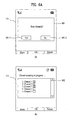
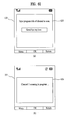
- the mobile terminal 100 performs a scanning operation on all channels in response to a user's request or selection for a channel scanning as exemplified by 'Yes' 601-1 in FIG. 6A (a) .
- the mobile terminal 100 displays a channel list 602 indicating availability of reception as "O” or "X” in accordance with a scanning result as shown in FIG. 6A (b) , where "O" indicates that reception is available and "X" indicates that reception is not available, for example.
- the mobile terminal 100 displays reception availability for Channel 1 according to a scanning result of Channel 1, displays reception availability for Channel 2 according to a scanning result of Channel 2, and so on until displaying reception availability for the last scanned channel after stopping the scanning operation after scanning the last channel.
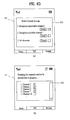
- the mobile terminal 100 displays a window 611 for querying whether to scan channels to detect channels that are supported in the specific area, as shown in FIG. 6B (a) , if it is determined that the mobile terminal entered a specific area, for example, "area-A.”
- the mobile terminal 100 displays a channel list 612 showing channels supported in the specific area and indicating reception availability for each channel according to a real time channel scanning result, as shown in FIG. 6B (b) , if 'Yes' 611-1 is selected in FIG. 6B (a) .
- the mobile terminal 100 displays a "Frequency Select" list 613 showing a plurality of frequencies to be selected for scanning, at least one channel being assigned to each of the plurality of frequencies, as shown in FIG. 6C (a) .
- the mobile terminal 100 displays a channel list 614 showing channels corresponding to a selected at least one frequency and indicating reception availability for each channel in the channel list 614 according to a real time channel scanning result in the order of the scanning, as shown in FIG. 6C (b) when at least one frequency is selected from the list 613.
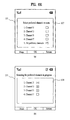
- the mobile terminal 100 displays a scanning condition list 615 showing 'reception-unavailable channel', 'reception-available channel' and 'all channels' generated from the previous scanning result, as shown in FIG. 6D (a) .
- the mobile terminal 100 displays a channel list showing channels corresponding to the selected scanning condition if 'detail' displayed next to each scanning condition is selected in FIG. 6D (a) .
- the mobile terminal 100 displays a channel list 616 showing channels, for which reception is unavailable according to the previous scanning result and indicating reception availability for each channel in the channel list according to a real time scanning result in the order of the scanning, as shown in FIG. 6D (b) , if 'reception-unavailable channel' is selected as shown in FIG. 6D (a) .
- the mobile terminal 100 displays a preferred channel list 617 showing a plurality of preferred channels, as shown in FIG. 6E (a) .
- the preferred channels are channels having a high frequency of viewing or a long viewing time which is longer than a predetermined duration of time in the mobile terminal 100.
- the mobile terminal 100 displays a preferred channel list 618 showing all preferred channels and indicating reception availability for each channel in the channel list according to a real time scanning result in the order of the scanning, as shown in FIG. 6E (b) , if 'all preferred channels' is selected as shown in FIG. 6E (a) .
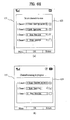
- the mobile terminal 100 displays a genre list 619 showing a plurality of channel genres as shown in FIG. 6F (a) .
- the channel genres may include drama, sports, current issues/economy, entertainment/culture, or cartoon.
- the mobile terminal 100 displays a channel list 620 showing channels providing the selected channel genre of drama and entertainment/culture and indicating reception availability for each channel in the channel list according to a real time scanning result in the order of the scanning, as shown in FIG. 6F (b) , if 'drama' and 'entertainment/culture' are selected as shown in FIG. 6F (a) .
- the mobile terminal 100 displays a viewer age discretion list 621 showing a plurality of ranges of viewer ages, as shown in FIG. 6G (a) .
- the mobile terminal 100 displays a channel list 622 showing channels viewable by viewers of ages over 15 and indicating reception availability for each channel in the channel list according to a real time scanning result in the order of the scanning, as shown in FIG. 6G (b) , if 'ages over 15' is selected as shown in FIG. 6G (a) .
- the mobile terminal 100 displays a list 623 that shows broadcast program information for each channel as shown in FIG. 6H (a) .
- the broadcast program information may include a program title currently being broadcast by a corresponding channel and a previous/next program title.
- the broadcast program information may also include broadcast schedule information corresponding to each channel.
- the mobile terminal 100 displays a channel list 624 showing the channels selected from the list 623 and indicating reception availability of each channel in the list according to a real time channel scanning result in the order of the scanning, as shown in FIG. 6H (b) , if at least one channel, for example, Channels 1, 2, and 3, are selected from the list 623 as shown in FIG. 6H (a) .
- a program title of a channel to be scanned may be directly input to an input window 625 of the mobile terminal 100 by a user as shown in FIG. 6I (a) .
- other scanning criteria such as a channel name and an area name may be directly input to the mobile terminal 100.
- at least one or more program titles may be input in a plurality of input boxes on the input window 625 to scan for plurality of program titles.
- the mobile terminal 100 scans for a channel providing 'Good-by, my love', as shown in FIG. 6I (b) , if program title 'Good-bye, my love' is selected, as shown in FIG. 6I (a) .
- the mobile terminal 100 displays a channel list 627 showing reception availability according to the previous scanning result, as shown in FIG. 6J (a) .
- the channel list 627 includes all channels displayed during the course of scanning or after completion of the scanning.
- the mobile terminal 100 displays a channel list 628 showing the reception-unavailable channels 'Channel 3' and 'Channel 5' and indicating reception availability of each reception-unavailable channel in the channel list according to a real time scanning result in the order of the scanning, as shown in FIG. 6J (b) , if reception-unavailable channels 'Channel 3' and 'Channel 5,' as indicated by 'X,' are individually selected as shown in FIG. 6J (a) .
- a user may select any other channel to scan, for example, reception-available channels, rather than the reception-unavailable channels. Moreover, the user may simply select the entire reception-unavailable channels by selecting a box 'reception-unavailable channel' provided at a lower right-hand portion of the channel list 627.
- FIG. 7A and FIG. 7B illustrate the channel scanning (S540) and the channel list display (S550) when the mobile terminal 100 moves into a new area.
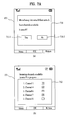
- the mobile terminal displays a window 711 for querying whether channels supported or available in the area-B will be scanned, as shown in FIG. 7A (a) , when it is determined by the position-location module 115 that the mobile terminal 100 moves into area-B from area-A. For example, the mobile terminal 100 will query whether to scan channels if it is determined that channels supported in area-A differ from channels supported in area-B or automatically when moving into area-B without determining whether the channels supported in area-A differ from the channels supported in area-B.
- the mobile terminal 100 displays a channel list 712 showing all channels supported in area-B and indicating reception availability for each channel in the channel list according to a real time channel scanning result in order of the scanning, as shown in FIG. 7A (b) , if 'Yes' 711-1 is selected as shown in FIG. 7A (a) .
- the mobile terminal 100 displays a window 722 for querying whether channels supported in area-B will be scanned, as shown in FIG. 7B (b) , when movement by the mobile terminal into area-B from area-A is detected or determined while outputting a broadcast, as shown in FIG. 7A (a) .
- the mobile terminal 100 scans for the same channel in area-B to locate a channel which provides the same broadcast signal as the channel previously output in area-A in order to output the same broadcast signal from the scanned channel, if 'Yes' is selected from the window 722. Therefore, a user continues viewing the same broadcast from the channel providing the same broadcast signal even if the area has been changed and the channels supported in the changed area are different from the channels supported in the previous area.
- the channel list display (S550) illustrated in FIG. 5 is explained in detail with reference to FIG. 8A and FIG. 8B .
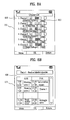
- the mobile terminal 100 displays a channel list 810 that includes a channel name, such as Channel 1 and Channel 2, reception strength for each listed channel, and broadcast program information for each listed channel.
- the reception strength may be presented by a number of bars shaded on a bar graph.
- the broadcast program information may be a title of a broadcast program currently provided via a channel, a title of a previously broadcasted program, or a title of a next program to be broadcast. Further, the broadcast program information may also include broadcast schedule information, as shown in FIG. 8B .
- the mobile terminal 100 displays broadcast schedule information 820 on Channel 1, as shown in FIG. 8B , if 'detail' 811 of Channel 1 is selected as shown in FIG. 8A .
- the channel list 810 and the broadcast schedule information 820 may be carried out after completion of the channel scanning or while scanning channels.
- the mobile terminal 100 may select a specific channel for which reception is available from the displayed channel list (S560) while scanning channels. Then, the mobile terminal 100 outputs a broadcast signal received from the selected channel via the output unit 150 (S570).
- the mobile terminal 100 determines whether the channel scan has been completed while outputting the broadcast signal. The mobile terminal 100 continues outputting the broadcast signal if it is determined that the channel scan has been completed. Otherwise, the mobile terminal 100 maintains the channel scan (S590).
- the mobile terminal 100 maintains the channel scan if a user selects to maintain the channel scan.
- the mobile terminal 100 does not maintain the channel scan if the user selects to stop the channel scan.
- the broadcast signal output (S570) and the corresponding selective channel scan are described in detail with reference to FIGs. 9A to 9D .
- the mobile terminal 100 displays a window 921 for querying whether to maintain the channel scan while outputting a broadcast signal received on Channel 2, as shown in FIG. 9B , when reception-available channel 'Channel 2' 911 is selected from a channel list 910 while scanning channels as shown in FIG. 9A .
- the mobile terminal 100 displays an indicator or progressive bar 922 indicating a channel scanning progression on a portion of a screen, as shown in FIG. 9C (a) , if 'Yes' 921-1 is selected in FIG. 9B .
- the mobile terminal 100 divides a screen into a plurality of regions to display an output image 920 of a broadcast signal received via Channel 2 on a first region and a channel list 910, which indicates a real time channel scanning result, on a second region, as shown in FIG. 9C (b) , if 'Yes' is selected to maintain the scanning operation in FIG. 9B .
- the mobile terminal 100 may display the channel list 910, as shown in FIG. 9C (b) , if 'List' 923 is selected in FIG. 9C (a) .
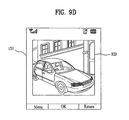
- the mobile terminal 100 stops the channel scan and outputs the broadcast signal received on channel 2, as shown in FIG. 9D , if 'No' 921-1 is selected in FIG. 9B .
- the mobile terminal 100 divides a screen into a plurality of regions to display an output image 1010 of a broadcast signal on a first region and a channel list 1020, which indicates a scanning result, on a second region, as shown in FIG. 10A , if a channel scanning operation is selected while a broadcast signal is being output or a broadcast signal output is selected during channel scanning.
- the mobile terminal 100 outputs a broadcast signal received on Channel 4 via the output unit 150, as shown in FIG. 10B , if reception-available channel 'Channel 4' 1021 is selected from the channel list 1020, as shown in FIG. 10A .
- the mobile terminal 100 divides the screen into a plurality of regions to display an output image of a broadcast signal received on a previous channel prior to channel selection from the channel list 1020 on a first region, and an output image of a broadcast signal received on the selected Channel 4 on a second region, if reception-available channel 'Channel 4' 1021 is selected from the channel list 1020, as shown in FIG. 10A .
- the audio output module 152 may output an audio signal synchronized with the output image displayed on either the first region or the second region.
- the mobile terminal searches a relevant channel database for identification information related to a first program to identify a program corresponding to the first program in the second area to maintain the recording or viewing schedule for the first program in the second area based on the searched identification information, if the mobile terminal 100 that is scheduled for recoding or viewing of a first program in a first area moves into the second area.
- a recording schedule for a first program was made in area-A and a channel for providing the first program is also supported in area-B. Since area-A and area-B differ from each other in the frequency of the channel for providing the first program, it is assumed that area-A and area-B differ from each other in channel identification information and program identification of the first program.
- the mobile terminal displays a window 1110 for querying whether to maintain the recording schedule for the first program, as shown in FIG. 11 (a) , when it is determined by the position-location module 115 that the mobile terminal 100 has moved into area-B from area-A.
- the mobile terminal 100 sets a recording schedule for the first program corresponding to area-B, as shown in FIG. 11 (b) , if 'Yes' 111 is selected, as shown in FIG. 11(a) .
- the above-described channel scanning method of the mobile terminal may be implemented in a program recorded medium as computer-readable codes.
- the computer-readable media include all kinds of recording devices in which data readable by a computer system are stored.
- the computer-readable media include ROM, RAM, CD-ROM, magnetic tapes, floppy discs, and optical data storage devices and also include carrier-wave type implementations, such as transmission via the Internet. Further, the computer may include the controller 180.
- the present invention provides several effects and/or advantages.
- First, the present invention displays a channel list in which a real-time channel scanning result is indicated during channel scan, thereby providing the result of the channel scan to a user more quickly.
- Second, the present invention displays a channel list including both reception-available channels and reception-unavailable channels as a result of channel scan, thereby providing a user with information on the reception-unavailable channels instead of only the reception-available channels as in the related art.
- the present invention enables a channel scan to be selectively maintained while outputting a broadcast signal on a channel selected from a channel list, thereby performing both broadcast output and channel scan simultaneously.
Landscapes
- Engineering & Computer Science (AREA)
- Multimedia (AREA)
- Signal Processing (AREA)
- Human Computer Interaction (AREA)
- Databases & Information Systems (AREA)
- Business, Economics & Management (AREA)
- General Engineering & Computer Science (AREA)
- Finance (AREA)
- Strategic Management (AREA)
- Computer Networks & Wireless Communication (AREA)
- Mobile Radio Communication Systems (AREA)
- Telephone Function (AREA)
- Two-Way Televisions, Distribution Of Moving Picture Or The Like (AREA)
Applications Claiming Priority (1)
| Application Number | Priority Date | Filing Date | Title |
|---|---|---|---|
| KR1020070123223A KR101448621B1 (ko) | 2007-11-30 | 2007-11-30 | 단말기 및 이것의 채널 스캔 방법 |
Publications (3)
| Publication Number | Publication Date |
|---|---|
| EP2066117A2 true EP2066117A2 (fr) | 2009-06-03 |
| EP2066117A3 EP2066117A3 (fr) | 2009-11-11 |
| EP2066117B1 EP2066117B1 (fr) | 2012-06-27 |
Family
ID=40427233
Family Applications (1)
| Application Number | Title | Priority Date | Filing Date |
|---|---|---|---|
| EP08017506A Not-in-force EP2066117B1 (fr) | 2007-11-30 | 2008-10-06 | Méthode de sélection des fréquences à être mis à jour au cours d'un balayage des canaux dans un appareil de communication mobile basé sur le résultat d'une première analyse |
Country Status (4)
| Country | Link |
|---|---|
| US (1) | US8170499B2 (fr) |
| EP (1) | EP2066117B1 (fr) |
| KR (1) | KR101448621B1 (fr) |
| CN (1) | CN101447838A (fr) |
Cited By (4)
| Publication number | Priority date | Publication date | Assignee | Title |
|---|---|---|---|---|
| EP2139231A1 (fr) | 2008-06-23 | 2009-12-30 | Lg Electronics Inc. | Terminal mobile et procédé de gestion de liste de canaux correspondante |
| EP2373008A3 (fr) * | 2010-03-30 | 2011-11-02 | Kabushiki Kaisha Toshiba | Appareil et procédé de réception vidéo |
| EP2809066A1 (fr) * | 2013-05-28 | 2014-12-03 | Kabushiki Kaisha Toshiba | Dispositif électronique, procédé de contrôle et support de stockage |
| TWI495385B (zh) * | 2013-01-31 | 2015-08-01 | Hon Hai Prec Ind Co Ltd | 行動設備及其頻道掃描方法 |
Families Citing this family (19)
| Publication number | Priority date | Publication date | Assignee | Title |
|---|---|---|---|---|
| KR101507795B1 (ko) * | 2008-05-09 | 2015-04-03 | 엘지전자 주식회사 | 이동 단말기 및 이것의 채널 표시 방법 |
| KR101580156B1 (ko) * | 2009-09-16 | 2015-12-24 | 엘지전자 주식회사 | 이동 단말기 및 그의 방송 채널 관리 방법 |
| KR101635563B1 (ko) * | 2010-01-08 | 2016-07-01 | 엘지전자 주식회사 | 영상표시장치 및 그 동작방법 |
| KR101674009B1 (ko) * | 2010-03-29 | 2016-11-08 | 삼성전자주식회사 | 이동통신 단말기에서 채널정보 갱신 장치 및 방법 |
| CN102870493B (zh) * | 2010-04-26 | 2015-06-10 | 联想创新有限公司(香港) | 通信终端、连接目的地显示方法 |
| CN101917240A (zh) * | 2010-08-06 | 2010-12-15 | 华为终端有限公司 | 一种移动终端调频广播的频道设置方法及移动终端 |
| KR101735320B1 (ko) * | 2010-10-14 | 2017-05-16 | 삼성전자 주식회사 | 이동 단말의 스캔을 제어하는 방법 및 이를 수행하는 기지국 |
| KR101761616B1 (ko) * | 2010-10-29 | 2017-08-04 | 엘지전자 주식회사 | 이동단말기, 디스플레이 장치 및 그 제어 방법 |
| KR20130012188A (ko) * | 2011-06-24 | 2013-02-01 | 주식회사 케이티 | 서비스 제공 방법 및 시스템 |
| EP2826306A1 (fr) * | 2012-03-16 | 2015-01-21 | Sony Mobile Communications AB | Recherche de canaux sur la base d'informations de disponibilité de canaux |
| KR20140102061A (ko) * | 2013-02-13 | 2014-08-21 | 삼성전자주식회사 | 디스플레이장치, 서버 및 그 제어방법 |
| US9467241B2 (en) * | 2014-01-06 | 2016-10-11 | Ford Global Technologies, Llc | Radio station genre categorization |
| US20150235052A1 (en) * | 2014-02-17 | 2015-08-20 | Samsung Electronics Co., Ltd. | Electronic device and method for protecting users privacy |
| CN104010218B (zh) * | 2014-05-16 | 2018-07-20 | 京东方科技集团股份有限公司 | 一种电视频道的分类方法、查找方法、分类装置及播放设备 |
| KR102181555B1 (ko) * | 2014-09-29 | 2020-11-23 | 삼성전자주식회사 | 채널 관리를 위한 방법 및 그 전자 장치 |
| US10587924B2 (en) | 2017-01-03 | 2020-03-10 | Turner Broadcasting System, Inc | Personalized, event-driven, and location-based consumption of media content |
| CN108882011A (zh) * | 2018-06-13 | 2018-11-23 | 广州视源电子科技股份有限公司 | 电视机搜台方法、装置、移动终端及存储介质 |
| US10681522B1 (en) * | 2019-04-01 | 2020-06-09 | Sony Corporation | Emergency alert setting control based on location change |
| CN113973353A (zh) * | 2020-07-23 | 2022-01-25 | 索尼公司 | 电子设备、无线通信方法和计算机可读存储介质 |
Citations (3)
| Publication number | Priority date | Publication date | Assignee | Title |
|---|---|---|---|---|
| US20050122429A1 (en) | 2003-12-08 | 2005-06-09 | Yusaku Katsube | Communication terminal device |
| EP1791264A1 (fr) | 2004-09-01 | 2007-05-30 | Matsushita Electric Industrial Co., Ltd. | Appareil terminal mobile |
| EP1802107A1 (fr) | 2004-10-08 | 2007-06-27 | Matsushita Electric Industrial Co., Ltd. | Appareil de reception de diffusion |
Family Cites Families (8)
| Publication number | Priority date | Publication date | Assignee | Title |
|---|---|---|---|---|
| JP4145133B2 (ja) | 2002-12-03 | 2008-09-03 | 三洋電機株式会社 | ディジタル放送受信装置 |
| JP4531519B2 (ja) * | 2004-10-14 | 2010-08-25 | ソニー・エリクソン・モバイルコミュニケーションズ株式会社 | 携帯端末装置及び受信方法 |
| KR20060044098A (ko) * | 2004-11-11 | 2006-05-16 | 엘지전자 주식회사 | 채널 자동 선국 장치 및 그 제어 방법 |
| US7904927B2 (en) * | 2004-11-12 | 2011-03-08 | Nec Corporation | Mobile terminal, TV program recording system for mobile terminal, and TV program recording program |
| TWI319285B (en) * | 2005-09-22 | 2010-01-01 | Lite On Technology Corp | Method and device for receiving digital broadcasts |
| JP4544212B2 (ja) * | 2006-07-03 | 2010-09-15 | ソニー株式会社 | 地上デジタルテレビ放送の受信機 |
| US9038110B2 (en) * | 2006-11-28 | 2015-05-19 | Verizon Patent And Licensing Inc. | System and method for viewing a TV program guide on a mobile device background |
| US7685617B2 (en) * | 2006-12-21 | 2010-03-23 | General Instrument Corporation | Method and system for selectively and multiply routing media stream to a media appliance |
-
2007
- 2007-11-30 KR KR1020070123223A patent/KR101448621B1/ko not_active Expired - Fee Related
-
2008
- 2008-09-26 CN CNA2008101661256A patent/CN101447838A/zh active Pending
- 2008-10-01 US US12/243,828 patent/US8170499B2/en not_active Expired - Fee Related
- 2008-10-06 EP EP08017506A patent/EP2066117B1/fr not_active Not-in-force
Patent Citations (3)
| Publication number | Priority date | Publication date | Assignee | Title |
|---|---|---|---|---|
| US20050122429A1 (en) | 2003-12-08 | 2005-06-09 | Yusaku Katsube | Communication terminal device |
| EP1791264A1 (fr) | 2004-09-01 | 2007-05-30 | Matsushita Electric Industrial Co., Ltd. | Appareil terminal mobile |
| EP1802107A1 (fr) | 2004-10-08 | 2007-06-27 | Matsushita Electric Industrial Co., Ltd. | Appareil de reception de diffusion |
Cited By (4)
| Publication number | Priority date | Publication date | Assignee | Title |
|---|---|---|---|---|
| EP2139231A1 (fr) | 2008-06-23 | 2009-12-30 | Lg Electronics Inc. | Terminal mobile et procédé de gestion de liste de canaux correspondante |
| EP2373008A3 (fr) * | 2010-03-30 | 2011-11-02 | Kabushiki Kaisha Toshiba | Appareil et procédé de réception vidéo |
| TWI495385B (zh) * | 2013-01-31 | 2015-08-01 | Hon Hai Prec Ind Co Ltd | 行動設備及其頻道掃描方法 |
| EP2809066A1 (fr) * | 2013-05-28 | 2014-12-03 | Kabushiki Kaisha Toshiba | Dispositif électronique, procédé de contrôle et support de stockage |
Also Published As
| Publication number | Publication date |
|---|---|
| EP2066117A3 (fr) | 2009-11-11 |
| KR20090056185A (ko) | 2009-06-03 |
| KR101448621B1 (ko) | 2014-10-08 |
| US20090143067A1 (en) | 2009-06-04 |
| CN101447838A (zh) | 2009-06-03 |
| US8170499B2 (en) | 2012-05-01 |
| EP2066117B1 (fr) | 2012-06-27 |
Similar Documents
| Publication | Publication Date | Title |
|---|---|---|
| EP2066117B1 (fr) | Méthode de sélection des fréquences à être mis à jour au cours d'un balayage des canaux dans un appareil de communication mobile basé sur le résultat d'une première analyse | |
| US8356318B2 (en) | Terminal and method of controlling broadcasting therein | |
| EP2139231B1 (fr) | Terminal mobile et procédé de gestion de liste de canaux correspondante | |
| EP2071577A1 (fr) | Terminal mobile et procédé de lecture de données de celui-ci | |
| US8103269B2 (en) | Mobile terminal and method of selecting broadcast mode therein | |
| US8175652B2 (en) | Terminal and method of controlling the same | |
| CA2643417C (fr) | Terminal mobile et methode de controle de diffusion dudit terminal | |
| EP2160024B1 (fr) | Terminal, son procédé de commande et son support enregistrable | |
| EP2066031B1 (fr) | Terminal et procédé de contrôle des signaux de diffusion dans un terminal mobile | |
| EP1998537B1 (fr) | Terminal de communication mobile et procédé d'affichage d'informations l'utilisant | |
| US8200176B2 (en) | Mobile terminal and method of controlling broadcast in mobile terminal | |
| US8463267B2 (en) | Mobile terminal and method of selecting broadcast service provider therein | |
| US8196159B2 (en) | Terminal and method of controlling broadcasting therein | |
| US20090247220A1 (en) | Terminal and method of controlling broadcasting therein | |
| US20090132960A1 (en) | Terminal, method of controlling the same and recording medium for the method | |
| EP2063615B1 (fr) | Terminal de communication et son procédé d'affichage | |
| US8571590B2 (en) | Mobile terminal that displays obtained broadcast service identity information when broadcast service guide is not available and method of controlling mobile terminal |
Legal Events
| Date | Code | Title | Description |
|---|---|---|---|
| PUAI | Public reference made under article 153(3) epc to a published international application that has entered the european phase |
Free format text: ORIGINAL CODE: 0009012 |
|
| 17P | Request for examination filed |
Effective date: 20081006 |
|
| AK | Designated contracting states |
Kind code of ref document: A2 Designated state(s): AT BE BG CH CY CZ DE DK EE ES FI FR GB GR HR HU IE IS IT LI LT LU LV MC MT NL NO PL PT RO SE SI SK TR |
|
| AX | Request for extension of the european patent |
Extension state: AL BA MK RS |
|
| PUAL | Search report despatched |
Free format text: ORIGINAL CODE: 0009013 |
|
| AK | Designated contracting states |
Kind code of ref document: A3 Designated state(s): AT BE BG CH CY CZ DE DK EE ES FI FR GB GR HR HU IE IS IT LI LT LU LV MC MT NL NO PL PT RO SE SI SK TR |
|
| AX | Request for extension of the european patent |
Extension state: AL BA MK RS |
|
| RIC1 | Information provided on ipc code assigned before grant |
Ipc: H04N 5/44 20060101AFI20090318BHEP Ipc: H04N 5/445 20060101ALI20091006BHEP Ipc: H04N 5/50 20060101ALI20091006BHEP |
|
| AKX | Designation fees paid |
Designated state(s): AT BE BG CH CY CZ DE DK EE ES FI FR GB GR HR HU IE IS IT LI LT LU LV MC MT NL NO PL PT RO SE SI SK TR |
|
| RAP1 | Party data changed (applicant data changed or rights of an application transferred) |
Owner name: LG ELECTRONICS INC. |
|
| 17Q | First examination report despatched |
Effective date: 20100928 |
|
| GRAP | Despatch of communication of intention to grant a patent |
Free format text: ORIGINAL CODE: EPIDOSNIGR1 |
|
| RTI1 | Title (correction) |
Free format text: METHOD FOR SELECTING FREQUENCIES TO BE UPDATED DURING A CHANNEL SCAN IN A MOBILE COMMUNICATION DEVICE BASED ON THE RESULT OF A FIRST CHANNEL SCAN. |
|
| RTI1 | Title (correction) |
Free format text: METHOD FOR SELECTING FREQUENCIES TO BE UPDATED DURING A CHANNEL SCAN IN A MOBILE COMMUNICATION DEVICE BASED ON THE RESULT OF A FIRST CHANNEL SCAN |
|
| GRAS | Grant fee paid |
Free format text: ORIGINAL CODE: EPIDOSNIGR3 |
|
| GRAA | (expected) grant |
Free format text: ORIGINAL CODE: 0009210 |
|
| AK | Designated contracting states |
Kind code of ref document: B1 Designated state(s): AT BE BG CH CY CZ DE DK EE ES FI FR GB GR HR HU IE IS IT LI LT LU LV MC MT NL NO PL PT RO SE SI SK TR |
|
| REG | Reference to a national code |
Ref country code: GB Ref legal event code: FG4D |
|
| REG | Reference to a national code |
Ref country code: CH Ref legal event code: EP |
|
| REG | Reference to a national code |
Ref country code: AT Ref legal event code: REF Ref document number: 564696 Country of ref document: AT Kind code of ref document: T Effective date: 20120715 |
|
| REG | Reference to a national code |
Ref country code: IE Ref legal event code: FG4D |
|
| REG | Reference to a national code |
Ref country code: DE Ref legal event code: R096 Ref document number: 602008016648 Country of ref document: DE Effective date: 20120823 |
|
| PG25 | Lapsed in a contracting state [announced via postgrant information from national office to epo] |
Ref country code: NO Free format text: LAPSE BECAUSE OF FAILURE TO SUBMIT A TRANSLATION OF THE DESCRIPTION OR TO PAY THE FEE WITHIN THE PRESCRIBED TIME-LIMIT Effective date: 20120927 Ref country code: LT Free format text: LAPSE BECAUSE OF FAILURE TO SUBMIT A TRANSLATION OF THE DESCRIPTION OR TO PAY THE FEE WITHIN THE PRESCRIBED TIME-LIMIT Effective date: 20120627 Ref country code: SE Free format text: LAPSE BECAUSE OF FAILURE TO SUBMIT A TRANSLATION OF THE DESCRIPTION OR TO PAY THE FEE WITHIN THE PRESCRIBED TIME-LIMIT Effective date: 20120627 Ref country code: FI Free format text: LAPSE BECAUSE OF FAILURE TO SUBMIT A TRANSLATION OF THE DESCRIPTION OR TO PAY THE FEE WITHIN THE PRESCRIBED TIME-LIMIT Effective date: 20120627 |
|
| REG | Reference to a national code |
Ref country code: NL Ref legal event code: VDEP Effective date: 20120627 |
|
| REG | Reference to a national code |
Ref country code: AT Ref legal event code: MK05 Ref document number: 564696 Country of ref document: AT Kind code of ref document: T Effective date: 20120627 |
|
| REG | Reference to a national code |
Ref country code: LT Ref legal event code: MG4D Effective date: 20120627 |
|
| PG25 | Lapsed in a contracting state [announced via postgrant information from national office to epo] |
Ref country code: LV Free format text: LAPSE BECAUSE OF FAILURE TO SUBMIT A TRANSLATION OF THE DESCRIPTION OR TO PAY THE FEE WITHIN THE PRESCRIBED TIME-LIMIT Effective date: 20120627 Ref country code: HR Free format text: LAPSE BECAUSE OF FAILURE TO SUBMIT A TRANSLATION OF THE DESCRIPTION OR TO PAY THE FEE WITHIN THE PRESCRIBED TIME-LIMIT Effective date: 20120627 Ref country code: SI Free format text: LAPSE BECAUSE OF FAILURE TO SUBMIT A TRANSLATION OF THE DESCRIPTION OR TO PAY THE FEE WITHIN THE PRESCRIBED TIME-LIMIT Effective date: 20120627 Ref country code: GR Free format text: LAPSE BECAUSE OF FAILURE TO SUBMIT A TRANSLATION OF THE DESCRIPTION OR TO PAY THE FEE WITHIN THE PRESCRIBED TIME-LIMIT Effective date: 20120928 |
|
| PG25 | Lapsed in a contracting state [announced via postgrant information from national office to epo] |
Ref country code: AT Free format text: LAPSE BECAUSE OF FAILURE TO SUBMIT A TRANSLATION OF THE DESCRIPTION OR TO PAY THE FEE WITHIN THE PRESCRIBED TIME-LIMIT Effective date: 20120627 Ref country code: EE Free format text: LAPSE BECAUSE OF FAILURE TO SUBMIT A TRANSLATION OF THE DESCRIPTION OR TO PAY THE FEE WITHIN THE PRESCRIBED TIME-LIMIT Effective date: 20120627 Ref country code: CZ Free format text: LAPSE BECAUSE OF FAILURE TO SUBMIT A TRANSLATION OF THE DESCRIPTION OR TO PAY THE FEE WITHIN THE PRESCRIBED TIME-LIMIT Effective date: 20120627 Ref country code: RO Free format text: LAPSE BECAUSE OF FAILURE TO SUBMIT A TRANSLATION OF THE DESCRIPTION OR TO PAY THE FEE WITHIN THE PRESCRIBED TIME-LIMIT Effective date: 20120627 Ref country code: SK Free format text: LAPSE BECAUSE OF FAILURE TO SUBMIT A TRANSLATION OF THE DESCRIPTION OR TO PAY THE FEE WITHIN THE PRESCRIBED TIME-LIMIT Effective date: 20120627 Ref country code: BE Free format text: LAPSE BECAUSE OF FAILURE TO SUBMIT A TRANSLATION OF THE DESCRIPTION OR TO PAY THE FEE WITHIN THE PRESCRIBED TIME-LIMIT Effective date: 20120627 Ref country code: CY Free format text: LAPSE BECAUSE OF FAILURE TO SUBMIT A TRANSLATION OF THE DESCRIPTION OR TO PAY THE FEE WITHIN THE PRESCRIBED TIME-LIMIT Effective date: 20120627 Ref country code: IS Free format text: LAPSE BECAUSE OF FAILURE TO SUBMIT A TRANSLATION OF THE DESCRIPTION OR TO PAY THE FEE WITHIN THE PRESCRIBED TIME-LIMIT Effective date: 20121027 |
|
| PG25 | Lapsed in a contracting state [announced via postgrant information from national office to epo] |
Ref country code: PL Free format text: LAPSE BECAUSE OF FAILURE TO SUBMIT A TRANSLATION OF THE DESCRIPTION OR TO PAY THE FEE WITHIN THE PRESCRIBED TIME-LIMIT Effective date: 20120627 Ref country code: PT Free format text: LAPSE BECAUSE OF FAILURE TO SUBMIT A TRANSLATION OF THE DESCRIPTION OR TO PAY THE FEE WITHIN THE PRESCRIBED TIME-LIMIT Effective date: 20121029 Ref country code: IT Free format text: LAPSE BECAUSE OF FAILURE TO SUBMIT A TRANSLATION OF THE DESCRIPTION OR TO PAY THE FEE WITHIN THE PRESCRIBED TIME-LIMIT Effective date: 20120627 |
|
| PG25 | Lapsed in a contracting state [announced via postgrant information from national office to epo] |
Ref country code: NL Free format text: LAPSE BECAUSE OF FAILURE TO SUBMIT A TRANSLATION OF THE DESCRIPTION OR TO PAY THE FEE WITHIN THE PRESCRIBED TIME-LIMIT Effective date: 20120627 |
|
| PG25 | Lapsed in a contracting state [announced via postgrant information from national office to epo] |
Ref country code: ES Free format text: LAPSE BECAUSE OF FAILURE TO SUBMIT A TRANSLATION OF THE DESCRIPTION OR TO PAY THE FEE WITHIN THE PRESCRIBED TIME-LIMIT Effective date: 20121008 Ref country code: DK Free format text: LAPSE BECAUSE OF FAILURE TO SUBMIT A TRANSLATION OF THE DESCRIPTION OR TO PAY THE FEE WITHIN THE PRESCRIBED TIME-LIMIT Effective date: 20120627 |
|
| PLBE | No opposition filed within time limit |
Free format text: ORIGINAL CODE: 0009261 |
|
| STAA | Information on the status of an ep patent application or granted ep patent |
Free format text: STATUS: NO OPPOSITION FILED WITHIN TIME LIMIT |
|
| PG25 | Lapsed in a contracting state [announced via postgrant information from national office to epo] |
Ref country code: MC Free format text: LAPSE BECAUSE OF NON-PAYMENT OF DUE FEES Effective date: 20121031 |
|
| REG | Reference to a national code |
Ref country code: CH Ref legal event code: PL |
|
| 26N | No opposition filed |
Effective date: 20130328 |
|
| REG | Reference to a national code |
Ref country code: IE Ref legal event code: MM4A |
|
| REG | Reference to a national code |
Ref country code: DE Ref legal event code: R097 Ref document number: 602008016648 Country of ref document: DE Effective date: 20130328 |
|
| PG25 | Lapsed in a contracting state [announced via postgrant information from national office to epo] |
Ref country code: BG Free format text: LAPSE BECAUSE OF FAILURE TO SUBMIT A TRANSLATION OF THE DESCRIPTION OR TO PAY THE FEE WITHIN THE PRESCRIBED TIME-LIMIT Effective date: 20120927 Ref country code: CH Free format text: LAPSE BECAUSE OF NON-PAYMENT OF DUE FEES Effective date: 20121031 Ref country code: IE Free format text: LAPSE BECAUSE OF NON-PAYMENT OF DUE FEES Effective date: 20121006 Ref country code: LI Free format text: LAPSE BECAUSE OF NON-PAYMENT OF DUE FEES Effective date: 20121031 |
|
| PG25 | Lapsed in a contracting state [announced via postgrant information from national office to epo] |
Ref country code: MT Free format text: LAPSE BECAUSE OF FAILURE TO SUBMIT A TRANSLATION OF THE DESCRIPTION OR TO PAY THE FEE WITHIN THE PRESCRIBED TIME-LIMIT Effective date: 20120627 |
|
| PG25 | Lapsed in a contracting state [announced via postgrant information from national office to epo] |
Ref country code: TR Free format text: LAPSE BECAUSE OF FAILURE TO SUBMIT A TRANSLATION OF THE DESCRIPTION OR TO PAY THE FEE WITHIN THE PRESCRIBED TIME-LIMIT Effective date: 20120627 |
|
| PG25 | Lapsed in a contracting state [announced via postgrant information from national office to epo] |
Ref country code: LU Free format text: LAPSE BECAUSE OF NON-PAYMENT OF DUE FEES Effective date: 20121006 |
|
| PG25 | Lapsed in a contracting state [announced via postgrant information from national office to epo] |
Ref country code: HU Free format text: LAPSE BECAUSE OF FAILURE TO SUBMIT A TRANSLATION OF THE DESCRIPTION OR TO PAY THE FEE WITHIN THE PRESCRIBED TIME-LIMIT Effective date: 20081006 |
|
| REG | Reference to a national code |
Ref country code: FR Ref legal event code: PLFP Year of fee payment: 9 |
|
| PGFP | Annual fee paid to national office [announced via postgrant information from national office to epo] |
Ref country code: GB Payment date: 20160906 Year of fee payment: 9 |
|
| PGFP | Annual fee paid to national office [announced via postgrant information from national office to epo] |
Ref country code: FR Payment date: 20160912 Year of fee payment: 9 |
|
| PGFP | Annual fee paid to national office [announced via postgrant information from national office to epo] |
Ref country code: DE Payment date: 20160906 Year of fee payment: 9 |
|
| REG | Reference to a national code |
Ref country code: DE Ref legal event code: R119 Ref document number: 602008016648 Country of ref document: DE |
|
| GBPC | Gb: european patent ceased through non-payment of renewal fee |
Effective date: 20171006 |
|
| REG | Reference to a national code |
Ref country code: FR Ref legal event code: ST Effective date: 20180629 |
|
| PG25 | Lapsed in a contracting state [announced via postgrant information from national office to epo] |
Ref country code: DE Free format text: LAPSE BECAUSE OF NON-PAYMENT OF DUE FEES Effective date: 20180501 Ref country code: GB Free format text: LAPSE BECAUSE OF NON-PAYMENT OF DUE FEES Effective date: 20171006 |
|
| PG25 | Lapsed in a contracting state [announced via postgrant information from national office to epo] |
Ref country code: FR Free format text: LAPSE BECAUSE OF NON-PAYMENT OF DUE FEES Effective date: 20171031 |