EP2067863A2 - Verfahren und Zusammensetzungen für mit Amyloidose assoziierte Erkrankungen - Google Patents
Verfahren und Zusammensetzungen für mit Amyloidose assoziierte Erkrankungen Download PDFInfo
- Publication number
- EP2067863A2 EP2067863A2 EP08014103A EP08014103A EP2067863A2 EP 2067863 A2 EP2067863 A2 EP 2067863A2 EP 08014103 A EP08014103 A EP 08014103A EP 08014103 A EP08014103 A EP 08014103A EP 2067863 A2 EP2067863 A2 EP 2067863A2
- Authority
- EP
- European Patent Office
- Prior art keywords
- amyloid
- composition
- fragment
- familial
- amyloidosis
- Prior art date
- Legal status (The legal status is an assumption and is not a legal conclusion. Google has not performed a legal analysis and makes no representation as to the accuracy of the status listed.)
- Withdrawn
Links
Images





Classifications
-
- C—CHEMISTRY; METALLURGY
- C07—ORGANIC CHEMISTRY
- C07K—PEPTIDES
- C07K16/00—Immunoglobulins [IG], e.g. monoclonal or polyclonal antibodies
- C07K16/18—Immunoglobulins [IG], e.g. monoclonal or polyclonal antibodies against material from animals or humans
-
- A—HUMAN NECESSITIES
- A61—MEDICAL OR VETERINARY SCIENCE; HYGIENE
- A61P—SPECIFIC THERAPEUTIC ACTIVITY OF CHEMICAL COMPOUNDS OR MEDICINAL PREPARATIONS
- A61P1/00—Drugs for disorders of the alimentary tract or the digestive system
- A61P1/18—Drugs for disorders of the alimentary tract or the digestive system for pancreatic disorders, e.g. pancreatic enzymes
-
- A—HUMAN NECESSITIES
- A61—MEDICAL OR VETERINARY SCIENCE; HYGIENE
- A61P—SPECIFIC THERAPEUTIC ACTIVITY OF CHEMICAL COMPOUNDS OR MEDICINAL PREPARATIONS
- A61P13/00—Drugs for disorders of the urinary system
- A61P13/02—Drugs for disorders of the urinary system of urine or of the urinary tract, e.g. urine acidifiers
-
- A—HUMAN NECESSITIES
- A61—MEDICAL OR VETERINARY SCIENCE; HYGIENE
- A61P—SPECIFIC THERAPEUTIC ACTIVITY OF CHEMICAL COMPOUNDS OR MEDICINAL PREPARATIONS
- A61P13/00—Drugs for disorders of the urinary system
- A61P13/12—Drugs for disorders of the urinary system of the kidneys
-
- A—HUMAN NECESSITIES
- A61—MEDICAL OR VETERINARY SCIENCE; HYGIENE
- A61P—SPECIFIC THERAPEUTIC ACTIVITY OF CHEMICAL COMPOUNDS OR MEDICINAL PREPARATIONS
- A61P17/00—Drugs for dermatological disorders
- A61P17/04—Antipruritics
-
- A—HUMAN NECESSITIES
- A61—MEDICAL OR VETERINARY SCIENCE; HYGIENE
- A61P—SPECIFIC THERAPEUTIC ACTIVITY OF CHEMICAL COMPOUNDS OR MEDICINAL PREPARATIONS
- A61P25/00—Drugs for disorders of the nervous system
-
- A—HUMAN NECESSITIES
- A61—MEDICAL OR VETERINARY SCIENCE; HYGIENE
- A61P—SPECIFIC THERAPEUTIC ACTIVITY OF CHEMICAL COMPOUNDS OR MEDICINAL PREPARATIONS
- A61P25/00—Drugs for disorders of the nervous system
- A61P25/28—Drugs for disorders of the nervous system for treating neurodegenerative disorders of the central nervous system, e.g. nootropic agents, cognition enhancers, drugs for treating Alzheimer's disease or other forms of dementia
-
- A—HUMAN NECESSITIES
- A61—MEDICAL OR VETERINARY SCIENCE; HYGIENE
- A61P—SPECIFIC THERAPEUTIC ACTIVITY OF CHEMICAL COMPOUNDS OR MEDICINAL PREPARATIONS
- A61P27/00—Drugs for disorders of the senses
- A61P27/16—Otologicals
-
- A—HUMAN NECESSITIES
- A61—MEDICAL OR VETERINARY SCIENCE; HYGIENE
- A61P—SPECIFIC THERAPEUTIC ACTIVITY OF CHEMICAL COMPOUNDS OR MEDICINAL PREPARATIONS
- A61P29/00—Non-central analgesic, antipyretic or antiinflammatory agents, e.g. antirheumatic agents; Non-steroidal antiinflammatory drugs [NSAID]
- A61P29/02—Non-central analgesic, antipyretic or antiinflammatory agents, e.g. antirheumatic agents; Non-steroidal antiinflammatory drugs [NSAID] without antiinflammatory effect
-
- A—HUMAN NECESSITIES
- A61—MEDICAL OR VETERINARY SCIENCE; HYGIENE
- A61P—SPECIFIC THERAPEUTIC ACTIVITY OF CHEMICAL COMPOUNDS OR MEDICINAL PREPARATIONS
- A61P3/00—Drugs for disorders of the metabolism
- A61P3/08—Drugs for disorders of the metabolism for glucose homeostasis
- A61P3/10—Drugs for disorders of the metabolism for glucose homeostasis for hyperglycaemia, e.g. antidiabetics
-
- A—HUMAN NECESSITIES
- A61—MEDICAL OR VETERINARY SCIENCE; HYGIENE
- A61P—SPECIFIC THERAPEUTIC ACTIVITY OF CHEMICAL COMPOUNDS OR MEDICINAL PREPARATIONS
- A61P35/00—Antineoplastic agents
-
- A—HUMAN NECESSITIES
- A61—MEDICAL OR VETERINARY SCIENCE; HYGIENE
- A61P—SPECIFIC THERAPEUTIC ACTIVITY OF CHEMICAL COMPOUNDS OR MEDICINAL PREPARATIONS
- A61P43/00—Drugs for specific purposes, not provided for in groups A61P1/00-A61P41/00
-
- A—HUMAN NECESSITIES
- A61—MEDICAL OR VETERINARY SCIENCE; HYGIENE
- A61P—SPECIFIC THERAPEUTIC ACTIVITY OF CHEMICAL COMPOUNDS OR MEDICINAL PREPARATIONS
- A61P5/00—Drugs for disorders of the endocrine system
-
- A—HUMAN NECESSITIES
- A61—MEDICAL OR VETERINARY SCIENCE; HYGIENE
- A61P—SPECIFIC THERAPEUTIC ACTIVITY OF CHEMICAL COMPOUNDS OR MEDICINAL PREPARATIONS
- A61P5/00—Drugs for disorders of the endocrine system
- A61P5/14—Drugs for disorders of the endocrine system of the thyroid hormones, e.g. T3, T4
-
- A—HUMAN NECESSITIES
- A61—MEDICAL OR VETERINARY SCIENCE; HYGIENE
- A61P—SPECIFIC THERAPEUTIC ACTIVITY OF CHEMICAL COMPOUNDS OR MEDICINAL PREPARATIONS
- A61P7/00—Drugs for disorders of the blood or the extracellular fluid
-
- A—HUMAN NECESSITIES
- A61—MEDICAL OR VETERINARY SCIENCE; HYGIENE
- A61P—SPECIFIC THERAPEUTIC ACTIVITY OF CHEMICAL COMPOUNDS OR MEDICINAL PREPARATIONS
- A61P7/00—Drugs for disorders of the blood or the extracellular fluid
- A61P7/08—Plasma substitutes; Perfusion solutions; Dialytics or haemodialytics; Drugs for electrolytic or acid-base disorders, e.g. hypovolemic shock
-
- A—HUMAN NECESSITIES
- A61—MEDICAL OR VETERINARY SCIENCE; HYGIENE
- A61P—SPECIFIC THERAPEUTIC ACTIVITY OF CHEMICAL COMPOUNDS OR MEDICINAL PREPARATIONS
- A61P9/00—Drugs for disorders of the cardiovascular system
-
- A—HUMAN NECESSITIES
- A61—MEDICAL OR VETERINARY SCIENCE; HYGIENE
- A61P—SPECIFIC THERAPEUTIC ACTIVITY OF CHEMICAL COMPOUNDS OR MEDICINAL PREPARATIONS
- A61P9/00—Drugs for disorders of the cardiovascular system
- A61P9/04—Inotropic agents, i.e. stimulants of cardiac contraction; Drugs for heart failure
-
- C—CHEMISTRY; METALLURGY
- C07—ORGANIC CHEMISTRY
- C07K—PEPTIDES
- C07K14/00—Peptides having more than 20 amino acids; Gastrins; Somatostatins; Melanotropins; Derivatives thereof
- C07K14/435—Peptides having more than 20 amino acids; Gastrins; Somatostatins; Melanotropins; Derivatives thereof from animals; from humans
- C07K14/46—Peptides having more than 20 amino acids; Gastrins; Somatostatins; Melanotropins; Derivatives thereof from animals; from humans from vertebrates
- C07K14/47—Peptides having more than 20 amino acids; Gastrins; Somatostatins; Melanotropins; Derivatives thereof from animals; from humans from vertebrates from mammals
- C07K14/4701—Peptides having more than 20 amino acids; Gastrins; Somatostatins; Melanotropins; Derivatives thereof from animals; from humans from vertebrates from mammals not used
- C07K14/4711—Alzheimer's disease; Amyloid plaque core protein
-
- C—CHEMISTRY; METALLURGY
- C07—ORGANIC CHEMISTRY
- C07K—PEPTIDES
- C07K14/00—Peptides having more than 20 amino acids; Gastrins; Somatostatins; Melanotropins; Derivatives thereof
- C07K14/435—Peptides having more than 20 amino acids; Gastrins; Somatostatins; Melanotropins; Derivatives thereof from animals; from humans
- C07K14/46—Peptides having more than 20 amino acids; Gastrins; Somatostatins; Melanotropins; Derivatives thereof from animals; from humans from vertebrates
- C07K14/47—Peptides having more than 20 amino acids; Gastrins; Somatostatins; Melanotropins; Derivatives thereof from animals; from humans from vertebrates from mammals
- C07K14/4701—Peptides having more than 20 amino acids; Gastrins; Somatostatins; Melanotropins; Derivatives thereof from animals; from humans from vertebrates from mammals not used
- C07K14/4713—Autoimmune diseases, e.g. Insulin-dependent diabetes mellitus, multiple sclerosis, rheumathoid arthritis, systemic lupus erythematosus; Autoantigens
-
- C—CHEMISTRY; METALLURGY
- C07—ORGANIC CHEMISTRY
- C07K—PEPTIDES
- C07K14/00—Peptides having more than 20 amino acids; Gastrins; Somatostatins; Melanotropins; Derivatives thereof
- C07K14/435—Peptides having more than 20 amino acids; Gastrins; Somatostatins; Melanotropins; Derivatives thereof from animals; from humans
- C07K14/79—Transferrins, e.g. lactoferrins, ovotransferrins
-
- A—HUMAN NECESSITIES
- A61—MEDICAL OR VETERINARY SCIENCE; HYGIENE
- A61K—PREPARATIONS FOR MEDICAL, DENTAL OR TOILETRY PURPOSES
- A61K39/00—Medicinal preparations containing antigens or antibodies
- A61K2039/505—Medicinal preparations containing antigens or antibodies comprising antibodies
-
- A—HUMAN NECESSITIES
- A61—MEDICAL OR VETERINARY SCIENCE; HYGIENE
- A61K—PREPARATIONS FOR MEDICAL, DENTAL OR TOILETRY PURPOSES
- A61K39/00—Medicinal preparations containing antigens or antibodies
- A61K2039/555—Medicinal preparations containing antigens or antibodies characterised by a specific combination antigen/adjuvant
- A61K2039/55511—Organic adjuvants
- A61K2039/55555—Liposomes; Vesicles, e.g. nanoparticles; Spheres, e.g. nanospheres; Polymers
-
- A—HUMAN NECESSITIES
- A61—MEDICAL OR VETERINARY SCIENCE; HYGIENE
- A61K—PREPARATIONS FOR MEDICAL, DENTAL OR TOILETRY PURPOSES
- A61K38/00—Medicinal preparations containing peptides
-
- C—CHEMISTRY; METALLURGY
- C07—ORGANIC CHEMISTRY
- C07K—PEPTIDES
- C07K2319/00—Fusion polypeptide
-
- C—CHEMISTRY; METALLURGY
- C12—BIOCHEMISTRY; BEER; SPIRITS; WINE; VINEGAR; MICROBIOLOGY; ENZYMOLOGY; MUTATION OR GENETIC ENGINEERING
- C12N—MICROORGANISMS OR ENZYMES; COMPOSITIONS THEREOF; PROPAGATING, PRESERVING, OR MAINTAINING MICROORGANISMS; MUTATION OR GENETIC ENGINEERING; CULTURE MEDIA
- C12N2799/00—Uses of viruses
- C12N2799/02—Uses of viruses as vector
- C12N2799/021—Uses of viruses as vector for the expression of a heterologous nucleic acid
- C12N2799/026—Uses of viruses as vector for the expression of a heterologous nucleic acid where the vector is derived from a baculovirus
Definitions
- the present invention generally relates to the detection, treatment or prevention of disease states. Specifically, the present invention relates to the detection, treatment or prevention of amyloidosis or amyloid-associated diseases.
- Amyloidosis includes a variety of diseases characterized by an accumulation of amyloid material in the organs or tissues of the body. This accumulation can impair vital functions.
- Diseases associated with amyloidosis include Alzheimer's disease (AD), Down's Syndrome, progressive supranuclear palsy, multiple sclerosis, and Adult Onset Diabetes.
- Localized amyloidosis is associated with cognitive decline (senile cerebral amyloidosis; Alzheimer's), heart disease (senile cardiac amyloidosis), endocrine tumors (thyroid cancer), and Adult Onset Diabetes, diseases which are found in millions of Americans.
- a number of impairments specific to amyloid deposits in the brain are linked with the deposition of the peptide, A ⁇ peptide (amyloid- ⁇ peptide).
- Neurological diseases associated with A ⁇ peptide deposition include Alzheimer's, Lewy body dementia, Down's Syndrome, hereditary cerebral hemorrhage with amyloidosis (Dutch type), and the Guamanian Parkinsonism-Dementia.
- a ⁇ peptide plaques also occur in persons who have experienced head trauma and critical coronary disease.
- AD Alzheimer's Disease
- amyloid plaques in the brain are predominantly composed of A ⁇ peptide, a 4 kD protein, 39-43 amino acids long.
- a ⁇ peptide is expressed by a gene located on chromosome 21 and is derived by proteolytic cleavage from the interior of a much larger (770 residue) cell protein, amyloid precursor protein (APP). After excision, A ⁇ peptide is polymerized into amyloid filaments, which in turn aggregate into amyloid plaque deposits. In the brain, these filaments and aggregates are toxic to neurons and are thought to relate to the causative symptoms associated with AD.
- AD amyloid deposition
- therapies targeted at preventing or reversing amyloid plaque formation on the brain. Damage to CNS neurons due to AD begins years before clinical symptoms are evident. Prevention of amyloidosis in the brain would prevent the development of AD. A similar approach to preventing or treating amylin plaque formation in Adult Onset Diabetes patients would also be beneficial.
- FAD familial Alzheimer's disease
- All known FAD mutations increase either the absolute or relative production of the most pathogenic A ⁇ peptide with 42 amino acids. These mutations arise either in the APP gene itself, affecting the target sites in the APP where proteolytic cleavage occurs, or in one of two presenilin genes, the protein products which directly or, more probably, indirectly affect APP processing.
- the early step of AD excision is followed by the polymerisation of the peptide to amyloid filaments, which in turn aggregate into the visible amyloid plaque deposits that characterize the brains of individuals with AD.
- These filaments, or possibly intermediate protofilamants are toxic to neurons and are thought to lead to neurofibrillary tangles, synapse loss, and neurodegeneration that underlie the decline of cognitive functions in Alzheimer's patients.
- a ⁇ peptide (amyloid- ⁇ peptide)
- other important steps are involved in the pathogenic pathway leading to AD.
- Genetic and biochemical studies both assign a key role to a set of auxiliary proteins that function as "pathological chaperones".
- One such protein is the anti-protease, anti-chyrmotrypsin, and another is the lipid transport protein, apolipoprotein F, particularly its E4 allelic form. Both of these proteins promote the formation and maturation of Alzheimer's plaques with their core of A ⁇ filaments.
- the pathological chaperones can be demonstrated in vitro to accelerate the polymerisation of A ⁇ into neurotoxic amyloid filaments, and experiments with transgenic mice support their role in promoting amyloid formation in vivo. Both proteins are minor components of the amyloid deposits, and are evidently produced as part of an inflammation reaction that arises in response to the initial diffuse deposition of A ⁇ peptide.
- compositions and methods for diagnosis, prevention and treatment of disease states associated with amyloidosis.
- compositions and methods are provided that are effective in detecting and treating amyloid deposition, especially amyloid deposition related to neurodegenerative diseases.
- amyloid deposition is detected and treated by compositions comprising a fusion protein, comprised of a segment comprising an antibody or antibody fragment that binds to an amyloid peptide epitope and a segment capable of crossing the blood-brain barrier, such as one or more transferrin moieties.
- the fusion protein composition has amyloid plaque or tangle dissolving properties and is capable of crossing the blood-brain barrier.
- the present invention provides for the construction and use of a fusion protein that can detect and treat ⁇ -amyloid deposition.
- a preferred fusion protein is comprised of an anti-beta-amyloid monoclonal antibody binding region and one or more transferrin moieties.
- the present invention comprises molecular constructs such as nucleic acid vectors, proteins expressed by such vectors and cells transformed with such vectors and that express the proteins coded for by such vectors.
- the present invention also comprises methods and compositions comprising a vaccine that elicits an immune response against amyloid proteins, peptides or fragments, and prevents, stops or hinders amyloid deposition.
- the vaccine is comprised of an antigen, an amyloid peptide fragment or epitope that is preferably provided in a liposomal bilayer.
- an antigen is comprised of a modified amyloid peptide, preferably palmitoylated ⁇ -amyloid 1-16 peptide, and methods of administration in a liposomal bilayer.
- the invention also provides a method and compositions for preventing or alleviating the symptoms of disease states associated with accumulation or molecular organization of amyloid protein or amyloid plaques in general, including the administration of a pharmaceutically effective amount of a derivaterized amyloid peptide or peptide fragment to a patient.
- the present invention includes a pharmaceutical composition in an amount effective to prevent, stop or impede one or more symptoms of a disease state involving abnormal accumulation or molecular organization of amyloid protein, assemblies, fibrils, filaments, tangles, or plaque deposits.
- the present invention includes an antigen to stimulate production of anti-amyloid monoclonal antibody with the ability to dissolve amyloid plaques.
- the present invention also provides a method for treating a disease state associated with amyloidosis, including the administration of a pharmaceutically effective amount of the vaccine to a patient.
- the present invention also comprises methods for making compositions comprising antisera raised to the epitope of the vaccine compositions of the present invention.
- These antisera compositions are capable of dissolving amyloid aggregates comprising the epitope or antigen (e.g. ⁇ -amyloid).
- the antisera compositions are effective in the treatment or prevention of the accumulation amyloid protein or the formation of amyloid assemblies, fibrils, filaments, tangles, or plaque deposits and, therefore, disease states associated with amyloidosis.
- the invention further comprises methods and compositions for preventing or alleviating the symptoms of disease states associated with accumulation or molecular organization of amyloid protein or amyloid plaques including the administration of a pharmaceutically effective amount of antisera to a patient.
- the present invention is particularly useful in the treatment of amylodi-associated diseases, preferably, ⁇ -amyloid-associated diseases, including Alzheimer's Disease, Lewy body dementia, Down's Syndrome, hereditary cerebral hemorrhage with amyloidosis (Dutch type), and the Guam Parkinson-Dementia complex or other diseases involving abnormal accumulation or molecular organization of amyloid protein, assemblies, fibrils, filaments, tangles, or plaque deposits.
- amylodi-associated diseases preferably, ⁇ -amyloid-associated diseases, including Alzheimer's Disease, Lewy body dementia, Down's Syndrome, hereditary cerebral hemorrhage with amyloidosis (Dutch type), and the Guam Parkinson-Dementia complex or other diseases involving abnormal accumulation or molecular organization of amyloid protein, assemblies, fibrils, filaments, tangles, or plaque deposits.
- compositions and methods for diagnosis, treatment and prevention of diseases associated with amyloid deposition are directed to compositions and methods for diagnosis, treatment and prevention of diseases associated with amyloid deposition.
- Preferred compositions of the present invention include compositions comprising fusion proteins capable of affecting amyloid deposits that can cross the blood-brain barrier, and compositions that are effective in raising an immune response to epitopes of amyloid deposits.
- Preferred methods of the present invention comprise use of the compositions for diagnosis, treatment and prevention of diseases associated with amyloid deposition, and for making and using modified amyloid peptides and molecular constructs of amyloid genes.
- AD Alzheimer's Disease
- the currently recommended "minimum microscopic criteria" for AD diagnosis is based on the number of neuritic plaques found in the brain.
- the amyloid cores of these neuritic plaques are composed of ⁇ -amyloid protein, also referred to herein as amyloid- ⁇ peptide, that is arranged in a predominately beta-pleated sheet configuration.
- Brain amyloid plaques are demonstrated by staining brain sections with thioflavin S or Congo red. Congo red-stained amyloid is characterized by a dichroic appearance, exhibiting a yellow-green polarization color. The dichroic binding is the result of the beta-pleated sheet structure of the amyloid proteins.
- apolipoprotein E genotype has been suggested as an aid in the diagnosis of AD. Difficulties arise with this technology, however, because the apolipoprotein E4 allele is only a risk factor for AD, not a disease marker. It is absent in many AD patients and present in many non-demented elderly people. Immunoassay methods have been developed for detecting the presence of neurochemical markers in AD patients and to detect an AD-related amyloid protein in cerebral spinal fluid. These methods for diagnosing AD have not been proven to detect AD in all patients, particularly at early stages of the disease. They are also relatively invasive, requiring a spinal tap. Recently, radiolabeled A ⁇ peptide has been used to label diffuse, compact and neuritic type plaques in sections of AD brain. These peptides, however, do not normally cross the blood-brain barrier in amounts necessary for imaging.
- Congo red may be used for diagnosing amyloidosis in vivo in non-brain parenchymal tissues. But Congo red is probably not suitable for in vivo diagnosis of ⁇ -amyloid deposits in brain because only very small amounts, approximately 0.03% of an injected dose of iodinated Congo red, can enter the brain parenchyma. Radioiodinated bisdiazobenzidine compounds related to Congo red, such as Benzo Orange R and Direct Blue 4, have been proposed to be useful in vitro and in vivo to detect the presence and location of amyloid deposits in an organ of a patient. However, like Congo red, all of the compounds contain strongly acidic sulfonic acid groups which severely limit entry of these compounds into the brain.
- the present invention comprises methods and compositions for diagnosing and treating diseases and processes mediated by the formation of abnormal amyloid deposition, such as amyloid plaques.
- One aspect of the invention comprises methods of administration of compositions comprising a fusion protein in a dosage sufficient to detect, and preferably dissolve, amyloid plaques.
- Another aspect comprising methods of making and using compositions comprising vaccine or antisera compositions.
- the present invention is useful in detecting and treating neurodegenerative diseases, such as Alzheimer's Disease. It is also useful in detecting and treating amyloid plaques in Lewy body dementia, Down's syndrome, hereditary cerebral hemorrhage with amyloidosis (Dutch type) and in the Guam Parkinson-Dementia complex and other amyloid-associated diseases.
- An aspect of the invention comprises the construction and administration of fusion proteins comprised of 1) at least one segment of a binding region which binds to an epitope or fragment, preferably an epitope such as one located in ⁇ -amyloid and 2) one or more segments comprising portions, fragments or whole proteins that are capable of crossing the blood brain barrier, such as one or more transferrin moieties.
- the segment comprising the binding region can be any binding partner that is capable of attaching, binding or associating with an amyloid-associated moiety.
- the variable region of an antibody including the light or heavy chain or both, can be the binding region that is capable of binding an epitope found on an amyloid protein.
- variable region of the light-chain of the 6C6 anti- ⁇ -amyloid mAb was sequenced and cloned with human transferrin to produce a molecular construct that expressed fusion proteins: V L -Transferrin and V L - (Transferrin) 2 .
- the fusion proteins retained the property of the antibody 6C6 to solubilize ⁇ -amyloid fibers and tangles.
- the addition of the transferrin moieties allows the fusion protein to cross the blood-brain barrier.
- the present invention also comprises genes which code for these fusion proteins, expression vectors which contain these genes, microorganisms and cells transformed with these expression vectors as well as a process for the preparation of the genes, proteins, expression vectors and transformed cells and microorganisms.
- the present invention further comprises other methods and compositions for preventing or treating diseases and processes associated with amyloidosis.
- a further aspect of the invention comprises the administration of compositions comprising a vaccine in a dosage sufficient to elicit an immune response against amyloid epitopes, such as proteins or peptides, particularly those found in plaques, tangles or other depositions. It also comprises the administration of compositions comprising antisera raised against amyloid epitopes or immacheic regions in a dosage sufficient to combat amyloidosis.
- This invention is particularly useful for diagnosing, preventing and treating neurodegenerative diseases associated with amyloid deposition, also referred to as amylodi-associated diseases, such as Alzheimer's, and other conditions associated with localized amyloidosis, such as Adult Onset Diabetes.
- the present invention is also directed to methods of inhibiting production of Alzheimer-type amyloidosis in a mammal comprising administering a pharmaceutically effective amount of a modified amyloid peptide capable of eliciting an immune response wherein the immune response prevents, hinders, or decreases the amount of amyloid deposition.
- a pharmaceutically effective amount of a modified amyloid peptide capable of eliciting an immune response wherein the immune response prevents, hinders, or decreases the amount of amyloid deposition.
- Amyloid-associated conditions or diseases include, but are not limited to, Type 2 diabetes mellitus, amyloid A (reactive), secondary amyloidosis, familial mediterranean fever, familial amyloid nephropathy with urticaria and deafness (Muckle-wells Syndrome), amyloid lambda L-chain or amyloid kappa L-chain (idiopathic, myeloma or macroglobulinemia-associated) A beta 2M (chronic hemodialysis), ATTR (familial amyloid polyneuropathy (Portuguese, Japanese, Swedish), familial amyloid cardiomyopathy (Danish), isolated cardiac amyloid, (systemic senile amyloidosises), AIAPP or amylin insulinoma, atrial naturetic factor (isolated atrial amyloid), procalcitonin (medullary carcinoma of the thyroid), gelsolin (familial amyloidosis (Finnish)), cystat
- compositions comprising molecular constructs and the resulting expressed proteins or cells transformed by such constructs.
- Compositions comprising molecular constructs or the expression of such molecular constructs result in compositions of fusion proteins of the present invention comprising fusion proteins having at least one segment that binds to a portion of amyloid, such as a peptide, protein, tangle or plaque; and at least one segment that is capable of crossing the blood-brain barrier.
- the segment that binds to amyloid is a binding region of an antibody or antibody fragment that binds to an epitope of amyloid, preferably an amyloid peptide or proteins. More particularly, it is preferred that the binding of the fusion protein to the epitope cause the dissolution of amyloid deposits, prevent deposition of amyloid or detect the presence of amyloid deposits.
- a preferred method for producing compositions comprising fusion proteins using recombinant DNA techniques involves (1) sequencing the binding region segment of the fusion protein, for example, the variable region of a light chain of an antibody, (2) generating a synthetic gene for the expression of the variable region, (3) ligating the synthetic gene into a vector, such as the C-tenninaHy His 6 -tagged pet24d+ vector or pet36b+ vector bearing a C-terminal cellulose binding domain (CBD), (4) expressing this construct in E.
- a vector such as the C-tenninaHy His 6 -tagged pet24d+ vector or pet36b+ vector bearing a C-terminal cellulose binding domain (CBD)
- the fusion protein compositions described herein have therapeutic utility, particularly in treatment of amyloid-associated diseases.
- Methods of treatment comprise administration of an effective amount of a composition comprising a fusion protein.
- the subject is then monitored for changes in amyloid plaques or cessation of symptoms.
- the methods of administration comprise one-time administration, sequential administrations or long-term bolus or continuous infusion administrations.
- the fusion protein compositions are preferably administered to the mammal in a carrier.
- a carrier Suitable carriers and their formulations are described in Remington's Pharmaceutical Sciences, 16th ed., 1980, Mack Publishing Co., edited by Oslo et al.
- an appropriate amount of a pharmaceutically-acceptable salt is used in the formulation to render the formulation isotonic.
- a pharmaceutically-acceptable carrier include saline, Ringer's solution and dextrose solution.
- the pH of the solution is preferably from about 5 to about 8, and more preferably from about 7 to about 7.5.
- Further carriers include sustained release preparations such as semipermeable matrices of solid hydrophobic polymers containing the fusion protein, which matrices are in the form of shaped articles, e.g., films, liposomes or microparticles. It will be apparent to those persons skilled in the art that certain carriers may be more preferable depending upon, for instance, the route of administration and concentration of protein being administered.
- the fusion protein compositions can be administered to the subject, preferably an animal, mammal or human, by injection (e.g., intravenous, intraperitoneal, subcutaneous, intramuscular), or by other methods such as infusion that ensure its delivery to the bloodstream in an effective form.
- the compositions may also be administered by intratumoral, peritumoral, intralesional, or perilesional routes, to exert local as well as systemic therapeutic effects. Local or intravenous injection is preferred.
- Effective dosages and schedules for administering the fusion protein compositions may be determined empirically, and making such determinations is within the skill in the art. Those skilled in the art will understand that the dosage of protein that must be administered will vary depending on, for example, the subject which will receive the composition, the route of administration, the particular type of fusion protein in the composition and other drugs being administered to the subject.
- a typical daily dosage of the fusion protein in the compositions of the present invention range from about 1 ⁇ g/kg to up to 100 mg/kg of body weight or more per day, depending on the factors mentioned above.
- the fusion protein compositions may also be administered to the subject in combination with effective amounts of one or more other therapeutic agents. It may be administered sequentially or concurrently with the one or more other therapeutic agents.
- the amounts of fusion protein compositions and therapeutic agents depend, for example, on what type of therapeutic agents are used, the condition being treated, and the scheduling and routes of administration. Following administration of such individual compositions or mixtures of compositions to the subject, the animal's physiological condition can be monitored in various ways well known to the skilled practitioner.
- Fusion protein compositions may further be used in diagnostic assays for detecting specific antigens or as a nucleic acid probe for , e.g., detecting the presence or expression in specific cells, tissues, or serum, in vitro or in vivo.
- diagnostic assays for detecting specific antigens or as a nucleic acid probe for , e.g., detecting the presence or expression in specific cells, tissues, or serum, in vitro or in vivo.
- Various in vitro diagnostic assay techniques known in the art may be used, such as competitive binding assays, direct or indirect sandwich assays and immunoprecipitation assays conducted in either heterogeneous or homogeneous phases. See Zola, Monoclonal Antibodies: A Manual of Technicrues, CRC Press, Inc. (1987) pp. 147-158 .
- the molecular constructs or expressed proteins used in the present invention can be labeled with a detectable moiety.
- the detectable moiety preferably is capable of producing, either directly or indirectly, a detectable signal.
- the detectable moiety may be a radioisotope, such as 3 H, 14 C, 32 P, 35 S, or 125 I, a fluorescent or chemiluminescent compound, such as fluorescein isothiocyanate, rhodamine, or luciferin, or an enzyme, such as alkaline phosphatase, beta-galactosidase or horseradish peroxidase. Any method known in the art for conjugating the antibody to the detectable moiety may be employed.
- the article of manufacture comprises a container with a label.
- Suitable containers include, for example, plates, slides, bottles, vials, and test tubes.
- the containers may be formed from a variety of materials such as glass or plastic.
- the container holds a composition which includes an active agent that is effective for therapeutic or non-therapeutic applications, such as described above.
- the active agent in the composition can comprise the molecular construct or fusion protein.
- the label on the container indicates that the composition is used for a specific therapy other application, and may also indicate directions for either in vivo or in vitro use, such as those described above.
- the kit of the invention will typically comprise the container described above and one or more other containers comprising materials desirable from a commercial and user standpoint, including buffers, diluents, filters, needles, syringes, and package inserts with instructions for use.
- compositions of the present invention comprise compositions comprising at least one modified peptide, fragment or protein, preferably delivered in liposomal bilayers such as liposomes, that are used in methods to elicit an immune response.
- these immune responses are able to overcome immune tolerance to "self" proteins. It is desirable to elicit such immune responses against amyloid peptides in order to treat or prevent amyloidosis.
- the products of the immune response are used to effect amyloid deposts, preferably in solubilizing amyloid aggregates.
- the products of the immune response including but not limited to, antibodies, anitsera, stimulated cells and cellular factors, and antigens of modified amyloid nature, peptides, fragments or proteins, comprise compositions of the present invention.
- a preferred embodiment of the present invention comprises compositions of and methods of using a modified peptide, preferably, A ⁇ 1-16 , to elicit an immune response.
- the immune response products or the immune response in vivo are used to dissolve or partially dissolve amyloid deposits. It is desirable to elicit an immune response against ⁇ -amyloid 1- 16 (A ⁇ 1-16 ).
- a monoclonal antibody, 6C6, developed against the same epitope, the ⁇ -amyloid 1-16 peptide, is capable of solubilizing ⁇ -amyloid fibers and tangles in vitro.
- This particular embodiment relates specifically to Alzheimer's disease and conditions associated with ⁇ -amyloid aggregates, but this invention encompasses derivaterized amyloid peptides and their use to elicit immune responses capable of preventing or impeding conditions associated with amyloidosis in general and amyloid-associated diseases.
- compositions comprise peptides that are modified by covalent binding of moieties, such as lipophillic moieties, such moieties are capable of presenting the peptide on the exterior of the delivery agent, such as anchoring the peptide in the lipid wall of a liposome.
- Preferred methods comprise administration into subjects, such as humans, mammals or other animals, for example, by injection.
- compositions comprising liposomes with modified peptides are used in methods of vaccination and compositions comprising antisera resulting from an immune response to an antigen described herein have therapeutic utility in treatment of amyloid-associated diseases, preferably AD.
- the compositions are preferably administered to the subject having an amyloid-associated disease.
- carriers may be used, depending upon, for instance, the route of administration and concentration of vaccine or antisera compositions being administered.
- the vaccine or antisera compositions can be administered to the subject by injection (e.g., intravenous, intraperitoneal, subcutaneous, intramuscular), or by other methods such as infusion to ensure delivery to the bloodstream is in an effective form. Additional routes of administration are included to exert local as well as systemic therapeutic effects.
- Effective dosages and administration methods for delivery of the compositions comprising vaccines or antisera may be determined empirically and such determinations are within the skill of an artisan. Those skilled in the art will understand that the dosage required depends on the subject receiving the protein, the route of administration, the particular type of peptide antigen used and other substances being administered, among other considerations.
- the vaccine or antisera compositions may also be administered to the subject animal in combination with effective amounts of one or more other therapeutic agents. They may be administered sequentially or concurrently with the one or more other therapeutic agents.
- the amounts of vaccine or antisera compositions and therapeutic agent depend on the type of therapeutic agents are used, the condition being treated, and the scheduling and routes of administration, among other considerations. Following administration of vaccine or antisera compositions to the subject animal, the animal's physiological condition is monitored in various ways well known to the skilled practitioner.
- EXAMPLE 1 Protein sequence analysis of the 6C6 antibody light chain (V L )
- the monoclonal antibody 6C6 (Athena Neurosciences, San Francisco, CA) recognizes an epitope located in the 1-16 region of ⁇ -amyloid and is capable of solubilizing ⁇ -amyloid fibers and tangles in vitro. See Tamaoka et al. 1992, Proc. Natl. Acad. Sci, USA, 89, 1345-9 .
- EXAMPLE 2 Gene synthesis and cloning of the V region of the light chain (V L )
- the amino acid sequence of the fragment V L was converted into a nucleotide SEQ ID 1 and inserted into an appropriate vector system.
- the V L gene fragment was synthesized using a PCR-based approach. The sequences of the sense and anti-sense strands were divided approximately into 25nt oligonucleotides at the 5'-end (external oligo) followed by four 50mers (internal oligo) in a gapless manner. Internal oligonucleotides were mixed and used as template in a PCR with the two external 5'-oligos as primers, in a 100-fold excess.
- PCR was performed in 50 ⁇ l volume using 1 unit of a proofreading polymerase (Ultma, Perkin-Eliner) with 2mM MgCI 2 , buffers as supplied by the manufacturer and 25pmol of each external primer.
- the reaction started 2 minutes after incubation at 99° C in a Sanyo thermocycler by addition of the polymerase going through 30 cycles at 95° C for 2 minutes, 66° C for 2 minutes, and 72° C for 1 minute.
- the V L gene sequence was verified by gel electrophoresis.
- the PCR product was cleaved by Neo I and Xho I .
- the insert was prepared by agarose gel electrophoresis and ligated into a prepared pET24d+ vector or pET36b+ vector (Novagen), respectively. Initially the plasmid pET24d+ was used to insert the gene fragment (V L ) next to a hexa-histidine tag in order to detect and purify the fragment in subsequent experiments.
- the anti-His-tag antibodies did not act sufficiently in the detection procedure showing high non-specific binding in Western blot analysis.
- pET36b+ containing a cellulose-binding domain (CBD) of a prokaryotic cellulase and several short peptide tags was used in order to purify the protein.
- CBD included a propeptide acting as signal for the translocation of the CBD to bacterial periplasm.
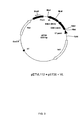
- the plasmid pET24d+ containing V L was named pETVL102; the plasmid pET36b+ with the V L insert was named pETVL112.
- the maps of both vectors are given in FIG 2 and 3 .
- E Coli B21 (DE3)pLysS were transformed with the plasmid pETVL102 (pETVL112) and the empty vector pET24d+ (pET36b+) as a control.
- Overnight cultures were used to inoculate 50 ml of LB-medium containing 50 ⁇ g/ml kanamycin and 30 ⁇ g/ml chloramphenical. Cultures were grown at 37° C for 2 hours and agitated at 200 rpm. Expression was induced by the addition of IPTG (final concentration 0.5mM). 2ml samples were taken after 2 hours and 4 hours and centrifuged (5min, 1600 x g, 4°C).
- the rest of the soluble cell extract of E. Coli pETVL112 was treated as described above and fractions around n°58 were pooled. This pool was subjected to a second affinity chromatography using a cellulose matrix.
- the CBD binds to cellulose in the presence of salt and is eluted either by pure water or by an organic solvent, e.g. ethylene glycol.
- the flow-through, the washing solution and the eluate, was analyzed in Coomassie blue-stained SDS-PAGE and Western blot.
- V L -fragment might be very unstable even if fused to a stable moiety, and that it was not deposited as intracellular inclusion bodies, but processed correctly (unprocessed fusion protein has a calculated mass of about 34kDa) and translocated to the host's periplasm.
- V L in pETVL112 was repeated on a larger volume. The results were collected by affinity chromatography on a FPLC system. The absorption was monitored at 290 nm. The imidazol step gradient was used. The specific elution peak was seen at approximately 120ml total elution volume.
- Eluate fractions were analyzed in a Western blot. 7.5 ml of fraction 8, fraction 25, fraction 33, and fraction 58 of the pETVL112 strain and the control (even-numbered lanes) were separated on a 12% SDS-PAGE, transferred to nitrocellulose, incubated with anti-CDB-antiserum, and assayed by protein A-peroxidase conjugate and chemoluminescence. The specific signal was seen in lane 7. Other signals are ambiguous due to a second antiserum that was used to detect the molecular weight marker (M).
- M molecular weight marker
- V L -transferrin hybrids were ligated and cloned into the baculovirus vector pBlueBacHIS2 B (4.9kb, Invitrogen) for expression in insect cells.
- the V L fragment. (pETVL102) and cDNA for human transferrin (pUC18/hTF, human full length transferrin, 2.3kb in pUC18 vector, 2.7 kb, obtained from R.T.A. MacGillivray, Department of Biochemistry and Molecular Biology, Vancouver, Canada) were amplified by PCR. The introduction of stop codons and restriction sites at the end of the fragments were done using modified primers.
- Cleavage 1 yielded a fragment containing V L -TF which was ligated by the restriction site Xho 1 and ended by a stop codon.
- V L is connected with transferrin over Xho I followed by a second transferrin connected to the first over the restriction site Bgl II.
- the fragment ends with a stop codon.
- V L -TF V-region of the light chain with one transferrin moiety
- V L -(TF) 2 V-region with two transferrin molecules
- V L was amplified by PCR using a DNA-polymerase with 3'->5' proofreading-activity.
- recognition sites for restriction enzymes (5'-end: Bam H I, 3'-end: Sal 1) and a STOP-codon following the last amino acid of the V L -fragment were added to the PCR-product.
- the purified V L -PCR product and the vector pBlueBacHIS2 B were cleaved with the restriction enzymes Bam H I and Sal 1.
- the restricted vector was dephosphorylated using calf intestine phosphatase (CIP).
- CIP calf intestine phosphatase
- the restriction products were identified by agarose gel electrophoresis before the V L fragment was ligated with the CIP-treated pBlueBacHIS2 B vector.
- the T4 DNA-ligation and CIP treatment were performed as described by the manufacturer (MBI Fermentas). See FIG. 4(a) and (b) .
- EXAMPLE 5 Transformation, screening and DNA-sequencing of the subcloned V L with the baculovirus vector pBlueBacHIS2 B
- Competent E. Coli XL- 1 Blue MRF cells (Stratagene) were transformed by the ligation product pBlueBacHIS2 B containing the V L -fragment by applying routine procedures ( Sambrook et al., 1989. Molecular Cloning: A Laboratory Manual. Cold Spring Harbor Laboratory, New York ). After the transformation, six of the resulting clones were tested for the presence of the V L insert.
- the analysis of the single colonies was done by a PCR-based technique using the same V L -specific primers, which were previously used for V L -amplification. Verification of the construct was done by restriction cleavage and sequencing of the inserts.
- the Bam H 1/ Sal I-restricted V L -fragment was ligated with Bam H I lSal I, digested, and CIP-treated pBlueBac HIS2 B vector.
- V L -1 was selected for further analysis by DNA-sequencing.
- the maintenance of the correct coding sequence was verified by sequencing the inserts pBlueBacHIS B-V L , pBlueBacHIS B-VL-TF and pBlueBacHIS B-V L -TF 2 .
- the maps of the pBlueBacHIS2 B containing the V L -fragment and V L -transferrin are shown in FIG. 4 (a) and (b) .
- EXAMPLE 6 Generation of the recombinant baculovirus and expression of the proteins V L , V L -TF and V L -(TF) 2
- V L -TF and V L -(TF) 2 were expressed in E. coli.
- the proteins were analyzed in a Coomassie-stained gel.
- Sf9-cells were transfected by the plasmids pBlueBacHIS2 BVL-1, pBlueBacHIS2 BVL-TF-4 and pBlueBacHIS2 B V L -TF2-5 as well as by acceptor-DNA (Bac-N-Blue TM-DNA, Invitrogen).
- the supernatants were collected after 3 and 5 days and tested in dilutions of 1:10 to 1:10,000 on agarose/X-gal-overlay plates. After 5 days of incubation, viruses were isolated from 8 plaques.
- Sf9-cells were infected with these viruses (four samples per plaque) and supernatants were collected 4 days later (named P1-lysates) in order to isolate viral DNA.
- the DNA was characterized by PCR-technique.
- EXAMPLE 7 Analysis of the fused proteins expressed by the baculovirus vector system
- V L The PCR with V L showed the expected fragments as well as V L -TF in a Coormassie-stained gel.
- the amplification products of V L -TF 2 seem to have lost one of the transferrin residues showing a length of the product of V L -TF or had lost an even longer fragment. Because of the instability of V L -TF 2 , the virus DNA of four other clones was analyzed by PCR. Unfortunately, no V L -TF 2 with the correct length was detected.
- a virus titer of 2x10 8 pfu/ml (plaque forming units) for V L -1 (26 ml), 1x10 8 pfu/ml for V L -TF4 (26 ml), and 1x10 8 for V L -TF 2 (14 ml) was obtained from the three selected baculovirus clones V L , V L -TF, and V L .-TF 2 . From the V L - and V L -IF-infected cells, proteins with the expected molecular weights of 15kD and 80kD could be extracted.
- the extract of V L -TF 2 showed two proteins with the molecular weight of 80kD and about 105kD, both not the relevant protein of V L fused to two transferrin molecules.
- Western blot analysis of crude extract of insect cells cultures containing V L and V L -transferrin performed with an anti-His 6 confirmed these results.
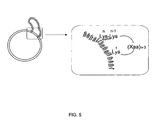
- Palmitoylated lysines were appended to both ends of the A ⁇ 1-16 peptide to anchor the ⁇ -amyloid 1- 16 (A ⁇ 1-16 ) peptide in the liposome bilayer. See FIG. 5 .
- FmocLys(Pal)OH was reacted with the alkoxybenzyl alcohol resin (from BACHEM) in the presence of dieyclohexylcarbodiimide (DCC, Aldrich) and dimethyl-aminopyridine (DMAP, Aldrich) in dry, freshly distilled methylene chloride according to the procedure optimized by G. Lu et al., J. Org. Chem., 46, 3433 (1981 ). After stirring for three hours at room temperature, the reaction mixture was filtered and washed thoroughly ten times with dry methylene chloride.
- DCC dieyclohexylcarbodiimide
- DMAP dimethyl-aminopyridine
- the obtained resin was reacted once more with a fresh portion of FmocLys(Pal)OH, in the presence of DCC and DMAP in dry methylene chloride at room temperature overnight. The next day, after filtration and washing with methylene chloride the resin was dried in vacuum.
- the FT-IR spectrum of the product shows the expected bands for the ester linkage at 1720 cm -1 , for the NH group at 3327 cm -1 and for the amide carbonyl group 1626 cm -1 . All these bands are absent in the FT-IR spectrum of the starting alkoxybenzyl alcohol resin.
- the final quantity was 227 mg with a loading of about 0.5 mmol/g. See FIG 6 (c) .
- the second palmitoylated lysine was added by means of FmocLys(Pal)OH after deprotection (removal of the Fmoc group). Then 16 cycles of synthesis were performed for the ⁇ -amyloid. For test purposes, a small quantity of this peptide was then cleaved from the resin and investigated by electrospray mass spectrometry (ES-MS). The crude mixture shows the presence of three peptides, the major component being the desired one having peaks at 896.9, 673,0 and 538.0 Da corresponding to the +3, +4 and +5, respectively charged molecular ions.
- ES-MS electrospray mass spectrometry
- the molecular ion is absent in the spectrum, but can be inferred from this series to be at 2687.86 Da.
- the other two components correspond to peptides having one or two palmitoylated lysines less (367 Da mass difference) with molecular ions inferred at 2321.43 and 1953.87 Da.
- ⁇ , ⁇ -dipalmitoyllysine was coupled to the rest of the uncleaved resin. Even prolonged coupling times (overnight at room temperature) left unreacted material (ninhydrin test) due to the low solubility in DMF of the dipalmitoylated lysine.
- This peptide amounts to about 35 % or the mixture, the main component being a peptide having two Lys(Pal)-residues less (M+ at 2688.58 Da). A minor component has an extra lysine missing (M+ at 2560.42 Da).
- the mixture or peptides was composed of the desired tetrapalmitoylated peptide and peptides lacking palmitoyl residues, thus making the double insertion into liposomes improbable. Therefore, we decided to use the mixtures for liposome preparation.
- the palmitoylester of N-hydroxysuccinimide was synthesized first from palmitic acid (Fluka), N-hydroxysuccinimide (Aldrich) in the presence of DCC (Aldrich) in ethyl acetate in 77% yield. This activated ester was subsequently reacted with the sodium salt of lysine in aqueous tetrahydrofurane.
- the crude product obtained after filtration and washing with water still contained some unreacted activated ester as put into evidence by proton NMR and FAB (Fast Atom Bombardment)-mass spectra. Recrystallization from chloroform provided a pure sample of 640 mg. Its FAB-mass spectrum shows the expected peak at 623 Da (MH+) and absence of the peak for the activated ester (354 Da). See FIG. 7 and FIG. 8 .
- Liposomes with Lipid A were used as adjuvants in an attempt to break the mouse immune tolerance to A ⁇ 1-16. They were prepared by mixing dimyristoyl-phosphatidylcholine, dimyristoylphosphatidyl-glycerol, and cholesterol (Avanti Polar Lipids, Alabaster, AI, USA) in the molar ratios 0.9,0.1:0.7. Monophosphoryi lipid A, a strong immunomodulator, (IASL Biologicals, Campbell, CA, USA) was added at a concentration of 40 mg per mmole of phospholipids. Tosi et al., Biochem. Mophys. Res, Com., 212, 494-500 (1995 ).
- the palmitoylated peptides were added at a molar ratio to phospholipids of 1:100 and 1:200. Solvents were evaporated. The resultant film, after hydration with sterile phosphate buffer saline (PBS, pH 7.4) with a final phospholipid concentration 4 mM, was further homogenized by orbital shaking. The liposome suspension was mixed with sterile Alum 15 minutes before injection (9:1 vol:vol, Rehydrogel, HYA, Rebeis Inc, Berkley Heights, NJ).
- mice (Charles River Laboratories, Wilmington, MA, USA) were immunized by 6 i.p. innoculations at two week intervals with 200 ⁇ L of the palmitoylated peptide-liposome/Alum suspension.
- One group of 3 mice was immunized according to the same protocol with PBS/Alum only.
- Another group of 3 mice were immunized according to this protocol, with 4 mM phospholipids in PBS and Alum, without palmitoylated A ⁇ 1-16.
- Blood was collected from the tail vein 4 days after injection. The collected blood (10-30 ⁇ l) was diluted immediately with 10 ⁇ l PBS and 5 ⁇ l heparin. The samples were centrifuged, the serum was removed and tested in an ELISA assay.
- a second group of 19 transgenic mice (NORBA, Hoechst Marion Roussel, Bridgewater, NJ) of different ages, constitutively present ⁇ -amyloid plaques on their pancreas. They were immunized using the same protocol described above. Before sacrificing, the immunized NORBA mice received a 5 th immunization. Blood was collected and assayed for anti- ⁇ -amyloid antibodies in an ELISA assay.
- Microtiter plates were coated with 50 ⁇ l of ⁇ -amyloid, 1-28 solution (1mg/ml) overnight at 40° C. Blocking of the wells by 200 ⁇ l BSA/PBS (0.5% BSA) for two hours at 37° C followed before washing with 200 ⁇ l of PBS/0.005% Tween 20.
- ELISA assays showed a significant immune response in the vaccinated Balb/c mice.
- the antibodies were specific to the injected antigen.
- the OD 405 of 1:5000 - dilutions of the collected sera were 10 to 20 fold higher than those of controls which were dilutions of untreated mice.
- this immunization procedure elicited an immune response against A ⁇ 1-16 in mice. No immune response was detected in the mice having received control immunizations.
- PNPP p-nitrophenyl phosphate
- Assay was performed after the 3. (C57BV6) and after the 4. (Balb/c) booster injection. For each antigen/adjuvants 3 animals were injected.
- Table 2 Immune response in mice inoculated with palmitoylated ⁇ -amyloid (1-16), scrambled ⁇ -amyloid (42-1) in combination with liposomes/lipid A and Alum and liposomes without amyloid.
- Antigen palm.-A ⁇ 1-16 A ⁇ 42-1 Phospholipids number of C57B1/6 mice with a pos.
- the immunized C57B1/6 mice underwent a pathological investigation after the immunization procedure was finished. Sections of kidney, liver, heart, bone marrow, pancreas, spleen and brain were analyzed.
- Example 17 Immunohistochemical investigation of the pancreas of vaccinated NORBA mice.
- mice of different ages containing ⁇ -amyloid-positive and ⁇ -amyloid-negative animals were immunized with palmitoylated A ⁇ (1-16) reconstituted in liposomes, as described (19 mice) or with liposomes only (4 mice). These animals have the ⁇ -amyloid plaques on the pancreas instead of brain.
- the vaccinated mice were sacrificed after the 7 th injection and their pancreases were collected and preserved in formalin. The preserved pancreas pieces were soaked in sucrose solution to prepare them for frozen sections. The thin sections obtained were analyzed by Thioflavin T, a fluorescence dye specific for B-amyloid aggregates staining (Vassar and Culling.
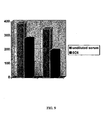
- a 18-month old mouse with fully developed B-amyloid plaques which was vaccinated and examined 4 months after first inoculation, showed focal (patchy) areas of fluorescence among acinar cells, but predominantly many patches of non-fluorescent acinar cells. The results showed that the vaccination either disintegrated ⁇ -amyloid plaques or reversed their deposition.
- Each value is the average of 5 countings. It appears that vaccination reduces dramatically (by more than 70%) the high intensity fluorescence in the Thioflavine-stained pancreas sections of the NORBA transgenic mice with fully developed ⁇ -amyloid plaques. The medium and low intensity fluorescence, which is unspecific since it is detected also in the negative controls, remains unchanged upon vaccination, There is no high intensity fluorescence, in the negative controls.
Landscapes
- Health & Medical Sciences (AREA)
- Chemical & Material Sciences (AREA)
- Organic Chemistry (AREA)
- Life Sciences & Earth Sciences (AREA)
- Medicinal Chemistry (AREA)
- General Health & Medical Sciences (AREA)
- Engineering & Computer Science (AREA)
- Pharmacology & Pharmacy (AREA)
- Veterinary Medicine (AREA)
- Nuclear Medicine, Radiotherapy & Molecular Imaging (AREA)
- Chemical Kinetics & Catalysis (AREA)
- Bioinformatics & Cheminformatics (AREA)
- Animal Behavior & Ethology (AREA)
- General Chemical & Material Sciences (AREA)
- Public Health (AREA)
- Diabetes (AREA)
- Proteomics, Peptides & Aminoacids (AREA)
- Molecular Biology (AREA)
- Genetics & Genomics (AREA)
- Biophysics (AREA)
- Biochemistry (AREA)
- Gastroenterology & Hepatology (AREA)
- Zoology (AREA)
- Toxicology (AREA)
- Biomedical Technology (AREA)
- Neurology (AREA)
- Hematology (AREA)
- Immunology (AREA)
- Rheumatology (AREA)
- Neurosurgery (AREA)
- Endocrinology (AREA)
- Cardiology (AREA)
- Rehabilitation Therapy (AREA)
- Urology & Nephrology (AREA)
- Heart & Thoracic Surgery (AREA)
- Hospice & Palliative Care (AREA)
- Pain & Pain Management (AREA)
- Emergency Medicine (AREA)
- Psychiatry (AREA)
- Obesity (AREA)
Priority Applications (1)
| Application Number | Priority Date | Filing Date | Title |
|---|---|---|---|
| EP10184152.6A EP2305822A3 (de) | 2000-09-06 | 2001-09-06 | Verfahren und Zusammensetzungen für mit Amyloidose assoziierte Erkrankungen |
Applications Claiming Priority (3)
| Application Number | Priority Date | Filing Date | Title |
|---|---|---|---|
| US23039100P | 2000-09-06 | 2000-09-06 | |
| US25503300P | 2000-12-12 | 2000-12-12 | |
| EP01970656A EP1317479B1 (de) | 2000-09-06 | 2001-09-06 | Verfahren und zusammensetzungen für amyloidosis-verbundene krankheiten |
Related Parent Applications (2)
| Application Number | Title | Priority Date | Filing Date |
|---|---|---|---|
| EP01970656A Division EP1317479B1 (de) | 2000-09-06 | 2001-09-06 | Verfahren und zusammensetzungen für amyloidosis-verbundene krankheiten |
| EP01970656.3 Division | 2001-09-06 |
Related Child Applications (1)
| Application Number | Title | Priority Date | Filing Date |
|---|---|---|---|
| EP10184152.6 Division-Into | 2010-09-30 |
Publications (2)
| Publication Number | Publication Date |
|---|---|
| EP2067863A2 true EP2067863A2 (de) | 2009-06-10 |
| EP2067863A3 EP2067863A3 (de) | 2013-11-06 |
Family
ID=26924184
Family Applications (3)
| Application Number | Title | Priority Date | Filing Date |
|---|---|---|---|
| EP01970656A Expired - Lifetime EP1317479B1 (de) | 2000-09-06 | 2001-09-06 | Verfahren und zusammensetzungen für amyloidosis-verbundene krankheiten |
| EP10184152.6A Withdrawn EP2305822A3 (de) | 2000-09-06 | 2001-09-06 | Verfahren und Zusammensetzungen für mit Amyloidose assoziierte Erkrankungen |
| EP08014103.9A Withdrawn EP2067863A3 (de) | 2000-09-06 | 2001-09-06 | Verfahren und Zusammensetzungen für mit Amyloidose assoziierte Erkrankungen |
Family Applications Before (2)
| Application Number | Title | Priority Date | Filing Date |
|---|---|---|---|
| EP01970656A Expired - Lifetime EP1317479B1 (de) | 2000-09-06 | 2001-09-06 | Verfahren und zusammensetzungen für amyloidosis-verbundene krankheiten |
| EP10184152.6A Withdrawn EP2305822A3 (de) | 2000-09-06 | 2001-09-06 | Verfahren und Zusammensetzungen für mit Amyloidose assoziierte Erkrankungen |
Country Status (13)
| Country | Link |
|---|---|
| US (4) | US7067133B2 (de) |
| EP (3) | EP1317479B1 (de) |
| JP (3) | JP5153986B2 (de) |
| AT (1) | ATE441663T1 (de) |
| AU (2) | AU2001290638C1 (de) |
| CA (1) | CA2421374C (de) |
| CY (1) | CY1110533T1 (de) |
| DE (1) | DE60139788D1 (de) |
| DK (1) | DK1317479T3 (de) |
| ES (1) | ES2330082T3 (de) |
| PT (1) | PT1317479E (de) |
| SI (1) | SI1317479T1 (de) |
| WO (1) | WO2002021141A2 (de) |
Families Citing this family (60)
| Publication number | Priority date | Publication date | Assignee | Title |
|---|---|---|---|---|
| US7179892B2 (en) | 2000-12-06 | 2007-02-20 | Neuralab Limited | Humanized antibodies that recognize beta amyloid peptide |
| US20080050367A1 (en) | 1998-04-07 | 2008-02-28 | Guriq Basi | Humanized antibodies that recognize beta amyloid peptide |
| US7588766B1 (en) | 2000-05-26 | 2009-09-15 | Elan Pharma International Limited | Treatment of amyloidogenic disease |
| US6913745B1 (en) | 1997-12-02 | 2005-07-05 | Neuralab Limited | Passive immunization of Alzheimer's disease |
| US7964192B1 (en) | 1997-12-02 | 2011-06-21 | Janssen Alzheimer Immunotherapy | Prevention and treatment of amyloidgenic disease |
| US7790856B2 (en) | 1998-04-07 | 2010-09-07 | Janssen Alzheimer Immunotherapy | Humanized antibodies that recognize beta amyloid peptide |
| TWI239847B (en) | 1997-12-02 | 2005-09-21 | Elan Pharm Inc | N-terminal fragment of Abeta peptide and an adjuvant for preventing and treating amyloidogenic disease |
| US6905686B1 (en) | 1997-12-02 | 2005-06-14 | Neuralab Limited | Active immunization for treatment of alzheimer's disease |
| US6761888B1 (en) | 2000-05-26 | 2004-07-13 | Neuralab Limited | Passive immunization treatment of Alzheimer's disease |
| BRPI0108676B8 (pt) | 2000-02-24 | 2021-05-25 | Lilly Co Eli | anticorpos humanizados que sequestram peptídeo amilóide beta e seus usos no tratamento de condições caracterizadas por formação de placas amiloides, bem como composição farmacêutica que compreende os referidos anticorpos |
| TWI255272B (en) | 2000-12-06 | 2006-05-21 | Guriq Basi | Humanized antibodies that recognize beta amyloid peptide |
| US7700751B2 (en) | 2000-12-06 | 2010-04-20 | Janssen Alzheimer Immunotherapy | Humanized antibodies that recognize β-amyloid peptide |
| PT1944040E (pt) | 2001-08-17 | 2012-10-31 | Univ Washington | Método de avaliação para a doença de alzheimer |
| WO2003039467A2 (en) * | 2001-11-02 | 2003-05-15 | Diagenics International Corporation | Monoclonal antibodies specific for beta-amyloid. |
| MY139983A (en) * | 2002-03-12 | 2009-11-30 | Janssen Alzheimer Immunotherap | Humanized antibodies that recognize beta amyloid peptide |
| DE10303974A1 (de) | 2003-01-31 | 2004-08-05 | Abbott Gmbh & Co. Kg | Amyloid-β(1-42)-Oligomere, Verfahren zu deren Herstellung und deren Verwendung |
| DE602004027348D1 (de) | 2003-02-10 | 2010-07-08 | Applied Molecular Evolution | Abeta-bindende moleküle |
| US8663650B2 (en) | 2003-02-21 | 2014-03-04 | Ac Immune Sa | Methods and compositions comprising supramolecular constructs |
| PE20050627A1 (es) | 2003-05-30 | 2005-08-10 | Wyeth Corp | Anticuerpos humanizados que reconocen el peptido beta amiloideo |
| US7807171B2 (en) | 2003-07-25 | 2010-10-05 | Ac Immune Sa | Therapeutic vaccine targeted against P-glycoprotein 170 for inhibiting multidrug resistance in the treatment of cancers |
| US20060069010A1 (en) * | 2003-10-17 | 2006-03-30 | Senicure Llc | Detoxification depot for Alzheimer's disease |
| CN101060865B (zh) * | 2004-07-02 | 2011-10-05 | 匹兹堡大学高等教育联邦体系 | 诊断淀粉样蛋白沉积相关疾病的前驱形式的方法 |
| AU2005271403A1 (en) * | 2004-08-03 | 2006-02-16 | Biorexis Pharmaceutical Corporation | Combination therapy using transferrin fusion proteins comprising GLP-1 |
| WO2006066089A1 (en) | 2004-12-15 | 2006-06-22 | Neuralab Limited | Humanized amyloid beta antibodies for use in improving cognition |
| EP1838349A1 (de) * | 2004-12-15 | 2007-10-03 | Neuralab, Ltd. | Amyloid-beta-antikörper zur verbesserung der kognition |
| TW200636066A (en) | 2004-12-15 | 2006-10-16 | Elan Pharm Inc | Humanized antibodies that recognize beta amyloid peptide |
| PL2289909T3 (pl) | 2005-11-30 | 2015-04-30 | Abbvie Inc | Sposób przeszukiwania, proces oczyszczania niedyfundujących oligomerów Abeta, selektywne przeciwciała przeciw niedyfundującym oligomerom Abeta i sposób wytwarzania tych przeciwciał |
| RU2432362C2 (ru) | 2005-11-30 | 2011-10-27 | Эбботт Лэборетриз | Моноклональные антитела и их применения |
| SG10201404801YA (en) | 2005-12-12 | 2014-09-26 | Ac Immune Sa | Monoclonal antibody |
| CA2633399C (en) * | 2005-12-12 | 2016-01-26 | Ac Immune S.A. | Therapeutic vaccine |
| US8784810B2 (en) | 2006-04-18 | 2014-07-22 | Janssen Alzheimer Immunotherapy | Treatment of amyloidogenic diseases |
| NZ574188A (en) * | 2006-07-14 | 2012-05-25 | Ac Immune Sa | Humanized antibody against amyloid beta |
| WO2008012629A2 (en) * | 2006-07-24 | 2008-01-31 | Biorexis Pharmaceutical Corporation | Exendin fusion proteins |
| WO2008022349A2 (en) * | 2006-08-18 | 2008-02-21 | Armagen Technologies, Inc. | Agents for blood-brain barrier delivery |
| US8455626B2 (en) | 2006-11-30 | 2013-06-04 | Abbott Laboratories | Aβ conformer selective anti-aβ globulomer monoclonal antibodies |
| PT2121754E (pt) | 2007-01-18 | 2015-05-11 | Lilly Co Eli | Fab de beta-amilóide peguilado |
| EP2124952A2 (de) | 2007-02-27 | 2009-12-02 | Abbott GmbH & Co. KG | Verfahren zur behandlung von amyloidosen |
| US8003097B2 (en) | 2007-04-18 | 2011-08-23 | Janssen Alzheimer Immunotherapy | Treatment of cerebral amyloid angiopathy |
| US8613923B2 (en) * | 2007-06-12 | 2013-12-24 | Ac Immune S.A. | Monoclonal antibody |
| US8048420B2 (en) * | 2007-06-12 | 2011-11-01 | Ac Immune S.A. | Monoclonal antibody |
| PL2170389T3 (pl) * | 2007-06-12 | 2015-03-31 | Ac Immune Sa | Humanizowane przeciwciało przeciw amyloidowi beta |
| PT2182983E (pt) | 2007-07-27 | 2014-09-01 | Janssen Alzheimer Immunotherap | Tratamento de doenças amiloidogénicas com anticorpos anti-abeta humanizados |
| RS53174B (sr) * | 2007-10-05 | 2014-06-30 | Genentech Inc. | Upotreba antiamiloidnog beta antitela u slučaju oboljenja oka |
| JO3076B1 (ar) | 2007-10-17 | 2017-03-15 | Janssen Alzheimer Immunotherap | نظم العلاج المناعي المعتمد على حالة apoe |
| US9067981B1 (en) | 2008-10-30 | 2015-06-30 | Janssen Sciences Ireland Uc | Hybrid amyloid-beta antibodies |
| WO2011119608A1 (en) * | 2010-03-26 | 2011-09-29 | University Of Tennessee Research Foundation | Peptides that specifically target amyloid deposits |
| ES2684475T3 (es) | 2010-04-15 | 2018-10-03 | Abbvie Inc. | Proteínas que se unen a beta amiloide |
| RU2607368C2 (ru) | 2010-07-30 | 2017-01-10 | Ац Иммуне С.А. | Безопасные и функциональные гуманизированные антитела |
| EP3527220A1 (de) | 2010-08-12 | 2019-08-21 | AC Immune S.A. | Manipulation von impfstoffen |
| CN103298833B (zh) | 2010-08-14 | 2015-12-16 | Abbvie公司 | β淀粉样蛋白结合蛋白 |
| AR083561A1 (es) | 2010-10-26 | 2013-03-06 | Ac Immune Sa | Preparacion de una construccion antigenica |
| AR084020A1 (es) | 2010-11-30 | 2013-04-17 | Genentech Inc | Anticuerpos para el receptor de la barrera hematoencefalica de baja afinidad y sus usos |
| JP2012233002A (ja) * | 2012-08-03 | 2012-11-29 | Janssen Alzheimer Immunotherapy | 認知の改善における使用のためのアミロイドβ抗体 |
| US9588129B2 (en) * | 2013-03-15 | 2017-03-07 | Amira Medical Technologies Inc. | Methods for analyzing blood to detect diseases associated with abnormal protein aggregation |
| EP3027205A4 (de) | 2013-07-28 | 2017-07-19 | Qantu Therapeutics, Inc. | Impfstoffformulierungen zur induzierung einer th2-immunantwort |
| US20160356794A1 (en) * | 2014-02-10 | 2016-12-08 | Merck Sharp & Dohme Corp. | Antibodies that bind to human tau and assay for quantifying human tau using the antibodies |
| ES2872404T3 (es) | 2016-11-01 | 2021-11-02 | Swiss Timing Ltd | Módulo de transpondedor para la determinación del tiempo de paso en un sistema de medición revestimiento |
| WO2019055841A1 (en) * | 2017-09-14 | 2019-03-21 | Denali Therapeutics Inc. | ANTI-TREM2 ANTIBODIES AND METHODS OF USE |
| TW201934573A (zh) * | 2018-01-10 | 2019-09-01 | 美商戴納立製藥公司 | 轉鐵蛋白受體結合性多肽及其用途 |
| TWI841810B (zh) | 2020-01-24 | 2024-05-11 | 日商西斯美股份有限公司 | 提升抗體對抗原之親和性的方法及其用途 |
Family Cites Families (9)
| Publication number | Priority date | Publication date | Assignee | Title |
|---|---|---|---|---|
| US5672683A (en) * | 1989-09-07 | 1997-09-30 | Alkermes, Inc. | Transferrin neuropharmaceutical agent fusion protein |
| US5583198A (en) * | 1989-12-22 | 1996-12-10 | Commonwealth Scientific And Industrial Research Organization | Amino acids, peptides or derivatives thereof coupled to fats |
| US5580563A (en) * | 1992-05-01 | 1996-12-03 | Tam; James P. | Multiple antigen peptide system having adjuvant properties, vaccines prepared therefrom and methods of use thereof |
| GB9215780D0 (en) * | 1992-07-24 | 1992-09-09 | Univ London Pharmacy | Peptide compounds |
| AU8269898A (en) * | 1997-06-27 | 1999-01-19 | Regents Of The University Of California, The | Drug targeting of a peptide radiopharmaceutical through the primate blood-brain barrier in vivo with a monoclonal antibody to the human insulin receptor |
| TWI239847B (en) * | 1997-12-02 | 2005-09-21 | Elan Pharm Inc | N-terminal fragment of Abeta peptide and an adjuvant for preventing and treating amyloidogenic disease |
| US6905686B1 (en) | 1997-12-02 | 2005-06-14 | Neuralab Limited | Active immunization for treatment of alzheimer's disease |
| US6372720B1 (en) * | 1998-02-05 | 2002-04-16 | Kenneth J. Longmuir | Liposome fusion and delivery vehicle |
| US6787637B1 (en) | 1999-05-28 | 2004-09-07 | Neuralab Limited | N-Terminal amyloid-β antibodies |
-
2001
- 2001-09-06 JP JP2002524709A patent/JP5153986B2/ja not_active Expired - Fee Related
- 2001-09-06 WO PCT/US2001/027632 patent/WO2002021141A2/en not_active Ceased
- 2001-09-06 AU AU2001290638A patent/AU2001290638C1/en not_active Ceased
- 2001-09-06 EP EP01970656A patent/EP1317479B1/de not_active Expired - Lifetime
- 2001-09-06 ES ES01970656T patent/ES2330082T3/es not_active Expired - Lifetime
- 2001-09-06 AU AU9063801A patent/AU9063801A/xx active Pending
- 2001-09-06 PT PT01970656T patent/PT1317479E/pt unknown
- 2001-09-06 AT AT01970656T patent/ATE441663T1/de active
- 2001-09-06 SI SI200130939T patent/SI1317479T1/sl unknown
- 2001-09-06 DE DE60139788T patent/DE60139788D1/de not_active Expired - Lifetime
- 2001-09-06 CA CA2421374A patent/CA2421374C/en not_active Expired - Fee Related
- 2001-09-06 EP EP10184152.6A patent/EP2305822A3/de not_active Withdrawn
- 2001-09-06 DK DK01970656T patent/DK1317479T3/da active
- 2001-09-06 US US09/948,049 patent/US7067133B2/en not_active Expired - Lifetime
- 2001-09-06 EP EP08014103.9A patent/EP2067863A3/de not_active Withdrawn
-
2005
- 2005-09-16 US US11/229,264 patent/US20060073155A1/en not_active Abandoned
-
2009
- 2009-04-15 US US12/424,034 patent/US20090202627A1/en not_active Abandoned
- 2009-11-11 CY CY20091101176T patent/CY1110533T1/el unknown
-
2011
- 2011-12-21 JP JP2011280015A patent/JP2012072182A/ja active Pending
-
2013
- 2013-10-16 JP JP2013215789A patent/JP2014030427A/ja active Pending
-
2017
- 2017-03-22 US US15/466,522 patent/US20170320938A1/en not_active Abandoned
Non-Patent Citations (12)
| Title |
|---|
| G. LU ET AL., J. ORG. CHEM., vol. 46, 1981, pages 3433 |
| H. KIWADA ET AL., CHEM. PHARM. BULL., vol. 35, 1987, pages 2935 - 39 |
| MANIATIS ET AL.: "Molecular Cloning", 1982, COLD SPRING HARBOR LABORATORY |
| MUHS ANDREAS ET AL: "Liposomal vaccines with conformation-specific amyloid peptide antigens define immune response and efficacy in APP transgenic mice", PROCEEDINGS OF THE NATIONAL ACADEMY OF SCIENCES, NATIONAL ACADEMY OF SCIENCES, US, vol. 104, no. 23, 5 June 2007 (2007-06-05), pages 9810 - 9815, XP002542049, ISSN: 0027-8424, DOI: 10.1073/PNAS.0703137104 * |
| OSLO: "Remington's Pharmaceutical Sciences", 1980, MACK PUBLISHING CO. |
| SAMBROOK ET AL.: "Molecular Cloning: A Laboratory Manual", 1989, COLD SPRING HARBOR LABORATORY |
| SAMBROOK ET AL.: "Molecular Cloning-A Laboratory Manual", 1989, COLD SPRING HARBOR LABORATORY |
| SOLOMON ET AL., PNAS, vol. 94, 1997, pages 4109 - 4112 |
| TAMAOKA ET AL., PROC. NATL. ACAD. SCI, USA, vol. 89, 1992, pages 1345 - 9 |
| TOSI ET AL., BIOCHEM. MOPHYS. RES, COM., vol. 212, 1995, pages 494 - 500 |
| Y. LAPIDAT ET AL., J. LIPID RES., vol. 9, 1967, pages 142 - 44 |
| ZOLA: "Monoclonal Antibodies: A Manual of Technicrues", 1987, CRC PRESS, INC., pages: 147 - 158 |
Also Published As
| Publication number | Publication date |
|---|---|
| EP2305822A2 (de) | 2011-04-06 |
| JP5153986B2 (ja) | 2013-02-27 |
| PT1317479E (pt) | 2009-10-29 |
| EP2067863A3 (de) | 2013-11-06 |
| JP2012072182A (ja) | 2012-04-12 |
| ATE441663T1 (de) | 2009-09-15 |
| AU2001290638C1 (en) | 2009-04-30 |
| DK1317479T3 (da) | 2009-11-23 |
| US20020156036A1 (en) | 2002-10-24 |
| EP1317479B1 (de) | 2009-09-02 |
| AU2001290638B2 (en) | 2007-09-06 |
| EP1317479A2 (de) | 2003-06-11 |
| CY1110533T1 (el) | 2015-04-29 |
| CA2421374A1 (en) | 2002-03-14 |
| WO2002021141A3 (en) | 2003-01-16 |
| WO2002021141A2 (en) | 2002-03-14 |
| US20060073155A1 (en) | 2006-04-06 |
| DE60139788D1 (de) | 2009-10-15 |
| US20090202627A1 (en) | 2009-08-13 |
| EP2305822A3 (de) | 2013-11-06 |
| CA2421374C (en) | 2017-03-07 |
| SI1317479T1 (sl) | 2010-01-29 |
| US7067133B2 (en) | 2006-06-27 |
| JP2005504714A (ja) | 2005-02-17 |
| ES2330082T3 (es) | 2009-12-04 |
| US20170320938A1 (en) | 2017-11-09 |
| AU9063801A (en) | 2002-03-22 |
| JP2014030427A (ja) | 2014-02-20 |
Similar Documents
| Publication | Publication Date | Title |
|---|---|---|
| US7067133B2 (en) | Methods and compositions for diseases associated with amyloidosis | |
| AU2001290638A1 (en) | Methods and compositions for diseases associated with amyloidosis | |
| JP5580504B2 (ja) | アミロイド形成疾患の予防および処置 | |
| CA2503561C (en) | Prevention and treatment of synucleinopathic disease | |
| JP5717210B2 (ja) | 免疫化組成物およびアミロイド前駆体タンパク質のβ−セクレターゼ切断部位に対する免疫応答を誘発するための方法 | |
| DE69518838T2 (de) | Heterodimere trägerzusammensetzung von immunogenen polypeptiden und verfahren zu deren verwendung | |
| EP0787139B1 (de) | Synthetische peptide und impfstoffe welche diese beinhalten | |
| SG176220A1 (en) | Casb7439 constructs | |
| KR102101201B1 (ko) | Pcsk9 펩티드 백신 | |
| US20060205668A1 (en) | Central nervous system damage | |
| AU2007237347B2 (en) | Methods and compositions for diseases associated with amyloidosis | |
| WO1993007872A1 (en) | Lysosomal enzyme inhibitors for the treatment of neurodegenerative diseases | |
| WO2003064446A2 (en) | Plasma protein-binding peptides from bacterial curli | |
| HK1161102A (en) | Prevention and treatment of synucleinopathic disease |
Legal Events
| Date | Code | Title | Description |
|---|---|---|---|
| PUAI | Public reference made under article 153(3) epc to a published international application that has entered the european phase |
Free format text: ORIGINAL CODE: 0009012 |
|
| AC | Divisional application: reference to earlier application |
Ref document number: 1317479 Country of ref document: EP Kind code of ref document: P |
|
| AK | Designated contracting states |
Kind code of ref document: A2 Designated state(s): AT BE CH CY DE DK ES FI FR GB GR IE IT LI LU MC NL PT SE TR |
|
| AX | Request for extension of the european patent |
Extension state: SI |
|
| RIC1 | Information provided on ipc code assigned before grant |
Ipc: C07K 16/00 20060101ALI20130613BHEP Ipc: C07K 16/18 20060101ALI20130613BHEP Ipc: C07K 14/00 20060101AFI20130613BHEP Ipc: C07K 14/47 20060101ALI20130613BHEP Ipc: A61K 38/00 20060101ALN20130613BHEP Ipc: A61P 25/28 20060101ALI20130613BHEP Ipc: C07K 14/79 20060101ALI20130613BHEP |
|
| PUAL | Search report despatched |
Free format text: ORIGINAL CODE: 0009013 |
|
| AK | Designated contracting states |
Kind code of ref document: A3 Designated state(s): AT BE CH CY DE DK ES FI FR GB GR IE IT LI LU MC NL PT SE TR |
|
| AX | Request for extension of the european patent |
Extension state: SI |
|
| RIC1 | Information provided on ipc code assigned before grant |
Ipc: C07K 14/79 20060101ALI20131002BHEP Ipc: C07K 14/47 20060101ALI20131002BHEP Ipc: C07K 14/00 20060101AFI20131002BHEP Ipc: A61K 38/00 20060101ALN20131002BHEP Ipc: C07K 16/18 20060101ALI20131002BHEP Ipc: C07K 16/00 20060101ALI20131002BHEP Ipc: A61P 25/28 20060101ALI20131002BHEP |
|
| 17P | Request for examination filed |
Effective date: 20140506 |
|
| RAX | Requested extension states of the european patent have changed |
Extension state: SI Payment date: 20140506 |
|
| RBV | Designated contracting states (corrected) |
Designated state(s): AT BE CH CY DE DK ES FI FR GB GR IE IT LI LU MC NL PT SE TR |
|
| AKX | Designation fees paid |
Designated state(s): AT BE CH CY DE DK ES FI FR GB GR IE IT LI LU MC NL PT SE TR |
|
| AXX | Extension fees paid |
Extension state: SI Payment date: 20140506 |
|
| 17Q | First examination report despatched |
Effective date: 20160617 |
|
| STAA | Information on the status of an ep patent application or granted ep patent |
Free format text: STATUS: THE APPLICATION IS DEEMED TO BE WITHDRAWN |
|
| 18D | Application deemed to be withdrawn |
Effective date: 20180109 |