EP2068251A2 - Verfahren zur Inhaltsanpassung für elektronische Bildschirme - Google Patents
Verfahren zur Inhaltsanpassung für elektronische Bildschirme Download PDFInfo
- Publication number
- EP2068251A2 EP2068251A2 EP08018296A EP08018296A EP2068251A2 EP 2068251 A2 EP2068251 A2 EP 2068251A2 EP 08018296 A EP08018296 A EP 08018296A EP 08018296 A EP08018296 A EP 08018296A EP 2068251 A2 EP2068251 A2 EP 2068251A2
- Authority
- EP
- European Patent Office
- Prior art keywords
- content
- area
- display
- layer
- template
- Prior art date
- Legal status (The legal status is an assumption and is not a legal conclusion. Google has not performed a legal analysis and makes no representation as to the accuracy of the status listed.)
- Ceased
Links
Images






Classifications
-
- G—PHYSICS
- G06—COMPUTING OR CALCULATING; COUNTING
- G06F—ELECTRIC DIGITAL DATA PROCESSING
- G06F40/00—Handling natural language data
- G06F40/10—Text processing
- G06F40/166—Editing, e.g. inserting or deleting
- G06F40/186—Templates
-
- G—PHYSICS
- G06—COMPUTING OR CALCULATING; COUNTING
- G06F—ELECTRIC DIGITAL DATA PROCESSING
- G06F40/00—Handling natural language data
- G06F40/10—Text processing
- G06F40/103—Formatting, i.e. changing of presentation of documents
Definitions
- the invention is related to the field of publishing. Specifically the invention relates to an automated method of content adaptation and display personalization, which is controlled and guided by human preferences, as well as content attributes and display platform capabilities.
- Information is increasingly provided through electronic media, such as websites or mobile platforms.
- printed media the layout, once printed, is static.
- the human editor's work is noticeable. He or she classifies the information items and determines their importance.
- a display area is allocated for each item.
- presenting content in a dynamic, automatic and personalized way, while still enabling user involvement, interaction and control of the process, is a major challenge.
- the life time of content is not dictated by the paper issue date, as in printed media; instead, it can vary greatly.
- each information item caption includes not only the publishing date but the time as well.
- An electronic information layout should have the ability to change dynamically and adjust the display template according to content attributes such as importance and publication time, in addition to user preferences. Font size and font face and other typographic factors are well known design tools and visual indicators of content properties like importance. They can be tuned in form and function to optimize content and context ( Ihlström, C., ⁇ kesson, M. & Nordqvist, S. (2004); From Print to Web to e-paper - the challenge of designing the e-newspaper; In Proceedings of ICCC 8th International Conference on Electronic Publishing, ELPUB 2004, Brasilia, pp. 249-260 ). In electronic news platforms these simple physical attributes of display can be changed dynamically and affect the reader. Dynamic layout could enhance the capabilities of the electronic newspaper and the experience of reading when delivering content in the appropriate layout, using new and well known design tools.
- the invention is a method for automatically generating with a computer system dynamically changing, flexible, and individually customized layouts of information on a display area comprising a screen or a page without involvement of a human.
- the method is guided by an extensive set of rules that represent the relationships between a limited set of input parameters related to properties of the devices making up the system, user preferences, and the content attributes of the information.
- the stopping rule on which the recursive splits in the first layer operates is the minimal dimensions of an item or area in the target template and the third layer correlates between a content item's importance according to the profile/preferences of the user and the perceived area of the area on the screen or page.
- the logic rules of the logic layer comprise physical relations between the objects in the display as well as physical representations of abstract display concepts.
- the third layer there is a process which determines the internal structure of each area in the template, according to the rules in the logic layer.
- the limited set of input parameters comprises:
- one sibling area does not participate in the next iteration and the others do in the splitting method used in order to further divide the sibling areas after the initial split.
- only one sibling area participates in the next iteration and the others do not participate in any of the following iterations in the splitting method used in order to further divide the sibling areas after the initial split.
- the calculated density is used in the logic layer to determine whether an area will include a heading only, a heading and body text or a heading, a picture and body text.
- the logic layer comprises a set of rules that allow the user to have control over the amount of personalization of the display.
- the invention is a method of content adaptation for electronic and other types of displays based on an algorithmic approach.
- the content adaptation process of the invention for a device like an electronic newspaper allows adaptation without any involvement of a human operator. This process is guided by human centered rules of adaptation, leaving the actual process as automated as possible.
- the invention provides a computerized algorithm for performing content adaptation and display personalization, which is controlled and guided by human preferences, as well as content attributes and display platform capabilities.
- the algorithm includes a four-layered structure which provides flexibility and extensibility. It uses a limited set of parameters and is capable of generating an infinite number of templates, suitable for any display dimensions.
- the main objective of the content adaptation algorithm of the invention is to enable dynamic and automatic content adaptation to a wide range of displays.
- the algorithm is capable of handling textual (titles and paragraphs) and multimedia content (such as pictures and movies), while other types of content can be easily integrated by applying the flexible existing concepts.
- the algorithmic approach includes two separate methodological solutions to the challenges in content adaptation.
- the first is a recursive construction of complex displays.
- the second methodology involves generalizing dynamic rules which describe mutual relations between display elements.
- the algorithm is capable of optimizing content display. It includes a logic simplifying layer, by which the user does not have to be acquainted with all the algorithm parameters and courses of action.
- the algorithm structure of the invention includes three physical layers and one logical layer. Each layer provides different functionality. The output of a higher level provides the input of the lower one, while the logic layer guides the execution of all layers. Therefore the execution of the layers is synchronized sequentially; the logic layer constantly provides the active layer with the required data.
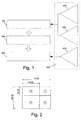
- Fig. 1 presents a schematic view of the algorithm layers.
- the algorithm constructs a grid, which stands for a page template.
- the aim of this layer is to generate recursively an empty template for content according to a limited set of parameters.
- the stopping rule on which the recursive splits operate is the desired minimal dimensions of an item or area in the final, generated template.
- the algorithm does not implement a "look ahead" strategy; in the last split it creates areas that are smaller than the minimum item in one or two of their dimensions. Therefore the second layer 200 performs a "bottom up inclination”. This process applies different merging strategies according to the input parameters on areas within the template.
- the third layer 300 integrates the content into the generated template.
- Content properties are derived from user preferences (profile).
- profile user preferences
- the third layer there is a negotiation between the template and the content with the aim to optimize the presentation of the content according to the number of items and their importance. It correlates between a content item's importance according to the user profile and the perceived importance of the area on the screen.
- the vertical logic layer 400 binds the algorithm's inputs with each of the active layers. It includes the logic rules that represent relations between objects in the display. These are physical relations, such as correlation between font size and screen dimensions, as well as physical representations of abstract display concepts, such as density.
- the content of logic layer 400 is symbolically shown in Fig. 1 as device properties 410, user preferences 420, and content attributes 430.
- the algorithm of the invention adapts content in a generic manner. Therefore the initial set of parameters provided externally is as limited as possible. The values of these parameters can be retrieved from the device profile, user profile and even location of use. In this phase there are three main types of parameters:
- Template parameters comprise sets of parameters that initiate the process of dynamic content adaptation by the algorithm. They are required in the first layer and are needed for the generation of a preliminary grid.
- the first, i.e. template, set of parameters includes height and width dimensions of the display area. These values are derived from the physical properties of the device and can be measured in pixels or metric units.
- the second set, i.e. merging set, of parameters is the minimal height and width of a division area, which stands for the smallest usable area on the display.
- This limitation can be derived from user interaction style (touch screen, stylus pen or keypad), user preference or needs (font and picture size) or content attributes (advertisement size, title size, etc.).
- user interaction style touch screen, stylus pen or keypad
- user preference or needs preference or needs
- content attributes as advertisement size, title size, etc.
- a content oriented limitation for these parameters is the smallest area size dedicated to a single article, advertisement, information alert or picture.
- the algorithm splits an area into separate sibling areas. Any number of sibling areas can be generated by executing a horizontal split followed by a vertical split. For demonstration reasons only the parent area will be split into four sibling areas in the examples herein.
- the division parameters set the ratio of the height and width of the sibling top left area is defined relative to the parent area. By setting the dimensions of one sibling area, the dimensions of all the other three sibling areas have been set.
- the algorithm delivers the means to control which sibling area will participate in the next splitting iteration.
- a sibling area Before the recursive split of a sibling area starts [but after the split shown in Fig. 2 ], it is possible to choose from a large number of splitting methods in order to further divide the sibling areas. Examples of two of the possible splitting methods will now be described. In the first method one area will not participate in the next iteration and the others will. In the second method the algorithm is provided with the index of the only area that will participate in the next iteration and the other three will not participate in any of the following iterations.
- the index of that area (non split or the split one only) is another parameter ranging from 0 to 3. Its initial value is set before the first split.
- policies that can be adopted for determining this parameter:
- Fig. 3 shows the binary heap structure generated by the splits performed by the first layer execution using the fixed value policy.
- the non splitting area index is 0.
- the merging layer 200 uses the minimal height and width as inputs for the merging process.
- the dimensions of each area are compared to the dimensions that were set for the minimal split area in the template parameters.
- the algorithm compares those values serially, first the height and then the width. If the width of the compared area is smaller than the width of the minimal area, the current area will be merged with the adjacent area on the X axis.
- Fig. 4 symbolically shows two horizontal merges. In the upper one, sibling area 1 is merged into area 0 and in the lower one area 2 merges into area 3.
- Fig. 5 shows the results of the two actions of merging along the X axis shown in Fig. 4 .
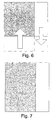
- the algorithm After checking the width, the algorithm performs the same process for the height. If needed, it will perform a merge along the Y axis as seen in Fig. 6 and Fig. 7 .
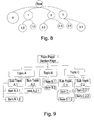
- Fig. 8 The result of the merging process in the second layer on a binary heap structure generated in the first layer is shown in Fig. 8 .
- the white circles are areas
- the grey circles indicate the undivided areas
- the size of the circle is an indication of the visually perceived importance of the area.
- the content delivers the third set of parameters, i.e. the content parameters. These parameters change according to the structure of the content and the importance of the items. Therefore the third layer 300 integrates content and grid features, creating a suitable template for presentation.
- the third layer there is a process which determines the internal structure of each area in the template, according to the rules in the logic layer.
- An area can be constructed from any combination of objects (heading, body text and image) that construct an information item.
- the challenge is a situation in which there are more content items than areas in the template. This situation requires a more thorough revision of the template structure and the amount of aggregated content or some prioritization of items and the selective display of the items with the highest priorities.
- content parameters refer to the size or the quantity of information in the information item itself, e.g. whether the information item includes one or more pictures, the size of the title, and the body text (e.g. the number of letters and the area occupied by the text).
- Fig. 9 is a hierarchical structure showing the content presented in a manner similar to a printed newspaper or news web site. The importance of the content is represented by the size of the topic or the item.
- the hierarchical structure of Fig. 9 needs to be adapted to the binary heap presentation of a grid generated following the first and second layers shown in Fig. 8 .
- the algorithm is required to adapt and overcome the differences between the two tree representations.
- the algorithm calculates the importance of an area in the grid in the following manner. First it orders the areas according to their size (height x width) in a descending order. Areas with the same size are ordered according to their location, with top left coming first, then top right, followed by bottom left and bottom right. This sorting is guided by the element location in the hierarchical structure that represents the template.
- the logic layer 400 represents an extensible set of rules that guide the execution of the algorithm through the three other layers.
- Content attributes 430, display properties 410, and user preferences 420 affect each other and interact with each other when using the electronic newspaper.
- the logic layer models these interactions into a set of simple rules to generate an appealing user experience. Some of the main factors that influence the user's experience are the density, the font size, and the level of personalization.
- the algorithm performs the merges such that, if the width or the height of an area is smaller than the minimal area width or height, this area is merged to an adjacent area. It is possible that after the merge there will still be areas with smaller height or width than the minimal area. High calculated density value indicates a crowded template, while low calculated density indicates a template with few areas.
- calculated density affects the internal structure of an area.
- areas When areas are populated with content, they can each contain several elements because an information item can have a title, body text and a picture.
- the minimal requirement is that an area will include at least one element, a title, for instance.
- the types of elements included within an area and their actual dimensions are functions of the area size, as well as the calculated density.
- Fig. 17 demonstrates the way in which area elements and content can be manipulated using the calculated density.
- the page generated using the default value of the calculated density is shown in the left middle of the frame.
- In the top row is shown a page generated by increasing the density above the calculated density, and the bottom row shows four pages generated by increasingly lower values of the density (from left to right).
- the ratio of the minimal area and the display area is not the only factor that can affect the number of areas in the display. Changing the division parameters for the X and Y axis has a similar effect as seen in Fig. 11 .
- the main difference between these two ways of manipulating the generated template is that in the first method the size of the largest area will always be the same. In addition, some of the other large areas will always be the same, depending on the actual numbers. This will happen, despite the change in the minimal area size. This is an important fact, because the two different templates that are generated according to these parameters resemble each other, but one looks less crowded than the other. Changes in the division ratio affect the size of the largest area, as well as the sizes of all other areas. Therefore the generated templates have very different looks, depending on the degree of change in this parameter.
- the algorithm uses the calculated density as a parameter and does not change the actual attributes that affect its value. At the moment the calculated density is used to determine whether an area will include a heading only, a heading and body text or a heading, a picture and body text. There is also an option to set the value of density manually, and thereby control the density within an information item. In addition, the algorithm uses the density as a threshold when automatically adjusting the font size.
- the default method of emphasizing the title is that it is bigger than the body and appears in bold. To simplify the need for adjustment, it is required to set one value (body text size) and accordingly the other is set.
- the algorithm changes the emphasizing method, displaying the title and the text in the same font, leaving the title in bold. An option is provided to override this action by setting the desired values for the title and the body text separately using the appropriate interface.
- the LoP Level of Personalization
- the value of the LoP is used for calculating the weighted importance of an ontology category and affects the information item importance within that category.
- Items Pool Cells Number ⁇ X Categories Number
- Cells variable stands for the number of cells generated by splits and merging in the first layer.
- Categories variable stands for the total number of categories available from the ontology in use. The number of items retrieved for each category is equal to the number of available cells. It is assumed that even in the initialization stage of the system the database will include enough items in each category.
- Each information item is assigned an importance score according to the relevancy of the item to the user, according to the user profile, e.g. the user's areas of interest, and to previous items he has used. Feedback from other users on an item can have an effect, as well as its importance.
- the user profile is created both implicitly by tracking the information items the user consumes and explicitly by asking him to state his areas of interest.
- the possible values of the importance score can vary according to the information provider and can have high variability, e.g. extreme low and high values. Therefore a normalization process is performed on these values.
- Max Importance Vector
- Min Importance Vector
- the items are sorted into the bins. Inside the bins the items are sorted according to their original importance score in an ascending order. The bins are sorted in an ascending order as well, according to their order (1, 2, 3, ..., 10), where 1 is the most important bin and 10 is the least important bin.
- the aim of this process is to normalize the importance of information items across all categories. In addition, it allows the algorithm to correlate between the category importance score from the user profile and the item's importance score generated by a personalization system.
- Weighted Importance (Level of Personalization) X (Importance from User Profile) + (1-Level of Personalization) X (Bin Number)
- All the bins from all the categories are sorted according to the weighted importance in an ascending order. Items within a bin with the same original importance score from the importance vector are sorted by publication date.
- the algorithm retrieves information items from the sorted pool in a serial manner.
- An additional feature regarding personalization is the existence of a special type of information items that can override personalization. This feature is included to prevent situations where, due to personalization, a user's edition will not include very important information items which do not fit his profile. These information items are grouped into one Meta-category termed 'Important information'. When populating the template, items from this category will be displayed first and therefore appear in the most significant areas in the template.
- Fig. 14 shows the initial actions in the splitting process
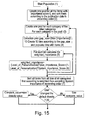
- Fig. 15 shows the main action of splitting and merging
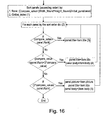
- Fig. 16 shows the recursive call and stopping condition in the splitting process.
- Table 1 Description of the main activities seen in the flow charts (Fig. 14 to Fig. 16) # Description 1 Initiate the splitting algorithm.
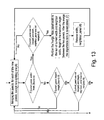
- Fig. 17 shows a flow chart presenting the main processes that perform personalization. These processes, which are parts of the personalization processes that occur in the logic layer as well as in the third layer, are guided by the logic layer rules, user profile and content attributes. This flow begins when the recursive templates generation processes end.
- the main processes seen in the flow chart of Fig. 17 are described in more detail in Table 2.
- Table 2 Description and explanation of the blocks in the personalization flow (Fig. 17) # Description 1 Start population process. 2 This process groups all items with importance score 0 to one meta category that represents information items that override personalization.
- Fig. 18 is a flow chart showing the main processes involved in populating the panels of the template with information items and how the internal structure of each panel is determined. This flow chart is a continuation of the previous flow chart. The processes involved in this phase are also guided by the logic layer rules, user profile and content attributes. This is an interaction between the logic layer and the third layer that involves display optimization, as well as some aspects of personalization (manual adjustment of density).
- the main processes seen in the flow chart in Fig. 18 are described in more detail in Table 3.
- Table 3 Description and explanation of the blocks in the template population flow (Fig. 18) # Description 1 This process sorts all panels according to their area size.
- This loop constructs the content in the panel; it is executed for each panel in the display and populates it with the sorted content. First it calculates the ratio between an area and the entire display, this is the panel rank. 3 If the panel rank is smaller than the density factor, populate it with a title using the appropriate font size. 4 If the panel rank is bigger than the density factor but smaller than a threshold value that equals to three times the density value, populate it with a title and text using the appropriate font sizes. 5 If the panel is bigger than three times the density factor, populate the area with title, text and picture, using the appropriate font sizes.
- the example presented herein above shows that by integrating pre-defined rules with user preferences, content and device attributes the algorithm of the invention is able to successfully generate templates and populate them with content.
- the ability to create new templates by changing input parameters allows the algorithm to operate on different devices. Therefore the generated display can fit future display standards.
- by adjusting the input parameters it is possible to create different genres of the same template that will fit different displays, or to correlate between content and layout dynamically.
- the structure of layers in the algorithm delivers high flexibility and extensibility, especially because of the fact that rules are stored in a separate logic layer.
- the ability to apply different styles of presentations on the same template has been shown in the example using themes.
- the algorithm provides the user with the ability to control the level of personalization. In order to avoid some of the personalization pit falls that would prevent important items from being displayed, the algorithm can identify cases where personalization should be overridden.
Landscapes
- Engineering & Computer Science (AREA)
- Theoretical Computer Science (AREA)
- Health & Medical Sciences (AREA)
- Artificial Intelligence (AREA)
- Audiology, Speech & Language Pathology (AREA)
- Computational Linguistics (AREA)
- General Health & Medical Sciences (AREA)
- Physics & Mathematics (AREA)
- General Engineering & Computer Science (AREA)
- General Physics & Mathematics (AREA)
- Digital Computer Display Output (AREA)
- User Interface Of Digital Computer (AREA)
Applications Claiming Priority (1)
| Application Number | Priority Date | Filing Date | Title |
|---|---|---|---|
| IL186924A IL186924A0 (en) | 2007-10-25 | 2007-10-25 | A method of content adaptation for electronic displays |
Publications (2)
| Publication Number | Publication Date |
|---|---|
| EP2068251A2 true EP2068251A2 (de) | 2009-06-10 |
| EP2068251A3 EP2068251A3 (de) | 2009-07-22 |
Family
ID=40602685
Family Applications (1)
| Application Number | Title | Priority Date | Filing Date |
|---|---|---|---|
| EP08018296A Ceased EP2068251A3 (de) | 2007-10-25 | 2008-10-20 | Verfahren zur Inhaltsanpassung für elektronische Bildschirme |
Country Status (2)
| Country | Link |
|---|---|
| EP (1) | EP2068251A3 (de) |
| IL (1) | IL186924A0 (de) |
Cited By (13)
| Publication number | Priority date | Publication date | Assignee | Title |
|---|---|---|---|---|
| EP2530603A1 (de) * | 2011-06-03 | 2012-12-05 | Research In Motion Limited | Dynamische Anzeige von Inhalt mit einer elektronischen Vorrichtung |
| WO2014054906A1 (en) * | 2012-10-04 | 2014-04-10 | Samsung Electronics Co., Ltd. | Display system with content presentation mechanism and method of operation thereof |
| US20140181156A1 (en) * | 2012-12-21 | 2014-06-26 | Nathan Peter Lucash | Providing content items for non-standard content item slots |
| WO2014133515A1 (en) * | 2013-02-28 | 2014-09-04 | Hewlett-Packard Development Company, L.P. | Arranging elements in a layout |
| US20140258101A1 (en) * | 2013-03-05 | 2014-09-11 | Wevideo, Inc. | Systems and Methods for a Theme-Based Effects Multimedia Editing Platform |
| WO2014064529A3 (en) * | 2012-10-24 | 2015-01-08 | ePAGINATION LIMITED (UK) | Techniques for typographic electronic pagination |
| US9164966B1 (en) | 2012-10-24 | 2015-10-20 | Google Inc. | Determining sizes of content items |
| US9313106B2 (en) | 2010-03-19 | 2016-04-12 | Nokia Technologies Oy | Method and apparatus for populating ad landing spots |
| US9330072B1 (en) | 2012-09-26 | 2016-05-03 | Google Inc. | Serving content for a space based on a probabilistic distribution |
| EP3043251A1 (de) * | 2015-01-06 | 2016-07-13 | Samsung Electronics Co., Ltd. | Verfahren zur inhaltsanzeige und elektronische vorrichtung damit |
| US9442912B1 (en) | 2012-09-26 | 2016-09-13 | Google Inc. | Estimating the number of content items to fill an online space before distributing the content items to the online space |
| US12254901B2 (en) | 2011-03-29 | 2025-03-18 | Wevideo, Inc. | Low bandwidth consumption online content editing |
| US12386483B2 (en) | 2011-03-29 | 2025-08-12 | Wevideo, Inc. | Multi-source journal content integration systems and methods and systems and methods for collaborative online content editing |
Citations (4)
| Publication number | Priority date | Publication date | Assignee | Title |
|---|---|---|---|---|
| US5895477A (en) | 1996-09-09 | 1999-04-20 | Design Intelligence, Inc. | Design engine for automatic layout of content |
| US5956738A (en) | 1996-03-04 | 1999-09-21 | Nec Corporation | Article layout device for automatic column text layout |
| WO2003002712A2 (en) | 2001-06-26 | 2003-01-09 | Wisconsin Alumni Research Foundation | Gene expression alterations underlying the retardation of aging by caloric restriction in mammals |
| WO2003002761A1 (en) | 2001-06-29 | 2003-01-09 | Novozymes A/S | Method of multimerization and site-directed mutagenesis |
Family Cites Families (6)
| Publication number | Priority date | Publication date | Assignee | Title |
|---|---|---|---|---|
| US6990633B1 (en) * | 2000-07-28 | 2006-01-24 | Seiko Epson Corporation | Providing a network-based personalized newspaper with personalized content and layout |
| GB2384878A (en) * | 2002-01-31 | 2003-08-06 | Hewlett Packard Co | Authoring media content for dissemination over a network accessible by a variety of device types |
| US7010746B2 (en) * | 2002-07-23 | 2006-03-07 | Xerox Corporation | System and method for constraint-based document generation |
| US7246311B2 (en) * | 2003-07-17 | 2007-07-17 | Microsoft Corporation | System and methods for facilitating adaptive grid-based document layout |
| US7092551B2 (en) * | 2003-07-30 | 2006-08-15 | Xerox Corporation | System and method for measuring and quantizing document quality |
| GB2422701A (en) * | 2005-01-31 | 2006-08-02 | Hewlett Packard Development Co | Document layout system |
-
2007
- 2007-10-25 IL IL186924A patent/IL186924A0/en unknown
-
2008
- 2008-10-20 EP EP08018296A patent/EP2068251A3/de not_active Ceased
Patent Citations (4)
| Publication number | Priority date | Publication date | Assignee | Title |
|---|---|---|---|---|
| US5956738A (en) | 1996-03-04 | 1999-09-21 | Nec Corporation | Article layout device for automatic column text layout |
| US5895477A (en) | 1996-09-09 | 1999-04-20 | Design Intelligence, Inc. | Design engine for automatic layout of content |
| WO2003002712A2 (en) | 2001-06-26 | 2003-01-09 | Wisconsin Alumni Research Foundation | Gene expression alterations underlying the retardation of aging by caloric restriction in mammals |
| WO2003002761A1 (en) | 2001-06-29 | 2003-01-09 | Novozymes A/S | Method of multimerization and site-directed mutagenesis |
Non-Patent Citations (1)
| Title |
|---|
| IHLSTROM, C.; AKESSON, M.; NORDQVIST, S.: "From Print to Web to e-paper - the challenge of designing the e-newspaper", IN PROCEEDINGS OF ICCC 8TH INTERNATIONAL CONFERENCE ON ELECTRONIC PUBLISHING, 2004, pages 249 - 260 |
Cited By (17)
| Publication number | Priority date | Publication date | Assignee | Title |
|---|---|---|---|---|
| US9313106B2 (en) | 2010-03-19 | 2016-04-12 | Nokia Technologies Oy | Method and apparatus for populating ad landing spots |
| US12386483B2 (en) | 2011-03-29 | 2025-08-12 | Wevideo, Inc. | Multi-source journal content integration systems and methods and systems and methods for collaborative online content editing |
| US12254901B2 (en) | 2011-03-29 | 2025-03-18 | Wevideo, Inc. | Low bandwidth consumption online content editing |
| EP2530603A1 (de) * | 2011-06-03 | 2012-12-05 | Research In Motion Limited | Dynamische Anzeige von Inhalt mit einer elektronischen Vorrichtung |
| US9442912B1 (en) | 2012-09-26 | 2016-09-13 | Google Inc. | Estimating the number of content items to fill an online space before distributing the content items to the online space |
| US9330072B1 (en) | 2012-09-26 | 2016-05-03 | Google Inc. | Serving content for a space based on a probabilistic distribution |
| WO2014054906A1 (en) * | 2012-10-04 | 2014-04-10 | Samsung Electronics Co., Ltd. | Display system with content presentation mechanism and method of operation thereof |
| WO2014064529A3 (en) * | 2012-10-24 | 2015-01-08 | ePAGINATION LIMITED (UK) | Techniques for typographic electronic pagination |
| US9164966B1 (en) | 2012-10-24 | 2015-10-20 | Google Inc. | Determining sizes of content items |
| US20140181156A1 (en) * | 2012-12-21 | 2014-06-26 | Nathan Peter Lucash | Providing content items for non-standard content item slots |
| US9158800B2 (en) * | 2012-12-21 | 2015-10-13 | Google Inc. | Providing content items for non-standard content item slots |
| US10061750B2 (en) | 2013-02-28 | 2018-08-28 | Hewlett-Packard Development Company, L.P. | Arranging elements in a layout |
| WO2014133515A1 (en) * | 2013-02-28 | 2014-09-04 | Hewlett-Packard Development Company, L.P. | Arranging elements in a layout |
| US11748833B2 (en) * | 2013-03-05 | 2023-09-05 | Wevideo, Inc. | Systems and methods for a theme-based effects multimedia editing platform |
| US12248999B2 (en) | 2013-03-05 | 2025-03-11 | Wevideo, Inc. | Systems and methods for a theme-based effects multimedia editing platform |
| US20140258101A1 (en) * | 2013-03-05 | 2014-09-11 | Wevideo, Inc. | Systems and Methods for a Theme-Based Effects Multimedia Editing Platform |
| EP3043251A1 (de) * | 2015-01-06 | 2016-07-13 | Samsung Electronics Co., Ltd. | Verfahren zur inhaltsanzeige und elektronische vorrichtung damit |
Also Published As
| Publication number | Publication date |
|---|---|
| EP2068251A3 (de) | 2009-07-22 |
| IL186924A0 (en) | 2008-02-09 |
Similar Documents
| Publication | Publication Date | Title |
|---|---|---|
| US11899703B2 (en) | Arrangements of documents in a document feed | |
| JP7354294B2 (ja) | 階層流動コンポーネントおよび動的レイアウトを統合した応答編集および表示を提供するシステムおよび方法 | |
| US10671267B2 (en) | Systems and methods for presentation of content items relating to a topic | |
| JP2022168031A (ja) | アンケートを生成するための方法およびシステム | |
| US10467337B2 (en) | Responsive data exploration on small screen devices | |
| US9483444B2 (en) | Dynamic layout engine for a digital magazine | |
| US20100269037A1 (en) | Arranging graphic objects on a page | |
| US9639614B2 (en) | Maximizing content item information on a search engine results page | |
| US20190258698A1 (en) | Adaptive Column Selection | |
| CN111415396A (zh) | 一种图像生成方法、装置和存储介质 | |
| CN107924387A (zh) | 用于生成电子页面的系统和方法 | |
| US11966689B2 (en) | Responsive user interface system | |
| Fan et al. | Measuring and evaluating the visual complexity of Chinese ink paintings | |
| US8281245B1 (en) | System and method of preparing presentations | |
| CA2869871C (en) | System and method for personality-based formatting of information | |
| US20040139232A1 (en) | Method and system for content authoring | |
| CN120614499A (zh) | 一种用于多媒体互动展示的动态显示调节方法及系统 | |
| US20090259656A1 (en) | Data search device, data search method, and recording medium | |
| US10496727B1 (en) | Weighted panels and panel group for responsive design system | |
| US20210200790A1 (en) | System and method for dossier creation with free-form layout | |
| JP7366528B2 (ja) | 出力内容生成装置、出力内容生成方法及びプログラム | |
| US20260010703A1 (en) | Tool for generating structured data within hierarchical outlines and automatic transformation into other formats | |
| CN113568694B (zh) | 一种界面权限配置管理的交互方法及设备 | |
| TW202123029A (zh) | 基於網頁瀏覽最佳化的評估方法及其優化方法 | |
| US20240095226A1 (en) | Methods and related devices for storing and accessing data using multi-level fractal grids |
Legal Events
| Date | Code | Title | Description |
|---|---|---|---|
| PUAI | Public reference made under article 153(3) epc to a published international application that has entered the european phase |
Free format text: ORIGINAL CODE: 0009012 |
|
| AK | Designated contracting states |
Kind code of ref document: A2 Designated state(s): AT BE BG CH CY CZ DE DK EE ES FI FR GB GR HR HU IE IS IT LI LT LU LV MC MT NL NO PL PT RO SE SI SK TR |
|
| AX | Request for extension of the european patent |
Extension state: AL BA MK RS |
|
| PUAL | Search report despatched |
Free format text: ORIGINAL CODE: 0009013 |
|
| AK | Designated contracting states |
Kind code of ref document: A3 Designated state(s): AT BE BG CH CY CZ DE DK EE ES FI FR GB GR HR HU IE IS IT LI LT LU LV MC MT NL NO PL PT RO SE SI SK TR |
|
| AX | Request for extension of the european patent |
Extension state: AL BA MK RS |
|
| 17P | Request for examination filed |
Effective date: 20100121 |
|
| AKX | Designation fees paid |
Designated state(s): AT BE BG CH CY CZ DE DK EE ES FI FR GB GR HR HU IE IS IT LI LT LU LV MC MT NL NO PL PT RO SE SI SK TR |
|
| 17Q | First examination report despatched |
Effective date: 20101203 |
|
| STAA | Information on the status of an ep patent application or granted ep patent |
Free format text: STATUS: THE APPLICATION HAS BEEN REFUSED |
|
| 18R | Application refused |
Effective date: 20120125 |