EP2070276B1 - Verfahren zur bewertung der zuverlässigkeit einer route in einem kooperativen netzwerk - Google Patents
Verfahren zur bewertung der zuverlässigkeit einer route in einem kooperativen netzwerk Download PDFInfo
- Publication number
- EP2070276B1 EP2070276B1 EP07848368.2A EP07848368A EP2070276B1 EP 2070276 B1 EP2070276 B1 EP 2070276B1 EP 07848368 A EP07848368 A EP 07848368A EP 2070276 B1 EP2070276 B1 EP 2070276B1
- Authority
- EP
- European Patent Office
- Prior art keywords
- node
- route
- destination node
- network
- reliability
- Prior art date
- Legal status (The legal status is an assumption and is not a legal conclusion. Google has not performed a legal analysis and makes no representation as to the accuracy of the status listed.)
- Active
Links
Images
Classifications
-
- H—ELECTRICITY
- H04—ELECTRIC COMMUNICATION TECHNIQUE
- H04L—TRANSMISSION OF DIGITAL INFORMATION, e.g. TELEGRAPHIC COMMUNICATION
- H04L45/00—Routing or path finding of packets in data switching networks
- H04L45/26—Route discovery packet
-
- H—ELECTRICITY
- H04—ELECTRIC COMMUNICATION TECHNIQUE
- H04L—TRANSMISSION OF DIGITAL INFORMATION, e.g. TELEGRAPHIC COMMUNICATION
- H04L45/00—Routing or path finding of packets in data switching networks
- H04L45/34—Source routing
-
- H—ELECTRICITY
- H04—ELECTRIC COMMUNICATION TECHNIQUE
- H04L—TRANSMISSION OF DIGITAL INFORMATION, e.g. TELEGRAPHIC COMMUNICATION
- H04L45/00—Routing or path finding of packets in data switching networks
- H04L45/36—Backward learning
-
- H—ELECTRICITY
- H04—ELECTRIC COMMUNICATION TECHNIQUE
- H04W—WIRELESS COMMUNICATION NETWORKS
- H04W40/00—Communication routing or communication path finding
- H04W40/02—Communication route or path selection, e.g. power-based or shortest path routing
Definitions
- the invention relates to a technique for evaluating the reliability of a route in a cooperative network for the transmission of data packets between a source node and a destination node of the network.
- Ad hoc networks are spontaneous wireless networks that do not rely on any particular communication infrastructure.
- the terminals of these networks hereinafter called nodes, have a dual role: to use the network for their own needs and to contribute to the connectivity between the nodes of the network.
- These networks are said to be cooperative because the nodes therefore fulfill both the functions of terminals and routers for the needs of other terminals.
- We then call a route an ordered list of nodes allowing the routing of data packets between a source node and a destination node.
- the routing of a data packet can be carried out by the source, that is to say that the node associates with the packet to transmit the route which the packet must follow.
- This type of network is based on mutual trust mechanisms between the different nodes.
- a node belonging to a route can prove to be poorly cooperative or even malicious and more or less disrupt the routing of data packets.
- Reputation management techniques have therefore been proposed for this type of network.
- a first technique as described in the article by S. Marti, TJ Giuli, K. Lai, M. Baker, entitled “Mitigating Routing Misbehavior in Mobile Ad Hoc Networks", published in the proceedings of the international conference "6th annual ACM / IEEE International ConfInterrupt on Mobile Computing and Networking" 2000 , allows each node to supervise the transmission of the packet.
- a node When a node receives a data packet from a source node and to transmit to a neighboring node, it transmits it to the neighboring node and checks, by listening to the radio channel, that the latter has actually forwarded the packet to a node next. When the number of packets not retransmitted by this neighboring node exceeds a threshold, it considers that the neighboring node is malicious and sends a message to the source node to report to it the maliciousness of the neighboring node.
- This same article also presents a method of administering a trusted database, based on observation of a route. This method necessarily requires a source routing protocol. This trusted database stores for each node of the known cooperative network a note identifying its contribution to the functioning of the network.
- the source node When a route is valid and in use, the source node periodically updates the notes of the nodes belonging to the route. When, when sending a packet, the route is no longer valid, the notes of the inaccessible nodes are decremented.
- the node to select a route to use for data packet transmission between a destination node and itself, then uses its trusted database to select the most reliable route.
- a route request message indicating a requested level of security is transmitted from a source node to a destination node. If an intermediate node on a route between the source node and the destination node cannot satisfy the requested level of security, it does not retransmit the request message. If it can satisfy it, it retransmits the request message after having updated a field representing the maximum level of security among the levels of security that all the intermediate nodes on the route used can offer.
- the destination node When the destination node receives the request message, it responds to the source node along the reverse route, with a response message indicating a security level equal to the maximum security level received. Thus, the destination node only copies in its response message a security level which it received in the request message, without any evaluation on its part of said security level.
- Each source node thus administers its own database of trust indices. He must therefore experiment with routes, with a bad choice if necessary due to the presence of a malicious node, and rely on his own experiences. As a result, the selection of the route by the source node lacks reliability. There is therefore a need for a technique making it possible, in a cooperative network, to make a route selection mechanism reliable between a source node and a destination node, by the source node.
- the invention originates from a problem of trust in a cooperative network.
- the invention can also apply to the sending by the destination node to the source node of any parameter enabling it to make the selection of the route it will use more reliable.
- the destination node receives a route request message from a source node indicating a route between the two nodes.
- the destination node has information about the nodes in the network that is generally different from that of the source node. Indeed, it can be the destination node of a plurality of routes originating from a plurality of source nodes. He therefore observes the cooperative network from a different angle.
- On receipt of the route request message it evaluates at least one reliability indicator parameter to be associated with the route and sends a response by associating this parameter with the source node, sending the route request message.
- the destination node cooperates with the source node, sharing with it the information it has on the route, to help the source node to assess whether a given route is reliable.
- the source node thus obtains a parameter which it can use in addition to local criteria to evaluate the reliability of this route and possibly select it.
- Ad hoc hybrid networks are specific cooperative networks in which one of the nodes, administered by an operator, is an access point to a fixed infrastructure network.
- the nodes of the hybrid ad hoc network cooperate with each other so that those located outside the access point's radio coverage can nevertheless access the infrastructure network.
- the access point then happens to be a privileged passage point for communications and corresponds to the destination node of most roads, if not all.
- This access point is administered by an operator and is therefore a particularly "trusted" node. Its processing capacities can also be greater than those of standard nodes of the cooperative network.
- the information which it can provide is also deemed reliable unlike the information which can be provided by any nodes.
- the reliability indicator parameter associated with the route is evaluated from information administered by the destination node relating to the nodes of the network, this information belonging to the group comprising a confidence index, a load index, a network structure index and a combination of these indices.
- a network node and more particularly an access point in a hybrid ad hoc network, can have additional information on the nodes of the cooperative network. These may be signs of confidence that he has assessed himself. It may also be load information transmitted to it by the nodes or any other information related to the architecture of the network. It can also recommend routes that cross nodes of its own network. By means of this information, the destination node can contribute to the evaluation of the reliability of a route, carried out by the source node, and according to its own information.
- the source node sends a route request message to a plurality of neighboring nodes, the message being transmitted from node to node in the network bound for the destination node and progressively indicating the route followed by the message.
- the method is particularly advantageous when the destination node receives a plurality of routes following the sending by the source node of a plurality of route request messages. It is only more effective. It can then evaluate, for each of the routes, one or more parameters indicating reliability and transmit them to the source node.
- the source node receives a plurality of responses from the destination node corresponding to a plurality of routes indicated at the destination node, and there is provided a route selection step taking into account at least the respective parameters associated with said routes.
- the source node has the possibility of taking into account the reliability indicator parameter (s) in different ways. It can possibly be based solely on the reliability indicator parameter received and thus dispense with the administration of a local trusted database. It can thus save both the processing capacity necessary for building up the database and memory resources by using only the parameter transmitted by the destination node to assess the reliability of this route. It can also combine it with reliability indicator parameters relating to the nodes of the cooperative network evaluated locally. In addition, the exchanges between the two nodes are limited to one or more reliability indicator parameters associated with the route and not to reliability indicator parameters associated respectively with the road nodes.
- the invention also relates to a communication system between a plurality of nodes in a cooperative network, comprising at least one node arranged to receive the indication of a route between a source node and itself, as described above, and at least one node arranged to transmit data packets to another node of the network, as described above.
- the invention further relates to a signal sent by a node to another node in a cooperative network, in response to a message indicating a route between the two nodes and conveying a response from the node comprising at least one parameter indicating reliability. intended to be used by this other node to assess the reliability of the route.
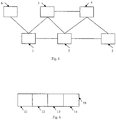
- the figure 1 represents an ad hoc cooperative network formed by four nodes referenced 2, 3, 4 and 5.
- a node 6 does not belong to the ad hoc network.
- Nodes 2, 3, 4 and 5 cooperate and nodes 2 and 4 allow, for example, node 3 to interact with node 5 with which it has no direct link.
- the nodes are wireless communicating terminals. These can be mobile phones, assistants or personal computers.
- the links between the nodes, as shown on the figure 1 are wireless links.
- the node 5 is an access point to an infrastructure network and is administered by an operator. Such a network is hereinafter called an ad hoc hybrid network.
- a node 1 hereinafter referred to as the source node, wishes to join the cooperative network, and more particularly wishes to communicate with node 5, hereinafter referred to as the destination node. It is considered that node 1 has nodes 2, 3 and 6 in its radio coverage area.
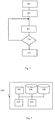
- the source node 1 implements, firstly, a step E1 of discovery of neighboring nodes. It is a question of discovering the neighboring nodes which accept the routing of the packets bound for the destination node 5.
- the source node 1 transmits to the neighboring nodes 2, 3 and 6 an access request message indicating that it wishes to join the destination node 5. If one of the neighboring nodes wishes to cooperate but does not know a route allowing access to the destination node 5, it in turn sends an access request message indicating that it wishes to join the destination node. If he wishes to cooperate and knows a route allowing access to the destination node 5, he responds to the access request message by indicating the number of hops allowing him to reach the destination node 5. By jump, we mean an interval between two nodes. For two directly connected nodes, the number of hops equals one.
- the source node 1 records in a neighborhood table 104 the information comprising an identification of the node neighbor, a destination node and the number of hops between these two nodes received in the response message to the access request.
- the source node 1 sends to the three neighboring nodes 2, 3 and 6, located in its radio coverage area, an access request message to the destination node 5.
- the nodes 2 and 3 respond to the request message access by indicating one jump and two jumps respectively.
- Neighbor node 6 does not respond because it does not have information to reach destination node 5 without going through node 1.
- the source node 1 selects a predetermined number N of neighboring nodes making it possible to join the destination node 5 according to a local criterion. These can be, for example, nodes with the lowest possible number of hops, or a high local confidence index.
- the predetermined number N can be set to the value 2, in order to avoid saturation of the network with route request messages while allowing the discovery of several concurrent routes.
- the source node sends a route request message to the N selected neighboring nodes including its identification. It triggers a supervision delay T and waits for reception of a response.
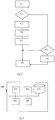
- a node of the cooperative network receives during a step F1 a route request message comprising an identification of a source node 1, an identification of a destination node 5.
- the node 2, 3, 4 checks whether the identification of the destination node corresponds to its own identification.
- the node checks in a step F3 the number of hops that the route request message has already made.
- step F8 If a maximum number of hops is reached, it does not replay the message and goes to step F8.
- step F4 modifies in a step F4 a list of nodes included in the route request message and constructed of nodes as a node, corresponding to the route followed by the route request message, by adding its identification and sending the message to a predetermined number M of neighboring nodes among those making it possible to reach the destination node. He then goes to step F8.
- the destination node 5 saves the list of nodes corresponding to the route followed in a step F5. Then in a step F6, it evaluates at least one parameter indicating reliability.
- the destination node 5 administers a database, referenced 205 on the figure 4 .
- the database 205 includes records comprising an identification of a node and a confidence index associated with this node.
- the database 205 can also include information such as a node load index, a network structure index.
- the database 205 is created and updated regularly.
- the method comprises a step of updating the information administered by the destination node as a function of data packets routed correctly to the destination node by at least a road.
- the destination node 5 can for example increment in a unitary manner the confidence index of each node of a route when a packet is received on it. Conversely, if the communication fails, the confidence indices of each node of the route are decremented.
- Such a method is for example used in the article by C. Jensen, P. O'Connell, entitled “Trust-Based Selection in Dynamic Source Routing", published in the proceedings of the 4th international iTrust conference in May 2006 . It will be noted that this evaluation of the confidence indices by the destination node 5 is particularly advantageous in a hybrid ad hoc network where the destination node is an access point to the network of an operator.
- the load indices of a node can be sent as parameters of the routing protocol. So a node can no longer communicate properly for his own account requests to reduce his contribution by raising a high load index. If this is the case, the database 205 includes load indices.
- a parameter representative of a network structure index can be provided in the database.
- a maximum value is assigned to a parameter representative of a network structure index at a node belonging to the operator's network or whose identifier is known to the operator.
- the operator can thus plan to favor routes which cross nodes of his own network, that is to say nodes of which he knows the identifiers.
- a parameter representative of a network structure index may also be representative of the mobility of the nodes. We can thus favor stable nodes, that is to say not very mobile.
- the evaluation of a parameter indicating the reliability of the route consists in evaluating the reliability of the route on the basis of the indices contained in the database 205 for each node that the route crosses.
- Step F7 consists in sending the source node a route response message 10.
- This message 10 includes an identification 11 of the node sending the message, an identification of a route 12, an identification 13 of the node receiving the message and at least one reliability indicator parameter 14.
- the sending node of the message is the destination node 5 and the recipient node of the message is the source node 1. Only one reliability indicator parameter is represented on the figure 6 .
- the message sending node associates a plurality of reliability indicator parameters, for example a parameter representative of confidence, a parameter representative of the load, a parameter representative of the network structure or a combination of these parameters. After reception of the route response message by the destination node of the message, that is to say the source node, the latter then takes into account or not these parameters during the subsequent route selection.
- step F8 awaiting receipt of a route request message.
- the source node 1 sent a predetermined number N of route request messages in step E2.
- the destination node 5 receives a plurality of these messages respectively indicating a plurality of routes between the source node 1 and the destination node 5.
- the method as described makes it possible to limit the number of route request messages so as not to saturate the cooperative network with such messages.
- the source node 1 is, in turn, awaiting receipt of route response messages 10.
- a step E3 it receives a route response message 10. It stores in a working memory, not shown on the figure 5 , the route contained in field 12 of the message as well as the reliability indicator parameter (s) indicated in field 14.
- step E4 it checks whether the timer T has expired.
- step E5 of selecting a route the source node 1 takes into account, in order to select a route to the destination node, the reliability indicator parameters which it has stored in the working memory. For example, it selects the route with the highest reliability indicator setting. Depending on the number of reliability indicator parameters associated with each route and transmitted by the destination node, the source node 1 can combine these different parameters according to its own criteria.
- the source node selects a route based on information evaluated by another node.
- This solution avoids the administration of a database local data and the evaluation of confidence indices by the source node.
- the access point is the destination node of a plurality of routes, its information is therefore more reliable, and its processing capacities can be greater.
- knowing a plurality of routes makes it easier for the source node to bypass potential malicious nodes.
- the source node 1 also takes into account confidence indices which it has evaluated and stored in a local database associating confidence indices with nodes, referenced 105 on the figure 5 . It thus evaluates its own reliability indicator parameter on each route and combines it according to its own criteria with the confidence parameter (s) received from the destination node.
- step E1 is not performed and in step E2, the source node 1 sends a route request message comprising its identification in broadcast mode and triggers a supervision time delay T.
- step E2 the source node 1 sends a route request message comprising its identification in broadcast mode and triggers a supervision time delay T.
- route response message to transmit a reliability indicator parameter to the source node also has the advantage of avoiding an additional exchange of information between the source node and the destination node.
- step F3 the node checks whether it has already received the route request message before rebroadcasting it. The other process steps are unchanged. Consequently, the number of route request messages will be less than using the method as described, but the invention always has an advantage for evaluating the reliability of a route.
- the destination node comprises a database 205 of records comprising an identification of a node and information relating to the nodes of the network, the information belonging to the group comprising a confidence index, a load index, a network structure index and a combination of these indices.
- the source node also comprises route selection means 103, arranged to select a route from a plurality of routes by taking into account at least the parameters respectively associated with the plurality of routes.
- the source node also includes a neighborhood table 104, arranged to store neighboring nodes and the number of hops necessary to reach a destination node.
- the source node also includes a local database 105 associating confidence indices with nodes.
- the modules 101, 102, 103 which implement the method described above, are preferably software modules comprising software instructions for executing those of the steps of the method previously described by the source node 100.
- the modules 201, 202, 203, 204 which implement the method described above are preferably software modules comprising software instructions for executing those of the steps of the method described above which are implemented by the destination node 200.
- the software modules can be stored in or transmitted by a data carrier.
- a data carrier can be a hardware storage medium, for example a CD-ROM, a magnetic diskette or a hard disk, or else a transmission medium such as an electrical, optical or radio signal, or a telecommunications network.
- the invention also relates to a communication system between a plurality of nodes in a cooperative network, comprising at least one destination node 200 as described above and at least one source node 100, as described above.
Landscapes
- Engineering & Computer Science (AREA)
- Computer Networks & Wireless Communication (AREA)
- Signal Processing (AREA)
- Mobile Radio Communication Systems (AREA)
- Data Exchanges In Wide-Area Networks (AREA)
Claims (9)
- Verfahren zur Bewertung der Zuverlässigkeit einer Route in einem kooperativen Netzwerk zur Übertragung von Datenpaketen zwischen einem Quellknoten und einem Zielknoten des Netzwerks, umfassend einen Schritt des Aktualisierens einer Datenbank, die vom Zielknoten verwaltet wird und Einträge bezüglich der Knoten des Netzwerks umfasst, wobei jeder Eintrag eine Identifikation eines Knotens des Netzwerks und mindestens eine Information bezüglich dieses Knotens umfasst, die einen diesem Knoten zugeordneten Konfidenzindex umfasst, wobei der Konfidenzindex beim Aktualisierungsschritt in Abhängigkeit von Datenpaketen aktualisiert wird, die über mindestens eine den Knoten umfassende Route ordnungsgemäß bis zum Zielknoten transportiert wurden, wobei das Verfahren beim Empfangen (F1) jeder eine Route zwischen dem Quellknoten und dem Zielknoten angebenden Routenanforderungsnachricht durch den Zielknoten umfasst:- einen Schritt des Bewertens mindestens eines Zuverlässigkeitsindikatorparameters (F6) durch den Zielknoten anhand der Informationen, die in der vom Zielknoten verwalteten Datenbank enthalten sind und die von der angegebenen Route durchquerten Knoten des Netzwerks betreffen,- einen Schritt des Zuordnens des mindestens einen Zuverlässigkeitsindikatorparameters zu der angegebenen Route durch den Zielknoten und- einen Schritt (F7) des Sendens einer Antwort, die den mindestens einen der angegebenen Route zugeordneten Zuverlässigkeitsindikatorparameter umfasst, durch den Zielknoten an den Quellknoten.
- Verfahren nach Anspruch 1, bei dem die mindestens eine Information bezüglich des Knotens ferner einen Lastindex und/oder einen Strukturindex des Netzwerks umfasst.
- Verfahren nach einem der vorhergehenden Ansprüche, bei dem der Quellknoten eine Routenanforderungsnachricht an eine Mehrzahl von Nachbarknoten sendet (E2), wobei die Nachricht in dem Netzwerk von Knoten zu Knoten zum Zielknoten übertragen wird und Zug um Zug die Route angibt, der die Nachricht folgt.
- Verfahren nach einem der vorhergehenden Ansprüche, bei dem der Quellknoten eine Mehrzahl von Antworten vom Zielknoten empfängt, die einer Mehrzahl von angegebenen Routen zum Zielknoten entsprechen, und ein Routenauswahlschritt (E5) vorgesehen ist, der mindestens die den Routen zugeordneten jeweiligen Zuverlässigkeitsindikatorparameter berücksichtigt.
- Knoten (5) in einem kooperativen Netzwerk, Zielknoten genannt, umfassend:- Aktualisierungsmittel zum Aktualisieren einer Datenbank, die vom Zielknoten verwaltet wird und Einträge bezüglich von Knoten des Netzwerks umfasst, wobei jeder Eintrag eine Identifikation eines Knotens des Netzwerks und mindestens eine Information bezüglich dieses Knotens umfasst, wobei die mindestens eine Information einen Konfidenzindex umfasst, der von den Aktualisierungsmitteln in Abhängigkeit von Datenpaketen aktualisiert wird, die über mindestens eine den mindestens einen Knoten umfassende Route ordnungsgemäß bis zum Zielknoten transportiert wurden,- Bewertungsmittel (202), die dazu eingerichtet sind, beim Empfangen jeder Routenanforderungsnachricht durch den Zielknoten, die eine Route zwischen einem Quellknoten (1) und ihm selbst angibt, mindestens einen Zuverlässigkeitsindikatorparameter anhand der Informationen zu bewerten, die in der vom Zielknoten verwalteten Datenbank enthalten sind und die von der angegebenen Route durchquerten Knoten des Netzwerks betreffen,- Zuordnungsmittel (203), die dazu eingerichtet sind, der angegebenen Route mindestens einen Zuverlässigkeitsindikatorparameter zuzuordnen, und- Sendemittel (204), die dazu eingerichtet sind, an den Quellknoten eine Antwort zu senden, die den mindestens einen der angegebenen Route zugeordneten Zuverlässigkeitsindikatorparameter umfasst.
- Kommunikationssystem zwischen einer Mehrzahl von Knoten in einem kooperativen Netzwerk, das mindestens einen Quellknoten (1) und einen Zielknoten (5) nach Anspruch 5 umfasst.
- Kommunikationssystem nach Anspruch 6, bei dem der Quellknoten umfasst:- Mittel zum Empfangen einer Mehrzahl von Antworten vom Zielknoten, die einer Mehrzahl von angegebenen Routen zum Zielknoten entsprechen, und- Auswahlmittel, die dazu eingerichtet sind, eine Route unter Berücksichtigung mindestens der den Routen zugeordneten jeweiligen Zuverlässigkeitsindikatorparameter auszuwählen.
- Programm zur Bewertung der Zuverlässigkeit einer Route für einen Knoten eines kooperativen Netzwerks, umfassend Programmbefehle, die dazu bestimmt sind, die Ausführung derjenigen der Schritte des Verfahrens nach einem der Ansprüche 1 bis 4 zu steuern, die vom Zielknoten ausgeführt werden, wenn das Programm von ihm ausgeführt wird.
- Von einem Knoten lesbares Speichermedium, auf dem das Programm nach Anspruch 8 gespeichert ist.
Applications Claiming Priority (2)
| Application Number | Priority Date | Filing Date | Title |
|---|---|---|---|
| FR0653942 | 2006-09-26 | ||
| PCT/FR2007/051998 WO2008037916A1 (fr) | 2006-09-26 | 2007-09-24 | Procede pour evaluer la fiabilite d'une route dans un reseau cooperatif |
Publications (2)
| Publication Number | Publication Date |
|---|---|
| EP2070276A1 EP2070276A1 (de) | 2009-06-17 |
| EP2070276B1 true EP2070276B1 (de) | 2020-03-18 |
Family
ID=38055153
Family Applications (1)
| Application Number | Title | Priority Date | Filing Date |
|---|---|---|---|
| EP07848368.2A Active EP2070276B1 (de) | 2006-09-26 | 2007-09-24 | Verfahren zur bewertung der zuverlässigkeit einer route in einem kooperativen netzwerk |
Country Status (3)
| Country | Link |
|---|---|
| US (1) | US8743750B2 (de) |
| EP (1) | EP2070276B1 (de) |
| WO (1) | WO2008037916A1 (de) |
Families Citing this family (9)
| Publication number | Priority date | Publication date | Assignee | Title |
|---|---|---|---|---|
| EP2797267B1 (de) * | 2013-04-26 | 2016-07-27 | Airbus Defence and Space Limited | Routen von Daten in einem Kommunikationsnetzwerk |
| US10015720B2 (en) | 2014-03-14 | 2018-07-03 | GoTenna, Inc. | System and method for digital communication between computing devices |
| US9320058B1 (en) * | 2014-04-22 | 2016-04-19 | Sprint Spectrum L.P. | Use of special random access channel instances for access request interception and forwarding |
| US10944669B1 (en) | 2018-02-09 | 2021-03-09 | GoTenna, Inc. | System and method for efficient network-wide broadcast in a multi-hop wireless network using packet echos |
| US11082324B2 (en) | 2018-07-27 | 2021-08-03 | goTenna Inc. | Vine: zero-control routing using data packet inspection for wireless mesh networks |
| WO2020185707A1 (en) | 2019-03-08 | 2020-09-17 | goTenna Inc. | Method for utilization-based traffic throttling in a wireless mesh network |
| JP7565359B2 (ja) * | 2020-01-07 | 2024-10-10 | テレフオンアクチーボラゲット エルエム エリクソン(パブル) | Nrネットワーク内でのサイドリンク通信用の経路選択 |
| CN114124779B (zh) * | 2021-11-05 | 2023-06-30 | 中国联合网络通信集团有限公司 | 路由评价方法、装置、服务器及存储介质 |
| CN119997141B (zh) * | 2025-04-10 | 2025-06-27 | 深圳鹏龙通科技有限公司 | 自组网中数据传输方法、装置、存储介质及节点 |
Citations (1)
| Publication number | Priority date | Publication date | Assignee | Title |
|---|---|---|---|---|
| US20060002366A1 (en) * | 2004-07-05 | 2006-01-05 | Takamasa Kawaguchi | Wireless device, method for wireless communication system, and wireless communication system |
Family Cites Families (2)
| Publication number | Priority date | Publication date | Assignee | Title |
|---|---|---|---|---|
| KR20060021795A (ko) * | 2002-06-07 | 2006-03-08 | 엠버 코퍼레이션 | 경사도 라우팅을 사용하는 애드 혹 무선 네트워크 |
| US7719988B1 (en) * | 2005-11-30 | 2010-05-18 | University Of Murcia | Mobility-aware mesh construction algorithm for low data-overhead multicast ad hoc routing |
-
2007
- 2007-09-24 WO PCT/FR2007/051998 patent/WO2008037916A1/fr not_active Ceased
- 2007-09-24 EP EP07848368.2A patent/EP2070276B1/de active Active
- 2007-09-24 US US12/440,616 patent/US8743750B2/en active Active
Patent Citations (1)
| Publication number | Priority date | Publication date | Assignee | Title |
|---|---|---|---|---|
| US20060002366A1 (en) * | 2004-07-05 | 2006-01-05 | Takamasa Kawaguchi | Wireless device, method for wireless communication system, and wireless communication system |
Non-Patent Citations (4)
| Title |
|---|
| BUCHEGGER S ET AL: "SELF-POLICING MOBILE AD HOC NETWORKS BY REPUTATION SYSTEMS", IEEE COMMUNICATIONS MAGAZINE, IEEE SERVICE CENTER, PISCATAWAY, US, vol. 43, no. 7, 1 July 2005 (2005-07-01), pages 101 - 107, XP001233796, ISSN: 0163-6804, DOI: 10.1109/MCOM.2005.1470831 * |
| CHRISTIAN D JENSEN ET AL: "Trust-Based Route Selection in Dynamic Source Routing", 1 January 2006, INTERNATIONAL CONFERENCE ON SIMULATION, MODELING, AND PROGRAMMING FOR AUTONOMOUS ROBOTS,SIMPAR 2010; [LECTURE NOTES IN COMPUTER SCIENCE; LECT.NOTES COMPUTER], SPRINGER, BERLIN, HEIDELBERG, PAGE(S) 150 - 163, ISBN: 978-3-642-17318-9, XP019036669 * |
| PORTMANN M ET AL: "Mitigating routing misbehaviour of rational nodes in chord", APPLICATIONS AND THE INTERNET WORKSHOPS, 2004. SAINT 2004 WORKSHOPS. 2 004 INTERNATIONAL SYMPOSIUM ON 26-30 JAN. 2004, PISCATAWAY, NJ, USA,IEEE, 26 January 2004 (2004-01-26), pages 503 - 507, XP010684274, ISBN: 978-0-7695-2050-6, DOI: 10.1109/SAINTW.2004.1268685 * |
| SEUNG YI ET AL: "SECURITY AWARE AD HOC ROUTING FOR WIRELESS NETWORKS", ANNUAL WORKSHOP ON MOBILE AND AD HOC NETWORKING AND COMPUTING.MOBIHOC, XX, XX, 1 October 2001 (2001-10-01), pages 1 - 4, XP002435568 * |
Also Published As
| Publication number | Publication date |
|---|---|
| US8743750B2 (en) | 2014-06-03 |
| EP2070276A1 (de) | 2009-06-17 |
| WO2008037916A1 (fr) | 2008-04-03 |
| US20090262652A1 (en) | 2009-10-22 |
Similar Documents
| Publication | Publication Date | Title |
|---|---|---|
| EP2070276B1 (de) | Verfahren zur bewertung der zuverlässigkeit einer route in einem kooperativen netzwerk | |
| EP3804408B1 (de) | Verfahren zur auswahl einer route in einem ad-hoc-netzwerk | |
| EP2119147B1 (de) | Verfahren und vorrichtung zur erkennung eines gateways und zur weiterleitung zu diesem gateway in einem drahtlosen hybridnetzwerk | |
| EP2158735B1 (de) | Verfahren zur kommunikation zwischen quell- und zielknotens, die zu einem fahrzeugnetzwerk gehören | |
| FR2960118A1 (fr) | Gestion des connexions de noeuds relais pour former un reseau ad hoc. | |
| EP3549352B1 (de) | Elektrizitätszähler mit einem stromleitungsschnitstelle und zumindest einem radiofrequenzschnitstelle. | |
| EP3675435A1 (de) | Dynamisches routingverfahren in einem netzwerk von verbundenen objekten | |
| WO2020260813A1 (fr) | Procédé de gestion d'une communication entre terminaux dans un réseau de communication, et dispositifs pour la mise en oeuvre du procédé | |
| WO2008025925A1 (fr) | Procede de routage de donnees dans un reseau comprenant des noeuds organises en groupements | |
| EP1817880A1 (de) | Verfahren und system zur dynamischen anpassung von dienstgütemetriken in einem ad-hoc-netzwerk | |
| EP2163071A2 (de) | Verfahren zur automatischen bestimmung einer gruppe von paaren, die sich in der nähe eines anderen paars in einem kommunikationsnetz befindet, und diesbezüglicher server, analyseeinrichtung und kommunikationseinrichtung | |
| CA3131239A1 (fr) | Procede de basculement d'une station mobile entre deux points d'acces sans fil d'un reseau de communication et dispositif gestionnaire de connexions associe | |
| EP1598997B1 (de) | Wegleitung in einem Kommunikationsnetzwerk | |
| EP2232816B1 (de) | Steuerung der kommunikation in einem heterogenen netzwerk | |
| FR2980939A1 (fr) | Protocole de routage a saut multiples | |
| EP3747238B1 (de) | Aggregation mehrerer funkverbindungen in einem drahtlosen netzwerk | |
| EP4142251B1 (de) | Verfahren zur bearbeitung einer interessensanfrage in einem ndn-netzwerk | |
| EP3046368B1 (de) | Verfahren zur erfassung von leitwegdaten in einem ad-hoc-netz, und auswahlverfahren des leitwegs auf der basis der erfassten informationen | |
| FR3144477A1 (fr) | Procédé de routage de messages dans un réseau maillé | |
| EP4544817A1 (de) | Bereitstellungs- und erfassungsverfahren, basisstation, datenerfassungs- und analysevorrichtung und system | |
| WO2024141371A1 (fr) | Procédé de routage de messages dans un réseau maillé | |
| FR3006139A1 (fr) | Technique d'acheminement de paquets | |
| FR3095914A1 (fr) | Procédé de routage dynamique dans un réseau d’objets connectés | |
| EP1683299A1 (de) | Verfahren zum benachrichtigen über die modifikation des zustands von netzwerkbetriebsmitteln für mindestens eine anwendung, computerprogramm und system zum benachrichtigen über die zustandsmodifikation zur ausführung des verfahrens | |
| FR2835133A1 (fr) | Procede de mise a jour de tables de routage dans un reseau de communication, portail, systeme et programme correspondants |
Legal Events
| Date | Code | Title | Description |
|---|---|---|---|
| PUAI | Public reference made under article 153(3) epc to a published international application that has entered the european phase |
Free format text: ORIGINAL CODE: 0009012 |
|
| 17P | Request for examination filed |
Effective date: 20090227 |
|
| AK | Designated contracting states |
Kind code of ref document: A1 Designated state(s): AT BE BG CH CY CZ DE DK EE ES FI FR GB GR HU IE IS IT LI LT LU LV MC MT NL PL PT RO SE SI SK TR |
|
| AX | Request for extension of the european patent |
Extension state: AL BA HR MK RS |
|
| RIN1 | Information on inventor provided before grant (corrected) |
Inventor name: LANIEPCE, SYLVIE Inventor name: TOUROLLE, BENJAMIN |
|
| DAX | Request for extension of the european patent (deleted) | ||
| RAP1 | Party data changed (applicant data changed or rights of an application transferred) |
Owner name: ORANGE |
|
| 17Q | First examination report despatched |
Effective date: 20160914 |
|
| STAA | Information on the status of an ep patent application or granted ep patent |
Free format text: STATUS: EXAMINATION IS IN PROGRESS |
|
| REG | Reference to a national code |
Ref country code: DE Ref legal event code: R079 Ref document number: 602007059995 Country of ref document: DE Free format text: PREVIOUS MAIN CLASS: H04L0012560000 Ipc: H04W0040020000 |
|
| GRAP | Despatch of communication of intention to grant a patent |
Free format text: ORIGINAL CODE: EPIDOSNIGR1 |
|
| STAA | Information on the status of an ep patent application or granted ep patent |
Free format text: STATUS: GRANT OF PATENT IS INTENDED |
|
| RIC1 | Information provided on ipc code assigned before grant |
Ipc: H04L 12/721 20130101ALI20190910BHEP Ipc: H04W 40/02 20090101AFI20190910BHEP |
|
| INTG | Intention to grant announced |
Effective date: 20191016 |
|
| GRAS | Grant fee paid |
Free format text: ORIGINAL CODE: EPIDOSNIGR3 |
|
| GRAA | (expected) grant |
Free format text: ORIGINAL CODE: 0009210 |
|
| STAA | Information on the status of an ep patent application or granted ep patent |
Free format text: STATUS: THE PATENT HAS BEEN GRANTED |
|
| AK | Designated contracting states |
Kind code of ref document: B1 Designated state(s): AT BE BG CH CY CZ DE DK EE ES FI FR GB GR HU IE IS IT LI LT LU LV MC MT NL PL PT RO SE SI SK TR |
|
| REG | Reference to a national code |
Ref country code: GB Ref legal event code: FG4D Free format text: NOT ENGLISH |
|
| REG | Reference to a national code |
Ref country code: DE Ref legal event code: R096 Ref document number: 602007059995 Country of ref document: DE |
|
| REG | Reference to a national code |
Ref country code: AT Ref legal event code: REF Ref document number: 1247350 Country of ref document: AT Kind code of ref document: T Effective date: 20200415 Ref country code: IE Ref legal event code: FG4D Free format text: LANGUAGE OF EP DOCUMENT: FRENCH |
|
| RAP2 | Party data changed (patent owner data changed or rights of a patent transferred) |
Owner name: ORANGE |
|
| PG25 | Lapsed in a contracting state [announced via postgrant information from national office to epo] |
Ref country code: FI Free format text: LAPSE BECAUSE OF FAILURE TO SUBMIT A TRANSLATION OF THE DESCRIPTION OR TO PAY THE FEE WITHIN THE PRESCRIBED TIME-LIMIT Effective date: 20200318 |
|
| REG | Reference to a national code |
Ref country code: NL Ref legal event code: MP Effective date: 20200318 |
|
| PG25 | Lapsed in a contracting state [announced via postgrant information from national office to epo] |
Ref country code: LV Free format text: LAPSE BECAUSE OF FAILURE TO SUBMIT A TRANSLATION OF THE DESCRIPTION OR TO PAY THE FEE WITHIN THE PRESCRIBED TIME-LIMIT Effective date: 20200318 Ref country code: SE Free format text: LAPSE BECAUSE OF FAILURE TO SUBMIT A TRANSLATION OF THE DESCRIPTION OR TO PAY THE FEE WITHIN THE PRESCRIBED TIME-LIMIT Effective date: 20200318 Ref country code: BG Free format text: LAPSE BECAUSE OF FAILURE TO SUBMIT A TRANSLATION OF THE DESCRIPTION OR TO PAY THE FEE WITHIN THE PRESCRIBED TIME-LIMIT Effective date: 20200618 Ref country code: GR Free format text: LAPSE BECAUSE OF FAILURE TO SUBMIT A TRANSLATION OF THE DESCRIPTION OR TO PAY THE FEE WITHIN THE PRESCRIBED TIME-LIMIT Effective date: 20200619 |
|
| REG | Reference to a national code |
Ref country code: LT Ref legal event code: MG4D |
|
| PG25 | Lapsed in a contracting state [announced via postgrant information from national office to epo] |
Ref country code: NL Free format text: LAPSE BECAUSE OF FAILURE TO SUBMIT A TRANSLATION OF THE DESCRIPTION OR TO PAY THE FEE WITHIN THE PRESCRIBED TIME-LIMIT Effective date: 20200318 |
|
| PG25 | Lapsed in a contracting state [announced via postgrant information from national office to epo] |
Ref country code: LT Free format text: LAPSE BECAUSE OF FAILURE TO SUBMIT A TRANSLATION OF THE DESCRIPTION OR TO PAY THE FEE WITHIN THE PRESCRIBED TIME-LIMIT Effective date: 20200318 Ref country code: CZ Free format text: LAPSE BECAUSE OF FAILURE TO SUBMIT A TRANSLATION OF THE DESCRIPTION OR TO PAY THE FEE WITHIN THE PRESCRIBED TIME-LIMIT Effective date: 20200318 Ref country code: RO Free format text: LAPSE BECAUSE OF FAILURE TO SUBMIT A TRANSLATION OF THE DESCRIPTION OR TO PAY THE FEE WITHIN THE PRESCRIBED TIME-LIMIT Effective date: 20200318 Ref country code: IS Free format text: LAPSE BECAUSE OF FAILURE TO SUBMIT A TRANSLATION OF THE DESCRIPTION OR TO PAY THE FEE WITHIN THE PRESCRIBED TIME-LIMIT Effective date: 20200718 Ref country code: PT Free format text: LAPSE BECAUSE OF FAILURE TO SUBMIT A TRANSLATION OF THE DESCRIPTION OR TO PAY THE FEE WITHIN THE PRESCRIBED TIME-LIMIT Effective date: 20200812 Ref country code: SK Free format text: LAPSE BECAUSE OF FAILURE TO SUBMIT A TRANSLATION OF THE DESCRIPTION OR TO PAY THE FEE WITHIN THE PRESCRIBED TIME-LIMIT Effective date: 20200318 Ref country code: EE Free format text: LAPSE BECAUSE OF FAILURE TO SUBMIT A TRANSLATION OF THE DESCRIPTION OR TO PAY THE FEE WITHIN THE PRESCRIBED TIME-LIMIT Effective date: 20200318 |
|
| REG | Reference to a national code |
Ref country code: AT Ref legal event code: MK05 Ref document number: 1247350 Country of ref document: AT Kind code of ref document: T Effective date: 20200318 |
|
| REG | Reference to a national code |
Ref country code: DE Ref legal event code: R097 Ref document number: 602007059995 Country of ref document: DE |
|
| PLBE | No opposition filed within time limit |
Free format text: ORIGINAL CODE: 0009261 |
|
| STAA | Information on the status of an ep patent application or granted ep patent |
Free format text: STATUS: NO OPPOSITION FILED WITHIN TIME LIMIT |
|
| PG25 | Lapsed in a contracting state [announced via postgrant information from national office to epo] |
Ref country code: IT Free format text: LAPSE BECAUSE OF FAILURE TO SUBMIT A TRANSLATION OF THE DESCRIPTION OR TO PAY THE FEE WITHIN THE PRESCRIBED TIME-LIMIT Effective date: 20200318 Ref country code: DK Free format text: LAPSE BECAUSE OF FAILURE TO SUBMIT A TRANSLATION OF THE DESCRIPTION OR TO PAY THE FEE WITHIN THE PRESCRIBED TIME-LIMIT Effective date: 20200318 Ref country code: AT Free format text: LAPSE BECAUSE OF FAILURE TO SUBMIT A TRANSLATION OF THE DESCRIPTION OR TO PAY THE FEE WITHIN THE PRESCRIBED TIME-LIMIT Effective date: 20200318 Ref country code: ES Free format text: LAPSE BECAUSE OF FAILURE TO SUBMIT A TRANSLATION OF THE DESCRIPTION OR TO PAY THE FEE WITHIN THE PRESCRIBED TIME-LIMIT Effective date: 20200318 |
|
| 26N | No opposition filed |
Effective date: 20201221 |
|
| PG25 | Lapsed in a contracting state [announced via postgrant information from national office to epo] |
Ref country code: PL Free format text: LAPSE BECAUSE OF FAILURE TO SUBMIT A TRANSLATION OF THE DESCRIPTION OR TO PAY THE FEE WITHIN THE PRESCRIBED TIME-LIMIT Effective date: 20200318 |
|
| PG25 | Lapsed in a contracting state [announced via postgrant information from national office to epo] |
Ref country code: MC Free format text: LAPSE BECAUSE OF FAILURE TO SUBMIT A TRANSLATION OF THE DESCRIPTION OR TO PAY THE FEE WITHIN THE PRESCRIBED TIME-LIMIT Effective date: 20200318 |
|
| REG | Reference to a national code |
Ref country code: CH Ref legal event code: PL |
|
| PG25 | Lapsed in a contracting state [announced via postgrant information from national office to epo] |
Ref country code: SI Free format text: LAPSE BECAUSE OF FAILURE TO SUBMIT A TRANSLATION OF THE DESCRIPTION OR TO PAY THE FEE WITHIN THE PRESCRIBED TIME-LIMIT Effective date: 20200318 |
|
| REG | Reference to a national code |
Ref country code: BE Ref legal event code: MM Effective date: 20200930 |
|
| PG25 | Lapsed in a contracting state [announced via postgrant information from national office to epo] |
Ref country code: LU Free format text: LAPSE BECAUSE OF NON-PAYMENT OF DUE FEES Effective date: 20200924 |
|
| PG25 | Lapsed in a contracting state [announced via postgrant information from national office to epo] |
Ref country code: LI Free format text: LAPSE BECAUSE OF NON-PAYMENT OF DUE FEES Effective date: 20200930 Ref country code: IE Free format text: LAPSE BECAUSE OF NON-PAYMENT OF DUE FEES Effective date: 20200924 Ref country code: BE Free format text: LAPSE BECAUSE OF NON-PAYMENT OF DUE FEES Effective date: 20200930 Ref country code: CH Free format text: LAPSE BECAUSE OF NON-PAYMENT OF DUE FEES Effective date: 20200930 |
|
| PG25 | Lapsed in a contracting state [announced via postgrant information from national office to epo] |
Ref country code: TR Free format text: LAPSE BECAUSE OF FAILURE TO SUBMIT A TRANSLATION OF THE DESCRIPTION OR TO PAY THE FEE WITHIN THE PRESCRIBED TIME-LIMIT Effective date: 20200318 Ref country code: MT Free format text: LAPSE BECAUSE OF FAILURE TO SUBMIT A TRANSLATION OF THE DESCRIPTION OR TO PAY THE FEE WITHIN THE PRESCRIBED TIME-LIMIT Effective date: 20200318 Ref country code: CY Free format text: LAPSE BECAUSE OF FAILURE TO SUBMIT A TRANSLATION OF THE DESCRIPTION OR TO PAY THE FEE WITHIN THE PRESCRIBED TIME-LIMIT Effective date: 20200318 |
|
| PGFP | Annual fee paid to national office [announced via postgrant information from national office to epo] |
Ref country code: DE Payment date: 20250820 Year of fee payment: 19 |
|
| PGFP | Annual fee paid to national office [announced via postgrant information from national office to epo] |
Ref country code: GB Payment date: 20250822 Year of fee payment: 19 |
|
| PGFP | Annual fee paid to national office [announced via postgrant information from national office to epo] |
Ref country code: FR Payment date: 20250820 Year of fee payment: 19 |