EP2073628B2 - Software and computer for managing a group of dairy animals - Google Patents
Software and computer for managing a group of dairy animals Download PDFInfo
- Publication number
- EP2073628B2 EP2073628B2 EP07834554.3A EP07834554A EP2073628B2 EP 2073628 B2 EP2073628 B2 EP 2073628B2 EP 07834554 A EP07834554 A EP 07834554A EP 2073628 B2 EP2073628 B2 EP 2073628B2
- Authority
- EP
- European Patent Office
- Prior art keywords
- subgroup
- dairy animals
- separated
- group
- calving
- Prior art date
- Legal status (The legal status is an assumption and is not a legal conclusion. Google has not performed a legal analysis and makes no representation as to the accuracy of the status listed.)
- Not-in-force
Links
- 241001465754 Metazoa Species 0.000 title claims abstract description 81
- 235000013365 dairy product Nutrition 0.000 title claims abstract description 76
- 230000009027 insemination Effects 0.000 claims abstract description 34
- 230000006651 lactation Effects 0.000 claims abstract description 33
- 235000013336 milk Nutrition 0.000 claims abstract description 31
- 239000008267 milk Substances 0.000 claims abstract description 31
- 210000004080 milk Anatomy 0.000 claims abstract description 31
- 238000004519 manufacturing process Methods 0.000 claims description 36
- 238000000034 method Methods 0.000 claims description 19
- 230000003247 decreasing effect Effects 0.000 claims description 5
- 238000000926 separation method Methods 0.000 abstract description 5
- 241000283690 Bos taurus Species 0.000 description 47
- 244000309466 calf Species 0.000 description 9
- 238000001035 drying Methods 0.000 description 6
- 210000003022 colostrum Anatomy 0.000 description 3
- 235000021277 colostrum Nutrition 0.000 description 3
- 238000006073 displacement reaction Methods 0.000 description 3
- 244000309465 heifer Species 0.000 description 3
- 230000035935 pregnancy Effects 0.000 description 3
- 230000002349 favourable effect Effects 0.000 description 2
- 230000008901 benefit Effects 0.000 description 1
- 210000000481 breast Anatomy 0.000 description 1
- 244000144993 groups of animals Species 0.000 description 1
- 235000013372 meat Nutrition 0.000 description 1
- 238000002360 preparation method Methods 0.000 description 1
- 230000008569 process Effects 0.000 description 1
- 230000009467 reduction Effects 0.000 description 1
- 230000007480 spreading Effects 0.000 description 1
- 238000003892 spreading Methods 0.000 description 1
- 230000007704 transition Effects 0.000 description 1
- XLYOFNOQVPJJNP-UHFFFAOYSA-N water Substances O XLYOFNOQVPJJNP-UHFFFAOYSA-N 0.000 description 1
Images
Classifications
-
- A—HUMAN NECESSITIES
- A01—AGRICULTURE; FORESTRY; ANIMAL HUSBANDRY; HUNTING; TRAPPING; FISHING
- A01K—ANIMAL HUSBANDRY; AVICULTURE; APICULTURE; PISCICULTURE; FISHING; REARING OR BREEDING ANIMALS, NOT OTHERWISE PROVIDED FOR; NEW BREEDS OF ANIMALS
- A01K29/00—Other apparatus for animal husbandry
-
- A—HUMAN NECESSITIES
- A01—AGRICULTURE; FORESTRY; ANIMAL HUSBANDRY; HUNTING; TRAPPING; FISHING
- A01K—ANIMAL HUSBANDRY; AVICULTURE; APICULTURE; PISCICULTURE; FISHING; REARING OR BREEDING ANIMALS, NOT OTHERWISE PROVIDED FOR; NEW BREEDS OF ANIMALS
- A01K1/00—Housing animals; Equipment therefor
- A01K1/12—Milking stations
Definitions
- the present invention relates to managing a group of dairy animals to be milked fully automatically.
- Dairy animals go through a lactation cycle that comprises a number of phases.
- Calving is at the beginning of the lactation cycle. By calving and the pregnancy preceding the calving the milk production in an udder of the dairy animal is started. Calving is followed by inmilking, or starting up the milk production, in the beginning of which phase colostrum is produced. This is a transition to a phase of producing milk. During the latter phase, a dairy animal will be inseminated again, provided it is still in a proper condition for this purpose. At the end of the phase of producing milk, the milking is reduced and the dairy animal will be dry during some time in preparation of the next calving.
- dairy animals are milked fully automatically by means of a milking robot during the phase of producing milk. Prior to calving, a dairy animal is separated from the group.
- the groups are determined by the phase of the lactation stage for each animal, these stages are recognized and an individual dairy animal is classified into the relevant group.
- the arrangement comprises means for automatically or manually altering the belonging from one to another one of the groups for each cow.
- the computer system classes cows are classified in these groups and the computer system determines every twenty-four hours whether the animals are perhaps to be reclassified in other groups.
- the current method of managing a group of dairy animals has the drawback that the dairy animals that are dried up disturb the production process around the milking robots.
- the present invention aims at providing a solution for the abovementioned problem, or at providing at least an alternative.
- each subgroup of dairy animals goes more or less simultaneously through the lactation cycle.
- dairy animals of this group are prevented from reporting at a milking robot at their customary moments.
- the milking robot will recognize the dairy animal concerned as an animal to be dried up and will not allow it to enter the milking robot. This results in delay for dairy animals that should still be milked. This delay is prevented, or at least reduced, thanks to the method.
- At least one of the subgroups after calving, remains separated from the group at least during the inmilking. This makes it possible to separate the colostrum in a simple manner from the normal milk.
- the at least one subgroup after calving, also remains separated from the group during a first part of the lactation cycle in which the milk production increases, and is milked at a higher frequency than dairy animals in the rest of the group. This makes it easier to increase the milk production and to give extra attention and adapted feeding that is attuned to the specific needs of the subgroup concerned.
- dairy animals of a subgroup which have not become pregnant after insemination are classified into an other subgroup in order to be inseminated again together with the dairy animals of this other subgroup. It is thus prevented that there will still be dairy animals having an individual lactation cycle, which animals would have to be managed individually.
- the separated subgroup is milked fully automatically by means of a separate milking robot, which milking robot is controlled to milk at a decreasing frequency in order to dry up the dairy animals of the separated subgroup. This means that less manpower is needed to look after and to support the subgroup to be dried up.
- the subgroups have mutually a substantially equal group size. This makes it possible to design and utilize the shed sizes in an optimum manner.
- the invention relates to a software program, as defined in an independent claim.
- a software program comprises program instructions for processing data and providing information for performing the method, when the software program is loaded in a computer.
- the invention further relates to a computer, as defined in an independent claim.
- the computer is operatively connected to a milking robot that is designed to milk the dairy animals of the separated subgroup, wherein the computer supplies instructions to the milking robot in order to milk the dairy animals of the separated subgroup at a decreasing frequency.
- the computer is further operatively connected to a selection robot, in order to automatically select and separate dairy animals belonging to the subgroup to be separated, from the group.
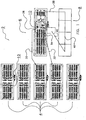
- a dairy farm as a whole is denoted by reference numeral 2.
- the dairy farm 2 comprises at least one production shed, in this embodiment five production sheds 4.
- the dairy farm 2 further comprises a separate calving shed 6 and calf sheds 8.
- the production sheds 4 and the calving shed 6 are provided with milking robots 10 for automatically milking dairy animals, in this embodiment cows.
- the production sheds 4 and the calving shed 6 are further provided with boxes 12, water tanks 14 and feed troughs 16.
- the production sheds have a capacity of approximately 500 cows. Also the calving shed has a capacity of approximately 500 cows, to which belong both the cows that are dried up and the cows that are meantime in the process of inmilking. There is thus obtained a total capacity of 3,000 cows.
- the calving shed 6 may be provided separate areas, such as a drying up area 18, a calving area 20, and an inmilking area 22.
- Figure 1 the possible displacement routes of cows in the dairy farm 2 are indicated by arrows.
- Arrow 30 indicates that cows may be displaced from one of the production sheds 4, so not necessarily the indicated production shed, to the calving shed 6.
- Arrow 32 indicates that cows may be placed back to one of the production sheds 4, which production shed may be an other one than the production sheds from which the subgroup concerned has been taken.
- Arrow 34 indicates that cows may be displaced from the drying up area 18 to the calving area 20.
- arrow 36 it is indicated that, after calving, cows may be led back to the drying up area 18, or the possibly provided separate inmilking area 22. It is indicated by arrows 38, 40, 42 that calves, in particular heifers, are led along separate areas into the calf shed 8.
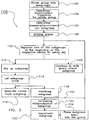
- FIG. 3 One embodiment of the method not according to the invention is shown in Figure 3 .
- the method starts with a number of steps that are in principle performed once, prior to the other steps of the method. It should be noted that these steps to be taken once may be performed again in each case as soon as heifers are added to the group of dairy animals producing milk.
- a group of dairy animals in particular cows, is divided into subgroups. Since there may be a plurality of groups of animals within one farm, also the term 'main group of animals' will be used hereinafter. In this case there is a relation between the total group size, the average subgroup size, and the number of subgroups. It is aimed at giving the various subgroups a comparable group size.
- the subgroup size depends on the size of the capacity of the calving shed and on the period of time a subgroup spends in the calving shed (see hereunder). In this embodiment, the average subgroup size is 130 cows.
- an insemination frequency is determined for the whole (sub)group of cows.
- This insemination frequency determines when in each case a subgroup of the main group is inseminated. This insemination of the cows of a subgroup subsequently takes place within a particular insemination period.
- the insemination periods of various subgroups of one main group do not overlap each other.
- the insemination periods of various subgroups of one main group are separated by a period of at least one week, in which period insemination does not take place.
- the period in which insemination does not take place is at least equal to the insemination period.
- each main group being divided into subgroups.
- Subgroups of separate main groups may be more or less parallel to each other, it being possible for the insemination periods of subgroups of different main groups to overlap each other or to be contiguous to each other.
- the insemination frequency depends on a chosen duration of the lactation cycle.
- a whole lactation cycle lasts approximately one year, but this varies per type of cow and also depends on the development, in particular the reduction of the milk production by the end of the lactation cycle.
- the number of subgroups is divided by the chosen duration of the lactation cycle. In this embodiment is opted for a total lactation cycle of one year, a division of the total group into 20 subgroups and thus for an insemination frequency of 20x per year.
- this frequency is substantially equally distributed over the lactation cycle duration, which means inseminating 1x per 18 days a substantially whole subgroup (step 106).
- the insemination lasts a few hours to not more than a few days, in particular less than five days, more in particular less than three days, more in particular one day.
- the insemination period is so short that it may be stated that all cows in a subgroup are inseminated substantially simultaneously.
- substantially all cows in the subgroup concerned go simultaneously through the lactation cycle. Only cows with which insemination does not lead to pregnancy, do not go through the lactation cycle simultaneously with the other cows of the subgroup. These non-pregnant cows are removed from the subgroup concerned and are added to a next subgroup that will be inseminated.
- the cows in the production sheds 4 are milked fully automatically in step 108 by means of the milking robots 10.
- the cows concerned may be milked, for example, 3x daily by means of a milking robot 10.
- a few weeks prior to the average calving moment calculated for the subgroup a subgroup is taken collectively from the production shed 4 concerned and is led to the calving shed 6 (step 110). This moment may be three to eight weeks before the expected calving moment.
- collective separation of the subgroup may cause less workload for the supporting personnel than in the case of individual separation of dairy animals.
- a whole subgroup stays in the calving shed during the entire drying up phase. This means that both the period of reducing the milking frequency and the period in which no milking at all takes place, are spent in the calving shed.
- the subgroup of cows In the calving shed 6 it is possible for the subgroup of cows to be dried up to obtain collectively extra attention and adapted feeding.
- the first cows of a subgroup will calve.
- the spreading over time of the whole subgroup will be approximately 13 days, because the gestation periods of individual dairy animals may differ mutually and because the chosen insemination period is not an infinitely short period, but may cover, for example, a period of one to a few days.
- the calves will be separated from the subgroup (step 116). Bullcalves will subsequently be bred for meat production, often outside the dairy farm. Heifers may be bred in the calf sheds 8 until a moment when they will be added logically (but not yet per se physically) to a subgroup, be inseminated together with the other cows of the subgroup, and be physically added to the subgroup concerned around the beginning of the drying up phase.
- the cows concerned of the subgroup will be inmilked (step 118).
- this inmilking still takes place in the calving shed, so that it is possible to milk at an adapted frequency. It is thus also possible to separate the colostrum obtained in order to be able to feed it to the youngest calves.
- the milk production of the subgroup concerned is increased (step 120). In this case, it is possible to milk at a higher frequency than in the case of the other production cows, for example 4x daily instead of 3x daily.
- This milk production increase might still take place separately in the calving shed 6. This could also take place in a production shed 4 specially designated therefore, in which case the production shed 4 concerned is preferably provided with extra milking robots or at any rate a relatively higher number of milking robots with respect to the subgroup size.
- This outplacing may take place before inmilking, between inmilking and increasing the milk production, or after increasing the milk production. There may also take place a plurality of collective displacements, for example if there is a separate inmilking shed and/or a production shed specially designated for increasing the production, as described above.
- the area that has come free may be occupied by a new subgroup that will be dried up (dotted line 121).
- step 122 Nine months before the calving moment aimed at of the subgroup concerned this subgroup will be inseminated again (step 122). Of course, this does not apply to cows for which it has been established that, in view of their age and/or physical condition, it will be their last lactation cycle.
- the subgroup concerned has been kept apart from the other milk producing cows until and included the moment of insemination, so that selection of the cows from the subgroup concerned and insemination of these cows is possible in a simple manner.
- the method may also be applied to other animals than cows.
- the method may be applied using deviating capacities and to subgroup sizes of more or fewer animals.
- the number of cows calving daily will be different from 10.
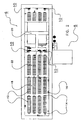
- the capacity of the dairy farm is doubled by using two calving sheds and totally ten production sheds.
- the calving sheds are provided (viewed in the direction of the drawing) one above the other, the production sheds being located to the left and to the right of the calving sheds.
- the method may be performed to a greater or lesser extent in an automated manner. Dividing cows into subgroups and planning the moments when insemination, separation and displacement should take place, may be recorded in a database program. If desired, the program concerned may be linked to a system for recognizing cows, to robots for selecting and driving cows, and to automatic gates between the production sheds and the calving shed. Selecting cows and displacing these cows to the calving shed may also take place manually. Milking the cows in the calving shed, at the beginning of the drying up, and inmilking may also take place by means of an ordinary milking machine instead of a milking robot.
Landscapes
- Life Sciences & Earth Sciences (AREA)
- Environmental Sciences (AREA)
- Animal Husbandry (AREA)
- Biodiversity & Conservation Biology (AREA)
- Zoology (AREA)
- Feed For Specific Animals (AREA)
- Fodder In General (AREA)
- Dairy Products (AREA)
Priority Applications (1)
| Application Number | Priority Date | Filing Date | Title |
|---|---|---|---|
| PL07834554T PL2073628T3 (pl) | 2006-10-03 | 2007-09-24 | Sposób, oprogramowanie i komputer do zarządzania grupą zwierząt mlecznych |
Applications Claiming Priority (2)
| Application Number | Priority Date | Filing Date | Title |
|---|---|---|---|
| NL1032611A NL1032611C2 (nl) | 2006-10-03 | 2006-10-03 | Werkwijze, software en computer voor het managen van een groep melkdieren. |
| PCT/NL2007/000238 WO2008041839A1 (en) | 2006-10-03 | 2007-09-24 | Method, software and computer for managing a group of dairy animals |
Publications (3)
| Publication Number | Publication Date |
|---|---|
| EP2073628A1 EP2073628A1 (en) | 2009-07-01 |
| EP2073628B1 EP2073628B1 (en) | 2011-09-21 |
| EP2073628B2 true EP2073628B2 (en) | 2020-11-18 |
Family
ID=38050095
Family Applications (1)
| Application Number | Title | Priority Date | Filing Date |
|---|---|---|---|
| EP07834554.3A Not-in-force EP2073628B2 (en) | 2006-10-03 | 2007-09-24 | Software and computer for managing a group of dairy animals |
Country Status (9)
| Country | Link |
|---|---|
| US (1) | US8001929B2 (pl) |
| EP (1) | EP2073628B2 (pl) |
| AT (1) | ATE524966T1 (pl) |
| AU (1) | AU2007302866B2 (pl) |
| DK (1) | DK2073628T3 (pl) |
| NL (1) | NL1032611C2 (pl) |
| NZ (1) | NZ575630A (pl) |
| PL (1) | PL2073628T3 (pl) |
| WO (1) | WO2008041839A1 (pl) |
Families Citing this family (22)
| Publication number | Priority date | Publication date | Assignee | Title |
|---|---|---|---|---|
| NL1034796C2 (nl) | 2007-12-06 | 2008-10-07 | Lely Patent Nv | Inrichting voor het houden van melkdieren. |
| US9102258B2 (en) | 2010-08-05 | 2015-08-11 | St Reproductive Technologies, Llc | Floating partition, loft and troughs for a livestock shipping container |
| EP3122173B2 (en) | 2014-03-26 | 2024-05-29 | SCR Engineers Ltd | Livestock location system |
| NL2012893B1 (nl) * | 2014-05-27 | 2016-06-08 | Lely Patent Nv | Werkwijze en systeem voor het beheren van melkdieren. |
| AU2019261293B2 (en) | 2018-04-22 | 2024-10-10 | Vence, Corp. | Livestock management system and method |
| FR3086837B1 (fr) | 2018-10-03 | 2021-06-18 | Allflex Europe | Pince pour la manipulation d’un dispositif d’identification d’un animal et/ou de prelevement d’un tissu d’un animal comprenant des moyens de maintien a moyens d’actionnement deportes |
| IL309302B2 (en) | 2018-10-10 | 2024-11-01 | Scr Eng Ltd | Livestock dry off method and device |
| US12193413B2 (en) | 2019-02-08 | 2025-01-14 | Allflex Australia Pty Ltd | Electronic animal tag reader |
| CN113678135B (zh) | 2019-02-08 | 2025-12-19 | 奥尔弗莱克斯澳大利亚有限公司 | 牲畜位置的判定 |
| US12144320B2 (en) | 2019-02-08 | 2024-11-19 | Allflex Australia Pty Ltd | Electronic animal identification tag reader synchronisation |
| US12409474B2 (en) | 2019-08-28 | 2025-09-09 | S.C.R. (Engineers) Limited | Devices for analysis of a fluid |
| IL275518B (en) | 2020-06-18 | 2021-10-31 | Scr Eng Ltd | Animal tag |
| IL275812B (en) | 2020-07-01 | 2022-01-01 | Scr Eng Ltd | System and method for placing devices |
| NL1043809B1 (nl) * | 2020-10-06 | 2022-06-03 | Lely Patent Nv | Werkwijze voor beheren van een kudde, en een melkinrichting voor uitvoeren van de werkwijze |
| CN116234439A (zh) * | 2020-10-05 | 2023-06-06 | 莱利专利股份有限公司 | 用于管理畜群的方法以及用于执行该方法的挤乳设备 |
| CA3200086A1 (en) | 2020-11-25 | 2022-06-02 | Identigen Limited | A system and method for tracing members of an animal population |
| IL280374B2 (en) | 2021-01-24 | 2023-11-01 | Scr Eng Ltd | System and method for controlling animal marking |
| IL280744A (en) | 2021-02-09 | 2022-09-01 | Scr Eng Ltd | A system and method for determining animal population welfare |
| CA206812S (en) | 2021-04-08 | 2023-04-11 | Chevillot Sas | Tag applicator for animals |
| CA206747S (en) | 2021-04-08 | 2024-12-30 | Chevillot Sas | Tag applicator for animals |
| IL283741A (en) | 2021-06-03 | 2022-07-01 | Scr Eng Ltd | A system and method for estimating greenhouse gas emissions in an environment that houses animals |
| US12402596B2 (en) | 2022-05-03 | 2025-09-02 | S.C.R. (Engineers) Limited | Milk channel and feed inlet coupled thereto, and system and method for conserving wash fluid in a washing process for cleaning a milkmeter system |
Citations (2)
| Publication number | Priority date | Publication date | Assignee | Title |
|---|---|---|---|---|
| EP1213676A1 (en) † | 2000-12-08 | 2002-06-12 | N.V. Nederlandsche Apparatenfabriek NEDAP | Animal management system |
| WO2004068940A1 (en) † | 2003-02-04 | 2004-08-19 | Delaval Holding Ab | Arrangement for housing milking animals |
Family Cites Families (17)
| Publication number | Priority date | Publication date | Assignee | Title |
|---|---|---|---|---|
| US3223070A (en) * | 1963-11-05 | 1965-12-14 | Pro Inc Ag | Dairy establishment |
| GB1248753A (en) * | 1968-11-29 | 1971-10-06 | Mayday Agricultural Services | A device for recording and displaying details of the offspring producing cycle in domestic animals |
| US4517923A (en) * | 1983-07-07 | 1985-05-21 | Key Systems, Inc. | Animal feeding system |
| SE514627C2 (sv) * | 1998-06-10 | 2001-03-26 | Alfa Laval Agri Ab | Anordning och sätt för att härbärgera mjölkproducerande djur |
| US6659039B1 (en) * | 1999-09-02 | 2003-12-09 | Kristoffer Larsen Innovation A/S | Method for controlling breeding of free-range animals |
| US6470825B1 (en) * | 1999-11-15 | 2002-10-29 | Johnson, Iii Fred H. | Electronic livestock breeding and management system |
| NL1013931C2 (nl) * | 1999-12-22 | 2001-06-25 | Lely Res Holding | Werkwijze voor het automatisch melken van dieren en melkmachine geschikt voor het uitvoeren van de werkwijze. |
| NZ523948A (en) * | 2003-01-30 | 2006-08-31 | Sensortec Ltd | Animal control system |
| SE525522C2 (sv) * | 2003-05-14 | 2005-03-01 | Delaval Holding Ab | Förfarande, datorprogram och mjölkningsstation för att initiera en åtgärd som ska vidtas med avseende på ett mjölkdjur |
| GB0313759D0 (en) * | 2003-06-13 | 2003-07-23 | The Technology Partnership Plc | Fluid sampling components |
| NL1024518C2 (nl) * | 2003-10-13 | 2005-04-14 | Lely Entpr Ag | Samenstel en werkwijze voor het voederen en melken van dieren, voederplatform, melksysteem, voedersysteem, melkvoorbehandelingsinrichting, melknabehandelingsinrichting, reinigingsinrichting en separatie-inrichting, alle geschikt voor gebruik in een dergelijk samenstel. |
| US20060036419A1 (en) * | 2004-07-29 | 2006-02-16 | Can Technologies, Inc. | System and method for animal production optimization |
| DE102004042658A1 (de) * | 2004-09-03 | 2006-03-09 | Westfaliasurge Gmbh | Automatische Gemelksabtrennung |
| WO2006078943A2 (en) * | 2005-01-19 | 2006-07-27 | Micro Beef Technologies, Ltd. | Method and system for tracking and managing animals and/or food products |
| DE102005031425A1 (de) * | 2005-07-04 | 2007-01-11 | Westfaliasurge Gmbh | Verfahren und Vorrichtung zum Management von milchgebenden Tieren |
| EP2037729B1 (en) * | 2006-07-07 | 2015-09-23 | DeLaval Holding AB | System for managing animals on a dairy farm |
| US20080215167A1 (en) * | 2006-07-27 | 2008-09-04 | Beck James F | Feed delivery system for enhancing ruminant animal nutrition |
-
2006
- 2006-10-03 NL NL1032611A patent/NL1032611C2/nl not_active IP Right Cessation
-
2007
- 2007-09-24 WO PCT/NL2007/000238 patent/WO2008041839A1/en not_active Ceased
- 2007-09-24 AT AT07834554T patent/ATE524966T1/de not_active IP Right Cessation
- 2007-09-24 EP EP07834554.3A patent/EP2073628B2/en not_active Not-in-force
- 2007-09-24 DK DK07834554.3T patent/DK2073628T3/da active
- 2007-09-24 PL PL07834554T patent/PL2073628T3/pl unknown
- 2007-09-24 US US12/443,499 patent/US8001929B2/en active Active
- 2007-09-24 AU AU2007302866A patent/AU2007302866B2/en not_active Ceased
- 2007-09-24 NZ NZ575630A patent/NZ575630A/en not_active IP Right Cessation
Patent Citations (2)
| Publication number | Priority date | Publication date | Assignee | Title |
|---|---|---|---|---|
| EP1213676A1 (en) † | 2000-12-08 | 2002-06-12 | N.V. Nederlandsche Apparatenfabriek NEDAP | Animal management system |
| WO2004068940A1 (en) † | 2003-02-04 | 2004-08-19 | Delaval Holding Ab | Arrangement for housing milking animals |
Non-Patent Citations (11)
| Title |
|---|
| BRITT: "Strategies of managing reproduction and controlling health problems in groups of cows", JOURNAL OF DAIRY SCIENCE, vol. 60, no. 8, 1977, pages 1345 - 1353 † |
| CHASTAIN, J.: "Design of spaces to enhance cow management and care", DEPARTMENT OF AGRICULTURAL AND BIOLOGICAL ENGINEERING, CLEMSON UNIVERSITY, 2000 † |
| Declaration of Swedish veterinarian Anders Sandberg, submitted by the opponent with the letter dated December 16, 2013 † |
| DEFRA: "Cattle Code of Recommendations for the Welfare of Livestock (PB7949) -section 2: Dairy Cows Paragraphs 143 to 149", 2003 † |
| FOLMAN: "Reproductive management of dairy cattle based on synchronization of estrous cycles", JOURNAL OF DAIRY SCIENCE, vol. 67, no. 1, 1984, pages 153 - 160 † |
| J. S. Stevenson 'Reproductive program aids - beneficial or band aid' presented at the 2nd bi-annual W. E. Petersen symposium at the University of Minnesota on 8 April 2003 † |
| MEIJERING, A. ET AL: "A better understanding of automatic milking", 2004, pages 27 - 29 † |
| O'CONNOR, M.: "Estrous synchronization programs for the dairy herd", DEPARTMENT OF DAIRY AND ANIMAL SCIENCE, PENNSYLVANIA STATE UNIVERSITY, 1997 † |
| RHODES, F. ET AL: "Treatment of cows with an extended postpartum anestrous interval", JOURNAL OF DAIRY SCIENCE, vol. 86, no. 6, June 2003 (2003-06-01), pages 1876 - 1894 † |
| STEVENSON: "Reproductive management of dairy cows in high milk-producing herds", JOURNAL OF DAIRY SCIENCE, vol. 84, no. E, 2001, pages 1345 - 1353 † |
| STEVENSON: "The why, how-to, &cost of programmed a.i.-breeding of dairy cows", KANSAS AGRICULTURAL EXPERIMENT STATION AND COOPERATIVE SERVICE. DAIRY DAY, 1998, pages 1 - 11 † |
Also Published As
| Publication number | Publication date |
|---|---|
| WO2008041839A1 (en) | 2008-04-10 |
| US20100012038A1 (en) | 2010-01-21 |
| PL2073628T3 (pl) | 2012-02-29 |
| NL1032611C2 (nl) | 2008-04-04 |
| AU2007302866A1 (en) | 2008-04-10 |
| ATE524966T1 (de) | 2011-10-15 |
| US8001929B2 (en) | 2011-08-23 |
| NZ575630A (en) | 2011-09-30 |
| AU2007302866B2 (en) | 2012-05-24 |
| DK2073628T3 (da) | 2011-10-24 |
| EP2073628A1 (en) | 2009-07-01 |
| EP2073628B1 (en) | 2011-09-21 |
Similar Documents
| Publication | Publication Date | Title |
|---|---|---|
| EP2073628B2 (en) | Software and computer for managing a group of dairy animals | |
| US20100116211A1 (en) | Method and arrangement for animal management | |
| JP2001522609A (ja) | 自動搾乳装置 | |
| de Koning et al. | Maximising the milking capacity of an automatic milking system | |
| Ipema | Integration of robotic milking in dairy housing systems Review of cow traffic and milking capacity aspects | |
| US8127714B2 (en) | Method and arrangement for animal management | |
| EP1154683B1 (en) | A method of automatically milking animals and a milking machine suitable for performing same | |
| EP0764403B1 (en) | A method of automatically milking animals and an implement for applying same | |
| EP2584889A2 (en) | Arrangement and method for control in an animal handling system | |
| Laurs et al. | Studies of operating parameters in milking robots. | |
| EP0798959B1 (en) | A method of automatically milking animals and an implement for applying same | |
| Cooper et al. | A simulation model of an automatic milking system applying different management strategies | |
| Vermaak et al. | The effect of various automatic cluster removal switch-point settings on milking and overmilking duration and total, peak and overmilking claw vacuum in dairy cows | |
| US8281742B2 (en) | System for milking cows and method | |
| Peychev et al. | Structure-time analysis and development of dairy cows machine milking models in" Herringbone" milking parlors. | |
| Spengler Neff | How do separation and weaning work with little stress? How can we achieve reliable performance testing of dams that are suckled | |
| Thomas et al. | Systems to facilitate multiple services of artificial insemination in beef herds | |
| Harms et al. | A tool to analyze and optimize milking intervals in robotic milking systems | |
| Lehmann et al. | Mother-bonded calf rearing in organic milk production: Lessons from pioneer farmers in northern Europe | |
| Borshch et al. | Ethological features of dairy cows of different fattness condition in robotic farms | |
| Ohnstad | Milking parlour design and configuration | |
| Laurs et al. | Research in milking intervals applying different types of milking parlours | |
| Ipema et al. | Effects of milking stall visits with simulated failed milking on milk yield and milking performance | |
| Hofmeyr | Optimal utilisation of milk samples issues |
Legal Events
| Date | Code | Title | Description |
|---|---|---|---|
| PUAI | Public reference made under article 153(3) epc to a published international application that has entered the european phase |
Free format text: ORIGINAL CODE: 0009012 |
|
| 17P | Request for examination filed |
Effective date: 20090504 |
|
| AK | Designated contracting states |
Kind code of ref document: A1 Designated state(s): AT BE BG CH CY CZ DE DK EE ES FI FR GB GR HU IE IS IT LI LT LU LV MC MT NL PL PT RO SE SI SK TR |
|
| AX | Request for extension of the european patent |
Extension state: AL BA HR MK RS |
|
| GRAP | Despatch of communication of intention to grant a patent |
Free format text: ORIGINAL CODE: EPIDOSNIGR1 |
|
| 17Q | First examination report despatched |
Effective date: 20101123 |
|
| DAX | Request for extension of the european patent (deleted) | ||
| GRAS | Grant fee paid |
Free format text: ORIGINAL CODE: EPIDOSNIGR3 |
|
| GRAA | (expected) grant |
Free format text: ORIGINAL CODE: 0009210 |
|
| AK | Designated contracting states |
Kind code of ref document: B1 Designated state(s): AT BE BG CH CY CZ DE DK EE ES FI FR GB GR HU IE IS IT LI LT LU LV MC MT NL PL PT RO SE SI SK TR |
|
| REG | Reference to a national code |
Ref country code: GB Ref legal event code: FG4D |
|
| REG | Reference to a national code |
Ref country code: CH Ref legal event code: EP |
|
| REG | Reference to a national code |
Ref country code: NL Ref legal event code: T3 |
|
| REG | Reference to a national code |
Ref country code: IE Ref legal event code: FG4D |
|
| REG | Reference to a national code |
Ref country code: DK Ref legal event code: T3 |
|
| REG | Reference to a national code |
Ref country code: SE Ref legal event code: TRGR |
|
| REG | Reference to a national code |
Ref country code: DE Ref legal event code: R096 Ref document number: 602007017414 Country of ref document: DE Effective date: 20111201 |
|
| PG25 | Lapsed in a contracting state [announced via postgrant information from national office to epo] |
Ref country code: LT Free format text: LAPSE BECAUSE OF FAILURE TO SUBMIT A TRANSLATION OF THE DESCRIPTION OR TO PAY THE FEE WITHIN THE PRESCRIBED TIME-LIMIT Effective date: 20110921 Ref country code: FI Free format text: LAPSE BECAUSE OF FAILURE TO SUBMIT A TRANSLATION OF THE DESCRIPTION OR TO PAY THE FEE WITHIN THE PRESCRIBED TIME-LIMIT Effective date: 20110921 |
|
| LTIE | Lt: invalidation of european patent or patent extension |
Effective date: 20110921 |
|
| PG25 | Lapsed in a contracting state [announced via postgrant information from national office to epo] |
Ref country code: LV Free format text: LAPSE BECAUSE OF FAILURE TO SUBMIT A TRANSLATION OF THE DESCRIPTION OR TO PAY THE FEE WITHIN THE PRESCRIBED TIME-LIMIT Effective date: 20110921 Ref country code: CY Free format text: LAPSE BECAUSE OF FAILURE TO SUBMIT A TRANSLATION OF THE DESCRIPTION OR TO PAY THE FEE WITHIN THE PRESCRIBED TIME-LIMIT Effective date: 20110921 Ref country code: SI Free format text: LAPSE BECAUSE OF FAILURE TO SUBMIT A TRANSLATION OF THE DESCRIPTION OR TO PAY THE FEE WITHIN THE PRESCRIBED TIME-LIMIT Effective date: 20110921 Ref country code: AT Free format text: LAPSE BECAUSE OF FAILURE TO SUBMIT A TRANSLATION OF THE DESCRIPTION OR TO PAY THE FEE WITHIN THE PRESCRIBED TIME-LIMIT Effective date: 20110921 Ref country code: GR Free format text: LAPSE BECAUSE OF FAILURE TO SUBMIT A TRANSLATION OF THE DESCRIPTION OR TO PAY THE FEE WITHIN THE PRESCRIBED TIME-LIMIT Effective date: 20111222 |
|
| REG | Reference to a national code |
Ref country code: PL Ref legal event code: T3 |
|
| REG | Reference to a national code |
Ref country code: AT Ref legal event code: MK05 Ref document number: 524966 Country of ref document: AT Kind code of ref document: T Effective date: 20110921 |
|
| PG25 | Lapsed in a contracting state [announced via postgrant information from national office to epo] |
Ref country code: BE Free format text: LAPSE BECAUSE OF FAILURE TO SUBMIT A TRANSLATION OF THE DESCRIPTION OR TO PAY THE FEE WITHIN THE PRESCRIBED TIME-LIMIT Effective date: 20110921 |
|
| PG25 | Lapsed in a contracting state [announced via postgrant information from national office to epo] |
Ref country code: MC Free format text: LAPSE BECAUSE OF NON-PAYMENT OF DUE FEES Effective date: 20110930 Ref country code: SK Free format text: LAPSE BECAUSE OF FAILURE TO SUBMIT A TRANSLATION OF THE DESCRIPTION OR TO PAY THE FEE WITHIN THE PRESCRIBED TIME-LIMIT Effective date: 20110921 Ref country code: CZ Free format text: LAPSE BECAUSE OF FAILURE TO SUBMIT A TRANSLATION OF THE DESCRIPTION OR TO PAY THE FEE WITHIN THE PRESCRIBED TIME-LIMIT Effective date: 20110921 Ref country code: IS Free format text: LAPSE BECAUSE OF FAILURE TO SUBMIT A TRANSLATION OF THE DESCRIPTION OR TO PAY THE FEE WITHIN THE PRESCRIBED TIME-LIMIT Effective date: 20120121 |
|
| REG | Reference to a national code |
Ref country code: CH Ref legal event code: PL |
|
| PG25 | Lapsed in a contracting state [announced via postgrant information from national office to epo] |
Ref country code: RO Free format text: LAPSE BECAUSE OF FAILURE TO SUBMIT A TRANSLATION OF THE DESCRIPTION OR TO PAY THE FEE WITHIN THE PRESCRIBED TIME-LIMIT Effective date: 20110921 Ref country code: EE Free format text: LAPSE BECAUSE OF FAILURE TO SUBMIT A TRANSLATION OF THE DESCRIPTION OR TO PAY THE FEE WITHIN THE PRESCRIBED TIME-LIMIT Effective date: 20110921 Ref country code: IT Free format text: LAPSE BECAUSE OF FAILURE TO SUBMIT A TRANSLATION OF THE DESCRIPTION OR TO PAY THE FEE WITHIN THE PRESCRIBED TIME-LIMIT Effective date: 20110921 Ref country code: PT Free format text: LAPSE BECAUSE OF FAILURE TO SUBMIT A TRANSLATION OF THE DESCRIPTION OR TO PAY THE FEE WITHIN THE PRESCRIBED TIME-LIMIT Effective date: 20120123 |
|
| REG | Reference to a national code |
Ref country code: IE Ref legal event code: MM4A |
|
| PLBI | Opposition filed |
Free format text: ORIGINAL CODE: 0009260 |
|
| 26 | Opposition filed |
Opponent name: DELAVAL INTERNATIONAL AB Effective date: 20120615 |
|
| PG25 | Lapsed in a contracting state [announced via postgrant information from national office to epo] |
Ref country code: CH Free format text: LAPSE BECAUSE OF NON-PAYMENT OF DUE FEES Effective date: 20110930 Ref country code: IE Free format text: LAPSE BECAUSE OF NON-PAYMENT OF DUE FEES Effective date: 20110924 Ref country code: LI Free format text: LAPSE BECAUSE OF NON-PAYMENT OF DUE FEES Effective date: 20110930 |
|
| PLAX | Notice of opposition and request to file observation + time limit sent |
Free format text: ORIGINAL CODE: EPIDOSNOBS2 |
|
| REG | Reference to a national code |
Ref country code: DE Ref legal event code: R026 Ref document number: 602007017414 Country of ref document: DE Effective date: 20120615 |
|
| REG | Reference to a national code |
Ref country code: FR Ref legal event code: ST Effective date: 20120817 |
|
| PLAF | Information modified related to communication of a notice of opposition and request to file observations + time limit |
Free format text: ORIGINAL CODE: EPIDOSCOBS2 |
|
| PG25 | Lapsed in a contracting state [announced via postgrant information from national office to epo] |
Ref country code: MT Free format text: LAPSE BECAUSE OF FAILURE TO SUBMIT A TRANSLATION OF THE DESCRIPTION OR TO PAY THE FEE WITHIN THE PRESCRIBED TIME-LIMIT Effective date: 20110921 |
|
| PLBB | Reply of patent proprietor to notice(s) of opposition received |
Free format text: ORIGINAL CODE: EPIDOSNOBS3 |
|
| PG25 | Lapsed in a contracting state [announced via postgrant information from national office to epo] |
Ref country code: FR Free format text: LAPSE BECAUSE OF NON-PAYMENT OF DUE FEES Effective date: 20111121 Ref country code: ES Free format text: LAPSE BECAUSE OF FAILURE TO SUBMIT A TRANSLATION OF THE DESCRIPTION OR TO PAY THE FEE WITHIN THE PRESCRIBED TIME-LIMIT Effective date: 20120101 |
|
| PG25 | Lapsed in a contracting state [announced via postgrant information from national office to epo] |
Ref country code: LU Free format text: LAPSE BECAUSE OF NON-PAYMENT OF DUE FEES Effective date: 20110924 |
|
| PG25 | Lapsed in a contracting state [announced via postgrant information from national office to epo] |
Ref country code: BG Free format text: LAPSE BECAUSE OF FAILURE TO SUBMIT A TRANSLATION OF THE DESCRIPTION OR TO PAY THE FEE WITHIN THE PRESCRIBED TIME-LIMIT Effective date: 20111221 |
|
| PG25 | Lapsed in a contracting state [announced via postgrant information from national office to epo] |
Ref country code: TR Free format text: LAPSE BECAUSE OF FAILURE TO SUBMIT A TRANSLATION OF THE DESCRIPTION OR TO PAY THE FEE WITHIN THE PRESCRIBED TIME-LIMIT Effective date: 20110921 |
|
| PG25 | Lapsed in a contracting state [announced via postgrant information from national office to epo] |
Ref country code: HU Free format text: LAPSE BECAUSE OF FAILURE TO SUBMIT A TRANSLATION OF THE DESCRIPTION OR TO PAY THE FEE WITHIN THE PRESCRIBED TIME-LIMIT Effective date: 20110921 |
|
| RDAF | Communication despatched that patent is revoked |
Free format text: ORIGINAL CODE: EPIDOSNREV1 |
|
| APAH | Appeal reference modified |
Free format text: ORIGINAL CODE: EPIDOSCREFNO |
|
| APBM | Appeal reference recorded |
Free format text: ORIGINAL CODE: EPIDOSNREFNO |
|
| APBP | Date of receipt of notice of appeal recorded |
Free format text: ORIGINAL CODE: EPIDOSNNOA2O |
|
| APBQ | Date of receipt of statement of grounds of appeal recorded |
Free format text: ORIGINAL CODE: EPIDOSNNOA3O |
|
| PGFP | Annual fee paid to national office [announced via postgrant information from national office to epo] |
Ref country code: DK Payment date: 20160927 Year of fee payment: 10 |
|
| REG | Reference to a national code |
Ref country code: DK Ref legal event code: EBP Effective date: 20170930 |
|
| APBU | Appeal procedure closed |
Free format text: ORIGINAL CODE: EPIDOSNNOA9O |
|
| PG25 | Lapsed in a contracting state [announced via postgrant information from national office to epo] |
Ref country code: DK Free format text: LAPSE BECAUSE OF NON-PAYMENT OF DUE FEES Effective date: 20170930 |
|
| PGFP | Annual fee paid to national office [announced via postgrant information from national office to epo] |
Ref country code: PL Payment date: 20190903 Year of fee payment: 13 |
|
| PUAH | Patent maintained in amended form |
Free format text: ORIGINAL CODE: 0009272 |
|
| STAA | Information on the status of an ep patent application or granted ep patent |
Free format text: STATUS: PATENT MAINTAINED AS AMENDED |
|
| PGFP | Annual fee paid to national office [announced via postgrant information from national office to epo] |
Ref country code: DE Payment date: 20200929 Year of fee payment: 14 Ref country code: NL Payment date: 20200926 Year of fee payment: 14 Ref country code: GB Payment date: 20200928 Year of fee payment: 14 |
|
| 27A | Patent maintained in amended form |
Effective date: 20201118 |
|
| AK | Designated contracting states |
Kind code of ref document: B2 Designated state(s): AT BE BG CH CY CZ DE DK EE ES FI FR GB GR HU IE IS IT LI LT LU LV MC MT NL PL PT RO SE SI SK TR |
|
| REG | Reference to a national code |
Ref country code: DE Ref legal event code: R102 Ref document number: 602007017414 Country of ref document: DE |
|
| PGFP | Annual fee paid to national office [announced via postgrant information from national office to epo] |
Ref country code: SE Payment date: 20200929 Year of fee payment: 14 |
|
| REG | Reference to a national code |
Ref country code: NL Ref legal event code: FP |
|
| REG | Reference to a national code |
Ref country code: SE Ref legal event code: RPEO |
|
| REG | Reference to a national code |
Ref country code: DE Ref legal event code: R119 Ref document number: 602007017414 Country of ref document: DE |
|
| REG | Reference to a national code |
Ref country code: SE Ref legal event code: EUG |
|
| REG | Reference to a national code |
Ref country code: NL Ref legal event code: MM Effective date: 20211001 |
|
| GBPC | Gb: european patent ceased through non-payment of renewal fee |
Effective date: 20210924 |
|
| PG25 | Lapsed in a contracting state [announced via postgrant information from national office to epo] |
Ref country code: NL Free format text: LAPSE BECAUSE OF NON-PAYMENT OF DUE FEES Effective date: 20211001 |
|
| PG25 | Lapsed in a contracting state [announced via postgrant information from national office to epo] |
Ref country code: SE Free format text: LAPSE BECAUSE OF NON-PAYMENT OF DUE FEES Effective date: 20210925 Ref country code: GB Free format text: LAPSE BECAUSE OF NON-PAYMENT OF DUE FEES Effective date: 20210924 Ref country code: DE Free format text: LAPSE BECAUSE OF NON-PAYMENT OF DUE FEES Effective date: 20220401 |
|
| PG25 | Lapsed in a contracting state [announced via postgrant information from national office to epo] |
Ref country code: PL Free format text: LAPSE BECAUSE OF NON-PAYMENT OF DUE FEES Effective date: 20201118 |
|
| PG25 | Lapsed in a contracting state [announced via postgrant information from national office to epo] |
Ref country code: PL Free format text: THE PATENT HAS BEEN ANNULLED BY A DECISION OF A NATIONAL AUTHORITY Effective date: 20210218 |
|
| PG25 | Lapsed in a contracting state [announced via postgrant information from national office to epo] |
Ref country code: PL Free format text: THE PATENT HAS BEEN ANNULLED BY A DECISION OF A NATIONAL AUTHORITY Effective date: 20210218 |