EP2074230B1 - Compositions et procedes pour le traitement et le diagnostic du syndrome du colon irritable - Google Patents
Compositions et procedes pour le traitement et le diagnostic du syndrome du colon irritable Download PDFInfo
- Publication number
- EP2074230B1 EP2074230B1 EP07818943A EP07818943A EP2074230B1 EP 2074230 B1 EP2074230 B1 EP 2074230B1 EP 07818943 A EP07818943 A EP 07818943A EP 07818943 A EP07818943 A EP 07818943A EP 2074230 B1 EP2074230 B1 EP 2074230B1
- Authority
- EP
- European Patent Office
- Prior art keywords
- ibs
- expression
- gene
- genes
- level
- Prior art date
- Legal status (The legal status is an assumption and is not a legal conclusion. Google has not performed a legal analysis and makes no representation as to the accuracy of the status listed.)
- Active
Links
Images






Classifications
-
- C—CHEMISTRY; METALLURGY
- C12—BIOCHEMISTRY; BEER; SPIRITS; WINE; VINEGAR; MICROBIOLOGY; ENZYMOLOGY; MUTATION OR GENETIC ENGINEERING
- C12Q—MEASURING OR TESTING PROCESSES INVOLVING ENZYMES, NUCLEIC ACIDS OR MICROORGANISMS; COMPOSITIONS OR TEST PAPERS THEREFOR; PROCESSES OF PREPARING SUCH COMPOSITIONS; CONDITION-RESPONSIVE CONTROL IN MICROBIOLOGICAL OR ENZYMOLOGICAL PROCESSES
- C12Q1/00—Measuring or testing processes involving enzymes, nucleic acids or microorganisms; Compositions therefor; Processes of preparing such compositions
- C12Q1/68—Measuring or testing processes involving enzymes, nucleic acids or microorganisms; Compositions therefor; Processes of preparing such compositions involving nucleic acids
- C12Q1/6876—Nucleic acid products used in the analysis of nucleic acids, e.g. primers or probes
- C12Q1/6883—Nucleic acid products used in the analysis of nucleic acids, e.g. primers or probes for diseases caused by alterations of genetic material
-
- G—PHYSICS
- G01—MEASURING; TESTING
- G01N—INVESTIGATING OR ANALYSING MATERIALS BY DETERMINING THEIR CHEMICAL OR PHYSICAL PROPERTIES
- G01N33/00—Investigating or analysing materials by specific methods not covered by groups G01N1/00 - G01N31/00
- G01N33/48—Biological material, e.g. blood, urine; Haemocytometers
- G01N33/50—Chemical analysis of biological material, e.g. blood, urine; Testing involving biospecific ligand binding methods; Immunological testing
- G01N33/5005—Chemical analysis of biological material, e.g. blood, urine; Testing involving biospecific ligand binding methods; Immunological testing involving human or animal cells
- G01N33/5008—Chemical analysis of biological material, e.g. blood, urine; Testing involving biospecific ligand binding methods; Immunological testing involving human or animal cells for testing or evaluating the effect of chemical or biological compounds, e.g. drugs, cosmetics
-
- G—PHYSICS
- G01—MEASURING; TESTING
- G01N—INVESTIGATING OR ANALYSING MATERIALS BY DETERMINING THEIR CHEMICAL OR PHYSICAL PROPERTIES
- G01N33/00—Investigating or analysing materials by specific methods not covered by groups G01N1/00 - G01N31/00
- G01N33/48—Biological material, e.g. blood, urine; Haemocytometers
- G01N33/50—Chemical analysis of biological material, e.g. blood, urine; Testing involving biospecific ligand binding methods; Immunological testing
- G01N33/68—Chemical analysis of biological material, e.g. blood, urine; Testing involving biospecific ligand binding methods; Immunological testing involving proteins, peptides or amino acids
- G01N33/6893—Chemical analysis of biological material, e.g. blood, urine; Testing involving biospecific ligand binding methods; Immunological testing involving proteins, peptides or amino acids related to diseases not provided for elsewhere
-
- C—CHEMISTRY; METALLURGY
- C12—BIOCHEMISTRY; BEER; SPIRITS; WINE; VINEGAR; MICROBIOLOGY; ENZYMOLOGY; MUTATION OR GENETIC ENGINEERING
- C12Q—MEASURING OR TESTING PROCESSES INVOLVING ENZYMES, NUCLEIC ACIDS OR MICROORGANISMS; COMPOSITIONS OR TEST PAPERS THEREFOR; PROCESSES OF PREPARING SUCH COMPOSITIONS; CONDITION-RESPONSIVE CONTROL IN MICROBIOLOGICAL OR ENZYMOLOGICAL PROCESSES
- C12Q2600/00—Oligonucleotides characterized by their use
- C12Q2600/136—Screening for pharmacological compounds
-
- C—CHEMISTRY; METALLURGY
- C12—BIOCHEMISTRY; BEER; SPIRITS; WINE; VINEGAR; MICROBIOLOGY; ENZYMOLOGY; MUTATION OR GENETIC ENGINEERING
- C12Q—MEASURING OR TESTING PROCESSES INVOLVING ENZYMES, NUCLEIC ACIDS OR MICROORGANISMS; COMPOSITIONS OR TEST PAPERS THEREFOR; PROCESSES OF PREPARING SUCH COMPOSITIONS; CONDITION-RESPONSIVE CONTROL IN MICROBIOLOGICAL OR ENZYMOLOGICAL PROCESSES
- C12Q2600/00—Oligonucleotides characterized by their use
- C12Q2600/158—Expression markers
-
- G—PHYSICS
- G01—MEASURING; TESTING
- G01N—INVESTIGATING OR ANALYSING MATERIALS BY DETERMINING THEIR CHEMICAL OR PHYSICAL PROPERTIES
- G01N2800/00—Detection or diagnosis of diseases
- G01N2800/06—Gastro-intestinal diseases
- G01N2800/065—Bowel diseases, e.g. Crohn, ulcerative colitis, IBS
Definitions
- the present invention relates generally to diagnosis of disorders associated with chronic visceral hypersensitivity (CVH), and in particular irri bowel syndrome (IBS).
- CVH chronic visceral hypersensitivity
- IBS irri bowel syndrome
- this invention relates to polynucleotides encoding polypeptides, wherein said polypeptides are shown to be associated with CVH.
- These polypeptides and polynucleotides are useful in the diagnosis, treatment and/or prevention of disorders associated with CVH, in particular in the diagnosis, treatment and/or prevention of disorders associated with IBS.
- IBS Irritable bowel syndrome
- IBD inflammatory bowel disease
- IBS Irritable bowel syndrome
- IBD inflammatory bowel disease
- IBS is classified as a functional (opposed to an organic) bowel disorder of unknown etiology.
- a functional disorder refers to a disorder or disease where the primary abnormality is an altered physiological function, rather than an identifiable structural or biochemical cause.
- Diagnosis of IBS is currently based on a characteristic cluster of symptoms in the absence of detectable structural abnormalities ( Drossman DA, Camilleri M, Mayer EA, Whitehead WE. AGA technical review on irritable bowel syndrome. Gastroenterology. 2002; 123:2108-31 ), including intermittent abdominal pain and discomfort and alterations in bowel habits, such as loose or more frequent bowel movements, diarrhea, and/or constipation that occur in the absence of detectable ongoing organic disease.
- IBS Inflammatory bowel syndrome, the current diagnosis of IBS applies to a heterogeneous group of patients, even after attemps to define subgroups based on predominant bowel habit (diarrhea-predominant, constipation-predominant, alternating diarrhea and constipation, normal). IBS affects approximately 10-20% of the general population. It is the most common disease diagnosed by gastroenterologists and one of the most common disorders seen by primary care physicians.
- Pasricha P et al. report the analysis of microarray expression profiles of colon tissue RNA and S1 dorsal root ganglia RNA from a rat model of chronic visceral hypersensitivity upon treatment with CNI-1493.
- IBS irritable bowel syndrome
- Gastroenterology 126 S2 , A355 disclose the expression analysis of genes in samples from IBS patients that are used as control and it mentions data from other expression experiments in colonic inflamed mucosa.
- Aerssens et al. (2006) biosciences information service discloses array based studies in a mouse model of IBS. Arrays such as "Affymetrix Genechip Human Genome U133 plus 2.0 Array " are commercially available.
- IBS1 is annotated with SEQ ID NO:15 througout the specification to and refers to the gene with SEQ ID NON:15 or the protein encoded by SEQ SEQ ID NO:15
- molecular signatures that enable the distinction of IBS patients from healthy control subjects.
- the expression profiles in IBS are consistent across different locations within the colon and are stable over time. Therefore, the identified molecular signatures provide the opportunity to develop biomarkers that are of use in the diagnosis and assessment of the response to therapy in (subsets of) IBS patients. This represents a significant advance based on specific changes in biological activities rather than the current standard, which depends exclusively on the change in clinical symptoms only.
- the present invention is based on the surprising finding that, despite the absense of structural abnormalities in colon of IBS patients, it is not only possible to identify differentially expressed genes compared to normal tissue but that genes of which the differential expression is associated with IBS have a diagnostic, predictive and/or therapeutic value.
- the present invention relates to the identification of a number of genes that were hitherto not associated with IBS, hereinafter referred to as IBS molecular signature genes (IBS-MSGs) (Table 1), and accordingly provides nucleic acid molecules in diagnostic methods to identify and IBS in a subject.
- IBS-MSGs IBS molecular signature genes
- the nucleic acid molecules can be used individually, e.g . to monitor the level of expression of an individual gene, or they can be provided in a microarray format, to identify and/or monitor IBS in a subject.
- the nucleic acid molecules can be used to design antisense oligonucleotides and short-interferring RNA (siRNA), ribozymes and other molecules useful for modifying gene expression, for diagnostic, screening and therapeutic purposes.
- siRNA short-interferring RNA
- ribozymes ribozymes
- the nucleic acid molecules can be used to express the encoded proteins.
- One skilled in the art can also design peptide antigens based on the nucleic acid sequences.
- the present invention provides methods, more particularly in vitro methods, for diagnosing and CVH and in particular IBS, by comparing the expression levels of one or more of the IBS-MSGs at the nucleotide level in biological samples from a subject to control samples.
- Methods for detecting and/or monitoring IBS in a subject, which methods comprise the steps of (a) determining, in a biological sample of said subject, the level of gene transcription of an IBS-MSG as claimed; (b) comparing the level of gene transcription with the level of gene transcription in a normal control sample; and (c) producing a diagnosis based on the result from step (b). More particularly the methods involve determining that there is a difference in expression of these genes compared to expression of these genes in a control sample, whereby a difference in expression in one or more of these genes is indicative of IBS, the status of IBS and/or the susceptibility to a specific type of treatment.
- the methods of the present invention involve determining the increase and/or decrease of expression of particular genes. These methods involve determining whether there is an increase corresponding to at least a 1.15, more particularly at least a 1.2 fold change or whether there is a decrease corresponding to at least a 0.85 fold change, more particularly at least an 0.8 fold change in expression of the gene compared to controls.
- step (a) of the methods of the invention the level of gene transcription is determined at the gene transcription level, preferably using probes that specifically bind to an oligonucleotide transcribed from said IBS-MSG, preferably at the cDNA or mRNA level.
- the level of gene transcription is optionally determined using array technology, either at the oligonucleotide level using specific probes as described herein.
- the level of gene transcription is assessed using an array of oligonucleotide probes that bind to the IBS-MSGs.
- RTQ-PCR reverse-transcription quantitative polymerase chain reaction
- Biological sample which are used in the methods of the present invention are blood (including total blood, serum, plasma and in particular white blood cells), urine, saliva, fecal sample, fecal cells, tissue biopsy (in particular colon biopsy) or autopsy material.
- the level of gene expression is determined using a array of oligonucleotide probes that bind to the IBS-MSGs as claimed,
- kits for diagnosing CVH in particular IBS, which kits comprises polynucleotide probes that specifically binds to an IBS-MSG.
- the present invention is based on the identification of a number of genes which are associated with the clinical symptoms of CVH, more particularly with IBS. These genes have been identified by differential expression analysis of patients diagnosed with IBS and healthy controls. More particularly, the diagnosis of patients with IBS by a gastroentereologist was confirmed by the a bowel disease questionnaire (Talley et al., 1990) including questions to correspond to Rome II criteria (Thompson et al., 1999). The bowel disease questionnaire also includes a psychosomatic symptom checklist intended to identify somatization disorders and symptoms to characterize non-ulcer dyspepsia, and has been used extensively in epidemiological studies.
- genes have been identified the expression of which in mucusal colon is either decreased or increased in patients with CVH, more particularly, IBS, compared to healthy controls.
- a particular advantage of these expression markers is that there is a strong correlation between the expression of particular genes and the occurrence of IBS, and that these expression patterns have a predictive value. Accordingly, these expression markers are useful as a diagnostic tool. Expression markers are not necessarily, and even in most cases, not linked to the presence of a polymorphism in the corresponding genes, distinguishing them from genetic markers.
- the present invention discloses nucleic acid molecules and gene products (proteins) that can be used in screening assays to identify compounds for use as therapeutics for the treatment of CVH, in particular IBS.
- the proteins encoded by the nucleic acid molecules described herein can be used in binding and functional assays to screen for lead compounds for treating CVH, in particular IBS.
- the ability to identify either an antagonist or agonist would provide for development of new treatments for IBS
- the nucleic acid molecules are useful for expressing the proteins to be isolated and used in direct binding assays.
- Protein expression can be carried out in any host cell system, e. g, plants, prokaryotes (e.g. E. coli), yeast, insect cells (e.g. Sf9 cells, using baculovirus vectors), or mammalian cells (e.g. CHO, COS etc.). Techniques for the isolation and purification of the protein products are well known to one skilled in the art.
- Protein products, or fragments thereof can be used to generate specific antibodies for directly detecting protein expression, e. g. through immunoassay.
- Gene expression profiles may be used in screening for compounds that modulate the mRNA or protein expression of the differentially expressed genes shown in Table 1.
- Such a differentially expressed gene is referred to as the "gene of interest” and such modulating compounds are referred to as modulators that may up- or down-regulate mRNA transcription, or agonize or antagonize the activity of the protein.
- modulators that may up- or down-regulate mRNA transcription, or agonize or antagonize the activity of the protein.
- Such compounds are useful, e.g . for inhibiting or stimulating the expression of genes found to be regulated in IBS.
- Compounds that modulate the expression profile of one or more of the genes may be readily identified using numerous screening methods known in the art.
- the expression of a gene can be determined by measuring mRNA levels, protein levels, or protein activity using standard techniques.
- Methods are provided for identifying a candidate compound for the treatment of CVH, in particular for the treatment of IBS, said method comprising;
- the expression level of an IBS-MSG can be detected at the nucleic acid level or at the protein level. Determining the expression level at the nucleic acid level can be accomplished using any available technology to measure gene transcription levels.
- the method could employ in situ hybridization, Northern hybridization or hybridization to a nucleic acid microarray, such as an oligonucleotide microarray or a cDNA microarray.
- the method could employ reverse-transcriptase polymerase chain reaction (RT-PCR) such as fluorescent dye-based quantitative real time PCR (TaqMan ® PCR).
- nucleic acid expression levels were obtained by hybridization of labeled cRNA derived from total cellular mRNA to Affymetrix GeneChip ® oligonucleotide microarrays and using RTQ-PCR (TaqMan ® PCR).
- the expression levels at the protein level can be assessed using any available technology to measure protein levels.
- the method could employ protein microarray technology, Western blotting, immunocytochemistry, SDS-PAGE, relative quantification using mass spectrometry and pre-labelling of cells with isotopomeric forms of essential amino acids ( Unwin R.D., Evans, C.A. and Whetton A.D. 2006 TRENDS in Biochemical Sciences Vol.31(8); 473-484 ).
- the expression level is determined at the nucleic acid level.
- mRNA or cDNA may be used directly for detection or may be amplified enzymatically using PCR or other amplification techniques prior to analysis.
- said analysis methods comprise the use of a labelled oligonucleotide probe targeted to a suitable region of the polynucleotide expression level is determined using a probe which binds to an IBS-MSG as claimed. Oligonucleotide probes are disclosed in Table 1 and Table 2 below.
- the level of gene transcription is determined at protein level and the present disclosure provides a method for identifying a candidate compound for the treatment of CVH, in particular for the treatment of IBS, said method comprising;
- Antibodies generated against polypeptides as disclosed herein may be obtained by administering the polypeptides or epitope-bearing fragments, analogs or cells expressing these to an animal, preferably a non-human animal, using routine protocols.
- an animal preferably a non-human animal
- any technique which provides antibodies produced by continuous cell line cultures can be used. Examples include the hybridoma technique ( Kohler, G.
- the above-described antibodies may be employed to isolate or to identify clones expressing the polypeptide or to purify the polypeptides by affinity chromatography.
- Antibodies against polypeptides may also be employed to treat CVH, in particular for the treatment of IBS.
- the antibodies are used in conventional immunological techniques. Suitable immunological techniques are well known to those skilled in the art and include for example, ELISA, Western Blot analysis, competitive or sandwich immunoassays and the like. As is otherwise well known they all depend on the formation of an antigen-antibody immune complex wherein for the purpose of the assay, the antibody can be detectably labeled with, e.g. radio-, enzyme or fluorescent labels or it can be immobilized on insoluble carriers.
- the antibody is added to a solid phase (for example the bottom of a microplate) which is coated with either the protein or a peptide fragment thereof coupled to a carrier (such as BSA), and then, adding an anti-immunoglobin antibody (for example when the immunization is performed in mice, an anti-mouse immunoglobulin antibody is used, e.g. sheep-anti-mouse immunoglobulin (Ig)) conjugated with a detectable label such as an enzyme, preferably horseradish peroxidase, or a radioactive isotope such as 125 I.
- a detectable label such as an enzyme, preferably horseradish peroxidase, or a radioactive isotope such as 125 I.
- the individual nucleic acid and/or gene product can be initially used in a screening method to identify "candidate compounds" that bind specifically to the particular gene or gene product. Once identified, the candidate compound can be further used in cell-based or whole animal-based assays to determine its effect on expression of the particular nucleic acid, or expression or activity ( i.e. function) of the gene product, relative to an untreated control cell or animal expressing the same nucleic acid and/or gene product. For the presentmethod , expression can also be detected in cells further treated or untreated with drugs commonly used to treat IBS, e.g.
- probiotics including Lactobacillus and Bifidobacterium; anti-inflammatory agents, such as locally active 5-ASA compounds or corticosteroids, such as for example budenoside; mast cell stabilizers, PAR-2 antagonists and approaches that inhibit caspase activity, such as for example N 1 -3-methylbutyryl- N 4 -6-aminohexanoyl-piperazine; CNI-1493 or pralnacasan.
- Cell culture assays using colon cells may be used to determine whether a test compound functions as a modulator of expression.
- cells are contacted with a test compound and the effect of the compound on the expression is evaluated relative to a corresponding cell not contacted with a test compound.
- corresponding cell refers to a cell in a separate sample from that of the test sample that is preferably of the same cell-type from the same tissue-type as the cell being tested.
- a candidate compound that binds to a polypeptide may be identified using a chromatography-based technique.
- a recombinant polypeptide may be purified by standard techniques from cells engineered to express the polypeptide (e.g. those described above) and may be immobilized on a column.
- a solution of candidate compounds is then passed through the column, and a compound specific for the immobilized polypeptide is identified on the basis of its ability to bind to the polypeptide and be immobilized on the column.
- the column is washed to remove non-specifically bound molecules, and the compound of interest is then released from the column and collected. Similar methods may be used to isolate a compound bound to a polypeptide microarray.
- Compounds isolated by this method may, if desired, be further purified (e.g. by high performance liquid chromatography). In addition, these candidate compounds may be tested for their ability to alter (e.g. increase or decrease) the activity of a polypeptide. Compounds isolated by this approach may also be used, for example, as therapeutics to treat 1BS in a human subject. Compounds that are identified as binding to a polypeptide with an affinity constant less than or equal to 10 ⁇ M are considered particularly useful and are hereinafter also referred to as specific binding agents.
- the binding assay further comprises the presence of a specific binding agent for the IBS-MSG of interest, i.e. either an antibody or another agent known to bind with the gene of interest.
- a specific binding agent for the IBS-MSG of interest i.e. either an antibody or another agent known to bind with the gene of interest.
- IBS-MSGs a list of known commercially available antibodies and of known agonists is provided in the lists hereinafter.
- the capability of the test compound to bind with the IBS-MSG is assessed by measuring the effect of the test compound on the interaction between the IBS-MSG and said specific binding agent.
- the molecule that specifically binds to the gene of interest can be detectably labeled by virtue of containing an atom (e.g . radionuclide), molecule (e.g . fluorescein), or complex that, due to a physical or chemical property, indicates the presence of the molecule.
- an atom e.g . radionuclide
- molecule e.g . fluorescein
- a molecule may also be detectably labeled when it is covalently bound to or otherwise associated with a "reporter" molecule (e.g . a biomolecule such as an enzyme) that acts on a substrate to produce a detectable atom, molecule or other complex.
- Suitable detectable labels include any composition detectable by spectroscopic, photochemical, biochemical, immunochemical, electrical, optical or chemical means.
- Useful abels include biotin for staining with labeled avidin or streptavidin conjugate, magnetic beads ( e.g . Dynabeads'), fluorescent dyes (e.g. fluorescein, fluorescein-isothiocyanate (FITC), Texas red, rhodamine, green fluorescent protein, enhanced green fluorescent protein, lissamine, phycoerythrin, Cy2, Cy3, Cy3.5, Cy5, Cy5.5, Cy7, FluorX [Amersham], SyBR Green I & II [Molecular Probes], and the like), radiolabels (e.g .
- chemilluminescent and radioactive labels may be detected using photographic film or scintillation counters, and fluorescent markers may be detected using a photodetector to detect emitted light (e.g . as in fluorescence-activated cell sorting).
- Enzymatic labels are typically detected by providing the enzyme with a substrate and detecting a colored reaction product produced by the action of the enzyme on the substrate. Colorimetric labels are detected by simply visualizing the colored label.
- means for detection include a scintillation counter, photographic film as in autoradiography, or storage phosphor imaging.
- the label may be detected by exciting the fluorochrome with the appropriate wavelength of light and detecting the resulting fluorescence.
- the fluorescence may be detected visually, by means of photographic film, by the use of electronic detectors such as charge coupled devices (CCDs) or photomultipliers and the like.
- CCDs charge coupled devices
- enzymatic labels may be detected by providing the appropriate substrates for the enzyme and detecting the resulting reaction product.
- simple colorimetric labels may be detected by observing the color associated with the label. Fluorescence resonance energy transfer has been adapted to detect binding of unlabeled ligands, which may be useful on arrays.
- Evaluation of binding interactions may further be performed using Biacore technology, wherein the IBS-MSG polypeptide or its binding partner is bound to a micro chip, either directly by chemical modification or tethered via antibody-epitope association (e. g. antibody to the IBS-MSG polypeptide), antibody directed to an epitope tag (e. g. His tagged) or fusion protein (e.g. GST).
- a second protein or proteins is/are then applied via flow over the"chip”and the change in signal is detected.
- test compounds are applied via flow over the"chip”and the change in signal is detected.
- Classes of compounds that may be identified by such screening assays include, but are not limited to, small molecules (e. g. organic or inorganic molecules which are less than about 2 kd in molecular weight, more preferably less than about 1 kd in molecular weight, and/or are able to cross the blood-brain barrier or gain entry into an appropriate cell and affect the expression of the relevant gene or the activity of the relevant gene product).
- small molecules e. g. organic or inorganic molecules which are less than about 2 kd in molecular weight, more preferably less than about 1 kd in molecular weight, and/or are able to cross the blood-brain barrier or gain entry into an appropriate cell and affect the expression of the relevant gene or the activity of the relevant gene product).
- Compounds identified by these screening assays may also include polypeptides, such as soluble peptides, fusion peptides, members of combinatorial libraries (such as those described by Lam et al., Nature 1991,354 : 82-84 ; and by Houghten et al., Nature 1991,354 : 84-86 ); members of libraries derived by combinatorial chemistry, such as molecular libraries of D- and/or L-configuration amino acids; phosphopeptides, such as members of random or partially degenerate, directed phosphopeptide libraries (see,e.
- Polynucleotides described herein an be used as diagnostic reagents. Detection of a mutated form of an IBS-MSG selected from the group consisting of IBS1 [SEQ ID NO: 15], COP1, PSME2, F13A1, NCF4, CSFR1, M160, KCNS3, LYZ, MS4A4A, HELLS, FRC4, MCM5, TAP2, LRAP, DTL, VSIG2, VSIG4 and MUC20; in particular from the group consisting of IBS1 [SEQ ID NO: 15], COP1, PSME2, F13A1, NCF4, CSF1R, M160, KCNS3, VSIG2; more in particular from the group consisting of IBS1 [SEQ ID NO: 15], PSME2, F13A1, NCF4, CSFR1 AND VSIG2; even more in particular from the group consisting of MUC20, VSIG2 and VSIG4; most particular the IBS-MSG IBS1 [SEQ ID NO: 15
- a method is provided of diagnosing a pathological condition or a susceptibility to a pathological condition in a subject related to CVH, in particular IBS, comprising:
- the methods further include methods of determining whether or not a sample is indicative of IBS and/or a particular stage of IBS and/or indicative of a susceptibility of IBS based on step (a) described above.
- Nucleic acids for diagnosis may be obtained from a subject's cells, such as from blood (including total blood, serum, plasma and in particular white blood cells), urine, saliva, fecal sample, fecal cells, tissue biopsy (in particular colon biopsy) or autopsy material.
- the genomic DNA may be used directly for detection or may be amplified enzymatically by using PCR or other amplification techniques prior to analysis.
- mRNA or cDNA may also be used in similar fashion. Deletions and insertions can be detected by a change in size of the amplified product in comparison to the normal genotype. Point mutations can be identified by hybridizing amplified DNA to labeled mammalian purine permease nucleotide sequences.
- DNA sequence differences can be distinguished from mismatched duplexes by RNase digestion or by differences in melting temperatures. DNA sequence differences may also be detected by alterations in electrophoretic mobility of DNA fragments in capilary electrophoresis columns or gels, with or without denaturing agents, or by direct DNA sequencing (e.g., Myers et al., Science (1985)230:1242 ). Sequence changes at specific locations may also be revealed by specific restriction endonucleases, nuclease protection assays, such as RNase and S 1 protection or a chemical cleavage method (see Cotton et al., Proc Natl Acad Sci USA (1985) 85: 4397-4401 ).
- an array of oligonucleotides probes that specifically bind to the IBS-MSGs can be constructed to conduct efficient screening of e.g., genetic mutations.
- Array technology methods are well known and have general applicability and can be used to address a variety of questions in molecular genetics including gene expression, genetic linkage, and genetic variability (see for example: M.Chee et al., Science, Vol 274, pp 610-613 (1996 )).
- the diagnostic assays offer a process for diagnosing or determining a susceptibility to IBS through detection of mutations in the IBS-MSGs by the methods described.
- disease may be diagnosed by methods comprising determining from a sample derived from a subject an abnormally decreased or increased level of polypeptide or mRNA, as well as by determining from said samples the presence of protein derivatives compared to the normal structure. Decreased or increased expression can be measured at the RNA level using any of the methods well known in the art for the quantitation of polynucleotides, such as, for example; nucleic acid amplification, for instance via PCR, RT-PCR; RNase protection; Northern blotting and other hybridization methods.
- Assay techniques that can be used to determine levels of a protein, such as a polypeptide , in a sample derived from a host are well-known to those of skill in the art. Such assay methods include radioimmunoassays, competitive-binding assays, Western Blot analysis and ELISA assays. Assay techniques that can be used to determine the presence of protein derivatives or variants comprise amongst others mass spectrometry.
- the present invention provides a method for detecting IBS in a subject, said method comprising:
- the IBS-MSG as used in the diagnostic methods of the present invention is defined in the claims
- the biological sample of said patient is a sample of colon tissue, more particularly, a sample of mucosal colon tissue.
- step (b) consists of comparing the expression level of genes as mentioned in the claims with the level of transcription of said genes in a healthy control sample.
- IBS-MSGs as identified in the present application may be combined with other genes.
- IBS-MSGs In order to detect IBS in a subject one would have to compare the expression levels of the IBS-MSGs in a sample of said subject with a normal control sample. Changes in the expression levels of the IBS-MSGs in the sample of said subject compared to the expression levels of said genes in the control sample are indicative for a diagnosis of, or susceptibility to IBS in said subject. For example, if the level of any of the following IBS-MSGs: IBS1 [SEQ ID NO: 15], VSIG2 or MUC20 is increased (e.g. 30%, 40%, 50%, 60%, 70%, 80%, 90%, 100%, 110%, 120%, 130%, 140%, 150% or more), relative to the control sample, this is considered a positive indicator for IBS in said subject.
- IBS-MSGs COP1, PSME2, F13A1, NCF4, CSF1R, M160, KCNS3, LYZ, MS4A4A, HELLS, RFC4, MCM5, TAP2, LRAP, DTL or VSIG4
- COP1, PSME2, F13A1, NCF4, CSF1R, M160, KCNS3, LYZ, MS4A4A, HELLS, RFC4, MCM5, TAP2, LRAP, DTL or VSIG4 is decreased (e.g. 30%, 40%, 50%, 60%, 70%, 80%, 90% or more), relative to the control sample, this is considered a positive indicator for IBS in said subject.
- the differences in expression can be expressed as 'fold-changes' compared to the expression level observed in control samples.
- a 1,4 fold change will correspond to an increase of 40%, etc.
- a decrease in expression will be referred to as 0.6 fold change for a decrease of 40%.
- the level of gene transcription is determined either at the protein level, preferably using antibodies that bind to the IBS-MSG polypeptide, or at the gene transcription level, preferably using probes that specifically bind to an oligonucleotide transcribed from said IBS-MSG, preferably at the cDNA or mRNA level.
- the level of gene transcription is determined using array technology, either at the oligonucleotide level using specific probes as described hereinbefore.
- the level of gene expression in the aforementioned methods is assessed using a probe that specifically binds to cDNA or mRNA of the gene of interest; in particular using microarray technology. It is accordingly an object of the present invention to provide a method for determining and monitoring IBS in a subject, wherein the level of gene transcription is assessed using an array of oligonucleotide probes that bind to the IBS-MSGs as claimed;. As already mentioned hereinbefore, the arrays of oligonucleotide probes for the IBS-MSGs are optionally combined with probes that specifically bind to other genes,.
- Protein arrays are typically solid-phase, ligand binding assay systems using immobilized proteins on surfaces which include glass, membranes, microtiter wells, mass spectrometer plates and beads or other particles. Automated multi-well formats are the best developed and automated 96-well plate-based screening systems are the most widely used. For a description of protein arrays see US patents 6,475,809 ; 6,406,921 and 6,197,599 ; and PCT publications WO 00/04389 and WO 00/07024 .
- sources of proteins include cell-based expression systems for recombinant proteins, purification from natural sources, production in vitro by cell-free translation systems, and synthetic methods for peptides.
- proteins For capture arrays and protein function analysis, it is important that proteins should be correctly folded and functional; this is not always the case, e. g. where recombinant proteins are extracted from bacteria under denaturing conditions, whereas other methods (isolation of natural proteins, cell free synthesis) generally retain functionality.
- arrays of denatured proteins are useful in screening antibodies for cross-reactivity, identifying auto-antibodies and selecting ligand binding proteins.
- the immobilization method used should be reproducible, applicable to proteins of different properties (size, hydrophilic, hydrophobic), amenable to high throughput and automation, and compatible with retention of fully functional protein activity. Both covalent and noncovalent methods of protein immobilization are used.
- Substrates for covalent attachment include glass slides coated with amino-or aldehyde-containing silane reagents (Telechem).
- elechem amino-or aldehyde-containing silane reagents
- reversible covalent coupling is achieved by interaction between the protein derivatized with phenyldiboronic acid, and salicylhydroxamic acid immobilized on the support surface.
- Covalent coupling methods providing a stable linkage can be applied to a range of proteins. Noncovalent binding of unmodified protein occurs within porous structures such as HydroGel (PerkinElmer), based on a 3-dimensional polyacrylamide gel.
- a method for identifying and/or monitoring IBS in a subject said method comprising;
- the protein level is determined using at least one antibody that binds to an IBS-MSG protein.
- an IBS-MSG selected from IBS1 [SEQ ID NO: 15], COP1, PSME2, F13A1, NCF4, CSFR1, M160, KCNS3, LYZ, MS4A4A, HELLS, FRC4, MCM5, TAP2, LRAP, DTL, VSIG2, VSIG4 and MUC20; in particular from the group consisting of IBS1 [SEQ ID NO: 15], COP1, PSME2, F13A1, NCF4, CSF1R, M160, KCNS3, VSIG2; more in particular from the group consisting of IBS1 [SEQ ID NO: 15], PSME2, F13A1, NCF4, CSFR1 AND VSIG2; even more in particular from the group consisting of MUC20, VSIG2 and VSIG4;
- IBS1 [SEQ ID NO: 15] COP1, PSME2, F13A1, NCF4, CSFR1
- the method is not limited to at least one protein , but requires the simultaneous assessment of the expression levels of the group of proteins identified as being involved in IBS.
- the simultaneous assessment of the expression levels of the group of proteins can be done using array technology, in particular using immunological methods (such as ELISAs and RIAs).
- the primary agent typically an antibody or protein that recognizes the IBS proteins is bound to a solid support (e.g. a membrane or a microtiter plate).
- a solid support e.g. a membrane or a microtiter plate.
- a secondary agent e.g.
- a detectable label such as an enzyme, preferably horseradisch peroxidase, or a reactive isotope such as 125 I.
- Methods for detecting and/or monitoring IBS in a subject, said method comprising;
- an assay is disclosed using a protein array of IBS-MSG polypeptide specific antibodies; in one example the two or more specific antibodies are each reactive with polypeptides of IBS-MSGs selected from the group consisting of IBS1 [SEQ ID NO: 15], COP1, PSME2, F13A1, NCF4, CSFR1, M160, KCNS3, LYZ, MS4A4A, HELLS, FRC4, MCM5, TAP2, LRAP, DTL, VSIG2, VSIG4 and MUC20; in particular reactive with polypeptides of IBS-MSGs selected from the group consisting of IBS 1 [SEQ ID NO: 15], COP1, PSME2, F13A1, NCF4, CSF1R, M160, KCNS3 and VSIG2; more in particular reactive with polypeptides of IBS-MSGs selected from the group consisting of IBS1 [SEQ ID NO: 15], PSME2, F13A1, NCF4, CSFR1 and VSIG2
- IBS-MSG polypeptides In order to detect IBS in a subject one would have to compare the level of binding of the agent to the IBS-MSG polypeptides in a sample of said subject with the level of binding in a normal control sample. Changes in the binding levels are indicative for a diagnosis of, or susceptibility to IBS in said subject. For example, if the binding level of any of the following IBS-MSG polypeptides: IBS1 [SEQ ID NO: 15], VSIG2 or MUC20 is increased (e.g. 30%, 40%, 50%, 60%, 70%, 80%, 90%, 100%, 110%, 120%, 130%, 140%, 150% or more), relative to the control sample, this is considered a positive indicator for IBS in said subject.
- IBS-MSG polypeptides COP1, PSME2, F13A1, NCF4, CSF1R, M160, KCNS3, LYZ, MS4A4A, HELLS, RFC4, MCM5, TAP2, LRAP, DTL or VSIG4 is decreased (e.g. 30%, 40%, 50%, 60%, 70%, 80%, 90% or more), relative to the control sample, this is considered a positive indicator for IBS in said subject
- the diagnostic methods described herein can also be used to monitor the IBS in a subject or to determine the dosages of therapeutic compounds.
- a therapeutic compound is administered and the level of expression of an IBS-MSG is determined during the course of therapy.
- Therapeutics that modulate the expression of any one or more of the IBS-MSGs are considered particularly useful.
- a therapeutic agent that decreases, by 10%, 20%, 30%, 40%, 50%, 60%, 70%, 80%, 90%, 100%, 110%, 120%, 130%, 140%, 150% or more, the expression level of any of the following IBS-MSGs: IBS 1 [SEQ ID NO: 15], VSIG2 or MUC20 during the course of therapy, is considered to be an effective therapeutic agent or an effective dosage of a therapeutic agent.
- a therapeutic agent that increases, by 10%, 20%, 30%, 40%, 50%, 60%, 70%, 80%, 90% or more the expression level of any of the following IBS-MSGs: COP1, PSME2, F13A1, NCF4, CSF1R, M160, KCNS3, LYZ, MS4A4A, HELLS, RFC4, MCM5, TAP2, LRAP, DTL or VSIG4 during the course of therapy, is considered to be an effective therapeutic agent or an effective dosage of a therapeutic agent.
- kits for detecting the presence of an IBS-MSG product in a biological sample comprising the components required to carry claimed diagnostic assays and instructions for the use of the components for assessing expression of the IBS-MSGs in a biological sample and diagnosing IBS in a subject.
- the present disclosure features methods and compositions for treating or preventing CVH, in particular for treating or preventing IBS in a subject. It has been discovered that levels of IBS 1 [SEQ ID NO: 15], VSIG2 and MUC20 are increased in subjects having IBS. Therefore, this includes methods and agents that decrease the expression levels or biological activity of any one or more of these polypeptides or nucleic acid molecules.
- Such agents include compounds that down-regulate or inhibit the biological activity of any one or more of the above polypeptides; immunological/vaccine formulations; a purified antibody or antigen-binding fragment that specifically binds any one of the above polypeptides; antisense nucleobase oligomers; and dsRNAs targeting any of the above polypeptides.
- reduction of the biological activiy of the polypeptides that are upregulated in IBS will be established using a pharmaceutical composition comprising a therapeutically effective amount of an antagonist, e.g. peptide or small molecule compound, in combination with a pharmaceutically acceptable carrier or excipient.
- an antagonist e.g. peptide or small molecule compound
- microarray expression profiling study of mucosa of the sigmoid colon was performed using biopsies that were collected in the same manner as in routine clinical practice.
- IBS patients 21 IBS-D and 15 IBS-C
- All patients fulfilled the Rome II criteria for IBS diagnosis (Thompson et al., 1999) and underwent a thorough clinical examination to exclude other gastrointestinal disorders.
- Patients were selected based on their predominant bowel dysfunction which was confirmed at the time of the study by means of a standard questionnaire.
- Two sigmoid colon biopsies were collected from each participant during a sigmoidoscopy examination.
- An additional third colon biopsy was collected 2-3 months later from 10 subjects (5 IBS patients and 5 healthy controls) in order to assess the stability of the molecular signatures in health and IBS.
- IBS participants were selected from an administrative database of 752 patients with IBS residing within 150 miles radius of Rochester (Minnesota, U.S.A.), and were recruited by mailing. All IBS patients had already been evaluated by a staff gastroenterologist by clinically indicated tests including endoscopy, biopsies and tests of rectal evacuation. Patients were selected based on their predominant bowel dysfunction which was confirmed at the time of study by means of a standard questionnaire (Talley et al., 1990). Healthy volunteers were recruited by public advertisement in Rochester, MN. All participants who responded to a letter inviting their participation signed informed consent for the study, which was approved by the Mayo Clinic Institutional Review Board.
- the bowel disease questionnaire also includes a psychosomatic symptom checklist intended to identify somatization disorders and symptoms to characterize non-ulcer dyspepsia, and has been used extensively in epidemiological studies.
- the sigmoidoscopy was performed without sedation as is the clinical standard at Mayo Clinic, and the subjects were monitored for 60 minutes after the biopsies to ensure that they are stable without signs of any bleeding or other complications.
- two sigmoid colon mucosal biopsies were collected from 15 IBS-C, 21 IBS-D patients and 25 healthy controls. Ten of these subjects (5 controls and 5 IBS patients) were randomly selected to have a second, IRB-approved sigmoidoscopy 2-3 months after the first collection in order to assess data reproducibility.
- RNAlater solution Upon collection, colon biopsy samples were immediately submerged in 5 volumes of RNAlater solution (Ambion, Austin, TX) and stored at -20°C until further analysed. Tissue was homogenized in a mixer mill 501 (Qiagen, Venlo, The Netherlands) in RLT cell lysis buffer (Qiagen), followed by RNA extraction from the disrupted cells using the RNeasy mini kit (Qiagen) with DNase treatment on the column. One ⁇ g of total RNA was biotin labelled and hybridized on Human Genome U133 Plus 2.0 GeneChip microarrays according to the instructions of the provider (Affymetrix, Santa Clara, CA).
- SAM microarrays
- PAM Microarrays
- Hierarchical clustering (Spotfire DecisionSite 8.2 software) was applied on a set of 16 gene probes that were selected both in the PAM and SAM analysis.
- SAM software is available at http://www-stat.stanford.edu/ ⁇ tibs/SAM/.
- PANP software is available at http://people.brandeis.edu/ ⁇ dtaylor/PANP/.
- Biotin-labelled total RNA prepared from each of the colon biopsy samples was hybridised on Human Genome U133 Plus 2.0 GeneChip microarrays (Affymetrix). Pre-processing of the generated raw data files, including background adjustment, data normalization and transformation, and correction for technical batch variation, revealed profiles of gene expression summary values for each sample that were used in all further analyses.
- PSME2 proteasome activator subunit 2, PA28 beta
- TAP2 transporter 2, ATP-binding cassette, subfamily B
- LRAP leukocyte-derived arginine aminopeptidase
- TAP2 forms, together with TAP1, a heterodimeric transmembrane ATP-binding-cassette (ABC) transporter in the endoplasmic reticulum (ER) membrane that is essential for the delivery of antigenic peptides from the cytosol into the ER, where these peptides are loaded onto MHC class I molecules.
- AAC transmembrane ATP-binding-cassette
- ER endoplasmic reticulum
- TAP2 unlike TAP1, is very unstable in isolation, and the biogenesis of functional TAP depends on the assembly of pre-existing TAP1 with newly synthesized TAP2 but not vice versa, suggesting that mainly TAP2 expression regulates the number of active transporter molecules (Keusekotten et al., 2006).
- LRAP also named ER aminopeptidase 2 (ERAP2)
- EAP2 ER aminopeptidase 2
- VSIG2 a member of the family of V-set and immunoglobulin domain containing proteins (VSIG)
- FCGR2A a member of the family of V-set and immunoglobulin domain containing proteins
- MS4A4A a member of the family of V-set and immunoglobulin domain containing proteins
- VSIG4 appears to be critical in the regulation of an immune response mediated by phagocytosis and /or antigen presentation (Kim et al., 2005).
- FCGR2A CD32
- CD32 encodes the immunoglobulin Fc receptor.
- Fc receptors are present on monocytes, macrophages, neutrophils, natural killer (NK) cells, and T and B lymphocytes, and they participate in phagocytosis of immune complexes and modulation of antibody production by B cells (Unkeless JC, 1989).
- the expression of MS4A4A and CD163 molecule-like 1 ( M160 ) are also lower in IBS patients.
- MS4A4A is at subunit homolog of another immunoglobulin receptor
- CD163 molecule-like 1 ( M160 ) is a membrane-anchored member of the scavenger receptor cysteine-rich superfamily that is mainly expressed in cells associated with the immune system.
- the expression of the cell surface associated mucin 20 protein is elevated in IBS patients.
- This gene is known to be predominantly expressed in the kidney, and an elevated expression has been described in epithelial cells from the proximal renal tubules in IgA nephropathy patients as well as several renal injury models (Higuchi et al., 2004).
- stimulation of a renal tubular epithelial cell line with proinflammatory substances such as lipopolysaccharide (LPS), phorbol 12-myristate 13-acetate (PMA), or tumor necrosis factor alpha significantly increases MUC20 mRNA expression.
- LPS lipopolysaccharide
- PMA phorbol 12-myristate 13-acetate
- tumor necrosis factor alpha significantly increases MUC20 mRNA expression.
- the elevated MUC20 expression found in the colonic mucosa of IBS patients might reflect a response to a local injury or inflammation.
- At least 4 of the differentially expressed genes ( LYZ , CARP1 , COP1 , NCF4 ) (Table 1) are involved in the host defense response to pathogens in the colon.
- the expression level of the anti-microbial agent lysozyme ( LYZ ), whose natural substrate is the bacterial cell wall peptidoglycan, is significantly lower in IB5 patients, suggesting that there may be the biological basis for a compromised innate immunity in the colon of IBS patients; this function requires further study.
- Paneth cells are secretory epithelial cells of the small intestinal mucosa, and a major source of anti-microbial peptides including lysozyme.
- IL- 1 ⁇ interleukin-1 ⁇
- IFN- ⁇ gamma interferon
- IL-1 ⁇ and IL-18 depend upon the proteolytic cleavage of their precursor proteins (pro- IL-1 ⁇ and pro-IL-18) by the cysteine protease caspase 1 (CASP1), also known as interleukin-1 ⁇ (IL-1 ⁇ ) converting enzyme.
- CBP1 cysteine protease caspase 1
- Caspase-1 deficient mice indeed have a major defect in IL-18 and IL-1 ⁇ production in vivo, and this is accompanied by a resistance to lethal doses of endotoxin / LPS (Li et al., 1995). These mice are also two- to threefold more susceptible to lethal Escherichia coli infection than wild-type mice due to a failure of the innate host defense mechanism (Joshi et al., 2002).
- Caspase-1 dominant negative inhibitor (COP1) also known as pseudo-ICE, interacts physically with caspase-1 to block its activation, and hence, the secretion of IL- 1 ⁇ and IL
- CASP1 and COP1 are decreased in the mucosal colon of IBS patients.
- the genes for CASP1 and COP1 are contiguous on chromosome 11q, and it has been suggested that both genes are under similar transcriptional regulation, based on their identical tissue distribution (Druilhe et al., 2001).
- the effects of the altered mRNA expression of CASP1 and COP1 on the protein expression level and subsequently on the production of IL-1 ⁇ and IL-18 are, however, unknown.
- IL-10 was not differentially expressed, but an increased rectal mucosal mRNA expression of IL-1 ⁇ has been reported recently in acquired post-infectious IBS patients (Gwee et al., 2003).
- the NADPH oxidase complex was originally identified and characterized in phagocytes, where it plays an essential role in non-specific host defense against microbial organisms, by catalysing the generation of an oxidative burst of superoxide from oxygen and NADPH.
- NADPH oxidase consists of 2 membrane-bound elements (gp91 phox and p22 phox , encoded by CYBB and CYBA, respectively), three cytosolic components (p67 phox , p47 phox and p40 phox , encoded by NCF2 , NCF1 , and NCF4 ), and a low molecular weight G protein (either rac 1 or rac2, encoded by RAC1 and RAC2 ). Activation of the enzyme complex is associated with the migration of the cytosolic components to the cell membrane, so that the complete oxidase can be assembled (DeCoursey and Ligeti, 2005).
- NCF1 and NCF4 in the mucosal colon of IBS patients may thus cause a shortage of cytosolic components transported to the membrane-bound elements of the NADPH oxidase enzyme complex, leading to a diminished activity of phagocyte-expressed NADPH oxidase.
- the essential catalytic core of the oxidase gp91 phox (nowadays also called Nox2), belongs to a family of several very similar oxidases. Homologues of the NADPH oxidase complex were identified in numerous non-phagocytic cell types, including the Nox1 enzyme complex that is predominantly expressed in surface mucous epithelial cells of the colon (Kikuchi et al., 2000).
- the different enzyme complex homologues can be distinguished at the molecular level based on their -subunits composition.
- the Nox 1 complex shares the p22 phox (CYBA) subunit, but the gp91 phox (CYBB), p47 phox ( NCF1 ), and p40 phox (NCF4) subunits are exchanged for NOX1 , NOXO1 , and NOXA1 , respectively.
- Helicobacter pylori lipopolysaccharide known to cause a persistent inflammation and enhanced T h 1 immune response in human gastric mucosa, also stimulates the mRNA expression of NOX1 and NOXO1 in guinea pig gastric mucosal cells, followed by an upregulation of superoxide generation (Kusumoto et al., 2005).
- NOX/DUOX oxidase genes Another member of the family of NOX/DUOX oxidase genes is dual oxidase 2 ( DUOX2 ), which is expressed all along the digestive tract, with the highest levels found in the epithelial cells of mucosal surfaces of caecum and sigmoid colon (El Hassani et al., 2005).
- Dual oxidases contain both an NADPH oxidase domain, responsible for H 2 O 2 production, as well as a heme peroxidase domain that is closely related to several peroxidases including myeloperoxidase and lactoperoxidase. These oxidases provide an epithelial source of reactive oxygen species (ROS) such as superoxide and H 2 O 2 , which have an essential role in host defense mechanisms (Geiszt et al., 2003; El Hassani et al., 2005). Pro-inflammatory stimuli such as IFN- ⁇ induce the expression of DUOX2 , and lead to elevated H 2 O 2 production (Harper et al., 2005).
- ROS reactive oxygen species
- IBS1 Irritable Bowel Syndrome 1
- a mouse homologue for the IBS1 gene is known as RIKEN cDNA 9130213B05, and has been further annotated as a cell surface glycoprotein precursor.
- the IBS1 homologue was identified as an up regulated gene in ventral prostate upon castration, associated with apoptosis, and was therefore annotated as Cipar-1 (castration induced prostatic apoptosis-related protein 1) or PARM-1 (prostatic androgen-repressed message 1) ( Bruyninx et al., Endocrinology, 1999, 140:4789-4799 ; Comet et al., Prostate, 2003, 56:220-230 ).
- the Gene Expression Omnibus (http://www.ncbi.nlm.nih.gov/geo/) comprises experimental microarray data with significantly altered expression of the human DKFZP564O0823 gene that point towards a role in inflammation and immune response.
- primary human endothelial cells derived from different tissues were challenged with inflammatory and immune cytokines.
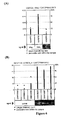
- the expression of DKFZP564O0823 was increased in primary colon endothelial cells upon exposure to TNF ⁇ as compared to exposure to IFN ⁇ or IL-4 ( Figure 6A ).
- the gene is mainly expressed in colon and placenta, but is also found in many other tissues.
- Amino acid sequence alignment of the human, mouse, and rat homologues demonstrate a highly conserved sequence in the transmembrane and intracellular regions (95% and 94% amino acid sequence identity among the three species in these regions, respectively), but less homology in the extracellular region (51% AA sequence identity) ( Figure 5C ).
- Figure 5C As no information on the functional role of IBS 1 is currently known, the consequence of the increased expression level in the colon of IBS patients is unclear.
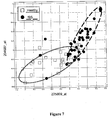
- the 61 subjects were therefore randomly divided into a training set and a test set.
- two different and independent classification analysis methods were applied that that have been shown to perform well on datasets with many measurements and relatively few samples, as they are quite robust against overfitting.
- the gene probe sets that are up- versus down-regulated in IBS patients versus healthy controls.
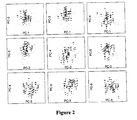
- Y-axis a subset of IBS patients is separated from all other subjects, which appears to be strongly determined by their low expression levels of F13A1, NCF4, M160, CSF1R, and/or FCGR2A.
- the second hierarchical clustering level further separates two groups, largely corresponding to the group of IBS patients and the healthy individuals.
- the data generated by TaqMan assays largely confirm the microarray data with regard to the fold change levels of the individual genes.
- differentially expressed genes are found in the colonic mucosa of IBS patients. Many of these genes are directed towards a change in host defense mechanisms. Proteins involved in host defense mechanisms, or those encoded by the differentially expressed genes, may represent potential targets for the development of novel drugs for IBS.
- the most significant gene with an elevated expression in IBS patients encodes for a poorly characterized membrane protein (DKFZP564O0823) of unclear function, for which the name IBS is proposed.
- Molecular signatures of gene expression in the colon based on a limited set of genes, may be predictive of IBS disease status. These gene expression profiles are stable over several months, suggesting that the molecular signatures have potential to improve the diagnosis of IBS and monitor therapeutic effectiveness. At the very least, these biological differences in patients with IBS suggest that there are objective differences in the colon and that the disease does not represent exclusively a disorder of central nervous system perception.
Landscapes
- Life Sciences & Earth Sciences (AREA)
- Health & Medical Sciences (AREA)
- Engineering & Computer Science (AREA)
- Chemical & Material Sciences (AREA)
- Immunology (AREA)
- Biomedical Technology (AREA)
- Molecular Biology (AREA)
- Proteomics, Peptides & Aminoacids (AREA)
- Hematology (AREA)
- Urology & Nephrology (AREA)
- Analytical Chemistry (AREA)
- Biotechnology (AREA)
- General Health & Medical Sciences (AREA)
- Microbiology (AREA)
- Pathology (AREA)
- Biochemistry (AREA)
- Organic Chemistry (AREA)
- Physics & Mathematics (AREA)
- Medicinal Chemistry (AREA)
- Bioinformatics & Cheminformatics (AREA)
- Cell Biology (AREA)
- General Physics & Mathematics (AREA)
- Food Science & Technology (AREA)
- Zoology (AREA)
- Genetics & Genomics (AREA)
- Wood Science & Technology (AREA)
- Tropical Medicine & Parasitology (AREA)
- Biophysics (AREA)
- Toxicology (AREA)
- General Engineering & Computer Science (AREA)
- Measuring Or Testing Involving Enzymes Or Micro-Organisms (AREA)
- Investigating Or Analysing Biological Materials (AREA)
- Peptides Or Proteins (AREA)
- Medicines That Contain Protein Lipid Enzymes And Other Medicines (AREA)
Claims (6)
- Procédé in vitro pour détecter et/ou contrôler le Syndrome du Côlon Irritable (IBS) chez un sujet, ledit procédé comprenant :(a) la détermination, dans un échantillon biologique dudit sujet, du niveau de transcription de gène au moins du groupe constitué par :- le syndrome du côlon Irritable 1 (IBS1) représenté par SEQ ID n° 15,- Caspase 1 inhibiteur dominant négatif pseudo-ICE (COP1),- Sous-unité activatrice 2 de protéasome (PA28 bêta) (PSME2),- Facteur de coagulation XIII, polypeptide A1 (F13A1),- Facteur cytosolique neutrophile 4, 40kDa (NCF4),- Récepteur de facteur 1 de stimulation de colonie (CSFR1),- Protéine de type 1 riche en cystéine de récepteur de désactiveur (M160),- Élément 3, sous-famille S, redresseur à retard, canal de potassium dépendant du potentiel (KCNS3),- chaîne en V et domaine d'immunoglobuline contenant 2 (VSIG2),- fragment FC d'IgG, faible affinité IIa, récepteur (FCGR2A) et- caspase 1, apoptose liée à la peptidase à cystéine (CASP1),(b) la comparaison du niveau de transcription de gène avec le niveau de transcription de gène dans un échantillon témoin normal ; et(c) la détermination de la présence de IBS et/ou son état en se basant sur le résultat provenant de l'étape (b).
- Procédé selon la revendication 1 comprenant en outre la détermination du niveau de transcription de gène de :- MUC 20 (Mucine 20),- semblable à butyrophiline 8 (BTNL8),- chaîne en V et domaine d'immunoglobuline contenant 4 (VSIG4),- Lysozyme (LYZ),- activateur de protéine de choc thermique 90kDa ATPase homologue 2 (AHSA2),- minichromosome maintenance déficient 5 (MCM5),- C6orf111,- Envergure de membrane à 4 domaines, sous-famille A, élément 4 (MS4A4A),- facteur de croissance 1 semblable à l'Insuline (IGF1),- Hélicase, lymphoïde spécifique (HELLS),- antigène CD74,- Suppresseur 2 semblable à HRAS (HRASLS2), et- UDP-glucuronosyle transférase 2B15 (UGT2B15).
- Procédé selon la revendication 1, dans lequel le niveau de transcription de gène est déterminé en utilisant une matrice de sondes sélectionnées à partir des sondes listées dans le Tableau 1 ou le Tableau 2.
- Kit de diagnostic qui consiste en :- un ensemble de sondes qui se lient de manière spécifique à l'ARNm ou aux molécules d'acide nucléique obtenues à partir de ce dernier d'IBS1 représenté par SEQ ID n° 15, COP1, PSME2, F13A1, NCF4, CSFR1, M160, KCNS3 VSIG2, FCGR2A et CASP1.
- Utilisation d'un ensemble de sondes qui se lient de manière spécifique à l'ARNm ou à des molécules d'acide nucléique obtenues à partir de ce dernier des IBS-MSG comprenant IBS1 représenté par SEQ ID n° 15, COP1, PSME2, F13A1, NCF4, CSFR1, M160, KCNS3 VSIG2, FCGR2A et CASP1, pour la détection d'IBS.
- Utilisation de l'ensemble de sondes selon la revendication 5 dans un procédé selon la revendication 1.
Priority Applications (1)
| Application Number | Priority Date | Filing Date | Title |
|---|---|---|---|
| EP07818943A EP2074230B1 (fr) | 2006-10-11 | 2007-10-11 | Compositions et procedes pour le traitement et le diagnostic du syndrome du colon irritable |
Applications Claiming Priority (4)
| Application Number | Priority Date | Filing Date | Title |
|---|---|---|---|
| US85065906P | 2006-10-11 | 2006-10-11 | |
| EP06023597 | 2006-11-14 | ||
| EP07818943A EP2074230B1 (fr) | 2006-10-11 | 2007-10-11 | Compositions et procedes pour le traitement et le diagnostic du syndrome du colon irritable |
| PCT/EP2007/008872 WO2008043566A2 (fr) | 2006-10-11 | 2007-10-11 | Compositions et procédés pour le traitement et le diagnostic du syndrome du côlon irritable |
Publications (2)
| Publication Number | Publication Date |
|---|---|
| EP2074230A2 EP2074230A2 (fr) | 2009-07-01 |
| EP2074230B1 true EP2074230B1 (fr) | 2012-11-28 |
Family
ID=37907714
Family Applications (1)
| Application Number | Title | Priority Date | Filing Date |
|---|---|---|---|
| EP07818943A Active EP2074230B1 (fr) | 2006-10-11 | 2007-10-11 | Compositions et procedes pour le traitement et le diagnostic du syndrome du colon irritable |
Country Status (7)
| Country | Link |
|---|---|
| US (1) | US20100222228A1 (fr) |
| EP (1) | EP2074230B1 (fr) |
| JP (2) | JP2010505431A (fr) |
| CA (1) | CA2665709C (fr) |
| DK (1) | DK2074230T3 (fr) |
| ES (1) | ES2400676T3 (fr) |
| WO (1) | WO2008043566A2 (fr) |
Cited By (2)
| Publication number | Priority date | Publication date | Assignee | Title |
|---|---|---|---|---|
| RU2776638C1 (ru) * | 2018-09-28 | 2022-07-22 | Ютайлекс Ко., Лтд. | Антитела против vsig4 человека и их применение |
| US11905334B2 (en) | 2018-09-28 | 2024-02-20 | Eutilex Co., Ltd. | Anti-human VSIG4 antibodies and uses thereof |
Families Citing this family (13)
| Publication number | Priority date | Publication date | Assignee | Title |
|---|---|---|---|---|
| US7943328B1 (en) | 2006-03-03 | 2011-05-17 | Prometheus Laboratories Inc. | Method and system for assisting in diagnosing irritable bowel syndrome |
| US20080085524A1 (en) | 2006-08-15 | 2008-04-10 | Prometheus Laboratories Inc. | Methods for diagnosing irritable bowel syndrome |
| US20100094560A1 (en) * | 2006-08-15 | 2010-04-15 | Prometheus Laboratories Inc. | Methods for diagnosing irritable bowel syndrome |
| WO2013082288A1 (fr) * | 2011-11-29 | 2013-06-06 | The Regents Of The University Of California | Méthylation du gène récepteur des glucocorticoïdes nr3c1 dans un syndrome de l'intestin irritable et autres troubles de stress |
| US10502737B2 (en) | 2012-05-25 | 2019-12-10 | The University Of Vermont And State Agriculture College | Anti-thrombotic compositions and methods for assaying platelet reactivity and treatment selection |
| ES2665590T3 (es) * | 2012-09-05 | 2018-04-26 | Maximus Diagnostic Technologies Llc | Métodos y composición para detectar la disfunción de la barrera celular intestinal |
| WO2015127455A1 (fr) * | 2014-02-24 | 2015-08-27 | Arizona Board Of Regents On Behalf Of Arizona State University | Système de biomarqueur fondé sur l'expression génique pour le diagnostic du syndrome du côlon irritable (ibs) |
| ES2911415T3 (es) | 2015-06-08 | 2022-05-19 | Arquer Diagnostics Ltd | Métodos y kits |
| WO2016198833A2 (fr) | 2015-06-08 | 2016-12-15 | Arquer Diagnostics Limited | Procédés |
| JP2019508395A (ja) | 2016-02-02 | 2019-03-28 | マキシマス ダイアグノスティック テクノロジーズ エルエルシー | 炎症性腸疾患の処置を改善するための腸管バリア機能の評価 |
| WO2021256837A1 (fr) * | 2020-06-15 | 2021-12-23 | 인제대학교 산학협력단 | Composition permettant de diagnostiquer ou de traiter une maladie rénale |
| CN116789821A (zh) * | 2022-12-07 | 2023-09-22 | 南方医科大学南方医院 | Ms4a4a作为靶点或抗ms4a4a单克隆抗体在制备治疗结直肠癌的药物中的应用 |
| CN117695377B (zh) * | 2023-12-14 | 2025-01-07 | 贵州医科大学 | Vsig2在制备治疗自身免疫性疾病产品中的应用 |
Family Cites Families (25)
| Publication number | Priority date | Publication date | Assignee | Title |
|---|---|---|---|---|
| US211A (en) | 1837-05-30 | Stoves for cooking and heating buildings | ||
| US175A (en) | 1837-04-05 | Simeon broadmeadow | ||
| US4631A (en) | 1846-07-14 | Improvement in chimney-caps | ||
| US5010A (en) | 1847-03-13 | Improvement in hemp-brakes | ||
| NL154598B (nl) * | 1970-11-10 | 1977-09-15 | Organon Nv | Werkwijze voor het aantonen en bepalen van laagmoleculire verbindingen en van eiwitten die deze verbindingen specifiek kunnen binden, alsmede testverpakking. |
| US3817837A (en) | 1971-05-14 | 1974-06-18 | Syva Corp | Enzyme amplification assay |
| US3939350A (en) | 1974-04-29 | 1976-02-17 | Board Of Trustees Of The Leland Stanford Junior University | Fluorescent immunoassay employing total reflection for activation |
| US3996345A (en) * | 1974-08-12 | 1976-12-07 | Syva Company | Fluorescence quenching with immunological pairs in immunoassays |
| US4275149A (en) | 1978-11-24 | 1981-06-23 | Syva Company | Macromolecular environment control in specific receptor assays |
| US4277437A (en) | 1978-04-05 | 1981-07-07 | Syva Company | Kit for carrying out chemically induced fluorescence immunoassay |
| US4366241A (en) * | 1980-08-07 | 1982-12-28 | Syva Company | Concentrating zone method in heterogeneous immunoassays |
| US4816567A (en) * | 1983-04-08 | 1989-03-28 | Genentech, Inc. | Recombinant immunoglobin preparations |
| US4631211A (en) * | 1985-03-25 | 1986-12-23 | Scripps Clinic & Research Foundation | Means for sequential solid phase organic synthesis and methods using the same |
| US4946778A (en) * | 1987-09-21 | 1990-08-07 | Genex Corporation | Single polypeptide chain binding molecules |
| US5010175A (en) * | 1988-05-02 | 1991-04-23 | The Regents Of The University Of California | General method for producing and selecting peptides with specific properties |
| US5105941A (en) * | 1990-04-05 | 1992-04-21 | Chicago Tribune Company | Sample packet newspaper insert |
| US5139749A (en) | 1990-06-22 | 1992-08-18 | Tas, Inc. | Fluidized calcining process |
| WO1994028028A1 (fr) | 1993-05-27 | 1994-12-08 | Selectide Corporation | Banques en phase solide codees a segregation topoligique |
| US6406921B1 (en) * | 1998-07-14 | 2002-06-18 | Zyomyx, Incorporated | Protein arrays for high-throughput screening |
| GB9816514D0 (en) | 1998-07-29 | 1998-09-30 | Smithkline Beecham Plc | Novel method |
| US6197599B1 (en) | 1998-07-30 | 2001-03-06 | Guorong Chin | Method to detect proteins |
| WO2002012434A2 (fr) * | 2000-08-10 | 2002-02-14 | Glaxo Group Limited | Reseau servant a controler un profil de reponse medicale electronique globale |
| JP2004194534A (ja) * | 2002-12-17 | 2004-07-15 | Sumitomo Pharmaceut Co Ltd | 炎症性腸疾患疾患マーカーおよびその利用 |
| JPWO2005007846A1 (ja) * | 2003-04-25 | 2006-08-31 | 財団法人癌研究会 | 腫瘍細胞の抗癌剤に対する感受性を判定する方法 |
| US8071652B2 (en) * | 2003-08-21 | 2011-12-06 | The Board Of Regents Of The University Of Texas System | Method of treating irritable bowel syndrome |
-
2007
- 2007-10-11 EP EP07818943A patent/EP2074230B1/fr active Active
- 2007-10-11 JP JP2009531782A patent/JP2010505431A/ja active Pending
- 2007-10-11 ES ES07818943T patent/ES2400676T3/es active Active
- 2007-10-11 CA CA2665709A patent/CA2665709C/fr active Active
- 2007-10-11 WO PCT/EP2007/008872 patent/WO2008043566A2/fr not_active Ceased
- 2007-10-11 DK DK07818943.8T patent/DK2074230T3/da active
- 2007-10-11 US US12/445,144 patent/US20100222228A1/en not_active Abandoned
-
2014
- 2014-03-05 JP JP2014042836A patent/JP6244226B2/ja active Active
Non-Patent Citations (4)
| Title |
|---|
| "Affymetrix Genechip bHuman Genome U133 plus 2.0 Array", GEO, XP002343693 * |
| BJERRUM J T ET AL: "Genome-wide gene expression analysis of mucosal colonic biopsies and isolated colonocytes suggests a continuous inflammatory state in the lamina propria of patients with quiscient ulcerative colitis", INFLAMMATORY BOWEL DISEASES, WILLAMS AND WILKINS, HAGERSTOWN, MD, US, vol. 16, no. 6, 1 June 2010 (2010-06-01), pages 999 - 1007, XP002601768, ISSN: 1078-0998, [retrieved on 20091015], DOI: 10.1002/IBD.21142 * |
| KERCKHOFFS A P M ET AL: "Trypsinogen IV, serotonin transporter transcript levels and serotonin content are increased in small intestine of irritable bowel syndrome patients", NEUROGASTROENTEROLOGY AND MOTILITY 200808 GB LNKD- DOI:10.1111/J.1365-2982.2008.01100.X, vol. 20, no. 8, August 2008 (2008-08-01), pages 900 - 907, ISSN: 1350-1925 * |
| VON STEIN P ET AL: "Multigene Analysis Can Discriminate Between Ulcerative Colitis, Crohn's Disease, and Irritable Bowel Syndrome", GASTROENTEROLOGY, ELSEVIER, PHILADELPHIA, PA, vol. 134, no. 7, 1 June 2008 (2008-06-01), pages 1869 - 1881, XP022694428, ISSN: 0016-5085, [retrieved on 20080302], DOI: 10.1053/J.GASTRO.2008.02.083 * |
Cited By (2)
| Publication number | Priority date | Publication date | Assignee | Title |
|---|---|---|---|---|
| RU2776638C1 (ru) * | 2018-09-28 | 2022-07-22 | Ютайлекс Ко., Лтд. | Антитела против vsig4 человека и их применение |
| US11905334B2 (en) | 2018-09-28 | 2024-02-20 | Eutilex Co., Ltd. | Anti-human VSIG4 antibodies and uses thereof |
Also Published As
| Publication number | Publication date |
|---|---|
| CA2665709A1 (fr) | 2008-04-17 |
| ES2400676T3 (es) | 2013-04-11 |
| EP2074230A2 (fr) | 2009-07-01 |
| WO2008043566A2 (fr) | 2008-04-17 |
| WO2008043566A3 (fr) | 2008-06-05 |
| DK2074230T3 (da) | 2013-02-25 |
| CA2665709C (fr) | 2018-04-03 |
| US20100222228A1 (en) | 2010-09-02 |
| JP2014144003A (ja) | 2014-08-14 |
| JP2010505431A (ja) | 2010-02-25 |
| JP6244226B2 (ja) | 2017-12-06 |
Similar Documents
| Publication | Publication Date | Title |
|---|---|---|
| CA2665709C (fr) | Compositions et procedes pour le traitement et le diagnostic du syndrome du colon irritable | |
| EP2326731B1 (fr) | Biomarqueurs pour le traitement anti-tnf dans la rectocolite hémorragique et de troubles associés | |
| US11795496B2 (en) | Epigenetic chromosome interactions | |
| CN102165315B (zh) | 用于使用20基因群组评估及治疗溃疡性结肠炎和相关疾病的标记物和方法 | |
| AU2008334095A2 (en) | Gene expression markers for inflammatory bowel disease | |
| SG177699A1 (en) | Gene expression markers for crohn's disease | |
| JP2013526845A (ja) | サイトカイン標的薬(CyTD)に対する、炎症性疾患に罹患している対象の初期応答または非応答を予測する遺伝子および遺伝子の組み合わせ | |
| US20070020660A1 (en) | Expression profiles of peripheral blood mononuclear cells for inflammatory bowel diseases | |
| US20140011704A1 (en) | Markers and Methods for Assessing and Treating Crohn's Disease and Related Disorders | |
| JP7681329B2 (ja) | 食物特異的免疫応答を検出するための方法 | |
| US10227651B2 (en) | Gene expression based biomarker system for irritable bowel syndrome (IBS) diagnosis | |
| US20110046202A1 (en) | Method for testing a subject thought to have or to be predisposed to asthma | |
| CN101238224A (zh) | 炎性肠病的外周血单核细胞的表达谱 | |
| US20180136226A1 (en) | Method for diagnosing an inflammatory disorder | |
| HK1157410B (en) | Biomarkers for anti-tnf treatment in ulcerative colitis and related disorders | |
| KR20120001916A (ko) | 아스피린 과민성 천식의 진단용 snp 유전자 세트 |
Legal Events
| Date | Code | Title | Description |
|---|---|---|---|
| PUAI | Public reference made under article 153(3) epc to a published international application that has entered the european phase |
Free format text: ORIGINAL CODE: 0009012 |
|
| 17P | Request for examination filed |
Effective date: 20090330 |
|
| AK | Designated contracting states |
Kind code of ref document: A2 Designated state(s): AT BE BG CH CY CZ DE DK EE ES FI FR GB GR HU IE IS IT LI LT LU LV MC MT NL PL PT RO SE SI SK TR |
|
| AX | Request for extension of the european patent |
Extension state: AL BA HR MK RS |
|
| 17Q | First examination report despatched |
Effective date: 20091007 |
|
| GRAP | Despatch of communication of intention to grant a patent |
Free format text: ORIGINAL CODE: EPIDOSNIGR1 |
|
| GRAS | Grant fee paid |
Free format text: ORIGINAL CODE: EPIDOSNIGR3 |
|
| GRAA | (expected) grant |
Free format text: ORIGINAL CODE: 0009210 |
|
| AK | Designated contracting states |
Kind code of ref document: B1 Designated state(s): AT BE BG CH CY CZ DE DK EE ES FI FR GB GR HU IE IS IT LI LT LU LV MC MT NL PL PT RO SE SI SK TR |
|
| AX | Request for extension of the european patent |
Extension state: AL BA HR MK RS |
|
| REG | Reference to a national code |
Ref country code: GB Ref legal event code: FG4D |
|
| REG | Reference to a national code |
Ref country code: CH Ref legal event code: EP |
|
| REG | Reference to a national code |
Ref country code: AT Ref legal event code: REF Ref document number: 586221 Country of ref document: AT Kind code of ref document: T Effective date: 20121215 |
|
| REG | Reference to a national code |
Ref country code: IE Ref legal event code: FG4D |
|
| REG | Reference to a national code |
Ref country code: DE Ref legal event code: R096 Ref document number: 602007027029 Country of ref document: DE Effective date: 20130124 |
|
| REG | Reference to a national code |
Ref country code: DK Ref legal event code: T3 |
|
| REG | Reference to a national code |
Ref country code: SE Ref legal event code: TRGR |
|
| REG | Reference to a national code |
Ref country code: NL Ref legal event code: T3 |
|
| REG | Reference to a national code |
Ref country code: ES Ref legal event code: FG2A Ref document number: 2400676 Country of ref document: ES Kind code of ref document: T3 Effective date: 20130411 |
|
| REG | Reference to a national code |
Ref country code: AT Ref legal event code: MK05 Ref document number: 586221 Country of ref document: AT Kind code of ref document: T Effective date: 20121128 |
|
| REG | Reference to a national code |
Ref country code: LT Ref legal event code: MG4D |
|
| PG25 | Lapsed in a contracting state [announced via postgrant information from national office to epo] |
Ref country code: FI Free format text: LAPSE BECAUSE OF FAILURE TO SUBMIT A TRANSLATION OF THE DESCRIPTION OR TO PAY THE FEE WITHIN THE PRESCRIBED TIME-LIMIT Effective date: 20121128 Ref country code: LT Free format text: LAPSE BECAUSE OF FAILURE TO SUBMIT A TRANSLATION OF THE DESCRIPTION OR TO PAY THE FEE WITHIN THE PRESCRIBED TIME-LIMIT Effective date: 20121128 |
|
| PG25 | Lapsed in a contracting state [announced via postgrant information from national office to epo] |
Ref country code: SI Free format text: LAPSE BECAUSE OF FAILURE TO SUBMIT A TRANSLATION OF THE DESCRIPTION OR TO PAY THE FEE WITHIN THE PRESCRIBED TIME-LIMIT Effective date: 20121128 Ref country code: GR Free format text: LAPSE BECAUSE OF FAILURE TO SUBMIT A TRANSLATION OF THE DESCRIPTION OR TO PAY THE FEE WITHIN THE PRESCRIBED TIME-LIMIT Effective date: 20130301 Ref country code: PT Free format text: LAPSE BECAUSE OF FAILURE TO SUBMIT A TRANSLATION OF THE DESCRIPTION OR TO PAY THE FEE WITHIN THE PRESCRIBED TIME-LIMIT Effective date: 20130328 Ref country code: PL Free format text: LAPSE BECAUSE OF FAILURE TO SUBMIT A TRANSLATION OF THE DESCRIPTION OR TO PAY THE FEE WITHIN THE PRESCRIBED TIME-LIMIT Effective date: 20121128 Ref country code: LV Free format text: LAPSE BECAUSE OF FAILURE TO SUBMIT A TRANSLATION OF THE DESCRIPTION OR TO PAY THE FEE WITHIN THE PRESCRIBED TIME-LIMIT Effective date: 20121128 |
|
| PG25 | Lapsed in a contracting state [announced via postgrant information from national office to epo] |
Ref country code: AT Free format text: LAPSE BECAUSE OF FAILURE TO SUBMIT A TRANSLATION OF THE DESCRIPTION OR TO PAY THE FEE WITHIN THE PRESCRIBED TIME-LIMIT Effective date: 20121128 |
|
| PG25 | Lapsed in a contracting state [announced via postgrant information from national office to epo] |
Ref country code: EE Free format text: LAPSE BECAUSE OF FAILURE TO SUBMIT A TRANSLATION OF THE DESCRIPTION OR TO PAY THE FEE WITHIN THE PRESCRIBED TIME-LIMIT Effective date: 20121128 Ref country code: BG Free format text: LAPSE BECAUSE OF FAILURE TO SUBMIT A TRANSLATION OF THE DESCRIPTION OR TO PAY THE FEE WITHIN THE PRESCRIBED TIME-LIMIT Effective date: 20130228 Ref country code: SK Free format text: LAPSE BECAUSE OF FAILURE TO SUBMIT A TRANSLATION OF THE DESCRIPTION OR TO PAY THE FEE WITHIN THE PRESCRIBED TIME-LIMIT Effective date: 20121128 Ref country code: CZ Free format text: LAPSE BECAUSE OF FAILURE TO SUBMIT A TRANSLATION OF THE DESCRIPTION OR TO PAY THE FEE WITHIN THE PRESCRIBED TIME-LIMIT Effective date: 20121128 |
|
| PG25 | Lapsed in a contracting state [announced via postgrant information from national office to epo] |
Ref country code: RO Free format text: LAPSE BECAUSE OF FAILURE TO SUBMIT A TRANSLATION OF THE DESCRIPTION OR TO PAY THE FEE WITHIN THE PRESCRIBED TIME-LIMIT Effective date: 20121128 |
|
| PLBE | No opposition filed within time limit |
Free format text: ORIGINAL CODE: 0009261 |
|
| STAA | Information on the status of an ep patent application or granted ep patent |
Free format text: STATUS: NO OPPOSITION FILED WITHIN TIME LIMIT |
|
| 26N | No opposition filed |
Effective date: 20130829 |
|
| PG25 | Lapsed in a contracting state [announced via postgrant information from national office to epo] |
Ref country code: CY Free format text: LAPSE BECAUSE OF FAILURE TO SUBMIT A TRANSLATION OF THE DESCRIPTION OR TO PAY THE FEE WITHIN THE PRESCRIBED TIME-LIMIT Effective date: 20121128 |
|
| REG | Reference to a national code |
Ref country code: DE Ref legal event code: R097 Ref document number: 602007027029 Country of ref document: DE Effective date: 20130829 |
|
| PG25 | Lapsed in a contracting state [announced via postgrant information from national office to epo] |
Ref country code: MC Free format text: LAPSE BECAUSE OF FAILURE TO SUBMIT A TRANSLATION OF THE DESCRIPTION OR TO PAY THE FEE WITHIN THE PRESCRIBED TIME-LIMIT Effective date: 20121128 |
|
| REG | Reference to a national code |
Ref country code: FR Ref legal event code: PLFP Year of fee payment: 9 |
|
| PG25 | Lapsed in a contracting state [announced via postgrant information from national office to epo] |
Ref country code: TR Free format text: LAPSE BECAUSE OF FAILURE TO SUBMIT A TRANSLATION OF THE DESCRIPTION OR TO PAY THE FEE WITHIN THE PRESCRIBED TIME-LIMIT Effective date: 20121128 |
|
| PG25 | Lapsed in a contracting state [announced via postgrant information from national office to epo] |
Ref country code: LU Free format text: LAPSE BECAUSE OF NON-PAYMENT OF DUE FEES Effective date: 20131011 Ref country code: HU Free format text: LAPSE BECAUSE OF FAILURE TO SUBMIT A TRANSLATION OF THE DESCRIPTION OR TO PAY THE FEE WITHIN THE PRESCRIBED TIME-LIMIT; INVALID AB INITIO Effective date: 20071011 |
|
| PG25 | Lapsed in a contracting state [announced via postgrant information from national office to epo] |
Ref country code: MT Free format text: LAPSE BECAUSE OF FAILURE TO SUBMIT A TRANSLATION OF THE DESCRIPTION OR TO PAY THE FEE WITHIN THE PRESCRIBED TIME-LIMIT Effective date: 20121128 |
|
| PG25 | Lapsed in a contracting state [announced via postgrant information from national office to epo] |
Ref country code: IS Free format text: LAPSE BECAUSE OF FAILURE TO SUBMIT A TRANSLATION OF THE DESCRIPTION OR TO PAY THE FEE WITHIN THE PRESCRIBED TIME-LIMIT Effective date: 20121128 |
|
| REG | Reference to a national code |
Ref country code: FR Ref legal event code: PLFP Year of fee payment: 10 |
|
| REG | Reference to a national code |
Ref country code: FR Ref legal event code: PLFP Year of fee payment: 11 |
|
| REG | Reference to a national code |
Ref country code: FR Ref legal event code: PLFP Year of fee payment: 12 |
|
| PGFP | Annual fee paid to national office [announced via postgrant information from national office to epo] |
Ref country code: NL Payment date: 20250912 Year of fee payment: 19 Ref country code: IT Payment date: 20250922 Year of fee payment: 19 |
|
| PGFP | Annual fee paid to national office [announced via postgrant information from national office to epo] |
Ref country code: BE Payment date: 20250917 Year of fee payment: 19 Ref country code: GB Payment date: 20250828 Year of fee payment: 19 |
|
| PGFP | Annual fee paid to national office [announced via postgrant information from national office to epo] |
Ref country code: FR Payment date: 20250908 Year of fee payment: 19 |
|
| PGFP | Annual fee paid to national office [announced via postgrant information from national office to epo] |
Ref country code: SE Payment date: 20250910 Year of fee payment: 19 |
|
| PGFP | Annual fee paid to national office [announced via postgrant information from national office to epo] |
Ref country code: IE Payment date: 20250909 Year of fee payment: 19 |
|
| REG | Reference to a national code |
Ref country code: CH Ref legal event code: U11 Free format text: ST27 STATUS EVENT CODE: U-0-0-U10-U11 (AS PROVIDED BY THE NATIONAL OFFICE) Effective date: 20251101 |
|
| PGFP | Annual fee paid to national office [announced via postgrant information from national office to epo] |
Ref country code: DE Payment date: 20250902 Year of fee payment: 19 |
|
| PGFP | Annual fee paid to national office [announced via postgrant information from national office to epo] |
Ref country code: DK Payment date: 20251014 Year of fee payment: 19 |
|
| PGFP | Annual fee paid to national office [announced via postgrant information from national office to epo] |
Ref country code: CH Payment date: 20251101 Year of fee payment: 19 |
|
| PGFP | Annual fee paid to national office [announced via postgrant information from national office to epo] |
Ref country code: ES Payment date: 20251104 Year of fee payment: 19 |