EP2074845B1 - Netzwerkelement und verfahren zur bereitstellung von zugangskontrolle für ein zellulares kommunikationsnetz - Google Patents
Netzwerkelement und verfahren zur bereitstellung von zugangskontrolle für ein zellulares kommunikationsnetz Download PDFInfo
- Publication number
- EP2074845B1 EP2074845B1 EP07820725A EP07820725A EP2074845B1 EP 2074845 B1 EP2074845 B1 EP 2074845B1 EP 07820725 A EP07820725 A EP 07820725A EP 07820725 A EP07820725 A EP 07820725A EP 2074845 B1 EP2074845 B1 EP 2074845B1
- Authority
- EP
- European Patent Office
- Prior art keywords
- network
- communication unit
- wireless communication
- network element
- message
- Prior art date
- Legal status (The legal status is an assumption and is not a legal conclusion. Google has not performed a legal analysis and makes no representation as to the accuracy of the status listed.)
- Not-in-force
Links
- 230000010267 cellular communication Effects 0.000 title claims abstract description 20
- 238000000034 method Methods 0.000 title claims description 40
- 238000004891 communication Methods 0.000 claims abstract description 101
- 230000004044 response Effects 0.000 claims description 16
- 238000010295 mobile communication Methods 0.000 claims description 8
- 238000012545 processing Methods 0.000 claims description 4
- 230000007246 mechanism Effects 0.000 description 5
- 230000008901 benefit Effects 0.000 description 3
- 238000005516 engineering process Methods 0.000 description 3
- 230000001360 synchronised effect Effects 0.000 description 3
- 230000035515 penetration Effects 0.000 description 2
- 230000001413 cellular effect Effects 0.000 description 1
- 238000013461 design Methods 0.000 description 1
- 238000011161 development Methods 0.000 description 1
- 230000006870 function Effects 0.000 description 1
- 230000000977 initiatory effect Effects 0.000 description 1
- 230000003287 optical effect Effects 0.000 description 1
- 230000008520 organization Effects 0.000 description 1
- 230000008569 process Effects 0.000 description 1
- 230000011664 signaling Effects 0.000 description 1
Images

Classifications
-
- H—ELECTRICITY
- H04—ELECTRIC COMMUNICATION TECHNIQUE
- H04W—WIRELESS COMMUNICATION NETWORKS
- H04W12/00—Security arrangements; Authentication; Protecting privacy or anonymity
- H04W12/06—Authentication
-
- H—ELECTRICITY
- H04—ELECTRIC COMMUNICATION TECHNIQUE
- H04W—WIRELESS COMMUNICATION NETWORKS
- H04W12/00—Security arrangements; Authentication; Protecting privacy or anonymity
- H04W12/08—Access security
-
- H—ELECTRICITY
- H04—ELECTRIC COMMUNICATION TECHNIQUE
- H04W—WIRELESS COMMUNICATION NETWORKS
- H04W12/00—Security arrangements; Authentication; Protecting privacy or anonymity
- H04W12/60—Context-dependent security
- H04W12/69—Identity-dependent
- H04W12/72—Subscriber identity
-
- H—ELECTRICITY
- H04—ELECTRIC COMMUNICATION TECHNIQUE
- H04W—WIRELESS COMMUNICATION NETWORKS
- H04W84/00—Network topologies
- H04W84/02—Hierarchically pre-organised networks, e.g. paging networks, cellular networks, WLAN [Wireless Local Area Network] or WLL [Wireless Local Loop]
- H04W84/04—Large scale networks; Deep hierarchical networks
- H04W84/042—Public Land Mobile systems, e.g. cellular systems
- H04W84/045—Public Land Mobile systems, e.g. cellular systems using private Base Stations, e.g. femto Base Stations, home Node B
-
- H—ELECTRICITY
- H04—ELECTRIC COMMUNICATION TECHNIQUE
- H04W—WIRELESS COMMUNICATION NETWORKS
- H04W92/00—Interfaces specially adapted for wireless communication networks
- H04W92/02—Inter-networking arrangements
Definitions
- the invention relates to a network element and method for providing access control for a cellular communication network, and more particularly to a network element and method for providing access control for in-building wireless (mobile) communication units attempting to connect to a core network of a cellular communication network.
- Wireless communication systems are well known in the art, such as the 3 rd Generation (3G) of mobile telephone standards and technology.
- 3G 3 rd Generation
- UMTS Universal Mobile Telecommunications System
- 3GPP 3 rd Generation Partnership Project
- wireless communication units or User Equipment (UE) as they are often referred to, communicate with a Core Network (CN) of a wireless communication system via a Radio Network Subsystem (RNS).
- a wireless communication network typically comprises a plurality of radio network subsystems, each radio network subsystem comprising one or more cells to which UEs may attach, and thereby connect to the network.
- Access to a network, or services provided by the network is typically authorised by the CN of the network. Furthermore, such access to the network is typically provided irrespective of the particular cell to which a UE is attached, so long as they are within communication range of a serving base station. However, the inventor has recognised that in certain circumstances it may be desirable for access to the network via specific cells to be limited, for example to specific UEs or users, or indeed access to be prevented for specific UEs or users.
- femto-cell or pico-cell Access Points are a recent development within the field of wireless cellular communication systems. Femto-cells or pico-cells are effectively communication coverage areas supported by low power base stations (otherwise referred to as serving communication units). These cells are able to be piggy-backed onto the more widely used macro-cellular network and support communications to UEs in a restricted, for example 'in-building', environment. Typical applications for such femto-cell or pico-cell APs include, by way of example, residential and commercial (e.g.
- femto-cells or pico-cells can be provided in a simple, scalable deployment in specific in-building locations where, for example, network congestion at the macro-cell level is an issue.
- the provider of the AP is a homeowner, business, etc., for example in a case of residential or commercial applications, public access to the network via the AP would be undesirable. Accordingly, it would be desirable for access to the network via such APs to be limited, for example to specific UEs or users, or access to be prevented for specific UEs or users.
- the CN access to a network, or services provided by the network, is typically authorised by the CN.
- the location update request typically comprises a mobile subscriber identity number for the UE and a location area code (LAC) for the location area for which the UE has moved into.
- LAC location area code
- the LAC typically only comprises 16 bits, and as such only 65,535 unique LACs are possible. Since wireless communication networks typically comprise individual cells which number in the millions, using the LAC to limit access for individual cells is clearly not a practical solution.
- SoLSA Support of Localized Service Area
- SoLSA allows a network operator to offer subscribers, or groups of subscribers, different services, different tariffs and different access rights depending on their geographical location.
- SoLSA requires the CN, the radio network sub-system (RNS) and the UE to be upgraded in order to support this functionality.
- RNS radio network sub-system
- This is a particular problem with regard to UEs, since it takes significant effort and a long time for new functionality to be provided within UEs, and to achieve a level of market penetration where it becomes possible to rely on the use of the new functionality.
- there has been limited, if any, support for SoLSA.
- SoLSA has failed to provide a suitable mechanism with which to limit access to the network for individual cells.
- EP-A-1519613 discloses a method and network element for providing access control to a core network of a cellularcommunication network for a wireless communication unit
- the invention seeks to mitigate, alleviate or eliminate one or more of the abovementioned disadvantages singly or in any combination.
- a network element for providing access control, for a wireless communication unit operating within a communication cell supported by the network element, to a core network of a cellular communication network.
- the network element comprises a receiver for receiving a message from the wireless communication unit comprising identity information.
- the network element further comprises logic, operably coupled to the receiver, for determining whether to permit the mobile communication unit access to the core network, based at least in part on the received identity information.
- the logic is arranged to construct a User Authentication Request message comprising an invalid Authentication Token in response to the logic determining that the wireless communication unit is not permitted access to the core network.
- the network element comprises a transmitter for transmitting an Identity Request message to the wireless communication unit, such that the message received from the mobile communication unit comprising identity information is received in response thereto.
- the receiver receives a Location Update Request message from the wireless communication unit attempting to connect to the core network and the network element transmits an Identity Request message to the wireless communication unit in response thereto.
- the Location Update Request message may be intended for the core network, and the logic in the network element may be arranged to intercept the Location Update Request message.
- the Location Update Request message may be in a form of a Mobility Management (MM) message, intended for receipt by the core network.
- MM Mobility Management
- the identity of the mobile communication unit attempting to connect to the core network via the cell may be determined. For example, an identity for the wireless communication unit may be requested, in order to determine whether the wireless communication unit should be allowed to access the core network via that communication cell. Consequently, access to the network may be limited on an individual cell basis.
- the network element may comprise a memory element, operably coupled to the logic, and arranged to store the message such that the logic may retrieve the message from the memory element and forward the message to the core network, if the logic determines that the wireless communication unit is permitted access to the core network.
- the network element may be able to store and process the message whilst determining whether the message emanates from a valid wireless communication unit, and forwards the message on to the core network if it does.
- the logic may be arranged to send a null message to the core network in addition to forwarding the message to the core network. In this manner, the sending of a null message to the core network may ensure that counters between the wireless communication unit and the core network remain synchronised. In one optional embodiment of the invention, the logic may be arranged to construct the null message with a same sequence number as that of the message received from the wireless communication unit comprising identity information.
- the logic may optionally continue to re-send the User Authentication Request message comprising an invalid Authentication Token.
- the network element may force the wireless communication unit to treat the individual cell as 'cell barred'.
- the communication cell supported by the network element may be allocated a locally unique location area code. In this manner, by modifying the known allocation of location area codes, the network may ensure that no adjacent cells have the same code. This may force the wireless communication unit to perform a location update whenever it enters a new cell.
- the network element may comprise a memory element arranged to store IMSIs for wireless communication units permitted access to the core network via the communication cell. In this manner, the network element may be able to provide access control based on information contained therein, without needing to consult or pass on messages to the core network.
- the network element may be an access point base station, for example, one part of a radio network sub-system comprising an access point base station controller, via which the access to the core network is supported.
- the network element may be a Node-B arranged to support access over a Universal Mobile Telecommunications System (UMTS) network. In this manner, the network element is suitable to support femto-cell or pico-cell communications.
- UMTS Universal Mobile Telecommunications System
- a method for providing access control to a core network of a cellular communication network for a wireless communication unit operating within a communication cell and supported by the network element.
- the method comprises receiving a message from the wireless communication unit comprising identity information and determining whether to permit the wireless communication unit access to the core network based at least in part on the received identity information.
- the method further comprises constructing a User Authentication Request message comprising an invalid Authentication Token in response to the determining that the wireless communication unit is not permitted access to the core network.
- a radio network sub-system comprising an aforementioned network element.
- a wireless communication system comprising an aforementioned network element or adapted to support the aforementioned method of access control.
- a computer-readable storage element having computer-readable code stored thereon for programming signal processing logic to perform a method for providing access control to a core network of a cellular communication network for a wireless communication unit operating within a communication cell supported by the network element.
- the computer-readable code is operable for receiving a message from the wireless communication unit comprising identity information and determining whether to permit the wireless communication unit access to the core network, based at least in part on the received identity information.
- the computer-readable code is further operable for constructing a User Authentication Request message comprising an invalid Authentication Token in response to the determining that the wireless communication unit is not permitted access to the core network.
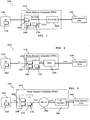
- FIG. 1 an example of part of a Universal Mobile Telecommunications System (UMTS) network adapted in accordance with some embodiments of the invention is shown and indicated generally at 100.
- UMTS Universal Mobile Telecommunications System
- the UMTS network 100 comprises a radio network sub-system (RNS) 110 operably coupled to a core network (CN) 120 of the UMTS network 100.
- the RNS 110 comprises a network element 130 arranged to support communication in at least one communication cell within the UMTS network, via which at least one mobile communication unit, or User Equipment (UE) 150, may connect to the CN 120.
- the network element 130 is further arranged to provide access control for UEs 150 attempting to connect to the core network 120 from the at least one communication cell.
- the RNS 110 further comprises a controller 140, via which the network element 130 is coupled to the CN 120.
- the network element 130 comprises signal processing logic 160 and memory element 170.
- the UE 150 is a wireless communication unit comprising a transceiver 152 arranged to transmit and receive signals to/from the radio network, in this case network element 130.
- UE 150 comprises numerous other functional and logical elements, operably coupled to the transceiver 152, to support wireless communications and functionality and which will not be described further herein.
- network element 130 also comprises at least one transceiver 155, comprising receiver circuitry and transceiver circuitry, arranged to transmit and receive signals to/from the UE 150.
- network element 130 comprises numerous other functional and logical elements and functionality, in addition to those illustrated, in order to support wireless communications with the UE and wired or wireless communication with the core network 120, and which will not be described further herein.
- the RNS 110 comprises a network element in a form of a Node-B 230, and a controller in a form of a Radio Network Controller (RNC) 240.
- RNC Radio Network Controller
- 'Node-B' is a term used within UMTS to denote a base transceiver station (BTS).
- BTS base transceiver station
- a base station such as a Node-B 230, comprises at least one radio frequency (RF) receiver (not shown) and at least one RF transmitter (not shown), used to communicate wirelessly with UEs, such as UE 150, over an air interface (Uu).
- RF radio frequency
- Uu air interface
- the RNC carries out radio resource management, some of the mobility management functions, etc.
- the RNC 240 is coupled to the CN 120 via, in a case of a packet switched core network, an lu-PS interface.
- the RNS 110 comprises a network element in a form of an Access Point (AP) 330, and a controller in the form of an AP controller 340.
- AP Access Point
- an Access Point is a communication element that facilities access to a communication network via a communication cell, such as a femto-cell.
- a femto-AP may be purchased by a member of the public and installed in their home. The femto-AP may then be connected to a femto-AP controller over the owner's broadband connection. As the femto-AP is using resources paid for by the owner, it is desirable for the owner to control who has access to the femto-AP.
- an AP is a scalable, multi-channel, two-way communication device that may be provided within, say, residential and commercial (e.g. office) locations, 'hotspots' etc, to extend or improve upon network coverage within those locations.
- an example of a typical AP for use within a UMTS system may comprise Node-B functionality and some aspects of RNC functionality.
- the AP 330 is coupled to the AP controller 340 via the Internet 360, the AP 330 and AP controller 340 forming a part of the RNS 110.
- the AP communicates with UEs, such as UE 150, via a wireless interface (Uu).
- UEs such as UE 150
- the AP controller 340 may be coupled to the CN 120 via lu-PS interface.
- the AP 330 is able to provide voice and data services to a cellular handset, such as UE 150, in the same way as a conventional Node-B, but with the deployment simplicity of, for example, a Wireless Local Area Network (WLAN) access point.
- WLAN Wireless Local Area Network
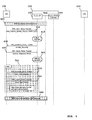
- FIG. 4 there is illustrated a message sequence chart 400 of an example of a method, such as may be implemented by the AP 330 of FIG. 3 , of providing access control for an authorised UE in accordance with an embodiment of the invention.
- the method starts with an establishment of a Radio Resource Control (RRC) connection 405 when the UE 150 attempts to join a cell provided by the AP 330. Having established an RRC connection 405, the UE 150 sends a Location Update Request message 410 to the CN 120, via the RNS 110.
- RRC Radio Resource Control
- a UE 150 will send a Location Update Request message when it enters a communication cell having a Location Area Code (LAC) different to that of the communication cell from which the UE 150 has come, or when the UE 150 first attempts to connect to the network.
- LAC Location Area Code
- the communication cell supported by the AP 330 preferably comprises a locally unique LAC, such that the LAC differs from those of neighbouring/adjacent communication cells from which a UE 150 may move.
- the LAC may relate to one or more further communication cells, if those communication cells are not adjacent to the communication cell supported by the AP 330.
- the Location Update Request message 410 is in a form of a Mobility Management (MM) message, and initiates a location update procedure, allowing a UE 150 to inform the CN 120 whenever it moves from one location area to another.
- MM messages are communicated between a UE 150 and the CN 120, the RNS 110 being substantially transparent and simply relaying the MM messages between the UE 150 and the CN 120.
- the Location Update Request message comprises a Temporary Mobile Subscriber Identity (TMSI) number that has preferably previously been assigned to the UE 150 by the CN 120 and the LAC of the communication cell to which the UE 150 has moved (e.g. the LAC of the AP 330 for the illustrated embodiment).
- TMSI Temporary Mobile Subscriber Identity
- the CN 120 is able to identify the UE 150, and determine to which location area the UE 150 has moved.
- the CN 120 is able to identify a UE 150 from the TMSI of that UE 120.
- the RNS 110 upon receipt of the Location Update Request message 410 from the UE 150 over the air interface (Uu), the RNS 110, or more particularly the AP 330 for the illustrated embodiment, intercepts and stores the message 415, and sends an Identity Request message 420 to the UE 150.
- the UE 150 then responds with an Identity Response message 425 comprising an identification of the UE 150, which for the illustrated embodiment comprises an International Mobile Subscriber Identity (IMSI) number of the UE 150.
- IMSI International Mobile Subscriber Identity
- the AP 330 determines whether the UE 150 should be permitted access to the network using the IMSI, and for the example illustrated in FIG. 4 accepts 430 the IMSI. Having accepted the IMSI, and thus determined that the UE 150 should be permitted access to the network, the AP 330 retrieves the stored Location Update Request message, and forwards it to the CN 120, in message 435 via the AP controller 340.
- Identity Request messages to a UE 150 originate from the CN 120, for example in a form of a MM message. Consequently, in accordance with one embodiment of the invention, the AP 330 may send the Identity Request message 420 as a MM message, which appears to originate from the CN 120. Where this is the case, the Identity Response message 425 from the UE 150 will also be in a form of a MM message, intended for the CN 120.
- uplink messages from the UE 150 to the CN 120 contain a sequence number.
- the CN 120 checks the sequence number in all received messages it receives from a UE 150 and discards the message if the sequence number is incorrect.
- the AP 330 exchanges Identity Request/Response messages with the UE 150, the counter in the UE 150 will have been incremented, as the UE 150 believed it was communicating with the CN 120.
- the AP 330 sends a null message 440 to the CN 120, via the AP controller 340, in addition to forwarding the Location Update Request message.
- the null message 440 is constructed with the same sequence number as that of the Identity Response message 425 received from the UE 150.
- the AP controller 340 receives the Location Update Request message 435, and the null message 440, and establishes a Signalling Connection Control Part (SCCP) connection 445 with the CN 120, and transmits the Location Update Request message 450 and the null message 455 to the CN 120 via, for example, the lu-PS connection.
- SCCP Signalling Connection Control Part
- the CN 120 increments its counter in order to remain synchronised with the UE 150.
- the null message 455 causes the CN 120 to increment its counter a second time, thereby avoiding a loss of synchronisation that would otherwise be caused by the Identity Response message 425.
- the CN 120 identifies the UE 150 based on its TMSI, and then decides whether to allow the UE 150 into the new location area. For the example illustrated in FIG. 4 , the CN 120 accepts 460 the UE 150, and transmits a Location Update Accept message 465 back to the RNS 110.
- the AP controller 340 receives the Location Update Accept message 465, and forwards the message 470 to the AP 330, which then transmits the message 475 over the air interface to the UE 150.
- the CN 120 Having transmitted the Location Update Accept message 465 back to the RNS 110, the CN 120 sends a Connection Release message 480 to the RNS 110.
- the RNS 110 upon receipt of the Connection Release message 480, releases the SCCP connection 485 there between.
- the AP 350 has transmitted the Location Update Accept message 475 to the UE 150, it releases the RRC connection 490 there between.
- FIG. 5 there is illustrated a message sequence chart 500 of an example of a method, such as may be implemented by the RNS 110 of FIG. 3 , of providing access control for an 'unauthorised' UE 150 in accordance with an embodiment of the invention.
- the method starts with the establishment of an RRC connection 405 when the UE 150 attempts to join a communication cell supported by the AP 330. Having established an RRC connection 405, the UE 150 sends a Location Update Request message 410 to the CN 120, via the RNS 110.
- the RNS 110 Upon receipt of the Location Update Request message 410 from the UE 150 over the air-interface, the RNS 110, or more particularly the AP 330 for the illustrated embodiment, intercepts and stores 415 the message, and sends an Identity Request message 420 to the UE 150. The UE 150 then responds with an identity Response message 425 comprising the identification of the UE 150, which for the illustrated embodiment comprises the IMSI of the UE 150.
- the AP 330 determines whether the UE 150 should be permitted access to the network using the IMSI, and for the example illustrated in FIG. 5 , does not accept 505 the IMSI. The AP 330 then effectively rejects communication from the UE 150 in that particular communication cell, by issuing a rejection to the user requests.
- the AP 330 constructs a User Authentication Request message 515 comprising an invalid Authentication Token, and sends this message to the UE 150.
- the UE 150 fails to authenticate the AP 330 due to the invalid Authentication Token, and responds with a User Authentication Reject message 520.
- the AP 330 re-sends the User Authentication Request message 515 comprising the invalid Authentication Token.
- the AP continues sending the User Authentication Request message 515 comprising the invalid Authentication Token upon receipt of a User Authentication Reject message 520 in a loop 510 until, having received three consecutive 'invalid' User Authentication Request messages 515, the UE 150 no longer trusts the AP 330. Thereafter, for example, the UE 150 marks the AP 330 as 'barred', and releases the RRC connection 490. Once the UE 150 has marked the communication cell as barred, the UE 150 will no longer attempt to use the cell to connect to the network.
- a network element upon determining not to permit the UE access to the core network, may release the RRC connection. However, this may result in the UE attempting to establish a new connection with the network element.
- a further alternative may be for the network element to send a 'Location Update Reject' message to the UE. However, this would cause the UE to stop accessing any cell having the Location Area Code as that of the cell provided by the network element.
- the determination by the AP 330 whether the UE 150 should be permitted access to the network provides the advantage of enabling access to a network to be limited on an individual cell basis. Furthermore, by utilising the location update procedure within, for example, a UMTS system, in order to enable the AP 330 to identify when a UE 150 joins the cell, and to request the identity (IMSI) of the UE 150, the mechanism substantially alleviates any need for the UE to be adapted to support the functionality. The same is true for the use of an invalid Authentication Token within a User Authentication Request message, as the use of such a parameter in the manner described effectively causes the UE to leave the cell.
- IMSI identity
- the inventive concept may be implemented for current UEs, and thus substantially alleviates a problem of providing new functionality within UEs, which is known to be time consuming and only commercially viable once a high level of market penetration has been achieved.
- the determination by the AP 330 as to whether the UE 150 should be permitted access to the network is advantageously substantially hidden from the CN 120, and as such requires no supporting functionality to be provided within the CN 120.
- a network element such as the AP 330 described above is arranged to provide access control for UEs attempting to connect to a core network (CN) of a cellular communication network.
- the network element may determine whether to accept a UE or not based on the IMSI for the UE.
- IMSIs for each UE that is permitted to access the CN via the cell of that network element may be stored in a memory element 170 of the network element. In this manner, when a UE attempts to connect to the core network, the network element may compare the IMSI for that UE to those stored in the memory element 170.
- the IMSI for that UE matches one of the IMSIs stored in memory, the IMSI is accepted, and the UE is permitted access to the CN. Conversely, if the IMSI does not match one of the IMSIs stored in memory, the IMSI is not accepted, and the network element may apply the procedure described in FIG. 5 , which results in the UE leaving the communication cell.
- the IMSis for UEs that are not permitted to access the CN via the particular communication cell of the network element may be stored in memory. In this manner, when a UE attempts to connect to the core network, the network element may compare the IMSI for that UE to those stored in memory.
- the IMSI for that UE matches one of the IMSis stored in memory, the IMSI is not accepted, and the network element cause may again employ the method of FIG. 5 to cause the UE to leave that particular communication cell. Otherwise the IMSI is accepted, and the UE is permitted access to the core network.
- the IMSls may be stored within a memory unit of the network element (whether those IMSIs are for UEs permitted to access the core network or not permitted access via the cell for that network element), in any suitable manner.
- the network element may comprise a user interface, or may be operably coupled to a device comprising a user interface such as a personal computer or the like. IMSI may then be stored manually or automatically or provided to the network element in any other manner, say, via the user interface.
- telephone numbers associated with IMSls may be entered into the user interface, and in this way provided to the network element.
- the network element may then request, for example from the core network or other server or host, the IMSI with which the, or each, telephone number is associated.
- the network element may be configured to provide the required access control, and updated as required.
- aspects of the invention may be implemented in any suitable form including hardware, software, firmware or any combination of these.
- the invention may optionally be implemented, at least partly, as computer software running on one or more data processors and/or digital signal processors.
- the elements and components of an embodiment of the invention may be physically, functionally and logically implemented in any suitable way. Indeed, the functionality may be implemented in a single unit, in a plurality of units or as part of other functional units.
- one embodiment of the invention describes an AP for UMTS network, it is envisaged that the inventive concept is not restricted to this embodiment.
- an embodiment can be implemented as a computer-readable storage element having computer readable code stored thereon for programming a computer (e.g., comprising a signal processing device) to perform a method as described and claimed herein.
- Examples of such computer-readable storage elements include, but are not limited to, a hard disk, a CD-ROM, an optical storage device, a magnetic storage device, a ROM (Read Only Memory), a PROM (Programmable Read Only Memory), an EPROM (Erasable Programmable Read Only Memory), an EEPROM (Electrically Erasable Programmable Read Only Memory) and a Flash memory.
Landscapes
- Engineering & Computer Science (AREA)
- Computer Security & Cryptography (AREA)
- Computer Networks & Wireless Communication (AREA)
- Signal Processing (AREA)
- Mobile Radio Communication Systems (AREA)
- Exchange Systems With Centralized Control (AREA)
- Selective Calling Equipment (AREA)
Claims (14)
- Netzwerkelement (130, 330) zur Bereitstellung von Kontrolle des Zugangs zu einem Kernnetz (120) eines zellularen Kommunikationsnetzes (100) für eine drahtlose Kommunikationseinheit (150), die innerhalb einer Kommunikationszelle tätig ist, die durch das Netzwerkelement (130, 330) unterstützt wird, wobei das Netzwerkelement (130, 330) umfasst:einen Empfänger zum Empfangen einer Nachricht (425) von der drahtlosen Kommunikationseinheit (150), die Identitätsinformationen umfasst;Logik (160), die funktionell mit dem Empfänger verbunden ist, zum Bestimmen wenigstens teilweise auf der Basis der empfangenen Identitätsinformationen, ob der mobilen Kommunikationseinheit (150) der Zugang zum Kernnetz (120) gewährt werden soll,wobei das Netzwerkelement dadurch gekennzeichnet ist, dass:die Logik (160) so ausgelegt ist, dass sie als Antwort darauf, dass die Logik (160) bestimmt, dass der drahtlosen Kommunikationseinheit (150) der Zugang zum Kernnetz (120) nicht gewährt wird, eine Nachricht zur Anforderung einer Benutzerauthentifizierung (515) erstellt, die einen ungültigen Authentifizierungstoken umfasst.
- Netzwerkelement (130, 330) nach Anspruch 1, ferner dadurch gekennzeichnet, das das Netzwerkelement (130, 330) einen Sender zum Senden einer Identitätsanforderungsnachricht (420) an die drahtlose Kommunikationseinheit (150) umfasst, und die Nachricht (425), die von der drahtlosen Kommunikationseinheit (150) empfangen wird und Identitätsinformationen umfasst, als Antwort darauf empfangen wird.
- Netzwerkelement (130, 330) nach Anspruch 2, ferner dadurch gekennzeichnet, dass der Empfänger des Netzwerkelements (130, 330) eine Nachricht zur Anforderung einer Aufenthaltsaktualisierung (410) von der drahtlosen Kommunikationseinheit (150) empfängt, die versucht, sich an das Kernnetz (120) anzubinden, und der Sender die Identitätsanforderungsnachricht (420) als Antwort darauf an die drahtlose Kommunikationseinheit (150) sendet.
- Netzwerkelement (130, 330) nach Anspruch 3, ferner dadurch gekennzeichnet, dass die Nachricht zur Anforderung der Aufenthaltsaktualisierung (410) für das Kernnetz (120) bestimmt ist, und die Logik (160) im Netzwerkelement (130, 330) so ausgelegt ist, dass sie die Nachricht zur Anforderung der Aufenthaltsaktualisierung (410) abfängt.
- Netzwerkelement (130, 330) nach Anspruch 4, ferner dadurch gekennzeichnet, dass die Nachricht zur Anforderung der Aufenthaltsaktualisierung (410) in der Form einer Mobilitätsmanagement (MM)-Nachricht ist, die für den Empfang durch das Kernnetz (120) bestimmt ist.
- Netzwerkelement (130, 330) nach einem der Ansprüche 3 bis 5, ferner dadurch gekennzeichnet, dass das Netzwerkelement (130) ein Speicherelement (170) umfasst, das funktionell mit der Logik (160) verbunden und so ausgelegt ist, dass es die Nachricht zur Anforderung der Aufenthaltsaktualisierung (410) speichert, derart dass die Logik (160) die Nachricht zur Anforderung der Aufenthaltsaktualisierung (410) aus dem Speicherelement (170) abruft und die Nachricht (435) an das Kernnetz (120) weiterleitet, wenn die Logik (160) bestimmt, dass der drahtlosen Kommunikationseinheit (150) der Zugang zum Kernnetz (120) gewährt wird.
- Netzwerkelement (130) nach Anspruch 6, ferner dadurch gekennzeichnet, dass die Logik (160) so ausgelegt ist, dass sie zusätzlich zum Weiterleiten der Nachricht (435) an das Kernnetz (120) eine Leernachricht (440) an das Kernnetz (120) sendet.
- Netzwerkelement (130) nach Anspruch 7, ferner dadurch gekennzeichnet, dass die Logik (160) so ausgelegt ist, dass sie die Leernachricht (455) mit einer gleichen Reihenfolgenummer wie jener der Nachricht (425) erstellt, die von der drahtlosen Einheit (150) empfangen wurde und Identitätsinformationen enthielt.
- Netzwerkelement (130) nach einem der vorhergehenden Ansprüche, wobei die Logik (160) die Nachricht zur Anforderung der Benutzerauthentifizierung (515) an die drahtlose Kommunikationseinheit (150) sendet.
- Netzwerkelement (130) nach einem der vorhergehenden Ansprüche, ferner dadurch gekennzeichnet, dass die Logik (160) bei Empfang einer Nachricht zur Abweisung der Benutzerauthentifizierung (520) von der drahtlosen Kommunikationseinheit (150) die Nachricht zur Anforderung der Benutzerauthentifizierung (515), die den ungültigen Authentifizierungstoken umfasst, erneut an die drahtlose Kommunikationseinheit (150) sendet.
- Netzwerkelement (130, 330) nach einem der vorhergehenden Ansprüche, wobei das Netzwerkelement (130) eines von einer Gruppe ist, die besteht aus:einer Zugangspunkt-Basisstation (330);einem Funknetzsubsystem (110), das eine Zugangspunkt-Basisstationssteuerung (340) umfasst, über welche der Zugang zum Kernnetz (120) unterstützt wird;einem Knoten B, der so ausgelegt ist, dass er Kommunikation über ein Netz des universellen Mobilfunk-Telekommunikationssystems (UMS) unterstützt.
- Verfahren zur Bereitstellung von Kontrolle des Zugangs zu einem Kernnetz (120) eines zellularen Kommunikationsnetzes (100) für eine drahtlose Kommunikationseinheit (150), die innerhalb einer Kommunikationszelle tätig ist, die durch das Netzwerkelement (130, 330) unterstützt wird, wobei das Verfahren umfasst:Empfangen einer Nachricht (425) von der drahtlosen Kommunikationseinheit (150), die Identitätsinformationen umfasst;Bestimmen wenigstens teilweise auf der Basis der empfangenen Identitätsinformationen, ob der mobilen Kommunikationseinheit (150) der Zugang zum Kernnetz (120) gewährt werden soll,wobei das Verfahren gekennzeichnet ist durch:Erstellen als Antwort auf die Bestimmung, dass der drahtlosen Kommunikationseinheit (150) der Zugang zum Kernnetz (120) nicht gewährt wird, einer Nachricht zur Anforderung einer Benutzerauthentifizierung (515), die einen ungültigen Authentifizierungstoken umfasst.
- Funknetzsubsystem (110), umfassend ein Netzelement (130, 330) nach einem der Ansprüche 1 bis 11.
- Computerlesbares Speicherelement (170), das computerlesbaren Code zum Programmieren einer Signalverarbeitungslogik (160) darauf gespeichert aufweist, um ein Verfahren zur Bereitstellung von Kontrolle des Zugangs zu einem Kernnetz (120) eines zellularen Kommunikationsnetzes (100) für eine drahtlose Kommunikationseinheit (150) durchzuführen, die innerhalb einer Kommunikationszelle tätig ist, die durch das Netzwerkelement (130, 330) unterstützt wird, wobei das Verfahren die folgenden Schritte umfasst:Empfangen einer Nachricht (425) von der drahtlosen Kommunikationseinheit (150), die Identitätsinformationen umfasst;Bestimmen wenigstens teilweise auf der Basis der empfangenen Identitätsinformationen, ob der mobilen Kommunikationseinheit (150) der Zugang zum Kernnetz (120) gewährt werden soll,wobei der computerlesbare Code gekennzeichnet ist durch:Erstellen als Antwort darauf, dass die Logik (160) bestimmt, dass der drahtlosen Kommunikationseinheit (150) der Zugang zum Kernnetz (120) nicht gewährt wird, einer Nachricht zur Anforderung einer Benutzerauthentifizierung (515), die einen ungültigen Authentifizierungstoken umfasst
Priority Applications (1)
| Application Number | Priority Date | Filing Date | Title |
|---|---|---|---|
| EP11161145.5A EP2352322B1 (de) | 2006-09-29 | 2007-09-28 | Netzwerkelement und verfahren zur bereitstellung von zugangskontrolle für ein zellulares kommunikationsnetz |
Applications Claiming Priority (2)
| Application Number | Priority Date | Filing Date | Title |
|---|---|---|---|
| GBGB0619179.5A GB0619179D0 (en) | 2006-09-29 | 2006-09-29 | Telecommunications access control system and method |
| PCT/EP2007/060338 WO2008037804A1 (en) | 2006-09-29 | 2007-09-28 | Network element and method for providing access control for a cellular communication network |
Related Child Applications (2)
| Application Number | Title | Priority Date | Filing Date |
|---|---|---|---|
| EP11161145.5A Division EP2352322B1 (de) | 2006-09-29 | 2007-09-28 | Netzwerkelement und verfahren zur bereitstellung von zugangskontrolle für ein zellulares kommunikationsnetz |
| EP11161145.5 Division-Into | 2011-04-05 |
Publications (2)
| Publication Number | Publication Date |
|---|---|
| EP2074845A1 EP2074845A1 (de) | 2009-07-01 |
| EP2074845B1 true EP2074845B1 (de) | 2012-04-25 |
Family
ID=37434870
Family Applications (2)
| Application Number | Title | Priority Date | Filing Date |
|---|---|---|---|
| EP07820725A Not-in-force EP2074845B1 (de) | 2006-09-29 | 2007-09-28 | Netzwerkelement und verfahren zur bereitstellung von zugangskontrolle für ein zellulares kommunikationsnetz |
| EP11161145.5A Not-in-force EP2352322B1 (de) | 2006-09-29 | 2007-09-28 | Netzwerkelement und verfahren zur bereitstellung von zugangskontrolle für ein zellulares kommunikationsnetz |
Family Applications After (1)
| Application Number | Title | Priority Date | Filing Date |
|---|---|---|---|
| EP11161145.5A Not-in-force EP2352322B1 (de) | 2006-09-29 | 2007-09-28 | Netzwerkelement und verfahren zur bereitstellung von zugangskontrolle für ein zellulares kommunikationsnetz |
Country Status (6)
| Country | Link |
|---|---|
| US (2) | US8295810B2 (de) |
| EP (2) | EP2074845B1 (de) |
| CN (2) | CN102685744B (de) |
| AT (1) | ATE555621T1 (de) |
| GB (1) | GB0619179D0 (de) |
| WO (1) | WO2008037804A1 (de) |
Families Citing this family (21)
| Publication number | Priority date | Publication date | Assignee | Title |
|---|---|---|---|---|
| US7978062B2 (en) | 2007-08-31 | 2011-07-12 | Cardiac Pacemakers, Inc. | Medical data transport over wireless life critical network |
| US9848058B2 (en) | 2007-08-31 | 2017-12-19 | Cardiac Pacemakers, Inc. | Medical data transport over wireless life critical network employing dynamic communication link mapping |
| GB2458449B (en) * | 2008-03-12 | 2010-04-28 | I P Access Ltd | Method and apparatus for controlling access to a cellular communication network |
| GB2458448A (en) * | 2008-03-12 | 2009-09-23 | I P Access Ltd | Controlling access to a cellular communication network |
| EP2160049A1 (de) * | 2008-08-27 | 2010-03-03 | Nokia Siemens Networks S.p.A. | Über eine Steuerung verwaltetes Verfahren zur Identifizierung von mobilen Endgerätteilnehmern in einem 2G-/3G-Funkzugangsnetzwerk |
| US8812841B2 (en) * | 2009-03-04 | 2014-08-19 | Cardiac Pacemakers, Inc. | Communications hub for use in life critical network |
| US8319631B2 (en) | 2009-03-04 | 2012-11-27 | Cardiac Pacemakers, Inc. | Modular patient portable communicator for use in life critical network |
| US8498664B2 (en) * | 2010-04-04 | 2013-07-30 | Lg Electronics Inc. | Method and apparatus for handling barred cell in wireless communication system |
| KR101637361B1 (ko) * | 2010-04-04 | 2016-07-07 | 엘지전자 주식회사 | 무선 통신 시스템에서 금지셀 취급 방법 및 장치 |
| GB201011170D0 (en) * | 2010-07-02 | 2010-08-18 | Vodafone Plc | Improved femto architecture in telcommunication networks |
| CN101945503B (zh) * | 2010-09-06 | 2014-04-16 | 华为技术有限公司 | 获取用户标识的方法和基站控制器 |
| WO2013025136A1 (en) * | 2011-08-15 | 2013-02-21 | Telefonaktiebolaget L M Ericsson (Publ) | Femtocell base station, method, computer program and computer program product |
| WO2013025138A1 (en) * | 2011-08-15 | 2013-02-21 | Telefonaktiebolaget L M Ericsson (Publ) | Femtocell base station and method thereof |
| CN102438231B (zh) | 2012-01-05 | 2014-04-02 | 华为技术有限公司 | 获取移动台的imei的方法、系统及基站控制器 |
| JP5893760B2 (ja) * | 2012-02-06 | 2016-03-23 | インテル コーポレイション | ユーザ装置によって使用される装置、管理装置、ユーザ装置及び管理方法 |
| JP5887466B2 (ja) * | 2012-06-19 | 2016-03-16 | ノキア テクノロジーズ オサケユイチア | セルラー接続の管理方法及び装置 |
| US8774824B1 (en) * | 2012-08-08 | 2014-07-08 | Sprint Communications Company L.P. | Alleviating and overriding throttled conditions in LTE |
| IN2015DN00577A (de) * | 2012-08-17 | 2015-06-26 | Ericsson Telefon Ab L M | |
| US20140269649A1 (en) * | 2013-03-14 | 2014-09-18 | Novatel Wireless, Inc. | Integrated personal hotspot and car charging adapter device |
| GB2513871B (en) * | 2013-05-08 | 2015-08-19 | Ip Access Ltd | Transmitting a fake handover request to obtain a subscriber identity |
| CN106416305B (zh) * | 2014-01-31 | 2019-11-01 | 华为技术有限公司 | 小区发现设备、网络及方法 |
Family Cites Families (19)
| Publication number | Priority date | Publication date | Assignee | Title |
|---|---|---|---|---|
| US6021333A (en) * | 1993-11-01 | 2000-02-01 | Omnipoint Corporation | Method and system for transferring information within a mobile communication system |
| US5740361A (en) * | 1996-06-03 | 1998-04-14 | Compuserve Incorporated | System for remote pass-phrase authentication |
| US6049877A (en) * | 1997-07-16 | 2000-04-11 | International Business Machines Corporation | Systems, methods and computer program products for authorizing common gateway interface application requests |
| SE513936C2 (sv) | 1997-10-10 | 2000-11-27 | Ericsson Telefon Ab L M | Förfarande och system för att åstadkomma accessportadressering i ett generiskt radioaccessnät |
| GB0004178D0 (en) * | 2000-02-22 | 2000-04-12 | Nokia Networks Oy | Integrity check in a communication system |
| US7072354B1 (en) * | 2001-10-03 | 2006-07-04 | Cisco Technology, Inc. | Token registration of managed devices |
| US7194761B1 (en) * | 2002-01-22 | 2007-03-20 | Cisco Technology, Inc. | Methods and apparatus providing automatic client authentication |
| US7318234B1 (en) * | 2002-02-19 | 2008-01-08 | Microsoft Corporation | Request persistence during session authentication |
| US7155526B2 (en) * | 2002-06-19 | 2006-12-26 | Azaire Networks, Inc. | Method and system for transparently and securely interconnecting a WLAN radio access network into a GPRS/GSM core network |
| WO2004012416A2 (en) * | 2002-07-26 | 2004-02-05 | Green Border Technologies, Inc. | Transparent configuration authentication of networked devices |
| US7669229B2 (en) * | 2002-11-13 | 2010-02-23 | Intel Corporation | Network protecting authentication proxy |
| JP4318520B2 (ja) * | 2003-09-26 | 2009-08-26 | 富士通株式会社 | 端末の状態制御システム |
| KR100824486B1 (ko) * | 2003-12-22 | 2008-04-22 | 인텔 코오퍼레이션 | 독점성이 있는 개인 기지국 |
| JP2005268936A (ja) * | 2004-03-16 | 2005-09-29 | Canon Inc | アクセスポイント、ネットワークシステム及びネットワークサービス提供方法 |
| US7363513B2 (en) * | 2004-04-15 | 2008-04-22 | International Business Machines Corporation | Server denial of service shield |
| US7617524B2 (en) * | 2005-06-14 | 2009-11-10 | Nokia Corporation | Protection against denial-of-service attacks |
| US20070022196A1 (en) * | 2005-06-29 | 2007-01-25 | Subodh Agrawal | Single token multifactor authentication system and method |
| US8543105B2 (en) * | 2006-02-11 | 2013-09-24 | Broadcom Corporation | Using standard cellular handsets with a general access network |
| US8966263B2 (en) * | 2006-03-31 | 2015-02-24 | Alcatel Lucent | System and method of network equipment remote access authentication in a communications network |
-
2006
- 2006-09-29 GB GBGB0619179.5A patent/GB0619179D0/en not_active Ceased
-
2007
- 2007-09-28 US US12/442,985 patent/US8295810B2/en not_active Expired - Fee Related
- 2007-09-28 AT AT07820725T patent/ATE555621T1/de active
- 2007-09-28 WO PCT/EP2007/060338 patent/WO2008037804A1/en not_active Ceased
- 2007-09-28 CN CN201210116263.XA patent/CN102685744B/zh not_active Expired - Fee Related
- 2007-09-28 EP EP07820725A patent/EP2074845B1/de not_active Not-in-force
- 2007-09-28 EP EP11161145.5A patent/EP2352322B1/de not_active Not-in-force
- 2007-09-28 CN CN2007800408856A patent/CN101548559B/zh not_active Expired - Fee Related
-
2012
- 2012-10-17 US US13/653,685 patent/US8571523B2/en not_active Expired - Fee Related
Also Published As
| Publication number | Publication date |
|---|---|
| WO2008037804A1 (en) | 2008-04-03 |
| US8295810B2 (en) | 2012-10-23 |
| US8571523B2 (en) | 2013-10-29 |
| CN101548559B (zh) | 2012-07-04 |
| CN101548559A (zh) | 2009-09-30 |
| EP2074845A1 (de) | 2009-07-01 |
| US20100144316A1 (en) | 2010-06-10 |
| GB0619179D0 (en) | 2006-11-08 |
| EP2352322A1 (de) | 2011-08-03 |
| CN102685744A (zh) | 2012-09-19 |
| ATE555621T1 (de) | 2012-05-15 |
| US20130040608A1 (en) | 2013-02-14 |
| CN102685744B (zh) | 2014-11-12 |
| EP2352322B1 (de) | 2017-11-22 |
Similar Documents
| Publication | Publication Date | Title |
|---|---|---|
| US8295810B2 (en) | Network element and method for providing access control for a cellular communication network | |
| US8811987B2 (en) | Method and arrangement for creation of association between user equipment and an access point | |
| EP2506658B1 (de) | Automatische Basisstationskonfiguration | |
| ES2633107T3 (es) | Dotación de nodos de comunicación | |
| EP2018789B1 (de) | Zugriffskontrolle in einem mobilkommunikationssystem | |
| KR101290186B1 (ko) | 무선 통신을 위한 액세스 관리 | |
| EP1911311B1 (de) | Automatische basisstations-konfiguration | |
| CN101364910B (zh) | 一种自组织网络的系统和方法 | |
| KR20120002611A (ko) | 액세스 단말기 구성 및 액세스 제어 | |
| EP1987628B1 (de) | Verfahren und vorrichtung zur bereitstellung von zugang zu einem eingeschränkten lokalen zugangspunkt für eine begrenzte menge von mobilstationen | |
| JP2019525549A (ja) | セルラネットワークにおけるユーザ装置のリモートプロビジョニングのための方法 | |
| WO2008008199A2 (en) | Access control in a cellular system | |
| KR20100102438A (ko) | 펨토 기지국을 이용한 액세스 제어 방법 및 이를 위한 통신시스템 | |
| KR101680107B1 (ko) | 무선 통신 시스템에서 소스 기지국이 타겟 기지국의 설정 정보를 획득하는 방법과 장치 및 그 시스템 | |
| EP2340653B1 (de) | Minimierung des signalverkehrs für heimatbasisstationen | |
| GB2458102A (en) | Providing authorised access to a cellular communication network (100) via an access point using the transmitted identification of wireless communication units | |
| KR20090108149A (ko) | 펨토셀 시스템의 가입자 접근 제어 방법 | |
| KR20170002332A (ko) | 영역 기반 통신 서비스 제공 시스템 및 방법 | |
| WO2009112323A1 (en) | Method and apparatus for controlling access to a cellular communication network |
Legal Events
| Date | Code | Title | Description |
|---|---|---|---|
| PUAI | Public reference made under article 153(3) epc to a published international application that has entered the european phase |
Free format text: ORIGINAL CODE: 0009012 |
|
| 17P | Request for examination filed |
Effective date: 20090429 |
|
| AK | Designated contracting states |
Kind code of ref document: A1 Designated state(s): AT BE BG CH CY CZ DE DK EE ES FI FR GB GR HU IE IS IT LI LT LU LV MC MT NL PL PT RO SE SI SK TR |
|
| AX | Request for extension of the european patent |
Extension state: AL BA HR MK RS |
|
| RIN1 | Information on inventor provided before grant (corrected) |
Inventor name: NEIL, DAVID Inventor name: MOORE, TREVOR Inventor name: PIERCY, NEIL PHILIP |
|
| 17Q | First examination report despatched |
Effective date: 20110203 |
|
| REG | Reference to a national code |
Ref country code: DE Ref legal event code: R079 Ref document number: 602007022304 Country of ref document: DE Free format text: PREVIOUS MAIN CLASS: H04Q0007300000 Ipc: H04W0012080000 |
|
| GRAP | Despatch of communication of intention to grant a patent |
Free format text: ORIGINAL CODE: EPIDOSNIGR1 |
|
| RIC1 | Information provided on ipc code assigned before grant |
Ipc: H04W 12/08 20090101AFI20111101BHEP |
|
| DAX | Request for extension of the european patent (deleted) | ||
| GRAS | Grant fee paid |
Free format text: ORIGINAL CODE: EPIDOSNIGR3 |
|
| GRAA | (expected) grant |
Free format text: ORIGINAL CODE: 0009210 |
|
| AK | Designated contracting states |
Kind code of ref document: B1 Designated state(s): AT BE BG CH CY CZ DE DK EE ES FI FR GB GR HU IE IS IT LI LT LU LV MC MT NL PL PT RO SE SI SK TR |
|
| REG | Reference to a national code |
Ref country code: GB Ref legal event code: FG4D |
|
| REG | Reference to a national code |
Ref country code: CH Ref legal event code: EP |
|
| REG | Reference to a national code |
Ref country code: AT Ref legal event code: REF Ref document number: 555621 Country of ref document: AT Kind code of ref document: T Effective date: 20120515 |
|
| REG | Reference to a national code |
Ref country code: IE Ref legal event code: FG4D |
|
| REG | Reference to a national code |
Ref country code: DE Ref legal event code: R096 Ref document number: 602007022304 Country of ref document: DE Effective date: 20120621 |
|
| REG | Reference to a national code |
Ref country code: NL Ref legal event code: VDEP Effective date: 20120425 |
|
| REG | Reference to a national code |
Ref country code: AT Ref legal event code: MK05 Ref document number: 555621 Country of ref document: AT Kind code of ref document: T Effective date: 20120425 |
|
| LTIE | Lt: invalidation of european patent or patent extension |
Effective date: 20120425 |
|
| PG25 | Lapsed in a contracting state [announced via postgrant information from national office to epo] |
Ref country code: CY Free format text: LAPSE BECAUSE OF FAILURE TO SUBMIT A TRANSLATION OF THE DESCRIPTION OR TO PAY THE FEE WITHIN THE PRESCRIBED TIME-LIMIT Effective date: 20120425 Ref country code: SE Free format text: LAPSE BECAUSE OF FAILURE TO SUBMIT A TRANSLATION OF THE DESCRIPTION OR TO PAY THE FEE WITHIN THE PRESCRIBED TIME-LIMIT Effective date: 20120425 Ref country code: PL Free format text: LAPSE BECAUSE OF FAILURE TO SUBMIT A TRANSLATION OF THE DESCRIPTION OR TO PAY THE FEE WITHIN THE PRESCRIBED TIME-LIMIT Effective date: 20120425 Ref country code: FI Free format text: LAPSE BECAUSE OF FAILURE TO SUBMIT A TRANSLATION OF THE DESCRIPTION OR TO PAY THE FEE WITHIN THE PRESCRIBED TIME-LIMIT Effective date: 20120425 Ref country code: LT Free format text: LAPSE BECAUSE OF FAILURE TO SUBMIT A TRANSLATION OF THE DESCRIPTION OR TO PAY THE FEE WITHIN THE PRESCRIBED TIME-LIMIT Effective date: 20120425 Ref country code: IS Free format text: LAPSE BECAUSE OF FAILURE TO SUBMIT A TRANSLATION OF THE DESCRIPTION OR TO PAY THE FEE WITHIN THE PRESCRIBED TIME-LIMIT Effective date: 20120825 |
|
| PG25 | Lapsed in a contracting state [announced via postgrant information from national office to epo] |
Ref country code: GR Free format text: LAPSE BECAUSE OF FAILURE TO SUBMIT A TRANSLATION OF THE DESCRIPTION OR TO PAY THE FEE WITHIN THE PRESCRIBED TIME-LIMIT Effective date: 20120726 Ref country code: PT Free format text: LAPSE BECAUSE OF FAILURE TO SUBMIT A TRANSLATION OF THE DESCRIPTION OR TO PAY THE FEE WITHIN THE PRESCRIBED TIME-LIMIT Effective date: 20120827 Ref country code: SI Free format text: LAPSE BECAUSE OF FAILURE TO SUBMIT A TRANSLATION OF THE DESCRIPTION OR TO PAY THE FEE WITHIN THE PRESCRIBED TIME-LIMIT Effective date: 20120425 Ref country code: LV Free format text: LAPSE BECAUSE OF FAILURE TO SUBMIT A TRANSLATION OF THE DESCRIPTION OR TO PAY THE FEE WITHIN THE PRESCRIBED TIME-LIMIT Effective date: 20120425 |
|
| PG25 | Lapsed in a contracting state [announced via postgrant information from national office to epo] |
Ref country code: BE Free format text: LAPSE BECAUSE OF FAILURE TO SUBMIT A TRANSLATION OF THE DESCRIPTION OR TO PAY THE FEE WITHIN THE PRESCRIBED TIME-LIMIT Effective date: 20120425 |
|
| PG25 | Lapsed in a contracting state [announced via postgrant information from national office to epo] |
Ref country code: DK Free format text: LAPSE BECAUSE OF FAILURE TO SUBMIT A TRANSLATION OF THE DESCRIPTION OR TO PAY THE FEE WITHIN THE PRESCRIBED TIME-LIMIT Effective date: 20120425 Ref country code: EE Free format text: LAPSE BECAUSE OF FAILURE TO SUBMIT A TRANSLATION OF THE DESCRIPTION OR TO PAY THE FEE WITHIN THE PRESCRIBED TIME-LIMIT Effective date: 20120425 Ref country code: NL Free format text: LAPSE BECAUSE OF FAILURE TO SUBMIT A TRANSLATION OF THE DESCRIPTION OR TO PAY THE FEE WITHIN THE PRESCRIBED TIME-LIMIT Effective date: 20120425 Ref country code: CZ Free format text: LAPSE BECAUSE OF FAILURE TO SUBMIT A TRANSLATION OF THE DESCRIPTION OR TO PAY THE FEE WITHIN THE PRESCRIBED TIME-LIMIT Effective date: 20120425 Ref country code: RO Free format text: LAPSE BECAUSE OF FAILURE TO SUBMIT A TRANSLATION OF THE DESCRIPTION OR TO PAY THE FEE WITHIN THE PRESCRIBED TIME-LIMIT Effective date: 20120425 Ref country code: AT Free format text: LAPSE BECAUSE OF FAILURE TO SUBMIT A TRANSLATION OF THE DESCRIPTION OR TO PAY THE FEE WITHIN THE PRESCRIBED TIME-LIMIT Effective date: 20120425 Ref country code: SK Free format text: LAPSE BECAUSE OF FAILURE TO SUBMIT A TRANSLATION OF THE DESCRIPTION OR TO PAY THE FEE WITHIN THE PRESCRIBED TIME-LIMIT Effective date: 20120425 |
|
| PG25 | Lapsed in a contracting state [announced via postgrant information from national office to epo] |
Ref country code: IT Free format text: LAPSE BECAUSE OF FAILURE TO SUBMIT A TRANSLATION OF THE DESCRIPTION OR TO PAY THE FEE WITHIN THE PRESCRIBED TIME-LIMIT Effective date: 20120425 |
|
| PLBE | No opposition filed within time limit |
Free format text: ORIGINAL CODE: 0009261 |
|
| STAA | Information on the status of an ep patent application or granted ep patent |
Free format text: STATUS: NO OPPOSITION FILED WITHIN TIME LIMIT |
|
| 26N | No opposition filed |
Effective date: 20130128 |
|
| PG25 | Lapsed in a contracting state [announced via postgrant information from national office to epo] |
Ref country code: MC Free format text: LAPSE BECAUSE OF NON-PAYMENT OF DUE FEES Effective date: 20120930 Ref country code: ES Free format text: LAPSE BECAUSE OF FAILURE TO SUBMIT A TRANSLATION OF THE DESCRIPTION OR TO PAY THE FEE WITHIN THE PRESCRIBED TIME-LIMIT Effective date: 20120805 |
|
| REG | Reference to a national code |
Ref country code: CH Ref legal event code: PL |
|
| REG | Reference to a national code |
Ref country code: DE Ref legal event code: R097 Ref document number: 602007022304 Country of ref document: DE Effective date: 20130128 |
|
| REG | Reference to a national code |
Ref country code: IE Ref legal event code: MM4A |
|
| PG25 | Lapsed in a contracting state [announced via postgrant information from national office to epo] |
Ref country code: LI Free format text: LAPSE BECAUSE OF NON-PAYMENT OF DUE FEES Effective date: 20120930 Ref country code: IE Free format text: LAPSE BECAUSE OF NON-PAYMENT OF DUE FEES Effective date: 20120928 Ref country code: BG Free format text: LAPSE BECAUSE OF FAILURE TO SUBMIT A TRANSLATION OF THE DESCRIPTION OR TO PAY THE FEE WITHIN THE PRESCRIBED TIME-LIMIT Effective date: 20120725 Ref country code: CH Free format text: LAPSE BECAUSE OF NON-PAYMENT OF DUE FEES Effective date: 20120930 |
|
| PG25 | Lapsed in a contracting state [announced via postgrant information from national office to epo] |
Ref country code: MT Free format text: LAPSE BECAUSE OF FAILURE TO SUBMIT A TRANSLATION OF THE DESCRIPTION OR TO PAY THE FEE WITHIN THE PRESCRIBED TIME-LIMIT Effective date: 20120425 |
|
| PG25 | Lapsed in a contracting state [announced via postgrant information from national office to epo] |
Ref country code: TR Free format text: LAPSE BECAUSE OF FAILURE TO SUBMIT A TRANSLATION OF THE DESCRIPTION OR TO PAY THE FEE WITHIN THE PRESCRIBED TIME-LIMIT Effective date: 20120425 |
|
| PG25 | Lapsed in a contracting state [announced via postgrant information from national office to epo] |
Ref country code: LU Free format text: LAPSE BECAUSE OF NON-PAYMENT OF DUE FEES Effective date: 20120928 |
|
| PG25 | Lapsed in a contracting state [announced via postgrant information from national office to epo] |
Ref country code: HU Free format text: LAPSE BECAUSE OF FAILURE TO SUBMIT A TRANSLATION OF THE DESCRIPTION OR TO PAY THE FEE WITHIN THE PRESCRIBED TIME-LIMIT Effective date: 20070928 |
|
| REG | Reference to a national code |
Ref country code: FR Ref legal event code: PLFP Year of fee payment: 10 |
|
| REG | Reference to a national code |
Ref country code: FR Ref legal event code: PLFP Year of fee payment: 11 |
|
| PGFP | Annual fee paid to national office [announced via postgrant information from national office to epo] |
Ref country code: GB Payment date: 20170927 Year of fee payment: 11 Ref country code: FR Payment date: 20170925 Year of fee payment: 11 |
|
| PGFP | Annual fee paid to national office [announced via postgrant information from national office to epo] |
Ref country code: DE Payment date: 20170927 Year of fee payment: 11 |
|
| REG | Reference to a national code |
Ref country code: DE Ref legal event code: R119 Ref document number: 602007022304 Country of ref document: DE |
|
| GBPC | Gb: european patent ceased through non-payment of renewal fee |
Effective date: 20180928 |
|
| PG25 | Lapsed in a contracting state [announced via postgrant information from national office to epo] |
Ref country code: DE Free format text: LAPSE BECAUSE OF NON-PAYMENT OF DUE FEES Effective date: 20190402 |
|
| PG25 | Lapsed in a contracting state [announced via postgrant information from national office to epo] |
Ref country code: FR Free format text: LAPSE BECAUSE OF NON-PAYMENT OF DUE FEES Effective date: 20180930 |
|
| PG25 | Lapsed in a contracting state [announced via postgrant information from national office to epo] |
Ref country code: GB Free format text: LAPSE BECAUSE OF NON-PAYMENT OF DUE FEES Effective date: 20180928 |