EP2075697A1 - Tragbares endgerät, server und verfahren zur realisierung der funktion eines tragbaren endgeräts unter verwendung eines netzwerks - Google Patents
Tragbares endgerät, server und verfahren zur realisierung der funktion eines tragbaren endgeräts unter verwendung eines netzwerks Download PDFInfo
- Publication number
- EP2075697A1 EP2075697A1 EP07830212A EP07830212A EP2075697A1 EP 2075697 A1 EP2075697 A1 EP 2075697A1 EP 07830212 A EP07830212 A EP 07830212A EP 07830212 A EP07830212 A EP 07830212A EP 2075697 A1 EP2075697 A1 EP 2075697A1
- Authority
- EP
- European Patent Office
- Prior art keywords
- portable terminal
- hardware access
- hardware
- software executing
- executing server
- Prior art date
- Legal status (The legal status is an assumption and is not a legal conclusion. Google has not performed a legal analysis and makes no representation as to the accuracy of the status listed.)
- Withdrawn
Links
Images








Classifications
-
- G—PHYSICS
- G06—COMPUTING OR CALCULATING; COUNTING
- G06F—ELECTRIC DIGITAL DATA PROCESSING
- G06F9/00—Arrangements for program control, e.g. control units
- G06F9/06—Arrangements for program control, e.g. control units using stored programs, i.e. using an internal store of processing equipment to receive or retain programs
- G06F9/44—Arrangements for executing specific programs
- G06F9/4401—Bootstrapping
- G06F9/4411—Configuring for operating with peripheral devices; Loading of device drivers
-
- G—PHYSICS
- G06—COMPUTING OR CALCULATING; COUNTING
- G06F—ELECTRIC DIGITAL DATA PROCESSING
- G06F9/00—Arrangements for program control, e.g. control units
- G06F9/06—Arrangements for program control, e.g. control units using stored programs, i.e. using an internal store of processing equipment to receive or retain programs
- G06F9/46—Multiprogramming arrangements
- G06F9/54—Interprogram communication
-
- G—PHYSICS
- G06—COMPUTING OR CALCULATING; COUNTING
- G06F—ELECTRIC DIGITAL DATA PROCESSING
- G06F8/00—Arrangements for software engineering
- G06F8/60—Software deployment
-
- Y—GENERAL TAGGING OF NEW TECHNOLOGICAL DEVELOPMENTS; GENERAL TAGGING OF CROSS-SECTIONAL TECHNOLOGIES SPANNING OVER SEVERAL SECTIONS OF THE IPC; TECHNICAL SUBJECTS COVERED BY FORMER USPC CROSS-REFERENCE ART COLLECTIONS [XRACs] AND DIGESTS
- Y02—TECHNOLOGIES OR APPLICATIONS FOR MITIGATION OR ADAPTATION AGAINST CLIMATE CHANGE
- Y02D—CLIMATE CHANGE MITIGATION TECHNOLOGIES IN INFORMATION AND COMMUNICATION TECHNOLOGIES [ICT], I.E. INFORMATION AND COMMUNICATION TECHNOLOGIES AIMING AT THE REDUCTION OF THEIR OWN ENERGY USE
- Y02D10/00—Energy efficient computing, e.g. low power processors, power management or thermal management
Definitions
- the present invention relates to a method for realizing function of portable (mobile) terminal, system implementing the method, portable terminal, server, and various devices; and particularly to a method for realizing a function of a portable terminal using the resources of a server on a mobile network, system implementing the method, portable terminal, server, and various devices.
- portable terminals such as mobile phone terminals and PDAs (Personal Digital Assistant) are able to download applications from a server, in addition to preinstalled applications. Further, as the speed of radio networks increases and the functions of portable terminals are improved and diversified, users are demanding an increasing number of more advanced functions.
- Patent Document 1 discloses a remote controlled printing system in which a server on a communication network vicariously performs high-load processing (print object data conversion processing) and a portable terminal receives only processing results.
- Patent Document 2 disclose a technology called nomadic computing in which virtual application environment control units and virtual input/output control units of two computers are virtually connected and the user environment of one of the computers is realized by the other computer.
- Patent Documents 1 and 2 are incorporated herein by reference thereto.
- the following analysis is given by the present invention.
- the functions of installed applications are improved and the processing ability of the CPU and memory are enhanced.
- the improvement in the functions of applications and the enhancement of the CPU and memory generally increase the cost, size, and power consumption of a device, it is increasingly getting difficult to reduce the cost, size, and power consumption on the whole.
- the functional improvement will increase the size of an application, and as a result, not only development costs, but also expenses and labor for bug fixes and such will increase as well.
- Patent Document 1 it is possible to obtain a high-load processing result using few resources, however, the method can only be effective when a particular processing is performed. Further, the processing ability and memory resources of a portable terminal cannot be decreased and the method does not contribute to the reduction of the cost, size, and power consumption of the portable terminal itself.
- Patent Document 2 it is possible to create a user environment suitable for the ability (including the applications) of each individual portable terminal, however, when this technology is applied to portable terminals, fluctuations in the transmission speed and communication quality in a wireless (radio) section that connects the portable terminals may cause delays. As a result, the operation of the portable terminal may delay or freeze, or the entire operation may become unnatural. Therefore, the user demand for advanced functions cannot be satisfied.
- the present invention seeks to solve the problems described above, and it is an object of the present invention to provide a method for realizing a function of a portable (mobile) terminal, capable of enriching functions without increasing the processing ability and memory resources of the portable terminal and of reducing cost, size, and power consumption, portable terminal, server, client-server system, and various devices, which will be controlled objects, comprising a function that realizes (adds) a new function by the same method.
- a portable (mobile) terminal capable of accessing to a software executing server having a hardware access layer in which the hardware of a predetermined portable terminal is virtualized, wherein the server executes a virtual portable terminal program realizing a predetermined function of a portable terminal in response to a request from the portable terminal.
- the portable terminal comprises: a terminal-end hardware access layer that receives a hardware access instruction issued by a virtual portable terminal program executed by the software executing server to the hardware access layer in a hardware access command capable of containing a plurality of hardware access instructions.
- a software executing server having a hardware access layer in which the hardware of a predetermined portable terminal is virtualized, wherein the server executes a virtual portable terminal program realizing a predetermined function of a portable terminal in response to a request from the portable terminal; wherein the server executes the virtual portable terminal program in response to a request from a portable terminal comprising a terminal-end hardware access layer that receives a hardware access command containing a plurality of hardware access instructions; and the server transmits a hardware access instruction, issued by the virtual portable terminal program for the hardware access layer, as the hardware access command to the terminal-end hardware access layer of the portable terminal.
- a client-server system formed of the portable terminal and the software executing server described above, and an attachment device and a network device (external device) controlled by the portable terminal and the software executing server described above.
- the method for realizing (adding) a function of a portable terminal comprises: having the portable terminal access to the software executing server and request starting of a virtual portable terminal program realizing a desired function; having the virtual portable terminal program executed by the software executing server issue a hardware access instruction to the hardware access layer after the software executing server has started the virtual portable terminal program requested by the portable terminal; having the software executing server transmit the hardware access instruction as a hardware access command capable of containing a plurality of hardware access instructions to the portable terminal; and having the portable terminal operate hardware according to a hardware access instruction contained in the hardware access command.
- any function can be provided from an external software executing server, which is not as limited as the portable terminal in terms of processing ability and memory resources, and that a hardware access method not susceptible to delays is employed.
- a portable terminal capable of accessing to a software executing server, having a hardware access layer in which the hardware of a predetermined portable terminal is virtualized; the portable terminal executing a virtual portable terminal program realizing a predetermined function of the portable terminal in response to a request from the portable terminal; and comprising a terminal-end hardware access layer that receives a hardware access instruction issued by the virtual portable terminal program executed by the software executing server to the hardware access layer in a hardware access command capable of containing a plurality of the hardware access instructions.
- the hardware access command is further capable of containing a hardware access interval that prescribes the execution interval of the hardware access instructions and interrupt hook information that prescribes which hardware access instruction should be called up when an interrupt occurs.
- the portable terminal starts an substitute program on the portable terminal when it cannot access to the software executing server, and as soon as the access to the software executing server has been restored, the portable terminal ends the substitute program on the portable terminal and requests the software executing server to start the virtual portable terminal program.
- the portable terminal comprises: means for notifying the software executing server of an attachment device connected to the portable terminal and for having the hardware access layer of the software executing server updated, receives a hardware access command for the attachment device via the updated hardware access layer, and controls the attachment device.
- the portable terminal is capable of controlling an external device connected to the software executing server by having a hardware access instruction for the external device issued via a virtual portable terminal program executed on the software executing server.
- FIG. 1 is a drawing showing a schematic configuration of the preferred mode of the present invention.
- FIG. 1 shows a portable terminal 10 having access means to a mobile network, an attachment device 20 that can be connected to the portable terminal 10, a mobile network, and a software executing server 30 connected to the mobile network.
- FIG. 2 is a drawing showing the attachment device 20, the portable terminal 10, and the software executing server 30 in a hierarchical model.
- the attachment device 20 is constituted by hardware 210 and a hardware access layer portion 201 that accesses to the hardware 210.
- the portable terminal 10 is constituted by applications for wireless (radio) communication control such as an authentication application 101 and a cell search application 102, a simple operating system (OS) 103, a radio communication modem portion 104, and hardware access layer portions (device and communication portion) 105 and 106 for accessing to hardware (communication portion, key, LCD (Liquid Crystal Display), etc.) 110 and 111.
- applications for wireless (radio) communication control such as an authentication application 101 and a cell search application 102, a simple operating system (OS) 103, a radio communication modem portion 104, and hardware access layer portions (device and communication portion) 105 and 106 for accessing to hardware (communication portion, key, LCD (Liquid Crystal Display), etc.) 110 and 111.
- the software executing server 30 comprises an application 305 for realizing a virtual portable terminal, middleware 304, an OS 303 for the portable terminal, a device driver portion 302, and a hardware access layer portion 301 in which the hardware of the portable terminal 10 is virtualized.
- the portable terminal 10 does not have any application, middleware, OS, or device driver, and uses what is provided in the software executing server 30.
- the device driver portion 302 issues a hardware access instruction to the hardware access layer portion 301.
- the hardware access layer portion 301 puts together a plurality of the hardware access instructions received from the device driver portion 302 and constructs a hardware access command.
- the hardware access layer portion 301 of the software executing server 30 and the hardware access layer portion 105 of the portable terminal 10 communicate via the mobile network using a hardware access protocol, and transmit and receive the constructed hardware access command.
- the hardware access layer portion 105 of the portable terminal 10 analyzes the hardware access command received from the hardware access layer portion 301 of the software executing server 30 via the radio communication modem portion 104, extracts the hardware access instructions, and successively performs hardware accesses.
- the hardware access layer portion 301 of the software executing server 30 transmits a hardware access command for the attachment device 20 connected to the portable terminal 10
- the hardware access layer portion 105 of the portable terminal 10 transfers the hardware access command to the hardware access layer portion 201 of the attachment device 20 connected to the portable terminal 10.
- the hardware access layer portion 201 of the attachment device 20 analyzes the hardware access command received, constructs hardware access instructions, and successively performs hardware accesses.
- FIG. 3 is a block diagram showing the software structure of the portable terminal 10 relating to the present exemplary embodiment.
- the applications for radio communication control such as the authentication application 101 and the cell search application 102 are connected to the radio communication modem portion 104 and the hardware access layer portion (device) 106 so that the hardware access instructions and communication data can be transmitted/received.
- the authentication application 101 performs authentication processing with the software executing server 30.
- the cell search application 102 searches a cell in which radio communication is possible when no radio communication connection is established.
- the radio communication modem portion 104 has a function of processing a communication protocol between the portable terminal and the mobile network. Further, the radio communication modem portion 104 controls the radio communication hardware (110 in FIG. 2 ) via the hardware access layer portion (communication portion) 105.
- the hardware access layer portion (communication portion) 105 provides the high-order blocks with access means to the radio communication hardware (110 in FIG. 2 ).
- the hardware access layer portion (device) 106 provides high-order blocks with access means to the hardware of the portable terminal not pertaining to radio communication, such as the keys and the LCD. Further, the hardware access layer portion (device) 106 has functions of communicating with the hardware access layer portion (virtual device) 301 of the software executing server 30 using a hardware access protocol and of performing processing of the hardware access command.
- the attachment connecting portion 107 has a function of transmitting/receiving the hardware access command to/from the attachment device 20.
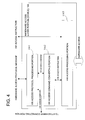
- FIG. 4 is a block diagram showing a detailed configuration of the hardware access layer portion (device) 106 of the portable terminal 10.
- the hardware access layer portion (device) 106 of the portable terminal 10 is constituted by a HW (hardware) access protocol processing portion 1061 that communicates with the hardware access layer portion (virtual device) 301 of the software executing server 30 using a hardware access protocol, a HW access command converting portion 1062, and a hardware access processing portion 1063 that controls each piece of hardware.
- HW hardware
- the HW access protocol processing portion 1061 is connected to the HW access command converting portion 1062 and transmits the hardware access command included in a hardware access protocol message.
- the HW access command converting portion 1062 has functions of analyzing the hardware access command received from the HW access protocol processing portion 1061 and of constructing hardware access instructions.
- the hardware access processing portion 1063 has a function of performing hardware access based on the hardware access instructions received from the HW access command converting portion 1062.
- FIG. 5 is a block diagram showing the software structure (low-order blocks) of the software executing server 30.
- the hardware access layer portion (virtual device) 301 functions as access means to the hardware for the device driver portion 302; the hardware access layer portion (virtual device) 301 constructs a hardware access command from the hardware access instructions received from the device driver portion 302 and transmits the result in the form of the hardware access protocol message, described later.
- the device driver portion 302 controls the devices on behalf of the high-order blocks: the application, the middleware, and the OS.
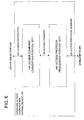
- FIG. 6 is a block diagram showing a detailed configuration of the hardware access layer portion (virtual device) 301 of the software executing server 30.
- the hardware access layer portion (virtual device) 301 of the software executing server 30 is constituted by an HW access command converting portion 3011 that receives the hardware access instructions from the device driver portion 302, and an HW access protocol processing portion 3012 that communicates with the hardware access layer portion (device) 106 of the portable terminal 10.
- the HW access command converting portion 3011 constructs a hardware access command from the hardware access instructions and transmits it to the HW access protocol processing portion 3012.
- the HW access protocol processing portion 3012 communicates with the hardware access layer portion (device) 106 of the portable terminal 10 using a hardware access protocol.
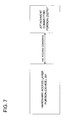
- FIG. 7 is a block diagram showing the software structure of the attachment device 20.
- the hardware access layer portion (device) 201 of the attachment device 20 is connected to an attachment connecting portion 202 and receives the hardware access command sent from the portable terminal 10.
- FIG. 8 is a block diagram showing a detailed configuration of the hardware access layer portion (device) 201 of the attachment device 20.
- the hardware access layer portion (device) 201 of the attachment device 20 is connected to the attachment connecting portion 202, and is constituted by an HW access command converting portion 2011 that receives the hardware access command and a hardware access processing portion 2012 that controls the attachment device 20.
- the HW access command converting portion 2011 constructs the hardware access instructions from the hardware access command and transmits them to the hardware access processing portion 2012.
- the hardware access processing portion 2012 performs hardware access based on the hardware access instructions received from the HW access command converting portion 2011.
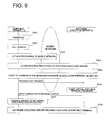
- FIG. 9 is a flowchart showing steps from turning on the portable terminal to completing the control-switching, i.e., a series of the virtual portable terminal programs has been started.
- step S901 when the user turns on the portable terminal 10 (step S901), the cell search application 102 of the portable terminal 10 is started and a cell search request is made to the radio communication modem portion 104.
- the radio communication modem portion 104 searches for a nearest cell (step S902).
- the radio communication modem portion 104 When a cell is found, the radio communication modem portion 104 performs attach processing to the mobile network and registers the portable terminal 10 to the mobile network (step S903).
- the authentication application 101 is started, and the authentication processing of the portable terminal 10 for the software executing server 30 is performed using the radio communication modem portion 104 via the mobile network (step S904).
- the hardware access layer portion (device) 106 of the portable terminal 10 starts to communicate with the hardware access layer portion (virtual device) 301 of the software executing server 30 using the radio communication modem portion 104 via the mobile network (step S905).
- the hardware access layer portion (device) 106 of the portable terminal 10 transmits a request to the hardware access layer portion (virtual device) 301 of the software executing server 30 to start a group of the virtual portable terminal programs for realizing the virtual portable terminal.
- the hardware access layer portion (virtual device) 301 of the software executing server 30 transmits a notification that the startup is completed to the hardware access layer portion (device) 106 of the portable terminal.
- the hardware access layer portion (device) 106 of the portable terminal which has received the startup completion notification, hands over (i.e., switches) the control of the portable terminal 10 to the virtual portable terminal programs of the software executing server 30 (step S907).
- the functions of the portable terminal 10 are provided by the virtual portable terminal programs of the software executing server 30 (step S908).
- the portable terminal 10 switches its control to the virtual portable terminal programs of the software executing server 30 as long as the portable terminal can connect to the software executing server.
- the portable terminal does not need advanced processing ability or memory resources, and cost and power consumption can be reduced.
- FIG. 10 is a flowchart showing the operation of the portable terminal when the software executing server 30 is no longer able to provide the terminal functions because the portable terminal has moved (step S1002) while in a state in which the software executing server 30 is providing the terminal functions to the portable terminal (step S1001).
- the portable terminal 10 shifts to a wait state in which the substitute program such as the simple OS 103 installed on the portable terminal takes control of the device (step S1003) when the software executing server 30 is no longer able to provide the terminal functions to the portable terminal.
- the substitute program such as the simple OS 103 installed on the portable terminal takes control of the device (step S1003) when the software executing server 30 is no longer able to provide the terminal functions to the portable terminal.
- step S1004 the search for the nearest cell (neighboring) is performed by the cell search application at a predetermined time interval.
- step S1005 the attach processing to the mobile network is performed (step S1006).
- step S1007 After going through the authentication processing with the software executing server 30 (step S1007), the start of the communication between the hardware access layers (step S1008), the resuming of the virtual portable terminal program control (step S1009), and the switch of the control of the portable terminal 10 (step S1010), the portable terminal returns to the wait (stand-by) state controlled by the software executing server 30.
- FIG. 11 is a drawing showing the structure of the hardware access protocol message transmitted between the portable terminal 10 and the software executing server 30.
- the hardware access protocol message is formed of a header portion and a hardware access command portion.
- the hardware access command portion is formed of a header portion and a hardware access instruction portion.
- the hardware access instruction portion is able to contain the hardware access instruction such as write/read to/from a hardware address, the hardware access interval for taking time interval between hardware accesses, and the interrupt hook for having the software hook an interrupt from the hardware.
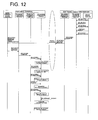
- FIG. 12 is a flowchart showing how the hardware of the portable terminal 10 is controlled by the hardware access instructions issued by the software executing server 30 of the first exemplary embodiment of the present invention.
- the device driver portion 302 issues the hardware access instruction, the hardware access interval, and the interrupt hook to the hardware access layer portion (virtual device) 301 based on the contents of a device control request received from the high-order blocks.
- the HW access command converting portion 3011 receives the hardware access instruction, the hardware access interval, and the interrupt hook.
- the HW access command converting portion 3011 packs the hardware access instruction, the hardware access interval, and the interrupt hook into a hardware access command, to generate the hardware access command, and transmits it to the HW access protocol processing portion 3012.
- the HW access protocol processing portion 3012 transmits the hardware access command to the portable terminal 10 using the hardware access protocol via the mobile network.
- the radio communication modem portion 104 of the portable terminal which has received the hardware access protocol message from the mobile network via radio communication, transmits the hardware access protocol message received to the hardware access layer portion (device) 106.
- the HW access protocol processing portion 1061 receives the hardware access protocol message.
- the HW access protocol processing portion 1061 extracts the hardware access command from the hardware access protocol message received and transmits it to the HW access command converting portion 1062.
- the HW access command converting portion 1062 analyzes the hardware access command, acquires the hardware access instruction, the hardware access interval, and the interrupt hook, and successively transmits them to the hardware access processing portion 1063.
- the hardware access processing portion 1063 performs hardware access according to the hardware access instruction, the hardware access interval, and the interrupt hook that it has received.
- first hardware access instruction #1 is executed, and then hardware access instruction #2 is executed after a wait time period prescribed in hardware access interval #1, following the order in which these instructions are contained in the hardware access command.
- interrupt hook #1 is registered and hardware access instruction #3 is held. Then, when a hardware interrupt occurs, the interrupt is hooked and the hardware access instruction #3 is executed.
- the software executing server 30, operating as the virtual portable terminal controls the hardware of the portable terminal via the mobile network.
- the fact that the hardware access instruction, the hardware access interval, and the interrupt hook are transmitted together in the form of the hardware access command/the hardware access protocol message shown in FIG. 11 solves the delay of hardware access caused by the delay in the mobile network.
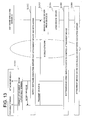
- FIG. 13 is a drawing showing a series of operations performed when the attachment device 20 is connected to the portable terminal 10.
- the attachment device 20 reports an device ID (step S1301).
- the portable terminal 10 notifies the software executing server 30 that the attachment device 20 is added and transmits the device ID (step S1302) to the server.
- the software executing server 30 searches for a device driver corresponding to the device ID (step S1303), loads it, and adds it to the software environment of the portable terminal (step S1304).
- step S1305 the software executing server 30 starts to control the attachment device 20 (step S1305), and from this point on, it is possible for the virtual portable terminal program to control the attachment device 20 (step S1306).
- FIG. 14 is a flowchart showing how the attachment device 20 is controlled by the hardware access instructions issued by the software executing server 30, which now controls the attachment device 20 as described above.
- the device driver portion 302 when the need to control the attachment device 20 occurs while the software executing server 30 is executing a virtual portable terminal program, the device driver portion 302 successively issues the hardware access instruction, the hardware access interval, and the interrupt hook to the hardware access layer portion (virtual device) 301 based on the contents of a device control request received from the high-order blocks.
- the HW access command converting portion 3011 receives the hardware access instruction, the hardware access interval, and the interrupt hook.
- the HW access command converting portion 3011 packs the hardware access instruction, the hardware access interval, and the interrupt hook into a hardware access command, to generate the hardware access command, and transmits it to the HW access protocol processing portion 3012.
- the HW access protocol processing portion 3012 transmits the hardware access command to the portable terminal 10 using the hardware access protocol via the mobile network.
- the radio communication modem portion 104 of the portable terminal which has received the hardware access protocol message from the mobile network via radio communication, transmits the hardware access protocol message received to the hardware access layer portion (device) 106.
- the HW access protocol processing portion 1061 receives the hardware access protocol message.
- the HW access protocol processing portion 1061 extracts the hardware access command from the hardware access protocol message received and transmits it to the attachment connecting portion 107/202.
- the HW access command converting portion 2011 of the attachment device 20 which has received the hardware access command via the attachment connecting portion 107/202, analyzes the hardware access command, acquires the hardware access instruction, the hardware access interval, and the interrupt hook, and successively transmits them to the hardware access processing portion 2012.
- the hardware access processing portion 2012 of the attachment device 20 performs hardware access according to the hardware access instruction, the hardware access interval, and the interrupt hook that it has received.
- the software executing server 30, operating as the virtual portable terminal controls the hardware of the attachment device 20 connected to the portable terminal 10.
- the device driver for the attachment device 20 does not have to be installed on the portable terminal 10, and the driver provided on the software executing server 30 can be used.
- the portable terminal 10 can utilize the resources of the software executing server 30, which provides the functions of the portable terminal, according to its needs. Further, as a result, it is possible to reduce the processing ability and memory resources required for the portable terminal 10. Furthermore, if the user environment of each user is registered on the software executing server 30 and can be read at the time of the authentication processing, it will be easy to maintain the previous user environment when the user of the portable terminal 10 is changed or the portable terminal 10 is replaced.
- the configuration described above has another advantage that wireless (radio) communication resources are not needed when data on a website on the Internet is downloaded to the software executing server or other storages on the network. For instance, without paying for radio packet, audio and video data can be collected. Radio resources are required when the audio and video data are played back on the portable terminal 10, however, it is enough that a buffer for holding necessary commands and data be provided on the portable terminal 10.
- FIG. 15 is a drawing for explaining a schematic configuration and the operation of the second exemplary embodiment of the present invention.
- FIG. 15 shows the portable terminal 10 having access means to a mobile network, the mobile network, the software executing server 30 connected to the mobile network, another network connected to the mobile network, and external devices A41 and B42 connected to the network.
- the external devices A41 and B42 are any devices having an interface capable of receiving the hardware access protocol transmitted by the software executing server 30. For instance, various network-ready devices such as cameras set up at homes or offices, biological information input devices, and electric household appliances having a communication function may be used. A method for controlling these external devices A41 and B42 from the portable terminal 10 via the software executing server 30 will be described.
- FIG. 16 is a block diagram showing the software structure of the external device A41 (the external device B42 has the same structure).
- the external device A41 comprises a communication portion 401, a hardware access layer portion (communication portion) 402, and a hardware access layer portion (device) 403.
- the communication portion 401 provides functions of connecting to the network and of communicating with it for the external device.
- the hardware access layer portion (communication portion) 402 provides access means to communication-related hardware.
- the hardware access layer portion (device) 403 provides access means to non-communication-related hardware for the high-order blocks. Further, the hardware access layer portion (device) 403 has the function of communicating with the hardware access layer portion (virtual device) 301 of the software executing server 30 using the hardware access protocol, and the function of executing the hardware access command.
- the internal structure of the hardware access layer portion (device) 403 is the same as that of the hardware access layer portion (device) 106 of the portable terminal 10 (refer to FIG. 4 ).
- the device driver portion 302 receives a device control request from the high-order blocks.
- the device driver portion 302 issues the hardware access instruction and the others to the hardware access layer portion (virtual device) 301 based on the contents of the device control request, as in the first exemplary embodiment.
- the HW access command converting portion 3011 receives the hardware access instruction and the others.
- the HW access command converting portion 3011 packs the hardware access instruction and the others into a hardware access command, to generate the hardware access command, and transmits it to the HW access protocol processing portion 3012.
- the HW access protocol processing portion 3012 transmits the hardware access command to the external device A41 (or the external device B42) using the hardware access protocol via the external network.
- the communication portion 401 receives the hardware access protocol message via the network.
- the communication portion 401 transmits the hardware access protocol message received to the hardware access layer portion (device) 403.
- the operation in the hardware access layer portion (device) 403 is the same as that of the attachment device in the first exemplary embodiment (refer to FIG. 14 ).
- the software executing server 30, operating as the virtual portable terminal is able to control the external device A41 (or the external device B42) on another network. Further, since the processing is completed by the software executing server 30 and the external device A41 (or the external device B42) and only the results of it is sent to the portable terminal 10 in the present configuration, it becomes easy to perform processing too large for the portable terminal 10 such as authentication processing of an image supplied by the external device A41 or of biological information.
- the fact that the external device A41 (or the external device B42), unconnected to the portable terminal 10, can be directly controlled by the portable terminal 10 via the software executing server 30 means that only the hardware access layers need to be provided for the external device A41 (or the external device B42) and that it is not necessary to provide a dedicated user interface and display device for the external device.
- the portable terminal 10 comprises the non-communication-related hardware 111 and hardware access layer portion 106 (refer to FIG. 2 ), however, the portable terminal 10 only needs to have the functions of connecting to the software executing server 30 and of receiving the hardware access command.
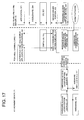
- FIG. 17 it is possible to employ a configuration in which a card-shaped portable terminal module (portable terminal card) 11 and an attachment device 21, in which necessary keys, an LCD, and memory are disposed, are connected. In this configuration, the processing ability and memory resources of the portable terminal module (portable terminal card) 11 can be minimized and cost, size, and power consumption can be further reduced.
Landscapes
- Engineering & Computer Science (AREA)
- Software Systems (AREA)
- Theoretical Computer Science (AREA)
- Physics & Mathematics (AREA)
- General Engineering & Computer Science (AREA)
- General Physics & Mathematics (AREA)
- Computer Security & Cryptography (AREA)
- Stored Programmes (AREA)
- Telephonic Communication Services (AREA)
- Mobile Radio Communication Systems (AREA)
- Telephone Function (AREA)
Applications Claiming Priority (2)
| Application Number | Priority Date | Filing Date | Title |
|---|---|---|---|
| JP2006286552 | 2006-10-20 | ||
| PCT/JP2007/070478 WO2008047919A1 (fr) | 2006-10-20 | 2007-10-19 | Terminal portable, serveur, et procédé de réalisation de fonction du terminal portable utilisant un réseau |
Publications (2)
| Publication Number | Publication Date |
|---|---|
| EP2075697A1 true EP2075697A1 (de) | 2009-07-01 |
| EP2075697A4 EP2075697A4 (de) | 2014-07-02 |
Family
ID=39314129
Family Applications (1)
| Application Number | Title | Priority Date | Filing Date |
|---|---|---|---|
| EP07830212.2A Withdrawn EP2075697A4 (de) | 2006-10-20 | 2007-10-19 | Tragbares endgerät, server und verfahren zur realisierung der funktion eines tragbaren endgeräts unter verwendung eines netzwerks |
Country Status (5)
| Country | Link |
|---|---|
| US (1) | US8166105B2 (de) |
| EP (1) | EP2075697A4 (de) |
| JP (1) | JPWO2008047919A1 (de) |
| CN (1) | CN101529384B (de) |
| WO (1) | WO2008047919A1 (de) |
Cited By (1)
| Publication number | Priority date | Publication date | Assignee | Title |
|---|---|---|---|---|
| EP2741474A1 (de) * | 2008-10-06 | 2014-06-11 | Facebook, Inc. | Vorrichtung, System und Verfahren zur Bereitstellung von verteilten Online-Diensten |
Families Citing this family (3)
| Publication number | Priority date | Publication date | Assignee | Title |
|---|---|---|---|---|
| KR20100132302A (ko) * | 2009-06-09 | 2010-12-17 | 엘지전자 주식회사 | 휴대 단말기, 호스트 장치를 통해 상기 휴대 단말기를 사용하기 위한 제어방법 |
| JP6106955B2 (ja) * | 2012-05-30 | 2017-04-05 | 日本電気株式会社 | 情報処理装置、および携帯通信端末、それらの制御方法ならびに制御プログラム |
| US9986040B2 (en) | 2015-07-21 | 2018-05-29 | Amadeus S.A.S. | Communications management system with a separate peripherals server |
Family Cites Families (17)
| Publication number | Priority date | Publication date | Assignee | Title |
|---|---|---|---|---|
| JPH113301A (ja) * | 1997-06-12 | 1999-01-06 | Canon Inc | 端末装置及び端末装置の動作制御方法 |
| JPH11175468A (ja) | 1997-12-12 | 1999-07-02 | Hitachi Ltd | ノマディックコンピューティングシステム |
| US6701368B1 (en) * | 1999-04-26 | 2004-03-02 | Cisco Technology, Inc. | Providing a stream of data to a browser to update properties on a page |
| GB2365599A (en) * | 2000-03-27 | 2002-02-20 | Ibm | System method and program for enabling communication between a client and a device with a remote server hosted device driver |
| US8463912B2 (en) * | 2000-05-23 | 2013-06-11 | Media Farm, Inc. | Remote displays in mobile communication networks |
| WO2002046905A1 (en) | 2000-12-07 | 2002-06-13 | Brother Kogyo Kabushiki Kaisha | Remote controlled printing server, printing system, printing method, record medium, and program |
| JP2003058439A (ja) * | 2001-08-15 | 2003-02-28 | Toshiba Corp | 一方向リクエスト・レスポンス型通信における擬似非同期双方向通信システム、通信方法、サーバ装置、クライアント装置およびクライアントプログラム |
| US7320126B2 (en) * | 2001-11-06 | 2008-01-15 | Sandisk Corporation | Implementation of in system programming to update firmware on memory cards |
| JP2004078849A (ja) * | 2002-08-22 | 2004-03-11 | Toshiba Tec Corp | クライアント端末装置 |
| US20040054757A1 (en) * | 2002-09-14 | 2004-03-18 | Akinobu Ueda | System for remote control of computer resources from embedded handheld devices |
| US7925771B1 (en) * | 2003-03-03 | 2011-04-12 | Realnetworks, Inc. | System and method for uninterrupted streaming |
| GB2400928A (en) * | 2003-04-22 | 2004-10-27 | Sharp Kk | Distributed periperal device control system |
| US7685253B1 (en) * | 2003-10-28 | 2010-03-23 | Sun Microsystems, Inc. | System and method for disconnected operation of thin-client applications |
| US7685257B2 (en) * | 2003-11-10 | 2010-03-23 | Sun Microsystems, Inc. | Portable thin client for the enterprise workspace |
| JP2008523743A (ja) * | 2004-12-14 | 2008-07-03 | バイエリッシェ モートーレン ウエルケ アクチエンゲゼルシャフト | 車両内の少なくとも一つのモバイル端末の、アップデート装置を利用した利用システム |
| JP4227131B2 (ja) * | 2005-09-30 | 2009-02-18 | 株式会社東芝 | シンクライアントサーバシステム |
| US20080126649A1 (en) * | 2006-09-15 | 2008-05-29 | George Madathilparambil George | Low latency mechanism for asynchronously running a code segment on a processor in a remote computer by transmitting a special network packet or datalink frame that causes a hardware interrupt |
-
2007
- 2007-10-19 EP EP07830212.2A patent/EP2075697A4/de not_active Withdrawn
- 2007-10-19 WO PCT/JP2007/070478 patent/WO2008047919A1/ja not_active Ceased
- 2007-10-19 JP JP2008539892A patent/JPWO2008047919A1/ja active Pending
- 2007-10-19 CN CN2007800389234A patent/CN101529384B/zh not_active Expired - Fee Related
- 2007-10-19 US US12/445,998 patent/US8166105B2/en not_active Expired - Fee Related
Cited By (1)
| Publication number | Priority date | Publication date | Assignee | Title |
|---|---|---|---|---|
| EP2741474A1 (de) * | 2008-10-06 | 2014-06-11 | Facebook, Inc. | Vorrichtung, System und Verfahren zur Bereitstellung von verteilten Online-Diensten |
Also Published As
| Publication number | Publication date |
|---|---|
| WO2008047919A1 (fr) | 2008-04-24 |
| US8166105B2 (en) | 2012-04-24 |
| JPWO2008047919A1 (ja) | 2010-02-25 |
| CN101529384B (zh) | 2013-07-10 |
| CN101529384A (zh) | 2009-09-09 |
| EP2075697A4 (de) | 2014-07-02 |
| US20100325328A1 (en) | 2010-12-23 |
Similar Documents
| Publication | Publication Date | Title |
|---|---|---|
| JP4481511B2 (ja) | 情報機器、情報機器の制御方法及び制御方法のプログラム | |
| CN104740872B (zh) | 模拟安卓环境中游戏程序运行控制方法及装置 | |
| CN110990075B (zh) | 快应用的启动方法、装置、设备及存储介质 | |
| JP5948434B2 (ja) | アプリケーションスイッチャー | |
| CN111880870A (zh) | 控制电子设备的方法、装置和电子设备 | |
| US20100115254A1 (en) | Synchronization in Multiple Environments | |
| CN113037929B (zh) | 一种信息接力输出方法、装置、电子设备及存储介质 | |
| CN102084317A (zh) | 具有低功率媒体呈现子系统的移动电话 | |
| KR101785653B1 (ko) | 스마트 사용자 식별 모듈을 이용한 다중 운영체제 시스템 및 그 제어 방법 | |
| CN114339332A (zh) | 一种移动终端、显示设备及跨网投屏方法 | |
| EP2075697A1 (de) | Tragbares endgerät, server und verfahren zur realisierung der funktion eines tragbaren endgeräts unter verwendung eines netzwerks | |
| CN103797461A (zh) | 网络系统及其控制方法 | |
| WO2023138235A1 (zh) | 主题切换方法、装置、设备、存储介质及程序产品 | |
| KR101482149B1 (ko) | 어플리케이션 실행 장치, 그 방법 및 그 방법이 기록된 컴퓨터로 판독 가능한 기록 매체 | |
| CN101490658B (zh) | 信息通信处理装置、信息通信终端、信息通信系统及功能切换方法 | |
| JP2022012403A (ja) | プログラム、情報処理装置及び制御方法 | |
| JP4844275B2 (ja) | サーバ装置、サーバベースコンピューティングシステムおよびプログラム | |
| KR101380531B1 (ko) | 장애 허용성을 제공하는 방법 및 핸드셋과 그 시스템 | |
| CN114595203B (zh) | 基于双系统的文件同步方法、终端设备及存储介质 | |
| CN114489697A (zh) | 应用程序的安装方法及装置 | |
| KR101460515B1 (ko) | 어플리케이션 실행 장치, 그 방법 및 그 방법이 기록된 컴퓨터로 판독 가능한 기록 매체 | |
| CN101257425A (zh) | 一种便携式无线网络终端 | |
| US20250117398A1 (en) | Cross-device application control method and electronic device | |
| CN103262040A (zh) | 信息处理装置、电力控制方法以及电力控制程序 | |
| JP2006146512A (ja) | 情報処理装置及びその制御方法、プログラム |
Legal Events
| Date | Code | Title | Description |
|---|---|---|---|
| PUAI | Public reference made under article 153(3) epc to a published international application that has entered the european phase |
Free format text: ORIGINAL CODE: 0009012 |
|
| 17P | Request for examination filed |
Effective date: 20090417 |
|
| AK | Designated contracting states |
Kind code of ref document: A1 Designated state(s): AT BE BG CH CY CZ DE DK EE ES FI FR GB GR HU IE IS IT LI LT LU LV MC MT NL PL PT RO SE SI SK TR |
|
| AX | Request for extension of the european patent |
Extension state: AL BA HR MK RS |
|
| DAX | Request for extension of the european patent (deleted) | ||
| A4 | Supplementary search report drawn up and despatched |
Effective date: 20140604 |
|
| RIC1 | Information provided on ipc code assigned before grant |
Ipc: G06F 9/48 20060101AFI20140528BHEP Ipc: G06F 9/54 20060101ALI20140528BHEP Ipc: G06F 9/445 20060101ALI20140528BHEP Ipc: H04B 7/26 20060101ALI20140528BHEP Ipc: G06F 9/44 20060101ALI20140528BHEP |
|
| STAA | Information on the status of an ep patent application or granted ep patent |
Free format text: STATUS: THE APPLICATION HAS BEEN WITHDRAWN |
|
| 18W | Application withdrawn |
Effective date: 20150309 |