EP2076086A2 - MIMO-System und Knoten B für mehrere Benutzer, Benutzergerät und CQI-Feedback-Verfahren - Google Patents
MIMO-System und Knoten B für mehrere Benutzer, Benutzergerät und CQI-Feedback-Verfahren Download PDFInfo
- Publication number
- EP2076086A2 EP2076086A2 EP08022057A EP08022057A EP2076086A2 EP 2076086 A2 EP2076086 A2 EP 2076086A2 EP 08022057 A EP08022057 A EP 08022057A EP 08022057 A EP08022057 A EP 08022057A EP 2076086 A2 EP2076086 A2 EP 2076086A2
- Authority
- EP
- European Patent Office
- Prior art keywords
- rank
- cqi
- ranks
- node
- cqis
- Prior art date
- Legal status (The legal status is an assumption and is not a legal conclusion. Google has not performed a legal analysis and makes no representation as to the accuracy of the status listed.)
- Granted
Links
Images



Classifications
-
- H—ELECTRICITY
- H04—ELECTRIC COMMUNICATION TECHNIQUE
- H04L—TRANSMISSION OF DIGITAL INFORMATION, e.g. TELEGRAPHIC COMMUNICATION
- H04L1/00—Arrangements for detecting or preventing errors in the information received
- H04L1/0001—Systems modifying transmission characteristics according to link quality, e.g. power backoff
- H04L1/0023—Systems modifying transmission characteristics according to link quality, e.g. power backoff characterised by the signalling
- H04L1/0026—Transmission of channel quality indication
-
- H—ELECTRICITY
- H04—ELECTRIC COMMUNICATION TECHNIQUE
- H04L—TRANSMISSION OF DIGITAL INFORMATION, e.g. TELEGRAPHIC COMMUNICATION
- H04L5/00—Arrangements affording multiple use of the transmission path
- H04L5/003—Arrangements for allocating sub-channels of the transmission path
- H04L5/0044—Allocation of payload; Allocation of data channels, e.g. PDSCH or PUSCH
-
- H—ELECTRICITY
- H04—ELECTRIC COMMUNICATION TECHNIQUE
- H04W—WIRELESS COMMUNICATION NETWORKS
- H04W72/00—Local resource management
- H04W72/50—Allocation or scheduling criteria for wireless resources
- H04W72/54—Allocation or scheduling criteria for wireless resources based on quality criteria
- H04W72/542—Allocation or scheduling criteria for wireless resources based on quality criteria using measured or perceived quality
-
- H—ELECTRICITY
- H04—ELECTRIC COMMUNICATION TECHNIQUE
- H04L—TRANSMISSION OF DIGITAL INFORMATION, e.g. TELEGRAPHIC COMMUNICATION
- H04L5/00—Arrangements affording multiple use of the transmission path
- H04L5/0001—Arrangements for dividing the transmission path
- H04L5/0014—Three-dimensional division
- H04L5/0023—Time-frequency-space
-
- H—ELECTRICITY
- H04—ELECTRIC COMMUNICATION TECHNIQUE
- H04L—TRANSMISSION OF DIGITAL INFORMATION, e.g. TELEGRAPHIC COMMUNICATION
- H04L5/00—Arrangements affording multiple use of the transmission path
- H04L5/003—Arrangements for allocating sub-channels of the transmission path
- H04L5/0058—Allocation criteria
- H04L5/006—Quality of the received signal, e.g. BER, SNR, water filling
-
- H—ELECTRICITY
- H04—ELECTRIC COMMUNICATION TECHNIQUE
- H04W—WIRELESS COMMUNICATION NETWORKS
- H04W72/00—Local resource management
- H04W72/20—Control channels or signalling for resource management
- H04W72/21—Control channels or signalling for resource management in the uplink direction of a wireless link, i.e. towards the network
-
- H—ELECTRICITY
- H04—ELECTRIC COMMUNICATION TECHNIQUE
- H04W—WIRELESS COMMUNICATION NETWORKS
- H04W88/00—Devices specially adapted for wireless communication networks, e.g. terminals, base stations or access point devices
- H04W88/02—Terminal devices
-
- H—ELECTRICITY
- H04—ELECTRIC COMMUNICATION TECHNIQUE
- H04W—WIRELESS COMMUNICATION NETWORKS
- H04W88/00—Devices specially adapted for wireless communication networks, e.g. terminals, base stations or access point devices
- H04W88/08—Access point devices
Definitions
- the present invention relates to a mobile communication technology and particularly to a multi-user multi-input multi-output system, a Node B, a user equipment and a CQI (Channel Quality Indicator) feedback method.
- CQI Channel Quality Indicator
- a MIMO (multi-input multi-output) system uses multiple antennas at a transmitter side and at a receiver side.
- a basic antenna configuration of the MIMO system is 2*2, i.e., two transmitting antennas at a Node B (base station) and two receiving antennas at a UE (user equipment) and there may be a configuration of 4*4 antennas.
- a main transmission mode of data is Rank (Order) 1 transmission mode or Rank 2 transmission mode.
- Rank (Order) 1 transmission mode a single data stream is transmitted and there is no interference from other user in a same RB (Resource Block).
- Rank 2 transmission mode two data streams are transmitted and there are interferences from other user in a same RB.
- Codebook based MIMO transmission technology is one of the most important technologies in future mobile communication systems.
- MU-MIMO transmission system can greatly improve the throughput and spectral efficiency of the wireless mobile communication system by use of limited feedback information.
- the Node B performs Rank adaptation according to a CQI fed back from a UE and selects a transmission block size, modulation and coding scheme and number of available RBs accordingly, so as to transmit information maximally and thus to improve the throughput and efficiency of the system effectively. At this time, the Node B needs to acquire CQIs in all transmission modes in order to perform the Rank adaptation.
- the UE In the current MU-MIMO system, the UE only feeds back Rank 1 CQI on each RB and when the Node B performs the Rank adaptation, it acquires the Rank 2 CQI according to the correspondence between Rank 1 and Rank 2 and further performs the scheduling according to the Rank 1 and Rank 2 CQIs.
- the Rank 2 CQI acquired according to the correspondence between Rank 1 and Rank 2 is not the true Rank 2 CQI, as a result, the Rank 2 CQI is not accurate in the Rank 2 transmission mode.
- the selected coding and modulation mode is not accurate and the system throughput performance is reduced accordingly.
- the CQIs for scheduling and precoding are accurate.
- the overhead for uplink signaling is large, which is not in conformity with requirements of current specifications, and it is very complex to realize.
- An objective according to an embodiment of the present invention is to provide a MU-MIMO (multi-user multi-input multi-output) system and a Node B, a user equipment and a CQI (Channel Quality Indicator) feedback method, which can improve the system throughput performance without increment of the overhead for uplink signaling.
- MU-MIMO multi-user multi-input multi-output
- Node B Node B
- CQI Channel Quality Indicator
- an embodiment of the present invention provides a MU-MIMO system, comprising a Node B and UEs which communicate with each other through a wireless network, wherein:
- the UE specifically comprises:
- the Node B specifically comprises:
- the Node B further comprises a second updating module, for updating the first Rank stored in the second register for the UE according to the scheduled Rank and transmitting the updated Rank to the UE
- the UE further comprises: a first updating module, for updating the first Rank stored in the first register according to the updated Rank transmitted from the Node B.
- an embodiment of the present invention provides a MU-MIMO system, comprising a Node B and UEs which communicate with each other through a wireless network, wherein:
- the UE specifically comprises:
- the Node B specifically comprises:
- the Node B further comprise a second updating module, for transmitting the scheduled Rank as a Rank updated Rank to the UE, and the UE further comprise a first updating module, for updating the first Rank stored in the first register according to the updated Rank transmitted from the Node B.
- an embodiment of the present invention provides a MU-MIMO system, comprising a Node B and UEs which communicate with each other through a wireless network, wherein:
- the UE specifically comprises:
- the Node B specifically comprises:
- an embodiment of the present invention provides a MU-MIMO system, comprising a Node B and UEs which communicate with each other through a wireless network, wherein:
- the UE specifically comprises:
- the Node B specifically comprises:
- an embodiment of the present invention provides a CQI feedback method in a MU-MIMO system, comprising a step of feeding back a CQI and a step of acquiring CQIs corresponding to all Ranks of a UE by a Node B, wherein in the step of feeding back the CQI, the UE feeds back a CQI corresponding to a first Rank to the Node B and the first Rank is a previous scheduled Rank of the UE; and in the step of acquiring the CQIs corresponding to all Ranks of the UE by the Node B, the Node B acquires the CQIs corresponding to all Ranks of the UE according to the CQI corresponding to the first Rank fed back from the UE.
- the step of feeding back the CQI specifically comprises:
- the Node B acquires the CQIs corresponding to all Ranks of the UE according to the CQI corresponding to the first Rank fed back from the UE and a correspondence between CQIs corresponding to different Ranks.
- an embodiment of the present invention provides a CQI feedback method in a MU-MIMO system, a step of feeding back a CQI and a step of acquiring CQIs corresponding to all Ranks of a UE by a Node B, wherein:
- the step of feeding back the CQI specifically comprises:
- the Node B acquires CQIs corresponding to all Ranks of the UE according to the CQI corresponding to the second Rank and the correspondence between the CQIs corresponding to the second Rank and other Ranks.
- an embodiment of the present invention provides a CQI feedback method in a MU-MIMO system, comprising a step of feeding back a CQI, wherein:
- an embodiment of the present invention provides a CQI feedback method in a MU-MIMO system, comprising a step of feeding back a CQI and a step of acquiring CQIs corresponding to all Ranks of a UE by a Node B, wherein:
- the step of feeding back the CQI specifically comprises:
- the Node B acquires the CQI corresponding to the third Rank of the UE according to the CQI corresponding to the fourth Rank fed back from the UE, the correspondence between CQIs corresponding to different Ranks and the third Rank in the high layer signaling.
- an embodiment of the present invention provides a UE, comprising:
- the UE when the first Rank is the previous scheduled first Rank for the resource block, the UE further comprises:
- an embodiment of the present invention provides a UE, comprising:
- the UE when the first Rank is the previous scheduled first Rank for the resource block, the UE further comprises:
- an embodiment of the present invention provides a Node B, comprising:
- Node B further comprises:
- an embodiment of the present invention provides a Node B, comprising:
- an embodiment of the present invention provides a Node B, comprising:
- the embodiments of the present invention can achieve the following advantageous effects.
- the UE obtains a CQI corresponding to a previous scheduled Rank and then feeds back the CQI to the Node B or the UE obtains the CQI corresponding to another Rank according to the correspondence between the CQIs corresponding to different Ranks and then feeds back the CQI to the Node B.
- the Node B may obtain the precise CQI corresponding to the previous scheduled Rank.
- an accurate modulation and coding mode may be selected according to the precise CQI.
- the system throughput performance can be improved effectively.
- the UE When the Rank information is indicated by the high layer signaling, the UE obtains the CQI corresponding to the newest Rank in the high layer signaling and then feeds back the CQI to the Node B or the UE obtains the CQI corresponding to another Rank according to the correspondence between the CQIs corresponding to different Ranks and then feeds back the CQI to the Node B.
- the Node B may obtain the precise CQI corresponding to the newest Rank in the high layer signaling and at the same time, the Node B may perform the scheduling with this Rank according to the newest Rank in the high layer signaling, so that an accurate modulation and coding mode may be selected according to the precise CQI.
- the system throughput performance can be improved effectively.
- the uplink signaling overhead since the UE only feeds back the CQI corresponding to one kind of transmission mode, the uplink signaling overhead is not increased compared with the prior art.
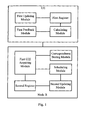
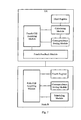
- a MIMO (multi-input multi-output) system includes a Node B and UEs, and the Node B and the UEs communicate with each other through a wireless network.
- the UE includes:
- the Node B includes:
- the UE further includes:
- the UEs feed back the CQIs corresponding to the previous scheduled Ranks respectively and the Ranks corresponding to the CQIs fed back from the UEs may be the same and may be different. Therefore, the previous scheduled first Ranks for the RBs of the UEs are stored in the second register so that the Node B may correctly recognize the Ranks corresponding to the CQIs fed back from the UEs and further acquire the CQIs corresponding to all the Ranks of the UEs according to the correspondence between the CQIs corresponding to the different Ranks.
- the Node B may acquire the Ranks corresponding to the CQIs fed back from the UEs according to other methods.
- the UE may attach the Rank in the feedback information and other methods are also feasible.
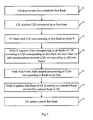
- a CQI feedback method in the MU-MIMO system according to the first embodiment of the present invention includes the following steps.
- step 21 the UE acquires a previous scheduled first Rank.
- step 22 the UE calculates a CQI corresponding to the first Rank.
- step 23 the UE transmits the CQI corresponding to the first Rank to the Node B.
- step 24 the Node B acquires CQIs corresponding to all Ranks of the UE according to the CQI corresponding to the first Rank fed back from the UE and the correspondence between CQIs corresponding to different Ranks.
- step 25 the Node B performs Rank adaptation according to the CQIs corresponding to all Ranks of all the UEs.
- step 26 the Node B updates the first Rank of the UE according to the scheduled Rank and notifies the updated Rank through a downlink signaling to the UE.
- step 27 the UE updates the stored first Rank.
- the UE will calculate a CQI corresponding to the updated first Rank.
- the method according to the first embodiment of the present invention will be illustrated by taking Rank 1 and Rank 2 for example.
- the channel is a slow varying channel, i.e. after the UE transfers from Rank 1 transmission mode to Rank 2 transmission mode, the UE will remain in Rank 2 transmission mode for a subsequent period and vice versa.
- the values in the first registers corresponding to UE 1 and UE 2 respectively are 1 both (assuming that the value in the register is 1 represents a previous scheduled Rank for a RB of a UE is Rank 2 and that the value in the register is 0 represents a previous scheduled Rank for a RB of a UE is Rank 1).
- UE 1 and UE 2 always feed back the CQIs corresponding to Rank 1, however, after UE 1 and UE 2 transfer from Rank 1 transmission mode to Rank 2 transmission mode, the CQIs corresponding to Rank 2 acquired by the Node B is acquired according to the correspondence between Rank 1 and Rank 2, wherein the Rank 2 CQIs are not the true Rank 2 CQIs, which will make the selected coding and modulation mode inaccurate and result in a decrease in the system throughput.
- UE 1 and UE 2 transfer from Rank 1 transmission mode to Rank 2 transmission mode, since the Ranks in the first registers are both 1, when UE 1 and UE 2 feed back CQIs, they will calculate and feed back the CQIs corresponding to Rank 2.
- the calculated CQIs corresponding to Rank 2 are accurate.
- the coding and modulation mode may be correctly selected based on the accurate CQIs corresponding to Rank 2 and the system throughput performance will be improved.
- UEs feed back different CQIs respectively.
- UEs feed back CQIs corresponding to a same Rank.
- the CQI corresponding to the same Rank may be one of the Rank 1 CQI, Rank 2 CQI, ..., and Rank n CQI but the CQIs fed back from all the UEs are the CQIs corresponding to the same Rank.
- a MIMO (multi-input multi-output) system includes a Node B and UEs, and the Node B and the UEs communicate through a wireless network.
- the UE includes:
- the Node B includes:
- the UE further includes:
- a CQI feedback method in the MU-MIMO system according to the second embodiment of the present invention includes the following steps.
- step 41 the UE acquires a previous scheduled first Rank.
- step 22 the UE calculates a CQI corresponding to the first Rank.
- step 43 the UE acquires a CQI corresponding to a second Rank according to correspondence between CQIs corresponding to different Ranks.
- step 44 the UE feeds back the CQI corresponding to the second Rank to the Node B, wherein all the UEs have the same second Rank.
- the UE may directly feed back the CQI calculated in step 42.
- step 45 the Node B acquires CQIs corresponding to all Ranks of the UE according to the CQI corresponding to the second Rank fed back from the UE and the correspondence between the CQIs corresponding to the different Ranks.
- step 46 the Node B performs Rank adaptation according to the CQIs corresponding to all the Ranks.
- step 47 the Node B notifies the scheduled Rank to the UE and the UE updates the first Rank.
- the UE will calculate a CQI corresponding to the updated first Rank.
- the method according to the second embodiment of the present invention will be illustrated by taking Rank 1 and Rank 2 for example.
- the channel is a slow varying channel, i.e. after the UE transfers from Rank 1 transmission mode to Rank 2 transmission mode, the UE will remain in Rank 2 transmission mode for a subsequent period and vice versa.
- the values in the first registers corresponding to UE 1 and UE 2 respectively are 1 both (assuming that the value in the register is 1 represents a previous scheduled Rank for a RB of a UE is Rank 2 and that the value in the register is 0 represents a previous scheduled Rank for a RB of a UE is Rank 1).
- UE 1 and UE 2 always feed back the CQIs corresponding to Rank 1, however, after UE 1 and UE 2 transfer from Rank 1 transmission mode to Rank 2 transmission mode, the CQIs corresponding to Rank 2 acquired by the Node B is acquired according to the correspondence between Rank 1 and Rank 2, wherein the Rank 2 CQIs are not the true Rank 2 CQIs, which will make the selected coding and modulation mode inaccurate and result in a decrease in the system throughput.
- UE 1 and UE 2 after UE 1 and UE 2 transfer from Rank 1 transmission mode to Rank 2 transmission mode, since the Ranks in the first registers are both 1, when UE1 and UE2 feed back CQIs, UE 1 and UE 2 will first calculate the CQIs corresponding to Rank 2. The calculated CQIs corresponding to Rank 2 are accurate. Then the UE acquires the CQI corresponding to Rank 1 by searching the correspondence according to the CQI corresponding to Rank 2 and feeds back the CQI corresponding to Rank 1 to the Node B. The Node B acquires the CQI corresponding to Rank 2 according to the same correspondence.
- the CQI corresponding to Rank 2 acquired by the Node B is accurate.
- the coding and modulation mode may be correctly selected based on the accurate CQIs corresponding to Rank 2 and the system throughput performance will be improved.
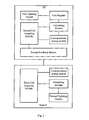
- each UE is provided with a register and there are at least following two contents in the register:
- Rank index can be distinguished by 0 and 1 and when there are more transmission modes, the number of bits of Rank index can be increased to distinguish the Rank index.
- the correspondence between CQIs corresponding to different Ranks needs to be acquired.
- the correspondence may be represented with a form of table or function or other forms as long as the form can represent the correspondence between CQIs corresponding to different Ranks.
- the embodiments of the present invention do not limit these representation forms.
- the Node B is provided with an updating module, which can notify the scheduled Rank to the UE through a downlink signaling or a high layer signaling.
- the CQI feedback is illustrated by taking an example of feeding back one CQI per RB.
- the present invention may also apply to the case of feeding back CQIs for several RBs or feeding back CQIs in the whole bandwidth. Since the processes are basically the same and the only difference lies in CQI feedback method, the detailed illustration here will be omitted.
- a MIMO (multi-input multi-output) system includes a Node B and UEs and the Node B and the UEs communicate with each other through a wireless network.
- the UE includes:
- the Node B includes:
- the high layer signaling indicates the third Rank may be transmitted between two scheduling time points or periodically transmitted so as to reduce the bandwidth occupied by the signaling.
- the third and further registers need to store the newest third Rank in the high layer signaling and may update the Rank after receiving a high layer signaling each time or acquire the Rank in the signaling after receiving a high layer signaling each time and then compare the acquired Rank with that stored in the registers so that when the comparison shows the two Ranks are different, the one in the high layer signaling acquired is used to replace that in the registers.
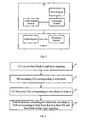
- the CQI feedback method in the MU-MIMO system according to the third embodiment of the present invention includes following steps.
- step 61 the UE acquires the third Rank in the high layer signaling.
- step 62 the UE calculates a CQI corresponding to the third Rank.
- step 63 the UE feeds back the CQI corresponding to the third Rank to the Node B.
- step 64 the Node B performs the scheduling for the third Rank according to the CQIs corresponding to the third Ranks fed back from the UEs and the third Ranks in the high layer signaling.
- the UE will calculate a CQI corresponding to a newest third Rank updated according to the high layer signaling.
- the Rank corresponding to the CQI is indicated by the high layer signaling, the CQI corresponding to the third Rank is accurate and the Node B performs the scheduling directly according to the Rank (third Rank) carried in the high layer signaling, the coding and modulation mode may be correctly selected based on the accurate CQI corresponding to the third Rank and the system throughput performance will be improved.
- a MIMO (multi-input multi-output) system includes a Node B and UEs and the Node B and the UEs communicate with each other through a wireless network.
- the UE includes:
- the Node B includes:
- the CQI feedback method in the MU-MIMO system according to the fourth embodiment of the present invention includes following steps.
- step 81 the UE acquires a third Rank in the high layer signaling.
- step 82 the UE calculates a CQI corresponding to the third Rank.
- step 83 the UE acquires a CQI corresponding to a fourth Rank according to CQIs corresponding to different Ranks.
- step 84 the UE feeds back the CQI corresponding to the fourth Rank to the Node B wherein the fourth Ranks of all the UEs are the same and of course when the third Rank and the fourth Rank are the same, the UE may directly feed back the CQI calculated in step 82.
- step 85 the Node B acquires the CQI corresponding to the third Rank according to the CQI corresponding to the fourth Rank and the correspondence between the CQIs corresponding to the different Ranks.
- step 86 the Node B performs the scheduling for the third Rank according to the CQI corresponding to the third Rank.
- the UE will calculate a CQI corresponding to a newest third Rank updated according to the high layer signaling.
- the CQI corresponding to the fourth Rank is acquired according to the accurate CQI corresponding to the third Rank and the Node B acquires the accurate CQI corresponding to the third Rank according to the CQI corresponding to the fourth Rank and performs the scheduling directly according to the Rank (the third Rank) carried in the high layer signaling, the coding and modulation mode may be correctly selected based on the accurate CQI corresponding to the third Rank and the system throughput performance will be improved.
- Fig. 9 is a schematic diagram showing under a first simulation condition, a comparison of the method of the present invention, a first conventional method in which the UE routinely feeds back the CQI corresponding to Rank 1 and the Node B acquires CQIs corresponding to other Ranks, and a second conventional method in which the UE routinely feeds back the CQI corresponding to Rank 2 and the Node B acquires CQIs corresponding to other Ranks.
- the first simulation condition is as follows:
- the abscissa represents the number of UEs and the ordinate represents the spectral efficiency.
- the curve with triangle marks is the one of the methods according to the embodiments of the present invention, the curve with square marks is the one of the first conventional method, and the curve with round marks is the one of the second conventional method.
- the performance according to the present method is obviously higher than those according to the other two methods, and when the number of UEs is comparatively large (such as more than 20), since most UEs may be in the Rank 2 transmission mode, the performance according to the present method is, although not obviously, higher than that according to the second conventional method, and further obviously higher than that according to the first conventional method.
- Fig. 10 is a schematic diagram showing under a second simulation condition, a comparison of the method of the present invention, a first conventional method in which the UE routinely feeds back the CQI corresponding to Rank 1 and the Node B acquires CQIs corresponding to other Ranks, and a second conventional method in which the UE routinely feeds back the CQI corresponding to Rank 2 and the Node B acquires CQIs corresponding to other Ranks.
- the second simulation condition is as follows:
- the abscissa represents the number of UEs and the ordinate represents the spectral efficiency.
- the curve with triangle marks is the one of the methods according to the embodiments of the present invention, the curve with square marks is the one of the first conventional method, and the curve with round marks is the one of the second conventional method, wherein according to the second conventional method, the UE feed back a CQI corresponding to a smallest Rank 2.
- the performance according to the present method is obviously higher than those according to the other two methods under the second simulation condition.
- the present invention may be implemented with software and a necessary general hardware platform or may be implemented with hardware, although in most cases the former is the preferred implementation.
- the essence or the contribution to the prior art of the technical solution of the present invention can be embodied in a software product, wherein the software product is stored in a storage medium and includes several instructions which when executed will cause a UE perform the methods according to embodiments of the present invention.
- the present invention in accordance with a first additional preferred embodiment provides a MU-MIMO system, comprising a Node B and UEs which communicate with each other through a wireless network, wherein the UE feeds back a CQI corresponding to a previous scheduled first Rank to the Node B, and the Node B acquires CQIs corresponding to all Ranks of the UE according to the CQI corresponding to the first Rank fed back from the UE and performs scheduling according to the CQIs corresponding to all Ranks of all the UEs.
- the UE comprises a first register, for storing the previous scheduled first Rank for a resource block, a calculating module, for calculating the CQI corresponding to the first Rank, and a first feedback module, for transmitting the CQI corresponding to the first Rank to the Node B.
- the Node B comprises a second register, for storing previous scheduled first Ranks for the resource blocks of the UEs, a correspondence storing module, for storing a correspondence between CQIs corresponding to different Ranks, a first acquiring module, for acquiring the CQIs corresponding to all Ranks of the UE according to the CQI corresponding to the first Rank and the correspondence between the CQIs corresponding to the different Ranks, and a scheduling module, for performing Rank adaptation according to the CQIs corresponding to all Ranks of all the UEs.
- the Node B further comprises a second updating module, for updating the first Rank stored in the second register for the UE according to the scheduled Rank and transmitting the updated Rank to the UE
- the UE further comprises a first updating module, for updating the first Rank stored in the first register according to the updated Rank transmitted from the Node B.
- the present invention provides a MU-MIMO system, comprising a Node B and UEs which communicate with each other through a wireless network, wherein the UE acquires a CQI corresponding to a second Rank according to a CQI corresponding to a previous scheduled first Rank and a correspondence between CQIs corresponding to different Ranks and feeds back the CQI corresponding to a second Rank to the Node B, and the second Ranks from all the UEs are the same, and wherein the Node B acquires CQIs corresponding to all Ranks of the UE according to the CQI corresponding to the second Rank fed back from the UE and performs scheduling according to CQIs corresponding to all Ranks of all the UEs.
- the UE comprises a first register, for storing the previous scheduled first Rank for the resource block of the UE, a calculating module, for calculating the CQI corresponding to the first Rank, a correspondence storing module, for storing the correspondence between CQIs corresponding to different Ranks, a second acquiring module, for acquiring the CQI corresponding to the second Rank according to the CQI corresponding to the first Rank and the correspondence between the CQIs corresponding to the second and other Ranks, and a second feedback module, for transmitting the CQI corresponding to the second Rank to the Node B.
- the Node B comprises a correspondence storing module, for storing the correspondence between the CQIs corresponding to the different Ranks, a third acquiring module, for acquiring the CQIs corresponding to all Ranks of the UE according to the CQI corresponding to the first Rank and the correspondence between the CQIs corresponding to the different Ranks, and a scheduling module, for performing Rank adaptation according to the CQIs corresponding to all Ranks of all the UEs.
- a correspondence storing module for storing the correspondence between the CQIs corresponding to the different Ranks
- a third acquiring module for acquiring the CQIs corresponding to all Ranks of the UE according to the CQI corresponding to the first Rank and the correspondence between the CQIs corresponding to the different Ranks
- a scheduling module for performing Rank adaptation according to the CQIs corresponding to all Ranks of all the UEs.
- the Node B further comprises a second updating module, for transmitting the scheduled Rank as a Rank updated Rank to the UE, and the UE further comprises a first updating module, for updating the first Rank stored in the first register according to the updated Rank transmitted from the Node B.
- the present invention provides a MU-MIMO system, comprising a Node B and UEs which communicate with each other through a wireless network, wherein the UE feeds back a CQI corresponding to a third Rank to the Node B and the third Rank is a newest Rank in a high layer signaling, wherein the Node B performs scheduling for the third Rank according to the CQIs corresponding to the third Ranks fed back from the UEs and the third Rank in the high layer signaling, and wherein the UE comprises a third register, for storing the third Rank in the high layer signaling, a calculating module, for calculating the CQI corresponding to the third Rank, and a third feedback module, for transmitting the CQI corresponding to the third Rank to the Node B.
- the Node B comprises a fourth register, for storing the third Ranks in the high layer signaling, and a scheduling module, for performing the scheduling for the third Rank according to the CQIs corresponding to the third Ranks of all the UEs and the third Ranks in the fourth register.
- the present invention provides a MU-MIMO system, comprising a Node B and UEs which communicate with each other through a wireless network, wherein the UE acquires a CQI corresponding to a fourth Rank according to a CQI corresponding to a third Rank and a correspondence between CQIs corresponding to different Ranks and feeds back the CQI corresponding to the fourth Rank to the Node B and the third Rank is a newest Rank in a high layer signaling, the fourth Ranks of all the UEs are the same, wherein the Node B acquires the CQI corresponding to the third Rank of the UE according to the CQI corresponding to the fourth Rank fed back from the UE and the third Ranks in the high layer signaling and performs scheduling for the third Rank according to the CQI corresponding to the third Rank fed back from the UE and the third Rank in the high layer signaling, and wherein the UE comprises a third
- the Node B comprises a fourth register, for storing the third Rank in the high layer signaling, a correspondence storing module, for storing the correspondence between the CQIs corresponding to the different Ranks, a fifth acquiring module, for acquiring the CQI corresponding to the third Rank of the UE according to the CQI corresponding to the fourth Rank, the correspondence between the CQIs corresponding to the different Ranks and the third Ranks in the fourth register, and a scheduling module, for performing the scheduling for the third Rank according to the CQIs corresponding to the third Ranks of all the UEs and the third Ranks in the fourth register.
- the present invention provides a CQI feedback method in a MU-MIMO system, comprising a step of feeding back a CQI and a step of acquiring CQIs corresponding to all Ranks of a UE by a Node B, wherein in the step of feeding back the CQI, the UE feeds back a CQI corresponding to a first Rank to the Node B and the first Rank is a previous scheduled Rank of the UE, wherein in the step of acquiring the CQIs corresponding to all Ranks of the UE by the Node B, the Node B acquires the CQIs corresponding to all Ranks of the UE according to the CQI corresponding to the first Rank fed back from the UE, and wherein the step of feeding back the CQI comprises the UE acquires the previous scheduled first Rank, the UE calculates the CQI corresponding to the first Rank, and the UE transmits the CQI corresponding to
- the Node B acquires the CQIs corresponding to all Ranks of the UE according to the CQI corresponding to the first Rank fed back from the UE and a correspondence between CQIs corresponding to different Ranks.
- the Node B updates the first Rank of the UE stored in the Node B according to a scheduled Rank and transmits the updated Rank to the UE, and the UE updates the first Rank according to the updated Rank transmitted from the Node B.
- the present invention provides a CQI feedback method in a MU-MIMO system, comprising a step of feeding back a CQI and a step of acquiring CQIs corresponding to all Ranks of a UE by a Node B, wherein in the step of feeding back the CQI, the UE acquires a CQI corresponding to a second Rank according to a CQI corresponding to a previous scheduled first Rank and a correspondence between CQIs corresponding to different Ranks and feeds back the CQI corresponding to the second Rank to the Node B, wherein the first Rank is the previous scheduled Rank of the UE and the second Ranks of all UEs are the same, wherein in the step of acquiring CQIs corresponding to all Ranks of the UE by the Node B, the Node B acquires CQIs corresponding to all Ranks of the UE according to the CQI corresponding to the second Rank fed back
- the Node B acquires CQIs corresponding to all Ranks of the UE according to the CQI corresponding to the second Rank and the correspondence between the CQIs corresponding to the second Rank and other Ranks.
- the Node B transmits a scheduled Rank as an updated Rank to the UE, and the UE updates the first Rank according to the updated Rank transmitted from the Node B.
- the present invention provides a CQI feedback method in a MU-MIMO system, comprising a step of feeding back a CQI and a step of acquiring CQIs corresponding to all Ranks of a UE by a Node B, wherein in the step of feeding back the CQI, the UE acquires a CQI corresponding to a fourth Rank according to a CQI corresponding to a third Rank and a correspondence between CQIs corresponding to different Ranks and feeds back the CQI corresponding to the fourth Rank to the Node B, wherein the third Rank is a newest Rank in a high layer signaling and the fourth Ranks of all UEs are the same, wherein in the step of acquiring the CQIs corresponding to all Ranks of the UE by the Node B, the Node B acquires CQIs corresponding to all Ranks of the UE according to the CQI corresponding to the second
- the Node B acquires the CQI corresponding to the third Rank of the UE according to the CQI corresponding to the fourth Rank fed back from the UE, the correspondence between CQIs corresponding to different Ranks and the third Rank in the high layer signaling.
- the present invention provides a UE, comprising a first feedback module, for transmitting a CQI corresponding to a first Rank to a Node B, wherein the first Rank is a previous scheduled first Rank for a resource block or a newest Rank in a high layer signaling, a first register, for storing the first Rank, and a calculating module, for calculating the CQI corresponding to the first Rank.
- the UE when the first Rank is the previous scheduled first Rank for the resource block, the UE further comprises a first updating module, for updating the first Rank stored in the first register according to a scheduled Rank from the Node B.
- the present invention provides a UE, comprising a second feedback module, for transmitting a CQI corresponding to a second Rank to a Node B, wherein the CQI corresponding to the second Rank is acquired according to a CQI corresponding to a first Rank, and the first Rank is a previous scheduled first Rank for a resource block or a newest Rank in a high layer signaling, a first register, for storing the first Rank, a calculating module, for calculating the CQI corresponding to the first Rank, a correspondence storing module, for storing the correspondence between CQIs corresponding to different Ranks, and a second acquiring module, for acquiring the CQI corresponding to the second Rank according to the CQI corresponding to the first Rank and the correspondence between CQIs corresponding to different Ranks.
- the UE further comprises a first updating module, for
- the present invention provides a Node B, comprising a second register, for storing previous scheduled first Ranks for resource blocks of UEs, a correspondence storing module, for storing a correspondence between CQIs corresponding to different Ranks, a first acquiring module, for acquiring CQIs corresponding to all Ranks of the UE according to the CQI corresponding to the first Rank and the correspondence between the CQIs corresponding to the different Ranks, a scheduling module, for performing Rank adaptation according to the CQIs corresponding to all Ranks of all the UEs, and a second updating module, for updating the first Rank stored in the second register of the UE according to the scheduled Rank and transmitting the updated Rank to the UE.
Landscapes
- Engineering & Computer Science (AREA)
- Signal Processing (AREA)
- Quality & Reliability (AREA)
- Computer Networks & Wireless Communication (AREA)
- Mobile Radio Communication Systems (AREA)
- Radio Transmission System (AREA)
Applications Claiming Priority (1)
| Application Number | Priority Date | Filing Date | Title |
|---|---|---|---|
| CN200710305888XA CN101472292B (zh) | 2007-12-28 | 2007-12-28 | 多用户多输入多输出系统、基站、用户设备和cqi反馈方法 |
Publications (3)
| Publication Number | Publication Date |
|---|---|
| EP2076086A2 true EP2076086A2 (de) | 2009-07-01 |
| EP2076086A3 EP2076086A3 (de) | 2014-08-06 |
| EP2076086B1 EP2076086B1 (de) | 2018-02-07 |
Family
ID=40525115
Family Applications (1)
| Application Number | Title | Priority Date | Filing Date |
|---|---|---|---|
| EP08022057.7A Not-in-force EP2076086B1 (de) | 2007-12-28 | 2008-12-18 | Mimo-system und knoten b für mehrere benutzer, benutzergerät und cqi-feedback-verfahren |
Country Status (3)
| Country | Link |
|---|---|
| EP (1) | EP2076086B1 (de) |
| JP (2) | JP5405815B2 (de) |
| CN (1) | CN101472292B (de) |
Cited By (6)
| Publication number | Priority date | Publication date | Assignee | Title |
|---|---|---|---|---|
| CN102137505A (zh) * | 2010-01-21 | 2011-07-27 | 中兴通讯股份有限公司 | 一种支持多天线工作模式的终端接入网络的方法及系统 |
| WO2012061749A3 (en) * | 2010-11-05 | 2012-06-28 | Qualcomm Incorporated | Method and apparatus for determining and using channel state information |
| US8787245B2 (en) | 2009-10-25 | 2014-07-22 | Lg Electronics Inc. | Backhaul downlink signal decoding method of relay station and relay station using same |
| CN106160925A (zh) * | 2015-04-07 | 2016-11-23 | 上海贝尔股份有限公司 | 用于多用户层叠传输的cqi增强的方法及装置 |
| EP2997688A4 (de) * | 2013-05-16 | 2017-01-18 | Telefonaktiebolaget LM Ericsson (publ) | Verfahren und vorrichtung zur rangüberschreibung |
| US9985700B2 (en) | 2015-05-12 | 2018-05-29 | Mediatek Inc. | Channel state feedback enhancement in downlink multiuser superposition transmission |
Families Citing this family (8)
| Publication number | Priority date | Publication date | Assignee | Title |
|---|---|---|---|---|
| CN102474382B (zh) * | 2009-07-03 | 2015-02-25 | 松下电器(美国)知识产权公司 | 无线通信装置及无线通信方法 |
| US8599777B2 (en) * | 2009-11-17 | 2013-12-03 | Qualcomm Incorporated | Channel quality indicator design for multiple-user multiple-input and multiple-output in high-speed packet access systems |
| CN102118198B (zh) * | 2009-12-31 | 2016-01-20 | 中兴通讯股份有限公司 | 一种终端反馈宽带信道质量指示的系统及方法 |
| KR101615927B1 (ko) | 2010-06-22 | 2016-05-12 | 삼성전자주식회사 | 피드백 손실을 고려하는 다중 사용자 mimo 통신 시스템 |
| IN2010DE02109A (de) * | 2010-09-03 | 2015-08-14 | Motorola Mobility Inc | |
| CN102625358B (zh) * | 2011-02-01 | 2016-07-06 | 中兴通讯股份有限公司 | 反馈测量结果的方法、用户设备及基站系统 |
| CN102752033B (zh) * | 2011-04-22 | 2017-07-04 | 株式会社Ntt都科摩 | 移动通信系统中多用户信道质量的确定方法及其用户终端和基站 |
| CN104660535B (zh) * | 2015-03-05 | 2017-11-03 | 河南理工大学 | Mimo干扰信道中无反馈的干扰消除方法 |
Family Cites Families (5)
| Publication number | Priority date | Publication date | Assignee | Title |
|---|---|---|---|---|
| WO2005099125A1 (en) * | 2004-04-07 | 2005-10-20 | Lg Electronics Inc. | Frame structure of uplink control information transmission channel for mimo system |
| JP4616338B2 (ja) * | 2004-06-14 | 2011-01-19 | サムスン エレクトロニクス カンパニー リミテッド | 多重送受信アンテナを使用する移動通信システムにおける送信モードを制御するための装置,システム及び方法 |
| US8599945B2 (en) * | 2005-06-16 | 2013-12-03 | Qualcomm Incorporated | Robust rank prediction for a MIMO system |
| KR100819285B1 (ko) * | 2006-03-16 | 2008-04-02 | 삼성전자주식회사 | 다중 사용자를 지원하는 다중 안테나 시스템에서의 피드 백 정보 송/수신방법 및 그 시스템 |
| US8914015B2 (en) * | 2006-03-20 | 2014-12-16 | Qualcomm Incorporated | Grouping of users for MIMO transmission in a wireless communication system |
-
2007
- 2007-12-28 CN CN200710305888XA patent/CN101472292B/zh not_active Expired - Fee Related
-
2008
- 2008-12-18 EP EP08022057.7A patent/EP2076086B1/de not_active Not-in-force
- 2008-12-25 JP JP2008330961A patent/JP5405815B2/ja not_active Expired - Fee Related
-
2013
- 2013-10-31 JP JP2013226669A patent/JP5600795B2/ja not_active Expired - Fee Related
Cited By (16)
| Publication number | Priority date | Publication date | Assignee | Title |
|---|---|---|---|---|
| US9083435B2 (en) | 2009-10-25 | 2015-07-14 | Lg Electronics Inc. | Backhaul downlink signal decoding method of relay station and relay station using same |
| US9712360B2 (en) | 2009-10-25 | 2017-07-18 | Lg Electronics Inc. | Backhaul downlink signal decoding method of relay station and relay station using same |
| US9356682B2 (en) | 2009-10-25 | 2016-05-31 | Lg Electronics Inc. | Backhaul downlink signal decoding method of relay station and relay station using same |
| US8787245B2 (en) | 2009-10-25 | 2014-07-22 | Lg Electronics Inc. | Backhaul downlink signal decoding method of relay station and relay station using same |
| CN102137505B (zh) * | 2010-01-21 | 2015-11-25 | 中兴通讯股份有限公司 | 一种支持多天线工作模式的终端接入网络的方法及系统 |
| CN102137505A (zh) * | 2010-01-21 | 2011-07-27 | 中兴通讯股份有限公司 | 一种支持多天线工作模式的终端接入网络的方法及系统 |
| EP2720425A1 (de) * | 2010-11-05 | 2014-04-16 | Qualcomm Incorporated | Verfahren und Vorrichtung zur Bestimmung Kanalstatusinformationen |
| US8681651B2 (en) | 2010-11-05 | 2014-03-25 | Qualcomm Incorporated | Reference signal reception and channel state information determination for multiple nodes in a wireless communication network |
| CN103283196A (zh) * | 2010-11-05 | 2013-09-04 | 高通股份有限公司 | 用于确定和使用信道状态信息的方法和装置 |
| CN103283196B (zh) * | 2010-11-05 | 2016-06-15 | 高通股份有限公司 | 用于确定和使用信道状态信息的方法和装置 |
| US9480063B2 (en) | 2010-11-05 | 2016-10-25 | Qualcomm Incorporated | Reference signal reception and channel state information determination for multiple nodes in a wireless communication network |
| WO2012061749A3 (en) * | 2010-11-05 | 2012-06-28 | Qualcomm Incorporated | Method and apparatus for determining and using channel state information |
| EP2997688A4 (de) * | 2013-05-16 | 2017-01-18 | Telefonaktiebolaget LM Ericsson (publ) | Verfahren und vorrichtung zur rangüberschreibung |
| CN106160925A (zh) * | 2015-04-07 | 2016-11-23 | 上海贝尔股份有限公司 | 用于多用户层叠传输的cqi增强的方法及装置 |
| CN106160925B (zh) * | 2015-04-07 | 2019-08-16 | 上海诺基亚贝尔股份有限公司 | 用于多用户层叠传输的cqi增强的方法及装置 |
| US9985700B2 (en) | 2015-05-12 | 2018-05-29 | Mediatek Inc. | Channel state feedback enhancement in downlink multiuser superposition transmission |
Also Published As
| Publication number | Publication date |
|---|---|
| EP2076086A3 (de) | 2014-08-06 |
| CN101472292B (zh) | 2012-05-30 |
| CN101472292A (zh) | 2009-07-01 |
| EP2076086B1 (de) | 2018-02-07 |
| JP5600795B2 (ja) | 2014-10-01 |
| JP2014064292A (ja) | 2014-04-10 |
| JP2009165125A (ja) | 2009-07-23 |
| JP5405815B2 (ja) | 2014-02-05 |
Similar Documents
| Publication | Publication Date | Title |
|---|---|---|
| EP2076086B1 (de) | Mimo-system und knoten b für mehrere benutzer, benutzergerät und cqi-feedback-verfahren | |
| CN101867447B (zh) | 信道状态信息的反馈方法及终端 | |
| US9408196B2 (en) | Method and terminal for feeding back channel state information | |
| CN102237969B (zh) | 一种信道状态信息的传输方法及装置 | |
| CN112470419B (zh) | 上报信道状态信息的方法和装置 | |
| CN103107866B (zh) | 信道状态信息的上报方法及装置 | |
| CN104365060B (zh) | 用于在协作多点传输中报告反馈的方法和系统 | |
| US8897272B2 (en) | Radio communication system channel state information feedback method and device | |
| CN101931513A (zh) | 信道状态信息的反馈方法及终端 | |
| US20150049702A1 (en) | Channel state information feedbacks for coordinated multipoint transmissions | |
| JP2013516862A (ja) | チャネル状態情報のフィードバック伝送方法及びユーザ端末 | |
| JP6595694B2 (ja) | 下りプリコーディング方法および基地局 | |
| CN103220069A (zh) | 反馈信道状态信息的方法及设备 | |
| CN102868500A (zh) | 信道信息的反馈方法、终端和基站 | |
| CN103188710B (zh) | 信道状态信息测量方法及系统、基站与用户设备 | |
| US9220087B1 (en) | Dynamic point selection with combined PUCCH/PUSCH feedback | |
| CN103546249A (zh) | 一种周期csi上报方法及终端 | |
| US10516516B2 (en) | Precoding information obtaining method, and device | |
| KR20130125058A (ko) | 채널 정보 피드백 방법 및 장치 |
Legal Events
| Date | Code | Title | Description |
|---|---|---|---|
| PUAI | Public reference made under article 153(3) epc to a published international application that has entered the european phase |
Free format text: ORIGINAL CODE: 0009012 |
|
| AK | Designated contracting states |
Kind code of ref document: A2 Designated state(s): AT BE BG CH CY CZ DE DK EE ES FI FR GB GR HR HU IE IS IT LI LT LU LV MC MT NL NO PL PT RO SE SI SK TR |
|
| AX | Request for extension of the european patent |
Extension state: AL BA MK RS |
|
| RIC1 | Information provided on ipc code assigned before grant |
Ipc: H04W 88/02 20090101ALI20140310BHEP Ipc: H04W 88/08 20090101ALI20140310BHEP Ipc: H04L 1/00 20060101ALI20140310BHEP Ipc: H04L 5/00 20060101ALI20140310BHEP Ipc: H04W 72/12 20090101ALI20140310BHEP Ipc: H04W 72/08 20090101AFI20140310BHEP |
|
| PUAL | Search report despatched |
Free format text: ORIGINAL CODE: 0009013 |
|
| AK | Designated contracting states |
Kind code of ref document: A3 Designated state(s): AT BE BG CH CY CZ DE DK EE ES FI FR GB GR HR HU IE IS IT LI LT LU LV MC MT NL NO PL PT RO SE SI SK TR |
|
| AX | Request for extension of the european patent |
Extension state: AL BA MK RS |
|
| RIC1 | Information provided on ipc code assigned before grant |
Ipc: H04W 88/08 20090101ALI20140629BHEP Ipc: H04W 72/08 20090101AFI20140629BHEP Ipc: H04L 1/00 20060101ALI20140629BHEP Ipc: H04L 5/00 20060101ALI20140629BHEP Ipc: H04W 88/02 20090101ALI20140629BHEP Ipc: H04W 72/12 20090101ALI20140629BHEP |
|
| 17P | Request for examination filed |
Effective date: 20141218 |
|
| RBV | Designated contracting states (corrected) |
Designated state(s): AT BE BG CH CY CZ DE DK EE ES FI FR GB GR HR HU IE IS IT LI LT LU LV MC MT NL NO PL PT RO SE SI SK TR |
|
| AKX | Designation fees paid |
Designated state(s): AT BE BG CH CY CZ DE DK EE ES FI FR GB GR HR HU IE IS IT LI LT LU LV MC MT NL NO PL PT RO SE SI SK TR |
|
| AXX | Extension fees paid |
Extension state: AL Extension state: BA Extension state: RS Extension state: MK |
|
| GRAP | Despatch of communication of intention to grant a patent |
Free format text: ORIGINAL CODE: EPIDOSNIGR1 |
|
| INTG | Intention to grant announced |
Effective date: 20170712 |
|
| GRAS | Grant fee paid |
Free format text: ORIGINAL CODE: EPIDOSNIGR3 |
|
| GRAA | (expected) grant |
Free format text: ORIGINAL CODE: 0009210 |
|
| AK | Designated contracting states |
Kind code of ref document: B1 Designated state(s): AT BE BG CH CY CZ DE DK EE ES FI FR GB GR HR HU IE IS IT LI LT LU LV MC MT NL NO PL PT RO SE SI SK TR |
|
| REG | Reference to a national code |
Ref country code: GB Ref legal event code: FG4D |
|
| REG | Reference to a national code |
Ref country code: AT Ref legal event code: REF Ref document number: 969238 Country of ref document: AT Kind code of ref document: T Effective date: 20180215 Ref country code: CH Ref legal event code: EP |
|
| REG | Reference to a national code |
Ref country code: IE Ref legal event code: FG4D |
|
| REG | Reference to a national code |
Ref country code: DE Ref legal event code: R096 Ref document number: 602008053957 Country of ref document: DE |
|
| REG | Reference to a national code |
Ref country code: NL Ref legal event code: MP Effective date: 20180207 |
|
| REG | Reference to a national code |
Ref country code: AT Ref legal event code: MK05 Ref document number: 969238 Country of ref document: AT Kind code of ref document: T Effective date: 20180207 |
|
| PG25 | Lapsed in a contracting state [announced via postgrant information from national office to epo] |
Ref country code: FI Free format text: LAPSE BECAUSE OF FAILURE TO SUBMIT A TRANSLATION OF THE DESCRIPTION OR TO PAY THE FEE WITHIN THE PRESCRIBED TIME-LIMIT Effective date: 20180207 Ref country code: HR Free format text: LAPSE BECAUSE OF FAILURE TO SUBMIT A TRANSLATION OF THE DESCRIPTION OR TO PAY THE FEE WITHIN THE PRESCRIBED TIME-LIMIT Effective date: 20180207 Ref country code: NO Free format text: LAPSE BECAUSE OF FAILURE TO SUBMIT A TRANSLATION OF THE DESCRIPTION OR TO PAY THE FEE WITHIN THE PRESCRIBED TIME-LIMIT Effective date: 20180507 Ref country code: ES Free format text: LAPSE BECAUSE OF FAILURE TO SUBMIT A TRANSLATION OF THE DESCRIPTION OR TO PAY THE FEE WITHIN THE PRESCRIBED TIME-LIMIT Effective date: 20180207 Ref country code: CY Free format text: LAPSE BECAUSE OF FAILURE TO SUBMIT A TRANSLATION OF THE DESCRIPTION OR TO PAY THE FEE WITHIN THE PRESCRIBED TIME-LIMIT Effective date: 20180207 Ref country code: LT Free format text: LAPSE BECAUSE OF FAILURE TO SUBMIT A TRANSLATION OF THE DESCRIPTION OR TO PAY THE FEE WITHIN THE PRESCRIBED TIME-LIMIT Effective date: 20180207 Ref country code: NL Free format text: LAPSE BECAUSE OF FAILURE TO SUBMIT A TRANSLATION OF THE DESCRIPTION OR TO PAY THE FEE WITHIN THE PRESCRIBED TIME-LIMIT Effective date: 20180207 |
|
| PG25 | Lapsed in a contracting state [announced via postgrant information from national office to epo] |
Ref country code: GR Free format text: LAPSE BECAUSE OF FAILURE TO SUBMIT A TRANSLATION OF THE DESCRIPTION OR TO PAY THE FEE WITHIN THE PRESCRIBED TIME-LIMIT Effective date: 20180508 Ref country code: BG Free format text: LAPSE BECAUSE OF FAILURE TO SUBMIT A TRANSLATION OF THE DESCRIPTION OR TO PAY THE FEE WITHIN THE PRESCRIBED TIME-LIMIT Effective date: 20180507 Ref country code: PL Free format text: LAPSE BECAUSE OF FAILURE TO SUBMIT A TRANSLATION OF THE DESCRIPTION OR TO PAY THE FEE WITHIN THE PRESCRIBED TIME-LIMIT Effective date: 20180207 Ref country code: IS Free format text: LAPSE BECAUSE OF FAILURE TO SUBMIT A TRANSLATION OF THE DESCRIPTION OR TO PAY THE FEE WITHIN THE PRESCRIBED TIME-LIMIT Effective date: 20180607 Ref country code: SE Free format text: LAPSE BECAUSE OF FAILURE TO SUBMIT A TRANSLATION OF THE DESCRIPTION OR TO PAY THE FEE WITHIN THE PRESCRIBED TIME-LIMIT Effective date: 20180207 Ref country code: LV Free format text: LAPSE BECAUSE OF FAILURE TO SUBMIT A TRANSLATION OF THE DESCRIPTION OR TO PAY THE FEE WITHIN THE PRESCRIBED TIME-LIMIT Effective date: 20180207 Ref country code: AT Free format text: LAPSE BECAUSE OF FAILURE TO SUBMIT A TRANSLATION OF THE DESCRIPTION OR TO PAY THE FEE WITHIN THE PRESCRIBED TIME-LIMIT Effective date: 20180207 |
|
| PG25 | Lapsed in a contracting state [announced via postgrant information from national office to epo] |
Ref country code: EE Free format text: LAPSE BECAUSE OF FAILURE TO SUBMIT A TRANSLATION OF THE DESCRIPTION OR TO PAY THE FEE WITHIN THE PRESCRIBED TIME-LIMIT Effective date: 20180207 Ref country code: IT Free format text: LAPSE BECAUSE OF FAILURE TO SUBMIT A TRANSLATION OF THE DESCRIPTION OR TO PAY THE FEE WITHIN THE PRESCRIBED TIME-LIMIT Effective date: 20180207 Ref country code: RO Free format text: LAPSE BECAUSE OF FAILURE TO SUBMIT A TRANSLATION OF THE DESCRIPTION OR TO PAY THE FEE WITHIN THE PRESCRIBED TIME-LIMIT Effective date: 20180207 |
|
| REG | Reference to a national code |
Ref country code: DE Ref legal event code: R097 Ref document number: 602008053957 Country of ref document: DE |
|
| PG25 | Lapsed in a contracting state [announced via postgrant information from national office to epo] |
Ref country code: CZ Free format text: LAPSE BECAUSE OF FAILURE TO SUBMIT A TRANSLATION OF THE DESCRIPTION OR TO PAY THE FEE WITHIN THE PRESCRIBED TIME-LIMIT Effective date: 20180207 Ref country code: SK Free format text: LAPSE BECAUSE OF FAILURE TO SUBMIT A TRANSLATION OF THE DESCRIPTION OR TO PAY THE FEE WITHIN THE PRESCRIBED TIME-LIMIT Effective date: 20180207 Ref country code: DK Free format text: LAPSE BECAUSE OF FAILURE TO SUBMIT A TRANSLATION OF THE DESCRIPTION OR TO PAY THE FEE WITHIN THE PRESCRIBED TIME-LIMIT Effective date: 20180207 |
|
| PLBE | No opposition filed within time limit |
Free format text: ORIGINAL CODE: 0009261 |
|
| STAA | Information on the status of an ep patent application or granted ep patent |
Free format text: STATUS: NO OPPOSITION FILED WITHIN TIME LIMIT |
|
| 26N | No opposition filed |
Effective date: 20181108 |
|
| PG25 | Lapsed in a contracting state [announced via postgrant information from national office to epo] |
Ref country code: SI Free format text: LAPSE BECAUSE OF FAILURE TO SUBMIT A TRANSLATION OF THE DESCRIPTION OR TO PAY THE FEE WITHIN THE PRESCRIBED TIME-LIMIT Effective date: 20180207 |
|
| REG | Reference to a national code |
Ref country code: DE Ref legal event code: R119 Ref document number: 602008053957 Country of ref document: DE |
|
| REG | Reference to a national code |
Ref country code: CH Ref legal event code: PL |
|
| GBPC | Gb: european patent ceased through non-payment of renewal fee |
Effective date: 20181218 |
|
| PG25 | Lapsed in a contracting state [announced via postgrant information from national office to epo] |
Ref country code: MC Free format text: LAPSE BECAUSE OF FAILURE TO SUBMIT A TRANSLATION OF THE DESCRIPTION OR TO PAY THE FEE WITHIN THE PRESCRIBED TIME-LIMIT Effective date: 20180207 Ref country code: LU Free format text: LAPSE BECAUSE OF NON-PAYMENT OF DUE FEES Effective date: 20181218 |
|
| REG | Reference to a national code |
Ref country code: IE Ref legal event code: MM4A |
|
| REG | Reference to a national code |
Ref country code: BE Ref legal event code: MM Effective date: 20181231 |
|
| PG25 | Lapsed in a contracting state [announced via postgrant information from national office to epo] |
Ref country code: FR Free format text: LAPSE BECAUSE OF NON-PAYMENT OF DUE FEES Effective date: 20181231 Ref country code: IE Free format text: LAPSE BECAUSE OF NON-PAYMENT OF DUE FEES Effective date: 20181218 Ref country code: DE Free format text: LAPSE BECAUSE OF NON-PAYMENT OF DUE FEES Effective date: 20190702 |
|
| PG25 | Lapsed in a contracting state [announced via postgrant information from national office to epo] |
Ref country code: BE Free format text: LAPSE BECAUSE OF NON-PAYMENT OF DUE FEES Effective date: 20181231 |
|
| PG25 | Lapsed in a contracting state [announced via postgrant information from national office to epo] |
Ref country code: LI Free format text: LAPSE BECAUSE OF NON-PAYMENT OF DUE FEES Effective date: 20181231 Ref country code: GB Free format text: LAPSE BECAUSE OF NON-PAYMENT OF DUE FEES Effective date: 20181218 Ref country code: CH Free format text: LAPSE BECAUSE OF NON-PAYMENT OF DUE FEES Effective date: 20181231 |
|
| PG25 | Lapsed in a contracting state [announced via postgrant information from national office to epo] |
Ref country code: MT Free format text: LAPSE BECAUSE OF NON-PAYMENT OF DUE FEES Effective date: 20181218 |
|
| PG25 | Lapsed in a contracting state [announced via postgrant information from national office to epo] |
Ref country code: TR Free format text: LAPSE BECAUSE OF FAILURE TO SUBMIT A TRANSLATION OF THE DESCRIPTION OR TO PAY THE FEE WITHIN THE PRESCRIBED TIME-LIMIT Effective date: 20180207 |
|
| PG25 | Lapsed in a contracting state [announced via postgrant information from national office to epo] |
Ref country code: PT Free format text: LAPSE BECAUSE OF FAILURE TO SUBMIT A TRANSLATION OF THE DESCRIPTION OR TO PAY THE FEE WITHIN THE PRESCRIBED TIME-LIMIT Effective date: 20180207 |
|
| PG25 | Lapsed in a contracting state [announced via postgrant information from national office to epo] |
Ref country code: HU Free format text: LAPSE BECAUSE OF FAILURE TO SUBMIT A TRANSLATION OF THE DESCRIPTION OR TO PAY THE FEE WITHIN THE PRESCRIBED TIME-LIMIT; INVALID AB INITIO Effective date: 20081218 |