EP2076501B1 - Kristalline formen von 3-[5-(2-fluorophenyl)-[1,2,4]oxadiazol-3-yl]-benzoesäure - Google Patents
Kristalline formen von 3-[5-(2-fluorophenyl)-[1,2,4]oxadiazol-3-yl]-benzoesäure Download PDFInfo
- Publication number
- EP2076501B1 EP2076501B1 EP07838770.1A EP07838770A EP2076501B1 EP 2076501 B1 EP2076501 B1 EP 2076501B1 EP 07838770 A EP07838770 A EP 07838770A EP 2076501 B1 EP2076501 B1 EP 2076501B1
- Authority
- EP
- European Patent Office
- Prior art keywords
- disease
- crystal form
- carcinoma
- leukemia
- stop codon
- Prior art date
- Legal status (The legal status is an assumption and is not a legal conclusion. Google has not performed a legal analysis and makes no representation as to the accuracy of the status listed.)
- Active
Links
- OOUGLTULBSNHNF-UHFFFAOYSA-N OC(c1cccc(-c2n[o]c(-c(cccc3)c3F)n2)c1)=O Chemical compound OC(c1cccc(-c2n[o]c(-c(cccc3)c3F)n2)c1)=O OOUGLTULBSNHNF-UHFFFAOYSA-N 0.000 description 2
Images





Classifications
-
- C—CHEMISTRY; METALLURGY
- C07—ORGANIC CHEMISTRY
- C07D—HETEROCYCLIC COMPOUNDS
- C07D271/00—Heterocyclic compounds containing five-membered rings having two nitrogen atoms and one oxygen atom as the only ring hetero atoms
- C07D271/02—Heterocyclic compounds containing five-membered rings having two nitrogen atoms and one oxygen atom as the only ring hetero atoms not condensed with other rings
- C07D271/06—1,2,4-Oxadiazoles; Hydrogenated 1,2,4-oxadiazoles
-
- A—HUMAN NECESSITIES
- A61—MEDICAL OR VETERINARY SCIENCE; HYGIENE
- A61K—PREPARATIONS FOR MEDICAL, DENTAL OR TOILETRY PURPOSES
- A61K31/00—Medicinal preparations containing organic active ingredients
- A61K31/33—Heterocyclic compounds
- A61K31/395—Heterocyclic compounds having nitrogen as a ring hetero atom, e.g. guanethidine or rifamycins
- A61K31/41—Heterocyclic compounds having nitrogen as a ring hetero atom, e.g. guanethidine or rifamycins having five-membered rings with two or more ring hetero atoms, at least one of which being nitrogen, e.g. tetrazole
- A61K31/4245—Oxadiazoles
-
- A—HUMAN NECESSITIES
- A61—MEDICAL OR VETERINARY SCIENCE; HYGIENE
- A61P—SPECIFIC THERAPEUTIC ACTIVITY OF CHEMICAL COMPOUNDS OR MEDICINAL PREPARATIONS
- A61P11/00—Drugs for disorders of the respiratory system
-
- A—HUMAN NECESSITIES
- A61—MEDICAL OR VETERINARY SCIENCE; HYGIENE
- A61P—SPECIFIC THERAPEUTIC ACTIVITY OF CHEMICAL COMPOUNDS OR MEDICINAL PREPARATIONS
- A61P13/00—Drugs for disorders of the urinary system
- A61P13/12—Drugs for disorders of the urinary system of the kidneys
-
- A—HUMAN NECESSITIES
- A61—MEDICAL OR VETERINARY SCIENCE; HYGIENE
- A61P—SPECIFIC THERAPEUTIC ACTIVITY OF CHEMICAL COMPOUNDS OR MEDICINAL PREPARATIONS
- A61P19/00—Drugs for skeletal disorders
- A61P19/02—Drugs for skeletal disorders for joint disorders, e.g. arthritis, arthrosis
-
- A—HUMAN NECESSITIES
- A61—MEDICAL OR VETERINARY SCIENCE; HYGIENE
- A61P—SPECIFIC THERAPEUTIC ACTIVITY OF CHEMICAL COMPOUNDS OR MEDICINAL PREPARATIONS
- A61P19/00—Drugs for skeletal disorders
- A61P19/08—Drugs for skeletal disorders for bone diseases, e.g. rachitism, Paget's disease
-
- A—HUMAN NECESSITIES
- A61—MEDICAL OR VETERINARY SCIENCE; HYGIENE
- A61P—SPECIFIC THERAPEUTIC ACTIVITY OF CHEMICAL COMPOUNDS OR MEDICINAL PREPARATIONS
- A61P21/00—Drugs for disorders of the muscular or neuromuscular system
-
- A—HUMAN NECESSITIES
- A61—MEDICAL OR VETERINARY SCIENCE; HYGIENE
- A61P—SPECIFIC THERAPEUTIC ACTIVITY OF CHEMICAL COMPOUNDS OR MEDICINAL PREPARATIONS
- A61P25/00—Drugs for disorders of the nervous system
-
- A—HUMAN NECESSITIES
- A61—MEDICAL OR VETERINARY SCIENCE; HYGIENE
- A61P—SPECIFIC THERAPEUTIC ACTIVITY OF CHEMICAL COMPOUNDS OR MEDICINAL PREPARATIONS
- A61P25/00—Drugs for disorders of the nervous system
- A61P25/14—Drugs for disorders of the nervous system for treating abnormal movements, e.g. chorea, dyskinesia
- A61P25/16—Anti-Parkinson drugs
-
- A—HUMAN NECESSITIES
- A61—MEDICAL OR VETERINARY SCIENCE; HYGIENE
- A61P—SPECIFIC THERAPEUTIC ACTIVITY OF CHEMICAL COMPOUNDS OR MEDICINAL PREPARATIONS
- A61P25/00—Drugs for disorders of the nervous system
- A61P25/28—Drugs for disorders of the nervous system for treating neurodegenerative disorders of the central nervous system, e.g. nootropic agents, cognition enhancers, drugs for treating Alzheimer's disease or other forms of dementia
-
- A—HUMAN NECESSITIES
- A61—MEDICAL OR VETERINARY SCIENCE; HYGIENE
- A61P—SPECIFIC THERAPEUTIC ACTIVITY OF CHEMICAL COMPOUNDS OR MEDICINAL PREPARATIONS
- A61P27/00—Drugs for disorders of the senses
- A61P27/02—Ophthalmic agents
-
- A—HUMAN NECESSITIES
- A61—MEDICAL OR VETERINARY SCIENCE; HYGIENE
- A61P—SPECIFIC THERAPEUTIC ACTIVITY OF CHEMICAL COMPOUNDS OR MEDICINAL PREPARATIONS
- A61P27/00—Drugs for disorders of the senses
- A61P27/16—Otologicals
-
- A—HUMAN NECESSITIES
- A61—MEDICAL OR VETERINARY SCIENCE; HYGIENE
- A61P—SPECIFIC THERAPEUTIC ACTIVITY OF CHEMICAL COMPOUNDS OR MEDICINAL PREPARATIONS
- A61P29/00—Non-central analgesic, antipyretic or antiinflammatory agents, e.g. antirheumatic agents; Non-steroidal antiinflammatory drugs [NSAID]
-
- A—HUMAN NECESSITIES
- A61—MEDICAL OR VETERINARY SCIENCE; HYGIENE
- A61P—SPECIFIC THERAPEUTIC ACTIVITY OF CHEMICAL COMPOUNDS OR MEDICINAL PREPARATIONS
- A61P3/00—Drugs for disorders of the metabolism
-
- A—HUMAN NECESSITIES
- A61—MEDICAL OR VETERINARY SCIENCE; HYGIENE
- A61P—SPECIFIC THERAPEUTIC ACTIVITY OF CHEMICAL COMPOUNDS OR MEDICINAL PREPARATIONS
- A61P3/00—Drugs for disorders of the metabolism
- A61P3/04—Anorexiants; Antiobesity agents
-
- A—HUMAN NECESSITIES
- A61—MEDICAL OR VETERINARY SCIENCE; HYGIENE
- A61P—SPECIFIC THERAPEUTIC ACTIVITY OF CHEMICAL COMPOUNDS OR MEDICINAL PREPARATIONS
- A61P3/00—Drugs for disorders of the metabolism
- A61P3/06—Antihyperlipidemics
-
- A—HUMAN NECESSITIES
- A61—MEDICAL OR VETERINARY SCIENCE; HYGIENE
- A61P—SPECIFIC THERAPEUTIC ACTIVITY OF CHEMICAL COMPOUNDS OR MEDICINAL PREPARATIONS
- A61P3/00—Drugs for disorders of the metabolism
- A61P3/08—Drugs for disorders of the metabolism for glucose homeostasis
- A61P3/10—Drugs for disorders of the metabolism for glucose homeostasis for hyperglycaemia, e.g. antidiabetics
-
- A—HUMAN NECESSITIES
- A61—MEDICAL OR VETERINARY SCIENCE; HYGIENE
- A61P—SPECIFIC THERAPEUTIC ACTIVITY OF CHEMICAL COMPOUNDS OR MEDICINAL PREPARATIONS
- A61P33/00—Antiparasitic agents
-
- A—HUMAN NECESSITIES
- A61—MEDICAL OR VETERINARY SCIENCE; HYGIENE
- A61P—SPECIFIC THERAPEUTIC ACTIVITY OF CHEMICAL COMPOUNDS OR MEDICINAL PREPARATIONS
- A61P35/00—Antineoplastic agents
-
- A—HUMAN NECESSITIES
- A61—MEDICAL OR VETERINARY SCIENCE; HYGIENE
- A61P—SPECIFIC THERAPEUTIC ACTIVITY OF CHEMICAL COMPOUNDS OR MEDICINAL PREPARATIONS
- A61P35/00—Antineoplastic agents
- A61P35/02—Antineoplastic agents specific for leukemia
-
- A—HUMAN NECESSITIES
- A61—MEDICAL OR VETERINARY SCIENCE; HYGIENE
- A61P—SPECIFIC THERAPEUTIC ACTIVITY OF CHEMICAL COMPOUNDS OR MEDICINAL PREPARATIONS
- A61P37/00—Drugs for immunological or allergic disorders
-
- A—HUMAN NECESSITIES
- A61—MEDICAL OR VETERINARY SCIENCE; HYGIENE
- A61P—SPECIFIC THERAPEUTIC ACTIVITY OF CHEMICAL COMPOUNDS OR MEDICINAL PREPARATIONS
- A61P37/00—Drugs for immunological or allergic disorders
- A61P37/02—Immunomodulators
-
- A—HUMAN NECESSITIES
- A61—MEDICAL OR VETERINARY SCIENCE; HYGIENE
- A61P—SPECIFIC THERAPEUTIC ACTIVITY OF CHEMICAL COMPOUNDS OR MEDICINAL PREPARATIONS
- A61P37/00—Drugs for immunological or allergic disorders
- A61P37/02—Immunomodulators
- A61P37/06—Immunosuppressants, e.g. drugs for graft rejection
-
- A—HUMAN NECESSITIES
- A61—MEDICAL OR VETERINARY SCIENCE; HYGIENE
- A61P—SPECIFIC THERAPEUTIC ACTIVITY OF CHEMICAL COMPOUNDS OR MEDICINAL PREPARATIONS
- A61P43/00—Drugs for specific purposes, not provided for in groups A61P1/00-A61P41/00
-
- A—HUMAN NECESSITIES
- A61—MEDICAL OR VETERINARY SCIENCE; HYGIENE
- A61P—SPECIFIC THERAPEUTIC ACTIVITY OF CHEMICAL COMPOUNDS OR MEDICINAL PREPARATIONS
- A61P5/00—Drugs for disorders of the endocrine system
- A61P5/14—Drugs for disorders of the endocrine system of the thyroid hormones, e.g. T3, T4
-
- A—HUMAN NECESSITIES
- A61—MEDICAL OR VETERINARY SCIENCE; HYGIENE
- A61P—SPECIFIC THERAPEUTIC ACTIVITY OF CHEMICAL COMPOUNDS OR MEDICINAL PREPARATIONS
- A61P5/00—Drugs for disorders of the endocrine system
- A61P5/14—Drugs for disorders of the endocrine system of the thyroid hormones, e.g. T3, T4
- A61P5/16—Drugs for disorders of the endocrine system of the thyroid hormones, e.g. T3, T4 for decreasing, blocking or antagonising the activity of the thyroid hormones
-
- A—HUMAN NECESSITIES
- A61—MEDICAL OR VETERINARY SCIENCE; HYGIENE
- A61P—SPECIFIC THERAPEUTIC ACTIVITY OF CHEMICAL COMPOUNDS OR MEDICINAL PREPARATIONS
- A61P7/00—Drugs for disorders of the blood or the extracellular fluid
-
- A—HUMAN NECESSITIES
- A61—MEDICAL OR VETERINARY SCIENCE; HYGIENE
- A61P—SPECIFIC THERAPEUTIC ACTIVITY OF CHEMICAL COMPOUNDS OR MEDICINAL PREPARATIONS
- A61P7/00—Drugs for disorders of the blood or the extracellular fluid
- A61P7/04—Antihaemorrhagics; Procoagulants; Haemostatic agents; Antifibrinolytic agents
-
- A—HUMAN NECESSITIES
- A61—MEDICAL OR VETERINARY SCIENCE; HYGIENE
- A61P—SPECIFIC THERAPEUTIC ACTIVITY OF CHEMICAL COMPOUNDS OR MEDICINAL PREPARATIONS
- A61P9/00—Drugs for disorders of the cardiovascular system
-
- A—HUMAN NECESSITIES
- A61—MEDICAL OR VETERINARY SCIENCE; HYGIENE
- A61P—SPECIFIC THERAPEUTIC ACTIVITY OF CHEMICAL COMPOUNDS OR MEDICINAL PREPARATIONS
- A61P9/00—Drugs for disorders of the cardiovascular system
- A61P9/10—Drugs for disorders of the cardiovascular system for treating ischaemic or atherosclerotic diseases, e.g. antianginal drugs, coronary vasodilators, drugs for myocardial infarction, retinopathy, cerebrovascula insufficiency, renal arteriosclerosis
Definitions
- the present invention relates to crystalline forms of the compound 3-[5-(2-fluorophenyl)-[1,2,4]oxadiazol-3-yl]-benzoic acid., pharmaceutical dosage forms and compositions comprising the crystalline forms, methods of making the crystalline forms and crystalline forms of the invention for use in methods for the treatment, prevention and management of diseases ameliorated by modulation of premature translation termination or nonsense-mediated mRNA decay.
- 1,2,4-oxadiazole compounds useful for the treatment, prevention or management of diseases ameliorated by modulation of premature translation termination or nonsense-mediated mRNA decay as described in U.S. Patent No. 6,992,096 B2, issued January 31, 2006 , which is incorporated herein by reference in its entirety.
- One such compound is 3-[5-(2-fluorophenyl)-[1,2,4]oxadiazol-3-yl]-benzoic acid.
- Solid forms such as salts, crystal forms, e.g. , polymorphic forms of a compound are known in the pharmaceutical art to affect, for example, the solubility, stability, flowability, fractability, and compressibility of the compound as well as the safety and efficacy of drug products based on the compound, (see, e.g. , Knapman, K. Modern Drug Discoveries, 2000:53 ). So critical are the potential effects of solid forms in a single drug product on the safety and efficacy of the respective drug product that the United States Food and Drug Administration requires the identification and control of solid forms, e.g., crystalline forms of each compound used in each drug product marketed in the United States.
- new crystalline forms of 1,2,4-oxadiazole benzoic acids can further the development of formulations for the treatment, prevention or management of diesease ameliorated by modulation of premature translation termination or nonsense-mediated mRNA decay.
- the present invention provides such novel crystalline forms of 3-[5-(2-fluorophenyl)-[1,2,4]oxadiazol-3-yl]-benzoic acid.
- the invention provides novel crystalline forms of 3-[5-(2-fluorophenyl)-[1,2,4]oxadiazol-3-yl]-benzoic acid, which has the following chemical structure (I):
- crystalline forms of 3-[5-(2-fluorophenyl)-[1,2,4]oxadiazol-3-yl]-benzoic acid are useful for the treatment, prevention or management of diseases ameliorated by modulation of premature translation termination or nonsense-mediated mRNA decay, as described in U.S. Patent No. 6,992,096 B2, issued January 31, 2006 .
- the present provides a crystalline form of 3-[5-(2-fluorophenyl)-[1,2,4]oxadiazol-3-yl]-benzoic acid which is substantially pure, i.e., its purity greater than about 90%.
- Certain embodiments of the invention provide pharmaceutical dosage forms and compositions comprising a crystalline form of 3-[5-(2-fluorophenyl)-[1,2,4]oxadiazol-3-yl]-benzoic acid and a pharmaceutically-acceptable diluent, excipient or carrier.
- the invention further provides a crystal form of the invention for use in methods for the treatment, prevention or management of diseases ameliorated by modulation of premature translation termination or nonsense-mediated mRNA decay.
- the invention provides methods of making, isolating and/or characterizing the crystalline forms of the invention.
- the crystalline forms of the invention are useful as active pharmaceutical ingredients for the preparation of formulations for use in animals or humans.
- the present invention encompasses the use of these crystalline forms as a final drug product.
- the crystalline forms and final drug products of the invention are useful, for example, for the treatment, prevent or management of the diseases described herein.
- Crystalline forms equivalent to the crystalline forms described below and claimed herein may demonstrate similar, yet non-identical, analytical characteristics within a reasonable range of error, depending on test conditions, purity, equipment and other common variables known to those skilled in the art or reported in the literature.
- the term "crystalline" and related terms used herein, when used to describe a substance, component or product, means that the substance, component or product is substantially crystalline as determined by X-ray diffraction, microscopy, polarized microscopy, or other known analytical procedure known to those skilled in the art.. See, e.g. , Remington's Pharmaceutical Sciences, 18th ed., Mack Publishing, Easton PA, 173 (1990 ); The United States Pharmacopeia, 23rd ed., 1843-1844 (1995 ).
- the crystalline forms of the instant invention can be characterized using Single Crystal Data, Powder X-Ray Diffraction (PXRD), Differential Scanning Calorimetry (DSC), and Thermogravimetric Analysis (TGA). It is to be understood that numerical values described and claimed herein are approximate. Variation within the values may be attributed to equipment calibration, equipment errors, purity of the materials, crystals size, and sample size, among other factors. In addition, variation may be possible while still obtaining the same result. For example, X-ray diffraction values are generally accurate to within .+-.0.2 degrees and intensities (including relative intensities) in an X-ray diffraction pattern may fluctuate depending upon measurement conditions employed. Similarly, DSC results are typically accurate to within about 2 °C.
- the crystalline forms of the instant invention are not limited to the crystalline forms that provide characterization patterns (i.e., one or more of the PXRD, DSC, and TGA) completely identical to the characterization patterns depicted in the accompanying Figures disclosed herein. Any crystalline forms that provide characterization patterns substantially the same as those described in the accompanying Figures of the invention fall within the scope of the present invention. The ability to ascertain substantially the same characterization patterns is within the purview of one of ordinary skill in the art.
- the present invention provides the Form A crystal form of 3-[5-(2-fluorophenyl)-[1,2,4]oxadiazol-3-yl]-benzoic acid.
- Form A can be obtained by crystallization from various solvents, including, but not limited to, methanol, tertiary -butyl alcohol (t-BuOH), 1-butyl alcohol (1-BuOH), acetonitrile, isopropyl alcohol (IPA), isopropyl ether, dimethyl formamide, heptane, isopropyl acetate (IPOAc), toluene and/or water.
- FIG . 1 A representative XRPD pattern of Form A of 3-[5-(2-fluorophenyl)-[1,2,4]oxadiazol-3-yl]-benzoic acid is provided in FIG . 1 .
- Form A of 3-[5-(2-fluorophenyl)-[1,2,4]oxadiazol-3-yl]-benzoic acid has an XRPD pattern which is substantially similar to the pattern displayed in FIG . 1 .
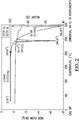
- FIG. 2 Representative thermal characteristics of Form A of 3-[5-(2-fluorophenyl)-[1,2,4]oxadiazol-3-yl]-benzoic acid are shown in FIG. 2 .
- a representative DISC thermogram, presented in FIG. 2 exhibits an endothermic event with a peak temperature at about 244 °C.
- a representative TGA thermogram, also presented in FIG. 2 exhibits a mass loss of less than about 1% of the total mass of the sample upon heating from about 33 °C to about 205 °C.
- These thermal data indicate that Form A of 3-[5-(2-fluorophenyl)-[1,2,4]oxadiazol-3-yl]-benzoic acid does not contain substantial amounts of either water or solvent in the crystal lattice.
- Form A exhibits a TGA weight loss event commencing at about 212 °C which corresponds to sublimation prior to melting.
- a single-crystal X-ray diffraction (XRD) crystal structure was obtained from a representative single crystal of Form A of 3-[5-(2-fluorophenyl)-[1,2,4]oxadiazol-3-yl]-benzoic acid.
- FIG. 9 A crystal packing diagram from the single-crystal XRD structure of Form A, viewed down the crystallographic b axis, is provided as FIG . 9 .
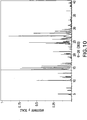
- a simulated XRPD pattern was generated for Cu radiation using PowderCell 2.3 ( PowderCell for Windows Version 2.3 Kraus, W.; Nolze, G. Federal Institute for Materials Research and Testing, Berlin Germany, EU, 1999 ) and the atomic coordinates, space group, and unit cell parameters from the single crystal data.
- a simulated XRPD pattern of Form A of 3-[5-(2-fluorophenyl)-[1,2,4]oxadiazol-3-yl]-benzoic acid is provided as FIG. 10 .
- Form A of 3-[5-(2-fluorophenyl)-[1,2,4]oxadiazol-3-yl]-benzoic acid is characterized by its physical stability when subjected to certain processing conditions.
- Form A is physically stable when stored for 6 days at one or more of the following relative humidity (RH) conditions: 53% RH at 40 °C; 75% RH at 40 °C; 50% RH at 60 °C; and 79% RH at 60 °C.
- RH relative humidity
- Form A is physically stable when milled at ambient and at sub-ambient temperatures.
- Form A is physically stable when slurried at one or more of the following conditions: in 1-BuOH for 4 days at ambient temperature; in chloroform for 2 days at 50 °C; and in dichloromethane for 2 days at 50 °C.
- Form A of 3-[5-(2-fluorophenyl)-[1,2,4]oxadiazol-3-yl]-benzoic acid was evaluated for hygroscopicity.
- Dynamic vapor sorption (DVS) analysis of moisture uptake and moisture release as a function of relative humidity (RH) were obtained upon cycling between 5% and 95% RH.
- the maximum uptake was about 0.06% of the total mass of the sample, as demonstrated in the representative Form A DVS isotherm in FIG. 3 . Accordingly, in certain embodiments, Form A is non-hygroscopic.
- FIG. 4 A representative 13 C solid-state NMR spectrum of 3-[5-(2-fluorophenyl)-[1,2,4]oxadiazol-3-yl]-benzoic acid is provided in FIG. 4 .
- Form A of 3-[5-(2-fluorophenyl)-[1,2,4]oxadiazol-3-yl]-benzoic acid is characterized by 13 C CP/MAS solid-state NMR signals located at one or more of the following approximate positions: 172.6, 167.0, 131.3, 128.4; and 117.1 ppm, when externally referenced to glycine at 176.5 ppm.
- Form A of 3-[5-(2-fluorophenyl)-[1,2,4]oxadiazol-3-yl]-benzoic acid exhibits desirable characteristics for the processing and/or manufacture of drug product containing 3-[5-(2-fluorophenyl)-[1,2,4]oxadiazol-3-yl]-benzoic acid.
- Form A of 3-[5-(2-fluorophenyl)-[1,2,4]oxadiazol-3-yll-benzoic acid has a relatively high melting point, which is an important characteristic for, inter alia, processing and manufacturing.
- Form A of 3-[5-(2-fluorophenyl)-[1,2,4]oxadiazol-3-yl]-benzoic acid was found to be substantially non-hygroscopic.
- a non-hygroscopic solid form is desirable for a variety of reasons including, for example, for processing and storage concerns.
- Form A of 3-[5-(2-fluorophenyl)-[1,2,4]oxadiazal-3-yl]-benzoic acid was found to be physically and chemically stable upon micronization, a method of particle size reduction. Physical stability is an important property of pharmaceutical materials during manufacture, processing, and storage.
- Form B crystal form of 3-[5-(2-fluorophenyl)-[1,2,4]oxadiazol-3-yl]-benzoic acid.
- Form B can be obtained by crystallization from various solvents, including, but not limited to, tetrahydrofuran (THF), hexane, isopropyl alcohol (IPA) ethyl acetate (EtOAc), acetic acid, 1-butyl acetate, acetone, dimethyl ether, diethyl ether, dioxane, water, methyl isobutyl ketone (MIBK), methyl ethyl ketone (MEK), nitromethane and or water.
- solvents including, but not limited to, tetrahydrofuran (THF), hexane, isopropyl alcohol (IPA) ethyl acetate (EtOAc), acetic acid, 1-butyl acetate, acetone, dimethyl ether, dieth
- Form B of 3-[5-(2-fluorophenyl)-1,2,4]oxadiazol-3-yl]-benzoic acid can have solvent in the crystal lattice in an amount which depends upon one or more conditions such as, but not limited to, crystallization, treatment, processing, formulation, manufacturing or storage.
- Form B can have solvent in the crystal lattice.
- Form B can be essentially free of solvent in the crystal lattice.
- the maximum combined molar equivalents of solvent per mole of 3-[5-(2-fluorophenyl)-[1,2,4]oxadiazol-3-yl]-benzoic acid in a sample of Form B can be less than 6, less than 5, less than 4, less than 3, less than 2, less than 1.5, less than 1, less than 0.75, less than 0.5, or less than 0.25 molar equivalents.
- the characteristic variably in the solvent content of Form B arises from the existence of a lattice channel which can accommodate different types and/or amounts of solvent, and which permits the addition and/or removal of solvents depending upon the particular conditions.
- the structure of Form B can represent the basis for an isostructural family of crystal forms.
- Form B can be a desolvated solvate crystal form.
- FIG. 5 A representative XRPD pattern of Form B of 3-[5-(2-fluorophenyl)-[1,2,4]oxadiazol-3-yl]-benzoic acid is provided in FIG. 5 .
- Form A of 3-[5-(2-fluorophenyl)-[1,2,4]oxadiazol-3-yl]-benzoic acid can be characterized by XRPD peaks located at one or more of the following positions: about 6.4, about 8.0, about 14.1, about 15.9, about 17.2 and about 20.1 degrees 2 ⁇ .
- Form B of 3-[5-(2-fluorophenyl)-[1,2,4]oxadiazol-3-yl]-benzoic acid is also disclosed which is characterized by an XRPD pattern substantially similar to the pattern displayed in FIG. 5 .
- Form B can exhibit a XRPD pattern substantially similar to the pattern displayed in FIG. 5 but exhibits small shifts in peak positions resulting from the presence or absence of specific solvents or water in the crystal lattice.
- Certain representative XRPD patterns of Form B are compared to Form A (top) of 3-[5-(2-fluorophenyl)-[1,2,4]oxadiazol-3-yl]-benzoic acid in FIG. 8 .
- Form B can have a XRPD pattern substantially similar to one or more of the XRPD patterns displayed in FIG. 8 .
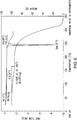
- FIG. 6 Thermal characteristics of a sample of Form B of 3-[5-(2-fluorophenyl)-[1,2,4]oxadiazol-3-yl]-benzoic acid crystallized from a 2.5:1 THF:hexane mixture are shown in FIG. 6 .
- a TGA thermogram of this Form B sample, presented in FIG. 6 exhibits two mass loss event: one mass loss event of about 5% of the total mass of the sample upon heating from about 25 °C to about 165 °C, and a second mass loss event commencing at about 220 °C.
- Hotstage microscopy revealed that the first mass loss event resulted from the loss of solvent and/or water from the crystal lattice, and the second mass loss event resulted from the sublimation of Form B.
- a Form B sample which crystallized from IpA can have about 0.1 molar equivalents of IPA and about 1 molar equivalents of water per mole of 3-[5-(2-fluorophenyl)-[1,2,4]oxadiazol-3-yl]-benzoic acid, based upon analysis using TGA and 1 H NMR.
- a Form B sample which possesses approximately 1 molar equivalent of water per molar equivalent of 3-[5-(2-fluorophenyl)-[1,2,4]oxadiazol-3-yl]-benzoic acid can be termed a monohydrate.
- Form B sample which was treated by vacuum drying at 105 °C for 10 min can exhibit a total weight loss of 2% of the mass of the sample when subsequently analyzed by TGA from about 25 to about 185 °C.
- Form B characteristics which are dependent upon the quantity and/or identity of the solvent and/or water in the crystal lattice ( e.g ., mass loss upon heating or drying) can exhibit variation with respect to the total quantity or identity of solvent and/or water in the crystal lattice.
- the XRPD pattern of Form B can exhibit peaks characteristic of Form B as described supra, but with minor peak shifting arising from differences in quantity and/or identity of the solvent and/or water in the Form B crystal lattice.
- Representative XRPD patterns illustrating peak shifting among certain Form B samples are overlaid in FIG. 8 (second from top to bottom).
- Form B can be physically stable upon storage for 6 days at one of the following relative humidity (RH) conditions: 53% RH at 40 °C; 75% RH at 40 °C; and 50% RH at 60 °C.
- RH relative humidity
- Form B can be substantially non-hygroscopic, as illustrated by the representative Form B DVS isotherm in FIG . 7 .
- Form B can exhibit partial conversion to Form A upon storage for 6 days at the condition of 79% RH at 60 °C.
- Form B can be physically stable under compression alone and under compression in the presence of a 1:1 mixture of t-BuOH and water.
- Form B can be physically stable when slurried for 1 day at ambient temperature in a 1:1 mixture of THF and heptane. Conversion of Form B to Form A can be observed upon slurrying Form B in either methyl isobutyl ketone or a 1:1 mixture of dioxane and water.
- the present invention provides a crystal form of the invention for use in methods of treating, preventing and managing diseases or disorders ameliorated by the suppression of premature translation termination and/or nonsense-mediated mRNA decay in a patient wherein the methods comprise administering to a patient in need thereof an effective amount of the crystal form of 3-[5-(2-fluoro-phenyl)-[1,2,4]oxadiazol-3-yl]-benzoic acid.
- the present invention provides a crystal form of the invention for use in methods for the treatment, prevention or management of any disease that is associated with a gene exhibiting premature translation termination and/or nonsense-mediated mRNA decay.
- the disease is due, in part, to the lack of expression of the gene resulting from a premature stop codon.
- Specific examples of genes which may exhibit premature translation termination and/or nonsense-mediated mRNA decay and diseases associated with premature translation termination and/or nonsense-mediated mRNA decay are found in U.S. Patent Application Publication No. 2005-0233327 , titled: Methods For Identifying Small Molecules That Modulate Premature Translation Termination And Nonsense Mediated mRNA Decay.
- Diseases or disorders associated with or ameliorated by the suppression of premature translation termination and/or nonsense-mediated mRNA decay include, but are not limited to: a genetic disease, cancer, an autoimmune disease, a blood disease, a collagen disease, diabetes, a neurodegenerative disease, a proliferative disease, a cardiovascular disease, a pulmonary disease, an inflammatory disease or central nervous system disease.
- Specific genetic diseases within the scope of the methods of the invention include, but are not limited to, multiple endocrine neoplasia (type 1, 2 and 3), amyloidosis, mucopolysaccharidosis (type I and III), congenital adrenal hypoplasia, adenomatous poliposis coli, Von Hippel Landau Disease, Menkes Syndrome, hemophilia A, hemophilia B, collagen VII, Alagille Syndrome, Townes-Brocks Syndrome, rhabdoid tumor, epidermolysis bullosa, Hurler's Syndrome, Coffin-Lowry Syndrome, aniridia, Charcot-Maria-Tooth Disease, myotubular myopathy, X-linked myotubular myopathy, X-linked chondrodysplasia, X-linked agammaglobulinemia, polycystic kidney disease, spinal muscular atrophy, familial adenomatous poliposis, pyruvate dehydrogenase deficiency,
- the genetic disease is an autoimmune disease.
- the autoimmune disease is rheumatoid arthritis or graft versus host disease.
- the genetic disease is a blood disease.
- the blood disease is hemophilia A, Von Willebrand disease (type 3), ataxia-telangiectasia, b-thalassemia or kidney stones.
- the genetic disease is a collagen disease.
- the collagen disease is osteogenesis imperfecta or cirrhosis.
- the genetic disease is diabetes.
- the genetic disease is an inflammatory disease.
- the inflammatory disease is arthritis.
- the genetic disease is a central nervous system disease.
- the central nervous system disease is a neurodegenerative disease.
- the central nervous system disease is multiple sclerosis, muscular dystrophy, Duchenne muscular dystrophy, Alzheimer's disease, Tay Sachs disease, late infantile neuronal ceroid lipofuscinosis (LINCL) or Parkinson's disease.
- the genetic disease is cancer.
- the cancer is of the head and neck, eye, skin, mouth, throat, esophagus, chest, bone, lung, colon, sigmoid, rectum, stomach, prostate, breast, ovaries, kidney, liver, pancreas, brain, intestine, heart or adrenals.
- the cancer can be primary or metastatic. Cancers include solid tumors, hematological cancers and other neoplasias.
- the cancer is associated with tumor suppressor genes (see e.g. Garinis et al. 2002, Hum Gen 111:115-117 ; Meyers et al.1998, Proc. Natl. Acad. Sci. USA, 95: 15587-15591 ; Kung et al. 2000, Nature Medicine 6(12): 1335-1340 .
- tumor suppressor genes include, but are not limited to, APC, ATM, BRAC1, BRAC2, MSH1, pTEN, Rb, CDKN2, NF1, NF2, WT1, and p53.
- the tumor suppressor gene is the p53 gene.
- Nonsense mutations have been identified in the p53 gene and have been implicated in cancer.
- Several nonsense mutations in the p53 gene have been identified (see, e.g., Masuda et al., 2000, Tokai J Exp Clin Med. 25(2):69-77 ; Oh et al., 2000, Mol Cells 10(3):275-80 ; Li et al., 2000, Lab Invest. 80(4):493-9 ; Yang et al., 1999, Zhonghua Zhong Liu Za Zhi 21(2):114-8 ; Finkelstein et al., 1998, Mol Diagn.
- diseases to be treated, prevented or managed by administering to a patient in need thereof an effective amount of a crystal form of 3-[5-(2-fluoro-phenyl)-[1,2,4]oxadiazol-3-yl]-benzoic acid of the invention include, but are not limited to, solid tumor, sarcoma, carcinomas, fibrosarcoma, myxosarcoma, liposarcoma, chondrosarcoma, osteogenic sarcoma, chordoma, angiosarcoma, endotheliosarcoma, lymphangiosarcoma, lymphangioendotheliosarcoma, synovioma, mesothelioma, Ewing's tumor, leiomyosarcoma, rhabdomyosarcoma, colon carcinoma, pancreatic cancer, breast cancer, ovarian cancer, prostate cancer, squamous cell carcinoma, basal cell carcinoma, adenocarcinoma, sweat gland carcinoma
- the present invention provides pharmaceutical compositions and single unit dosage forms comprising a crystal form of the invention 3-[5-(2-fluorophenyl)-[1,2,4]oxadiazol-3-yl]-benzoic acid can be in form of its pharmaceutically acceptable polymorph, prodrug, salt, solvate, hydrate, or clathrate.
- Individual dosage forms of the invention may be suitable for oral, mucosal (including sublingual, buccal, rectal, nasal, or vaginal), parenteral (including subcutaneous, intramuscular, bolus injection, intraarterial, or intravenous), transdermal, or topical administration.
- Single unit dosage forms of the invention are suitable for oral, mucosal (e.g., nasal, sublingual, vaginal, buccal, or rectal), parenteral (e.g ., subcutaneous, intravenous, bolus injection, intramuscular, or intraarterial), or transdermal administration to a patient.
- mucosal e.g., nasal, sublingual, vaginal, buccal, or rectal
- parenteral e.g ., subcutaneous, intravenous, bolus injection, intramuscular, or intraarterial
- transdermal administration to a patient.
- composition, shape, and type of dosage forms of the invention will typically vary depending on their use. These and other ways in which specific dosage forms encompassed by this invention will vary from one another will be readily apparent to those skilled in the art, See, e.g., Remington's Pharmaceutical Sciences, 18th ed., Mack Publishing, Easton PA (1995 ).
- Typical pharmaceutical compositions and dosage forms comprise one or more carriers, excipients or diluents.
- Suitable excipients are well known to those skilled in the art of pharmacy, and non-limiting examples of suitable excipients are provided herein. Whether a particular excipient is suitable for incorporation into a pharmaceutical composition or dosage form depends on a variety of factors well known in the art including, but not limited to, the way in which the dosage form will be administered to a patient.
- oral dosage forms such as tablets may contain excipients not suited for use in parenteral dosage forms. The suitability of a particular excipient may also depend on the specific active ingredients in the dosage form.
- the 3-[5-(2-fluorophenyl)-[1,2,4]oxadiazol-3-yl]-benzoic acid product obtained from the synthesis described supra may be crystallized or recrystallized in a number of ways to yield the solid forms of the invention. Provided below are several non-limiting examples.
- the 3-[5-(2-fluorophenyl)-[1,2,4]oxadiazol-3-yl]-benzoic acid product obtained as described herein was crystallized as Form A by the method of slow evaporation from the each one of the following solvents: acetonitrile; t -butanol; isopropyl alcohol; and isopropyl ether.
- a solution of 3-[5-(2-fluorophenyl)-[1,2,4]oxadiazol-3-yl]-benzoic acid was prepared in the indicated solvent and sonicated between aliquot additions to assist in dissolution. Once a mixture reached complete dissolution, as judged by visual observation, the solution was filtered through a 0.2- ⁇ m filter.
- the filtered solution was allowed to evaporate at a temperature of 60 °C (50 °C in the case of t-butanol), in a vial covered with aluminum foil containing pinhole(s).
- the solids that formed were isolated and characterized by XRPD as Form A.
- the 3-[5-(2-fluorophenyl)-[1,2,4]oxadiazol-3-yl]-benzoic acid product obtained as described herein was crystallized as Form A by the method of fast evaporation from each one of the following solvents or solvent systems: 1-butanol; dimethoxyether; t- butanol; a mixture of dimethyl formamide and water; isopropyl ether; and a mixture of t- butanol:water (in a 3:2 ratio), 1 molar equivalent methanol and 1 molar equivalent sodium chloride. Solutions were prepared in the indicated solvent or solvent system and sonicated between aliquot additions to assist in dissolution.
- the solution was filtered through a 0.2- ⁇ m filter.
- the filtered solution was allowed to evaporate at a temperature of 60 °C (50 °C in the cases of t -butanol and isopropyl ether; 81 °C in the case of the t- butanol/water/methanol/NaCl system) in an open vial.
- the solids that formed were isolated and characterized by XRPD as Form A.
- a slurry was prepared by adding enough Form B solids to a given solvent so that excess solids were present. The mixture was then agitated in a sealed vial at a temperature of 60 °C. After 2 days, the solids were isolated by vacuum filtration and characterized by XRPD as Form A with a minor amount of Form B.
- Form B was sublimed at 160-208 °C, under vacuum, for 35 minutes to yield white needles which were characterized by XRPD as Form A.
- Form B was melted at 255 °C, followed by direct placement into liquid nitrogen to yield crystalline material which was characterized by XRPD as Form A.
- Form B was melted at 255 °C and then cooled slowly to yield crystalline material which was characterized by XRPD as Form A.
- the 3-[5-(2-fluorophenyl)-[1,2,4]oxadiazol-3-yl]-benzoic acid product obtained as described herein was crystallized as Form B by the method of slow evaporation from each one of the following solvents: acetone; dimethyl ether; and methyl ethyl ketone.
- a solution of 3-[5-(2-fluorophenyl)-[1,2,4]oxadiazol-3-yl]-benzoic acid was prepared in the indicated solvent and sonicated between aliquot additions to assist in dissolution. Once a mixture reached complete dissolution, as judged by visual observation, the solution was filtered through a 0.2- ⁇ m filter. The filtered solution was allowed to evaporate at a temperature of 50 °C (60 °C in the case of methyl ethyl ketone), in a vial covered with aluminum foil containing pinhole(s).
- the 3-[5-(2-fluorophenyl)-[1,2,4]oxadiazol-3-yl]-benzoic acid product obtained as described herein was crystallized as Form B by the method of fast evaporation from each one of the following solvents or solvent systems: acetone, acetic acid, 1-butyl acetate; dimethyl ether; THF and diethyl ether; dioxane; methyl ethyl ketone; nitromethane; methyl iso -butyl ketone; THF:hexane (2.5:1); and dioxane:water (3:2). Solutions were prepared in the indicated solvent or solvent system and sonicated between aliquot additions to assist in dissolution.
- the solution was filtered through a 0.2- ⁇ m filter.
- the filtered solution was allowed to evaporate at an elevated temperature in an open vial.
- the solids that formed were isolated and characterized by XRPD as Form B.
- 3-[5-(2-fluaropltenyl)-[1,2,4]oxadiazol-3-yl]-benzoic acid was slurried on an orbit shaker in 1-butyl acetate (13mL) at room temperature for 3 days. After three days the solvent was removed by pipette, dried and characterized by XRPD as Form B (Table 5)
- XRPD analysis as form B is illustrated in Table 4.
- Certain XRPD analyses were performed using a Shimadzu XRD-6000 X-ray powder diffractometer using Cu K ⁇ radiation.
- the instrument is equipped with a long fine focus X-ray tube.
- the tube voltage and amperage were set to 40 kV and 40 mA, respectively.
- the divergence and scattering slits were set at 1° and the receiving slit was set at 0.15 mm.
- Diffracted radiation was detected by a NaI scintillation detector.
- a ⁇ -2 ⁇ continuous scan at 3°/min (0.4 sec/0.02° step) from 2.5 to 40° 2 ⁇ was used.
- a silicon standard was analyzed to check the instrument alignment. Data were collected and analyzed using XRD-6100/7000 v. 5.0. Samples were prepared for analysis by placing them in a sample holder.
- Certain XRPD analyses were performed using an Inel XRG-3000 diffractometer equipped with a CPS (Curved Position Sensitive) detector with a 2 ⁇ range of 120°. Real time data were collected using Cu-K ⁇ radiation at a resolution of 0.03° 2 ⁇ . The tube voltage and amperage were set to 40 kV and 30 mA, respectively. The monochromator slit was set at 5 mm by 160 ⁇ m. The pattern is displayed from 2.5-40° 2 ⁇ . An aluminum sample holder with silicon insert was used /or/ Samples were prepared for analysis by packing them into thin-walled glass capillaries. Each capillary was mounted onto a goniometer head that is motorized to permit spinning of the capillary during data acquisition. The samples were analyzed for 300 sec. Instrument calibration was performed using a silicon reference standard.
- Certain XRPD patterns were collected with a Bruker D-8 Discover diffractometer and Bruker's General Area Diffraction Detection System (GADDS, v. 4.1.20).
- An incident beam of Cu K ⁇ radiation was produced using a fine-focus tube (40 kV, 40 mA), a Göbel mirror, and a 0.5 mm double-pinhole collimator.
- a specimen of the sample was packed in a capillary and secured to a translation stage.
- a video camera and laser were used to position the area of interest to intersect the incident beam in transmission geometry.
- the incident beam was scanned to optimize orientation statistics.
- a beam-stop was used to minimize air scatter from the incident beam at low angles.
- Diffraction patterns were collected using a Hi-Star area detector located 15 cm from the sample and processed using GADDS.
- the intensity in the GADDS image of the diffraction pattern was integrated using a step size of 0.04° 2 ⁇ .
- the integrated patterns display diffraction intensity as a function of 2 ⁇ . Prior to the analysis a silicon standard was analyzed to verify the Si 111 peak position.
- DSC Differential scanning calorimetry
- Thermogravimetric (TG) analyses were performed using a TA Instruments 2950 thermogravimetric analyzer. Each sample was placed in an aluminum sample pan and inserted into the TG furnace. The furnace was (first equilibrated at 35 °C, then) heated under nitrogen at a rate of 10 °C/min, up to a final temperature of 350 °C. Nickel and AlumelTM were used as the calibration standards.
- Moisture sorption/desorption data were collected on a VTI SGA-100 Vapor Sorption Analyzer. Sorption and desorption data were collected over a range of 5% to 95% relative humidity (RH) at 10% RH intervals under a nitrogen purge. Samples were not dried prior to analysis. Equilibrium criteria used for analysis were less than 0.0100% weight change in 5 minutes, with a maximum equilibration time of 3 hours if the weight criterion was not met. Data were not corrected for the initial moisture content of the samples. NaCl and PVP were used as calibration standards.
- Hotstage microscopy was performed using a Linkam FTIR 600 hotstage with a TMS93 controller mounted on a Leica DM LP microscope equipped with a Spot Insight color camera for acquiring images. Images are acquired using Spot Advanced software version 4.5.9 build date June 9,2005, unless noted. The camera was white balanced prior to use. Samples were observed and acquired using a 20 ⁇ 0.40 N.A. long working distance objective with crossed polars and first order red compensator. Samples were placed on a coverslip. Another coverslip was then placed over the sample. Each sample was visually observed as the stage was heated. The hotstage was calibrated using USP melting point standards.
- Samples were prepared for solid-state NMR spectroscopy by packing them into 4 mm PENCIL type zirconia rotors. Scans were collected at ambient temperature with a relaxation delay of 120.000 s, a pulse width of 2.2 ⁇ s (90.0 deg), an acquisition time of 0.030 s, and a spectral width of 44994.4 Hz (447.520 ppm). A total of 100 scans were collected. Cross polarization was achieved with using 13 C as the observed nucleus and 1 H as the decoupled nucleus with a contact time of 10.0 ms. A magic angle spinning rate of 12000 Hz was used. Spectra are externally referenced to glycine at 176.5 ppm.
- the crystals utilized for Form A structure determination were prepared by sublimation of the Form A. The crystals were removed from the cold finger after the sample was heated between 155-206 °C for approximately 90 minutes. (Table 3 Experimental)
- a colorless needle of C 15 H 9 FN 2 O 3 having approximate dimensions of 0.44 x 0.13 x 0.03 mm, was mounted on a glass fiber in random orientation. Preliminary examination and data collection were performed with Mo K ⁇ radiation ( ⁇ 0.71073 A) on a Nonius KappaCCD diffractometer. Refinements were performed on an LINUX PC using SHELX97 ( Sheldrick, G. M. SHELX97, A Program for Crystal Structure Refinement, University of Gottingen, Germany, 1997 ).
- Cell constants and an orientation matrix for data collection were obtained from least-squares refinement using the setting angles of 13862 reflections in the range 2° ⁇ ⁇ 24°.
- the refined mosaicity from DENZO/SCALEPACK Otwinowski, Z.; Minor, W. Methods Enzymol. 1997, 276, 307 ) was 0.33 ° indicating good crystal quality.
- the space group was determined by the program XPREP ( Bruker, XPREP in SHELXTL v. 6.12., Bruker AXS Inc., Madison, WI, USE, 2002 ).
- the data were collected to a maximum 2 ⁇ value of 2469°, at a temperature of 150 ⁇ 1 K.
- the structure was solved by direct methods using SIR2004 ( Burla, M.C., et al., J. Appl. Cryst. 2005, 38, 381 ). The remaining atoms were located in succeeding difference Fourier syntheses. Hydrogen atoms were included in the refinement but restrained to ride on the atom to which they are bonded. The structure was refined in full-matrix least-squares by minimizing the function: ⁇ ⁇ w F o 2 - F c 2 2
- the standard deviation of an observation of unit weight was 1.01.
- the highest peak in the final difference Fourier had a height of 0.64 e/ ⁇ 3 .
- the minimum negative peak had a height of -0.33 e/ ⁇ 3 .
- a calculated XRPD pattern was generated for Cu radiation using PowderCell 2.3 ( PowderCell for Windows Version 2.3 Kraus, W.; Nolze, G. Federal Institute for Materials Research and Testing, Berlin Germany, EU, 1999 ) and the atomic coordinates, space group, and unit cell parameters from the single crystal data.
- PowderCell 2.3 PowderCell for Windows Version 2.3 Kraus, W.; Nolze, G. Federal Institute for Materials Research and Testing, Berlin Germany, EU, 1999
- the space group was determined to be P 2 1 /n (no. 14), which is an achiral space group.
- the quality of the structure obtained is high to moderate, as indicated by the R -value of 0.062 (6.2%). Usually R -values in the range of 0.02 to 0.06 are quoted for the most reliably determined structures. While the quality of the crystal structure is slightly outside the accepted range for most reliably determined structures, the data is of sufficient quality to ensure to location of the atomic positions in the molecular structure is correct.
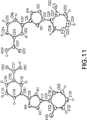
- FIG. 11 An ORTEP drawing of Form A is shown in FIG. 11 .
- the asymmetric unit shown in contains a dimer of two molecules arranged to form a possible hydrogen bond through the adjacent carboxylic acid groups. Since the acid protons were not located from the Fourier map it is assumed the molecules are neutral.
- a packing diagram of Form A, viewed down the crystallographic b axis, is shown in FIG. 9 .
- the simulated XRPD pattern of Form A shown in FIG. 10 , was generated from the single crystal data, and is in good agreement with the experimental XRPD pattern of Form A (see, e.g., FIG. 1 ). Differences in intensities can arise from preferred orientation. Preferred orientation is the tendency for crystals, usually plates or needles, to align themselves with some degree of order. Preferred orientation can affect peak intensities, but not peak positions, in XRPD patterns. Slight shifts in peak location can arise from the fact that the experimental powder pattern was collected at ambient temperature, and the single crystal data was collected at 150 K. Low temperatures are used in single crystal analysis to improve the quality of the structure. Table 1 shows the fractional atomic coordinates for the asymmetric unit of Form A.
- Table 1 Positional Parameters and Their Estimated Standard Deviations for Form A Atom x y z U( ⁇ 2 ) F(122) 0.43198(12) 0.7655(8) -0.17546(10) 0.0487(10) F(222) -0.20343(15) 0.7129(10) 0.06378(14) 0.0781(14) O(13) 0.42977(13) 0.4875(8) -0.08927(11) 0.0324(10) O(23) -0.12941(13) 0.4507(9) 0.12653(12) 0.0402(10) O(151) 0.25519(13) 0.4795(9) 0.10765(12) 0.0382(10) O(152) 0.29215(13) 0.2155(9) 0.17515(12) 0.0403(10) O(251) 0.16226(13) 0.4813(9) 0.15012(12) 0.0385(10) O(252) 0.19645(13) 0.1939(9) 0.21659(12) 0.0393(10) N(11
- I/I o relative intensity b.
- Bold denotes characteristic peak set (no peaks within 0.2 °2 ⁇ relative to PTC 124 Form B files 169490, 172912, 172173, 170901, 169284, and 168717. Table 4.
- I/I o relative intensity.
- Bold denotes characteristic peak set compared to Form A. Table 5. Peak Positions of Form B (shifted 1) XRPD Pattern (file 168717) (disclosed as reference) Position (°2 ⁇ ) a d-spacing I I/Io c 6.42 13.75 214 34 7.00 12.63 23 4 7.89 11.20 98 15 10.85 8.15 97 15 12.61 7.01 117 18 12.92 6.85 29 5 13.47 6.57 208 33 13.97 6.33 558 88 15.81 5.60 635 100 16.45 5.38 143 23 17.12 5.18 320 50 20.05 4.42 544 86 21.05 4.22 66 10 23.92 3.72 110 17 24.28 3.66 21 3 27.00 3.30 48 8 27.39 3.25 126 20 27.84 3.20 32 5 28.04 3.18 68 11 28.94 3.08 90 14 31.10 2.87 35 6 32.58 2.75 42 7 36.11 2.49 89 14 37.71 2.38 19 3 38.15 2.36 20 3 38
- I/I o relative intensity b.
- Bold denotes characteristic peak set compared to Form A. Table 6. Peak Positions of Form B (shifted 2) XRPD Pattern (file 172972) (disclosed as reference) Position (°2 ⁇ ) a d - spacing I I/I o c 6.10 14.48 155 3 6.38 13.84 1068 23 6.54 13.50 1371 29 7.10 12.44 270 6 8.02 11.02 653 14 10 .
- I/I o relative intensity b.
- Bold denotes characteristic peak set compared to Form A.
- I/I o relative intensity.
- Bold denotes characteristic peak set compared to Form A.
- Table 8 Peak Positions of Form B (PO) XRPD Pattern (file 170901) (disclosed as reference) Position (°2 ⁇ ) a d-spacing I I/Io c 6.22 14.20 356 8 6.51 13.57 1332 30 7.13 12.39 171 4 8.17 10.81 727 17 10.91 8.11 484 11 12.87 6.87 355 8 13.80 6.41 930 21 14.12 6.27 4251 97 14.28 6.20 2569 59 15.78 5.61 172 4 16.23 5.46 4368 100 16.54 5.36 684 16 17.15 5.17 1377 32 20.33 4.36 1057 24 21.22 4.18 475 11 21.36 4.16 290 7 23.94 3.71 578 13 24.30 3.66 201 5 27.30 3.26 217 5 27.58 3.23 303 7 28.00 3.18 262 6 28.74 3.10 239 5 28.96 3.08 327 7 32.70 2.74
- I/I o relative intensity.
- Bold denotes characteristic peak set compared to Form A.
- Table 9 Peak Positions of Form B shifted XRPD Pattern (file 169284) (disclosed as reference) Position (°2 ⁇ ) a d-spacing I I/Io c 6.04 14.62 102 5 6.49 13.61 2151 100 7.91 11.17 240 11 10.92 8.10 252 12 12.61 7.01 304 14 12.92 6.85 263 12 13.10 6.75 71 3 13.42 6.59 103 5 13.82 6.40 177 8 13.99 6.32 565 26 15.40 5.75 99 5 15.76 5.62 1580 73 16.51 5.37 516 24 17.15 5.17 334 16 19.92 4.45 606 28 20.04 4.43 624 29 21.01 4.23 101 5 23.92 3.72 80 4 24.28 3.66 285 13 24.48 3.63 81 4 26.77 3.33 161 7 27.14 3.28 259 12 27.40 3.25 1413 66 27.74 3.21 175 8 28.09
Landscapes
- Health & Medical Sciences (AREA)
- Chemical & Material Sciences (AREA)
- Organic Chemistry (AREA)
- Veterinary Medicine (AREA)
- General Health & Medical Sciences (AREA)
- Life Sciences & Earth Sciences (AREA)
- Medicinal Chemistry (AREA)
- Public Health (AREA)
- Animal Behavior & Ethology (AREA)
- Pharmacology & Pharmacy (AREA)
- Engineering & Computer Science (AREA)
- Bioinformatics & Cheminformatics (AREA)
- Chemical Kinetics & Catalysis (AREA)
- Nuclear Medicine, Radiotherapy & Molecular Imaging (AREA)
- General Chemical & Material Sciences (AREA)
- Diabetes (AREA)
- Immunology (AREA)
- Hematology (AREA)
- Neurology (AREA)
- Biomedical Technology (AREA)
- Neurosurgery (AREA)
- Epidemiology (AREA)
- Physical Education & Sports Medicine (AREA)
- Obesity (AREA)
- Endocrinology (AREA)
- Orthopedic Medicine & Surgery (AREA)
- Rheumatology (AREA)
- Heart & Thoracic Surgery (AREA)
- Cardiology (AREA)
- Urology & Nephrology (AREA)
- Hospice & Palliative Care (AREA)
- Psychiatry (AREA)
- Transplantation (AREA)
- Tropical Medicine & Parasitology (AREA)
- Ophthalmology & Optometry (AREA)
- Child & Adolescent Psychology (AREA)
- Vascular Medicine (AREA)
- Pain & Pain Management (AREA)
- Pulmonology (AREA)
- Psychology (AREA)
Claims (17)
- Kristalline Form der Verbindung nach Formel (I):

- Kristalline Form nach Anspruch 1, die die folgenden Einheitszellen-Parameter hat, wenn bei 150 K gemessen: a = 24.2240 Å; b = 3.74640 Å; c = 27.4678 Å; a = 90°; β = 92.9938°; γ = 90°; V = 2489.38(17) Å3; Z = 8; berechnete Dichte (dcalc, g cm-3) ist 1.517 g cm-3; und die Raumgruppe ist P21/n (no. 14).
- Kristalline Form nach Anspruch 1 oder 2, die fraktionelle atomare Koordinaten hat, die gleich den folgenden Koordinaten sind:
Atom x y z U(Å 2) F(122) 0.43198(12) 0.7655(8) -0.17546(10) 0.0487(10) F(222) -0.20343(15) 0.7129(10) 0.06378(14) 0.0781(14) O(13) 0.42977(13) 0.4875(8) -0.08927(11) 0.0324(10) O(23) -0.12941(13) 0.4507(9) 0.12653(12) 0.0402(10) O(151) 0.25519(13) 0.4795(9) 0.10765(12) 0.0382(10) O(152) 0.29215(13) 0.2155(9) 0.17515(12) 0.0403(10) O(251) 0.16226(13) 0.4813(9) 0.15012(12) 0.0385(10) O(252) 0.19645(13) 0.1939(9) 0.21659(12) 0.0393(10) N(11) 0.35817(15) 0.5856(9) -0.04386(14) 0.0279(10) N(14) 0.44373(16) 0.3409(10) -0.04263(14) 0.0327(12) N(21) -0.04134(16) 0.5165(9) 0.11065(14) 0.0305(12) N(24) -0.09772(17) 0.3201(11) 0.16787(15) 0.0388(14) C(12) 0.37827(18) 0.6256(11) -0.08637(17) 0.0266(14) C(15) 0.40019(19) 0.4091(11) -0.01823(17) 0.0261(14) C(22) -0.0926(2) 0.5601(12) 0.09502(18) 0.0319(15) C(25) -0.0471(2) 0.3690(11) 0.15580(17) 0.0302(15) C(121) 0.35225(19) 0.7961(11) -0.12930(17) 0.0291(14) C(122) 0.3784(2) 0.8567(12) -0.17244(18) 0.0345(15) C(123) 0.3519(2) 1.0117(12) -0.21257(19) 0.0407(17) C(124) 0.2973(2) 1.1101(13) -0.21014(19) 0.0416(17) C(125) 0.2694(2) 1.0543(12) -0.1677(2) 0.0409(17) C(126) 0.2966(2) 0.8996(12) -0.12784(18) 0.0349(15) C(151) 0.39702(19) 0.3013(11) 0.03319(16) 0.0260(14) C(152) 0.34897(19) 0.3623(11) 0.05704(16) 0.0261(15) C(153) 0.34631(18) 0.2594(11) 0.10554(16) 0.0253(14) C(154) 0.39150(19) 0.0970(11) 0.13029(17) 0.0279(14) C(155) 0.43977(19) 0.0412(11) 0.10614(17) 0.0291(15) C(156) 0.44250(19) 0.1421(11) 0.05765(17) 0.0292(15) C(157) 0.2955(2) 0.3188(12) 0.13209(18) 0.0312(15) C(221) -0.1109(2) 0.7083(12) 0.04727(19) 0.0388(17) C(222) -0.1643(3) 0.7823(15) 0.0331(2) 0.053(2) C(223) -0.1825(3) 0.9272(15) -0.0122(3) 0.064(2) C(224) -0.1415(4) 0.9930(16) -0.0433(3) 0.068(3) C(225) -0.0870(3) 0.9202(15) -0.0316(2) 0.066(2) C(226) -0.0678(3) 0.7766(12) 0.01365(17) 0.0543(19) C(251) 0.00110(19) 0.2695(11) 0.18877(17) 0.0300(15) C(252) 0.05426(19) 0.3352(11) 0.17481(17) 0.0289(15) C(253) 0.09949(19) 0.2449(11) 0.20524(17) 0.0277(15) C(254) 0.0919(2) 0.0940(11) 0.25087(17) 0.0296(15) C(255) 0.0389(2) 0.0335(11) 0.26491(17) 0.0300(15) C(256) -0.0064(2) 0.1185(12) 0.23430(17) 0.0322(15) C(257) 0.1559(2) 0.3165(12) 0.18902(17) 0.0305(15) H(123) 0.371 1.050 -0.241 0.048 H(124) 0.278 1.217 -0.238 0.050 H(125) 0.232 1.123 -0.166 0.049 H(126) 0.278 0.862 -0.099 0.042 H(151) 0.227 0.491 0.125 0.057 H(152) 0.318 0.473 0.041 0.031 H(154) 0.389 0.025 0.163 0.033 H(155) 0.471 -0.066 0.123 0.035 H(156) 0.475 0.103 0.041 0.035 H(223) -0.220 0.975 -0.020 0.077 H(224) -0.151 1.094 -0.074 0.082 H(225) -0.061 0.969 -0.055 0.080 H(226) -0.030 0.729 0.021 0.065 H(252) 0.226 0.213 0.202 0.059 H(254) 0.123 0.034 0.272 0.035 H(255) 0.033 -0.068 0.296 0.036 H(256) -0.043 0.074 0.244 0.039 H(25A) 0.060 0.443 0.144 0.035 - Kristalline Form nach Anspruch 1, die ein Röntgenpulverdiffraktometriemuster hat, das, wenn unter Verwendung von Cu Ka Strahlung gemessen, mindestens eine Peakposition (°2θ±0.2) umfasst ausgewählt aus der Gruppe bestehend aus 10.10, 11.54, 14.55, 14.88 und 15.07.
- Kristalline Form nach Anspruch 1, die durch 13C CP/MAS Festphasen NMR Signale an einer oder mehreren der folgenden Positionen charakterisiert ist: 172.6, 167.0, 131.3, 128.4 und 117.1 ppm, wenn extern auf Glycin bei 176.5 ppm bezogen.
- Kristalline Form nach einem der Ansprüche 1 bis 5, die ein Thermogram einer dynamischen Differenzkalorimetrie hat, das ein endothermes Ereignis mit einer Peaktemperatur bei 244 °C hat.
- Kristalline Form nach einem der Ansprüche 1 bis 5, das ein Thermogram einer thermogravimetrischen Analyse hat, das einen Masseverlust von weniger als 1% der Gesamtmasse der Probe bei Erwärmen von 33 °C auf 205 °C hat.
- Kristalline Form nach einem der Ansprüche 1 bis 5, die nicht hygroskopisch ist.
- Kristalline Form nach einem der Ansprüche 1 bis 5, die eine Reinheit von mehr als 90% hat.
- Verfahren zur Herstellung der kristallinen Form nach einem der Ansprüche 1 bis 9, wobei das Verfahren das Kristallisieren der kristallinen Form nach einem der Ansprüche 1 bis 9 aus einem Lösungsmittel umfasst.
- Verfahren nach Anspruch 10, wobei das Kristallisieren der kristallinen Form aus einem Lösungsmittel umfasst:(a) Kristallisieren der kristallinen Form nach einem der Ansprüche 1 bis 9 aus Methanol, tertiärem Butylalkohol (t-BuOH), 1-Butylalkohol (1-BuOH), Acetonitril, Isopropylalkohol (IPA), Isopropylether, Dimethylformamid, Heptan, Isopropylacetat (IPOAc), Toluol und/oder Wasser; oder(b) Kristallisieren der kristallinen Form nach einem der Ansprüche 1 bis 9 durch langsame Verdampfung von Acetonitril; t-Butanol; Isopropylalkohol; oder Isopropylether; oder(c) Kristallisieren der kristallinen Form nach einem der Ansprüche 1 bis 9 durch schnelle Verdampfung aus 1-Butanol; Dimethoxyether; t-Butanol; einer Mischung von Dimethylformamid und Wasser; Isopropylether; oder einer Mischung von t-Butanol:Wasser (in einem Verhältnis von 3:2), 1 molarem Äquivalent Methanol und 1 molarem Äquivalent Natriumchlorid.
- Pharmazeutische Zusammensetzung umfassend die kristalline Form nach einem der Ansprüche 1 bis 9 und optional einen oder mehrere Träger, Exzipienten oder Verdünnungsmittel.
- Pharmazeutische Zusammensetzung nach Anspruch 12 für orale, mukosale, parenterale, transdermale oder topikale Verabreichung.
- Pharmazeutische Zusammensetzung nach Anspruch 12 oder 13, wobei die pharmazeutische Zusammensetzung eine orale Einzeldosisform ist.
- Kristalline Form nach einem der Ansprüche 1 bis 9 für die Verwendung in einem Verfahren zur Modulierung der Suppression von verfrühter Translationsterminierung und/oder nonsense-mediated mRNA Decay in einer Zelle durch In-Kontakt-bringen der Zelle mit der kristallinen Form.
- Kristalline Form nach einem der Ansprüche 1 bis 9 für die Verwendung in einem Verfahren zur Behandlung oder Prävention einer Erkrankung oder Krankheit, die mit einem verfrühten Stopkodon verbunden ist.
- Kristalline Form für die Verwendung nach Anspruch 16,
wobei die Erkrankung oder Krankheit, die mit einem verfrühten Stopkodon verbunden ist, multiple endokrine Neoplasie (Typ 1, 2 und 3), Amyloidose, Mucopolysaccharidose (Typ I und III), kongenitale adrenale Hypoplasie, adenomatöse Poliposis coli, Von Hippel Landau Erkrankung, Menkes Syndrom, Hämophilie A, Hämophilie B, Kollagen VII, Alagille Syndrom, Townes-Brocks Syndrom, rhabdoider Tumor, Epidermolysis bullosa, Hurler's Syndrom, Coffin-Lowry Syndrom, Aniridia, Charcot-Maria-Tooth Erkrankung, myotubulare Myopathie, X-vernetze myotubulare Myopathie, X-vernetzte Chondrodysplasie, X-vernetzte Agammaglobulinämie, polyzystische Nierenerkrankung, spinale muskuläre Atrophie, familiäre adenomatöse Poliposis, Pyruvat Dehydrogenase Deffizienz, Phenylketonurie, Neurofibromatose 1, Neurofibromatose 2, Alzheimer's Erkrankung, Tay Sachs Erkrankung, Rett Syndrom, Hermansky-Pudlak Syndrom, ektodermale Dysplasie/Hautfragilitätssyndrom, Leri-Weill Dyschondrosteose, Rachitis, Hypophosphatämie, Adrenoleukodystrophie, gyrate Atrophie, Arteriosklerose, sensorineurale Taubheit, Dystonie, Zahnerkrankung, akute intermittente Porphyrie, Cowden Erkrankung, Herlitz epidermolysis bullosa, Wilson Erkrankung, Treacher-Collins Syndrom, pyruvate Kinasedefizienz, Riesenwuchs, Zwergenwuchs, Hypothyroidismus, Hyperthyroidismus, Alterung, Fettleibigkeit, Parkinson's Erkrankung, Niemann Pick's Erkrankung C, zystische Fibrose, muskuläre Dystrophie, Herzerkrankung, Nierensteine, Ataxia telangiectasia, familiäre Hypercholesterolämie, Retinitis pigmentosa, lysosomale Speichererkrankung, tuberöse Sklerose, Muskeldystrophie Duchenne oder Marfan Syndrom ist; oder
wobei die Erkrankung oder Krankheit, die mit einem verfrühten Stopkodon verbunden ist, eine kardiovaskuläre Erkrankung, eine pulmonare Erkrankung, eine Autoimmunerkrankung, eine Bluterkrankung, eine Kollagenerkrankung, Diabetes, eine Entzündungserkrankung, eine Erkrankung des zentralen Nervensystems oder Krebs ist; oder
wobei die Erkrankung oder Krankheit, die mit einem verfrühten Stopkodon verbunden ist, Krebs vom/von der Kopf-Hals, Auge, Haut, Mund, Rachen, Speiseröhre, Brust, Knochen, Lungen, Darm, Sigmoid, Rektum, Magen, Prostata, Brust, Eierstock, Nieren, Leber, Pankreas, Hirn, Darm, Herz oder Nebeniere ist; oder
wobei die Erkrankung oder Krankheit, die mit einem verfrühten Stopkodon verbunden ist, ein solider Turmor, Sarkom, Karzinom, Fibrosarkom, Myxosarkom, Liposarkom, Chondrosarkom, osteogenes Sarkom, Chordom, Angiosarkom, Endotheliosarkom, Lymphangiosarkom, Lymphangioendotheliosarkom, Synoviom, Mesotheliom, Ewing-Sarkom, Leiomyosarkom, Rhabdomyosarkom, Plattenepithelkarzinom, Basalzellenkarzinom, Adenokarzinom, Schweißdrüsenkarzinom, Talgdrüsenkarzinom, Papillarkarzinom, Papillaradenokarzinom, Cystadenokarzinom, Markschwamm, bronchogenes Karzinom, Nierenzellkarzinom, Hepatom, Gallengangkarzinom, Choriokarzinom, Seminom, embryonales Karzinom, Wilms-Tumor, Gebärmutterhalskrebs, Hodentumor, Lungenkarzinom, kleinzelliges Lungenkarzinom, Blasenkarzinom, Epithelkarzinom, Gliom, Astrocytom, Medulloblastom, Craniopharyngiom, Ependymom, Kaposi's Sarkom, Pinealom, Hemangioblastom, Akustikusneuronom, Oligodendrogliom, Menangiom, Melanom, Neuroblastom, Retinoblastom, durch Blut übertragener Tumor, akute lymphoblastische Leukämie, akute lymphoblastische B-Zellen Leukämie, akute lymphoblastische T-Zellen Leukämie, akute myeloblastische Leukämie, akute promyelozyrtische Leukämie, akute monoblastische Leukämie, akute erythroleukämische Leukämie, akute megakaryoblastische Leukämie, akute myelomonozytische Leukämie, akute nonlymphozytische Leukämie, akute undifferenzierte Leukämie, chronische myelozytische Leukämie, chronische lymphozytische Leukämie, Haarzellleukämie oder multiples Myelom ist; oder
wobei die Erkrankung oder Krankheit, die mit einem verfrühten Stopkodon verbunden ist, ein Krebs ist, der mit einem verfrühten Stopkodon in einem Tumor-Suppressor-Gen verbunden ist, wobei das Tumor-Suppressor-Gen optional APC, ATM, BRCA1, BRCA2, MSH1, pTEN, Rb oder p53 ist; oder
wobei die Erkrankung oder Krankheit, die mit einem verfrühten Stopkodon verbunden ist, ein Krebs ist, der mit einem verfrühten Stopkodon in dem p53 Gen verbunden ist; oder
wobei die Erkrankung oder Krankheit, die mit einem verfrühten Stopkodon verbunden ist, eine Autoimmunerkrankung ist, die rheumatoide Arthritis oder Graftversus-Host Erkrankung ist; oder
wobei die Erkrankung oder Krankheit, die mit einem verfrühten Stopkodon verbunden ist, eine Bluterkrankung ist, die Hämophilie A, Von Willebrand Erkrankung (Typ 3), Ataxia telangiectasia, b-Thalassämie oder Nierensteine ist; oder
wobei die Erkrankung oder Krankheit, die mit einem verfrühten Stopkodon verbunden ist, eine Kollagen Erkrankung ist, die Osteogenese imperfecta oder Zirrhose ist; oder
wobei die Erkrankung oder Krankheit, die mit einem verfrühten Stopkodon verbunden ist, eine Entzündungserkrankung ist, die Arthritis ist; oder
wobei die Erkrankung oder Krankheit, die mit einem verfrühten Stopkodon verbunden ist, eine Erkrankung des zentralen Nervensystems ist, die multiple Sklerose, spätinfantile neuronale ceroide Lipofuscinose, Alzheimer's Erkrankung, Tay Sachs Erkrankung, eine neurodegenerative Erkrankung oder Parkinson's Erkrankung ist; oder
wobei die Erkrankung oder Krankheit, die mit einem verfrühten Stopkodon verbunden, muskuläre Dystrophie Duchenne ist; oder
wobei die Erkrankung oder Krankheit, die mit einem verfrühten Stopkodon verbunden, zystische Fibrose ist.
Priority Applications (5)
| Application Number | Priority Date | Filing Date | Title |
|---|---|---|---|
| SI200731750A SI2076501T1 (sl) | 2006-09-25 | 2007-09-24 | Kristalinične oblike 3-(5-(2-florofenil)-1,2,4) oksadiazol-3-il)-benzojske kisline |
| PL07838770T PL2076501T3 (pl) | 2006-09-25 | 2007-09-24 | Postacie krystaliczne kwasu 3-[5-(2-fluorofenylo)[1,2,4]oksadiazol-3-ilo]-benzoesowego |
| PL12185448T PL2559689T3 (pl) | 2006-09-25 | 2007-09-24 | Sposób wytwarzania postaci krystalicznych kwasu 3-[5-(2-fluorofenylo)[1,2,4]oksadiazol-3-ilo]benzoesowego |
| EP12185448.3A EP2559689B1 (de) | 2006-09-25 | 2007-09-24 | Herstellungsverfahren für kristalline Formen von 3-[5-(2-fluorphenyl)-[1,2,4]oxadiazol-3-yl]Benzoesäure |
| CY20161100146T CY1117339T1 (el) | 2006-09-25 | 2016-02-23 | Κρυσταλλικες μορφες του 3-[5-(2-φθοροφαινυλο)-[1,2,4]οξαδιαζολ-3-υλο]-βενζοϊκου οξεος |
Applications Claiming Priority (2)
| Application Number | Priority Date | Filing Date | Title |
|---|---|---|---|
| US84732606P | 2006-09-25 | 2006-09-25 | |
| PCT/US2007/020633 WO2008039431A2 (en) | 2006-09-25 | 2007-09-24 | Crystalline forms of 3-[5-(2-fhjorophenyl)-[1,2,4]oxadiazol-3-yl]-benzoic acid |
Related Child Applications (2)
| Application Number | Title | Priority Date | Filing Date |
|---|---|---|---|
| EP12185448.3A Division EP2559689B1 (de) | 2006-09-25 | 2007-09-24 | Herstellungsverfahren für kristalline Formen von 3-[5-(2-fluorphenyl)-[1,2,4]oxadiazol-3-yl]Benzoesäure |
| EP12185448.3A Division-Into EP2559689B1 (de) | 2006-09-25 | 2007-09-24 | Herstellungsverfahren für kristalline Formen von 3-[5-(2-fluorphenyl)-[1,2,4]oxadiazol-3-yl]Benzoesäure |
Publications (3)
| Publication Number | Publication Date |
|---|---|
| EP2076501A2 EP2076501A2 (de) | 2009-07-08 |
| EP2076501B1 true EP2076501B1 (de) | 2015-12-02 |
| EP2076501B8 EP2076501B8 (de) | 2019-11-13 |
Family
ID=39123850
Family Applications (2)
| Application Number | Title | Priority Date | Filing Date |
|---|---|---|---|
| EP07838770.1A Active EP2076501B8 (de) | 2006-09-25 | 2007-09-24 | Kristalline formen von 3-[5-(2-fluorophenyl)-[1,2,4]oxadiazol-3-yl]-benzoesäure |
| EP12185448.3A Active EP2559689B1 (de) | 2006-09-25 | 2007-09-24 | Herstellungsverfahren für kristalline Formen von 3-[5-(2-fluorphenyl)-[1,2,4]oxadiazol-3-yl]Benzoesäure |
Family Applications After (1)
| Application Number | Title | Priority Date | Filing Date |
|---|---|---|---|
| EP12185448.3A Active EP2559689B1 (de) | 2006-09-25 | 2007-09-24 | Herstellungsverfahren für kristalline Formen von 3-[5-(2-fluorphenyl)-[1,2,4]oxadiazol-3-yl]Benzoesäure |
Country Status (29)
| Country | Link |
|---|---|
| US (10) | US7863456B2 (de) |
| EP (2) | EP2076501B8 (de) |
| JP (6) | JP5714228B2 (de) |
| KR (1) | KR101430144B1 (de) |
| CN (3) | CN104341371A (de) |
| AR (2) | AR062963A1 (de) |
| AU (1) | AU2007300542B2 (de) |
| BR (1) | BRPI0717107A2 (de) |
| CA (1) | CA2663574C (de) |
| CL (1) | CL2007002743A1 (de) |
| DK (1) | DK2076501T3 (de) |
| ES (2) | ES2655338T3 (de) |
| HK (1) | HK1207070A1 (de) |
| HU (1) | HUE028503T2 (de) |
| IL (1) | IL197717A (de) |
| LT (1) | LTC2076501I2 (de) |
| MX (2) | MX344418B (de) |
| MY (1) | MY191209A (de) |
| NO (1) | NO341858B1 (de) |
| NZ (1) | NZ575795A (de) |
| PE (3) | PE20151445A1 (de) |
| PL (2) | PL2076501T3 (de) |
| PT (1) | PT2076501E (de) |
| SG (2) | SG185979A1 (de) |
| SI (1) | SI2076501T1 (de) |
| TW (2) | TWI452038B (de) |
| UA (1) | UA99600C2 (de) |
| WO (1) | WO2008039431A2 (de) |
| ZA (1) | ZA200901949B (de) |
Families Citing this family (29)
| Publication number | Priority date | Publication date | Assignee | Title |
|---|---|---|---|---|
| HUE047569T2 (hu) | 2003-04-11 | 2020-04-28 | Ptc Therapeutics Inc | 1,2,4-oxadiazol-benzoesav vegyület és nonszensz szupresszióra történõ alkalmazása |
| PT2402002T (pt) * | 2005-04-08 | 2018-10-08 | Ptc Therapeutics Inc | Composições de 1,2,4-oxadiazole oralmente activo para terapia de supressão de mutações nonsense |
| RU2462246C2 (ru) | 2006-03-30 | 2012-09-27 | ПиТиСи ТЕРАПЬЮТИКС, ИНК. | Способы получения функционального белка из днк, имеющей нонсенс-мутацию, и лечения нарушений, ассоциированных с ней |
| PL2076501T3 (pl) * | 2006-09-25 | 2016-06-30 | Ptc Therapeutics Inc | Postacie krystaliczne kwasu 3-[5-(2-fluorofenylo)[1,2,4]oksadiazol-3-ilo]-benzoesowego |
| RS54025B1 (sr) | 2006-10-12 | 2015-10-30 | Ptc Therapeutics Inc. | Postupci doziranja oralno aktivnog 1,2,4-oksadiazola za supresionu terapiju nonsens mutacije |
| KR101713453B1 (ko) | 2010-03-12 | 2017-03-07 | 오메로스 코포레이션 | Pde10 억제제 및 관련 조성물 및 방법 |
| WO2014153643A1 (en) * | 2013-03-26 | 2014-10-02 | The University Of British Columbia | Compositions and methods for use thereof in the treatment of aniridia |
| US9347014B2 (en) | 2013-04-03 | 2016-05-24 | Gfo Oil Llc | Methods and systems for generating aldehydes from organic seed oils |
| HUE038169T2 (hu) | 2013-09-06 | 2018-09-28 | Aurigene Discovery Tech Ltd | 1,2,4-Oxadiazol származékok mint immunomodulátorok |
| KR102497273B1 (ko) | 2014-03-06 | 2023-02-07 | 피티씨 테라퓨틱스, 인크. | 1,2,4-옥사디아졸 벤조산의 약학 조성물 및 염 |
| NZ716494A (en) | 2014-04-28 | 2017-07-28 | Omeros Corp | Processes and intermediates for the preparation of a pde10 inhibitor |
| NZ630803A (en) * | 2014-04-28 | 2016-03-31 | Omeros Corp | Optically active pde10 inhibitor |
| KR101703137B1 (ko) | 2014-05-30 | 2017-02-07 | 선문대학교 산학협력단 | 당 부가 아미노글리코사이드 화합물, 이의 제조방법 및 이를 유효성분으로 함유하는 약학적 조성물 |
| CN105461650B (zh) * | 2014-09-12 | 2018-04-13 | 杭州普晒医药科技有限公司 | 一种噁二唑化合物的溶剂化物及其制备方法 |
| KR102894264B1 (ko) | 2015-03-10 | 2025-12-02 | 오리진 온콜로지 리미티드 | 면역조절제로서의 1,2,4-옥사다이아졸 및 티아다이아졸 화합물 |
| KR20170139074A (ko) | 2015-04-24 | 2017-12-18 | 오메로스 코포레이션 | Pde10 억제제 및 관련 조성물 및 방법 |
| JP2018531975A (ja) | 2015-10-30 | 2018-11-01 | ピーティーシー セラピューティクス,インコーポレーテッド | てんかんの治療方法 |
| WO2017079678A1 (en) | 2015-11-04 | 2017-05-11 | Omeros Corporation | Solid state forms of a pde10 inhibitor |
| EP3442512A4 (de) * | 2016-04-15 | 2020-07-22 | The UAB Research Foundation | Verfahren und verbindungen zur stimulierung des durchlesens von codons mit vorzeitiger terminierung |
| WO2018050706A1 (en) * | 2016-09-13 | 2018-03-22 | Marco Cipolli | Method of treatment of shwachman-diamond syndrome |
| WO2019061324A1 (en) * | 2017-09-29 | 2019-04-04 | Curis Inc. | CRYSTALLINE FORMS OF IMMUNOMODULATORS |
| EP3694841A1 (de) | 2017-10-11 | 2020-08-19 | Aurigene Discovery Technologies Limited | Kristalline formen von 3-substituiertem 1,2,4-oxadiazol |
| MY206121A (en) | 2017-11-03 | 2024-11-29 | Aurigene Discovery Tech Ltd | Dual inhibitors of tim-3 and pd-1 pathways |
| AU2018360389B2 (en) | 2017-11-06 | 2024-09-19 | Aurigene Oncology Limited | Conjoint therapies for immunomodulation |
| EP3952867A4 (de) | 2019-04-10 | 2023-01-11 | PTC Therapeutics, Inc. | Verfahren zur behandlung von nonsense-mutation vermittelter duchenne muskeldystrophie in pädiatrischen patienten |
| JP7339900B2 (ja) * | 2020-02-26 | 2023-09-06 | 新 井上 | 視野異常診断方法、視野異常診断装置 |
| KR102665711B1 (ko) * | 2021-12-21 | 2024-05-14 | 재단법인 아산사회복지재단 | Ras 활성도를 이용한 신경섬유종증 치료제에 대한 감수성 예측용 바이오마커 조성물 및 Ras 활성 억제제를 포함하는 신경섬유종증 예방 또는 치료용 약학적 조성물 |
| WO2025110781A1 (ko) * | 2023-11-24 | 2025-05-30 | 재단법인 아산사회복지재단 | Ampd3를 포함하는 신경섬유종증 치료제에 대한 감수성 예측용 바이오마커 조성물 및 ampd3 저해제를 포함하는 신경섬유종증 예방 또는 치료용 약학 조성물 |
| CN118178408A (zh) * | 2024-03-22 | 2024-06-14 | 核工业总医院 | Ptc124在制备治疗血小板无力症的药物中的应用 |
Family Cites Families (17)
| Publication number | Priority date | Publication date | Assignee | Title |
|---|---|---|---|---|
| TW264475B (de) | 1991-09-20 | 1995-12-01 | Takeda Pharm Industry Co Ltd | |
| US6660753B2 (en) * | 1999-08-19 | 2003-12-09 | Nps Pharmaceuticals, Inc. | Heteropolycyclic compounds and their use as metabotropic glutamate receptor antagonists |
| JP2005504014A (ja) * | 2001-06-08 | 2005-02-10 | サイトビア インコーポレイテッド | カスパーゼの活性化因子およびアポトーシスの誘導因子としての置換された3−アリール−5−アリール−[1,2,4]−オキサジアゾール類および類似体、並びにその使用法 |
| MY151199A (en) * | 2001-11-02 | 2014-04-30 | Rigel Pharmaceuticals Inc | Substituted diphenyl heterocycles useful for treating hcv infection |
| AU2003247610A1 (en) * | 2002-06-21 | 2004-01-06 | Ptc Therapeutics, Inc. | METHODS FOR IDENTIFYING SMALL MOLECULES THAT MODULATE PREMATURE TRANSLATION TERMINATION AND NONSENSE MEDIATED mRNA DECAY |
| US8374966B1 (en) * | 2002-08-01 | 2013-02-12 | Oracle International Corporation | In memory streaming with disk backup and recovery of messages captured from a database redo stream |
| TW200424183A (en) * | 2002-08-09 | 2004-11-16 | Nps Pharma Inc | New compounds |
| GB0303503D0 (en) * | 2003-02-14 | 2003-03-19 | Novartis Ag | Organic compounds |
| US7135575B2 (en) * | 2003-03-03 | 2006-11-14 | Array Biopharma, Inc. | P38 inhibitors and methods of use thereof |
| HUE047569T2 (hu) * | 2003-04-11 | 2020-04-28 | Ptc Therapeutics Inc | 1,2,4-oxadiazol-benzoesav vegyület és nonszensz szupresszióra történõ alkalmazása |
| WO2004110351A2 (en) * | 2003-05-14 | 2004-12-23 | Anadys Pharmaceuticals, Inc. | Heterocyclic compounds for treating hepatitis c virus |
| EP2402323A3 (de) * | 2004-10-13 | 2012-05-30 | PTC Therapeutics, Inc. | Pyrazol- oder Triazolverbindungen und ihre Verwendung zur Herstellung eines Heilmittels zur Behandlung durch somatische Mutationen bewirkter Krankheiten |
| JP2008523090A (ja) * | 2004-12-08 | 2008-07-03 | バイオマリン ファーマシューティカル インコーポレイテッド | 新生児肺高血圧症の治療のための方法および組成物 |
| PT2402002T (pt) | 2005-04-08 | 2018-10-08 | Ptc Therapeutics Inc | Composições de 1,2,4-oxadiazole oralmente activo para terapia de supressão de mutações nonsense |
| MX2009002439A (es) | 2006-09-08 | 2009-03-27 | Ptc Therapeutics Inc | Procesos para la preparacion de acidos 1,2,4-oxadiazolbenzoicos. |
| PL2076501T3 (pl) * | 2006-09-25 | 2016-06-30 | Ptc Therapeutics Inc | Postacie krystaliczne kwasu 3-[5-(2-fluorofenylo)[1,2,4]oksadiazol-3-ilo]-benzoesowego |
| KR102497273B1 (ko) * | 2014-03-06 | 2023-02-07 | 피티씨 테라퓨틱스, 인크. | 1,2,4-옥사디아졸 벤조산의 약학 조성물 및 염 |
-
2007
- 2007-09-24 PL PL07838770T patent/PL2076501T3/pl unknown
- 2007-09-24 KR KR1020097008202A patent/KR101430144B1/ko active Active
- 2007-09-24 MX MX2011007120A patent/MX344418B/es unknown
- 2007-09-24 EP EP07838770.1A patent/EP2076501B8/de active Active
- 2007-09-24 SG SG2012082715A patent/SG185979A1/en unknown
- 2007-09-24 SG SG10201609581TA patent/SG10201609581TA/en unknown
- 2007-09-24 HU HUE07838770A patent/HUE028503T2/en unknown
- 2007-09-24 PT PT78387701T patent/PT2076501E/pt unknown
- 2007-09-24 MX MX2009003160A patent/MX2009003160A/es active IP Right Grant
- 2007-09-24 AU AU2007300542A patent/AU2007300542B2/en active Active
- 2007-09-24 CN CN201410561812.3A patent/CN104341371A/zh active Pending
- 2007-09-24 ES ES12185448.3T patent/ES2655338T3/es active Active
- 2007-09-24 UA UAA200904012A patent/UA99600C2/ru unknown
- 2007-09-24 DK DK07838770.1T patent/DK2076501T3/da active
- 2007-09-24 SI SI200731750A patent/SI2076501T1/sl unknown
- 2007-09-24 CN CN201110283329.XA patent/CN102382075B/zh active Active
- 2007-09-24 BR BRPI0717107-2A patent/BRPI0717107A2/pt not_active Application Discontinuation
- 2007-09-24 CL CL200702743A patent/CL2007002743A1/es unknown
- 2007-09-24 MY MYPI20091186A patent/MY191209A/en unknown
- 2007-09-24 JP JP2009529270A patent/JP5714228B2/ja active Active
- 2007-09-24 PL PL12185448T patent/PL2559689T3/pl unknown
- 2007-09-24 US US11/904,005 patent/US7863456B2/en active Active
- 2007-09-24 ZA ZA200901949A patent/ZA200901949B/xx unknown
- 2007-09-24 NZ NZ575795A patent/NZ575795A/en unknown
- 2007-09-24 AR ARP070104212A patent/AR062963A1/es not_active Application Discontinuation
- 2007-09-24 ES ES07838770.1T patent/ES2563958T3/es active Active
- 2007-09-24 EP EP12185448.3A patent/EP2559689B1/de active Active
- 2007-09-24 CA CA2663574A patent/CA2663574C/en active Active
- 2007-09-24 WO PCT/US2007/020633 patent/WO2008039431A2/en not_active Ceased
- 2007-09-24 CN CNA200780043582XA patent/CN101541770A/zh active Pending
- 2007-09-25 PE PE2015001242A patent/PE20151445A1/es not_active Application Discontinuation
- 2007-09-25 PE PE2011001746A patent/PE20120768A1/es not_active Application Discontinuation
- 2007-09-25 PE PE2007001290A patent/PE20081225A1/es not_active Application Discontinuation
- 2007-09-26 TW TW096135785A patent/TWI452038B/zh active
- 2007-09-26 TW TW103104823A patent/TWI496775B/zh active
-
2009
- 2009-03-19 IL IL197717A patent/IL197717A/en active IP Right Grant
- 2009-04-16 NO NO20091488A patent/NO341858B1/no unknown
-
2010
- 2010-10-27 US US12/913,213 patent/US8394966B2/en active Active
-
2013
- 2013-02-12 US US13/764,807 patent/US8748625B2/en active Active
-
2014
- 2014-04-25 US US14/261,774 patent/US9309206B2/en active Active
-
2015
- 2015-01-09 JP JP2015003265A patent/JP6407733B2/ja active Active
- 2015-08-10 HK HK15107681.2A patent/HK1207070A1/xx unknown
-
2016
- 2016-03-14 US US15/068,792 patent/US10028939B2/en active Active
- 2016-04-22 LT LTPA2016012C patent/LTC2076501I2/lt unknown
-
2017
- 2017-05-29 JP JP2017106030A patent/JP6495375B2/ja active Active
- 2017-08-07 AR ARP170102217A patent/AR109300A2/es unknown
-
2018
- 2018-06-22 US US16/015,389 patent/US10300047B2/en active Active
-
2019
- 2019-03-06 JP JP2019040137A patent/JP2019104752A/ja not_active Withdrawn
- 2019-04-10 US US16/380,218 patent/US10959988B2/en not_active Expired - Fee Related
-
2020
- 2020-07-07 US US16/921,934 patent/US20200330440A1/en not_active Abandoned
-
2021
- 2021-02-24 US US17/183,342 patent/US20210330647A1/en not_active Abandoned
- 2021-05-31 JP JP2021090763A patent/JP7245868B2/ja active Active
- 2021-09-30 US US17/490,725 patent/US20220023268A1/en not_active Abandoned
-
2023
- 2023-03-13 JP JP2023038770A patent/JP2023078271A/ja active Pending
Also Published As
Similar Documents
| Publication | Publication Date | Title |
|---|---|---|
| US10959988B2 (en) | Crystalline forms of 3-[5-(2-fluorophenyl)-[1,2,4]oxadiazol-3-yl]-benzoic acid for the treatment of disease | |
| HK1181043A (en) | Preparation process for crystalline forms of 3-[5-(2-fluorophenyl)-[1,2,4]oxadiazol-3-yl]benzoic acid | |
| HK1168354B (en) | Crystalline forms of 3-[5-(2-fhjorophenyl)-[1,2,4]oxadiazol-3-yl]-benzoic acid | |
| HK1168354A (en) | Crystalline forms of 3-[5-(2-fhjorophenyl)-[1,2,4]oxadiazol-3-yl]-benzoic acid | |
| HK1134292A (en) | Crystalline forms of 3-[5-(2-fhjorophenyl)-[1,2,4]oxadiazol-3-yl]-benzoic acid |
Legal Events
| Date | Code | Title | Description |
|---|---|---|---|
| PUAI | Public reference made under article 153(3) epc to a published international application that has entered the european phase |
Free format text: ORIGINAL CODE: 0009012 |
|
| 17P | Request for examination filed |
Effective date: 20090325 |
|
| AK | Designated contracting states |
Kind code of ref document: A2 Designated state(s): AT BE BG CH CY CZ DE DK EE ES FI FR GB GR HU IE IS IT LI LT LU LV MC MT NL PL PT RO SE SI SK TR |
|
| AX | Request for extension of the european patent |
Extension state: AL BA HR MK RS |
|
| DAX | Request for extension of the european patent (deleted) | ||
| 17Q | First examination report despatched |
Effective date: 20100924 |
|
| GRAP | Despatch of communication of intention to grant a patent |
Free format text: ORIGINAL CODE: EPIDOSNIGR1 |
|
| INTG | Intention to grant announced |
Effective date: 20150518 |
|
| TPAC | Observations filed by third parties |
Free format text: ORIGINAL CODE: EPIDOSNTIPA |
|
| GRAS | Grant fee paid |
Free format text: ORIGINAL CODE: EPIDOSNIGR3 |
|
| GRAR | Information related to intention to grant a patent recorded |
Free format text: ORIGINAL CODE: EPIDOSNIGR71 |
|
| GRAA | (expected) grant |
Free format text: ORIGINAL CODE: 0009210 |
|
| INTG | Intention to grant announced |
Effective date: 20151015 |
|
| AK | Designated contracting states |
Kind code of ref document: B1 Designated state(s): AT BE BG CH CY CZ DE DK EE ES FI FR GB GR HU IE IS IT LI LT LU LV MC MT NL PL PT RO SE SI SK TR |
|
| REG | Reference to a national code |
Ref country code: GB Ref legal event code: FG4D |
|
| REG | Reference to a national code |
Ref country code: AT Ref legal event code: REF Ref document number: 763555 Country of ref document: AT Kind code of ref document: T Effective date: 20151215 Ref country code: CH Ref legal event code: EP |
|
| REG | Reference to a national code |
Ref country code: IE Ref legal event code: FG4D |
|
| REG | Reference to a national code |
Ref country code: DE Ref legal event code: R096 Ref document number: 602007044113 Country of ref document: DE |
|
| REG | Reference to a national code |
Ref country code: RO Ref legal event code: EPE |
|
| REG | Reference to a national code |
Ref country code: DK Ref legal event code: T3 Effective date: 20160222 Ref country code: CH Ref legal event code: NV Representative=s name: KIRKER AND CIE S.A., CH |
|
| REG | Reference to a national code |
Ref country code: SE Ref legal event code: TRGR |
|
| REG | Reference to a national code |
Ref country code: ES Ref legal event code: FG2A Ref document number: 2563958 Country of ref document: ES Kind code of ref document: T3 Effective date: 20160316 |
|
| REG | Reference to a national code |
Ref country code: PT Ref legal event code: SC4A Free format text: AVAILABILITY OF NATIONAL TRANSLATION Effective date: 20160223 |
|
| REG | Reference to a national code |
Ref country code: NL Ref legal event code: FP |
|
| REG | Reference to a national code |
Ref country code: EE Ref legal event code: FG4A Ref document number: E011622 Country of ref document: EE Effective date: 20160222 |
|
| REG | Reference to a national code |
Ref country code: LT Ref legal event code: SPCF Free format text: PRODUCT NAME: ATALURENAS; REGISTRATION NO/DATE: EU/1/13/902 20140731 Spc suppl protection certif: PA2016012 Filing date: 20160422 Expiry date: 20270924 |
|
| PG25 | Lapsed in a contracting state [announced via postgrant information from national office to epo] |
Ref country code: LV Free format text: LAPSE BECAUSE OF FAILURE TO SUBMIT A TRANSLATION OF THE DESCRIPTION OR TO PAY THE FEE WITHIN THE PRESCRIBED TIME-LIMIT Effective date: 20151202 |
|
| REG | Reference to a national code |
Ref country code: SK Ref legal event code: T3 Ref document number: E 20471 Country of ref document: SK |
|
| REG | Reference to a national code |
Ref country code: GR Ref legal event code: EP Ref document number: 20160400363 Country of ref document: GR Effective date: 20160505 |
|
| REG | Reference to a national code |
Ref country code: FR Ref legal event code: PLFP Year of fee payment: 10 |
|
| REG | Reference to a national code |
Ref country code: DE Ref legal event code: R097 Ref document number: 602007044113 Country of ref document: DE |
|
| PLBE | No opposition filed within time limit |
Free format text: ORIGINAL CODE: 0009261 |
|
| 26N | No opposition filed |
Effective date: 20160905 |
|
| REG | Reference to a national code |
Ref country code: HU Ref legal event code: AG4A Ref document number: E028503 Country of ref document: HU |
|
| REG | Reference to a national code |
Ref country code: FR Ref legal event code: PLFP Year of fee payment: 11 |
|
| REG | Reference to a national code |
Ref country code: LT Ref legal event code: SPCG Free format text: PRODUCT NAME: ATALURENAS; REGISTRATION NO/DATE: EU/1/13/902 20140731 Spc suppl protection certif: PA2016012,C2076501 Filing date: 20160422 Expiry date: 20270924 Extension date: 20290805 |
|
| REG | Reference to a national code |
Ref country code: AT Ref legal event code: UEP Ref document number: 763555 Country of ref document: AT Kind code of ref document: T Effective date: 20151202 |
|
| REG | Reference to a national code |
Ref country code: FR Ref legal event code: PLFP Year of fee payment: 12 |
|
| REG | Reference to a national code |
Ref country code: CH Ref legal event code: PK Free format text: BERICHTIGUNG B8 |
|
| PLAA | Information modified related to event that no opposition was filed |
Free format text: ORIGINAL CODE: 0009299DELT |
|
| PLBE | No opposition filed within time limit |
Free format text: ORIGINAL CODE: 0009261 |
|
| R26N | No opposition filed (corrected) |
Effective date: 20160905 |
|
| 26N | No opposition filed |
Effective date: 20160905 |
|
| P01 | Opt-out of the competence of the unified patent court (upc) registered |
Effective date: 20230421 |
|
| PGFP | Annual fee paid to national office [announced via postgrant information from national office to epo] |
Ref country code: LU Payment date: 20250820 Year of fee payment: 19 Ref country code: NL Payment date: 20250820 Year of fee payment: 19 |
|
| REG | Reference to a national code |
Ref country code: CH Ref legal event code: U11 Free format text: ST27 STATUS EVENT CODE: U-0-0-U10-U11 (AS PROVIDED BY THE NATIONAL OFFICE) Effective date: 20251001 |
|
| PGFP | Annual fee paid to national office [announced via postgrant information from national office to epo] |
Ref country code: PT Payment date: 20250826 Year of fee payment: 19 Ref country code: FI Payment date: 20250820 Year of fee payment: 19 |
|
| PGFP | Annual fee paid to national office [announced via postgrant information from national office to epo] |
Ref country code: LT Payment date: 20250820 Year of fee payment: 19 Ref country code: DK Payment date: 20250820 Year of fee payment: 19 Ref country code: DE Payment date: 20250820 Year of fee payment: 19 |
|
| PGFP | Annual fee paid to national office [announced via postgrant information from national office to epo] |
Ref country code: MC Payment date: 20250826 Year of fee payment: 19 Ref country code: GR Payment date: 20250822 Year of fee payment: 19 |
|
| PGFP | Annual fee paid to national office [announced via postgrant information from national office to epo] |
Ref country code: TR Payment date: 20250902 Year of fee payment: 19 Ref country code: PL Payment date: 20250820 Year of fee payment: 19 Ref country code: IT Payment date: 20250820 Year of fee payment: 19 |
|
| PGFP | Annual fee paid to national office [announced via postgrant information from national office to epo] |
Ref country code: BG Payment date: 20250826 Year of fee payment: 19 Ref country code: HU Payment date: 20250917 Year of fee payment: 19 Ref country code: BE Payment date: 20250820 Year of fee payment: 19 Ref country code: GB Payment date: 20250820 Year of fee payment: 19 |
|
| PGFP | Annual fee paid to national office [announced via postgrant information from national office to epo] |
Ref country code: FR Payment date: 20250820 Year of fee payment: 19 Ref country code: AT Payment date: 20250822 Year of fee payment: 19 |
|
| PGFP | Annual fee paid to national office [announced via postgrant information from national office to epo] |
Ref country code: SE Payment date: 20250820 Year of fee payment: 19 Ref country code: MT Payment date: 20250904 Year of fee payment: 19 |
|
| PGFP | Annual fee paid to national office [announced via postgrant information from national office to epo] |
Ref country code: EE Payment date: 20250903 Year of fee payment: 19 Ref country code: IE Payment date: 20250822 Year of fee payment: 19 Ref country code: CZ Payment date: 20250828 Year of fee payment: 19 |
|
| PGFP | Annual fee paid to national office [announced via postgrant information from national office to epo] |
Ref country code: RO Payment date: 20250903 Year of fee payment: 19 |
|
| PGFP | Annual fee paid to national office [announced via postgrant information from national office to epo] |
Ref country code: SK Payment date: 20250827 Year of fee payment: 19 |
|
| PGFP | Annual fee paid to national office [announced via postgrant information from national office to epo] |
Ref country code: IS Payment date: 20250916 Year of fee payment: 19 |
|
| PGFP | Annual fee paid to national office [announced via postgrant information from national office to epo] |
Ref country code: LV Payment date: 20250820 Year of fee payment: 19 |
|
| PGFP | Annual fee paid to national office [announced via postgrant information from national office to epo] |
Ref country code: SI Payment date: 20250828 Year of fee payment: 19 |
|
| PGFP | Annual fee paid to national office [announced via postgrant information from national office to epo] |
Ref country code: CH Payment date: 20251001 Year of fee payment: 19 |
|
| PGFP | Annual fee paid to national office [announced via postgrant information from national office to epo] |
Ref country code: CY Payment date: 20250821 Year of fee payment: 19 |
|
| PGFP | Annual fee paid to national office [announced via postgrant information from national office to epo] |
Ref country code: ES Payment date: 20251001 Year of fee payment: 19 |