EP2076732B1 - Verfahren und vorrichtungen für elektronische zeitverzögerung und systeme damit - Google Patents
Verfahren und vorrichtungen für elektronische zeitverzögerung und systeme damit Download PDFInfo
- Publication number
- EP2076732B1 EP2076732B1 EP07871261A EP07871261A EP2076732B1 EP 2076732 B1 EP2076732 B1 EP 2076732B1 EP 07871261 A EP07871261 A EP 07871261A EP 07871261 A EP07871261 A EP 07871261A EP 2076732 B1 EP2076732 B1 EP 2076732B1
- Authority
- EP
- European Patent Office
- Prior art keywords
- time delay
- electronic time
- delay circuit
- voltage
- electronic
- Prior art date
- Legal status (The legal status is an assumption and is not a legal conclusion. Google has not performed a legal analysis and makes no representation as to the accuracy of the status listed.)
- Not-in-force
Links
- 238000000034 method Methods 0.000 title claims abstract description 11
- 238000010304 firing Methods 0.000 claims abstract description 57
- 239000008188 pellet Substances 0.000 claims description 17
- 238000002955 isolation Methods 0.000 claims description 12
- 239000007788 liquid Substances 0.000 claims description 10
- 239000002360 explosive Substances 0.000 abstract description 20
- 238000005474 detonation Methods 0.000 abstract description 9
- 239000003999 initiator Substances 0.000 abstract description 9
- 239000003380 propellant Substances 0.000 abstract description 8
- 238000012546 transfer Methods 0.000 abstract description 2
- 230000015572 biosynthetic process Effects 0.000 description 18
- 238000005755 formation reaction Methods 0.000 description 18
- 239000003990 capacitor Substances 0.000 description 8
- 239000012530 fluid Substances 0.000 description 8
- 230000001934 delay Effects 0.000 description 7
- 238000010586 diagram Methods 0.000 description 7
- 239000010453 quartz Substances 0.000 description 6
- VYPSYNLAJGMNEJ-UHFFFAOYSA-N silicon dioxide Inorganic materials O=[Si]=O VYPSYNLAJGMNEJ-UHFFFAOYSA-N 0.000 description 6
- XLYOFNOQVPJJNP-UHFFFAOYSA-N water Substances O XLYOFNOQVPJJNP-UHFFFAOYSA-N 0.000 description 6
- 239000013078 crystal Substances 0.000 description 5
- 238000005553 drilling Methods 0.000 description 4
- 239000004568 cement Substances 0.000 description 3
- 229930195733 hydrocarbon Natural products 0.000 description 3
- 150000002430 hydrocarbons Chemical class 0.000 description 3
- 230000000977 initiatory effect Effects 0.000 description 3
- YSIBQULRFXITSW-OWOJBTEDSA-N 1,3,5-trinitro-2-[(e)-2-(2,4,6-trinitrophenyl)ethenyl]benzene Chemical compound [O-][N+](=O)C1=CC([N+](=O)[O-])=CC([N+]([O-])=O)=C1\C=C\C1=C([N+]([O-])=O)C=C([N+]([O-])=O)C=C1[N+]([O-])=O YSIBQULRFXITSW-OWOJBTEDSA-N 0.000 description 2
- 229910000831 Steel Inorganic materials 0.000 description 2
- 230000015556 catabolic process Effects 0.000 description 2
- 230000006378 damage Effects 0.000 description 2
- 230000002706 hydrostatic effect Effects 0.000 description 2
- WABPQHHGFIMREM-UHFFFAOYSA-N lead(0) Chemical compound [Pb] WABPQHHGFIMREM-UHFFFAOYSA-N 0.000 description 2
- 238000004519 manufacturing process Methods 0.000 description 2
- 239000000463 material Substances 0.000 description 2
- 238000012986 modification Methods 0.000 description 2
- 230000004048 modification Effects 0.000 description 2
- 230000002028 premature Effects 0.000 description 2
- 238000000638 solvent extraction Methods 0.000 description 2
- 239000010959 steel Substances 0.000 description 2
- 239000004593 Epoxy Substances 0.000 description 1
- 208000027418 Wounds and injury Diseases 0.000 description 1
- 229910052782 aluminium Inorganic materials 0.000 description 1
- 150000001540 azides Chemical class 0.000 description 1
- 229920002678 cellulose Polymers 0.000 description 1
- 239000001913 cellulose Substances 0.000 description 1
- 238000004891 communication Methods 0.000 description 1
- 230000001010 compromised effect Effects 0.000 description 1
- 238000006073 displacement reaction Methods 0.000 description 1
- 238000000605 extraction Methods 0.000 description 1
- 208000014674 injury Diseases 0.000 description 1
- 238000013508 migration Methods 0.000 description 1
- 230000005012 migration Effects 0.000 description 1
- 238000005065 mining Methods 0.000 description 1
- 230000000246 remedial effect Effects 0.000 description 1
- 230000004044 response Effects 0.000 description 1
- 230000000630 rising effect Effects 0.000 description 1
- 238000007789 sealing Methods 0.000 description 1
- 238000003860 storage Methods 0.000 description 1
- 230000005641 tunneling Effects 0.000 description 1
- 238000003466 welding Methods 0.000 description 1
Images



Classifications
-
- F—MECHANICAL ENGINEERING; LIGHTING; HEATING; WEAPONS; BLASTING
- F42—AMMUNITION; BLASTING
- F42B—EXPLOSIVE CHARGES, e.g. FOR BLASTING, FIREWORKS, AMMUNITION
- F42B3/00—Blasting cartridges, i.e. case and explosive
- F42B3/10—Initiators therefor
- F42B3/192—Initiators therefor designed for neutralisation on contact with water
-
- E—FIXED CONSTRUCTIONS
- E21—EARTH OR ROCK DRILLING; MINING
- E21B—EARTH OR ROCK DRILLING; OBTAINING OIL, GAS, WATER, SOLUBLE OR MELTABLE MATERIALS OR A SLURRY OF MINERALS FROM WELLS
- E21B43/00—Methods or apparatus for obtaining oil, gas, water, soluble or meltable materials or a slurry of minerals from wells
- E21B43/11—Perforators; Permeators
- E21B43/116—Gun or shaped-charge perforators
- E21B43/1185—Ignition systems
-
- F—MECHANICAL ENGINEERING; LIGHTING; HEATING; WEAPONS; BLASTING
- F42—AMMUNITION; BLASTING
- F42C—AMMUNITION FUZES; ARMING OR SAFETY MEANS THEREFOR
- F42C11/00—Electric fuzes
- F42C11/06—Electric fuzes with time delay by electric circuitry
-
- F—MECHANICAL ENGINEERING; LIGHTING; HEATING; WEAPONS; BLASTING
- F42—AMMUNITION; BLASTING
- F42C—AMMUNITION FUZES; ARMING OR SAFETY MEANS THEREFOR
- F42C15/00—Arming-means in fuzes; Safety means for preventing premature detonation of fuzes or charges
-
- F—MECHANICAL ENGINEERING; LIGHTING; HEATING; WEAPONS; BLASTING
- F42—AMMUNITION; BLASTING
- F42C—AMMUNITION FUZES; ARMING OR SAFETY MEANS THEREFOR
- F42C15/00—Arming-means in fuzes; Safety means for preventing premature detonation of fuzes or charges
- F42C15/16—Arming-means in fuzes; Safety means for preventing premature detonation of fuzes or charges wherein the firing pin is displaced out of the action line for safety
-
- F—MECHANICAL ENGINEERING; LIGHTING; HEATING; WEAPONS; BLASTING
- F42—AMMUNITION; BLASTING
- F42C—AMMUNITION FUZES; ARMING OR SAFETY MEANS THEREFOR
- F42C15/00—Arming-means in fuzes; Safety means for preventing premature detonation of fuzes or charges
- F42C15/32—Arming-means in fuzes; Safety means for preventing premature detonation of fuzes or charges operated by change of fluid pressure
-
- F—MECHANICAL ENGINEERING; LIGHTING; HEATING; WEAPONS; BLASTING
- F42—AMMUNITION; BLASTING
- F42C—AMMUNITION FUZES; ARMING OR SAFETY MEANS THEREFOR
- F42C19/00—Details of fuzes
- F42C19/06—Electric contact parts specially adapted for use with electric fuzes
-
- F—MECHANICAL ENGINEERING; LIGHTING; HEATING; WEAPONS; BLASTING
- F42—AMMUNITION; BLASTING
- F42D—BLASTING
- F42D1/00—Blasting methods or apparatus, e.g. loading or tamping
- F42D1/04—Arrangements for ignition
- F42D1/045—Arrangements for electric ignition
- F42D1/05—Electric circuits for blasting
- F42D1/055—Electric circuits for blasting specially adapted for firing multiple charges with a time delay
Definitions
- This invention relates generally to time delay apparatuses and, more specifically, to apparatuses comprising an electronic time delay assembly suitable for use in initiating explosives and propellants, as well as systems including an electronic time delay system and methods of operation thereof as described in US 3391263 A , that forms a starting point for independent claims 1, 5 and 6.
- US 2739535 A , US 6131516 A and US 3358600 A describe ignition systems having a disabling element operated by a surrounding liquid.
- Perforating systems used for completing an oil or gas well are well known in the art.
- Well bores which are drilled through earth formations for extracting hydrocarbons in the form of oil and gas, are conventionally lined by inserting a steel casing or liner into the well, and cementing at least a portion of the casing or liner in place to prevent migration of high pressure fluids up the well bore outside the casing or liner.
- the subterranean formation or formations having the potential to produce hydrocarbons are directly linked with the interior of the casing or liner by making holes, referred to as perforations, through the wall thereof, through surrounding cement and into the formation.
- Perforations are conventionally made by detonating explosive shaped charges disposed inside the casing at a location adjacent to the formation which is to produce the oil or gas.
- the shaped charges are configured to direct the energy of an explosive detonation in a focused, narrow pattern, called a "jet,” to create the holes in the casing.
- well perforation systems include a firing head and a perforating gun, both of which are suspended from, and lowered into, a well on a conveyance device such as a tubular string which may comprise so-called "coiled tubing.”
- Well perforation systems also conventionally comprise various components including, for example, a packer, a firing pin, an explosive booster, and a time delay device.
- a time delay device is needed to provide an operator sufficient time between a pressurizing event and a subsequent perforation event in order to pressure balance a well for perforation to secure optimal flow of oil or gas flow into the well.
- Pressure balancing a well is an important procedure because failure to do so, or if the procedure is done incorrectly, may lead to equipment damage as well as possible injury to equipment operators if insufficient hydrostatic pressure is present in the casing or liner or, if too great a hydrostatic pressure is present, the producing formation exposed by the perforating operation may be contaminated or production compromised or prevented without remedial measures. Additionally, with a properly pressure-balanced well, producing formation fluid will immediately and rapidly flow upward through the interior of the tubular string and toward the earth's surface in an appropriate, controlled manner. Therefore, it is important that the timing delay device employed be reliable and accurate in order to allow for adequate time to pressure balance a well. Time delay devices currently used in the art employ pyrotechnic time delay fuses. As described below in greater detail, pyrotechnic fuse-based time delay devices have reliability and accuracy concerns, as well as time limitations which may eventually lead to greater complexity and increased costs for customers of the oil tool industry.
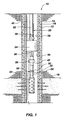
- FIG. 1 illustrates a conventional well perforating system 20 within well 10.
- the well 10 is constructed by first drilling a well bore 12, within which a well casing 14 is placed and cemented in place as indicated at 16.
- the perforating gun 34, mechanical release 28, packer 24, and firing head 32 are, among other components, carried by tubular string 22.
- the perforating gun 34 and firing head 32 are lowered on the tubular string 22 to a selected location in the well 10 adjacent to the subsurface formation 18 which is to be produced.
- a seal is provided by packer 24 between the exterior of tubular string 22 and wall 38 of casing 14 to define a well annulus 40 above packer 24 and an isolated zone 42 below packer 24.
- Perforating system 20 also includes a vent 56 located below packer 24.
- Vent 56 allows for a direct link between the isolated zone 42 and tubing bore 58 to ensure fluid pressure within tubing bore 58 and isolated zone 42 are substantially equal.
- an actuating piston 50 within firing head 32 is moved in response to an increase in fluid pressure in tubular string 22 initiated by the operator. The movement of the piston 50 releases a firing pin 52, thus initiating a firing sequence.
- conventional perforating systems may provide for a pyrotechnic time delay device 30 located within firing head 28.
- the pyrotechnic time delay device 30 provides for a time delay between the initiation of the firing head 28 and the subsequent firing of the shaped charges carried by the perforating gun 34 in order to, as described above, pressure balance the well 10 for optimal perforation.
- Pyrotechnic time delay devices as known in the art provide a maximum time delay of eight minutes. Therefore, in order to achieve longer delays, an operator is forced to string multiple pyrotechnic time delay devices together in a series formation. For example, additional delays may be coupled together so as to achieve a longer delay timer.
- a time delay apparatus according to claim 1, a well perforation system according to claim 5 and a method of disabling an electronic time delay circuit according to claim 6 are provided.
- the present invention comprises apparatuses and methods of operation for an electronic time delay assembly suitable for use within an explosive or propellant system configured, by way of nonlimiting example, as a well perforating system to address the reliability concerns, as well as the cost and complexity issues associated with conventional time delay devices.
- circuits and functions may be shown in block diagram form in order not to obscure the present invention in unnecessary detail. Conversely, specific circuit implementations shown and described are examples only and should not be construed as the only way to implement the present invention unless specified otherwise herein. Additionally, block definitions and partitioning of logic between various blocks is exemplary of a specific implementation. It will be readily apparent to one of ordinary skill in the art that the present invention may be practiced by numerous other partitioning solutions falling in the scope of the appended claims. For the most part, details concerning timing considerations and the like have been omitted where such details are not necessary to obtain a complete understanding of the present invention and are within the abilities of persons of ordinary skill in the relevant art.
- signals may represent a bus of signals, wherein the bus may have a variety of bit widths and the present invention may be implemented on any number of data signals including a single data signal.
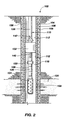
- FIG. 2 illustrates an explosive or propellant system configured as a well perforation system 110 disposed within a well 102.
- the well 102 is constructed by first drilling a well bore 108 within which is placed a well casing 104 which is cemented in place as indicated at 106.
- the well 102 intersects a subsurface formation 120 from which it is desired to produce hydrocarbons such as oil and/or gas.
- the system 110 includes a conveyance device 136 coaxially inserted inside the casing 104.
- Conveyance device 136 may be any suitable device, such as a wireline, slickline, tubing string, coiled tubing, and the like.
- conveyance device 136 comprises a tubular string and, for brevity and ease of description, will be referred to herein as a tubing string.
- the tubing string 136 extends from a drilling rig on the surface through casing 104 and components of a well perforating system, such as packer 132, mechanical release 130, firing head 128, and perforating gun 124, are disposed at the lower, or distal, end thereof.
- the packer 132 provides a structure for sealing between the exterior of tubing string 136 and a wall 112 of casing 104 which may also be referred to as a casing bore wall or well bore wall 112.
- the resulting seal provides a well annulus 138 between the tubing string 136 and well bore wall 112 above the packer 132 and an isolated zone 116 of well 102 below packer 132.
- Perforating system 110 also includes a vent 140 located below the packer. Vent 140 allows for hydraulic communication between isolated zone 116 and tubing bore 142 to ensure fluid pressures within the tubing bore 142 and isolated zone 116 are substantially equal.
- the perforating gun 124 is suspended from the tubing string 136 in the isolated zone 116 adjacent to the subsurface formation 120 which is to be perforated.
- the perforating gun 124 is configured to detonate and fire shaped charges to create holes, or perforations 122, in casing 104 and into the surrounding cement 106 and formation 120.
- FIG. 2 illustrates a well perforating system at a time subsequent to the detonation of perforation gun 124; therefore casing 104, cement 106 and formation 120 include perforations 122 extending therethrough.
- the mechanical release 130 enables an operator to drop the perforating gun 124 to the bottom of well 102 after the perforating gun 124 has been fired.
- Firing head 128 includes, among other components, an electronic time delay assembly 126 according to an embodiment of the invention.
- electronic time delay assembly 126 provides multiple safety features including various circuit and trigger isolation features as well as mechanical isolation features. Additionally, the electronic delay assembly 126 provides a time delay so as to allow an operator sufficient time to pressure balance well 102 for optimal perforation. Stated another way, the time delay allows time for an operator to alter the pressure in isolated zone 116 to the requirements of the formation fluids in formation 120.
- Electronic time delay assembly 126 provides this delay time capability by enabling longer, and more highly selectable, time delays in comparison to conventional pyrotechnic time delay fuses. By way of example only, electronic time delay assembly 126 may provide a selected time delay duration of up to, for example, at least ten hours.
- FIG. 3 illustrates an electronic time delay assembly 126 according to the present invention.
- the electronic timed delay assembly 126 provides significantly improved functions in a well perforating system including providing a reliable and increased time delay, increasing the duration of time delay, and providing safety features including circuit and explosive booster initiator isolation.
- electronic time delay assembly 126 may include an input module 206, an electronic time delay circuit 212, and an output module 208.
- Input module 206 may be configured as a firing pin subassembly
- output module 208 may be configured as an explosive booster subassembly.
- Electronic time delay circuit 212 is contained in a central, tubular housing 204 which may be attached, as by laser welding to input module 206 and output module 208 at locations 202 and 203 respectively.
- the tubular housing 204 may be made of steel with resilient retainers 260 at each end of the tubular housing 204.
- the resilient retainers 260 provide mechanical support as well as electrical and mechanical isolation of the electronic time delay circuit 212.
- Output module 208 which will be described in greater detail below, may be configured to provide a detonation output to trigger the subsequent firing of perforation gun 124 (see FIG. 2 ).
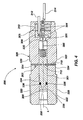
- FIG. 4 illustrates input module 206 according to the present invention.
- Input module 206 comprises firing pin 301, a shear pin assembly 302, and a contact assembly 305 carried by housing 328 having a firing pin bore 324 therethrough, firing pin bore 324 necking down to a smaller intermediate diameter bore at 330 and then increasing in diameter at contact assembly 305.
- Shear pin assembly 302 may include a single shear pin 712 extending transversely across housing 328 or may comprise a double shear pin configuration comprising a first shear pin 712 and a second shear pin 710, each extending into firing pin 301.
- Shear pin assembly 302 extends from a first side 320 to a second side 322 of input module 206 through firing pin 301 and apertures 334 in the wall of housing 328.
- shear pin assembly 302 may comprise a coiled spring pin.
- Contact assembly 305 may include a first contact assembly 308, a second contact assembly 310, and annular contact 304 extending through both the first and second contact assembly 308, 310.
- Lead wires 312 and 314 may protrude from one end of firing pin subassembly 206 and may be operably coupled to electronic time delay circuit 212 (see FIG. 3 ).
- Lead wire 312 is connected to an annular contact 304 carried by first contact assembly 308, while lead wire 314 is connected to an annular contact 304 carried by second contact assembly 310.
- Firing pin 301 which is disposed in firing pin bore 324, has a longitudinal axis L and may include a pin contact 306 located extending from at one end of firing pin 301.
- the opposite end 300 of firing pin 301 is configured to receive a firing stimulus from an external force, such as, for example only, hydraulic pressure in isolated zone 116 or an impact force from a dropped weight.
- firing pin 301 is configured for pressure actuation and includes an annular seal 336 disposed thereabout in annular groove 338.
- power source 408 will be referred to herein as a battery 408.
- electronic time delay circuit 212 will power up, and the desired, selected time delay will begin.
- Power source 408 may also comprise a capacitor-type power storage device instead of a battery, or power may be provided from an external power source.
- the type of power source 408 employed is not significant to the practice of the present invention, and an optimum type of power source may vary with the specific embodiment and application of the invention.
- input module 206 acts as an electrical switch that requires an external force or stimulus in order to be activated.
- This configuration provides for a significant safety feature by isolating the battery 408 from the electronic time delay circuit 212 ( FIG. 5 ) until a satisfactory external force or stimulus is applied. Therefore, any chance of premature detonation is substantially eliminated.
- the type and magnitude of the required external force or stimulus may vary according to the embodiment and application of the present invention, and is not limited to applied pressure or impact force as discussed above.
- FIG. 5 illustrates a block diagram of electronic time delay circuit 212 according to the present invention.
- circuit 212 comprises an electronic time delay device 500 coupled with a voltage firing circuit 502.
- Circuit 212 also comprises a battery 408 and supply voltage terminal VDD.
- battery 408 is selectively connectable to supply voltage terminal VDD by way of an electrical switch S provided by electrical contacts 304 in cooperation with pin contact 306. When the pin contact 306 engages annular contact 304, battery 408 is connected to supply voltage terminal VDD, thus connecting electronic time delay device 500 and voltage firing circuit 502 to battery 408.
- battery 408 may supply a continuous current at an open circuit voltage of below ten volts, one suitable voltage being about 3.90 volts (VDC).
- Electronic time delay device 500 comprises an oscillator 402 which oscillates at a selected frequency and is operably coupled with counter device 417. Oscillator 402 and counter device 417 are configured to count a desired time delay.
- oscillator 402 may comprise a 75 KHz crystal oscillator.
- Counter device 417 may comprise, by way of example only, a pair of CD4060B binary counter/divider devices 414, 415, offered by Texas Instruments of Dallas, Texas.
- a single counter device may be used or multiple counter devices may be coupled together in series to achieve a longer delay. For example, if an eight-minute time delay is desired, a single eight-minute counter device may be used.
- a thirty-minute counter device may be use.
- a pair of counter devices with a total delay time of thirty minutes may be coupled in series in an adder configuration to count the desired delay.
- one twenty-minute counter/divider device may be coupled with a ten-minute counter, or alternatively, two fifteen-minute counters may be coupled together to produce the desired thirty-minute delay.
- a pair of counter devices may be coupled in series in a multiplier configuration in order to achieve the desired time delay.
- a first device would count up to fifteen minutes and upon completion of the fifteen minutes, a second device would increment to a value of one. Subsequently, the first device would again count up to fifteen minutes, and upon completion, the second device would increment to a value of two. Therefore, in a multiplier configuration example, with a 75 KHz oscillator, the first device is only required to count up to fifteen minutes (67,500,000 clock cycles) and the second device is only required to count to a value of two seconds (150,000 clock cycles).
- oscillator 402 may comprise a quartz crystal oscillator and counter device 417 may comprise at least one CD4060B binary counter/divider device having fourteen flip-flop stages.
- oscillator frequency 75 KHz
- it is possible to have a frequency of 4.577 Hz (with a time period of 0.21845 seconds) at the fourteenth stage output of a first CD4060B binary counter/divider device (i.e., 75000 Hz /2 ⁇ 14 4.577 Hz).
- a second CD4060B binary counter/divider device may be used and the 0.21845 time increments may then be counted in binary steps.
- the rising edge of the last flip-flop stage which may be used to issue a fire command, will appear after the prior flip-flop has completed. Therefore, the maximum possible time delay that may be achieved using two CD4060B binary counter/divider devices and a 75 KHz quartz crystal oscillator is 1790 seconds (2 ⁇ 13 x 0.21845 seconds). Using two CD4060B binary counter/divider devices and a 75 KHz quartz crystal oscillator, a time delay of 895 seconds may be achieved at the thirteenth stage output and a time delay of 448 seconds may be achieved at the twelfth stage output.
- a 36 KHz quartz oscillator may be used.
- a 25.6 Hz quartz oscillator may be used.
- a third CD4060B binary counter/divider device may be employed. Thus, one may select the quartz crystal oscillator depending on the desired time delay.
- the present embodiment may, for example only, provide time delays from a short duration such as eight minutes up to a much longer duration of, for example, a number of hours.
- This capability reduces cost and complexity and increases operational flexibility and reliability in comparison to conventional pyrotechnic fuse-type time delay devices because only one time delay unit and setting and only one detonation transfer event is required.
- the timing accuracy and precision of an electronic time delay is improved over a conventional pyrotechnic time delay fuse, which may suffer from unpredictable burning rates.
- electronic time delay device 500 is operably coupled to a high voltage generator transistor 416 which may act as a switch and is thereafter operably coupled to a transformer 420.
- the transformer 420 is in turn operably coupled to a voltage multiplier 404.
- transformer 420 may be configured to generate a voltage of about 550vac with a working frequency of 25 KHz from an input of about 3 VDC, such as a 3V battery.
- Multiplier 404 may include a voltage doubler comprising a diode/capacitor pair configuration configured to generate a voltage for a firing pulse from the AC input (1300V maximum with a 3.3V battery).
- Voltage multiplier 404 is operably coupled to firing capacitors 504, which are then operably coupled to the input side of the trigger 406.
- Firing capacitors 504 comprise, for example, three 0.1 ⁇ F capacitors in parallel charged through a 22 Mohms resistor and configured to provide a fire pulse of substantially 600V (620V +/- 50V).
- the output side of the trigger 406 is operably coupled to an initiator 418 which is then operably coupled to the explosive booster subassembly 208 (see FIG. 3 ).
- trigger 406 may comprise a gas discharge tube which will not conduct unless (in the described embodiment) a voltage level of substantially 600V (620V +/- 50V) or above is applied across the tube. In some cases, it may be desirable for trigger 406, or a gas discharge tube, to comprise a different breakdown voltage. Therefore, in one embodiment, voltage multiplier 404 may comprise a voltage quadrupler configured to generate a voltage of substantially 2500V.
- circuit 212 illustrated in FIG. 5 The operation of circuit 212 illustrated in FIG. 5 will now be described. After pin contact 306 within input module 206 engages both electrical contacts 304 (see FIG. 4 ), battery 408 is connected to the circuit 212, thus starting the desired, selected time delay.
- the desired, selected time delay is provided using oscillator 402 in conjunction with a counter device 417. As described above, the time delay may be programmed or preselected by using one or more counter/divider devices to produce the desired time delay.
- electronic time delay device 500 issues a fire command at the gate of the high voltage generator transistor 416.
- the battery voltage at node 514 is input into transformer 420 and transformer 420 generates a first intermediate voltage at node 516 that is substantially higher than the battery voltage at node 514.
- the first intermediate voltage at 516 is input into voltage multiplier 404 and voltage multiplier 404 generates a second intermediate voltage at node 518 that is substantially higher than that at the first intermediate voltage at node 516.
- Firing capacitors 504 are then charged and, upon reaching a threshold firing voltage at node 520, firing capacitors 504 apply a pulse to an initiator 418 through the trigger 406.
- trigger 406 may have a breakdown voltage of 600V. Therefore, as the voltage in firing capacitors 504 reaches 600V, trigger 406 breaks down and the voltage is applied across trigger 406 and at initiator 418, which then initiates an explosive booster contained in booster subassembly 208 (see FIG. 3 ).
- Trigger 406 provides a significant safety feature of the embodiment of the invention by isolating the initiator 418 from the circuit 212 which, in turn, provides isolation and safety from electrostatic discharge (ESD) and stray voltage which could result in premature detonation.
- the oscillator 402 of circuit 212 may be configured to continue oscillating after the time delay has passed and after a voltage is applied at initiator 418. Therefore, any residual energy stored in battery 408 will be drained by the charging and de-charging oscillator.
- one embodiment of the invention may comprise a resistor 522 operably coupled between battery 408 and a ground voltage VSS. Therefore, any residual energy stored in battery 408 may be drained to ground voltage VSS through resistor 522.
- output module 208 provides the detonation output to initiate the perforation gun 124 (see FIG. 2 ).
- Output module 208 may comprise an output charge 250 and a prime charge 252.
- booster subassembly 208 may comprise 730 milligrams (mg) of hexanitrostilbene (HNS) output charge 250 and 200 mg of lead azide prime charge 252.
- the explosive booster subassembly 208 may be configured, upon detonation, to initiate subsequent explosive or propellant train events.
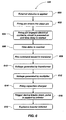
- FIG. 6 is a flow diagram of a method of operation of electronic time delay assembly 126.
- a well perforation system is lowered down into a well and an oil or gas extraction process is ready to begin, as described above, an external force is applied to the input module 206 located within a firing head.
- the external force acting on the firing pin of the input module 206 causes one or more shear pins to be sheared 604 which enables the firing pin to displace within input module 206 and to connect a battery to the electronic time delay circuit.
- the electronic time delay circuit is then powered on and the desired time delay 604 is started.
- the oscillator in conjunction with the counter device, counts the time delay 606, a fire command is issued to the gate of a high voltage generator transistor 608.
- a first voltage which is substantially higher than the battery voltage
- a voltage multiplier then generates a second voltage 612 which is substantially higher than the first intermediate voltage.
- the firing capacitors are then charged 614, and upon reaching a firing voltage, a trigger device breaks down and an electrical pulse is applied to an initiator 616 which then initiates an explosive booster 618.
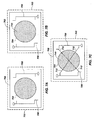
- FIGS. 7A-7D and FIGS. 7E-7F respectively, illustrate a top view and side view of a circuit isolation element 702 that is incorporated into the electronic time delay circuit 212 according to the invention described in reference to FIG. 5 .
- Circuit isolation element 702 is configured to, upon contact of a component thereof by water or any other liquid (such as, for example, drilling fluid or "mud"), electrically isolate circuitry operably coupled thereto from a power source.
- circuit isolation element 702 will be referred to herein as a water shut-off (WASH) component 702.
- WASH component 702 may include a WASH housing 703.
- WASH housing 703 may comprise a plastic housing and may be rated to withstand temperatures up to 180 degrees Celsius.
- WASH component 702 may include a conductive input 706 and a conductive output 708. As described below in reference to FIG. 8 , conductive input 706 may be operably coupled to battery 408 and conductive output 708 may be operably coupled to time delay circuit 212'.
- WASH component 702 may also include a pellet holder 704 configured to receive a pellet 710 (see FIGS. 7B-7D ). Pellet 710 may, for example only, be attached to pellet holder 704 by an epoxy rated to withstand temperatures up to 260 degrees Celsius.
- pellet 710 may comprise a compressed, dehydrated cellulose sponge material having a diameter of 5 millimeters and a thickness in a compressed state between substantially 0.8-1.0 millimeters.
- the sponge material of pellet 710 may be configured to expand substantially in thickness upon coming into contact with water or any other liquid.
- pellet 710 may be configured to expand substantially ten times its compressed thickness upon exposure to a liquid.
- conductive input 706 and conductive-output 708 may be operably coupled together via at least one wire 712 that is adjacent to and extends across pellet 710.
- at least one wire 712 may comprise an aluminum bonding wire having a diameter of substantially 37 microns and rated for 1.0 ampere.
- WASH component 702 may comprise two wires 712 adjacent to and extending across pellet 710 in a cross pattern, as is shown in FIG. 7C .
- pellet 710 may be configured to expand toward wire(s) 712 and eventually break wire(s) 712, resulting in the configuration illustrated in FIGS. 7D and 7F . As shown in FIGS. 7D and 7F , pellet 710' has expanded, resulting in broken wires 712'. As a result, input 706 is electrically isolated from output 708.
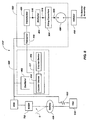
- FIG. 8 illustrates a block diagram of electronic time delay circuit 212' implementing a WASH component 702 according to the present invention.
- electronic time delay circuit 212' comprises an electronic time delay device 500 coupled with a voltage firing circuit 502.
- electronic time delay circuit 212' comprises WASH component 702 operably coupled between battery 408 and supply voltage terminal VDD.
- Battery 408 is selectively connectable to WASH component 702 by way of an electrical switch S provided by electrical contacts 304 in cooperation with pin contact 306 (see FIG. 4 ). When the pin contact 306 engages annular contact 304, battery 408 is connected to WASH component 702, thus connecting electronic time delay device 500 and voltage firing circuit 502 to battery 408.
- circuit 212' utilizing WASH component 702 will now be described.
- battery 408 is connected to the input 706 (see FIGS. 7A-7D ) of WASH component 702.
- Wire(s) 702 operably couple input 706 to output 708, which is, in turn, operably coupled to supply voltage terminal VDD. Therefore, upon engagement of pin contact 306 and annular contact 304 battery is connected to electronic time delay device 500 and voltage firing circuit 502, thus starting the desired, selected time delay.
- pellet 710 may expand toward wire(s) 712, come in contact with wire(s) 712, and eventually break wire(s) 712 resulting in broken wire(s) 712' (see FIGS. 7D and 7F ).
- battery 408 is electrically decoupled from electronic time delay device 500 and voltage firing circuit 502 and, therefore, timing delay circuit 212' is disabled. This feature provides enhanced safety to operators since it assures that an electronic time delay that is breached with a liquid will not be operational upon removal from the wellbore.
- the electronic time delay apparatus of the present invention has been described and illustrated as having utility with a well perforating system, it is not so limited.
- the electronic time delay apparatus of the present invention may be employed, in various embodiments, to initiate other explosive or propellant systems within a well bore, such as tubing or casing cutters.
- embodiments of the electronic time delay apparatus of the present invention will find utility in subterranean mining and tunneling operations, in commercial, industrial and military demolition operations, in military ordnance, and otherwise, as will be readily apparent to those of ordinary skill in the relevant arts.
Landscapes
- Engineering & Computer Science (AREA)
- General Engineering & Computer Science (AREA)
- Geology (AREA)
- Life Sciences & Earth Sciences (AREA)
- Fluid Mechanics (AREA)
- Physics & Mathematics (AREA)
- Mining & Mineral Resources (AREA)
- Environmental & Geological Engineering (AREA)
- General Life Sciences & Earth Sciences (AREA)
- Geochemistry & Mineralogy (AREA)
- Direct Current Feeding And Distribution (AREA)
- Pulse Circuits (AREA)
- Networks Using Active Elements (AREA)
- Air Bags (AREA)
Claims (7)
- Eine Zeitverzögerungsvorrichtung, umfassend:eine Eingabeanordnung, die ein Element (306) aufweist, welches gestaltet ist, um versetzt zu werden, um eine Energiequellenverbindung zu ermöglichen; undeine elektronische Zeitverzögerungsschaltung (212), die ein Isolierelement (702) aufweist, welches gestaltet ist, um eine Energiequelle (408) elektrisch von der elektronischen Zeitverzögerungsschaltung (212) zu isolieren, wenn eine ihrer Komponenten in Kontakt mit einer Flüssigkeit tritt, wobei die Zeitverzögerungsschaltung (212) wirksam mit der Eingabeanordnung gekoppelt ist, und gestaltet ist, um eine Zeitverzögerungsantwort auf eine ermöglichte, nichtisolierte Energiequellenverbindung bereitzustellen, und um ein Feuerkommando nach Ablauf der Zeitverzögerung auszulösen.
- Zeitverzögerungsvorrichtung nach Anspruch 1, wobei das Isolierelement (702) umfasst:eine leitfähige Eingabe (706), die wirksam mit der Energiequelle (408) gekoppelt ist, und gestaltet ist, um ein elektrisches Signal zu empfangen;eine leitfähige Ausgabe (708), die wirksam an die elektronische Zeitverzögerungsschaltung (212) gekoppelt ist, und gestaltet ist, um das elektrische Signal auszugeben;ein ausdehnbares Pellet (710), welches sich zumindest teilweise zwischen der leitfähigen Eingabe (706) und der leitfähigen Ausgabe (708) befindet, und gestaltet ist, um sich nach Kontakt mit einer Flüssigkeit auszudehnen; undzumindest einen leitfähigen Draht (712), der wirksam zwischen die leitfähige Eingabe (706) und die leitfähige Ausgabe (708) und benachbart zu dem und sich über das Pellet (710) erstreckend gekoppelt ist.
- Zeitverzögerungsvorrichtung nach Anspruch 2, wobei das ausdehnbare Pellet (710) einen komprimierten Schwamm umfasst.
- Zeitverzögerungsvorrichtung nach Anspruch 2, wobei das ausdehnbare Pellet (710) gestaltet ist, um in Kontakt mit dem zumindest einen Draht (712) zu treten und diesen als Ergebnis einer Ausdehnung zu zerreißen.
- Ein Bohrlochperforierungssystem (110), welches die Zeitverzögerungs-vorrichtung nach irgendeinem der Ansprüche 1 bis 4 aufweist, umfassend:eine Fördervorrichtung (136);eine Perforierungspistole (124), welche an der Fördervorrichtung (191366)häng;einen Feuerkopf (128), welcher an der Fördervorrichtung (136) hängt, und wirksam mit der Perforierungspistole (124) gekoppelt ist; undeine Energiequelle ($08);wobei die Zeitverzögerungsvorrichtung innerhalb des Feuerkopfes (128) angeordnet ist.
- Verfahren zum Deaktivieren einer elektronischen Zeitverzögerungsvorrichtung, umfassend:Bereitstellen eines Isolierungselements (702), welches eine Energiequelle (408) und eine elektronische Zeitverzögerungsschaltung (212) verbindet;Isolieren der Energiequelle (408) von der elektronischen Zeitverzögerungsschaltung (212) als Reaktion auf eine Komponente des Isolierelements (702), die in Kontakt mit einer Flüssigkeit tritt.
- Verfahren nach Anspruch 6, wobei das Isolieren der Energiequelle (408) von der elektronischen Zeitverzögerungsschaltung (212) ein Ausdehnen der Komponente bis zum Zerreißen des zumindest einen leitfähigen Drahtes (712) umfasst.
Applications Claiming Priority (3)
| Application Number | Priority Date | Filing Date | Title |
|---|---|---|---|
| US11/553,361 US8002026B2 (en) | 2006-10-26 | 2006-10-26 | Methods and apparatuses for electronic time delay and systems including same |
| US11/876,841 US7789153B2 (en) | 2006-10-26 | 2007-10-23 | Methods and apparatuses for electronic time delay and systems including same |
| PCT/US2007/082641 WO2008070343A2 (en) | 2006-10-26 | 2007-10-26 | Methods and apparatuses for electronic time delay and systems including same |
Publications (2)
| Publication Number | Publication Date |
|---|---|
| EP2076732A2 EP2076732A2 (de) | 2009-07-08 |
| EP2076732B1 true EP2076732B1 (de) | 2011-10-26 |
Family
ID=39462152
Family Applications (1)
| Application Number | Title | Priority Date | Filing Date |
|---|---|---|---|
| EP07871261A Not-in-force EP2076732B1 (de) | 2006-10-26 | 2007-10-26 | Verfahren und vorrichtungen für elektronische zeitverzögerung und systeme damit |
Country Status (14)
| Country | Link |
|---|---|
| US (1) | US7789153B2 (de) |
| EP (1) | EP2076732B1 (de) |
| CN (1) | CN101529197B (de) |
| AT (1) | ATE530871T1 (de) |
| AU (1) | AU2007329758B2 (de) |
| BR (1) | BRPI0717352A2 (de) |
| CA (1) | CA2667377C (de) |
| DK (1) | DK2076732T3 (de) |
| EG (1) | EG26178A (de) |
| MX (1) | MX2009004252A (de) |
| MY (1) | MY147812A (de) |
| NO (1) | NO20091449L (de) |
| RU (1) | RU2439482C2 (de) |
| WO (1) | WO2008070343A2 (de) |
Families Citing this family (71)
| Publication number | Priority date | Publication date | Assignee | Title |
|---|---|---|---|---|
| MY175545A (en) | 2010-10-29 | 2020-07-01 | Shell Int Research | Well emergency separation tool for use in separating a tubular element |
| US9982500B2 (en) * | 2011-09-02 | 2018-05-29 | Shell Oil Company | Well emergency separation tool for use in separating a tubular element |
| US9068441B2 (en) | 2011-09-02 | 2015-06-30 | Baker Hughes Incorporated | Perforating stimulating bullet |
| US8967291B2 (en) | 2012-06-12 | 2015-03-03 | Halliburton Energy Services, Inc. | Pressure-activated switch |
| RU2500881C1 (ru) * | 2012-06-20 | 2013-12-10 | Открытое акционерное общество "Всероссийский научно-исследовательский и проектно-конструкторский институт по использованию энергии взрыва в геофизике" (ОАО "ВНИПИвзрывгеофизика") | Способ инициирования перфораторов, спускаемых на насосно-компрессорных трубах |
| CN103868415B (zh) * | 2012-12-18 | 2016-01-27 | 北京全安密灵科技股份公司 | 一种高精度的、没有累积效应的延时方法 |
| KR101293801B1 (ko) | 2013-01-30 | 2013-08-06 | 주식회사 한화 | 전자 뇌관의 지연시간 제어 방법 |
| US9447672B2 (en) | 2013-02-28 | 2016-09-20 | Orbital Atk, Inc. | Method and apparatus for ballistic tailoring of propellant structures and operation thereof for downhole stimulation |
| US11306547B2 (en) * | 2013-05-16 | 2022-04-19 | Halliburton Energy Services, Inc. | Systems and methods for releasing a tool string |
| US9702680B2 (en) | 2013-07-18 | 2017-07-11 | Dynaenergetics Gmbh & Co. Kg | Perforation gun components and system |
| US12203350B2 (en) | 2013-07-18 | 2025-01-21 | DynaEnergetics Europe GmbH | Detonator positioning device |
| WO2015028204A2 (en) | 2013-08-26 | 2015-03-05 | Dynaenergetics Gmbh & Co. Kg | Perforating gun and detonator assembly |
| GB201317674D0 (en) * | 2013-10-07 | 2013-11-20 | Guardian Global Technologies Ltd | Firing switch and method of operation |
| US10188990B2 (en) | 2014-03-07 | 2019-01-29 | Dynaenergetics Gmbh & Co. Kg | Device and method for positioning a detonator within a perforating gun assembly |
| US9995124B2 (en) | 2014-09-19 | 2018-06-12 | Orbital Atk, Inc. | Downhole stimulation tools and related methods of stimulating a producing formation |
| US11293736B2 (en) | 2015-03-18 | 2022-04-05 | DynaEnergetics Europe GmbH | Electrical connector |
| US9784549B2 (en) | 2015-03-18 | 2017-10-10 | Dynaenergetics Gmbh & Co. Kg | Bulkhead assembly having a pivotable electric contact component and integrated ground apparatus |
| CN105004751B (zh) * | 2015-07-28 | 2017-06-27 | 南京理工大学 | 一种基于激光功率稳定后的出光计时装置 |
| US9921041B1 (en) * | 2015-09-29 | 2018-03-20 | The United States Of America As Represented By The Secretary Of The Navy | Primerless digital time-delay initiator system |
| US11136884B2 (en) * | 2017-02-02 | 2021-10-05 | Schlumberger Technology Corporation | Well construction using downhole communication and/or data |
| US10865626B2 (en) | 2017-11-29 | 2020-12-15 | DynaEnergetics Europe GmbH | Hydraulic underbalance initiated safety firing head, well completion apparatus incorporating same, and method of use |
| WO2019147294A1 (en) | 2018-01-23 | 2019-08-01 | Geodynamics, Inc. | Addressable switch assembly for wellbore systems and method |
| US11193358B2 (en) * | 2018-01-31 | 2021-12-07 | DynaEnergetics Europe GmbH | Firing head assembly, well completion device with a firing head assembly and method of use |
| US10520286B2 (en) | 2018-04-06 | 2019-12-31 | Dynaenergetics Gmbh & Co. Kg | Inlay for shaped charge and method of use |
| US11053782B2 (en) | 2018-04-06 | 2021-07-06 | DynaEnergetics Europe GmbH | Perforating gun system and method of use |
| US10794159B2 (en) | 2018-05-31 | 2020-10-06 | DynaEnergetics Europe GmbH | Bottom-fire perforating drone |
| US10458213B1 (en) | 2018-07-17 | 2019-10-29 | Dynaenergetics Gmbh & Co. Kg | Positioning device for shaped charges in a perforating gun module |
| US20200018139A1 (en) * | 2018-05-31 | 2020-01-16 | Dynaenergetics Gmbh & Co. Kg | Autonomous perforating drone |
| US11408279B2 (en) | 2018-08-21 | 2022-08-09 | DynaEnergetics Europe GmbH | System and method for navigating a wellbore and determining location in a wellbore |
| US12031417B2 (en) | 2018-05-31 | 2024-07-09 | DynaEnergetics Europe GmbH | Untethered drone string for downhole oil and gas wellbore operations |
| US11661824B2 (en) | 2018-05-31 | 2023-05-30 | DynaEnergetics Europe GmbH | Autonomous perforating drone |
| US11591885B2 (en) | 2018-05-31 | 2023-02-28 | DynaEnergetics Europe GmbH | Selective untethered drone string for downhole oil and gas wellbore operations |
| WO2019229521A1 (en) | 2018-05-31 | 2019-12-05 | Dynaenergetics Gmbh & Co. Kg | Systems and methods for marker inclusion in a wellbore |
| US10386168B1 (en) | 2018-06-11 | 2019-08-20 | Dynaenergetics Gmbh & Co. Kg | Conductive detonating cord for perforating gun |
| US11808093B2 (en) | 2018-07-17 | 2023-11-07 | DynaEnergetics Europe GmbH | Oriented perforating system |
| USD903064S1 (en) | 2020-03-31 | 2020-11-24 | DynaEnergetics Europe GmbH | Alignment sub |
| US11339614B2 (en) | 2020-03-31 | 2022-05-24 | DynaEnergetics Europe GmbH | Alignment sub and orienting sub adapter |
| WO2020038848A1 (en) | 2018-08-20 | 2020-02-27 | DynaEnergetics Europe GmbH | System and method to deploy and control autonomous devices |
| US10816311B2 (en) | 2018-11-07 | 2020-10-27 | DynaEnergetics Europe GmbH | Electronic time delay fuse |
| USD1019709S1 (en) | 2019-02-11 | 2024-03-26 | DynaEnergetics Europe GmbH | Charge holder |
| USD1034879S1 (en) | 2019-02-11 | 2024-07-09 | DynaEnergetics Europe GmbH | Gun body |
| USD1010758S1 (en) | 2019-02-11 | 2024-01-09 | DynaEnergetics Europe GmbH | Gun body |
| US11326412B2 (en) | 2019-03-15 | 2022-05-10 | Northrop Grumman Systems Corporation | Downhole sealing apparatuses and related downhole assemblies and methods |
| US12116871B2 (en) | 2019-04-01 | 2024-10-15 | DynaEnergetics Europe GmbH | Retrievable perforating gun assembly and components |
| US12241326B2 (en) | 2019-05-14 | 2025-03-04 | DynaEnergetics Europe GmbH | Single use setting tool for actuating a tool in a wellbore |
| US10927627B2 (en) | 2019-05-14 | 2021-02-23 | DynaEnergetics Europe GmbH | Single use setting tool for actuating a tool in a wellbore |
| US11578549B2 (en) | 2019-05-14 | 2023-02-14 | DynaEnergetics Europe GmbH | Single use setting tool for actuating a tool in a wellbore |
| US11255147B2 (en) | 2019-05-14 | 2022-02-22 | DynaEnergetics Europe GmbH | Single use setting tool for actuating a tool in a wellbore |
| WO2020249744A2 (en) | 2019-06-14 | 2020-12-17 | DynaEnergetics Europe GmbH | Perforating gun assembly with rotating shaped charge holder |
| EP3999712A1 (de) | 2019-07-19 | 2022-05-25 | DynaEnergetics Europe GmbH | Ballistisch betätigtes bohrlochwerkzeug |
| CZ310189B6 (cs) | 2019-12-10 | 2024-11-06 | DynaEnergetics Europe GmbH | Hlava rozněcovadla, rozněcovadlo a sestava rozněcovadla |
| WO2021122797A1 (en) | 2019-12-17 | 2021-06-24 | DynaEnergetics Europe GmbH | Modular perforating gun system |
| USD1041608S1 (en) | 2020-03-20 | 2024-09-10 | DynaEnergetics Europe GmbH | Outer connector |
| USD981345S1 (en) | 2020-11-12 | 2023-03-21 | DynaEnergetics Europe GmbH | Shaped charge casing |
| US11988049B2 (en) | 2020-03-31 | 2024-05-21 | DynaEnergetics Europe GmbH | Alignment sub and perforating gun assembly with alignment sub |
| USD904475S1 (en) | 2020-04-29 | 2020-12-08 | DynaEnergetics Europe GmbH | Tandem sub |
| US12326069B2 (en) | 2020-10-20 | 2025-06-10 | DynaEnergetics Europe GmbH | Perforating gun and alignment assembly |
| WO2022135749A1 (en) | 2020-12-21 | 2022-06-30 | DynaEnergetics Europe GmbH | Encapsulated shaped charge |
| US12312922B2 (en) | 2021-01-08 | 2025-05-27 | DynaEnergetics Europe GmbH | Perforating gun assembly and components |
| US11713625B2 (en) | 2021-03-03 | 2023-08-01 | DynaEnergetics Europe GmbH | Bulkhead |
| US11732556B2 (en) | 2021-03-03 | 2023-08-22 | DynaEnergetics Europe GmbH | Orienting perforation gun assembly |
| US12366142B2 (en) | 2021-03-03 | 2025-07-22 | DynaEnergetics Europe GmbH | Modular perforating gun system |
| WO2022184732A1 (en) | 2021-03-03 | 2022-09-09 | DynaEnergetics Europe GmbH | Bulkhead and tandem seal adapter |
| US12000267B2 (en) | 2021-09-24 | 2024-06-04 | DynaEnergetics Europe GmbH | Communication and location system for an autonomous frack system |
| US12253339B2 (en) | 2021-10-25 | 2025-03-18 | DynaEnergetics Europe GmbH | Adapter and shaped charge apparatus for optimized perforation jet |
| US12312925B2 (en) | 2021-12-22 | 2025-05-27 | DynaEnergetics Europe GmbH | Manually oriented internal shaped charge alignment system and method of use |
| WO2023200984A1 (en) | 2022-04-15 | 2023-10-19 | Dbk Industries, Llc | Fixed-volume setting tool |
| WO2023205822A1 (en) * | 2022-04-20 | 2023-10-26 | Detnet South Africa (Pty) Ltd | Failsafe detonator |
| WO2024013338A1 (en) | 2022-07-13 | 2024-01-18 | DynaEnergetics Europe GmbH | Gas driven wireline release tool |
| US11753889B1 (en) | 2022-07-13 | 2023-09-12 | DynaEnergetics Europe GmbH | Gas driven wireline release tool |
| US12546194B2 (en) | 2023-08-04 | 2026-02-10 | DynaEnergetics Europe GmbH | Method and apparatus for automatic arming of perforating gun |
Family Cites Families (34)
| Publication number | Priority date | Publication date | Assignee | Title |
|---|---|---|---|---|
| US2739535A (en) * | 1950-07-14 | 1956-03-27 | Atlas Powder Co | Electric explosion initiators |
| US3391263A (en) * | 1965-10-24 | 1968-07-02 | Schlumberger Technology Corp | Apparatus for controlling well tools in well bores |
| US3358600A (en) * | 1966-01-13 | 1967-12-19 | Trojan Powder Co | Self-destroying explosive cartridge for underwater seismic exploration |
| GB2015791B (en) * | 1978-02-01 | 1982-06-03 | Ici Ltd | Selective actuation of electrical loads |
| US4753170A (en) * | 1983-06-23 | 1988-06-28 | Jet Research Center | Polygonal detonating cord and method of charge initiation |
| US4614156A (en) * | 1984-03-08 | 1986-09-30 | Halliburton Company | Pressure responsive explosion initiator with time delay and method of use |
| CA1261377A (en) * | 1985-07-31 | 1989-09-26 | Laurier J. Comeau | Pressure actuator switch |
| US4762067A (en) * | 1987-11-13 | 1988-08-09 | Halliburton Company | Downhole perforating method and apparatus using secondary explosive detonators |
| US4969525A (en) * | 1989-09-01 | 1990-11-13 | Halliburton Company | Firing head for a perforating gun assembly |
| US5216325A (en) * | 1990-01-24 | 1993-06-01 | Magnavox Government And Industrial Electronics Company | Spark gap device with insulated trigger electrode |
| US5159145A (en) * | 1991-08-27 | 1992-10-27 | James V. Carisella | Methods and apparatus for disarming and arming well bore explosive tools |
| US5301755A (en) * | 1993-03-11 | 1994-04-12 | Halliburton Company | Air chamber actuator for a perforating gun |
| US5490563A (en) * | 1994-11-22 | 1996-02-13 | Halliburton Company | Perforating gun actuator |
| US5513570A (en) * | 1995-02-21 | 1996-05-07 | Western Atlas International, Inc. | Pressure actuated pipe cutting tool |
| US5587550A (en) * | 1995-03-23 | 1996-12-24 | Quantic Industries, Inc. | Internally timed, multi-output impulse cartridge |
| US5598894A (en) * | 1995-07-05 | 1997-02-04 | Halliburton Company | Select fire multiple drill string tester |
| US5551520A (en) * | 1995-07-12 | 1996-09-03 | Western Atlas International, Inc. | Dual redundant detonating system for oil well perforators |
| US5603384A (en) * | 1995-10-11 | 1997-02-18 | Western Atlas International, Inc. | Universal perforating gun firing head |
| US5775426A (en) * | 1996-09-09 | 1998-07-07 | Marathon Oil Company | Apparatus and method for perforating and stimulating a subterranean formation |
| US5908365A (en) * | 1997-02-05 | 1999-06-01 | Preeminent Energy Services, Inc. | Downhole triggering device |
| US5912428A (en) * | 1997-06-19 | 1999-06-15 | The Ensign-Bickford Company | Electronic circuitry for timing and delay circuits |
| US6283208B1 (en) * | 1997-09-05 | 2001-09-04 | Schlumberger Technology Corp. | Orienting tool and method |
| AUPP021697A0 (en) * | 1997-11-06 | 1997-11-27 | Rocktek Limited | Radio detonation system |
| US6131516A (en) * | 1998-12-08 | 2000-10-17 | The United States Of America As Represented By The Secretary Of The Navy | Air-safed underwater fuze system for launched munitions |
| NO319947B1 (no) * | 2000-09-05 | 2005-10-03 | Schlumberger Holdings | Mikrosvitsjer for nedhulls-anvendelse |
| BR0210978A (pt) * | 2001-06-06 | 2004-10-05 | Senex Explosives Inc | Conjunto de retardo, eletrônico de programação de um retardo de tempo de detonação e método de relizar uma operação de explosão |
| US8091477B2 (en) * | 2001-11-27 | 2012-01-10 | Schlumberger Technology Corporation | Integrated detonators for use with explosive devices |
| RU2231746C2 (ru) * | 2002-09-17 | 2004-06-27 | Государственное унитарное предприятие "Федеральный научно-производственный центр "Прибор" | Артиллерийский боеприпас |
| RU2240493C1 (ru) * | 2003-08-04 | 2004-11-20 | Федеральное государственное унитарное предприятие "Научно-исследовательский институт "Поиск" | Дистанционный взрыватель снарядов реактивных систем залпового огня |
| RU40786U1 (ru) * | 2004-06-01 | 2004-09-27 | Государственное унитарное предприятие "Федеральный научно-производственный центр "Прибор" | Устройство дистанционного подрыва |
| RU2275496C2 (ru) * | 2004-07-22 | 2006-04-27 | Волго-уральский центр научно-технических услуг "НЕЙТРОН" | Способ и устройство для кумулятивной перфорации нефтегазовых скважин (варианты) |
| CN2752433Y (zh) * | 2004-08-12 | 2006-01-18 | 蓬莱市石油机械厂 | 油井射孔自锁安全起爆装置 |
| US7913603B2 (en) * | 2005-03-01 | 2011-03-29 | Owen Oil Tolls LP | Device and methods for firing perforating guns |
| RU2285897C1 (ru) * | 2005-04-28 | 2006-10-20 | Общество с ограниченной ответственностью Научно-техническая фирма "Взрывтехнология" | Система инициирования зарядов взрывчатых веществ |
-
2007
- 2007-10-23 US US11/876,841 patent/US7789153B2/en not_active Expired - Fee Related
- 2007-10-26 MY MYPI20091631A patent/MY147812A/en unknown
- 2007-10-26 RU RU2009113598/03A patent/RU2439482C2/ru not_active IP Right Cessation
- 2007-10-26 EP EP07871261A patent/EP2076732B1/de not_active Not-in-force
- 2007-10-26 MX MX2009004252A patent/MX2009004252A/es active IP Right Grant
- 2007-10-26 WO PCT/US2007/082641 patent/WO2008070343A2/en not_active Ceased
- 2007-10-26 BR BRPI0717352-0A2A patent/BRPI0717352A2/pt not_active IP Right Cessation
- 2007-10-26 AU AU2007329758A patent/AU2007329758B2/en not_active Ceased
- 2007-10-26 CN CN2007800396505A patent/CN101529197B/zh not_active Expired - Fee Related
- 2007-10-26 CA CA2667377A patent/CA2667377C/en not_active Expired - Fee Related
- 2007-10-26 AT AT07871261T patent/ATE530871T1/de not_active IP Right Cessation
- 2007-10-26 DK DK07871261.9T patent/DK2076732T3/da active
-
2009
- 2009-04-15 NO NO20091449A patent/NO20091449L/no not_active Application Discontinuation
- 2009-04-22 EG EG2009040557A patent/EG26178A/en active
Also Published As
| Publication number | Publication date |
|---|---|
| EP2076732A2 (de) | 2009-07-08 |
| RU2439482C2 (ru) | 2012-01-10 |
| RU2009113598A (ru) | 2010-10-20 |
| CN101529197B (zh) | 2013-04-10 |
| BRPI0717352A2 (pt) | 2014-01-21 |
| AU2007329758B2 (en) | 2013-01-24 |
| WO2008070343A4 (en) | 2009-01-22 |
| US7789153B2 (en) | 2010-09-07 |
| EG26178A (en) | 2013-04-04 |
| US20080110612A1 (en) | 2008-05-15 |
| ATE530871T1 (de) | 2011-11-15 |
| WO2008070343A3 (en) | 2008-12-11 |
| DK2076732T3 (da) | 2011-11-21 |
| CN101529197A (zh) | 2009-09-09 |
| MY147812A (en) | 2013-01-31 |
| AU2007329758A1 (en) | 2008-06-12 |
| NO20091449L (no) | 2009-05-25 |
| CA2667377C (en) | 2014-04-01 |
| WO2008070343A2 (en) | 2008-06-12 |
| MX2009004252A (es) | 2009-05-14 |
| CA2667377A1 (en) | 2008-06-12 |
Similar Documents
| Publication | Publication Date | Title |
|---|---|---|
| EP2076732B1 (de) | Verfahren und vorrichtungen für elektronische zeitverzögerung und systeme damit | |
| US8002026B2 (en) | Methods and apparatuses for electronic time delay and systems including same | |
| US10816311B2 (en) | Electronic time delay fuse | |
| US12252963B2 (en) | Modular gun system | |
| US2873675A (en) | Method and apparatus for detonating explosive devices in bore holes | |
| US9394767B2 (en) | Transient control of wellbore pressure | |
| US8079296B2 (en) | Device and methods for firing perforating guns | |
| AU2014364575B2 (en) | Firing mechanism with time delay and metering system | |
| US5431104A (en) | Exploding foil initiator using a thermally stable secondary explosive | |
| US5908365A (en) | Downhole triggering device | |
| US10597987B2 (en) | System and method for perforating a formation | |
| USRE25407E (en) | Method and apparatus for detonating | |
| WO2012006357A2 (en) | Ballistic transfer delay device | |
| US20060249045A1 (en) | Initiator Activated By a Stimulus | |
| US20250188827A1 (en) | Tool and Method for Safe Cavity Shot Operations |
Legal Events
| Date | Code | Title | Description |
|---|---|---|---|
| PUAI | Public reference made under article 153(3) epc to a published international application that has entered the european phase |
Free format text: ORIGINAL CODE: 0009012 |
|
| 17P | Request for examination filed |
Effective date: 20090428 |
|
| AK | Designated contracting states |
Kind code of ref document: A2 Designated state(s): AT BE BG CH CY CZ DE DK EE ES FI FR GB GR HU IE IS IT LI LT LU LV MC MT NL PL PT RO SE SI SK TR |
|
| RIN1 | Information on inventor provided before grant (corrected) |
Inventor name: PRINZ, FRANCOIS X. Inventor name: SLADE, WILLIAM J. Inventor name: ARRELL, JOHN A. JR. Inventor name: BORJA, RONALD S. |
|
| DAX | Request for extension of the european patent (deleted) | ||
| 17Q | First examination report despatched |
Effective date: 20100531 |
|
| GRAP | Despatch of communication of intention to grant a patent |
Free format text: ORIGINAL CODE: EPIDOSNIGR1 |
|
| GRAS | Grant fee paid |
Free format text: ORIGINAL CODE: EPIDOSNIGR3 |
|
| GRAA | (expected) grant |
Free format text: ORIGINAL CODE: 0009210 |
|
| AK | Designated contracting states |
Kind code of ref document: B1 Designated state(s): AT BE BG CH CY CZ DE DK EE ES FI FR GB GR HU IE IS IT LI LT LU LV MC MT NL PL PT RO SE SI SK TR |
|
| REG | Reference to a national code |
Ref country code: GB Ref legal event code: FG4D |
|
| REG | Reference to a national code |
Ref country code: CH Ref legal event code: EP |
|
| REG | Reference to a national code |
Ref country code: DK Ref legal event code: T3 |
|
| REG | Reference to a national code |
Ref country code: IE Ref legal event code: FG4D |
|
| REG | Reference to a national code |
Ref country code: DE Ref legal event code: R096 Ref document number: 602007018352 Country of ref document: DE Effective date: 20111222 |
|
| REG | Reference to a national code |
Ref country code: NL Ref legal event code: VDEP Effective date: 20111026 |
|
| LTIE | Lt: invalidation of european patent or patent extension |
Effective date: 20111026 |
|
| REG | Reference to a national code |
Ref country code: AT Ref legal event code: MK05 Ref document number: 530871 Country of ref document: AT Kind code of ref document: T Effective date: 20111026 |
|
| PG25 | Lapsed in a contracting state [announced via postgrant information from national office to epo] |
Ref country code: IS Free format text: LAPSE BECAUSE OF FAILURE TO SUBMIT A TRANSLATION OF THE DESCRIPTION OR TO PAY THE FEE WITHIN THE PRESCRIBED TIME-LIMIT Effective date: 20120226 Ref country code: LT Free format text: LAPSE BECAUSE OF FAILURE TO SUBMIT A TRANSLATION OF THE DESCRIPTION OR TO PAY THE FEE WITHIN THE PRESCRIBED TIME-LIMIT Effective date: 20111026 Ref country code: BE Free format text: LAPSE BECAUSE OF FAILURE TO SUBMIT A TRANSLATION OF THE DESCRIPTION OR TO PAY THE FEE WITHIN THE PRESCRIBED TIME-LIMIT Effective date: 20111026 |
|
| PG25 | Lapsed in a contracting state [announced via postgrant information from national office to epo] |
Ref country code: PL Free format text: LAPSE BECAUSE OF FAILURE TO SUBMIT A TRANSLATION OF THE DESCRIPTION OR TO PAY THE FEE WITHIN THE PRESCRIBED TIME-LIMIT Effective date: 20111026 Ref country code: SI Free format text: LAPSE BECAUSE OF FAILURE TO SUBMIT A TRANSLATION OF THE DESCRIPTION OR TO PAY THE FEE WITHIN THE PRESCRIBED TIME-LIMIT Effective date: 20111026 Ref country code: SE Free format text: LAPSE BECAUSE OF FAILURE TO SUBMIT A TRANSLATION OF THE DESCRIPTION OR TO PAY THE FEE WITHIN THE PRESCRIBED TIME-LIMIT Effective date: 20111026 Ref country code: GR Free format text: LAPSE BECAUSE OF FAILURE TO SUBMIT A TRANSLATION OF THE DESCRIPTION OR TO PAY THE FEE WITHIN THE PRESCRIBED TIME-LIMIT Effective date: 20120127 Ref country code: LV Free format text: LAPSE BECAUSE OF FAILURE TO SUBMIT A TRANSLATION OF THE DESCRIPTION OR TO PAY THE FEE WITHIN THE PRESCRIBED TIME-LIMIT Effective date: 20111026 Ref country code: PT Free format text: LAPSE BECAUSE OF FAILURE TO SUBMIT A TRANSLATION OF THE DESCRIPTION OR TO PAY THE FEE WITHIN THE PRESCRIBED TIME-LIMIT Effective date: 20120227 Ref country code: MC Free format text: LAPSE BECAUSE OF NON-PAYMENT OF DUE FEES Effective date: 20111031 Ref country code: NL Free format text: LAPSE BECAUSE OF FAILURE TO SUBMIT A TRANSLATION OF THE DESCRIPTION OR TO PAY THE FEE WITHIN THE PRESCRIBED TIME-LIMIT Effective date: 20111026 |
|
| REG | Reference to a national code |
Ref country code: CH Ref legal event code: PL |
|
| PG25 | Lapsed in a contracting state [announced via postgrant information from national office to epo] |
Ref country code: CY Free format text: LAPSE BECAUSE OF FAILURE TO SUBMIT A TRANSLATION OF THE DESCRIPTION OR TO PAY THE FEE WITHIN THE PRESCRIBED TIME-LIMIT Effective date: 20111026 |
|
| PG25 | Lapsed in a contracting state [announced via postgrant information from national office to epo] |
Ref country code: EE Free format text: LAPSE BECAUSE OF FAILURE TO SUBMIT A TRANSLATION OF THE DESCRIPTION OR TO PAY THE FEE WITHIN THE PRESCRIBED TIME-LIMIT Effective date: 20111026 Ref country code: SK Free format text: LAPSE BECAUSE OF FAILURE TO SUBMIT A TRANSLATION OF THE DESCRIPTION OR TO PAY THE FEE WITHIN THE PRESCRIBED TIME-LIMIT Effective date: 20111026 Ref country code: CH Free format text: LAPSE BECAUSE OF NON-PAYMENT OF DUE FEES Effective date: 20111031 Ref country code: CZ Free format text: LAPSE BECAUSE OF FAILURE TO SUBMIT A TRANSLATION OF THE DESCRIPTION OR TO PAY THE FEE WITHIN THE PRESCRIBED TIME-LIMIT Effective date: 20111026 Ref country code: BG Free format text: LAPSE BECAUSE OF FAILURE TO SUBMIT A TRANSLATION OF THE DESCRIPTION OR TO PAY THE FEE WITHIN THE PRESCRIBED TIME-LIMIT Effective date: 20120126 Ref country code: LI Free format text: LAPSE BECAUSE OF NON-PAYMENT OF DUE FEES Effective date: 20111031 |
|
| REG | Reference to a national code |
Ref country code: IE Ref legal event code: MM4A |
|
| PG25 | Lapsed in a contracting state [announced via postgrant information from national office to epo] |
Ref country code: RO Free format text: LAPSE BECAUSE OF FAILURE TO SUBMIT A TRANSLATION OF THE DESCRIPTION OR TO PAY THE FEE WITHIN THE PRESCRIBED TIME-LIMIT Effective date: 20111026 |
|
| PLBE | No opposition filed within time limit |
Free format text: ORIGINAL CODE: 0009261 |
|
| STAA | Information on the status of an ep patent application or granted ep patent |
Free format text: STATUS: NO OPPOSITION FILED WITHIN TIME LIMIT |
|
| REG | Reference to a national code |
Ref country code: FR Ref legal event code: ST Effective date: 20120817 |
|
| 26N | No opposition filed |
Effective date: 20120727 |
|
| PG25 | Lapsed in a contracting state [announced via postgrant information from national office to epo] |
Ref country code: IE Free format text: LAPSE BECAUSE OF NON-PAYMENT OF DUE FEES Effective date: 20111026 |
|
| REG | Reference to a national code |
Ref country code: DE Ref legal event code: R097 Ref document number: 602007018352 Country of ref document: DE Effective date: 20120727 |
|
| PG25 | Lapsed in a contracting state [announced via postgrant information from national office to epo] |
Ref country code: AT Free format text: LAPSE BECAUSE OF FAILURE TO SUBMIT A TRANSLATION OF THE DESCRIPTION OR TO PAY THE FEE WITHIN THE PRESCRIBED TIME-LIMIT Effective date: 20111026 |
|
| PG25 | Lapsed in a contracting state [announced via postgrant information from national office to epo] |
Ref country code: MT Free format text: LAPSE BECAUSE OF FAILURE TO SUBMIT A TRANSLATION OF THE DESCRIPTION OR TO PAY THE FEE WITHIN THE PRESCRIBED TIME-LIMIT Effective date: 20111026 |
|
| PG25 | Lapsed in a contracting state [announced via postgrant information from national office to epo] |
Ref country code: ES Free format text: LAPSE BECAUSE OF FAILURE TO SUBMIT A TRANSLATION OF THE DESCRIPTION OR TO PAY THE FEE WITHIN THE PRESCRIBED TIME-LIMIT Effective date: 20120206 Ref country code: FR Free format text: LAPSE BECAUSE OF NON-PAYMENT OF DUE FEES Effective date: 20111226 |
|
| PG25 | Lapsed in a contracting state [announced via postgrant information from national office to epo] |
Ref country code: LU Free format text: LAPSE BECAUSE OF NON-PAYMENT OF DUE FEES Effective date: 20111026 |
|
| PG25 | Lapsed in a contracting state [announced via postgrant information from national office to epo] |
Ref country code: FI Free format text: LAPSE BECAUSE OF FAILURE TO SUBMIT A TRANSLATION OF THE DESCRIPTION OR TO PAY THE FEE WITHIN THE PRESCRIBED TIME-LIMIT Effective date: 20111026 |
|
| PG25 | Lapsed in a contracting state [announced via postgrant information from national office to epo] |
Ref country code: TR Free format text: LAPSE BECAUSE OF FAILURE TO SUBMIT A TRANSLATION OF THE DESCRIPTION OR TO PAY THE FEE WITHIN THE PRESCRIBED TIME-LIMIT Effective date: 20111026 |
|
| PG25 | Lapsed in a contracting state [announced via postgrant information from national office to epo] |
Ref country code: HU Free format text: LAPSE BECAUSE OF FAILURE TO SUBMIT A TRANSLATION OF THE DESCRIPTION OR TO PAY THE FEE WITHIN THE PRESCRIBED TIME-LIMIT Effective date: 20111026 |
|
| REG | Reference to a national code |
Ref country code: DE Ref legal event code: R082 Ref document number: 602007018352 Country of ref document: DE Representative=s name: BARDEHLE PAGENBERG PARTNERSCHAFT MBB PATENTANW, DE Ref country code: DE Ref legal event code: R081 Ref document number: 602007018352 Country of ref document: DE Owner name: ORBITAL ATK, INC. (N.D.GES.D. STAATES DELAWARE, US Free format text: FORMER OWNER: ALLIANT TECHSYSTEMS INC., EDINA, MINN., US |
|
| PGFP | Annual fee paid to national office [announced via postgrant information from national office to epo] |
Ref country code: GB Payment date: 20161027 Year of fee payment: 10 Ref country code: DK Payment date: 20161025 Year of fee payment: 10 Ref country code: DE Payment date: 20161027 Year of fee payment: 10 |
|
| PGFP | Annual fee paid to national office [announced via postgrant information from national office to epo] |
Ref country code: IT Payment date: 20161024 Year of fee payment: 10 |
|
| REG | Reference to a national code |
Ref country code: DE Ref legal event code: R119 Ref document number: 602007018352 Country of ref document: DE |
|
| REG | Reference to a national code |
Ref country code: DK Ref legal event code: EBP Effective date: 20171031 |
|
| GBPC | Gb: european patent ceased through non-payment of renewal fee |
Effective date: 20171026 |
|
| PG25 | Lapsed in a contracting state [announced via postgrant information from national office to epo] |
Ref country code: DE Free format text: LAPSE BECAUSE OF NON-PAYMENT OF DUE FEES Effective date: 20180501 Ref country code: GB Free format text: LAPSE BECAUSE OF NON-PAYMENT OF DUE FEES Effective date: 20171026 |
|
| PG25 | Lapsed in a contracting state [announced via postgrant information from national office to epo] |
Ref country code: IT Free format text: LAPSE BECAUSE OF NON-PAYMENT OF DUE FEES Effective date: 20171026 |
|
| PG25 | Lapsed in a contracting state [announced via postgrant information from national office to epo] |
Ref country code: DK Free format text: LAPSE BECAUSE OF NON-PAYMENT OF DUE FEES Effective date: 20171031 |