EP2079240A2 - Einrichtung und Verfahren zur Bearbeitung von Video- und Graphic-Daten - Google Patents
Einrichtung und Verfahren zur Bearbeitung von Video- und Graphic-Daten Download PDFInfo
- Publication number
- EP2079240A2 EP2079240A2 EP09158672A EP09158672A EP2079240A2 EP 2079240 A2 EP2079240 A2 EP 2079240A2 EP 09158672 A EP09158672 A EP 09158672A EP 09158672 A EP09158672 A EP 09158672A EP 2079240 A2 EP2079240 A2 EP 2079240A2
- Authority
- EP
- European Patent Office
- Prior art keywords
- image
- composition
- video
- memory
- plane
- Prior art date
- Legal status (The legal status is an assumption and is not a legal conclusion. Google has not performed a legal analysis and makes no representation as to the accuracy of the status listed.)
- Ceased
Links
- 238000000034 method Methods 0.000 title claims description 16
- 230000015654 memory Effects 0.000 claims abstract description 108
- 230000001133 acceleration Effects 0.000 claims abstract description 58
- 239000000284 extract Substances 0.000 claims abstract description 7
- 239000000203 mixture Substances 0.000 claims description 115
- 238000001914 filtration Methods 0.000 claims description 16
- 230000001960 triggered effect Effects 0.000 claims description 5
- 238000012384 transportation and delivery Methods 0.000 claims description 3
- 238000003780 insertion Methods 0.000 claims description 2
- 230000037431 insertion Effects 0.000 claims description 2
- 239000002131 composite material Substances 0.000 claims 1
- 238000006243 chemical reaction Methods 0.000 description 4
- 102100028043 Fibroblast growth factor 3 Human genes 0.000 description 3
- 102100024061 Integrator complex subunit 1 Human genes 0.000 description 3
- 101710092857 Integrator complex subunit 1 Proteins 0.000 description 3
- 108050002021 Integrator complex subunit 2 Proteins 0.000 description 3
- 230000006870 function Effects 0.000 description 3
- 101710092886 Integrator complex subunit 3 Proteins 0.000 description 2
- 102100025254 Neurogenic locus notch homolog protein 4 Human genes 0.000 description 2
- 235000021183 entrée Nutrition 0.000 description 2
- 238000005070 sampling Methods 0.000 description 2
- 230000002457 bidirectional effect Effects 0.000 description 1
- 230000005540 biological transmission Effects 0.000 description 1
- 230000000694 effects Effects 0.000 description 1
- 230000002452 interceptive effect Effects 0.000 description 1
- 238000007726 management method Methods 0.000 description 1
- 238000005457 optimization Methods 0.000 description 1
- 238000011084 recovery Methods 0.000 description 1
- 230000011218 segmentation Effects 0.000 description 1
- 230000003068 static effect Effects 0.000 description 1
Images





Classifications
-
- H—ELECTRICITY
- H04—ELECTRIC COMMUNICATION TECHNIQUE
- H04N—PICTORIAL COMMUNICATION, e.g. TELEVISION
- H04N21/00—Selective content distribution, e.g. interactive television or video on demand [VOD]
- H04N21/40—Client devices specifically adapted for the reception of or interaction with content, e.g. set-top-box [STB]; Operations thereof
- H04N21/41—Structure of client; Structure of client peripherals
- H04N21/426—Internal components of the client ; Characteristics thereof
- H04N21/42653—Internal components of the client ; Characteristics thereof for processing graphics
-
- H—ELECTRICITY
- H04—ELECTRIC COMMUNICATION TECHNIQUE
- H04N—PICTORIAL COMMUNICATION, e.g. TELEVISION
- H04N19/00—Methods or arrangements for coding, decoding, compressing or decompressing digital video signals
- H04N19/60—Methods or arrangements for coding, decoding, compressing or decompressing digital video signals using transform coding
- H04N19/61—Methods or arrangements for coding, decoding, compressing or decompressing digital video signals using transform coding in combination with predictive coding
-
- H—ELECTRICITY
- H04—ELECTRIC COMMUNICATION TECHNIQUE
- H04N—PICTORIAL COMMUNICATION, e.g. TELEVISION
- H04N19/00—Methods or arrangements for coding, decoding, compressing or decompressing digital video signals
- H04N19/60—Methods or arrangements for coding, decoding, compressing or decompressing digital video signals using transform coding
- H04N19/61—Methods or arrangements for coding, decoding, compressing or decompressing digital video signals using transform coding in combination with predictive coding
- H04N19/615—Methods or arrangements for coding, decoding, compressing or decompressing digital video signals using transform coding in combination with predictive coding using motion compensated temporal filtering [MCTF]
-
- H—ELECTRICITY
- H04—ELECTRIC COMMUNICATION TECHNIQUE
- H04N—PICTORIAL COMMUNICATION, e.g. TELEVISION
- H04N19/00—Methods or arrangements for coding, decoding, compressing or decompressing digital video signals
- H04N19/60—Methods or arrangements for coding, decoding, compressing or decompressing digital video signals using transform coding
- H04N19/63—Methods or arrangements for coding, decoding, compressing or decompressing digital video signals using transform coding using sub-band based transform, e.g. wavelets
-
- H—ELECTRICITY
- H04—ELECTRIC COMMUNICATION TECHNIQUE
- H04N—PICTORIAL COMMUNICATION, e.g. TELEVISION
- H04N21/00—Selective content distribution, e.g. interactive television or video on demand [VOD]
- H04N21/40—Client devices specifically adapted for the reception of or interaction with content, e.g. set-top-box [STB]; Operations thereof
- H04N21/41—Structure of client; Structure of client peripherals
- H04N21/426—Internal components of the client ; Characteristics thereof
- H04N21/42692—Internal components of the client ; Characteristics thereof for reading from or writing on a volatile storage medium, e.g. Random Access Memory [RAM]
-
- H—ELECTRICITY
- H04—ELECTRIC COMMUNICATION TECHNIQUE
- H04N—PICTORIAL COMMUNICATION, e.g. TELEVISION
- H04N21/00—Selective content distribution, e.g. interactive television or video on demand [VOD]
- H04N21/40—Client devices specifically adapted for the reception of or interaction with content, e.g. set-top-box [STB]; Operations thereof
- H04N21/43—Processing of content or additional data, e.g. demultiplexing additional data from a digital video stream; Elementary client operations, e.g. monitoring of home network or synchronising decoder's clock; Client middleware
- H04N21/4302—Content synchronisation processes, e.g. decoder synchronisation
- H04N21/4307—Synchronising the rendering of multiple content streams or additional data on devices, e.g. synchronisation of audio on a mobile phone with the video output on the TV screen
- H04N21/43072—Synchronising the rendering of multiple content streams or additional data on devices, e.g. synchronisation of audio on a mobile phone with the video output on the TV screen of multiple content streams on the same device
-
- H—ELECTRICITY
- H04—ELECTRIC COMMUNICATION TECHNIQUE
- H04N—PICTORIAL COMMUNICATION, e.g. TELEVISION
- H04N21/00—Selective content distribution, e.g. interactive television or video on demand [VOD]
- H04N21/40—Client devices specifically adapted for the reception of or interaction with content, e.g. set-top-box [STB]; Operations thereof
- H04N21/43—Processing of content or additional data, e.g. demultiplexing additional data from a digital video stream; Elementary client operations, e.g. monitoring of home network or synchronising decoder's clock; Client middleware
- H04N21/44—Processing of video elementary streams, e.g. splicing a video clip retrieved from local storage with an incoming video stream or rendering scenes according to encoded video stream scene graphs
- H04N21/44008—Processing of video elementary streams, e.g. splicing a video clip retrieved from local storage with an incoming video stream or rendering scenes according to encoded video stream scene graphs involving operations for analysing video streams, e.g. detecting features or characteristics in the video stream
-
- H—ELECTRICITY
- H04—ELECTRIC COMMUNICATION TECHNIQUE
- H04N—PICTORIAL COMMUNICATION, e.g. TELEVISION
- H04N5/00—Details of television systems
- H04N5/222—Studio circuitry; Studio devices; Studio equipment
- H04N5/262—Studio circuits, e.g. for mixing, switching-over, change of character of image, other special effects ; Cameras specially adapted for the electronic generation of special effects
- H04N5/272—Means for inserting a foreground image in a background image, i.e. inlay, outlay
-
- H—ELECTRICITY
- H04—ELECTRIC COMMUNICATION TECHNIQUE
- H04N—PICTORIAL COMMUNICATION, e.g. TELEVISION
- H04N5/00—Details of television systems
- H04N5/44—Receiver circuitry for the reception of television signals according to analogue transmission standards
- H04N5/445—Receiver circuitry for the reception of television signals according to analogue transmission standards for displaying additional information
- H04N5/44504—Circuit details of the additional information generator, e.g. details of the character or graphics signal generator, overlay mixing circuits
-
- G—PHYSICS
- G09—EDUCATION; CRYPTOGRAPHY; DISPLAY; ADVERTISING; SEALS
- G09G—ARRANGEMENTS OR CIRCUITS FOR CONTROL OF INDICATING DEVICES USING STATIC MEANS TO PRESENT VARIABLE INFORMATION
- G09G5/00—Control arrangements or circuits for visual indicators common to cathode-ray tube indicators and other visual indicators
- G09G5/36—Control arrangements or circuits for visual indicators common to cathode-ray tube indicators and other visual indicators characterised by the display of a graphic pattern, e.g. using an all-points-addressable [APA] memory
- G09G5/39—Control of the bit-mapped memory
- G09G5/393—Arrangements for updating the contents of the bit-mapped memory
-
- H—ELECTRICITY
- H04—ELECTRIC COMMUNICATION TECHNIQUE
- H04N—PICTORIAL COMMUNICATION, e.g. TELEVISION
- H04N19/00—Methods or arrangements for coding, decoding, compressing or decompressing digital video signals
- H04N19/10—Methods or arrangements for coding, decoding, compressing or decompressing digital video signals using adaptive coding
- H04N19/102—Methods or arrangements for coding, decoding, compressing or decompressing digital video signals using adaptive coding characterised by the element, parameter or selection affected or controlled by the adaptive coding
- H04N19/13—Adaptive entropy coding, e.g. adaptive variable length coding [AVLC] or context adaptive binary arithmetic coding [CABAC]
Definitions
- the invention relates to the processing of video and graphics data, for example data from a digital video disc (DVD), or video and graphics data from a digital television transmission.
- video and graphics data for example data from a digital video disc (DVD), or video and graphics data from a digital television transmission.
- the invention thus advantageously applies to video decoders or satellite decoders ("Set Top Box", according to a commonly used Anglo-Saxon name).
- Such video and graphics data processing systems comprise units that create the pixels and store the images thus created in the external memory.
- Such units are, for example, MPEG, JPEG decoders, microprocessors, or else graphics accelerators that allow the creation of graphic objects using functions. simple, such as the filling of a rectangle, or the copy of an object, or the mixture of two objects.
- the system also comprises units, for example of the DMA type, which will extract the pixels thus generated from the external memory, for example the SDRAM memory, and send them to a pixel composer whose role is to compose all the plans ("layers", according to a commonly used English name) to form the image before sending it to a display device, for example a television screen.
- DMA digital versatile access
- the system also comprises units, for example of the DMA type, which will extract the pixels thus generated from the external memory, for example the SDRAM memory, and send them to a pixel composer whose role is to compose all the plans ("layers", according to a commonly used English name) to form the image before sending it to a display device, for example a television screen.
- each unit of the DMA type is dedicated to a particular type of plane of the image, for example a video plane or a graphic plane, and is optimized to extract this plane with a predetermined format.
- Such an architecture is effective in terms of bandwidth, since the manipulation of the pixels is reduced to a minimum. Indeed, during the duration of a frame or an image, the video decodings as well as the graphic planes are made while they are accessed during the next image or frame and composed together. As a result, the external memory is used once to store all the clips and once to read them before mixing or composing.
- each unit of the DMA type may require means of resizing, anti-flicker or color conversion. And, all these means lead to an extremely costly parallelization of resources in terms of surface area.
- the pixel composer must be provided to combine all the graphics with video clips. Now, such composer is composed of a large number of multipliers, which also has a negative impact on the surface.
- all DMA-type units operate at the television sampling frequency or at a multiple of this sampling frequency (13.5 MHz or 27 MHz). And, in order to avoid non-deliveries of pixels to the television screen, it is then necessary to take into account a large number of real-time constraints, which leads to further complexity of the system.
- the invention aims to provide a solution to these problems.
- the invention aims to reduce the surface of a video and graphics data processing system, while not being limited by the hardware for the number of plans to compose.
- the invention also aims to offer no limitation as to the number of video clips that can be displayed.
- the invention also aims to offer no limitation as to the factors of rescaling for the graphic plans.
- the invention also aims to no longer impose constraints on the location of graphic vignettes on the image. More specifically, the invention aims to allow the insertion of several graphic thumbnails on the same video line.
- the invention therefore proposes a device for processing video and graphics data, comprising a component and a main random access memory capable of containing video and graphics data.
- the component comprises a processing unit, a two-dimensional acceleration unit able to cooperate with the processing unit and the main memory in order to compose in real time images comprising at least one video plane and possibly at least one graphic plane and to store them.
- the main memory as well as an output interface for extracting from the main memory the image data thus composed for delivery to an image display means.
- the invention provides for the use of a two-dimensional acceleration unit, that is to say a two-dimensional graphic accelerator which was generally used until now for creating graphic objects, for composing in real time images comprising at least one graphic plan and possibly at least one video plan.
- a two-dimensional acceleration unit that is to say a two-dimensional graphic accelerator which was generally used until now for creating graphic objects, for composing in real time images comprising at least one graphic plan and possibly at least one video plan.
- some images may contain only one video clip, while others may include video clips and video clips.
- the main RAM is a memory external to the component.
- the component comprises a video synchronization generator capable of delivering, at regular intervals, vertical synchronization signals. And, during a first interval, the processing unit is able to perform a scene analysis of the image to be displayed and to generate a list of composition instructions for said image.
- the acceleration unit composes the image to be displayed in view of said composition instructions and stores it in said main memory.
- the output interface extracts the image data from said image to be displayed.
- the component may advantageously comprise an input interface for receiving coded video data, as well as a video decoding unit cooperating with the processing unit and said main memory.
- the video decoding unit advantageously decodes the video data and stores them in the main memory during the first interval.
- the processing unit can generate composition instructions for the entire image
- the invention is particularly advantageous in that the processing unit can generate composition instructions for only some parts of the image, especially when other parts of the image are not changed from previous images.
- the acceleration unit is able to compose the image in several successive elementary compositions, each elementary composition implementing two plans. intermediate, an intermediate plane being a plane of the image or a plane resulting from at least one preceding elementary composition.
- the two-dimensional acceleration unit composes two by two the different planes of the image, for example in a buffer memory zone ("frame buffer", according to an English name). Saxon) of the main RAM. And, once composed, this buffer zone is accessed by the output interface which then consists of a single unit, of the DMA type, for example, in order to be sent to the display unit.
- a buffer memory zone ("frame buffer", according to an English name). Saxon) of the main RAM.
- this buffer zone is accessed by the output interface which then consists of a single unit, of the DMA type, for example, in order to be sent to the display unit.
- a first and a second internal processing channel among said three internal processing channels are advantageously equipped with horizontal and vertical filtering means, so as to be able to transform the size of an image, while the third internal channel is free of means. horizontal and vertical filtering.
- the video data relating to a video plane of the image and comprising luminance data and data of chrominance less than the luminance data are exclusively processed by said first and second internal processing channels.
- one of said first and second internal channels is preferably exclusively dedicated to the processing of luminance data.
- the filtering means of each of the first and second internal channels are advantageously independently controllable.
- auxiliary RAM internal to the component, which will be used as a work area for temporarily storing results without using the image buffer area.
- external memory In order to further optimize the bandwidth, it is advantageously provided to use an auxiliary RAM, internal to the component, which will be used as a work area for temporarily storing results without using the image buffer area. external memory.
- said component comprises an internal random access memory capable of cooperating with the acceleration unit, so as to temporarily store intermediate data during the composition of an image .
- the processing unit is able, in the presence of an area of a compositing image having more than two planes, to subdivide this area into sub-areas whose size at the output of the two-dimensional acceleration unit is at most equal to the memory size of said internal memory.
- this size is such that once these two sub-areas are composed, the resulting size is at most equal to the memory size of said internal memory.
- the acceleration unit is then able to effect the composition of said zone by successively composing the different sub-zones, the composition of a sub-zone being effected in several successive elementary compositions, each elementary composition implementing two plans. intermediate, an intermediate plane being a plane of said sub-area or a plane resulting from at least one preceding elementary composition of said sub-area.
- the result of the last elementary composition of the subfield is stored in said main memory, while the result of each previous elementary composition is temporarily stored in said internal memory.
- the acceleration unit is used for the composition of the image.
- graphic objects can be generated directly by the processing unit or come from an external source.
- the acceleration unit may also be able to generate graphic objects intended to be inserted in the graphic planes.
- the acceleration unit is then used for two functions, namely on the one hand the generation of graphic objects which is its usual function, and on the other hand on the other hand the image composition.
- the component comprises a video synchronization generator capable of delivering vertical synchronization signals at regular intervals, and, during at least some of these intervals, the acceleration unit composes an image to be displayed, taking into account composition instructions.
- the acceleration unit is then advantageously able to generate said graphic objects according to a list of application instructions and, within an interval, the composition task image has priority over that of the generations of graphic objects.
- the graphic acceleration unit comprises control means able to trigger the image composition task at the occurrence of a vertical synchronization signal, then to triggering a graphical object generating task or allowing the resumption of an interrupted graphical object generation task during said occurrence of the vertical synchronization signal.
- the device according to the invention is advantageously made in the form of an integrated circuit.
- the invention also relates to a video decoder incorporating a video and graphics data processing device as defined above.
- the invention also proposes a method of processing video and graphics data, in which two-dimensional acceleration units are composed in real time of images comprising at least one video plane and possibly at least one graphic plane and they are stores in a main memory and then extracts from the main memory the image data thus composed for displaying the corresponding images.
- Said main memory is for example located outside a component comprising said acceleration unit.
- vertical synchronization signals are delivered at regular intervals.
- a scene analysis of the image to be displayed is performed and a list of composition instructions of said image is generated.
- the image to be displayed is composed according to said composition instructions and stored in said main memory, and during a third interval, consecutive to the second, the image data is extracted from said image to display.
- the scene analysis comprises, for example, a segmentation of this scene into several zones or homogeneous regions in terms of composition (number of plans, order of plans, re-dimensioning parameters ). And then generates for each zone a composition list of said zone.
- coded video data is received, this video data is decoded and stored in the main memory during the first interval.
- composition instructions can be generated for only certain areas of the image.
- these areas of the image can be composed of several successive elementary compositions, each elementary composition implementing two intermediate planes, an intermediate plane being a plane of the image or a plane resulting from at least one previous elemental composition.
- intermediate data is temporarily stored during the composition of an image, in a memory internal to the component comprising said acceleration unit.
- Graphical objects can also be generated within the acceleration unit to be inserted in the graphic planes.
- vertical synchronization signals are delivered at regular intervals and, during at least some of these intervals, an image is generated to be displayed, taking into account instructions from composition.
- the graphic objects are then generated in accordance with a list of application instructions and within a range the task of composing the image takes precedence over that of generating graphic objects.
- the image composition task is triggered at the occurrence of a vertical synchronization signal, and at the end of this composition task, a graphic object generation task is triggered or the data recovery is authorized. a generation task graphical object interrupted during said occurrence of the vertical synchronization signal.
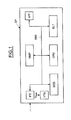
- the reference SY generally denotes a digital image processing device incorporating, for example, a satellite decoder and / or a television set.
- IFE input means receive, for example, a satellite antenna or a digital disk (not shown here for simplification purposes) a stream of compressed data according to, for example, the MPEG standards. .
- An image decoding DCD device for example an MPEG decoder, decodes the encoded images from this compressed data for display on an AFF display screen.
- the device SY furthermore comprises a CPU or microprocessor processing unit that can, for example, manage the decoding of the different satellite channels as well as a graphic information generator BLT intended to be embedded on the screen in superposition of the video images, by example interactive menus obtained by operating a TV remote control.
- This BLT generator is a two-dimensional acceleration unit which, as will be seen in more detail below, will allow the composition of the images to be displayed.
- the device SY also includes a dynamic memory MMP, for example a memory of the DDR / SDRAM type, which is shared between these different elements.
- a dynamic memory MMP for example a memory of the DDR / SDRAM type, which is shared between these different elements.
- the device SY comprises a video synchronization generator VTG capable of delivering Vsync vertical synchronization signals at regular intervals. Depending on the display mode used on the screen, these vertical sync signals can separate frames from an image or images.
- the MMP memory could be part of the integrated circuit forming the component incorporating the DCD decoder, the CPU processor, the BLT acceleration unit and the IFE interface, it is also possible, as illustrated in FIG. figure 2 , that the main memory MMP is a memory external to the component CMP.
- the MMP memory communicates with the other elements of the CMP component via an MCR memory controller. Furthermore, there is provided an IFS output interface, of the DMA type, connected to the BBS bus as well as the AFF display means.
- the video synchronization generator delivers Vsync vertical synchronization signals at regular intervals.
- an image comprises several plans ("layers", according to a commonly used Anglo-Saxon name) including at least one video plan and a graphic plan.
- the processing unit CPU is able to perform a scene analysis of the image to be displayed and to generate a list of composition instructions for this image.
- the video decoding unit DCD decodes the video data and stores them in the main memory MMP.
- the acceleration unit BLT composes the image to be displayed, taking into account said composition instructions and stores it in the main memory.
- the processing unit CPU prepares the next image n + 1.
- the IFS output interface extracts from the main memory MMP the image data of the image n, for display.
- the processing unit CPU prepares the next image n + 2, while the acceleration unit BLT composes the image n + 1.
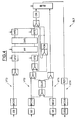
- the BLT acceleration unit according to the invention comprises in particular an additional processing channel, in this case the VT3 channel.
- the unit BLT comprises three inputs, S1, S2, S3 (three FIFOs), connected on the three processing channels VT1, VT2 and VT3, which result in an arithmetic and logical unit of composition ALUB, classically formed of multipliers.
- the BLT unit comprises a conventional VT4 output processing channel connected between the output of the composition unit ALUB and a FIFO output memory DES.
- input conversion means MCV1-MCV3 At the head of each of the processing paths VT1-VT3 are arranged input conversion means MCV1-MCV3. Each of these means is intended to receive, for example, 128-bit words and to deliver 32-bit pixels according to, for example, an ⁇ RGB format of 4x8 bits. ⁇ denotes here the 8 bits of transparency of the pixel.
- Such means are conventional and known in themselves, and include in particular memory management means in the FIFO memory and a sequencer and color encoding means.
- MCVS On the VT4 output channel, MCVS means, also of conventional structure and known per se, perform inverse processing of those performed in the MCV1-MCV3 means.
- color conversion means referenced Y2R, and capable of converting from YCbCr format to ⁇ RGB format, are provided in parallel on one of the processing channels, in this case the VT2 channel.
- inverse conversion means R2Y are provided on the output channel VT4.
- the VT2 and VT3 channels are equipped with horizontal and vertical filtering means, respectively referenced HF2, HF3 and VF2, VF3, so as to transform the size of an image, while the VT1 processing channel is free of horizontal and vertical filtering means.
- each of the channels VT2 and VT3 are independently controllable, which makes it possible to separately drive the resize factor ("resize-factor" according to a commonly used English name) for the luminance data Y and chrominance CbCr, for example.
- the horizontal and vertical filtering means as well as the anti-flicker filter and the deinterleaver, are conventional means and known per se. This being so, it is possible, for example, to use filtering means and an anti-flicker filter, such as those described for example in the French patent applications Nos. 2,801,463 and or 2,798,033 .
- Video data relating to a video plane of the image to be composed, and comprising luminance data Y and chrominance data CbCr less than the luminance data, are exclusively processed by the processing channels VT2 and VT3.
- the VT3 processing channel will be dedicated exclusively to the processing of luminance data.
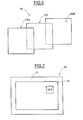
- the IM image consists of three planes, namely, a BKG background graphic plane, a FRG foreground graphic plane and a VID video plane.
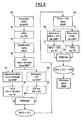
- the BKG background plane is extracted from the main memory MMP (step 60) and is delivered on the input S2 (step 61), so that it can be scaled after passing through the vertical and horizontal filters (step 62). Indeed, generally, given that the graphic plans have specific formats, a scaling is usually necessary.
- the graphical data representative of the scaled BKG plane is stored in the main memory MMP, and more exactly in a specific memory zone "frame buffer" of the memory MMP (step 63).
- step 64 the image data corresponding to the scaled BKG plane are extracted from this specific memory area (step 64), and the video data corresponding to the video VID plane is also extracted from the MMP memory (step 66). .
- the luminance data of the video plane is delivered to the input S3, while the chrominance data of the video plane are output to the input S2 (step 67).
- the video data is mixed (step 68) in the composition unit ALUB with the graphical data from the processing channel. VT1 and corresponding to the scaled BKG graphic plan.
- these data BKG + VID are extracted from the specific memory area of the memory MMP (step 70) to be delivered to the input S1 of the acceleration unit BLT (step 72) in order to be injected into the ALUB composition unit without undergoing filtering treatment.
- the data representative of the foreground graphic FRG are extracted from the memory MMP (step 71) to be delivered to the input S2 (step 73) in order to undergo scaling processing (step 73) before mixing (step 74) in the composition unit ALUB with the BKG + VID data.
- Another elementary composition is thus implemented using the FRG plane and the BKG + VID plane resulting from the previous elementary composition.
- the corresponding data is outputted from the output of the BLT acceleration unit to be stored in the specific memory area of the MMP memory (step 75).
- the processing unit can then generate composition instructions for certain parts of the image.
- the processing unit CPU will then issue composition instructions only for zone Z2 of the image and not for fixed zone Z1, so as to compose the video plane with the corresponding zone of the background graphic plane and with for example a GFX object located in the FRG plan.
- the invention therefore has the advantage of not requiring updating the unmodified parts of the image-specific memory area until a possible change in the scene.
- the invention makes it possible to efficiently treat the opacities of the image, thus avoiding access to hidden pixels.
- the embodiment illustrated on the figure 8 further reduces the bandwidth consumption at the MMP main memory.
- the CMP component further comprises an internal RAM MMA, or auxiliary memory.
- This memory is for example a static memory of the SRAM type.
- This internal random access memory MMA is able to cooperate with the acceleration unit BLT, so as to temporarily store intermediate data during the composition of an image.
- the plans will be divided into sub-areas or tiles, the size of which will depend on the memory size of the MMA memory as well as the pixel format. used.
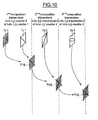
- each layer is decomposed into tiles Tij. So, as illustrated also on the figure 10 , the first elementary composition will concern each tile Tij0 of the layer 0 and the homologous tile Tij1 of the layer 1.
- the tile Tij0 will be extracted from the main memory MMP and delivered to the input S1 of the acceleration unit BLT, while the tile Tij1 will be extracted from the memory MMP and delivered on the input S2 of the BLT acceleration unit.
- the output DES of this BLT acceleration unit will then issue a first intermediate tile TI1ij which will be stored in the auxiliary memory MMA.
- the intermediate tile TI1ij will be extracted from the memory MMA and delivered to the input S1 of the acceleration unit BLT, so as to be composed, during a second elementary composition, with the tile Tij2, extracted from the MMP memory and present at the input S2 of the BLT acceleration unit, so as to form a second intermediate tile TI2ij.
- This second intermediate tile TI2ij is in turn stored in the MMA memory.
- the second intermediate tile TI2ij is extracted from the memory MMA, delivered to the input S1 of the unit acceleration BLT to be mixed with the tile Tij3 extracted from the memory MMP and delivered to the input S2 of the unit BLT.
- the result of this third elementary composition is a completely composed tile TCij, which will this time be stored in the specific memory area of the main memory MMP.
- This auxiliary memory MMA thus prevents the acceleration unit from consuming bandwidth on the main memory MMP, to store intermediate results.
- the execution time is thus reduced, which facilitates the real-time control of the treatment.
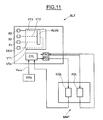
- composition unit BLT composes images, taking into account composition instructions contained in the MMP memory and forming a list of CQL composition instructions ( figure 11 ).
- the generation of graphic objects by the acceleration unit is also performed, according to a list of AQL application instructions also stored in the main memory MMP.
- the invention provides that within an interval separated by two occurrences of the signal Vsync, the composition task of image has priority over that of generating graphic objects.
- the graphic acceleration unit comprises CTL control means, able to trigger the image composition task at the occurrence of a vertical synchronization signal Vsync, then to trigger a task object generation graphics at the end of the image composition task or to allow the resumption of a graphics object generation task that has been interrupted during said occurrence of the vertical synchronization signal.
- composition instructions cN 1 -cN 10 are then successively executed, and then, when the control means detect that the last instruction cN 10 has been executed, they activate an address pointer PAQ which designates the application instruction to be executed. .
- the AQL list had started at the previous interval by the instruction aN 1 . Then, the instruction aN 2 was executed.
- the generation of the graphic object continues from the instruction aN 3 to the instruction aN 6 . Then, in the example illustrated here, there is a rest time ("idle") before the occurrence of the next Vsync signal.
Landscapes
- Engineering & Computer Science (AREA)
- Multimedia (AREA)
- Signal Processing (AREA)
- Computer Graphics (AREA)
- Controls And Circuits For Display Device (AREA)
- Image Generation (AREA)
- Processing Or Creating Images (AREA)
Applications Claiming Priority (2)
| Application Number | Priority Date | Filing Date | Title |
|---|---|---|---|
| FR0310566A FR2859591A1 (fr) | 2003-09-08 | 2003-09-08 | Dispositif et procede de traitement de donnees video et graphiques |
| EP04292045A EP1515566B1 (de) | 2003-09-08 | 2004-08-12 | Einrichtung und Verfahren zur Bearbeitung von Video- und Graphic-Daten |
Related Parent Applications (2)
| Application Number | Title | Priority Date | Filing Date |
|---|---|---|---|
| EP04292045A Division EP1515566B1 (de) | 2003-09-08 | 2004-08-12 | Einrichtung und Verfahren zur Bearbeitung von Video- und Graphic-Daten |
| EP04292045.4 Division | 2004-08-12 |
Publications (2)
| Publication Number | Publication Date |
|---|---|
| EP2079240A2 true EP2079240A2 (de) | 2009-07-15 |
| EP2079240A3 EP2079240A3 (de) | 2010-05-26 |
Family
ID=34130761
Family Applications (2)
| Application Number | Title | Priority Date | Filing Date |
|---|---|---|---|
| EP09158672A Ceased EP2079240A3 (de) | 2003-09-08 | 2004-08-12 | Einrichtung und Verfahren zur Bearbeitung von Video- und Graphic-Daten |
| EP04292045A Expired - Lifetime EP1515566B1 (de) | 2003-09-08 | 2004-08-12 | Einrichtung und Verfahren zur Bearbeitung von Video- und Graphic-Daten |
Family Applications After (1)
| Application Number | Title | Priority Date | Filing Date |
|---|---|---|---|
| EP04292045A Expired - Lifetime EP1515566B1 (de) | 2003-09-08 | 2004-08-12 | Einrichtung und Verfahren zur Bearbeitung von Video- und Graphic-Daten |
Country Status (5)
| Country | Link |
|---|---|
| US (1) | US7474311B2 (de) |
| EP (2) | EP2079240A3 (de) |
| JP (1) | JP2005086822A (de) |
| DE (1) | DE602004023464D1 (de) |
| FR (1) | FR2859591A1 (de) |
Families Citing this family (4)
| Publication number | Priority date | Publication date | Assignee | Title |
|---|---|---|---|---|
| JP2006317636A (ja) * | 2005-05-11 | 2006-11-24 | Sony Corp | 画像処理装置および方法、記録媒体、並びに、プログラム |
| JP2007163903A (ja) * | 2005-12-14 | 2007-06-28 | Matsushita Electric Ind Co Ltd | 表示制御装置および表示制御方法 |
| US7929599B2 (en) | 2006-02-24 | 2011-04-19 | Microsoft Corporation | Accelerated video encoding |
| CN110838130B (zh) * | 2018-08-15 | 2022-07-12 | 湖南大学 | 一种快速模糊距离变换方法 |
Citations (2)
| Publication number | Priority date | Publication date | Assignee | Title |
|---|---|---|---|---|
| FR2798033A1 (fr) | 1999-08-24 | 2001-03-02 | St Microelectronics Sa | Procede et systeme de traitement d'images numeriques |
| FR2801463A1 (fr) | 1999-11-23 | 2001-05-25 | St Microelectronics Sa | Procede et systeme de traitement d'images numeriques |
Family Cites Families (7)
| Publication number | Priority date | Publication date | Assignee | Title |
|---|---|---|---|---|
| JP3876456B2 (ja) * | 1996-05-23 | 2007-01-31 | ソニー株式会社 | 画像合成装置 |
| US5889949A (en) * | 1996-10-11 | 1999-03-30 | C-Cube Microsystems | Processing system with memory arbitrating between memory access requests in a set top box |
| US6311204B1 (en) * | 1996-10-11 | 2001-10-30 | C-Cube Semiconductor Ii Inc. | Processing system with register-based process sharing |
| US6738072B1 (en) * | 1998-11-09 | 2004-05-18 | Broadcom Corporation | Graphics display system with anti-flutter filtering and vertical scaling feature |
| US6573905B1 (en) * | 1999-11-09 | 2003-06-03 | Broadcom Corporation | Video and graphics system with parallel processing of graphics windows |
| JP2001285749A (ja) * | 2000-01-24 | 2001-10-12 | Matsushita Electric Ind Co Ltd | 画像合成装置、記録媒体及びプログラム |
| JP3481913B2 (ja) * | 2000-12-18 | 2003-12-22 | 株式会社アクセル | 画像処理装置 |
-
2003
- 2003-09-08 FR FR0310566A patent/FR2859591A1/fr active Pending
-
2004
- 2004-08-12 EP EP09158672A patent/EP2079240A3/de not_active Ceased
- 2004-08-12 DE DE602004023464T patent/DE602004023464D1/de not_active Expired - Lifetime
- 2004-08-12 EP EP04292045A patent/EP1515566B1/de not_active Expired - Lifetime
- 2004-08-24 US US10/924,748 patent/US7474311B2/en not_active Expired - Lifetime
- 2004-09-06 JP JP2004258029A patent/JP2005086822A/ja active Pending
Patent Citations (2)
| Publication number | Priority date | Publication date | Assignee | Title |
|---|---|---|---|---|
| FR2798033A1 (fr) | 1999-08-24 | 2001-03-02 | St Microelectronics Sa | Procede et systeme de traitement d'images numeriques |
| FR2801463A1 (fr) | 1999-11-23 | 2001-05-25 | St Microelectronics Sa | Procede et systeme de traitement d'images numeriques |
Also Published As
| Publication number | Publication date |
|---|---|
| JP2005086822A (ja) | 2005-03-31 |
| DE602004023464D1 (de) | 2009-11-19 |
| US7474311B2 (en) | 2009-01-06 |
| FR2859591A1 (fr) | 2005-03-11 |
| EP1515566A3 (de) | 2005-07-06 |
| US20050078119A1 (en) | 2005-04-14 |
| EP2079240A3 (de) | 2010-05-26 |
| EP1515566A2 (de) | 2005-03-16 |
| EP1515566B1 (de) | 2009-10-07 |
Similar Documents
| Publication | Publication Date | Title |
|---|---|---|
| EP2109313B1 (de) | Fernsehempfänger und Verfahren | |
| US20080168512A1 (en) | System and Method to Implement Interactive Video Streaming | |
| CN109729405B (zh) | 视频处理方法、装置、电子设备及存储介质 | |
| US11943489B2 (en) | Method and system for automatic real-time frame segmentation of high resolution video streams into constituent features and modifications of features in each frame to simultaneously create multiple different linear views from same video source | |
| EP1432246B1 (de) | Verfahren und Gerät zur Dekodierung und zur Rückwärtsanzeige von MPEG-Bildern, Pilotvideoschaltung und ein ein solches Gerät enthaltender Dekoder | |
| EP1515566B1 (de) | Einrichtung und Verfahren zur Bearbeitung von Video- und Graphic-Daten | |
| EP0969672A1 (de) | Verfahren und Gerät für die Dekodierung eines MPEG komprimierten Bildes, insbesondere ein bidirektional kodiertes Bild | |
| FR2795279A1 (fr) | Procede et dispositif de commutation de programmes de television numerique | |
| EP2022009B1 (de) | Verfahren zum codieren und system zum anzeigen eines numerischen imitats eines objekts in form eines synthesebildes auf einem bildschirm | |
| EP0967576A1 (de) | Speicheradressierung in einem MPEG-Dekodierer | |
| US20090214138A1 (en) | Image processing method, and processing methods for digital photo frame and interactive image process | |
| FR2828054A1 (fr) | Procede et dispositif de codage d'une scene | |
| US20050088446A1 (en) | Graphics layer reduction for video composition | |
| EP2487898A1 (de) | Anzeigeverfahren eines personalisierten Videomosaiks, und entsprechendes audiovisuelles Aufnahmegehäuse | |
| RU2690888C2 (ru) | Способ, устройство и вычислительное устройство для получения широковещательного контента | |
| EP1738349B1 (de) | Verfahren und system zur volatilen erstellung eines auf einem anzeigesystem ausgebbaren bild aus einer vielzahl von objekten | |
| FR2781326A1 (fr) | Procede et systeme d'elaboration d'images numeriques resultant d'elements graphiques auxiliaires incrustes dans des images principales | |
| EP1383336B1 (de) | Dekompressions und Wiedergabemethode für objektbasierte Multimediadatenströme; entsprechender Apparat und entsprechendes System sowie Signal | |
| FR2817641A1 (fr) | Procede et dispositif de traitement d'images numeriques | |
| US20240236388A1 (en) | Method and system for automatic real-time frame segmentation of high resolution video streams into constituent features and modifications of features in each frame to simultaneously create multiple different linear views from same video source | |
| EP0967577B1 (de) | Verfahren und Vorrichtung zur Verarbeitung von MPEG-Bildern | |
| WO2000002394A1 (fr) | Procede de traitement de donnees video destinees a etre visualisees sur ecran et dispositif mettant en oeuvre le procede | |
| FR2947979A1 (fr) | Dispositif de composition video | |
| FR3110266A1 (fr) | Notification donnant connaissance au préalable d’un moment excitant pour événements en direct | |
| FR2868232A1 (fr) | Systeme d'affichage d'une sequence d'images animees |
Legal Events
| Date | Code | Title | Description |
|---|---|---|---|
| PUAI | Public reference made under article 153(3) epc to a published international application that has entered the european phase |
Free format text: ORIGINAL CODE: 0009012 |
|
| AC | Divisional application: reference to earlier application |
Ref document number: 1515566 Country of ref document: EP Kind code of ref document: P |
|
| AK | Designated contracting states |
Kind code of ref document: A2 Designated state(s): DE FR GB IT |
|
| RIN1 | Information on inventor provided before grant (corrected) |
Inventor name: WALKER, ALASTAIR Inventor name: CHIARUZZI, EMMANUEL Inventor name: VOS, MARK Inventor name: TERRAT, MICHEL Inventor name: ALADENISE, DIDIER Inventor name: GILLET, LYDIE |
|
| PUAL | Search report despatched |
Free format text: ORIGINAL CODE: 0009013 |
|
| AK | Designated contracting states |
Kind code of ref document: A3 Designated state(s): DE FR GB IT |
|
| RIN1 | Information on inventor provided before grant (corrected) |
Inventor name: ALADENISE, DIDIER Inventor name: WALKER, ALASTAIR Inventor name: VOS, MARK Inventor name: CHIARUZZI, EMMANUEL Inventor name: TERRAT, MICHEL Inventor name: GILLET, LYDIE |
|
| 17P | Request for examination filed |
Effective date: 20101013 |
|
| 17Q | First examination report despatched |
Effective date: 20110415 |
|
| STAA | Information on the status of an ep patent application or granted ep patent |
Free format text: STATUS: THE APPLICATION HAS BEEN REFUSED |
|
| 18R | Application refused |
Effective date: 20120202 |