EP2079672B1 - Procede de fabrication des matériaux comprenant du zirconate de baryum - Google Patents
Procede de fabrication des matériaux comprenant du zirconate de baryum Download PDFInfo
- Publication number
- EP2079672B1 EP2079672B1 EP07870797.3A EP07870797A EP2079672B1 EP 2079672 B1 EP2079672 B1 EP 2079672B1 EP 07870797 A EP07870797 A EP 07870797A EP 2079672 B1 EP2079672 B1 EP 2079672B1
- Authority
- EP
- European Patent Office
- Prior art keywords
- barium
- barium zirconate
- particles
- oxide
- binder material
- Prior art date
- Legal status (The legal status is an assumption and is not a legal conclusion. Google has not performed a legal analysis and makes no representation as to the accuracy of the status listed.)
- Ceased
Links
Images



Classifications
-
- C—CHEMISTRY; METALLURGY
- C04—CEMENTS; CONCRETE; ARTIFICIAL STONE; CERAMICS; REFRACTORIES
- C04B—LIME, MAGNESIA; SLAG; CEMENTS; COMPOSITIONS THEREOF, e.g. MORTARS, CONCRETE OR LIKE BUILDING MATERIALS; ARTIFICIAL STONE; CERAMICS; REFRACTORIES; TREATMENT OF NATURAL STONE
- C04B35/00—Shaped ceramic products characterised by their composition; Ceramics compositions; Processing powders of inorganic compounds preparatory to the manufacturing of ceramic products
- C04B35/01—Shaped ceramic products characterised by their composition; Ceramics compositions; Processing powders of inorganic compounds preparatory to the manufacturing of ceramic products based on oxide ceramics
- C04B35/48—Shaped ceramic products characterised by their composition; Ceramics compositions; Processing powders of inorganic compounds preparatory to the manufacturing of ceramic products based on oxide ceramics based on zirconium or hafnium oxides, zirconates, zircon or hafnates
-
- C—CHEMISTRY; METALLURGY
- C04—CEMENTS; CONCRETE; ARTIFICIAL STONE; CERAMICS; REFRACTORIES
- C04B—LIME, MAGNESIA; SLAG; CEMENTS; COMPOSITIONS THEREOF, e.g. MORTARS, CONCRETE OR LIKE BUILDING MATERIALS; ARTIFICIAL STONE; CERAMICS; REFRACTORIES; TREATMENT OF NATURAL STONE
- C04B35/00—Shaped ceramic products characterised by their composition; Ceramics compositions; Processing powders of inorganic compounds preparatory to the manufacturing of ceramic products
- C04B35/01—Shaped ceramic products characterised by their composition; Ceramics compositions; Processing powders of inorganic compounds preparatory to the manufacturing of ceramic products based on oxide ceramics
- C04B35/48—Shaped ceramic products characterised by their composition; Ceramics compositions; Processing powders of inorganic compounds preparatory to the manufacturing of ceramic products based on oxide ceramics based on zirconium or hafnium oxides, zirconates, zircon or hafnates
- C04B35/486—Fine ceramics
-
- C—CHEMISTRY; METALLURGY
- C04—CEMENTS; CONCRETE; ARTIFICIAL STONE; CERAMICS; REFRACTORIES
- C04B—LIME, MAGNESIA; SLAG; CEMENTS; COMPOSITIONS THEREOF, e.g. MORTARS, CONCRETE OR LIKE BUILDING MATERIALS; ARTIFICIAL STONE; CERAMICS; REFRACTORIES; TREATMENT OF NATURAL STONE
- C04B35/00—Shaped ceramic products characterised by their composition; Ceramics compositions; Processing powders of inorganic compounds preparatory to the manufacturing of ceramic products
- C04B35/622—Forming processes; Processing powders of inorganic compounds preparatory to the manufacturing of ceramic products
- C04B35/626—Preparing or treating the powders individually or as batches ; preparing or treating macroscopic reinforcing agents for ceramic products, e.g. fibres; mechanical aspects section B
- C04B35/62605—Treating the starting powders individually or as mixtures
- C04B35/62645—Thermal treatment of powders or mixtures thereof other than sintering
- C04B35/62655—Drying, e.g. freeze-drying, spray-drying, microwave or supercritical drying
-
- C—CHEMISTRY; METALLURGY
- C04—CEMENTS; CONCRETE; ARTIFICIAL STONE; CERAMICS; REFRACTORIES
- C04B—LIME, MAGNESIA; SLAG; CEMENTS; COMPOSITIONS THEREOF, e.g. MORTARS, CONCRETE OR LIKE BUILDING MATERIALS; ARTIFICIAL STONE; CERAMICS; REFRACTORIES; TREATMENT OF NATURAL STONE
- C04B35/00—Shaped ceramic products characterised by their composition; Ceramics compositions; Processing powders of inorganic compounds preparatory to the manufacturing of ceramic products
- C04B35/622—Forming processes; Processing powders of inorganic compounds preparatory to the manufacturing of ceramic products
- C04B35/626—Preparing or treating the powders individually or as batches ; preparing or treating macroscopic reinforcing agents for ceramic products, e.g. fibres; mechanical aspects section B
- C04B35/62605—Treating the starting powders individually or as mixtures
- C04B35/62695—Granulation or pelletising
-
- C—CHEMISTRY; METALLURGY
- C04—CEMENTS; CONCRETE; ARTIFICIAL STONE; CERAMICS; REFRACTORIES
- C04B—LIME, MAGNESIA; SLAG; CEMENTS; COMPOSITIONS THEREOF, e.g. MORTARS, CONCRETE OR LIKE BUILDING MATERIALS; ARTIFICIAL STONE; CERAMICS; REFRACTORIES; TREATMENT OF NATURAL STONE
- C04B35/00—Shaped ceramic products characterised by their composition; Ceramics compositions; Processing powders of inorganic compounds preparatory to the manufacturing of ceramic products
- C04B35/622—Forming processes; Processing powders of inorganic compounds preparatory to the manufacturing of ceramic products
- C04B35/64—Burning or sintering processes
-
- C—CHEMISTRY; METALLURGY
- C04—CEMENTS; CONCRETE; ARTIFICIAL STONE; CERAMICS; REFRACTORIES
- C04B—LIME, MAGNESIA; SLAG; CEMENTS; COMPOSITIONS THEREOF, e.g. MORTARS, CONCRETE OR LIKE BUILDING MATERIALS; ARTIFICIAL STONE; CERAMICS; REFRACTORIES; TREATMENT OF NATURAL STONE
- C04B2235/00—Aspects relating to ceramic starting mixtures or sintered ceramic products
- C04B2235/02—Composition of constituents of the starting material or of secondary phases of the final product
- C04B2235/30—Constituents and secondary phases not being of a fibrous nature
- C04B2235/32—Metal oxides, mixed metal oxides, or oxide-forming salts thereof, e.g. carbonates, nitrates, (oxy)hydroxides, chlorides
- C04B2235/3201—Alkali metal oxides or oxide-forming salts thereof
-
- C—CHEMISTRY; METALLURGY
- C04—CEMENTS; CONCRETE; ARTIFICIAL STONE; CERAMICS; REFRACTORIES
- C04B—LIME, MAGNESIA; SLAG; CEMENTS; COMPOSITIONS THEREOF, e.g. MORTARS, CONCRETE OR LIKE BUILDING MATERIALS; ARTIFICIAL STONE; CERAMICS; REFRACTORIES; TREATMENT OF NATURAL STONE
- C04B2235/00—Aspects relating to ceramic starting mixtures or sintered ceramic products
- C04B2235/02—Composition of constituents of the starting material or of secondary phases of the final product
- C04B2235/30—Constituents and secondary phases not being of a fibrous nature
- C04B2235/32—Metal oxides, mixed metal oxides, or oxide-forming salts thereof, e.g. carbonates, nitrates, (oxy)hydroxides, chlorides
- C04B2235/3201—Alkali metal oxides or oxide-forming salts thereof
- C04B2235/3203—Lithium oxide or oxide-forming salts thereof
-
- C—CHEMISTRY; METALLURGY
- C04—CEMENTS; CONCRETE; ARTIFICIAL STONE; CERAMICS; REFRACTORIES
- C04B—LIME, MAGNESIA; SLAG; CEMENTS; COMPOSITIONS THEREOF, e.g. MORTARS, CONCRETE OR LIKE BUILDING MATERIALS; ARTIFICIAL STONE; CERAMICS; REFRACTORIES; TREATMENT OF NATURAL STONE
- C04B2235/00—Aspects relating to ceramic starting mixtures or sintered ceramic products
- C04B2235/02—Composition of constituents of the starting material or of secondary phases of the final product
- C04B2235/30—Constituents and secondary phases not being of a fibrous nature
- C04B2235/32—Metal oxides, mixed metal oxides, or oxide-forming salts thereof, e.g. carbonates, nitrates, (oxy)hydroxides, chlorides
- C04B2235/3205—Alkaline earth oxides or oxide forming salts thereof, e.g. beryllium oxide
- C04B2235/3208—Calcium oxide or oxide-forming salts thereof, e.g. lime
-
- C—CHEMISTRY; METALLURGY
- C04—CEMENTS; CONCRETE; ARTIFICIAL STONE; CERAMICS; REFRACTORIES
- C04B—LIME, MAGNESIA; SLAG; CEMENTS; COMPOSITIONS THEREOF, e.g. MORTARS, CONCRETE OR LIKE BUILDING MATERIALS; ARTIFICIAL STONE; CERAMICS; REFRACTORIES; TREATMENT OF NATURAL STONE
- C04B2235/00—Aspects relating to ceramic starting mixtures or sintered ceramic products
- C04B2235/02—Composition of constituents of the starting material or of secondary phases of the final product
- C04B2235/30—Constituents and secondary phases not being of a fibrous nature
- C04B2235/32—Metal oxides, mixed metal oxides, or oxide-forming salts thereof, e.g. carbonates, nitrates, (oxy)hydroxides, chlorides
- C04B2235/3205—Alkaline earth oxides or oxide forming salts thereof, e.g. beryllium oxide
- C04B2235/3213—Strontium oxides or oxide-forming salts thereof
-
- C—CHEMISTRY; METALLURGY
- C04—CEMENTS; CONCRETE; ARTIFICIAL STONE; CERAMICS; REFRACTORIES
- C04B—LIME, MAGNESIA; SLAG; CEMENTS; COMPOSITIONS THEREOF, e.g. MORTARS, CONCRETE OR LIKE BUILDING MATERIALS; ARTIFICIAL STONE; CERAMICS; REFRACTORIES; TREATMENT OF NATURAL STONE
- C04B2235/00—Aspects relating to ceramic starting mixtures or sintered ceramic products
- C04B2235/02—Composition of constituents of the starting material or of secondary phases of the final product
- C04B2235/30—Constituents and secondary phases not being of a fibrous nature
- C04B2235/32—Metal oxides, mixed metal oxides, or oxide-forming salts thereof, e.g. carbonates, nitrates, (oxy)hydroxides, chlorides
- C04B2235/3205—Alkaline earth oxides or oxide forming salts thereof, e.g. beryllium oxide
- C04B2235/3215—Barium oxides or oxide-forming salts thereof
-
- C—CHEMISTRY; METALLURGY
- C04—CEMENTS; CONCRETE; ARTIFICIAL STONE; CERAMICS; REFRACTORIES
- C04B—LIME, MAGNESIA; SLAG; CEMENTS; COMPOSITIONS THEREOF, e.g. MORTARS, CONCRETE OR LIKE BUILDING MATERIALS; ARTIFICIAL STONE; CERAMICS; REFRACTORIES; TREATMENT OF NATURAL STONE
- C04B2235/00—Aspects relating to ceramic starting mixtures or sintered ceramic products
- C04B2235/02—Composition of constituents of the starting material or of secondary phases of the final product
- C04B2235/30—Constituents and secondary phases not being of a fibrous nature
- C04B2235/32—Metal oxides, mixed metal oxides, or oxide-forming salts thereof, e.g. carbonates, nitrates, (oxy)hydroxides, chlorides
- C04B2235/3231—Refractory metal oxides, their mixed metal oxides, or oxide-forming salts thereof
- C04B2235/3244—Zirconium oxides, zirconates, hafnium oxides, hafnates, or oxide-forming salts thereof
- C04B2235/3248—Zirconates or hafnates, e.g. zircon
-
- C—CHEMISTRY; METALLURGY
- C04—CEMENTS; CONCRETE; ARTIFICIAL STONE; CERAMICS; REFRACTORIES
- C04B—LIME, MAGNESIA; SLAG; CEMENTS; COMPOSITIONS THEREOF, e.g. MORTARS, CONCRETE OR LIKE BUILDING MATERIALS; ARTIFICIAL STONE; CERAMICS; REFRACTORIES; TREATMENT OF NATURAL STONE
- C04B2235/00—Aspects relating to ceramic starting mixtures or sintered ceramic products
- C04B2235/02—Composition of constituents of the starting material or of secondary phases of the final product
- C04B2235/30—Constituents and secondary phases not being of a fibrous nature
- C04B2235/32—Metal oxides, mixed metal oxides, or oxide-forming salts thereof, e.g. carbonates, nitrates, (oxy)hydroxides, chlorides
- C04B2235/3231—Refractory metal oxides, their mixed metal oxides, or oxide-forming salts thereof
- C04B2235/3251—Niobium oxides, niobates, tantalum oxides, tantalates, or oxide-forming salts thereof
- C04B2235/3255—Niobates or tantalates, e.g. silver niobate
-
- C—CHEMISTRY; METALLURGY
- C04—CEMENTS; CONCRETE; ARTIFICIAL STONE; CERAMICS; REFRACTORIES
- C04B—LIME, MAGNESIA; SLAG; CEMENTS; COMPOSITIONS THEREOF, e.g. MORTARS, CONCRETE OR LIKE BUILDING MATERIALS; ARTIFICIAL STONE; CERAMICS; REFRACTORIES; TREATMENT OF NATURAL STONE
- C04B2235/00—Aspects relating to ceramic starting mixtures or sintered ceramic products
- C04B2235/02—Composition of constituents of the starting material or of secondary phases of the final product
- C04B2235/30—Constituents and secondary phases not being of a fibrous nature
- C04B2235/32—Metal oxides, mixed metal oxides, or oxide-forming salts thereof, e.g. carbonates, nitrates, (oxy)hydroxides, chlorides
- C04B2235/3231—Refractory metal oxides, their mixed metal oxides, or oxide-forming salts thereof
- C04B2235/3256—Molybdenum oxides, molybdates or oxide forming salts thereof, e.g. cadmium molybdate
-
- C—CHEMISTRY; METALLURGY
- C04—CEMENTS; CONCRETE; ARTIFICIAL STONE; CERAMICS; REFRACTORIES
- C04B—LIME, MAGNESIA; SLAG; CEMENTS; COMPOSITIONS THEREOF, e.g. MORTARS, CONCRETE OR LIKE BUILDING MATERIALS; ARTIFICIAL STONE; CERAMICS; REFRACTORIES; TREATMENT OF NATURAL STONE
- C04B2235/00—Aspects relating to ceramic starting mixtures or sintered ceramic products
- C04B2235/02—Composition of constituents of the starting material or of secondary phases of the final product
- C04B2235/30—Constituents and secondary phases not being of a fibrous nature
- C04B2235/32—Metal oxides, mixed metal oxides, or oxide-forming salts thereof, e.g. carbonates, nitrates, (oxy)hydroxides, chlorides
- C04B2235/3231—Refractory metal oxides, their mixed metal oxides, or oxide-forming salts thereof
- C04B2235/3258—Tungsten oxides, tungstates, or oxide-forming salts thereof
-
- C—CHEMISTRY; METALLURGY
- C04—CEMENTS; CONCRETE; ARTIFICIAL STONE; CERAMICS; REFRACTORIES
- C04B—LIME, MAGNESIA; SLAG; CEMENTS; COMPOSITIONS THEREOF, e.g. MORTARS, CONCRETE OR LIKE BUILDING MATERIALS; ARTIFICIAL STONE; CERAMICS; REFRACTORIES; TREATMENT OF NATURAL STONE
- C04B2235/00—Aspects relating to ceramic starting mixtures or sintered ceramic products
- C04B2235/02—Composition of constituents of the starting material or of secondary phases of the final product
- C04B2235/30—Constituents and secondary phases not being of a fibrous nature
- C04B2235/32—Metal oxides, mixed metal oxides, or oxide-forming salts thereof, e.g. carbonates, nitrates, (oxy)hydroxides, chlorides
- C04B2235/3231—Refractory metal oxides, their mixed metal oxides, or oxide-forming salts thereof
- C04B2235/3258—Tungsten oxides, tungstates, or oxide-forming salts thereof
- C04B2235/326—Tungstates, e.g. scheelite
-
- C—CHEMISTRY; METALLURGY
- C04—CEMENTS; CONCRETE; ARTIFICIAL STONE; CERAMICS; REFRACTORIES
- C04B—LIME, MAGNESIA; SLAG; CEMENTS; COMPOSITIONS THEREOF, e.g. MORTARS, CONCRETE OR LIKE BUILDING MATERIALS; ARTIFICIAL STONE; CERAMICS; REFRACTORIES; TREATMENT OF NATURAL STONE
- C04B2235/00—Aspects relating to ceramic starting mixtures or sintered ceramic products
- C04B2235/02—Composition of constituents of the starting material or of secondary phases of the final product
- C04B2235/30—Constituents and secondary phases not being of a fibrous nature
- C04B2235/32—Metal oxides, mixed metal oxides, or oxide-forming salts thereof, e.g. carbonates, nitrates, (oxy)hydroxides, chlorides
- C04B2235/3262—Manganese oxides, manganates, rhenium oxides or oxide-forming salts thereof, e.g. MnO
-
- C—CHEMISTRY; METALLURGY
- C04—CEMENTS; CONCRETE; ARTIFICIAL STONE; CERAMICS; REFRACTORIES
- C04B—LIME, MAGNESIA; SLAG; CEMENTS; COMPOSITIONS THEREOF, e.g. MORTARS, CONCRETE OR LIKE BUILDING MATERIALS; ARTIFICIAL STONE; CERAMICS; REFRACTORIES; TREATMENT OF NATURAL STONE
- C04B2235/00—Aspects relating to ceramic starting mixtures or sintered ceramic products
- C04B2235/02—Composition of constituents of the starting material or of secondary phases of the final product
- C04B2235/30—Constituents and secondary phases not being of a fibrous nature
- C04B2235/32—Metal oxides, mixed metal oxides, or oxide-forming salts thereof, e.g. carbonates, nitrates, (oxy)hydroxides, chlorides
- C04B2235/3281—Copper oxides, cuprates or oxide-forming salts thereof, e.g. CuO or Cu2O
-
- C—CHEMISTRY; METALLURGY
- C04—CEMENTS; CONCRETE; ARTIFICIAL STONE; CERAMICS; REFRACTORIES
- C04B—LIME, MAGNESIA; SLAG; CEMENTS; COMPOSITIONS THEREOF, e.g. MORTARS, CONCRETE OR LIKE BUILDING MATERIALS; ARTIFICIAL STONE; CERAMICS; REFRACTORIES; TREATMENT OF NATURAL STONE
- C04B2235/00—Aspects relating to ceramic starting mixtures or sintered ceramic products
- C04B2235/02—Composition of constituents of the starting material or of secondary phases of the final product
- C04B2235/50—Constituents or additives of the starting mixture chosen for their shape or used because of their shape or their physical appearance
- C04B2235/54—Particle size related information
- C04B2235/5418—Particle size related information expressed by the size of the particles or aggregates thereof
- C04B2235/5436—Particle size related information expressed by the size of the particles or aggregates thereof micrometer sized, i.e. from 1 to 100 micron
-
- C—CHEMISTRY; METALLURGY
- C04—CEMENTS; CONCRETE; ARTIFICIAL STONE; CERAMICS; REFRACTORIES
- C04B—LIME, MAGNESIA; SLAG; CEMENTS; COMPOSITIONS THEREOF, e.g. MORTARS, CONCRETE OR LIKE BUILDING MATERIALS; ARTIFICIAL STONE; CERAMICS; REFRACTORIES; TREATMENT OF NATURAL STONE
- C04B2235/00—Aspects relating to ceramic starting mixtures or sintered ceramic products
- C04B2235/02—Composition of constituents of the starting material or of secondary phases of the final product
- C04B2235/50—Constituents or additives of the starting mixture chosen for their shape or used because of their shape or their physical appearance
- C04B2235/54—Particle size related information
- C04B2235/5418—Particle size related information expressed by the size of the particles or aggregates thereof
- C04B2235/5445—Particle size related information expressed by the size of the particles or aggregates thereof submicron sized, i.e. from 0,1 to 1 micron
-
- C—CHEMISTRY; METALLURGY
- C04—CEMENTS; CONCRETE; ARTIFICIAL STONE; CERAMICS; REFRACTORIES
- C04B—LIME, MAGNESIA; SLAG; CEMENTS; COMPOSITIONS THEREOF, e.g. MORTARS, CONCRETE OR LIKE BUILDING MATERIALS; ARTIFICIAL STONE; CERAMICS; REFRACTORIES; TREATMENT OF NATURAL STONE
- C04B2235/00—Aspects relating to ceramic starting mixtures or sintered ceramic products
- C04B2235/70—Aspects relating to sintered or melt-casted ceramic products
- C04B2235/74—Physical characteristics
- C04B2235/76—Crystal structural characteristics, e.g. symmetry
- C04B2235/768—Perovskite structure ABO3
Definitions
- Radio frequency identification (RFID) technology is used in many applications to identify and determine the locations of various items.
- RFID technology uses a passive RF device, also referred to as an RFID chip, embedded within or otherwise associated with an item. When the RFID device comes within range of a corresponding RFID transceiver, the presence of the RFID device is detected by the RFID transceiver.
- the RFID device may be embedded in the item, causing the material from which the item is formed to attenuate the RF signal between the RFID device and the RFID transceiver, thus limiting the range over which the RFID transceiver can detect the presence of the RFID device. Therefore, it would be desirable to minimize any attenuation between the RFID device and the RFID transceiver.
- An embodiment of a method for manufacturing barium zirconate particles includes providing a mixture of materials that includes barium, zirconium and a sintering aid, wherein the sintering aid includes at least one of barium tungstate, potassium niobate, tungsten oxide, barium molybdate, molybdenum oxide, potassium tantalate, potassium oxide, sodium niobate, sodium tantalate, sodium oxide, lithium niobate, lithium tantalate, lithium oxide, copper oxide, manganese oxide, zinc oxide, calcium zirconate and strontium zirconate, heating the mixture of materials to produce barium zirconate particles that include the sintering aid, mixing the barium zirconate particles with a binder material, and heating the barium zirconate particles and the binder material to produce a barium zirconate agglomerate.
- the sintering aid includes at least one of barium tungstate, potassium niobate, tungsten oxide, bar
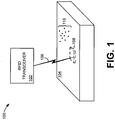
- FIG. 1 is a cut away block diagram illustrating a ceramic filler material for making polymer-ceramic composites transparent to microwave radiation.
- a polymer-ceramic material is illustrated using reference numeral 104.
- the polymer-ceramic material may also be referred to as a polymer-matrix material.
- the polymer-ceramic material comprises polyvinyl chloride (PVC), or a derivative of PVC, and a low dielectric loss ceramic oxide filler 110.
- PVC polyvinyl chloride
- the low dielectric loss ceramic oxide filler 110 is typically evenly distributed within the polymer-ceramic material 104.
- the low dielectric loss ceramic oxide filler 110 may be unevenly distributed within the polymer-ceramic material 104.
- the low dielectric loss ceramic oxide filler 110 renders the polymer-ceramic material 104 transparent to microwave energy 106 in the wavelength range of approximately 100 megahertz (MHz) to approximately 18 gigahertz (GHz) emitted from an RFID transceiver 102.
- the low dielectric loss ceramic oxide filler 110 permits an RFID chip 108 embedded in the polymer-ceramic material 104 to easily receive RF energy 106 with minimal attenuation and allows the RFID transceiver 102 to communicate with the RFID chip 108.
- the low dielectric loss ceramic oxide filler material 110 is fabricated using barium zirconate.
- a material that improves the ability to sinter the barium zirconate is added.
- at least one of barium tungstate and potassium niobate is added to the barium zirconate to improve the ability to sinter particles of barium zirconate larger than approximately 1 ⁇ m.
- one or more of tungsten oxide, barium molybdate, molybdenum oxide, potassium tantalate, potassium oxide, sodium niobate, sodium tantalate, sodium oxide, lithium niobate, lithium tantalate, lithium oxide, copper oxide, manganese oxide and zinc oxide may be added to the barium zirconate to improve the ability to sinter particles of barium zirconate larger than approximately 1 ⁇ m.
- a solid solution i.e., a solid-state solution of one or more solutes in a solvent
- barium zirconate and at least one of calcium zirconate and strontium zirconate may be used.
- FIG. 2 is a flow chart depicting an embodiment of a method 200 for manufacturing barium zirconate particles.
- barium zirconate is mixed with a sintering aid.
- the sintering aid is a material selected, for example, from the materials listed in the following Table 1.
- Table 1 Sintering Aids For Barium Zirconate Barium tungstate Potassium niobate Tungsten oxide Barium molybdate Molybdenum oxide Potassium tantalate Potassium oxide Sodium niobate Sodium tantalate Sodium oxide Lithium niobate Lithium tantalate Lithium oxide Copper oxide Manganese oxide Zinc oxide Calcium zirconate Strontium zirconate
- the sintering aid comprises about 1% - 4% of the mixture of materials by weight.
- the barium zirconate and the sintering aid are then heated to produce barium zirconate particles that comprise the sintering aid, as indicated in step 202.
- the resulting barium zirconate particles have a perovskite crystal structure.
- a perovskite crystal structure is one that resembles the structure of perovskite (calcium titanium oxide).
- the perovskite crystal structure of the barium zirconate particles enables the particles to have sizes between about 1-4 ⁇ m in diameter. Heating the materials may be performed, for example, at a temperature between about 1500°C and 1600°C for a period between about 8 to 12 hours.
- FIG. 3 is a flow chart depicting an alternative method 300 for manufacturing barium zirconate particles.
- a barium source is mixed with a zirconium source and a sintering aid.
- the sintering aid may be a material selected, for example, from the materials listed in Table 1, above. In an embodiment, the sintering aid comprises about 1% - 4% of the mixture of materials by weight.
- the barium source may be, for example, barium carbonate.
- the zirconium source may be, for example, zirconium oxide.
- the mixture of materials is then heated to produce barium zirconate particles that comprise the sintering aid, as indicated in step 302.
- the resulting barium zirconate particles have a perovskite crystal structure and are between about 1-4 ⁇ m. Heating the materials may be performed, for example, at a temperature between about 1500°C and 1600°C for a period between about 8 to 12 hours.
- FIG. 4 is a flow chart depicting another alternative method 400 for manufacturing barium zirconate particles.
- barium carbonate is mixed with zirconium oxide and a sintering aid.
- the sintering aid may be a material selected, for example, from the materials listed in Table 1, above.
- the mixture of materials includes about 59%-65% barium carbonate, about 36%-40% zirconium oxide, and about 1-4% sintering aid.
- the mixture of materials is then heated to produce barium zirconate particles that comprise the sintering aid, as indicated in step 402.
- the resulting barium zirconate particles have a perovskite crystal structure and are between about 1-4 ⁇ m. Heating the materials may be performed, for example, at a temperature between about 1500°C and 1600°C for a period between about 8 to 12 hours.
- FIG. 5 is a flow chart depicting another alternative method 500 for manufacturing barium zirconate particles.
- barium zirconate is mixed with a sintering aid and a liquid.
- the sintering aid may be a material selected, for example, from the materials listed in Table 1, above. In an embodiment, the sintering aid comprises about 1% - 4% of the mixture of materials by weight.
- the liquid may comprise, for example, water and/or alcohol. The liquid is used to enable the barium zirconate and the sintering aid to be more thoroughly mixed.
- the mixture of materials is then dried, as indicated in step 502. The drying may be performed by heating the mixture or by spray-drying (i.e., spraying the mixture into a heated chamber).
- the barium zirconate and the sintering aid are then heated to produce barium zirconate particles that comprise the sintering aid, as indicated in step 503.
- the resulting barium zirconate particles have a perovskite crystal structure and are between about 1-4 ⁇ m. Heating the materials may be performed, for example, at a temperature between about 1500°C and 1600°C for a period between about 8 to 12 hours.
- the barium zirconate particles are then sorted (e.g., by sifting, sieving or centrifuging) to extract desired particle sizes, as indicated in step 504.
- the desired particle sizes may be, for example, between about 1-4 ⁇ m.
- FIG. 6 is a flow chart depicting another alternative method 600 for manufacturing barium zirconate particles.
- a barium source is mixed with a zirconium source, a sintering aid and a liquid.
- the sintering aid may be a material selected, for example, from the materials listed in Table 1, above.
- the barium source may be, for example, barium carbonate.
- the zirconium source may be, for example, zirconium oxide.
- the liquid may comprise, for example, water and/or alcohol. The liquid is used to enable the barium source, the zirconium source and the sintering aid to be more thoroughly mixed.
- the mixture of materials is then dried, as indicated in step 602.
- the drying may be performed by heating the mixture or by spray-drying (e.g., as described above).
- the mixture of materials is then heated to produce barium zirconate particles that comprise the sintering aid, as indicated in step 603.
- the resulting barium zirconate particles have a perovskite crystal structure and are between about 1-4 ⁇ m. Heating the materials may be performed, for example, at a temperature between about 1500°C and 1600°C for a period between about 8 to 12 hours.
- the barium zirconate particles are then sorted (e.g., by sifting, sieving or centrifuging) to extract desired particle sizes, as indicated in step 604.
- the desired particle sizes may be, for example, between about 1-4 ⁇ m.
- FIG. 7 is a flow chart depicting another alternative method 700 for manufacturing barium zirconate particles.
- barium carbonate, zirconium oxide, a sintering aid and a liquid are mixed.
- the sintering aid may be a material selected, for example, from the materials listed in Table 1, above.
- the liquid may comprise, for example, water and/or alcohol. The liquid is used to enable the barium carbonate, zirconium oxide and the sintering aid to be more thoroughly mixed.
- the mixture of materials includes about 59%-65% barium carbonate, about 36%-40% zirconium oxide, and about 1-4% sintering aid by weight.
- the mixture of materials is then dried, as indicated in step 702.
- the drying may be performed by heating the mixture or by spray-drying (e.g., as described above).
- the mixture of materials is then heated to produce barium zirconate particles that comprise the sintering aid, as indicated in step 703.
- the resulting barium zirconate particles have a perovskite crystal structure and are between about 1-4 ⁇ m. Heating the materials may be performed, for example, at a temperature between about 1500°C and 1600°C for a period between about 8 to 12 hours.
- the barium zirconate particles are then sorted (e.g., by sifting, sieving or centrifuging) to extract desired particle sizes, as indicated in step 704.
- the desired particle sizes may be, for example, between about 1-4 ⁇ m.
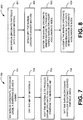
- FIG. 8 is a flow chart depicting a method 800 for manufacturing such barium zirconate agglomerates.
- barium zirconate particles which include a sintering aid as described above, are mixed with a binder material.
- the barium zirconate particles are produced, for example, via one of the methods illustrated in FIGS. 2-7 .
- the binder material is used to bind barium zirconate particles to form barium zirconate agglomerates.
- the binder material may comprise, for example, polyvinyl alcohol and/or polyethylene glycol.
- a solvent such as water, may also be added to the barium zirconate-binder mixture to enable the barium zirconate and the binder material to be more thoroughly mixed.
- the barium zirconate-binder mixture is then spray-dried (e.g., sprayed into a heated chamber), as indicated in step 802.
- the dried barium zirconate-binder mixture is then sintered to produce various barium zirconate agglomerate sizes, as indicated in step 803.
- the sintering of the materials may be performed, for example, at a temperature between about 1500°C and 1600°C for a period between about 8 to 12 hours. The sintering enables the binder to bind barium zirconate particles together to form larger agglomerates (or clusters) of barium zirconate.
- the barium zirconate agglomerates are then sorted (e.g., via sifting, sieving or centrifuging) to extract desired barium zirconate agglomerate sizes, as indicated in step 804.
- the desired barium zirconate agglomerate sizes may be, for example, between about 40-100 ⁇ m.
- agglomerates of barium zirconate that are smaller than 40 ⁇ m may be desired for inclusion in the polymer-ceramic material.
- FIG. 9 is a flow chart depicting another method 900 for manufacturing barium zirconate agglomerates.
- barium zirconate particles which include a sintering aid as described above, are mixed with a binder material.
- the barium zirconate particles are produced, for example, via one of the methods illustrated in FIGS. 2-7 .
- the binder material is used to bind barium zirconate particles to form barium zirconate agglomerates.
- the binder material may comprise, for example, polyvinyl alcohol and/or polyethylene glycol.
- a solvent, such as water, may also be added to the barium zirconate-binder mixture to enable the barium zirconate and the binder material to be more thoroughly mixed.
- the barium zirconate-binder mixture is then spray-dried (e.g., sprayed into a heated chamber), as indicated in step 902.
- the dried barium zirconate-binder mixture is then sintered to produce barium zirconate agglomerates, as indicated in step 903.
- the sintering of the materials may be performed, for example, at a temperature between about 1500°C and 1600°C for a period between about 9 and 12 hours.
- the barium zirconate agglomerates are then crushed, as indicated in step 904.
- the crushed barium zirconate agglomerates have sizes in a range of about 10-20 ⁇ m.
- the crushed barium zirconate agglomerates may optionally be sorted (e.g., via sifting, sieving or centrifuging) in order to extract barium zirconate agglomerates that are in a desired size range that is a subset of the 10-20 ⁇ m range of sizes.
Landscapes
- Chemical & Material Sciences (AREA)
- Engineering & Computer Science (AREA)
- Ceramic Engineering (AREA)
- Manufacturing & Machinery (AREA)
- Structural Engineering (AREA)
- Materials Engineering (AREA)
- Organic Chemistry (AREA)
- Inorganic Chemistry (AREA)
- Composite Materials (AREA)
- Physics & Mathematics (AREA)
- Thermal Sciences (AREA)
- Inorganic Compounds Of Heavy Metals (AREA)
- Compositions Of Oxide Ceramics (AREA)
Claims (12)
- Procédé comprenant :la fourniture d'un mélange de matériaux comportant du baryum, du zirconium et un aide au frittage, l'aide au frittage comportant au moins l'un de tungstate de baryum, niobate de potassium, oxyde de tungstène, molybdate de baryum, oxyde de molybdène, tantalate de potassium, oxyde de potassium, niobate de sodium, tantalate de sodium, oxyde de sodium, niobate de lithium, tantalate de lithium, oxyde de lithium, oxyde de cuivre, oxyde de manganèse, oxyde de zinc, zirconate de calcium et zirconate de strontium ;le frittage du mélange de matériaux pour produire des particules de zirconate de baryum qui comportent l'aide au frittage ;le mixage des particules de zirconate de baryum avec un matériau liant ; etle chauffage des particules de zirconate de baryum et du matériau liant pour produire un agglomérat de zirconate de baryum.
- Procédé selon la revendication 1 dans lequel le matériau liant comporte au moins l'un d'alcool polyvinylique et de glycol polyéthylénique.
- Procédé selon la revendication 1 or 2 dans lequel les particules de zirconate de baryum comportent des particules ayant des grosseurs entre environ 1 µm et 4 µm après frittage et avant le mixage avec le matériau liant.
- Procédé selon la revendication 3 dans lequel le mélange de matériaux est fritté à une température entre environ 1500 °C et environ 1600 °C.
- Procédé selon l'une quelconque des revendications précédentes, dans lequel le mélange de matériaux comporte en outre au moins l'un d'eau et d'alcool.
- Procédé selon la revendication 5 comprenant en outre le séchage du mélange de matériaux avant le frittage, dans lequel le séchage du mélange de matériaux peut comprendre la pulvérisation du mélange de matériaux dans une chambre chauffée.
- Procédé selon l'une quelconque des revendications précédentes dans lequel les particules de zirconate de baryum comprennent chacune une structure de cristal de pérovskite.
- Procédé selon l'une quelconque des revendications précédentes comprenant en outre le tri de l'agglomérat de zirconate de baryum pour extraire un agglomérat d'une taille comprise dans une plage prédéterminée de tailles, la plage prédéterminée de tailles étant l'une d'une plage entre environ 10 µm et 20 µm et d'une plage entre environ 40 µm et 100 µm.
- Procédé selon l'une quelconque des revendications 1 à 7 comprenant en outre le mixage des particules de zirconate de baryum et du matériau liant avec un solvant avant le chauffage des particules de zirconate de baryum et du matériau liant.
- Procédé selon la revendication 9 comprenant en outre le broyage des particules de zirconate de baryum et du matériau liant avant le chauffage des particules de zirconate de baryum et du matériau liant.
- Procédé selon la revendication 9 comprenant en outre le séchage des particules de zirconate de baryum et du matériau liant en vaporisant les particules de zirconate de baryum et le matériau liant dans une chambre chauffée avant le chauffage des particules de zirconate de baryum et du matériau liant.
- Procédé selon l'une quelconque des revendications précédentes dans lequel le baryum se présente sous forme de carbonate de baryum et le zirconium se présente sous forme d'oxyde de zirconium, ou le baryum et le zirconium sont fournis sous forme de zirconate de baryum.
Applications Claiming Priority (3)
| Application Number | Priority Date | Filing Date | Title |
|---|---|---|---|
| US85317406P | 2006-10-20 | 2006-10-20 | |
| US11/746,861 US7572748B1 (en) | 2006-10-20 | 2007-05-10 | Materials comprising barium zirconate and methods for manufacturing thereof |
| PCT/US2007/022274 WO2008063332A2 (fr) | 2006-10-20 | 2007-10-19 | Matériaux comprenant du zirconate de baryum et procédés de fabrication de ceux-ci |
Publications (3)
| Publication Number | Publication Date |
|---|---|
| EP2079672A2 EP2079672A2 (fr) | 2009-07-22 |
| EP2079672A4 EP2079672A4 (fr) | 2010-01-20 |
| EP2079672B1 true EP2079672B1 (fr) | 2017-03-29 |
Family
ID=39430256
Family Applications (1)
| Application Number | Title | Priority Date | Filing Date |
|---|---|---|---|
| EP07870797.3A Ceased EP2079672B1 (fr) | 2006-10-20 | 2007-10-19 | Procede de fabrication des matériaux comprenant du zirconate de baryum |
Country Status (4)
| Country | Link |
|---|---|
| US (3) | US7572748B1 (fr) |
| EP (1) | EP2079672B1 (fr) |
| KR (1) | KR101410114B1 (fr) |
| WO (1) | WO2008063332A2 (fr) |
Families Citing this family (7)
| Publication number | Priority date | Publication date | Assignee | Title |
|---|---|---|---|---|
| US8561909B2 (en) * | 2010-03-09 | 2013-10-22 | Skyworks Solutions, Inc. | RFID device having low-loss barium-based ceramic oxide |
| US10308522B2 (en) | 2016-05-31 | 2019-06-04 | Skyworks Solutions, Inc. | High Q modified barium magnesium tantalate for high frequency applications |
| CN111848154B (zh) * | 2019-04-26 | 2022-04-15 | 中寰卫星导航通信有限公司 | 一种陶瓷电容器介质及其制备方法 |
| US12490654B2 (en) | 2019-09-30 | 2025-12-02 | Skyworks Solutions, Inc. | High temperature oxide-based system for thermoelectric sensor applications |
| CN110721414B (zh) * | 2019-11-19 | 2020-09-11 | 冼光 | 一种可持续发射远红外线的稀土材料及其制备方法 |
| CN112374884B (zh) * | 2020-12-15 | 2022-07-15 | 湖南仁海科技材料发展有限公司 | 一种高比重钨合金烧结用承烧板及其制备方法 |
| CN118908722A (zh) * | 2024-07-29 | 2024-11-08 | 无锡工艺职业技术学院 | 一种介电陶瓷材料及其制备方法 |
Family Cites Families (16)
| Publication number | Priority date | Publication date | Assignee | Title |
|---|---|---|---|---|
| JPS5328637B2 (fr) * | 1971-11-25 | 1978-08-16 | ||
| GB1406806A (en) * | 1972-01-04 | 1975-09-17 | Gen Electric Co Ltd | Microwave devices |
| DE2659016C2 (de) * | 1976-12-27 | 1982-03-25 | Philips Patentverwaltung Gmbh, 2000 Hamburg | Verfahren zur Herstellung eines Dielektrikums mit Perowskitstruktur |
| DE2736688C2 (de) * | 1977-08-16 | 1986-02-20 | Philips Patentverwaltung Gmbh, 2000 Hamburg | Verfahren zur Herstellung eines Dielektrikums mit Perowskitstruktur |
| US4975397A (en) | 1985-04-13 | 1990-12-04 | Feldmuehle Aktiengesellschaft | Sintered molding, a method for producing it and its use |
| US4833108A (en) | 1987-03-28 | 1989-05-23 | Narumi China Corporation | Sintered body of aluminum nitride |
| JPH0625023B2 (ja) * | 1989-01-27 | 1994-04-06 | 富士電気化学株式会社 | 高周波用誘電体磁器組成物 |
| WO1992000930A1 (fr) | 1990-07-13 | 1992-01-23 | Cookson Group Plc | Element aidant au frittage |
| GB9025802D0 (en) * | 1990-11-28 | 1991-01-09 | Cookson Group Plc | Improved sintering aid |
| DE69209417T2 (de) * | 1991-09-25 | 1996-11-28 | Murata Manufacturing Co | Nichtreduzierbare dielektrische keramische Zusammensetzung |
| US5319517A (en) * | 1992-03-27 | 1994-06-07 | Tdk Corporation | Multilayer ceramic chip capacitor |
| JPH05316899A (ja) * | 1992-05-18 | 1993-12-03 | Janome Sewing Mach Co Ltd | 鑑賞魚用水槽水の濾過装置 |
| EP0581251A3 (fr) * | 1992-07-31 | 1995-02-08 | Taiyo Yuden Kk | Matériau céramique à constante diélectrique élevée et condensateurs fabriqués à partir de celui-ci. |
| JPH06333426A (ja) * | 1993-05-21 | 1994-12-02 | Murata Mfg Co Ltd | 高周波用誘電体磁器組成物 |
| US5847498A (en) * | 1994-12-23 | 1998-12-08 | Philips Electronics North America Corporation | Multiple layer composite electrodes for discharge lamps |
| JP3656899B2 (ja) | 2001-03-06 | 2005-06-08 | ティーイーピー株式会社 | 高密度ジルコニウム酸バリウム焼結体および製造法 |
-
2007
- 2007-05-10 US US11/746,861 patent/US7572748B1/en active Active
- 2007-10-19 EP EP07870797.3A patent/EP2079672B1/fr not_active Ceased
- 2007-10-19 KR KR1020097010253A patent/KR101410114B1/ko not_active Expired - Fee Related
- 2007-10-19 WO PCT/US2007/022274 patent/WO2008063332A2/fr not_active Ceased
-
2009
- 2009-07-02 US US12/496,841 patent/US20090264275A1/en not_active Abandoned
-
2010
- 2010-02-24 US US12/712,047 patent/US7875567B2/en active Active
Non-Patent Citations (1)
| Title |
|---|
| None * |
Also Published As
| Publication number | Publication date |
|---|---|
| EP2079672A4 (fr) | 2010-01-20 |
| US20090186753A1 (en) | 2009-07-23 |
| EP2079672A2 (fr) | 2009-07-22 |
| US7572748B1 (en) | 2009-08-11 |
| US7875567B2 (en) | 2011-01-25 |
| WO2008063332A2 (fr) | 2008-05-29 |
| KR20090082231A (ko) | 2009-07-29 |
| WO2008063332A3 (fr) | 2008-08-21 |
| US20090264275A1 (en) | 2009-10-22 |
| US20100248937A1 (en) | 2010-09-30 |
| KR101410114B1 (ko) | 2014-06-25 |
Similar Documents
| Publication | Publication Date | Title |
|---|---|---|
| EP2079672B1 (fr) | Procede de fabrication des matériaux comprenant du zirconate de baryum | |
| CN105622093B (zh) | 陶瓷材料及其制备方法、谐振器、滤波器及射频拉远设备 | |
| CN106145931B (zh) | 一种超低损耗微波介质陶瓷材料及其制备方法 | |
| CN103833360A (zh) | 微波介质陶瓷及其制备方法 | |
| JP2795406B2 (ja) | セラミックス組成物及びその製造方法 | |
| CN105801104B (zh) | 一种高介电常数温度稳定型陶瓷电容器介质材料 | |
| CN103951425B (zh) | 一种温度稳定型白钨矿结构微波介质陶瓷及其制备方法 | |
| CN117986013B (zh) | 一种bnt基无铅热释电陶瓷材料及其制备方法和应用 | |
| CN104098330A (zh) | 采用后退火工艺制备高性能钛酸锶钡热释电陶瓷的方法 | |
| CN103951439B (zh) | 微波介质陶瓷及其制备方法 | |
| US9117156B2 (en) | RFID device having low-loss barium-based ceramic oxide | |
| CN104774008B (zh) | 一种中介电常数低损耗微波介质陶瓷及其制备方法 | |
| CN104402430B (zh) | 一种温度稳定型中k值微波介质陶瓷及其制备方法 | |
| CN101805170B (zh) | 低温烧结锂基微波介电陶瓷及其制备方法 | |
| CN107188562A (zh) | 一种高介电常数低损耗高温度稳定陶瓷电容器介质及其制备方法 | |
| US20250197291A1 (en) | Method for producing ceramic parts and use of the parts obtained by this method | |
| NL2030388B1 (en) | Microwave dielectric ceramic material with low dielectric constant and low density and preparation method thereof | |
| CN105399421B (zh) | 一种基板用高介电常数微波介质陶瓷及其制备方法 | |
| CN105254300B (zh) | 一种Co基温度稳定型微波介质陶瓷及其制备方法 | |
| JP2004224630A (ja) | フィラー粉末の製造方法 | |
| CN104129976A (zh) | 一种低温共烧陶瓷材料及其制备方法 | |
| US20240010572A1 (en) | Manufacturing composite electroceramics using waste electroceramics | |
| CN120309341A (zh) | 一种钛酸钡基铁电陶瓷电卡材料及制备方法 | |
| CN120887721A (zh) | 镁、钨离子取代的ZnTiNb2O8微波介电陶瓷材料及制备方法 | |
| CN108530067A (zh) | 一种Sm、Al共掺杂取代Nd1.9Sr0.1NiO4巨介电陶瓷及其制备方法 |
Legal Events
| Date | Code | Title | Description |
|---|---|---|---|
| PUAI | Public reference made under article 153(3) epc to a published international application that has entered the european phase |
Free format text: ORIGINAL CODE: 0009012 |
|
| 17P | Request for examination filed |
Effective date: 20090326 |
|
| AK | Designated contracting states |
Kind code of ref document: A2 Designated state(s): DE FR GB |
|
| A4 | Supplementary search report drawn up and despatched |
Effective date: 20091223 |
|
| DAX | Request for extension of the european patent (deleted) | ||
| 17Q | First examination report despatched |
Effective date: 20100222 |
|
| RAP1 | Party data changed (applicant data changed or rights of an application transferred) |
Owner name: SKYWORKS SOLUTIONS, INC. |
|
| GRAP | Despatch of communication of intention to grant a patent |
Free format text: ORIGINAL CODE: EPIDOSNIGR1 |
|
| INTG | Intention to grant announced |
Effective date: 20161014 |
|
| GRAJ | Information related to disapproval of communication of intention to grant by the applicant or resumption of examination proceedings by the epo deleted |
Free format text: ORIGINAL CODE: EPIDOSDIGR1 |
|
| GRAR | Information related to intention to grant a patent recorded |
Free format text: ORIGINAL CODE: EPIDOSNIGR71 |
|
| GRAS | Grant fee paid |
Free format text: ORIGINAL CODE: EPIDOSNIGR3 |
|
| GRAA | (expected) grant |
Free format text: ORIGINAL CODE: 0009210 |
|
| INTC | Intention to grant announced (deleted) | ||
| INTG | Intention to grant announced |
Effective date: 20170215 |
|
| AK | Designated contracting states |
Kind code of ref document: B1 Designated state(s): DE FR GB |
|
| REG | Reference to a national code |
Ref country code: GB Ref legal event code: FG4D |
|
| REG | Reference to a national code |
Ref country code: DE Ref legal event code: R096 Ref document number: 602007050437 Country of ref document: DE |
|
| REG | Reference to a national code |
Ref country code: FR Ref legal event code: PLFP Year of fee payment: 11 |
|
| REG | Reference to a national code |
Ref country code: DE Ref legal event code: R097 Ref document number: 602007050437 Country of ref document: DE |
|
| PLBE | No opposition filed within time limit |
Free format text: ORIGINAL CODE: 0009261 |
|
| STAA | Information on the status of an ep patent application or granted ep patent |
Free format text: STATUS: NO OPPOSITION FILED WITHIN TIME LIMIT |
|
| 26N | No opposition filed |
Effective date: 20180103 |
|
| REG | Reference to a national code |
Ref country code: FR Ref legal event code: PLFP Year of fee payment: 12 |
|
| REG | Reference to a national code |
Ref country code: DE Ref legal event code: R081 Ref document number: 602007050437 Country of ref document: DE Owner name: ALLUMAX TTI, LLC, ANN ARBOR, US Free format text: FORMER OWNER: SKYWORKS SOLUTIONS INC., WOBURN, MASS., US |
|
| REG | Reference to a national code |
Ref country code: GB Ref legal event code: 732E Free format text: REGISTERED BETWEEN 20231005 AND 20231011 |
|
| PGFP | Annual fee paid to national office [announced via postgrant information from national office to epo] |
Ref country code: GB Payment date: 20231027 Year of fee payment: 17 |
|
| PGFP | Annual fee paid to national office [announced via postgrant information from national office to epo] |
Ref country code: FR Payment date: 20231025 Year of fee payment: 17 Ref country code: DE Payment date: 20231027 Year of fee payment: 17 |
|
| REG | Reference to a national code |
Ref country code: DE Ref legal event code: R119 Ref document number: 602007050437 Country of ref document: DE |
|
| GBPC | Gb: european patent ceased through non-payment of renewal fee |
Effective date: 20241019 |
|
| PG25 | Lapsed in a contracting state [announced via postgrant information from national office to epo] |
Ref country code: DE Free format text: LAPSE BECAUSE OF NON-PAYMENT OF DUE FEES Effective date: 20250501 |
|
| PG25 | Lapsed in a contracting state [announced via postgrant information from national office to epo] |
Ref country code: GB Free format text: LAPSE BECAUSE OF NON-PAYMENT OF DUE FEES Effective date: 20241019 |
|
| PG25 | Lapsed in a contracting state [announced via postgrant information from national office to epo] |
Ref country code: FR Free format text: LAPSE BECAUSE OF NON-PAYMENT OF DUE FEES Effective date: 20241031 |