EP2083593A2 - Steuerung von verwendetem Spektrum - Google Patents
Steuerung von verwendetem Spektrum Download PDFInfo
- Publication number
- EP2083593A2 EP2083593A2 EP08172984A EP08172984A EP2083593A2 EP 2083593 A2 EP2083593 A2 EP 2083593A2 EP 08172984 A EP08172984 A EP 08172984A EP 08172984 A EP08172984 A EP 08172984A EP 2083593 A2 EP2083593 A2 EP 2083593A2
- Authority
- EP
- European Patent Office
- Prior art keywords
- spectrum
- wireless communications
- communications system
- interference
- exchange
- Prior art date
- Legal status (The legal status is an assumption and is not a legal conclusion. Google has not performed a legal analysis and makes no representation as to the accuracy of the status listed.)
- Granted
Links
Images






Classifications
-
- H—ELECTRICITY
- H04—ELECTRIC COMMUNICATION TECHNIQUE
- H04W—WIRELESS COMMUNICATION NETWORKS
- H04W16/00—Network planning, e.g. coverage or traffic planning tools; Network deployment, e.g. resource partitioning or cells structures
- H04W16/14—Spectrum sharing arrangements between different networks
Definitions
- the invention relates to a method of, and apparatus for, controlling spectrum use in a wireless communications system.
- Spectrum Sharing and Coexistence Couple of hours or days
- Long Term Spectrum Assignment Couple of minutes
- Short Term Spectrum Assignment (1 sec or tens of ms)
- fast dynamic spectrum allocation (10 ms time scale or even below).
- a method of controlling spectrum use in a first wireless communications system the first wireless communications system being operable to take part in a spectrum assignment process involving at least the first wireless communications system and one or more other wireless communications systems, the method comprising
- the method may provide for a different type of spectrum exchange process under which the parties involved do not lose spectrum to other parties, and instead exchange a sub-chunk of spectrum (which is troubled in terms of the currently inflicted interference or which has been troubled in terms of interference, say for the past couple of transmission attempts) with a better sub-chunk of spectrum in terms of the interference they suffer.
- the invention may improve the spectral efficiency by exploiting the availability of spectrum on a short-term basis based on cluster-wise negotiations. It may provide a further fine tuning to long-term spectrum assignment (when performed as a short-term spectrum assignment) and to short-term spectrum assignment, improving the QoS and SIR ratio, the overall network coverage, throughput, and the revenue for the borrowing party by making sure that the radio resource is available when needed at peak times.
- An extra source of income for operators as the lending party may be provided by making sure that the redundant radio spectrum is not wasted and employed in an efficient way.
- the method may reduce the potential call blockage by providing better and more efficient access to more radio resources.
- wireless communications system may relate to a wireless access network, for example a radio access network (RAN), including all of the elements of the network, for example base stations.
- the radio access network may be a metropolitan-area network or a wide-area network, for example. In another arrangement, it may relate to an RFID tag reader, to a sink or wireless sensor network base station, or to a group of such readers forming a network, possibly including other equipment, e.g. control circuitry. It may also relate to a WiMAX network.
- a wireless communications system may be a macro network or a micro network.
- a spectrum assignment may comprise the re-assignment of at least a portion of a spectrum band which has been pre-assigned to one wireless communications system from that wireless communications system to another wireless communications system.
- the spectrum assignment process may comprise (for example during negotiations between the first and second wireless communications systems) re-assigning, from one of the first and second wireless communications systems to the other of the first and second wireless communications systems, some or all of the respective first or second pre-assigned spectrum band.
- pre-assigned it may be meant that the wireless communications system to which the spectrum band has been pre-assigned is licensed for operation within that spectrum band.
- the act of assigning a portion of spectrum from one system to another may comprise the one system giving permission to the other system to use the assigned portion of spectrum, whereafter the one system ceases to operate using the assigned portion, while the other system may choose to operate using the assigned portion if desired.
- the spectrum assignment process may relate in particular to a short-term spectrum assignment process (1 sec or 10s of milliseconds timescale) forming part of a larger spectrum sharing scheme further including at least a long-term spectrum assignment process.
- the spectrum assignment process may involve at least three wireless communications systems including the first and the other wireless communications systems.
- the term "instance" when used in relation to the spectrum assignment process may refer to a single run of the spectrum assignment process, i.e. spectrum use (including a spectrum configuration) may change only once during the process.
- a wireless communications system which assigns spectrum to another system may be referred to as an assignor, whereas a system which accepts the assignment of spectrum from another system may be referred to as an assignee.
- the first and second wireless communications systems may be radio access networks (RANs) operating within the radio frequency range of the electromagnetic spectrum.
- RANs radio access networks
- the wireless communications systems may operate within a microwave frequency range, for example.
- portion when used in relation to spectrum may relate to a particular range of frequencies, which may consist of a single, continuous range of frequencies, or two or more separate, continuous ranges.
- chunk and “sub-chunk” may also refer to portions or bands of spectrum.
- the term "spectrum configuration" may relate to an arrangement of one or more portions of spectrum, and may specify one or both of the amount of spectrum in each portion and/or its position in relation to other portions of spectrum in the spectrum configuration. For example, by defining each portion of spectrum with reference to its upper and lower limits, it is possible to indicate both the size of the portion and its position in relation to other portions of spectrum.
- a portion of spectrum may also be identified by reference to its size and/or a spectrum ID.
- a spectrum ID may be a number assigned to each sub-chunk, selected from a range of possibilities. The arrangement whereby sub-chunks are given spectrum IDs may be decided before or during the spectrum assignment process.
- a spectrum configuration may comprise one or more guard bands, and one or more regions of licensed/unlicensed spectrum.
- the spectrum configuration may comprise information which associates each portion of spectrum with a respective entity, which may be a wireless communications system (e.g. a radio access network) or part thereof, a cell or base station or a group of cluster thereof, or an uplink or downlink belonging to any such entity.
- a wireless communications system e.g. a radio access network
- the spectrum configuration may comprise information which associates each portion of spectrum with a respective entity, which may be a wireless communications system (e.g. a radio access network) or part thereof, a cell or base station or a group of cluster thereof, or an uplink or downlink belonging to any such entity.
- the method may comprise performing the exchange, i.e. completing both the assignments from and to the first wireless communications system, in the same instance of the spectrum assignment process, before operating the first wireless communications system to use the new (altered) spectrum configuration.
- the first wireless communications system and one or more of the other wireless communications systems may form part of a hierarchical overlaid cellular network. Additionally or alternatively, the first wireless communications system may have substantially no geographical overlap with the other wireless communications systems.
- any number of wireless communications systems may be involved in the exchange, with portions of spectrum being exchanged for example in a reciprocal fashion (between two systems) or in a circular fashion (between three or more systems) in order to benefit one or more, and preferably all, of the systems.
- the method may comprise assigning the first portion of spectrum from the first wireless communications system to a second wireless communications system amongst the one or more other wireless communications systems, and accepting the assignment of the second portion of spectrum from the second wireless communications system to the first wireless communications system.
- the method may comprise assigning the first portion of spectrum from the first wireless communications system to a second wireless communications system amongst the one or more other wireless communications systems, and accepting the assignment of the second portion of spectrum from a third wireless communications system amongst the one or more other wireless communications systems to the first wireless communications system, the second and third wireless communications systems being different.
- a two-way, three-way, four-way (or more) exchange may be provided.
- one system may act as a relay or broker between two or more other systems.
- the first and second portions of spectrum comprise any chunks of spectrum the exchange of which benefits one or more of the wireless communications systems, and preferably all of the systems.
- the benefit of the exchange to the wireless communications systems may take any appropriate form, including reduced levels of interference.
- the method may comprise selecting one or both of the first and second portions of spectrum to reduce a level of interference in at least one of the first wireless communications system and the other wireless communications systems, based on levels of interference in the first and second portions.
- the selection is made to reduce a level of interference in all of the wireless communications systems involved in the exchange.
- the selection may be done by the first wireless communications system, one or more of the other wireless communications systems, or by an external controller.
- the levels of interference may be measured, estimated or expected levels of interference.
- the method comprises controlling one or both of the first and second portions to substantially equalise operational parameters of the first wireless communications system with equivalent operational parameters of the second wireless communications system.
- the operational parameters may include any one or more of the size of the first or second portion of spectrum, a level of interference in the respective wireless communications system, the amount of a reduction in a level of such interference, the bandwidth of a channel belonging to the respective wireless communications system, the bit rate capacity of such a channel, a range of frequencies of the first or second portion of spectrum, or a change in data throughput capacity.
- the first portion of spectrum may be substantially equal in size to the second portion of spectrum.
- the method may comprise, before the exchange, identifying a high-interference portion of spectrum (i.e. a 'red' chunk) to serve as the first portion of spectrum.
- the method may comprise analysing interference levels in each of a plurality of sub-chunks of spectrum used by the first wireless communications system before the exchange, and identifying the high-interference portion of spectrum by selecting a said sub-chunk associated with a level of interference which is higher than levels of interference associated with other said sub-chunks.
- associated with there may be meant a current level of interference, a recent level of interference (for example in terms of interference for the past couple of transmissions, e.g. a level of interference which has been above a threshold for the last couple of transmissions), a running average of the level of interference, or any other appropriate measure.
- the method may involve a simultaneous exchange of more than one portion of spectrum between (e.g. first and second) systems. Multiple sub-chunks of spectrum may be exchanged for example on a fair basis that would improve the performance of the systems involved to a certain level.
- Analysing the interference levels may comprise each of a plurality of network elements of the first wireless communications system analysing the interference levels in each of a plurality of sub-chunks of the spectrum used by the first wireless communications system before the exchange, and each of the network elements identifying a said sub-chunk associated with a level of interference which is higher than levels of interference associated with other said sub-chunks.
- identifying the high-interference portion of spectrum may comprise, in the case that the network elements all identify the same sub-chunk, selecting that sub-chunk as the high-interference portion, and, in the case that the network elements identify different sub-chunks, determining a region of spectrum which has the greatest degree of overlap with all of the different sub-chunks and selecting that region as the high-interference portion.
- the method may comprise transmitting outgoing signalling specifying the first portion of spectrum as an exchange candidate, the signalling being transmitted for example to one or more of the other wireless communications systems (e.g. the one assigning spectrum to, or accepting spectrum from, the first wireless communications system) or to an external controller.
- Transmitting the outgoing signalling may comprise transmitting an exchange request specifying the first portion of spectrum as an exchange candidate in order to trigger the instance of the spectrum assignment process.
- the outgoing signalling may be transmitted from time to time, e.g. periodically, or in response to unusually high interference levels or traffic loads.
- the exchange request may request the exchange of the first portion of spectrum for unspecified portion, or it may specify a particular portion of spectrum in which an expected level of interference is low.
- the method may comprise transmitting the outgoing signalling following the receipt of an exchange request specifying the second portion of spectrum as an exchange candidate.
- the method may comprise receiving incoming signalling specifying the second portion of spectrum as an exchange candidate.
- the incoming signalling may be received from the one or more wireless communications systems or from an external controller, for example.
- Receiving the incoming signalling may comprise receiving an exchange request specifying the second portion of spectrum as an exchange candidate in order to trigger the instance of the spectrum assignment process.
- the exchange request may request the exchange of the second portion for an unspecified portion, or a portion of spectrum in which an expected level of interference is low.
- the method may comprise receiving the incoming signalling following the transmission of an exchange request specifying the first portion of spectrum as an exchange candidate.
- the method may comprise comparing the first and second portions of spectrum before the exchange, and proceeding (for example with the exchange, or with any of the steps following the comparison and prior to the exchange) only if the first portion of spectrum is different to the second portion of spectrum.
- “different” there may be meant that the portions occupy completely separate frequency ranges, or that the frequency ranges partially overlap, i.e. the portions are completely or partially different, with one portion including a range of frequencies not present in the other portion. (In the case that the systems are located sufficiently far from one another that the interference from one system does not have a major impact on the other system.)
- the method may comprise, before the exchange, analysing an expected level of interference associated with the second portion of spectrum, in order to determine its suitability as an exchange candidate.
- base stations have the capability to measure/predict/estimate the interference that they inflict on other base stations (and/or generally on the cells of those base stations) for each possible spectrum assignment, and are also capable of determining/measuring/estimating (or obtaining relevant information regarding) the interference received from such other base stations (and/or from the cells of those other base stations) for each such spectrum assignment.
- Radio transmissions occupying the same frequency allocations i.e. the same parts of the shared communication spectrum
- the level of interference will depend on a number of factors, for example on the power levels of the respective transmissions, and on the relative locations of the transmitters. In fact, many factors have impact on interference.
- these factors include antenna orientation in the base stations, transmission schemes employed (say FDD or TDD) by the base stations, the nature of sectorisation within the cells of the base stations, the power control schemes employed, the handover schemes employed, the nature of traffic being handled by the base stations at each point in time, and the number of active subscribers (e.g. mobile stations) assigned to each base station at each point in time.
- the smart antenna scheme employed in the base stations may also affect interference.
- a base station may be assigned a number of separate spectrum sub-chunks or sub-bands and that it may use different transmission power levels per sub-chunk. These different power levels can affect interference.
- interference leakage between two adjacent sub-bands Another important factor is the interference leakage between two adjacent sub-bands. Although in telecommunications systems the practical solution is to introduce guard bands to reduce such leakage, the arrangements of sub-bands assigned to a base station can nevertheless affect interference. Other important factors regarding interference may be, for example, surrounding atmospheric conditions and the presence or absence of obstructions to signal propagation. The effect of interference can be signal degradation and an overall drop in system performance as a whole, as compared to that in an "interference-free" system.
- Analysing the expected level of interference associated with the second portion of spectrum may comprise each of a plurality of network elements of the first wireless communications system analysing the expected level of interference associated with the second portion of spectrum (and may comprise the network elements reporting to an apparatus which performs the remainder of the method, for example a lead network element of the first wireless communications system, or an external controller).
- the method may comprise comparing the expected level of interference associated with the second portion of spectrum with a level of interference associated with the first portion of spectrum. Furthermore, the method may comprise transmitting confirmatory signalling to request or confirm the exchange of the first portion of spectrum for the second portion of spectrum, if the result of the comparison shows that the expected level of interference associated with the second portion of spectrum is lower than the level of interference associated with the first portion of spectrum. The method may comprise receiving confirmation of the exchange from one or more of the other wireless communications systems of from an external controller before performing the exchange.
- the method may comprise, following the exchange, operating the first wireless communications system to use the second portion of spectrum and to avoid using the first portion of spectrum (to the extent that the first and second portions do not overlap).
- the method may comprise selecting one or both of the first and second portions of spectrum to reduce the number of separate, continuous regions of spectrum used by at least one of the first wireless communications system and the other wireless communications systems, in order to improve the layout of a spectrum configuration and potentially to reduce leakage.
- the method of the first aspect may be performed by the first wireless communications system, an external controller, or both, for example.
- apparatus for controlling spectrum use in a first wireless communications system, the first wireless communications system being operable to take part in a spectrum assignment process involving at least the first wireless communications system and one or more other wireless communications systems, the apparatus comprising spectrum assignment circuitry configured to exchange a first portion of spectrum for a second, different portion of spectrum, in a single instance of the spectrum assignment process, by assigning the first portion of spectrum from the first wireless communications system to the one or more other wireless communications systems and accepting the assignment of the second portion of spectrum from the one or more other wireless communications systems to the first wireless communications system.
- the spectrum assignment circuitry may be configured to control one or both of the first and second portions to substantially equalise operational parameters of the first wireless communications system with equivalent operational parameters of the second wireless communications system.
- the spectrum assignment circuitry may be configured to select one or both of the first and second portions of spectrum to reduce a level of interference in at least one of the first wireless communications system and the other wireless communications systems, based on levels of interference in the first and second portions.
- the spectrum assignment circuitry may be configured to assign the first portion of spectrum from the first wireless communications system to a second wireless communications system amongst the one or more other wireless communications systems, and to accept the assignment of the second portion of spectrum from the second wireless communications system to the first wireless communications system.
- the spectrum assignment circuitry may be configured to assign the first portion of spectrum from the first wireless communications system to a second wireless communications system amongst the one or more other wireless communications systems, and to accept the assignment of the second portion of spectrum from a third wireless communications system amongst the one or more other wireless communications systems to the first wireless communications system, the second and third wireless communications systems being different.
- the spectrum assignment circuitry may be configured to identify a high-interference portion of spectrum to serve as the first portion of spectrum.
- the spectrum assignment circuitry may be configured to analyse interference levels in each of a plurality of sub-chunks of spectrum used by the first wireless communications system before the exchange, and to identify the high-interference portion of spectrum by selecting a said sub-chunk associated with a level of interference which is higher than levels of interference associated with other said sub-chunks.
- Each of a plurality of network elements of the first wireless communications system may be configured to analyse the interference levels in each of a plurality of sub-chunks of the spectrum used by the first wireless communications system before the exchange, and to identify a said sub-chunk associated with a level of interference which is higher than levels of interference associated with other said sub-chunks.
- the spectrum assignment circuitry may be configured to receive signalling from each of the network elements indicating the respective sub-chunk.
- the spectrum assignment circuitry may be configured to identify the high-interference portion of spectrum, in the case that the network elements all identify the same sub-chunk, by selecting that sub-chunk as the high-interference portion, and, in the case that the network elements identify different sub-chunks, by determining a region of spectrum which has the greatest degree of overlap with all of the different sub-chunks and selecting that region as the high-interference portion.
- the spectrum assignment circuitry may be configured to compare and analyse the sub-chunks in order to identify the high-interference portion.
- the spectrum assignment circuitry may be configured to transmit outgoing signalling specifying the first portion of spectrum as an exchange candidate.
- the spectrum assignment circuitry may be configured to transmit an exchange request specifying the first portion of spectrum as an exchange candidate in order to trigger the instance of the spectrum assignment process.
- the spectrum assignment circuitry may be configured to transmit the outgoing signalling following the receipt of an exchange request specifying the second portion of spectrum as an exchange candidate.
- the spectrum assignment circuitry may be configured to receive incoming signalling specifying the second portion of spectrum as an exchange candidate.
- the spectrum assignment circuitry is configured to receive an exchange request specifying the second portion of spectrum as an exchange candidate in order to trigger the instance of the spectrum assignment process.
- the spectrum assignment circuitry may be configured to receive the incoming signalling following the transmission of an exchange request specifying the first portion of spectrum as an exchange candidate.
- the spectrum assignment circuitry may be configured to compare the first and second portions of spectrum before the exchange, and to proceed only if the first portion of spectrum is different to the second portion of spectrum.
- the spectrum assignment circuitry may be configured to analyse an expected level of interference associated with the second portion of spectrum.
- Each of a plurality of network elements of the first wireless communications system may be configured to analyse the expected level of interference associated with the second portion of spectrum.
- the spectrum assignment circuitry may be configured to receive signalling indicating the expected levels of interference from each of the network elements.
- the spectrum assignment circuitry may be configured to compare the expected level of interference associated with the second portion of spectrum with a level of interference associated with the first portion of spectrum.
- the spectrum assignment circuitry may be configured to transmit confirmatory signalling to request or confirm the exchange of the first portion of spectrum for the second portion of spectrum in response to the result of the comparison showing that the expected level of interference associated with the second portion of spectrum is lower than the level of interference associated with the first portion of spectrum.
- the spectrum assignment circuitry may be configured to operate the first wireless communications system to use the second portion of spectrum and to avoid using the first portion of spectrum.
- the spectrum assignment circuitry may be configured to select one or both of the first and second portions of spectrum to reduce the number of separate, continuous regions of spectrum used by at least one of the first wireless communications system and the other wireless communications systems.
- the apparatus of the second aspect may be located at one or more of the network elements of the first wireless communications system or at another part of that system, or at an external controller, for example.
- a computer program which, when run on a computer (perhaps forming part of a network element or an external controlling element ), causes the computer to perform the method of the first aspect.
- a computer program which, when loaded into a computer (perhaps forming part of a network element or an external controlling element), causes the computer to become the apparatus of the second aspect.
- a computer program of the third or fourth aspect carried by a carrier medium, which may be a recording medium and/or a transmission medium.
- a computer program which, when run on a computer, causes the computer to perform a method of controlling spectrum use in a first wireless communications system, the first wireless communications system being operable to take part in a spectrum assignment process involving at least the first wireless communications system and one or more other wireless communications systems, the method comprising in a single instance of the spectrum assignment process, exchanging a first portion of spectrum for a second, different portion of spectrum, by assigning the first portion of spectrum from the first wireless communications system to the one or more other wireless communications systems and accepting the assignment of the second portion of spectrum from the one or more other wireless communications systems to the first wireless communications system.
- a computer program for controlling spectrum use in a first wireless communications system, the first wireless communications system being operable to take part in a spectrum assignment process involving at least the first wireless communications system and one or more other wireless communications systems, the computer program comprising spectrum assignment code configured to exchange a first portion of spectrum for a second, different portion of spectrum, in a single instance of the spectrum assignment process, by assigning the first portion of spectrum from the first wireless communications system to the one or more other wireless communications systems and accepting the assignment of the second portion of spectrum from the one or more other wireless communications systems to the first wireless communications system.
- Any circuitry may include one or more processors, memories and bus lines. One or more of the circuitries described may share circuitry elements.
- the present invention includes one or more aspects, embodiments or features in isolation or in various combinations whether or not specifically stated (including claimed) in that combination or in isolation.
- Embodiments of the invention relate to methods for short-term spectrum exchange in wireless networks.
- Figures 1 to 6 relate to the exchange of spectrum between a base station BS1 of a cell WA1 of a wide-area network (WAN) and three cells MA1-3 of a metropolitan-area network (MAN), grouped as a cluster located within the WA cell WA1.
- the cell MA1 acts as a leader of the cluster of MA cells MA1-3.
- step 1 the spectrum is divided into sub-chunks.
- the base station BS1 of cell WA1 measures the interference in different sub-chunks of spectrum, as shown in the spectrum diagrams to the right-hand side of Figure 2 , in which the sub-chunk being analysed is shown in dark. Sub-chunks are preferably completely separate, but may partially overlap, as shown. If the interference is above a specific threshold, the base station BS1 identifies the specific sub-chunk of spectrum as 'red' or high temperature, as shown in the spectrum diagram at the top of Figure 1 , in which the arrow indicates the 'red' sub-chunk.
- the base station BS1 signals the leader base station in cell MA1 a trigger for the exchange of the high temperature sub-chunk of spectrum with a low interference sub-chunk of spectrum from the MAN, if available.
- the exact ID of the specific red spectrum chunk is sent to the base station of cell MA1.
- the red spectrum sub-chunk can be a sub-chunk which has been troubled in terms of interference for the past couple of transmissions (e.g. the total interference has been above a threshold for the past couple of transmissions). Alternatively, it can be a sub-chunk which is currently experiencing a high level of interference.
- step 2 in response, the leader base station in cell MA1 asks all the MA base stations (in cells MA2 and MA3) to scan all the possible sub-chunks, again in the manner shown in the spectrum diagrams to the right-hand side of Figure 2 , to identify the one with the maximum interference level. It also asks them to scan the red sub-chunk suggested by the base station BS1 of cell WA1, which is indicated by the arrow in the spectrum diagram at the bottom-left corner of Figure 2 .
- step 3 the leader base station of cell MA1 itself also carries out the scan and identification process.
- step 4 the base stations of cells MA2 and MA3 inform the leader base station in cell MA1 of the sub-chunk they identified to have the maximum interference level, as shown in the spectrum diagrams in Figure 3 , in which the sub-chunk having the maximum interference level for each of cells MA2 and MA3 is shown in dark.
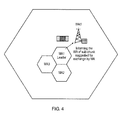
- step 5 if all the MA cells MA1-3 have identified the same sub-chunk with maximum interference (and the identified sub-chunk is different from the one suggested by the WA base station BS1) and if the interference they experience in this sub-chunk is below the interference of the red sub-chunk suggested by the WA base station BS1, the leader base station in cell MA1 informs the WA base station BS1 about the potential for exchange and availability of sub-chunk of spectrum selected by all the MA BS as shown in Figure 4 , in which the spectrum diagram indicates in dark the sub-chunk selected by the MA cells.
- step 6 in response, the WA base station BS1 measures the interference at the sub-chunk of spectrum suggested by the cell MA1. If its interference is below the current troubled sub-chunk in the cell WA1, the WA base station BS1 informs the leader cell MA1 that it is happy to go ahead with the exchange, as shown in Figure 5 .
- the spectrum diagram at the top of Figure 5 shows the WA base station BS1 comparing the interference levels in the sub-chunks.
- step 7 the exchange takes place and part of the WA spectrum (i.e. the exchanged sub-chunk) is exchanged for part of the MA spectrum, as shown in Figure 6 .
- the lighter-coloured portion of spectrum in the spectrum diagram at the top of Figure 6 has been gained by the WA base station BS1 from the MA cells, while the darker-coloured portion of spectrum in the spectrum diagram at the right-hand side of Figure 6 has been gained by the MA cells from the WA base station BS1.
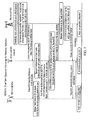
- Figure 7 shows a protocol for the spectrum exchange process.
- a macro-cell base station e.g. the WA base station BS1 periodically measures interference in sub-chunks of spectrum and, if the interference for a particular sub-chunk is above a specific threshold for the past couple of transmissions, the sub-chunk is identified as a high-interference sub-chunk.
- the macro-cell BS sends a message to a micro-cell BS leader (e.g. the base station of cell MA1), the message being a spectrum exchange request including the spectrum ID and the interference value of the exchange candidate sub-chunk (the high-interference sub-chunk).
- a micro-cell BS leader e.g. the base station of cell MA1
- the micro-cell BS leader requests measurements of interference in all sub-chunks from the micro-cell BSs (the other micro-cell BSs).
- the micro-cell BSs measure interference in all sub-chunks and identify the one with the maximum interference level.
- the micro-cell BS leader measures interference in all sub-chunks and identifies the one with the maximum interference level.
- Each micro-cell BS sends IDs and interference values of the sub-chunk experiencing the highest interference, and reports on the interference value in the exchange candidate sub-chunk, to the micro-cell BS leader.
- the micro-cell BS leader reports the exchange availability to the macro-cell BS.
- the micro-cell BS leader also reports on the availability and ID of the potential swap candidate (the candidate sub-chunk referred to above).
- the macro-cell BS measures interference in the swap candidate. If the interference in the swap candidate is less than the exchange candidate sub-chunk, then the macro-cell BS informs the micro-cell BS leader by sending a request to proceed with the spectrum exchange to the micro-cell BS leader, which sends a similar request to the micro-cell BSs.
- micro-cell BSs send acknowledgements to the micro-cell BS leader, which sends an acknowledgement to the macro-cell BS.
- each of the micro-cell BSs, the micro-cell BS leader and the macro-cell BS adopts the new spectrum configuration.
- the following disclosure relates to a performance evaluation and simulation results.
- the bit error rate (BER) requirements selected for simulations is 10 -3 , and it is assumed that a Reed-Muller channel code RM(1,m) is used.
- Adaptive channel coding rates for a data packet and radio node have been considered to enable the radio nodes to adjust their transmission rates and consequently the target SIR values.
- the presented SIR results in Table 1 can be employed to obtain the equivalent throughput results.
- Figure 8A shows the result of a simulation of the impact of the spectrum exchange process on a level of interference, immediately before the exchange of spectrum
- Figure 8B shows the result of a simulation of the impact of the spectrum exchange process on a level of interference, after completion of the spectrum exchange process. It can be seen that, after a successful negotiation between the leader MA base station of the WA base station, the interference was reduced.
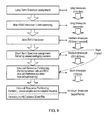
- Figure 9 shows the impact of the invention on the stages of spectrum assignment, the major impact being on short-term spectrum assignment and on inter-cell resource partitioning.
- circuitry may have other functions in addition to the mentioned functions, and that these functions may be performed by the same circuit.
Landscapes
- Engineering & Computer Science (AREA)
- Computer Networks & Wireless Communication (AREA)
- Signal Processing (AREA)
- Mobile Radio Communication Systems (AREA)
Applications Claiming Priority (1)
| Application Number | Priority Date | Filing Date | Title |
|---|---|---|---|
| GBGB0801535.6A GB0801535D0 (en) | 2008-01-28 | 2008-01-28 | Communications systems |
Publications (3)
| Publication Number | Publication Date |
|---|---|
| EP2083593A2 true EP2083593A2 (de) | 2009-07-29 |
| EP2083593A3 EP2083593A3 (de) | 2009-10-28 |
| EP2083593B1 EP2083593B1 (de) | 2012-02-08 |
Family
ID=39186451
Family Applications (1)
| Application Number | Title | Priority Date | Filing Date |
|---|---|---|---|
| EP08172984A Not-in-force EP2083593B1 (de) | 2008-01-28 | 2008-12-29 | Verfahren, Vorrichtung und Computerprogramm zum Steuern der Spektrumbenutzung durch Austausch von Spektrumsteilen zwischen drahtlosen Kommunikationssystemen |
Country Status (4)
| Country | Link |
|---|---|
| US (2) | US20090191813A1 (de) |
| EP (1) | EP2083593B1 (de) |
| JP (1) | JP5136443B2 (de) |
| GB (1) | GB0801535D0 (de) |
Cited By (4)
| Publication number | Priority date | Publication date | Assignee | Title |
|---|---|---|---|---|
| US8737207B2 (en) | 2010-12-29 | 2014-05-27 | Electronics And Telecommunications Research Institute | System and method for managing resource in communication system |
| US8755275B2 (en) | 2010-12-29 | 2014-06-17 | Electronics And Telecommunications Research Institute | System and method for managing resource in communication system |
| US8804510B2 (en) | 2010-12-29 | 2014-08-12 | Electronics And Telecommunications Research Institute | System and method for managing resource in communication system |
| US9019910B2 (en) | 2010-12-29 | 2015-04-28 | Electronics And Telecommunications Research Institute | System and method for managing resource in communication system |
Families Citing this family (10)
| Publication number | Priority date | Publication date | Assignee | Title |
|---|---|---|---|---|
| WO2010150952A1 (en) * | 2009-06-23 | 2010-12-29 | Lg Electronics Inc. | Method for transmitting scheduling information in mobile communication system and femtocell base station apparatus using the same |
| WO2010151035A2 (ko) | 2009-06-23 | 2010-12-29 | 엘지전자 주식회사 | 이동 통신 시스템에서 스케줄링 정보를 이용하여 신호를 전송하는 장치 및 그 방법 |
| JP5329389B2 (ja) * | 2009-12-28 | 2013-10-30 | 株式会社ウィルコム | 無線通信システムの周波数資源割り当て方法およびそのシステム |
| US9332510B2 (en) | 2010-08-17 | 2016-05-03 | Qualcomm Incorporated | Apparatus and method for controlling inter-cell interference between femtocells and macrocells |
| IL211663A (en) * | 2011-03-10 | 2015-03-31 | Elta Systems Ltd | Device and method for dynamically distributing spectrum in satellite communications |
| EP2767024B1 (de) * | 2011-10-06 | 2018-12-12 | Nokia Solutions and Networks Oy | Effektives koexistenzverfahren für dynamisches teilen des spektrums |
| CN104105141B (zh) * | 2013-04-02 | 2020-03-17 | 索尼公司 | 无线电资源管理设备、方法以及系统 |
| US11146966B2 (en) * | 2013-06-18 | 2021-10-12 | Itron Networked Solutions, Inc. | Configuring a network of devices to operate within a television whitespace spectrum |
| US10785657B2 (en) | 2018-05-14 | 2020-09-22 | At&T Intellectual Property I, L.P. | Method and apparatus to efficiently support narrowband devices in broadband systems |
| US11979892B2 (en) * | 2021-04-30 | 2024-05-07 | T-Mobile Usa, Inc. | Systems and methods for optimizing cellular spectrum utilization |
Citations (1)
| Publication number | Priority date | Publication date | Assignee | Title |
|---|---|---|---|---|
| EP1257092A1 (de) | 2001-05-08 | 2002-11-13 | Agere Systems Guardian Corporation | Dynamische Frequenzwahl in einem drahtlosen lokalen Netz mit Kanaltausch zwischen Zugriffspunkten |
Family Cites Families (38)
| Publication number | Priority date | Publication date | Assignee | Title |
|---|---|---|---|---|
| USRE38787E1 (en) * | 1993-12-15 | 2005-08-30 | Mlr, Llc | Apparatus and methods for networking omni-modal radio devices |
| AUPM448194A0 (en) * | 1994-03-15 | 1994-04-14 | Telstra Corporation Limited | A method and apparatus for frequency allocation in a cellular telecommunications network |
| US5926763A (en) * | 1996-08-09 | 1999-07-20 | Gte Mobile Communications Service Corporation | Cellular communication system with voice channel usage biasing |
| FI974034A7 (fi) * | 1997-10-23 | 1999-04-24 | Nokia Corp | Menetelmä tukiasemaverkon siirtojärjestelmän kapasiteetin jakamiseksi |
| US5991311A (en) * | 1997-10-25 | 1999-11-23 | Centillium Technology | Time-multiplexed transmission on digital-subscriber lines synchronized to existing TCM-ISDN for reduced cross-talk |
| US6542926B2 (en) * | 1998-06-10 | 2003-04-01 | Compaq Information Technologies Group, L.P. | Software partitioned multi-processor system with flexible resource sharing levels |
| JP4037965B2 (ja) * | 1998-08-18 | 2008-01-23 | 富士通株式会社 | 符号分割多元接続通信システム並びに符号分割多元接続通信システム用基地局及び符号分割多元接続通信システム用端末装置並びに符号分割多元接続通信方法並びに端末装置の通信方法 |
| JP4234927B2 (ja) * | 2000-04-14 | 2009-03-04 | 富士通株式会社 | 光波長多重伝送システム及び光出力制御方法及び光波長多重伝送装置 |
| EP1220557A1 (de) | 2000-12-29 | 2002-07-03 | Motorola, Inc. | Kommunikationssystem und Verfahren zur Teilung von Kommunikationsmitteln |
| US7315744B2 (en) * | 2001-01-24 | 2008-01-01 | Qualcomm Incorporated | System and method for minimizing hardware and maximizing capacity in a wireless communications system |
| US7158759B2 (en) * | 2001-04-13 | 2007-01-02 | Broadcom Corporation | Dynamic frequency selection in a wireless communication network |
| US20020181462A1 (en) * | 2001-04-24 | 2002-12-05 | Sorin Surdila | System and method for providing end-to-end quality of service (QoS) across multiple internet protocol (IP) networks |
| US7463890B2 (en) * | 2002-07-24 | 2008-12-09 | Herz Frederick S M | Method and apparatus for establishing ad hoc communications pathways between source and destination nodes in a communications network |
| US8204504B2 (en) * | 2001-10-26 | 2012-06-19 | Rockstar Bidco Llp | Wireless communications system and method |
| EP1479256B1 (de) * | 2002-02-25 | 2006-11-29 | Telefonaktiebolaget LM Ericsson (publ) | Dynamische neuerteilung des frequenzspektrums |
| GB2393612B (en) * | 2002-09-27 | 2006-01-18 | Motorola Inc | A resource management apparatus and a method of resource management thereof |
| US20040166835A1 (en) * | 2003-02-20 | 2004-08-26 | Klas Johansson | Radio resource management with adaptive congestion control |
| JP2005286943A (ja) * | 2004-03-31 | 2005-10-13 | Nec Corp | 携帯電話基地局レンタルサービスシステム、方法、プログラム、記録媒体、及び携帯電話基地局装置 |
| US9161231B2 (en) * | 2004-10-14 | 2015-10-13 | Alcatel Lucent | Method and system for wireless networking using coordinated dynamic spectrum access |
| US7558348B1 (en) * | 2005-01-24 | 2009-07-07 | Nvidia Corporation | Radio frequency antenna system and high-speed digital data link to reduce electromagnetic interference for wireless communications |
| GB2426150B (en) * | 2005-05-12 | 2007-09-19 | Roke Manor Research | A method of controlling communication |
| EP1742427A3 (de) | 2005-07-04 | 2008-05-21 | Motorola, Inc. | Gemeinsame Benutzung von Betriebsmitteln zwischen mehreren Kommunikationsnetzen |
| DE602005010412D1 (de) * | 2005-07-04 | 2008-11-27 | Motorola Inc | Vorrichtung und Verfahren zum gemeinsamen Benutzen von Betriebsmitteln zwischen mehreren Kommunikationsnetzen |
| KR101152460B1 (ko) * | 2005-11-04 | 2012-07-03 | 인하대학교 산학협력단 | 무선 통신 시스템의 자원 관리 방법 및 시스템 |
| JP4685646B2 (ja) * | 2006-01-30 | 2011-05-18 | 株式会社東芝 | 基地局装置及び無線通信システム及び周波数割当方法 |
| US8023956B2 (en) * | 2006-04-28 | 2011-09-20 | Stmicroelectronics, Inc. | Scheduling methods for connection-based, over-the-air, inter-system communications for wireless networks |
| DE602006005044D1 (de) * | 2006-05-03 | 2009-03-19 | Motorola Inc | Ermittlung des Ressourcenaustausches in einem zellularen Kommunikationssystem |
| JP4648873B2 (ja) * | 2006-05-23 | 2011-03-09 | 日本電信電話株式会社 | 無線通信システムおよび周波数管理装置 |
| US8565673B2 (en) * | 2006-07-19 | 2013-10-22 | Stmicroelectronics, Inc. | Hierarchical networks utilizing frame transmissions pipelining |
| EP1883258B1 (de) | 2006-07-25 | 2012-08-29 | Alcatel Lucent | Verfahren zur Funkresourcenaufteilung, Computerprogrammprodukt, Funkresourcenverwaltungsmodul und Funkkommunikationsnetz |
| US20080069079A1 (en) * | 2006-09-19 | 2008-03-20 | Star-H Corporation | System and method for spectrum sharing |
| KR100810351B1 (ko) * | 2006-11-15 | 2008-03-04 | 재단법인서울대학교산학협력재단 | 통신 시스템에서 채널 프루빙 시스템 및 방법 |
| US20080153419A1 (en) * | 2006-12-21 | 2008-06-26 | Motorola, Inc. | Method and apparatus for error recovery in coginitive radio systems |
| CN101282568B (zh) * | 2007-04-03 | 2012-10-10 | 中兴通讯股份有限公司 | 一种联合支持多种接入的系统 |
| EP2001176A3 (de) * | 2007-06-08 | 2013-01-23 | Imec | Verfahren zur Konfiguration von Mehrkanal-Kommunikation |
| US8116687B2 (en) * | 2007-07-25 | 2012-02-14 | Freescale Semiconductor, Inc. | Dynamic frequency selection in wireless devices |
| JP2010537587A (ja) * | 2007-08-22 | 2010-12-02 | クゥアルコム・インコーポレイテッド | 無線イーサネット(登録商標)・アダプタ |
| US8335534B2 (en) * | 2008-07-10 | 2012-12-18 | Nec Laboratories America, Inc. | Distributed inter-cell interference mitigation in OFDMA multi-carrier wireless data networks |
-
2008
- 2008-01-28 GB GBGB0801535.6A patent/GB0801535D0/en not_active Ceased
- 2008-12-29 EP EP08172984A patent/EP2083593B1/de not_active Not-in-force
-
2009
- 2009-01-15 US US12/320,049 patent/US20090191813A1/en not_active Abandoned
- 2009-01-27 JP JP2009015917A patent/JP5136443B2/ja not_active Expired - Fee Related
-
2012
- 2012-03-29 US US13/434,325 patent/US8433351B2/en not_active Expired - Fee Related
Patent Citations (1)
| Publication number | Priority date | Publication date | Assignee | Title |
|---|---|---|---|---|
| EP1257092A1 (de) | 2001-05-08 | 2002-11-13 | Agere Systems Guardian Corporation | Dynamische Frequenzwahl in einem drahtlosen lokalen Netz mit Kanaltausch zwischen Zugriffspunkten |
Cited By (4)
| Publication number | Priority date | Publication date | Assignee | Title |
|---|---|---|---|---|
| US8737207B2 (en) | 2010-12-29 | 2014-05-27 | Electronics And Telecommunications Research Institute | System and method for managing resource in communication system |
| US8755275B2 (en) | 2010-12-29 | 2014-06-17 | Electronics And Telecommunications Research Institute | System and method for managing resource in communication system |
| US8804510B2 (en) | 2010-12-29 | 2014-08-12 | Electronics And Telecommunications Research Institute | System and method for managing resource in communication system |
| US9019910B2 (en) | 2010-12-29 | 2015-04-28 | Electronics And Telecommunications Research Institute | System and method for managing resource in communication system |
Also Published As
| Publication number | Publication date |
|---|---|
| EP2083593A3 (de) | 2009-10-28 |
| US8433351B2 (en) | 2013-04-30 |
| GB0801535D0 (en) | 2008-03-05 |
| EP2083593B1 (de) | 2012-02-08 |
| US20120184310A1 (en) | 2012-07-19 |
| JP5136443B2 (ja) | 2013-02-06 |
| US20090191813A1 (en) | 2009-07-30 |
| JP2009177813A (ja) | 2009-08-06 |
Similar Documents
| Publication | Publication Date | Title |
|---|---|---|
| EP2083593B1 (de) | Verfahren, Vorrichtung und Computerprogramm zum Steuern der Spektrumbenutzung durch Austausch von Spektrumsteilen zwischen drahtlosen Kommunikationssystemen | |
| JP5228884B2 (ja) | 通信システム | |
| EP2083594B1 (de) | Verfahren und System für Interferenzreduktion in einem aus mehreren Funkzugangsnetzen gebildeten drahtlosen Kommunikationssystem | |
| US9148789B2 (en) | Inter-system interference control | |
| US8311554B2 (en) | Method and apparatus for performing dynamic shared spectrum allocation between two overlapping wireless communication systems | |
| CN101971658B (zh) | 控制设备、通信系统和资源分配方法 | |
| US20140038653A1 (en) | Radio base stations and methods therein for handling interference and scheduling radio resources accordingly | |
| EP2073587A2 (de) | Spektrumszuweisung in drahtlosen Kommunikationssystemen | |
| CN100566461C (zh) | 分配供共享控制信道的时隙可供用户业务再使用的方法 | |
| WO2008003815A1 (en) | Improved radio resource allocation mechanism | |
| WO2015147707A1 (en) | Method and network node for providing overlap information in a cellular network | |
| US9661503B2 (en) | Spectrum-efficient secondary users grouping method for two-tier cognitive radio networks | |
| JP5262676B2 (ja) | 干渉低減及び無線通信システムとの交信の方法及び装置 | |
| EP2519069B1 (de) | Basisstation, kommunikationsendgerät, verfahren zur einstellung verwendbarer funkressourcen und basisstations-steuerprogramm | |
| CN101820684B (zh) | 资源度量的调整方法 | |
| US12526642B2 (en) | Data driven spectrum sharing | |
| Necker | Scheduling constraints and interference graph properties for graph-based interference coordination in cellular OFDMA networks | |
| Fakhri et al. | An interference mitigation scheme for millimetre wave heterogeneous cloud radio access network with dynamic RRH clustering | |
| CN105393573B (zh) | 一种干扰控制方法、装置及网元设备 | |
| KR20140094711A (ko) | 군집형 mimo를 이용한 통신 장치 및 방법 | |
| EP2101527B1 (de) | Übertragung von Leistung - Bandbreite-Merkmalen in mobilen Netzwerken | |
| KR20230001733A (ko) | 소형셀 기지국의 자원 할당 방법 |
Legal Events
| Date | Code | Title | Description |
|---|---|---|---|
| PUAI | Public reference made under article 153(3) epc to a published international application that has entered the european phase |
Free format text: ORIGINAL CODE: 0009012 |
|
| AK | Designated contracting states |
Kind code of ref document: A2 Designated state(s): AT BE BG CH CY CZ DE DK EE ES FI FR GB GR HR HU IE IS IT LI LT LU LV MC MT NL NO PL PT RO SE SI SK TR |
|
| AX | Request for extension of the european patent |
Extension state: AL BA MK RS |
|
| PUAL | Search report despatched |
Free format text: ORIGINAL CODE: 0009013 |
|
| AK | Designated contracting states |
Kind code of ref document: A3 Designated state(s): AT BE BG CH CY CZ DE DK EE ES FI FR GB GR HR HU IE IS IT LI LT LU LV MC MT NL NO PL PT RO SE SI SK TR |
|
| AX | Request for extension of the european patent |
Extension state: AL BA MK RS |
|
| RIC1 | Information provided on ipc code assigned before grant |
Ipc: H04W 16/06 20090101AFI20090921BHEP |
|
| 17P | Request for examination filed |
Effective date: 20100426 |
|
| AKX | Designation fees paid |
Designated state(s): DE FR GB |
|
| 17Q | First examination report despatched |
Effective date: 20100812 |
|
| RTI1 | Title (correction) |
Free format text: METHOD, APPARATUS AND COMPUTER PROGRAM PRODUCT TO CONTROL SPECTRUM USE BY EXCHANGING SPECTRUM PORTIONS BETWEEN WIRELESS COMMUNICATION SYSTEMS |
|
| GRAP | Despatch of communication of intention to grant a patent |
Free format text: ORIGINAL CODE: EPIDOSNIGR1 |
|
| GRAS | Grant fee paid |
Free format text: ORIGINAL CODE: EPIDOSNIGR3 |
|
| GRAA | (expected) grant |
Free format text: ORIGINAL CODE: 0009210 |
|
| AK | Designated contracting states |
Kind code of ref document: B1 Designated state(s): DE FR GB |
|
| REG | Reference to a national code |
Ref country code: GB Ref legal event code: FG4D |
|
| REG | Reference to a national code |
Ref country code: DE Ref legal event code: R096 Ref document number: 602008013222 Country of ref document: DE Effective date: 20120412 |
|
| PLBE | No opposition filed within time limit |
Free format text: ORIGINAL CODE: 0009261 |
|
| STAA | Information on the status of an ep patent application or granted ep patent |
Free format text: STATUS: NO OPPOSITION FILED WITHIN TIME LIMIT |
|
| 26N | No opposition filed |
Effective date: 20121109 |
|
| REG | Reference to a national code |
Ref country code: DE Ref legal event code: R097 Ref document number: 602008013222 Country of ref document: DE Effective date: 20121109 |
|
| REG | Reference to a national code |
Ref country code: FR Ref legal event code: PLFP Year of fee payment: 8 |
|
| REG | Reference to a national code |
Ref country code: FR Ref legal event code: PLFP Year of fee payment: 9 |
|
| REG | Reference to a national code |
Ref country code: FR Ref legal event code: PLFP Year of fee payment: 10 |
|
| PGFP | Annual fee paid to national office [announced via postgrant information from national office to epo] |
Ref country code: DE Payment date: 20191217 Year of fee payment: 12 |
|
| PGFP | Annual fee paid to national office [announced via postgrant information from national office to epo] |
Ref country code: FR Payment date: 20191115 Year of fee payment: 12 |
|
| PGFP | Annual fee paid to national office [announced via postgrant information from national office to epo] |
Ref country code: GB Payment date: 20191223 Year of fee payment: 12 |
|
| REG | Reference to a national code |
Ref country code: DE Ref legal event code: R119 Ref document number: 602008013222 Country of ref document: DE |
|
| GBPC | Gb: european patent ceased through non-payment of renewal fee |
Effective date: 20201229 |
|
| PG25 | Lapsed in a contracting state [announced via postgrant information from national office to epo] |
Ref country code: FR Free format text: LAPSE BECAUSE OF NON-PAYMENT OF DUE FEES Effective date: 20201231 |
|
| PG25 | Lapsed in a contracting state [announced via postgrant information from national office to epo] |
Ref country code: GB Free format text: LAPSE BECAUSE OF NON-PAYMENT OF DUE FEES Effective date: 20201229 Ref country code: DE Free format text: LAPSE BECAUSE OF NON-PAYMENT OF DUE FEES Effective date: 20210701 |