EP2083598A2 - Übertragungsratensteuerungsverfahren und Funkbasisstation - Google Patents
Übertragungsratensteuerungsverfahren und Funkbasisstation Download PDFInfo
- Publication number
- EP2083598A2 EP2083598A2 EP20090151218 EP09151218A EP2083598A2 EP 2083598 A2 EP2083598 A2 EP 2083598A2 EP 20090151218 EP20090151218 EP 20090151218 EP 09151218 A EP09151218 A EP 09151218A EP 2083598 A2 EP2083598 A2 EP 2083598A2
- Authority
- EP
- European Patent Office
- Prior art keywords
- mobile station
- radio base
- base station
- value
- granted value
- Prior art date
- Legal status (The legal status is an assumption and is not a legal conclusion. Google has not performed a legal analysis and makes no representation as to the accuracy of the status listed.)
- Withdrawn
Links
Images




Classifications
-
- H—ELECTRICITY
- H04—ELECTRIC COMMUNICATION TECHNIQUE
- H04W—WIRELESS COMMUNICATION NETWORKS
- H04W28/00—Network traffic management; Network resource management
- H04W28/16—Central resource management; Negotiation of resources or communication parameters, e.g. negotiating bandwidth or QoS [Quality of Service]
- H04W28/18—Negotiating wireless communication parameters
- H04W28/22—Negotiating communication rate
-
- H—ELECTRICITY
- H04—ELECTRIC COMMUNICATION TECHNIQUE
- H04W—WIRELESS COMMUNICATION NETWORKS
- H04W72/00—Local resource management
- H04W72/12—Wireless traffic scheduling
- H04W72/1221—Wireless traffic scheduling based on age of data to be sent
-
- H—ELECTRICITY
- H04—ELECTRIC COMMUNICATION TECHNIQUE
- H04W—WIRELESS COMMUNICATION NETWORKS
- H04W48/00—Access restriction; Network selection; Access point selection
- H04W48/08—Access restriction or access information delivery, e.g. discovery data delivery
-
- H—ELECTRICITY
- H04—ELECTRIC COMMUNICATION TECHNIQUE
- H04W—WIRELESS COMMUNICATION NETWORKS
- H04W88/00—Devices specially adapted for wireless communication networks, e.g. terminals, base stations or access point devices
- H04W88/08—Access point devices
Definitions
- the present invention relates to a transmission rate control method, a Mobile communication system and a radio base station, which control a transmission rate of uplink user data to be transmitted from a mobile station.
- a radio network controller when setting a dedicated channel, is configured to determine a transmission rate of uplink user data, in consideration of a radio resource of a radio base station, an amount of an interference in the uplink, a transmission power of a mobile station, a transmission processing performance of the mobile station, a transmission rate required for an upper application, and the like; and to notify the determined transmission rate of the uplink user data by a layer 3 (radio resource control layer) message to both of the mobile station and the radio base station.
- a layer 3 radio resource control layer
- the radio network controller is provided at an upper level of the radio base station, and is an apparatus configured to control the radio base station and the mobile station.
- a radio network controller integrally controls a plurality of radio base stations in general. Therefore, in the conventional Mobile communication system, there has been a problem that it is difficult to perform fast control for changing the transmission rate of uplink user data (for example, per approximately 1 through 100 ms), due to the increase of processing load and processing delay in the radio network controller.
- the data is transmitted by accepting low-speed, high-delay, and low-transmission efficiency as shown in FIG. 2B , or by reserving radio resources for high-speed communications so as to accept the radio bandwidth resources in an unoccupied state and hardware resources in the radio base station Node B are wasted, as shown in FIG. 2C .
- radio resource on the vertical axis refers to both of the radio band resource and the hardware resource mentioned above.
- a radio band resource and a hardware resource are collectively referred to as a "radio resource”.
- the 3rd Generation Partnership Project (3GPP) and the 3rd Generation Partnership Project 2 (3GPP2) which are international standardization organizations of the third generation mobile communication system, have discussed a method for controlling radio resources at high speed in a layer-1 and a media access control (MAC) sub-layer (a layer-2), between the radio base station Node B and the mobile station UE, so as to utilize the uplink radio resources effectively.
- MAC media access control
- Such discussions or discussed functions will be hereinafter referred to as "Enhanced Uplink (EUL)".
- a radio base station NodeB is configured to assign, to each of mobile stations UE at a predetermined timing (TTI: transmission time interval), a radio resource to be used for transmitting the uplink user data from the mobile stations UE.
- TTI transmission time interval
- the radio base station NodeB is configured to notify, to each of the mobile stations UE by using an enhanced absolute grant channel (E-AGCH), an absolute grant (AG) corresponding to the radio resource to be assigned to each of the mobile stations UE.
- E-AGCH enhanced absolute grant channel
- AG absolute grant
- the radio base station NodeB is also configured to notify, to each of the mobile stations UE, a relative grant (RG), which indicates changes (UP/DOWN/HOLD) in a transmission rate of the uplink user data corresponding to the radio resource assigned to each of the mobile stations UE.
- RG relative grant
- the radio base station NodeB transmits the RG by use of an enhanced-relative grant channel (E-RGCH).
- E-RGCH enhanced-relative grant channel
- the radio base station NodeB is configured to notify, to each of the mobile stations UE1 to UE3, an SG corresponding to the radio resources assigned to each of the mobile stations UE1 to UE3, by use of an AG (granted value) or an RG (UP/DOWN/HOLD) through the E-AGCH or the E-RGCH.
- AG granted value
- RG UP/DOWN/HOLD
- the radio base station NodeB is configured to send a notification of the AG or the RG only to the mobile station allowed to transmit the uplink user data through an enhanced-dedicated physical data channel (E-DPDCH).
- E-DPDCH enhanced-dedicated physical data channel
- the mobile stations UE1 to UE3 when the mobile stations UE1 to UE3 are not notified of the AG nor the RG, the mobile stations UE1 to UE3 continuously use the current SG.
- the SG assigned to the mobile stations UE1 to UE3 is set to be the same value for a period of several 10 ms to several 100 ms, in many cases.
- the mobile communication system employing the "EUL" method as described above has the following problem. Detailed description will be given by referring to Fig. 4 .
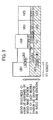
- transmission of uplink user data is completed in the sub-frame #2, and assigned radio resources are not used in the sub-frame #3 and #4. Thereafter, uplink user data to be transmitted is generated again in a sub-frame #5.
- a transmission power for transmitting an E-DPDCH from the mobile station UE is drastically increased during switching from the sub-frame #4 to the sub-frame #5. Accordingly, reception characteristics of the radio base station NodeB are deteriorated.
- the dispersion of a received total wideband power (RTWP) measured at the radio base station NodeB is increased; thereby a measurement error becomes large.
- RWP received total wideband power
- the radio resources assigned to the mobile station UE3 in the sub-frames #3 and #4 are excessive, and these radio resources are wasted since these radio resources cannot be used by the mobile stations UE1 and UE2.
- a first aspect of the present invention is summarized as a transmission rate control method in which a radio base station controls a transmission rate of uplink user data to be transmitted from a mobile station, including: notifying, from the mobile station to the radio base station, at a predetermined timing, a happy bit set to a first value, when the mobile station determines that a buffering time during which the uplink user data is buffered in a transmission buffer does not exceed a predetermined time, assuming that the mobile station continues to use a transmission rate corresponding to a current granted value notified by the radio base station; determining, at the radio base station, a maximum granted value that can be notified to the mobile station, in accordance with the happy bit notified from the mobile station; calculating, at the radio base station, as an allowable value to be notified to the mobile station, a granted value not more than the maximum granted value; notifying, from the radio base station to the mobile station, the granted value calculated at the radio base station, by using a transmission rate control channel; and transmitting, from the mobile
- the radio base station may determine the maximum granted value that can be notified to the mobile station, in accordance with an average value of happy bit notified, within a predetermined time period, from the mobile station.
- the mobile station may notify, to the base station, a happy bit set to a second value, when the mobile station determines that the buffering time during which the uplink user data is buffered in the transmission buffer exceeds the predetermined time, assuming that the mobile station continues to use the transmission rate corresponding to the current granted value notified by the radio base station, and when the mobile station determines that the uplink user data can be transmitted at a transmission rate higher than the transmission rate corresponding to the current granted value.
- the radio base station in the determining, may determine the maximum granted value, when the radio base station determines to notify, to the mobile station, a granted value larger than the current granted value.
- the radio base station may determine not to notify, to the mobile station, the granted value larger than the current granted value, when a monitoring timer is not terminated.
- a second aspect of the invention is summarized as a transmission rate control method in which a radio base station controls a transmission rate of uplink user data to be transmitted from a mobile station, including: notifying, from the mobile station to the radio base station, at a predetermined timing, a happy bit set to a first value, when the mobile station determines that a buffering time during which the uplink user data is buffered in a transmission buffer does not exceed a predetermined time, assuming that the mobile station continues to use a transmission rate corresponding to a current granted value notified by the radio base station; determining, at the radio base station, a maximum allowable increment for the current granted value being notified to the mobile station, in accordance with the happy bit notified from the mobile station; calculating, at the radio base station, as an allowable value to be notified to the mobile station, a granted value obtained by increasing the current granted value by an increment amount not more than the maximum allowable increment amount; notifying, from the radio base station to the mobile station, the granted value calculated at the radio base station,
- the radio base station may determine the maximum allowable increment amount for the current granted value, in accordance with an average value of happy bit notified, within a predetermined time period, from the mobile station.
- the mobile station may notify, to the base station, a happy bit set to a second value, when the mobile station determines that the buffering time during which the uplink user data is buffered in the transmission buffer exceeds the predetermined time, assuming that the mobile station continues to use the transmission rate corresponding to the current granted value notified by the radio base station, and when the mobile station determines that the uplink user data can be transmitted at a transmission rate higher than the transmission rate corresponding to the current granted value.
- the radio base station may determine the maximum granted valve, when the radio base station determines to notify, to the mobile station, a granted value larger than the current granted value.
- the radio base station may determine not to notify, to the mobile station, the granted value larger than the current granted value, when a monitoring timer is not terminated.
- a third aspect of the invention is summarized as a radio base station used in a mobile communication system in which a mobile station transmits uplink user data at a transmission rate corresponding to a granted value notified from the radio base station, including: a granted value determining unit configured to determine a maximum granted value that can be notified to the mobile station, in accordance with the happy bit notified from the mobile station, and to calculate, as an allowable value to be notified to the mobile station, a granted value not more than the maximum granted value; and a granted value notification unit configured to notify, to the mobile station, the granted value calculated by the granted value determining unit, by using a transmission rate control channel.
- the happy bit is set to a first value when the mobile station determines that a buffering time during which the uplink user data is buffered in a transmission buffer does not exceed a predetermined time, assuming that the mobile station continues to use a transmission rate corresponding to a current granted value notified by the radio base station.
- the granted value determining unit may determine the maximum granted value that can be notified to the mobile station, in accordance with an average value of happy bit notified, within a predetermined time period, from the mobile station.
- the happy bit may be set to a second value when the mobile station determines that the buffering time during which the uplink user data is buffered in the transmission buffer exceeds the predetermined time, assuming that the mobile station continues to use the transmission rate corresponding to the current granted value notified by the radio base station, and when the mobile station determines that the uplink user data can be transmitted at a transmission rate higher than the transmission rate corresponding to the current granted value.
- the granted value determining unit may determine the maximum granted value, when the radio base station determines to notify, to the mobile station, a granted value larger than the current granted value.
- the granted value determining unit may determine not to notify, to the mobile station, the granted value larger than the current granted value, when a monitoring timer is not terminated.
- a fourth aspect of the invention is summarized as a radio base station used in a mobile communication system in which a mobile station transmits uplink user data at a transmission rate corresponding to a granted value notified from the radio base station, including: a granted value determining unit configured to determine a maximum allowable increment amount for a current granted value being notified to the mobile station, in accordance with the happy bit notified from the mobile station, and to calculate, as an allowable value to be notified to the mobile station, a granted value obtained by increasing the current granted value by an increment amount not more than the maximum allowable increment amount; and a granted value notification unit configured to notify, to the mobile station, the granted value calculated by the granted value determining unit, by using a transmission rate control channel.
- the happy bit is set to a first value when the mobile station determines that a buffering time during which the uplink user data is buffered in a transmission buffer does not exceed a predetermined time, assuming that the mobile station continues to use a transmission rate corresponding to a current granted value notified by the radio base station.
- the granted value determining unit may determine the maximum granted value that can be notified to the mobile station, in accordance with an average value of happy bit notified, within a predetermined time period, from the mobile station.
- the happy bit may be set to a second value when the mobile station determines that the buffering time during which the uplink user data is buffered in the transmission buffer exceeds the predetermined time, assuming that the mobile station continues to use the transmission rate corresponding to the current granted value notified by the radio base station, and when the mobile station determines that the uplink user data can be transmitted at a transmission rate higher than the transmission rate corresponding to the current granted value.
- the granted value determining unit may determine the maximum granted value, when the radio base station determines to notify, to the mobile station, a granted value larger than the current granted value.
- the granted value determining unit may determine not to notify, to the mobile station, the granted value larger than the current granted value, when a monitoring timer is not terminated.
- each of the Mobile station UE is configured to transmit uplink user data at a transmission rate corresponding to an AG (granted value).
- the AG is notified through an E-AGCH from a radio base station NodeB.
- the radio base station NodeB includes a happy bit receiving unit 11, a monitoring timer 12, an AG determining unit 13 and an AG notification unit 14.
- the happy bit receiving unit 11 is configured to receive the happy bit from the mobile station UE.
- the mobile station UE is configured to transmit a happy bit on an E-DPCCH (enhanced-dedicated physical control channel) at a predetermined timing (specifically, at a time of transmitting an E-DCH (enhanced-dedicated channel)).
- E-DPCCH enhanced-dedicated physical control channel
- the mobile station UE is configured to notify, to the radio base station NodeB, a happy bit set to "happy: 1 (first value)" when the mobile station UE determines that a buffering time during which the uplink user data is buffered in a transmission buffer does not exceed a predetermined time, assuming that the mobile station continues to use a transmission rate corresponding to a current granted value (AG) notified by the radio base station NodeB.
- a happy bit set to "happy: 1 (first value)" when the mobile station UE determines that a buffering time during which the uplink user data is buffered in a transmission buffer does not exceed a predetermined time, assuming that the mobile station continues to use a transmission rate corresponding to a current granted value (AG) notified by the radio base station NodeB.
- the mobile station UE may be configured to notify, to the radio base station NodeB, a happy bit set to a second value when the mobile station UE determines that the buffering time during which the uplink user data buffered in the transmission buffer exceeds the predetermined time, assuming that the mobile station continues to use a transmission rate corresponding to a current granted value (AG) notified by the radio base station NodeB, and when the mobile station UE determines that the uplink user data can be transmitted at a transmission rate higher than the transmission rate corresponding to the current granted value (AG).
- AG current granted value
- the mobile station UE may be configured to notify, to the radio base station NodeB, the happy bit set to "unhappy: 0 (second value)" if the criteria defined in subclause 11.8.1.5 of TS25.321 V7.0.0 of the 3GPP standard are met.
- the mobile station UE may be configured to notify, to the radio base station NodeB, the happy bit set to "happy: 1 (first value)" if the criteria defined in subclause 11.8.1.5 of TS25.321 V7.0.0 of the 3GPP standard are not met.
- the monitoring timer 12 is started when a current granted value (AG) assigned to the mobile station UE is increased, and is terminated after a lapse of a predetermined time.
- the monitoring timer 12 may be provided individually for each mobile station UE or may be shared among multiple mobile stations UE.
- the AG determining unit 13 is configured to determine the "maximum AG value (maximum granted value), in accordance with the happy bit received from the mobile station UE.”
- the "maximum AG value” can be notified to each of the mobile station UE.
- the AG determining unit 13 is configured to calculate, as an AG to be notified to the mobile station UE, an AG (granted value) not more than the "maximum AG value (maximum granted value)."
- the AG determining unit 13 may determine the maximum AG value (maximum granted value) that can be notified to the mobile station UE, in accordance with the average value of the happy bit notified by the mobile station UE
- the maximum value and the minimum value of the average value of the happy bit are “1" and "0,” respectively.
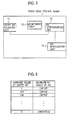
- the AG determination unit 13 manages a table shown in Fig. 6 . Then, with reference to this table, the AG determination unit 13 determines, as the maximum AG value (maximum granted value) that can be notified to the mobile station UE, the "maximum AG value" corresponding to the average value of the happy bit notified within the predetermined time period from the mobile station UE.
- the AG determining unit 13 determines the AG value (X) that can be notified to the mobile station UE, in consideration of available radio resources and the like. Then, the AG determining unit 13 compares the AG value (X) and the Maximum AG value (Y), so as to determine a smaller one to be an AG to be notified to the mobile station UE.
- the AG determining unit 13 may be configured to determine the maximum AG value (maximum granted value), when the AG determining unit 13 determines to notify the AG (granted value) larger than the AG (granted value) currently assigned to the mobile station UE.
- the AG determining unit 13 may determine not to notify AG (granted value) larger than the current AG (granted value) notified to the mobile station UE unless the monitoring timer 12 is terminated.
- the AG notification unit 14 is configured to notify the calculated AG (granted value) to the mobile station UE by using an E-AGCH (transmission rate control channel).
- the AG notification unit 14 is configured to transmit, to the mobile station UE, an E-AGCH including "Index” corresponding to the "AG value” calculated as the AG (granted value) to be notified to the mobile station UE.
- the "AG value” is calculated on the basis of a table associating "Index” with "AG value” shown in Fig. 7 (the table defined in 3GPP TS25.212 V7.0.0.)
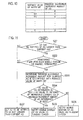
- the radio base station NodeB determines whether or not an AG larger than the currently-notified AG can be notified to the mobile station UE.
- Step S102 the radio base station NodeB determines whether or not the monitoring timer 12 (a monitoring timer for the mobile station or a shared monitoring timer) is terminated.
- the monitoring timer 12 a monitoring timer for the mobile station or a shared monitoring timer
- Step S107 the radio base station NodeB determines not to set an SG of the mobile station UE to be larger than the current SG. Therefore, the radio base station NodeB does not notify the mobile station UE of the AG larger than the AG currently notified to the mobile station UE.
- Step S107 the radio base station NodeB determines not to set the SG of the mobile station UE to be larger than the current SG. Therefore, the radio base station NodeB does not notify the mobile station UE of the AG larger than the AG currently notified to the mobile station UE.
- Step S103 the radio base station NodeB determines a maximum AG value (Y) that can be notified to the mobile station UE, in accordance with the average value of the happy bit notified, within the predetermined time period, from the mobile station UE.
- Step S104 the radio base station NodeB compares an AG value (X) determined in Step S101, with the maximum AG value (Y) determined in Step S103.
- Step S105 the radio base station NodeB notifies, to the mobile station UE, the maximum AG value (Y) through an E-AGCH.
- Step S106 the radio base station NodeB notifies, to the mobile station UE, the AG value (X) through the E-AGCH.
- the mobile communication system of this embodiment makes it possible to avoid a drastic increase of the transmission power of the E-DPDCH transmitted from the mobile station UE, in a mobile communication system to which an "EUL" method is applied. Accordingly, the mobile communication system according to this embodiment can solve problems caused by such drastic increase of the transmission power of the E-DPDCH.
- the mobile communication system enables effective utilization of radio resources by reducing excessively occupied radio resources and by properly securing the radio resources.
- a mobile communication system according to a second embodiment of the present invention will be described with reference to Figs. 9 to 11 .
- the description will be given mainly for differences between the mobile communication system according to this embodiment and the aforementioned mobile communication system according to the first embodiment.
- the AG determining unit 13 is configured to determine a maximum allowable increment amount (maximum allowable increment amount of AG) for the current granted value (AG) being notified to the mobile station UE, in accordance with the happy bit notified from the mobile station UE. Further, the AG determination unit 13 is configured to calculate a maximum allowable value that can be notified to the mobile station UE, by increasing the current AG (granted value) by an increment amount not more than the maximum allowable increment amount of AG.
- the AG determining unit 13 may be configured to determine the maximum allowable increment amount (maximum allowable increment amount of AG) for the current granted value (AG) notified to the mobile station UE, in accordance with the average value of the happy bit notified from the mobile station UE.
- the AG determining unit 13 determines the "maximum allowable increment amount of AG" corresponding to the average value of the happy bit (happy bit average value) notified, within the predetermined time period, from the mobile station UE, as the maximum allowable increment amount (maximum allowable increment amount of AG) for the current AG (granted value) being notified to the mobile station UE.
- the "Maximum allowable increment amount of AG” may be defined as a difference in the "AGs” (for example, “(5/15) 2 ”) in the table shown in Fig. 7 , or may be defined as a difference in the "Indexes” (for example, "1") in the table shown in Fig. 7 .
- the AG determination unit 13 determines the AG value (X) that can be notified to the mobile station UE, in consideration of the available radio resources and the like. Then, the AG determination unit 13 compares the AG value (X) and the AG value (Y) calculated by increasing the current AG (granted value) by an increment amount not more than the maximum allowable increment amount of AG, so as to determine a smaller one to be an AG to be notified to the mobile station UE.
- the AG determination unit 13 is configured to determine the AG value (Y) as the maximum AG value not more than the value calculated by increasing the current AG (granted value) by the maximum allowable increment amount of AG, among the AG values in the table shown in Fig.7 .
- the maximum allowable increment amount (Maximum allowable increment amount of AG) is defined as a difference in the "AGs” in the example shown in Figs. 7 and 9 .
- the maximum allowable increment amount (Maximum allowable increment amount of AG) is defined as the difference in the "Indexes" in the example shown in Figs. 7 and 9 .
- the current AG is "(11/15) 2 " and the average value of the happy bit is "1,” both of the AG value (Y) and the value obtained by increasing the current AG (granted value) by the aforementioned maximum allowable increment amount of AG and are 11(15/15) 2 .”
- the " maximum allowable increment amount of AG " corresponding to the "Average value of happy bit” of "1" and "0.9” as shown in Fig.10 is set to "0".
- the AG determining unit 13 may determine not to notify, to the mobile station UE, an AG (granted value) larger than the current AG (granted value)
- the AG determination unit 13 may be configured to determine the maximum allowable increment amount of AG when an AG (granted value) larger than the current AG (granted value) assigned to the mobile station UE is determined to be notified.
- the radio base station NodeB determines whether or not an AG larger than the currently-notified AG can be notified to the mobile station UE.
- Step S207 the radio base station NodeB determines not to set an SG of the mobile station UE to be larger than the current SG. Therefore, the radio base station NodeB does not notify the mobile station UE of the AG larger than the AG currently notified to the mobile station UE.
- Step S201 the radio base station NodeB determines whether or not the monitoring timer 12 (a monitoring timer for the mobile station or a shared monitoring timer) is terminated.
- the monitoring timer 12 a monitoring timer for the mobile station or a shared monitoring timer
- Step S207 the radio base station NodeB determines not to set the SG of the mobile station UE to be larger than the current SG. Therefore, the radio base station NodeB does not notify the mobile station UE of the AG larger than the AG currently notified to the mobile station UE.
- Step S203 the radio base station NodeB determines a maximum allowable increment amount for the AG currently be notified to the mobile station, in accordance with the average value of the happy bit notified, within the predetermined time period, from the mobile station UE.
- Step S204 the radio base station NodeB compares an AG value (X) determined in step S201 with the AG value (Y) calculated by increasing the current AG by the maximum allowable increment amount of AG determined in Step S203.
- Step S205 the radio base station NodeB notifies, to the mobile station UE, the AG value (Y) through the E-AGCH.
- Step S206 the radio base station NodeB notifies, to the mobile station UE, the AG value (X) through the E-AGCH.
- the operations of the mobile station UE and radio base station NodeB described above may be implemented by hardware, by a software module executed by a processor, or by a combination of both.
- the software module may be provided in any form of storage medium such as a random access memory (RAM), a flash memory, a read only memory (ROM), an erasable programmable ROM (EPROM), an electronically erasable and programmable ROM (EEPROM), a register, a hard disk, a removable disk and a CD-ROM.
- RAM random access memory
- flash memory a flash memory
- ROM read only memory
- EPROM erasable programmable ROM
- EEPROM electronically erasable and programmable ROM
- register a hard disk, a removable disk and a CD-ROM.
- Such a storage medium is connected to the processor so that the processor can read and write information from and into the storage medium.
- the storage medium may be integrated in the processor.
- the storage medium and the processor may be provided in an ASIC.
- the ASIC may be provided in a mobile station UE and a radio base station eNodeB.
- the storage medium and the processor may be provided as discrete components in the mobile station UE and the radio base station eNodeB.
Landscapes
- Engineering & Computer Science (AREA)
- Computer Networks & Wireless Communication (AREA)
- Signal Processing (AREA)
- Quality & Reliability (AREA)
- Mobile Radio Communication Systems (AREA)
- Communication Control (AREA)
Applications Claiming Priority (1)
| Application Number | Priority Date | Filing Date | Title |
|---|---|---|---|
| JP2008014027A JP5113542B2 (ja) | 2008-01-24 | 2008-01-24 | 伝送速度制御方法及び無線基地局 |
Publications (2)
| Publication Number | Publication Date |
|---|---|
| EP2083598A2 true EP2083598A2 (de) | 2009-07-29 |
| EP2083598A3 EP2083598A3 (de) | 2013-10-16 |
Family
ID=40636888
Family Applications (1)
| Application Number | Title | Priority Date | Filing Date |
|---|---|---|---|
| EP20090151218 Withdrawn EP2083598A3 (de) | 2008-01-24 | 2009-01-23 | Übertragungsratensteuerungsverfahren und Funkbasisstation |
Country Status (4)
| Country | Link |
|---|---|
| US (1) | US8078186B2 (de) |
| EP (1) | EP2083598A3 (de) |
| JP (1) | JP5113542B2 (de) |
| CN (1) | CN101494907B (de) |
Families Citing this family (1)
| Publication number | Priority date | Publication date | Assignee | Title |
|---|---|---|---|---|
| US8145164B2 (en) | 2008-02-28 | 2012-03-27 | Qualcomm Incorporated | Methods and apparatus for handling a signaling message the relates to transmission rate restrictions |
Citations (2)
| Publication number | Priority date | Publication date | Assignee | Title |
|---|---|---|---|---|
| JP2007274322A (ja) | 2006-03-31 | 2007-10-18 | Nec Corp | W−cdma方式の無線基地局装置におけるスケジューリング方法及びレート制御方法並びに無線基地局装置 |
| JP2008014027A (ja) | 2006-07-06 | 2008-01-24 | Komatsu Ltd | 建設機械のドアロック解除機構 |
Family Cites Families (14)
| Publication number | Priority date | Publication date | Assignee | Title |
|---|---|---|---|---|
| AU2005242329B2 (en) * | 2004-04-30 | 2008-05-29 | Interdigital Technology Corporation | Method and apparatus for minimizing redundant enhanced uplink allocation requests and fault-isolating enhanced uplink transmission failures |
| EP1617606A1 (de) * | 2004-07-16 | 2006-01-18 | Matsushita Electric Industrial Co., Ltd. | Modenumschaltungsplanung für Aufwärtsübertragungen |
| JP2006197269A (ja) * | 2005-01-13 | 2006-07-27 | Ntt Docomo Inc | 伝送速度制御方法、移動局及び無線基地局 |
| WO2006095871A1 (ja) | 2005-03-11 | 2006-09-14 | Ntt Docomo, Inc. | 伝送速度制御方法及び移動局 |
| US20060215604A1 (en) * | 2005-03-24 | 2006-09-28 | Jens Mueckenheim | Scheduling method for enhanced uplink channels |
| DE602005011101D1 (de) * | 2005-04-01 | 2009-01-02 | Panasonic Corp | Zeitliche Planung von Endgeräten in einem Funkkommunikationssystem |
| EP1708524B1 (de) | 2005-04-01 | 2009-07-08 | Panasonic Corporation | Zuweisung des "happy bit" in einem mobilen Kommunikationssystem |
| DE602005018040D1 (de) * | 2005-07-25 | 2010-01-14 | Panasonic Corp | Einschränkung eines HARQ Verfahrens und Übertragung von ungeplanten Steuerdaten auf Aufwärtskanäle |
| US7613157B2 (en) * | 2005-08-30 | 2009-11-03 | Interdigital Technology Corporation | Wireless communication method and apparatus for processing enhanced uplink scheduling grants |
| KR100929082B1 (ko) * | 2005-10-12 | 2009-11-30 | 삼성전자주식회사 | 역방향 데이터 전송을 위한 단말의 제어 정보 송수신 방법및 장치 |
| US7660279B2 (en) * | 2006-01-27 | 2010-02-09 | Alcatel-Lucent Usa Inc. | Method of scheduling uplink resource in a wireless communication system |
| JP4788436B2 (ja) | 2006-03-29 | 2011-10-05 | 日本電気株式会社 | 無線リソース割り当て方法及びそれを用いる無線リソース割り当て装置並びに基地局 |
| ES2414630T3 (es) * | 2006-05-17 | 2013-07-22 | Telefonaktiebolaget Lm Ericsson (Publ) | Asignación de tasa de transmisión repetida en una red de telecomunicaciones radio |
| JP4882049B2 (ja) | 2008-02-27 | 2012-02-22 | リサーチ イン モーション リミテッド | 通信方法 |
-
2008
- 2008-01-24 JP JP2008014027A patent/JP5113542B2/ja not_active Expired - Fee Related
-
2009
- 2009-01-21 US US12/356,685 patent/US8078186B2/en not_active Expired - Fee Related
- 2009-01-22 CN CN2009100027747A patent/CN101494907B/zh not_active Expired - Fee Related
- 2009-01-23 EP EP20090151218 patent/EP2083598A3/de not_active Withdrawn
Patent Citations (2)
| Publication number | Priority date | Publication date | Assignee | Title |
|---|---|---|---|---|
| JP2007274322A (ja) | 2006-03-31 | 2007-10-18 | Nec Corp | W−cdma方式の無線基地局装置におけるスケジューリング方法及びレート制御方法並びに無線基地局装置 |
| JP2008014027A (ja) | 2006-07-06 | 2008-01-24 | Komatsu Ltd | 建設機械のドアロック解除機構 |
Also Published As
| Publication number | Publication date |
|---|---|
| EP2083598A3 (de) | 2013-10-16 |
| CN101494907B (zh) | 2012-05-23 |
| JP5113542B2 (ja) | 2013-01-09 |
| CN101494907A (zh) | 2009-07-29 |
| US8078186B2 (en) | 2011-12-13 |
| US20090191886A1 (en) | 2009-07-30 |
| JP2009177496A (ja) | 2009-08-06 |
Similar Documents
| Publication | Publication Date | Title |
|---|---|---|
| CN101176379B (zh) | 在移动通信系统中的“满意比特”的设置 | |
| CN101420744B (zh) | 无线通信系统、无线通信方法、基站以及无线终端 | |
| EP2268087A2 (de) | Mobilfunkkommunikationssystem | |
| US8185125B2 (en) | Transmission rate control method, mobile communication system and radio base station | |
| CN101099408B (zh) | 传送速度控制方法、移动台、无线基站及无线网络控制站 | |
| EP1691513B1 (de) | Verfahren zur Steuerung der Übertragungsrate und Mobilstation | |
| US8260309B2 (en) | Transmission rate control method and radio base station | |
| CN101516138B (zh) | 无线通信系统、无线通信方法以及基站 | |
| CN101453787B (zh) | 无线通信系统、无线通信方法以及基站 | |
| US8155654B2 (en) | Transmission rate control method, mobile communication system and radio base station | |
| US8078186B2 (en) | Transmission rate control method and radio base station | |
| JP5030730B2 (ja) | 無線通信システム、無線通信方法及び基地局 | |
| EP1821558A1 (de) | Verfahren zur entscheidung über die maximal zulässige übertragungsrate, mobilstation und drahtlose basisstation | |
| CN101103594A (zh) | 传送速度控制方法、移动台及无线线路控制台 | |
| JP2006222916A (ja) | 伝送速度制御方法、移動局及び無線回線制御局 |
Legal Events
| Date | Code | Title | Description |
|---|---|---|---|
| PUAI | Public reference made under article 153(3) epc to a published international application that has entered the european phase |
Free format text: ORIGINAL CODE: 0009012 |
|
| 17P | Request for examination filed |
Effective date: 20090123 |
|
| AK | Designated contracting states |
Kind code of ref document: A2 Designated state(s): AT BE BG CH CY CZ DE DK EE ES FI FR GB GR HR HU IE IS IT LI LT LU LV MC MK MT NL NO PL PT RO SE SI SK TR |
|
| AX | Request for extension of the european patent |
Extension state: AL BA RS |
|
| PUAL | Search report despatched |
Free format text: ORIGINAL CODE: 0009013 |
|
| AK | Designated contracting states |
Kind code of ref document: A3 Designated state(s): AT BE BG CH CY CZ DE DK EE ES FI FR GB GR HR HU IE IS IT LI LT LU LV MC MK MT NL NO PL PT RO SE SI SK TR |
|
| AX | Request for extension of the european patent |
Extension state: AL BA RS |
|
| RIC1 | Information provided on ipc code assigned before grant |
Ipc: H04W 28/22 20090101AFI20130912BHEP Ipc: H04W 72/12 20090101ALI20130912BHEP |
|
| AKX | Designation fees paid |
Designated state(s): DE GB |
|
| STAA | Information on the status of an ep patent application or granted ep patent |
Free format text: STATUS: THE APPLICATION IS DEEMED TO BE WITHDRAWN |
|
| 18D | Application deemed to be withdrawn |
Effective date: 20140417 |