EP2084154B1 - Dérivé promédicament aminoacylé et médicament pour le traitement de maladies thromboemboliques - Google Patents
Dérivé promédicament aminoacylé et médicament pour le traitement de maladies thromboemboliques Download PDFInfo
- Publication number
- EP2084154B1 EP2084154B1 EP07801837A EP07801837A EP2084154B1 EP 2084154 B1 EP2084154 B1 EP 2084154B1 EP 07801837 A EP07801837 A EP 07801837A EP 07801837 A EP07801837 A EP 07801837A EP 2084154 B1 EP2084154 B1 EP 2084154B1
- Authority
- EP
- European Patent Office
- Prior art keywords
- compound
- formula
- meaning indicated
- concentrated
- salts
- Prior art date
- Legal status (The legal status is an assumption and is not a legal conclusion. Google has not performed a legal analysis and makes no representation as to the accuracy of the status listed.)
- Active
Links
- 0 C*(C*(Cc(cc1)ccc1ON=I)C(OCc1ccccc1)=O)CC(C)(C)CC(N)=O Chemical compound C*(C*(Cc(cc1)ccc1ON=I)C(OCc1ccccc1)=O)CC(C)(C)CC(N)=O 0.000 description 4
- ISGBGIISDXOVCO-AOWMJXSGSA-N CC1(CC(N(C[C@@H](CN2c(cc3)ccc3N(CCOC3)C3=O)OC2=O)C(c([s]2)ccc2Cl)=O)=O)CC(C)(CN(Cc(cc2)ccc2OC)C(OCc2ccccc2)=O)CC1 Chemical compound CC1(CC(N(C[C@@H](CN2c(cc3)ccc3N(CCOC3)C3=O)OC2=O)C(c([s]2)ccc2Cl)=O)=O)CC(C)(CN(Cc(cc2)ccc2OC)C(OCc2ccccc2)=O)CC1 ISGBGIISDXOVCO-AOWMJXSGSA-N 0.000 description 1
- STFCAXKGVXCCMV-CVBYOTHMSA-N C[C@H]([C@@H](C(NCCCCC(N(C[C@@H](CN1c(cc2)ccc2N(CCOC2)C2=O)OC1=O)C(c([s]1)ccc1Cl)=O)=O)=O)N)O Chemical compound C[C@H]([C@@H](C(NCCCCC(N(C[C@@H](CN1c(cc2)ccc2N(CCOC2)C2=O)OC1=O)C(c([s]1)ccc1Cl)=O)=O)=O)N)O STFCAXKGVXCCMV-CVBYOTHMSA-N 0.000 description 1
Classifications
-
- C—CHEMISTRY; METALLURGY
- C07—ORGANIC CHEMISTRY
- C07D—HETEROCYCLIC COMPOUNDS
- C07D413/00—Heterocyclic compounds containing two or more hetero rings, at least one ring having nitrogen and oxygen atoms as the only ring hetero atoms
- C07D413/14—Heterocyclic compounds containing two or more hetero rings, at least one ring having nitrogen and oxygen atoms as the only ring hetero atoms containing three or more hetero rings
-
- A—HUMAN NECESSITIES
- A61—MEDICAL OR VETERINARY SCIENCE; HYGIENE
- A61K—PREPARATIONS FOR MEDICAL, DENTAL OR TOILETRY PURPOSES
- A61K31/00—Medicinal preparations containing organic active ingredients
- A61K31/33—Heterocyclic compounds
- A61K31/395—Heterocyclic compounds having nitrogen as a ring hetero atom, e.g. guanethidine or rifamycins
- A61K31/41—Heterocyclic compounds having nitrogen as a ring hetero atom, e.g. guanethidine or rifamycins having five-membered rings with two or more ring hetero atoms, at least one of which being nitrogen, e.g. tetrazole
- A61K31/42—Oxazoles
- A61K31/422—Oxazoles not condensed and containing further heterocyclic rings
-
- A—HUMAN NECESSITIES
- A61—MEDICAL OR VETERINARY SCIENCE; HYGIENE
- A61P—SPECIFIC THERAPEUTIC ACTIVITY OF CHEMICAL COMPOUNDS OR MEDICINAL PREPARATIONS
- A61P7/00—Drugs for disorders of the blood or the extracellular fluid
- A61P7/02—Antithrombotic agents; Anticoagulants; Platelet aggregation inhibitors
Definitions
- the present application relates to prodrug derivatives of 5-chloro- N - ( ⁇ ( 5S ) -2-oxo-3- [4- (3-oxomorpholin-4-yl) phenyl] -1,3-oxazolidine 5-yl ⁇ methyl) thiophene-2-carboxamide, process for their preparation, their use for the treatment and / or prophylaxis of diseases and their use for the production of medicaments for the treatment and / or prophylaxis of diseases, in particular thromboembolic diseases.
- Prodrugs are derivatives of an active substance which undergo a single or multistage biotransformation of enzymatic and / or chemical nature in vivo before the actual active substance is released.
- a prodrug residue is usually used to improve the property profile of the underlying drug [ Ettmayer et al., J. Med. Chem. 47, 2393 (2004 )].
- the design of the prodrug residue as well as the desired release mechanism must be tailored very precisely to the individual drug, the indication, the site of action and the route of administration.
- prodrugs which have improved bioavailability over the underlying drug, for example, by improving the physicochemical profile, especially solubility, absorption or active absorption properties, or tissue-specific distribution.
- prodrugs may be mentioned as an example: H. Bundgaard (Ed.), Design of Prodrugs: Bioreversible Derivatives for Various Functional Groups and Chemical Entities, Elsevier Science Publishers BV, 1985 ,
- compound (A) has only a limited solubility in water and physiological media, which makes it difficult, for example, an intravenous administration of the drug.
- the object of the present invention was therefore the identification of derivatives or prodrugs of compound (A), which have an improved solubility in said media and at the same time after application allow a controlled release of the active ingredient (A) in the body of the patient.
- Compounds according to the invention are the compounds of the formula (I) and their salts, solvates and solvates of the salts comprising the compounds of the formulas below and their salts, solvates and solvates of the salts and of the formula (I) encompassed by formula (I), hereinafter referred to as exemplary compounds and their salts, solvates and solvates of the salts, as far as the compounds of formula (I), the compounds mentioned below are not already salts, solvates and solvates of the salts.
- the compounds of the invention may exist in stereoisomeric forms (enantiomers, diastereomers).
- the invention therefore includes the enantiomers or diastereomers and their respective mixtures. From such mixtures of enantiomers and / or diastereomers, the stereoisomerically uniform components can be isolated in a known manner.
- the present invention encompasses all tautomeric forms.
- Salts used in the context of the present invention are physiologically acceptable salts of the compounds according to the invention. Also included are salts which are themselves unsuitable for pharmaceutical applications but can be used, for example, for the isolation or purification of the compounds of the invention.
- Physiologically acceptable salts of the compounds of the invention include acid addition salts of mineral acids, carboxylic acids and sulfonic acids, e.g. Salts of hydrochloric, hydrobromic, sulfuric, phosphoric, methanesulfonic, ethanesulfonic, toluenesulfonic, benzenesulfonic, naphthalenedisulfonic, acetic, trifluoroacetic, propionic, lactic, tartaric, malic, citric, fumaric, maleic and benzoic acids.
- Salts of hydrochloric, hydrobromic, sulfuric, phosphoric, methanesulfonic, ethanesulfonic, toluenesulfonic, benzenesulfonic, naphthalenedisulfonic acetic, trifluoroacetic, propionic, lactic, tartaric, malic, citric, fumaric, maleic and benzoic acids.
- Solvates in the context of the invention are those forms of the compounds according to the invention which form a complex in the solid or liquid state by coordination with solvent molecules. Hydrates are a special form of solvates that coordinate with water. As solvates, hydrates are preferred in the context of the present invention.
- the side group of an ⁇ -amino acid in the meaning of R 1 includes both the side groups of the naturally occurring ⁇ -amino acids and the side groups of homologues and isomers of these ⁇ -amino acids.
- the ⁇ -amino acid can be present both in the L and in the D configuration or else as a mixture of the L and D form.
- side groups are exemplified: hydrogen (glycine), methyl (alanine), propan-2-yl (valine), propan-1-yl (norvaline), 2-methylpropan-1-yl (leucine), 1-methylpropane-1 -yl (isoleucine), butan-1-yl (norleucine), phenyl (2-phenylglycine), benzyl (phenylalanine), p-hydroxybenzyl (tyrosine), indol-3-ylmethyl (tryptophan), imidazol-4-ylmethyl (histidine ), Hydroxymethyl (serine), 2-hydroxyethyl (homoserine), 1-hydroxyethyl (threonine), mercaptomethyl (cysteine), methylthiomethyl (S-methylcysteine), 2-mercaptoethyl (homocysteine), 2-methylthioethyl (methionine), carbamoylmethyl (asparagine
- Preferred ⁇ -amino acid side groups in the meaning of R 2 are hydrogen (glycine), methyl (alanine), propan-2-yl (valine), propan-1-yl (norvaline), imidazol-4-ylmethyl (histidine), Hydroxymethyl (serine), 1-hydroxyethyl (threonine), carbamoylmethyl (asparagine), 2-carbamoylethyl (glutamine), 4-aminobutan-1-yl (lysine), 3-aminopropan-1-yl (ornithine), 3-guanidino propan-1-yl (arginine).
- the L configuration is preferred.
- radicals are substituted in the compounds according to the invention, the radicals can, unless otherwise specified, be monosubstituted or polysubstituted. In the context of the present invention, the meaning is independent of each other for all radicals which occur repeatedly. Substitution with one or two identical or different substituents is preferred. Very particular preference is given to the substitution with a substituent.
- R 1 is hydrogen, methyl, propan-2-yl, 2-methylpropan-1-yl, imidazol-4-ylmethyl, hydroxymethyl, 1-hydroxyethyl, carboxymethyl, 2-carboxyethyl , Carbamoylmethyl, 2-carbamoylethyl, 4-aminobutan-1-yl, 3-guanidinopropan-1-yl, benzyl or 4-hydroxybenzyl.
- R 1 is hydrogen, methyl, propan-2-yl, 2-methylpropan-1-yl, imidazol-4-ylmethyl, hydroxymethyl, 1-hydroxyethyl, carboxymethyl, 2-carboxyethyl , Carbamoylmethyl, 2-carbamoylethyl, 4-aminobutan-1-yl, benzyl or 4-hydroxybenzyl.
- the compounds of formula (I-A), (I-B) and (IX) may also be present in the form of their salts. These salts may optionally be converted to the free base with the appropriate (i) solvents and / or (ii) bases.
- R 1 protecting groups can be removed simultaneously with the removal of PG or in a separate reaction step before or after the elimination of PG.
- tert-butoxycarbonyl (Boc) or benzyloxycarbonyl (Z) is preferably used in the above processes.
- the removal of these protective groups and the removal of the protective groups in process step (VIII) ⁇ (X) is carried out by customary methods, preferably by reaction with a strong acid such as hydrogen chloride, hydrogen bromide or trifluoroacetic acid in an inert solvent such as dioxane, dichloromethane or acetic acid.
- tetrahydrofuran N, N- dimethylformamide or dimethylsulfoxide are preferably used; particularly preferred is N, N- dimethylformamide.
- sodium hydride is suitable as the base in these reactions.
- the reactions mentioned are generally carried out in a temperature range from 0 ° C to + 40 ° C at atmospheric pressure.
- tetrahydrofuran, N, N- dimethylformamide or dimethyl sulfoxide are preferably used in process steps (III) + (VI) ⁇ (VA) and (IX) + (X) ⁇ (XI); particularly preferred is N, N- dimethylformamide.
- ethyldiisopropylamine is suitable as the base in these reactions. The reactions mentioned are generally carried out in a temperature range from 0 ° C to + 40 ° C at atmospheric pressure.
- Process step (IH) + (IV) ⁇ (V) is preferably carried out in N, N- dimethylformamide as solvent.
- the reaction is carried out in a temperature range from 0 ° C to + 50 ° C, preferably at + 20 ° C to + 50 ° C, at atmospheric pressure.
- the reaction can also be stirred out advantageously under ultrasound treatment.
- the compounds of the formulas (II), (IV), (VI), (VII) and (X) are commercially available, known from the literature or can be prepared by literature methods.
- the preparation of the compounds (A) is in Roehrig et al., J. Med. Chem. 48, 5900 (2005 ).
- the compounds according to the invention and their salts are useful prodrugs of the active ingredient compound (A).
- they On the one hand, they have good stability, for example at pH 4, and on the other hand show efficient conversion to the active compound (A) in vivo.
- the compounds of the invention have a good solubility in water and other physiologically acceptable media, which makes them suitable for therapeutic use, especially in intravenous administration.
- Another object of the present invention is the use of the compounds of the invention for the treatment and / or prophylaxis of diseases, preferably thromboembolic disorders and / or thromboembolic complications.
- thromboembolic disorders include, in particular, diseases such as myocardial infarction with ST segment elevation (STEMI) and without ST segment elevation (non-STEMI), stable angina pectoris, unstable angina pectoris, reocclusions and restenoses Coronary interventions such as angioplasty or aortocoronary bypass, peripheral arterial occlusive diseases, pulmonary embolism, deep venous thrombosis and renal vein thrombosis, transient ischemic attacks and thrombotic and thromboembolic stroke.
- diseases such as myocardial infarction with ST segment elevation (STEMI) and without ST segment elevation (non-STEMI)
- stable angina pectoris such as myocardial infarction with ST segment elevation (STEMI) and without ST segment elevation (non-STEMI)
- unstable angina pectoris unstable angina pectoris
- reocclusions and restenoses
- Coronary interventions such as angioplasty or aortocoronary bypass, peripheral
- the substances are therefore also useful in the prevention and treatment of cardiogenic thromboembolism, such as brain ischemia, stroke and systemic thromboembolism and ischaemia, in patients with acute, intermittent or persistent cardiac arrhythmias. such as atrial fibrillation, and those undergoing cardioversion, as well as patients with valvular heart disease or with artificial heart valves.
- cardiogenic thromboembolism such as brain ischemia, stroke and systemic thromboembolism and ischaemia
- the compounds of the invention are suitable for the treatment of disseminated intravascular coagulation (DIC).
- DIC disseminated intravascular coagulation
- Thromboembolic complications also occur in microangiopathic hemolytic anemias, extracorporeal blood circuits such as hemodialysis, and heart valve prostheses.
- the compounds according to the invention are also suitable for the prophylaxis and / or treatment of atherosclerotic vascular diseases and inflammatory diseases such as rheumatic diseases of the musculoskeletal system, moreover also for the prophylaxis and / or treatment of Alzheimer's disease.
- the compounds of the present invention can inhibit tumor growth and metastasis, microangiopathies, age-related macular degeneration, diabetic retinopathy, diabetic nephropathy and other microvascular diseases and for the prevention and treatment of thromboembolic complications such as venous thromboembolism in tumor patients, especially those that undergo major surgery or chemo- or radiotherapy.
- Another object of the present invention is the use of the compounds of the invention for the treatment and / or prophylaxis of diseases, in particular the aforementioned diseases.
- Another object of the present invention is the use of the compounds of the invention for the manufacture of a medicament for the treatment and / or prophylaxis of diseases, in particular the aforementioned diseases.
- Another object of the present invention is a method for the treatment and / or prophylaxis of diseases, in particular the aforementioned diseases, using the compounds of the invention.
- compositions containing at least one compound of the invention usually together with one or more inert, non-toxic, pharmaceutically suitable excipients, and their use for the purposes mentioned above.
- the compounds according to the invention can act systemically and / or locally. For this purpose, they may be applied in a suitable manner, e.g. oral, parenteral, pulmonary or nasal. For these administration routes, the compounds according to the invention can be administered in suitable administration forms.
- the compounds of the invention rapidly and / or modified donating application forms containing the compounds of the invention in crystalline and / or amorphized and / or dissolved form, such as tablets (uncoated or coated Tablets, for example with enteric or delayed-dissolving or insoluble coatings, which control the release of the compound of the invention), tablets or films / wafers, films / lyophilisates, capsules (for example hard or soft gelatine capsules), dragees, granules, rapidly disintegrating in the oral cavity Pellets, powders, emulsions, suspensions, aerosols or solutions.
- Parenteral administration can be accomplished by bypassing a resorption step (e.g., intravenously, intraarterially, intracardially, intraspinal, or intralumbar) or by resorting to absorption (e.g., intramuscularly, subcutaneously, intracutaneously, percutaneously, or intraperitoneally).
- a resorption step e.g., intravenously, intraarterially, intracardially, intraspinal, or intralumbar
- absorption e.g., intramuscularly, subcutaneously, intracutaneously, percutaneously, or intraperitoneally.
- parenteral administration are suitable as application forms u.a. Injection and infusion preparations in the form of solutions, suspensions, emulsions, lyophilisates or sterile powders.
- inhalative dosage forms such as powder inhalers or nebulizers
- nasally administrable dosage forms such as drops, solutions or sprays.
- the compounds according to the invention can be converted into the stated administration forms. This can be done in a conventional manner by mixing with inert, non-toxic, pharmaceutically suitable excipients.
- These adjuvants include, among others.
- Carrier materials for example microcrystalline cellulose, lactose, mannitol
- solvents for example liquid polyethylene glycols
- emulsifiers and dispersants or wetting agents for example sodium dodecyl sulfate, polyoxysorbitanoleate
- binders for example polyvinylpyrrolidone
- synthetic and natural polymers for example albumin
- stabilizers for example antioxidants such as ascorbic acid
- dyes eg, inorganic pigments such as iron oxides
- flavor and / or odor remedies include, among others.
- Carrier materials for example microcrystalline cellulose, lactose, mannitol
- solvents for example liquid polyethylene glycols
- emulsifiers and dispersants or wetting agents for example
- the dosage is about 0.01 to 100 mg / kg, preferably about 0.01 to 20 mg / kg and most preferably 0.1 to 10 mg / kg of body weight.
- Method la (preparative HPLC column: VP 250/21 Nucleodw 100-5 C18 ec, Macherey & Nagel No. 762002; Eluent A: water / 0.01% trifluoroacetic acid, eluent B: acetonitrile / 0.01% trifluoroacetic acid; gradient: 0 min 0% B ⁇ 20 min 20% B ⁇ 40 min 20% B ⁇ 60 min 30% B ⁇ 80 min 30% B ⁇ 90 min 100% B ⁇ 132 min 100% B, flow: 5 ml / min, temperature: RT; Detection: 210 nm.
- Method 1b (preparative HPLC) : Column: SymmetryPrep TM C18 7 ⁇ M; 19 x 300 mm; Waters; Eluent A: water / 0.01% trifluoroacetic acid, eluent B: acetonitrile / 0.01% trifluoroacetic acid; Gradient: 0 min 0% B ⁇ 20 min 20% B ⁇ 40 min 20% B ⁇ 60 min 30% B ⁇ 80 min 30% B ⁇ 90 min 100% B ⁇ 132 min 100% B; Flow: 5 ml / min; Temperature: RT; UV detection: 210 nm.
- Method 2 (analytical HPLC): Column: XTerra 3.9 x 150 WAT 186000478; Eluent A: 10 ml 70% Perchloric acid in 2.5 liters of water, eluent B: acetonitrile; Gradient: 0.0 min 20% B ⁇ 1 min 20% B ⁇ 4 min 90% B ⁇ 9 min 90% B; Temperature: RT; Flow: 1 ml / min.
- the column is eluted at a temperature of 40 ° C.
- Method 3 Instrument: Micromass ZQ; Device type HPLC: HP 1100 Series; UV DAD; Column: Phenomenex Gemini 3 ⁇ 30 mm x 3.00 mm; Eluent A: 1 l of water + 0.5 ml of 50% formic acid, eluent B: 1 l of acetonitrile + 0.5 ml of 50% formic acid; Gradient: 0.0 min 90% A ⁇ 2.5 min 30% A ⁇ 3.0 min 5% A ⁇ 4.5 min 5% A; Flow: 0.0 min 1 ml / min, 2.5 min / 3.0 min / 4.5 min. 2 ml / min; Temperature: 50 ° C; UV detection: 210 nm.
- Method 4 Instrument: Micromass ZQ with HPLC HP 1100 Series; UV DAD; Column: Phenomenex Synergi 2 ⁇ Hydro-RP Mercury 20 mm x 4 mm; Eluent A: 1 l of water + 0.5 ml of 50% formic acid, eluent B: 1 l of acetonitrile + 0.5 ml of 50% formic acid; Gradient: 0.0 min 90% A ⁇ 2.5 min 30% A ⁇ 3.0 min 5% A ⁇ 4.5 min 5% A; Flow: 0.0 min 1 ml / min ⁇ 2.5 min / 3.0 min / 4.5 min 2 ml / min; Temperature: 50 ° C; UV detection: 210 nm.
- Method 5 Instrument: Micromass Quattro LCZ with HPLC Agilent Series 1100; Column: Phenomenex Synergi 2 ⁇ Hydro-RP Mercury 20 mm x 4 mm; Eluent A: 1 l of water + 0.5 ml of 50% formic acid, eluent B: 1 l of acetonitrile + 0.5 ml of 50% formic acid; Gradient: 0.0 min 90% A ⁇ 2.5 min 30% A ⁇ 3.0 min 5% A ⁇ 4.5 min 5% A; Flow: 0.0 min 1 ml / min ⁇ 2.5 min / 3.0 min / 4.5 min 2 ml / min; Temperature: 50 ° C; UV detection: 208-400 nm.
- Method 6 Device Type MS: Micromass ZQ; Device type HPLC: Waters Alliance 2795; Column: Phenomenex Synergi 2 ⁇ Hydro-RP Mercury 20 mm x 4 mm; Eluent A: 1 l of water + 0.5 ml of 50% formic acid, eluent B: 1 l of acetonitrile + 0.5 ml of 50% formic acid; Gradient: 0.0 min 90% A ⁇ 2.5 min 30% A ⁇ 3.0 min 5% A ⁇ 4.5 min 5% A; Flow: 0.0 min 1 ml / min ⁇ 2.5 min / 3.0 min / 4.5 min 2 ml / min; Temperature: 50 ° C; UV detection: 210 nm.
- Method 7 Chiral silica gel phase (250 mm x 4.6 mm) based on poly ( N- methacryloyl-L-leucine dicyclopropylmethylamide); Eluent: isohexane / ethyl acetate 35:65 (v / v); Temperature: 24 ° C; Flow: 2 ml / min; UV detection: 270 nm.
- Method 8 Chiral silica gel phase (250 mm x 4.6 mm) based on poly ( N- methacryloyl-L-leucine tert -butylamide); Eluent: isohexane / ethyl acetate 35:65 (v / v); Temperature: 24 ° C; Flow: 2 ml / min; UV detection: 270 nm.
- Method 11 (chiral HPLC, preparative) : Chiral silica gel phase (670 mm x 40 mm) based on poly (N-methacryloyl-L-leucine tert -butylamide); Eluent: isohexane / ethyl acetate 65:35 (v / v); Temperature: 24 ° C; Flow: 50 ml / min; UV detection: 260 nm.
- Method 12 (LC-MS) : Instrument: Micromass Quattro LCZ with HPLC Agilent Series 1100; Column: Phenomenex Onyx Monolithic C18, 100 mm x 3 mm.
- Eluent A 1 l of water + 0.5 ml of 50% formic acid
- eluent B 1 l of acetonitrile + 0.5 ml of 50% formic acid
- Gradient 0.0 min 90% A ⁇ 2 min 65% A ⁇ 4.5 min 5% A ⁇ 6 min 5% A
- Flow 2 ml / min
- Oven 40 ° C
- UV detection 208-400 nm.
- Method 13 Instrument: Micromass Platform LCZ with HPLC Agilent Series 1100; Column: Thermo Hypersil GOLD 3 ⁇ 20mm x 4mm; Eluent A: 1 l of water + 0.5 ml of 50% formic acid, eluent B: 1 l of acetonitrile + 0.5 ml of 50% formic acid; Gradient: 0.0 min 100% A ⁇ 0.2 min 100% A ⁇ 2.9 min 30% A ⁇ 3.1 min 10% A ⁇ 5.5 min 10% A; Oven: 50 ° C; Flow: 0.8 ml / min; UV detection: 210 nm.
- Method 14 Device Type MS: Micromass ZQ; Device type HPLC: Waters Alliance 2795; Column: Merck Chromolith SpeedROD RP-18e 100 mm x 4.6 mm; Eluent A: 1 liter of water + 0.5 ml of 50% formic acid; Eluent B: 1 liter acetonitrile + 0.5 ml 50% formic acid; Gradient: 0.0 min 10% B ⁇ 7.0 min 95% B ⁇ 9.0 min 95% B; Oven: 35 ° C; Flow: 0.0 min 1.0 ml / min ⁇ 7.0 min 2.0 ml / min ⁇ 9.0 min 2.0 ml / min; UV detection: 210 nm.
- NMR measurements are performed at a proton frequency of 400.13 MHz or 500.13 MHz.
- the samples were usually dissolved in DMSO-d 6 ; Temperature: 302 K.
- the mixture is stirred for 16 h at RT and then slowly added with cooling 25 ml of water. Subsequently, 300 ml of ethyl acetate are added and another 50 ml of water. The phases are separated and the ethyl acetate phase is concentrated in vacuo. The residue is stirred with ethyl acetate and filtered. The mother liquor is concentrated and the residue is purified by flash chromatography on silica gel with toluene / ethanol 5: 1 as the eluent.
- the preparation is carried out in analogy to Example 10A starting from 4-amino-butyric acid.
- the title compound is prepared from Boc-valine analogously to the literature [ R. Michelot et al., Bioorg. Med. Chem. 1996, 4, 2201 ) produced.
- the title compound is prepared from Boc-glycine analogously to the literature [ R. Michelot et al., Bioorg. Med. Chem. 1996, 4, 2201 ) produced.
- the title compound is prepared from bis-Boc-lysine analogously to the literature [ R. Michelot et al., Bioorg. Med. Chem. 1996, 4, 2201 ) produced.
- the title compound is prepared from Boc-alanine analogously to the literature [ R. Michelot et al., Bioorg. Med. Chem. 1996, 4, 2201 ) produced.
- the aqueous phase is adjusted to pH 2 with 4M hydrochloric acid and concentrated in vacuo.
- the residue is purified by flash chromatography on silica gel with acetonitrile / water / acetic acid 5: 1: 0.1 as eluent.
- the appropriate fractions are concentrated and stirred with ethyl acetate and diethyl ether.
- the residue is then filtered off with suction and dried under high vacuum. 9.1 g (45% of theory) of the p-methoxybenzyl-protected amino acid are obtained.
- N-hydroxysuccinimide Esters of amino acid derivatives are either commercially available or can be prepared by standard methods of peptide chemistry.
- Example 1A 14 mg (26 ⁇ mol) of Example 1A are dissolved with 9.5 mg (31 ⁇ mol) of the cesium salt of Boc-glycine (prepared from Boc-glycine according to General Procedure 1) in 5 ml of DMF. After stirring for 16 h at 50 ° C., the mixture is concentrated and the residue is purified by preparative HPLC (method 1a). The appropriate fractions are concentrated and dried under high vacuum. 8 mg (45% of theory) of the protected title compound are obtained.
- Example 2A 59 mg (106 ⁇ mol) of Example 2A are dissolved in 10 ml of DMF with 43 mg (138.4 ⁇ mol) of the cesium salt of Boc-glycine (prepared from Boc-glycine according to General Procedure 1). After stirring for 16 h at 50 ° C., the mixture is concentrated and the residue is purified by preparative HPLC (method 1a). The appropriate fractions are concentrated and dried under high vacuum. This gives 26 mg (35% of theory) of the protected title compound.
- Example 2A 50 mg (90 ⁇ mol) of Example 2A are dissolved with 41 mg (117 ⁇ mol) of the cesium salt of Boc-valine (prepared from Boc-valine according to General Procedure 1) in 10 ml of DMF. After 42 h stirring at 50 ° C is concentrated and the residue purified by preparative HPLC (Method 1a). The appropriate fractions are concentrated and dried under high vacuum. This gives 26 mg (39% of theory) of the protected title compound.
- Example 2A 50 mg (90 ⁇ mol) of Example 2A are dissolved with 55 mg (270 ⁇ mol) of Example 9A in 15 ml of DMF. 16 ⁇ l of ethyldiisopropylamine are added and the mixture is stirred at 60 ° C. for 40 hours. 55 mg of Example 9A are subsequently added five more times during this period. It is then concentrated. The residue is taken up in ethyl acetate and extracted twice with 10% sodium carbonate solution. The organic phase is concentrated and the residue is then purified by preparative HPLC (method 1a). The appropriate fractions are combined and freed from the solvent. 28 mg (43% of theory) of the protected title compound are obtained.
- Example 3A 40 mg (72 ⁇ mol) of Example 3A are dissolved with 17 mg (86 ⁇ mol) of tert-butyl-2,5-dioxo-1,3-oxazolidine-3-carboxylate in 5 ml of DMF. 13 ⁇ l of ethyldiisopropylamine are added in portions, and the mixture is stirred at RT for a further 10 minutes. It is then concentrated and the residue is then purified by preparative HPLC (method 1a). The appropriate fractions are concentrated and dried under high vacuum. 22 mg (44% of theory) of the protected title compound are obtained.
- Example 4A 35 mg (61 ⁇ mol) of Example 4A are dissolved with 37 mg (184 ⁇ mol) of tert-butyl-2,5-dioxo-1,3-oxazolidine-3-carboxylate in 5 ml of DMF. It is added in portions 12 ul ethyldiisopropylamine and stirred for a further 10 min at RT. It is then concentrated and the residue is then purified by preparative HPLC (method 1a). The appropriate fractions are concentrated and dried under high vacuum. 15 mg (36% of theory) of the protected title compound are obtained.
- test substance is suspended in water or dilute hydrochloric acid (pH 4). This suspension is shaken for 24 h at room temperature. After ultra-centrifugation at 224000g for 30 min, the supernatant is diluted with DMSO and analyzed by HPLC. Quantification is via a two-point calibration curve of the test compound in DMSO.
- Agilent 1100 with DAD (G1315A), quat. Pump (G1311A), autosampler CTC HTS PAL, degasser (G1322A) and column thermostat (G1316A); Column: Kromasil C18, 60 x 2.1 mm, 3.5 ⁇ m; Temperature: 30 ° C; Eluent A: water + 5 ml perchloric acid / liter, eluent B: acetonitrile; Flow rate: 0.75 ml / min; Gradient: 0-0.5 min 98% A, 2% B; Ramp 0.5-4.5 min 10% A, 90% B; 4.5-6 min 10% A, 90% B; Ramp 6.5-6.7 min 98% A, 2% B; 6.7-7.5 min 98% A, 2% B.
- Table 1 shows the solubility values of representative embodiments in dilute hydrochloric acid (pH 4): ⁇ u> Table 1 ⁇ / u> Example no. Solubility [mg / liter] 3 > 3500 7 > 500 12 > 3000 14 1900
- the solubility of the underlying active substance [compound (A)] in dilute hydrochloric acid (pH 4) is determined to be 8.1 mg / liter in this test.
- test substance 0.3 mg are weighed into a 2 ml HPLC vial and mixed with 0.5 ml of acetonitrile. To dissolve the substance, the sample vial is placed in an ultrasonic bath for approx. 10 seconds given. Subsequently, 0.5 ml of the respective buffer solution is added and the sample is again treated in an ultrasonic bath.
- pH 4.0 1 liter Millipore water is adjusted to pH 4.0 with 1N hydrochloric acid; pH 7.4: 90 g of sodium chloride, 13.61 g of potassium dihydrogen phosphate and 83.35 g of 1 M sodium hydroxide solution are made up to 1 liter with Millipore water and then diluted 1:10.
- each of the sample solution are analyzed per hour by HPLC for their content of unchanged test substance. Quantification is made by the area percent of the corresponding peaks.
- Agilent 1100 with DAD (G1314A), binary pump (G1312A), autosampler (G1329A), column oven (G1316A), thermostat (G1330A); Column: Kromasil 100 C18, 60 mm x 2.1 mm, 3.5 ⁇ m; Column temperature: 30 ° C; Eluent A: water + 5 ml perchloric acid / liter, eluent B: acetonitrile; Gradient: 0-1.0 min 98% A, 2% B; 1.0-9.0 min 2% A, 98% B; 9.0-13.0 min 2% A, 98% B; 13.0-13.5 min 98% A, 2% B; 13.5-15.0 98% A, 2% B; Flow rate: 0.75 ml / min; UV detection: 210 nm.
- a defined plasma volume (eg 2.0 ml) is heated to 37 ° C. in a closed test tube in a water bath. After reaching the target temperature, a defined amount of the test substance is added as a solution (volume of the solvent max 2% of the plasma volume). The plasma is shaken and a first sample (50-100 ⁇ l) taken immediately. In the period up to 2 h after the start of incubation, 4-6 further aliquots are subsequently taken.
- test substance and optionally known cleavage products of the test substance are quantitatively determined in the supernatant with a suitable LC / MS-MS method. *) Stability determinations in heparinized blood (rat or human blood) are performed as described for plasma
- Metabolic stabilities of new test compounds to hepatocytes are determined by incubating the compounds at low concentrations (preferably below 1 ⁇ M) and at low cell counts (preferably at 110 ⁇ 6 cells / ml) to ensure as linear as possible linear kinetic conditions in the experiment. Seven samples from the incubation solution are taken at a fixed time interval for LC-MS analysis to determine the half-life (degradation) of the compound. From this half-life, different "clearance parameters (CL)" (s.u.) and "Fmax” values (s.u.) are calculated.
- the CL and Fmax values represent a measure of the "phase 1" and "phase 2" metabolism of the compound in the hepatocytes.
- concentrations In order to minimize the influence of the organic solvent on the enzymes in the incubation mixtures, their concentrations generally become limited to 1% (acetonitrile) and to 0.1% (DMSO).
- hepatocyte cell count in the liver 1.1 * 10 ⁇ 8 cells / g liver is expected.
- CL parameters whose calculation is based on half-lives beyond the incubation period (usually 90 minutes) can only be considered as rough guidelines.
- test substance On the day of the test, a defined dose of the test substance is administered as a solution with a Hamilton ® syringe into the tail vein (bolus administration, application time ⁇ 10 s). Within 24 hours of substance administration, blood samples (8-12 times) are taken sequentially across the catheter. For plasma collection, the samples are centrifuged in heparinized tubes. At each point in time, a defined plasma volume for protein precipitation is mixed with acetonitrile. After centrifugation, test substance and optionally known cleavage products of the test substance are quantitatively determined in the supernatant with a suitable LC / MS-MS method.
- an 8 cm long polyethylene catheter (PE60, Becton-Dickinson), followed by a 6 cm long Tygonschlauch (R-3606, ID 3.2 mm, from Kronlab), which contains a roughened nylon thread (60 ⁇ 0.26 mm, Berkley Trilene), which has been roughened to form a double loop, in order to produce a thrombogenic surface.
- a 2 cm long polyethylene catheter (PE60, Becton-Dickinson) is incorporated and connected via a 6 cm long polyethylene catheter (PE160, Becton-Dickinson) with the Tygonschlauch.
- the tubes are filled with saline before opening the shunt.
- the extracorporeal circuit is maintained for 15 minutes. Then the shunt is removed and the nylon thread with the thrombus weighed immediately. The net weight of the nylon thread was determined before the start of the test.
- the test substance (as a solution in physiological saline adjusted to pH 4 with 0.1N hydrochloric acid) is administered as a bolus injection prior to application of the extracorporeal circuit.
- the compounds according to the invention can be converted, for example, into pharmaceutical preparations as follows:
- the compound of the invention is dissolved in a concentration below saturation solubility in a physiologically acceptable solvent (e.g., isotonic saline, 5% glucose solution and / or 30% PEG 400 solution, each adjusted to a pH of 3-5).
- a physiologically acceptable solvent e.g., isotonic saline, 5% glucose solution and / or 30% PEG 400 solution, each adjusted to a pH of 3-5.
- the solution is optionally filtered sterile and / or filled into sterile and pyrogen-free injection containers.
Landscapes
- Chemical & Material Sciences (AREA)
- Organic Chemistry (AREA)
- Health & Medical Sciences (AREA)
- Pharmacology & Pharmacy (AREA)
- Veterinary Medicine (AREA)
- Public Health (AREA)
- General Health & Medical Sciences (AREA)
- Animal Behavior & Ethology (AREA)
- Life Sciences & Earth Sciences (AREA)
- Medicinal Chemistry (AREA)
- Diabetes (AREA)
- Nuclear Medicine, Radiotherapy & Molecular Imaging (AREA)
- General Chemical & Material Sciences (AREA)
- Chemical Kinetics & Catalysis (AREA)
- Hematology (AREA)
- Bioinformatics & Cheminformatics (AREA)
- Engineering & Computer Science (AREA)
- Epidemiology (AREA)
- Pharmaceuticals Containing Other Organic And Inorganic Compounds (AREA)
- Plural Heterocyclic Compounds (AREA)
Claims (10)
- Composé de formule
 n représente le nombre 1 ou 2,X représente un atome d'oxygène, un atome de soufre ou NH,R1 représente le groupe latéral d'un α-aminoacide naturel ou de ses homologues ou isomères,R2 représente un atome d'hydrogène ou le groupe méthyle,R3 représente un atome d'hydrogène, ouR1 et R3 sont reliés par un groupe (CH2)3 ou (CH2)4 et forment ensemble avec l'atome d'azote ou respectivement de carbone auquel ils sont liés un cycle pentagonal ou hexagonal,ainsi que ses sels, produits de solvatation et produits de solvatation des sels.
 - Composé de formule (I) selon la revendication 1, dans lequeln représente le nombre 1 ou 2,X représente un atome d'oxygène, un atome de soufre ou NH,R1 représente un atome d'hydrogène, le groupe méthyle, propan-2-yle, propan-1-yle, 2-méthyl-propan-1-yle, imidazol-4-ylméthyle, hydroxyméthyle, 1-hydroxyéthyle, carboxyméthyle, 2-carboxyéthyle, carbamoylméthyle, 2-carbamoyléthyle, 4-aminobutan-1-yle, 3-aminopropan-1-yle, 3-guanidinopropan-1-yle, benzyle ou 4-hydroxybenzyle,R2 représente un atome d'hydrogène ou le groupe méthyle,R3 représente un atome d'hydrogène, ouR1 et R3 sont reliés par un groupe (CH2)3 ou (CH2)4 et forment ensemble avec l'atome d'azote ou respectivement de carbone auquel ils sont liés un cycle pentagonal ou hexagonal,ainsi que ses sels, produits de solvatation et produits de solvatation des sels.
- Composé de formule (I) selon la revendication 1 ou 2, dans lequeln représente le nombre 1 ou 2,X représente NH,R1 représente un atome d'hydrogène, le groupe méthyle, propan-2-yle, 2-méthylpropan-1-yle, imidazol-4-ylméthyle, hydroxyméthyle, 1-hydroxyéthyle, carboxyméthyle, 2-carboxyéthyle, carbamoylméthyle, 2-carbamoyléthyle, 4-aminobutan-1-yle, benzyle ou 4-hydroxybenzyle,R2 représente un atome d'hydrogène,R3 représente un atome d'hydrogène,ainsi que ses sels, produits de solvatation et produits de solvatation des sels.
- Procédé pour la préparation d'un composé de formule (I) ou d'un de ses sels, de ses produits de solvatation ou des produits de solvatation de ses sels selon la revendication 1, caractérisé en ce que[A] d'abord on convertit un composé de formule

 etQ représente un groupe partant, comme par exemple un atome de chlore, brome ou iode,en un composé de formule
 dans laquelle n a la signification indiquée dans la revendication 1, etQ a la signification indiquée dans la présente revendication,puis selon le procédé[A1] on le fait réagir dans un solvant inerte, avec le
sel de césium d'un acide α-aminocarboxylique ou d'un acide α-aminothiocarboxylique de formule PG représente un groupe protecteur de fonction amino, comme par exemple le groupe tert-butoxycarbonyle (Boc) ou benzyloxycarbonyle (Z) etY représente O ou S,pour obtenir un composé de formule
 PG a la signification indiquée dans la présente revendication, etX représente O ou S,et ensuite on élimine selon des méthodes usuelles le groupe protecteur PG, pour obtenir un composé de formule
 X représente O ou S, ou[A2] on le fait réagir dans un solvant inerte, en
présence d'une base, avec un acide α-aminothiocarboxylique de formule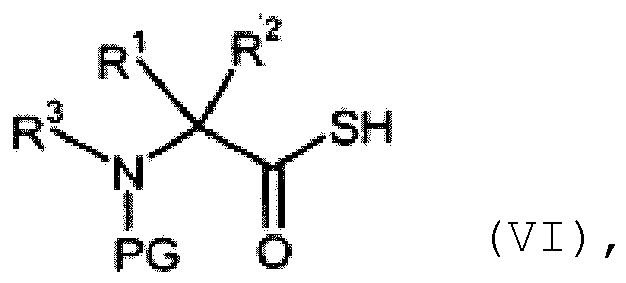 PG représente un groupe protecteur de fonction amino, comme par exemple le groupe tert-butoxycarbonyle (Boc) ou benzyloxycarbonyle (Z), pour obtenir un composé de formule
PG a la signification indiquée dans la présente revendication, et ensuite on élimine selon des méthodes usuelles le groupe protecteur PG, pour obtenir un composé de formule [B] on fait réagir le composé (A) dans un solvant inerte, en présence d'une base, avec un composé de formule
pour obtenir un composé de formule ensuite on élimine selon des méthodes usuelles les groupes protecteurs pour obtenir un composé de formule
 dans laquelle R1, R2 et R3 ont la signification indiquée dans la revendication 1,AG représente le groupe hydroxy ou un atome d'halogène, de préférence de chlore ou de brome, ou forme conjointement avec le groupe carbonyle un ester actif, de préférence un ester de N-hydroxy-succinimide, ou un anhydride mixte, de préférence un carbonate d'alkyle, de façon particulièrement préférée un carbonate d'éthyle, etPG représente un groupe protecteur de fonction amino, comme par exemple le groupe tert-butoxycarbonyle (Boc) ou benzyloxycarbonyle (Z),pour obtenir un composé de formule
 dans laquelle n, R1, R2 et R3 ont la signification indiquée dans la revendication 1 etPG a la signification indiquée dans la présente revendication,et ensuite on élimine selon des méthodes usuelles le groupe protecteur PG, pour obtenir un composé de formule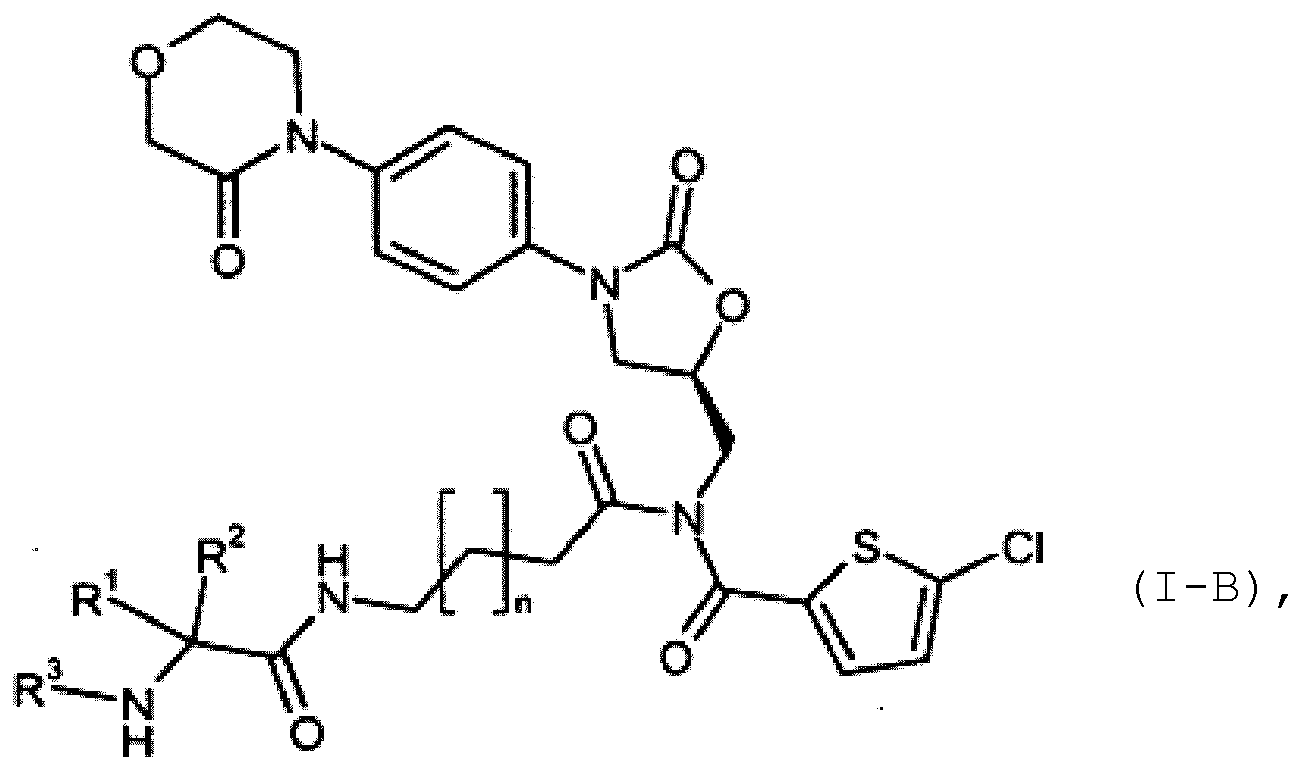
et on convertit les composés de formule (I-A) ou (I-B) qui respectivement en résultent, éventuellement avec (i) les solvants et/ou (ii) les acides correspondants, en leurs produits de solvatation, sels, et/ou produits de solvatation des sels. - Composé de formule (I), tel que défini dans l'une quelconque des revendications 1 à 3, pour le traitement et/ou la prophylaxie de maladies.
- Utilisation d'un composé de formule (I), tel que défini dans l'une quelconque des revendications 1 à 3, pour la fabrication d'un médicament destiné au traitement et/ou à la prophylaxie de maladies thromboemboliques.
- Médicament contenant un composé de formule (I), tel que défini dans l'une quelconque des revendications 1 à 3, éventuellement en association avec un adjuvant inerte, non toxique, pharmaceutiquement approprié.
- Médicament contenant un composé de formule (I), tel que défini dans l'une quelconque des revendications 1 à 3, en association avec une autre substance active.
- Médicament selon la revendication 7 ou 8, destiné au traitement ou à la prophylaxie de maladies thromboemboliques.
- Médicament selon l'une quelconque des revendications 7 à 9, destiné à l'administration par voie intraveineuse.
Applications Claiming Priority (2)
| Application Number | Priority Date | Filing Date | Title |
|---|---|---|---|
| DE102006039589A DE102006039589A1 (de) | 2006-08-24 | 2006-08-24 | Aminoacyl-Prodrugs II |
| PCT/EP2007/007408 WO2008022786A1 (fr) | 2006-08-24 | 2007-08-23 | Dérivé promédicament aminoacylé et médicament pour le traitement de maladies thromboemboliques |
Publications (2)
| Publication Number | Publication Date |
|---|---|
| EP2084154A1 EP2084154A1 (fr) | 2009-08-05 |
| EP2084154B1 true EP2084154B1 (fr) | 2012-11-21 |
Family
ID=38694946
Family Applications (1)
| Application Number | Title | Priority Date | Filing Date |
|---|---|---|---|
| EP07801837A Active EP2084154B1 (fr) | 2006-08-24 | 2007-08-23 | Dérivé promédicament aminoacylé et médicament pour le traitement de maladies thromboemboliques |
Country Status (15)
| Country | Link |
|---|---|
| US (1) | US8362015B2 (fr) |
| EP (1) | EP2084154B1 (fr) |
| JP (1) | JP5352461B2 (fr) |
| KR (1) | KR20090057266A (fr) |
| CN (1) | CN101547921B (fr) |
| AU (1) | AU2007287749B2 (fr) |
| BR (1) | BRPI0715741A2 (fr) |
| CA (1) | CA2661414C (fr) |
| DE (1) | DE102006039589A1 (fr) |
| ES (1) | ES2399069T3 (fr) |
| IL (1) | IL197079A0 (fr) |
| MX (1) | MX2009001977A (fr) |
| RU (1) | RU2456283C9 (fr) |
| WO (1) | WO2008022786A1 (fr) |
| ZA (1) | ZA200901189B (fr) |
Families Citing this family (7)
| Publication number | Priority date | Publication date | Assignee | Title |
|---|---|---|---|---|
| DE102006007146A1 (de) * | 2006-02-16 | 2007-08-23 | Bayer Healthcare Ag | Aminoacyl-Prodrugs |
| DE102007028407A1 (de) * | 2007-06-20 | 2008-12-24 | Bayer Healthcare Ag | Substituierte Oxazolidinone und ihre Verwendung |
| DE102007028319A1 (de) * | 2007-06-20 | 2008-12-24 | Bayer Healthcare Ag | Substituierte Oxazolidinone und ihre Verwendung |
| US7816355B1 (en) | 2009-04-28 | 2010-10-19 | Apotex Pharmachem Inc | Processes for the preparation of rivaroxaban and intermediates thereof |
| DE102010028362A1 (de) | 2010-04-29 | 2011-11-03 | Bayer Schering Pharma Aktiengesellschaft | Herstellverfahren |
| CA2815063C (fr) * | 2010-10-18 | 2016-11-22 | Apotex Pharmachem Inc. | Procedes de preparation de rivaroxaban et ses intermediaires |
| WO2014102822A2 (fr) * | 2012-12-26 | 2014-07-03 | Wanbury Ltd. | Dérivé aldéhyde d'oxalidinones substituées |
Family Cites Families (19)
| Publication number | Priority date | Publication date | Assignee | Title |
|---|---|---|---|---|
| US7425541B2 (en) * | 1998-12-11 | 2008-09-16 | Medarex, Inc. | Enzyme-cleavable prodrug compounds |
| DK1196414T3 (da) * | 1999-06-25 | 2003-11-24 | Vertex Pharma | Prolægemiddel af carbamathæmmer for IMPDH |
| DE19962924A1 (de) * | 1999-12-24 | 2001-07-05 | Bayer Ag | Substituierte Oxazolidinone und ihre Verwendung |
| TW591024B (en) * | 2000-03-27 | 2004-06-11 | Sankyo Lifetech Company Ltd | An amide type triazole compound having antifungal activity |
| DE10129725A1 (de) * | 2001-06-20 | 2003-01-02 | Bayer Ag | Kombinationstherapie substituierter Oxazolidinone |
| US7049443B2 (en) | 2001-07-12 | 2006-05-23 | Pharmacia & Upjohn Company | Amide-containing compound having improved solubility and method of improving the solubility of an amide-containing compound |
| JP3630326B2 (ja) * | 2002-08-22 | 2005-03-16 | 三共株式会社 | 水溶性トリアゾール医薬組成物 |
| US7265140B2 (en) * | 2003-09-23 | 2007-09-04 | Pfizer Inc | Acyloxymethylcarbamate prodrugs of oxazolidinones |
| DE10355461A1 (de) * | 2003-11-27 | 2005-06-23 | Bayer Healthcare Ag | Verfahren zur Herstellung einer festen, oral applizierbaren pharmazeutischen Zusammensetzung |
| DE102004002044A1 (de) * | 2004-01-15 | 2005-08-04 | Bayer Healthcare Ag | Herstellverfahren |
| JP5020073B2 (ja) * | 2004-06-18 | 2012-09-05 | ミレニアム ファーマシューティカルズ インク. | 第Xa因子阻害剤 |
| WO2006017351A1 (fr) * | 2004-07-12 | 2006-02-16 | Xenoport, Inc. | Promédicaments de propofol, leurs compositions et leur utilisation |
| DE102004062475A1 (de) * | 2004-12-24 | 2006-07-06 | Bayer Healthcare Ag | Feste, oral applizierbare pharmazeutische Darreichungsformen mit modifizierter Freisetzung |
| DE102005047558A1 (de) * | 2005-10-04 | 2008-02-07 | Bayer Healthcare Ag | Kombinationstherapie substituierter Oxazolidinone zur Prophylaxe und Behandlung von cerebralen Durchblutungsstörungen |
| DE102006007146A1 (de) * | 2006-02-16 | 2007-08-23 | Bayer Healthcare Ag | Aminoacyl-Prodrugs |
| DE102006025314A1 (de) * | 2006-05-31 | 2007-12-06 | Bayer Healthcare Ag | Arylsubstituierte Heterozyklen und ihre Verwendung |
| DE102007028406A1 (de) * | 2007-06-20 | 2008-12-24 | Bayer Healthcare Ag | Substituierte Oxazolidinone und ihre Verwendung |
| DE102007028407A1 (de) * | 2007-06-20 | 2008-12-24 | Bayer Healthcare Ag | Substituierte Oxazolidinone und ihre Verwendung |
| DE102007028319A1 (de) * | 2007-06-20 | 2008-12-24 | Bayer Healthcare Ag | Substituierte Oxazolidinone und ihre Verwendung |
-
2006
- 2006-08-24 DE DE102006039589A patent/DE102006039589A1/de not_active Withdrawn
-
2007
- 2007-08-23 MX MX2009001977A patent/MX2009001977A/es active IP Right Grant
- 2007-08-23 BR BRPI0715741-0A patent/BRPI0715741A2/pt not_active IP Right Cessation
- 2007-08-23 US US12/438,097 patent/US8362015B2/en not_active Expired - Fee Related
- 2007-08-23 CN CN200780039838.XA patent/CN101547921B/zh not_active Expired - Fee Related
- 2007-08-23 WO PCT/EP2007/007408 patent/WO2008022786A1/fr not_active Ceased
- 2007-08-23 RU RU2009110246/04A patent/RU2456283C9/ru not_active IP Right Cessation
- 2007-08-23 EP EP07801837A patent/EP2084154B1/fr active Active
- 2007-08-23 AU AU2007287749A patent/AU2007287749B2/en not_active Expired - Fee Related
- 2007-08-23 KR KR1020097005866A patent/KR20090057266A/ko not_active Ceased
- 2007-08-23 ES ES07801837T patent/ES2399069T3/es active Active
- 2007-08-23 JP JP2009524961A patent/JP5352461B2/ja not_active Expired - Fee Related
- 2007-08-23 CA CA2661414A patent/CA2661414C/fr not_active Expired - Fee Related
-
2009
- 2009-02-17 IL IL197079A patent/IL197079A0/en unknown
- 2009-02-19 ZA ZA200901189A patent/ZA200901189B/xx unknown
Also Published As
| Publication number | Publication date |
|---|---|
| RU2456283C2 (ru) | 2012-07-20 |
| WO2008022786A1 (fr) | 2008-02-28 |
| JP5352461B2 (ja) | 2013-11-27 |
| ZA200901189B (en) | 2010-04-28 |
| JP2010501504A (ja) | 2010-01-21 |
| US8362015B2 (en) | 2013-01-29 |
| DE102006039589A1 (de) | 2008-03-06 |
| CN101547921B (zh) | 2015-01-07 |
| AU2007287749A1 (en) | 2008-02-28 |
| ES2399069T3 (es) | 2013-03-25 |
| US20100292230A1 (en) | 2010-11-18 |
| IL197079A0 (en) | 2009-11-18 |
| BRPI0715741A2 (pt) | 2013-07-16 |
| MX2009001977A (es) | 2009-05-21 |
| EP2084154A1 (fr) | 2009-08-05 |
| AU2007287749B2 (en) | 2013-09-12 |
| RU2456283C9 (ru) | 2013-05-10 |
| CA2661414C (fr) | 2015-04-28 |
| CA2661414A1 (fr) | 2008-02-28 |
| CN101547921A (zh) | 2009-09-30 |
| HK1137987A1 (en) | 2010-08-13 |
| RU2009110246A (ru) | 2010-09-27 |
| KR20090057266A (ko) | 2009-06-04 |
Similar Documents
| Publication | Publication Date | Title |
|---|---|---|
| EP1987026B1 (fr) | Dérivés promédicamenteux aminoacyles et médicaments destinés au traitement de maladies thromboemboliques | |
| DE102007036076A1 (de) | Dipeptoid-Produgs und ihre Verwendung | |
| DE102007036075A1 (de) | Prodrugs und ihre Verwendung | |
| EP1626969A1 (fr) | Composes heterocycliques | |
| EP1928867B1 (fr) | Dérivés d'acide 2-aminoéthoxyacétique et utilisation pour le traitement de maladies thromboemboliques | |
| EP2084154A1 (fr) | Dérivé promédicament aminoacylé et médicament pour le traitement de maladies thromboemboliques | |
| EP2029546B1 (fr) | Hétérocycles substitués par un aryle et leur utilisation | |
| EP2209776A1 (fr) | Prodrogues à base d'aminoacyle en tant que principe actif pharmaceutique pour le traitement d'affections thromboemboliques | |
| EP2167500A1 (fr) | Prodrogues à base d'aminoacyle en tant que principe actif pharmaceutique pour le traitement d'affections thromboemboliques | |
| WO2009007028A1 (fr) | Dérivés promédicaments de 1-(4-méthoxyphényl)-7-oxo-6-[4-(2-oxopipéridin-1-yl)phényl]-4,5,6,7-tétrahydro-1h-pyrazolo[3,4-c]pyridine-3-carboxamide | |
| DE102004058062A1 (de) | Cyclische Iminocarbamate und ihre Verwendung | |
| EP1824844B1 (fr) | Amides d'acide dicarboxylique de pyrazine et leur utilisation | |
| EP1945634B1 (fr) | Derives de phenylene-bis-oxazolidine et leur utilisation en tant qu anticoagulant | |
| EP2032567A1 (fr) | Hétérocycles substitués et son utilisation | |
| HK1137987B (en) | Aminoacyl prodrug derivatives and medicaments for treatment of thromboembolic disorders |
Legal Events
| Date | Code | Title | Description |
|---|---|---|---|
| PUAI | Public reference made under article 153(3) epc to a published international application that has entered the european phase |
Free format text: ORIGINAL CODE: 0009012 |
|
| 17P | Request for examination filed |
Effective date: 20090324 |
|
| AK | Designated contracting states |
Kind code of ref document: A1 Designated state(s): AT BE BG CH CY CZ DE DK EE ES FI FR GB GR HU IE IS IT LI LT LU LV MC MT NL PL PT RO SE SI SK TR |
|
| AX | Request for extension of the european patent |
Extension state: AL BA HR MK RS |
|
| 17Q | First examination report despatched |
Effective date: 20100624 |
|
| RAP1 | Party data changed (applicant data changed or rights of an application transferred) |
Owner name: BAYER PHARMA AKTIENGESELLSCHAFT |
|
| GRAP | Despatch of communication of intention to grant a patent |
Free format text: ORIGINAL CODE: EPIDOSNIGR1 |
|
| RAP1 | Party data changed (applicant data changed or rights of an application transferred) |
Owner name: BAYER INTELLECTUAL PROPERTY GMBH |
|
| GRAS | Grant fee paid |
Free format text: ORIGINAL CODE: EPIDOSNIGR3 |
|
| GRAA | (expected) grant |
Free format text: ORIGINAL CODE: 0009210 |
|
| AK | Designated contracting states |
Kind code of ref document: B1 Designated state(s): AT BE BG CH CY CZ DE DK EE ES FI FR GB GR HU IE IS IT LI LT LU LV MC MT NL PL PT RO SE SI SK TR |
|
| AX | Request for extension of the european patent |
Extension state: AL BA HR MK RS |
|
| REG | Reference to a national code |
Ref country code: GB Ref legal event code: FG4D Free format text: NOT ENGLISH |
|
| REG | Reference to a national code |
Ref country code: CH Ref legal event code: EP |
|
| REG | Reference to a national code |
Ref country code: AT Ref legal event code: REF Ref document number: 585021 Country of ref document: AT Kind code of ref document: T Effective date: 20121215 |
|
| REG | Reference to a national code |
Ref country code: IE Ref legal event code: FG4D Free format text: LANGUAGE OF EP DOCUMENT: GERMAN |
|
| REG | Reference to a national code |
Ref country code: DE Ref legal event code: R096 Ref document number: 502007010920 Country of ref document: DE Effective date: 20130117 |
|
| REG | Reference to a national code |
Ref country code: ES Ref legal event code: FG2A Ref document number: 2399069 Country of ref document: ES Kind code of ref document: T3 Effective date: 20130325 |
|
| REG | Reference to a national code |
Ref country code: NL Ref legal event code: VDEP Effective date: 20121121 |
|
| REG | Reference to a national code |
Ref country code: LT Ref legal event code: MG4D |
|
| PG25 | Lapsed in a contracting state [announced via postgrant information from national office to epo] |
Ref country code: LT Free format text: LAPSE BECAUSE OF FAILURE TO SUBMIT A TRANSLATION OF THE DESCRIPTION OR TO PAY THE FEE WITHIN THE PRESCRIBED TIME-LIMIT Effective date: 20121121 Ref country code: FI Free format text: LAPSE BECAUSE OF FAILURE TO SUBMIT A TRANSLATION OF THE DESCRIPTION OR TO PAY THE FEE WITHIN THE PRESCRIBED TIME-LIMIT Effective date: 20121121 Ref country code: SE Free format text: LAPSE BECAUSE OF FAILURE TO SUBMIT A TRANSLATION OF THE DESCRIPTION OR TO PAY THE FEE WITHIN THE PRESCRIBED TIME-LIMIT Effective date: 20121121 |
|
| PG25 | Lapsed in a contracting state [announced via postgrant information from national office to epo] |
Ref country code: GR Free format text: LAPSE BECAUSE OF FAILURE TO SUBMIT A TRANSLATION OF THE DESCRIPTION OR TO PAY THE FEE WITHIN THE PRESCRIBED TIME-LIMIT Effective date: 20130222 Ref country code: SI Free format text: LAPSE BECAUSE OF FAILURE TO SUBMIT A TRANSLATION OF THE DESCRIPTION OR TO PAY THE FEE WITHIN THE PRESCRIBED TIME-LIMIT Effective date: 20121121 Ref country code: PL Free format text: LAPSE BECAUSE OF FAILURE TO SUBMIT A TRANSLATION OF THE DESCRIPTION OR TO PAY THE FEE WITHIN THE PRESCRIBED TIME-LIMIT Effective date: 20121121 Ref country code: PT Free format text: LAPSE BECAUSE OF FAILURE TO SUBMIT A TRANSLATION OF THE DESCRIPTION OR TO PAY THE FEE WITHIN THE PRESCRIBED TIME-LIMIT Effective date: 20130321 Ref country code: LV Free format text: LAPSE BECAUSE OF FAILURE TO SUBMIT A TRANSLATION OF THE DESCRIPTION OR TO PAY THE FEE WITHIN THE PRESCRIBED TIME-LIMIT Effective date: 20121121 |
|
| PG25 | Lapsed in a contracting state [announced via postgrant information from national office to epo] |
Ref country code: BG Free format text: LAPSE BECAUSE OF FAILURE TO SUBMIT A TRANSLATION OF THE DESCRIPTION OR TO PAY THE FEE WITHIN THE PRESCRIBED TIME-LIMIT Effective date: 20130221 Ref country code: CZ Free format text: LAPSE BECAUSE OF FAILURE TO SUBMIT A TRANSLATION OF THE DESCRIPTION OR TO PAY THE FEE WITHIN THE PRESCRIBED TIME-LIMIT Effective date: 20121121 Ref country code: DK Free format text: LAPSE BECAUSE OF FAILURE TO SUBMIT A TRANSLATION OF THE DESCRIPTION OR TO PAY THE FEE WITHIN THE PRESCRIBED TIME-LIMIT Effective date: 20121121 Ref country code: EE Free format text: LAPSE BECAUSE OF FAILURE TO SUBMIT A TRANSLATION OF THE DESCRIPTION OR TO PAY THE FEE WITHIN THE PRESCRIBED TIME-LIMIT Effective date: 20121121 Ref country code: SK Free format text: LAPSE BECAUSE OF FAILURE TO SUBMIT A TRANSLATION OF THE DESCRIPTION OR TO PAY THE FEE WITHIN THE PRESCRIBED TIME-LIMIT Effective date: 20121121 |
|
| PG25 | Lapsed in a contracting state [announced via postgrant information from national office to epo] |
Ref country code: RO Free format text: LAPSE BECAUSE OF FAILURE TO SUBMIT A TRANSLATION OF THE DESCRIPTION OR TO PAY THE FEE WITHIN THE PRESCRIBED TIME-LIMIT Effective date: 20121121 Ref country code: NL Free format text: LAPSE BECAUSE OF FAILURE TO SUBMIT A TRANSLATION OF THE DESCRIPTION OR TO PAY THE FEE WITHIN THE PRESCRIBED TIME-LIMIT Effective date: 20121121 |
|
| PLBE | No opposition filed within time limit |
Free format text: ORIGINAL CODE: 0009261 |
|
| STAA | Information on the status of an ep patent application or granted ep patent |
Free format text: STATUS: NO OPPOSITION FILED WITHIN TIME LIMIT |
|
| 26N | No opposition filed |
Effective date: 20130822 |
|
| REG | Reference to a national code |
Ref country code: DE Ref legal event code: R097 Ref document number: 502007010920 Country of ref document: DE Effective date: 20130822 |
|
| BERE | Be: lapsed |
Owner name: BAYER INTELLECTUAL PROPERTY G.M.B.H. Effective date: 20130831 |
|
| REG | Reference to a national code |
Ref country code: CH Ref legal event code: PL |
|
| PG25 | Lapsed in a contracting state [announced via postgrant information from national office to epo] |
Ref country code: MC Free format text: LAPSE BECAUSE OF FAILURE TO SUBMIT A TRANSLATION OF THE DESCRIPTION OR TO PAY THE FEE WITHIN THE PRESCRIBED TIME-LIMIT Effective date: 20121121 Ref country code: CH Free format text: LAPSE BECAUSE OF NON-PAYMENT OF DUE FEES Effective date: 20130831 Ref country code: LI Free format text: LAPSE BECAUSE OF NON-PAYMENT OF DUE FEES Effective date: 20130831 |
|
| REG | Reference to a national code |
Ref country code: IE Ref legal event code: MM4A |
|
| PG25 | Lapsed in a contracting state [announced via postgrant information from national office to epo] |
Ref country code: BE Free format text: LAPSE BECAUSE OF NON-PAYMENT OF DUE FEES Effective date: 20130831 |
|
| PG25 | Lapsed in a contracting state [announced via postgrant information from national office to epo] |
Ref country code: IE Free format text: LAPSE BECAUSE OF NON-PAYMENT OF DUE FEES Effective date: 20130823 |
|
| REG | Reference to a national code |
Ref country code: AT Ref legal event code: MM01 Ref document number: 585021 Country of ref document: AT Kind code of ref document: T Effective date: 20130823 |
|
| PG25 | Lapsed in a contracting state [announced via postgrant information from national office to epo] |
Ref country code: AT Free format text: LAPSE BECAUSE OF NON-PAYMENT OF DUE FEES Effective date: 20130823 |
|
| PG25 | Lapsed in a contracting state [announced via postgrant information from national office to epo] |
Ref country code: CY Free format text: LAPSE BECAUSE OF FAILURE TO SUBMIT A TRANSLATION OF THE DESCRIPTION OR TO PAY THE FEE WITHIN THE PRESCRIBED TIME-LIMIT Effective date: 20121121 Ref country code: MT Free format text: LAPSE BECAUSE OF FAILURE TO SUBMIT A TRANSLATION OF THE DESCRIPTION OR TO PAY THE FEE WITHIN THE PRESCRIBED TIME-LIMIT Effective date: 20121121 Ref country code: TR Free format text: LAPSE BECAUSE OF FAILURE TO SUBMIT A TRANSLATION OF THE DESCRIPTION OR TO PAY THE FEE WITHIN THE PRESCRIBED TIME-LIMIT Effective date: 20121121 |
|
| REG | Reference to a national code |
Ref country code: FR Ref legal event code: PLFP Year of fee payment: 9 |
|
| PG25 | Lapsed in a contracting state [announced via postgrant information from national office to epo] |
Ref country code: LU Free format text: LAPSE BECAUSE OF NON-PAYMENT OF DUE FEES Effective date: 20130823 Ref country code: HU Free format text: LAPSE BECAUSE OF FAILURE TO SUBMIT A TRANSLATION OF THE DESCRIPTION OR TO PAY THE FEE WITHIN THE PRESCRIBED TIME-LIMIT; INVALID AB INITIO Effective date: 20070823 |
|
| PG25 | Lapsed in a contracting state [announced via postgrant information from national office to epo] |
Ref country code: IS Free format text: LAPSE BECAUSE OF FAILURE TO SUBMIT A TRANSLATION OF THE DESCRIPTION OR TO PAY THE FEE WITHIN THE PRESCRIBED TIME-LIMIT Effective date: 20121121 |
|
| REG | Reference to a national code |
Ref country code: FR Ref legal event code: PLFP Year of fee payment: 10 |
|
| PGFP | Annual fee paid to national office [announced via postgrant information from national office to epo] |
Ref country code: IT Payment date: 20160822 Year of fee payment: 10 Ref country code: GB Payment date: 20160817 Year of fee payment: 10 Ref country code: DE Payment date: 20160816 Year of fee payment: 10 |
|
| PGFP | Annual fee paid to national office [announced via postgrant information from national office to epo] |
Ref country code: FR Payment date: 20160729 Year of fee payment: 10 |
|
| PGFP | Annual fee paid to national office [announced via postgrant information from national office to epo] |
Ref country code: ES Payment date: 20160728 Year of fee payment: 10 |
|
| REG | Reference to a national code |
Ref country code: DE Ref legal event code: R119 Ref document number: 502007010920 Country of ref document: DE |
|
| GBPC | Gb: european patent ceased through non-payment of renewal fee |
Effective date: 20170823 |
|
| REG | Reference to a national code |
Ref country code: FR Ref legal event code: ST Effective date: 20180430 |
|
| PG25 | Lapsed in a contracting state [announced via postgrant information from national office to epo] |
Ref country code: GB Free format text: LAPSE BECAUSE OF NON-PAYMENT OF DUE FEES Effective date: 20170823 Ref country code: DE Free format text: LAPSE BECAUSE OF NON-PAYMENT OF DUE FEES Effective date: 20180301 |
|
| PG25 | Lapsed in a contracting state [announced via postgrant information from national office to epo] |
Ref country code: IT Free format text: LAPSE BECAUSE OF NON-PAYMENT OF DUE FEES Effective date: 20170823 Ref country code: FR Free format text: LAPSE BECAUSE OF NON-PAYMENT OF DUE FEES Effective date: 20170831 |
|
| REG | Reference to a national code |
Ref country code: ES Ref legal event code: FD2A Effective date: 20181029 |
|
| PG25 | Lapsed in a contracting state [announced via postgrant information from national office to epo] |
Ref country code: ES Free format text: LAPSE BECAUSE OF NON-PAYMENT OF DUE FEES Effective date: 20170824 |