EP2084166B1 - Herstellungsverfahren von aromatischen sulfonylimiden - Google Patents
Herstellungsverfahren von aromatischen sulfonylimiden Download PDFInfo
- Publication number
- EP2084166B1 EP2084166B1 EP07823292.3A EP07823292A EP2084166B1 EP 2084166 B1 EP2084166 B1 EP 2084166B1 EP 07823292 A EP07823292 A EP 07823292A EP 2084166 B1 EP2084166 B1 EP 2084166B1
- Authority
- EP
- European Patent Office
- Prior art keywords
- group
- groups
- mhz
- cdcl
- compound
- Prior art date
- Legal status (The legal status is an assumption and is not a legal conclusion. Google has not performed a legal analysis and makes no representation as to the accuracy of the status listed.)
- Not-in-force
Links
Images
Classifications
-
- C—CHEMISTRY; METALLURGY
- C07—ORGANIC CHEMISTRY
- C07C—ACYCLIC OR CARBOCYCLIC COMPOUNDS
- C07C323/00—Thiols, sulfides, hydropolysulfides or polysulfides substituted by halogen, oxygen or nitrogen atoms, or by sulfur atoms not being part of thio groups
- C07C323/64—Thiols, sulfides, hydropolysulfides or polysulfides substituted by halogen, oxygen or nitrogen atoms, or by sulfur atoms not being part of thio groups containing thio groups and sulfur atoms, not being part of thio groups, bound to the same carbon skeleton
- C07C323/67—Thiols, sulfides, hydropolysulfides or polysulfides substituted by halogen, oxygen or nitrogen atoms, or by sulfur atoms not being part of thio groups containing thio groups and sulfur atoms, not being part of thio groups, bound to the same carbon skeleton containing sulfur atoms of sulfonamide groups, bound to the carbon skeleton
-
- C—CHEMISTRY; METALLURGY
- C07—ORGANIC CHEMISTRY
- C07C—ACYCLIC OR CARBOCYCLIC COMPOUNDS
- C07C317/00—Sulfones; Sulfoxides
- C07C317/14—Sulfones; Sulfoxides having sulfone or sulfoxide groups bound to carbon atoms of six-membered aromatic rings
-
- C—CHEMISTRY; METALLURGY
- C07—ORGANIC CHEMISTRY
- C07F—ACYCLIC, CARBOCYCLIC OR HETEROCYCLIC COMPOUNDS CONTAINING ELEMENTS OTHER THAN CARBON, HYDROGEN, HALOGEN, OXYGEN, NITROGEN, SULFUR, SELENIUM OR TELLURIUM
- C07F7/00—Compounds containing elements of Groups 4 or 14 of the Periodic Table
- C07F7/02—Silicon compounds
- C07F7/08—Compounds having one or more C—Si linkages
- C07F7/0803—Compounds with Si-C or Si-Si linkages
- C07F7/081—Compounds with Si-C or Si-Si linkages comprising at least one atom selected from the elements N, O, halogen, S, Se or Te
-
- H—ELECTRICITY
- H01—ELECTRIC ELEMENTS
- H01G—CAPACITORS; CAPACITORS, RECTIFIERS, DETECTORS, SWITCHING DEVICES, LIGHT-SENSITIVE OR TEMPERATURE-SENSITIVE DEVICES OF THE ELECTROLYTIC TYPE
- H01G11/00—Hybrid capacitors, i.e. capacitors having different positive and negative electrodes; Electric double-layer [EDL] capacitors; Processes for the manufacture thereof or of parts thereof
- H01G11/54—Electrolytes
- H01G11/58—Liquid electrolytes
- H01G11/62—Liquid electrolytes characterised by the solute, e.g. salts, anions or cations therein
-
- H—ELECTRICITY
- H01—ELECTRIC ELEMENTS
- H01M—PROCESSES OR MEANS, e.g. BATTERIES, FOR THE DIRECT CONVERSION OF CHEMICAL ENERGY INTO ELECTRICAL ENERGY
- H01M10/00—Secondary cells; Manufacture thereof
- H01M10/05—Accumulators with non-aqueous electrolyte
- H01M10/052—Li-accumulators
- H01M10/0525—Rocking-chair batteries, i.e. batteries with lithium insertion or intercalation in both electrodes; Lithium-ion batteries
-
- H—ELECTRICITY
- H01—ELECTRIC ELEMENTS
- H01M—PROCESSES OR MEANS, e.g. BATTERIES, FOR THE DIRECT CONVERSION OF CHEMICAL ENERGY INTO ELECTRICAL ENERGY
- H01M10/00—Secondary cells; Manufacture thereof
- H01M10/05—Accumulators with non-aqueous electrolyte
- H01M10/056—Accumulators with non-aqueous electrolyte characterised by the materials used as electrolytes, e.g. mixed inorganic/organic electrolytes
- H01M10/0564—Accumulators with non-aqueous electrolyte characterised by the materials used as electrolytes, e.g. mixed inorganic/organic electrolytes the electrolyte being constituted of organic materials only
- H01M10/0565—Polymeric materials, e.g. gel-type or solid-type
-
- H—ELECTRICITY
- H01—ELECTRIC ELEMENTS
- H01M—PROCESSES OR MEANS, e.g. BATTERIES, FOR THE DIRECT CONVERSION OF CHEMICAL ENERGY INTO ELECTRICAL ENERGY
- H01M10/00—Secondary cells; Manufacture thereof
- H01M10/05—Accumulators with non-aqueous electrolyte
- H01M10/056—Accumulators with non-aqueous electrolyte characterised by the materials used as electrolytes, e.g. mixed inorganic/organic electrolytes
- H01M10/0564—Accumulators with non-aqueous electrolyte characterised by the materials used as electrolytes, e.g. mixed inorganic/organic electrolytes the electrolyte being constituted of organic materials only
- H01M10/0566—Liquid materials
-
- H—ELECTRICITY
- H01—ELECTRIC ELEMENTS
- H01M—PROCESSES OR MEANS, e.g. BATTERIES, FOR THE DIRECT CONVERSION OF CHEMICAL ENERGY INTO ELECTRICAL ENERGY
- H01M6/00—Primary cells; Manufacture thereof
- H01M6/14—Cells with non-aqueous electrolyte
- H01M6/16—Cells with non-aqueous electrolyte with organic electrolyte
- H01M6/162—Cells with non-aqueous electrolyte with organic electrolyte characterised by the electrolyte
- H01M6/166—Cells with non-aqueous electrolyte with organic electrolyte characterised by the electrolyte by the solute
-
- H—ELECTRICITY
- H01—ELECTRIC ELEMENTS
- H01M—PROCESSES OR MEANS, e.g. BATTERIES, FOR THE DIRECT CONVERSION OF CHEMICAL ENERGY INTO ELECTRICAL ENERGY
- H01M6/00—Primary cells; Manufacture thereof
- H01M6/14—Cells with non-aqueous electrolyte
- H01M6/18—Cells with non-aqueous electrolyte with solid electrolyte
- H01M6/181—Cells with non-aqueous electrolyte with solid electrolyte with polymeric electrolytes
-
- H—ELECTRICITY
- H01—ELECTRIC ELEMENTS
- H01M—PROCESSES OR MEANS, e.g. BATTERIES, FOR THE DIRECT CONVERSION OF CHEMICAL ENERGY INTO ELECTRICAL ENERGY
- H01M6/00—Primary cells; Manufacture thereof
- H01M6/14—Cells with non-aqueous electrolyte
- H01M6/18—Cells with non-aqueous electrolyte with solid electrolyte
- H01M6/182—Cells with non-aqueous electrolyte with solid electrolyte with halogenide as solid electrolyte
- H01M6/183—Cells with non-aqueous electrolyte with solid electrolyte with halogenide as solid electrolyte with fluoride as solid electrolyte
-
- H—ELECTRICITY
- H01—ELECTRIC ELEMENTS
- H01M—PROCESSES OR MEANS, e.g. BATTERIES, FOR THE DIRECT CONVERSION OF CHEMICAL ENERGY INTO ELECTRICAL ENERGY
- H01M6/00—Primary cells; Manufacture thereof
- H01M6/14—Cells with non-aqueous electrolyte
- H01M6/18—Cells with non-aqueous electrolyte with solid electrolyte
- H01M6/188—Processes of manufacture
-
- H—ELECTRICITY
- H01—ELECTRIC ELEMENTS
- H01M—PROCESSES OR MEANS, e.g. BATTERIES, FOR THE DIRECT CONVERSION OF CHEMICAL ENERGY INTO ELECTRICAL ENERGY
- H01M6/00—Primary cells; Manufacture thereof
- H01M6/04—Cells with aqueous electrolyte
- H01M6/06—Dry cells, i.e. cells wherein the electrolyte is rendered non-fluid
-
- Y—GENERAL TAGGING OF NEW TECHNOLOGICAL DEVELOPMENTS; GENERAL TAGGING OF CROSS-SECTIONAL TECHNOLOGIES SPANNING OVER SEVERAL SECTIONS OF THE IPC; TECHNICAL SUBJECTS COVERED BY FORMER USPC CROSS-REFERENCE ART COLLECTIONS [XRACs] AND DIGESTS
- Y02—TECHNOLOGIES OR APPLICATIONS FOR MITIGATION OR ADAPTATION AGAINST CLIMATE CHANGE
- Y02E—REDUCTION OF GREENHOUSE GAS [GHG] EMISSIONS, RELATED TO ENERGY GENERATION, TRANSMISSION OR DISTRIBUTION
- Y02E60/00—Enabling technologies; Technologies with a potential or indirect contribution to GHG emissions mitigation
- Y02E60/10—Energy storage using batteries
-
- Y—GENERAL TAGGING OF NEW TECHNOLOGICAL DEVELOPMENTS; GENERAL TAGGING OF CROSS-SECTIONAL TECHNOLOGIES SPANNING OVER SEVERAL SECTIONS OF THE IPC; TECHNICAL SUBJECTS COVERED BY FORMER USPC CROSS-REFERENCE ART COLLECTIONS [XRACs] AND DIGESTS
- Y02—TECHNOLOGIES OR APPLICATIONS FOR MITIGATION OR ADAPTATION AGAINST CLIMATE CHANGE
- Y02E—REDUCTION OF GREENHOUSE GAS [GHG] EMISSIONS, RELATED TO ENERGY GENERATION, TRANSMISSION OR DISTRIBUTION
- Y02E60/00—Enabling technologies; Technologies with a potential or indirect contribution to GHG emissions mitigation
- Y02E60/13—Energy storage using capacitors
Definitions
- the present invention relates to a process for preparing sulfonylimides.
- lithium bis (fluorosulfonyl) imides as salts for the electrolyte in various electrochemical devices, particularly in batteries.
- the most representative compounds are compounds of the type (R F SO 2 ) 2 NM in which R F is a perfluoroalkyl group and M is an alkali metal cation or an organic cation. These compounds have relatively good but insufficient properties.
- the object of the present invention is to propose a new process for preparing functionalized sulfonylimides.
- the present invention relates to a process for preparing the sulfonylimide.
- the compound (II) is obtained by reaction of the compound R-SO 2 F with a salt of hexamethyldisilazane (Me 3 Si) 2 N - A + (A being an alkali metal cation or a quaternary ammonium ion) and it corresponds to formula (IIa).
- the reaction releases the AF fluoride which immediately generates the nucleophilic substitution on the compound II with replacement of the trimethylsilyl group by the cation A + , with production of the symmetrical sulfonimide [(Ar-ZL-SO 2 ) N] 2 A.
- the compound (II) When R 'is a perfluoroalkyl group, the compound (II) has the formula RSO 2 N (R ") SO 2 R" (IIb), R "being a benzyl group or an allyl group, and is obtained by the intermediate of a compound RSO 2 NH (R ") (II'b).
- the process for the preparation of the compound (IIb) comprises the preparation of the compound (II'b) by reaction of R-SO 2 F (III) with the excess benzylamine or allylamine, and then the neutralization with HCl and the isolation of (II'b), then the reaction of the compound (II'b) with the anhydride (R'SO 2 ) 2 O, in the presence of a tertiary amine, for example diisopropylethylamine (DIEA).
- DIEA diisopropylethylamine
- the reaction can be carried out in dichloroethane.
- the overall process can be represented by the following reaction scheme:
- the reagents used are hygroscopic and bad nucleophilic reagents.
- a hydrolysis reaction is in competition with the sulfonylimide formation reaction with sulfonate formation, which is very difficult to eliminate.
- the process of the present invention which combines a preliminary coupling reaction of a sulfonyl fluoride with benzylamine (which is a better nucleophile than R f SO 2 NH 2 ), allows a much greater selectivity than the conventional coupling with R f SO 2 NH 2 .
- the hydrolysis reaction which produces the benzylammonium sulphonate becomes a minority under these conditions, and the reaction largely in the majority corresponds to the following reaction scheme:
- N-benzylsulfonamides is much easier than that of sulfonylimides.
- transformations formation of N-benzylsulfonimide, then deprotection in alcohol
- by-products generated are very easily eliminated.
- organic cations include dialkylammonium and trialkylammonium cations, for example (C 2 H 5 ) 2 NH 2 +, (C 2 H 5 ) 3 NH + , (C 4 H 9 ) 2 NH 2 + and (C 4 H 9 ) 3 NH + .
- An aromatic group Ar can be part of a repeating unit of a polymer chain.
- a 2nd sulfonylimides family includes compounds that have the formula (I) wherein R 'is a perfluoroalkyl group C p F 2p + 1, where p is preferably 1 to 8, more particularly from 1 to 2, namely [Ar-ZL-SO 2 -N-SO 2 C p F 2p +1] r M (Ib).
- a 3rd sulfonylimides family includes compounds that have the formula (I) wherein L is 2 or CF (CF 2) 2, namely [Ar-Z- (CF 2) 2 -SO 2 -N-SO 2 R '] r M (Ic) and [Ar-Z-CF 2 -SO 2 -N-SO 2 R'] r M (Ic ').
- a 4th sulfonylimides family comprises the compounds (Id) corresponding to the formula (I) wherein Ar is part of a recurring unit of a polymer chain.
- a sixth family of sulfonylimides comprises the compounds in which the cation M is divalent, namely the compounds (If) (Ar-ZL-SO 2 N-SO 2 R ') - 2 M 2+ . Mention may in particular be made of calcium sulphonyl imides If Ca and magnesium If mg .
- N-benzyl sulphimides and the N-allylsulfimides obtained as intermediates correspond to the formula RSO 2 N (R ") SO 2 R '(II) in which R has the most general meaning given previously, R is a benzyl or allyl group, and R 'is a linear or branched perfluoroalkyl group, preferably a CF 3 or C 2 F 5 group .
- a sulfonyl fluoride (III) is obtained by a process comprising a step of preparing a sulfinate [Ar-Z- (CF 2 ) n -CFR f -SO 2 ] m M (IV), and a step of transforming the sulfinate in sulfonyl fluoride (III), Ar, Z and n having the above meaning, M being an alkali metal or ammonium cation.
- the methods for carrying out the sulfinate preparation step depend on the sulfinate targeted, and in particular on the nature of Z of the Ar-Z group that it contains.
- the 1st step is preferably carried out in THF, and the 2nd step preferably MeCN.
- a compound of the Ar-S- (CF 2 ) n -CFR f -Br type can be obtained by the reaction of the Ar-SH thiol with a Br- (CF 2 ) n -CFR f -Br dibromide using the excess dibromide. .
- a sulfonyl fluoride III may be obtained by reaction of the corresponding sulfinate IV with a fluorinating agent chosen from fluorine, xenon difluoride, potassium fluorosulfate, N-fluorobenzenesulfonimide, N-fluoropyridinium heptadiborate and N-trifluoromethanesulphonate.
- a fluorinating agent chosen from fluorine, xenon difluoride, potassium fluorosulfate, N-fluorobenzenesulfonimide, N-fluoropyridinium heptadiborate and N-trifluoromethanesulphonate.
- reaction can be carried out using sulfinate in solution in the solvent in which it was obtained, if said solvent is acetonitrile.
- the fluorinating agents used for the fluorination of sulfinate are commercially available products.
- 1-chloromethyl-4-fluoro-1,4-diazoniabicyclo [2,2,2] octane bis (tetrafluoroborate) (F-TEDA) having the formula is marketed under the name Selectfluor® by Air Products.
- the sulphonyl fluorides III SO and III SO2 can be obtained by oxidation of the corresponding fluoride I s .
- the oxidation is advantageously carried out using excess meta-chloroperbenzoic acid (m-CPBA), the amount of acid being chosen as a function of the degree of oxidation (IV) or (VI) that is wish to reach for the atom of S.
- m-CPBA meta-chloroperbenzoic acid
- the Ar 'group of an existing halide can be modified on the compound Ar' -S- (CF 2) n -CFR f -Si (CH 3 ) 3 (III), on sulfinate [Ar'-S- (CF 2) n -CFR f -SO 2 ] m M (II) or on fluoride sulfonyl Ar'-S- (CF 2 ) n -CFR f -SO 2 F (I)
- the sulfonylimides (I) obtained according to the method of the present invention can enter the composition of electrolytes used in various electrochemical devices.
- the sulfonylimides I Li are particularly useful as salts for the electrolyte of electrochemical devices such as non-rechargeable lithium cells, lithium polymer batteries, lithium-ion batteries, organic supercapacitors and electrochromic devices.
- the electrolyte may be a liquid electrolyte containing the salt Li in solution in a polar aprotic solvent.
- the aprotic liquid solvent used alone or as a mixture, is chosen for example from linear ethers and cyclic ethers, esters, nitriles, nitro derivatives, amides, sulfones, sulfolanes, alkylsulfamides, linear carbonates and cyclical.
- Particularly preferred solvents are diethyl ether, dimethoxyethane, glyme, tetrahydrofuran, dioxane, dimethyltetrahydrofuran, methyl or ethyl formate, propylene carbonate or ethylene carbonate, alkyl carbonates (especially dimethyl carbonate, diethyl carbonate and methylpropyl carbonate), butyrolactones, acetonitrile, benzonitrile, nitromethane, nitrobenzene, dimethylformamide, diethylformamide, N-methylpyrrolidone, dimethylsulfone, tetramethylene sulfone and tetraalkylsulfonamides having 5 to 10 carbon atoms.
- the liquid electrolyte can be used with a microporous or macroporous separator which it fills the porosity.
- the separator may be PVdF, polysulfone, polyimide, Celgard® or Gore® tissue.
- the liquid electrolyte can be used to swell a non-porous polymer, thereby forming a plasticized polymer electrolyte.
- the electrolyte The plasticized polymer contains at least 80% by weight of liquid electrolyte and at most 20% by weight of polymer.
- plasticized polymer electrolytes a three-dimensional polymer based on, for example, poly (oxyethylene), PVDF-HFP, polyacrylonitrile, polymethacrylate, polyacrylate, polymethacrylonitrile or semi-interpenetrating networks of said polymers is preferably used.
- the organic cation sulfonylimides, and more particularly the ammonium aminium sulfonylimides obtained by the process of the present invention are particularly useful as ionic liquids in various electrochemical devices, including non-rechargeable lithium cells, lithium-ion batteries, organic supercapacitors and electrochromic devices.
- Ammonium sulfonylimides are ionic liquids which can advantageously replace a solvent or mixture of organic liquid solvents.
- amm compounds can be used in pure form as ionic liquids in an electrochemical device such as an organic supercapacitor, in particular with a microporous or macroporous separator mentioned above.
- the amm compounds can be used in solution in an aprotic liquid solvent as defined above, to form a liquid electrolyte that can be used in particular in an organic supercapacitor, in particular with a microporous or macroporous separator of PVdF, polysulfone or polyimide type. Celgard® or Gore® fabrics.
- the compounds I amm can be dissolved in a dense polymer membrane possibly swollen with an organic solvent.
- Said polymer may be a functional polymer capable of absorbing large amounts of I am compounds.
- the plasticized polymer electrolyte contains at least 60% by weight of liquid electrolyte and at most 40% by weight of polymer.
- the ionic liquids I am may be used in a mixture with a lithium salt (for example a compound I Li ) in lithium cells, lithium-ion accumulators or organic supercapacitors. If necessary, to reduce the viscosity, add a polar aprotic solvent as defined above.
- a lithium salt for example a compound I Li
- a polar aprotic solvent as defined above.
- the salt solutions in an ionic liquid are advantageously used with a microporous or macroporous separator, as defined above.
- plasticized polymer electrolytes a three-dimensional polymer based on, for example, poly (oxyethylene), PVDf-HFP, polyacrylonitrile, polymethacrylate, polyacrylate, polymethacrylonitrile or semi-interpenetrating networks of said polymers is preferably used.
- a compound obtained according to the process of the present invention may be used in the form of a polymer electrolyte comprising the sulfonylimide I Li in solution in a solvating polymer plasticized or not by a polar liquid solvent or an ionic liquid I am .
- the polymer solvent may be chosen from solvating polymers, crosslinked or not, with or without grafted ionic groups.
- a solvating polymer is a polymer which comprises solvating units containing at least one hetero-roatom chosen from sulfur, oxygen and nitrogen.
- solvating polymers By way of example of solvating polymers, mention may be made of polyether of linear structure, comb or block, forming or not a network, based on poly (oxyethylene) or copolymers containing the ethylene oxide or propylene oxide unit or allylglycidyl ether, polyphosphazenes and polysiloxanes having oligo (oxyethylene) side chains, crosslinked networks based on polyethylene glycol crosslinked with isocyanates or networks obtained by polycondensation and carrying groups that allow the incorporation of crosslinkable groups.
- Block copolymers in which certain blocks carry functions which have redox properties can also be mentioned.
- the above list is not limiting, and all polymers having solvating properties can be used.
- the solvent of the electrolyte is a plasticized solvating polymer, it contains at least 80% of polymer and at most 20% of polar liquid or ionic liquid I am .
- a lithium polymer battery comprises a negative electrode and a positive electrode separated by a solid polymer electrolyte.
- the positive electrode of a lithium-polymer battery is constituted by a positive electrode active material, possibly a binder and a material conferring electronic conduction.
- the anode consists of a metal lithium film, a lithium alloy or an intermetallic lithium compound.
- the negative electrode consists of a material capable of reversibly inserting lithium ions such as graphite, for example.
- the sulfonylimide obtained by the method of the invention used for the electrolyte may be a sulfonylimide I li I li sulfonylimide or mixed with a sulfonylimide I amm.
- To these sulphonylimides can be added lithium salts of A-, Li + type .
- the property is then sought to combine the strong cation transport number of sulfonylimides I li to high conductivities other salts
- the anions include but not limited to ClO 4 -, BF 4 -, PF 6 -, AsF 6 -, ( CF 3 SO 2 ) 2 N - , (CF 3 SO 2 ) 2 CH (CF 3 SO 2 ) 3 C - ⁇
- the polymer electrolyte can be reinforced by addition of reinforcing fillers such as cellulose microfibrils.
- the electrolyte In the batteries Ca or the batteries Mg, one uses for the electrolyte, respectively a sulfonylimidure I ca or I mg as defined above.
- the negative electrode consists of Ca or Mg metal and according to Novak et al. In JPS 1995, Mg (V 3 O 8 ) vanadates can be used.
- the electrolyte advantageously contains a sulfonylimide I ah .
- a supercapacitor is constituted by an electrochemical cell comprising two electrodes separated by an electrolyte, in which the material constituting the electrodes has a very large specific surface area (for example from 100 to 1500 m 2 / g).
- the electrolyte of a supercapacitor comprises a sulphonylimide obtained according to the process of the present invention
- said sulphonylimide is preferably chosen from the compounds I amm or I Li for organic supercapacitors or Iah for aqueous supercapacitors.
- a fuel cell is an electrochemical device consisting of an anode and a cathode separated by an electrolyte.
- Proton Exchange Membrane Fuel Cell (PEMFC) is a membrane fuel cell that uses hydrogen stored in a cylinder or hydrogen from a methanol reforming process.
- Direct methanol fuel cells called DMFC (Direct Methanol Fuel Cell) use methanol in the electrolyte solution.
- the use of PEMFCs is limited to temperatures of 85 ° C or lower. At higher temperatures, the water evaporates and the conductivity of the ionomers decreases. It is therefore interesting to find anhydrous proton conductors capable of driving beyond 130 ° C.
- the compounds I ah are sufficiently pure conductors.
- the electrolyte can be used in admixture with an excess of acid or amine used to prepare them or (and) in the presence of I am . If their viscosities are too strong they can be mixed with polar organic solvents such as sulfolane or tetraethylsulfonamide. To ensure the mechanical strength, the electrolyte can be used with a micro-separator or macroporous as defined above, which it impregnates the porosity.
- the electrolyte may be a membrane of a non-porous polymer swollen by Iah . The choice of a functional polymer is essential to optimize the intake of I ah in the membrane.
- the functional polymer may be a nonionic polymer or an ionomer such as Nafion or sulfonated polyethersulfones.
- An electrochromic glazing is an electrochemical cell comprising two electrodes separated by an electrolyte.
- One of the electrodes is a transparent electrode, the other electrode may consist for example of a tungsten oxide WO 3 deposited on a tin oxide film ITO.
- the color of the WO 3 electrode is modulated and goes from colorless to dark blue by proton insertion.
- a sulfonylimidure I ah is preferably used.
- the triethylammonium salt obtained was dried under vacuum for 48 hours at 120 ° C to remove all traces of water, and then stored in glovebox under argon.
- the viscous liquid obtained after this treatment was used to impregnate a macroporous polyethylene / polypropylene separator for 12 hours in a glove box. Then, the impregnated separator was mounted in a conductivity measuring cell and the measurements were made at 25 to 110 ° C. A conductivity of 1.8 mS / cm was obtained at 110 ° C.
- N- Benzyl- (phenylsulfonyl) difluoromethanesulfonamide was prepared from difluoro (phenylsulfonyl) methanesulfonyl fluoride.
- the lithium sulfonylimide decreases the crystallinity and the melting temperature of the polymer electrolytes relative to the pure POE. It is deduced that this salt exerts a plasticizing effect.
- the conductivity of POE / PhSCF 2 SO 2 NSO 2 CF 3 Li dry polymer electrolytes was measured on three samples for which the O / LI ratio was 30.4, 23.2 and 13.9, respectively.
- the measurements were made by spectroscopy electrochemical impedance, using an impedance spectrometer HP 4192A LF impedance analyze.
- the electrolyte was then mounted in a glove box between 2 stainless steel wedges in a sealed Swagelok cell, a spring exerting a constant pressure on the electrolyte.
- Conductivity measurements were carried out at decreasing temperatures up to 55 ° C after stabilization for at least 2 hours at a temperature of 80 ° C, before the start of the measurements, so as to have good contact with the electrodes.
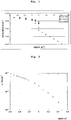
- a stabilization time of at least one hour is respected for each temperature. After measurement at 55 ° C, the cell is cooled to 20 ° C. A rise in temperature is then performed after holding the cells at 20 ° C for 12 hours so as to allow time for possible crystallization. Several measurements were made during the stabilization at 20 ° C. The measurements of 20 to 50 ° C. were then carried out at increasing temperature. The temperature is controlled by means of a Votesch Industrietechnik VTM 4004 thermostatically controlled chamber. The thickness of the electrolyte films is measured at the end of the measurement, with a Mitutoyo IP 54 palmer, so that a possible reduction in thickness due to high temperature creep results in underestimation of high temperature conductivities. The figure 1 summarizes the results obtained for the electrolytes prepared as explained above with the salt PhSCF 2 SO 2 NSO 2 CF 3 Li.
- Conductivity measurements are made on a sample made by impregnating a macroporous polyethylene / polypropylene separator with the ionic liquid.
- the macroporous separator is used to ensure the mechanical strength. The impregnation takes place for 12 hours in a glove box, the conductivity cell is then mounted.
- Conductivity measurements are made from 20 ° C to 130 ° C with 2 h stabilization at each temperature. The conductivities are given on the figure 2 .
- the conductivity is 4.7 ⁇ 10 -4 S / cm at 90 ° C.
- Electrolytes were prepared according to the following procedure.
- a macromonomer of average mass 8000 g / mol having a polymerizable acrylate function at both ends was prepared from a mixture of ethylene oxide and propylene oxide.
- NMR analysis has shown that the macromonomer is a random tendency copolymer comprising 75 oxyethylene units for 25 oxypropylene units, the latter conferring on the macromonomer an amorphous character.
- Discs were then cut into the membrane obtained after crosslinking and the uncrosslinked polymer was extracted with acetonitrile for 15 days by renewing the acetonitrile bath six times.
- the discs were then vacuum treated to remove acetonitrile and weighed. A solution of acetonitrile containing the amount of salt to be incorporated is then poured onto each disc. The discs are then vacuum treated for 48 hours to remove acetonitrile, and stored in a glove box. The discs are then weighed to determine the amount of salt incorporated. Disk-shaped electrolytes were thus obtained in which the O / Li concentration was 14.0, 29.3 and 35.3, respectively.
- the electrolytes were characterized by DSC (differential scanning calorimetry) at 5 ° C per minute from -100 ° C to 100 ° C.
- the measuring capsules are sealed in glove box under argon and kept under argon until the moment they are placed under a dry nitrogen sweep, in order to prevent any intake of water which would disturb the measurements.
- the glass transition temperature Tg is respectively -49 ° C., -47 ° C. and -36 ° C. for the O / Li concentrations of 14.0, 29.3 and 35.3.
- Conductivity measurements were made for a cross-linked copolymer / PhSCF 2 CF 2 SO 2 NSO 2 CF 3 Li complex having an O / Li ratio of 35.3, by electrochemical impedance spectroscopy, using an HP impedance spectrometer. 4192A LF impedance analyze.
- the electrolyte was mounted in a glove box between 2 stainless steel wedges in a sealed Swagelok cell. A spring exerting a constant pressure on the electrolyte.
- Conductivity measurements were carried out at a decreasing temperature of 90 ° C down to -10 ° C with a stabilization of 2 hours for each temperature, before the start of the measurements. The temperature is controlled by means of a Votesch Industrietechnik VTM 4004 thermostated chamber. The thickness of the electrolyte films is measured with a Mitutoyo IP 54 palmer.
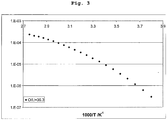
- the figure 3 represents the evolution of the conductivity (S.cm -1 ), as a function of the temperature. Due to the amorphous nature, the conductivities according to the inverse of the temperature follow a behavior VTF (Vogel-Tamman-Fulcher). Thus conductivities of 0.01 mS / cm are obtained from 25 ° C and the conductivity exceeds 0.1 mS / cm above 60 ° C.
Landscapes
- Chemical & Material Sciences (AREA)
- Engineering & Computer Science (AREA)
- Chemical Kinetics & Catalysis (AREA)
- Electrochemistry (AREA)
- Manufacturing & Machinery (AREA)
- Organic Chemistry (AREA)
- General Chemical & Material Sciences (AREA)
- Power Engineering (AREA)
- Physics & Mathematics (AREA)
- Condensed Matter Physics & Semiconductors (AREA)
- General Physics & Mathematics (AREA)
- Inorganic Chemistry (AREA)
- Materials Engineering (AREA)
- Microelectronics & Electronic Packaging (AREA)
- Dispersion Chemistry (AREA)
- Organic Low-Molecular-Weight Compounds And Preparation Thereof (AREA)
- Secondary Cells (AREA)
Claims (7)
- Verfahren zur Herstellung eines Sulfonylimids, das der Formel [R-SO2-N-SO2R1]rM (I) entspricht, dadurch gekennzeichnet, dass es darin besteht, ein N-substituiertes Sulfonimid (II) RSO2N(R") SO2R' ausgehend von RSO2F (III) herzustellen und die Gruppe R" durch eine nucleophile Substitutionsreaktion zu ersetzen, um das Sulfonylimid (I) zu erhalten, wobei R" eine Benzyl-, Allyl- oder Trimethylsilylgruppe ist, wobei es sich versteht, dass in den Formeln (I), (II) und (III):• R eine Gruppe darstellt, die der Formel Ar-Z-L- entspricht,• R' eine lineare oder verzweigte Perfluoralkylgruppe oder eine Gruppe, die mit der Gruppe Ar-Z-L- identisch ist, darstellt,• Z eine Sulfid-, Sulfinyl- oder Sulfonylgruppe darstellt,• L eine Gruppe der Formel -(CF2)n-CFRf- darstellt,• n 0 oder 1 ist,• Rf F oder eine Perfluoralkylgruppe mit 1 bis 8 Kohlenstoffatomen darstellt,• Ar eine aromatische Gruppe darstellt, die aus der Gruppe ausgewählt ist, die von den monocyclischen aromatischen Gruppen, den polycyclischen aromatischen Gruppen mit kondensierten oder nicht kondensierten Kernen und den heterocyclischen, bicyclischen mit kondensierten oder nicht kondensierten Cyclen oder monocyclischen aromatischen Gruppen gebildet ist,• M ein Kation mit der Wertigkeit r ist, ausgewählt aus den alkalischen, erdalkalischen oder drei- oder vierwertigen Metallionen und den organischen Kationen, ausgewählt aus den Ammonium-, Phosphonium-, Imidazolium-, Guanidinium-, Piperidinium-, Pyrolidinium-, Pyridinium- oder Quinoliniumionn, und dasswenn die Gruppe R' eine Gruppe ist, die mit der Gruppe Ar-Z-L- identisch ist, die R bildet, die Verbindung (II) der Formel (IIa) RSO2N(SiMe3)SO2R entspricht, und sie durch Reaktion der Verbindung R-SO2F (III) mit einem Hexamethyldisilazansalz (CH3)3Si)2N-A+ erhalten wird (wobei A ein kationisches Metallion oder ein quaternäres Ammoniumion ist), und
wenn die Gruppe R' eine Perfluoralkylgruppe ist, die Verbindung (II) der Formel (IIb) RSO2N(R")SO2R' entspricht, wobei R" eine Benzylgruppe oder eine Allylgruppe ist, und sie über eine Verbindung RSO2NH(R") (II'b) gemäß einem Verfahren erhalten wird, das die folgenden Schritte umfasst:- Reaktion von R-SO2F (III) mit dem überschüssigen Benzylamin oder Allylamin,- Neutralisierung durch HCl und Isolierung der Verbindung R-SO2NH(R") (II'b),- Reaktion der Verbindung (II'b) mit dem Anhydrid (R'SO2)2O bei Anwesenheit eines tertiären Amins, um die Verbindung (II) R-SO2N(R")SO2R' zu erhalten. - Verfahren nach Anspruch 1 für die Herstellung einer Verbindung (I), wobei R' eine Gruppe CF3 oder C2F5 ist.
- Verfahren nach Anspruch 1, dadurch gekennzeichnet, dass man die Verbindung (IIb) RSO2N(R")SO2R' mit einem Reagenz in Reaktion versetzt, das aus den alkalischen oder erdalkalischen Metallhydroxiden und -halogeniden, den Hydroxiden und den Halogeniden quaternärer Ammoniumionen, den alkalischen oder erdalkalischen Metalllalcoolaten, den quaternären Ammoniumalcoolaten, den alkalischen oder erdalkalischen Metallamiden, den quaternären Ammoniumamiden, den sekundären Aminen und den tertiären Aminen ausgewählt ist.
- Verfahren nach Anspruch 3, dadurch gekennzeichnet, dass die Reaktion bei Anwesenheit eines Alkohols durchgeführt wird.
- Verfahren nach Anspruch 1, dadurch gekennzeichnet, dass M ein organisches Kation ist, das einen oder mehrere Substituenten trägt, die unabhängig voneinander ausgewählt sind aus:- dem Wasserstoff,- den Alkylgruppen- den monocyclischen aromatischen Gruppen, den polycyclischen aromatischen Gruppen mit kondensierten oder nicht kondensierten Kernen, den heterocyclischen aromatischen Gruppen, in welchen das Heteroatom ein Stickstoffatom ist, wobei die heterocyclischen Gruppen polycyclisch mit kondensierten oder nicht kondensierten Kernen oder monocyclisch sind.
- Verfahren nach Anspruch 1, dadurch gekennzeichnet, dass Ar Teil einer rekurrenten Einheit einer Polymerkette ist.
- Verfahren nach Anspruch 1, dadurch gekennzeichnet, dass die Gruppe Ar einen oder mehrere Substituenten trägt, die ausgewählt sind aus:• den Halogenatomen, Cl-CH2- und den Gruppen Q1-O-CH2-, in welchen Q1 H, eine Alkylgruppe oder eine Acylgruppe ist,• einer Hydroxylgruppe, den Ether- Q2-O-, Carboxylester- Q2C(O)O- und Sulfonatgruppen Q2-SO2-O-, wobei Q2 eine Alkylgruppe oder eine Arylgruppe darstellt,• den aliphatischen oder aromatischen Gruppen, die eine substituierte oder nicht substituierte Etylenunsättigung besitzen,• den Amingruppen -N(Q3)(Q4)-, in welchen Q3 und Q4 jeweils unabhängig voneinander H, eine Akylgruppe, eine Arylgruppe, eine Arylalkylgruppe oder eine Acylgruppe darstellen,• den Trialkylsilylgruppen,• den Oxirangruppen,• den elektroattraktiven Gruppen, ausgewählt aus den Perfluoralkylgruppen, den Alkylsulfonyl- oder Arylsulfonylgruppen, den Sulfonylhalogenidgruppen, den Ester-, Nitril-, cyclischen Carbonat- oder Nitrogruppen.
Applications Claiming Priority (2)
| Application Number | Priority Date | Filing Date | Title |
|---|---|---|---|
| FR0606469A FR2903692B1 (fr) | 2006-07-17 | 2006-07-17 | Sulfonylimidures aromatiques et leur preparation. |
| PCT/FR2007/001225 WO2008009814A1 (fr) | 2006-07-17 | 2007-07-17 | Sulfonylimidures aromatiques, leur preparation et leur utilisation comme electrolyte. |
Publications (2)
| Publication Number | Publication Date |
|---|---|
| EP2084166A1 EP2084166A1 (de) | 2009-08-05 |
| EP2084166B1 true EP2084166B1 (de) | 2017-11-22 |
Family
ID=38000862
Family Applications (1)
| Application Number | Title | Priority Date | Filing Date |
|---|---|---|---|
| EP07823292.3A Not-in-force EP2084166B1 (de) | 2006-07-17 | 2007-07-17 | Herstellungsverfahren von aromatischen sulfonylimiden |
Country Status (4)
| Country | Link |
|---|---|
| US (1) | US8853448B2 (de) |
| EP (1) | EP2084166B1 (de) |
| FR (1) | FR2903692B1 (de) |
| WO (1) | WO2008009814A1 (de) |
Families Citing this family (18)
| Publication number | Priority date | Publication date | Assignee | Title |
|---|---|---|---|---|
| JP5645459B2 (ja) * | 2009-07-10 | 2014-12-24 | 富士フイルム株式会社 | 感活性光線性または感放射線性樹脂組成物およびこれを用いたパターン形成方法 |
| EP2622670A1 (de) * | 2010-09-30 | 2013-08-07 | Basf Se | Anode auf li-basis mit polymergel mit einer ionischen flüssigkeit |
| FR2968136B1 (fr) | 2010-11-29 | 2013-08-23 | Univ Rouen | Membrane composite conductrice de protons pour piles a combustible |
| KR101851564B1 (ko) * | 2011-10-27 | 2018-04-25 | 삼성전자주식회사 | 리튬 공기 전지용 전해질 및 이를 포함한 리튬 공기전지 |
| CN104151206B (zh) * | 2013-05-14 | 2016-12-28 | 华中科技大学 | 一种(氟磺酰)(多氟烷氧基磺酰)亚胺的碱金属盐及其离子液体 |
| EP3252034B1 (de) | 2015-01-26 | 2019-06-12 | LG Chem, Ltd. | Verbindung mit aromatischem ring, polymer damit und polyelektrolytmembran mit verwendung davon |
| WO2016122200A1 (ko) * | 2015-01-27 | 2016-08-04 | 주식회사 엘지화학 | 방향족 고리를 포함하는 화합물 및 이를 이용한 고분자 전해질막 |
| CA3019132A1 (en) | 2016-04-01 | 2017-10-05 | NOHMs Technologies, Inc. | Modified ionic liquids containing phosphorus |
| KR102074551B1 (ko) * | 2016-10-04 | 2020-02-06 | 주식회사 엘지화학 | 중합체 및 이를 포함하는 막 |
| CN106785048B (zh) * | 2017-02-15 | 2019-03-19 | 惠州市大道新材料科技有限公司 | 一种含有吡啶环磺酰亚胺锂的电解液及使用该电解液的电池 |
| EP3656010B1 (de) | 2017-07-17 | 2025-03-26 | Sionic Energy, Inc. | Phosphorenthaltende elektrolyten |
| KR102239499B1 (ko) | 2019-06-24 | 2021-04-13 | 삼화페인트공업주식회사 | 플루오로설포닐기를 함유하는 카보네이트 화합물, 이의 제조방법 및 용도 |
| CN115088112A (zh) * | 2020-02-27 | 2022-09-20 | 株式会社日本触媒 | 组合物、电解液材料以及电解液 |
| CN114934287B (zh) * | 2022-06-16 | 2023-08-29 | 浙江师范大学 | 电氧化合成氟烷基取代的磺酰胺并多环类化合物的方法 |
| CN115557860A (zh) * | 2022-09-19 | 2023-01-03 | 杭州瀛拓科技有限公司 | N-三氟甲磺酰基对苯乙烯磺酰亚胺锂及其衍生物的合成方法及应用 |
| CN117208865B (zh) * | 2023-09-28 | 2025-12-19 | 山东海科创新研究院有限公司 | 一种双氟磺酰亚胺钠的制备方法及其所得产品 |
| CN117720448A (zh) * | 2023-12-08 | 2024-03-19 | 中国农业大学 | 一种分子内硫键激活的SuFEx点击化学反应及其产物和应用 |
| CN118459376A (zh) * | 2024-06-25 | 2024-08-09 | 多氟多新材料股份有限公司 | 一种双三氟甲基磺酰亚胺金属盐的制备方法 |
Citations (1)
| Publication number | Priority date | Publication date | Assignee | Title |
|---|---|---|---|---|
| US5256821A (en) * | 1988-10-05 | 1993-10-26 | Societe Nationale Elf Aquitaine | Method of synthesis of sulphonylimides |
Family Cites Families (6)
| Publication number | Priority date | Publication date | Assignee | Title |
|---|---|---|---|---|
| US4780142A (en) * | 1987-01-08 | 1988-10-25 | Chicago Fire Brick Company | Hard setting refractory composition |
| FR2637284B1 (fr) * | 1988-10-05 | 1991-07-05 | Elf Aquitaine | Methode de synthese de sulfonylimidures |
| US5514493A (en) * | 1995-03-06 | 1996-05-07 | Minnesota Mining And Manufacturing Company | Perfluoroalkylsulfonates, sulfonimides, and sulfonyl methides, and electrolytes containing them |
| JP3623452B2 (ja) * | 2000-01-31 | 2005-02-23 | 森田化学工業株式会社 | スルホニルイミド化合物の製造方法 |
| WO2005113491A1 (en) * | 2004-05-07 | 2005-12-01 | E.I. Dupont De Nemours And Company | Stable trifluorostyrene containing compounds, and their use in polymer electrolyte membranes |
| JP4469692B2 (ja) * | 2004-09-14 | 2010-05-26 | 富士フイルム株式会社 | 感光性組成物、該感光性組成物に用いられる化合物及び該感光性組成物を用いたパターン形成方法 |
-
2006
- 2006-07-17 FR FR0606469A patent/FR2903692B1/fr not_active Expired - Fee Related
-
2007
- 2007-07-17 US US12/309,462 patent/US8853448B2/en not_active Expired - Fee Related
- 2007-07-17 EP EP07823292.3A patent/EP2084166B1/de not_active Not-in-force
- 2007-07-17 WO PCT/FR2007/001225 patent/WO2008009814A1/fr not_active Ceased
Patent Citations (1)
| Publication number | Priority date | Publication date | Assignee | Title |
|---|---|---|---|---|
| US5256821A (en) * | 1988-10-05 | 1993-10-26 | Societe Nationale Elf Aquitaine | Method of synthesis of sulphonylimides |
Also Published As
| Publication number | Publication date |
|---|---|
| US20100174113A1 (en) | 2010-07-08 |
| US8853448B2 (en) | 2014-10-07 |
| WO2008009814A1 (fr) | 2008-01-24 |
| EP2084166A1 (de) | 2009-08-05 |
| FR2903692B1 (fr) | 2009-07-31 |
| FR2903692A1 (fr) | 2008-01-18 |
Similar Documents
| Publication | Publication Date | Title |
|---|---|---|
| EP2084166A1 (de) | Aromatische sulfonylimide, ihre herstellung und verwendung als elektrolyt | |
| EP1626041B1 (de) | Neue Materialien verwendbar als elektrolytische Solubilisate | |
| EP0968196B1 (de) | Ionische perfluorvinylverbindungen und ihre verwendung in leitenden materialien | |
| EP2928003B1 (de) | Pentazyklisches anionsalz und seine verwendung als elektrolyt | |
| EP0928287B1 (de) | Ionische verbindungen mit delokalisierter anionischer ladung, ihrer verwendung als komponenten von ionenleitern oder von katalysatoren | |
| EP0850920B1 (de) | Ionisch leitfähige Materialien, die Salze von perfluorierten Amiden enthalten, und ihre Verwendungen | |
| CA2432053C (fr) | Procede de fluoration d'un compose comprenant un groupe halosulfonyle ou dihalophosphonyle | |
| EP3172264B1 (de) | Neuartige polymere mit gepfropften bis(sulfonyl)imid-natrium- oder -lithiumsalzen, verfahren zur herstellung davon und verwendungen davon als elektrolyten für batterien | |
| EP0096629A1 (de) | Bis-Perhalogenacyl- oder Sulfonyl-Imide von Alkalimetallen, ihre festen Lösungen mit plastischen Materialien und ihre Anwendung zur Zusammensetzung von Leiterelementen für elektrochemische Generatoren | |
| EP0567637A1 (de) | Bis-(Perfluorosulfonyl)methanderivate, Verfahren zu ihrer Herstellung und Ihre Verwendung | |
| JP2003532619A (ja) | スルホニルイミドおよび導電性塩としてのその使用 | |
| EP3529232A1 (de) | Sulfaminsäurederivate und herstellungsverfahren dafür | |
| EP0364340B1 (de) | Verfahren zur Herstellung von Sulfonylimiden | |
| EP3326229B1 (de) | Verfahren zur herstellung von ionomeren für einpolige kationische leitfähigkeit aus ionischen difluoridmonomeren | |
| CA3231424A1 (fr) | Cristaux plastiques ioniques, compositions les comprenant, leurs procedes de fabrication et leurs utilisations | |
| EP3649107B1 (de) | Als einzelionen-leitender polymerelektrolyt nützliche sulfonamid-makromoleküle | |
| EP2976324B1 (de) | Als elektrolytlösungsmittel für lithiumbatterien verwendbare spezifische sulfonatverbindungen | |
| WO2008009815A2 (fr) | Procede de preparation de sulfonates aromatiques. | |
| EP1790030B1 (de) | Ionisches leitendes material enthaltend ein oligoethersulfat | |
| FR2993886A1 (fr) | Composes sulfonates specifiques utilisables comme solvant d'electrolyte pour batteries au lithium | |
| WO2025015411A1 (fr) | Composés organiques ioniques, compositions et électrolytes les comprenant, et leur utilisation en électrochimie |
Legal Events
| Date | Code | Title | Description |
|---|---|---|---|
| PUAI | Public reference made under article 153(3) epc to a published international application that has entered the european phase |
Free format text: ORIGINAL CODE: 0009012 |
|
| 17P | Request for examination filed |
Effective date: 20090212 |
|
| AK | Designated contracting states |
Kind code of ref document: A1 Designated state(s): AT BE BG CH CY CZ DE DK EE ES FI FR GB GR HU IE IS IT LI LT LU LV MC MT NL PL PT RO SE SI SK TR |
|
| AX | Request for extension of the european patent |
Extension state: AL BA HR MK RS |
|
| DAX | Request for extension of the european patent (deleted) | ||
| 17Q | First examination report despatched |
Effective date: 20101122 |
|
| REG | Reference to a national code |
Ref country code: DE Ref legal event code: R079 Ref document number: 602007053138 Country of ref document: DE Free format text: PREVIOUS MAIN CLASS: C07F0007120000 Ipc: C07C0317140000 |
|
| GRAP | Despatch of communication of intention to grant a patent |
Free format text: ORIGINAL CODE: EPIDOSNIGR1 |
|
| RIC1 | Information provided on ipc code assigned before grant |
Ipc: C07C 323/67 20060101ALI20170620BHEP Ipc: C07C 317/14 20060101AFI20170620BHEP |
|
| INTG | Intention to grant announced |
Effective date: 20170721 |
|
| RAP1 | Party data changed (applicant data changed or rights of an application transferred) |
Owner name: UNIVERSITE CLAUDE BERNARD LYON 1 Owner name: INSTITUT NATIONAL POLYTECHNIQUE DE GRENOBLE Owner name: ERAS-LABO |
|
| GRAS | Grant fee paid |
Free format text: ORIGINAL CODE: EPIDOSNIGR3 |
|
| GRAA | (expected) grant |
Free format text: ORIGINAL CODE: 0009210 |
|
| AK | Designated contracting states |
Kind code of ref document: B1 Designated state(s): AT BE BG CH CY CZ DE DK EE ES FI FR GB GR HU IE IS IT LI LT LU LV MC MT NL PL PT RO SE SI SK TR |
|
| REG | Reference to a national code |
Ref country code: GB Ref legal event code: FG4D Free format text: NOT ENGLISH |
|
| REG | Reference to a national code |
Ref country code: CH Ref legal event code: EP |
|
| REG | Reference to a national code |
Ref country code: IE Ref legal event code: FG4D Free format text: LANGUAGE OF EP DOCUMENT: FRENCH |
|
| REG | Reference to a national code |
Ref country code: AT Ref legal event code: REF Ref document number: 948223 Country of ref document: AT Kind code of ref document: T Effective date: 20171215 |
|
| REG | Reference to a national code |
Ref country code: DE Ref legal event code: R096 Ref document number: 602007053138 Country of ref document: DE |
|
| REG | Reference to a national code |
Ref country code: NL Ref legal event code: MP Effective date: 20171122 |
|
| REG | Reference to a national code |
Ref country code: LT Ref legal event code: MG4D |
|
| REG | Reference to a national code |
Ref country code: AT Ref legal event code: MK05 Ref document number: 948223 Country of ref document: AT Kind code of ref document: T Effective date: 20171122 |
|
| PG25 | Lapsed in a contracting state [announced via postgrant information from national office to epo] |
Ref country code: LT Free format text: LAPSE BECAUSE OF FAILURE TO SUBMIT A TRANSLATION OF THE DESCRIPTION OR TO PAY THE FEE WITHIN THE PRESCRIBED TIME-LIMIT Effective date: 20171122 Ref country code: ES Free format text: LAPSE BECAUSE OF FAILURE TO SUBMIT A TRANSLATION OF THE DESCRIPTION OR TO PAY THE FEE WITHIN THE PRESCRIBED TIME-LIMIT Effective date: 20171122 Ref country code: SE Free format text: LAPSE BECAUSE OF FAILURE TO SUBMIT A TRANSLATION OF THE DESCRIPTION OR TO PAY THE FEE WITHIN THE PRESCRIBED TIME-LIMIT Effective date: 20171122 Ref country code: FI Free format text: LAPSE BECAUSE OF FAILURE TO SUBMIT A TRANSLATION OF THE DESCRIPTION OR TO PAY THE FEE WITHIN THE PRESCRIBED TIME-LIMIT Effective date: 20171122 Ref country code: NL Free format text: LAPSE BECAUSE OF FAILURE TO SUBMIT A TRANSLATION OF THE DESCRIPTION OR TO PAY THE FEE WITHIN THE PRESCRIBED TIME-LIMIT Effective date: 20171122 |
|
| PG25 | Lapsed in a contracting state [announced via postgrant information from national office to epo] |
Ref country code: GR Free format text: LAPSE BECAUSE OF FAILURE TO SUBMIT A TRANSLATION OF THE DESCRIPTION OR TO PAY THE FEE WITHIN THE PRESCRIBED TIME-LIMIT Effective date: 20180223 Ref country code: AT Free format text: LAPSE BECAUSE OF FAILURE TO SUBMIT A TRANSLATION OF THE DESCRIPTION OR TO PAY THE FEE WITHIN THE PRESCRIBED TIME-LIMIT Effective date: 20171122 Ref country code: LV Free format text: LAPSE BECAUSE OF FAILURE TO SUBMIT A TRANSLATION OF THE DESCRIPTION OR TO PAY THE FEE WITHIN THE PRESCRIBED TIME-LIMIT Effective date: 20171122 Ref country code: BG Free format text: LAPSE BECAUSE OF FAILURE TO SUBMIT A TRANSLATION OF THE DESCRIPTION OR TO PAY THE FEE WITHIN THE PRESCRIBED TIME-LIMIT Effective date: 20180222 |
|
| REG | Reference to a national code |
Ref country code: FR Ref legal event code: PLFP Year of fee payment: 12 |
|
| PG25 | Lapsed in a contracting state [announced via postgrant information from national office to epo] |
Ref country code: CY Free format text: LAPSE BECAUSE OF FAILURE TO SUBMIT A TRANSLATION OF THE DESCRIPTION OR TO PAY THE FEE WITHIN THE PRESCRIBED TIME-LIMIT Effective date: 20171122 Ref country code: EE Free format text: LAPSE BECAUSE OF FAILURE TO SUBMIT A TRANSLATION OF THE DESCRIPTION OR TO PAY THE FEE WITHIN THE PRESCRIBED TIME-LIMIT Effective date: 20171122 Ref country code: DK Free format text: LAPSE BECAUSE OF FAILURE TO SUBMIT A TRANSLATION OF THE DESCRIPTION OR TO PAY THE FEE WITHIN THE PRESCRIBED TIME-LIMIT Effective date: 20171122 Ref country code: SK Free format text: LAPSE BECAUSE OF FAILURE TO SUBMIT A TRANSLATION OF THE DESCRIPTION OR TO PAY THE FEE WITHIN THE PRESCRIBED TIME-LIMIT Effective date: 20171122 Ref country code: CZ Free format text: LAPSE BECAUSE OF FAILURE TO SUBMIT A TRANSLATION OF THE DESCRIPTION OR TO PAY THE FEE WITHIN THE PRESCRIBED TIME-LIMIT Effective date: 20171122 |
|
| REG | Reference to a national code |
Ref country code: DE Ref legal event code: R097 Ref document number: 602007053138 Country of ref document: DE |
|
| PG25 | Lapsed in a contracting state [announced via postgrant information from national office to epo] |
Ref country code: PL Free format text: LAPSE BECAUSE OF FAILURE TO SUBMIT A TRANSLATION OF THE DESCRIPTION OR TO PAY THE FEE WITHIN THE PRESCRIBED TIME-LIMIT Effective date: 20171122 Ref country code: IT Free format text: LAPSE BECAUSE OF FAILURE TO SUBMIT A TRANSLATION OF THE DESCRIPTION OR TO PAY THE FEE WITHIN THE PRESCRIBED TIME-LIMIT Effective date: 20171122 Ref country code: RO Free format text: LAPSE BECAUSE OF FAILURE TO SUBMIT A TRANSLATION OF THE DESCRIPTION OR TO PAY THE FEE WITHIN THE PRESCRIBED TIME-LIMIT Effective date: 20171122 |
|
| PG25 | Lapsed in a contracting state [announced via postgrant information from national office to epo] |
Ref country code: MT Free format text: LAPSE BECAUSE OF FAILURE TO SUBMIT A TRANSLATION OF THE DESCRIPTION OR TO PAY THE FEE WITHIN THE PRESCRIBED TIME-LIMIT Effective date: 20171122 |
|
| PLBE | No opposition filed within time limit |
Free format text: ORIGINAL CODE: 0009261 |
|
| STAA | Information on the status of an ep patent application or granted ep patent |
Free format text: STATUS: NO OPPOSITION FILED WITHIN TIME LIMIT |
|
| 26N | No opposition filed |
Effective date: 20180823 |
|
| PG25 | Lapsed in a contracting state [announced via postgrant information from national office to epo] |
Ref country code: SI Free format text: LAPSE BECAUSE OF FAILURE TO SUBMIT A TRANSLATION OF THE DESCRIPTION OR TO PAY THE FEE WITHIN THE PRESCRIBED TIME-LIMIT Effective date: 20171122 |
|
| REG | Reference to a national code |
Ref country code: CH Ref legal event code: PL |
|
| PG25 | Lapsed in a contracting state [announced via postgrant information from national office to epo] |
Ref country code: MC Free format text: LAPSE BECAUSE OF FAILURE TO SUBMIT A TRANSLATION OF THE DESCRIPTION OR TO PAY THE FEE WITHIN THE PRESCRIBED TIME-LIMIT Effective date: 20171122 Ref country code: LU Free format text: LAPSE BECAUSE OF NON-PAYMENT OF DUE FEES Effective date: 20180717 |
|
| REG | Reference to a national code |
Ref country code: BE Ref legal event code: MM Effective date: 20180731 |
|
| REG | Reference to a national code |
Ref country code: IE Ref legal event code: MM4A |
|
| PG25 | Lapsed in a contracting state [announced via postgrant information from national office to epo] |
Ref country code: LI Free format text: LAPSE BECAUSE OF NON-PAYMENT OF DUE FEES Effective date: 20180731 Ref country code: IE Free format text: LAPSE BECAUSE OF NON-PAYMENT OF DUE FEES Effective date: 20180717 Ref country code: CH Free format text: LAPSE BECAUSE OF NON-PAYMENT OF DUE FEES Effective date: 20180731 |
|
| PG25 | Lapsed in a contracting state [announced via postgrant information from national office to epo] |
Ref country code: BE Free format text: LAPSE BECAUSE OF NON-PAYMENT OF DUE FEES Effective date: 20180731 |
|
| PGFP | Annual fee paid to national office [announced via postgrant information from national office to epo] |
Ref country code: DE Payment date: 20190711 Year of fee payment: 13 Ref country code: FR Payment date: 20190731 Year of fee payment: 13 |
|
| PGFP | Annual fee paid to national office [announced via postgrant information from national office to epo] |
Ref country code: GB Payment date: 20190719 Year of fee payment: 13 |
|
| PG25 | Lapsed in a contracting state [announced via postgrant information from national office to epo] |
Ref country code: TR Free format text: LAPSE BECAUSE OF FAILURE TO SUBMIT A TRANSLATION OF THE DESCRIPTION OR TO PAY THE FEE WITHIN THE PRESCRIBED TIME-LIMIT Effective date: 20171122 |
|
| PG25 | Lapsed in a contracting state [announced via postgrant information from national office to epo] |
Ref country code: HU Free format text: LAPSE BECAUSE OF FAILURE TO SUBMIT A TRANSLATION OF THE DESCRIPTION OR TO PAY THE FEE WITHIN THE PRESCRIBED TIME-LIMIT; INVALID AB INITIO Effective date: 20070717 Ref country code: PT Free format text: LAPSE BECAUSE OF FAILURE TO SUBMIT A TRANSLATION OF THE DESCRIPTION OR TO PAY THE FEE WITHIN THE PRESCRIBED TIME-LIMIT Effective date: 20171122 |
|
| PG25 | Lapsed in a contracting state [announced via postgrant information from national office to epo] |
Ref country code: IS Free format text: LAPSE BECAUSE OF FAILURE TO SUBMIT A TRANSLATION OF THE DESCRIPTION OR TO PAY THE FEE WITHIN THE PRESCRIBED TIME-LIMIT Effective date: 20180322 |
|
| REG | Reference to a national code |
Ref country code: DE Ref legal event code: R119 Ref document number: 602007053138 Country of ref document: DE |
|
| GBPC | Gb: european patent ceased through non-payment of renewal fee |
Effective date: 20200717 |
|
| PG25 | Lapsed in a contracting state [announced via postgrant information from national office to epo] |
Ref country code: FR Free format text: LAPSE BECAUSE OF NON-PAYMENT OF DUE FEES Effective date: 20200731 Ref country code: GB Free format text: LAPSE BECAUSE OF NON-PAYMENT OF DUE FEES Effective date: 20200717 |
|
| PG25 | Lapsed in a contracting state [announced via postgrant information from national office to epo] |
Ref country code: DE Free format text: LAPSE BECAUSE OF NON-PAYMENT OF DUE FEES Effective date: 20210202 |