EP2086204A2 - Verfahren und System zur Datensynchronisation zwischen Netzvorrichtungen - Google Patents
Verfahren und System zur Datensynchronisation zwischen Netzvorrichtungen Download PDFInfo
- Publication number
- EP2086204A2 EP2086204A2 EP20090151638 EP09151638A EP2086204A2 EP 2086204 A2 EP2086204 A2 EP 2086204A2 EP 20090151638 EP20090151638 EP 20090151638 EP 09151638 A EP09151638 A EP 09151638A EP 2086204 A2 EP2086204 A2 EP 2086204A2
- Authority
- EP
- European Patent Office
- Prior art keywords
- data
- synchronization
- server
- change log
- data item
- Prior art date
- Legal status (The legal status is an assumption and is not a legal conclusion. Google has not performed a legal analysis and makes no representation as to the accuracy of the status listed.)
- Granted
Links
Images








Classifications
-
- H—ELECTRICITY
- H04—ELECTRIC COMMUNICATION TECHNIQUE
- H04L—TRANSMISSION OF DIGITAL INFORMATION, e.g. TELEGRAPHIC COMMUNICATION
- H04L12/00—Data switching networks
- H04L12/28—Data switching networks characterised by path configuration, e.g. LAN [Local Area Networks] or WAN [Wide Area Networks]
-
- H—ELECTRICITY
- H04—ELECTRIC COMMUNICATION TECHNIQUE
- H04L—TRANSMISSION OF DIGITAL INFORMATION, e.g. TELEGRAPHIC COMMUNICATION
- H04L67/00—Network arrangements or protocols for supporting network services or applications
- H04L67/01—Protocols
- H04L67/10—Protocols in which an application is distributed across nodes in the network
- H04L67/1095—Replication or mirroring of data, e.g. scheduling or transport for data synchronisation between network nodes
-
- H—ELECTRICITY
- H04—ELECTRIC COMMUNICATION TECHNIQUE
- H04L—TRANSMISSION OF DIGITAL INFORMATION, e.g. TELEGRAPHIC COMMUNICATION
- H04L67/00—Network arrangements or protocols for supporting network services or applications
- H04L67/01—Protocols
- H04L67/02—Protocols based on web technology, e.g. hypertext transfer protocol [HTTP]
-
- H—ELECTRICITY
- H04—ELECTRIC COMMUNICATION TECHNIQUE
- H04L—TRANSMISSION OF DIGITAL INFORMATION, e.g. TELEGRAPHIC COMMUNICATION
- H04L7/00—Arrangements for synchronising receiver with transmitter
Definitions
- the present invention relates to a data synchronization method. More particularly, the present invention relates to a method for synchronizing data among multiple devices supporting a Synchronization Markup Language (SyncML) protocol.
- SyncML Synchronization Markup Language
- Mobile users are not always connected to a network and the network stored data. Therefore, mobile users retrieve data from the network and store the data on the mobile device, where a local copy of the data can be accessed and manipulated.
- users connect to the network to send local changes to a networked data repository and download updates made to the networked data while the mobile devices are disconnected to maintain data synchronization.
- Data synchronization is the process of making two sets of data become identical to apply the modification of one set of data to the other set of data.
- SyncML Synchronization Markup Language
- XML Extensible Markup Language
- the SyncML is also one of the most important parts in the development of 3rd Generation (3G) mobile communication systems. SyncML may be used for synchronizing data between computers and between mobile devices as well as between some type of mobile device and a computer.
- SyncML may be implemented in the form of a client/server-oriented protocol.
- the client may be a mobile device such as a portable computer, a mobile phone and a Personal Digital Assistant (PDA) that are generating data to be synchronized.
- PDA Personal Digital Assistant
- the client transmits a synchronization-related message to the server.
- the server may be a desktop computer or a network server which receives the data from the client and implements synchronization logic.
- the data synchronization is a technology to ensure data integrity between two devices.
- the synchronization technology allows the two devices to maintain identically shared data by applying the modification to the other device, even when a set of data stored to one of the devices is changed (added, modified and deleted).
- Such synchronization technologies have been developed to synchronize the data between two devices. Accordingly, when more than two devices' data are required to be synchronized, conventional synchronization technologies may incur an infinite synchronization loop problem.
- the device A transmits the modified data "G” to device B and device C.
- the device B transmits the data "G” to the device C
- the device C transmits the data "G” to the device B. If the data "G” is received again during the synchronization with the data "G” received from the device A, the device B and the device C considers the data "G” is modified after its addition and records the modification of the data "G” such that the modification of the data "G” is applied at the next synchronization process. Accordingly, whenever the devices are connected to each other, the devices attempt to update the data "G” repeatedly.
- An aspect of the present invention is to address at least the above-mentioned problems and/or disadvantages and to provide at least the advantages described below. Accordingly, an aspect of the present invention is to provide a data synchronization method for simplifying a data synchronization process between more than two devices, and minimizing file transmission latency and traffic load when synchronizing a large file.
- Another aspect of the present invention is to provide a data synchronization method for avoiding an infinite synchronization loop problem of identical data between more than two devices by using a data modification map which provides modification history of the data.
- a data synchronization method for more than three networked devices including at least one client and server.
- the data synchronization method includes determining whether a data item indicated by synchronization information contained in a synchronization request message exists in a change log table of the server, when a server receives the synchronization request message sent by a first client, updating the change log table by adding the data item indicated by the synchronization information and transmitting a synchronization request message containing a data identifier and change log of the data item to a second client, if a data item indicated by the synchronization information does not exist, and ending data synchronization by transmitting a synchronization response message containing status information to the first client, if a data item indicated by the synchronization information exists.
- a data synchronization method for more than three networked devices including at least one client and server.
- the data synchronization method includes transmitting a synchronization request message containing synchronization information from the first device to a second device, when a data item is modified at a first device, determining, at the second device, whether the data item indicated by the synchronization information exists in a change log table of the second device, updating the change log table by adding the data item, modifying the synchronization information and transmitting a synchronization request message containing the modified synchronization information to a third device, if the data item does not exist, and ending data synchronization by transmitting a synchronization response message containing status information to the first device, if the data item indicated the synchronization information exists.
- a data synchronization method for networked devices including a first device as a server, a second device as a client and a server, and a third device as a client.
- the data synchronization method includes transmitting a synchronization request message containing synchronization information associated with modification of the data item from the second device to the first and third devices, when a data item is modified at the second device, updating, at the third device, a change log table reflecting the synchronization information contained in the synchronization request message and transmitting a synchronization response message containing synchronization information with a synchronized data identifier to the first device, and determining, at the first device, whether a data item indicated by the synchronization information received from one of the second device and the third device exists in a change log table of the first device, updating the change log table, if an identical data item does not exist, and ending data synchronization by transmitting a synchronization response message containing synchronization information to the second device.
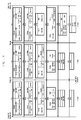
- FIGs. 1A to 1C are diagrams illustrating steps of a data addition procedure of a data synchronization method according to an exemplary embodiment of the present invention
- FIGs. 2A to 2C are diagrams illustrating a data replacement procedure of a data synchronization method according to an exemplary embodiment of the present invention
- FIGs. 3A to 3C are diagrams illustrating a data addition procedure of a data synchronization method according to an exemplary embodiment of the present invention
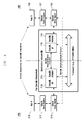
- FIG. 4 is a diagram illustrating a SyncML framework for use in a data synchronization method according to an exemplary embodiment of the present invention
- FIGs. 5A and 5B are message flow diagrams illustrating a data synchronization procedure between a client and a server according to an exemplary embodiment of the present invention
- FIGs. 6A to 6D are diagrams illustrating an added data synchronization procedure of a data synchronization method according to an exemplary embodiment of the present invention
- FIG. 7 is a message flow diagram illustrating the added data synchronization procedure according to an exemplary embodiment of the present invention.
- FIGs. 8A to 8D are diagrams illustrating a replaced data synchronization procedure of a data synchronization method according to an exemplary embodiment of the present invention.
- FIG. 9 is a message flow diagram illustrating the replaced data synchronization procedure according to an exemplary embodiment of the present invention.
- the term “device” denotes a SyncML-enabled device which may act as either a client or a server.
- a client is the device that generates modification of data and transmits the modified data to a server
- a server is the device that receives the modified data transmitted by the client and controls synchronization of the data between the client and the server.
- change log denotes information on changes of data. Each device tracks changes of respective data between synchronization processes and maintains records of changed data in a database.
- ID map denotes mapping IDs assigned to data items of the database of each device. Each device creates, maintains and deletes IDs for managing the modification of the data.
- the term “anchor” denotes an element indicating a start or an end of a synchronization process.
- the term "synchronization message” denotes a message that is exchanged between the client and the server for data synchronization.
- the synchronization message includes of a header and a body.
- the body of the synchronization message includes status information and/or synchronization information.
- the status information indicates whether the device is synchronized and includes information regarding the modification and termination of the synchronization and the change log.
- the synchronization information may include a synchronization command, data identifier (ID) and modified data.
- the change log contains information indicating a type of modification, e.g., addition, replacement and deletion corresponding to the synchronization commands.
- the data ID is a unique identifier generated by the device.
- Locally Unique Identifier (LUID) is the data ID assigned by the client
- Globally Unique Identifier (GUID) is the data ID assigned by the server.
- the synchronization of data between more than three devices is described as an example.
- the devices may be any type of digital devices operating on a personal computer platform and a web platform.
- the multi-device data synchronization method allows the user to efficiently manage the data generated at different devices.
- the data synchronization method is described with three devices including a server. It is assumed that the three devices include a Personal Computer (PC), a web server and a mobile terminal.
- PC Personal Computer
- the data synchronization method enables the devices to update the data with the modification to maintain most recently updated data.
- the data synchronization method is implemented in a client-server mechanism composed of a server that collects data and clients that generate and transmit data.
- the data synchronization method uses the data ID for identifying data, the change log for indicating modification history of the data and the map for comparing data between more than three devices.
- the PC operates as a server and a client.
- FIGs. 1A to 1C are diagrams illustrating a data addition procedure of a data synchronization method according to an exemplary embodiment of the present invention.
- each of device A and device B may be a client or a client/server, and device C may be a server.
- the device A transmits the added data to the device B and the device C together with a change log.
- the device B and the device C adds the data "G” with reference to the change log.
- the device C transmits information on newly added data "G” to the device B.
- the device B recognizes that the device C has received the identical data "G” (see FIG. 1B ) and maps the information to the data "G” without sending the data "G” to the device A (see FIG. 1C ).
- the server looks up its change log and compares the data using a shared ID. If the data indicated by the information transmitted by another client is identical with the newly added data received from the first client, the server creates mapping information to tie the data using an identifier without sending the data to the client. In this manner, the server avoids adding substantially the same data repeatedly, resulting in efficient data synchronization.
- FIGs. 2A to 2C are diagrams illustrating a data replacement procedure of a data synchronization method according to an exemplary embodiment of the present invention.
- the device A and the device B may be a client or a client/server, and device C may be a server.
- the device A transmits the data "d1” to second device B and the third device C together with a change log.
- the second device B and third device C replaces the data "G” with the data "d1” in the database with reference to the change log.
- the device C transmits modification information indicating the replacement of data from "G” to "d1” to the device B.
- the device B recognizes that the device C has received the replaced data "d1” based on the modification information sent by the device C. Accordingly, the information received from the device C is mapped to the data "d1" without sending the data "d1" to the device A.
- the server receives the modified data and compares the original data with the modified data sharing an identical ID with reference to the change log. At this time, the server receives modification information from another device. If the data indicated by the modification information is identical with the modified data, the server creates mapping information without sending the modified data to the client devices. That is, when the currently received data is identical with the most recently updated data, the server ignores the currently received data and does not send the data back to the client.
- FIGs. 3A to 3C are diagrams illustrating steps of a data addition procedure of a data synchronization method according to an exemplary embodiment of the present invention.
- each of devices A and B may be a client or a client/server, and device C may be a server.
- the device C transmits a header of the file "G" to the device B (see FIG. 3A ).
- the device B analyzes the file header and determines whether the file indicated by the file header exists in the database. If the file exists, the device B transmits a message ⁇ ITEM_ALREADY_EXIST> to the device C (see FIG. 3B ). If the ⁇ ITEM_ALREADY_EXIST> message is received, the device C does not send the file. When another modified file exists, the device C transmits the file header to the device B.
- the device transmits a file header of the file to the server.
- the file header includes information, such as a creation time, a file name and a file size.
- the server compares the received file header with file headers of the files stored in the file header storage. If an identical file header is retrieved, the server transmits the message ⁇ ITEM_ALREADY_EXIST>, i.e., CODE:206, to the client device. If the client device receives ⁇ ITEM_ALREADY_EXIST>, the client device does not send the file represented by the file header.
- the client transmits the file header instead of the entire file to the server. Accordingly, the server determines whether to receive the file for synchronization depending on the file header comparison result, thereby reducing a data transmission amount.
- the data synchronization method performs data synchronization in a simplified manner to effectively acquire synchronization of data among more than three devices.
- FIG. 4 is a diagram illustrating a SyncML framework for use in a data synchronization method according to an exemplary embodiment of the present invention.
- a server 100 and a client 200 have an identical structure for supporting the SyncML framework.
- the SyncML framework of the server (client) consists of a SyncML adaptor 111 (211) and a SyncML interface (SyncML I/) 113 (213).
- the structures of the SyncML adaptor and interface are implementations for synchronizing data.
- the server (client) 100 (200) includes a Sync Agent 115 (215), a Sync Engine 117 (217) and an application 119 (219).
- the above-structured server 100 and client 200 perform data synchronization process using the SyncML framework and Extended Markup Language (XML).
- the server 100 and client 200 uses a change log which records the change of data and an ID map which maps IDs of data.
- the ID map is responsible for maintaining identifiers of data in the databases of the server and the client.
- the ID map does not have the same ID for different data items.
- the server 100 and the client 200 create and delete the IDs. More particularly, the server 100 is responsible for implementing and maintaining a client database ID management mechanism with map table implementation.
- the client 200 is provided with a client database as shown in Table 1, and the server 100 is provided with a server database and server map table as shown in Table 2 and Table 3.
- Tables 1 to 3 the Local Unique Identifiers (LUID) assigned to the data items are created by the client 200, and the Global Unique Identifiers (GUID) assigned to the data items are created by the server 100.
- FIGs. 5A and 5B are message flow diagram illustrating data synchronization between a client and a server according to an exemplary embodiment of the present invention.
- FIG. 5A illustrates the synchronization procedure when the modified data on the client and the server are identical with each other
- FIG. 5B illustrates the synchronization procedure when the modified data on the client and the server differ from each other.
- the client 200 transmits a synchronization request message containing the modified data to the server 100 in step S311.
- the synchronization request message consists of a header and a body.
- the header contains authentication information including a user ID and a Password, and the body contains alert information including a sync type and an anchor.
- the sync type may be one of seven sync types specified in SyncML.
- the sync types include two-way syncs.
- the two-way syncs include a fast sync in which the client and the server exchange information regarding the modified data and a slow sync in which all items are compared with each other.
- the data synchronization is described in association with the two-way fast sync. Since more than three devices are involved in the data synchronization procedure in this embodiment, the data synchronization method is implemented in an expanded form of the two-way sync. In this case, when modification of any data is detected, either the server 100 or the client 200 creates a synchronization request message and transmits the synchronization request message to a recipient device (server or client) to synchronize their database. In an exemplary implementation, more than three devices including clients and the server are assumed.
- the anchor information is an element indicating a start and an end of the data synchronization process.
- the server 100 analyzes the authentication information carried by the synchronization request message. If the client 200 is authenticated, the server 100 transmits a synchronization response message to the client 200 in step S313.
- the synchronization response message carries status information including authentication (OK) indicating authentication success and alert (OK) indicating acceptance of modified data transmission.
- the client 200 Upon receipt of the synchronization response message, the client 200 transmits an update request message.
- the update request message includes the modification information and the change log.
- the change log may be a contact (data) or an address book.
- the sync command of the change log may be any of "add", “replace” and “delete”.
- the synchronization information for adding, replacing or deleting data may include the LUID of data and modified data as well as the change log. That is, the client 200 transmits the change log to the server 100, which the synchronization information of the change log includes the data item to be modified and the LUID assigned by the client.
- the server 100 Upon receipt of the update request message, the server 100 compares the data indicated in the change log carried by an update request message with its corresponding data stored to determine whether the modified data is synchronized. In order to determine whether the modified data is synchronized, the server 100 determines the name of the data item and the creation time of the change log. If the data indicated by the change log differs from the corresponding data (i.e., the modified data is not synchronized), the server 100 updates the information regarding the data in the database to synchronize the databases of the server and the client and to create a modification response message indicating the successful synchronization status in step S317.
- the server 100 creates a GUID of the synchronized data item and a mapping of the GUID to the LUID of the client 200 and registers the mapping to the ID map table.
- the server 100 transmits the modification response message to the client 200.
- the modification response message may include status information, such as "sync (OK)", modification type, such as "add (OK-201)” and “replace (OK-200)", synchronized data and GUID assigned to the data. That is, the server 100 transmits the status information and synchronization information to the client after updating the data.
- the status information may be any of addition, deletion and replacement.
- the synchronization information includes the data item and the GUID assigned to the data item.
- the client 200 creates a map request message and transmits the map request message to the server 100 in step S319.
- the map request message contains status information including status parameters of sync (OK), add (OK) and replace (OK), and a map including a LUID and a GUID.
- the server 100 Upon receipt of the map request message, the server 100 creates a mapping between the LUID and the GUID with reference to the map contained in the map request message and then transmits a map response message to the client 200 indicating the map update completion in step S321.
- the client 200 when a modification of a data item occurs, the client 200 generates a synchronization request message containing the modification information of the data item to the server 100.
- the server 100 determines whether the data item is synchronized already with reference to the name of the data item and/or the creation time of the change log of the data item. If a determination is made that the data item is not synchronized, the server 200 updates the data item and synchronizes the updated data item and the LUID in the database and map table. Next, the server 100 transmits the synchronization response message to the client 200 for notifying of the synchronization of the data base and the map table.
- the server 100 may determine the modification update by comparing the names of corresponding data items (and/or the modification times of the data items) in step S315. In this case, the server 100 determines the synchronization of the data item shared with the client 200 and transmits a modification response message indicating that the modification has been reflected already in step S357. Upon receipt of the modification response message, the client 200 transmits an acknowledgement message to the server 100 in step S359. The acknowledgement message contains status information indicating that the modification has been completed in step S359.
- the client 200 transmits an update request message indicating the modification to the server 100.
- the server 100 compares the information regarding the modified data item with the information of the data stored in its database. If the modification of the data item is already reflected in the corresponding data item, the server transmits the modification response message indicating that the data is already synchronized and then ends the synchronization process in step S361.
- the server 100 analyzes the information carried by the update request message transmitted by the client 200 and proceeds with the synchronization process when the modification of the data item indicated by the update request message is not reflected in the corresponding data item stored in the server 100. At this time, the server updates the corresponding item and generates a mapping between the LUID and the GUID in the ID map. When the modification of the data item indicated by the update request message is already reflected in the corresponding data item, the server 100 notifies the client 200 that the modification of the data item is already reflected in the corresponding data item and ends the synchronization process.
- the data synchronization method is efficient, especially when more than three devices are involved in the synchronization process.
- the transmitting device updates the corresponding data and records the synchronization result within its database.
- the transmitting device transmits a synchronization message to other devices in order for the other devices to update the corresponding data item sequentially.
- multiple devices receive the identical synchronization message and each device attempts data synchronization per synchronization message.
- the device that received a synchronization message determines the modification events of the corresponding data item and synchronizes, when a corresponding data item is not updated with the modification indicated by the synchronization message.
- the device updates its database and ID map based on the modification information contained in the synchronization message.
- the device transmits the synchronization message to other devices as shown in FIG. 5A . Otherwise, when the corresponding data item is updated with the modification indicated by the synchronization message, the device transmits to the corresponding device, the synchronization message indicating that the data item is already updated and ends the synchronization process as shown in FIG. 5B .
- the data synchronization method between three devices is described.
- one synchronization server and two clients are assumed as the three devices.
- one of the two clients has a server function as well as a client function. That is, the client/server acts as a server for synchronizing data with the client.
- the client/server acts as a server for synchronizing data with the client.
- each of the two clients requires two change logs in the data synchronization among the three devices since the two clients should acquire data synchronization with two devices.
- the three devices include a mobile device, a data terminal and a synchronization server.
- the mobile device may be a mobile phone and the data terminal may be a Personal Computer (PC) which functions as a client and server simultaneously. If a data item is modified at the mobile device or the data terminal, the data item is synchronized among the mobile device, data terminal and synchronization server.
- PC Personal Computer
- FIGs. 6A to 6D, 7, 8A to 8D and 9 are diagrams illustrating data synchronization procedures when a data item is added and modified at one of three devices according to an exemplary embodiment of the present invention.
- the three devices include a web server, a PC and a mobile device.
- the three devices include a web server, a PC and a mobile device.
- the PC has the server function as well as the client function.
- Each of the server and the clients has change logs corresponding to the number of the other devices.
- the web server may be referred to as the first server, the PC as the first client and the second server, and the mobile device as the second client.
- Each device is provided with two sets of change logs. That is, each device constituting the synchronization network manages a change log per associated device, but does not require a specific format. In this embodiment, it is assumed that each device has change logs as illustrated in Tables 4 to 6 for simplifying the explanation.
- Table 4 is an exemplary change log table of the PC (server/client)
- Table 5 is an exemplary change log table of the mobile device (client)
- Table 6 is an exemplary change log table of the web server.
- Table 4 LUID Client 2 LUID Data Server 1 change log Client 2 change log Table 5
- LUID Data Server 1 change log Server 2 change log Table 6 GUID Data Client 1 LUID Client 2 LUID Server1 change log Client2 change log
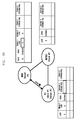
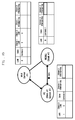
- FIGs. 6A to 6D and 7 illustrate an added data synchronization procedure of a data synchronization method according to an exemplary embodiment of the present invention.
- the PC has only one data item at an initial step.
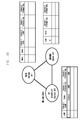
- the PC has a change log table as illustrated in Table 4 with two change log fields for the respective web server and mobile device. If a data item is added at the PC, the PC generates a local ID and adds the local ID to the change log fields of the change log table. Next, the PC transmits a synchronization request message containing the change log table to the mobile device. If the change log table of the PC is received, the mobile device adds the data item to its change log table with the local ID with reference to the PC's change log table as shown in FIG. 6B .
- the mobile device's change log table has a server 1 change log field and a server 2 change log field.
- the mobile device registers the newly added data item with a change log, i.e., command "add”. After registering the newly added data item, the mobile device transmits to the PC a synchronization response message containing status information (status: add (OK)) indicating that the mobile device's change log table is synchronized and transmits a synchronization request message to the web server. If the synchronization response message is received, the mobile device deletes the change log information "add" from the client 2 change log field of its change log table (see FIG. 6B ). Accordingly, the data item is synchronized between the PC and mobile device.
- status information status information
- add add
- the web server receives the synchronization request message transmitted by the mobile device and determines whether the data item indicated by the synchronization message exists in its change log table. If the data item does not exist in the server's change log table, the server creates a GUID of the data item and maps the GUID to the client LUID assigned by the mobile device. The server adds the ID mapping (GUID and Client LUID) to its log change table to synchronize with the mobile device's log change table (see FIG. 6C ). The record on the data item has a command "add" inserted in the server2/client1 change log field. Next, the web server transmits the mobile device a synchronization response message containing status information (status: add (OK)) indicating that the data item is synchronized.
- status information status information
- the web server also receives the synchronization request message transmitted by the PC. If the synchronization request message is received, the web server determines whether the data item indicated by the synchronization request message exists in its log change table. Since the data item is added to the server's log change table according to the synchronization request message transmitted by the mobile device, the web server determines that the data item exists. In this case, the server compares the data item indicated by the synchronization request message from the PC with the data items listed in its change log table. It is determined that the message item indicated by the synchronization request message from the PC exists in its change log table. The web server determines that the data item is synchronized among the PC and mobile device to create a mapping between the GUID assigned by the web server and LUIDs assigned by the clients.
- the web server deletes the command "add" from the server2/client1 change log field.
- the web server transmits a synchronization response message indicating the completion of data synchronization to the PC and ends the synchronization process. That is, the web server stops transmission of the data item to the PC and mobile device and ends the data synchronization process.
- the devices send the modification information to the server. If the modification information is received, the server compares the data item associated with the modification information with the data items listed in its log change table. If the data item indicated by the modification information exist in its log change table, the server transmits to the clients (PC and mobile device) the status information (status code 201) indicating the synchronization of the data item is processed successfully.
- the server also creates a mapping between the IDs assigned by the server and clients.
- the PC transmits a synchronization request message to the web server and mobile device as shown in FIGs. 6B and 6D .
- the synchronization request message includes the data item (data: "contact”) and the LUID "G” assigned by the PC.
- the mobile device adds the data item carried by the synchronization request message to its log change table to synchronize the data with the PC and transmits the synchronization request message to the web server as shown in FIG. 6C .
- the synchronization request message transmitted by the mobile device includes the data item (data: "contact”) and the LUID "G" registered to its change log table.
- the server analyzes the synchronization request messages transmitted by the mobile device and the PC, and performs synchronization of data in its change log table. In this case, the server recognizes that the data item (data: "contact") transmitted by the mobile device is identical with the data item transmitted by the PC. If the data items transmitted by the PC and mobile device are identical with each other, the server transmits the status information indicating that the data item is synchronized in the mobile device already, and adds the LUID ("1") to the client1 LUID field of its change log table. Also, the server deletes the change log (add) from the client1 change log field of its change log table as shown in FIG. 6D .
- the devices Since the change log is deleted from the records of the data item registered to the change log tables of the three devices (server, PC and mobile device), the devices do not send the synchronization command in association with the data item at the next synchronization process. This means the data item is synchronized among the three devices.
- FIG. 7 is a message flow diagram illustrating steps of the added data synchronization procedure according to an exemplary embodiment of the present invention.
- a data item is added at the PC and the synchronization procedure is performed between the PC and the mobile device, between the mobile device and the server, and between the server and the PC, sequentially.
- the client requests authentication in step S411, and the PC approves the authentication in step S413.
- the mobile device recognizes the authentication approval and notifies the PC of the location of its database in step S415.
- the sync type is determined.
- the PC generates a change log table including the added data item and transmits the change log table to the mobile device in step S417. If a data item is added, the PC generates a PC ID and transmits the data item ("contact") with the PC ID. At this time, the PC functions as a server (server#2) such that the PC ID is processed as a GUID at the mobile device. Accordingly, the synchronization request message transmitted by the PC includes a command (add), a PC ID (GUID) and the data (contact).
- the mobile device adds the data "contact" to its change log table and generates a mobile ID (LUID).
- the mobile device creates a synchronization response message containing status information (sync (OK) and add (OK-201)) and map information (a mapping between the GUID and the LUID) to transmit to the PC in step S419 to notify the PC that the data item is synchronized in the mobile device.
- the PC Upon receipt of the synchronization response message, the PC transmits to the mobile device the status information indicating that the synchronization of the data item is acquired in step S421 and ends the data synchronization process.
- the mobile device requests authentication to the server in step S431.
- the server approves the authentication to the mobile device in step S433.
- the mobile device transmits the synchronization request message containing the data item synchronized and the change log to the server in step S435.
- the server compares the change logs of its change log table and the change log extracted from the synchronization request message and determines whether the data item exists based on the comparison result. At this time, the server compares the names of the data items and/or reception times of the data items.
- the server adds the data item to its change log table and creates status information (sync (OK) and add (OK-201)) and transmits the synchronization response message containing the status information in step S437.
- the mobile device Upon receipt of the synchronization response message, the mobile device transmits a synchronization confirm message to the server in step S439. In this manner, the synchronization of the data item is acquired between the mobile device and server in step S441.
- the PC transmits an authentication request message to the server in step S451, and the server transmits an authentication approval message to the PC in response to the authentication request message in step S453.
- the PC Upon receipt of the authentication approval message, the PC transmits a synchronization request message containing the data item and the change log on the data item to the server in step S455. If the synchronization request message is received, the server compares the change log contained in the synchronization request message and change logs listed in its change log table and determines whether the identical data item exists according to the comparison result.
- the server Since the server has received the data item from the mobile device already, the server generates status information (sync (OK) and add (OK-201)) and transmits the synchronization response message containing the status information to the PC in step S457.
- the PC Upon receipt of the synchronization response message, the PC transmits a synchronization confirm message to the server in step S459. Accordingly, no more transmission of messages associated with the synchronization of the data item occurs, and the synchronization of the data item is acquired among the three devices instep S461.
- FIGs. 6A to 6D and 7 illustrate an exemplary data synchronization procedure when a data item is added at the PC connected to the mobile device.
- the devices do not always maintain connections to the server. Accordingly, when the devices are connected to each other, the synchronization of data is performed. For example, when the three devices are connected to each other, the data synchronization procedure is done in a sequential order between the PC and the server, between the PC and the mobile device, and between the mobile device and the server.
- the server analyzes the change logs of the modified data received from the two other devices, synchronizes the data item corresponding to the data item received first and notifies the device to transmit the data item later, if the data item is synchronized already.
- FIGs. 8A to 8D and FIG. 9 illustrate a replaced data synchronization procedure of a data synchronization method according to an exemplary embodiment of the present invention.
- the replaced data synchronization procedure is similar to the added data synchronization procedure.
- the data synchronization procedure is explained under the assumption that a specific data item is replaced in the mobile device.
- the data item "contact” is replaced by "contact 1" at the mobile device.
- the mobile device sets the service change log field and client 1 change log field of the record of the data item "contact 1" to a synchronization command "replace”.
- the mobile device attempts synchronization of the modified data item with the server.
- the mobile device replaces the data item "contact” with "contact 1" in its change log table, transmits a synchronization request message containing the replaced data item to the server and deletes the synchronization command "replace” from the service 1 change log field of its change log table as shown in FIG. 8B .
- the synchronization command contains "replace”
- the mobile device maintains the data ID rather than assigning another data ID.
- the server analyzes the synchronization request message to replace the data item "contact” with "contact 1” and sets the client 1 (PC) change log field of the record of the replaced data item "contact 1" to "replace".
- the server After updating its change log table, the server performs a data synchronization process with the PC. First, the server generates a synchronization request message for replacing the data item "contact” with “contact 1” and deletes the synchronization command "replace” from the client 1 (PC) change log field of the record of "contact 1". Upon receipt of the synchronization request message transmitted by the server, the PC analyzes the synchronization request message to extract the synchronization command "replace", replaces the data item "contact” with "contact 1", and sets the client 2 (mobile device) change log field of the record to "replace” as shown in FIG. 8C .
- the mobile device performs replaced data synchronization with the PC.
- the PC analyzes the synchronization request message and performs a data synchronization process based on the analysis result.
- the PC functions as a server. Accordingly, the data item of the PC has been synchronized already in association with the server.
- the PC recognizes that the replaced data item is identical to the data item received from the mobile device from the comparison result of data names and/or replacement times. In this case, the PC deletes the synchronization command "replace" from the client 2 (mobile device) change log field of its change log table as shown in FIG. 8D and ends the replaced data synchronization process.
- the server determines whether a data item identified by an LUID transmitted by the client exists in its change log table. If the data item exists in the server's change log table (synchronization of the data item is acquired), the server transmits a response message indicating that the synchronization command is normally executed (in a case of "replace" command, status code 200 is used), and deletes the synchronization command from the change log field of the change log table.
- the mobile device transmits the replaced data item "contact 1" with an LUID "G", and the server replaces the data item "contact” identified by the LUID "G” with "contact 1".
- the server sets the client 1 (PC) change log field to "replace”.
- the server transmits the replaced data item to the PC. If the replaced data item is received, the PC sets the client 2 (mobile device) change log field of its change log table to "replace” and replaces the data item "contact” with "contact 1".
- the PC recognizes that the data item is synchronized already and deletes the synchronization command "replace" from the client 2 (mobile device) change log field of its change log table. If the synchronization command is deleted from the change log field of the change log tables of the devices, no more synchronization command is exchanged between the devices. This means that the data item is synchronized among the devices.
- FIG. 9 is a message flow diagram illustrating the replaced data synchronization procedure according to an exemplary embodiment of the present invention.
- a data item is replaced by another data item at the PC, and the synchronization procedure is performed in a sequential order between the mobile device and the server, between the server and the PC, and the mobile device and the PC.
- the mobile device requests authentication to the server in step S511, and the server approves the authentication on the mobile device in step S513.
- the mobile device recognizes the authentication approval in step S515.
- the mobile device generates a synchronization request message including a change log and the replaced data item and transmits the synchronization request message to the server.
- the mobile device creates a data ID (LUID) and transmits the replaced data item ("contact 1") with the LUID.
- the synchronization request message contains a synchronization command "replace", a data ID (LUID) assigned by the mobile device and the replaced data item "contact 1".
- the server replaces the data item "contact” with "contact 1" according to the synchronization command "replace” included in the synchronization request message.
- the server generates status information (sync (OK) and replace (OK-200)) indicating that the corresponding data item is synchronized and transmits a synchronization response message including the status information to the mobile device in step S517. If the synchronization response message is received, the mobile device transmits a synchronization confirm message containing the status information to the server in step S519.
- the PC After the data synchronization is acquired between the mobile device and server in step S521, the PC requests authentication to the server in step S531 and the server approves the authentication request in step S533. If the authentication request is approved, the PC transmits the synchronization request message including location information of its database and transmits the synchronization request message to the server in step S535. If the synchronization request message is received, the server creates a synchronization response message containing the replaced data item and transmits the synchronization response message to the PC in step S537. The synchronization message includes the replaced data item and an ID assigned to the replaced data item by the server.
- the PC replaces the data item "contact” with “contact 1" with reference to the synchronization response message and transmits a synchronization confirm message indicating that the data item is replaced.
- the PC also transmits the synchronization confirm message to the server in step S539.
- the server transmits to the PC the status information indicating that the data synchronization is acquired in step S541 and ends the data synchronization process.
- the mobile device After the synchronization of the data item between the PC and server, the mobile device transmits an authentication request message to the PC in step S551. In response to the authentication request message, the PC transmits an authentication approval message to the mobile device in step S553. At this time, the PC functions as a server to the mobile device. Next, the mobile device transmits a synchronization request message containing the replaced data item and the change log to the PC in step S555. The PC compares the change log extracted from the synchronization request message with the change logs listed in its change log table and determines whether the replaced data item exists based on the comparison result.
- the PC Since the replaced data item is already synchronized through the data synchronization process with the server, the PC creates status information (sync (OK) and replace (OK-200)) and transmits a synchronization response message containing the status information to the mobile device for indicating that the replaced data item is synchronized already in step S557. If the synchronization response message is received, the mobile device recognizes the completion of the data synchronization in the PC and transmits a synchronization confirm message to the PC in step S559. In this manner, the replaced data item is synchronized among the three devices in step S561.
- FIGs. 8A to 8D and 9 illustrate an exemplary data synchronization procedure when a data item is replaced by another data item at the mobile device.
- the devices do not always maintain connections to the server.
- the replaced data synchronization procedure is similar to the added data synchronization procedure, and the synchronization procedure may be performed between devices associated with each other.
- the data synchronization method of the present invention simplifies synchronization of data among more than three devices, resulting in efficient management.
- the data synchronization method of the present invention enables synchronizing data among multiple devices efficiently when the data are added and replaced at any of the devices and reduces data transmission amount.
- the data synchronization method of the present invention is capable of reducing unnecessary data exchanges of large files during the synchronization process, resulting in a reduction of file transmission latency and redundant transmission load.
Landscapes
- Engineering & Computer Science (AREA)
- Computer Networks & Wireless Communication (AREA)
- Signal Processing (AREA)
- Information Transfer Between Computers (AREA)
- Information Retrieval, Db Structures And Fs Structures Therefor (AREA)
- Computer And Data Communications (AREA)
- Telephonic Communication Services (AREA)
Applications Claiming Priority (1)
| Application Number | Priority Date | Filing Date | Title |
|---|---|---|---|
| KR1020080010061A KR101430517B1 (ko) | 2008-01-31 | 2008-01-31 | 복수의 데이터 통신장치들 간의 데이터 동기 방법 |
Publications (3)
| Publication Number | Publication Date |
|---|---|
| EP2086204A2 true EP2086204A2 (de) | 2009-08-05 |
| EP2086204A3 EP2086204A3 (de) | 2011-12-28 |
| EP2086204B1 EP2086204B1 (de) | 2017-06-14 |
Family
ID=40513742
Family Applications (1)
| Application Number | Title | Priority Date | Filing Date |
|---|---|---|---|
| EP09151638.5A Not-in-force EP2086204B1 (de) | 2008-01-31 | 2009-01-29 | Verfahren und System zur Datensynchronisation zwischen Netzvorrichtungen |
Country Status (4)
| Country | Link |
|---|---|
| US (1) | US8171171B2 (de) |
| EP (1) | EP2086204B1 (de) |
| KR (1) | KR101430517B1 (de) |
| CN (1) | CN101500208A (de) |
Cited By (8)
| Publication number | Priority date | Publication date | Assignee | Title |
|---|---|---|---|---|
| US20110161446A1 (en) * | 2009-12-24 | 2011-06-30 | Samsung Electronics Co., Ltd. | Apparatus and method for synchronizing data between instant messaging clients in communication system |
| CN102404354A (zh) * | 2010-09-10 | 2012-04-04 | 北京创新方舟科技有限公司 | 一种基于网络设备实现更新设备间数据同步的方法与设备 |
| CN102681993A (zh) * | 2011-03-07 | 2012-09-19 | 联想(北京)有限公司 | 一种文件同步方法、文件同步装置及第一电子设备 |
| CN102770818A (zh) * | 2009-12-11 | 2012-11-07 | 通用电气公司 | 用于存档网络数据的方法、系统和设备 |
| US8495185B2 (en) | 2010-08-06 | 2013-07-23 | International Business Machines Corporation | Minimizing network resource overhead consumption by reports from one or more agents distributed in an electronic data network of nodes |
| EP2506531A4 (de) * | 2009-12-31 | 2016-09-07 | Zte Corp | Verfahren zum finden, aktualisieren und synchronisieren von veränderten aufzeichnungseinheiten und datensynchronisierungsvorrichtung |
| EP2519890A4 (de) * | 2009-12-30 | 2016-09-28 | Sybase Inc | Nachrichtenbasierte synchronisation für mobile geschäftsobjekte |
| CN108632300A (zh) * | 2017-03-15 | 2018-10-09 | 阿里巴巴集团控股有限公司 | 数据同步系统、方法、服务器、客户端及电子设备 |
Families Citing this family (153)
| Publication number | Priority date | Publication date | Assignee | Title |
|---|---|---|---|---|
| US8326814B2 (en) | 2007-12-05 | 2012-12-04 | Box, Inc. | Web-based file management system and service |
| US8135670B2 (en) * | 2008-07-22 | 2012-03-13 | International Business Machines Corporation | Embedded change logging for data synchronization |
| US9477727B2 (en) | 2008-08-01 | 2016-10-25 | Sybase, Inc. | Abstracting data for use by a mobile device having occasional connectivity |
| US8131666B2 (en) * | 2008-10-21 | 2012-03-06 | Fmr Llc | Context-based user authentication, workflow processing, and data management in a centralized application in communication with a plurality of third-party applications |
| US8463848B2 (en) * | 2009-07-15 | 2013-06-11 | Hippocrene Llc | System and method of transmitting data over a computer network including for presentations over multiple channels in parallel |
| US10496608B2 (en) * | 2009-10-28 | 2019-12-03 | Sandisk Il Ltd. | Synchronizing changes in a file system which are initiated by a storage device and a host device |
| CN101711064B (zh) * | 2009-11-25 | 2014-03-12 | 中兴通讯股份有限公司 | 修改信息的管理方法及终端 |
| US8434097B2 (en) | 2009-12-30 | 2013-04-30 | Sybase, Inc. | Dynamic data binding for MBOs for container based application |
| US8321392B2 (en) | 2009-12-30 | 2012-11-27 | Sybase, Inc. | Pending state management for mobile business objects |
| US8788458B2 (en) | 2009-12-30 | 2014-07-22 | Sybase, Inc. | Data caching for mobile applications |
| US8909662B2 (en) | 2009-12-30 | 2014-12-09 | Sybase, Inc. | Message based mobile object with native PIM integration |
| US9336291B2 (en) | 2009-12-30 | 2016-05-10 | Sybase, Inc. | Message based synchronization for mobile business objects |
| US20110173947A1 (en) * | 2010-01-19 | 2011-07-21 | General Electric Company | System and method for gas turbine power augmentation |
| US8655966B1 (en) * | 2010-03-31 | 2014-02-18 | Emc Corporation | Mobile device data protection |
| US8683005B1 (en) | 2010-03-31 | 2014-03-25 | Emc Corporation | Cache-based mobile device network resource optimization |
| US9152650B1 (en) | 2010-03-31 | 2015-10-06 | Emc Corporation | Mobile device data recovery |
| US8694744B1 (en) | 2010-03-31 | 2014-04-08 | Emc Corporation | Mobile device snapshot backup |
| US8694597B1 (en) | 2010-03-31 | 2014-04-08 | Emc Corporation | Mobile device group-based data sharing |
| US9514089B1 (en) | 2010-03-31 | 2016-12-06 | EMC IP Holding Company LLC | Mobile device network data synchronization |
| CN102238223B (zh) * | 2010-05-06 | 2012-10-10 | 清华大学 | 一种面向移动设备的网络化个人数据管理方法 |
| CN102315930B (zh) * | 2010-06-30 | 2014-07-23 | 国际商业机器公司 | 用于在数据同步中减少数据传输量的方法和系统 |
| JP5545141B2 (ja) * | 2010-09-09 | 2014-07-09 | 富士ゼロックス株式会社 | データ中継システム、中継装置、およびプログラム |
| KR20120038668A (ko) * | 2010-10-14 | 2012-04-24 | 삼성전자주식회사 | 전자 책 컨텐트 갱신 장치 및 방법 |
| CN102540909B (zh) * | 2010-12-08 | 2013-11-13 | 北京北方微电子基地设备工艺研究中心有限责任公司 | 工厂自动化系统的数据同步方法和工厂自动化系统 |
| KR101755421B1 (ko) * | 2011-01-10 | 2017-07-10 | 삼성전자주식회사 | 클라이언트 장치를 이용한 호스트 장치의 파일 정보 시스템 편집 방법 및 시스템 |
| WO2012099617A1 (en) | 2011-01-20 | 2012-07-26 | Box.Net, Inc. | Real time notification of activities that occur in a web-based collaboration environment |
| US9015601B2 (en) | 2011-06-21 | 2015-04-21 | Box, Inc. | Batch uploading of content to a web-based collaboration environment |
| US9063912B2 (en) | 2011-06-22 | 2015-06-23 | Box, Inc. | Multimedia content preview rendering in a cloud content management system |
| US9652741B2 (en) | 2011-07-08 | 2017-05-16 | Box, Inc. | Desktop application for access and interaction with workspaces in a cloud-based content management system and synchronization mechanisms thereof |
| US9978040B2 (en) | 2011-07-08 | 2018-05-22 | Box, Inc. | Collaboration sessions in a workspace on a cloud-based content management system |
| KR101869555B1 (ko) * | 2011-08-29 | 2018-06-21 | 한국전력공사 | 데이터 동기화를 이용한 원격 검침 방법 및 시스템 |
| US9197718B2 (en) | 2011-09-23 | 2015-11-24 | Box, Inc. | Central management and control of user-contributed content in a web-based collaboration environment and management console thereof |
| US8515902B2 (en) | 2011-10-14 | 2013-08-20 | Box, Inc. | Automatic and semi-automatic tagging features of work items in a shared workspace for metadata tracking in a cloud-based content management system with selective or optional user contribution |
| WO2013062599A1 (en) | 2011-10-26 | 2013-05-02 | Box, Inc. | Enhanced multimedia content preview rendering in a cloud content management system |
| US9098474B2 (en) | 2011-10-26 | 2015-08-04 | Box, Inc. | Preview pre-generation based on heuristics and algorithmic prediction/assessment of predicted user behavior for enhancement of user experience |
| US8990307B2 (en) * | 2011-11-16 | 2015-03-24 | Box, Inc. | Resource effective incremental updating of a remote client with events which occurred via a cloud-enabled platform |
| JP5917103B2 (ja) * | 2011-11-18 | 2016-05-11 | キヤノン株式会社 | 情報処理装置、情報処理方法、及びプログラム |
| US9773051B2 (en) | 2011-11-29 | 2017-09-26 | Box, Inc. | Mobile platform file and folder selection functionalities for offline access and synchronization |
| US9019123B2 (en) | 2011-12-22 | 2015-04-28 | Box, Inc. | Health check services for web-based collaboration environments |
| KR101329676B1 (ko) * | 2011-12-28 | 2013-11-18 | 계명대학교 산학협력단 | 수정된 허프만 코드에 기반한 모바일 데이터 동기화 패키지 전송 방법 |
| US9904435B2 (en) | 2012-01-06 | 2018-02-27 | Box, Inc. | System and method for actionable event generation for task delegation and management via a discussion forum in a web-based collaboration environment |
| US11232481B2 (en) | 2012-01-30 | 2022-01-25 | Box, Inc. | Extended applications of multimedia content previews in the cloud-based content management system |
| US10621549B2 (en) * | 2012-02-09 | 2020-04-14 | Varonis Systems, Ltd. | Method and apparatus for secure enterprise collaboration |
| US9965745B2 (en) | 2012-02-24 | 2018-05-08 | Box, Inc. | System and method for promoting enterprise adoption of a web-based collaboration environment |
| US9195636B2 (en) | 2012-03-07 | 2015-11-24 | Box, Inc. | Universal file type preview for mobile devices |
| JP5853819B2 (ja) * | 2012-03-29 | 2016-02-09 | 富士通株式会社 | 制御プログラム、制御方法、記憶制御装置および情報処理システム |
| US9020888B1 (en) * | 2012-04-04 | 2015-04-28 | Nectar Services Corp. | Data replicating systems and data replication methods |
| US9054919B2 (en) | 2012-04-05 | 2015-06-09 | Box, Inc. | Device pinning capability for enterprise cloud service and storage accounts |
| US9575981B2 (en) | 2012-04-11 | 2017-02-21 | Box, Inc. | Cloud service enabled to handle a set of files depicted to a user as a single file in a native operating system |
| CN103379140B (zh) * | 2012-04-17 | 2016-07-27 | 中国移动通信集团公司 | 一种日志处理规则同步方法及相关设备和系统 |
| US9413587B2 (en) | 2012-05-02 | 2016-08-09 | Box, Inc. | System and method for a third-party application to access content within a cloud-based platform |
| US8914516B2 (en) | 2012-05-08 | 2014-12-16 | Fmr Llc | Providing an integrated suite of cloud-based, hosted and internal applications |
| US9691051B2 (en) | 2012-05-21 | 2017-06-27 | Box, Inc. | Security enhancement through application access control |
| US8914900B2 (en) | 2012-05-23 | 2014-12-16 | Box, Inc. | Methods, architectures and security mechanisms for a third-party application to access content in a cloud-based platform |
| US9027108B2 (en) | 2012-05-23 | 2015-05-05 | Box, Inc. | Systems and methods for secure file portability between mobile applications on a mobile device |
| KR101402286B1 (ko) * | 2012-06-14 | 2014-06-02 | (주)아이비즈소프트웨어 | 정보 동기화 방법, 시스템 및 장치 |
| US9021099B2 (en) | 2012-07-03 | 2015-04-28 | Box, Inc. | Load balancing secure FTP connections among multiple FTP servers |
| US9712510B2 (en) | 2012-07-06 | 2017-07-18 | Box, Inc. | Systems and methods for securely submitting comments among users via external messaging applications in a cloud-based platform |
| US9792320B2 (en) | 2012-07-06 | 2017-10-17 | Box, Inc. | System and method for performing shard migration to support functions of a cloud-based service |
| GB2505072A (en) | 2012-07-06 | 2014-02-19 | Box Inc | Identifying users and collaborators as search results in a cloud-based system |
| US9473532B2 (en) | 2012-07-19 | 2016-10-18 | Box, Inc. | Data loss prevention (DLP) methods by a cloud service including third party integration architectures |
| US8868574B2 (en) | 2012-07-30 | 2014-10-21 | Box, Inc. | System and method for advanced search and filtering mechanisms for enterprise administrators in a cloud-based environment |
| US9794256B2 (en) | 2012-07-30 | 2017-10-17 | Box, Inc. | System and method for advanced control tools for administrators in a cloud-based service |
| US8745267B2 (en) | 2012-08-19 | 2014-06-03 | Box, Inc. | Enhancement of upload and/or download performance based on client and/or server feedback information |
| GB2513671A (en) | 2012-08-27 | 2014-11-05 | Box Inc | Server side techniques for reducing database workload in implementing selective subfolder synchronization in a cloud-based environment |
| US9135462B2 (en) | 2012-08-29 | 2015-09-15 | Box, Inc. | Upload and download streaming encryption to/from a cloud-based platform |
| CN103685350B (zh) * | 2012-09-04 | 2016-12-21 | 阿里巴巴集团控股有限公司 | 存储系统的同步方法及相关的设备 |
| US9195519B2 (en) | 2012-09-06 | 2015-11-24 | Box, Inc. | Disabling the self-referential appearance of a mobile application in an intent via a background registration |
| US9117087B2 (en) | 2012-09-06 | 2015-08-25 | Box, Inc. | System and method for creating a secure channel for inter-application communication based on intents |
| US9311071B2 (en) | 2012-09-06 | 2016-04-12 | Box, Inc. | Force upgrade of a mobile application via a server side configuration file |
| US9292833B2 (en) | 2012-09-14 | 2016-03-22 | Box, Inc. | Batching notifications of activities that occur in a web-based collaboration environment |
| US10200256B2 (en) | 2012-09-17 | 2019-02-05 | Box, Inc. | System and method of a manipulative handle in an interactive mobile user interface |
| US9553758B2 (en) | 2012-09-18 | 2017-01-24 | Box, Inc. | Sandboxing individual applications to specific user folders in a cloud-based service |
| US10915492B2 (en) | 2012-09-19 | 2021-02-09 | Box, Inc. | Cloud-based platform enabled with media content indexed for text-based searches and/or metadata extraction |
| US9959420B2 (en) | 2012-10-02 | 2018-05-01 | Box, Inc. | System and method for enhanced security and management mechanisms for enterprise administrators in a cloud-based environment |
| US9705967B2 (en) | 2012-10-04 | 2017-07-11 | Box, Inc. | Corporate user discovery and identification of recommended collaborators in a cloud platform |
| US9495364B2 (en) | 2012-10-04 | 2016-11-15 | Box, Inc. | Enhanced quick search features, low-barrier commenting/interactive features in a collaboration platform |
| US9665349B2 (en) | 2012-10-05 | 2017-05-30 | Box, Inc. | System and method for generating embeddable widgets which enable access to a cloud-based collaboration platform |
| EP2784717A1 (de) | 2012-10-17 | 2014-10-01 | Box, Inc. | Entfernt ausgeführte Schlüsselverwaltung in einer Cloud-basierten Umgebung |
| US9756022B2 (en) | 2014-08-29 | 2017-09-05 | Box, Inc. | Enhanced remote key management for an enterprise in a cloud-based environment |
| CN103838767B (zh) * | 2012-11-26 | 2018-05-01 | 腾讯科技(深圳)有限公司 | 搜索记录的同步装置及方法 |
| WO2014084863A1 (en) * | 2012-11-30 | 2014-06-05 | Empire Technology Development, Llc. | Application equivalence map for synchronized positioning of application icons across device platforms |
| CN103873451B (zh) * | 2012-12-17 | 2017-03-29 | 中国移动通信集团公司 | 一种数据同步的方法、设备和系统 |
| US10235383B2 (en) | 2012-12-19 | 2019-03-19 | Box, Inc. | Method and apparatus for synchronization of items with read-only permissions in a cloud-based environment |
| US9396245B2 (en) | 2013-01-02 | 2016-07-19 | Box, Inc. | Race condition handling in a system which incrementally updates clients with events that occurred in a cloud-based collaboration platform |
| US9953036B2 (en) | 2013-01-09 | 2018-04-24 | Box, Inc. | File system monitoring in a system which incrementally updates clients with events that occurred in a cloud-based collaboration platform |
| EP2755151A3 (de) | 2013-01-11 | 2014-09-24 | Box, Inc. | Funktionalitäten, Merkmale und der Benutzeroberfläche eines Synchronisationsclient zu einer Cloud-basierten Umgebung |
| US10599671B2 (en) | 2013-01-17 | 2020-03-24 | Box, Inc. | Conflict resolution, retry condition management, and handling of problem files for the synchronization client to a cloud-based platform |
| CN104937582B (zh) * | 2013-02-27 | 2018-11-06 | 惠普发展公司,有限责任合伙企业 | 数据同步 |
| US8799034B1 (en) | 2013-03-08 | 2014-08-05 | Allstate University Company | Automated accident detection, fault attribution, and claims processing |
| US9019092B1 (en) | 2013-03-08 | 2015-04-28 | Allstate Insurance Company | Determining whether a vehicle is parked for automated accident detection, fault attribution, and claims processing |
| US10963966B1 (en) | 2013-09-27 | 2021-03-30 | Allstate Insurance Company | Electronic exchange of insurance information |
| US10032226B1 (en) | 2013-03-08 | 2018-07-24 | Allstate Insurance Company | Automatic exchange of information in response to a collision event |
| US10846074B2 (en) | 2013-05-10 | 2020-11-24 | Box, Inc. | Identification and handling of items to be ignored for synchronization with a cloud-based platform by a synchronization client |
| US10725968B2 (en) | 2013-05-10 | 2020-07-28 | Box, Inc. | Top down delete or unsynchronization on delete of and depiction of item synchronization with a synchronization client to a cloud-based platform |
| GB2515192B (en) | 2013-06-13 | 2016-12-14 | Box Inc | Systems and methods for synchronization event building and/or collapsing by a synchronization component of a cloud-based platform |
| US9805050B2 (en) | 2013-06-21 | 2017-10-31 | Box, Inc. | Maintaining and updating file system shadows on a local device by a synchronization client of a cloud-based platform |
| US10110656B2 (en) | 2013-06-25 | 2018-10-23 | Box, Inc. | Systems and methods for providing shell communication in a cloud-based platform |
| US10229134B2 (en) | 2013-06-25 | 2019-03-12 | Box, Inc. | Systems and methods for managing upgrades, migration of user data and improving performance of a cloud-based platform |
| CN105531731A (zh) * | 2013-07-17 | 2016-04-27 | 谷歌公司 | 用于从移动设备修改和删除数据的系统、方法和计算机程序产品 |
| US9535924B2 (en) | 2013-07-30 | 2017-01-03 | Box, Inc. | Scalability improvement in a system which incrementally updates clients with events that occurred in a cloud-based collaboration platform |
| US10572943B1 (en) * | 2013-09-10 | 2020-02-25 | Allstate Insurance Company | Maintaining current insurance information at a mobile device |
| US9213684B2 (en) | 2013-09-13 | 2015-12-15 | Box, Inc. | System and method for rendering document in web browser or mobile device regardless of third-party plug-in software |
| US9704137B2 (en) | 2013-09-13 | 2017-07-11 | Box, Inc. | Simultaneous editing/accessing of content by collaborator invitation through a web-based or mobile application to a cloud-based collaboration platform |
| US9535909B2 (en) | 2013-09-13 | 2017-01-03 | Box, Inc. | Configurable event-based automation architecture for cloud-based collaboration platforms |
| US10509527B2 (en) | 2013-09-13 | 2019-12-17 | Box, Inc. | Systems and methods for configuring event-based automation in cloud-based collaboration platforms |
| US8892679B1 (en) | 2013-09-13 | 2014-11-18 | Box, Inc. | Mobile device, methods and user interfaces thereof in a mobile device platform featuring multifunctional access and engagement in a collaborative environment provided by a cloud-based platform |
| GB2518298A (en) | 2013-09-13 | 2015-03-18 | Box Inc | High-availability architecture for a cloud-based concurrent-access collaboration platform |
| US9443270B1 (en) | 2013-09-17 | 2016-09-13 | Allstate Insurance Company | Obtaining insurance information in response to optical input |
| US10866931B2 (en) | 2013-10-22 | 2020-12-15 | Box, Inc. | Desktop application for accessing a cloud collaboration platform |
| US10742520B2 (en) | 2013-12-31 | 2020-08-11 | Citrix Systems, Inc. | Providing mobile device management functionalities |
| CN103873567B (zh) * | 2014-03-03 | 2018-09-04 | 北京智谷睿拓技术服务有限公司 | 基于任务的数据传输方法及数据传输装置 |
| US10530854B2 (en) | 2014-05-30 | 2020-01-07 | Box, Inc. | Synchronization of permissioned content in cloud-based environments |
| US9602514B2 (en) | 2014-06-16 | 2017-03-21 | Box, Inc. | Enterprise mobility management and verification of a managed application by a content provider |
| US10574442B2 (en) | 2014-08-29 | 2020-02-25 | Box, Inc. | Enhanced remote key management for an enterprise in a cloud-based environment |
| US10038731B2 (en) | 2014-08-29 | 2018-07-31 | Box, Inc. | Managing flow-based interactions with cloud-based shared content |
| US9894119B2 (en) | 2014-08-29 | 2018-02-13 | Box, Inc. | Configurable metadata-based automation and content classification architecture for cloud-based collaboration platforms |
| US20160088064A1 (en) * | 2014-09-19 | 2016-03-24 | Google Inc. | Storing and transferring application data between devices |
| US9872174B2 (en) | 2014-09-19 | 2018-01-16 | Google Inc. | Transferring application data between devices |
| CN104378234B (zh) * | 2014-11-19 | 2018-09-07 | 北京数介科技有限公司 | 跨数据中心的数据传输处理方法及系统 |
| JP6291085B2 (ja) * | 2014-12-24 | 2018-03-14 | エヌ・ティ・ティ・コミュニケーションズ株式会社 | 負荷分散装置、負荷分散方法及びプログラム |
| CN104717280B (zh) * | 2014-12-25 | 2018-03-23 | 广州市百果园信息技术有限公司 | 数据同步的标记方法和装置 |
| US20160188468A1 (en) * | 2014-12-26 | 2016-06-30 | Intel Corporation | Implementation of data coherence among devices |
| US10713717B1 (en) | 2015-01-22 | 2020-07-14 | Allstate Insurance Company | Total loss evaluation and handling system and method |
| US10083551B1 (en) | 2015-04-13 | 2018-09-25 | Allstate Insurance Company | Automatic crash detection |
| US9767625B1 (en) | 2015-04-13 | 2017-09-19 | Allstate Insurance Company | Automatic crash detection |
| CN104917819B (zh) * | 2015-04-29 | 2019-01-01 | 努比亚技术有限公司 | 一种实现数据同步的方法及系统 |
| CN104967658B (zh) * | 2015-05-08 | 2018-11-30 | 成都品果科技有限公司 | 一种多终端设备上的数据同步方法 |
| JP6727775B2 (ja) * | 2015-08-31 | 2020-07-22 | キヤノン株式会社 | サーバ装置、制御システム、制御方法、及び、プログラム |
| DE112016004861T5 (de) | 2015-10-23 | 2018-07-19 | Kodiak Networks Inc. | System und Verfahren zum Geofencing |
| GB2561722B (en) * | 2015-10-23 | 2021-10-20 | Kodiak Networks Inc | System and method for content messaging |
| US10902525B2 (en) | 2016-09-21 | 2021-01-26 | Allstate Insurance Company | Enhanced image capture and analysis of damaged tangible objects |
| US11361380B2 (en) | 2016-09-21 | 2022-06-14 | Allstate Insurance Company | Enhanced image capture and analysis of damaged tangible objects |
| US10937103B1 (en) | 2017-04-21 | 2021-03-02 | Allstate Insurance Company | Machine learning based accident assessment |
| US11310314B1 (en) * | 2017-07-28 | 2022-04-19 | Zero Cognitive Systems, Inc. | Automatic data synchronization across applications installed on multiple devices via mail server |
| US11055314B1 (en) | 2018-12-31 | 2021-07-06 | Facebook, Inc. | Techniques for a database-driven messaging user interface |
| US11025576B1 (en) * | 2018-12-31 | 2021-06-01 | Facebook, Inc. | Techniques for backend-specific cursor tracking |
| US10855761B1 (en) | 2018-12-31 | 2020-12-01 | Facebook, Inc. | Techniques for in-place directive execution |
| US10979500B1 (en) * | 2018-12-31 | 2021-04-13 | Facebook, Inc. | Techniques for directive-based messaging synchronization |
| WO2020228040A1 (zh) * | 2019-05-16 | 2020-11-19 | 深圳市欢太科技有限公司 | 智能家居系统的控制方法、装置、电子设备及存储介质 |
| CN110825820B (zh) * | 2019-09-27 | 2024-09-13 | 中国平安财产保险股份有限公司 | 实时数据标签获取方法、装置、计算机设备和存储介质 |
| CN113515569B (zh) * | 2020-04-09 | 2023-12-26 | 阿里巴巴集团控股有限公司 | 数据的同步方法、装置、系统 |
| CN113556371B (zh) * | 2020-04-26 | 2022-09-30 | 深信服科技股份有限公司 | 一种数据同步方法、系统、设备及计算机可读存储介质 |
| CN114281560B (zh) * | 2020-09-27 | 2025-09-26 | 安徽寒武纪信息科技有限公司 | 处理单元、用于处理单元的同步方法及相应产品 |
| CN112911005B (zh) * | 2021-02-03 | 2022-02-15 | 深圳市极致科技股份有限公司 | 一种数据同步系统、方法及车场数据更新方法 |
| US12117985B2 (en) * | 2021-08-13 | 2024-10-15 | Samsung Electronics Co., Ltd. | Host, storage system including the host, and operating method of the host |
| US11671278B2 (en) * | 2021-09-02 | 2023-06-06 | Rivian Ip Holdings, Llc | Automotive embedded system timekeeping |
| CN114254016A (zh) * | 2021-12-17 | 2022-03-29 | 北京金堤科技有限公司 | 基于弹性搜索的数据同步方法、装置、设备及存储介质 |
| CN115102968B (zh) * | 2022-06-16 | 2024-08-30 | 普联技术有限公司 | 数据同步方法、装置、系统及存储介质 |
| CN116233154A (zh) * | 2023-02-15 | 2023-06-06 | 杭州迪普科技股份有限公司 | 用于多系统的配置数据同步方法及装置 |
| CN116303779A (zh) * | 2023-03-01 | 2023-06-23 | 深圳市鲸视科技有限公司 | 数据更新同步方法、系统、计算机设备及存储介质 |
| CN116126882A (zh) * | 2023-04-17 | 2023-05-16 | 中国工商银行股份有限公司 | 数据同步方法、装置、设备及存储介质 |
| CN120448391B (zh) * | 2025-06-30 | 2025-09-12 | 苏州工学院 | 一种车间智能安检系统的实现方法 |
Citations (2)
| Publication number | Priority date | Publication date | Assignee | Title |
|---|---|---|---|---|
| US20050203905A1 (en) | 2004-03-12 | 2005-09-15 | Samsung Electronics Co., Ltd. | Method of synchronizing data between server and user terminal using messenger service system and system using the same |
| US7024428B1 (en) | 2001-02-23 | 2006-04-04 | Openwave Systems Inc. | Reliable data synchronization over unreliable networks |
Family Cites Families (9)
| Publication number | Priority date | Publication date | Assignee | Title |
|---|---|---|---|---|
| US5870759A (en) * | 1996-10-09 | 1999-02-09 | Oracle Corporation | System for synchronizing data between computers using a before-image of data |
| US20040044799A1 (en) * | 2002-09-03 | 2004-03-04 | Nokia Corporation | Method, device and system for synchronizing of data providing for the handling of an interrupted synchronization process |
| WO2006018843A2 (en) * | 2004-08-16 | 2006-02-23 | Beinsync Ltd. | A system and method for the synchronization of data across multiple computing devices |
| US20060106881A1 (en) | 2004-10-25 | 2006-05-18 | Empower Technologies | System and method for global data synchronization |
| KR100703305B1 (ko) * | 2005-03-03 | 2007-04-03 | 삼성전자주식회사 | 클라이언트들간 데이터 교환을 위한 SyncML 데이터Sync 시스템 및 데이터 교환 방법 |
| US7523146B2 (en) * | 2005-06-21 | 2009-04-21 | Apple Inc. | Apparatus and method for peer-to-peer N-way synchronization in a decentralized environment |
| US7509350B2 (en) * | 2006-06-01 | 2009-03-24 | Research In Motion Limited | Method and apparatus for synchronizing of databases |
| US7738503B2 (en) * | 2007-02-02 | 2010-06-15 | Palm, Inc. | Multi-way, peer-to-peer synchronization |
| US20090164667A1 (en) * | 2007-12-21 | 2009-06-25 | General Instrument Corporation | Synchronizing of Personal Content |
-
2008
- 2008-01-31 KR KR1020080010061A patent/KR101430517B1/ko active Active
-
2009
- 2009-01-29 EP EP09151638.5A patent/EP2086204B1/de not_active Not-in-force
- 2009-01-30 US US12/363,200 patent/US8171171B2/en active Active
- 2009-02-01 CN CNA2009100037344A patent/CN101500208A/zh active Pending
Patent Citations (2)
| Publication number | Priority date | Publication date | Assignee | Title |
|---|---|---|---|---|
| US7024428B1 (en) | 2001-02-23 | 2006-04-04 | Openwave Systems Inc. | Reliable data synchronization over unreliable networks |
| US20050203905A1 (en) | 2004-03-12 | 2005-09-15 | Samsung Electronics Co., Ltd. | Method of synchronizing data between server and user terminal using messenger service system and system using the same |
Cited By (9)
| Publication number | Priority date | Publication date | Assignee | Title |
|---|---|---|---|---|
| CN102770818A (zh) * | 2009-12-11 | 2012-11-07 | 通用电气公司 | 用于存档网络数据的方法、系统和设备 |
| US20110161446A1 (en) * | 2009-12-24 | 2011-06-30 | Samsung Electronics Co., Ltd. | Apparatus and method for synchronizing data between instant messaging clients in communication system |
| EP2519890A4 (de) * | 2009-12-30 | 2016-09-28 | Sybase Inc | Nachrichtenbasierte synchronisation für mobile geschäftsobjekte |
| EP2506531A4 (de) * | 2009-12-31 | 2016-09-07 | Zte Corp | Verfahren zum finden, aktualisieren und synchronisieren von veränderten aufzeichnungseinheiten und datensynchronisierungsvorrichtung |
| US8495185B2 (en) | 2010-08-06 | 2013-07-23 | International Business Machines Corporation | Minimizing network resource overhead consumption by reports from one or more agents distributed in an electronic data network of nodes |
| US8521854B2 (en) | 2010-08-06 | 2013-08-27 | International Business Machines Corporation | Minimising network resource overhead consumption by reports from one or more agents distributed in an electronic data network of nodes |
| CN102404354A (zh) * | 2010-09-10 | 2012-04-04 | 北京创新方舟科技有限公司 | 一种基于网络设备实现更新设备间数据同步的方法与设备 |
| CN102681993A (zh) * | 2011-03-07 | 2012-09-19 | 联想(北京)有限公司 | 一种文件同步方法、文件同步装置及第一电子设备 |
| CN108632300A (zh) * | 2017-03-15 | 2018-10-09 | 阿里巴巴集团控股有限公司 | 数据同步系统、方法、服务器、客户端及电子设备 |
Also Published As
| Publication number | Publication date |
|---|---|
| EP2086204A3 (de) | 2011-12-28 |
| KR20090084091A (ko) | 2009-08-05 |
| US8171171B2 (en) | 2012-05-01 |
| US20090198772A1 (en) | 2009-08-06 |
| EP2086204B1 (de) | 2017-06-14 |
| KR101430517B1 (ko) | 2014-08-19 |
| CN101500208A (zh) | 2009-08-05 |
Similar Documents
| Publication | Publication Date | Title |
|---|---|---|
| EP2086204B1 (de) | Verfahren und System zur Datensynchronisation zwischen Netzvorrichtungen | |
| KR100592647B1 (ko) | 서로 다른 클라이언트 사이의 데이터 동기화 시스템, 클라이언트들간의 업데이트 동기화 방법, 업데이트의 복제 방법, 및 컴퓨터 판독 가능 기록 매체 | |
| KR101011216B1 (ko) | 데이터 동기 | |
| CN100371929C (zh) | 数据库数据的同步 | |
| US8972348B2 (en) | Method and system for supporting off-line mode of operation and synchronization | |
| US8024290B2 (en) | Data synchronization and device handling | |
| JP4829316B2 (ja) | 中断された同期プロセスに対処してデータを同期させる方法、装置、システム | |
| JP4943512B2 (ja) | 通知メッセージ処理方法および装置 | |
| CN100531212C (zh) | 一种协商设备信息的系统、方法 | |
| JP2006516778A (ja) | サービス・ポータル間のデータ同期のためのシステム及び方法、並びにかかる同期システムを用いたサービスのためのアクセス・プラットフォーム | |
| JP2005535947A (ja) | 異なるタイプのバックエンド・データ・ストアにアクセスするためのシステムおよび方法 | |
| US20100017443A1 (en) | Method, terminal, and system for soft-deleting, restoring, and synchronizing data | |
| EP1940107A1 (de) | Ein verfahren zur datensynchronisation und dazugehöriger client-terminal server und system | |
| US7840528B2 (en) | System and method for integrating continuous synchronization on a host handheld device | |
| CN102456052A (zh) | 一种嵌入式设备与数据库数据同步方法 | |
| US7602765B2 (en) | Method for synchronizing status information of IMPS client | |
| CN101102311A (zh) | 一种协商数据同步机制的方法、客户端及系统 | |
| US20040193601A1 (en) | Method and contact list server for modifying the entry names in a contact list | |
| CN102594874B (zh) | 一种同步处理方法和装置 | |
| CN103200146B (zh) | 终端和服务器的数据同步方法和装置 | |
| US20080189248A1 (en) | Multi-site common directory and method for using the multi-site common directory | |
| CA2522477C (en) | System and method for integrating continuous synchronization on a host handheld device | |
| EP1903459B1 (de) | Verfahren und Vorrichtung zur Speicherverwaltung bei einer elektronischen Vorrichtung | |
| KR20020043527A (ko) | 이동통신용 명함 서비스 | |
| KR20070071599A (ko) | 다수의 클라이언트 단말기간 단문 메시지를 이용한 데이터동기화 방법 |
Legal Events
| Date | Code | Title | Description |
|---|---|---|---|
| PUAI | Public reference made under article 153(3) epc to a published international application that has entered the european phase |
Free format text: ORIGINAL CODE: 0009012 |
|
| 17P | Request for examination filed |
Effective date: 20090129 |
|
| AK | Designated contracting states |
Kind code of ref document: A2 Designated state(s): AT BE BG CH CY CZ DE DK EE ES FI FR GB GR HR HU IE IS IT LI LT LU LV MC MK MT NL NO PL PT RO SE SI SK TR |
|
| AX | Request for extension of the european patent |
Extension state: AL BA RS |
|
| PUAL | Search report despatched |
Free format text: ORIGINAL CODE: 0009013 |
|
| AK | Designated contracting states |
Kind code of ref document: A3 Designated state(s): AT BE BG CH CY CZ DE DK EE ES FI FR GB GR HR HU IE IS IT LI LT LU LV MC MK MT NL NO PL PT RO SE SI SK TR |
|
| AX | Request for extension of the european patent |
Extension state: AL BA RS |
|
| RIC1 | Information provided on ipc code assigned before grant |
Ipc: G06F 17/30 20060101ALI20111124BHEP Ipc: H04L 29/08 20060101AFI20111124BHEP |
|
| AKX | Designation fees paid |
Designated state(s): DE GB NL |
|
| RAP1 | Party data changed (applicant data changed or rights of an application transferred) |
Owner name: MOBILE LEADER CO., LTD. Owner name: SAMSUNG ELECTRONICS CO., LTD. |
|
| 17Q | First examination report despatched |
Effective date: 20130215 |
|
| GRAP | Despatch of communication of intention to grant a patent |
Free format text: ORIGINAL CODE: EPIDOSNIGR1 |
|
| STAA | Information on the status of an ep patent application or granted ep patent |
Free format text: STATUS: GRANT OF PATENT IS INTENDED |
|
| INTG | Intention to grant announced |
Effective date: 20170214 |
|
| RIN1 | Information on inventor provided before grant (corrected) |
Inventor name: KIM, JUNG HUN Inventor name: LEE, CHANG HEE Inventor name: KANG, GWAN GYUN |
|
| GRAS | Grant fee paid |
Free format text: ORIGINAL CODE: EPIDOSNIGR3 |
|
| GRAA | (expected) grant |
Free format text: ORIGINAL CODE: 0009210 |
|
| STAA | Information on the status of an ep patent application or granted ep patent |
Free format text: STATUS: THE PATENT HAS BEEN GRANTED |
|
| AK | Designated contracting states |
Kind code of ref document: B1 Designated state(s): DE GB NL |
|
| REG | Reference to a national code |
Ref country code: GB Ref legal event code: FG4D |
|
| REG | Reference to a national code |
Ref country code: DE Ref legal event code: R096 Ref document number: 602009046577 Country of ref document: DE |
|
| REG | Reference to a national code |
Ref country code: NL Ref legal event code: MP Effective date: 20170614 |
|
| PG25 | Lapsed in a contracting state [announced via postgrant information from national office to epo] |
Ref country code: NL Free format text: LAPSE BECAUSE OF FAILURE TO SUBMIT A TRANSLATION OF THE DESCRIPTION OR TO PAY THE FEE WITHIN THE PRESCRIBED TIME-LIMIT Effective date: 20170614 |
|
| REG | Reference to a national code |
Ref country code: DE Ref legal event code: R097 Ref document number: 602009046577 Country of ref document: DE |
|
| PLBE | No opposition filed within time limit |
Free format text: ORIGINAL CODE: 0009261 |
|
| STAA | Information on the status of an ep patent application or granted ep patent |
Free format text: STATUS: NO OPPOSITION FILED WITHIN TIME LIMIT |
|
| 26N | No opposition filed |
Effective date: 20180315 |
|
| REG | Reference to a national code |
Ref country code: DE Ref legal event code: R079 Ref document number: 602009046577 Country of ref document: DE Free format text: PREVIOUS MAIN CLASS: H04L0029080000 Ipc: H04L0065000000 |
|
| PGFP | Annual fee paid to national office [announced via postgrant information from national office to epo] |
Ref country code: GB Payment date: 20211220 Year of fee payment: 14 |
|
| PGFP | Annual fee paid to national office [announced via postgrant information from national office to epo] |
Ref country code: DE Payment date: 20211220 Year of fee payment: 14 |
|
| REG | Reference to a national code |
Ref country code: DE Ref legal event code: R119 Ref document number: 602009046577 Country of ref document: DE |
|
| GBPC | Gb: european patent ceased through non-payment of renewal fee |
Effective date: 20230129 |
|
| PG25 | Lapsed in a contracting state [announced via postgrant information from national office to epo] |
Ref country code: GB Free format text: LAPSE BECAUSE OF NON-PAYMENT OF DUE FEES Effective date: 20230129 Ref country code: DE Free format text: LAPSE BECAUSE OF NON-PAYMENT OF DUE FEES Effective date: 20230801 |