EP2087139B1 - Auf genexpressionsprofilierung basierende identifizierung genomischer signaturen von hochgefährlichem multiplem myelom - Google Patents
Auf genexpressionsprofilierung basierende identifizierung genomischer signaturen von hochgefährlichem multiplem myelom Download PDFInfo
- Publication number
- EP2087139B1 EP2087139B1 EP07861764.4A EP07861764A EP2087139B1 EP 2087139 B1 EP2087139 B1 EP 2087139B1 EP 07861764 A EP07861764 A EP 07861764A EP 2087139 B1 EP2087139 B1 EP 2087139B1
- Authority
- EP
- European Patent Office
- Prior art keywords
- risk
- disease
- expression
- survival
- low
- Prior art date
- Legal status (The legal status is an assumption and is not a legal conclusion. Google has not performed a legal analysis and makes no representation as to the accuracy of the status listed.)
- Active
Links
Images






Classifications
-
- C—CHEMISTRY; METALLURGY
- C12—BIOCHEMISTRY; BEER; SPIRITS; WINE; VINEGAR; MICROBIOLOGY; ENZYMOLOGY; MUTATION OR GENETIC ENGINEERING
- C12Q—MEASURING OR TESTING PROCESSES INVOLVING ENZYMES, NUCLEIC ACIDS OR MICROORGANISMS; COMPOSITIONS OR TEST PAPERS THEREFOR; PROCESSES OF PREPARING SUCH COMPOSITIONS; CONDITION-RESPONSIVE CONTROL IN MICROBIOLOGICAL OR ENZYMOLOGICAL PROCESSES
- C12Q1/00—Measuring or testing processes involving enzymes, nucleic acids or microorganisms; Compositions therefor; Processes of preparing such compositions
- C12Q1/68—Measuring or testing processes involving enzymes, nucleic acids or microorganisms; Compositions therefor; Processes of preparing such compositions involving nucleic acids
- C12Q1/6876—Nucleic acid products used in the analysis of nucleic acids, e.g. primers or probes
- C12Q1/6883—Nucleic acid products used in the analysis of nucleic acids, e.g. primers or probes for diseases caused by alterations of genetic material
- C12Q1/6886—Nucleic acid products used in the analysis of nucleic acids, e.g. primers or probes for diseases caused by alterations of genetic material for cancer
-
- C—CHEMISTRY; METALLURGY
- C12—BIOCHEMISTRY; BEER; SPIRITS; WINE; VINEGAR; MICROBIOLOGY; ENZYMOLOGY; MUTATION OR GENETIC ENGINEERING
- C12Q—MEASURING OR TESTING PROCESSES INVOLVING ENZYMES, NUCLEIC ACIDS OR MICROORGANISMS; COMPOSITIONS OR TEST PAPERS THEREFOR; PROCESSES OF PREPARING SUCH COMPOSITIONS; CONDITION-RESPONSIVE CONTROL IN MICROBIOLOGICAL OR ENZYMOLOGICAL PROCESSES
- C12Q2600/00—Oligonucleotides characterized by their use
- C12Q2600/118—Prognosis of disease development
-
- C—CHEMISTRY; METALLURGY
- C12—BIOCHEMISTRY; BEER; SPIRITS; WINE; VINEGAR; MICROBIOLOGY; ENZYMOLOGY; MUTATION OR GENETIC ENGINEERING
- C12Q—MEASURING OR TESTING PROCESSES INVOLVING ENZYMES, NUCLEIC ACIDS OR MICROORGANISMS; COMPOSITIONS OR TEST PAPERS THEREFOR; PROCESSES OF PREPARING SUCH COMPOSITIONS; CONDITION-RESPONSIVE CONTROL IN MICROBIOLOGICAL OR ENZYMOLOGICAL PROCESSES
- C12Q2600/00—Oligonucleotides characterized by their use
- C12Q2600/158—Expression markers
Definitions
- the present invention generally relates to the field of cancer research. More specifically, the present invention relates to the use of gene expression profiling to identify genomic signatures specific for high-risk multiple myeloma useful for predicting clinical outcome and survival.
- MM Multiple myeloma
- All myelomas can be broadly divided into hyperdiploid and non-hyperdiploid disease [1-4]. Hyperdiploidy, typically associated with trisomies of chromosomes 3, 5, 9, 11, 15, 19 and 21, is present in approximately 60% of patients [5]. Unsupervised clustering and non-negative matrix factorization of high resolution oliogonucelotide array comparative genomic hybridization (aCGH) data has revealed that hyperdiploid myeloma can be further segregated into two groups, one exhibiting trisomies of the odd chromosomes described above and another exhibiting, in addition, gains of chromosomes 1q and 7, deletion of chromosome 13 and absence of trisomy 11 [6].
- aCGH oliogonucelotide array comparative genomic hybridization
- Non-hyperdiploid myeloma can also be divided into two groups, one characterized by high-level amplification of chromosome 1q and deletions of chromosomes 1p and 13, and another characterized by absence of chromosome 1 abnormalities but harboring deletions of chromosomes 8 and 13 [6]. Furthermore, transcriptional activation of CCND1 , CCND3, MAF, MAFB, or FGFR3 / MMSET (resulting from translocations involving the immunoglobulin heavy chain locus on chromosome 14q32) is typical of non-hyperdiploid myeloma and present in approximately 40% of cases [5,7,8].
- Gains of the long arm of chromosome 1 (1q) are one of the most common genetic abnormalities in myeloma [10]. Tandem duplications and jumping segmental duplications of the chromosome 1q band, resulting from decondensation of pericentromeric heterochromatin, are frequently associated with disease progression [11-13].
- aCGH on DNA isolated from plasma cells derived from patients with smoldering myeloma
- Rosinol and colleagues showed that the risk of conversion to overt disease was linked to gains of 1q21 and loss of chromosome 13 [14]. These findings were confirmed by using interphase fluorescence in situ hybridization (FISH) analysis. Additionally, it was demonstrated that gains of 1q21 acquired in symptomatic myeloma were linked to inferior survival and were further amplified at disease relapse [15].
- FISH interphase fluorescence in situ hybridization
- WO 2005/116259 describes a list of 70 genes whose expression may be analyzed to determine a survival prognosis after treatment for cancer.
- the present invention is directed to a method of gene expression profiling to identify genomic signatures linked to a prognosis of survival in a subject with symptomatic multiple myeloma or multiple myeloma, comprising determining the expression levels of genes consisting of KIF14, SLC19A1, CKS1B, YWHAZ, MPHOSPH1, TMPO, NADK, LARS2, TBRG4, AIM2, ASPM, AHCYL1, CTBS, MCLC, LTBP1 and genes detectable with nucleic acids having the Affymetrix reference numbers 242488_at and 1557277-9_at on a U133PLW2.0 Affymetrix microarray in a nucleic acid sample from plasma cells isolated from the subject, and determining the presence of abnormal expression levels, thereby prognosing the subject.
- the marked increase in the frequency of high-risk designation from 13% at diagnosis to 76% at relapse provides molecular evidence of disease evolution that influences post-relapse outcome.
- An aggressive myeloma phenotype, whether de novo or acquired, may develop through a similar mechanism.
- the present invention contemplates developing tools for quantitative risk assessment during the entire course of therapeutic management.
- the gene expression-based high-risk signature defined herein is also remarkably consistent with a class of disease defined by high resolution aCGH profiling, characterized by high-level amplification of 1q21 and deletion of 1p13 [6].
- aCGH profiling characterized by high-level amplification of 1q21 and deletion of 1p13 [6].
- MCRs minimal common regions
- chromosome 1 genes are implicated as key players in disease progression, the residence of 4 other genes, FABP5, YWHAZ EXOSC4, and EIFC2, in the 8q21-8q24 region implies that gains of 8q may also contribute to high-risk disease.
- These genes encompassing recently defined MCRs of gain/amplification at 8q24.12-8q24.13 and 8q24.2-8q24.3 [6].
- expression of MYC, mapping to a MCR at 8q24 was not linked to survival in the current study.
- Chromosome 13q14 deletion is an important predictor of survival in patients with myeloma treated on tandem transplant trials [24]. It is noteworthy that loss of expression of a single gene mapping to chromosome 13q14, RFP2, previously identified as a candidate tumor suppressor gene in B-CLL with significant homology to BRCA1 [25] was again linked to poor survival in this analysis. RFP2 was also found to exhibit copy number-sensitive expression in myeloma [6].
- chromosome 1 in many late stage cancers, including 1q21 in non-Hodgkin's lymphoma, Wilm's tumor, Ewing's sarcoma, breast and ovarian cancer, [12,26-30] warrants studies to determine whether the gene expression model described here has prognostic relevance in other cancers.
- the present invention has used the gene expression profiling to identify genomic signatures of multiple myeloma, the method and kit provided herein may be used to identify same genes or different genes that are predictive of outcome in other cancers. For the same reason, the genes identified herein may be predictive of outcome in other cancers.
- present invention contemplates developing and validating a quantitative RT-PCR-based assay that combines these staging/risk-associated genes with molecular subtype/etiology-linked genes identified in the unsupervised molecular classification. Assessment of the expression levels of these genes may provide a simple and powerful molecular-based prognostic test that would eliminate the need for testing so many of the standard variables currently in use with limited prognostic implications devoid also on drug-able targets. Use of a PCR-based methodology would not only dramatically reduce time and effort expended in fluorescence in-situ hybridization-based analyses but also reduce markedly the quantity of tissue required for analysis. If these gene signatures are unique to myeloma tumor cells, such test may be useful after treatment to assess minimal residual disease, possibly using peripheral blood as a sample source.
- the present invention also applied the 17-gene model to predict outcome in relapsed disease treated with single agent, Bortezomib.
- This model was originally developed for myeloma patients treated with multi-agent chemotherapy followed by transplant supported HDT and maintenance, the result discussed herein was somewhat unexpected. These data strongly suggest that outcome related gene expression patterns are similar in relapsed and newly diagnosed MM patients.
- the high-risk gene expression model also appeared to be independent of the specific therapeutic modality, suggesting that it identifies patients that are generally insensitive to currently employed drugs or drug combinations. This interpretation is supported by the observation that the previously validated survival classifier developed with a subset of bortezomib treated relapsed myeloma patients [34] also identified high-risk patients treated with Total Therapy 2 (data not shown).
- the present invention contemplates determining if this tumor GEP model of high-risk could be implemented clinically and if it would be relevant for other front-line regimens, including those that test novel combinations of proteasome inhibitors and/or IMIDs with standard anti-myeloma agents and HDT.
- a method of gene expression profiling to identify genomic signatures linked to a prognosis of survival in a subject with symptomatic multiple myeloma or multiple myeloma comprising determining in the expression levels of genes consisting of KIF14, SLC19A1, CKS1B, YWHAZ, MPHOSPH1, TMPO, NADK, LARS2, TBRG4, AIM2, ASPM, AHCYL1, CTBS, MCLC, LTBP1 and genes detectable with nucleic acids having the Affymetrix reference numbers 242488_at and 1557277-9_at on a U133PLW2.0 Affymetrix microarray and nucleic acid sample from plasma cells isolated from the subject, and determining the presence of abnormal expression levels, thereby prognosing the subject.
- Such a method may further comprise applying a multivariate step-wise discriminant analysis (MSDA) across the genomic signatures, where the application identifies the 17 genes linked to at least one of survival or capable of discriminating high-risk and low-risk disease.
- MSDA multivariate step-wise discriminant analysis
- a high mean ratio of expression obtained by using this method may be indicative of a genomic signature associated with high-risk disease.
- a genomic signature of high-risk disease may correlate with shorter duration of complete remissions, event free, early disease-related death or a combination thereof.
- an individual bearing the genomic signature of high-risk disease may be selected for secondary prevention trials.
- a low mean ratio of expression may be indicative of a genomic signature associated with a low-risk disease.
- Such a genomic signature of low-risk disease may correlate with longer duration of complete remissions, longer survival, a good prognosis or a combination thereof.
- the method described herein may predict clinical outcome and survival of an individual, may be effective in selecting treatment for an individual suffering from a disease, may predict post-treatment relapse risk and survival of an individual, may correlate molecular classification of a disease with the genomic signature defining the risk groups, or a combination thereof.
- the molecular classification may be CD1 and may correlate with high-risk multiple myeloma genomic signature.
- the CD1 classification may comprise increased expression of MMSET, MAF/MAFB, PROLIFERATION signatures or a combination thereof.
- the molecular classification may be CD2 and may correlate with low-risk multiple myeloma genomic signature.
- the CD2 classification may comprise HYPERDIPLOIDY, LOW BONE DISEASE, CCND1/CCND3 translocations, CD20 expression or a combination thereof. Additionally, type of disease whose genomic signature is identified using such a method may include but is not limited to symptomatic multiple myeloma or multiple myeloma.
- the term, "a” or “an” may mean one or more.
- the words “a” or “an” when used in conjunction with the word “comprising”, the words “a” or “an” may mean one or more than one.
- another or “other” may mean at least a second or more of the same or different claim element or components thereof.
- Purified plasma cells were obtained from normal healthy subjects and from patients with monoclonal gammopathy of undetermined significance (MGUS) and with overt myeloma requiring therapy.
- Affymetrix U133Plus2.0 micro-arrays were preprocessed using GCOS1.1 software and normalized using conventional GCOS1.1 scaling.
- Log rank tests for univariate association with disease-related survival were performed for each of the 54,675 'Signal' summaries. Specifically, log rank tests were performed for quartile 1 (Q1) vs. quartiles 2-4 (Q2-Q4) and quartile 4 (Q4) vs. quartiles 1-3 (Q1-Q3) in order to identify under- and over-expressed prognostic genes, respectively.
- a false discovery rate cut-off of 2.5% was applied to each list of log-rank P-values [17] yielding 19 under- and 51 over expressed probe sets.
- Heat-map-column dendrograms were computed with hierarchical clustering using Pearson's correlation distances between patient pairs' log 2 -scale expression. Column-dendrogram branches were sorted left-to-right based upon each patient's difference between average log 2 -out the objects and obtain the ends and advantages mentioned, as well as those objects, ends and advantages inherent herein.
- Purified plasma cells were obtained from normal healthy subjects and from patients with monoclonal gammopathy of undetermined significance (MGUS) and with overt myeloma requiring therapy.
- MGUS monoclonal gammopathy of undetermined significance
- Both protocols utilized induction regimens, followed by melphalan-based tandem autotransplants, consolidation chemotherapy and maintenance treatment.
- Affymetrix U133Plus2.0 micro-arrays were preprocessed using GCOS1.1 software and normalized using conventional GCOS 1.1 scaling.
- Log rank tests for univariate association with disease-related survival were performed for each of the 54,675 'Signal' summaries. Specifically, log rank tests were performed for quartile 1 (Q1) vs. quartiles 2-4 (Q2-Q4) and quartile 4 (Q4) vs. quartiles 1-3 (Q1-Q3) in order to identify under- and over expressed prognostic genes, respectively.
- a false discovery rate cut-off of 2.5% was applied to each list of log-rank P-values [17] yielding 19 under- and 51 over expressed probe sets.
- Heat-map-column dendrograms were computed with hierarchical clustering using Pearson's correlation distances between patient pairs' log 2 -scale expression. Column-dendrogram branches were sorted left-to-right based upon each patient's difference between average log 2 -scale expression of the 51 up-regulated and the 19 down-regulated genes: this difference is interpreted as an up/down-regulated mean ratio (i.e. geometric mean) on the log 2 scale.
- This simple, univariate summary of the 70-gene expression profile for each patient may enhance robustness to residual array effects (i.e. after MAS5.0 processing) that increase or decrease all 70 genes multiplicatively, and is also independent of the MAS5.0 scale factor. Weighting expression by hazard ratios, unstandardized or standardized (i.e.
- K-means clustering was performed independently to produce an independent cutoff for high vs. low log 2 ratio.
- Application of the training set cutoff in the validation set provides an independently validated classification error of 1.7% (i.e. 3 patients in the low risk validation set are classified as high risk).
- MSDA stepwise multiple linear discriminant analysis
- the cutoff value was 1.5, such that values less than 1.5 indicated the sample belonged to the low risk group and values greater than 1.5 indicated the sample belonged to the high risk MM group. Both forward and backward variable selections were performed. The choice to enter or remove variables was based on minimizing the within group variability with respect to the total variability across all the samples.
- This unsupervised expression summary is interpretable as a log 2 -scale up- vs. down-regulated mean expression ratio (referred to as a risk score). Its frequency distribution reveals a distinct group having high log 2 up-/down-regulation ratios ( Figure 1B ). This is precisely the kind of extreme-expression group that Q1 and Q4 log rank tests were designed to screen for, though both the frequency plot and heat map suggest that the group's size is smaller than 25%. Unsupervised K-means clustering of the log 2 ratio estimated its proportion at 13.4%.
- the early disease-related death outcome was chosen specifically for the purpose of identifying target genes in aggressive myeloma and, consequently, only 24 deaths were available for the log rank tests used for gene discovery in the original cohort of 351 patients.
- Supervised clustering with the 70 genes was applied to plasma cells from 22 healthy donors, 14 cases of MGUS, 351 patients of the training cohort and 38 human myeloma cell lines. Results revealed that the low-risk myeloma group had a pattern similar to MGUS and normal plasma cells, while the high-risk group exhibits a pattern similar to human myeloma cell lines ( Figure 2 ).
- Table 5 may serve as temporary, partial substitutes for a broadly available GEP assay
- Table 4 suggests that such an assay, combined with high-risk translocations (also measurable via GEP), has the potential to provide a powerful simple prognostic test for myeloma.
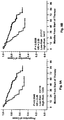
- Gene-expression model predicts post-relapse risk and survival
- Chromosome 1 genes are overrepresented in high risk model
- the map positions of the 70 genes comprising the gene expression risk signature were compared ( Table 6 ). While representing only 10% of genes on the microarray, 21 (30%) of the 70 high-risk genes mapped to chromosome 1 (P ⁇ .0001): 9 of 19 (47%) quartile 1 genes mapped to 1p with 5 mapping to 1p13; among 12 of 51 (24%) quartile 4 genes mapping to chromosome 1, 9 resided on 1q while the 4 on 1p mapped to the extreme telomeric and centromeric regions of the p arm. These data suggest that gain of DNA material on 1q and loss of 1p are significant determinants of high-risk in MM.
- a 17-gene model can substitute for 70-gene model
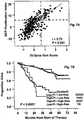
- the 17-gene model was then applied to the training group and predicted, with 97.7% accuracy, the correct class based on the high-/low-risk classification of the 70-gene model ( Table 8A ).
- a cross-validation analysis was performed where samples were removed one at a time from the sample set, and the predictive model was recalculated without that sample. Then the model was used to classify the removed observation. In this cross-validation approach, the prediction accuracy was 96.9%.
- the 17-gene model was then applied to the test set of 181 newly diagnosed patients receiving the second protocol UARK 03-033.
- the MSDA model again correctly classified 150 of 159 (94.3%) low-risk and 21 of 22 (95.5%) high-risk samples ( Table 8B ).
- Table 8A Confusion matrix of risk prediction in training set using 17-gene model 70-Gene Risk Group 17-Gene Risk Group Total Low High Low 305 298 7 High 46 1 45
- Table 8B Confusion matrix of risk prediction in test set using 17-gene model 70-Gene Risk Group 17-Gene Risk Group Total Low-Risk High-Risk Low 159 150 9 High 22 1 21
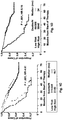
- High-risk disease designation pertained to all myeloma classes except for CD-2 type characterized by CCND1 or CCND3 spikes and CD20 and VPREB3 expression ( Figure 6 ).
- CD-2 type characterized by CCND1 or CCND3 spikes and CD20 and VPREB3 expression
- Figure 6 High-risk disease designation pertained to all myeloma classes except for CD-2 type characterized by CCND1 or CCND3 spikes and CD20 and VPREB3 expression
- PR Proliferation
- U133Plus2.0-derived (U-2) 17-gene model was reconstructed using U133AB (U-AB) data.
- U133Plus2.0 (U2) microarray Affymetrix, Santa Clara, CA
- U133A/B U133A/B microarray
- GEO GEO
- UA data on 156 patients with relapsed multiple myeloma treated with either bortezomib or dexamethasone in a phase III trial has been described 2,3 (GEO accession number pending).
- MSDA stepwise multiple linear discriminant analysis
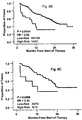
- the UA version was then applied to the Millennium dataset of 156 cases of relapsed disease treated with either bortezomib or dexametheasone.
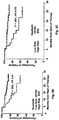
- each of the APEX treatment arms (80 and 76 patients treated with bortezomib and dexamethasone respectively) were examined separately to determine if the model was significantly impacted by the specific therapeutic agent.
- Table 9 List of genes comprising the 16-gene high-risk signature.
Landscapes
- Chemical & Material Sciences (AREA)
- Life Sciences & Earth Sciences (AREA)
- Health & Medical Sciences (AREA)
- Organic Chemistry (AREA)
- Proteomics, Peptides & Aminoacids (AREA)
- Engineering & Computer Science (AREA)
- Immunology (AREA)
- Pathology (AREA)
- Analytical Chemistry (AREA)
- Zoology (AREA)
- Genetics & Genomics (AREA)
- Wood Science & Technology (AREA)
- Physics & Mathematics (AREA)
- Biotechnology (AREA)
- Microbiology (AREA)
- Molecular Biology (AREA)
- Hospice & Palliative Care (AREA)
- Biophysics (AREA)
- Oncology (AREA)
- Biochemistry (AREA)
- Bioinformatics & Cheminformatics (AREA)
- General Engineering & Computer Science (AREA)
- General Health & Medical Sciences (AREA)
- Measuring Or Testing Involving Enzymes Or Micro-Organisms (AREA)
Claims (10)
- Verfahren zur Genexpressions-Profilierung zur Identifizierung von Genomsignaturen in Verbindung mit einer Prognose des Überlebens in einem Subjekt mit symptomatischem Multiplem Myelom oder Multiplem Myelom, umfassend:Bestimmung der Expressionsebenen von Genen, bestehend aus KIF14, SLC19A1, CKS1B, YWHAZ, MPHOSPH1, TMPO, NADK, LARS2, TBRG4, AIM2, ASPM, AHCYL1, CTBS, MCLC, LTBP1 und mit Nukleinsäure nachweisbaren Genen mit den Affymetrix-Referenznummern 242488_at und 1557277_a_ar auf einem U133plus2.0 Affymetrix-Microarray, in einer Nukleinsäureprobe von Plasmazellen vom Subjekt isoliert; undBestimmung des Vorhandenseins von ungewöhnlichen Expressionsebenen, wobei das Subjekt prognostiziert wird.
- Verfahren nach Anspruch 1, wobei das ungewöhnliche Expressionsprofil durch einen Diskriminanz-Score aus der multivariaten, stufenweisen Diskriminanzanalyse (MSDA) ausgewertet wird.
- Verfahren nach Anspruch 2, wobei das Expressionsprofil berechnet wird anhand der Formel: 200638_s_at x 0,283 - 1557277_a_at x 0,296-200850_s_at x 0,208 + 201897_s_at x 0,314 - 202729_s_at x 0,287 + 203432_at x 0,251 + 204016_at x 0,193 + 205235_s_at x 0,269 + 206364_at x 0,375 + 206513_at x 0,158 + 211576_s_at x 0,316 + 213607_at x 0,232 - 213628_at x 0,251 - 218924_s_at x 0,230 - 219918_s_at x 0,402 + 220789_s_at x 0,191 + 242488_at x 0,148 wobei die Probesätze 1557277_a_at und 242488_at Teil eines U133Plus2.0 Affymetrix-Microarray sind, und wobei die Variablen den Wert für die einzelne Probe repräsentieren und ein Score über den vorgegebenen Grenzwert auf eine Hochrisikoprognose hinweist.
- Verfahren nach einem der Ansprüche 1 bis 3, dadurch gekennzeichnet, dass eine hohe durchschnittliche Expressionsrate auf eine genomische Signatur in Verbindung mit einer Hochrisiko-Krankheit hindeutet und eine niedrige durchschnittliche Expressionsrate auf eine genomische Signatur in Verbindung mit einer Niedrigrisiko-Krankheit hindeutet.
- Verfahren nach Anspruch 4, dadurch gekennzeichnet, dass die genomische Signatur einer Hochrisiko-Krankheit mit einer kürzeren Dauer der kompletten Remission, einem ereignisfreien, frühen krankheitsbezogenen Tod oder einer Kombination daraus korreliert, die genomische Signatur der Niedrigrisiko-Krankheit mit einer längeren Dauer der kompletten Remission, einem längeren Überleben, einer guten Prognose oder einer Kombination daraus korreliert.
- Verfahren nach einem der Ansprüche 1 bis 5, dadurch gekennzeichnet, dass das Verfahren das klinische Ergebnis und das Überleben eines Individuums prognostiziert, effektiv ist bei der Auswahl der Behandlung für ein Individuum, das an einer Krankheit leidet, das Rückfallrisiko einer Nachbehandlung und das Überleben eines Individuums prognostiziert, die molekulare Klassifikation einer Krankheit mit der genomischen Signatur, die die Risikogruppen definiert, korreliert, oder eine Kombination daraus.
- Verfahren nach Anspruch 6, dadurch gekennzeichnet, dass die molekulare Klassifikation CD1 ist und mit einer genomischen Signatur von Multiplem Myelom mit hohem Risiko korreliert.
- Verfahren nach Anspruch 7, dadurch gekennzeichnet, dass die Klassifikation CD1 eine erhöhte Expression von MMSET, MAF/MAFB, PROLIFERATION Signaturen oder eine Kombination daraus umfasst.
- Verfahren nach Anspruch 6, dadurch gekennzeichnet, dass die molekulare Klassifikation CD2 ist und mit einer genomischen Signatur von Multiplem Myelom mit niedrigem Risiko korreliert.
- Verfahren nach Anspruch 9, dadurch gekennzeichnet, dass die Klassifikation CD2 HYPERDIPLOIDY, LOW BONE DISEASE, CCND1/CCND3 Translokationen, CD20 Expression oder eine Kombination daraus umfasst.
Applications Claiming Priority (2)
| Application Number | Priority Date | Filing Date | Title |
|---|---|---|---|
| US85745606P | 2006-11-07 | 2006-11-07 | |
| PCT/US2007/023404 WO2008057545A2 (en) | 2006-11-07 | 2007-11-07 | Gene expression profiling based identification of genomic signatures of high-risk multiple myeloma and uses thereof |
Publications (3)
| Publication Number | Publication Date |
|---|---|
| EP2087139A2 EP2087139A2 (de) | 2009-08-12 |
| EP2087139A4 EP2087139A4 (de) | 2010-03-24 |
| EP2087139B1 true EP2087139B1 (de) | 2017-01-04 |
Family
ID=39365124
Family Applications (1)
| Application Number | Title | Priority Date | Filing Date |
|---|---|---|---|
| EP07861764.4A Active EP2087139B1 (de) | 2006-11-07 | 2007-11-07 | Auf genexpressionsprofilierung basierende identifizierung genomischer signaturen von hochgefährlichem multiplem myelom |
Country Status (6)
| Country | Link |
|---|---|
| US (1) | US20080187930A1 (de) |
| EP (1) | EP2087139B1 (de) |
| JP (1) | JP5531360B2 (de) |
| DK (1) | DK2087139T3 (de) |
| ES (1) | ES2614494T3 (de) |
| WO (1) | WO2008057545A2 (de) |
Families Citing this family (15)
| Publication number | Priority date | Publication date | Assignee | Title |
|---|---|---|---|---|
| DK2537942T3 (en) | 2004-05-21 | 2015-12-14 | Trustees Of The University Of Arkansas System Board Of | Use of genudtryksprofilering to predict survival in cancer patients |
| US20100086922A1 (en) * | 2008-05-30 | 2010-04-08 | Millennium Pharmaceuticals, Inc. | Assessment of chromosomal alterations to predict clinical outcome of bortezomib treatment |
| EP2356255A2 (de) * | 2008-12-05 | 2011-08-17 | The Institute of Cancer Research : The Royal Cancer Hospital | Verfahren zur bestimmung einer prognose bei multiplem myelom |
| JP2012514460A (ja) * | 2009-01-02 | 2012-06-28 | ザ ボード オブ トラスティーズ オブ ザ ユニヴァーシティー オブ アーカンソー | ボルテゾミブを用いた多発性骨髄腫患者における生存率の予測 |
| US20120129168A1 (en) * | 2009-04-10 | 2012-05-24 | Shingo Ichimiya | Tumor marker and use thereof |
| WO2012022634A1 (en) * | 2010-08-16 | 2012-02-23 | Institut National De La Sante Et De La Recherche Medicale (Inserm) | Classification, diagnosis and prognosis of multiple myeloma |
| JP2014519813A (ja) | 2011-04-25 | 2014-08-21 | オーエスアイ・ファーマシューティカルズ,エルエルシー | 癌薬剤発見、診断、および治療におけるemt遺伝子シグネチャーの使用 |
| EP2546357A1 (de) * | 2011-07-14 | 2013-01-16 | Erasmus University Medical Center Rotterdam | Neue Einstufung zur molekularen Einstufung von mehrfachen Myelomen |
| CN103290101A (zh) * | 2012-03-02 | 2013-09-11 | 上海人类基因组研究中心 | Ago2基因及其表达产物的应用 |
| CA2912312C (en) * | 2013-05-20 | 2023-01-24 | Board Of Trustees Of The University Of Arkansas | Gep5 model for multiple myeloma |
| CN110225984A (zh) | 2016-09-07 | 2019-09-10 | 科技研究局 | 鉴别癌症风险的方法和治疗选择 |
| US11238955B2 (en) | 2018-02-20 | 2022-02-01 | International Business Machines Corporation | Single sample genetic classification via tensor motifs |
| WO2021072112A1 (en) * | 2019-10-09 | 2021-04-15 | Hdt Bio Corp. | Detection of desmoglein-2 in cancers of epithelial origin |
| US20240110915A1 (en) * | 2020-11-16 | 2024-04-04 | University Of South Australia | Methods, products and systems for prognosis of subjects suffering from multiple myeloma |
| CN120945052A (zh) * | 2025-08-05 | 2025-11-14 | 中国人民解放军海军特色医学中心 | 评估多发性骨髓瘤预后及prmm风险的基因组合及其评估方法 |
Family Cites Families (10)
| Publication number | Priority date | Publication date | Assignee | Title |
|---|---|---|---|---|
| US7935679B2 (en) * | 2001-11-07 | 2011-05-03 | Board Of Trustees Of The University Of Arkansas | Gene expression profiling based identification of CKS1B as a potential therapeutic target in multiple myeloma |
| US7371736B2 (en) * | 2001-11-07 | 2008-05-13 | The Board Of Trustees Of The University Of Arkansas | Gene expression profiling based identification of DKK1 as a potential therapeutic targets for controlling bone loss |
| DK2537942T3 (en) * | 2004-05-21 | 2015-12-14 | Trustees Of The University Of Arkansas System Board Of | Use of genudtryksprofilering to predict survival in cancer patients |
| US7741035B2 (en) * | 2004-05-21 | 2010-06-22 | Board Of Trustees Of The University Of Arkansas | Use of gene expression profiling to predict survival in cancer patient |
| WO2007016254A2 (en) * | 2005-07-27 | 2007-02-08 | The Board Of Trustees Of The University Of Arkansas | Antineoplastic activities of ellipticine and its derivatives |
| WO2007095186A2 (en) * | 2006-02-14 | 2007-08-23 | Dana-Farber Cancer Institute, Inc. | Compositions, kits, and methods for identification, assessment, prevention, and therapy of cancer |
| US20070275389A1 (en) * | 2006-05-24 | 2007-11-29 | Anniek De Witte | Array design facilitated by consideration of hybridization kinetics |
| WO2008039475A2 (en) * | 2006-09-26 | 2008-04-03 | The Board Of Trustees Of The University Of Arkansas | A gene expression profiling based identification of genomic signatures of multiple myeloma and uses thereof |
| US20080274911A1 (en) * | 2006-11-07 | 2008-11-06 | Burington Bart E | Gene expression profiling based identification of genomic signature of high-risk multiple myeloma and uses thereof |
| WO2008073290A1 (en) * | 2006-12-08 | 2008-06-19 | The Board Of Trustees Of The University Of Arkansas | Tp53 gene expression and uses thereof |
-
2007
- 2007-11-07 EP EP07861764.4A patent/EP2087139B1/de active Active
- 2007-11-07 WO PCT/US2007/023404 patent/WO2008057545A2/en not_active Ceased
- 2007-11-07 DK DK07861764.4T patent/DK2087139T3/en active
- 2007-11-07 JP JP2009536276A patent/JP5531360B2/ja active Active
- 2007-11-07 ES ES07861764.4T patent/ES2614494T3/es active Active
- 2007-11-07 US US11/983,113 patent/US20080187930A1/en not_active Abandoned
Also Published As
| Publication number | Publication date |
|---|---|
| ES2614494T3 (es) | 2017-05-31 |
| WO2008057545A3 (en) | 2008-12-24 |
| JP2010508844A (ja) | 2010-03-25 |
| WO2008057545A2 (en) | 2008-05-15 |
| EP2087139A4 (de) | 2010-03-24 |
| US20080187930A1 (en) | 2008-08-07 |
| DK2087139T3 (en) | 2017-02-13 |
| EP2087139A2 (de) | 2009-08-12 |
| JP5531360B2 (ja) | 2014-06-25 |
Similar Documents
| Publication | Publication Date | Title |
|---|---|---|
| DK2087139T3 (en) | Gene expression profiling-based identification of high-risk multiple myeloma genomic signatures | |
| Shaughnessy Jr et al. | A validated gene expression model of high-risk multiple myeloma is defined by deregulated expression of genes mapping to chromosome 1 | |
| US10597729B2 (en) | Use of gene expression profiling to predict survival in cancer patient | |
| US10711308B2 (en) | Mutation signatures for predicting the survivability of myelodysplastic syndrome subjects | |
| US10577656B2 (en) | Diagnosis, prognosis and identification of potential therapeutic targets of multiple myeloma based on gene expression profiling | |
| US20080274911A1 (en) | Gene expression profiling based identification of genomic signature of high-risk multiple myeloma and uses thereof | |
| CN111961726A (zh) | 使用靶基因表达的线性组合评价细胞信号传导途径活性 | |
| JP2015512630A (ja) | 急性骨髄性白血病の診断、予後、及び治療用の方法及び組成物 | |
| US8709723B2 (en) | Integrated analyses of breast and colorectal cancers | |
| EP1718768B1 (de) | Verfahren und zusammensetzungen zur bestimmung eines transplantationstoleranten phänotyps in einem individuum | |
| US20060003365A1 (en) | Use of gene expression profiling to predict survival in cancer patient | |
| US7935679B2 (en) | Gene expression profiling based identification of CKS1B as a potential therapeutic target in multiple myeloma | |
| US12227808B2 (en) | Compostions and methods for diagnosing lung cancers using gene expression profiles | |
| Walker et al. | A validated gene expression model of high-risk multiple myeloma is | |
| Li et al. | Distinct molecular and tumor microenvironment characteristics of mucinous adenocarcinoma in colorectal cancer | |
| US20150133333A1 (en) | Compositions and methods for detecting complicated sarcoidosis | |
| JP2025514884A (ja) | 乳癌患者における処置応答を予測するためのdnaコピー数変化 | |
| Ross-Adams et al. | Supplementary Figure 1-18 Supplementary Methods Supplementary Case Example Supplementary Tables 1, 3-12 (Supplementary Table 2 is a separate file) | |
| PL et al. | The varied distribution and impact of RAS codon and other key DNA alterations across the translocation cyclin D subgroups in multiple myeloma |
Legal Events
| Date | Code | Title | Description |
|---|---|---|---|
| PUAI | Public reference made under article 153(3) epc to a published international application that has entered the european phase |
Free format text: ORIGINAL CODE: 0009012 |
|
| 17P | Request for examination filed |
Effective date: 20090507 |
|
| AK | Designated contracting states |
Kind code of ref document: A2 Designated state(s): AT BE BG CH CY CZ DE DK EE ES FI FR GB GR HU IE IS IT LI LT LU LV MC MT NL PL PT RO SE SI SK TR |
|
| DAX | Request for extension of the european patent (deleted) | ||
| RIN1 | Information on inventor provided before grant (corrected) |
Inventor name: ZHAN, FENGHUANG Inventor name: SHAUGHNESSY, JOHN D. Inventor name: BURLINGTON, BART E. Inventor name: BARLOGIE, BART |
|
| A4 | Supplementary search report drawn up and despatched |
Effective date: 20100218 |
|
| 17Q | First examination report despatched |
Effective date: 20100601 |
|
| GRAP | Despatch of communication of intention to grant a patent |
Free format text: ORIGINAL CODE: EPIDOSNIGR1 |
|
| INTG | Intention to grant announced |
Effective date: 20160518 |
|
| RAP1 | Party data changed (applicant data changed or rights of an application transferred) |
Owner name: THE BOARD OF TRUSTEES OF THE UNIVERSITY OF ARKANSA |
|
| GRAS | Grant fee paid |
Free format text: ORIGINAL CODE: EPIDOSNIGR3 |
|
| GRAA | (expected) grant |
Free format text: ORIGINAL CODE: 0009210 |
|
| AK | Designated contracting states |
Kind code of ref document: B1 Designated state(s): AT BE BG CH CY CZ DE DK EE ES FI FR GB GR HU IE IS IT LI LT LU LV MC MT NL PL PT RO SE SI SK TR |
|
| REG | Reference to a national code |
Ref country code: GB Ref legal event code: FG4D |
|
| REG | Reference to a national code |
Ref country code: CH Ref legal event code: EP |
|
| REG | Reference to a national code |
Ref country code: AT Ref legal event code: REF Ref document number: 859303 Country of ref document: AT Kind code of ref document: T Effective date: 20170115 |
|
| REG | Reference to a national code |
Ref country code: IE Ref legal event code: FG4D |
|
| REG | Reference to a national code |
Ref country code: DK Ref legal event code: T3 Effective date: 20170208 |
|
| REG | Reference to a national code |
Ref country code: NL Ref legal event code: FP |
|
| REG | Reference to a national code |
Ref country code: DE Ref legal event code: R096 Ref document number: 602007049450 Country of ref document: DE |
|
| REG | Reference to a national code |
Ref country code: SE Ref legal event code: TRGR |
|
| REG | Reference to a national code |
Ref country code: LT Ref legal event code: MG4D |
|
| REG | Reference to a national code |
Ref country code: ES Ref legal event code: FG2A Ref document number: 2614494 Country of ref document: ES Kind code of ref document: T3 Effective date: 20170531 |
|
| REG | Reference to a national code |
Ref country code: AT Ref legal event code: MK05 Ref document number: 859303 Country of ref document: AT Kind code of ref document: T Effective date: 20170104 |
|
| PG25 | Lapsed in a contracting state [announced via postgrant information from national office to epo] |
Ref country code: IS Free format text: LAPSE BECAUSE OF FAILURE TO SUBMIT A TRANSLATION OF THE DESCRIPTION OR TO PAY THE FEE WITHIN THE PRESCRIBED TIME-LIMIT Effective date: 20170504 Ref country code: GR Free format text: LAPSE BECAUSE OF FAILURE TO SUBMIT A TRANSLATION OF THE DESCRIPTION OR TO PAY THE FEE WITHIN THE PRESCRIBED TIME-LIMIT Effective date: 20170405 Ref country code: FI Free format text: LAPSE BECAUSE OF FAILURE TO SUBMIT A TRANSLATION OF THE DESCRIPTION OR TO PAY THE FEE WITHIN THE PRESCRIBED TIME-LIMIT Effective date: 20170104 Ref country code: LT Free format text: LAPSE BECAUSE OF FAILURE TO SUBMIT A TRANSLATION OF THE DESCRIPTION OR TO PAY THE FEE WITHIN THE PRESCRIBED TIME-LIMIT Effective date: 20170104 |
|
| PG25 | Lapsed in a contracting state [announced via postgrant information from national office to epo] |
Ref country code: BG Free format text: LAPSE BECAUSE OF FAILURE TO SUBMIT A TRANSLATION OF THE DESCRIPTION OR TO PAY THE FEE WITHIN THE PRESCRIBED TIME-LIMIT Effective date: 20170404 Ref country code: PT Free format text: LAPSE BECAUSE OF FAILURE TO SUBMIT A TRANSLATION OF THE DESCRIPTION OR TO PAY THE FEE WITHIN THE PRESCRIBED TIME-LIMIT Effective date: 20170504 Ref country code: AT Free format text: LAPSE BECAUSE OF FAILURE TO SUBMIT A TRANSLATION OF THE DESCRIPTION OR TO PAY THE FEE WITHIN THE PRESCRIBED TIME-LIMIT Effective date: 20170104 Ref country code: LV Free format text: LAPSE BECAUSE OF FAILURE TO SUBMIT A TRANSLATION OF THE DESCRIPTION OR TO PAY THE FEE WITHIN THE PRESCRIBED TIME-LIMIT Effective date: 20170104 Ref country code: PL Free format text: LAPSE BECAUSE OF FAILURE TO SUBMIT A TRANSLATION OF THE DESCRIPTION OR TO PAY THE FEE WITHIN THE PRESCRIBED TIME-LIMIT Effective date: 20170104 |
|
| REG | Reference to a national code |
Ref country code: DE Ref legal event code: R097 Ref document number: 602007049450 Country of ref document: DE |
|
| PG25 | Lapsed in a contracting state [announced via postgrant information from national office to epo] |
Ref country code: EE Free format text: LAPSE BECAUSE OF FAILURE TO SUBMIT A TRANSLATION OF THE DESCRIPTION OR TO PAY THE FEE WITHIN THE PRESCRIBED TIME-LIMIT Effective date: 20170104 Ref country code: RO Free format text: LAPSE BECAUSE OF FAILURE TO SUBMIT A TRANSLATION OF THE DESCRIPTION OR TO PAY THE FEE WITHIN THE PRESCRIBED TIME-LIMIT Effective date: 20170104 Ref country code: SK Free format text: LAPSE BECAUSE OF FAILURE TO SUBMIT A TRANSLATION OF THE DESCRIPTION OR TO PAY THE FEE WITHIN THE PRESCRIBED TIME-LIMIT Effective date: 20170104 Ref country code: CZ Free format text: LAPSE BECAUSE OF FAILURE TO SUBMIT A TRANSLATION OF THE DESCRIPTION OR TO PAY THE FEE WITHIN THE PRESCRIBED TIME-LIMIT Effective date: 20170104 |
|
| PLBE | No opposition filed within time limit |
Free format text: ORIGINAL CODE: 0009261 |
|
| STAA | Information on the status of an ep patent application or granted ep patent |
Free format text: STATUS: NO OPPOSITION FILED WITHIN TIME LIMIT |
|
| REG | Reference to a national code |
Ref country code: FR Ref legal event code: PLFP Year of fee payment: 11 |
|
| RAP2 | Party data changed (patent owner data changed or rights of a patent transferred) |
Owner name: BIOVENTURES, LLC |
|
| 26N | No opposition filed |
Effective date: 20171005 |
|
| PG25 | Lapsed in a contracting state [announced via postgrant information from national office to epo] |
Ref country code: SI Free format text: LAPSE BECAUSE OF FAILURE TO SUBMIT A TRANSLATION OF THE DESCRIPTION OR TO PAY THE FEE WITHIN THE PRESCRIBED TIME-LIMIT Effective date: 20170104 |
|
| PG25 | Lapsed in a contracting state [announced via postgrant information from national office to epo] |
Ref country code: MC Free format text: LAPSE BECAUSE OF FAILURE TO SUBMIT A TRANSLATION OF THE DESCRIPTION OR TO PAY THE FEE WITHIN THE PRESCRIBED TIME-LIMIT Effective date: 20170104 |
|
| PG25 | Lapsed in a contracting state [announced via postgrant information from national office to epo] |
Ref country code: LU Free format text: LAPSE BECAUSE OF NON-PAYMENT OF DUE FEES Effective date: 20171107 |
|
| REG | Reference to a national code |
Ref country code: BE Ref legal event code: MM Effective date: 20171130 |
|
| REG | Reference to a national code |
Ref country code: IE Ref legal event code: MM4A |
|
| PG25 | Lapsed in a contracting state [announced via postgrant information from national office to epo] |
Ref country code: MT Free format text: LAPSE BECAUSE OF NON-PAYMENT OF DUE FEES Effective date: 20171107 |
|
| PG25 | Lapsed in a contracting state [announced via postgrant information from national office to epo] |
Ref country code: IE Free format text: LAPSE BECAUSE OF NON-PAYMENT OF DUE FEES Effective date: 20171107 |
|
| PG25 | Lapsed in a contracting state [announced via postgrant information from national office to epo] |
Ref country code: BE Free format text: LAPSE BECAUSE OF NON-PAYMENT OF DUE FEES Effective date: 20171130 |
|
| PG25 | Lapsed in a contracting state [announced via postgrant information from national office to epo] |
Ref country code: HU Free format text: LAPSE BECAUSE OF FAILURE TO SUBMIT A TRANSLATION OF THE DESCRIPTION OR TO PAY THE FEE WITHIN THE PRESCRIBED TIME-LIMIT; INVALID AB INITIO Effective date: 20071107 |
|
| PG25 | Lapsed in a contracting state [announced via postgrant information from national office to epo] |
Ref country code: CY Free format text: LAPSE BECAUSE OF NON-PAYMENT OF DUE FEES Effective date: 20170104 |
|
| PG25 | Lapsed in a contracting state [announced via postgrant information from national office to epo] |
Ref country code: TR Free format text: LAPSE BECAUSE OF FAILURE TO SUBMIT A TRANSLATION OF THE DESCRIPTION OR TO PAY THE FEE WITHIN THE PRESCRIBED TIME-LIMIT Effective date: 20170104 |
|
| P01 | Opt-out of the competence of the unified patent court (upc) registered |
Effective date: 20230526 |
|
| PGFP | Annual fee paid to national office [announced via postgrant information from national office to epo] |
Ref country code: NL Payment date: 20250912 Year of fee payment: 19 |
|
| PGFP | Annual fee paid to national office [announced via postgrant information from national office to epo] |
Ref country code: GB Payment date: 20250918 Year of fee payment: 19 |
|
| PGFP | Annual fee paid to national office [announced via postgrant information from national office to epo] |
Ref country code: FR Payment date: 20250908 Year of fee payment: 19 |
|
| PGFP | Annual fee paid to national office [announced via postgrant information from national office to epo] |
Ref country code: SE Payment date: 20250910 Year of fee payment: 19 |
|
| REG | Reference to a national code |
Ref country code: CH Ref legal event code: U11 Free format text: ST27 STATUS EVENT CODE: U-0-0-U10-U11 (AS PROVIDED BY THE NATIONAL OFFICE) Effective date: 20251201 |
|
| PGFP | Annual fee paid to national office [announced via postgrant information from national office to epo] |
Ref country code: DE Payment date: 20250910 Year of fee payment: 19 |
|
| PGFP | Annual fee paid to national office [announced via postgrant information from national office to epo] |
Ref country code: DK Payment date: 20251112 Year of fee payment: 19 Ref country code: IT Payment date: 20251022 Year of fee payment: 19 |
|
| PGFP | Annual fee paid to national office [announced via postgrant information from national office to epo] |
Ref country code: CH Payment date: 20251201 Year of fee payment: 19 |
|
| PGFP | Annual fee paid to national office [announced via postgrant information from national office to epo] |
Ref country code: ES Payment date: 20251212 Year of fee payment: 19 |