EP2090123B1 - Réseaux et dispositifs de télécommunications - Google Patents
Réseaux et dispositifs de télécommunications Download PDFInfo
- Publication number
- EP2090123B1 EP2090123B1 EP07824676.6A EP07824676A EP2090123B1 EP 2090123 B1 EP2090123 B1 EP 2090123B1 EP 07824676 A EP07824676 A EP 07824676A EP 2090123 B1 EP2090123 B1 EP 2090123B1
- Authority
- EP
- European Patent Office
- Prior art keywords
- access
- mobile terminal
- network
- aps
- access point
- Prior art date
- Legal status (The legal status is an assumption and is not a legal conclusion. Google has not performed a legal analysis and makes no representation as to the accuracy of the status listed.)
- Active
Links
Images




Classifications
-
- H—ELECTRICITY
- H04—ELECTRIC COMMUNICATION TECHNIQUE
- H04W—WIRELESS COMMUNICATION NETWORKS
- H04W12/00—Security arrangements; Authentication; Protecting privacy or anonymity
- H04W12/08—Access security
-
- H—ELECTRICITY
- H04—ELECTRIC COMMUNICATION TECHNIQUE
- H04W—WIRELESS COMMUNICATION NETWORKS
- H04W36/00—Hand-off or reselection arrangements
- H04W36/14—Reselecting a network or an air interface
- H04W36/144—Reselecting a network or an air interface over a different radio air interface technology
- H04W36/1446—Reselecting a network or an air interface over a different radio air interface technology wherein at least one of the networks is unlicensed
-
- H—ELECTRICITY
- H04—ELECTRIC COMMUNICATION TECHNIQUE
- H04W—WIRELESS COMMUNICATION NETWORKS
- H04W60/00—Affiliation to network, e.g. registration; Terminating affiliation with the network, e.g. de-registration
-
- H—ELECTRICITY
- H04—ELECTRIC COMMUNICATION TECHNIQUE
- H04W—WIRELESS COMMUNICATION NETWORKS
- H04W68/00—User notification, e.g. alerting and paging, for incoming communication, change of service or the like
- H04W68/04—User notification, e.g. alerting and paging, for incoming communication, change of service or the like multi-step notification using statistical or historical mobility data
-
- H—ELECTRICITY
- H04—ELECTRIC COMMUNICATION TECHNIQUE
- H04W—WIRELESS COMMUNICATION NETWORKS
- H04W48/00—Access restriction; Network selection; Access point selection
- H04W48/02—Access restriction performed under specific conditions
-
- H—ELECTRICITY
- H04—ELECTRIC COMMUNICATION TECHNIQUE
- H04W—WIRELESS COMMUNICATION NETWORKS
- H04W68/00—User notification, e.g. alerting and paging, for incoming communication, change of service or the like
- H04W68/12—Inter-network notification
-
- H—ELECTRICITY
- H04—ELECTRIC COMMUNICATION TECHNIQUE
- H04W—WIRELESS COMMUNICATION NETWORKS
- H04W84/00—Network topologies
- H04W84/02—Hierarchically pre-organised networks, e.g. paging networks, cellular networks, WLAN [Wireless Local Area Network] or WLL [Wireless Local Loop]
- H04W84/04—Large scale networks; Deep hierarchical networks
- H04W84/042—Public Land Mobile systems, e.g. cellular systems
- H04W84/045—Public Land Mobile systems, e.g. cellular systems using private Base Stations, e.g. femto Base Stations, home Node B
-
- H—ELECTRICITY
- H04—ELECTRIC COMMUNICATION TECHNIQUE
- H04W—WIRELESS COMMUNICATION NETWORKS
- H04W92/00—Interfaces specially adapted for wireless communication networks
- H04W92/16—Interfaces between hierarchically similar devices
- H04W92/24—Interfaces between hierarchically similar devices between backbone network devices
Definitions
- the present invention relates to a method of restricting access to an Access Point and device for determining access rights of mobile terminals to an Access Point within a radio access network comprising a plurality of base stations with at least one of the base stations being an Access Point AP.
- Paging is a process of broadcasting a message which alerts a specific mobile terminal to take some action, such as to notify the terminal that there is an incoming call to be received.
- LTE Long Term Evolution
- APs connect to the core network of a mobile communication network via IP networks.
- IP networks typically, APs will be available to mobile subscribers to plug into their home DSL connection and network signals are carried to and from the AP via the IP network.
- the AP will, typically, provide mobile network coverage throughout the home, but will have a small coverage area. Thus subscribers will camp on their AP only when in their home.
- An advantage of using an access point connected to the core network via an IP network is that existing broadband DSL connections can be used to link mobile terminals with the network core without using the capacity of the radio access network or transmission network of a mobile telecommunications network, or they are able to provide mobile network access where there is no conventional radio access network coverage.
- UMTS coverage could be provided by an access point where there is no conventional UMTS coverage (perhaps only GSM coverage).
- communications between the access point and the network are IP based communications, and may be, for example, transmitted via an ADSL backhaul connection to an IP network, such as the Internet.
- ADSL backhauls are limited, and not under the control of the telecommunications network provider, so there needs to be restrictions put in place on which user terminals (UEs) are able to access each AP in order to maintain an acceptable degree of service quality.
- the UE's current Node B/base station will attempt to hand the UE over to the AP. If the UE is one of the UEs which is not supposed to use the AP, the handover procedure will be initiated and the core network or the AP will have to reject the handover.
- the UE will look to camp on the AP and request a Location Area update from the network. If the UE is not authorized to camp on the AP the update will be rejected by the core network.
- a further problem faced by mobile communication networks is how to handle paging through APs.
- the location of mobiles on idle mode is only known with the resolution of the LA.
- a mobile moves between LAs, i.e. when it reselects a cell belonging to a different LA to that where it is registered, it initiates a LA update procedure to inform the network about such a move.
- the phone needs to be paged on all cells of the LA.
- the load of the paging channels in any given cell is proportional to the number of cells in the location area, so when numerous APs are added to the network, the network load naturally increases. However, if this load becomes too high, the LA would need to be split or cells re-parented into another LA.
- WO2006/031159 describes a dual mode mobile terminal comprising a WLAN interface and a cellular radio interface.
- WO00/054537 describes a mobile communication system having exclusive location areas comprising exclusive cells defined in order to separate cells from the mobile stations not belonging to a user group allowed to camp in that cell.
- US2004/0198319 describes a system for enforcing configuration requirements for hardware and software on mobile units operating on wireless local area networks. Whenever a mobile unit connects to a new sub-network or access point, the system evokes and then verifies a proper configuration profile for the sub-network or access point.
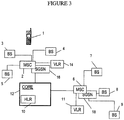
- Each base station corresponds to a respective cell of its cellular or mobile telecommunications network and receives calls from and transmits calls to a mobile terminal in that cell by wireless radio communication in one or both of the circuit switched or packet switched domains.
- a subscriber's mobile terminal is shown at 1.
- the mobile terminal may be any portable device with networking capabilities, such as a handheld mobile telephone, a personal digital assistance (PDA) or a laptop computer equipped with a datacard.
- PDA personal digital assistance
- each macro base station comprises a base transceiver station (BTS) and a base station controller (BSC).
- BTS base transceiver station
- BSC base station controller
- a BSC may control more than one BTS.
- the BTSs and BSCs comprise the radio access network.
- each macro base station comprises a node B and a radio network controller (RNC).
- RNC may control more than one node B.
- the node Bs and RNCs comprise the radio access network.
- each macro base station comprises an eNode B.
- the macro base stations are arranged in groups and each group of macro base stations is controlled by one or more core network management entities, such as a Mobility Management Entity (MME) and possibly a User Plane Entity (UPE).
- MME Mobility Management Entity
- UPE User Plane Entity
- the base stations are arranged in groups and each group of base stations is controlled by one mobile switching centre (MSC), such as MSC 2 for base stations 3, 4 and 5.
- MSC mobile switching centre
- the network has another MSC 6, which is controlling a further three base stations 7, 8 and 9.
- the network will incorporate many more MSCs and base stations than shown in Figure 1 .
- the base stations 3, 4, 5, 7, 8 and 9 each have dedicated (not shared) connection to their MSC2 or MSC6 - typically a cable connection. This prevents transmission speeds being reduced due to congestion caused by other traffic.
- Each subscriber to the network is provided with a smart card or SIM which, when associated with the user's mobile terminal, identifies the subscriber to the network.
- the SIM card is pre-programmed with a unique identification number, the "International Mobile Subscriber Identity” (IMSI) which is not visible on the card and is not known to the subscriber.
- IMSI International Mobile Subscriber Identity
- the subscriber is issued with a publicly known number, that is, the subscriber's telephone number, by means of which calls to the subscriber are initiated by callers. This number is the MSISDN.
- the network includes a home location register (HLR) 10 which, for each subscriber to the network, stores the IMSI and the corresponding MSISDN together with other subscriber data, such as the current or last known MSC or SGSN of the subscriber's mobile terminal.
- HLR home location register
- the subscriber When the subscriber wishes to activate their mobile terminal in a network (so that it may make or receive calls subsequently), the subscriber places their SIM card in a card reader associated with the mobile terminal (terminal 1 in this example). The mobile terminal 1 then transmits the IMSI (read from the card) to the base station 3 associated with the particular cell in which the terminal 1 is located. In a traditional network, the base station 3 then transmits this IMSI to the MSC 2 with which the BS 3 is registered. In a network using the functionality described in 3GPP TS 23.236, the base station follows prescribed rules to select which MSC to use, and then transmits this IMSI to the selected MSC.
- MSC 2 then accesses the appropriate storage location in the HLR 10 present in the network core 12 and extracts the corresponding subscriber MSISDN and other subscriber data from the appropriate storage location, and stores it temporarily in a storage location in a visitor location register (VLR) 14.
- VLR visitor location register
- the HLR 10 When the HLR 10 is interrogated by the MSC 2 in the manner described above, the HLR 10 additionally performs an authentication procedure for the mobile terminal 1.
- the HLR 10 transmits authentication data to the MSC 2 in "challenge” and "response” forms. Using this data, MSC 2 passes a "challenge” to the mobile terminal 1 through base station 3. Upon receipt of this data, the mobile terminal 1 passes this data to its SIM and produces a "response". This response is generated using an encryption algorithm on the SIM and a unique Ki on the SIM. The response is transmitted back to the MSC 2 which checks it against its own information for the subscriber which checks it against information that it has obtained for that subscriber from the HLR 10 in order to complete the authentication process. If the response from the mobile terminal 1 is as expected, the mobile terminal 1 is deemed authenticated. At this point the MSC 2 requests subscription data from the HLR 10. The HLR 10 then passes the subscription data to the VLR 14.
- the authentication process will typically be repeated at regular intervals while the mobile terminal 1 remains activated and can also be repeated each time the mobile terminal makes or receives a call, if required.
- Each of the MSCs of the network (MSC 2 and MSC 6) has a respective VLR (14 and 11) associated with it and operates in the same way as already described when a subscriber activates a mobile terminal in one of the cells corresponding to one of the base stations controlled by that MSC.
- a call may be made by entering the telephone number of the called party in the usual way.
- This information is received by the base station 3 and passed on to MSC 2.
- MSC 2 routes the call towards the called party.
- MSC 2 can associate the call with a particular subscriber and thus record information for charging purposes.
- the MSCs 2 and 6 support communications in the circuit switched domain - typically voice calls.
- Corresponding SGSNs 16 and 18 are provided to support communications in the packet switched domain - such as GPRS data transmissions.
- the SGSNs 16 and 18 function in an analogous way to the MSCs 2 and 6.
- the SGSNs 16, 18 are equipped with an equivalent to the VLR for the packet switched domain.
- a known paging process in a UMTS/GSM network was describe in relation to Figures 1 and 2 . If the network knows in which cell the mobile terminal is located, it is only necessary to page in that cell. However, if the mobile terminal is moving within the network, the precise cell in which the mobile terminal is located may not be known. It will therefore be necessary to perform paging in a number of cells. The greater the number of cells in which paging must occur, the greater the waste of valuable signalling capacity within the network.
- LAs location areas
- RAs routing areas
- TAs tracking areas
- a location area in a UMTS/GSM network relates to a particular geographical area for communications in the circuit-switched domain.
- a location area is larger than the area of a single cell but is smaller than the area covered by one MSC.
- Each cell within the network broadcasts data indicative of the identity of its location area.
- the mobile terminal uses this data to determine when it has moved into a new location area.
- the terminal stores its last known location area on its SIM. This information stored on the SIM is compared with the location area information broadcast by the local cell. The identities of the two location areas are compared. If they are different, the mobile terminal determines that it has entered a new location area. The mobile terminal then gains access to a radio channel and requests a location update.
- the network can immediately authenticate the mobile terminal and note the change of location area. However, if the mobile terminal is moved to a different MSC/VLR, the MSC/VLR addresses a message to the HLR. The HLR notes the new location and downloads security parameters to allow the network to authenticate the mobile. It also passes on subscription details of the user to the new VLR and informs the old VLR to delete its records.
- a routing area in a UMTS/GSM network relates to a particular geographical area for communications in the packet-switched domain.
- a routing area is larger than the area of a single cell but is smaller than the area covered by one SGSN.
- a routing area is typically, although not necessarily, smaller than a location area. There may be many routing areas within one location area.
- Each cell within the network broadcasts data indicative of its routing area (in addition to the data mentioned above indicative of the identity of its location area).
- the mobile terminal uses this received data to determine when it has moved to a new routing area.
- the terminal stores the last known routing area on its SIM.
- the information stored on the SIM is compared with the routing area information broadcast by the local cell.
- the identities of the two routing areas are compared. If they are different, the mobile terminal determines that it has entered a new routing area.
- the mobile terminal then gains access to a radio channel and requests a routing area update.
- the functionality just described may also apply to the proposed LTE mobile telecommunications network, with its eNode Bs performing the functionality of the base stations and the MME/UPE performing the functionality of the MSCs/VLRs. It is also to be appreciated that the functionality just described is one example of a network in which the embodiments of the invention may be implemented.
- Tracking Area will be used as a general term to encompass LAs and RAs in a GSM/UMTS network, as well as the corresponding areas in an LTE network.
- Figure 4 shows elements for providing access to a GSM or UMTS network by both a conventional macro base station 3 and a micro base station (AP 20).
- the Access Point, AP 20 provides a radio link 21 to mobile terminal 1.
- the radio link 21 from the AP 20 to the mobile terminal 1 uses the same cellular telecommunication transport protocols as the conventional base station 3 but with a smaller range - for example 25m.
- the AP 20 appears to the mobile terminal 1 as a conventional base station, and, on a general level, no modification to the mobile terminal 1 is required in order for it to operate with the AP 20.
- the AP 20 performs a role corresponding to that of a GSM BTS 22 and BSC 26 and/or UMTS Node B and RNC and/or an LTE Node B.
- Communications between the access point 20 and the core network 12 are IP based communications, and may be, for example, transmitted over a broadband IP network (and routed via the Internet).
- the communications are routed via MSC 32 or SGSN 34.
- the access point 20 converts the cellular telecommunications transport protocols used between the mobile terminal 1 and the AP 20 to IP based signalling.
- the connection 23 between the access point 20 and the core network 12 may use the PSTN telephone network.
- a DSL cable connection connects the access point 20 to the PSTN network.
- the data is transmitted between the access point 20 and the core network 12 by IP transport/DSL transport (a backhaul connection).
- IP transport/DSL transport a backhaul connection.
- the bandwidth of the cable connection between the access point and the telephone exchange is shared with multiple other users (typically between 20 and 50 other users). This means that the speed of transmission of data between the access point 20 and the telephone exchange varies significantly in dependence upon the activities of the other access point devices sharing the connection.
- the access point 20 may be connected to the core network 12 by means other than a DSL cable and the PSTN network.
- the access point 20 may be connected to the core network 12 by a dedicated cable connection that is independent of the PSTN, or by a satellite connection between the access point 20 and the network core 12.
- a conventional macro base station is connected by an exclusive, dedicated connection to the MSC 2/SGSN 16/MME (not shown) and network core 12.
- the connection is not shared with other base stations, and therefore its speed will not depend upon other traffic of other devices.
- AP 20 would typically be configured to serve a Wireless Local Area Network (WLAN) located in a home or office, in addition to GSM/UMTS/LTE networks.
- WLAN Wireless Local Area Network
- the WLAN could belong to the subscriber of the mobile terminal 1, or be an independently operated WLAN.
- the owner of AP 20 can prescribe whether the AP is either open or closed, whereby an open AP is able to carry communications from any mobile device in the GSM/UMTS/LTE network, and a closed AP is only able to carry communications from specific pre-designated mobile devices.
- the mobile terminal when a mobile terminal is in idle mode and moves from a first location area to a second location area, the mobile terminal detects that a different Location Area identity (LA ID) (from that stored in the mobile terminal) is being broadcast by the local base station/AP. The mobile terminal then sends a location area update request to the core network 12/MME. The request includes the first (current) LA ID and the mobile terminal's current Temporary Mobile Subscriber Identity (TMSI). The MSC/MME with which the mobile terminal is currently registered then sends a new TMSI to the mobile terminal 1.
- LA ID Location Area identity
- TMSI Temporary Mobile Subscriber Identity
- the mobile terminal moves from a first (current) location area to a second location area, and the second location area is administered by a different MSC/MME, similar steps occur and in addition the different MSC/MME requests user profile information from the original MSC/MME.
- Each cell provided by the core network has a unique cell global identity (CGI), whereby the CGI is typically a concatenation of the Location Area ID and a Cell ID and uniquely identifies a given cell.
- CGI cell global identity
- each AP has its own cell and also has its own unique Tracking Area identifier, which is broadcast (along with its cell ID), so that all passing mobile terminals are able to identify the AP and to attempt to access the network via the AP when proximate to it.
- the APs are traditionally treated the same as the Node Bs.
- the UEs traditionally monitor the system information broadcast by the APs and the eNode Bs, so that the UEs are able to assess the network conditions and be ready to access the network by the most appropriate route.
- UEs are often described as "camping" on an AP or Node B when that AP or Node B provides the most suitable prospective access point.
- the UE may be stationary, or be moving throughout the network. In whatever location the UE is, the UE will be able to receive system information broadcast from Node Bs and APs that are in range.
- APs are configured to broadcast an indication in the downlink from which each UE is able to determine if they have the right to access the network via the AP or not.
- the information which the APs broadcast includes an Access Indicator Field, which is broadcast in addition to the AP's cell ID and TA ID.
- Other information such as a Neighbouring Cell List may also be broadcast.
- This Access Indicator Field serves to prevent the UEs from treating the AP in the same manner as an eNode B.
- the UEs are configured, upon receiving the Access Indicator Field, to determine if they are authorised to access the network via the AP before attempting to do so.
- the UE will note the different Tracking Area from its previously recorded position. Rather than immediately requesting a TA area update, however, the UE will note the Access Indicator Field and determine from this field and the CGI field if it is authorised by the network to access the network via this AP.
- the Access Indicator Field may be a simple password which the UE needs to match with a pre-stored password to determine if access to the network via the AP has previously been granted.
- the UE may simply be notified that the transmitting Base Station is a micro-base station or AP. It may then use the broadcast information to determine if it is authorised to utilise the AP, such as by using the CGI field.
- the UE could compare the CGI field or a component of the CGI field, such as its Cell ID component, to a list relating to any APs that the UE is authorised to access.
- This Access list may be stored on the UE itself, or remotely so that the UE queries a remote network entity to determine if it is authorised to use the AP.
- Access list is stored on the network
- subscribers are mapped to appropriate APs, typically by storing each subscriber's MSISDN with an appropriate identifier of all APs with which it is registered (such as the AP ID).
- the Access Indicator Field may include a decryption key that the UE uses to decrypt an access password previously stored on the UE, to determine if the user has previously been authorised to use this AP, or it may be an encrypted password code which the UE needs to use its own previously stored decryption key to decode.
- the UE determines that it is not authorised to use this AP, the UE will simply treat the AP as a cell from a forbidden TA (i.e. it will not perform future measurements of the AP) and maintain its existing Tracking Area record. If it is authorised, however, then the UE may request a TA update from the core network/MME. Therefore it is apparent that the broadcast Access Indicator Field can be used by the UE to determine if it is authorised to use the AP without the need for the UE signalling an intent to use the AP and determining its authorisation status from the core network/MME.
- an entity managing the UE such as the GMSC/MME may also create a mapping between the AP and the UE's last recorded Cell's Tracking Area and provide a copy of this mapping to the UE.
- This mapping associates the AP with the TA, and effectively indicates that the UE's present AP is in or adjacent the TA of its last recorded cell, and can then be used by the UE to restrict the number of TA updates that it performs, by not requiring a TA update to occur when the UE moves between the AP and the UE's last recorded TA.
- mapping is recognition of the fact that the range of the AP is typically small, so the likelihood of the UE moving out of the range of the UE and back into the range of the previously recorded Cell is high.
- the mapping can therefore be used to further minimise signalling between the UE and the MME.
- This Tracking Area mapping may be stored alongside the AP Access list, on the UE itself and/or within the network. That is, in addition to the AP access list associating a UE/subscriber ID with an AP ID, the list can associate each AP ID with one or more TAs. This Access list would typically be updated whenever the network receives new AP authorisation data or tracking information, as applicable.
- APs are excluded from the predefined location areas/tracking areas (LAs/TAs) configured by the operator. By excluding the APs from the TAs it is possible to control a UE's ability to access the APs.
- the Tracking Areas are hence restricted to base stations in the macro-layer.
- the APs are not given a LA ID/TA ID or their LA ID/TA ID is set to "null".
- Each AP in this example only broadcasts its Cell ID, and not a unique LA/TA ID. Since the APs only have a unique cell global identity, the UEs do not consider them to be accessible merely by virtue of the information broadcast. Therefore, by virtue of not broadcasting a TA ID, the UEs will not consider the AP as a possible point of access; further information needs to be acquired by the UE before the AP will be considered a possible point of access. In other words, since there is no unique LA/TA ID information, the UE will initially treat the AP as if it belonged to a Forbidden LA/TA.
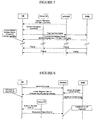
- FIG. 5 An example of the signalling that may occur in the idle state situation for this sample is illustrated in Figure 5 in relation to the UE moving into the TA of a new base station/eNode B of a telecommunications network. This Figure illustrates how the UE is made aware of the AP if it is a possible point of access to the network.
- the eNode B broadcasts system information which includes the eNode B's Cell ID and Location Area/Tracking Area ID, as well as possibly a "Neighbour Cell List" in the system information.
- the UE uses the broadcasted system information to know which cells to monitor, such as by keeping a record of signal strength and/or interference parameters.
- This system information only includes information about neighbouring eNode B's and perhaps nearby open APs; nearby closed APs are excluded. It is however preferable that all nearby APs are excluded, due to their more limited capacity, so the rest of this embodiment will be described with this presumption.
- the UE will know that it has moved to a new TA, as the TA broadcast by the eNode B will be different to its last recorded eNode B.
- the UE will therefore perform a Mobility Management (MM) Procedure, such as a location area/tracking area update, so that the network knows the new location of the UE, for future paging requirements.
- MM Mobility Management
- the UE transmits a "Tracking Area Update" request message to the eNode B to which it has moved.
- the eNode B forwards the "Tracking Area Update" message to a core network component, such as the MME.
- the MME stores a record of the new TA, and also refers to a list of APs accessible to the UE from the new location (if any).
- the MME preferably has a list of all APs accessible in each of its location areas/tracking areas, and all UEs that are authorised to access each of those APs.
- the MME will create a mapping between the new Tracking Area of the UE and the accessible APs associated with that TA, and include the mapping in the UE context.
- the UE context will be stored at the MME and a copy forwarded to the eNode B in the "Tracking Area Accept" update message.
- the mapping is stored at the MME for future use, and can be updated as new information is received. For instance, the stored UE context can be used during handover to selectively download information to the new eNode B/AP for use in subsequent handovers
- the UE is allowed to access the Home AP, and so the MME will map an association between the Home AP and the UE's current macro-layer TA. Therefore, when the MME transmits the "Tracking Area Accept" update message back to the UE, via the eNode B, this message includes the UE context, as well as the Cell ID of the Home AP, being Cell ID#2, and the associated macro-layer Tracking Area, being TA ID#1.
- the inclusion of the AP's cell ID in this message is used to inform the UE that an AP cell is available and that it should look for that AP in addition to the cells controlled by neighbouring eNode Bs identified in the system information. This therefore induces the UE to do a search for the AP in order to detect its broadcast signal.
- the network notifies the UE as to which APs it is able to access. By doing so, the typical "trial and error" signalling approach is avoided, as the UEs will not try to access an AP until they have been notified that they can access the AP.
- a further advantage of excluding the APs from the Tracking Areas, is that more efficient searching can be achieved, as the UEs do not consider APs as possible points of access until told by the network.
- the UE When the UE is notified of the existence of an AP, and that it is an AP that the UE is allowed to access, the UE adds the Home AP to its list of entities on which it keeps a measurement report.
- the UE also utilises the mapping between the Home AP and the Tracking Area of the Node B to restrict the number of TA updates that it performs, by not requiring a TA update to occur when the UE reselects between the Home AP and the last recorded Cell's Tracking Area.
- This mapping is recognition of the fact that the range of the AP is typically small, so the likelihood of the UE moving out of the range of the UE and back into the range of the previously recorded Cell is large. The mapping can therefore be used to further minimise signalling between the UE and the MME.
- the UE may have access to a list of APs that it is allowed to use, so that the UE is notified by the core network of all APs in the UE's vicinity, and it is the responsibility of the UE to determine its eligibility to access each AP, such as was illustrated in the embodiment of the invention.
- This list may be stored on the UE itself, or be remotely available to the UE, such as securely located on a remote server. It is, however, preferred that the information on accessible APs comes from the network, rather than the UE determining this itself, as this ensures signalling is kept to a minimum.
- the UE will still typically have a list relating to the accessible APs, although this list will essentially be used for keeping a record of access passwords and the like.
- the mapping between the Home AP and the Tracking Area of the eNode B has an additional advantage from the MME's perspective. In this regard, if a communication arrives for the UE, the MME will send a paging message in both the last recorded Tracking Area for the UE, being TA ID#1, and to any APs mapped to that Tracking Area, which in this case will be the Home AP (as referenced in Figure 5 ).
- the mapping therefore effectively creates a new Tracking Area, encompassing nearby APs which are accessible by the UE, which is unique to the UE.
- the MME is responsible for ensuring that the necessary association between the new geographic location and the Home AP exists.
- the size of the Macro-layer Tracking Area may be varied by the MME, depending upon the number of APs which the UE is allowed to access in that area. For instance, if the number of accessible APs mapped to a given Tracking Area is large, then the core network may decide to split that Tracking Area into two or more sections, or move some of the macro base stations within that Tracking Area to an alternative Tracking Area.
- Tracking Areas are typically decreased in urban areas in order to maintain a similar level of paging load to less-populated areas, as the concentration of UEs in urban areas is dramatically increased.
- eNode Bs will broadcast a number of different sizes of Tracking Areas, such as a smaller one for low mobility UEs and a larger one for higher mobility UEs.
- a first Tracking area could be defined for use by terminals that are stationary or travelling at a speed up to and including a threshold speed, say of 20kmh.
- a second Tracking Area could also be defined for use by terminals that are travelling at a speed greater than this threshold speed.
- the speed of the terminal could be determined and communicated to the terminal by any appropriate means.
- the core network could determine the terminal's speed and notify it of such, such as via an OTA communication, so that the terminal could then determine the applicable Tracking Area.
- the terminal itself may be installed with a suitable application for determining its speed.
- this information may be provisioned to the UE by utilising an Over-The-Air (OTA) upload to the UE's SIM.
- OTA Over-The-Air
- the UE is only associated with a single Tracking Area at any one time. However it is possible that the UE is associated with more than one Tracking Area.
- the identifiers of multiple Tracking Areas are broadcast in the system information of a cell.
- the UE may become associated with more than one TA within which the idle mode UE is free to move within without contacting the network.
- the MME needs to maintain a list of which TA IDs have been allocated to the UE.
- the MME would look up which eNode Bs form part of the Tracking Areas allocated to the UE in order to page them.
- the paging message would be passed to all the applicable eNode Bs in order to locate the UE.
- the mobility of the UE is managed by the network, and so there are different considerations in regard to how the APs with no allocated Tracking Area ID, are managed.
- the UE in a connected state, the UE will be connected to the network via an eNode B or AP which provides the best signal. When the signal falls below a certain threshold, the UE will handover its connection to an alternative eNode B or AP.
- the eNode B provides the UE with the best signal in this instance, and so has been handed over to it.
- the MME provides the eNode B with a "UE context", which contains information about the UE and neighbouring cells.
- this UE context also contains information about any nearby APs that the UE is allowed to be connected to, which in this instance is only the Home AP.
- the eNode B will provide the UE with an updated Neighbour Cell List, which includes the identities of any accessible APs, being the Home AP in this example.
- the UE can then provide a measurement report to the eNode B about the Home AP when it is discovered.
- a connected UE scans the Broadcast Control Channel (BCCH) of all the cells in its unique neighbouring cell list.
- BCCH Broadcast Control Channel
- This neighbour cell list can be used to filter the UE's measurement reports - in that it only keeps reports on entities included in this cell list.
- These measurement reports are provided to the eNode B, as when the UE is in a connected state, it is the job of the eNode B to monitor the measurement reports and decide when handover is necessary.
- the identity details of all the accessible APs is preferably only provided to the UE when the amount of APs that the UE can access is small. If however, there are a large number of APs to which the UE can connect to, then a filtering mechanism is preferably used, whereby the MME, for instance, filters which AP details will be downloaded to the UE.
- a filtering mechanism is preferably used, whereby the MME, for instance, filters which AP details will be downloaded to the UE.
- One approach for doing this is to build a table of Tracking Areas/eNode Bs for each AP location, which is used to control from which cells it is possible to perform a handover to the AP. This table could also be used to provide the UE with information as to which subset of APs for which it should be scanning the network. This would therefore minimise wastage of the UE's battery, as less scanning would be required.
- the eNodeB may also be used by the eNodeB to trigger the establishment of the X2 interface between the eNodeB and the AP.
- the X2 interface is the transport network connection between eNode Bs. It is also used for APs to communicate with eNode Bs. As APs are added to the network, the relationship between these APs and their neighbouring base stations needs to be established, and the table is a mechanism for notifying the eNode B of the existence of the AP, and enables the X2 interface to be established between the two of them, if it has not already been done.
- the eNode B Since the eNode B is responsible for initiating handover when the UE is an active state, the eNode B uses the AP information stored in the UE context to ensure that the UE is only handed over to an AP where the network has approved the association. In other words, the UE can only be handed over to APs that are listed in this "UE context".
- the eNode B will trigger a handover when its broadcast system information signal, as received by the UE, falls below a predetermined quality received threshold, and where a better quality signal is available from a neighbouring base station/AP.
- the base stations/Node Bs therefore rely on the MME to provide them with information on the APs that the UE can utilise, since the APs are not included in the Tracking Areas.
- the MME accordingly needs to have up-to-date subscription information on the authorised APs for each UE.
- the UE's subscription information must provide the necessary authorisation. This can be done in non-real time using written subscription information provided when the Access Point is registered (i.e. a Home AP is registered, and the occupants of that home list their mobile terminals as being authorised to access the telecommunications network via that AP).
- the owner of an AP may wish to reserve access to their AP for exclusive use of friends (e.g. for a home-located AP) or customers (e.g. for a business-located AP).
- a real-time registration process is preferable for this approach.
- the registration can be achieved by the AP "registered owner" inviting a person to use the AP by sending a specially formulated SMS to the network, such as "Grant Access to [telephone number]".
- the MME Upon receiving this request, the MME would proceed to add the person's UE identity to its list of UE's authorised to access the particular AP.
- the registered owner of an AP has an access password that they are able to provide to a person to allow them to use their UE to access the AP.
- the UE owner would enter the password into a third party's UE, and the UE would transmit a "Tracking Area Update" request message to the network, together with a field identifying the AP, and the AP password. This would force a Tracking Area Update in relation to the AP.
- the MME upon receiving the Tracking Area Update request (via the nearest Node B) would note the inclusion of the AP and its password, verify the password and update its AP table to include the UE as an authorised user of the AP.
- the MME would also preferably create a mapping between the Tracking Area of the Node B that forwarded the TA update, and the AP. The UE would then be able to utilise the AP to access the network.
- mapping of APs to tracking areas is an important component of the embodiment of the invention and of the example. It is to be appreciated that since an AP can be located in every house in a certain region, and that new APs can be added to the network at any time, the network needs to keep updating its associations between tracking areas and APs to ensure that best use of APs can be made by those UEs authorised to use them. In particular, transport network connections need to be established between the new APs and other Node Bs (the X2 interface) as well as between the new APs and the controlling MME (the S1 interface). The mappings can be used to establish these connections.
- the X2 interfaces can be established by the eNode Bs, when they are passed the mapping information from the MME. This typically occurs when the UE is in active mode, and the eNode B's are responsible for controlling the mobility of the UE.
- An S1 interface will need to be established to make an MME a controlling MME in the situation of a Home AP being newly added to the network.
- This AP will have one or more different Tracking Areas that overlap it, or which are adjacent to it.
- the network will therefore need to create mappings for each of the different Tracking Areas and the AP, so that an authorised UE in any of the different Tracking Areas is notified of the existence of the Home AP.
- the UE will be informed of the existence of the Home AP, and the MME will create a mapping between TA#1 and the AP. The MME will also create the S1 interface between itself and the AP, if one has not already been created.
- the AP will again perform a Tracking Area Update and also create a mapping between TA#2 and the AP in view of their geographical proximity.
- the MME may also create a mapping or link between TA#1, TA#2 and the AP, so that the UE is free to move in the area covered by both Tracking Areas and the AP without the need for a Tracking Area update.
- each AP is assigned to a location area which is handled by an MSC and paging and calls are routed to the APs via the core network.
- the initial steps of call and paging routing are the same as those followed when a subscriber is camped on a macro base station as discussed with reference to Figures 1 and 2 .
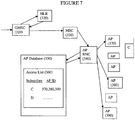
- the GMSC/MME 310 responsible for the target subscriber is identified (step 410), and the call is routed to the GMSC 310 of the subscriber (step 420).
- the GMSC 310 then contacts HLR 320 to identify the MSC/eNode B which is currently responsible for subscriber C (step 420).
- the GMSC 310 passes control of the call to the MSC/eNode B (step 440).
- MSC 330 On receiving control of the call, MSC 330 identifies the last cell/location area in which subscriber C was located. If the subscriber C is camped on an AP the MSC will identify the LA associated with that AP. Where a mapping exists associating an AP with one or more location areas, about which the terminal can move without without performing a location area update, it will be necessary to page the terminal in:
- the MSC 330 passes the paging instruction to an RNC concentrator(s) 340 parenting the AP belonging to the relevant location area to page the subscriber C on the cells within the location area.
- the network will hold an access list 360 in an Access Point Database 350 which maps subscribers to APs.
- an Access Point Database 350 which maps subscribers to APs.
- each subscriber's MSISDN will be stored with an appropriate identifier (such as the Access Point ID, which is a unique identifier associated with the AP/femto-cell) of all APs with which it is registered.
- This AP database 350 has a number of potential uses, including:
- the RNC concentrator(s) 340 On receiving the instruction to page subscriber C, the RNC concentrator(s) 340 queries the AP database 360 to retrieve the AP IDs of the APs which are within the LA and to which the subscriber being paged is registered, whether as an owner, member or guest at 460.
- subscriber C is registered to use three separate APs, namely 370, 380 and 390. Since these are the only three APs on which the target subscriber could be camped (since they are the only APs to which the subscriber is registered) these are the only APs which need to page the subscriber.
- the AP RNC 340 then instructs paging messages to be transmitted on the paging channels of all the femto-cells of the LA in which the target subscriber is registered, namely 370,380 and 390. These pages are transmitted from APs370, 380 and 390 at 480.
- the page will also be sent out on that macro cell, since, typically, macro cells are open.
- subscriber C is located in a cell provided by AP 370.
- subscriber C On receiving the page from the network via AP 370, subscriber C reads the paging message and responds at 490, setting up a radio signalling channel and progressing with the call control. The call is then established and a radio channel is established at 500.
- This example therefore helps to reduce the paging load to APs through to the femto-layer and potentially eliminates restrictions on the allocation of femto cells to LAs.
- the network has a default position whereby it always pages the UE in one or more default "Home APs" as well as the Tracking Area where the UE was last registered.
- This embodiment of the invention is particular useful where the number of APs with which the UE can associate is small (i.e. one or two), or where a single AP is seen as the default home AP.
- the MME can page the UE in its current Tracking Area and a subset of the applicable APs. This will again help to minimise the paging load.
- the AP is configured to appear to the UE as a conventional base station that communicates with the UE using GSM/UMTS/LTE protocols in accordance with the Standards (where they exist) and the licensed radio spectrum.
- the AP could communicate with the UE by any other suitable technology - for example, by a Bluetooth (RTM) connection, WiFi or another unlicensed mobile access (UMA) protocol, which allows the GSM/UMTS/LTE features to be provided using a non-GSM/UMTS/LTE bearer technology.
- RTM Bluetooth
- UMA unlicensed mobile access
Landscapes
- Engineering & Computer Science (AREA)
- Computer Networks & Wireless Communication (AREA)
- Signal Processing (AREA)
- Computer Security & Cryptography (AREA)
- Physics & Mathematics (AREA)
- Probability & Statistics with Applications (AREA)
- Mobile Radio Communication Systems (AREA)
Claims (3)
- Un terminal mobile (1) configuré de façon à communiquer avec un réseau de télécommunications comprenant un réseau d'accès radio comprenant une pluralité de stations de base, chacune d'elles définissant une cellule, et étant configurée de façon à transmettre de manière non filaire des données qui peuvent être reçues par le terminal mobile, au moins une des stations de base étant un point d'accès (AP), et où le terminal mobile est configuré en outre de façon à :recevoir des données transmises par une ou plusieurs stations de base voisines,déterminer si les données reçues comprennent une zone de suivi, TA, différente d'un enregistrement de TA enregistré antérieurement à l'intérieur du terminal mobile (1),si la TA est déterminée être différente de l'enregistrement de TA enregistré antérieurement, alors, avant la demande d'actualisation de TA, déterminer si les données reçues comprennent un champ d'indicateur d'accès, étant des données qui peuvent être transmises par les un ou plusieurs points d'accès de façon à restreindre un accès, etutiliser le champ d'indicateur d'accès de façon à déterminer si le terminal mobile est habilité à utiliser le point d'accès (20), et uniquement demander une actualisation de TA et tenter d'utiliser le point d'accès (20) si le terminal mobile est habilité à le faire, et si le terminal mobile n'est pas habilité à utiliser le point d'accès (20), alors conserver l'enregistrement de TA existant à l'intérieur du terminal mobile (1).
- Un procédé de restriction d'accès à au moins un point d'accès (20) dans un réseau de télécommunications comprenant un réseau d'accès radio comprenant une pluralité de stations de base configurées de façon à transmettre de manière non filaire des données qui peuvent être reçues par un ou plusieurs terminaux mobiles, où au moins une des stations de base est un point d'accès (AP), le procédé comprenant :la transmission d'informations à partir de chaque point d'accès (20) à partir duquel des terminaux mobiles sont configurés de façon à déterminer s'il possède des droits d'accès à la station de base donnée,la réception des informations transmises au niveau d'un terminal mobile (1),la détermination au niveau du terminal mobile (1) si les données reçues comprennent une zone de suivi, TA, différente d'un enregistrement de TA enregistré antérieurement à l'intérieur du terminal mobile (1),si la TA est déterminée être différente de la TA enregistrée antérieurement, alors, avant que le terminal mobile ne demande une actualisation de TA, la détermination si les données reçues comprennent un champ d'indicateur d'accès, étant des données qui peuvent être transmises par les un ou plusieurs points d'accès de façon à restreindre un accès,l'utilisation du champ d'indicateur d'accès de façon à déterminer si le terminal mobile est habilité à utiliser le point d'accès, et uniquement la demande d'une actualisation de TA et la tentative d'utiliser le point d'accès (20) si le terminal mobile (1) est habilité à le faire, et si le terminal mobile (1) n'est pas habilité à utiliser le point d'accès (20), alors la conservation de l'enregistrement de TA existant à l'intérieur du terminal mobile (1).
- Un système destiné à l'exécution du procédé selon la Revendication 2.
Applications Claiming Priority (4)
| Application Number | Priority Date | Filing Date | Title |
|---|---|---|---|
| GBGB0623321.7A GB0623321D0 (en) | 2006-11-22 | 2006-11-22 | Telecommunications networks and devices |
| GB0701759A GB2445004B (en) | 2006-11-22 | 2007-01-30 | Telecommunications networks and devices |
| GB0718152A GB0718152D0 (en) | 2007-09-18 | 2007-09-18 | Reduced paging |
| PCT/GB2007/004471 WO2008062200A2 (fr) | 2006-11-22 | 2007-11-22 | Réseaux et dispositifs de télécommunications |
Publications (2)
| Publication Number | Publication Date |
|---|---|
| EP2090123A2 EP2090123A2 (fr) | 2009-08-19 |
| EP2090123B1 true EP2090123B1 (fr) | 2019-06-19 |
Family
ID=40853867
Family Applications (1)
| Application Number | Title | Priority Date | Filing Date |
|---|---|---|---|
| EP07824676.6A Active EP2090123B1 (fr) | 2006-11-22 | 2007-11-22 | Réseaux et dispositifs de télécommunications |
Country Status (4)
| Country | Link |
|---|---|
| US (3) | US20110263274A1 (fr) |
| EP (1) | EP2090123B1 (fr) |
| CN (1) | CN104244367B (fr) |
| WO (1) | WO2008062200A2 (fr) |
Families Citing this family (52)
| Publication number | Priority date | Publication date | Assignee | Title |
|---|---|---|---|---|
| US9648493B2 (en) * | 2007-11-16 | 2017-05-09 | Qualcomm Incorporated | Using identifiers to establish communication |
| US20090132674A1 (en) * | 2007-11-16 | 2009-05-21 | Qualcomm Incorporated | Resolving node identifier confusion |
| WO2009068561A2 (fr) * | 2007-11-26 | 2009-06-04 | Nokia Siemens Networks Oy | Accès à un réseau local à l'aide de cellules publiques |
| US8929329B2 (en) * | 2007-12-19 | 2015-01-06 | Verizon Patent And Licensing Inc. | System and method for dual-mode handoff |
| US20090182871A1 (en) * | 2008-01-14 | 2009-07-16 | Qualmcomm Incorporated | Backup paging for wireless communication |
| US9313769B2 (en) * | 2008-01-14 | 2016-04-12 | Qualcomm Incorporated | Wireless communication paging and registration utilizing multiple types of node identifiers |
| US9094933B2 (en) * | 2008-01-14 | 2015-07-28 | Qualcomm Incorporated | Wireless communication paging utilizing multiple types of node identifiers |
| CN101534532B (zh) * | 2008-03-12 | 2012-02-08 | 中兴通讯股份有限公司 | 基于切换的承载建立方法及系统 |
| EP2112841A1 (fr) * | 2008-04-24 | 2009-10-28 | Panasonic Corporation | Optimisation de rattachement à un réseau 3GPP |
| WO2009133908A1 (fr) * | 2008-04-28 | 2009-11-05 | 株式会社エヌ・ティ・ティ・ドコモ | Procédé de communication mobile et appareil de réseau |
| WO2009134191A1 (fr) * | 2008-04-29 | 2009-11-05 | Telefonaktiebolaget L M Ericsson (Publ) | Procédé et agencement pour transfert ou évaluation de nouvelle sélection de cellule |
| US9094880B2 (en) * | 2008-06-19 | 2015-07-28 | Qualcomm Incorporated | Access terminal assisted node identifier confusion resolution using a time gap |
| GB2461131B (en) | 2008-06-25 | 2011-04-13 | I P Access Ltd | Method and apparatus for provisioning of information in a cellular communication network |
| US8989138B2 (en) * | 2008-07-15 | 2015-03-24 | Qualcomm Incorporated | Wireless communication systems with femto nodes |
| US8743858B2 (en) | 2008-07-15 | 2014-06-03 | Qualcomm Incorporated | Wireless communication systems with femto cells |
| CN101646253A (zh) * | 2008-08-07 | 2010-02-10 | 华为技术有限公司 | 寻呼方法、网元、管理网元和通信系统 |
| US8488572B2 (en) * | 2008-09-17 | 2013-07-16 | Qualcomm Incorporated | Methods and systems for multi-mode signal quality reporting |
| KR101547544B1 (ko) * | 2008-09-24 | 2015-08-27 | 삼성전자주식회사 | 펨토 기지국으로의 핸드 오버를 위한 통신 시스템 및 이를 위한 방법 |
| KR101472749B1 (ko) * | 2008-09-25 | 2014-12-16 | 삼성전자주식회사 | Home eNB에서 단말의 수락제어 방법 및 장치. |
| JP5538802B2 (ja) | 2008-11-04 | 2014-07-02 | 三菱電機株式会社 | 通信方法、移動体通信システム、移動端末および基地局制御装置 |
| US20110060816A1 (en) * | 2009-04-17 | 2011-03-10 | Prem Jothipragasam Kumar | Parameter management in a personal distributed network |
| US9432991B2 (en) | 2009-04-21 | 2016-08-30 | Qualcomm Incorporated | Enabling support for transparent relays in wireless communication |
| ATE542387T1 (de) * | 2009-05-18 | 2012-02-15 | Alcatel Lucent | Verfahren zum paging eines benutzerendgeräts im ruhemodus und femtozellen-steuerungs-gateway |
| WO2011001526A1 (fr) * | 2009-07-02 | 2011-01-06 | 三菱電機株式会社 | Procédé de modification de droit d'accès, dispositif de cœur de réseau, station de base et terminal |
| US8510801B2 (en) * | 2009-10-15 | 2013-08-13 | At&T Intellectual Property I, L.P. | Management of access to service in an access point |
| US10045282B2 (en) * | 2010-12-20 | 2018-08-07 | Time Warner Cable Enterprises Llc | System and method for optimizing scanning from a multi-band communications device |
| US9161239B2 (en) * | 2011-04-06 | 2015-10-13 | Hewlett-Packard Development Company, L.P. | Network access point management |
| US8787159B2 (en) * | 2011-04-14 | 2014-07-22 | Alcatel Lucent | Mechanism for wireless access networks to throttle traffic during congestion |
| US9351185B2 (en) * | 2011-04-15 | 2016-05-24 | Broadcom Corporation | LTE carrier aggregation configuration on TV white space bands |
| US8612593B2 (en) * | 2011-07-07 | 2013-12-17 | Renesas Mobile Corporation | Extended proximity indication for private cells |
| US9480045B2 (en) * | 2011-10-13 | 2016-10-25 | Alcatel Lucent | Networks and methods for paging message control |
| KR20130075345A (ko) * | 2011-12-27 | 2013-07-05 | 삼성전자주식회사 | 무선 단말장치에서 근거리 통신 연결 제어장치 및 방법 |
| US9380486B2 (en) * | 2012-02-08 | 2016-06-28 | Brocade Communications Systems, Inc. | Method and system for signaling reduction on radio access networks using targeted intelligence for communication devices |
| US8744474B1 (en) * | 2012-07-16 | 2014-06-03 | Sprint Spectrum L.P. | System and method for adjusting tracking area size based on redundancy |
| US9414273B2 (en) * | 2012-08-08 | 2016-08-09 | At&T Intellectual Property I, L.P. | Inbound handover for macrocell-to-femtocell call transfer |
| US9414288B2 (en) * | 2012-08-21 | 2016-08-09 | Kyocera Corporation | Handover management based on speeds of wireless communication devices |
| WO2014075238A1 (fr) * | 2012-11-14 | 2014-05-22 | 华为技术有限公司 | Procédé de traitement de sécurité pour des communications mobiles, macro-station de base, micro-station de base et équipement d'utilisateur |
| US9807245B2 (en) * | 2013-01-30 | 2017-10-31 | Telefonaktiebolaget Lm Ericsson (Publ) | Forwarding telephone calls to a mobile terminal via a femtocell |
| US8995299B2 (en) | 2013-02-27 | 2015-03-31 | Telefonaktiebolaget L M Ericsson (Publ) | Aggregation of carriers of a cellular radio network with carriers of an auxiliary network |
| US9411978B2 (en) | 2013-07-11 | 2016-08-09 | Open Text S.A. | System and method for access control using network verification |
| WO2015067308A1 (fr) * | 2013-11-06 | 2015-05-14 | Nokia Solutions And Networks Oy | Procedes, appareil et programmes informatiques pour enregistrer un equipement utilisateur dans un reseau heterogene |
| CN104796931B (zh) * | 2014-01-08 | 2018-06-12 | 财团法人资讯工业策进会 | 无线网络系统及其基站连线方法 |
| US11147042B1 (en) * | 2014-07-08 | 2021-10-12 | Sprint Communications Company L.P. | Wireless communication system to deliver pages to wireless communication devices based on wireless fidelity network identifiers |
| WO2016167578A1 (fr) * | 2015-04-15 | 2016-10-20 | 삼성전자 주식회사 | Procédé et appareil permettant d'émettre et de recevoir des signaux sur la base d'une classe de couverture dans un système de communication |
| WO2017018838A1 (fr) * | 2015-07-28 | 2017-02-02 | 엘지전자(주) | Procédé de gestion d'une pluralité de zones de localisation dans un système de communication sans fil et appareil associé |
| KR102405903B1 (ko) * | 2015-08-05 | 2022-06-07 | 삼성전자주식회사 | 이동 단말 무선 Hot-Spot 리스트를 제공하는 서버 및 이의 제어 방법 |
| CN105282755B (zh) * | 2015-09-17 | 2018-09-21 | 深圳市名通科技有限公司 | Lte网络的跟踪区域调整数据生成方法及装置 |
| US10206093B2 (en) * | 2016-05-24 | 2019-02-12 | Telefonaktiebolaget L M Ericsson (Publ) | Managing devices with SGs interface in VLR |
| US10542515B2 (en) * | 2016-08-03 | 2020-01-21 | Huawei Technologies Co., Ltd. | Location tracking in wireless networks |
| WO2018097528A1 (fr) * | 2016-11-22 | 2018-05-31 | 엘지전자 주식회사 | Procédé et dispositif de configuration de zone de notification faisant appel à un réseau ran |
| EP3857998A1 (fr) * | 2018-09-27 | 2021-08-04 | FRAUNHOFER-GESELLSCHAFT zur Förderung der angewandten Forschung e.V. | Gestion d'emplacement avec liste de zone de suivi dynamique pour mobilité élevée |
| US11303352B2 (en) * | 2019-10-03 | 2022-04-12 | Hughes Network Systems, Llc | Systems and methods of paging in GEO satellite-based 5G networks |
Family Cites Families (31)
| Publication number | Priority date | Publication date | Assignee | Title |
|---|---|---|---|---|
| EP0805609B1 (fr) * | 1996-05-03 | 2004-03-17 | Agilent Technologies, Inc. (a Delaware corporation) | Procédé et appareil pour suivi du changement des codes d'identités dans un réseau de communication mobile |
| US6334052B1 (en) | 1997-03-07 | 2001-12-25 | Telefonaktiebolaget Lm Ericsson (Publ) | Subscription-based mobile station idle mode cell selection |
| US6295450B1 (en) * | 1998-06-23 | 2001-09-25 | Motorola, Inc. | Method and apparatus for transferring communication within a communication system |
| FI112908B (fi) * | 1999-03-09 | 2004-01-30 | Nokia Corp | Menetelmät, verkko, verkkoelementti ja matkaviestin matkaviestinjärjestelmän soluun leiriytymiseksi |
| WO2002017671A1 (fr) * | 2000-08-18 | 2002-02-28 | Ico Services Ltd. | Regulation de l'encombrement amelioree par utilisation de classes d'acces |
| US6836471B2 (en) * | 2001-02-02 | 2004-12-28 | Nokia Mobile Phones Ltd. | Method and system for inter-operator handover between WCDMA and GSM |
| US7181212B2 (en) | 2001-08-21 | 2007-02-20 | Telefonaktiebolaget Lm Ericsson (Publ) | Method and apparatus for location area updating in cellular communications |
| US20030040314A1 (en) * | 2001-08-21 | 2003-02-27 | Telefonaktiebolaget Lm Ericsson | Method and apparatus for location area updating in cellular communications |
| US7117015B2 (en) * | 2002-10-25 | 2006-10-03 | Intel Corporation, Inc | Internet base station |
| US7522906B2 (en) * | 2002-08-09 | 2009-04-21 | Wavelink Corporation | Mobile unit configuration management for WLANs |
| JP4022121B2 (ja) * | 2002-10-07 | 2007-12-12 | 松下電器産業株式会社 | 統合無線通信システム、移動体通信システム、交換装置及び無線端末、並びに通信方法 |
| US7729697B2 (en) * | 2002-10-25 | 2010-06-01 | Intel Corporation | Private base station with exclusivity |
| JP4216115B2 (ja) * | 2003-05-07 | 2009-01-28 | 株式会社エヌ・ティ・ティ・ドコモ | 移動通信ネットワークシステム、移動端末機及びページング方法 |
| JP4318520B2 (ja) * | 2003-09-26 | 2009-08-26 | 富士通株式会社 | 端末の状態制御システム |
| US20050111409A1 (en) * | 2003-11-25 | 2005-05-26 | Spear Stephen L. | Method and apparatus for mobile station registration in a cellular communication system |
| DE112004002372B4 (de) * | 2003-12-22 | 2013-02-21 | Ibis Telecom, Inc. | Private Basisstation mit Exklusivität |
| EP3462765B1 (fr) | 2004-02-18 | 2021-06-23 | Telefonaktiebolaget LM Ericsson (publ) | Procede et appareil pour l'accès radio sans licence dans un système de communication radio mobile |
| DE602004008353T2 (de) | 2004-03-08 | 2008-05-08 | Telefonaktiebolaget Lm Ericsson (Publ) | Unlizenzierte funkzugangsnetze in zellularen mobilfunknetzen |
| KR20060007731A (ko) * | 2004-07-21 | 2006-01-26 | 삼성전자주식회사 | 이종 무선망을 이용한 셀룰라 이동 통신 시스템 및 그 방법 |
| CN101019451B (zh) * | 2004-09-17 | 2011-09-07 | 艾利森电话股份有限公司 | 电话的3g/gsm和无线局域网集成 |
| WO2007040449A1 (fr) * | 2005-10-04 | 2007-04-12 | Telefonaktiebolaget Lm Ericsson (Publ) | Commande d'acces dans un reseau d'acces radio comportant des stations de base de pico-reseau |
| WO2007077522A2 (fr) * | 2006-01-03 | 2007-07-12 | Nokia Corporation | Procede, appareil, logiciel et systeme de gestion de brouillage intercellulaire |
| EP1987628B1 (fr) * | 2006-02-21 | 2015-02-25 | Telefonaktiebolaget L M Ericsson (publ) | Procédé et appareil permettant l'accès à un ensemble limité de stations mobiles à un point d'accès local restreint |
| US7613444B2 (en) * | 2006-04-28 | 2009-11-03 | Telefonaktiebolaget Lm Ericsson (Publ) | Dynamic building of monitored set |
| US7941144B2 (en) * | 2006-05-19 | 2011-05-10 | Telefonaktiebolaget Lm Ericsson (Publ) | Access control in a mobile communication system |
| US7792530B2 (en) * | 2006-07-11 | 2010-09-07 | Broadcom Corporation | Facilitating use of a restricted base tranceiver station |
| JP5128587B2 (ja) * | 2007-04-27 | 2013-01-23 | 株式会社エヌ・ティ・ティ・ドコモ | 移動通信システムおよび基地局状態制御方法 |
| US20100075698A1 (en) * | 2008-09-23 | 2010-03-25 | Telefonaktiebolaget L M Ericsson (Publ) | Location registration and paging in telecommunications network |
| WO2010036167A1 (fr) * | 2008-09-23 | 2010-04-01 | Telefonaktiebolaget L M Ericsson (Publ) | Procédé et agencements dans un réseau cellulaire à femtocellules |
| KR101929307B1 (ko) * | 2011-04-11 | 2018-12-17 | 삼성전자 주식회사 | Csg 셀에서 단말이 셀 재선택 우선 순위를 효율적으로 제어하는 방법 및 장치 |
| US9769735B2 (en) * | 2013-07-17 | 2017-09-19 | Avago Technologies General Ip (Singapore) Pte. Ltd. | Cell selection and reselection optimizations responsive to mobility state |
-
2007
- 2007-11-22 EP EP07824676.6A patent/EP2090123B1/fr active Active
- 2007-11-22 CN CN201410319224.9A patent/CN104244367B/zh active Active
- 2007-11-22 US US12/312,699 patent/US20110263274A1/en not_active Abandoned
- 2007-11-22 WO PCT/GB2007/004471 patent/WO2008062200A2/fr not_active Ceased
-
2014
- 2014-03-27 US US14/226,958 patent/US9585017B2/en active Active
-
2017
- 2017-02-23 US US15/440,512 patent/US10448252B2/en active Active
Non-Patent Citations (1)
| Title |
|---|
| None * |
Also Published As
| Publication number | Publication date |
|---|---|
| US9585017B2 (en) | 2017-02-28 |
| CN104244367B (zh) | 2017-12-22 |
| CN104244367A (zh) | 2014-12-24 |
| EP2090123A2 (fr) | 2009-08-19 |
| WO2008062200A3 (fr) | 2008-11-27 |
| US20140295796A1 (en) | 2014-10-02 |
| US20170257766A1 (en) | 2017-09-07 |
| US10448252B2 (en) | 2019-10-15 |
| US20110263274A1 (en) | 2011-10-27 |
| WO2008062200A2 (fr) | 2008-05-29 |
Similar Documents
| Publication | Publication Date | Title |
|---|---|---|
| US10448252B2 (en) | Apparatus and method for controlling access to a telecommunications network | |
| EP2351435B1 (fr) | Support destiné à de multiples modes d'accès pour des stations de base domestiques | |
| RU2519821C2 (ru) | Способ и система управления разрешением доступа для системы мобильной связи | |
| US7792530B2 (en) | Facilitating use of a restricted base tranceiver station | |
| US9210636B2 (en) | System and method for indicating local IP access support via NAS signaling | |
| US8437743B2 (en) | Access network discovery and selection function, ANDSF, node distributing closed subscriber group, CSG, information | |
| US8811987B2 (en) | Method and arrangement for creation of association between user equipment and an access point | |
| TWI473485B (zh) | 提供本地網際網路協定存取指示的方法和用戶設備 | |
| GB2479275A (en) | Home access point configured to broadcast information relating to access restrictions | |
| WO2007113457A9 (fr) | Réseaux de télécommunications | |
| US12375903B2 (en) | Neutral host enhanced features | |
| AU2014201748B2 (en) | Support for multiple access modes for home base stations |
Legal Events
| Date | Code | Title | Description |
|---|---|---|---|
| PUAI | Public reference made under article 153(3) epc to a published international application that has entered the european phase |
Free format text: ORIGINAL CODE: 0009012 |
|
| 17P | Request for examination filed |
Effective date: 20090520 |
|
| AK | Designated contracting states |
Kind code of ref document: A2 Designated state(s): AT BE BG CH CY CZ DE DK EE ES FI FR GB GR HU IE IS IT LI LT LU LV MC MT NL PL PT RO SE SI SK TR |
|
| RIC1 | Information provided on ipc code assigned before grant |
Ipc: H04W 84/00 20090101AFI20090728BHEP |
|
| RIN1 | Information on inventor provided before grant (corrected) |
Inventor name: CARRIZO MARTINEZ, JOSE-LUIS Inventor name: FROST, TIMOTHY Inventor name: FOX, DAVID Inventor name: WONG, GAVIN Inventor name: BATKIN, JONATHON |
|
| DAX | Request for extension of the european patent (deleted) | ||
| STAA | Information on the status of an ep patent application or granted ep patent |
Free format text: STATUS: EXAMINATION IS IN PROGRESS |
|
| 17Q | First examination report despatched |
Effective date: 20161110 |
|
| REG | Reference to a national code |
Ref country code: DE Ref legal event code: R079 Ref document number: 602007058651 Country of ref document: DE Free format text: PREVIOUS MAIN CLASS: H04W0084000000 Ipc: H04W0068040000 |
|
| RIC1 | Information provided on ipc code assigned before grant |
Ipc: H04W 12/08 20090101ALI20181119BHEP Ipc: H04W 92/24 20090101ALI20181119BHEP Ipc: H04W 48/02 20090101ALI20181119BHEP Ipc: H04W 36/14 20090101ALI20181119BHEP Ipc: H04W 84/04 20090101ALI20181119BHEP Ipc: H04W 60/00 20090101ALI20181119BHEP Ipc: H04W 68/12 20090101ALI20181119BHEP Ipc: H04W 68/04 20090101AFI20181119BHEP |
|
| GRAP | Despatch of communication of intention to grant a patent |
Free format text: ORIGINAL CODE: EPIDOSNIGR1 |
|
| STAA | Information on the status of an ep patent application or granted ep patent |
Free format text: STATUS: GRANT OF PATENT IS INTENDED |
|
| INTG | Intention to grant announced |
Effective date: 20190103 |
|
| GRAS | Grant fee paid |
Free format text: ORIGINAL CODE: EPIDOSNIGR3 |
|
| GRAA | (expected) grant |
Free format text: ORIGINAL CODE: 0009210 |
|
| STAA | Information on the status of an ep patent application or granted ep patent |
Free format text: STATUS: THE PATENT HAS BEEN GRANTED |
|
| AK | Designated contracting states |
Kind code of ref document: B1 Designated state(s): AT BE BG CH CY CZ DE DK EE ES FI FR GB GR HU IE IS IT LI LT LU LV MC MT NL PL PT RO SE SI SK TR |
|
| REG | Reference to a national code |
Ref country code: GB Ref legal event code: FG4D |
|
| REG | Reference to a national code |
Ref country code: CH Ref legal event code: EP |
|
| REG | Reference to a national code |
Ref country code: IE Ref legal event code: FG4D |
|
| REG | Reference to a national code |
Ref country code: DE Ref legal event code: R096 Ref document number: 602007058651 Country of ref document: DE |
|
| REG | Reference to a national code |
Ref country code: AT Ref legal event code: REF Ref document number: 1147136 Country of ref document: AT Kind code of ref document: T Effective date: 20190715 |
|
| REG | Reference to a national code |
Ref country code: NL Ref legal event code: MP Effective date: 20190619 |
|
| PG25 | Lapsed in a contracting state [announced via postgrant information from national office to epo] |
Ref country code: LT Free format text: LAPSE BECAUSE OF FAILURE TO SUBMIT A TRANSLATION OF THE DESCRIPTION OR TO PAY THE FEE WITHIN THE PRESCRIBED TIME-LIMIT Effective date: 20190619 Ref country code: SE Free format text: LAPSE BECAUSE OF FAILURE TO SUBMIT A TRANSLATION OF THE DESCRIPTION OR TO PAY THE FEE WITHIN THE PRESCRIBED TIME-LIMIT Effective date: 20190619 Ref country code: FI Free format text: LAPSE BECAUSE OF FAILURE TO SUBMIT A TRANSLATION OF THE DESCRIPTION OR TO PAY THE FEE WITHIN THE PRESCRIBED TIME-LIMIT Effective date: 20190619 |
|
| REG | Reference to a national code |
Ref country code: LT Ref legal event code: MG4D |
|
| PG25 | Lapsed in a contracting state [announced via postgrant information from national office to epo] |
Ref country code: LV Free format text: LAPSE BECAUSE OF FAILURE TO SUBMIT A TRANSLATION OF THE DESCRIPTION OR TO PAY THE FEE WITHIN THE PRESCRIBED TIME-LIMIT Effective date: 20190619 Ref country code: BG Free format text: LAPSE BECAUSE OF FAILURE TO SUBMIT A TRANSLATION OF THE DESCRIPTION OR TO PAY THE FEE WITHIN THE PRESCRIBED TIME-LIMIT Effective date: 20190919 Ref country code: GR Free format text: LAPSE BECAUSE OF FAILURE TO SUBMIT A TRANSLATION OF THE DESCRIPTION OR TO PAY THE FEE WITHIN THE PRESCRIBED TIME-LIMIT Effective date: 20190920 |
|
| REG | Reference to a national code |
Ref country code: AT Ref legal event code: MK05 Ref document number: 1147136 Country of ref document: AT Kind code of ref document: T Effective date: 20190619 |
|
| PG25 | Lapsed in a contracting state [announced via postgrant information from national office to epo] |
Ref country code: SK Free format text: LAPSE BECAUSE OF FAILURE TO SUBMIT A TRANSLATION OF THE DESCRIPTION OR TO PAY THE FEE WITHIN THE PRESCRIBED TIME-LIMIT Effective date: 20190619 Ref country code: PT Free format text: LAPSE BECAUSE OF FAILURE TO SUBMIT A TRANSLATION OF THE DESCRIPTION OR TO PAY THE FEE WITHIN THE PRESCRIBED TIME-LIMIT Effective date: 20191021 Ref country code: EE Free format text: LAPSE BECAUSE OF FAILURE TO SUBMIT A TRANSLATION OF THE DESCRIPTION OR TO PAY THE FEE WITHIN THE PRESCRIBED TIME-LIMIT Effective date: 20190619 Ref country code: RO Free format text: LAPSE BECAUSE OF FAILURE TO SUBMIT A TRANSLATION OF THE DESCRIPTION OR TO PAY THE FEE WITHIN THE PRESCRIBED TIME-LIMIT Effective date: 20190619 Ref country code: AT Free format text: LAPSE BECAUSE OF FAILURE TO SUBMIT A TRANSLATION OF THE DESCRIPTION OR TO PAY THE FEE WITHIN THE PRESCRIBED TIME-LIMIT Effective date: 20190619 Ref country code: NL Free format text: LAPSE BECAUSE OF FAILURE TO SUBMIT A TRANSLATION OF THE DESCRIPTION OR TO PAY THE FEE WITHIN THE PRESCRIBED TIME-LIMIT Effective date: 20190619 Ref country code: CZ Free format text: LAPSE BECAUSE OF FAILURE TO SUBMIT A TRANSLATION OF THE DESCRIPTION OR TO PAY THE FEE WITHIN THE PRESCRIBED TIME-LIMIT Effective date: 20190619 |
|
| PG25 | Lapsed in a contracting state [announced via postgrant information from national office to epo] |
Ref country code: ES Free format text: LAPSE BECAUSE OF FAILURE TO SUBMIT A TRANSLATION OF THE DESCRIPTION OR TO PAY THE FEE WITHIN THE PRESCRIBED TIME-LIMIT Effective date: 20190619 Ref country code: IT Free format text: LAPSE BECAUSE OF FAILURE TO SUBMIT A TRANSLATION OF THE DESCRIPTION OR TO PAY THE FEE WITHIN THE PRESCRIBED TIME-LIMIT Effective date: 20190619 Ref country code: IS Free format text: LAPSE BECAUSE OF FAILURE TO SUBMIT A TRANSLATION OF THE DESCRIPTION OR TO PAY THE FEE WITHIN THE PRESCRIBED TIME-LIMIT Effective date: 20191019 |
|
| PG25 | Lapsed in a contracting state [announced via postgrant information from national office to epo] |
Ref country code: TR Free format text: LAPSE BECAUSE OF FAILURE TO SUBMIT A TRANSLATION OF THE DESCRIPTION OR TO PAY THE FEE WITHIN THE PRESCRIBED TIME-LIMIT Effective date: 20190619 |
|
| PG25 | Lapsed in a contracting state [announced via postgrant information from national office to epo] |
Ref country code: DK Free format text: LAPSE BECAUSE OF FAILURE TO SUBMIT A TRANSLATION OF THE DESCRIPTION OR TO PAY THE FEE WITHIN THE PRESCRIBED TIME-LIMIT Effective date: 20190619 Ref country code: PL Free format text: LAPSE BECAUSE OF FAILURE TO SUBMIT A TRANSLATION OF THE DESCRIPTION OR TO PAY THE FEE WITHIN THE PRESCRIBED TIME-LIMIT Effective date: 20190619 |
|
| PG25 | Lapsed in a contracting state [announced via postgrant information from national office to epo] |
Ref country code: IS Free format text: LAPSE BECAUSE OF FAILURE TO SUBMIT A TRANSLATION OF THE DESCRIPTION OR TO PAY THE FEE WITHIN THE PRESCRIBED TIME-LIMIT Effective date: 20200224 |
|
| REG | Reference to a national code |
Ref country code: DE Ref legal event code: R097 Ref document number: 602007058651 Country of ref document: DE |
|
| REG | Reference to a national code |
Ref country code: CH Ref legal event code: PL |
|
| PLBE | No opposition filed within time limit |
Free format text: ORIGINAL CODE: 0009261 |
|
| STAA | Information on the status of an ep patent application or granted ep patent |
Free format text: STATUS: NO OPPOSITION FILED WITHIN TIME LIMIT |
|
| PG2D | Information on lapse in contracting state deleted |
Ref country code: IS |
|
| PG25 | Lapsed in a contracting state [announced via postgrant information from national office to epo] |
Ref country code: LU Free format text: LAPSE BECAUSE OF NON-PAYMENT OF DUE FEES Effective date: 20191122 Ref country code: MC Free format text: LAPSE BECAUSE OF FAILURE TO SUBMIT A TRANSLATION OF THE DESCRIPTION OR TO PAY THE FEE WITHIN THE PRESCRIBED TIME-LIMIT Effective date: 20190619 Ref country code: CH Free format text: LAPSE BECAUSE OF NON-PAYMENT OF DUE FEES Effective date: 20191130 Ref country code: LI Free format text: LAPSE BECAUSE OF NON-PAYMENT OF DUE FEES Effective date: 20191130 |
|
| 26N | No opposition filed |
Effective date: 20200603 |
|
| REG | Reference to a national code |
Ref country code: BE Ref legal event code: MM Effective date: 20191130 |
|
| PG25 | Lapsed in a contracting state [announced via postgrant information from national office to epo] |
Ref country code: SI Free format text: LAPSE BECAUSE OF FAILURE TO SUBMIT A TRANSLATION OF THE DESCRIPTION OR TO PAY THE FEE WITHIN THE PRESCRIBED TIME-LIMIT Effective date: 20190619 |
|
| PG25 | Lapsed in a contracting state [announced via postgrant information from national office to epo] |
Ref country code: IE Free format text: LAPSE BECAUSE OF NON-PAYMENT OF DUE FEES Effective date: 20191122 |
|
| PG25 | Lapsed in a contracting state [announced via postgrant information from national office to epo] |
Ref country code: BE Free format text: LAPSE BECAUSE OF NON-PAYMENT OF DUE FEES Effective date: 20191130 |
|
| PG25 | Lapsed in a contracting state [announced via postgrant information from national office to epo] |
Ref country code: CY Free format text: LAPSE BECAUSE OF FAILURE TO SUBMIT A TRANSLATION OF THE DESCRIPTION OR TO PAY THE FEE WITHIN THE PRESCRIBED TIME-LIMIT Effective date: 20190619 |
|
| PG25 | Lapsed in a contracting state [announced via postgrant information from national office to epo] |
Ref country code: MT Free format text: LAPSE BECAUSE OF FAILURE TO SUBMIT A TRANSLATION OF THE DESCRIPTION OR TO PAY THE FEE WITHIN THE PRESCRIBED TIME-LIMIT Effective date: 20190619 Ref country code: HU Free format text: LAPSE BECAUSE OF FAILURE TO SUBMIT A TRANSLATION OF THE DESCRIPTION OR TO PAY THE FEE WITHIN THE PRESCRIBED TIME-LIMIT; INVALID AB INITIO Effective date: 20071122 |
|
| P01 | Opt-out of the competence of the unified patent court (upc) registered |
Effective date: 20230519 |
|
| PGFP | Annual fee paid to national office [announced via postgrant information from national office to epo] |
Ref country code: DE Payment date: 20251119 Year of fee payment: 19 |
|
| PGFP | Annual fee paid to national office [announced via postgrant information from national office to epo] |
Ref country code: GB Payment date: 20251121 Year of fee payment: 19 |
|
| PGFP | Annual fee paid to national office [announced via postgrant information from national office to epo] |
Ref country code: FR Payment date: 20251121 Year of fee payment: 19 |