EP2090131B1 - Verwaltung von übertragungsressourcen in einem mobilen kommunikationsnetzwerk - Google Patents
Verwaltung von übertragungsressourcen in einem mobilen kommunikationsnetzwerk Download PDFInfo
- Publication number
- EP2090131B1 EP2090131B1 EP07858651A EP07858651A EP2090131B1 EP 2090131 B1 EP2090131 B1 EP 2090131B1 EP 07858651 A EP07858651 A EP 07858651A EP 07858651 A EP07858651 A EP 07858651A EP 2090131 B1 EP2090131 B1 EP 2090131B1
- Authority
- EP
- European Patent Office
- Prior art keywords
- list
- terminal
- transport format
- terminals
- transport
- Prior art date
- Legal status (The legal status is an assumption and is not a legal conclusion. Google has not performed a legal analysis and makes no representation as to the accuracy of the status listed.)
- Active
Links
Images


Classifications
-
- H—ELECTRICITY
- H04—ELECTRIC COMMUNICATION TECHNIQUE
- H04L—TRANSMISSION OF DIGITAL INFORMATION, e.g. TELEGRAPHIC COMMUNICATION
- H04L1/00—Arrangements for detecting or preventing errors in the information received
- H04L1/0001—Systems modifying transmission characteristics according to link quality, e.g. power backoff
- H04L1/0015—Systems modifying transmission characteristics according to link quality, e.g. power backoff characterised by the adaptation strategy
-
- H—ELECTRICITY
- H04—ELECTRIC COMMUNICATION TECHNIQUE
- H04L—TRANSMISSION OF DIGITAL INFORMATION, e.g. TELEGRAPHIC COMMUNICATION
- H04L1/00—Arrangements for detecting or preventing errors in the information received
- H04L1/0001—Systems modifying transmission characteristics according to link quality, e.g. power backoff
- H04L1/0002—Systems modifying transmission characteristics according to link quality, e.g. power backoff by adapting the transmission rate
- H04L1/0003—Systems modifying transmission characteristics according to link quality, e.g. power backoff by adapting the transmission rate by switching between different modulation schemes
-
- H—ELECTRICITY
- H04—ELECTRIC COMMUNICATION TECHNIQUE
- H04L—TRANSMISSION OF DIGITAL INFORMATION, e.g. TELEGRAPHIC COMMUNICATION
- H04L1/00—Arrangements for detecting or preventing errors in the information received
- H04L1/0001—Systems modifying transmission characteristics according to link quality, e.g. power backoff
- H04L1/0009—Systems modifying transmission characteristics according to link quality, e.g. power backoff by adapting the channel coding
-
- H—ELECTRICITY
- H04—ELECTRIC COMMUNICATION TECHNIQUE
- H04W—WIRELESS COMMUNICATION NETWORKS
- H04W72/00—Local resource management
- H04W72/04—Wireless resource allocation
- H04W72/044—Wireless resource allocation based on the type of the allocated resource
- H04W72/0453—Resources in frequency domain, e.g. a carrier in FDMA
-
- H—ELECTRICITY
- H04—ELECTRIC COMMUNICATION TECHNIQUE
- H04L—TRANSMISSION OF DIGITAL INFORMATION, e.g. TELEGRAPHIC COMMUNICATION
- H04L5/00—Arrangements affording multiple use of the transmission path
- H04L5/003—Arrangements for allocating sub-channels of the transmission path
- H04L5/0044—Allocation of payload; Allocation of data channels, e.g. PDSCH or PUSCH
-
- H—ELECTRICITY
- H04—ELECTRIC COMMUNICATION TECHNIQUE
- H04L—TRANSMISSION OF DIGITAL INFORMATION, e.g. TELEGRAPHIC COMMUNICATION
- H04L5/00—Arrangements affording multiple use of the transmission path
- H04L5/02—Channels characterised by the type of signal
- H04L5/023—Multiplexing of multicarrier modulation signals, e.g. multi-user orthogonal frequency division multiple access [OFDMA]
Definitions
- the field of the invention is that of digital communications, including radio communications.
- the invention relates to the transmission of signals using orthogonal frequency division multiplexing (OFDM) modulation, in French for "orthogonal frequency division multiplexing", in particular in the context of data transmission systems.
- OFDM orthogonal frequency division multiplexing
- the invention relates to the management of transmission resources in a cellular communication network for uplink communications, that is to say from a radiocommunication terminal to a base station.
- terminal means a mobile device of the radiotelephone type, PDA (in English “Personal Digital Assistant", in French “personal digital assistant”), laptop, etc.
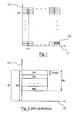
- the horizontal axis 11 defines the time indices of the OFDM symbols (symbol time), and the vertical axis 12 defines the frequency indices of the OFDM symbols (subcarriers).
- a time-frequency symbol therefore corresponds to a given symbol time 11 1 for a given subcarrier 12 1
- a resource unit 13 corresponds to a set of time-frequency symbols.
- the figure 1 illustrates a representation of the resource units (again denoted "URs”) in an OFDM time-frequency frame, these resource units being frequency-localized, i.e. they use adjacent sub-carriers. Indeed, it is recalled that the URs can be distributed or localized in frequency, and use a whole frame in time or not.
- URs resource units
- an OFDM type mobile network for example a WIMAX network ("Worlwide Inter-Operability for Microwave Access"), for which a time-frequency division in disjoint resource units has been predefined. presented in the document “ Part16: Air Interface For Fixed Broadband Wireless Access Systems, IEEE Computer Society, October 2004 , and corresponds to a short-term communication system based on an OFDM physical layer as described in the document " Universal Terrestrial Radio Access (UTRA) ", 3GPP Technical Specification Radio Access Network (R7) Group, 3GPP TR25814 v7.0.0 (June 2006 ).
- UTRA Universal Terrestrial Radio Access
- R7 3GPP Technical Specification Radio Access Network
- a cellular network comprising at least one base station and several mobile terminals associated with the base station (s) is also considered, each of these terminals having a limited transmission power and several of these terminals seeking to transmit data to the base station. same time.
- these techniques of the prior art are based on the sharing between the different terminals of the network (still called mobile) of the resource in time and frequency.
- the mobiles go back regularly, to the station basic information associated with them, information regarding the quality of their propagation channel and their flow requirements.
- a base station can also make radio quality measurements on the uplink itself, and use all of the above information to select the number, position, and transmit power of the resource units in the time-frequency frame. .
- the base station then deduces the transport schemes associated with each mobile, according to the type of modulation and coding (MCS) chosen, that is to say by following the modulation and coding adaptation principle (in English "link adaptation").
- MCS modulation and coding
- the base station transmits to the mobiles present in the cell that it manages its choice for the transmission parameters.
- the mobiles can then transmit data respecting the allocation fixed by the base station on which they depend.
- transport formats supported by mobile that is to say that can be transmitted by a mobile, by defining a transport format as the combination of a type of modulation and a mobile.
- MCS coding rate
- Such a list of transport formats supported by a mobile is still called authorized list.
- the mobile selects from this sub-list a transport format for transmitting a maximum of data with a given target quality ("link adaptation").
- a base station managing a plurality of mobiles M mobiles.
- B is the total band of the OFDM system, and Ns is the number of associated subcarriers.
- the sub-list associated with it is composed from the list of transport formats supported by the mobile, keeping only the transport formats for which the frequency band occupied is equal to B i .
- the total band used is very large (highest possible) and the number of mobile transmitting simultaneously is as low as possible.
- each mobile M 1 , M 2 , ..., M N has a maximum number of subcarriers (for example ⁇ max as large as possible for the mobile M 1 ), for a spectral density of target power given.
- ⁇ max as large as possible for the mobile M 1
- N mobile only can simultaneously transmit data according to this technique, with N less than or equal to M , and N relatively low.
- the number of subcarriers N 0 occupied for the transmission will be high.
- the sub-list thus constituted leads to a use of a large part of the total frequency band of the transmission system, and a small number of mobile transmitting simultaneously.
- the techniques of the prior art therefore seek to occupy all of the available frequency band for transmissions in the OFDM time-frequency frame.
- the band used by a mobile network is fixed and respectively equal to B / N (where N is a number arbitrarily fixed and common to all mobile, often low), and B.
- N is a number arbitrarily fixed and common to all mobile, often low
- B the total frequency band used
- N is a number arbitrarily fixed and common to all mobile, often low
- the selection of the transport format associated with a mobile network then consists in selecting the transport format for transmitting the maximum data to be transmitted for a given target quality, depending on the radio conditions and data to be transmitted, following the classical principle of link adaptation.
- the problem of the invention therefore consists in proposing a solution making it possible to increase the cellular capacity of a cellular communication network in the form of a transmission resource management method in a cellular communication network comprising a plurality of cells. each associated with a base station, the network comprising at least two radiocommunication terminals, a list of available transport formats, called authorized list, being associated with each of the terminals.
- the invention is based on a new and inventive approach to the allocation of resources for communications including uplink, to increase the cellular capacity of the network in a simple and effective manner.
- the invention proposes to optimize the frequency resources used, by creating a reduced list of specific transport formats for each of the terminals of the network, each reduced list being optimized in frequency.
- the invention makes it possible to reduce the width of the frequency band in which the inter-cellular interference is created, while making maximum use of the band used by each terminal to transmit a maximum of useful information or data.
- the invention makes it possible to use the transmission capacity of a maximum number of mobiles, that is to say to allow a maximum of mobile network to simultaneously transmit at maximum power.
- a reduced list associated with a terminal is determined by selecting in the authorized list corresponding to the terminal at least one transport format according to a criterion optimizing the spectral efficiency and the quantity of the terminal. information conveyed by said transport format.
- spectral efficiency is meant here the ratio between the number of coded information bits and the number of occupied time-frequency symbols.
- the proposed technique optimizes the number of resource units to be used, and therefore the size of the associated frequency band, for a given terminal and for a given number of bits of information to be transmitted.
- a reduced list is created from an authorized list of available transport formats associated with the terminal, comprising only optimal transport formats in terms of use of the frequency band, for a number of times. bits of information given.
- the reduced list is determined and stored in a network equipment.
- the reduced list is determined dynamically in a network device.
- a network equipment may be a base station, a terminal, an intermediate network node, etc.
- the reduced list can be transmitted to a network equipment implementing the substep of selecting a transport format associated with said terminal.
- the different steps can be implemented at different locations of the network: for example the reduced list associated with a terminal can be determined at this terminal, while the selection of the specific transport format for this terminal among the reduced list can be implemented at the base station managing this terminal. It is therefore necessary to transmit this reduced list to the base station, so that it can implement the substep selection.
- the reduced list can be transmitted (for example from the terminal to the base station) in the form of signaling.
- the invention is for example implemented in a network of OFDMA type, in particular for the management of frequency resources for uplink links.
- At least one of the cells of the network comprises at least two terminals, and the optimization step optimizes the frequency resources used by the terminals present in said cell.
- the invention makes it possible at the same time to optimize the frequency band used by the terminals and to make the best use of their transmission capacity, that all the terminals are present in the same cell of the cellular network or in cells distinct from the cell. same network.
- the management method is implemented at the cell, allowing optimization of the frequency resources within the cell itself.
- the method of managing the transmission resources is implemented in each of these cells, leading to an optimization of the frequency resources within each cell, and therefore to a global optimization network frequency resources.
- the invention also relates in another aspect to a network equipment (for example a terminal, a base station, an intermediate node, ...) implementing at least partly the management method according to the invention.
- a network equipment for example a terminal, a base station, an intermediate node, (7) implementing at least partly the management method according to the invention.
- the invention relates to a radiocommunication terminal intended to be implemented in a cellular communication network comprising a plurality of cells each associated with a base station, a list of available transport formats, known as the authorized list, being associated. at the terminal.
- Such a terminal is particularly adapted to implement at least partly the management method as described above.
- the invention relates to a base station intended to be implemented in a cellular communication network comprising a plurality of cells, the network comprising at least two radiocommunication terminals, a list of available transport formats, known as authorized list, being associated with each of the terminals.
- Such a base station is also adapted to implement at least part of the management method as described above.
- a terminal may include means for determining a reduced list associated therewith, and means for transmitting this reduced list to another equipment of the network, for example a base station.
- the base station may comprise means for selecting a transport format from the reduced list associated with the terminal, and means for assigning a frequency band to said terminal.
- the base station determines the reduced list associated with a terminal, transmits this reduced list, and the terminal selects a transport format from this list reduced, indicates this selection to the base station, and finally the base station assigns a frequency band sized according to the transport format selected at this terminal.
- Another aspect of the invention relates to a computer program product downloadable from a communication network and / or recorded on a computer-readable and / or executable medium by a processor, including program code instructions for setting at least some steps of the management method described above.
- the general principle of the invention is based on the determination, for each terminal of the same cellular network, of a reduced list of transport formats supported by the terminal, and on the selection of a transport format from this reduced list. that the terminal can use for communications with the base station that manages it.
- the use of this reduced list according to the invention leads to an optimization of the frequency resources used by all the terminals of the network.
- the selection of a transport format from a determined reduced list, for the different terminals of the network makes it possible to reduce the frequency band in which the inter-cellular interferences are created, while making the most of the band used for transmit a maximum of data.
- the proposed technique allows a maximum of network terminals to transmit data simultaneously, each at their maximum power.
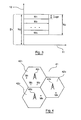
- a cellular communication network 41 is considered comprising three cells 42 1 , 42 2 , and 42 3 , each associated with a base station, respectively 43 1 , 43 2 , and 43 3 .
- the terminals M 1 , M 2 , and M 3 managed by the first base station 43 1 , are located in the first cell 42 1 .
- the terminal M 4 managed by the second base station 43 2 , is located in the second cell 42 2 .
- the terminal M 5 managed by the third base station 43 1 , is located in the third cell 42 3 .
- the invention also applies to networks comprising a larger number of cells and / or terminals.
- an authorized list of available transport formats that is to say transport formats supported by a terminal, is associated with each of the terminals M 1 to M 5 .
- a reduced list of the transport formats optimal in terms of use of the frequency band for a given number of information bits, is determined from the authorized list associated with the terminal M 2 .
- This reduced list can be predetermined for at least some of the terminals, and stored in a device of the network 41, for example at the first base station 43 1 or the terminal M 2 , for the reduced list associated with the terminal M 2 , or at an intermediate node of the network.
- This reduced list can also be determined dynamically for at least some of the terminals of the network 41, for example at the first base station 43 1 or the terminal M 2 , for the reduced list associated with the terminal M 2 , or at an intermediate node of the network.
- This reduced list is then communicated to the network equipment 41 implementing the selection of a specific transport format for the terminal, among the reduced list.
- This reduced list can notably be transmitted in the form of signaling.
- the terminal M 2 includes a memory storing the reduced list associated with it, but that it is the base station 43 1 which implements the step of selecting the transport format for this terminal, the terminal M 2 must transmit to the base station 43 1 this reduced list.
- a transport format is selected for each of the terminals, depending on the radio conditions and the number of bits to be transmitted.
- Each of the terminals is thus assigned a frequency band sized according to the selected transport format.
- this step of selecting the most suitable transport format, and the transmission power of the terminal is performed in a network equipment, and more specifically in the terminal and / or the base station. If this selection is made in the terminal, it will transmit the result of this step to the base station that manages it (that is to say the selected transport format), so that the base station can choose the positions of the resource units of each terminal of the network within the OFDM frame.
- the target SIR has been defined or is computable by that equipment, and the reachable SIR can be determined by this equipment.
- the equipment selects, from the reduced list, the transport format for transmitting the useful information (data to be transmitted) or a maximum of these data, and for which the reachable SIR is greater than the target value of the SIR. If no such transport format exists, the equipment decides not to transmit data or to transmit with the transport format with the highest SIR. Finally, the equipment selects the minimum transmission power needed to reach the target SIR of the selected transport format.
- the figure 3 represents the distribution of resources between different terminals M 1 to M N , in an OFDM time-frequency frame.
- the frequency band B i can be used by a mobile i is optimized.
- Each mobile M 1 , M 2 ,..., M N therefore uses an optimized number of sub-carriers ( ⁇ opt for the mobile M 1 ).
- the proposed technique makes it possible to optimize the number of resource units to be used in the time-frequency frame, and thus to optimize the size of the associated band (by decreasing it compared to the prior art).
- N mobile can simultaneously transmit data according to this technique, with N less than or equal to M , and N high (close enough to M ) .
- the number of subcarriers N 0 occupied for transmission is low, compared with the techniques of the prior art.
- the reduced list is from a list of available transport formats associated with the terminal considered, said list allowed.
- This reduced list is determined by selecting from the allowed list at least one transport format according to a criterion optimizing the spectral efficiency and the amount of information that it carries.
- a transport format is included in the reduced list if and only if it does not exist, in the allowed list of transport formats supported by the terminal considered, other transport formats for transmitting a transmission.
- MCS modulation and coding
- the spectral efficiency is defined as the ratio between the number of coded information bits transported by the transport format and the number of occupied time-frequency symbols.
- not j ⁇ not k and eff j > eff k T k nbre_d'elements_de_F k
- the authorized list L associated with the terminal M 1 considered is then scanned, for each transport format j from 1 to X.
- step 54 corresponds to a final state, in which the reduced list S associated with the terminal M 1 is determined.
- the figure 6 illustrates an example of an authorized list of transport formats 61 associated with a mobile M 1 , comprising twelve transport formats 615 identified by the identifiers 1 to 12, and reduced list associated with the same terminal, comprising only six transport formats 625 identified by the identifiers 1, 5, 9, 10, 11, and 12, following the implementation of the algorithm described in relation to the figure 5 for example.
- the authorized list 61 of the transport formats is scanned to determine, for each transport format identified from 1 to 12, whether there exists in the authorized list a transport format carrying a number of bits of data. coded information less than or equal to the number of coded information bits transported by the current transport format and having a spectral efficiency higher than that of the current transport format. If this is the case, the current transport format does not belong to the reduced list, and the next transport format is moved to the allowed list.
- the proposed technique thus makes it possible to choose a transport format for a terminal from a reduced list, thus making it possible to minimize the quantity of frequency resources used, for any given mobile and number of bits.
- first two steps can be implemented simultaneously or successively, but that the third step can be performed only after the first two steps have been performed.
- the example presented below concerns a WIMAX network, for which a time-frequency division in resource units disjoint has been predefined.
- a base station determines the resources that can be allocated to a future frame.
- the frame is pre-filled with communications between a terminal and a base station not subject to optimization of the band. For example, assuming that synchronous HARQ mechanisms are used (in English "Hybrid Automatic Repeat Request"), resources are allocated to retransmissions: the same number of URs and the same power is allocated as for the first transmission.
- step 1 the new transmissions are ordered.
- step 2 a specific format is selected for each terminal from the reduced list associated with each terminal.
- the base station selects the transport format associated with the user's terminal, according to the technique described, and determines the transmission power of the terminal associated with this transport format.
- step 3 one can choose the positions of the URs and fill the corresponding frame.
- Such equipment comprises a memory 71, a processing unit 72, equipped for example with a microprocessor ⁇ P, and driven by the computer program 73, implementing the transmission resource management method according to the invention.
- the code instructions of the computer program 73 are for example loaded into a RAM before being executed by the processor of the processing unit 72.
- the processing unit 72 receives as input at least a list of the terminals present in the network.
- the microprocessor of the processing unit 72 implements the steps of the resource management method described above, according to the instructions of the computer program 73, to determine a reduced list of transport format associated with each of the terminals, and to select a specific transport format among these reduced lists.
- the equipment comprises means for selecting a specific transport format for each of the terminals, from a reduced list of transport formats, a reduced list being determined for each of the terminals, and from an authorized list of transport formats associated with the terminal, and means for assigning a frequency band to the terminals, sized according to the selected transport format.
- These means are controlled by the microprocessor of the processing unit 72.
- the processing unit 72 thus outputs an OFDM frame in which the allocation of the frequency resources is optimized.
Landscapes
- Engineering & Computer Science (AREA)
- Computer Networks & Wireless Communication (AREA)
- Signal Processing (AREA)
- Quality & Reliability (AREA)
- Mobile Radio Communication Systems (AREA)
- Communication Control (AREA)
Claims (12)
- Verfahren z u r Verwaltung d e r Übertragungsressourcen in einem zellularen Kommunikationsnetzwerk (41), das mehrere Zellen (421, 422, 423) enthält, die je einer Basisstation (431, 432, 433) zugeordnet sind, wobei das Netzwerk mindestens zwei Funkverkehr-Endgeräte (M1, M2, M3, M4, M5) enthält, wobei jedem der Endgeräte eine Liste (L) von verfügbaren Transportformaten, autorisierte Liste genannt, zugeordnet ist, dadurch gekennzeichnet, dass das Verfahren einen Schritt der Optimierung der von den im Netzwerk vorhandenen Endgeräte verwendeten Frequenzressourcen enthält, der folgende Teilschritte enthält:- Auswahl eines spezifischen Transportformats für jedes der Endgeräte aus einer reduzierten Liste (S) von Transportformaten, wobei eine reduzierte Liste für jedes der Endgeräte bestimmt wird und von der dem Endgerät zugeordneten autorisierten Liste stammt, und- Zuweisung eines Frequenzbands zu jedem der Endgeräte, das abhängig vom ausgewählten Transportformat bemessen ist.
- Verwaltungsverfahren nach Anspruch 1, dadurch gekennzeichnet, dass die reduzierte Liste (S) bestimmt wird, indem in der autorisierten Liste (L) entsprechend dem Endgerät (M1, M2, M3, M4, M5) mindestens ein Transportformat abhängig von einem Kriterium ausgewählt wird, das die spektrale Effizienz und die Informationsmenge optimiert, die das Transportformat transportiert.
- Verwaltungsverfahren nach einem der Ansprüche 1 und 2, dadurch gekennzeichnet, dass es den folgenden Algorithmus durchführt:- Initialisierung einer leeren reduzierten Liste (S) ;- Durchlaufen der autorisierten Liste (L) von verfügbaren Transportformaten, die dem Endgerät (M1, M2, M3, M4, M5) zugeordnet ist, und für jedes Transportformat:• wenn es in der autorisierten Liste ein Transportformat gibt, das eine Anzahl von codierten Informationsbits geringer als die oder gleich der Anzahl von codierten Informationsbits transportiert, die vom Transportformat transportiert werden, und eine spektrale Effizienz größer als diejenige des Transportformats hat,• Übergang zum folgenden Transportformat in der autorisierte Liste,• sonst, Hinzufügen des Transportformats zur reduzierten Liste und Übergang zum folgenden Transportformat in der autorisierten Liste.
- Verwaltungsverfahren nach einem der Ansprüche 1 bis 3, dadurch gekennzeichnet, dass die reduzierte Liste (S) in einer Ausrüstung des Netzwerks bestimmt und gespeichert wird.
- Verwaltungsverfahren nach einem der Ansprüche 1 bis 3, dadurch gekennzeichnet, dass die reduzierte Liste (S) in einer Ausrüstung des Netzwerks dynamisch bestimmt wird.
- Verwaltungsverfahren nach einem der Ansprüche 1 bis 5, dadurch gekennzeichnet, dass die reduzierte Liste (S) an eine Ausrüstung des Netzwerks übertragen wird, die den Teilschritt der Auswahl eines dem Endgerät zugeordneten Transportformats durchführt.
- Verwaltungsverfahren nach einem der Ansprüche 1 bis 6, dadurch gekennzeichnet, dass das Netzwerk (41) von der Art OFDMA ist.
- Verwaltungsverfahren nach einem der Ansprüche 1 bis 7, dadurch gekennzeichnet, dass es die Verwaltung der Frequenzressourcen für Upstream-Verbindungen gewährleistet.
- Verwaltungsverfahren nach einem der Ansprüche 1 bis 8, dadurch gekennzeichnet, dass mindestens eine der Zellen (421, 422, 423) des Netzwerks (41) mindestens zwei Endgeräte (M1, M2, M3, M4, M5) enthält, und dass der Optimierungsschritt die von den in der Zelle Vorhandenen Endgeräten verwendeten Frequenzressourcen optimiert.
- Funkverkehr-Endgerät, das dazu bestimmt ist, in einem zellularen Kommunikationsnetzwerk (41) verwendet zu werden, das mehrere Zellen (421, 422, 423) enthält, die je einer Basisstation (431, 432, 433) zugeordnet sind, wobei eine Liste (L) von verfügbaren Transportformaten, autorisierte Liste genannt, dem Endgerät zugeordnet ist,
dadurch gekennzeichnet, dass das Endgerät Optimierungseinrichtungen der vom im Netzwerk vorhandenen Endgerät verwendeten Frequenzressourcen enthält, die enthalten:- Einrichtungen zur Auswahl eines spezifischen Transportformats für das Endgerät aus einer reduzierten Liste (S) von Transportformaten, wobei die reduzierte Liste aus der dem Endgerät zugeordneten autorisierten Liste stammt, und- Einrichtungen zur Zuweisung eines Frequenzbands zum Endgerät, das abhängig vom ausgewählten Transportformat bemessen ist. - Basisstation, die dazu bestimmt ist, von einem zellularen Kommunikationsnetzwerk (41) eingesetzt zu werden, das mehrere Zellen (421, 422, 423) enthält, wobei das Netzwerk mindestens zwei Funkverkehr-Endgeräte (M1, M2, M3, M4, M5) enthält, wobei eine Liste (L) von verfügbaren Transportformaten, autorisierte Liste genannt, jedem der Endgeräte zugeordnet ist,
dadurch gekennzeichnet, dass die Basisstation Einrichtungen zur Optimierung der von den im Netzwerk vorhandenen Endgeräten verwendeten Frequenzressourcen enthält, die enthalten:- Einrichtungen zur Auswahl eines für jedes der Endgeräte spezifischen Transportformats aus einer reduzierten Liste (S) von Transportformaten, wobei eine reduzierte Liste für jedes der Endgeräte bestimmt wird und aus der dem Endgerät zugeordneten autorisierten Liste stammt, und- Einrichtungen zur Zuweisung eines Frequenzbands zu mindestens einem der Endgeräte, das abhängig vom ausgewählten Transportformat bemessen ist. - Computerprogrammprodukt, das von einem Kommunikationsnetzwerk heruntergeladen und/oder auf einem computerlesbaren Träger gespeichert und/oder von einem Prozessor ausgeführt werden kann, dadurch gekennzeichnet, dass es Programmcodeanweisungen zur Durchführung des Verwaltungsverfahrens nach einem der Ansprüche 1 bis 9 enthält.
Applications Claiming Priority (2)
| Application Number | Priority Date | Filing Date | Title |
|---|---|---|---|
| FR0609389A FR2908008A1 (fr) | 2006-10-25 | 2006-10-25 | Procede de gesion des ressources de transmission dans un reseau de communication cellulaire,terminal,station de base et produit d'ordinateur correspondants. |
| PCT/FR2007/052232 WO2008050060A1 (fr) | 2006-10-25 | 2007-10-23 | Gestion des ressources de transmission dans un reseau de communication cellulaire |
Publications (2)
| Publication Number | Publication Date |
|---|---|
| EP2090131A1 EP2090131A1 (de) | 2009-08-19 |
| EP2090131B1 true EP2090131B1 (de) | 2012-01-25 |
Family
ID=38036225
Family Applications (1)
| Application Number | Title | Priority Date | Filing Date |
|---|---|---|---|
| EP07858651A Active EP2090131B1 (de) | 2006-10-25 | 2007-10-23 | Verwaltung von übertragungsressourcen in einem mobilen kommunikationsnetzwerk |
Country Status (6)
| Country | Link |
|---|---|
| US (1) | US8284723B2 (de) |
| EP (1) | EP2090131B1 (de) |
| AT (1) | ATE543364T1 (de) |
| ES (1) | ES2381307T3 (de) |
| FR (1) | FR2908008A1 (de) |
| WO (1) | WO2008050060A1 (de) |
Families Citing this family (3)
| Publication number | Priority date | Publication date | Assignee | Title |
|---|---|---|---|---|
| KR101813031B1 (ko) * | 2010-04-13 | 2017-12-28 | 엘지전자 주식회사 | 상향링크 신호를 전송하는 방법 및 이를 위한 장치 |
| US9398544B2 (en) * | 2010-11-05 | 2016-07-19 | Qualcomm Incorporated | Dynamic uplink power control |
| JP2022178775A (ja) * | 2021-05-21 | 2022-12-02 | Smc株式会社 | ベース無線装置及びベース無線装置の通信方法 |
Family Cites Families (3)
| Publication number | Priority date | Publication date | Assignee | Title |
|---|---|---|---|---|
| US7292552B2 (en) * | 2002-03-14 | 2007-11-06 | Qualcomm Incorporated | Method and apparatus for reducing interference in a wireless communication system |
| KR100973946B1 (ko) * | 2004-03-12 | 2010-08-05 | 삼성전자주식회사 | 직교 주파수 분할 다중 접속 통신 시스템에서 밴드 적응적변조 및 코딩 서브 채널 운용을 위한 시스템 및 방법 |
| EP3048849B1 (de) * | 2006-03-07 | 2017-06-21 | Panasonic Corporation | Overhead-reduktion der uplink-steuerungssignalisierung in einem mobilkommunikationssystem |
-
2006
- 2006-10-25 FR FR0609389A patent/FR2908008A1/fr not_active Withdrawn
-
2007
- 2007-10-23 AT AT07858651T patent/ATE543364T1/de active
- 2007-10-23 EP EP07858651A patent/EP2090131B1/de active Active
- 2007-10-23 WO PCT/FR2007/052232 patent/WO2008050060A1/fr not_active Ceased
- 2007-10-23 US US12/447,291 patent/US8284723B2/en active Active
- 2007-10-23 ES ES07858651T patent/ES2381307T3/es active Active
Also Published As
| Publication number | Publication date |
|---|---|
| FR2908008A1 (fr) | 2008-05-02 |
| WO2008050060A1 (fr) | 2008-05-02 |
| US8284723B2 (en) | 2012-10-09 |
| ES2381307T3 (es) | 2012-05-25 |
| US20100111003A1 (en) | 2010-05-06 |
| EP2090131A1 (de) | 2009-08-19 |
| ATE543364T1 (de) | 2012-02-15 |
Similar Documents
| Publication | Publication Date | Title |
|---|---|---|
| EP1860902B1 (de) | Verfahren zur Optimierung der Kapazität eines Mobiltelefonnetzes zur Erzeugung von Diensten, deren Fluss hauptsächlich abwärts gerichtet ist | |
| EP1227697A1 (de) | Implizites Ressourcenzuweisungsverfahren | |
| EP1722585A1 (de) | Verfahren und System zur Trägerleistungsplanung in einem Zellulartelekommunikationsnetz | |
| EP3703463A1 (de) | Zugriffsmethode durch mehrfachverbindung mit einem netz | |
| EP2413642B1 (de) | Dezentralisiertes verfahren zur leistungsallokation unter einschränkung durch dienstqualität | |
| FR2784525A1 (fr) | Procede d'allocation de codes orthogonaux dans un systeme de radiocommunications mobiles du type a acces multiple par repartition de codes utilisant des codes de longueur variable | |
| EP2090131B1 (de) | Verwaltung von übertragungsressourcen in einem mobilen kommunikationsnetzwerk | |
| EP3117551B1 (de) | Verfahren zur ressourcenzuweisung und dieses verfahren implementierendes system | |
| FR3121567A1 (fr) | Dispositif d’ordonnancement coopératif minimisant les interférences pour communications sans fil à accès multiple orthogonal (oma) et à accès multiple non orthogonal (noma) | |
| EP2763340B1 (de) | Linkadaptationsverfahren, das durch ein ausgewähltes Interferenzmodus gesteuert wird | |
| EP1938643A1 (de) | Zuweisung von funkressourcen zur reduktion der übertragungsleistung eines endgeräts | |
| EP3934111B1 (de) | Verfahren zur auswahl eines kommunikationsweges | |
| EP3977785B1 (de) | Verfahren zur auswahl einer vielzahl von möglichen übertragungsleistungswerten, die für den unkoordinierten zugriff auf ein kommunikationsmedium bestimmt sind, und zugehörige vorrichtungen | |
| WO2014207412A1 (fr) | Procede d'adaptation de lien pour selectionner un mode de transmission de trames et point d'acces wifi correspondant | |
| FR3095915A1 (fr) | Procédé d’émission avec accès LBT au canal, dispositif et programme correspondants | |
| EP2830342B1 (de) | Verwaltungsverfahren von HF-Frequenzen bei Verwendung des Breitbandbereichs | |
| EP1925105A1 (de) | Verfahren zum senden eines mehrträger-spektrumspreizsignals, empfangsverfahren, entsprechende sende- bzw. empfangseinrichtung und signal | |
| EP2649743A1 (de) | Verfahren, vorrichtungen und computerprogramm zur dynamischen auswahl von frequenzbändern für uplink-kommunikation für ofdma oder sc-fdma-endgeräte mit gesteuerter leistung | |
| WO2025195940A1 (fr) | Procédé, dispositif et programme de configuration d'une transmission entre un satellite d'un réseau de communication satellitaire et un récepteur | |
| FR3137234A1 (fr) | Procédé de retransmission coopérative dans un système OMAMRC | |
| WO2022136798A1 (fr) | Procede de reception d'au moins une trame de donnees dans un systeme omamrc, destination, programme d'ordinateur et systeme correspondants | |
| WO2013038118A1 (fr) | Procede d'allocation de ressource par une station emettrice pour la transmission de k flux vers k stations | |
| WO2024079309A1 (fr) | Procédé de retransmission coopérative dans un système omamrc avec allocation de ressources et sélections des sources à aider conjointes | |
| Tran | Allocation Dynamique De Ressources Pour Les Réseaux Cellulaires Sans Fil Full-duplex OFDMA | |
| Harchay | Uplink OFDMA Resource Allocation using mobile Relays and Proportional Fairness |
Legal Events
| Date | Code | Title | Description |
|---|---|---|---|
| PUAI | Public reference made under article 153(3) epc to a published international application that has entered the european phase |
Free format text: ORIGINAL CODE: 0009012 |
|
| 17P | Request for examination filed |
Effective date: 20090414 |
|
| AK | Designated contracting states |
Kind code of ref document: A1 Designated state(s): AT BE BG CH CY CZ DE DK EE ES FI FR GB GR HU IE IS IT LI LT LU LV MC MT NL PL PT RO SE SI SK TR |
|
| RIC1 | Information provided on ipc code assigned before grant |
Ipc: H04W 4/00 20090101AFI20090728BHEP Ipc: H04W 16/00 20090101ALI20090728BHEP |
|
| DAX | Request for extension of the european patent (deleted) | ||
| REG | Reference to a national code |
Ref country code: DE Ref legal event code: R079 Ref document number: 602007020344 Country of ref document: DE Free format text: PREVIOUS MAIN CLASS: H04Q0007380000 Ipc: H04W0072040000 Ref country code: DE Ref legal event code: R079 Ref document number: 602007020344 Country of ref document: DE Free format text: PREVIOUS MAIN CLASS: H04W0004000000 Ipc: H04W0072040000 |
|
| GRAP | Despatch of communication of intention to grant a patent |
Free format text: ORIGINAL CODE: EPIDOSNIGR1 |
|
| RIC1 | Information provided on ipc code assigned before grant |
Ipc: H04W 72/04 20090101AFI20110620BHEP |
|
| GRAS | Grant fee paid |
Free format text: ORIGINAL CODE: EPIDOSNIGR3 |
|
| GRAA | (expected) grant |
Free format text: ORIGINAL CODE: 0009210 |
|
| AK | Designated contracting states |
Kind code of ref document: B1 Designated state(s): AT BE BG CH CY CZ DE DK EE ES FI FR GB GR HU IE IS IT LI LT LU LV MC MT NL PL PT RO SE SI SK TR |
|
| REG | Reference to a national code |
Ref country code: GB Ref legal event code: FG4D Free format text: NOT ENGLISH |
|
| REG | Reference to a national code |
Ref country code: CH Ref legal event code: EP |
|
| REG | Reference to a national code |
Ref country code: AT Ref legal event code: REF Ref document number: 543364 Country of ref document: AT Kind code of ref document: T Effective date: 20120215 |
|
| REG | Reference to a national code |
Ref country code: IE Ref legal event code: FG4D |
|
| REG | Reference to a national code |
Ref country code: DE Ref legal event code: R096 Ref document number: 602007020344 Country of ref document: DE Effective date: 20120322 |
|
| REG | Reference to a national code |
Ref country code: NL Ref legal event code: VDEP Effective date: 20120125 |
|
| REG | Reference to a national code |
Ref country code: ES Ref legal event code: FG2A Ref document number: 2381307 Country of ref document: ES Kind code of ref document: T3 Effective date: 20120525 |
|
| LTIE | Lt: invalidation of european patent or patent extension |
Effective date: 20120125 |
|
| PG25 | Lapsed in a contracting state [announced via postgrant information from national office to epo] |
Ref country code: LT Free format text: LAPSE BECAUSE OF FAILURE TO SUBMIT A TRANSLATION OF THE DESCRIPTION OR TO PAY THE FEE WITHIN THE PRESCRIBED TIME-LIMIT Effective date: 20120125 Ref country code: IS Free format text: LAPSE BECAUSE OF FAILURE TO SUBMIT A TRANSLATION OF THE DESCRIPTION OR TO PAY THE FEE WITHIN THE PRESCRIBED TIME-LIMIT Effective date: 20120525 Ref country code: NL Free format text: LAPSE BECAUSE OF FAILURE TO SUBMIT A TRANSLATION OF THE DESCRIPTION OR TO PAY THE FEE WITHIN THE PRESCRIBED TIME-LIMIT Effective date: 20120125 Ref country code: BG Free format text: LAPSE BECAUSE OF FAILURE TO SUBMIT A TRANSLATION OF THE DESCRIPTION OR TO PAY THE FEE WITHIN THE PRESCRIBED TIME-LIMIT Effective date: 20120425 |
|
| REG | Reference to a national code |
Ref country code: IE Ref legal event code: FD4D |
|
| PG25 | Lapsed in a contracting state [announced via postgrant information from national office to epo] |
Ref country code: LV Free format text: LAPSE BECAUSE OF FAILURE TO SUBMIT A TRANSLATION OF THE DESCRIPTION OR TO PAY THE FEE WITHIN THE PRESCRIBED TIME-LIMIT Effective date: 20120125 Ref country code: PT Free format text: LAPSE BECAUSE OF FAILURE TO SUBMIT A TRANSLATION OF THE DESCRIPTION OR TO PAY THE FEE WITHIN THE PRESCRIBED TIME-LIMIT Effective date: 20120525 Ref country code: FI Free format text: LAPSE BECAUSE OF FAILURE TO SUBMIT A TRANSLATION OF THE DESCRIPTION OR TO PAY THE FEE WITHIN THE PRESCRIBED TIME-LIMIT Effective date: 20120125 Ref country code: GR Free format text: LAPSE BECAUSE OF FAILURE TO SUBMIT A TRANSLATION OF THE DESCRIPTION OR TO PAY THE FEE WITHIN THE PRESCRIBED TIME-LIMIT Effective date: 20120426 Ref country code: PL Free format text: LAPSE BECAUSE OF FAILURE TO SUBMIT A TRANSLATION OF THE DESCRIPTION OR TO PAY THE FEE WITHIN THE PRESCRIBED TIME-LIMIT Effective date: 20120125 |
|
| REG | Reference to a national code |
Ref country code: AT Ref legal event code: MK05 Ref document number: 543364 Country of ref document: AT Kind code of ref document: T Effective date: 20120125 |
|
| PG25 | Lapsed in a contracting state [announced via postgrant information from national office to epo] |
Ref country code: CY Free format text: LAPSE BECAUSE OF FAILURE TO SUBMIT A TRANSLATION OF THE DESCRIPTION OR TO PAY THE FEE WITHIN THE PRESCRIBED TIME-LIMIT Effective date: 20120125 |
|
| PG25 | Lapsed in a contracting state [announced via postgrant information from national office to epo] |
Ref country code: SE Free format text: LAPSE BECAUSE OF FAILURE TO SUBMIT A TRANSLATION OF THE DESCRIPTION OR TO PAY THE FEE WITHIN THE PRESCRIBED TIME-LIMIT Effective date: 20120125 Ref country code: DK Free format text: LAPSE BECAUSE OF FAILURE TO SUBMIT A TRANSLATION OF THE DESCRIPTION OR TO PAY THE FEE WITHIN THE PRESCRIBED TIME-LIMIT Effective date: 20120125 Ref country code: IE Free format text: LAPSE BECAUSE OF FAILURE TO SUBMIT A TRANSLATION OF THE DESCRIPTION OR TO PAY THE FEE WITHIN THE PRESCRIBED TIME-LIMIT Effective date: 20120125 Ref country code: RO Free format text: LAPSE BECAUSE OF FAILURE TO SUBMIT A TRANSLATION OF THE DESCRIPTION OR TO PAY THE FEE WITHIN THE PRESCRIBED TIME-LIMIT Effective date: 20120125 Ref country code: CZ Free format text: LAPSE BECAUSE OF FAILURE TO SUBMIT A TRANSLATION OF THE DESCRIPTION OR TO PAY THE FEE WITHIN THE PRESCRIBED TIME-LIMIT Effective date: 20120125 Ref country code: SI Free format text: LAPSE BECAUSE OF FAILURE TO SUBMIT A TRANSLATION OF THE DESCRIPTION OR TO PAY THE FEE WITHIN THE PRESCRIBED TIME-LIMIT Effective date: 20120125 Ref country code: EE Free format text: LAPSE BECAUSE OF FAILURE TO SUBMIT A TRANSLATION OF THE DESCRIPTION OR TO PAY THE FEE WITHIN THE PRESCRIBED TIME-LIMIT Effective date: 20120125 |
|
| PG25 | Lapsed in a contracting state [announced via postgrant information from national office to epo] |
Ref country code: SK Free format text: LAPSE BECAUSE OF FAILURE TO SUBMIT A TRANSLATION OF THE DESCRIPTION OR TO PAY THE FEE WITHIN THE PRESCRIBED TIME-LIMIT Effective date: 20120125 |
|
| PLBE | No opposition filed within time limit |
Free format text: ORIGINAL CODE: 0009261 |
|
| STAA | Information on the status of an ep patent application or granted ep patent |
Free format text: STATUS: NO OPPOSITION FILED WITHIN TIME LIMIT |
|
| 26N | No opposition filed |
Effective date: 20121026 |
|
| PG25 | Lapsed in a contracting state [announced via postgrant information from national office to epo] |
Ref country code: AT Free format text: LAPSE BECAUSE OF FAILURE TO SUBMIT A TRANSLATION OF THE DESCRIPTION OR TO PAY THE FEE WITHIN THE PRESCRIBED TIME-LIMIT Effective date: 20120125 |
|
| REG | Reference to a national code |
Ref country code: DE Ref legal event code: R097 Ref document number: 602007020344 Country of ref document: DE Effective date: 20121026 |
|
| BERE | Be: lapsed |
Owner name: FRANCE TELECOM Effective date: 20121031 |
|
| PG25 | Lapsed in a contracting state [announced via postgrant information from national office to epo] |
Ref country code: MC Free format text: LAPSE BECAUSE OF NON-PAYMENT OF DUE FEES Effective date: 20121031 |
|
| REG | Reference to a national code |
Ref country code: CH Ref legal event code: PL |
|
| PG25 | Lapsed in a contracting state [announced via postgrant information from national office to epo] |
Ref country code: BE Free format text: LAPSE BECAUSE OF NON-PAYMENT OF DUE FEES Effective date: 20121031 Ref country code: LI Free format text: LAPSE BECAUSE OF NON-PAYMENT OF DUE FEES Effective date: 20121031 Ref country code: CH Free format text: LAPSE BECAUSE OF NON-PAYMENT OF DUE FEES Effective date: 20121031 |
|
| PG25 | Lapsed in a contracting state [announced via postgrant information from national office to epo] |
Ref country code: MT Free format text: LAPSE BECAUSE OF FAILURE TO SUBMIT A TRANSLATION OF THE DESCRIPTION OR TO PAY THE FEE WITHIN THE PRESCRIBED TIME-LIMIT Effective date: 20120125 |
|
| PG25 | Lapsed in a contracting state [announced via postgrant information from national office to epo] |
Ref country code: TR Free format text: LAPSE BECAUSE OF FAILURE TO SUBMIT A TRANSLATION OF THE DESCRIPTION OR TO PAY THE FEE WITHIN THE PRESCRIBED TIME-LIMIT Effective date: 20120125 |
|
| PG25 | Lapsed in a contracting state [announced via postgrant information from national office to epo] |
Ref country code: LU Free format text: LAPSE BECAUSE OF NON-PAYMENT OF DUE FEES Effective date: 20121023 |
|
| PG25 | Lapsed in a contracting state [announced via postgrant information from national office to epo] |
Ref country code: HU Free format text: LAPSE BECAUSE OF FAILURE TO SUBMIT A TRANSLATION OF THE DESCRIPTION OR TO PAY THE FEE WITHIN THE PRESCRIBED TIME-LIMIT Effective date: 20071023 |
|
| REG | Reference to a national code |
Ref country code: FR Ref legal event code: PLFP Year of fee payment: 10 |
|
| REG | Reference to a national code |
Ref country code: FR Ref legal event code: PLFP Year of fee payment: 11 |
|
| REG | Reference to a national code |
Ref country code: FR Ref legal event code: PLFP Year of fee payment: 12 |
|
| PGFP | Annual fee paid to national office [announced via postgrant information from national office to epo] |
Ref country code: IT Payment date: 20250923 Year of fee payment: 19 |
|
| PGFP | Annual fee paid to national office [announced via postgrant information from national office to epo] |
Ref country code: GB Payment date: 20250923 Year of fee payment: 19 |
|
| PGFP | Annual fee paid to national office [announced via postgrant information from national office to epo] |
Ref country code: FR Payment date: 20250923 Year of fee payment: 19 |
|
| PGFP | Annual fee paid to national office [announced via postgrant information from national office to epo] |
Ref country code: DE Payment date: 20250923 Year of fee payment: 19 |
|
| PGFP | Annual fee paid to national office [announced via postgrant information from national office to epo] |
Ref country code: ES Payment date: 20251103 Year of fee payment: 19 |