EP2090302A1 - Nahrungsergänzung, mittel gegen müdigkeit oder mittel zur verstärkung der körperlichen ausdauer, funktionales nahrungsmittel oder kosmetikum - Google Patents
Nahrungsergänzung, mittel gegen müdigkeit oder mittel zur verstärkung der körperlichen ausdauer, funktionales nahrungsmittel oder kosmetikum Download PDFInfo
- Publication number
- EP2090302A1 EP2090302A1 EP07828049A EP07828049A EP2090302A1 EP 2090302 A1 EP2090302 A1 EP 2090302A1 EP 07828049 A EP07828049 A EP 07828049A EP 07828049 A EP07828049 A EP 07828049A EP 2090302 A1 EP2090302 A1 EP 2090302A1
- Authority
- EP
- European Patent Office
- Prior art keywords
- phosphatidylinositol
- coenzyme
- physical endurance
- fatigue
- enzyme
- Prior art date
- Legal status (The legal status is an assumption and is not a legal conclusion. Google has not performed a legal analysis and makes no representation as to the accuracy of the status listed.)
- Withdrawn
Links
Images



Classifications
-
- A—HUMAN NECESSITIES
- A61—MEDICAL OR VETERINARY SCIENCE; HYGIENE
- A61K—PREPARATIONS FOR MEDICAL, DENTAL OR TOILETRY PURPOSES
- A61K31/00—Medicinal preparations containing organic active ingredients
- A61K31/12—Ketones
- A61K31/122—Ketones having the oxygen directly attached to a ring, e.g. quinones, vitamin K1, anthralin
-
- A—HUMAN NECESSITIES
- A21—BAKING; EDIBLE DOUGHS
- A21D—TREATMENT OF FLOUR OR DOUGH FOR BAKING, e.g. BY ADDITION OF MATERIALS; BAKING; BAKERY PRODUCTS
- A21D2/00—Treatment of flour or dough by adding materials thereto before or during baking
- A21D2/08—Treatment of flour or dough by adding materials thereto before or during baking by adding organic substances
- A21D2/14—Organic oxygen compounds
-
- A—HUMAN NECESSITIES
- A21—BAKING; EDIBLE DOUGHS
- A21D—TREATMENT OF FLOUR OR DOUGH FOR BAKING, e.g. BY ADDITION OF MATERIALS; BAKING; BAKERY PRODUCTS
- A21D2/00—Treatment of flour or dough by adding materials thereto before or during baking
- A21D2/08—Treatment of flour or dough by adding materials thereto before or during baking by adding organic substances
- A21D2/30—Organic phosphorus compounds
- A21D2/32—Phosphatides
-
- A—HUMAN NECESSITIES
- A23—FOODS OR FOODSTUFFS; TREATMENT THEREOF, NOT COVERED BY OTHER CLASSES
- A23L—FOODS, FOODSTUFFS OR NON-ALCOHOLIC BEVERAGES, NOT OTHERWISE PROVIDED FOR; PREPARATION OR TREATMENT THEREOF
- A23L33/00—Modifying nutritive qualities of foods; Dietetic products; Preparation or treatment thereof
- A23L33/10—Modifying nutritive qualities of foods; Dietetic products; Preparation or treatment thereof using additives
-
- A—HUMAN NECESSITIES
- A23—FOODS OR FOODSTUFFS; TREATMENT THEREOF, NOT COVERED BY OTHER CLASSES
- A23L—FOODS, FOODSTUFFS OR NON-ALCOHOLIC BEVERAGES, NOT OTHERWISE PROVIDED FOR; PREPARATION OR TREATMENT THEREOF
- A23L33/00—Modifying nutritive qualities of foods; Dietetic products; Preparation or treatment thereof
- A23L33/10—Modifying nutritive qualities of foods; Dietetic products; Preparation or treatment thereof using additives
- A23L33/115—Fatty acids or derivatives thereof; Fats or oils
- A23L33/12—Fatty acids or derivatives thereof
-
- A—HUMAN NECESSITIES
- A61—MEDICAL OR VETERINARY SCIENCE; HYGIENE
- A61K—PREPARATIONS FOR MEDICAL, DENTAL OR TOILETRY PURPOSES
- A61K31/00—Medicinal preparations containing organic active ingredients
- A61K31/66—Phosphorus compounds
- A61K31/683—Diesters of a phosphorus acid with two hydroxy compounds, e.g. phosphatidylinositols
-
- A—HUMAN NECESSITIES
- A61—MEDICAL OR VETERINARY SCIENCE; HYGIENE
- A61K—PREPARATIONS FOR MEDICAL, DENTAL OR TOILETRY PURPOSES
- A61K8/00—Cosmetics or similar toiletry preparations
- A61K8/18—Cosmetics or similar toiletry preparations characterised by the composition
- A61K8/30—Cosmetics or similar toiletry preparations characterised by the composition containing organic compounds
- A61K8/33—Cosmetics or similar toiletry preparations characterised by the composition containing organic compounds containing oxygen
- A61K8/35—Ketones, e.g. benzophenone
- A61K8/355—Quinones
-
- A—HUMAN NECESSITIES
- A61—MEDICAL OR VETERINARY SCIENCE; HYGIENE
- A61K—PREPARATIONS FOR MEDICAL, DENTAL OR TOILETRY PURPOSES
- A61K8/00—Cosmetics or similar toiletry preparations
- A61K8/18—Cosmetics or similar toiletry preparations characterised by the composition
- A61K8/30—Cosmetics or similar toiletry preparations characterised by the composition containing organic compounds
- A61K8/55—Phosphorus compounds
- A61K8/553—Phospholipids, e.g. lecithin
-
- A—HUMAN NECESSITIES
- A61—MEDICAL OR VETERINARY SCIENCE; HYGIENE
- A61P—SPECIFIC THERAPEUTIC ACTIVITY OF CHEMICAL COMPOUNDS OR MEDICINAL PREPARATIONS
- A61P17/00—Drugs for dermatological disorders
-
- A—HUMAN NECESSITIES
- A61—MEDICAL OR VETERINARY SCIENCE; HYGIENE
- A61P—SPECIFIC THERAPEUTIC ACTIVITY OF CHEMICAL COMPOUNDS OR MEDICINAL PREPARATIONS
- A61P3/00—Drugs for disorders of the metabolism
-
- A—HUMAN NECESSITIES
- A61—MEDICAL OR VETERINARY SCIENCE; HYGIENE
- A61P—SPECIFIC THERAPEUTIC ACTIVITY OF CHEMICAL COMPOUNDS OR MEDICINAL PREPARATIONS
- A61P3/00—Drugs for disorders of the metabolism
- A61P3/02—Nutrients, e.g. vitamins, minerals
-
- A—HUMAN NECESSITIES
- A61—MEDICAL OR VETERINARY SCIENCE; HYGIENE
- A61P—SPECIFIC THERAPEUTIC ACTIVITY OF CHEMICAL COMPOUNDS OR MEDICINAL PREPARATIONS
- A61P43/00—Drugs for specific purposes, not provided for in groups A61P1/00-A61P41/00
-
- A—HUMAN NECESSITIES
- A61—MEDICAL OR VETERINARY SCIENCE; HYGIENE
- A61Q—SPECIFIC USE OF COSMETICS OR SIMILAR TOILETRY PREPARATIONS
- A61Q19/00—Preparations for care of the skin
-
- A—HUMAN NECESSITIES
- A23—FOODS OR FOODSTUFFS; TREATMENT THEREOF, NOT COVERED BY OTHER CLASSES
- A23V—INDEXING SCHEME RELATING TO FOODS, FOODSTUFFS OR NON-ALCOHOLIC BEVERAGES AND LACTIC OR PROPIONIC ACID BACTERIA USED IN FOODSTUFFS OR FOOD PREPARATION
- A23V2002/00—Food compositions, function of food ingredients or processes for food or foodstuffs
Definitions
- the present invention relates to a composition comprising phosphatidylinositol and coenzyme Q10; a dietary supplement comprising phosphatidylinositol and coenzyme Q10; an anti-fatigue agent and/or physical endurance enhancer comprising phosphatidylinositol and coenzyme Q10 as active ingredients; a functional food or cosmetic which contains phosphatidylinositol and coenzyme Q10 as active ingredients and has an anti-fatigue effect or physical endurance-enhancing effect; use of phosphatidylinositol and coenzyme Q10 for the purpose of preparing a composition having an anti-fatigue effect or a physical endurance-enhancing effect; and a method of enhancing an anti-fatigue effect or physical endurance including ingesting or applying a composition comprising phosphatidylinositol and coenzyme Q10 as active ingredients.
- Non-patent Document 1 Non-patent Document 1
- coenzyme Q10 is a benzoquinone derivative and distributed widely in the living world, and thus it is named ubiquinone (oxidized coenzyme Q10).
- a hydroquinone compound obtained by reducing ubiquinone by two electrons is ubiquinol (reduced coenzyme Q10).
- n isoprenoid side chain
- coenzyme Q10 is a biosynthesized product, and hence, major homologues are limited depending on the type of coenzyme Q10.
- the value of "n" is mainly 9 or 10.
- the value is 9 in many cases, while in the case of a rabbit, the value is mainly 10.
- the value is 10.
- Coenzyme Q10 is a physiological component present as an electron transport system component of mitochondria in a cell of a living body and plays a role as a transport component in the electron transport system by repeating oxidation and reduction in the living body.
- Coenzyme Q10 has energy producing ability and antioxidant activity in the living body and is widely known to be useful.
- Coenzyme Q10 is a molecule obtained by biosynthesis in a human living body. It has been reported that the biosynthesis amount decreases with aging and the coenzyme Q10 level in the living body decreases due to various diseases. In the case of such diseases, external supply of coenzyme Q10 leads to good results.
- Oxidized coenzyme Q10 is used for medicinal application as a drug for congestive heart failure. In addition to the medicinal application, it has also been reported that oxidized coenzyme Q10 is useful for geriatric diseases such as dementia or allergic diseases and enhances athletic performance. Moreover, extraneous supply of oxidized coenzyme Q 10 is considered to be an effective means because of its high safety, and many products containing reduced coenzyme Q 10 have been developed.
- Patent Document 1 JP H07-330584 A
- An object of the present invention is to provide a drug, functional food, or cosmetic which is superior to a conventional drug, functional food, or cosmetic having an anti-fatigue effect and/or physical endurance-enhancing effect.
- the inventors of the present invention have made extensive studies to solve the above-mentioned problems, and as a result, the inventors have found that simultaneous ingestion of phosphatidylinositol (the content of phosphatidylinositol in total phospholipids is equal to or above a certain level) and coenzyme Q10 can enhance an anti-fatigue effect or physical endurance-enhancing effect compared with single ingestion of phosphatidylinositol alone or coenzyme Q10 alone, thus completing the present invention related to a composition containing phosphatidylinositol and coenzyme Q10, a drug, functional food, or cosmetic each containing phosphatidylinositol and coenzyme Q10 as active ingredients.
- phosphatidylinositol the concentration of phosphatidylinositol in total phospholipids is a certain level or more promotes absorption of coenzyme Q10 into the body, thereby completing the present invention.
- the present invention includes the following.
- [A2] A composition according to the above [A1], in which the content of the phosphatidylinositol in total phospholipids is 50 mol% or more.
- [A2-2] A composition according to the above [A1], in which the content of the phosphatidylinositol in total phospholipids is 85 mol% or more.
- [A2-3] A composition according to the above [A1], essentially comprising phosphatidylinositol and coenzyme Q10, with the content of the phosphatidylinositol in total phospholipids being 50 mol% or more.
- [A3-2] A composition according to any one of the above [A1] to [A2-4], in which the phosphatidylinositol is prepared by a method comprising at least the following step of: reacting a mixture of phospholipid derived from soybean with an enzyme which is derived from the genus Candida and is substantially incapable of decomposing the phosphatidylinositol and is capable of decomposing all of phosphatidylcholine, phosphatidylethanolamine, and phosphatidic acid to increase the content of the phosphatidylinositol in total phospholipids to 85 mol% or more.
- [A3-3] A composition according to any one of the above [A1] to [A2-4], in which the phosphatidylinositol is prepared by a method comprising at least the following step, and the composition contains no phosphatidylcholine, phosphatidylethanolamine, and phosphatidic acid other than the compounds derived from the following step of; reacting a mixture of phospholipid derived from soybean with an enzyme which is derived from the genus Candida and is substantially incapable of decomposing the phosphatidylinositol and is capable of decomposing all of phosphatidylcholine, phosphatidylethanolamine, and phosphatidic acid to increase the content of the phosphatidylinositol in total phospholipids to 50 mol% or more.
- a dietary supplement comprising the composition according to any one of the above [A1] to [A3-4].
- [A4-2] A dietary supplement essentially comprising the composition according to any one of the above [A1] to [A3-4].
- a functional food comprising the composition according to any one of the above [A1] to [A3-4], the functional food having an anti-fatigue effect and/or a physical endurance-enhancing effect.
- a functional food essentially comprising the composition according to any one of the above [A1] to [A3-4] and having an anti-fatigue effect and/or a physical endurance-enhancing effect.
- a cosmetic comprising the composition according to any one of the above [A1] to [A3-4].
- a cosmetic essentially comprising the composition according to any one of the above [A1] to [A3-4].
- An anti-fatigue agent and/or a physical endurance enhancer comprising the composition according to any one of the above [A1] to [A3-4].
- An agent for promoting absorption of coenzyme Q 10 into a body comprising at least phosphatidylinositol as an active ingredient.
- a functional food having an effect of promoting absorption of coenzyme Q10 into a body, comprising at least phosphatidylinositol as an active ingredient.
- [A12-2] A functional food having an effect of promoting absorption of coenzyme Q10 into a body according to the above [A11], in which the content of the phosphatidylinositol in total phospholipids is 85 mol% or more.
- a kit comprising an anti-fatigue agent and/or a physical endurance enhancer containing phosphatidylinositol as an active ingredient and an anti-fatigue agent and/or a physical endurance enhancer containing coenzyme Q10 as an active ingredient in combination for the purpose of simultaneous ingestion of the phosphatidylinositol and the coenzyme Q10.
- a kit comprising an anti-fatigue agent and/or a physical endurance enhancer containing phosphatidylinositol as an active ingredient and an anti-fatigue agent and/or a physical endurance enhancer containing coenzyme Q10 as an active ingredient in one package for the purpose of simultaneous ingestion of the phosphatidylinositol and the coenzyme Q10.
- [A16] A kit according to the above [A14] or [A15], in which the content of the phosphatidylinositol in total phospholipids is 50 mol% or more.
- [A16-2] A kit according to the above [A14] or [A15], in which the content of the phosphatidylinositol in total phospholipids is 85 mol% or more.
- a method of preparing phosphatidylinositol comprising at least the following step of: reacting a mixture of phospholipid derived from soybean with an enzyme which is derived from the genus Candida and is substantially incapable of decomposing the phosphatidylinositol and is capable of decomposing all of phosphatidylcholine, phosphatidylethanolamine, and phosphatidic acid to increase the content of the phosphatidylinositol in total phospholipids to 50 mol% or more.
- a method of preparing phosphatidylinositol comprising at least the following step of: reacting a mixture of phospholipid derived from soybean with an enzyme which is derived from the genus Candida and is substantially incapable of decomposing the phosphatidylinositol and is capable of decomposing all of phosphatidylcholine, phosphatidylethanolamine, and phosphatidic acid to increase the content of the phosphatidylinositol in total phospholipids to 85 mol% or more.
- a method of preparing phosphatidylinositol comprising the following steps 1) to 3):
- a method of preparing phosphatidylinositol comprising the following steps 1) to 3):
- the organic solvent is a mixture solvent of hexane and a lower alcohol.
- [A17-6] A method of preparing phosphatidylinositol according to the above [A17-3] or [A17-4], in which in the step 2) the organic solvent is a mixture solvent of hexane and ethanol.
- [A17-7] A method of preparing phosphatidylinositol according to any one of the above [A17-3] to [A17-6], in which in the step 3) the solvent is a lower alcohol, in which the phosphatidylinositol is not dissolved in the organic layer and impurities other than free fatty acids and phospholipids are dissolved.
- [A 17-8] A method of preparing phosphatidylinositol according to any one of the above [A17-3] to [A17-6], in which in the step 3) the solvent is ethanol, in which the phosphatidylinositol is not dissolved in the organic layer and impurities other than free fatty acids and phospholipids are dissolved.
- [A18-2] A use of phosphatidylinositol and coenzyme Q10 according to the above [A18], in which the content of the phosphatidylinositol in total phospholipids is 50 mol% or more.
- [A18-3] A use of phosphatidylinositol and coenzyme Q10 according to the above [A18], in which the content of the phosphatidylinositol in total phospholipids is 85 mol% or more.
- [A19] A method of ameliorating fatigue and/or enhancing physical endurance comprising simultaneously ingesting phosphatidylinositol and coenzyme Q10.
- [A19-2] A method of ameliorating fatigue and/or enhancing physical endurance according to the above [A19], in which the content of the phosphatidylinositol in total phospholipids is 50 mol% or more.
- [A19-3] A method of ameliorating fatigue and/or a method of enhancing physical endurance according to the above [A19], in which the content of the phosphatidylinositol in total phospholipids is 85 mol% or more.
- a method of ameliorating fatigue and/or enhancing physical endurance comprising previously ingesting phosphatidylinositol prior to simultaneous ingestion of phosphatidylinositol and coenzyme Q 10.
- [A20] An alcohol metabolism-promoting agent comprising the composition according to any one of the above [1] to [3].
- a dietary supplement comprising at least phosphatidylinositol and coenzyme Q10.
- [B2] A dietary supplement according to the above [B1], in which the purity of phosphatidylinositol in total phospholipids is 50 mol% or more.
- An anti-fatigue agent and/or a physical endurance enhancer comprising phosphatidylinositol as an active ingredient.
- kits comprising an anti-fatigue agent and/or a physical endurance enhancer containing phosphatidylinositol as an active ingredient and an anti-fatigue agent and/or a physical endurance enhancer containing coenzyme Q10 as an active ingredient in combination for the purpose of simultaneous ingestion of the phosphatidylinositol and the coenzyme Q10.
- kits comprising an anti-fatigue agent and/or a physical endurance enhancer containing phosphatidylinositol as an active ingredient and an anti-fatigue agent and/or a physical endurance enhancer containing coenzyme Q10 as an active ingredient in one package for the purpose of simultaneous ingestion of the phosphatidylinositol and the coenzyme Q10.
- a functional food having an anti-fatigue effect and/or a physical endurance-enhancing effect comprising at least phosphatidylinositol and coenzyme Q10 as active ingredients.
- a cosmetic comprising at least phosphatidylinositol and coenzyme Q10 as active ingredients.
- [B15] A dietary supplement according to the above [B1] or [B2], in which the phosphatidylinositol is obtained by reacting a phospholipid derived from soybean with an enzyme which has phospholipase B activity and is derived from the genus Candida.
- a functional food having an effect of promoting absorption of coenzyme Q10 into a body comprising phosphatidylinositol as an active ingredient.
- phosphatidylinositol is not dissolved in an organic layer and impurities other than free fatty acids and phospholipids are dissolved.
- a dietary supplement comprising phosphatidylinositol and coenzyme Q10; an anti-fatigue agent and/or a physical endurance enhancer comprising phosphatidylinositol and coenzyme Q10 as active ingredients; a functional food or a cosmetic which comprises phosphatidylinositol and coenzyme Q10 as active ingredients and has an anti-fatigue effect and/or a physical endurance-enhancing effect; a use of phosphatidylinositol and coenzyme Q10 for preparing a composition having an anti-fatigue effect and/or a physical endurance-enhancing effect; and a method of enhancing anti-fatigue effect and/or physical endurance including ingesting a composition comprising phosphatidylinositol and coenzyme Q10 as active ingredients.
- a composition comprising phosphatidylinositol and coenzyme Q10.
- the composition include, but not limited to, a nutritional composition and a pharmaceutical composition, and the composition is preferably a nutritional composition.
- the composition is preferably a pharmaceutical composition.
- the nutritional composition can be used for a food such as a dietary supplement or a functional food as described below, for example.
- the pharmaceutical composition can be used in a medical product, for example.
- the composition comprising phosphatidylinositol and coenzyme Q 10 of the present invention is not particularly limited as long as the content of phosphatidylinositol in total phospholipids in the composition is high.
- the lower limit of the content of phosphatidylinositol in total phospholipids in the composition is preferably 50 mol% or more, more preferably 60 mol% or more, still more preferably 70 mol% or more, still more preferably 80 mol% or more, still more preferably 85 mol% or more, and most preferably 90 mol% or more.
- the contents of phosphatidylinositol and coenzyme Q10 in the composition of the present invention is an amount to achieve the ingestion amount of coenzyme Q 10 and phosphatidylinositol per day of 1 to 2,000 mg and 1 to 50,000 mg, preferably 10 to 500 mg and /10 to 10,000 mg, and still more preferably 30 to 300 mg and /50 to 1,000 mg, respectively. That is, the ratio of coenzyme Q10/phosphatidylinositol is preferably 3/100 to 60 and particularly preferably 1/5 to 1.
- Phosphatidylinositol is desirably prepared from a soybean phospholipid by the hot ethanol method ( JP 2000-300186 A ), or from a soybean phospholipid using an enzyme having activity of phospholipase B (hereinafter, may be abbreviated as PLB) and being substantially incapable of reacting with phosphatidylinositol.
- substantially incapable of reacting with phosphatidylinositol or “substantially incapable of decomposing phosphatidylinositol” means that the upper limit of the ratio of the activity against phosphatidylcholine and the activity against phosphatidylinositol (the activity against phosphatidylinositol/the activity against phosphatidylcholine) is, for example, 15% or less, preferably 10% or less, more preferably 7% or less, still more preferably 5% or less, particularly preferably 3% or less, and most preferably 1% or less, while the lower limit is, for example, 0.0 1 % or more and preferably 0.1% or more.
- examples of the enzyme having the PLB activity and being substantially incapable of reacting with phosphatidylinositol include the following enzymes (1) to (4).
- examples of the enzyme having the PLB activity and substantially incapable of reacting with phosphatidylinositol include an enzyme substantially incapable of decomposing the phosphatidylinositol and capable of decomposing all of phosphatidylcholine, phosphatidylethanolamine, and phosphatidic acid.
- the enzyme is preferably derived from the genus Candida.
- Phospholipids are components of cell membranes and play important roles in physiological functions. In particular, phosphatidylinositol is deeply involved in signaling into or out of cells in cell membranes.
- the supply sources of the phospholipids to be used in drugs/foods are mainly soybean, hen egg yolk, and fish egg.
- phospholipids are obtained as a mixture of plural molecular species including phosphatidylcholine (PC), phosphatidylethanolamine (PE), phosphatidylserine (PS), phosphatidic acid (PA), phosphatidylinositol (PI), and the like.
- PC phosphatidylcholine
- PE phosphatidylethanolamine
- PS phosphatidylserine
- PA phosphatidic acid
- PI phosphatidylinositol
- PI phosphatidylinositol
- PC and PE which are present in a relatively high content, can be obtained efficiently by the above-mentioned methods, while a phospholipid component such as phosphatidylinositol, which is present in a low content, is inefficiently obtained by these methods.
- the methods require use of a large amount of a halogen-based organic solvent such as chloroform, thereby restricting the applications of the products.
- the phospholipids other than phosphatidylinositol may be selectively hydrolyzed so that phosphatidylinositol remains.
- phosphatidylinositol to be used in the present invention can be prepared by the following steps. That is, the phosphatidylinositol to be used in the present invention can be prepared by reacting a mixture of phospholipid derived from soybean with an enzyme having the PLB activity and being substantially incapable of reacting with phosphatidylinositol, for example, an enzyme which is substantially incapable of decomposing phosphatidylinositol and capable of decomposing all of phosphatidylcholine, phosphatidylethanolamine, and phosphatidic acid and is derived from the genus Candida to increase the content of phosphatidylinositol in total phospholipids to 50 mol% or more.
- an enzyme having the PLB activity for example, an enzyme which is substantially incapable of decomposing phosphatidylinositol and capable of decomposing all of phosphatidylcholine, phosphatidylethanolamine, and phosphatidic acid and is derived
- the thus-obtained phosphatidylinositol and coenzyme Q10 may be used to prepare the composition of the present invention. More specifically, the composition may be prepared by the following steps of: reacting soybean lecithin with the above-mentioned enzyme having the PLB activity and being substantially incapable of reacting with phosphatidylinositol; extracting phosphatidylinositol using an organic solvent (for example, a mixture solvent of hexane and ethanol) (for example, the pH during extraction is preferably in the range of pH 4.5 to 8.5); washing the extracted solvent with a buffer having pH 4 to 6, or mixing the extracting solvent with hydrous ethanol and then adjusting the pH to 4.0 to 5.0; collecting the precipitates in a solvent (for example, acetone or ethanol) in which phosphatidylinositol is not dissolved and impurities other than free fatty acids and phospholipids are dissolved; and drying and removing the solvent.
- an organic solvent for
- an antioxidant such as vitamin E (tocopherol) may be added in an enzyme reaction solution or in each production step.
- the antioxidant include L-ascorbic acid, sodium L-ascorbate, L-ascorbate, BHA, BHT, propyl gallate, erythorbic acid, sodium erythorbate, sodium sulfite (crystalline or anhydrous), and vitamin E (tocopherol).
- the vitamin E (tocopherol) is preferred.
- the vitamin E is not particularly limited as long as the vitamin E is tocopherol.
- vitamin E As the vitamin E, ⁇ -tocopherol, ⁇ -tocophenrol, ⁇ -tocopherol, ⁇ -tocopherol, and a mixture thereof are exemplified.
- the ⁇ -tocopherol is preferred.
- the ⁇ -tocopherol may be preferred in some case.
- the addition amount of the vitamin E may be one capable of preventing the oxidation of phosphatidylethanol, and is preferably 0.0001% to 10% and more preferably 0.001% to 1%.
- Phosphatidylinositol can be efficiently obtained by reacting the enzyme having the PLB activity and being substantially incapable of reacting with phosphatidylinositol, and selectively remaining only phosphatidylinositol in the phospholipid mixture.
- the phospholipid mixture may be previously dispersed in water using a homogenizer or the like, and a homogeneous aqueous solution may be prepared by the forcible stirring.
- the concentration of the phospholipids is not limited as long as the above-mentioned enzyme can react with the phospholipid mixture dispersed in water, and the concentration is in the range of 1 to 20%, preferably 5 to 10%, and particularly preferably 6 to 8%.
- the pH in the reaction is not limited as long as the above-mentioned enzyme can react with the phospholipid mixture, and the pH is preferably adjusted to 3 to 10 and about 5.5 to 6.5 at which the activity of the enzyme reaches the highest.
- the pH is particularly preferably about 6.
- a buffer is preferably used.
- the type of the buffer is not particularly limited as long as the buffer has a buffering ability in the range of pH 5.5 to 6.5, and from the viewpoint of application to foods, an acetate buffer, citrate buffer, or phosphate buffer is particularly preferably used.
- the pH of the reaction solution may also be controlled to a preferable range by appropriately adding an alkaline solution during the reaction.
- a calcium salt such as calcium chloride, calcium citrate, or calcium oxalate or a corresponding magnesium salt may be added.
- the stirring rate during the enzymatic reaction has no problem as long as the enzymatic reaction proceeds well.
- a surfactant may also be added.
- the enzyme having the PLB activity and being substantially incapable of reacting with phosphatidylinositol to be used in the present invention may be used in the concentration range of 1,000 to 100,000,000 units per kg of phospholipids, and preferably 2,000 to 5,000,000 units.
- the PLB used may be added in the form of a water-soluble product or may be used in the form immobilized on an insoluble carrier such as Celite or ion-exchange resin.
- the enzymatic reaction temperature may be applied in a range where the above-mentioned enzyme is not deactivated.
- the upper limit of the temperature is preferably 60°C or less and more preferably 45°C or less, while the lower limit is preferably 10°C or more and more preferably 30°C or more.
- the reaction time varies depending on the above-mentioned enzymatic reaction conditions and is usually 1 to 150 hours, and the reaction may be stopped based on the remaining amount of the substrate which is qualitatively determined.
- the above-mentioned enzyme may be deactivated by a heat treatment or a pH treatment, which does not cause any problem.
- Silica-gel thin-layer chromatography (TLC) is the easiest method for confirming the state of the hydrolysis reaction .
- the reaction is preferably stopped at the time when almost all spots showing phospholipids other than phosphatidylinositol are not observed on TLC.
- phosphatidylinositol To easily collect phosphatidylinositol from the mixture, there may be preferably employed a method of obtaining phosphatidylinositol from an organic layer obtained by adding a solvent in which phosphatidylinositol is dissolved and which contains an organic solvent that can be separated from water and then separating the solution.
- the mixture which has been brought into contact with the enzyme may be used as is, or the step of the liquid separation operation may be performed after a process of concentration or drying of the mixture.
- the solvent used for extracting phosphatidylinositol examples include an organic solvent such as chloroform, ether, or hexane, and from the viewpoint of application to foods, the solvent containing an organic solvent that can be separated from water is preferably a mixture of n-hexane and a hydrophilic solvent.
- the hydrophilic solvent is particularly preferably a lower alcohol such as ethanol. Examples of the lower alcohol include methanol, ethanol, 1-propanol, and 2-propanol, and ethanol is preferable.
- the lower limit of the volume of the water-soluble organic solvent is usually 10 parts by volume or more with respect to 100 parts by volume of the organic solvent that can be separated from water, preferably 20 parts by volume or more, and more preferably 30 parts by volume or more, while the upper limit is usually 400 parts by volume or less, preferably 300 parts by volume or less, more preferably 200 parts by volume or less, and particularly preferably 100 parts by volume or less, but not particularly limited thereto.
- the pH of the reaction solution may be changed before extraction.
- the pH is preferably adjusted to about 6.0 to 11, more preferably about 6.5 to 8.0.
- Free fatty acids and phosphatidylinositol are soluble in an organic solvent, while GPC, GPE, GP and the like are insoluble in an organic solvent such as hexane but soluble in water.
- any temperature may be applied as long as the organic layer and the aqueous layer can be sufficiently separated. If the operations are performed at 20°C or more, preferably 40°C or more, and more preferably 50°C, good separation of the organic layer and the aqueous layer may be obtained.
- an appropriate buffer having pH 5.0 or less and ethanol with an organic solvent to adjust the pH of the mixture to 5.0 or less (when the pH is lowered insufficiently, the pH is adjusted to 5.0 or less using an appropriate acid such as acetic acid, phosphoric acid or the like) after the phosphatidylinositol extraction operation. Meanwhile, the solvent is distilled off by concentrating the organic solvent layer under reduced pressure, and then the pH may be adjusted to 5 or less in the same manner as above.
- Phosphatidylinositol and the free fatty acids which have been collected in the organic solvent layer may be concentrated under reduced pressure, for example, and the solvent is distilled off.
- Phosphatidylinositol is insoluble in a water-soluble or water-miscible alkylcarbonyl solvent or a lower alcohol solvent, while the free fatty acids are soluble in those solvents. Therefore, phosphatidylinositol can be collected as precipitates using these solvents.
- the water-soluble and water-miscible alkylcarbonyl solvent include acetone and methyl ethyl ketone
- examples of the lower alcohol solvent include ethanol, methanol, and propanol.
- acetone or ethanol is preferable.
- Ethanol is most preferable in order to simultaneously perform to remove the free fatty acids and remove unreacted materials or impurities (impurities other than phosphatidylinositol derived from the enzymatic reaction, e.g., glycolipids).
- the temperature during the removal operation of the raw materials or impurities by ethanol is not limited as long as the removal is performed well, and the temperature is preferably 40°C or more and more preferably 50°C.
- the precipitates may be collected by adding 50°C-ethanol to a concentrated solution or concentrate, stirring the mixture well; keeping the temperature as it is or lowering the temperature to room temperature.
- the collection of phosphatidylinositol may be performed by either solid-liquid separation operation such as centrifugation or filtration.
- Impurities other than phosphatidylinositol may be removed using silica gel, to which phosphatidylinositol is adsorbed and the impurities other than phosphatidylinositol (such as glycolipids) is not adsorbed, after extraction of phosphatidylinositol with an organic solvent from the mixture obtained after completion of the enzymatic reaction, separation of the organic layer from the aqueous layer, and concentration of the organic solution. Meanwhile, raw materials or impurities may be separately collected by washing the concentrated solution with acetone then with ethanol, and concentrating and drying the ethanol-washed solution.
- the phospholipid mixture is not particularly limited. There can be used phospholipids derived from hen egg yolk, phospholipids derived from fish egg such as salmon caviar, phospholipids derived from soybean, and the like. From the aspect of stable supply of raw phospholipids, the phospholipids derived from hen egg yolk or phospholipids derived from soybean is preferable, and the phospholipids derived from soybean is particularly preferable.
- the fact that the enzyme has the lipase activity does not cause any problem in the production of phosphatidylinositol or glycerylphosphorylcholine from the soybean phospholipids.
- the soybean phospholipids are also supplied as a mixture with a triglyceride. In the case where the mixture is used as a raw material, it is significant for the enzyme to have both the lipase activity and PLB activity because the enzyme can hydrolyze the triglyceride and phospholipids simultaneously. In addition, in the case where the enzyme has high PLB activity and low or no lipase activity, the triglyceride and phospholipids may be simultaneously hydrolyzed by adding lipase separately.
- the content of phosphatidylinositol is not particularly limited as long as phosphatidylinositol is highly-pure.
- the lower limit of the content of phosphatidylinositol in total phospholipids is preferably 50 mol% or more, more preferably 60 mol% or more, still more preferably 70 mol% or more, still more preferably 80 mol% or more, still more preferably 85 mol% or more, and most preferably 90 mol% or more.
- Highly-pure phosphatidylinositol is useful as a functional phospholipid.
- Phosphatidylinositol has inositol including many hydroxyl groups in the molecule thereof. Therefore, it may be thought as advantages that phosphatidylinositol can be dispersed or dissolved in water well compared with other phospholipids such as PC, PE and the like, or phosphatidylinositol is extremely different in solubility or the like from the other lipid components, and phosphatidylinositol can thus be advantageously applied to a wide range as a phospholipid.
- the method of measuring the concentration of phosphatidylinositol usually includes thin-layer chromatography (TLC) and high-performance liquid chromatography (HPLC), of these, HPLC is preferably exemplified.
- HPLC Standard Methods for the Analysis of Fats, Oils, and Related Materials (established by Japan Oil Chemists' Society, Standard Methods for the Analysis of Fats, Oils, and Related Materials, 2003 ) described in Reference Example 7 below can be given.
- the following method can determine whether the functional food, or anti-fatigue agent and/or physical endurance enhancer, which contains the composition of the present invention, has an anti-fatigue effect or not and physical endurance-enhancing effect or not. That is, the effect of the present invention can be determined as follows: after preliminarily feeding, attaching a weight, which is equivalent to 8.5% of the body weight of each mouse, to each mouse in a group subjected to forced oral administration with an anti-fatigue agent containing the composition of the present invention (administered group) and to each mouse in a group administered with no agent (non-administration group) three weeks after administration; forcing the mice to swim; measuring a time until the head (nose) of each mouse completely sinks in water for 7 seconds due to distress; and comparing the results between the administered group and the non-administration group.
- the content of phosphatidylinositol in a drug or food is not limited as long as the anti-fatigue effect and/or physical endurance-enhancing effect can be obtained.
- the content may be adjusted to a level to achieve the ingestion amount of phosphatidylinositol per day of 1 to 50,000 mg, preferably 10 to 10,000 mg, and more preferably 50 to 1,000 mg.
- the lower limit of the content of phosphatidylinositol used in the present invention in total phospholipids is preferably 50 mol% or more, more preferably 60 mol% or more, still more preferably 70 mol% or more, still more preferably 80 mol% or more, still more preferably 85 mol% or more, and most preferably 90 mol% or more.
- coenzyme Q10 used in the present invention is not limited as long as the coenzyme Q10 can be taken as a drug or eaten as a food, and commercially-available coenzyme Q10 is preferable.
- Coenzyme Q10 used in the present invention includes oxidized form or reduced form, and the oxidized coenzyme Q10 is preferable. In another aspect, the reduced coenzyme Q10 is preferable.
- a compound which is converted into coenzyme Q10 in a living body may be used.
- the content of coenzyme Q10 in a drug or food is not limited as long as an anti-fatigue effect and/or physical endurance-enhancing effect can be obtained.
- the content may be adjusted to a level to achieve the ingestion amount of coenzyme Q10 per day of 1 to 2,000 mg, preferably 10 to 500 mg, and more preferably 30 to 300 mg.
- Coenzyme Q10 is a lipophilic solid with a low melting point, and coenzyme Q10 is known to exhibit low absorbability in oral administration because of its poor solubility in water. Therefore, it is preferable to improve the properties stability such as dispersion stability and anti-crystallization property and absorbability into the body of coenzyme Q10 in pharmaceutical preparations and foods. In the present invention, coenzyme Q10 previously stabilized its properties may be used.
- coenzyme Q10 may be used after stabilizing coenzyme Q10 by blending coenzyme Q10 with an animal protein such as hen egg protein, milk protein, or meat protein, a vegetable protein such as soybean protein or soybean peptide, or hydrolysates thereof, or by further blending with carbohydrates, and improving the bioavailability.
- an animal protein such as hen egg protein, milk protein, or meat protein
- a vegetable protein such as soybean protein or soybean peptide, or hydrolysates thereof
- coenzyme Q10 is used as an emulsified composition, for example, before use, the properties stability and bioavailability are improved by: dissolving coenzyme Q10 in a sucrose fatty acid ester such as sucrose acetate isobutyrate or a medium-chain fatty acid ester as an oil phase component, and emulsifying the solution with a polyhydric alcohol and an emulsifier; or dispersing coenzyme Q10, in the presence or absence of an additive such as an organic acid, in an aqueous substance such as gum arabic, agar, water-soluble corn fiber, starch, gelatin, xanthan gum, casein, dextrin, carmellose sodium, or polyvinylpyrrolidone and emulsifying the dispersed mixture.
- a sucrose fatty acid ester such as sucrose acetate isobutyrate or a medium-chain fatty acid ester as an oil phase component
- dispersing coenzyme Q10 in the presence
- the kit for simultaneous ingestion and/or application of phosphatidylinositol and coenzyme Q10 of the present invention is not limited as long as the kit includes an anti-fatigue agent and/or physical endurance enhancer comprising phosphatidylinositol as an active ingredient and an anti-fatigue agent and/or physical endurance enhancer comprising coenzyme Q10 as an active ingredient in combination, and the kit is preferably a kit including an anti-fatigue agent and/or physical endurance enhancer comprising phosphatidylinositol as an active ingredient and an anti-fatigue agent and/or physical endurance enhancer comprising coenzyme Q10 as an active ingredient in one package.
- the drug, food, or cosmetic comprising phosphatidylinositol and coenzyme Q10 as active ingredients of the present invention shows at least an additive anti-fatigue effect and/or physical endurance-enhancing effect by their ingestion and/or application compared with the anti-fatigue effect and/or physical endurance-enhancing effect obtained by ingestion and/or application of only phosphatidylinositol or only coenzyme Q10. That is, the drug, food, or cosmetic for ameliorating fatigue and/or physical endurance is characterized by comprising phosphatidylinositol and coenzyme Q10 and having the effect of ameliorating fatigue and/or physical endurance.
- the contents of phosphatidylinositol and coenzyme Q10 in a drug and food are not limited as long as the anti-fatigue effect and/or physical endurance-enhancing effect can be obtained.
- the content may be adjusted to achieve the ingestion amount of coenzyme Q10 and phosphatidylinositol per day of 1 to 2,000mg and 1 to 50,000 mg, preferably 10 to 500 mg and 10 to 10,000 mg, and still more preferably 30 to 300 mg and 50 to 1,000 mg, respectively. That is, the ratio of coenzyme Q10/phosphatidylinositol is preferably 3/100 to 60 and particularly preferably 1/5 to 1.
- the method of enhancing the anti-fatigue effect and/or physical endurance characterized by comprising ingesting the composition is also within the scope of the present invention.
- the ingestion includes both oral ingestion and parenteral ingestion, and the parenteral ingestion includes injection, intravenous drip, nasal ingestion, application to skin or scalp, or the like.
- the ingestion and/or application in the present invention may be performed by ingestion of a food or preparation comprising both phosphatidylinositol and coenzyme Q10 or by simultaneous ingestion of a food or preparation comprising only phosphatidylinositol and a food or preparation comprising only coenzyme Q10.
- the ingestion and/or application may be performed by application of a cosmetic or preparation comprising both phosphatidylinositol and coenzyme Q10 or by simultaneous application of a cosmetic or preparation comprising only phosphatidylinositol and a cosmetic or preparation comprising only coenzyme Q10.
- the application and ingestion may be performed in combination.
- phosphatidylinositol and coenzyme Q10 of the present invention is not particularly limited as long as phosphatidylinositol and coenzyme Q10 is used for preparation of a food having the anti-fatigue effect or physical endurance-enhancing effect, or anti-fatigue agent and/or physical endurance enhancer of the present invention.
- a composition effective for the anti-fatigue effect and/or physical endurance-enhancing effect includes a drug serving as an anti-fatigue agent and/or physical endurance enhancer, and a functional food or cosmetic having the anti-fatigue effect and physical endurance-enhancing effect.
- Phosphatidylinositol contained in total phospholipids at a certain concentration or above in the present invention may be used as an absorption-promoting agent for efficiently absorbing coenzyme Q10.
- the content of phosphatidylinositol in the absorption-promoting agent is not limited at all as long as the absorption-promoting effect can be obtained.
- the content may be adjusted to a level to achieve the ingestion amount of phosphatidylinositol per day of 1 to 50,000 mg, preferably 10 to 10,000 mg, and still more preferably 50 to 1,000 mg.
- an alcohol metabolism-promoting agent comprising at least phosphatidylinositol and coenzyme Q10.
- phosphatidylinositol used in the alcohol metabolism-promoting agent is used in the composition of the present invention.
- the contents of phosphatidylinositol and coenzyme Q10 in the alcohol metabolism-promoting agent are not limited as long as the alcohol metabolism-promoting effect can be obtained.
- the contents may be adjusted to achieve the ingestion amounts of coenzyme Q10 and phosphatidylinositol per day of 1 to 2,000 mg and 1 to 50,000 mg, preferably 10 to 500 mg and 10 to 10,000 mg, and still more preferably 30 to 300 mg and 50 to 1,000 mg, respectively. That is, the ratio of coenzyme Q10/phosphatidylinositol is preferably 3/100 to 60 and particularly preferably 1/5 to 1.
- the effect of the alcohol metabolism-promoting agent of the present invention can be determined by the following method. That is, ethanol is administered to an ICR mouse, and 20 minutes after administration, the mouse is put on an accelerated rotor rod. Then, a time when the mouse remains on the rotating rotor rod (a time from when the mouse is put on the rotor rod to when the mouse drops) may be measured to determine the degree of lowered statokinetics function due to alcohol. If the time from the start of rotating the rotor rod to the drop of the mouse is long, it can be determined that the lowering of the balanced movement function is small, that is, alcohol metabolism has been promoted. The alcohol metabolism-promoting effect may be thought the hepatic function-improving effect.
- the food comprising phosphatidylinositol of the present invention and coenzyme Q10 is not limited as long as the food contains those substances.
- the food include supplements comprising phosphatidylinositol and coenzyme Q10 (powder, granular, soft capsule, hard capsule, tablet, chewable tablet, rapidly-disintegrating tablet, syrup, liquid formulation, and the like), beverage including phosphatidylinositol and coenzyme Q10 (tea, carbonate beverage, fermented lactic-drink, sports drink, and the like), confectioneries comprising phosphatidylinositol (gummi candy, jelly, chewing gum, chocolate, cookie, candy, and the like), oil comprising phosphatidylinositol and coenzyme Q10, oil and fat foods comprising phosphatidylinositol (mayonnaise, dressing, butter, cream, margarine, and the like), ketchup comprising phosphatidyl
- the food comprising phosphatidylinositol and coenzyme Q10 used in the present invention may be blended, as required, with various nutrients, various vitamins (vitamin A, vitamin B1, vitamin B2, vitamin B6, vitamin B12, vitamin C, vitamin D, vitamin E, vitamin K, and the like), various minerals (magnesium, zinc, iron, sodium, potassium, selenium, titanium oxide, and the like), dietary fiber, various saccharides (cellulose, dextrin, chitin, and the like), various polyvalent unsaturated fatty acids (arachidonic acid, docosahexaenoic acid, eicosapentaenoic acid, docosapentaenoic acid, and the like), various conjugate fatty acids (conjugate linoic acid, conjugate linoleic acid, conjugate arachidonic acid, conjugate DHA, conjugate EPA, conjugate DPA, and the like), various phospholipids (lecithin, phosphatidic acid,
- bioperine and the like.
- herbs such as peppermint, bergamot, chamomile, lavender and the like may be blended.
- materials such as theanine, dehydroepiandrosterone, and melatonin may be included.
- the dietary supplement of the present invention includes a food for supplementing a nutrient that is insufficiently taken from only daily diet, and specific examples thereof include minerals and vitamins.
- the supplement further includes foods for enhancing spontaneous cure that human has intrinsically, improving immunity, preventing diseases, and supporting recovery from diseases.
- Examples of the functional food of the present invention include a food with health claims, which is a health food and satisfies the standards specified by the country in consideration of the safeness and effectiveness.
- the functional foods are allowed to indicate the health claims and nutrient function claims, and are divided into "foods for specified health use” and “foods with nutrient function claims” depending on the purposes and functions of the foods.
- the food comprising phosphatidylinositol and coenzyme Q10 of the present invention includes a kit including a food comprising phosphatidylinositol and a food comprising coenzyme Q 10 in combination, and a kit comprising both a food comprising phosphatidylinositol and a food comprising coenzyme Q10 in one package.
- the drug comprising phosphatidylinositol and coenzyme Q10 of the present invention is not limited as long as the drug contains them.
- Examples of the dosage form of the drug include powders, granules, pills, soft capsules, hard capsules, tablets, chewable tablets, rapidly-disintegrating tablets, syrups, liquids, suspensions, suppositories, ointments, creams, gels, adhesive skin patches, inhalations, and injections. Those preparations may be prepared in accordance with conventional methods.
- phosphatidylinositol and coenzyme Q10 are poorly soluble in water, and hence, phosphatidylinositol and coenzyme Q10 may be used by dissolving in a nonhydrophilic organic solvent such as a vegetable oil or animal oil or dispersing and emulsifying in an aqueous solution together with an emulsifier, dispersant, surfactant or the like using a homogenizer (high-pressure homogenizer).
- a nonhydrophilic organic solvent such as a vegetable oil or animal oil
- dispersing and emulsifying in an aqueous solution together with an emulsifier, dispersant, surfactant or the like
- a homogenizer high-pressure homogenizer
- the compounds may be finely pulverized to an average particle size of about 1 ⁇ m in the presence or absence of an excipient (such as gum arabic, dextrin, casein or the like).
- an excipient such as gum arabic, dextrin, casein or the like.
- the liquid formulation may be dissolved or suspended in water or other appropriate medium at dosing.
- the tablet and granular may be coated by a known method.
- the drug is preferably administered intravenously, intraperitoneally, intramuscularly, subcutaneously, transdermally, intraarticularly, intrasynovially, intrathecally, subperiosteally, sublingually, or intraorally.
- intravenous administration or intraperitoneal administration is preferable.
- the intravenous administration may be either intravenous drip administration or porous administration.
- Examples of the cosmetic comprising phosphatidylinositol and coenzyme Q10 of the present invention include creams, emulsions, lotions, micro-emulsion essences, poultices, and bath powders, and a fragrant material or the like may be blended therein.
- the inoculated medium was aerated with sterile air at 20 L/min, and culture was performed at 28°C with stirring at 300 rpm. 50 hours later, the PLB activity reached the maximum value (0.2 U/ml).
- the resultant culture fluid was centrifuged at 5,000 rpm for 10 minutes to thereby obtain 16 L of the supernatant.
- the supernatant was concentrated by ultrafiltration. 9 L of cold acetone was added to 3 L of the resultant concentrate to produce precipitates, which were collected by centrifugation at 5,000 rpm for 10 minutes and dissolved in 2 L of 10 mM Tris-hydrochloric acid buffer (hereinafter, abbreviated as Tris-HCl) (pH 7.5) containing 2 M sodium chloride.
- Tris-HCl Tris-hydrochloric acid buffer
- the eluate (1 L) was passed through a DEAE-Sepharose column (bed volume: 200 ml) previously equilibrated with 10 mM Tris-HCl (pH 7.5) to adsorb PLB, and the column was washed with the above-mentioned buffers, followed by elution of the PLB enzyme with a concentration gradient of 0 to 0.3 M sodium chloride.
- PLB enzyme fraction A and PLB enzyme fraction B were obtained at a sodium chloride- level of about 0.1 M and about 0.25 M, respectively (separation and purification by ion-exchange chromatography).
- the N-terminal amino acid sequences of the enzyme fractions A and B were determined by an amino acid sequencer, and the amino acid sequences of the enzyme fractions A and B were found to be the sequences of SEQ ID NOS: 1 and 2, respectively.
- the homology of the enzyme fraction B to the enzyme fraction A was analyzed by a homology analysis using GENETEX WIN 5.2 (manufactured by Software Co., Ltd.), and the homology was found to be 88.5%.
- the enzymatic activity of PLB was measured GPC produced from lecithin by the enzyme method. Specifically, 0.5 ml of a reaction solution obtained by dissolving 0.05 ml of 10 mM egg-yolk phosphatidylcholine, 0.025 ml of 1 M calcium chloride, 0.05 ml of 0.2% TODB, 0.05 ml of 0.2% 4-aminoantipyrine, 0.1 ml of 50 U/ml monoglyceride lipase, 0.1 ml of 300 U/ml glycerophosphate oxidase, 0.025 ml of 6 U/ml GPC phosphodiesterase, and 0.05 ml of 100 U/ml peroxidase in 0.05 ml of 1 M MES-NaOH buffer (hereinafter abbreviated as MES-NaOH) (pH 6) containing 3% Triton X100 was preliminarily heated at 37°C for 2 to 3 minutes, and
- the lipase activity was measured by the enzyme method after conversion of a monoglyceride produced using a diglyceride as a substrate into glycerin with monoglyceridelipase. Specifically, 25 ⁇ l of enzyme solutions (0.03 to 0.15 U/ml), prepared by diluting the enzyme with 10 mM Tris-HCl containing 0.05% BSA, were added to 0.5 ml of a reaction solution obtained by dissolving 0.05 ml of 10 mM 1,2-diglyceride, 0.025 ml of 0.05 M calcium chloride, 0.025 ml of 0.05 M magnesium chloride, 0.05 ml of 0.05 M ATP, 0.05 ml of 10 U/ml monoglyceridelipase, 0.05 ml of 5 U/ml glycerokinase, 0.025 ml of 400 U/ml glycerophosphate oxidase, 0.025 ml of 100 U/ml peroxidase
- PLB enzyme fraction A obtained in Reference Example 1 was concentrated using a centrifugal-type ultrafiltration apparatus.
- the concentrated solution was separated by gel filtration chromatography (Superdex 75) preliminarily equilibrated with 10 mM Tris-HCl (pH 7.5) containing 0.5 M sodium chloride at a flow rate of 0.5 ml/min, to thereby obtain active fractions.
- the PLB activity and LP activity in each fraction were determined by the methods of Reference Examples 2 and 3, and the absorbance at 280 nm was measured to determine the protein concentration.
- the results of the PLB activity, LP activity, and protein concentration in each fraction are shown in FIG 1 .
- the results reveal that the protein concentration measured at 280 nm (in FIG. 1 , shown as A280 nm) and the LP and PLB activities show the same elution pattern, and the protein having the LP activity and the protein having the PLB activity were found to be the same enzyme protein.
- the PLB enzymatic activity of PLB enzyme fraction A was measured at different pH values in the same way as in Reference Example 2 except that the buffer in the composition of the reaction solution was replaced by an acetate buffer (hereinafter, abbreviated as Acetate), a phosphatidylinositol PES-NaOH buffer (hereinafter, abbreviated as phosphatidylinositol PES-NaOH), or MES-NaOH, and the relative activity in each buffer to the activity when using MES-NaOH (pH 6.0) was calculated. The results are shown in FIG 2 . As shown in FIG.
- the enzymatic activity in the case of MES-NaOH, the enzymatic activity reaches the maximum value at about pH 6, and in the cases of phosphatidylinositol PES-NaOH and Acetate, the enzymatic activity is anticipated to reach the maximum value at about pH 6 as well.
- PLB enzyme fraction A was dissolved in each buffer of a 10 mM Acetate, 10 mM MES-NaOH, 10 mM Tris-HCl, or a 10 mM Bicine-NaOH buffer (hereinafter, abbreviated as Bicine-NaOH) so as to have 5 U/ml, and the solutions were allowed to stand at 37°C for 90 minutes. Then, the PLB activity was measured based on the method in Reference Example 2, and relative remaining activities at different pH values to the activity in Acetate (pH 5) were calculated. The results are shown in FIG 3 . As shown in FIG. 3 , PLB was found to be stable in a wide range from pH 5 to pH 8.
- Enzyme fraction A was dissolved in 10 mM MES-NaOH (pH 6.0) to have 5 U/ml, and the solution was heated by the same method in Reference Example 2 at a temperature ranging from 0 to 70°C for 10 minutes, followed by measurement of the PLB activity. The results are shown in FIG. 4 .
- the PLB activity of refrigerated enzyme fraction A is defined as 100%, the relative remaining activities were 90% or more for the treatments up to 55°C. Therefore, PLB was found to be a heat-stable enzyme.
- Enzyme fraction A obtained by the method described in Reference Example 1 was analyzed by SDS polyacrylamide gel electrophoresis, and a single band was observed.
- the molecular weight obtained using a protein having a known molecular weight as a marker was 53 kDa.
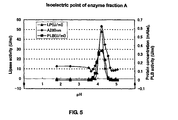
- the isoelectric point of enzyme fraction A obtained by the method described in Reference Example 1 was measured by isoelectric point electrophoresis in a pH gradient generated using carrier ampholytes, and the protein concentration was measured by absorbance at 280 nm.
- the relationship between the isoelectric point and enzyme concentration in enzyme fraction A is shown in FIG. 5 .
- the pH shown by the protein measured by the absorbance at 280 nm and the lipase activity and PLB activity were completely correspondent, and the pH value (isoelectric point) was found to be 4.21.
- the peaks of PLB, lipase, and the protein were completely the same, and hence, it was clarified that PLB and LB were the same enzyme protein.
- PI solution obtained by dissolving test samples containing phosphatidylinositol (PI) (1 to 3 mg/ml) in 2% Triton X100 was added to 0.5 ml of a coloring solution consisting of 0.1 ml of 1 M Tris-HCl (pH 8), 0.05 ml of 10 mM NAD, 0.05 ml of 10 mM magnesium chloride, 0.05 ml of 2% Triton X100, 0.05 ml of 50 U/ml phosphatidylinositol-specific phospholipase C, 0.05 ml of 50 U/ml alkaline phosphatase, 0.05 ml of 50 U/ml inositol dehydrogenase, 0.05 ml of 5% nitrotetrazolium blue, and 0.15 ml of purified water to perform a reaction at 37°C for 10 minutes. The reaction was stopped with 0.5 ml of 0.5% S
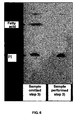
- FIG. 6 shows the results of a TLC analysis for phosphatidylinositol obtained by concentrating the organic solvent layer, washing the solution with ethanol, and filtrating and drying the precipitates without performing washing of the organic solvent layer with a mixture solvent including an acetate buffer and ethanol in the step 3) of Reference Example 7.
- the results reveal that free fatty acids can be completely removed by the performance of the step 3).
- FIG. 7 shows the results of a TLC analysis for phosphatidylinositol obtained by using acetone instead of ethanol in the step 4) of Reference Example 7.
- the results reveal that, if ethanol is used, impurities other than phosphatidylinositol (glycolipids and the like) can be completely removed.
- the components were blended and dried by a conventional method so that the above-mentioned composition is achieved, and 10 g of magnesium stearate is added thereto, followed by tableting, thereby obtaining 100 mg of tablets containing 20 mg of phosphatidylinositol and 20 mg of coenzyme Q10.
- phosphatidylinositol and 200 g of coenzyme Q10 are added in 200 g of olive oil and dissolved at about 60°C, and the solution is stirred uniformly and cooled, thereby obtaining a coenzyme Q10-containing material.
- Gelatin (70%) and glycerin (30%) are blended to swell the material, and to form a dissolved gelatin sheet.
- the gelatin sheet is filled with the coenzyme Q10-containing material as a content solution so that the amount of the material per capsule is 300 mg, followed by drying, and soft capsules containing 100 mg of phosphatidylinositol and 100 mg of coenzyme Q10 can be thus obtained.
- kits including both phosphatidylinositol and coenzyme Q10 in one package can be produced by packing one to five of the tablets (or soft capsules) containing only phosphatidylinositol and one to five of the tablets (or soft capsules) containing only coenzyme Q10 in one package.
- 2,500 g of phosphatidylinositol and 500 g of coenzyme Q10 were dissolved in 10 g of glycerin fatty acid ester and 30 g of glycerin heated to 60°C. Water was added to the mixture up to 100 ml, and the solution was subjected to emulsification treatment using an emulsifier (pressurized homogenizer), to thereby obtain an emulsified composition. Water was added to 1 g of the emulsified composition up to 100 ml, followed by stirring, and then a drink containing phosphatidylinositol (250 mg/100 ml) and coenzyme Q10 (50 mg/100 ml) can be obtained.
- emulsifier pressurized homogenizer
- 1 g of phosphatidylinositol, 1 g of coenzyme Q10, 15 g of sugar, 2 g of salt, and 5 g of dried skim milk are dissolved in 70 g of hot water, and two hen eggs are added, followed by mixing well.
- the mixture is added to a mixture obtained by mixing 130 g of flour and 2 g of dry yeast, and the whole is kneaded by hand.
- about 30 g of butter is added thereto, and the whole is further kneaded, to thereby produce 30 bread roll doughs.
- fermentation is performed, and the surfaces of the doughs are coated with beaten egg.
- the resultant doughs are baked at 180°C for 15 minutes, to thereby obtain bread rolls.
- mice Six-week-old male Slc:ddY mice (Charles river laboratories Japan, Inc.) were preliminarily fed for 7 days and divided into four groups each including 10 mice.
- the groups include: the group administered with water (control); the group administered with oxidized coenzyme Q10 at 50 mg/kg/day (Comparative Example 1, group administered with only CoQ10); the group administered with phosphatidylinositol at 100 mg/kg/day (Comparative Example 2, group administered with only phosphatidylinositol); and the group administered with oxidized coenzyme Q 10 at 50 mg/kg/day and phosphatidylinositol at 100 mg/kg/day at the same time (Test Example, group administered with CoQ10 + phosphatidylinositol), and forced oral administration was performed under the above-mentioned administration conditions five days a week.
- the coenzyme Q 10 concentrations in blood of the PI-administered group were found to be higher than those of the PI non-administration group, and it was found that phosphatidylinositol promoted the absorbability of coenzyme Q10 into the body. Meanwhile, the coenzyme Q9 oxidation ratios of the PI-administered group had a tendency to be lower than those of the PI non-administration group.
- the coenzyme Q10 concentration in blood of the soybean lecithin-administered group was slightly increased, but the coenzyme Q9 oxidation ratio (the value of the oxidized coenzyme Q9 based on total coenzyme Q9 (%)) was found to be about the same as that of the PI non-administration group.
- the anti-fatigue agent or physical endurance enhancer, or the functional food having an anti-fatigue effect or physical endurance-enhancing effect of the present invention can be suitably used in the field of drugs and/or foods.
Landscapes
- Health & Medical Sciences (AREA)
- Life Sciences & Earth Sciences (AREA)
- Veterinary Medicine (AREA)
- General Health & Medical Sciences (AREA)
- Chemical & Material Sciences (AREA)
- Animal Behavior & Ethology (AREA)
- Public Health (AREA)
- Engineering & Computer Science (AREA)
- Medicinal Chemistry (AREA)
- Pharmacology & Pharmacy (AREA)
- Epidemiology (AREA)
- Food Science & Technology (AREA)
- Nutrition Science (AREA)
- General Chemical & Material Sciences (AREA)
- Organic Chemistry (AREA)
- Nuclear Medicine, Radiotherapy & Molecular Imaging (AREA)
- Polymers & Plastics (AREA)
- Birds (AREA)
- Chemical Kinetics & Catalysis (AREA)
- Mycology (AREA)
- Bioinformatics & Cheminformatics (AREA)
- Dermatology (AREA)
- Hematology (AREA)
- Molecular Biology (AREA)
- Oil, Petroleum & Natural Gas (AREA)
- Biophysics (AREA)
- Obesity (AREA)
- Diabetes (AREA)
- Emergency Medicine (AREA)
- Coloring Foods And Improving Nutritive Qualities (AREA)
- Cosmetics (AREA)
- Preparation Of Compounds By Using Micro-Organisms (AREA)
- Pharmaceuticals Containing Other Organic And Inorganic Compounds (AREA)
- Acyclic And Carbocyclic Compounds In Medicinal Compositions (AREA)
Applications Claiming Priority (3)
| Application Number | Priority Date | Filing Date | Title |
|---|---|---|---|
| JP2006315874 | 2006-11-22 | ||
| JP2007007013 | 2007-01-16 | ||
| PCT/JP2007/001272 WO2008062559A1 (en) | 2006-11-22 | 2007-11-20 | Dietary supplement, anti-fatigue agent or physical endurance enhancer, functional food, or cosmetic |
Publications (2)
| Publication Number | Publication Date |
|---|---|
| EP2090302A1 true EP2090302A1 (de) | 2009-08-19 |
| EP2090302A4 EP2090302A4 (de) | 2010-01-20 |
Family
ID=39429502
Family Applications (1)
| Application Number | Title | Priority Date | Filing Date |
|---|---|---|---|
| EP07828049A Withdrawn EP2090302A4 (de) | 2006-11-22 | 2007-11-20 | Nahrungsergänzung, mittel gegen müdigkeit oder mittel zur verstärkung der körperlichen ausdauer, funktionales nahrungsmittel oder kosmetikum |
Country Status (5)
| Country | Link |
|---|---|
| US (1) | US20100061969A1 (de) |
| EP (1) | EP2090302A4 (de) |
| JP (1) | JPWO2008062559A1 (de) |
| AU (1) | AU2007322948A1 (de) |
| WO (1) | WO2008062559A1 (de) |
Cited By (3)
| Publication number | Priority date | Publication date | Assignee | Title |
|---|---|---|---|---|
| US8653130B2 (en) | 2007-09-19 | 2014-02-18 | Suntory Holdings Limited | Compositions containing sesamin-class compound(s) and arachidonic acid class compound(s) |
| US9609884B2 (en) | 2007-03-15 | 2017-04-04 | Suntory Holdings Limited | Anti-fatigue agent |
| US9895375B2 (en) | 2006-03-15 | 2018-02-20 | Suntory Holdings Limited | Compositions containing riboflavin and sesamin-class compounds |
Families Citing this family (8)
| Publication number | Priority date | Publication date | Assignee | Title |
|---|---|---|---|---|
| US20110311504A1 (en) * | 2009-02-27 | 2011-12-22 | Mitsubishi Gas Chemical, Company, Inc. | Coenzyme q10-containing composition for oral ingestion |
| DK2544663T3 (en) | 2010-03-12 | 2018-04-16 | Berg Llc | INTRAVENOUS FORMULATIONS OF COENZYM Q10 (CoQ10) AND PROCEDURES FOR USING IT |
| JP5932993B2 (ja) | 2011-06-17 | 2016-06-08 | バーグ エルエルシー | 吸入可能な医薬組成物 |
| WO2014188861A1 (ja) * | 2013-05-20 | 2014-11-27 | ユーハ味覚糖株式会社 | ユビキノール高含有ゲル状組成物 |
| CN108420854B (zh) * | 2017-02-13 | 2021-01-19 | 杏辉天力(杭州)药业有限公司 | 提高耐力表现的抗疲劳组合物 |
| JP7185832B2 (ja) * | 2017-10-25 | 2022-12-08 | 三菱瓦斯化学株式会社 | ピロロキノリンキノンの可溶化促進剤、それを含む組成物及び可溶化促進方法 |
| MY209497A (en) * | 2019-12-27 | 2025-07-12 | Suntory Holdings Ltd | Composition containing sesamin and pqq |
| KR102409377B1 (ko) * | 2020-06-30 | 2022-06-17 | (주)에이앤바이오 | 반려동물용 눈 건조 개선 및 눈물 착색 예방을 위한 조성물 |
Family Cites Families (18)
| Publication number | Priority date | Publication date | Assignee | Title |
|---|---|---|---|---|
| CH661438A5 (it) * | 1984-04-09 | 1987-07-31 | Seuref Ag | Composizioni farmaceutiche ad azione antianossica e metabolica cerebrale. |
| JPH0387191A (ja) * | 1989-08-30 | 1991-04-11 | Nisshin Oil Mills Ltd:The | ホスファチジルイノシトールの製造方法 |
| IT1248012B (it) * | 1991-06-07 | 1995-01-05 | Mediolanum Farmaceutici Spa | Impiego del fosfatidilinositolo per la terapia dei disturbi della depressione. |
| JPH07330584A (ja) | 1994-06-08 | 1995-12-19 | Taisho Pharmaceut Co Ltd | 疲労改善剤 |
| US6312703B1 (en) * | 1998-02-06 | 2001-11-06 | Lecigel, Llc | Compressed lecithin preparations |
| JP2000300186A (ja) | 1999-04-19 | 2000-10-31 | Kao Corp | 代謝改善剤 |
| US6441050B1 (en) * | 2000-08-29 | 2002-08-27 | Raj K. Chopra | Palatable oral coenzyme Q liquid |
| US6964969B2 (en) * | 2001-04-19 | 2005-11-15 | Mccleary Edward Larry | Composition and method for treating impaired or deteriorating neurological function |
| JP3742602B2 (ja) * | 2001-05-09 | 2006-02-08 | 株式会社カネカ | 還元型補酵素qの安定な溶液 |
| JP3533605B2 (ja) | 2001-12-06 | 2004-05-31 | すこやか食品株式会社 | 血圧降下、心臓強化、動脈硬化防止、血管保護、抗疲労、運動機能向上、エネルギー代謝効率向上、抗酸化などの諸効果を有する栄養補助食品。 |
| JP2004115429A (ja) * | 2002-09-26 | 2004-04-15 | Asahi Kasei Chemicals Corp | 視力向上剤 |
| US20040115226A1 (en) * | 2002-12-12 | 2004-06-17 | Wenji Li | Free-flowing solid formulations with improved bio-availability of poorly water soluble drugs and process for making the same |
| JP2005261388A (ja) * | 2004-03-22 | 2005-09-29 | Nagase Chemtex Corp | リゾホスファチジルグリセロールの製造方法 |
| JP2006137730A (ja) * | 2004-11-15 | 2006-06-01 | Asahi Kasei Pharma Kk | 抗疲労作用剤又は持久力増強剤、機能性食品又は化粧料 |
| JP2006143651A (ja) * | 2004-11-19 | 2006-06-08 | Cosmetics Roorando Kk | 水溶性化粧品及び食品 |
| US20080207560A1 (en) * | 2005-01-07 | 2008-08-28 | Ayako Harada | Composition For External Use |
| JP2006213699A (ja) * | 2005-01-07 | 2006-08-17 | Rohto Pharmaceut Co Ltd | 皮膚外用剤 |
| AU2006270921A1 (en) * | 2005-07-19 | 2007-01-25 | Asahi Kasei Pharma Corporation | Novel phospholipid processing agent |
-
2007
- 2007-11-20 EP EP07828049A patent/EP2090302A4/de not_active Withdrawn
- 2007-11-20 WO PCT/JP2007/001272 patent/WO2008062559A1/ja not_active Ceased
- 2007-11-20 AU AU2007322948A patent/AU2007322948A1/en not_active Abandoned
- 2007-11-20 US US12/515,426 patent/US20100061969A1/en not_active Abandoned
- 2007-11-20 JP JP2008545313A patent/JPWO2008062559A1/ja not_active Withdrawn
Cited By (3)
| Publication number | Priority date | Publication date | Assignee | Title |
|---|---|---|---|---|
| US9895375B2 (en) | 2006-03-15 | 2018-02-20 | Suntory Holdings Limited | Compositions containing riboflavin and sesamin-class compounds |
| US9609884B2 (en) | 2007-03-15 | 2017-04-04 | Suntory Holdings Limited | Anti-fatigue agent |
| US8653130B2 (en) | 2007-09-19 | 2014-02-18 | Suntory Holdings Limited | Compositions containing sesamin-class compound(s) and arachidonic acid class compound(s) |
Also Published As
| Publication number | Publication date |
|---|---|
| AU2007322948A1 (en) | 2008-05-29 |
| JPWO2008062559A1 (ja) | 2010-03-04 |
| EP2090302A4 (de) | 2010-01-20 |
| WO2008062559A1 (en) | 2008-05-29 |
| US20100061969A1 (en) | 2010-03-11 |
Similar Documents
| Publication | Publication Date | Title |
|---|---|---|
| EP2090302A1 (de) | Nahrungsergänzung, mittel gegen müdigkeit oder mittel zur verstärkung der körperlichen ausdauer, funktionales nahrungsmittel oder kosmetikum | |
| JP5147239B2 (ja) | コエンザイムq10含有乳化組成物 | |
| US20150133555A1 (en) | Compositions for ameliorating a reduced higher brain function resulting from organic brain lesions | |
| US20190282516A1 (en) | Carotenoid-containing composition | |
| JPH10155459A (ja) | アスタキサンチン含有飲食物 | |
| EP1605930B1 (de) | Verwendung von arachidonsäure zur normalisierung des infradianen rhythmus | |
| US20230066836A1 (en) | Antioxidant Extracts and Compositions | |
| EP1896004B1 (de) | Arzneimittel zur verbesserung einer reduzierten tagesaktivität und/oder depressiver symptome | |
| CA2512133C (en) | Compositions of arachidonic acid for preventing or alleviating symptoms or diseases due to aging of blood vessels | |
| JP4933432B2 (ja) | 新規なリン脂質加工剤 | |
| US20090098097A1 (en) | Composition for normalizing blood pressure | |
| EP1897539B1 (de) | Zusammensetzung gegen müdigkeit | |
| JPWO2005074907A1 (ja) | 遺伝子発現調節剤 | |
| TWI359667B (en) | Formulation for oral administration having a healt | |
| JP2015027260A (ja) | ホスファチジルイノシトールの製造方法及びホスファチジルイノシトールを含有する組成物 | |
| JP5273722B2 (ja) | アディポネクチン上昇剤 | |
| CN101547690A (zh) | 营养辅助食品、抗疲劳作用剂或耐力增强剂、功能性食品或化妆料 | |
| KR20070024582A (ko) | 항피로 조성물 | |
| JP2005006533A (ja) | 機能性食品、その製造方法及び医薬 | |
| JP2006137730A (ja) | 抗疲労作用剤又は持久力増強剤、機能性食品又は化粧料 | |
| EP3677686A1 (de) | Hydroxyliertes fettsäurehomopolymer und herstellungsverfahren dafür | |
| JP2006022064A (ja) | 動脈硬化の予防及び/又は改善剤、機能性食品、又は化粧料 | |
| JP2008044894A (ja) | メタボリックシンドローム改善剤 | |
| WO2024231160A1 (fr) | Composition pharmaceutique ou cosmétique favorisant la croissance des cheveux | |
| FR3148364A1 (fr) | Composition pharmaceutique ou cosmétique favorisant la diminution de la production du sébum au niveau du cuir chevelu |
Legal Events
| Date | Code | Title | Description |
|---|---|---|---|
| PUAI | Public reference made under article 153(3) epc to a published international application that has entered the european phase |
Free format text: ORIGINAL CODE: 0009012 |
|
| 17P | Request for examination filed |
Effective date: 20090522 |
|
| AK | Designated contracting states |
Kind code of ref document: A1 Designated state(s): AT BE BG CH CY CZ DE DK EE ES FI FR GB GR HU IE IS IT LI LT LU LV MC MT NL PL PT RO SE SI SK TR |
|
| A4 | Supplementary search report drawn up and despatched |
Effective date: 20091218 |
|
| RIC1 | Information provided on ipc code assigned before grant |
Ipc: A61K 31/683 20060101ALI20091214BHEP Ipc: A61K 8/55 20060101ALI20091214BHEP Ipc: A61Q 19/00 20060101ALI20091214BHEP Ipc: A23L 1/30 20060101ALI20091214BHEP Ipc: A61K 31/122 20060101ALI20091214BHEP Ipc: A61K 8/35 20060101AFI20091214BHEP |
|
| DAX | Request for extension of the european patent (deleted) | ||
| 17Q | First examination report despatched |
Effective date: 20100326 |
|
| STAA | Information on the status of an ep patent application or granted ep patent |
Free format text: STATUS: THE APPLICATION HAS BEEN WITHDRAWN |
|
| 18W | Application withdrawn |
Effective date: 20100429 |