EP2091182A1 - Verfahren und system zur bereitstellung von multicastdiensten - Google Patents
Verfahren und system zur bereitstellung von multicastdiensten Download PDFInfo
- Publication number
- EP2091182A1 EP2091182A1 EP08700811A EP08700811A EP2091182A1 EP 2091182 A1 EP2091182 A1 EP 2091182A1 EP 08700811 A EP08700811 A EP 08700811A EP 08700811 A EP08700811 A EP 08700811A EP 2091182 A1 EP2091182 A1 EP 2091182A1
- Authority
- EP
- European Patent Office
- Prior art keywords
- multicast
- media
- service
- content
- tek
- Prior art date
- Legal status (The legal status is an assumption and is not a legal conclusion. Google has not performed a legal analysis and makes no representation as to the accuracy of the status listed.)
- Granted
Links
- 238000000034 method Methods 0.000 title claims abstract description 143
- 230000005540 biological transmission Effects 0.000 claims abstract description 81
- 230000004044 response Effects 0.000 claims abstract description 26
- 230000008569 process Effects 0.000 claims description 92
- 238000013475 authorization Methods 0.000 claims description 18
- 238000013507 mapping Methods 0.000 claims description 9
- 238000012545 processing Methods 0.000 claims description 7
- 238000012546 transfer Methods 0.000 claims description 7
- 230000003993 interaction Effects 0.000 claims description 3
- 230000000977 initiatory effect Effects 0.000 claims description 2
- 230000006870 function Effects 0.000 description 26
- 230000000875 corresponding effect Effects 0.000 description 15
- 230000011664 signaling Effects 0.000 description 14
- 238000005516 engineering process Methods 0.000 description 11
- 238000004891 communication Methods 0.000 description 5
- 230000007246 mechanism Effects 0.000 description 5
- 230000001960 triggered effect Effects 0.000 description 3
- 230000008859 change Effects 0.000 description 2
- 230000009849 deactivation Effects 0.000 description 2
- 238000011161 development Methods 0.000 description 1
- 238000010586 diagram Methods 0.000 description 1
- 238000005538 encapsulation Methods 0.000 description 1
- 230000006872 improvement Effects 0.000 description 1
- 238000010295 mobile communication Methods 0.000 description 1
- 230000004048 modification Effects 0.000 description 1
- 238000012986 modification Methods 0.000 description 1
- 230000006855 networking Effects 0.000 description 1
- 230000008520 organization Effects 0.000 description 1
- 238000002360 preparation method Methods 0.000 description 1
- GOLXNESZZPUPJE-UHFFFAOYSA-N spiromesifen Chemical compound CC1=CC(C)=CC(C)=C1C(C(O1)=O)=C(OC(=O)CC(C)(C)C)C11CCCC1 GOLXNESZZPUPJE-UHFFFAOYSA-N 0.000 description 1
- 238000006467 substitution reaction Methods 0.000 description 1
Images




Classifications
-
- H—ELECTRICITY
- H04—ELECTRIC COMMUNICATION TECHNIQUE
- H04L—TRANSMISSION OF DIGITAL INFORMATION, e.g. TELEGRAPHIC COMMUNICATION
- H04L12/00—Data switching networks
- H04L12/02—Details
- H04L12/16—Arrangements for providing special services to substations
- H04L12/18—Arrangements for providing special services to substations for broadcast or conference, e.g. multicast
-
- H—ELECTRICITY
- H04—ELECTRIC COMMUNICATION TECHNIQUE
- H04L—TRANSMISSION OF DIGITAL INFORMATION, e.g. TELEGRAPHIC COMMUNICATION
- H04L65/00—Network arrangements, protocols or services for supporting real-time applications in data packet communication
- H04L65/10—Architectures or entities
- H04L65/1016—IP multimedia subsystem [IMS]
-
- H—ELECTRICITY
- H04—ELECTRIC COMMUNICATION TECHNIQUE
- H04L—TRANSMISSION OF DIGITAL INFORMATION, e.g. TELEGRAPHIC COMMUNICATION
- H04L65/00—Network arrangements, protocols or services for supporting real-time applications in data packet communication
- H04L65/60—Network streaming of media packets
- H04L65/61—Network streaming of media packets for supporting one-way streaming services, e.g. Internet radio
- H04L65/611—Network streaming of media packets for supporting one-way streaming services, e.g. Internet radio for multicast or broadcast
-
- H—ELECTRICITY
- H04—ELECTRIC COMMUNICATION TECHNIQUE
- H04W—WIRELESS COMMUNICATION NETWORKS
- H04W28/00—Network traffic management; Network resource management
- H04W28/16—Central resource management; Negotiation of resources or communication parameters, e.g. negotiating bandwidth or QoS [Quality of Service]
- H04W28/18—Negotiating wireless communication parameters
-
- H—ELECTRICITY
- H04—ELECTRIC COMMUNICATION TECHNIQUE
- H04W—WIRELESS COMMUNICATION NETWORKS
- H04W4/00—Services specially adapted for wireless communication networks; Facilities therefor
-
- H—ELECTRICITY
- H04—ELECTRIC COMMUNICATION TECHNIQUE
- H04W—WIRELESS COMMUNICATION NETWORKS
- H04W4/00—Services specially adapted for wireless communication networks; Facilities therefor
- H04W4/06—Selective distribution of broadcast services, e.g. multimedia broadcast multicast service [MBMS]; Services to user groups; One-way selective calling services
Definitions
- the present invention relates to multimedia multicast technologies, and in particular, to a method and system for providing multicast services.
- IMS IP Multimedia Subsystem
- the IMS is a subsystem overlaid by the 3GPP R5 onto the existing PS domain of the Wideband Code Division Multiple Access (WCDMA) network.
- the IMS uses the PS domain as a bearer channel for its upper-layer control signaling and media transmission, and introduces the Session Initiation Protocol (SIP) as a service control protocol.
- SIP Session Initiation Protocol
- the IMS provides rich multimedia services by separating service control from bearer control.
- An embodiment of the present invention provides a method for providing multicast services to implement IMS-based multicast services.
- the method includes the following steps:
- an embodiment of the present invention also provides a multicast service support system.
- the system includes:
- an embodiment of the present invention provides a system for providing multicast services.
- the system includes:
- the embodiments of the present invention can implement the IMS-based multicast services, thus laying a strong foundation for enriching the IMS-based multicast services, especially the popular IPTV service.
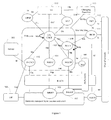
- FIG 1 shows the structure of an IMS system in the prior art
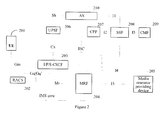
- Figure 2 shows the system for providing multicast services in an embodiment of the present invention
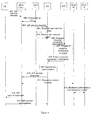
- Figure 3 shows the process of scheduling multicast services in a first embodiment of the present invention
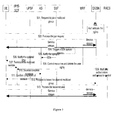
- Figure 4 shows the service request signaling process in the control plane in the first embodiment of the present invention
- Figure 5 shows the multicast process in the data plane in the first embodiment of the present invention
- Figure 6 shows the process of scheduling multicast services in a second embodiment of the present invention
- Figure 7 shows the service request signaling process in the LTV control plane according to the method in an embodiment of the present invention
- Figure 8 shows the multicast process in the LTV data plane according to the method in an embodiment of the present invention
- Figure 9 shows the process of requesting LTV channels in a redirection mode
- Figure 10 shows the block diagram of the multicast service support system in an embodiment of the present invention.
- FIG. 1 shows the network architecture of the IMS (see 3GPP TS 23.228).
- Main function entities include: Call Session Control Function (CSCF) which is categorized into Proxy CSCF (P-CSCF) 102 and Interrogating/Serving CSCF (I/S-CSCF) 103, Application Server (AS) 115 that provides various service logic control functions, Home Subscriber Server (HSS) that manages the subscription data in a centralized way, and Media Gateway Control Function (MGCF) 106/Transaction Multimedia Gateway (T-MGW) 107 for interworking with the Circuit Switched (CS) network.
- CSCF Call Session Control Function
- P-CSCF Proxy CSCF
- I/S-CSCF Interrogating/Serving CSCF
- HSS Home Subscriber Server
- MGCF Media Gateway Control Function
- T-MGW Transaction Multimedia Gateway
- the P-CSCF 102 and I/S-CSCF 103 are collectively called CSCF, which is adapted to provide user agent, session control, and routing functions, trigger services in an IMS network, and implement the interworking between different IMS domains;
- the MGCF 106, T-MGF 107 and SGF 109 are respectively the media gateway control function, media gateway function and signaling gateway function, and are adapted to implement interworking between the IMS network users and the traditional Public Switched Telephone Network (PSTN) users;
- the Border Gateway Control Function (BGCF) entity 108 is used for addressing and routing between MGCF entities of different IMS domains;
- the Subscriber Location Function (SLF) entity 114 is used for selection among multiple User Profile Service Function (UPSF) entities 116;
- the Interconnect Border Control Function (IBCF) entity 111 and the Interconnect Border Gateway Function (IBGF) 110 are function entities for interworking between IMS domains;
- the streaming service or IPTV service is a new service which has developed rapidly over the past few years.
- the streaming service transmits multimedia files including videos and audios) on a PS network, and the network device for storing such multimedia files is called a streaming source".
- a user can play the multicast media contents promptly without downloading the multimedia files completely.
- the essence of implementing streaming media is the streaming transmission technology, which processes continuous video and audio information and stores the information into the streaming source, so that the UE plays the media stream while downloading, without waiting for completion of downloading the whole file to the local device.
- the multicast technology may be applied so that the service sender (i.e., the streaming source) sends a media stream to the specified multicast address.
- the service receiver i.e., the UE
- joins a service multicast group e.g., by using the Internet Group Message Protocol, IGMP
- IGMP Internet Group Message Protocol
- Routers interwork with each other through a multicast routing protocol (e.g., Protocol Independent Multicast - Sparse Mode, PIM-SM, protocol) to create a multicast forwarding path.
- a multicast routing protocol e.g., Protocol Independent Multicast - Sparse Mode, PIM-SM, protocol
- the multicast service content can be sent to the content receiver from the multicast source along the multicast forwarding path.
- the service sender When a service stream is transferred through the multicast technology, the service sender only needs to send one service stream regardless of the number of receivers. Only one data stream is generated along the transmission path from the sending point of the multicast data to the transfer point of the receiver. Obviously, the multicast technology reduces the load of the service sender, and utilizes network resources effectively.
- a typical example of multicast services is the Live Television (LTV) service.
- LTV Live Television
- the multicast mode may be applicable to a scenario where the same service content is sent to multiple users at a time.
- the service may be considered to be multicast service.
- the audio and video information of the speaker may be sent to the conference server before being sent to multiple users in a multicast way, which is also regarded as an application of multicast services.
- An embodiment of the present invention provides an IMS-based multicast service system, the network architecture of which is shown in Figure 2 .
- the function entities or components such as UE 201, RACS 202, MRF 204, UPSF 206, AS 210 and the interfaces such as ISC, Gm, Gq/Gq', Mr, Sh, and Cx have been defined in the existing Telecommunication and Internet converged Services and Protocols for Advanced Networking (TISPAN) standards.
- TISPAN Telecommunication and Internet converged Services and Protocols for Advanced Networking
- the AS 210 is adapted to provide logic control functions of services.
- the AS 210 is an entity that provides services for the UE 201, and can be called a service provision device.
- the media content source device 205 is adapted to provide multicast media contents for the MRF 204, and is an entity of the content provision layer.
- the media content source device is provided here for better description of the service scheduling process only.
- the MRF serves as a source of the multicast media stream.
- This system further includes: a Content Protection Function (CPF) 207, a Service Scheduling Function (SSF) 208, and a Content Management Function (CMF) 209.
- CPF Content Protection Function
- SSF Service Scheduling Function
- CMF Content Management Function
- the SSF 208 is adapted to schedule and organize IPTV services.
- the SSF 208 includes:
- the CPF 207 is adapted to provide a media security protection mechanism for the multicast media contents delivered in the multicast service so as to prevent piracy of the contents.
- the CPF 207 uses a Conditional Access (CA) or service layer protection mechanism to generate and manage a Service Encryption Key (SEK) and/or a Traffic Encryption Key (TEK).
- CA Conditional Access
- SEK Service Encryption Key
- TEK Traffic Encryption Key
- the CPF 207 may include the following units:
- the CPF 207, SSF 208 and CMF209 may be mutually independent entities in the system, as shown in Figure 2 ; or, integrated into a network entity called a multicast service support device.
- I1 an interface between the AS 210 and the SSF 208.
- the AS 210 can query for the multicast service scheduling result in the SSF 208 during the service request, for example, provide a multicast address of the multicast service, and the encoding/decoding information of the multicast media stream; besides, the AS 210 can interact with the SSF 208 about dynamic service scheduling through the I1 interface in the real-time session.
- I2 an interface between the SSF 208 and the CPF 207.
- the I2 interface is used by the SSF 208 to obtain key information of multicast service protection from the CPF 207, including a service protection key and/or a media protection key.
- I3 an interface between the SSF 208 and the CMF 209.
- the SSF queries for the location of the multicast media content and the meta-description information through the I3 interface.
- the multicast media contents of the multicast media stream on the media content source device 205 are transferred to the MRF204 through the 15 interface.
- the protocol for transferring multicast media contents may be the File Transfer Protocol (FTP) or the Real-Time Transfer Protocol (RTP).
- the multicast service process is hereinafter divided into three logical parts: initial service scheduling, service request signaling process in the control plane, and the multicast process in the data plane.
- the three logical parts are hereinafter described in detail.
- the service scheduling process is designed to pre-schedule multicast media streams in the network.
- the initial multicast media contents may come from a content provider, and may be sent to the MRF 204 in a certain way. Here the sending mode is not limited because it does not affect the essence of the present invention.
- the MRF 204 performs multicast encapsulation and transmission for the received multicast media contents.
- the destination IP address of the multicast media stream is a multicast address. The destination address is not specific to a user. Therefore, the multicast media stream can be scheduled in advance no matter whether a user requests a multicast service or not.
- the service request signaling process is a process in which a user interacts with the service server to obtain the transmission parameters of the multicast media stream.
- the multicast processing mechanism of the access part is different. Therefore, after the user obtains the multicast service transmission parameters, the user must interact with the data plane that is specific to the access technology.
- the present invention only takes the General Packet Radio Service (GPRS) access technology as an example. Use of other access technologies does not affect the application of the present invention.
- GPRS General Packet Radio Service
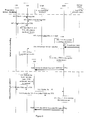
- FIG. 3 shows the process of scheduling multicast services in the first embodiment of the present invention.
- the service network protects the service contents in the scheduling process.
- the SEK is generated by the CPF, and is sent to the MRF through an SSF.
- the TEK is generated by the MRF dynamically, protected by a service key, and sent from the MRF to the UE in the multicast mode (for example, RFC3830 MIKEY protocol).
- the multicast address can be managed by the SSF, or the SSF obtains the multicast address from other entities that manage multicast addresses in the network.
- Step a and step b are preparatory processes before service scheduling, and do not affect the specific scheduling process.
- Step a The content provider or the service provider prepare the multicast media contents, and store the prepared multicast media contents into the media content source device.
- Step b The CMF obtains the content metadata and the content source address.
- the content metadata contains the content description information of the service contents stored in the media content source device, for example, content ID (CID), content introduction, content encoding/decoding format, or combination thereof.
- the content source address is the address of contents stored in the media content source device.
- the content metadata may contain content protection information.
- the content metadata may come from a content provider, or a system interface of the service provider.
- a multicast service scheduling process includes the following steps:
- Step 301 The SSF obtains a service scheduling plan.
- the service scheduling plan may be injected into the SSF by the Operating Support System (OSS) or Business Support System (BSS), or be a dynamic scheduling plan triggered by a user service request.
- OSS Operating Support System
- BSS Business Support System
- Step 302 The SSF obtains content metadata from the CMF according to the service scheduling plan, including Channel ID (ChID), content source location information, and CPF address.
- Channel ID Channel ID
- CPF address CPF address
- Step 303 The SSF obtains SEK information for service protection from the CPF according to the service protection requirements.
- the SEK is sent to the MRF to encrypt the TEK stream.
- the service protection requirements are preset.
- Step 304 The SSF obtains and stores the multicast address/port information of the program.
- the multicast address/port information may be managed by the SSF, or obtained from other Network Elements (NEs) that manage multicast addresses/port information in the network.
- NEs Network Elements
- Step 305 The SSF sends a content scheduling command/request to the MRF, with the command/request carrying the SEK, multicast address/port information, content metadata and the service content that the MRF needs to obtain from the media content source device.
- Step 306 The MRF stores the SEK, multicast address/port information and content metadata for program processing.
- Step 307 According to the content source address, the MRF obtains service contents from the media content source device. The service contents are sent to the MRF in the unicast or multicast mode.
- Step 308 The MRF sends a scheduling success response to the SSF.
- Step 309 The SSF updates the local scheduling records according to the response, and determines that the service and the content ID are available.
- Step 310 The MRF generates a TEK, and uses the TEK to encrypt the media stream and the SEK to encrypt the TEK stream.
- the media stream encrypted by the TEK and the TEK stream encrypted by the SEK are sent in the multicast mode (for example, RFC3830 MIKEY protocol).
- the preceding multicast stream finally arrives at the Access Node (AN) and waits for being sent to the UE.
- Step 311 The SSF decides to update the SEK according to the service logics.
- the specific practice is as follows: Set a corresponding timer at the time of generating a SEK.
- the duration of the timer is the validity period of the SEK.
- Step 312 The CPF generates a new SEK, and the SSF obtains the new SEK from the CPF.
- Step 313 The SSF sends a command for updating the SEK to the MRF, with the command carrying the new SEK obtained in step 312.
- Step 314 The SSF notifies the AS of the updated SEK. If a user is currently using the service, the AS also needs to notify the new SEK to the user (see the following multicast service process).
- Step 315 The MRF generates a new TEK, and uses the new TEK to encrypt the media stream and the new SEK to encrypt the TEK stream.
- the media stream encrypted by the TEK and the TEK stream encrypted by the new SEK are sent in the multicast mode.
- the preceding multicast streams finally arrive at the Access Node (AN) and wait for being sent to the UE.
- AN Access Node
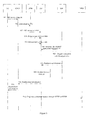
- FIG. 4 shows the service request signaling process in the control plane in the first embodiment of the present invention.
- the process includes the following steps:
- Step 401 The UE selects a program through the Electronic Program Guide (EPG), and sends a SIP service request to the I/P/S-CSCF.
- the SIP request carries a Multicast Service Identifier (for example, PSI) and a Channel ID (ChID).
- the ChID is designed to identify the program contents requested by the user. For different services, the service ID and the content ID may be different.
- the specific sending process is as follows: The UE sends a SIP service request to the local P-CSCF, and selects the corresponding I-CSCF and S-CSCF through the route selection mechanism in the prior art. The P-CSCF then sends the SIP service request to the selected I-CSCF and S-CSCF.
- a user may obtain an EPG with reference to the prior art.
- the user can obtain an EPG through the Hypertext Transfer Protocol (HTTP) from a network entity that provides the EPG.
- HTTP Hypertext Transfer Protocol
- Step 402 The S-CSCF downloads the Initial Filter Criteria (iFC) from the UPSF.
- iFC Initial Filter Criteria
- Step 403 The S-CSCF matches the iFC with the PSI, selects the corresponding AS according to the matching result, and sends a service request to the selected AS.
- the S-CSCF matches the specific attributes and fields carried in the signaling with the iFC, and takes the corresponding action. For example, if the service identifier in the request is LTV and the service identifier LTV defined in the iFC corresponds to a live television server, a request is sent to the specified live television server to process the service.
- Step 404 to step 405 The AS requests user service data from the UPSF.
- the user service data includes a list of channel use rights and subscription period for users.
- the AS determines the multicast service available to the UE. If no multicast service available to the UE is found, the AS rejects the multicast service request and terminates the process; if the corresponding multicast service is found, the process proceeds to step 406.
- Step 406 The AS analyzes the ChID in the user service request, and requests the media transmission parameters corresponding to the ChID from the SSF.
- the media transmission parameters include channel multicast address/port, and encoding/decoding information.
- Step 407 If the multicast service is not scheduled beforehand, the SSF needs to trigger the process of scheduling the multicast service.
- the scheduling process is shown in Figure 3 .
- step 408 If the multicast service is scheduled, skip to step 408. If the SSF finds no corresponding multicast service contents, the SSF returns a prompt that no service content exists to the AS, and then the AS returns a message to the UE to reject the service request and terminates the process.
- Step 408 If the multicast service contents are scheduled, the SSF returns media transmission parameters to the AS.
- the media transmission parameters include channel multicast address/port, encoding/decoding information, and SEK.
- Step 409 The AS updates the user session according to the media transmission parameters and/or user service data. For example, the AS updates the channel currently used by the user.
- Step 410 The AS attaches the SEK and the multicast address/port information to a response message, which is forwarded to the P-CSCF by an IMS core.
- Step 411 According to the multicast address/port information carried in the response message, the P-CSCF sends a resource control request to the RACS.
- the resource control request is used to instruct the transport layer to allocate resources, and use the specified multicast authorization list, for example, forbid or allow a specified user to receive specific multicast streams.
- Step 412 The RACS maps the application-layer command/request to the transport-layer parameters, and transfers the multicast authorization list to the access-layer gated control entity according to the user location result.
- the access-layer gated control entity is a GPRS Gateway Support Node (GGSN) in the GPRS network.
- the GGSN performs multicast authorization and resource control, and establishes a multicast channel.
- the access-layer gated control entity may be any other node.
- Step 413 The P-CSCF forwards the response sent in step 410 to the UE.
- Step 414 The UE confirms the preceding response.
- the AS does not request multicast service transmission parameters from the SSF, but sends a media resource request to the MRF according to the normal process of the IMS.
- the MRF provides the media transmission parameters according to the description of the UE media processing capability provided by the AS. For example, the MRF may schedule more than one multicast stream for the same program based on the decoding capabilities of different UEs.
- the multicast streams adopt different encoding/decoding formats to meet the needs of different UEs.
- the MRF Upon receiving a user request, the MRF returns transmission parameters of different multicast streams according to the UE capabilities, thus suiting different UEs.
- Step 406 to step 408 may be replaced by the following steps:
- Step 406' The AS sends a media resource request to the MRF, and the MRF negotiates with the UE about the channel transmission parameters.
- Step 407' The MRF determines the media transmission parameters.
- Step 408' The MRF returns media transmission parameters to the AS, including multicast address/port information, encoding/decoding information and SEK.
- the service stream is sent before the user sends a request.
- the time for sending service streams may also be triggered by an initial user request.
- the AS upon receipt of the initial user request, the AS sends a media resource request.
- the MRF returns the media transmission parameters of the multicast streams, and then begins sending the multicast media streams. In this way, the programs that are seldom watched are sent on demand, thus reducing the server load and the utilization of the network bandwidth resources.
- the AS can save the media transmission parameters after receiving the initial request from the UE. If a request for the same program is received from a new user and the UE can process the encoding format of the corresponding multicast stream, the AS can return the relevant parameters to the new user, thus optimizing the operation process.
- the data-plane multicast process may be performed. As shown in Figure 5 , the data-plane multicast process includes the following steps:
- Step 501 The UE sends a request for joining the specified multicast group to the access-layer gated control node, so as to receive the channel contents sent to the specified multicast address.
- the GGSN is an access-layer gated control node, and the preceding request is received and processed by the GGSN.
- the preceding request can be sent with reference to the Internet Group Management Protocol (IGMP).
- IGMP Internet Group Management Protocol
- Step 502 After the join request is detected by the GGSN, the GGSN authenticates the rights according to the multicast authorization list.
- the multicast authorization list comes from the RACS. Refer to step 412 in Figure 4 .
- Step 503 Processing of the join request submitted by the UE.
- This step varies with the type of the access network.
- the GPRS network provides support for the Multimedia Broadcast/Multicast Service (MBMS) as defined by the 3GPP
- MBMS Multimedia Broadcast/Multicast Service
- the media streams flow from the MRF to the GGSN, and are sent to the UE through a multicast channel.
- Supposing the service protection mode is adopted, the TEK is designed to protect the media streams and the SEK is designed to encrypt the TEK streams.
- the SEK is transferred to the UE in the previous signaling request process, so the user can decrypt the media streams and decodes the media streams normally.
- Step 504 In the service process, the SSF may trigger the update of the SEK, as described in step 311 to step 315 of the service scheduling process in Figure 3 .
- Step 505 The SSF sends the updated SEK to the AS, and notifies the AS to update the SEK.
- Step 506 The AS sends the updated SEK to the UE, and notifies the UE to update the SEK.
- This process can be performed by changing the SIP session attributes, for example, updating the SEK through SIP info. That is, the multicast media transmission parameters are carried in the SIP message, and are regarded as session attributes.
- the attributes can be modified by using a mechanism similar to the sending of SIP info. In this way, the relevant attributes, for example, SEK, are updated.
- Step 507 When the user needs to terminate the multicast service, the UE sends a SIP BYE message to the P-CSCF to terminate the session.
- the SIP BYE message carries the multicast address/port information.
- Step 508 The P-CSCF sends a resource control request to the RACS according to the multicast address/port information carried in the request, instructing the transport layer to perform resource control and modify or delete the specified multicast authorization list, so as to delete the UE's right of using transport-layer media streams.
- the multicast authorization list stores the information about forbidding or allowing the specified user to receive the specific multicast media streams.
- the preceding resource control may be recording or updating of the number of users only, without the necessity of releasing the resources actually upon leaving of a user because other users may be still watching the same program.
- Step 509 The RACS maps the application-layer command/request to the transport-layer parameters, and transfers the multicast authorization list to the access-layer gated control entity (such as GGSN) according to the user location result, and the GGSN performs multicast authorization and resource control.
- the access-layer gated control entity such as GGSN
- Step 510 The P-CSCF routes a session complete message to the AS.
- Step 511 The AS sends a SIP BYE message to the UE to confirm completion of the session.
- Step 512 The UE sends an IGMP leave message to the gated control entity GGSN, requesting to leave the channel multicast group.
- the IGMP leave message may also be sent when the user sends a SIP BYE message to terminate the session, which does not affect the service processing.
- Step 513 The UE leaves the multicast group. Step 513 corresponds to step 503. Leaving a multicast group may involve a specific access network process; for the MBMS, the context deactivation process may be involved.
- FIG. 6 shows the multicast service scheduling process according to the second embodiment of the present invention.
- the second embodiment uses the SEK and TEK generated by the CPF.
- the TEK is transferred to the MRF for the encryption of the service stream; and the SEK and the TEK are sent to the UE through a SIP channel.
- a preparation process is performed, as described in step a and step b in Figure 6 .
- the process is the same as that in the first embodiment.
- the process of scheduling multicast services in the second embodiment includes the following steps:
- Step 601 The SSF obtains a service scheduling plan.
- the service scheduling plan may be injected into the SSF by the OSS or BSS, or be a dynamic scheduling plan triggered by a user service request.
- Step 602 The SSF obtains content metadata from the CMF according to the service scheduling plan, including Channel ID (ChID), content source location information, and CPF address.
- Channel ID Channel ID
- CPF address CPF address
- Step 603 The SSF obtains SEK and TEK information for service protection from the CPF according to the service protection requirements.
- the SEK and TEK are sent to the MRF for the protection of the media encryption key.
- Step 604 The SSF obtains the information such as multicast address/port applicable to the programs, and stores the obtained SEK, TEK, and multicast address/port.
- Step 605 The SSF sends a content scheduling command/request to the MRF, with the command/request carrying the SEK, multicast address, content source location information, to instruct or request the scheduling of contents that the MRF needs to obtain from the media content source device.
- Step 606 The MRF stores the information such as SEK, multicast address and content source address for program processing.
- Step 607 According to the content source address, the MRF obtains contents from the media content source device. The contents are sent to the MRF through unicast or multicast.
- Step 308 The MRF sends a scheduling success response to the SSF.
- Step 309 The SSF updates the local scheduling records, and determines that the service and the content ID are available.
- Step 310 The MRF uses the TEK provided by the SSF to encrypt the multicast media streams.
- the multicast media streams sent by the MRF to the AN contain only encrypted multicast media streams, without key streams.
- the SSF decides to update the service key according to the service policies
- the SSF requests the updated SEK and TEK from the CPF.
- the SEK and the TEK may be updated asynchronously, namely, the TEK may be updated earlier than the SEK.
- the service keys may be requested separately. For example, only the SEK or TEK is requested, or both the SEK and TEK are requested.
- Step 611 to step 615 show the process of updating keys:
- Step 611 The SSF decides to update the SEK and/or TEK according to the service logics. For details, see preceding step 311.
- Step 612 The CPF generates a new SEK and/or TEK, and the SSF obtains the new SEK and/or TEK from the CPF.
- Step 613 The SSF sends a command for updating the TEK to the MRF, with the command carrying the new TEK obtained in step 612.
- Step 614 The SSF notifies the AS of the updated SEK and/or TEK. If a user is using the service, the AS also needs to notify the new SEK and/or TEK to the user (see the following multicast service process).
- Step 615 The MRF uses the received new TEK to encrypt the media streams.
- the media streams encrypted by the TEK are sent through multicast.
- the preceding multicast streams finally arrive at the Access Node (AN) and wait for being sent to the UE.
- AN Access Node
- FIG. 4 shows the service request signaling process in the control plane in the first embodiment of the present invention.
- the service request signaling process in the control plane in the second embodiment is similar to that of the first embodiment except the following differences:
- the media transmission parameters returned by the SSF to the AS include a TEK in addition to channel multicast address/port information, encoding/decoding information and SEK.
- step 410 the response returned by the AS to the P-CSCF needs to contain a SEK and a TEK; in step 411, the response returned by the P-CSCF to the UE needs to contain a SEK and a TEK. After receipt of the TEK, the UE can use the TEK to decrypt the received multicast media streams.
- the data-plane multicast process in the second embodiment can be obtained with reference to Figure 5 , except that the media streams only include the media streams encrypted by using a TEK.
- the third embodiment of the present invention is different in the following aspects:
- the SEK and the TEK are generated by the CPF, and the SEK is sent on the signaling channel (see the multicast service process in the first embodiment); the SEK and the TEK are sent to the MRF (a TEK is added in the scheduling parameters) in the service scheduling process; the use of the SEK and the TEK in the MRF and the mode of sending the TEK stream to the UE are the same as those in the first embodiment. Therefore, the process of the third embodiment may be obtained with reference to the processes shown in Figure 3 , Figure 4 and Figure 5 in the first embodiment.
- an LTV implementation solution is given below.
- the LTV implementation solution can be obtained according to the following description.
- channel zapping is represented as follows: terminating the previous SIP session, and then originating a new SIP request.
- the process of the first embodiment shown in Figure 3 to Figure 5 is totally applicable, and every attempt of channel zapping is performed by terminating the current session and originating a new service request.
- the ChID in the process is the channel ID; the media transmission parameters include multicast address and/or port.
- the channel zapping process is to execute the process from Figure 3 to Figure 5 again.
- Figure 7 and Figure 8 show the process of implementing an LTV service.
- Figure 7 shows a service request signaling process in the control plane, which differs from the service request signaling process shown in Figure 4 in the following aspects:
- Step 705' is added after step 705: After the AS obtains user service data, the AS analyzes the obtained user service data to obtain all channel identifiers available to the user.
- Step 706 The AS analyzes the channel identifier (ChID) in the user request, and requests the SSF for the media transmission parameters corresponding to all channel identifiers available to the user.
- the media transmission parameters include channel multicast address/port information, and encoding/decoding information.
- Step 708 The SSF returns media transmission parameters to the AS, including channel multicast address/port, encoding/decoding information, and SEK.
- Step 709 The AS updates the user session, for example, it updates the channel currently used by the user; the AS adds all the obtained media transmission parameters to the response which is subsequently returned to the user. In subsequent channel zapping, it is unnecessary to re-originate new SIP service requests.
- Figure 8 shows the multicast process in the data plane, which includes the following steps:
- Step 801 The UE sends a request for joining the specified multicast group to the access-layer gated control node (namely, GGSN), so as to receive the channel contents sent to the specified multicast address.
- the preceding request can be sent with reference to the Internet Group Management Protocol (IGMP).
- IGMP Internet Group Management Protocol
- Step 802 After the join request is detected by the GGSN, the GGSN authenticates the rights according to the multicast authorization list.
- the multicast authorization list comes from the RACS.
- Step 803 Process of the join request submitted by the UE. This step varies with the type of the access network. For example, when the GPRS network provides support for the Multimedia Broadcast/Multicast Service (MBMS) as defined by the 3GPP, it is necessary to activate the MBMS context to support the multicast mode. This is clarified in the MBMS standard defined by the 3GPP.
- MBMS Multimedia Broadcast/Multicast Service
- Step 804 In the service process, the SSF may trigger the update of the SEK.
- the SSF may trigger the update of the SEK.
- step 311 to step 315 of the service scheduling process as shown in Figure 3 .
- Step 805 The SSF sends the updated SEK to the AS, and notifies the AS to update the SEK.
- Step 806 The AS sends the updated SEK to the UE, and notifies the UE to update the SEK. This process can be performed by changing the SIP session attributes, for example, updating the SEK through SIP info.
- Step 807 The user originates channel zapping.
- the UE sends an IGMP leave request to the multicast control node (namely, GGSN), requesting to leave the current multicast group.
- the multicast control node namely, GGSN
- Step 808 Leaving a multicast group may involve a specific access network process. Taking the GPRS network as an example, the MBMS context deactivation process is involved.
- Step 809 After leaving the current multicast group, the UE performs the process from step 801 to step 803 again to join a new multicast group and finish the channel zapping process. The UE receives the program on the target channel.
- Step 810 to step 811 The channel-related SEK may be updated while the user is watching the program.
- the UE sends a channel change notification to the AS, with the notification at least containing a new ChID.
- the update may be performed by using a SIP info message, which is routed through the IMS network to the AS for processing.
- Step 812 to step 813 The AS checks the service key SEK corresponding to the new channel, puts the latest SEK into a SIP message, and sends the SIP message to the UE.
- the update information may be sent by using a message such as SIP info.
- the UE can normally receive, decode and play the service streams on the new channel.
- Step 814 In the service process, the UE repeats step 807 to step 813 according to the channel zapping operation of the user.
- Step 815 to step 816 The user terminates the service, and the UE sends a SIP BYE message to terminate the session.
- the message is routed through the IMS network to the AS for processing.
- Step 817 The AS confirms the SIP BYE message sent by the UE to terminate the session.
- the AS in step 705' analyzes the user service data, requests the parameters corresponding to all channel identifiers available to the user from the SSF in step 706, and, in step 709, adds the obtained parameters to the user response which is subsequently returned to the user. Afterward, it is unnecessary to originate new SIP service requests again, and the channel zapping can be performed through a media-plane control request (for example, IGMP join/leave message).
- a media-plane control request for example, IGMP join/leave message.
- the update may be performed by holding the SIP session.
- the UE judges whether it is necessary to request an updated SEK from the AS actively; or the AS can dynamically notify the updated SEK to the UE through the held SIP session after the SEK is updated.
- a SIP info message may be used for transferring the updated key.
- the new media transmission parameters can be requested by originating a SIP Re-Invite message.
- the parameter obtaining process and the channel joining process of the UE can be obtained with reference to the process shown in Figure 8 .
- the UE when the UE originates an LTV service, the UE sends a channel request through a Re-Invite message. Namely, the channel zapping is reflected by the change of ChID in the Re-Invite message. Therefore, upon receipt of an update request, the AS returns the information such as transmission parameters of the target channel. According to the returned transmission parameters, the UE performs the media-plane process (the same as that in the Invite mode).
- the SIP redirection mode may be used only to enable the user to use different protocols for multicast service request.
- the user is required to use the HTTP or the Real-time Transport Streaming Protocol (RTSP) to request a channel from the specified address.
- RTSP Real-time Transport Streaming Protocol
- Step 901 to step 907 Same as step 401 to step 407 in Figure 4 .
- Step 908 The SSF returns the relevant information corresponding to the channel.
- the relevant information corresponding to the channel is information about redirection of the UE, and requires the UE to use the specified protocol to access the specified address and request subsequent services. For example, the UE is required to use the HTTP or the RTSP protocol to access the specific address to perform service requesting.
- Step 909 The AS updates the user session state, for example, records the information about redirecting the user.
- Step 910 to step 911 The AS sends a SIP message to the UE, with the message carrying the redirection information given by the SSF.
- the message is routed through the IMS network to the UE.
- Step 912 The UE uses a specified protocol such as the HTTP or the RTSP to send a channel request.
- a specified protocol such as the HTTP or the RTSP to send a channel request.
- An embodiment of the present invention also provides a multicast service support system, as shown in Figure 10 .
- the system includes:
- the multicast service support system may further include:
- the CPF1030 further includes:
- an embodiment of the present invention provides a system for providing multicast services.
- the system includes:
- the system for providing multicast services may further include part or all of these function entities: SSF, CMF, and CPF.
- An embodiment of the present invention proposes an IMS-based multicast system, a process of implementing the multicast service based on such a system, and a process of implementing a typical multicast service - LTV. Further, an embodiment of the present invention provides a solution to scheduling multicast services, protecting multicast services, and managing contents.
Landscapes
- Engineering & Computer Science (AREA)
- Multimedia (AREA)
- Computer Networks & Wireless Communication (AREA)
- Signal Processing (AREA)
- Data Exchanges In Wide-Area Networks (AREA)
- Mobile Radio Communication Systems (AREA)
- Two-Way Televisions, Distribution Of Moving Picture Or The Like (AREA)
Applications Claiming Priority (2)
| Application Number | Priority Date | Filing Date | Title |
|---|---|---|---|
| CN200710006006XA CN101232389B (zh) | 2007-01-22 | 2007-01-22 | 一种提供组播业务的方法、设备及系统 |
| PCT/CN2008/070154 WO2008089700A1 (en) | 2007-01-22 | 2008-01-22 | Method and system for providing multicast service |
Publications (3)
| Publication Number | Publication Date |
|---|---|
| EP2091182A1 true EP2091182A1 (de) | 2009-08-19 |
| EP2091182A4 EP2091182A4 (de) | 2010-04-07 |
| EP2091182B1 EP2091182B1 (de) | 2011-09-07 |
Family
ID=39644140
Family Applications (1)
| Application Number | Title | Priority Date | Filing Date |
|---|---|---|---|
| EP08700811A Not-in-force EP2091182B1 (de) | 2007-01-22 | 2008-01-22 | Verfahren und system zur bereitstellung eines multicast-dienstes |
Country Status (6)
| Country | Link |
|---|---|
| US (1) | US8077717B2 (de) |
| EP (1) | EP2091182B1 (de) |
| CN (1) | CN101232389B (de) |
| AT (1) | ATE523985T1 (de) |
| RU (1) | RU2417554C1 (de) |
| WO (1) | WO2008089700A1 (de) |
Cited By (1)
| Publication number | Priority date | Publication date | Assignee | Title |
|---|---|---|---|---|
| WO2011034474A1 (en) * | 2009-09-17 | 2011-03-24 | Telefonaktiebolaget Lm Ericsson (Publ) | Method and arrangement for sharing media content |
Families Citing this family (30)
| Publication number | Priority date | Publication date | Assignee | Title |
|---|---|---|---|---|
| KR20100020860A (ko) * | 2008-08-13 | 2010-02-23 | 삼성전자주식회사 | 휴대방송 시스템에서의 방송서비스 제공방법 및 그 휴대방송 시스템 |
| EP2499803A2 (de) * | 2009-11-10 | 2012-09-19 | InterDigital Patent Holdings, Inc. | Kollaboratver sitzungssteuerungstransfer und transfer zwischen geräten in einem ip-multimedia-subsystem |
| US20110131177A1 (en) * | 2009-12-01 | 2011-06-02 | Sheth Niral S | Method and system for providing rapid updating of services in an ims environment |
| TWI565276B (zh) | 2010-03-04 | 2017-01-01 | 內數位專利控股公司 | 在網際網路協定多媒體次系統協作期中識別及轉移方法及裝置 |
| AU2011227085B2 (en) | 2010-03-18 | 2016-06-30 | Interdigital Patent Holdings, Inc | Authorizing inter user element session transfer |
| US8423658B2 (en) * | 2010-06-10 | 2013-04-16 | Research In Motion Limited | Method and system to release internet protocol (IP) multimedia subsystem (IMS), session initiation protocol (SIP), IP-connectivity access network (IP-CAN) and radio access network (RAN) networking resources when IP television (IPTV) session is paused |
| CN102447565B (zh) * | 2010-10-11 | 2015-09-09 | 中国电信股份有限公司 | 一种在宽带接入网实现组播控制的方法和系统 |
| CN102014270B (zh) * | 2010-12-10 | 2013-04-24 | 深圳市同洲电子股份有限公司 | 在混合光纤同轴网上实现交换式数字视频的方法及装置 |
| US9491735B2 (en) * | 2010-12-19 | 2016-11-08 | Motorola Solutions, Inc. | System and method in a communication network of dynamically assigning a multimedia broadcast/multicast service bearer to a multicast channel |
| CN102685563B (zh) * | 2011-03-15 | 2015-11-25 | 华为终端有限公司 | 互联网协议电视内容共享方法、装置以及终端设备 |
| US9160779B2 (en) | 2011-06-30 | 2015-10-13 | Qualcomm Incorporated | Dynamic adaptive streaming proxy for unicast or broadcast/multicast services |
| CN102611947B (zh) * | 2011-11-24 | 2017-11-17 | 中兴通讯股份有限公司 | 创建组播频道的方法、系统和媒体服务器 |
| CN102821166B (zh) * | 2012-07-20 | 2015-09-09 | 华为终端有限公司 | 多媒体数据通信的方法、设备及系统 |
| CN102869003A (zh) * | 2012-08-28 | 2013-01-09 | 中兴通讯股份有限公司 | 一种异构网络下业务内容分发的方法、业务管理平台 |
| CN103052047B (zh) | 2012-12-19 | 2016-01-06 | 华为技术有限公司 | 一种基于号码携带业务的在线计费方法、装置及系统 |
| CN104113484A (zh) * | 2013-04-19 | 2014-10-22 | 中兴通讯股份有限公司 | 报文的转发处理方法及装置 |
| CN104683291B (zh) * | 2013-11-27 | 2020-04-10 | 北京大唐高鸿数据网络技术有限公司 | 基于ims系统的会话密钥协商方法 |
| US9961373B2 (en) * | 2014-06-27 | 2018-05-01 | Panasonic Avionics Corporation | Vehicle entertainment system |
| US9848332B2 (en) * | 2014-11-21 | 2017-12-19 | Apple Inc. | Method and apparatus for providing wireless service groups |
| US10594565B2 (en) | 2014-12-19 | 2020-03-17 | Hewlett Packard Enterprise Development Lp | Multicast advertisement message for a network switch in a storage area network |
| WO2017035706A1 (zh) | 2015-08-28 | 2017-03-09 | 华为技术有限公司 | 一种用户数据处理装置、方法及系统 |
| CN106855823A (zh) * | 2015-12-08 | 2017-06-16 | 阿里巴巴集团控股有限公司 | 设备间任务接管的方法及装置 |
| EP3440869B1 (de) * | 2016-04-08 | 2022-12-14 | Nokia Technologies Oy | Verfahren und vorrichtung zum abbilden von subdienstströmen auf der u-ebene |
| KR102173839B1 (ko) | 2016-07-15 | 2020-11-04 | 후아웨이 테크놀러지 컴퍼니 리미티드 | 미디어 전송 권한을 신청하는 방법, 및 미디어 전송 권한을 취소하는 방법 및 장치 |
| US10278156B2 (en) * | 2016-09-19 | 2019-04-30 | At&T Intellectual Property I, L.P. | Streaming media cellular broadcast |
| WO2018231109A1 (en) * | 2017-06-16 | 2018-12-20 | Telefonaktiebolaget Lm Ericsson (Publ) | Media protection within the core network of an ims network |
| WO2019145750A1 (en) * | 2018-01-23 | 2019-08-01 | Nokia Technologies Oy | Method and apparatus for application server based service network access restriction |
| US10944797B2 (en) * | 2019-05-08 | 2021-03-09 | Verizon Patent And Licensing Inc. | Systems and methods for next generation mobile network optimized media path selection |
| US11102632B2 (en) * | 2019-10-09 | 2021-08-24 | Nokia Technologies Oy | Access mechanism for single purpose operation |
| CN113709676A (zh) * | 2020-05-21 | 2021-11-26 | 维沃移动通信有限公司 | 一种多播业务的处理方法、装置及电子设备 |
Family Cites Families (14)
| Publication number | Priority date | Publication date | Assignee | Title |
|---|---|---|---|---|
| US7386000B2 (en) * | 2001-04-17 | 2008-06-10 | Nokia Corporation | Packet mode speech communication |
| US6757722B2 (en) * | 2002-07-16 | 2004-06-29 | Nokia Corporation | System and method for providing partial presence notifications |
| EP1566013B1 (de) * | 2002-11-29 | 2008-08-06 | Telefonaktiebolaget L M Ericsson | Gruppen- und Kanalwechsel während der Übertragung von Multicastanwendungen |
| US20040249949A1 (en) * | 2003-03-27 | 2004-12-09 | Christophe Gourraud | Voice and multimedia distribution using Push-To-Talk (PTT) subscribers' group |
| IL158158A (en) * | 2003-09-29 | 2012-05-31 | Bamboo Mediacasting Ltd | Distribution of multicast data to users |
| KR100523490B1 (ko) * | 2003-12-17 | 2005-10-24 | 한국전자통신연구원 | 이더넷 기반 수동형 광가입자망에서의 멀티캐스트 서비스지원 방법 |
| JP4494279B2 (ja) * | 2004-08-30 | 2010-06-30 | エヌ・ティ・ティ・コミュニケーションズ株式会社 | マルチキャスト制御方法、マルチキャスト制御装置、及びコンテンツ属性情報管理装置、並びにプログラム |
| WO2006027749A1 (en) * | 2004-09-10 | 2006-03-16 | Koninklijke Philips Electronics N.V. | Method of providing conditional access |
| US20060080407A1 (en) * | 2004-10-12 | 2006-04-13 | Motorola, Inc. | Multimedia session establishment in a user entity having audio floor control |
| GB0427292D0 (en) * | 2004-12-14 | 2005-01-12 | Ibm | A system, method and computer program for use in a publish/subscribe messaging system |
| SE0403133D0 (sv) * | 2004-12-22 | 2004-12-22 | Ericsson Telefon Ab L M | A method and arrangement for providing communication group information to a client |
| US7477654B2 (en) * | 2005-04-14 | 2009-01-13 | Alcatel Lucent | Method and system for managing access to multicast groups |
| CN1881913A (zh) * | 2005-06-15 | 2006-12-20 | 上海贝尔阿尔卡特股份有限公司 | 一种网络接入设备中用户接口组播管理方法及其装置 |
| US11477617B2 (en) * | 2006-03-20 | 2022-10-18 | Ericsson Evdo Inc. | Unicasting and multicasting multimedia services |
-
2007
- 2007-01-22 CN CN200710006006XA patent/CN101232389B/zh not_active Expired - Fee Related
-
2008
- 2008-01-22 AT AT08700811T patent/ATE523985T1/de not_active IP Right Cessation
- 2008-01-22 RU RU2009131733/09A patent/RU2417554C1/ru not_active IP Right Cessation
- 2008-01-22 WO PCT/CN2008/070154 patent/WO2008089700A1/zh not_active Ceased
- 2008-01-22 EP EP08700811A patent/EP2091182B1/de not_active Not-in-force
-
2009
- 2009-06-09 US US12/481,346 patent/US8077717B2/en not_active Expired - Fee Related
Non-Patent Citations (5)
| Title |
|---|
| "Telecommunications and Internet converged Services and Protocols for Advanced Networking (TISPAN); IPTV Architecture; IPTV functions supported by the IMS subsystem; Draft ETSI TS 182 027" ETSI STANDARDS, LIS, SOPHIA ANTIPOLIS CEDEX, FRANCE, vol. TISPAN, no. V0.0.4, 1 December 2006 (2006-12-01), XP014036600 ISSN: 0000-0001 * |
| 3GPP-STANDARDS, 2500 WILSON BOULEVARD, SUITE 300, ARLINGTON, VIRGINIA 22201 USA, 1 December 2006 (2006-12-01), XP040285326 * |
| OLIVER FRIEDRICH ET AL: "Evolution of Next Generation Networks towards an Integrated Platform for IMS-Based IPTV Services" APPLICATIONS AND THE INTERNET WORKSHOPS, 2007. SAINT WORKSHOPS 2007. I NTERNATIONAL SYMPOSIUM ON, IEEE, PI, 15 January 2007 (2007-01-15), pages 10-10, XP031044102 ISBN: 978-0-7695-2757-4 * |
| See also references of WO2008089700A1 * |
| WHITEHEAD VERIZON LABORATORIES INC M J MONTPETIT MOTOROLA CONNECTED HOME SOLUTIONS X MARJOU FRANCE TELECOM S: "An Evaluation of Session Initiation Protocol (SIP) for use in Streaming Media Applications; draft-whitehead-mmusic-sip-for-streamin g-media-02.txt" IETF STANDARD-WORKING-DRAFT, INTERNET ENGINEERING TASK FORCE, IETF, CH, no. 2, 22 October 2006 (2006-10-22), XP015048637 ISSN: 0000-0004 * |
Cited By (2)
| Publication number | Priority date | Publication date | Assignee | Title |
|---|---|---|---|---|
| WO2011034474A1 (en) * | 2009-09-17 | 2011-03-24 | Telefonaktiebolaget Lm Ericsson (Publ) | Method and arrangement for sharing media content |
| US9003472B2 (en) | 2009-09-17 | 2015-04-07 | Telefonaktiebolaget L M Ericsson (Publ) | Method and arrangement for sharing media content |
Also Published As
| Publication number | Publication date |
|---|---|
| EP2091182A4 (de) | 2010-04-07 |
| CN101232389B (zh) | 2011-02-09 |
| ATE523985T1 (de) | 2011-09-15 |
| EP2091182B1 (de) | 2011-09-07 |
| US8077717B2 (en) | 2011-12-13 |
| RU2417554C1 (ru) | 2011-04-27 |
| CN101232389A (zh) | 2008-07-30 |
| RU2009131733A (ru) | 2011-02-27 |
| US20090245256A1 (en) | 2009-10-01 |
| WO2008089700A1 (en) | 2008-07-31 |
Similar Documents
| Publication | Publication Date | Title |
|---|---|---|
| US8077717B2 (en) | Method and system for providing multicast services | |
| US8332527B2 (en) | Streaming media network system, streaming media service realization method and streaming media service enabler | |
| US8307049B2 (en) | Method and device for obtaining media description information of IPTV services | |
| JP4932906B2 (ja) | Imsアーキテクチャ・ネットワークにおけるipサービスに渡ってテレビジョンにアクセスするためのシステム | |
| CN101155191B (zh) | 支持ims终端享用现有iptv业务的系统和方法 | |
| CN101155053B (zh) | 一种组播/广播业务实现方法和系统 | |
| US20100122281A1 (en) | Method and system for controlling authorization of service resources | |
| WO2009140994A1 (en) | Switching between delivery methods in an iptv communication network | |
| CN101547402B (zh) | 一种建立iptv多播业务的方法及设备 | |
| US20110167441A1 (en) | An interactive iptv system and a content pushing method thereof | |
| CN101415250B (zh) | Ip互联网络电视系统中会话建立的方法、系统及实体 | |
| CN101378401B (zh) | 业务资源授权控制的方法、系统和设备 | |
| CN101242291A (zh) | 一种提供组播业务的方法和系统以及组播业务参数提供设备 | |
| CN101360222B (zh) | 一种基于下一代网络的iptv节目产生方法及系统 | |
| CN101340428A (zh) | 媒体服务器切换过程中提供媒体流的方法及系统 | |
| CN101667877B (zh) | 用于下一代网络的用户直播实现方法和系统 | |
| CN101588534A (zh) | 基于ims的iptv系统的互连装置及其启动、点播和直播方法 |
Legal Events
| Date | Code | Title | Description |
|---|---|---|---|
| PUAI | Public reference made under article 153(3) epc to a published international application that has entered the european phase |
Free format text: ORIGINAL CODE: 0009012 |
|
| 17P | Request for examination filed |
Effective date: 20090617 |
|
| AK | Designated contracting states |
Kind code of ref document: A1 Designated state(s): AT BE BG CH CY CZ DE DK EE ES FI FR GB GR HR HU IE IS IT LI LT LU LV MC MT NL NO PL PT RO SE SI SK TR |
|
| A4 | Supplementary search report drawn up and despatched |
Effective date: 20100305 |
|
| DAX | Request for extension of the european patent (deleted) | ||
| 17Q | First examination report despatched |
Effective date: 20100910 |
|
| GRAP | Despatch of communication of intention to grant a patent |
Free format text: ORIGINAL CODE: EPIDOSNIGR1 |
|
| RIC1 | Information provided on ipc code assigned before grant |
Ipc: H04L 12/28 20060101AFI20110531BHEP |
|
| GRAS | Grant fee paid |
Free format text: ORIGINAL CODE: EPIDOSNIGR3 |
|
| GRAA | (expected) grant |
Free format text: ORIGINAL CODE: 0009210 |
|
| REG | Reference to a national code |
Ref country code: GB Ref legal event code: FG4D |
|
| REG | Reference to a national code |
Ref country code: CH Ref legal event code: EP |
|
| REG | Reference to a national code |
Ref country code: IE Ref legal event code: FG4D |
|
| REG | Reference to a national code |
Ref country code: SE Ref legal event code: TRGR |
|
| REG | Reference to a national code |
Ref country code: DE Ref legal event code: R096 Ref document number: 602008009548 Country of ref document: DE Effective date: 20111201 |
|
| REG | Reference to a national code |
Ref country code: NL Ref legal event code: VDEP Effective date: 20110907 |
|
| PG25 | Lapsed in a contracting state [announced via postgrant information from national office to epo] |
Ref country code: FI Free format text: LAPSE BECAUSE OF FAILURE TO SUBMIT A TRANSLATION OF THE DESCRIPTION OR TO PAY THE FEE WITHIN THE PRESCRIBED TIME-LIMIT Effective date: 20110907 Ref country code: NO Free format text: LAPSE BECAUSE OF FAILURE TO SUBMIT A TRANSLATION OF THE DESCRIPTION OR TO PAY THE FEE WITHIN THE PRESCRIBED TIME-LIMIT Effective date: 20111207 Ref country code: LT Free format text: LAPSE BECAUSE OF FAILURE TO SUBMIT A TRANSLATION OF THE DESCRIPTION OR TO PAY THE FEE WITHIN THE PRESCRIBED TIME-LIMIT Effective date: 20110907 Ref country code: HR Free format text: LAPSE BECAUSE OF FAILURE TO SUBMIT A TRANSLATION OF THE DESCRIPTION OR TO PAY THE FEE WITHIN THE PRESCRIBED TIME-LIMIT Effective date: 20110907 |
|
| LTIE | Lt: invalidation of european patent or patent extension |
Effective date: 20110907 |
|
| PG25 | Lapsed in a contracting state [announced via postgrant information from national office to epo] |
Ref country code: SI Free format text: LAPSE BECAUSE OF FAILURE TO SUBMIT A TRANSLATION OF THE DESCRIPTION OR TO PAY THE FEE WITHIN THE PRESCRIBED TIME-LIMIT Effective date: 20110907 Ref country code: LV Free format text: LAPSE BECAUSE OF FAILURE TO SUBMIT A TRANSLATION OF THE DESCRIPTION OR TO PAY THE FEE WITHIN THE PRESCRIBED TIME-LIMIT Effective date: 20110907 Ref country code: AT Free format text: LAPSE BECAUSE OF FAILURE TO SUBMIT A TRANSLATION OF THE DESCRIPTION OR TO PAY THE FEE WITHIN THE PRESCRIBED TIME-LIMIT Effective date: 20110907 Ref country code: GR Free format text: LAPSE BECAUSE OF FAILURE TO SUBMIT A TRANSLATION OF THE DESCRIPTION OR TO PAY THE FEE WITHIN THE PRESCRIBED TIME-LIMIT Effective date: 20111208 Ref country code: CY Free format text: LAPSE BECAUSE OF FAILURE TO SUBMIT A TRANSLATION OF THE DESCRIPTION OR TO PAY THE FEE WITHIN THE PRESCRIBED TIME-LIMIT Effective date: 20110907 |
|
| REG | Reference to a national code |
Ref country code: AT Ref legal event code: MK05 Ref document number: 523985 Country of ref document: AT Kind code of ref document: T Effective date: 20110907 |
|
| PG25 | Lapsed in a contracting state [announced via postgrant information from national office to epo] |
Ref country code: BE Free format text: LAPSE BECAUSE OF FAILURE TO SUBMIT A TRANSLATION OF THE DESCRIPTION OR TO PAY THE FEE WITHIN THE PRESCRIBED TIME-LIMIT Effective date: 20110907 |
|
| PG25 | Lapsed in a contracting state [announced via postgrant information from national office to epo] |
Ref country code: IS Free format text: LAPSE BECAUSE OF FAILURE TO SUBMIT A TRANSLATION OF THE DESCRIPTION OR TO PAY THE FEE WITHIN THE PRESCRIBED TIME-LIMIT Effective date: 20120107 Ref country code: CZ Free format text: LAPSE BECAUSE OF FAILURE TO SUBMIT A TRANSLATION OF THE DESCRIPTION OR TO PAY THE FEE WITHIN THE PRESCRIBED TIME-LIMIT Effective date: 20110907 Ref country code: SK Free format text: LAPSE BECAUSE OF FAILURE TO SUBMIT A TRANSLATION OF THE DESCRIPTION OR TO PAY THE FEE WITHIN THE PRESCRIBED TIME-LIMIT Effective date: 20110907 |
|
| PG25 | Lapsed in a contracting state [announced via postgrant information from national office to epo] |
Ref country code: EE Free format text: LAPSE BECAUSE OF FAILURE TO SUBMIT A TRANSLATION OF THE DESCRIPTION OR TO PAY THE FEE WITHIN THE PRESCRIBED TIME-LIMIT Effective date: 20110907 Ref country code: IT Free format text: LAPSE BECAUSE OF FAILURE TO SUBMIT A TRANSLATION OF THE DESCRIPTION OR TO PAY THE FEE WITHIN THE PRESCRIBED TIME-LIMIT Effective date: 20110907 Ref country code: NL Free format text: LAPSE BECAUSE OF FAILURE TO SUBMIT A TRANSLATION OF THE DESCRIPTION OR TO PAY THE FEE WITHIN THE PRESCRIBED TIME-LIMIT Effective date: 20110907 Ref country code: PT Free format text: LAPSE BECAUSE OF FAILURE TO SUBMIT A TRANSLATION OF THE DESCRIPTION OR TO PAY THE FEE WITHIN THE PRESCRIBED TIME-LIMIT Effective date: 20120109 Ref country code: RO Free format text: LAPSE BECAUSE OF FAILURE TO SUBMIT A TRANSLATION OF THE DESCRIPTION OR TO PAY THE FEE WITHIN THE PRESCRIBED TIME-LIMIT Effective date: 20110907 Ref country code: PL Free format text: LAPSE BECAUSE OF FAILURE TO SUBMIT A TRANSLATION OF THE DESCRIPTION OR TO PAY THE FEE WITHIN THE PRESCRIBED TIME-LIMIT Effective date: 20110907 |
|
| PLBE | No opposition filed within time limit |
Free format text: ORIGINAL CODE: 0009261 |
|
| STAA | Information on the status of an ep patent application or granted ep patent |
Free format text: STATUS: NO OPPOSITION FILED WITHIN TIME LIMIT |
|
| PG25 | Lapsed in a contracting state [announced via postgrant information from national office to epo] |
Ref country code: DK Free format text: LAPSE BECAUSE OF FAILURE TO SUBMIT A TRANSLATION OF THE DESCRIPTION OR TO PAY THE FEE WITHIN THE PRESCRIBED TIME-LIMIT Effective date: 20110907 |
|
| 26N | No opposition filed |
Effective date: 20120611 |
|
| PG25 | Lapsed in a contracting state [announced via postgrant information from national office to epo] |
Ref country code: MC Free format text: LAPSE BECAUSE OF NON-PAYMENT OF DUE FEES Effective date: 20120131 |
|
| REG | Reference to a national code |
Ref country code: CH Ref legal event code: PL |
|
| REG | Reference to a national code |
Ref country code: DE Ref legal event code: R097 Ref document number: 602008009548 Country of ref document: DE Effective date: 20120611 |
|
| REG | Reference to a national code |
Ref country code: IE Ref legal event code: MM4A |
|
| PG25 | Lapsed in a contracting state [announced via postgrant information from national office to epo] |
Ref country code: LI Free format text: LAPSE BECAUSE OF NON-PAYMENT OF DUE FEES Effective date: 20120131 Ref country code: DE Free format text: LAPSE BECAUSE OF NON-PAYMENT OF DUE FEES Effective date: 20120801 Ref country code: CH Free format text: LAPSE BECAUSE OF NON-PAYMENT OF DUE FEES Effective date: 20120131 |
|
| REG | Reference to a national code |
Ref country code: DE Ref legal event code: R119 Ref document number: 602008009548 Country of ref document: DE Effective date: 20120801 |
|
| PG25 | Lapsed in a contracting state [announced via postgrant information from national office to epo] |
Ref country code: IE Free format text: LAPSE BECAUSE OF NON-PAYMENT OF DUE FEES Effective date: 20120122 |
|
| PG25 | Lapsed in a contracting state [announced via postgrant information from national office to epo] |
Ref country code: ES Free format text: LAPSE BECAUSE OF FAILURE TO SUBMIT A TRANSLATION OF THE DESCRIPTION OR TO PAY THE FEE WITHIN THE PRESCRIBED TIME-LIMIT Effective date: 20111218 |
|
| PG25 | Lapsed in a contracting state [announced via postgrant information from national office to epo] |
Ref country code: BG Free format text: LAPSE BECAUSE OF FAILURE TO SUBMIT A TRANSLATION OF THE DESCRIPTION OR TO PAY THE FEE WITHIN THE PRESCRIBED TIME-LIMIT Effective date: 20111207 |
|
| PG25 | Lapsed in a contracting state [announced via postgrant information from national office to epo] |
Ref country code: MT Free format text: LAPSE BECAUSE OF FAILURE TO SUBMIT A TRANSLATION OF THE DESCRIPTION OR TO PAY THE FEE WITHIN THE PRESCRIBED TIME-LIMIT Effective date: 20110907 |
|
| PG25 | Lapsed in a contracting state [announced via postgrant information from national office to epo] |
Ref country code: TR Free format text: LAPSE BECAUSE OF FAILURE TO SUBMIT A TRANSLATION OF THE DESCRIPTION OR TO PAY THE FEE WITHIN THE PRESCRIBED TIME-LIMIT Effective date: 20110907 |
|
| PG25 | Lapsed in a contracting state [announced via postgrant information from national office to epo] |
Ref country code: LU Free format text: LAPSE BECAUSE OF NON-PAYMENT OF DUE FEES Effective date: 20120122 |
|
| PG25 | Lapsed in a contracting state [announced via postgrant information from national office to epo] |
Ref country code: HU Free format text: LAPSE BECAUSE OF FAILURE TO SUBMIT A TRANSLATION OF THE DESCRIPTION OR TO PAY THE FEE WITHIN THE PRESCRIBED TIME-LIMIT Effective date: 20080122 |
|
| REG | Reference to a national code |
Ref country code: FR Ref legal event code: PLFP Year of fee payment: 9 |
|
| PGFP | Annual fee paid to national office [announced via postgrant information from national office to epo] |
Ref country code: SE Payment date: 20160127 Year of fee payment: 9 |
|
| REG | Reference to a national code |
Ref country code: FR Ref legal event code: PLFP Year of fee payment: 10 |
|
| PG25 | Lapsed in a contracting state [announced via postgrant information from national office to epo] |
Ref country code: SE Free format text: LAPSE BECAUSE OF NON-PAYMENT OF DUE FEES Effective date: 20170123 |
|
| REG | Reference to a national code |
Ref country code: FR Ref legal event code: PLFP Year of fee payment: 11 |
|
| PGFP | Annual fee paid to national office [announced via postgrant information from national office to epo] |
Ref country code: FR Payment date: 20180125 Year of fee payment: 11 |
|
| PGFP | Annual fee paid to national office [announced via postgrant information from national office to epo] |
Ref country code: GB Payment date: 20190128 Year of fee payment: 12 |
|
| PG25 | Lapsed in a contracting state [announced via postgrant information from national office to epo] |
Ref country code: FR Free format text: LAPSE BECAUSE OF NON-PAYMENT OF DUE FEES Effective date: 20190131 |
|
| GBPC | Gb: european patent ceased through non-payment of renewal fee |
Effective date: 20200122 |
|
| PG25 | Lapsed in a contracting state [announced via postgrant information from national office to epo] |
Ref country code: GB Free format text: LAPSE BECAUSE OF NON-PAYMENT OF DUE FEES Effective date: 20200122 |