EP2091243A2 - Terminal et procédé de mises à jour de guides d'information diffusés - Google Patents
Terminal et procédé de mises à jour de guides d'information diffusés Download PDFInfo
- Publication number
- EP2091243A2 EP2091243A2 EP09001849A EP09001849A EP2091243A2 EP 2091243 A2 EP2091243 A2 EP 2091243A2 EP 09001849 A EP09001849 A EP 09001849A EP 09001849 A EP09001849 A EP 09001849A EP 2091243 A2 EP2091243 A2 EP 2091243A2
- Authority
- EP
- European Patent Office
- Prior art keywords
- broadcast
- information
- program
- guide information
- actual
- Prior art date
- Legal status (The legal status is an assumption and is not a legal conclusion. Google has not performed a legal analysis and makes no representation as to the accuracy of the status listed.)
- Ceased
Links
Images





Classifications
-
- H—ELECTRICITY
- H04—ELECTRIC COMMUNICATION TECHNIQUE
- H04N—PICTORIAL COMMUNICATION, e.g. TELEVISION
- H04N21/00—Selective content distribution, e.g. interactive television or video on demand [VOD]
- H04N21/40—Client devices specifically adapted for the reception of or interaction with content, e.g. set-top-box [STB]; Operations thereof
- H04N21/45—Management operations performed by the client for facilitating the reception of or the interaction with the content or administrating data related to the end-user or to the client device itself, e.g. learning user preferences for recommending movies, resolving scheduling conflicts
- H04N21/458—Scheduling content for creating a personalised stream, e.g. by combining a locally stored advertisement with an incoming stream; Updating operations, e.g. for OS modules ; time-related management operations
-
- H—ELECTRICITY
- H04—ELECTRIC COMMUNICATION TECHNIQUE
- H04N—PICTORIAL COMMUNICATION, e.g. TELEVISION
- H04N5/00—Details of television systems
- H04N5/44—Receiver circuitry for the reception of television signals according to analogue transmission standards
- H04N5/445—Receiver circuitry for the reception of television signals according to analogue transmission standards for displaying additional information
-
- H—ELECTRICITY
- H04—ELECTRIC COMMUNICATION TECHNIQUE
- H04N—PICTORIAL COMMUNICATION, e.g. TELEVISION
- H04N21/00—Selective content distribution, e.g. interactive television or video on demand [VOD]
- H04N21/40—Client devices specifically adapted for the reception of or interaction with content, e.g. set-top-box [STB]; Operations thereof
- H04N21/41—Structure of client; Structure of client peripherals
- H04N21/414—Specialised client platforms, e.g. receiver in car or embedded in a mobile appliance
- H04N21/41407—Specialised client platforms, e.g. receiver in car or embedded in a mobile appliance embedded in a portable device, e.g. video client on a mobile phone, PDA, laptop
-
- H—ELECTRICITY
- H04—ELECTRIC COMMUNICATION TECHNIQUE
- H04N—PICTORIAL COMMUNICATION, e.g. TELEVISION
- H04N21/00—Selective content distribution, e.g. interactive television or video on demand [VOD]
- H04N21/40—Client devices specifically adapted for the reception of or interaction with content, e.g. set-top-box [STB]; Operations thereof
- H04N21/43—Processing of content or additional data, e.g. demultiplexing additional data from a digital video stream; Elementary client operations, e.g. monitoring of home network or synchronising decoder's clock; Client middleware
- H04N21/431—Generation of visual interfaces for content selection or interaction; Content or additional data rendering
- H04N21/4312—Generation of visual interfaces for content selection or interaction; Content or additional data rendering involving specific graphical features, e.g. screen layout, special fonts or colors, blinking icons, highlights or animations
- H04N21/4314—Generation of visual interfaces for content selection or interaction; Content or additional data rendering involving specific graphical features, e.g. screen layout, special fonts or colors, blinking icons, highlights or animations for fitting data in a restricted space on the screen, e.g. EPG data in a rectangular grid
-
- H—ELECTRICITY
- H04—ELECTRIC COMMUNICATION TECHNIQUE
- H04N—PICTORIAL COMMUNICATION, e.g. TELEVISION
- H04N21/00—Selective content distribution, e.g. interactive television or video on demand [VOD]
- H04N21/40—Client devices specifically adapted for the reception of or interaction with content, e.g. set-top-box [STB]; Operations thereof
- H04N21/43—Processing of content or additional data, e.g. demultiplexing additional data from a digital video stream; Elementary client operations, e.g. monitoring of home network or synchronising decoder's clock; Client middleware
- H04N21/433—Content storage operation, e.g. storage operation in response to a pause request, caching operations
- H04N21/4334—Recording operations
-
- H—ELECTRICITY
- H04—ELECTRIC COMMUNICATION TECHNIQUE
- H04N—PICTORIAL COMMUNICATION, e.g. TELEVISION
- H04N21/00—Selective content distribution, e.g. interactive television or video on demand [VOD]
- H04N21/40—Client devices specifically adapted for the reception of or interaction with content, e.g. set-top-box [STB]; Operations thereof
- H04N21/43—Processing of content or additional data, e.g. demultiplexing additional data from a digital video stream; Elementary client operations, e.g. monitoring of home network or synchronising decoder's clock; Client middleware
- H04N21/434—Disassembling of a multiplex stream, e.g. demultiplexing audio and video streams, extraction of additional data from a video stream; Remultiplexing of multiplex streams; Extraction or processing of SI; Disassembling of packetised elementary stream
- H04N21/4345—Extraction or processing of SI, e.g. extracting service information from an MPEG stream
-
- H—ELECTRICITY
- H04—ELECTRIC COMMUNICATION TECHNIQUE
- H04N—PICTORIAL COMMUNICATION, e.g. TELEVISION
- H04N21/00—Selective content distribution, e.g. interactive television or video on demand [VOD]
- H04N21/40—Client devices specifically adapted for the reception of or interaction with content, e.g. set-top-box [STB]; Operations thereof
- H04N21/45—Management operations performed by the client for facilitating the reception of or the interaction with the content or administrating data related to the end-user or to the client device itself, e.g. learning user preferences for recommending movies, resolving scheduling conflicts
- H04N21/458—Scheduling content for creating a personalised stream, e.g. by combining a locally stored advertisement with an incoming stream; Updating operations, e.g. for OS modules ; time-related management operations
- H04N21/4583—Automatically resolving scheduling conflicts, e.g. when a recording by reservation has been programmed for two programmes in the same time slot
-
- H—ELECTRICITY
- H04—ELECTRIC COMMUNICATION TECHNIQUE
- H04N—PICTORIAL COMMUNICATION, e.g. TELEVISION
- H04N21/00—Selective content distribution, e.g. interactive television or video on demand [VOD]
- H04N21/40—Client devices specifically adapted for the reception of or interaction with content, e.g. set-top-box [STB]; Operations thereof
- H04N21/47—End-user applications
- H04N21/472—End-user interface for requesting content, additional data or services; End-user interface for interacting with content, e.g. for content reservation or setting reminders, for requesting event notification, for manipulating displayed content
- H04N21/47214—End-user interface for requesting content, additional data or services; End-user interface for interacting with content, e.g. for content reservation or setting reminders, for requesting event notification, for manipulating displayed content for content reservation or setting reminders; for requesting event notification, e.g. of sport results or stock market
-
- H—ELECTRICITY
- H04—ELECTRIC COMMUNICATION TECHNIQUE
- H04N—PICTORIAL COMMUNICATION, e.g. TELEVISION
- H04N21/00—Selective content distribution, e.g. interactive television or video on demand [VOD]
- H04N21/40—Client devices specifically adapted for the reception of or interaction with content, e.g. set-top-box [STB]; Operations thereof
- H04N21/47—End-user applications
- H04N21/482—End-user interface for programme selection
- H04N21/4821—End-user interface for programme selection using a grid, e.g. sorted out by channel and broadcast time
-
- H—ELECTRICITY
- H04—ELECTRIC COMMUNICATION TECHNIQUE
- H04N—PICTORIAL COMMUNICATION, e.g. TELEVISION
- H04N21/00—Selective content distribution, e.g. interactive television or video on demand [VOD]
- H04N21/40—Client devices specifically adapted for the reception of or interaction with content, e.g. set-top-box [STB]; Operations thereof
- H04N21/47—End-user applications
- H04N21/488—Data services, e.g. news ticker
- H04N21/4882—Data services, e.g. news ticker for displaying messages, e.g. warnings, reminders
Definitions
- Mobile terminals now provide many additional services beside the basic call service. For example, user's can now access the Internet, play games, watch videos, listen to music, capture images and videos, record audio files, etc. Mobile terminals also now provide broadcasting programs such that user can watch television shows, sporting programs, videos, etc.
- Another object of the present invention is to provide a terminal and corresponding method that updates and displays accurate broadcast information.
- the present invention provides a method of controlling a terminal including receiving broadcast guide information, determining whether or not broadcast information included in the received broadcast guide information corresponds to an actual broadcast operation for a corresponding broadcast program, and updating the broadcast guide information when the broadcast information included in the received broadcast guide information does not correspond to the actual broadcast operation for the corresponding broadcast program.
- FIG. 1 is a block diagram of a terminal according to an embodiment of the present invention.
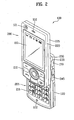
- FIG. 2 is a front perspective view of a terminal according to an embodiment of the present invention.
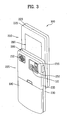
- FIG. 3 is a rear perspective view of the terminal shown in FIG. 2 according to an embodiment of the present invention.
- FIG. 4 is a block diagram of a CDMA wireless communication system operable with the terminal of FIGs. 1 to 3 according to an embodiment of the present invention
- FIG. 5 is a flowchart illustrating a method of controlling broadcasting in a terminal according to one embodiment of the present invention
- FIGs. 7A and 7B are display screens illustrating updated broadcast guide information in a terminal according to one embodiment of the present invention.
- FIGs. 8A and 8B are display screens illustrating updated broadcast guide information in a terminal according to another embodiment of the present invention.
- FIGs. 9A and 9B are display screens used for informing a user about modified broadcast recording reservation relevant information based on updated broadcast guide information in a terminal according to one embodiment of the present invention.
- FIGs. 10A and 10B are display screens used for informing a user about modified broadcast viewing reservation relevant information based on updated broadcast guide information in a terminal according to another embodiment of the present invention.
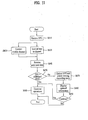
- FIG. 11 is a flowchart illustrating a method of controlling a terminal according to another embodiment of the present invention.
- the wireless communication unit 110 includes a broadcast receiving module 111 that receives a broadcast signal and/or broadcast associated information from an external broadcast managing entity via a broadcast channel.
- the broadcast channel may include a satellite channel and a terrestrial channel.
- broadcast managing entity generally refers to a system which transmits a broadcast signal and/or broadcast associated information.
- broadcast associated information include information associated with a broadcast channel, a broadcast program, a broadcast service provider, etc.
- broadcast associated information may include an electronic program guide (EPG) of digital multimedia broadcasting (DMB) and electronic service guide (ESG) of digital video broadcast-handheld (DVB-H).
- EPG electronic program guide
- ESG electronic service guide
- the broadcast signal may be implemented as a TV broadcast signal, a radio broadcast signal, and a data broadcast signal, among others.
- the broadcast signal may further include a broadcast signal combined with a TV or radio broadcast signal.
- the broadcast receiving module 111 is also configured to receive broadcast signals transmitted from various types of broadcast systems.
- broadcasting systems include the digital multimedia broadcasting-terrestrial (DMB-T) system, the digital multimedia broadcasting-satellite (DMB-S) system, the digital video broadcast-handheld (DVB-H) system, the data broadcasting system known as media forward link only (MediaFLO®) and the integrated services digital broadcast-terrestrial (ISDB-T) system among others.
- DMB-T digital multimedia broadcasting-terrestrial
- DMB-S digital multimedia broadcasting-satellite
- DVD-H digital video broadcast-handheld
- MediaFLO® media forward link only
- ISDB-T integrated services digital broadcast-terrestrial
- Receiving multicast signals is also possible.
- data received by the broadcast receiving module 111 may be stored in a suitable device, such as a memory 160.
- the wireless Internet module 113 that supports Internet access for the mobile terminal.
- the module 113 may be internally or externally coupled to the terminal.
- the wireless communication unit 110 also includes a short-range communication module 114 that facilitates relatively short-range communications. Suitable technologies for implementing this module include radio frequency identification (RFID), infrared data association (IrDA), ultra-wideband (UWB), as well at the networking technologies commonly referred to as Bluetooth and ZigBee, to name a few.
- RFID radio frequency identification
- IrDA infrared data association
- UWB ultra-wideband
- a position-location module 115 is also included in the wireless communication unit 110 and identifies or otherwise obtains the location of the mobile terminal 100.
- the position-location module 115 may be implemented using global positioning system (GPS) components which cooperate with associated satellites, network components, and combinations thereof.
- GPS global positioning system
- the mobile terminal 100 also includes an Audio/video (A/V) input unit 120 that provides audio or video signals to the mobile terminal 100.
- A/V input unit 120 includes a camera 121 and a microphone 122.
- the camera 121 receives and processes image frames of still pictures or video.
- the mobile terminal 100 also includes a user input unit 130 that generates input data responsive to user manipulation of an associated input device or devices.
- a user input unit 130 that generates input data responsive to user manipulation of an associated input device or devices. Examples of such devices include a keypad, a dome switch, a touchpad (e.g., static pressure/capacitance), a jog wheel and a jog switch.
- a specific example is one in which the user input unit 130 is configured as a touchpad in cooperation with a touch screen display, which will be described in more detail below.
- a sensing unit 140 is also included in the mobile terminal 100 and provides status measurements of various aspects of the mobile terminal 100.
- the sensing unit 140 may detect an open/close status of the mobile terminal 100, relative positioning of components (e.g., a display and keypad) of the mobile terminal 100, a change of position of the mobile terminal 100 or a component of the mobile terminal 100, a presence or absence of user contact with the mobile terminal 100, orientation or acceleration/deceleration of the mobile terminal 100, etc.
- the sensing unit 140 may sense whether a sliding portion of the mobile terminal 100 is open or closed.
- Other examples include the sensing unit 140 sensing the presence or absence of power provided by a power supply 190, the presence or absence of a coupling or other connection between an interface unit 170 and an external device, etc.
- the output unit 150 generally includes various components which support the output requirements of the mobile terminal 100.
- the mobile terminal 100 also includes a display (or display unit) 151 that visually displays information associated with the mobile terminal 100. For instance, if the mobile terminal 100 is operating in a phone call mode, the display 151 will generally provide a user interface or graphical user interface which includes information associated with placing, conducting, and terminating a phone call. As another example, if the mobile terminal 100 is in a video call mode or a photographing mode, the display 151 may additionally or alternatively display images which are associated with these modes.
- the display 151 also preferably includes a touch screen working in cooperation with an input device, such as a touchpad. This configuration permits the display 151 to function both as an output device and an input device.
- the display 151 may be implemented using display technologies including, for example, a liquid crystal display (LCD), a thin film transistor-liquid crystal display (TFT-LCD), an organic light-emitting diode display (OLED), a flexible display and a three-dimensional display.
- the mobile terminal 100 may also include one or more of such displays.
- An example of a two-display embodiment is one in which one display is configured as an internal display (viewable when the terminal is in an opened position) and a second display configured as an external display (viewable in both the open and closed positions).
- FIG. 1 further shows the output unit 150 having an audio output module 152 which supports the audio output requirements of the mobile terminal 100.
- the audio output module 152 is often implemented using one or more speakers, buzzers, other audio producing devices, and combinations thereof.
- the output unit 150 is further shown having an alarm 153, which is used to signal or otherwise identify the occurrence of a particular event associated with the mobile terminal 100.
- Typical events include a call received, a message received and user input received.
- An example of such output includes the providing of tactile sensations (e.g., vibration) to a user.
- the alarm 153 may be configured to vibrate responsive to the mobile terminal 100 receiving a call or message.
- a vibration is provided by the alarm 153 responsive to receiving user input at the mobile terminal 100, thus providing a tactile feedback mechanism.
- the various outputs provided by the components of the output unit 150 may be separately performed, or such output may be performed using any combination of such components.
- the memory 160 is generally used to store various types of data to support the processing, control, and storage requirements of the mobile terminal 100. Examples of such data include program instructions for applications operating on the mobile terminal 100, call history, contact data, phonebook data, messages, pictures, video, etc.
- RAM random access memory
- SRAM static random access memory
- EEPROM electrically erasable programmable read-only memory
- EPROM erasable programmable read-only memory
- PROM programmable read-only memory
- ROM read-only memory
- magnetic memory flash memory, magnetic or optical disk, card-type memory, or other similar memory or data storage device.
- the terminal 100 also includes a controller (or control unit) 180 that typically controls the overall operations of the mobile terminal 100.
- the controller 180 performs the control and processing associated with voice calls, data communications, instant message communications, video calls, camera operations and recording operations.
- the controller 180 may also include a multimedia module 181 for providing multimedia playback functions.
- the multimedia module 181 may be configured as part of the controller 180, or may be implemented as a separate component.
- a power supply 190 provides power used by the various components for the portable device.
- the provided power may be internal power, external power, or combinations thereof.
- FIG. 2 is a front side view of the mobile terminal 100 according to an embodiment of the present invention.
- the mobile terminal 100 includes a first body 200 configured to slideably cooperate with a second body 205.
- the user input unit 130 described in FIG. 1 may include a first input unit such as function keys 210, a second input unit such as a keypad 215, and a third input unit such as side keys 245.
- the function keys 210 are associated with the first body 200, and the keypad 215 is associated with the second body 205.
- the keypad 215 includes various keys (e.g., numbers, characters, and symbols) to enable a user to place a call, prepare a text or multimedia message, and otherwise operate the mobile terminal 100.
- first body 200 is formed from a first case 220 and a second case 225
- second body 205 is formed from a first case 230 and a second case 235.
- the first and second cases are preferably formed from a suitably ridge material such as injection molded plastic, or formed using metallic material such as stainless steel (STS) and titanium (Ti).
- the first body 200 includes the camera 121 and the audio output unit 152, which is configured as a speaker, positioned relative to the display 151.
- the camera 121 may also be constructed in such a manner that it can be selectively positioned (e.g., rotated, swiveled, etc.) relative to the first body 200.
- the function keys 210 are positioned adjacent to a lower side of the display 151.
- the display 151 can be implemented as an LCD or OLED.
- the display 151 may also be configured as a touch screen having an underlying touchpad which generates signals responsive to user contact (e.g., finger, stylus, etc.) with the touch screen.
- the second body 205 includes the microphone 122 positioned adjacent to the keypad 215, and side keys 245, which are one type of a user input unit, positioned along the side of the second body 205.
- the side keys 245 are configured as hot keys, such that the side keys 245 are associated with a particular function of the mobile terminal 100.
- the interface unit 170 is positioned adjacent to the side keys 245, and the power supply 190 in a form of a battery is located on a lower portion of the second body 205.
- each of the cameras 121 of the first and second bodies 200 and 205 may have the same or different capabilities.
- the camera 121 of the first body 200 operates with a relatively lower resolution than the camera 121 of the second body 205.
- Such an arrangement works well during a video conference call, for example, in which reverse link bandwidth capabilities may be limited.
- the relatively higher resolution of the camera 121 of the second body 205 ( FIG. 3 ) is useful for obtaining higher quality pictures for later use.
- the second body 205 also includes the audio output module 152 configured as a speaker, and which is located on an upper side of the second body 205.
- the audio output modules of the first and second bodies 200 and 205 may also cooperate together to provide stereo output. Moreover, either or both of these audio output modules may be configured to operate as a speakerphone.
- the terminal 100 also includes a broadcast signal receiving antenna 260 located at an upper end of the second body 205.
- the antenna 260 functions in cooperation with the broadcast receiving module 111 ( FIG. 1 ). If desired, the antenna 260 may be fixed or configured to retract into the second body 205.
- the rear side of the first body 200 includes a slide module 265, which slideably couples with a corresponding slide module located on the front side of the second body 205.
- the mobile terminal 100 of Figs. 1-3 may be configured to operate within a communication system which transmits data via frames or packets, including both wireless and wireline communication systems, and satellite-based communication systems.
- a communication system which transmits data via frames or packets, including both wireless and wireline communication systems, and satellite-based communication systems.
- Such communication systems utilize different air interfaces and/or physical layers.
- Examples of such air interfaces utilized by the communication systems include, for example, frequency division multiple access (FDMA), time division multiple access (TDMA), code division multiple access (CDMA), and universal mobile telecommunications system (UMTS), the long term evolution (LTE) of the UMTS, and the global system for mobile communications (GSM).
- FDMA frequency division multiple access
- TDMA time division multiple access
- CDMA code division multiple access
- UMTS universal mobile telecommunications system
- LTE long term evolution
- GSM global system for mobile communications
- FIG. 4 illustrates a CDMA wireless communication system having a plurality of mobile terminals 100, a plurality of base stations 270, a plurality of base station controllers (BSCs) 275, and a mobile switching center (MSC) 280.
- BSCs base station controllers
- MSC mobile switching center
- the MSC 280 is configured to interface with a public switch telephone network (PSTN) 290, and the MSC 280 is also configured to interface with the BSCs 275. Further, the BSCs 275 are coupled to the base stations 270 via backhaul lines. In addition, the backhaul lines may be configured in accordance with any of several interfaces including, for example, E1/T1, ATM, IP, PPP, Frame Relay, HDSL, ADSL, or xDSL. Further, the system may include more than two BSCs 275.
- PSTN public switch telephone network
- each base station 270 may include one or more sectors, each sector having an omnidirectional antenna or an antenna pointed in a particular direction radially away from the base station 270.
- each sector may include two antennas for diversity reception.
- each base station 270 may be configured to support a plurality of frequency assignments, with each frequency assignment having a particular spectrum (e.g., 1.25 MHz, 5 MHz).
- the base stations 270 may also be denoted as "cell sites.” Alternatively, individual sectors of a given base station 270 may be referred to as cell sites. Further, a terrestrial digital multimedia broadcasting (DMB) transmitter 295 is shown broadcasting to mobile terminals 100 operating within the system.
- DMB digital multimedia broadcasting
- the broadcast receiving module 111 ( FIG. 1 ) of the mobile terminal 100 is typically configured to receive broadcast signals transmitted by the DMB transmitter 295. Similar arrangements may be implemented for other types of broadcast and multicast signaling as discussed above.
- FIG. 4 further illustrates several global positioning system (GPS) satellites 300.
- GPS global positioning system
- Such satellites facilitate locating the position of some or all of the mobile terminals 100.
- two satellites are shown, but positioning information may be obtained with greater or fewer satellites.
- the position-location module 115 ( FIG. 1 ) of the mobile terminal 100 is typically configured to cooperate with the satellites 300 to obtain desired position information.
- position detection technology such as location technology that may be used in addition to or instead of GPS location technology, may alternatively be implemented.
- Some or all of the GPS satellites 300 may alternatively or additionally be configured to provide satellite DMB transmissions.
- the base stations 270 receive sets of reverse-link signals from various mobile terminals 100.
- the mobile terminals 100 engage in calls, messaging, and other communications.
- each reverse-link signal received by a given base station 270 is processed within that base station 270, and the resulting data is forwarded to an associated BSC 275.
- the BSC 275 provides call resource allocation and mobility management functionality including soft handoffs between the base stations 270.
- the BSCs 275 also route the received data to the MSC 280, which provides additional routing services for interfacing with the PSTN 290.
- the PSTN interfaces with the MSC 280
- the MSC 280 interfaces with the BSCs 275.
- the BSCs 275 also control the base stations 270 to transmit sets of forward-link signals to the mobile terminals 100.
- FIG. 5 is a flowchart illustrating a method for controlling broadcasting in a terminal according to one embodiment of the present invention.
- FIGs. 1-3 will also be referred to in this description.
- the terminal 100 receives broadcast guide information via the wireless communication unit 110 (S510). Further, the broadcast guide information received in the receiving step S510 can be stored in the memory 160.
- the broadcast guide information means information relevant to broadcast channels and/or broadcast programs.
- the broadcast guide information may include channel identification information, broadcast program identification information, broadcast program start and end times, broadcast program broadcasting time, genre information on a broadcast program/character information/background music information/synopsis information, broadcast program interconnected interactive service information, broadcast program interconnected web/wap site information, etc.
- the terminal 100 is able to receive the broadcast guide information using any one of a broadcasting network, a mobile communication network and a data network.
- the terminal 100 when using the broadcasting network, the terminal 100 is able to receive the broadcast guide information via the broadcast receiving module 111.
- the terminal 100 When using the mobile communication network, the terminal 100 is able to receive the broadcast guide information via the mobile communication module 112, and when using the data network, the terminal 100 is able to receive the broadcast guide information via the wireless internet module 113.
- an expiry period is set for the received broadcast guide information
- an old broadcast guide information can be updated with reference to a part failing to match that of new broadcast guide information by comparing the old broadcast guide information and the new broadcast guide information after completion of the expiry period.
- Embodiments of the present invention execute an update operation regardless of an expiry period set for broadcast guide information.
- the mobile communication module 112 is able to periodically or randomly receive the broadcast guide information using a messaging system such as a short message service (SMS), a multimedia messaging system (MMS) and the like.
- SMS short message service
- MMS multimedia messaging system
- the wireless Internet module 113 is able to periodically or randomly receive the broadcast guide information using such a wireless data communication technology as WiBro, MobileWiMax, WiFi and the like.
- the terminal 100 is able to receive the broadcast guide information from a server that provides the broadcast guide information.
- the server is a server that provides broadcast programs or a server that separately provides the broadcast guide information.
- the terminal 100 decides whether the broadcast information contained in the received broadcast guide information corresponds to an actual broadcast operation of a broadcast program (S520). As a result of executing the deciding step S520, if the controller 180 decides that the broadcast information does not correspond to the actual broadcast operation (Yes in step S520), the controller 180 updates the broadcast guide information received in the receiving step S510 (S530).
- the controller 180 can decide the correspondence of the broadcast information to the actual broadcast operation by targeting a currently output broadcast program, a channel corresponding to the currently output broadcast program or all available broadcast channels.
- the controller 180 can also execute the deciding step S520 even if a broadcast output operation is not currently output. That is, the controller 180 can receive additional or auxiliary information or data corresponding to an actual broadcast program that is currently being broadcast or that will be broadcast in the future.
- the controller 180 can examine the auxiliary or additional data to determine if the broadcast information in the program guide needs updating.
- the controller 180 can also extract broadcast information received in the receiving step S510.
- the broadcast information includes channel identification information, broadcast program identification information, broadcast program start and end times, a broadcast program broadcasting duration time and the like contained in the broadcast guide information.
- the controller 180 receives information indicating whether the first broadcast program has ended and information about actual end time information of the first broadcast program from the external server at an end time (included in broadcast information) of the first broadcast program or a predetermined time prior to the end time.
- the controller 180 receives information indicating whether the second broadcast program will start and actual start time information from the external server.
- the controller 180 can update the end time and the start time on the broadcast guide information of the first and second broadcast programs, respectively, according to the actual end time information of the first broadcast program and the actual start time information of the second broadcast program.
- the controller 180 confirms a presence or non-presence of validity information of a broadcast program for which a broadcast use authority is requested and is then able to decide whether the broadcast information corresponds to an actual broadcast operation.
- the validity information indicates whether the user is authorized to view the corresponding broadcast program. For instance, if a broadcast use authority is requested for a first broadcast program, the terminal 100 is able to confirm a presence or non-presence of the validity of a broadcast program that is currently output at an end time with reference to broadcast guide information of the first broadcast program or at a predetermined time before/after the end time.
- the controller 180 can determine if the first broadcast program has ended based on the presence or non-presence of the validity information while the first broadcast program is being outputted.
- the controller 180 compares a last time at which the validity is approved to the end time with reference to the broadcast guide information of the first broadcast program and then can update an end time on the broadcast guide information about the first broadcast program into the last time at which the validity is approved.
- the controller 180 updates the end time of the first broadcast program into a time at which the setup identification information on the second broadcast program matches the actual identification information on the second broadcast program.
- the controller 180 can receive the modification information via a broadcasting network using the broadcast receiving module 111. For instance, the controller 180 receives the modification information while at least one of a broadcast scanning operation and a broadcast receiving operation is working. In particular, the controller 180 receives modification information that is contained in broadcast data (e.g., audio signal, video signal, data signal) provided via a channel.
- broadcast data e.g., audio signal, video signal, data signal
- the modification relevant information can contain text or other options that allow a user to select whether to maintain the broadcast recording or viewing reservation operation according to the modification information (see, for example, FIG. 9A or FIG. 10A(a) ) or a text or other options indicating that the broadcast recording or viewing reservation operation will be executed according to the modification information (see, for example, FIG. 9B or FIG. 10B(b) ).
- the controller 180 updates the broadcast information of the reserved program to correspond to the actual broadcast operation and modifies an execution time of the broadcast recording or viewing reservation operation.
- the controller 180 receives broadcast guide information provided by the area and compares whether the received information corresponds to an actual broadcast operation. Moreover, when a reserved broadcast program exists, the controller 180 modifies an execution time of a broadcast recording or viewing reservation operation according to broadcast guide information updated to correspond to the actual broadcast operation.
- a modified item of broadcast guide information is directly input by a user or a modified item is downloaded from an external server (e.g., web server, storage medium, etc.)
- the controller 180 updates the broadcast guide information to correspond to the downloaded modified item.
- the controller 180 determines that the broadcast information does not correspond to an actual broadcast operation according to a broadcast end/start time, a broadcasting duration time and a broadcast program, the controller 180 corrects the broadcast end/start time on the broadcast guide information or adds a broadcast program.
- first and second broadcast programs are set to be sequentially broadcasted with reference to broadcast guide information
- the controller 180 decides that the broadcast information does not correspond to an actual broadcast operation.
- the controller 180 can then update the broadcast guide information by correcting an end time of the first broadcast program and the start and end times of the second broadcast program.
- the controller 180 decides that the broadcast information does not correspond to an actual broadcast operation.
- the controller 180 then updates the broadcast guide information by adding the third broadcast program to the first or second broadcast program or between the first and second broadcast programs.
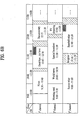
- FIGs. 6A and 6B are diagrams of broadcast guide information before and after an updating process according to one embodiment of the present invention.
- the broadcast guide information includes names and broadcasting start and end times for broadcast programs per a broadcast channel.
- the broadcast guide information can also include information indicating an occurrence of a modification situation such as a broadcast start or end time modification, a broadcast program addition and the like using an arrow (e.g., ⁇ , ⁇ ).
- the broadcast guide information shown in FIG. 6B shows an updated state of the former broadcast guide information shown in FIG. 6A . That is, FIG. 6B illustrates a modification situation including a broadcast start or end time modification, a broadcasting time modification, a broadcast program addition and the like.
- the end time of the 'News' program on the first channel is modified into '09:40' from '09:30', the broadcasting time of the 'News' program increases to '1 hour and 10 minutes' and the broadcast end time is modified into '09:40'.
- the end time of the 'News' program on the first channel is modified into '09:40' from '09:30' and a broadcasting time of the 'Good-bye, my love' program is incremented by 10 minutes
- the broadcasting time of the 'Good-bye my love' program is increased into '1 hour and 25 minutes' and the broadcast start and end times are modified into '10:45' and '12:10', respectively.
- the end time of the 'Good-bye, my love' program is modified into '12:10', and the start time of the 'Documentary' program is modified into '12:15'.
- the end time of the 'Special broadcast' program on the second channel is modified into '12:30' from '12:20', the broadcasting time of the 'Special broadcast' program is increased into '1 hour and 30 minutes', the end time of the 'Special broadcast' program is modified into '12:30', and the start time of the 'TV shopping' program is modified into '12:40'.
- the 'Irregular broadcast' is added to the third channel between '11:10' ⁇ '11:30' (i.e., between the 'Soccer relay' and 'Baseball relay' programs) and the start time of the 'Baseball relay' program is modified into '11:40'.
- the controller 180 outputs broadcast organization information created with reference to the broadcast guide information updated in the updating step S530 via the output unit 150 (S540). This step will now be explained in more detail with reference to FIGs. 7A to 8B .
- FIGs. 7A and 7B show the state in which the broadcasting end and start times are modified
- FIGs. 8A and 8B show the state in which a broadcast program is added.
- the controller 180 displays broadcast organization information relevant to a specific channel in a currently output broadcast program provided from the specific channel. Further, the broadcast organization information can contain broadcasting end and start times that are modified per the broadcast program.
- the controller 180 displays information that the start time of the 'Good-bye, my love' program is modified as the end time of the 'News' program is modified.
- the controller 180 displays broadcast organization information relevant to a specific channel in a currently output broadcast program provided from the specific channel.
- the broadcast organization information can contain an added broadcast program (e.g., irregular broadcast), broadcasting end and start times of the added broadcast program and a modified broadcasting time of the broadcast program according to the added broadcast program.
- the controller 180 When displaying the added broadcast program, the controller 180 also displays a title of the added broadcast program or an irregular broadcast when title information of the added broadcast program is not received.
- the broadcast organization information can also be displayed at other times besides when a currently broadcast program is being displayed.
- the controller 180 is able to display broadcast organization information of other available channels as well as broadcast organization information of a channel of a currently output broadcast program.
- the broadcast organization information can displayed on a prescribed portion of a screen via a ticker system, displayed on one of a plurality of divided screens, or output as an audio signal via the audio output module 152.
- the terminal 100 is able to modify a broadcast recording reservation operation and/or a broadcast viewing reservation operation with reference to the broadcast guide information updated in the updating step S530.
- the modifying operation of the broadcast recording reservation and/or the broadcast viewing reservation operations will now be explained in more detail with reference to FIGs. 9A to 10B .
- the controller 180 outputs text information and Yes/No options allowing a user to select whether to maintain a recording reservation operation based on modified broadcast start and end times as the start time of the 'Good-bye, my love' program has been modified. That is, if the user selects to maintain the recording reservation operation by selecting the 'Yes' option 921, the controller 180 resets the recording reservation operation of the 'Good-bye, my love' program according to modified broadcast guide information.
- the controller 180 cancels the recording reservation operation for the 'Good-bye, my love' program. That is, as shown in FIG. 9B , the controller 180 resets the recording reservation operation based on the modified broadcast start and end times of the 'Good-bye, my love' program and displays information informing the user that the 'Good-bye, my love' program will be recorded at the modified broadcast start time.
- FIGs. 10A and 10B are diagrams of a screen for informing a user about modified broadcast viewing reservation relevant information based on updated broadcast guide information in a terminal according to one embodiment of the present invention.
- the broadcast guide information is assumed to be related to the 'Baseball relay' program, and more particularly, the broadcast start and times are updated while a viewing reservation operation is set for the 'Baseball relay' broadcast program.
- the controller 180 outputs text information and Yes/No options allowing a user to select whether to maintain a viewing reservation operation based on modified broadcast start and times as the start time of the 'Baseball relay' program has been modified.
- the controller 180 when the user selects to maintain the viewing reservation operation by selecting the 'Yes' option 1021, the controller 180 resets the viewing reservation operation for the 'Baseball relay' program according to the modified broadcast guide information and displays information informing the user that the viewing reservation operation for the 'Baseball relay' program will be executed according to the modified broadcasting time. If the user selects not to maintain the viewing reservation by selecting the 'No' option 1022, the controller 180 cancels the viewing reservation of the 'Baseball relay' program.
- the controller 180 resets the viewing reservation operation for the modified broadcasting time of the 'Baseball relay' program, and informs the user that the 'Baseball relay' program will be output, and then outputs a broadcast signal according to a reception of the 'Baseball relay' program as shown in FIG. 10B(b) .
- a broadcast recording or viewing reservation operation can be performed in a standby mode or during the execution of another application.
- FIG. 11 is a flowchart illustrating a method of controlling a terminal according to another embodiment of the present invention.
- the controller 180 receives an EPG allowing a user to view different programs, when the programs are scheduled to be broadcast, etc. (step S610).
- the controller 180 then scans or tunes to a selected channel (S620).
- Additional or auxiliary data can then be received by the controller 180 through the scanned or tuned channel (step S640). Note that the additional or auxiliary data can also be received via a separate channel such as a separate mobile communication channel (step S630).
- the additional or auxiliary data includes information about programs that have been modified, etc. That is, the additional or auxiliary data includes information such as the broadcast start and end times, validity information (i.e., whether a user is valid or authorized to view a particular program), broadcast program Ids, modification information, recording or viewing reservation information, area guide information, user input information, etc. (discussed above with respect to the first to sixth embodiments).
- the additional or auxiliary data thus includes any information that the controller 180 can use to determine if a broadcast program is modified.
- the controller 180 determines whether information in the additional or auxiliary data matches or corresponds with information contained in the EPG for any or all programs included in the EPG (step S650). If the controller 180 determines the corresponding information matches (Yes in step S650), the controller 180 continues with the preset viewing or recording operations (step S660).
- the controller 180 also displays yes or no options allowing the user to continue or cancel with viewing or recording particular programs that have been modified (step S690). If the user continues with the viewing or recording operations (Yes in step S690), the controller 180 executes the step S660. If the user does not want to continue with the viewing or recording operations based on the modified information (No in step S690), the controller 180 cancels the corresponding operations.
- the embodiments described herein may be implemented with separate software modules, such as procedures and functions, each of which perform one or more of the functions and operations described herein.
- the software codes can be implemented with a software application written in any suitable programming language and may be stored in memory (for example, the memory 160), and executed by a controller or processor (for example, the controller 180).
- the mobile terminal 100 may be implemented in a variety of different configurations. Examples of such configurations include a folder-type, slide-type, bar-type, rotational-type, swing-type and combinations thereof.
- the present invention provides a user with updated broadcast guide information corresponding to an actual broadcast operation. Further, the present invention executes a broadcast recording or viewing reservation operations according to updated broadcast guide information corresponding to an actual broadcast operation.
Landscapes
- Engineering & Computer Science (AREA)
- Multimedia (AREA)
- Signal Processing (AREA)
- Databases & Information Systems (AREA)
- Human Computer Interaction (AREA)
- Business, Economics & Management (AREA)
- Strategic Management (AREA)
- Finance (AREA)
- Software Systems (AREA)
- General Engineering & Computer Science (AREA)
- Telephone Function (AREA)
- Mobile Radio Communication Systems (AREA)
- Two-Way Televisions, Distribution Of Moving Picture Or The Like (AREA)
- Circuits Of Receivers In General (AREA)
Applications Claiming Priority (1)
| Application Number | Priority Date | Filing Date | Title |
|---|---|---|---|
| KR1020080012560A KR101467758B1 (ko) | 2008-02-12 | 2008-02-12 | 단말기 및 이것의 방송 제어 방법 |
Publications (2)
| Publication Number | Publication Date |
|---|---|
| EP2091243A2 true EP2091243A2 (fr) | 2009-08-19 |
| EP2091243A3 EP2091243A3 (fr) | 2010-09-01 |
Family
ID=40548045
Family Applications (1)
| Application Number | Title | Priority Date | Filing Date |
|---|---|---|---|
| EP09001849A Ceased EP2091243A3 (fr) | 2008-02-12 | 2009-02-10 | Terminal et procédé de mises à jour de guides d'information diffusés |
Country Status (4)
| Country | Link |
|---|---|
| US (1) | US8356318B2 (fr) |
| EP (1) | EP2091243A3 (fr) |
| KR (1) | KR101467758B1 (fr) |
| CN (1) | CN101510971B (fr) |
Cited By (3)
| Publication number | Priority date | Publication date | Assignee | Title |
|---|---|---|---|---|
| EP2521348A3 (fr) * | 2011-05-04 | 2013-03-20 | Lg Electronics Inc. | Appareil d'affichage pour fournir un guide de programme électronique amélioré et son procédé de contrôle |
| EP2627016A1 (fr) * | 2012-02-13 | 2013-08-14 | Kabushiki Kaisha Toshiba | Appareil électronique capable de balayer des ondes de radiodiffusion et de recevoir des données de programmes d'un serveur, et procédé permettant de commander l'appareil électronique |
| EP2472752A3 (fr) * | 2010-12-28 | 2014-01-01 | LOEWE OPTA GmbH | Appareil de réception de télévision |
Families Citing this family (18)
| Publication number | Priority date | Publication date | Assignee | Title |
|---|---|---|---|---|
| KR100663473B1 (ko) * | 2005-10-14 | 2007-01-02 | 삼성전자주식회사 | Dmb 수신 단말기에서의 서비스 링킹을 통한 예약 녹화방법 |
| KR101586316B1 (ko) * | 2009-11-10 | 2016-01-18 | 엘지전자 주식회사 | 이동 단말기 및 이것의 방송 제어 방법 |
| KR101606796B1 (ko) * | 2009-11-23 | 2016-03-28 | 엘지전자 주식회사 | 이동 단말기 및 이것의 방송 제어 방법 |
| CN102111585B (zh) * | 2009-12-25 | 2015-09-23 | 康佳集团股份有限公司 | 无线宽带网络视听终端设备 |
| KR101674009B1 (ko) * | 2010-03-29 | 2016-11-08 | 삼성전자주식회사 | 이동통신 단말기에서 채널정보 갱신 장치 및 방법 |
| EP2469840A1 (fr) * | 2010-12-21 | 2012-06-27 | Thomson Licensing | Redimensionnment dynamique d'un guide électronique de programmes |
| CN102685583B (zh) * | 2011-02-16 | 2014-12-17 | Lg电子株式会社 | 执行虚拟频道浏览的显示装置及其控制方法 |
| CN102231854A (zh) * | 2011-06-21 | 2011-11-02 | 中兴通讯股份有限公司 | 多媒体广播节目录制方法及数据卡设备 |
| KR101893149B1 (ko) * | 2011-10-24 | 2018-08-30 | 엘지전자 주식회사 | 멀티미디어 디바이스 및 그 제어 방법 |
| US8819798B2 (en) | 2011-12-29 | 2014-08-26 | Ebay Inc. | System and method for transferring states between electronic devices |
| CN103152639A (zh) * | 2013-03-25 | 2013-06-12 | 天脉聚源(北京)传媒科技有限公司 | 一种电视节目单的校正方法及装置 |
| CN103618964A (zh) * | 2013-12-16 | 2014-03-05 | 乐视致新电子科技(天津)有限公司 | 通过智能电视提供电视节目的方法及系统 |
| US9843835B2 (en) | 2014-12-22 | 2017-12-12 | Rovi Guides, Inc. | Methods and systems for verifying media guidance data |
| CN106231429B (zh) * | 2015-10-30 | 2019-05-21 | 无锡天脉聚源传媒科技有限公司 | 电子节目菜单校正方法及装置 |
| US10142436B2 (en) * | 2015-11-19 | 2018-11-27 | Microsoft Technology Licensing, Llc | Enhanced mode control of cached data |
| CN105704521A (zh) * | 2016-01-27 | 2016-06-22 | 深圳国微技术有限公司 | 一种实现个性化频道列表的方法及装置 |
| US10390089B2 (en) * | 2016-12-09 | 2019-08-20 | Google Llc | Integral program content distribution |
| KR102509072B1 (ko) * | 2018-10-05 | 2023-03-13 | 삼성전자주식회사 | 방송 프로그램 정보를 제공하는 영상 표시 장치 및 그 방법 |
Family Cites Families (15)
| Publication number | Priority date | Publication date | Assignee | Title |
|---|---|---|---|---|
| KR100304886B1 (ko) * | 1998-12-01 | 2001-09-24 | 구자홍 | 디스플레이장치의부가정보표시방법 |
| JP4644999B2 (ja) | 1999-08-19 | 2011-03-09 | ソニー株式会社 | 伝送方法及び伝送装置並びに受信方法及び受信装置 |
| JP2001359004A (ja) * | 2000-06-09 | 2001-12-26 | Matsushita Electric Ind Co Ltd | 録画予約システムおよび方法 |
| JP2002335463A (ja) * | 2001-05-08 | 2002-11-22 | Alpine Electronics Inc | 放送受信機 |
| CN1254097C (zh) * | 2001-05-29 | 2006-04-26 | 松下电器产业株式会社 | 节目记录系统、遥控器以及用于遥控的方法和程序 |
| US7614066B2 (en) * | 2002-05-03 | 2009-11-03 | Time Warner Interactive Video Group Inc. | Use of multiple embedded messages in program signal streams |
| US20040078817A1 (en) * | 2002-05-14 | 2004-04-22 | Steven Horowitz | Dynamic program events recording |
| US8145120B2 (en) * | 2003-10-27 | 2012-03-27 | Nokia Corporation | Apparatus, system, method and computer program product for service selection and sorting |
| US20060064721A1 (en) * | 2004-03-10 | 2006-03-23 | Techfoundries, Inc. | Method and apparatus for implementing a synchronized electronic program guide application |
| US7827579B2 (en) | 2004-09-09 | 2010-11-02 | Nokia Corporation | Mobile television electronic service guide delivery system |
| US8291448B2 (en) * | 2004-09-15 | 2012-10-16 | Nokia Corporation | Providing zapping streams to broadcast receivers |
| US20060174270A1 (en) * | 2005-02-02 | 2006-08-03 | United Video Properties, Inc. | Systems and methods for providing approximated information in an interactive television program guide |
| KR100747824B1 (ko) * | 2005-09-07 | 2007-08-08 | 엘지전자 주식회사 | 프로그램 가이드 정보 업데이트 방법 |
| US20070157250A1 (en) * | 2006-01-05 | 2007-07-05 | Arcadyan Technology Corporation | Method and apparatus for recording using multiple program schedule data sources to modify recording schedule |
| KR100807096B1 (ko) * | 2006-07-05 | 2008-02-26 | 주식회사 휴맥스 | 방송 시스템으로부터 수신된 시간 정보를 보정하는 방법 및장치 |
-
2008
- 2008-02-12 KR KR1020080012560A patent/KR101467758B1/ko not_active Expired - Fee Related
- 2008-10-23 CN CN2008101691514A patent/CN101510971B/zh not_active Expired - Fee Related
- 2008-11-20 US US12/275,101 patent/US8356318B2/en not_active Expired - Fee Related
-
2009
- 2009-02-10 EP EP09001849A patent/EP2091243A3/fr not_active Ceased
Cited By (6)
| Publication number | Priority date | Publication date | Assignee | Title |
|---|---|---|---|---|
| EP2472752A3 (fr) * | 2010-12-28 | 2014-01-01 | LOEWE OPTA GmbH | Appareil de réception de télévision |
| EP2521348A3 (fr) * | 2011-05-04 | 2013-03-20 | Lg Electronics Inc. | Appareil d'affichage pour fournir un guide de programme électronique amélioré et son procédé de contrôle |
| US9277163B2 (en) | 2011-05-04 | 2016-03-01 | Lg Electronics Inc. | Display apparatus for providing enhanced electronic program guide and method of controlling the same |
| US9826268B2 (en) | 2011-05-04 | 2017-11-21 | Lg Electronics Inc. | Display apparatus for providing enhanced electronic program guide and method of controlling the same |
| EP2627016A1 (fr) * | 2012-02-13 | 2013-08-14 | Kabushiki Kaisha Toshiba | Appareil électronique capable de balayer des ondes de radiodiffusion et de recevoir des données de programmes d'un serveur, et procédé permettant de commander l'appareil électronique |
| CN103248940A (zh) * | 2012-02-13 | 2013-08-14 | 株式会社东芝 | 电子设备、服务器以及用于控制电子设备的方法 |
Also Published As
| Publication number | Publication date |
|---|---|
| KR20090087235A (ko) | 2009-08-17 |
| KR101467758B1 (ko) | 2014-12-03 |
| CN101510971B (zh) | 2013-06-19 |
| CN101510971A (zh) | 2009-08-19 |
| US20090204996A1 (en) | 2009-08-13 |
| EP2091243A3 (fr) | 2010-09-01 |
| US8356318B2 (en) | 2013-01-15 |
Similar Documents
| Publication | Publication Date | Title |
|---|---|---|
| US8356318B2 (en) | Terminal and method of controlling broadcasting therein | |
| EP2066117B1 (fr) | Méthode de sélection des fréquences à être mis à jour au cours d'un balayage des canaux dans un appareil de communication mobile basé sur le résultat d'une première analyse | |
| US8103269B2 (en) | Mobile terminal and method of selecting broadcast mode therein | |
| EP2139231B1 (fr) | Terminal mobile et procédé de gestion de liste de canaux correspondante | |
| EP2051511B1 (fr) | Terminal mobile de réception de diffusion | |
| CA2643417C (fr) | Terminal mobile et methode de controle de diffusion dudit terminal | |
| US8010162B2 (en) | Mobile communication terminal and method of displaying information using the same | |
| US8543093B2 (en) | Age-based control of content provided via a mobile communication terminal | |
| EP2066031B1 (fr) | Terminal et procédé de contrôle des signaux de diffusion dans un terminal mobile | |
| CA2641054C (fr) | Terminal mobile traitant et transmettant de l'information relative a la lecture de donnees, et lecture de donnees conforme a l'information | |
| EP2117259B1 (fr) | Terminal mobile et procédé de sélection de fournisseur de service de diffusion | |
| US8196159B2 (en) | Terminal and method of controlling broadcasting therein | |
| US8995964B2 (en) | Schedule managing apparatus and method in mobile terminal | |
| EP2131588B1 (fr) | Terminal mobile et son procédé de contrôle de l'achat de contenu de diffusion | |
| US8285334B2 (en) | Mobile communications terminal for broadcast reception | |
| US20090247220A1 (en) | Terminal and method of controlling broadcasting therein | |
| US8793719B2 (en) | Broadcast viewing control method for a mobile terminal | |
| EP2066053A2 (fr) | Méthode pour le contrôle de la réception de diffusion dans un terminal mobile utilisant un dispositif d'identité amovible ainsi que terminal mobile pour la mise en oeuvre de cette méthode | |
| US8571590B2 (en) | Mobile terminal that displays obtained broadcast service identity information when broadcast service guide is not available and method of controlling mobile terminal |
Legal Events
| Date | Code | Title | Description |
|---|---|---|---|
| PUAI | Public reference made under article 153(3) epc to a published international application that has entered the european phase |
Free format text: ORIGINAL CODE: 0009012 |
|
| 17P | Request for examination filed |
Effective date: 20090210 |
|
| AK | Designated contracting states |
Kind code of ref document: A2 Designated state(s): AT BE BG CH CY CZ DE DK EE ES FI FR GB GR HR HU IE IS IT LI LT LU LV MC MK MT NL NO PL PT RO SE SI SK TR |
|
| AX | Request for extension of the european patent |
Extension state: AL BA RS |
|
| PUAL | Search report despatched |
Free format text: ORIGINAL CODE: 0009013 |
|
| AK | Designated contracting states |
Kind code of ref document: A3 Designated state(s): AT BE BG CH CY CZ DE DK EE ES FI FR GB GR HR HU IE IS IT LI LT LU LV MC MK MT NL NO PL PT RO SE SI SK TR |
|
| AX | Request for extension of the european patent |
Extension state: AL BA RS |
|
| AKX | Designation fees paid |
Designated state(s): AT BE BG CH CY CZ DE DK EE ES FI FR GB GR HR HU IE IS IT LI LT LU LV MC MK MT NL NO PL PT RO SE SI SK TR |
|
| 17Q | First examination report despatched |
Effective date: 20120511 |
|
| STAA | Information on the status of an ep patent application or granted ep patent |
Free format text: STATUS: THE APPLICATION HAS BEEN REFUSED |
|
| 18R | Application refused |
Effective date: 20140401 |