EP2092086B1 - Marqueurs pronostiques pour la prévision de la survie à cinq ans sans progression de patients ayant un carcinome colorectal sur la base de profils d'expression d'échantillons biologiques - Google Patents
Marqueurs pronostiques pour la prévision de la survie à cinq ans sans progression de patients ayant un carcinome colorectal sur la base de profils d'expression d'échantillons biologiques Download PDFInfo
- Publication number
- EP2092086B1 EP2092086B1 EP07870195.0A EP07870195A EP2092086B1 EP 2092086 B1 EP2092086 B1 EP 2092086B1 EP 07870195 A EP07870195 A EP 07870195A EP 2092086 B1 EP2092086 B1 EP 2092086B1
- Authority
- EP
- European Patent Office
- Prior art keywords
- seq
- patients
- affymetrix
- progression
- gene
- Prior art date
- Legal status (The legal status is an assumption and is not a legal conclusion. Google has not performed a legal analysis and makes no representation as to the accuracy of the status listed.)
- Not-in-force
Links
Images









Classifications
-
- C—CHEMISTRY; METALLURGY
- C12—BIOCHEMISTRY; BEER; SPIRITS; WINE; VINEGAR; MICROBIOLOGY; ENZYMOLOGY; MUTATION OR GENETIC ENGINEERING
- C12Q—MEASURING OR TESTING PROCESSES INVOLVING ENZYMES, NUCLEIC ACIDS OR MICROORGANISMS; COMPOSITIONS OR TEST PAPERS THEREFOR; PROCESSES OF PREPARING SUCH COMPOSITIONS; CONDITION-RESPONSIVE CONTROL IN MICROBIOLOGICAL OR ENZYMOLOGICAL PROCESSES
- C12Q1/00—Measuring or testing processes involving enzymes, nucleic acids or microorganisms; Compositions therefor; Processes of preparing such compositions
- C12Q1/68—Measuring or testing processes involving enzymes, nucleic acids or microorganisms; Compositions therefor; Processes of preparing such compositions involving nucleic acids
- C12Q1/6876—Nucleic acid products used in the analysis of nucleic acids, e.g. primers or probes
- C12Q1/6883—Nucleic acid products used in the analysis of nucleic acids, e.g. primers or probes for diseases caused by alterations of genetic material
- C12Q1/6886—Nucleic acid products used in the analysis of nucleic acids, e.g. primers or probes for diseases caused by alterations of genetic material for cancer
-
- C—CHEMISTRY; METALLURGY
- C12—BIOCHEMISTRY; BEER; SPIRITS; WINE; VINEGAR; MICROBIOLOGY; ENZYMOLOGY; MUTATION OR GENETIC ENGINEERING
- C12Q—MEASURING OR TESTING PROCESSES INVOLVING ENZYMES, NUCLEIC ACIDS OR MICROORGANISMS; COMPOSITIONS OR TEST PAPERS THEREFOR; PROCESSES OF PREPARING SUCH COMPOSITIONS; CONDITION-RESPONSIVE CONTROL IN MICROBIOLOGICAL OR ENZYMOLOGICAL PROCESSES
- C12Q2600/00—Oligonucleotides characterized by their use
- C12Q2600/118—Prognosis of disease development
-
- C—CHEMISTRY; METALLURGY
- C12—BIOCHEMISTRY; BEER; SPIRITS; WINE; VINEGAR; MICROBIOLOGY; ENZYMOLOGY; MUTATION OR GENETIC ENGINEERING
- C12Q—MEASURING OR TESTING PROCESSES INVOLVING ENZYMES, NUCLEIC ACIDS OR MICROORGANISMS; COMPOSITIONS OR TEST PAPERS THEREFOR; PROCESSES OF PREPARING SUCH COMPOSITIONS; CONDITION-RESPONSIVE CONTROL IN MICROBIOLOGICAL OR ENZYMOLOGICAL PROCESSES
- C12Q2600/00—Oligonucleotides characterized by their use
- C12Q2600/158—Expression markers
Definitions
- the invention comprises a method of predicting (predicting) the progression of a colon cancer (colorectal carcinoma) within five years in patients diagnosed with colorectal cancer in UICC stage I and II of the prior art and their primary tumor by surgical and pathological criteria completely (R0) removed (resected).
- the method according to the invention involves the determination and analysis of the expression profile of the marker genes ME2 and CXCL13 in a tissue sample of the primary tumor of the patient removed during the operation. The procedure is used to predict for the individual patient whether or not he / she will have to expect progression of the cancer within three years of surgery.
- the method allows the prediction of the three-year progression-free survival of colon cancer patients by determining a gene expression profile of ME2 and CXCL13 and the subsequent bioinformatic evaluation.
- the genes are defined by their sequences as shown in SEQ ID NOs: 1 and 2.
- Colorectal cancer also known as colorectal cancer, is the third most common tumor entity in western countries. In Germany, about 66,000 patients suffer from colon cancer each year. Colorectal carcinoma is a heterogeneous disease of complex cause. Colon cancer patients are categorized into four clinical stages, UICC I-IV, based on histopathological criteria defined by the Union International Contraceptive Cancer (UICC). The TNM classification scheme of the UICC is used worldwide.
- Stage II colon cancer patients have a TNM status of T 3.4 N 0 M 0 . Although the primary tumor is significantly larger than in stage I and already the intestinal wall no metastases in the regional lymph nodes and no metastases have been found in these patients.
- UICC stage III Patients in UICC stage III have TNM status T 1-4 , N 1-2 M 0 . It is typical for patients in this group that regional lymph nodes are already affected by primary tumor exudates, but no metastases have been detected in other organs. The presence of affected lymph nodes in UICC stage III significantly increases the likelihood of disease progression. About 60% of patients in stage III have to expect disease progression within five years after the surgical removal of the primary tumor. Due to this high rate of progression, UICC stage III patients receive adjuvant chemotherapy according to the guidelines of the German Cancer Society. Adjuvant chemotherapy reduces the incidence of progression by about 10-20%, so that typically only about 40-50% of stage III patients undergo disease progression after surgery and adjuvant chemotherapy within the first 5 years.
- UICC Stage IV Colon cancer patients who have been diagnosed with metastases and histologically confirmed at the time of initial diagnosis will be assigned to UICC Stage IV. They only have a relatively low 5-year survival probability. In Germany, this affects about 20,000 patients. In these patients, synchronous or metachronous lung or liver metastases occur. In about 4,000 of the patients in UICC stage IV, a primary tumor removal and a complete metastasis resection (RO) are technically possible, which is associated with a 5-year survival of about 30%. For the other 16,000 patients in UICC stage IV resection is not possible for a variety of reasons (multinodular, unfavorable localization of metastases on vessels and bile ducts, extrahepatic). In these cases, palliative therapy options are indicated. The aim of the palliative chemotherapeutic treatment is not only to maintain a good quality of life, but also to extend the survival time.
- stage II There are a number of problems in the classification and staging of colon cancer patients.
- the classification of patients in stages I and II is not accurate. About 10% of stage I patients and about 25% of stage II patients will progress within 5 years, the majority within 2 years after surgical removal of the primary tumor. In Germany alone, this affects approximately 6,000-8,000 patients annually. There is no way to find the patients with a high probability of progression from the homogenous group. For some time now, it has been discussed in specialist circles whether patients undergoing UICC stage II should always be given adjuvant chemotherapy. Because of the relatively low progression probability of 33% within 5 years in stage II patients, is The use of such therapy is difficult to determine in advance and therefore remains controversial. Approximately 67% of all Stage II patients would not benefit from adjuvant chemotherapy. The costs would be enormous.
- Arango et al. (“Gene Expression Profiling Predicts Recurence in Dukes' C Colorectal Cancer", GASTROENTEROLOGY, vol. 129, no. 3, 1 September 2005, pages 874-884 ) discloses gene expression profiles for predicting the recurrence of colorectal cancer.
- the technical problem underlying the invention is to provide a reliable diagnostic that can lead to improved individual therapies.
- the technical problem is solved by the provision of the embodiments disclosed herein and in particular by the claims characterizing the invention.
- the invention therefore comprises a method for predicting the likelihood of progression (local recurrence, metastases, secondary malignancies) within the first three years after the surgical removal of the primary tumors of colon cancer patients in UICC stage I and UICC stage II.
- colonal carcinoma refers in particular to polypoid, platelike, ulcerous and squamous forms that are histologically classified as solid, mucous or glandular adenocarcinomas, signet-ring cell carcinomas, squamous, adenosquamous, cribriform, squamous, or undifferentiated carcinomas according to the WHO Classification can be typed. ( Becker, Hohenberger, Junginger, Schlag. Surgical Oncology. Thieme, Stuttgart 2002 )
- the term “gene expression profile” encompasses both the determination of “expression profiles” and the individual “expression levels” of the corresponding genes.
- the term “expression level” as well as the term “expression profile” according to the invention encompasses both the quantity of the gene product as well as its qualitative changes such as e.g. Methylations, glycosylations, phosphorylations, etc.
- RNA / protein the quantity of the corresponding gene products
- the level of expression is optionally compared with that of other individuals. Corresponding embodiments are proven in the experimental part and also shown in particular in the tables.
- the determination of the expression profiles of the genes (gene segments) presented herein is carried out in particular in tissues and / or individual cells of the tissue. Methods for the determination of the expression profile therefore include (in the sense of this invention) eg in situ hybridizations, PCR-based methods (eg Taqman) or microarray-based methods (see also experimental part of the invention).
- the invention comprises the above-mentioned method, wherein the expression profile of the 2 marker genes, which are clearly described by SEQ ID NO 1 to SEQ ID NO 29, is determined.
- marker genes in the sense of this invention encompasses not only the specific gene sequences (or the corresponding gene products) as shown in the specific nucleotide sequences, but also gene sequences which have a high degree of homology to these sequences. Furthermore, the reverse-complementary sequences of the defined marker genes are included. High homology sequences include sequences that are at least 80%, preferably at least 90%, most preferably at least 95% homologous to the sequences shown in SEQ ID NOS: 1-29.
- such highly homologous sequences also include sequences encoding gene products (e.g., RNA or proteins) which are at least 80% identical to the defined gene products of SEQ ID NOS: 1 to 29.
- the term marker gene in the context of this invention according to the invention comprises a gene or a gene portion which is at least 90% homologous, more preferably at least 95% homologous, more preferably at least 98% homologous, most preferably at least 100% homologous to those shown in SEQ ID NO 1 to SEQ ID NO 29 shown in the form of deoxyribonucleotides or corresponding ribonucleotides or the proteins derived therefrom.
- a protein derived from the 29 marker genes (defined in SEQ ID Nos. 1 to 29, in Table 1) is understood in this invention to mean a protein, a protein fragment or a polypeptide which has been translated in the native reading frame (in frame).
- the sequence identity can be conventionally achieved by using computer programs such.
- the FASTA program ( WR Pearson (1990) Rapid and Sensitive Sequence Comparison with FASTP and FASTA Methods in Enzymology 183: 63-98 .), download eg as service of the EBI in Hinxton.
- the parameters are preferably set so that the percentage of identity over the entire length of the Reference sequence is calculated and that homology gaps (so-called gaps) of up to 5% of the total number of nucleotides in the reference sequence are allowed.
- Important program parameters such as GAP PENALTIES and KTUP are left at the default values.
- the corresponding marker genes can be expressed not only in tumor but also in other biological samples, e.g. in the blood, blood serum, blood plasma, stool or other body fluids (abdominal ascites, lymph). Accordingly, the present invention is not limited to the study of frozen or fresh tumor tissue. The results of the invention can also be obtained by examining fixed tumor tissue, for example paraffin material. In particular, other detection methods are also preferably used in fixed material for detecting the gene / gene expression products, e.g. RNA-specific primers as part of a real-time PCR.
- the expression profile of the 2 marker genes disclosed here is determined by measuring the quantity of the mRNA of the marker genes.
- This quantity of marker gene mRNA can be determined, for example, by gene chip technology, (RT) PCR (for example also on fixed material), Northern hybridization, dot blotting or in situ hybridization.
- microarray technology most preferably used in the present invention allows the simultaneous measurement of mRNA expression levels of many thousands of genes and thus provides an important tool to determine differential expression between two biological samples or groups of biological samples.
- analyzes may also be performed by single reverse transcriptase PCR, competitive PCR, real time PCR, differential display RT-PCR, Northern blot analysis, and other related methods.
- cDNA complementary DNA
- cRNA complementary RNA
- a large number of different arrays and their preparation are known in the art and for example in the US Patents 5,445,934 ; 5,532,128 ; 5,556,752 ; 5,242,974 ; 5,384,261 ; 5,405,783 ; 5,412,087 ; 5,424,186 ; 5,429,807 ; 5,436,327 ; 5,472,672 ; 5,527,681 ; 5,529,756 ; 5,54533 1 ; 5,554,501 ; 5,561,071 ; 5,571,639 ; 5,593,839 ; 5,599,695 ; 5,624,711 ; 5,658,734 ; and 5,700,637 shown.
- a feature represents a specific measurement point for a gene to be examined, which is located on the biochip surface and hybridizes with the labeled sample to be examined, thus providing an intensity signal.
- the present invention also relates to a kit for carrying out the methods described herein, wherein the kit specific DNA or RNA probes, primers (also primer pairs), antibodies, aptamers for the determination of the 2 marker genes shown in SEQ ID NO: 1 to 2 or for the determination of at least one gene product of 2 marker genes encoded by the Sequnzen in SEQ ID NO: 1 to 2 comprises.
- the kit is preferably a diagnostic kit.
- any microarray or in particular an "Affymetrix gene chip" is referred to.
- the kit may contain all or some of the materials needed to perform the assay, as well as the necessary instructions.
- the disclosure also includes representations of the marker gene signatures which are useful for the treatment, diagnosis and prognosis of the above-mentioned diseases.
- These gene profile representations are reduced to media which are machine readable such as e.g. computer-readable media (magnetic media, optical media, etc.).
- the subject matter of the disclosure may be CD ROMs containing computer programs for comparison with the stored 29 gene expression profile described above.
- the objects according to the invention can contain digitally stored expression profiles, so that they can be compared with expression data from patients. Alternatively, such profiles may be stored in a different physical format. A graphical representation is for example such a format.
- the signature signature development team consisted of 55 patients, 34 men and 21 women diagnosed with colorectal cancer. These patients were operated in the period from August 1988 to June 1998 to totally remove the colorectal carcinoma. The age of the patients at the time of surgery ranged from 33 years to 87 years, the mean age was 63.4 years.
- the total observation time of the patients which is the time from the first operation to the last observation of a patient, averaged 11.25 years, the minimum was 6.36 years, the maximum was 16.53 years.
- the cRNA preparation was performed as previously described ( Birkenkamp Demtroder K, Christensen LL, Olesen SH, et al. Gene expression in colorectal cancer. Cancer Res 2002; 62: 4352-63 ) carried out.
- Double-stranded cDNA was synthesized by means of an oligo-dT-T7 primer (Eurogentec, Cologne, Germany) and subsequently transcribed using the Promega RiboMax T7 kit (Promega, Madison, Wisconsin) and biotin-NTP labeling mix (Loxo, Dossenheim, Germany).
- the cRNA was filled to a final volume of 300 ⁇ l with the B2 control oligonucleotide (Affymetrix, Santa Clara, CA), eukaryotic hybridization controls (Affymetrix, Santa Clara, CA), herring sperm (Promega, Madison, Wisconsin), hybridization buffer and BSA Microarray chip U133A (Affymetrix, Santa Clara, CA) hybridized for 16 hours at 45 ° C.
- B2 control oligonucleotide Affymetrix, Santa Clara, CA
- eukaryotic hybridization controls Affymetrix, Santa Clara, CA
- herring sperm Promega, Madison, Wisconsin
- hybridization buffer and BSA Microarray chip U133A Affymetrix, Santa Clara, CA
- the arrays were then scanned with a confocal microscope based on HP argon ion laser and the digitized image data was processed using the Affymetrix® Microarray Suite 5.0 software.
- the gene chips were subjected to a quality control to remove scans with abnormal characteristics. The criteria were: too high or too low dynamic range, high saturation of "perfect matches", high pixel noise, "grid misalignment” problems and a low average signal-to-noise ratio.
- the statistical data analysis was performed with the open-source software R , version 2.3 and the bioconductor packages, version 1.8. Starting from the 55 CEL files, the Output of the above-mentioned Affymetrix software, the gene expression levels were determined by FARMS condensation [ Hochreiter et al. (2006), Bioinformatics 22 (8): 943-9 ] certainly.
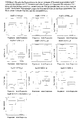
- the classification problem "Classification of the 55 expression records for progression-free survival of the associated patients over 5 years” was formulated and analyzed.
- the expression data set was from the patients described above, of whom 23 had progression within 5 years and had been documented in 32 progression-free survival for 5 years.
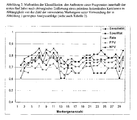
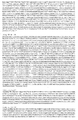
- the marker genes described in the invention were, as in Figure 3 demonstrated with a double-nested bootstrap approach [ Efron (1979) Bootstrap Methods - Another Look at the Jackknifing, Ann. Statist. 7, 1-6 ], certainly.
- the data was randomly partitioned into a test set of two data sets and a training set of 53 data sets.
- the feature relevance was extracted from the data in the inner bootstrap loop by a random forest analysis.
- 10 data sets were randomly drawn in 50 inner loop iterations as an inner training set. These were classified by an SVM trained on the 43 remaining datasets, and the impact of a feature on its contribution to the classification error was determined by: increasing the error by permuting the values of one feature on the 10 test datasets while leaving the values of all other features unchanged; so this feature was weighted more heavily.
- the gene signatures include only features that were relevant to all draws with high frequency and were sorted according to relative frequency.
- LOCV Leave One Out Cross Validation
- Table 1 Marker genes that allow prediction of progression-free survival and progression of the disease within the first five years after primary colorectal cancer (PFS5) removal.
- PFS5 primary colorectal cancer
- the frequency represents the frequency with which this feature made a major contribution to the classification result in the inner bootstrap loops.
Landscapes
- Chemical & Material Sciences (AREA)
- Life Sciences & Earth Sciences (AREA)
- Health & Medical Sciences (AREA)
- Organic Chemistry (AREA)
- Proteomics, Peptides & Aminoacids (AREA)
- Engineering & Computer Science (AREA)
- Immunology (AREA)
- Pathology (AREA)
- Analytical Chemistry (AREA)
- Zoology (AREA)
- Genetics & Genomics (AREA)
- Wood Science & Technology (AREA)
- Physics & Mathematics (AREA)
- Biotechnology (AREA)
- Microbiology (AREA)
- Molecular Biology (AREA)
- Hospice & Palliative Care (AREA)
- Biophysics (AREA)
- Oncology (AREA)
- Biochemistry (AREA)
- Bioinformatics & Cheminformatics (AREA)
- General Engineering & Computer Science (AREA)
- General Health & Medical Sciences (AREA)
- Measuring Or Testing Involving Enzymes Or Micro-Organisms (AREA)
Claims (9)
- Procédé pour la prédiction de la probabilité de la progression d'un carcinome colorectal dans les cinq premières années chez les patients dont la tumeur primaire a été éliminée par voie chirurgicale, comprenant la détermination d'un profil d'expression de gènes d'ARN des gènes marqueurs ME2 et CXCL13, tels que représentés dans SEQ ID NO:1 et 2, à partir d'un échantillon du patient,
comprenant la détermination de gènes marqueurs qui ont une identité d'au moins 90 % avec l'un des gènes marqueurs représentés par SEQ ID NO:1 et 2. - Procédé selon la revendication 1, dans lequel le profil d'expression des gènes marqueurs est comparé à un modèle de référence, qui est indicatif d'une récurrence du carcinome colorectal d'un patient.
- Procédé selon la revendication 2, dans lequel la comparaison des profils d'expression est réalisée par un procédé de reconnaissance de modèle.
- Procédé selon la revendication 3, dans lequel la méthode de reconnaissance de modèle est constituée d'une approche bootstrap à double emboîtement en combinaison avec une analyse par arbre de décision pour la détermination de la pertinence individuelle des gènes.
- Procédé selon l'une des revendications 1 à 4, dans lequel on examine un carcinome colorectal primaire, en particulier des stades UICC-I ou UICC-II.
- Procédé selon la revendication 1, dans lequel on détermine le profil d'expression des gènes marqueurs par une mesure de la quantité de l'ARN gène marqueur.
- Procédé selon la revendication 6, dans lequel on détermine la quantité d'ARN gène marqueur par la technologie des puces à ADN, par une (RT-) PCR, par une hybridation de Northern, par dot-blotting ou par hybridation in situ.
- Utilisation d'un microréseau d'ADNc ou d'oligonucléotides dans un procédé selon les revendications 1 à 6, pour laquelle le microréseau d'ADNc ou d'oligonucléotides contient les séquences d'acides nucléiques SEQ ID NO:1 et 2 ou leurs séquences complémentaires inverses.
- Utilisation d'une trousse dans un procédé selon les revendications 1 à 6, la trousse contenant un microréseau, qui contient les séquences d'acides nucléiques SEQ ID NO:1 et 2 ou leurs séquences complémentaires inverses.
Applications Claiming Priority (2)
| Application Number | Priority Date | Filing Date | Title |
|---|---|---|---|
| DE102006035392A DE102006035392A1 (de) | 2006-11-02 | 2006-11-02 | Prognostische Marker für die Vorhersage des fünfjährigen progressionsfreien Überlebens von Patienten mit Kolonkarzinomen basierend auf Expressionsprofilen von biologischen Proben |
| PCT/DE2007/050004 WO2008061526A2 (fr) | 2006-11-02 | 2007-11-01 | Marqueurs pronostiques pour la prévision de la survie à cinq ans sans progression de patients ayant un carcinome colorectal sur la base de profils d'expression d'échantillons biologiques |
Publications (2)
| Publication Number | Publication Date |
|---|---|
| EP2092086A2 EP2092086A2 (fr) | 2009-08-26 |
| EP2092086B1 true EP2092086B1 (fr) | 2014-09-03 |
Family
ID=39332054
Family Applications (1)
| Application Number | Title | Priority Date | Filing Date |
|---|---|---|---|
| EP07870195.0A Not-in-force EP2092086B1 (fr) | 2006-11-02 | 2007-11-01 | Marqueurs pronostiques pour la prévision de la survie à cinq ans sans progression de patients ayant un carcinome colorectal sur la base de profils d'expression d'échantillons biologiques |
Country Status (3)
| Country | Link |
|---|---|
| EP (1) | EP2092086B1 (fr) |
| DE (2) | DE102006035392A1 (fr) |
| WO (1) | WO2008061526A2 (fr) |
Families Citing this family (1)
| Publication number | Priority date | Publication date | Assignee | Title |
|---|---|---|---|---|
| CN111321221B (zh) * | 2018-12-14 | 2022-09-23 | 中国医学科学院肿瘤医院 | 用于预测直肠癌局部切除手术后复发风险的组合物、微阵列和计算机系统 |
Family Cites Families (19)
| Publication number | Priority date | Publication date | Assignee | Title |
|---|---|---|---|---|
| US5700637A (en) | 1988-05-03 | 1997-12-23 | Isis Innovation Limited | Apparatus and method for analyzing polynucleotide sequences and method of generating oligonucleotide arrays |
| GB8822228D0 (en) | 1988-09-21 | 1988-10-26 | Southern E M | Support-bound oligonucleotides |
| US5143854A (en) | 1989-06-07 | 1992-09-01 | Affymax Technologies N.V. | Large scale photolithographic solid phase synthesis of polypeptides and receptor binding screening thereof |
| US5242974A (en) | 1991-11-22 | 1993-09-07 | Affymax Technologies N.V. | Polymer reversal on solid surfaces |
| US5527681A (en) | 1989-06-07 | 1996-06-18 | Affymax Technologies N.V. | Immobilized molecular synthesis of systematically substituted compounds |
| US5424186A (en) | 1989-06-07 | 1995-06-13 | Affymax Technologies N.V. | Very large scale immobilized polymer synthesis |
| DE3924454A1 (de) | 1989-07-24 | 1991-02-07 | Cornelis P Prof Dr Hollenberg | Die anwendung von dna und dna-technologie fuer die konstruktion von netzwerken zur verwendung in der chip-konstruktion und chip-produktion (dna chips) |
| US5545331A (en) | 1991-04-08 | 1996-08-13 | Romar Technologies, Inc. | Recycle process for removing dissolved heavy metals from water with iron particles |
| IL103674A0 (en) | 1991-11-19 | 1993-04-04 | Houston Advanced Res Center | Method and apparatus for molecule detection |
| US5412087A (en) | 1992-04-24 | 1995-05-02 | Affymax Technologies N.V. | Spatially-addressable immobilization of oligonucleotides and other biological polymers on surfaces |
| US5384261A (en) | 1991-11-22 | 1995-01-24 | Affymax Technologies N.V. | Very large scale immobilized polymer synthesis using mechanically directed flow paths |
| US5554501A (en) | 1992-10-29 | 1996-09-10 | Beckman Instruments, Inc. | Biopolymer synthesis using surface activated biaxially oriented polypropylene |
| US5472672A (en) | 1993-10-22 | 1995-12-05 | The Board Of Trustees Of The Leland Stanford Junior University | Apparatus and method for polymer synthesis using arrays |
| US5429807A (en) | 1993-10-28 | 1995-07-04 | Beckman Instruments, Inc. | Method and apparatus for creating biopolymer arrays on a solid support surface |
| US5571639A (en) | 1994-05-24 | 1996-11-05 | Affymax Technologies N.V. | Computer-aided engineering system for design of sequence arrays and lithographic masks |
| US5556752A (en) | 1994-10-24 | 1996-09-17 | Affymetrix, Inc. | Surface-bound, unimolecular, double-stranded DNA |
| US5599695A (en) | 1995-02-27 | 1997-02-04 | Affymetrix, Inc. | Printing molecular library arrays using deprotection agents solely in the vapor phase |
| US5624711A (en) | 1995-04-27 | 1997-04-29 | Affymax Technologies, N.V. | Derivatization of solid supports and methods for oligomer synthesis |
| US5658734A (en) | 1995-10-17 | 1997-08-19 | International Business Machines Corporation | Process for synthesizing chemical compounds |
-
2006
- 2006-11-02 DE DE102006035392A patent/DE102006035392A1/de not_active Withdrawn
-
2007
- 2007-11-01 WO PCT/DE2007/050004 patent/WO2008061526A2/fr not_active Ceased
- 2007-11-01 EP EP07870195.0A patent/EP2092086B1/fr not_active Not-in-force
- 2007-11-01 DE DE112007003238T patent/DE112007003238A5/de not_active Withdrawn
Non-Patent Citations (2)
| Title |
|---|
| "Medline Search for Gene expression analysis", 2 November 2006 (2006-11-02), XP055062398 * |
| MIKLOS GEORGE L GABOR ET AL: "Microarray reality checks in the context of a complex disease", NATURE BIOTECHNOLOGY, NATURE PUBLISHING GROUP, NEW YORK, NY, US, vol. 22, no. 5, 1 May 2004 (2004-05-01), pages 615 - 621, XP002390544, ISSN: 1087-0156, DOI: 10.1038/NBT965 * |
Also Published As
| Publication number | Publication date |
|---|---|
| WO2008061526A2 (fr) | 2008-05-29 |
| DE102006035392A1 (de) | 2008-10-16 |
| EP2092086A2 (fr) | 2009-08-26 |
| DE112007003238A5 (de) | 2009-10-08 |
| WO2008061526A3 (fr) | 2008-08-28 |
Similar Documents
| Publication | Publication Date | Title |
|---|---|---|
| US20230250484A1 (en) | Gene expression profiles to predict breast cancer outcomes | |
| JP6246845B2 (ja) | 遺伝子発現を用いた前立腺癌の予後を定量化する方法 | |
| US9758829B2 (en) | Molecular malignancy in melanocytic lesions | |
| US7955800B2 (en) | Metastasis-associated gene profiling for identification of tumor tissue, subtyping, and prediction of prognosis of patients | |
| US20110123990A1 (en) | Methods To Predict Clinical Outcome Of Cancer | |
| US20160017438A1 (en) | Methods of treating breast cancer with taxane therapy | |
| AT504702A1 (de) | Set von tumormarkern | |
| EP2092087B1 (fr) | Marqueurs de pronostic pour la classification de carcinomes colorectaux sur la base de profils d'expression d'échantillons biologiques | |
| DE60317606T2 (de) | Marker für Brustkrebsprognose | |
| DE102010043541B4 (de) | Verfahren und Mittel zur Vorhersage der Überlebensdauer beim Pankreaskarzinom durch Analyse von Biomarkern | |
| AU2015227398A1 (en) | Method for using gene expression to determine prognosis of prostate cancer | |
| EP2092085B1 (fr) | Marqueurs pronostiques pour la classification de la survie à trois ans sans progression de patients ayant un carcinome colorectal sur la base de profils d'expression d'échantillons biologiques | |
| EP2092086B1 (fr) | Marqueurs pronostiques pour la prévision de la survie à cinq ans sans progression de patients ayant un carcinome colorectal sur la base de profils d'expression d'échantillons biologiques | |
| KR101263140B1 (ko) | 각화 이상 피부질환의 진단키트 및 그를 이용하는 진단방법 | |
| KR101231544B1 (ko) | 각화 이상 피부질환의 진단키트 및 그를 이용하는 진단방법 | |
| JP2008538284A (ja) | 乳房の腫瘍のレーザーマイクロダイセクションおよびマイクロアレイ解析が、エストロゲン受容体に関係する遺伝子および経路を明らかにする | |
| KR101192923B1 (ko) | 각화 이상 피부질환의 진단방법 | |
| HK40014990A (en) | Methods to predict clinical outcome of cancer | |
| NZ752676A (en) | Gene expression profile algorithm for calculating a recurrence score for a patient with kidney cancer |
Legal Events
| Date | Code | Title | Description |
|---|---|---|---|
| PUAI | Public reference made under article 153(3) epc to a published international application that has entered the european phase |
Free format text: ORIGINAL CODE: 0009012 |
|
| 17P | Request for examination filed |
Effective date: 20090602 |
|
| AK | Designated contracting states |
Kind code of ref document: A2 Designated state(s): AT BE BG CH CY CZ DE DK EE ES FI FR GB GR HU IE IS IT LI LT LU LV MC MT NL PL PT RO SE SI SK TR |
|
| DAX | Request for extension of the european patent (deleted) | ||
| 17Q | First examination report despatched |
Effective date: 20100420 |
|
| GRAP | Despatch of communication of intention to grant a patent |
Free format text: ORIGINAL CODE: EPIDOSNIGR1 |
|
| RAP1 | Party data changed (applicant data changed or rights of an application transferred) |
Owner name: SIGNATURE DIAGNOSTICS AG |
|
| INTG | Intention to grant announced |
Effective date: 20140325 |
|
| GRAS | Grant fee paid |
Free format text: ORIGINAL CODE: EPIDOSNIGR3 |
|
| GRAA | (expected) grant |
Free format text: ORIGINAL CODE: 0009210 |
|
| AK | Designated contracting states |
Kind code of ref document: B1 Designated state(s): AT BE BG CH CY CZ DE DK EE ES FI FR GB GR HU IE IS IT LI LT LU LV MC MT NL PL PT RO SE SI SK TR |
|
| REG | Reference to a national code |
Ref country code: GB Ref legal event code: FG4D Free format text: NOT ENGLISH |
|
| REG | Reference to a national code |
Ref country code: CH Ref legal event code: EP Ref country code: AT Ref legal event code: REF Ref document number: 685645 Country of ref document: AT Kind code of ref document: T Effective date: 20140915 |
|
| REG | Reference to a national code |
Ref country code: IE Ref legal event code: FG4D Free format text: LANGUAGE OF EP DOCUMENT: GERMAN |
|
| REG | Reference to a national code |
Ref country code: DE Ref legal event code: R096 Ref document number: 502007013424 Country of ref document: DE Effective date: 20141016 |
|
| REG | Reference to a national code |
Ref country code: CH Ref legal event code: NV Representative=s name: BRAUNPAT BRAUN EDER AG, CH |
|
| PG25 | Lapsed in a contracting state [announced via postgrant information from national office to epo] |
Ref country code: ES Free format text: LAPSE BECAUSE OF FAILURE TO SUBMIT A TRANSLATION OF THE DESCRIPTION OR TO PAY THE FEE WITHIN THE PRESCRIBED TIME-LIMIT Effective date: 20140903 Ref country code: GR Free format text: LAPSE BECAUSE OF FAILURE TO SUBMIT A TRANSLATION OF THE DESCRIPTION OR TO PAY THE FEE WITHIN THE PRESCRIBED TIME-LIMIT Effective date: 20141204 Ref country code: LT Free format text: LAPSE BECAUSE OF FAILURE TO SUBMIT A TRANSLATION OF THE DESCRIPTION OR TO PAY THE FEE WITHIN THE PRESCRIBED TIME-LIMIT Effective date: 20140903 Ref country code: FI Free format text: LAPSE BECAUSE OF FAILURE TO SUBMIT A TRANSLATION OF THE DESCRIPTION OR TO PAY THE FEE WITHIN THE PRESCRIBED TIME-LIMIT Effective date: 20140903 Ref country code: SE Free format text: LAPSE BECAUSE OF FAILURE TO SUBMIT A TRANSLATION OF THE DESCRIPTION OR TO PAY THE FEE WITHIN THE PRESCRIBED TIME-LIMIT Effective date: 20140903 |
|
| REG | Reference to a national code |
Ref country code: NL Ref legal event code: VDEP Effective date: 20140903 |
|
| REG | Reference to a national code |
Ref country code: LT Ref legal event code: MG4D |
|
| PG25 | Lapsed in a contracting state [announced via postgrant information from national office to epo] |
Ref country code: CY Free format text: LAPSE BECAUSE OF FAILURE TO SUBMIT A TRANSLATION OF THE DESCRIPTION OR TO PAY THE FEE WITHIN THE PRESCRIBED TIME-LIMIT Effective date: 20140903 Ref country code: LV Free format text: LAPSE BECAUSE OF FAILURE TO SUBMIT A TRANSLATION OF THE DESCRIPTION OR TO PAY THE FEE WITHIN THE PRESCRIBED TIME-LIMIT Effective date: 20140903 |
|
| PG25 | Lapsed in a contracting state [announced via postgrant information from national office to epo] |
Ref country code: NL Free format text: LAPSE BECAUSE OF FAILURE TO SUBMIT A TRANSLATION OF THE DESCRIPTION OR TO PAY THE FEE WITHIN THE PRESCRIBED TIME-LIMIT Effective date: 20140903 |
|
| PG25 | Lapsed in a contracting state [announced via postgrant information from national office to epo] |
Ref country code: IS Free format text: LAPSE BECAUSE OF FAILURE TO SUBMIT A TRANSLATION OF THE DESCRIPTION OR TO PAY THE FEE WITHIN THE PRESCRIBED TIME-LIMIT Effective date: 20150103 Ref country code: EE Free format text: LAPSE BECAUSE OF FAILURE TO SUBMIT A TRANSLATION OF THE DESCRIPTION OR TO PAY THE FEE WITHIN THE PRESCRIBED TIME-LIMIT Effective date: 20140903 Ref country code: SK Free format text: LAPSE BECAUSE OF FAILURE TO SUBMIT A TRANSLATION OF THE DESCRIPTION OR TO PAY THE FEE WITHIN THE PRESCRIBED TIME-LIMIT Effective date: 20140903 Ref country code: RO Free format text: LAPSE BECAUSE OF FAILURE TO SUBMIT A TRANSLATION OF THE DESCRIPTION OR TO PAY THE FEE WITHIN THE PRESCRIBED TIME-LIMIT Effective date: 20140903 Ref country code: PT Free format text: LAPSE BECAUSE OF FAILURE TO SUBMIT A TRANSLATION OF THE DESCRIPTION OR TO PAY THE FEE WITHIN THE PRESCRIBED TIME-LIMIT Effective date: 20150105 Ref country code: CZ Free format text: LAPSE BECAUSE OF FAILURE TO SUBMIT A TRANSLATION OF THE DESCRIPTION OR TO PAY THE FEE WITHIN THE PRESCRIBED TIME-LIMIT Effective date: 20140903 |
|
| PG25 | Lapsed in a contracting state [announced via postgrant information from national office to epo] |
Ref country code: PL Free format text: LAPSE BECAUSE OF FAILURE TO SUBMIT A TRANSLATION OF THE DESCRIPTION OR TO PAY THE FEE WITHIN THE PRESCRIBED TIME-LIMIT Effective date: 20140903 |
|
| REG | Reference to a national code |
Ref country code: DE Ref legal event code: R097 Ref document number: 502007013424 Country of ref document: DE |
|
| PG25 | Lapsed in a contracting state [announced via postgrant information from national office to epo] |
Ref country code: MC Free format text: LAPSE BECAUSE OF FAILURE TO SUBMIT A TRANSLATION OF THE DESCRIPTION OR TO PAY THE FEE WITHIN THE PRESCRIBED TIME-LIMIT Effective date: 20140903 Ref country code: LU Free format text: LAPSE BECAUSE OF FAILURE TO SUBMIT A TRANSLATION OF THE DESCRIPTION OR TO PAY THE FEE WITHIN THE PRESCRIBED TIME-LIMIT Effective date: 20141101 |
|
| PLBE | No opposition filed within time limit |
Free format text: ORIGINAL CODE: 0009261 |
|
| STAA | Information on the status of an ep patent application or granted ep patent |
Free format text: STATUS: NO OPPOSITION FILED WITHIN TIME LIMIT |
|
| PG25 | Lapsed in a contracting state [announced via postgrant information from national office to epo] |
Ref country code: DK Free format text: LAPSE BECAUSE OF FAILURE TO SUBMIT A TRANSLATION OF THE DESCRIPTION OR TO PAY THE FEE WITHIN THE PRESCRIBED TIME-LIMIT Effective date: 20140903 |
|
| 26N | No opposition filed |
Effective date: 20150604 |
|
| REG | Reference to a national code |
Ref country code: IE Ref legal event code: MM4A |
|
| PG25 | Lapsed in a contracting state [announced via postgrant information from national office to epo] |
Ref country code: IT Free format text: LAPSE BECAUSE OF FAILURE TO SUBMIT A TRANSLATION OF THE DESCRIPTION OR TO PAY THE FEE WITHIN THE PRESCRIBED TIME-LIMIT Effective date: 20140903 |
|
| REG | Reference to a national code |
Ref country code: FR Ref legal event code: PLFP Year of fee payment: 9 |
|
| PG25 | Lapsed in a contracting state [announced via postgrant information from national office to epo] |
Ref country code: IE Free format text: LAPSE BECAUSE OF NON-PAYMENT OF DUE FEES Effective date: 20141101 |
|
| PG25 | Lapsed in a contracting state [announced via postgrant information from national office to epo] |
Ref country code: SI Free format text: LAPSE BECAUSE OF FAILURE TO SUBMIT A TRANSLATION OF THE DESCRIPTION OR TO PAY THE FEE WITHIN THE PRESCRIBED TIME-LIMIT Effective date: 20140903 |
|
| PG25 | Lapsed in a contracting state [announced via postgrant information from national office to epo] |
Ref country code: BG Free format text: LAPSE BECAUSE OF FAILURE TO SUBMIT A TRANSLATION OF THE DESCRIPTION OR TO PAY THE FEE WITHIN THE PRESCRIBED TIME-LIMIT Effective date: 20140903 |
|
| PG25 | Lapsed in a contracting state [announced via postgrant information from national office to epo] |
Ref country code: HU Free format text: LAPSE BECAUSE OF FAILURE TO SUBMIT A TRANSLATION OF THE DESCRIPTION OR TO PAY THE FEE WITHIN THE PRESCRIBED TIME-LIMIT; INVALID AB INITIO Effective date: 20071101 Ref country code: TR Free format text: LAPSE BECAUSE OF FAILURE TO SUBMIT A TRANSLATION OF THE DESCRIPTION OR TO PAY THE FEE WITHIN THE PRESCRIBED TIME-LIMIT Effective date: 20140903 Ref country code: MT Free format text: LAPSE BECAUSE OF FAILURE TO SUBMIT A TRANSLATION OF THE DESCRIPTION OR TO PAY THE FEE WITHIN THE PRESCRIBED TIME-LIMIT Effective date: 20140903 |
|
| REG | Reference to a national code |
Ref country code: FR Ref legal event code: PLFP Year of fee payment: 10 |
|
| REG | Reference to a national code |
Ref country code: FR Ref legal event code: PLFP Year of fee payment: 11 |
|
| REG | Reference to a national code |
Ref country code: CH Ref legal event code: PCAR Free format text: NEW ADDRESS: HOLEESTRASSE 87, 4054 BASEL (CH) |
|
| REG | Reference to a national code |
Ref country code: FR Ref legal event code: PLFP Year of fee payment: 12 |
|
| PGFP | Annual fee paid to national office [announced via postgrant information from national office to epo] |
Ref country code: FR Payment date: 20201023 Year of fee payment: 14 Ref country code: CH Payment date: 20201015 Year of fee payment: 14 Ref country code: AT Payment date: 20201027 Year of fee payment: 14 Ref country code: DE Payment date: 20201013 Year of fee payment: 14 Ref country code: GB Payment date: 20201029 Year of fee payment: 14 |
|
| PGFP | Annual fee paid to national office [announced via postgrant information from national office to epo] |
Ref country code: BE Payment date: 20201015 Year of fee payment: 14 |
|
| REG | Reference to a national code |
Ref country code: DE Ref legal event code: R119 Ref document number: 502007013424 Country of ref document: DE |
|
| REG | Reference to a national code |
Ref country code: CH Ref legal event code: PL |
|
| REG | Reference to a national code |
Ref country code: AT Ref legal event code: MM01 Ref document number: 685645 Country of ref document: AT Kind code of ref document: T Effective date: 20211101 |
|
| GBPC | Gb: european patent ceased through non-payment of renewal fee |
Effective date: 20211101 |
|
| PG25 | Lapsed in a contracting state [announced via postgrant information from national office to epo] |
Ref country code: BE Free format text: LAPSE BECAUSE OF NON-PAYMENT OF DUE FEES Effective date: 20211130 |
|
| REG | Reference to a national code |
Ref country code: BE Ref legal event code: MM Effective date: 20211130 |
|
| PG25 | Lapsed in a contracting state [announced via postgrant information from national office to epo] |
Ref country code: LI Free format text: LAPSE BECAUSE OF NON-PAYMENT OF DUE FEES Effective date: 20211130 Ref country code: CH Free format text: LAPSE BECAUSE OF NON-PAYMENT OF DUE FEES Effective date: 20211130 Ref country code: AT Free format text: LAPSE BECAUSE OF NON-PAYMENT OF DUE FEES Effective date: 20211101 |
|
| PG25 | Lapsed in a contracting state [announced via postgrant information from national office to epo] |
Ref country code: GB Free format text: LAPSE BECAUSE OF NON-PAYMENT OF DUE FEES Effective date: 20211101 Ref country code: DE Free format text: LAPSE BECAUSE OF NON-PAYMENT OF DUE FEES Effective date: 20220601 |
|
| PG25 | Lapsed in a contracting state [announced via postgrant information from national office to epo] |
Ref country code: FR Free format text: LAPSE BECAUSE OF NON-PAYMENT OF DUE FEES Effective date: 20211130 |