EP2092939A2 - Therapeutische Verwendung von Antikörpern, die die Produktion von Zytokinen induzieren - Google Patents
Therapeutische Verwendung von Antikörpern, die die Produktion von Zytokinen induzieren Download PDFInfo
- Publication number
- EP2092939A2 EP2092939A2 EP09152731A EP09152731A EP2092939A2 EP 2092939 A2 EP2092939 A2 EP 2092939A2 EP 09152731 A EP09152731 A EP 09152731A EP 09152731 A EP09152731 A EP 09152731A EP 2092939 A2 EP2092939 A2 EP 2092939A2
- Authority
- EP
- European Patent Office
- Prior art keywords
- antibody
- antibodies
- cells
- receptor
- use according
- Prior art date
- Legal status (The legal status is an assumption and is not a legal conclusion. Google has not performed a legal analysis and makes no representation as to the accuracy of the status listed.)
- Withdrawn
Links
Images





Classifications
-
- G—PHYSICS
- G01—MEASURING; TESTING
- G01N—INVESTIGATING OR ANALYSING MATERIALS BY DETERMINING THEIR CHEMICAL OR PHYSICAL PROPERTIES
- G01N33/00—Investigating or analysing materials by specific methods not covered by groups G01N1/00 - G01N31/00
- G01N33/48—Biological material, e.g. blood, urine; Haemocytometers
- G01N33/50—Chemical analysis of biological material, e.g. blood, urine; Testing involving biospecific ligand binding methods; Immunological testing
- G01N33/68—Chemical analysis of biological material, e.g. blood, urine; Testing involving biospecific ligand binding methods; Immunological testing involving proteins, peptides or amino acids
- G01N33/6863—Cytokines, i.e. immune system proteins modifying a biological response such as cell growth proliferation or differentiation, e.g. TNF, CNF, GM-CSF, lymphotoxin, MIF or their receptors
- G01N33/6869—Interleukin
-
- C—CHEMISTRY; METALLURGY
- C07—ORGANIC CHEMISTRY
- C07K—PEPTIDES
- C07K16/00—Immunoglobulins [IG], e.g. monoclonal or polyclonal antibodies
- C07K16/18—Immunoglobulins [IG], e.g. monoclonal or polyclonal antibodies against material from animals or humans
- C07K16/28—Immunoglobulins [IG], e.g. monoclonal or polyclonal antibodies against material from animals or humans against receptors, cell surface antigens or cell surface determinants
- C07K16/2803—Immunoglobulins [IG], e.g. monoclonal or polyclonal antibodies against material from animals or humans against receptors, cell surface antigens or cell surface determinants against the immunoglobulin superfamily
- C07K16/2833—Immunoglobulins [IG], e.g. monoclonal or polyclonal antibodies against material from animals or humans against receptors, cell surface antigens or cell surface determinants against the immunoglobulin superfamily against MHC-molecules, e.g. HLA-molecules
-
- C—CHEMISTRY; METALLURGY
- C07—ORGANIC CHEMISTRY
- C07K—PEPTIDES
- C07K16/00—Immunoglobulins [IG], e.g. monoclonal or polyclonal antibodies
- C07K16/18—Immunoglobulins [IG], e.g. monoclonal or polyclonal antibodies against material from animals or humans
- C07K16/28—Immunoglobulins [IG], e.g. monoclonal or polyclonal antibodies against material from animals or humans against receptors, cell surface antigens or cell surface determinants
- C07K16/2887—Immunoglobulins [IG], e.g. monoclonal or polyclonal antibodies against material from animals or humans against receptors, cell surface antigens or cell surface determinants against CD20
-
- C—CHEMISTRY; METALLURGY
- C07—ORGANIC CHEMISTRY
- C07K—PEPTIDES
- C07K16/00—Immunoglobulins [IG], e.g. monoclonal or polyclonal antibodies
- C07K16/18—Immunoglobulins [IG], e.g. monoclonal or polyclonal antibodies against material from animals or humans
- C07K16/34—Immunoglobulins [IG], e.g. monoclonal or polyclonal antibodies against material from animals or humans against blood group antigens
-
- G—PHYSICS
- G01—MEASURING; TESTING
- G01N—INVESTIGATING OR ANALYSING MATERIALS BY DETERMINING THEIR CHEMICAL OR PHYSICAL PROPERTIES
- G01N33/00—Investigating or analysing materials by specific methods not covered by groups G01N1/00 - G01N31/00
- G01N33/48—Biological material, e.g. blood, urine; Haemocytometers
- G01N33/50—Chemical analysis of biological material, e.g. blood, urine; Testing involving biospecific ligand binding methods; Immunological testing
- G01N33/5005—Chemical analysis of biological material, e.g. blood, urine; Testing involving biospecific ligand binding methods; Immunological testing involving human or animal cells
- G01N33/5008—Chemical analysis of biological material, e.g. blood, urine; Testing involving biospecific ligand binding methods; Immunological testing involving human or animal cells for testing or evaluating the effect of chemical or biological compounds, e.g. drugs, cosmetics
- G01N33/5044—Chemical analysis of biological material, e.g. blood, urine; Testing involving biospecific ligand binding methods; Immunological testing involving human or animal cells for testing or evaluating the effect of chemical or biological compounds, e.g. drugs, cosmetics involving specific cell types
- G01N33/5047—Cells of the immune system
-
- G—PHYSICS
- G01—MEASURING; TESTING
- G01N—INVESTIGATING OR ANALYSING MATERIALS BY DETERMINING THEIR CHEMICAL OR PHYSICAL PROPERTIES
- G01N33/00—Investigating or analysing materials by specific methods not covered by groups G01N1/00 - G01N31/00
- G01N33/48—Biological material, e.g. blood, urine; Haemocytometers
- G01N33/50—Chemical analysis of biological material, e.g. blood, urine; Testing involving biospecific ligand binding methods; Immunological testing
- G01N33/68—Chemical analysis of biological material, e.g. blood, urine; Testing involving biospecific ligand binding methods; Immunological testing involving proteins, peptides or amino acids
- G01N33/6863—Cytokines, i.e. immune system proteins modifying a biological response such as cell growth proliferation or differentiation, e.g. TNF, CNF, GM-CSF, lymphotoxin, MIF or their receptors
-
- C—CHEMISTRY; METALLURGY
- C07—ORGANIC CHEMISTRY
- C07K—PEPTIDES
- C07K2317/00—Immunoglobulins specific features
- C07K2317/10—Immunoglobulins specific features characterized by their source of isolation or production
- C07K2317/14—Specific host cells or culture conditions, e.g. components, pH or temperature
-
- C—CHEMISTRY; METALLURGY
- C07—ORGANIC CHEMISTRY
- C07K—PEPTIDES
- C07K2317/00—Immunoglobulins specific features
- C07K2317/70—Immunoglobulins specific features characterized by effect upon binding to a cell or to an antigen
- C07K2317/73—Inducing cell death, e.g. apoptosis, necrosis or inhibition of cell proliferation
- C07K2317/732—Antibody-dependent cellular cytotoxicity [ADCC]
-
- G—PHYSICS
- G01—MEASURING; TESTING
- G01N—INVESTIGATING OR ANALYSING MATERIALS BY DETERMINING THEIR CHEMICAL OR PHYSICAL PROPERTIES
- G01N2333/00—Assays involving biological materials from specific organisms or of a specific nature
- G01N2333/435—Assays involving biological materials from specific organisms or of a specific nature from animals; from humans
- G01N2333/705—Assays involving receptors, cell surface antigens or cell surface determinants
- G01N2333/70503—Immunoglobulin superfamily, e.g. VCAMs, PECAM, LFA-3
- G01N2333/70535—Fc-receptors, e.g. CD16, CD32, CD64 (CD2314/705F)
Definitions
- the present invention relates to a method for measuring the activation of an effector cell belonging to the immune system or modified in vitro by a monoclonal antibody (AcMo) or polyclonal, characterized in that it comprises a contacting of cells expressing the receptor CD16 in a reaction medium in the presence of the antibody and antigen of said antibody and measuring the amount of at least one cytokine produced by the cell expressing the CD16 receptor.
- AcMo monoclonal antibody
- the invention also relates to the selection of antibodies having the characteristic of inducing the expression of cytokines and interleukins, in particular IFN ⁇ or IL2.
- the biological activity of certain immunoglobulins G is dependent on the structure of the oligosaccharides present on the molecule, and in particular on its part Fc.
- the IgG molecules of all human and murine subclasses have an N-oligosaccharide attached to the CH 2 domain of each heavy chain (at residue Asn 297 for human IgG). The influence of this glycannic residue on the ability of the antibody to interact with effector molecules (Fc receptors and complement) has has been demonstrated.
- the invention therefore proposes the use of the selected antibodies by a CD16 jurkat test by measurement of secreted IL2 or other cytokines, which makes it possible to guarantee the biological activity of said antibodies for a therapeutic use.
- the present invention relates to a method for measuring the activation of an effector cell belonging to the immune system, transformed or not, by a monoclonal antibody (AcMo) or polyclonal, characterized in that it comprises contacting cells expressing the CD16 receptor in a reaction medium in the presence of the antibody and antigen of said antibody and measuring the amount of at least one cytokine produced by the cell expressing the CD16 receptor.
- AcMo monoclonal antibody
- polyclonal characterized in that it comprises contacting cells expressing the CD16 receptor in a reaction medium in the presence of the antibody and antigen of said antibody and measuring the amount of at least one cytokine produced by the cell expressing the CD16 receptor.
- transformed cell means a genetically modified cell so as to express a receptor, in particular the CD16 receptor.
- a Jurkat line transfected with an expression vector encoding the CD16 receptor is used as the effector cell. This line is particularly advantageous because it is immortalized and develops indefinitely in cultural environments.
- cytokines that can be quantified at least one cytokine selected from IL-1, IL-2, IL-3, IL-4, IL-5, IL-6, IL-7, IL-8, IL-9 , IL-10, ...
- Interleukin IL-2 may be favorably selected.
- the level of cytokine produced is a marker for activation or inhibition of the effector cells.
- the level of secreted IL2 interleukin reflects the quality of the antibody bound by the CD16 receptor as to its integrity (FC function) and its antigen binding efficiency (antigenic site).
- FC function integrity
- antigen binding efficiency antigenic site
- the invention in another aspect, relates to a method for evaluating the efficacy of a monoclonal or polyclonal antibody, characterized in that it comprises an effector cell contact effector of the immune system, transformed or otherwise, expressing the CD16 receptor in a reaction medium in the presence of an antibody and the antigen of said antibody and a measurement of the amount of at least one cytokine produced by the cell expressing the CD16 receptor.
- This method is particularly suitable for evaluating the efficacy of a monoclonal or polyclonal antibody of anti-Rh D specificity of the human red blood cell.
- the invention in another aspect, relates to a method for evaluating the ability of a cell to produce an effective monoclonal antibody, characterized in that it comprises an effector cell contact effector of the immune system, transformed or otherwise, expressing the CD16 receptor in a reaction medium in the presence of an antibody and the antigen of said antibody and a measurement of the amount of at least one cytokine produced by the cell expressing the CD16 receptor.
- This method can be carried out for cells used for the production of therapeutic antibodies, such as CHO, YB2 / 0, human lymphoblastoid cells, insect cells and murine myeloma cells.
- This method can also be applied to the evaluation of the production of AcMO by transgenic plants or transgenic mammals.
- the invention is directed to a method for evaluating the efficiency and integrity of polyclonal antibodies after a step or a plurality of purification steps, characterized by comprising effector cell contacting of the system. immune, transformed or not, expressing the CD16 receptor in a reaction medium in the presence of the purified antibody and the antigen of said antibody and measuring the amount of at least one cytokine produced by the cell expressing the CD16 receptor.
- the invention also relates to the use of the method described above for selecting antibodies effective for a therapeutic treatment.
- the selected antibody may be an anti-D. It can also be used for the treatment of autoimmune diseases, inflammatory diseases, cancers and infections with pathogens.
- the invention also relates to a kit for evaluating the biological activity of an antibody comprising means and necessary reagents and effector cells expressing the CD16 receptor for carrying out the method described above allowing the assay of the at least one cytokine, especially IL-2, IFN and TNF.
- this test may also include an ADCC test.
- the invention relates to a method for selecting a chimeric monoclonal antibody humanized or optimized human characterized in that it comprises contacting cells expressing the CD16 receptor in a reaction medium in the presence of the antibody and antigen of said antibody and measuring the amount of at least one cytokine produced by the cell expressing the CD16 receptor.
- the antibody of the invention is capable of inducing the secretion of at least one cytokine by a leukocyte cell, in particular of the family of NKs (natural killer) or by cells of the monocyte group. -macrophages.
- a Jurkat line transfected with an expression vector coding for the CD16 receptor is used as the effector cell.
- This line is particularly advantageous because it is immortalized and develops indefinitely in cultural environments.
- the level of interleukin IL2 secreted reflects the quality of the antibody bound by the CD16 receptor as to its integrity (FC function) and its antigen binding efficiency (antigenic site).
- the optimized antibody can be prepared after being purified and / or modified ex vivo by altering the glycan structure of the Fc fragment.
- any chemical, chromatographic or enzymatic means suitable for modifying the glycannic structure of the antibodies can be used.
- the antibody may be produced by cells of rat myeloma lineages, particularly YB2 / 0 and its derivatives.
- Other lines can be selected for their properties to produce the antibodies defined above.
- human lymphoblastoid cells, insect cells and murine myeloma cells may be tested.
- the selection may also be applied to the evaluation of antibodies produced by transgenic plants or transgenic mammals.
- the production in CHO serves as a reference (CHO being used for the production of drug antibodies) to compare and select the production systems leading to the antibodies according to the invention.
- the general glycannic structure of the antibody is of biantennate type, with short chains, low sialylation, mannoses and GlcNAc of non-intercalary terminal attachment point, and low fucosylation.
- the level of intermediate GlcNac is non-zero.
- These compositions can be obtained from rat myeloma lines, for example with the YB2 / 0 line.
- the invention relates to the use of an antibody described above for the preparation of a medicament for inducing the secretion of at least one cytokine by an effector cell belonging to the immune system, said antibody being characterized in that it is obtainable by a selection process comprising contacting effector cells of the immune system expressing the CD16 receptor, transformed or otherwise, in a reaction medium of presence of the antibody to be tested and the antigen of said antibody and a measurement of the amount of at least one cytokine produced by the cell expressing the CD16 receptor.
- a Jurkat line transfected with an expression vector coding for the CD16 receptor is used as the effector cell.
- the cytokines released are interleukins, interferons and tissue necrosis factors (TNFs).
- TNFs tissue necrosis factors
- the selected antibody has the ability to induce the secretion of at least one cytokine selected from IL-1, IL-2, IL-3, IL-4, IL-5, IL-6, IL-7, IL-8, IL-9, IL-10, ... TNF ⁇ , TGF ⁇ , IP10 and IFN ⁇ by the effector cells of the immune system expressing the CD16 receptor.
- the selected antibody has the ability to induce secretion of IL-2 by effector cells of the immune system expressing the CD16 receptor.
- the level of interleukin IL2 secreted reflects the quality of the antibody bound by the CD16 receptor as to its integrity (FC function) and its antigen binding efficiency (antigenic site). The measurement of the IL2 level is correlated with an activity of the ADCC type.
- the selection can be done on antibodies produced by cells commonly used for the production of therapeutic antibodies, such as CHO, YB2 / 0, human lymphoblastoid cells, insect cells and murine myeloma cells. Selection may also be applied to the evaluation of antibodies produced by transgenic plants or transgenic mammals.
- the invention relates to the use of an antibody producing a rat myeloma line, for example with the YB2 / 0 line for the preparation of a medicament for inducing the secretion of at least one cytokine by an effector cell belonging to the immune system.
- the invention relates to the use of an antibody having a glycan structure of biantenné type, with short chains, a low sialylation, mannoses and GlcNAc of the non-intercalary terminal attachment point, and a weak fucosylation for the preparation of a medicament for inducing the secretion of at least one cytokine by an effector cell belonging to the immune system.
- the level of intermediate GlcNac is non-zero.
- antibody compositions having a content greater than 60%, preferably greater than 80% for the forms G0 + G1 + G0F + G1F, it being understood that the forms G0F + G1F are less than 50%, of preferably less than 30%.
- the selected antibody is capable of inducing the secretion of at least one cytokine by a leukocyte cell, in particular of the family of NKs (natural killer) or by cells of the monocyte-macrophage group.
- the invention also relates to the use of the above-described selected antibodies specific for an antigen that originates from a pathological cell or organism that is pathogenic to humans.
- This antibody is a monoclonal or polyclonal antibody.
- the antibody is a monoclonal or polyclonal antibody of anti-Rh specificity of the human red blood cell.
- the antibody according to the invention may also be an antibody directed against pathogenic viruses for humans, against malignant tumor antigens or against the antigens of a bacterium or pathogenic parasite for humans.
- the selected antibody shows an increase of greater than 100%, 250%, 500%, or 1000% of the IL-2 release rate compared to the control in the absence of antibodies or in the presence of a given antibody as negative reference.
- the methods described above may optionally be carried out in the presence of human immunoglobulins (IVIg).
- IVIg human immunoglobulins
- homologous antibodies produced in CHO, or commercially available reference antibodies can be used.
- the invention relates to the use of said antibodies selected as a therapeutic support in human medicine, in particular for the manufacture of a medicament for the treatment of autoimmune diseases, inflammatory diseases, cancers and infections with pathogens.
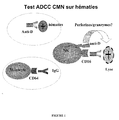
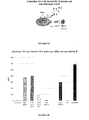
- Figure 1 Description of the ADCC CMN test.
- Mononuclear cells in the presence of tegelin (IVIg) are incubated with anti-Rhesus D antibodies and Rhesus + (target) red cells. After one night at 37 ° C., the lysis of the red blood cells is measured by measuring the hemoglobin released in the reaction medium.
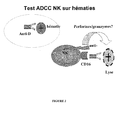
- Purified NK cells are incubated with anti-Rhesus D antibodies and Rhesus + (target) RBCs. After one night at 37 ° C., the lysis of the red blood cells is measured by measuring the hemoglobin released in the reaction medium.
- Figure 4 Description of the Jurkat CD16 test.
- Jurkat CD16 cells are mixed with different anti-D antibodies in the presence of Rhesus + and PMA. After a night of incubation, the release of IL-2 in the supernatant is quantified by ELISA.
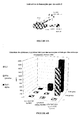
- FIG. 5 Jurkat CD16 test results.
- ADCC-NK positive antibodies induce secretion of IL2 in the presence of Jurkat CD16 and their target.
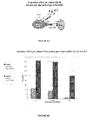
- Figure 6 Release of cytokine (IL-2, IFN and TNF) of leukocytes induced by antibodies in the presence of their target.
- FIG. 7 Cytokine release (IFN, TNF) of NK cells induced by antibodies in the presence of their target (LFB-R297-RBC) -13/06/02
- FIG. 8 Cytokine release (IFN, TNF) of NK cells induced by antibodies in the presence of their target (LFB-R297-RBC) -13/08/02
- NK cells Purified NK cells were mixed with different anti-D antibodies in the presence of rhesus + cells. After a night of incubation, the release of TNF ⁇ and IFN ⁇ in the supernatant was quantified by ELISA.
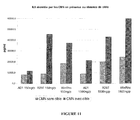
- Figure 9 IL2 release of Jurkat CD16 induced by an anti-CD20
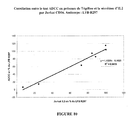
- FIG. 11 ADCC correlation line teg 500 at 7.5ng / well and Jurkat IL2
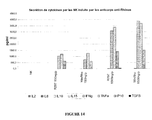
- FIG. 13 Induction of TNF alpha, IL-6 and TGF beta secretion by mononuclear cells
- Figure 14 Induction of cytokine secretion by polynuclear cells
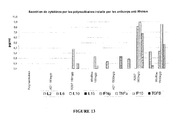
- Figure 15 Induction of the secretion of IFN gamma, TNF alpha and IP10 by NK.
- Example 2 In vitro correlation between ADCC and IL-2 release of Jurkat CD16.
- Mab DF5-EBV was produced by human B-cells obtained from a D-negative immunized donor and immortalized by transformation with EBV. This antibody has been used as a negative control since it has been shown to be unable to clear Rh-positive red blood cells from circulation in a clinical trial.
- the monoclonal antibody (Mab) DF5-YB2 / 0 was obtained by expressing the primary sequence of EBV-DF5 in the YB2 / 0 line.
- Monoclonal antibody R297 and other recombinant antibodies were also expressed in YB2 / 0.
- IL2 induces activation of T cells and NK cells up to stimulation of cell proliferation.
- IFN stimulates CTL activity and can enhance macrophage activity.
- TNF stimulates the proliferation of macrophages and lymphocytes infiltrating tumors.
- IL-1Ra is a cytokine that competes with IL1 at its receptor and thus exerts an anti-inflammatory effect.
- Example 5 Activation of dendritic cells and production of IL10
- IL10 is a molecule inhibiting the activation of different effector cells and the production of cytokines.
- Cytokine syntheses are dependent on the presence of the target. There is little difference in the profiles of R297 and the polyclonal antibody. AD1 is very often noninducer of cytokine secretion.
- Example 7 Optimized chimeric anti-CD 20 and anti-HLA DR antibodies produced in YB2 / 0
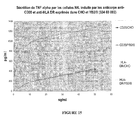
- Anti-CD20 chimeric anti-CD20 antibody transfected into YB2 / 0 is compared to a commercial anti-CD20 antibody produced in CHO (Rituxan).
- Anti-HLA DR the same sequence coding for the chimeric anti-HLA DR antibody is transfected into CHO (B11) or YB2 / 0 (4B7).
- Target cells Raji cells expressing on their surface the CD20 and HLA-DR antigen Effector cell : human NK cells purified by negative selection from human blood bag.
- the anti-CD20 antibody it is necessary to induce 300 ⁇ g / ml of IFN gamma less than 10 ng / ml of the antibody produced in YB2 / 0 and 200 ng / ml of the antibody produced in CHO (FIG. 17).
Landscapes
- Health & Medical Sciences (AREA)
- Life Sciences & Earth Sciences (AREA)
- Immunology (AREA)
- Chemical & Material Sciences (AREA)
- Molecular Biology (AREA)
- Engineering & Computer Science (AREA)
- Biomedical Technology (AREA)
- Hematology (AREA)
- Urology & Nephrology (AREA)
- General Health & Medical Sciences (AREA)
- Biochemistry (AREA)
- Medicinal Chemistry (AREA)
- Organic Chemistry (AREA)
- Cell Biology (AREA)
- Proteomics, Peptides & Aminoacids (AREA)
- Genetics & Genomics (AREA)
- General Physics & Mathematics (AREA)
- Pathology (AREA)
- Biotechnology (AREA)
- Analytical Chemistry (AREA)
- Microbiology (AREA)
- Biophysics (AREA)
- Food Science & Technology (AREA)
- Physics & Mathematics (AREA)
- Bioinformatics & Cheminformatics (AREA)
- Toxicology (AREA)
- Tropical Medicine & Parasitology (AREA)
- Preparation Of Compounds By Using Micro-Organisms (AREA)
- Medicines Containing Antibodies Or Antigens For Use As Internal Diagnostic Agents (AREA)
- Peptides Or Proteins (AREA)
- Measuring Or Testing Involving Enzymes Or Micro-Organisms (AREA)
Applications Claiming Priority (3)
| Application Number | Priority Date | Filing Date | Title |
|---|---|---|---|
| FR0211416A FR2844521B1 (fr) | 2002-09-13 | 2002-09-13 | Mesure de la production de cytokines comme marqueur d'activation de cellules effectrices |
| FR0211415A FR2844520B1 (fr) | 2002-09-13 | 2002-09-13 | Utilisation d'un anticorps induisant la secretion de cytokines en therapie |
| EP03773780A EP1537419B1 (de) | 2002-09-13 | 2003-09-15 | Test für CD16-vermittelte ADCC Effektivität von monoklonalen oder polklonalen Antikörpern |
Related Parent Applications (2)
| Application Number | Title | Priority Date | Filing Date |
|---|---|---|---|
| EP03773780.6 Division | 2003-09-15 | ||
| EP03773780A Division EP1537419B1 (de) | 2002-09-13 | 2003-09-15 | Test für CD16-vermittelte ADCC Effektivität von monoklonalen oder polklonalen Antikörpern |
Publications (2)
| Publication Number | Publication Date |
|---|---|
| EP2092939A2 true EP2092939A2 (de) | 2009-08-26 |
| EP2092939A3 EP2092939A3 (de) | 2011-12-21 |
Family
ID=31995630
Family Applications (2)
| Application Number | Title | Priority Date | Filing Date |
|---|---|---|---|
| EP09152731A Withdrawn EP2092939A3 (de) | 2002-09-13 | 2003-09-15 | Therapeutische Verwendung von Antikörpern, die die Produktion von Zytokinen induzieren |
| EP03773780A Expired - Lifetime EP1537419B1 (de) | 2002-09-13 | 2003-09-15 | Test für CD16-vermittelte ADCC Effektivität von monoklonalen oder polklonalen Antikörpern |
Family Applications After (1)
| Application Number | Title | Priority Date | Filing Date |
|---|---|---|---|
| EP03773780A Expired - Lifetime EP1537419B1 (de) | 2002-09-13 | 2003-09-15 | Test für CD16-vermittelte ADCC Effektivität von monoklonalen oder polklonalen Antikörpern |
Country Status (9)
| Country | Link |
|---|---|
| US (2) | US7595165B2 (de) |
| EP (2) | EP2092939A3 (de) |
| JP (1) | JP4368800B2 (de) |
| AT (1) | ATE511654T1 (de) |
| AU (1) | AU2003282161B2 (de) |
| CA (1) | CA2498315C (de) |
| DK (1) | DK1537419T3 (de) |
| IL (1) | IL167385A (de) |
| WO (1) | WO2004024768A2 (de) |
Families Citing this family (7)
| Publication number | Priority date | Publication date | Assignee | Title |
|---|---|---|---|---|
| WO2004024768A2 (fr) * | 2002-09-13 | 2004-03-25 | Laboratoire Francais Du Fractionnement Et Des Biotechnologies | Anticorps induisant la production de cytokines |
| FR2879204B1 (fr) | 2004-12-15 | 2007-02-16 | Lab Francais Du Fractionnement | Anticorps cytotoxique dirige contre les proliferations hematopoietiques lymphoides de type b. |
| FR2895086B1 (fr) * | 2005-12-16 | 2012-10-05 | Lab Francais Du Fractionnement | Potentialisation de l'apoptose par des anticorps monoclonaux |
| DE602007013068D1 (de) * | 2006-09-13 | 2011-04-21 | Glycode | Verfahren zur untersuchung der reaktion auf eine behandlung mit einem monoklonalen antikörper |
| FR2968561B1 (fr) † | 2010-12-13 | 2013-08-09 | Lfb Biotechnologies | Utilisation d'un anticorps dirige contre une proteine membranaire |
| FR3064007A1 (fr) | 2017-03-20 | 2018-09-21 | Laboratoire Francais Du Fractionnement Et Des Biotechnologies | Anticorps pour le traitement de cancers |
| JP7649244B2 (ja) * | 2019-02-14 | 2025-03-19 | リサーチ インスティテュート アット ネイションワイド チルドレンズ ホスピタル | 免疫細胞の効力をアッセイするための刺激剤の使用 |
Family Cites Families (4)
| Publication number | Priority date | Publication date | Assignee | Title |
|---|---|---|---|---|
| WO2000059540A1 (en) * | 1999-04-05 | 2000-10-12 | Biocrystal Ltd. | Assay kits and methods for immune complex-mediated activation involving shed antigens |
| FR2807767B1 (fr) | 2000-04-12 | 2005-01-14 | Lab Francais Du Fractionnement | Anticorps monoclonaux anti-d |
| CA2463879C (en) * | 2001-10-25 | 2012-12-04 | Genentech, Inc. | Glycoprotein compositions |
| WO2004024768A2 (fr) * | 2002-09-13 | 2004-03-25 | Laboratoire Francais Du Fractionnement Et Des Biotechnologies | Anticorps induisant la production de cytokines |
-
2003
- 2003-09-15 WO PCT/FR2003/002715 patent/WO2004024768A2/fr not_active Ceased
- 2003-09-15 AU AU2003282161A patent/AU2003282161B2/en not_active Ceased
- 2003-09-15 US US10/527,665 patent/US7595165B2/en not_active Expired - Fee Related
- 2003-09-15 JP JP2004535611A patent/JP4368800B2/ja not_active Expired - Fee Related
- 2003-09-15 CA CA2498315A patent/CA2498315C/fr not_active Expired - Fee Related
- 2003-09-15 DK DK03773780.6T patent/DK1537419T3/da active
- 2003-09-15 AT AT03773780T patent/ATE511654T1/de active
- 2003-09-15 EP EP09152731A patent/EP2092939A3/de not_active Withdrawn
- 2003-09-15 EP EP03773780A patent/EP1537419B1/de not_active Expired - Lifetime
-
2005
- 2005-03-10 IL IL167385A patent/IL167385A/en active IP Right Grant
-
2009
- 2009-09-28 US US12/585,900 patent/US20100323368A1/en not_active Abandoned
Non-Patent Citations (4)
| Title |
|---|
| JEFFERIS, R. ET AL.: "A comparative study of the N-linked oligosaccharides structure of human IgG Subclass proteins", BIOCHEM. J., vol. 268, 1990, pages 529 - 537 |
| LEATHERBARROW, R.J. ET AL.: "Effector functions of monoclonal aglycosylated mouse IgG2a ; binding and activation of complement component C1 and interaction with human Fc receptor", MOLEC. IMMUN., vol. 22, 1985, pages 407 - 415 |
| LUND, J. ET AL.: "A protein structural change in aglycosylated gG3 correlates with loss of hu Fc RI and hu FcyRlll binding and/or activation", MOLEC. IMMUN., vol. 27, 1990, pages 1145 - 1153 |
| PAREKH, R.B. ET AL.: "Asssociation of rheumatoid arthritis and primary osteoarthritis with changes in the glycosylation pattern of total serum IgG.", NATURE, vol. 316, 1985, pages 452 - 457 |
Also Published As
| Publication number | Publication date |
|---|---|
| EP2092939A3 (de) | 2011-12-21 |
| US20050249732A1 (en) | 2005-11-10 |
| CA2498315A1 (fr) | 2004-03-25 |
| JP4368800B2 (ja) | 2009-11-18 |
| AU2003282161A1 (en) | 2004-04-30 |
| CA2498315C (fr) | 2013-01-29 |
| WO2004024768A3 (fr) | 2004-09-30 |
| DK1537419T3 (da) | 2011-06-27 |
| EP1537419B1 (de) | 2011-06-01 |
| JP2006517087A (ja) | 2006-07-20 |
| US20100323368A1 (en) | 2010-12-23 |
| AU2003282161B2 (en) | 2010-06-24 |
| ATE511654T1 (de) | 2011-06-15 |
| IL167385A (en) | 2012-08-30 |
| US7595165B2 (en) | 2009-09-29 |
| WO2004024768A2 (fr) | 2004-03-25 |
| EP1537419A2 (de) | 2005-06-08 |
Similar Documents
| Publication | Publication Date | Title |
|---|---|---|
| EP1537147B1 (de) | Adcc-vermittelnde antikörper gegen hla-dr, die die produktion von zytokinen induzieren | |
| CA2498383C (fr) | Traitement des pathologies echappant a la reponse immune par des anticorps optimises | |
| EP3159008B1 (de) | Verwendung von antikörpern mit optimierter adcc-aktivität zur behandlung von schwach ansprechenden patienten | |
| EP1824887B1 (de) | Gegen hematopoietische typ-b-lymphoidproliferationen gerichteter zytotoxischer antikörper | |
| EP2931749B1 (de) | Verwendung monoklonaler antikörper zur behandlung von entzündungen und bakteriellen infektionen | |
| CA2542881A1 (fr) | Anticorps possedant un ratio taux de fucose / taux de galactose optimise | |
| WO2003084570A1 (en) | DRUG CONTAINING ANTIBODY COMPOSITION APPROPRIATE FOR PATIENT SUFFERING FROM FcϜRIIIa POLYMORPHISM | |
| TW201512396A (zh) | 控制蛋白質中岩藻糖基化程度方法 | |
| US20100323368A1 (en) | Cytokine production-inducing antibody | |
| FR2844521A1 (fr) | Mesure de la production de cytokines comme marqueur d'activation de cellules effectrices | |
| FR2861078A1 (fr) | NOUVELLES IgG3 UTILES POUR STIMULER LA PHAGOCYTOSE | |
| ES2362652T3 (es) | Procedimiento de evaluación de la eficacia adcc mediada por el cd16 de anticuerpos monoclonales o policlonales. |
Legal Events
| Date | Code | Title | Description |
|---|---|---|---|
| PUAI | Public reference made under article 153(3) epc to a published international application that has entered the european phase |
Free format text: ORIGINAL CODE: 0009012 |
|
| AC | Divisional application: reference to earlier application |
Ref document number: 1537419 Country of ref document: EP Kind code of ref document: P |
|
| AK | Designated contracting states |
Kind code of ref document: A2 Designated state(s): AT BE BG CH CY CZ DE DK EE ES FI FR GB GR HU IE IT LI LU MC NL PT RO SE SI SK TR |
|
| PUAL | Search report despatched |
Free format text: ORIGINAL CODE: 0009013 |
|
| AK | Designated contracting states |
Kind code of ref document: A3 Designated state(s): AT BE BG CH CY CZ DE DK EE ES FI FR GB GR HU IE IT LI LU MC NL PT RO SE SI SK TR |
|
| RIC1 | Information provided on ipc code assigned before grant |
Ipc: A61K 39/395 20060101ALI20111114BHEP Ipc: G01N 33/68 20060101AFI20111114BHEP Ipc: C07K 16/28 20060101ALI20111114BHEP Ipc: C12Q 1/02 20060101ALI20111114BHEP Ipc: G01N 33/53 20060101ALI20111114BHEP Ipc: G01N 33/80 20060101ALI20111114BHEP |
|
| 17P | Request for examination filed |
Effective date: 20120614 |
|
| AKX | Designation fees paid |
Designated state(s): AT BE BG CH CY CZ DE DK EE ES FI FR GB GR HU IE IT LI LU MC NL PT RO SE SI SK TR |
|
| STAA | Information on the status of an ep patent application or granted ep patent |
Free format text: STATUS: THE APPLICATION HAS BEEN WITHDRAWN |
|
| 18W | Application withdrawn |
Effective date: 20130114 |