EP2093946A1 - Ein verfahren, system zum verarbeiten von sitzung und nachricht - Google Patents
Ein verfahren, system zum verarbeiten von sitzung und nachricht Download PDFInfo
- Publication number
- EP2093946A1 EP2093946A1 EP07846142A EP07846142A EP2093946A1 EP 2093946 A1 EP2093946 A1 EP 2093946A1 EP 07846142 A EP07846142 A EP 07846142A EP 07846142 A EP07846142 A EP 07846142A EP 2093946 A1 EP2093946 A1 EP 2093946A1
- Authority
- EP
- European Patent Office
- Prior art keywords
- recipient
- session
- message
- initiator
- service server
- Prior art date
- Legal status (The legal status is an assumption and is not a legal conclusion. Google has not performed a legal analysis and makes no representation as to the accuracy of the status listed.)
- Withdrawn
Links
Images





Classifications
-
- H—ELECTRICITY
- H04—ELECTRIC COMMUNICATION TECHNIQUE
- H04L—TRANSMISSION OF DIGITAL INFORMATION, e.g. TELEGRAPHIC COMMUNICATION
- H04L65/00—Network arrangements, protocols or services for supporting real-time applications in data packet communication
- H04L65/1066—Session management
- H04L65/1069—Session establishment or de-establishment
-
- H—ELECTRICITY
- H04—ELECTRIC COMMUNICATION TECHNIQUE
- H04L—TRANSMISSION OF DIGITAL INFORMATION, e.g. TELEGRAPHIC COMMUNICATION
- H04L12/00—Data switching networks
- H04L12/02—Details
- H04L12/16—Arrangements for providing special services to substations
- H04L12/18—Arrangements for providing special services to substations for broadcast or conference, e.g. multicast
- H04L12/1813—Arrangements for providing special services to substations for broadcast or conference, e.g. multicast for computer conferences, e.g. chat rooms
- H04L12/1818—Conference organisation arrangements, e.g. handling schedules, setting up parameters needed by nodes to attend a conference, booking network resources, notifying involved parties
-
- H—ELECTRICITY
- H04—ELECTRIC COMMUNICATION TECHNIQUE
- H04L—TRANSMISSION OF DIGITAL INFORMATION, e.g. TELEGRAPHIC COMMUNICATION
- H04L51/00—User-to-user messaging in packet-switching networks, transmitted according to store-and-forward or real-time protocols, e.g. e-mail
- H04L51/21—Monitoring or handling of messages
- H04L51/214—Monitoring or handling of messages using selective forwarding
-
- H—ELECTRICITY
- H04—ELECTRIC COMMUNICATION TECHNIQUE
- H04L—TRANSMISSION OF DIGITAL INFORMATION, e.g. TELEGRAPHIC COMMUNICATION
- H04L65/00—Network arrangements, protocols or services for supporting real-time applications in data packet communication
- H04L65/40—Support for services or applications
- H04L65/4061—Push-to services, e.g. push-to-talk or push-to-video
-
- H—ELECTRICITY
- H04—ELECTRIC COMMUNICATION TECHNIQUE
- H04L—TRANSMISSION OF DIGITAL INFORMATION, e.g. TELEGRAPHIC COMMUNICATION
- H04L67/00—Network arrangements or protocols for supporting network services or applications
- H04L67/14—Session management
-
- H—ELECTRICITY
- H04—ELECTRIC COMMUNICATION TECHNIQUE
- H04L—TRANSMISSION OF DIGITAL INFORMATION, e.g. TELEGRAPHIC COMMUNICATION
- H04L65/00—Network arrangements, protocols or services for supporting real-time applications in data packet communication
- H04L65/1066—Session management
- H04L65/1101—Session protocols
- H04L65/1104—Session initiation protocol [SIP]
Definitions
- the present invention relates to network session technologies, and in particular, to a method and system for processing sessions and messages when the recipient is offline.
- the session means that two or more participants transfer messages or continuous media information by creating a session connection.
- the session initiator sends a session invitation to the recipient in a session process based on the related art, the recipient tends to miss the session invitation when the recipient is offline.
- a Push to talk over Cellular (PoC) service is currently available, and provides a PoC Box when the recipient is offline.
- the service server of the recipient triggers the PoC Box to join the session in place of the recipient and record the session content.
- the recipient may obtain the session content from the PoC Box, and know the information on the session inviter who originates the session according to the obtained session content.
- the inventor finds at least the following problems in the related art:
- the PoC Box records no session information when the initiator does not send the session content to the PoC Box. Consequently, the recipient is unable to know the session invitation information.
- the session invitation information may carry an initiator ID, session initiation time, and so on.
- the recipient does not know the information on being invited by a session request through the session content stored in the PoC Box unless the recipient logs on.
- the discrete message when the initiator sends a discrete message to the recipient and when the recipient is offline, the discrete message is usually stored as an offline message through an offline function entity, and the offline message is sent to the recipient after the recipient logs on.
- the recipient does not know the discrete message sent by the initiator to the recipient when the recipient keeps offline.
- the related art provides no session processing method which enables the recipient to know the session invitation information received in the offline period even when the initiator provides no session content.
- the related art provides no message processing method which enables the recipient to know the discrete message sent by the initiator to the recipient even when the recipient keeps offline.
- the present invention provides a method and system for processing sessions and messages to enable the recipient to know the session invitation information received in the offline period even when the initiator provides no session content.
- an IWF entity sends the session request or the discrete message to the recipient by using the underway message service of the recipient when detecting that the recipient is offline. Therefore, the recipient knows the session request or the discrete message sent by the initiator to the recipient in the offline period even when the initiator provides no session content.
- a recipient service server sends the session request or the discrete message sent by the initiator to an online authorized user according to the authorized user information set by the recipient when detecting that the recipient is offline. Therefore, the recipient knows the session request sent by the initiator to the recipient in the offline period through the set authorized user.
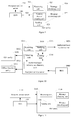
- Figure 1a shows a structure of a first session processing system provided in an embodiment of the present invention
- Figure 1b shows a structure of a service server provided in an embodiment of the present invention
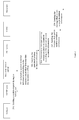
- FIG. 2 is a flowchart of a session processing method which uses a Circuit Switched (CS) domain message to notify the recipient in an embodiment of the present invention
- FIG. 3 is a flowchart of a session processing method which stores the session invitation information in an embodiment of the present invention
- Figure 4 is a flowchart of a method for joining a session in place of the recipient in an embodiment of the present invention
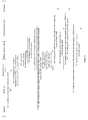
- Figure 5 is a flowchart of a method for processing a session by using an underway message service of the recipient in an embodiment of the present invention
- Figure 6 is a flowchart of another method for processing a session by using an underway message service of the recipient in an embodiment of the present invention
- Figure 7 is a flowchart of a method for processing a discrete message when the recipient is offline in an embodiment of the present invention
- Figure 8 is a flowchart of a method for forwarding a session request to an authorized user in an embodiment of the present invention
- Figure 9 shows a structure of a second session processing system provided in an embodiment of the present invention.
- Figure 10 shows a structure of a third session processing system provided in an embodiment of the present invention.
- Figure 11 shows a structure of a first message processing system provided in an embodiment of the present invention.
- Figure 12 shows a structure of a second message processing system provided in an embodiment of the present invention.
- the embodiments of the present invention are based on a Session Initiation Protocol (SIP) system.
- the initiator sends a session request to the recipient service server; and the recipient service server generates session invitation information according to the received session request when detecting that the recipient is offline, and sends the session invitation information to the recipient.
- SIP Session Initiation Protocol
- Figure 1a shows a structure of a first session processing system provided in an embodiment of the present invention.
- the system includes:
- the session request may carry an initiator ID and a recipient ID.
- the initiator ID may carry the Uniform Resource Locator (URL) and the name of the initiator.
- URL Uniform Resource Locator
- the session invitation information carries an initiator ID, a session initiation time, a recipient ID, and so on.
- the system may further include:
- the message carrying the session invitation information may be a short message or multimedia message.
- the message center 105 may be a Short Message Service Center (SMSC), Multimedia Message Service Center (MMSC), or Wireless Application Protocol (WAP) gateway.
- SMSC Short Message Service Center
- MMSC Multimedia Message Service Center
- WAP Wireless Application Protocol
- the message center may be replaced with a WAP gateway.
- the WAP gateway receives the message carrying session invitation information from the IWF entity 104, and sends the message to the recipient in the mode of WAP PUSH.
- the session invitation information generated by the recipient service server 102 may carry an activation ID.
- the message carrying session invitation information generated by the IWF entity 104 carries a header field indicative of activating the recipient client.
- the content type field of the message carrying session invitation information generated by the IWF entity 104 carries a parameter indication of activating the recipient client.
- the recipient 103 logs on automatically to create a session connection with the initiator 101 or keeps offline.
- the recipient service server 102 is further adapted to:
- the initiator 101 is further adapted to wait for the recipient 103 to log on after receiving the ringing response, and end the session request after receiving the timeout response.
- the recipient 103 creates a session connection with the initiator 101 after receiving the session request.
- the system may further include an offline function entity 106, which is adapted to:
- the service server 102 is further adapted to:
- the offline function entity 106 may be stand-alone or set in the recipient service server 102.
- the system may further include a uniform storage entity 107, which is adapted to:
- the recipient service server 102 is further adapted to:
- the recipient 103 is further adapted to:
- the uniform storage entity 107 may be stand-alone or set in the recipient service server 102.
- Figure 1b shows a structure of a service server provided in an embodiment of the present invention.
- the service server includes:
- the service server further includes an offline function unit 114, which is adapted to:
- the detecting unit 112 is further adapted to send a logon notification to the offline function unit 114 after detecting that the recipient logs on.
- the receiving and sending unit 111 sends the session invitation information sent by the offline function unit after receiving the session invitation information.
- the service server may further include a uniform storing unit 115, which is adapted to:
- the detecting unit 112 is further adapted to:
- the receiving and sending unit 111 is further adapted to receive the session content from the uniform storing unit 115, and send the session content.
- the service server may further include a notifying unit 116, which is adapted to send to the receiving and sending unit 111 a notification about the uniform storing unit 115 creating a session connection with the initiator in place of the recipient.
- a notifying unit 116 which is adapted to send to the receiving and sending unit 111 a notification about the uniform storing unit 115 creating a session connection with the initiator in place of the recipient.
- the receiving and sending unit 111 is further adapted to send the notification sent by the notifying unit 116 to the initiator.
- the receiving and sending unit 111 is further adapted to send the notification to the recipient through the IWF entity or offline function unit 114.
- the detecting unit 112 is further adapted to:
- the receiving and sending unit 111 is further adapted to send the connection notification sent by the detecting unit 112 after receiving the connection notification.
- the uniform storing unit 115 is further adapted to:
- FIG. 2 is a flowchart of a session processing method which uses a CS domain message to notify the recipient.
- the sending of session request by the initiator to the recipient and the detection of the recipient service server about whether the recipient is online are performed in a Packet Switched (PS) domain.
- PS Packet Switched
- the CS domain message service is used to notify the recipient after the recipient is detected as offline.
- the method includes the following steps:
- Step 201 The initiator sends a session request to the recipient service server through a SIP/IP core.
- the initiator sends a session request to the SIP/IP Core first, and the SIP/IP Core finds the service server corresponding to the recipient according to the service information in the session request, and sends the session request to the recipient service server.
- the session request is exemplified below:
- Step 202 The recipient service server generates session invitation information according to the received session request after detecting that the recipient is offline.
- the generated session invitation information may be in the following format:
- the recipient service server returns a SIP signaling response to the initiator through a SIP/IP core to notify the initiator that the recipient is unreachable after detecting that the recipient is offline.
- the returned SIP signaling response may be in the following format:
- the recipient service server returns a session rejection response to the initiator through a SIP/IP core after detecting that the recipient is offline, and the initiator terminates the session request.
- Step 203 The recipient service server sends the generated session invitation information to the IWF entity.
- Step 204 The IWF entity generates a message carrying session invitation information according to the received session invitation information.
- the IWF entity may convert the format according to the protocol used by the recipient, and generate a message carrying session invitation information. For example, the IWF entity may generate a short message carrying session invitation information, or a multimedia message carrying session invitation information, or a short message that carries session invitation information and is carried over WAP PUSH.
- the message carrying session invitation information carries an initiator ID, sending time, recipient information, and so on.
- Step 205 The IWF entity sends the message carrying session invitation information to the SMSC.
- step 204 when the IWF entity generates a multimedia message carrying session invitation information, the IWF entity sends the multimedia message carrying session invitation information to an MMSC; when the IWF entity generates a short message that carries session invitation information and is carried over WAP PUSH, the IWF entity sends the short message to a WAP gateway.
- Step 206 The SMSC sends the message carrying session invitation information to the recipient according to the recipient information in the converted session invitation information.
- the session invitation information is sent to the recipient by using the CS domain so that the recipient may know the information on being invited into a session even when the recipient is offline.
- the recipient service server may generate session invitation information carrying an activation ID after detecting that the recipient is offline.
- the generated message that carries session invitation information includes a header field indicative of activating the recipient client.
- the content type field in the generated message that carries session invitation information includes a parameter indication of activating the recipient client.
- the recipient After obtaining the converted message that carries a parameter indication of activating the recipient client and carries session invitation information, the recipient activates the recipient client automatically, and logs on automatically to create a session connection with the initiator; or chooses whether to log on or not.
- the recipient service server returns a ringing response to the initiator when sending the session invitation information carrying an activation ID, and the initiator waits for the recipient to log on.
- the recipient service server sends a timeout response to the initiator through a SIP/IP core, and the initiator terminates the session request.
- the session invitation information carrying an activation ID may have the following header field format on the basis of the format in step 202:
- the recipient service server returns a ringing response to the initiator to notify the initiator to wait for an answer from the recipient.
- the ringing response may be in the following format:
- the IWF converts the session invitation information carrying an activation ID to a message format after receiving the session invitation information, as exemplified below:
- FIG. 3 is a flowchart of a session processing method which stores the session invitation information. As shown in Figure 3 , the method includes the following steps:
- Step 301 The initiator sends a session request to the recipient service server through a SIP/IP core.
- Step 302 The recipient service server generates session invitation information according to the session request of the initiator after detecting that the recipient is offline.
- the recipient service server returns a session rejection response to the initiator through a SIP/IP core to after detecting that the recipient is offline, and the initiator terminates the session request.
- Step 301 and step 302 are implemented in the same way as step 201 and 202 respectively.
- the recipient service server sends a response to the initiator through a SIP/IP core to notify the initiator that the recipient is offline after detecting that the recipient is offline.
- Step 303 The recipient service server sends the generated session invitation information to an offline function entity.
- the offline function entity is stand-alone.
- the offline function entity may be set in the recipient service server, and the service server generates and stores the session invitation information uniformly.
- Step 304 The offline function entity stores the received session invitation information.
- the offline function entity may store the session invitation information in the form of an offline message.
- Step 305 The recipient service server obtains session invitation information from the offline function entity after detecting that the recipient logs on.
- Step 306 The recipient service server sends the session invitation information to the recipient by means of PUSH or PULL.
- the recipient creates a session channel with the recipient service server after the recipient logs on in order to obtain the session invitation information.
- a uniform storage entity may be used to perform the session in place of the recipient and record the session content.
- the recipient receives the session invitation information from the offline function entity and knows the information on being invited into a session.
- the recipient may create a session channel with the initiator to connect the session, and the uniform storage entity stops the session.
- Figure 4 is a flowchart of a method for performing a session in place of the recipient in this embodiment. The method includes the following steps:
- Step 401 The initiator sends a session request to the recipient service server through a SIP/IP core.
- Step 402 The recipient service server generates session invitation information according to the received session request after detecting that the recipient is offline.
- Step 403 The recipient service server sends the generated session invitation information to an offline function entity.
- Step 404 The offline function entity stores the session invitation information in the form of an offline message.
- Step 405 The recipient service server notifies the uniform storage entity to join the session.
- the recipient service server After detecting that the recipient is offline, the recipient service server notifies the uniform storage entity to join the session in place of the recipient when the recipient has subscribed to the substitute session service.
- Step 403 and step 405 are not sequence-sensitive, and may be performed concurrently.
- the uniform storage entity sends a SIP 200 ok response to the recipient service server.
- the recipient service server returns a SIP 200 ok response to the initiator through a CIP/IP Core, notifying the initiator that the uniform storage entity may join the session in place of the recipient.
- Step 406 Through the recipient service server, the uniform storage entity creates a session with the initiator and records the session content.
- Step 407 The recipient service server obtains session invitation information from the offline function entity after detecting that the recipient logs on.
- Step 408 The recipient obtains the session invitation information by means of PULL or PUSH.
- Step 409 The recipient service server obtains the session content from the uniform storage entity.
- Step 407 and step 409 are not sequence-sensitive, and may be performed concurrently.
- Step 410 The recipient service server sends the session content to the recipient by means of PUSH or PULL, and notifies the recipient to connect the session.
- Step 411 The recipient creates a session channel with the initiator to connect the session.
- Step 412 The recipient service server notifies the uniform storage entity to terminate the session with the initiator.
- the recipient may choose whether to connect the session or not according to the received session invitation information.
- the uniform storage entity goes on performing the session in place of the recipient and records the session content.
- the recipient service server obtains session records from the uniform storage entity, and sends the session records to the recipient by means of PULL or PUSH. That is, in step 410, the recipient service server does not notify the recipient to connect the session, and does not perform step 411 or step 412.
- the recipient service server may send a session continuation notification to the uniform storage entity when sending a connection notification to the recipient.
- the uniform storage entity continues receiving and recording the session content sent by the initiator.
- the uniform storage entity joins the session in place of the recipient, and may use a SIP message to notify the uniform storage entity of the initiator to join the session in place of the recipient. Meanwhile, the uniform storage entity may use a CS domain to send session invitation information and a notification to the recipient, where the notification indicates that the uniform storage entity joins the session in place of the recipient.
- the uniform storage entity may join the session in place of the recipient.
- the session invitation information is sent to the recipient through the CS domain in the embodiment shown in Figure 2 .
- the recipient may log on through automatic activation to connect the session with the initiator after receiving the session invitation information that carries an activation ID.
- FIG. 5 is a flowchart of a method for processing a session through an underway message service of the recipient in an embodiment of the present invention. The method includes the following steps:
- Step 501 The initiator sends a session request to the recipient service server.
- Step 502 The recipient service server detects that the recipient is offline and using an MMS service, and therefore, sends the received session request to the IWF entity.
- the recipient service server may obtain the information on the underway MMS service of the recipient from a Home Subscriber Server (HSS) of the recipient, and sends the information to the IWF entity; or obtains information on other underway message services of the recipient from the HSS of the recipient.
- HSS Home Subscriber Server
- Step 503 After receiving the session request, the IWF entity converts the session request to an MMS message that carries the session request information, and sends the MMS message to the MMSC of the recipient.
- Step 504 The MMSC of the recipient sends the received MMS message carrying session request information to the recipient.
- Step 505 After receiving the MMS message that carries session request information, the recipient may choose whether to log on or not. When the recipient logs on, the recipient service server may connect the session to the recipient, and a session connection is created between the initiator and the recipient; when the recipient does not log on, the process proceeds to step 506.
- Step 506 The IWF negotiates a session channel with the initiator through the recipient service server.
- the IWF may accept the session request directly to create a session channel between the recipient and the IWF according to user settings or operator policies. Through this channel, the recipient exchanges messages with the initiator through conversion performed by the IWF.
- Step 507 Upon completion of negotiating the session channel, the session channel is created. Through the session channel, the session content of the initiator is received, and converted to an MMS message. Through the MMSC of the recipient, the MMS message is sent to the recipient. Alternatively, the MMS message sent through the MMSC of the recipient is received and converted to a SIP domain message, which is sent to the initiator through the created session channel.
- the recipient service server may send the session request to the IWF entity directly after detecting that the recipient is offline.
- the IWF entity obtains the information on the underway MMS service of the recipient from the HSS, and the received session request is sent to the IWF entity.
- the underway message service of the recipient may be SMS, an email service or other message services.
- FIG. 6 is a flowchart of another method for processing sessions through an underway message service of the recipient in an embodiment of the present invention.
- the IFW creates a session channel not only with the initiator, but also with the recipient through certain services.
- the method may include the following steps:
- Step 601 The initiator sends a session request to the recipient service server.
- Step 602 The recipient service server detects that the recipient is offline and using an Instant Messaging and Presence Service (IMPS), and therefore, sends the received session request to the IWF entity.
- IMS Instant Messaging and Presence Service
- the recipient service server may obtain the information on the underway service of the recipient from the HSS of the recipient.
- Step 603 After receiving the session request, the IWF entity converts the session request to an IMPS message that carries the session request information, and sends the IMPS message to an Instant Messaging and Presence Service Center (IMPSC).
- IMPSC Instant Messaging and Presence Service Center
- Step 604 The IMPSC sends the IMPS message carrying session request information to the recipient.
- Step 605 The IWF entity negotiates a session channel with the initiator through the recipient service server, and negotiates the session channel with the recipient through the IMPSC.
- Step 606 The IWF entity creates a session channel with the initiator, and creates a session channel with the recipient.
- Step 607 Through the session channel with the initiator, the IWF entity receives the session content from the initiator, and converts the session content to an IMPS message. Through the session channel with the recipient, the IWF entity sends the IMPS message to the recipient. Alternatively, through the session channel with the recipient, the IWF receives the IMPS message from the recipient, and converts the content of the IMPS message to a SIP domain message, which is sent to the initiator through the session channel with the initiator.
- the recipient service server may send the session request to the IWF entity directly after detecting that the recipient is offline.
- the received session request is sent to the IWF entity after the IWF entity detects that the recipient is using an IMPS message service.
- FIG. 7 is a flowchart of a method for processing a discrete message when the recipient is offline in an embodiment of the present invention. The method includes the following steps:
- Step 701 The recipient service server receives a SIP discrete message from the initiator.
- Step 702 The recipient service server detects that the recipient is offline and using an MMS service, and therefore, sends the received SIP discrete message to the IWF entity.
- Step 703 After receiving the SIP discrete message, the IWF entity converts the SIP discrete message to an MMS message that carries the content of the discrete message, and sends the MMS message to the MMSC.
- Step 704 The MMSC sends the MMS message sent by the IWF entity to the recipient.
- the recipient After this step, the recipient returns a response to the IWF entity through the MMSC, indicating receipt of the MMS message.
- the IWF entity may also return a response to the initiator through the SMSC, indicating that the recipient receives the MMS message.
- FIG. 8 is a flowchart of a method for forwarding a session request to an authorized user in an embodiment of the present invention. This embodiment supposes that the initiator sends a session request to the recipient; in practice, when the initiator sends a discrete message to the recipient, the process provided in this embodiment is also applicable. As shown in Figure 8 , the method may include the following steps:
- Step 801 The recipient service server receives a session request from the initiator.
- Step 802 The recipient service server detects that the recipient is offline, and obtains authorized user information set by the recipient.
- the recipient service server may learn whether the recipient has set an authorized user from the HSS of the recipient after detecting that the recipient is offline, and further obtain the authorized user information when any authorized user is set.
- Step 803 The recipient service server forwards the session request to the authorized user service server according to settings of the recipient.
- Step 804 The authorized user service server sends the received session request to the authorized user.
- Step 805 After receiving the session request, the authorized user creates a session channel with the initiator, and performs the session with the initiator in place of the recipient.
- the recipient service server may send a notification about an authorized user joining the session in place of the recipient to the recipient through the IWF entity by using an underway message service of the recipient.
- the method of sending the notification may be performed through the process shown in Figure 7 .
- This notification may also be stored through an offline function entity, and the recipient obtains the notification when logging on.
- the session content between the initiator and the authorized user may be stored through a uniform storage entity.
- the recipient service server may also send the notification about the authorized user joining the session in place of the recipient to the initiator through the SIP domain.
- the recipient service server may also record the session content between the initiator and the authorized user so that the recipient may search for the session content.
- Figure 9 shows a structure of a second session processing system provided in an embodiment of the present invention.
- the system includes:
- the system may further include: an HSS 940, adapted to store the information on the underway message service of the recipient.
- the recipient service server 910 is further adapted to obtain the information on the underway message service of the recipient from the HSS 940.
- the IWF entity 920 is adapted to:
- the IWF entity 920 may include:
- the IWF entity 920 further includes a message obtaining unit 924 which is adapted to:
- the message converting unit 922 is further adapted to:
- the IWF entity 920 may further include a session channel creating unit 925 which is adapted to create a session channel with the initiator.
- the receiving unit 921 is further adapted to receive the session content from the initiator through the session channel created by the session channel creating unit 925.
- the message converting unit 922 is further adapted to convert the session content received by the receiving unit 921 to a message of the underway message service of the recipient.
- the session channel creating unit 925 is further adapted to create a session channel with the recipient.
- the sending unit 923 is further adapted to send the message converted by the message converting unit 922 to the recipient through the session channel created by the session channel creating unit 925.
- the system shown in Figure 9 may be used to implement the methods shown in Figure 5 and Figure 6 .
- Figure 10 shows a structure of a third session processing system provided in an embodiment of the present invention.
- the system includes:
- the system may further include:
- the system may further include:
- the recipient service server 1010 is further adapted to send the notification about the authorized user performing the session with the initiator in place of the recipient to the IWF entity 1040 or offline function entity 1050.
- the recipient service server 1010 is further adapted to send the notification about the authorized user performing the session with the initiator in place of the recipient to the initiator.
- the system may further include a recipient uniform storage entity, adapted to store the session content between the initiator and the authorized user.
- the system may further include an HSS 1060 which is adapted to store the authorized user information set by the recipient.
- the recipient service server 1010 is further adapted to obtain the authorized user information set by the recipient from the HSS 1060.
- the recipient service server 1010 may include:
- the recipient service server 1010 further include a notifying unit 1015 which is adapted to generate a notification about the authorized user performing the session with the initiator in place of the recipient.
- the sending unit 1014 is further adapted to: send the notification generated by the notifying unit 1015 to the recipient through an IWF entity or offline function entity, or by using the underway message service of the recipient; and/or send the notification generated by the notifying unit 1015 to the initiator.
- the system shown in Figure 10 may be used to implement the method shown in Figure 8 .
- Figure 11 shows a structure of a first session processing system provided in an embodiment of the present invention.
- the system includes:
- the system may further include an HSS 1130 which is adapted to store the information on the underway service of the recipient.
- the recipient service server 1110 is further adapted to obtain the information on the underway service of the recipient from the HSS 1130, and detect the underway message service of the recipient according to such information.
- the system may further include an IWF entity 1140 which is adapted to:
- the IWF entity 1140 includes:
- the IWF entity 1140 further includes a message obtaining unit 1144 which is adapted to:
- the message converting unit 1142 is further adapted to:
- the system shown in Figure 11 may be used to implement the method shown in Figure 7 .
- Figure 12 shows a structure of a second message processing system provided in an embodiment of the present invention.
- the system includes:
- the system may further include:
- the recipient service server 1210 is further adapted to send the notification about the authorized user receiving the discrete message in place of the recipient to the IWF entity 1240 or offline function entity 1250.
- the recipient service server 1210 is further adapted to send the notification about the authorized user receiving the discrete message in place of the recipient to the initiator.
- the recipient service server 1210 includes:
- the recipient service server may further include a notifying unit 1015 which is adapted to generate a notification about the authorized user receiving the discrete message in place of the recipient.
- the sending unit 1214 is further adapted to:
- the system shown in Figure 12 may be used to implement the method shown in Figure 8 .
- the recipient may receive the session invitation information in time in the offline state, and may log in through automatic activation by receiving the session invitation information, and create a session with the initiator in time.
- the method enables storing of the session invitation information in the form of an offline message through an offline function entity.
- the session invitation information is sent to the recipient when the recipient logs on so that the recipient knows the information on being invited into a session in the offline period.
- a uniform storage entity may be set to join the session in place of the recipient and record the session content. Therefore, the recipient may obtain the recorded session content after receiving the session invitation information.
- the recipient may choose to connect the session with the initiator, thus enriching the service experience of the user.
Landscapes
- Engineering & Computer Science (AREA)
- Computer Networks & Wireless Communication (AREA)
- Signal Processing (AREA)
- Multimedia (AREA)
- General Engineering & Computer Science (AREA)
- Business, Economics & Management (AREA)
- General Business, Economics & Management (AREA)
- Telephonic Communication Services (AREA)
Applications Claiming Priority (3)
| Application Number | Priority Date | Filing Date | Title |
|---|---|---|---|
| CN200710107161 | 2007-04-30 | ||
| CN2007101495834A CN101299785B (zh) | 2007-04-30 | 2007-09-12 | 一种会话处理的方法、系统以及业务服务器 |
| PCT/CN2007/071316 WO2008131627A1 (en) | 2007-04-30 | 2007-12-24 | A method, system for processing session and message |
Publications (2)
| Publication Number | Publication Date |
|---|---|
| EP2093946A1 true EP2093946A1 (de) | 2009-08-26 |
| EP2093946A4 EP2093946A4 (de) | 2010-04-21 |
Family
ID=39925185
Family Applications (1)
| Application Number | Title | Priority Date | Filing Date |
|---|---|---|---|
| EP07846142A Withdrawn EP2093946A4 (de) | 2007-04-30 | 2007-12-24 | Ein verfahren, system zum verarbeiten von sitzung und nachricht |
Country Status (4)
| Country | Link |
|---|---|
| US (1) | US20090305733A1 (de) |
| EP (1) | EP2093946A4 (de) |
| CN (1) | CN101299785B (de) |
| WO (1) | WO2008131627A1 (de) |
Cited By (4)
| Publication number | Priority date | Publication date | Assignee | Title |
|---|---|---|---|---|
| CN102158466A (zh) * | 2010-02-11 | 2011-08-17 | 华为终端有限公司 | 用户设备间媒体转移方法和应用服务器 |
| EP2391058A1 (de) * | 2010-05-31 | 2011-11-30 | Lg Electronics Inc. | Tragbares Endgerät und Gruppen-Chat-Steuerungsverfahren davon |
| US9811808B2 (en) | 2013-02-12 | 2017-11-07 | International Business Machines Corporation | Meeting notifications for offline invitees |
| CN110266582A (zh) * | 2019-05-29 | 2019-09-20 | 深圳市梦网科技发展有限公司 | 一种消息推送方法、系统、服务器及通信终端 |
Families Citing this family (16)
| Publication number | Priority date | Publication date | Assignee | Title |
|---|---|---|---|---|
| CN101400021A (zh) * | 2008-10-15 | 2009-04-01 | 中兴通讯股份有限公司 | PoC回呼请求处理方法、发送/接收装置、移动终端 |
| US9397862B2 (en) | 2008-12-12 | 2016-07-19 | At&T Intellectual Property I, L.P. | Method and apparatus for completing a circuit switched service call in an internet protocol network |
| CN102457815A (zh) * | 2010-10-18 | 2012-05-16 | 中国移动通信集团北京有限公司 | 一种PoC业务回呼请求处理方法、装置及系统 |
| CN102075531B (zh) * | 2010-12-27 | 2013-01-30 | 北京像素软件科技股份有限公司 | 一种为客户端传输数据的方法 |
| US9819700B2 (en) * | 2011-05-30 | 2017-11-14 | Telefonaktiebolaget Lm Ericsson (Publ) | System and method for passive communication services |
| GB201210600D0 (en) | 2012-06-14 | 2012-08-01 | Microsoft Corp | Call invites |
| GB201210598D0 (en) | 2012-06-14 | 2012-08-01 | Microsoft Corp | Notification of communication events |
| GB201210596D0 (en) | 2012-06-14 | 2012-08-01 | Microsoft Corp | Notification of communication events |
| CN103338192B (zh) * | 2012-06-14 | 2017-07-18 | 微软技术许可有限责任公司 | 用于在呼叫者与被呼叫者之间建立呼叫的网络节点和方法 |
| CN103856644A (zh) * | 2012-11-30 | 2014-06-11 | 上海鱼游网络科技有限公司 | 一种网络电话的提示方法及系统 |
| CN107689939A (zh) * | 2016-08-05 | 2018-02-13 | 阿里巴巴集团控股有限公司 | 消息交互方法和装置 |
| CN109151235B (zh) * | 2018-10-22 | 2021-03-30 | 奇酷互联网络科技(深圳)有限公司 | 远程通信群组的协同操控方法、服务器和存储装置 |
| CN111028837B (zh) * | 2019-12-16 | 2022-10-04 | 深圳云之家网络有限公司 | 语音会话方法、语音识别系统及计算机存储介质 |
| CN113098920A (zh) | 2020-01-09 | 2021-07-09 | 京东方科技集团股份有限公司 | 会话建立方法、装置及其相关设备 |
| CN114554427B (zh) * | 2020-11-24 | 2023-10-17 | 中国移动通信集团有限公司 | 一种5g消息处理方法、装置、设备及计算机存储介质 |
| CN113673963A (zh) * | 2021-09-01 | 2021-11-19 | 武汉悦学帮网络技术有限公司 | 一种账号激活方法、装置、计算机设备及存储介质 |
Family Cites Families (10)
| Publication number | Priority date | Publication date | Assignee | Title |
|---|---|---|---|---|
| US6564261B1 (en) * | 1999-05-10 | 2003-05-13 | Telefonaktiebolaget Lm Ericsson (Publ) | Distributed system to intelligently establish sessions between anonymous users over various networks |
| US20070047523A1 (en) * | 2001-08-16 | 2007-03-01 | Roamware, Inc. | Method and system for call-setup triggered push content |
| FR2845235A1 (fr) * | 2002-10-01 | 2004-04-02 | Cegetel | Procede de messagerie vocale instantanee et dispositif de mise en oeuvre d'un tel procede |
| US20040176128A1 (en) * | 2003-01-30 | 2004-09-09 | 3Com Corporation | System, mobile communications unit, and softswitch method and apparatus for establishing an Internet Protocol communication link |
| US20060168037A1 (en) * | 2004-12-21 | 2006-07-27 | Alcatel | Systems and methods for handling presence messages |
| US20060252435A1 (en) * | 2005-03-18 | 2006-11-09 | Yahoo! Inc. | Enabling application wakeup on a mobile device with a hybrid client |
| CN100461773C (zh) * | 2005-03-25 | 2009-02-11 | 华为技术有限公司 | 一种即时消息的接收方法 |
| KR101196123B1 (ko) * | 2005-04-04 | 2012-10-31 | 텔레폰악티에볼라겟엘엠에릭슨(펍) | 푸쉬-투-토크 모바일 통신 서비스에서의 응답 모드 |
| CN1859380B (zh) * | 2005-07-28 | 2011-12-07 | 华为技术有限公司 | 一种离线消息获取方法 |
| CN100405788C (zh) * | 2005-12-08 | 2008-07-23 | 中国科学院计算技术研究所 | 基于会话启动协议的即时通讯系统中的即时消息过滤方法 |
-
2007
- 2007-09-12 CN CN2007101495834A patent/CN101299785B/zh not_active Expired - Fee Related
- 2007-12-24 EP EP07846142A patent/EP2093946A4/de not_active Withdrawn
- 2007-12-24 WO PCT/CN2007/071316 patent/WO2008131627A1/zh not_active Ceased
-
2009
- 2009-07-23 US US12/508,301 patent/US20090305733A1/en not_active Abandoned
Cited By (7)
| Publication number | Priority date | Publication date | Assignee | Title |
|---|---|---|---|---|
| CN102158466A (zh) * | 2010-02-11 | 2011-08-17 | 华为终端有限公司 | 用户设备间媒体转移方法和应用服务器 |
| CN102158466B (zh) * | 2010-02-11 | 2013-10-09 | 华为终端有限公司 | 用户设备间媒体转移方法和应用服务器 |
| US9531816B2 (en) | 2010-02-11 | 2016-12-27 | Huawei Device Co., Ltd. | Method and apparatus for media transfer between user equipment |
| EP2391058A1 (de) * | 2010-05-31 | 2011-11-30 | Lg Electronics Inc. | Tragbares Endgerät und Gruppen-Chat-Steuerungsverfahren davon |
| US8667403B2 (en) | 2010-05-31 | 2014-03-04 | Lg Electronics Inc. | Mobile terminal and group chat controlling method thereof |
| US9811808B2 (en) | 2013-02-12 | 2017-11-07 | International Business Machines Corporation | Meeting notifications for offline invitees |
| CN110266582A (zh) * | 2019-05-29 | 2019-09-20 | 深圳市梦网科技发展有限公司 | 一种消息推送方法、系统、服务器及通信终端 |
Also Published As
| Publication number | Publication date |
|---|---|
| CN101299785A (zh) | 2008-11-05 |
| US20090305733A1 (en) | 2009-12-10 |
| EP2093946A4 (de) | 2010-04-21 |
| CN101299785B (zh) | 2013-06-05 |
| WO2008131627A1 (en) | 2008-11-06 |
Similar Documents
| Publication | Publication Date | Title |
|---|---|---|
| EP2093946A1 (de) | Ein verfahren, system zum verarbeiten von sitzung und nachricht | |
| CN101453483B (zh) | 会话历史记录的存储处理和查询方法、系统和装置 | |
| EP1929730B1 (de) | Verfahren und vorrichtung für instantmessaging | |
| EP2351391B1 (de) | Verfahren und vorrichtung zur steuerung von sitzungen zur zusammenarbeit in einem gemischten ip-nachrichtendienst und system dafür | |
| US8014775B2 (en) | Method and system for implementing messaging services and a message application server | |
| US20100146066A1 (en) | Method, system and apparatus for message interworking | |
| CN101222521B (zh) | 基于会话发起协议的文件传输方法 | |
| CN103701682A (zh) | 群聊方法及群聊终端、服务器 | |
| CN101542989A (zh) | 群组通信 | |
| CN100542172C (zh) | 一种离线消息发送和接收方法 | |
| CN101355533B (zh) | 一种通信互连方法和设备 | |
| EP1909443A1 (de) | Verfahren und system, womit instant-message-benutzer instant-message-system-chatroom benutzen kann, zu dem benutzer ungehört | |
| US20080270553A1 (en) | Method and System for Instant Notification of Communication Block Information | |
| CN102342076A (zh) | 通信网络中的能力查询处理 | |
| CA2868369C (en) | Voice message sending method and system, and converged message server and client | |
| CN103379017B (zh) | 语音留言方法及系统、融合消息服务器及客户端 | |
| CN101207577A (zh) | 消息系统间的互连方法及消息互连网关 | |
| CN1878171B (zh) | 一种聊天室中阻塞信息通知的方法 | |
| US20150120843A1 (en) | Method and Device to Store and Forward a File Thumbnail to an Initially Unavailable Client | |
| KR20110018661A (ko) | 통신망에서 유무선 단말을 구분하여 메신저 서비스 요금을 과금하기 위한 메신저 서비스 제공 방법 및 장치 |
Legal Events
| Date | Code | Title | Description |
|---|---|---|---|
| PUAI | Public reference made under article 153(3) epc to a published international application that has entered the european phase |
Free format text: ORIGINAL CODE: 0009012 |
|
| 17P | Request for examination filed |
Effective date: 20090715 |
|
| AK | Designated contracting states |
Kind code of ref document: A1 Designated state(s): AT BE BG CH CY CZ DE DK EE ES FI FR GB GR HU IE IS IT LI LT LU LV MC MT NL PL PT RO SE SI SK TR |
|
| A4 | Supplementary search report drawn up and despatched |
Effective date: 20100319 |
|
| RIC1 | Information provided on ipc code assigned before grant |
Ipc: H04L 29/06 20060101ALI20100315BHEP Ipc: H04L 12/56 20060101AFI20081120BHEP Ipc: H04L 29/02 20060101ALI20100315BHEP |
|
| DAX | Request for extension of the european patent (deleted) | ||
| STAA | Information on the status of an ep patent application or granted ep patent |
Free format text: STATUS: THE APPLICATION HAS BEEN WITHDRAWN |
|
| 18W | Application withdrawn |
Effective date: 20120719 |