EP2093961B1 - Verfahren, Vorrichtung und System zur Inhaltsfilterung - Google Patents
Verfahren, Vorrichtung und System zur Inhaltsfilterung Download PDFInfo
- Publication number
- EP2093961B1 EP2093961B1 EP08757548.6A EP08757548A EP2093961B1 EP 2093961 B1 EP2093961 B1 EP 2093961B1 EP 08757548 A EP08757548 A EP 08757548A EP 2093961 B1 EP2093961 B1 EP 2093961B1
- Authority
- EP
- European Patent Office
- Prior art keywords
- content
- component
- categorization
- screening
- information
- Prior art date
- Legal status (The legal status is an assumption and is not a legal conclusion. Google has not performed a legal analysis and makes no representation as to the accuracy of the status listed.)
- Active
Links
Images

Classifications
-
- H—ELECTRICITY
- H04—ELECTRIC COMMUNICATION TECHNIQUE
- H04L—TRANSMISSION OF DIGITAL INFORMATION, e.g. TELEGRAPHIC COMMUNICATION
- H04L63/00—Network architectures or network communication protocols for network security
- H04L63/14—Network architectures or network communication protocols for network security for detecting or protecting against malicious traffic
-
- H—ELECTRICITY
- H04—ELECTRIC COMMUNICATION TECHNIQUE
- H04L—TRANSMISSION OF DIGITAL INFORMATION, e.g. TELEGRAPHIC COMMUNICATION
- H04L51/00—User-to-user messaging in packet-switching networks, transmitted according to store-and-forward or real-time protocols, e.g. e-mail
- H04L51/21—Monitoring or handling of messages
- H04L51/212—Monitoring or handling of messages using filtering or selective blocking
-
- G—PHYSICS
- G06—COMPUTING OR CALCULATING; COUNTING
- G06F—ELECTRIC DIGITAL DATA PROCESSING
- G06F16/00—Information retrieval; Database structures therefor; File system structures therefor
- G06F16/90—Details of database functions independent of the retrieved data types
- G06F16/95—Retrieval from the web
- G06F16/953—Querying, e.g. by the use of web search engines
- G06F16/9535—Search customisation based on user profiles and personalisation
-
- H—ELECTRICITY
- H04—ELECTRIC COMMUNICATION TECHNIQUE
- H04L—TRANSMISSION OF DIGITAL INFORMATION, e.g. TELEGRAPHIC COMMUNICATION
- H04L63/00—Network architectures or network communication protocols for network security
- H04L63/10—Network architectures or network communication protocols for network security for controlling access to devices or network resources
-
- H—ELECTRICITY
- H04—ELECTRIC COMMUNICATION TECHNIQUE
- H04L—TRANSMISSION OF DIGITAL INFORMATION, e.g. TELEGRAPHIC COMMUNICATION
- H04L63/00—Network architectures or network communication protocols for network security
- H04L63/12—Applying verification of the received information
- H04L63/126—Applying verification of the received information the source of the received data
Definitions
- the present invention relates to network and communication fields, and in particular, to a content screening method, apparatus, and system.
- CBCS categorization-based content screening
- contents are represented by metadata.
- ID3 is a label technology widely used in media players.
- the ID3 label of an MP3 file includes such information as singer name, music name, year, and music style. Except the Style (Genre) attribute, there are no categorization related contents in the ID3.
- MPEG-7 is a standard for the metadata of audio contents or video contents.
- the categorization information in the MPEG-7 includes style, topic, purpose, language, categorization, parent guide type, and topic preview.
- the preceding MPEG-7 may be described through a media description scheme (MDS).
- MDS media description scheme
- a classification DS is used to describe the categorization information of the contents.
- the inventor discovers the following problems: There may be multiple producers of categorization information (for example, a CBCS categorization component and a content provider that supports the CBCS categorization component) and multiple consumers of categorization information (for example, a CBCS content screening component and a client that supports the CBCS metadata format) in the CBCS.
- categorization information for example, a CBCS categorization component and a content provider that supports the CBCS categorization component
- consumers of categorization information for example, a CBCS content screening component and a client that supports the CBCS metadata format
- the classification DS of the MPEG-7 in the conventional art supports only the description scheme (for example, MPA and ICRA), categorization type (for example, PE-13 and PG), country, language, and style.
- the consumers and producers of the categorization information cannot verify the trust relationship of the categorization component by using a content screening component and perform the screening operation only after it is determined that the
- Open Mobile Alliance Ltd. (OMA), 'Categorization Based Content Screening Framework Architecture', Draft Version 1.0, 4 May 2007 , XP002577261 discloses a method and system for screening content, wherein a content screening component receives a content screening request, requests content categorization by a content categorization component, if necessary and processes the content according to screening rules, user profile and content category.
- OMA Open Mobile Alliance Ltd.
- XP002577261 discloses a method and system for screening content, wherein a content screening component receives a content screening request, requests content categorization by a content categorization component, if necessary and processes the content according to screening rules, user profile and content category.
- OMA Open Mobile Alliance Ltd.
- XP002577262 defines the requirements for the system defined in XP002577261 above.
- Embodiments of the present invention provide a content screening method according to claim 1, a content screening component according to claim 9 and a content screening system according to claim 10 so that the content screening component can verify the trust relationship and the categorization standard used by the categorization component.
- embodiments of the present invention carry the information of the categorization component in the categorized content.
- the content screening component can verify the trust relationship of the categorization component, and perform the screening operation when determining that the categorization component is trustworthy.
- the content screening component can verify the categorization standard used by the categorization component, and perform the screening operation when determining that the categorization component uses the same categorization standard as the content screening component.
- the purpose of the embodiments of the present invention is to enable the content screening component to verify the trust relationship and the categorization standard used by the categorization component.
- the MPEG-7 categorization related parts is extended that a CategorizationEntity element is added to the classification DS. The details are shown as follows:
- the new CategorizationEntity element is used to describe the information of the categorization component.
- the following shows the structure of the CategorizationEntity element.
- the element name "Name” is a first extended element.
- the first extended element is ID information of the categorization component.
- the ID information may be a Name element that indicates the name of the categorization component or an ID element that indicates the ID of the categorization component.
- the Name element and the ID element are used as the ID information.
- the element name "Country” is a second extended element.
- the second extended element is information of the categorization standard of the categorization component.
- the information of the categorization may be a Country element that indicates the country where the categorization component is located, a CategorizationScheme element that indicates the categorization scheme used by the categorization component, or an Operator element that indicates the operator to which the categorization component belongs. Any combination of the Country element, CategorizationScheme element and Operator element may be used as the information of the categorization standard.
- the first extended element and the second extended element may coexist or exist separately according to the requirements of a specific embodiment.
- the method is not limited to extending the MPEG-7 categorization related parts.
- the information of the categorization component may be added to the content by adding elements to other metadata.
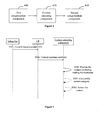
- Embodiment 1 provides a content screening method so that the content screening component can verify the trust relationship. As shown in Figure 1 , the method includes the following steps:
- the subscriber sends a content request that carries a content ID to the content provider (CP).
- CP content provider
- the CP sends the corresponding categorized content to the subscriber through the network according to the content ID. During the transmission, the corresponding categorized content passes through the content screening component.
- the content screening component reads the metadata of the content that includes the content category and information of the categorization component. Further, the information of the categorization component includes the ID or name of a first categorization component that categorizes the content. The content screening component checks whether the ID or name of the first categorization component is in a trust list of the content screening component. If the ID or name of the first categorization component is in the trust list of the content screening component, the process goes to S106.
- the content screening component may take other measures; for example, the process goes to S104 or the screening operation is terminated directly. If the process goes to S104, the content screening component may obtain the trusted content category, thus supporting the trust model between the components in the CBCS system.
- the content screening component selects any categorization component from the trust list as a trusted second categorization component (furthermore, each categorization component in the trust list may be assigned a priority, and the content screening component selects the second categorization component in the descending order of priorities), and sends a categorization request that carries the content or content description information to the second categorization component.
- the second categorization component returns the content category corresponding to the content to the content screening component.
- the content screening component screens the content according to the content category obtained from the trusted categorization component (i.e. the first categorization component if the process is continued from S103 or the second categorization component if the process is continued from S105).
- the preceding trust list includes multiple items, each of which represents a categorization component trusted by the screening component and includes the ID and name of the corresponding categorization component.
- the trust list may be saved in XML format. The following gives an example:
- the screening server of Huabei Company Based on the trust list saved in XML format, the screening server of Huabei Company considers that the categorization information in the content categorized by the No.001 categorization server of Huabei Company, China Mobile South China Central Server, and MPA Asia Pacific Server is trustworthy. Contents categorized by other categorization servers need to be re-categorized.
- the trust list may be stored in the content screening component or an external component and is already preset before the categorization process begins.
- the content screening component provides an interface and operation functions to allow the external component to add, delete, modify or search the trust list.
- the external component provides an interface and operation functions to allow adding, deleting, modifying or searching the trust list.
- the content screening component may call the operation functions to obtain and set the trust list.
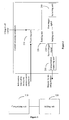
- Embodiment 2 This embodiment supports the scenario of the trust model between the components in the CBSC system.
- a categorization component A is a categorization component trusted by a screening component C; a categorization component B is a categorization component not trusted by the screening component C; the screening component C is a screening component; a content 1 is a content categorized by the categorization component B; and Bob is an end user.
- Embodiment 3 provides a content screening component so that the content screening component can verify the trust relationship.
- the content screening component includes a receiving unit 210, a reading unit 220, a judging unit 230, and a screening unit 240.
- the content screening component may further include a categorization requesting unit 250.
- the receiving unit 210 is adapted to receive a categorized content.
- the reading unit 220 is adapted to read information of the categorization component and content category carried in the categorized content that is received by the receiving unit 210.
- the judging unit 230 is adapted to send out a first trigger signal when determining that a first categorization component that categorizes the content is trustworthy according to the information of the categorization component read by the reading unit 220.
- the screening unit 240 is adapted to receive the first trigger signal sent from the judging unit 230, take the received first trigger signal as a trigger condition and screen the content received by the receiving unit 210 according to the content category read by the reading unit 220.
- the judging unit 230 is adapted to send out a second trigger signal when determining that the first categorization component that categorizes the content is not trustworthy according to the information of the categorization component read by the reading unit 220.
- the categorization requesting unit 250 is adapted to receive the second trigger signal sent from the judging unit 230, take the received second trigger signal as the trigger condition and request a trusted second categorization component to re-categorize the content received by the receiving unit 210.
- the receiving unit 210 is further adapted to receive the information returned by the second categorization component.
- the reading unit 220 is further adapted to read the content category upon re-categorization from the information that is returned by the second categorization component and received by the receiving unit.
- the screening unit 240 is further adapted to screen the content received by the receiving unit 220 by using the content category upon re-categorization read by the read unit 220.
- Embodiment 4 This embodiment provides a categorization component so that the content screening component can verify the trust relationship.
- the categorization component includes: a categorizing unit 310 and an adding unit 320.
- the categorizing unit 310 is adapted to categorize a content
- the adding unit 320 is adapted to add the information of the categorization component to the content categorized by the categorizing unit.
- Embodiment 5 provides a content screening system so that the content screening component can verify the trust relationship.
- the content screening system includes a first categorization component 410 and a content screening component 420.
- the content screening system may further include a second categorization component 430.
- the first categorization component 410 is adapted to categorize a content initially and add the information of the first categorization component to the categorized content.
- the content screening component 420 is adapted to: receive the categorized content; screen the content according to the content category carried in the categorized content when determining that the first categorization component 410 that categorizes the content is trustworthy according to the information of the categorization component carried in the categorized content; and send out a categorization request and screen the content according to the returned content category when determining that the first categorization component 410 that categorizes the content is not trustworthy according to the information of the categorization component carried in the categorized content.
- the second categorization component 430 is adapted to receive the categorization request sent from the content screening component 420 and return the content category. There is a trust relationship between the second categorization component 430 and the content screening component.
- Embodiment 6 This embodiment provides a content screening method so that the content screening component can verify the categorization standard used by the categorization component. As shown in Figure 5 , the method includes the following steps:
- the subscriber sends a content request that carries a content ID to the CP.
- the CP sends the corresponding categorized content to the subscriber through the network according to the content ID. During the transmission, the categorized content passes through the content screening component.
- the content screening component reads the metadata of the content to be screened, which includes the content category and information of the categorization component that categorizes the content.
- the information of the categorization component includes the name of the country where the categorization component is located or the categorization scheme used by the categorization component.
- the content screening component judges whether the categorization component uses the same categorization standard as that used by the content screening component, for example, whether the categorization component uses the same categorization scheme as that used by the content screening component or whether the categorization component is located in the same country as the content screening component. If the categorization component uses the same categorization standard as that used by the content screening component, the process goes to S505.
- the content screening component may take other measures, for example, the process goes to S504 or the screening operation is terminated directly. If the process goes to S504, the converting of the content category is supported when the categorization component uses a categorization standard different from that used by the content screening component.
- the content screening component converts the content category into a content category corresponding to the categorization standard used by the content screening component according to the categorization mapping table.
- the content screening component screens the content according to the content category.
- the preceding categorization standard may be the following items or any combination thereof:
- the categorization mapping table mentioned in S504 is a table stored in the screening component.
- the categorization mapping table records the mapping (rule) between the category generated by using a categorization scheme in the received content of one country and the category of the standard used by the content screening component. For example,
- the content of the Pop category from Japan may be re-labeled as J-Pop according to the mapping table; and the content restricted for teenagers below 13 years old according to the MPA standard in USA will be re-labeled as the content restricted for teenagers below 16 years old.
- Embodiment 7 This embodiment supports the scenario in which the content category may be converted when a categorization component and a content screening component are located in different countries.
- a categorization component A is a categorization component located in Japan
- a content screening component B is a screening component located in China
- a content 1 is a popular song in Japan.
- Embodiment 8 provides a content screening component so that the content screening component can verify the categorization standard used by the categorization component.
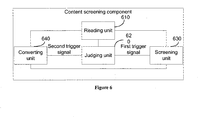
- the content screening component includes a reading unit 610, a judging unit 620, and a screening unit 630.
- the content screening component may further include a converting unit 640.
- the reading unit 610 is adapted to read information of the categorization component and content category carried in a categorized content.
- the judging unit 620 is adapted to send out a first trigger signal when determining that the categorization component that categorizes the content uses the same categorization standard as the content screening component according to the information of the categorization component read by the reading unit 610.
- the screening unit 630 is adapted to receive the first trigger signal sent from the judging unit 620, take the received first trigger signal as a trigger condition and screen the content read by the reading unit (610) according to the content category read by the reading unit 610.
- the judging unit 620 is further adapted to send out a second trigger signal when determining that the categorization component that categorizes the content uses a categorization standard different from that used by the content screening component according to the information of the categorization component read by the reading unit 610.
- the converting unit 640 is adapted to: receive the second trigger signal sent from the judging unit 620; take the received second trigger signal as the trigger condition and convert the content category read by the reading unit 610 into a content category corresponding to the categorization standard used by the content screening component; and output the content category upon conversion.
- the screening unit 630 is further adapted to screen the content by using the content category sent from the converting unit.
- Embodiment 9 provides a content screening method to support the trust model between the components in the CBCS system and the conversion of a content category when the categorization component uses a categorization standard different from that used by the content screening component.
- the method includes the following steps:
- the categorization mapping table mentioned in step 6 is a table stored in the screening component.
- the categorization mapping table records the mapping (rule) between the category generated by using a categorization scheme in the received content of one country and the category of the standard used by the content screening component. For example,
- the content of the Pop category from Japan may be re-labeled as J-Pop according to the mapping table; and the content restricted for teenagers below 13 years old according to the MPA standard in USA will be re-labeled as the content restricted for teenagers below 16 years old.
- the embodiments of the present invention carry the information of the categorization component in the categorized content so that the content screening component can verify the trust relationship of the categorization component and perform a screening operation after determining that the categorization component is trustworthy.
- the content screening component determines that the categorization component is not trustworthy, it may take measures; for example, the content screening component sends a request for re-categorization to other trustable categorization components. This ensures that the content screening component can obtain the content category determined by the trustable categorization component, thus supporting the trust model between the components in the CBCS system.
- the first embodiment and the sixth embodiment may be combined.
- this can ensure that the content screening component obtains the content category determined by the trustable categorization component, thus supporting the trust model between the components in the CBCS system; on the other hand, this can ensure that the content screening component determines the content category according to its own categorization standard, thus supporting the conversion of the content category when the categorization component uses a categorization standard different from that used by the content screening component.
- the embodiments of the present invention achieve better results.
- the embodiments of the present invention carry the information of the categorization component in the categorized content. Therefore, the content screening component can verify the categorization standard used by the categorization component, and perform a screening operation after determining that the categorization component uses the same categorization standard as the content screening component.
- the content screening component determines that the categorization component uses a categorization standard different from that used by the content screening component
- the content screening component converts the content category carried in the categorized content into a content category corresponding to the categorization standard used by the content screening component, and screens the content by the content category upon conversion. This can ensure that the content screening component determines the content category according to its own categorization standard, thus supporting the conversion of the content category when the categorization component uses a categorization standard different from that used by the content screening component.
- the embodiments of the present invention may be implemented through software and a necessary general hardware platform or through hardware only. However, in most cases, software and a general hardware platform are preferred. Based on such understandings, the technical solution of the present invention or contributions to the conventional art may be embodied by software products.
- the software products are stored in a storage medium and incorporate several instructions to instruct a computer device, for example, a personal computer, a server, or a network device, to execute the method provided by each embodiment of the present invention.
Landscapes
- Engineering & Computer Science (AREA)
- Databases & Information Systems (AREA)
- Theoretical Computer Science (AREA)
- General Engineering & Computer Science (AREA)
- Signal Processing (AREA)
- Computer Networks & Wireless Communication (AREA)
- Computer Security & Cryptography (AREA)
- Data Mining & Analysis (AREA)
- Physics & Mathematics (AREA)
- General Physics & Mathematics (AREA)
- Computer Hardware Design (AREA)
- Computing Systems (AREA)
- Information Retrieval, Db Structures And Fs Structures Therefor (AREA)
- Information Transfer Between Computers (AREA)
Claims (11)
- Inhaltsüberprüfungsverfahren, das Folgendes umfasst:Empfangen (103, 503) eines kategorisierten Inhalts durch eine Inhaltsüberprüfungskomponente; undÜberprüfen (103, 106, 503, 505) des Inhalts gemäß einer Inhaltskategorie, die in dem kategorisierten Inhalt geführt wird, wenn bestimmt wird, dass eine erste Kategorisierungskomponente, die den Inhalt kategorisiert, gemäß Informationen der Kategorisierungskomponente, die in dem kategorisierten Inhalt geführt sind, vertrauenswürdig ist;wobei das Inhaltsüberprüfungsverfahren ferner Folgendes umfasst:wenn durch die Inhaltsüberprüfungskomponente bestimmt wird (103, 104), dass die erste Kategorisierungskomponente nicht vertrauenswürdig ist, Auffordern einer zuverlässigen zweiten Kategorisierungskomponente, den Inhalt erneut zu kategorisieren, undÜberprüfen (106) des Inhalts gemäß einer zurückgegebenen Inhaltskategorie aus der zuverlässigen zweiten Kategorisierungskomponente.
- Inhaltsüberprüfungsverfahren nach Anspruch 1, wobei die Informationen der Kategorisierungskomponente, die in dem kategorisierten Inhalt geführt sind, ID-Informationen der ersten Kategorisierungskomponente umfassen; und
die Inhaltsüberprüfungskomponente beurteilt, ob die erste Kategorisierungskomponente vertrauenswürdig ist, in Übereinstimmung damit, ob die ID-Informationen der ersten Kategorisierungskomponente in einer Vertrauensliste der Inhaltsüberprüfungskomponente sind. - Inhaltsüberprüfungsverfahren nach Anspruch 1, wobei die Inhaltsüberprüfungskomponente irgendeine Kategorisierungskomponente aus einer Vertrauensliste der Inhaltsüberprüfungskomponente als die zuverlässige zweite Kategorisierungskomponente auswählt.
- Inhaltsüberprüfungsverfahren nach Anspruch 1, wobei nach dem erneuten Kategorisieren des Inhalts die zweite Kategorisierungskomponente die Informationen der zweiten Kategorisierungskomponente zurückgibt.
- Inhaltsüberprüfungsverfahren nach Anspruch 1, wobei nach dem Erhalten der Inhaltskategorie des Inhalts aus der zuverlässigen Kategorisierungskomponente die Inhaltsüberprüfungskomponente den Inhalt gemäß der aus der zuverlässigen Kategorisierungskomponente erhaltenen Inhaltskategorie überprüft, wenn bestimmt wird, dass die zuverlässige Kategorisierungskomponente denselben Kategorisierungsstandard wie die Inhaltsüberprüfungskomponente verwendet gemäß den Informationen der Kategorisierungskomponente.
- Inhaltsüberprüfungsverfahren nach Anspruch 1, wobei nach dem Erhalten der Inhaltskategorie des Inhalts aus der zuverlässigen Kategorisierungskomponente die Inhaltsüberprüfungskomponente die aus der zuverlässigen Kategorisierungskomponente erhaltene Inhaltskategorie in eine Inhaltskategorie umsetzt, die dem von der Inhaltsüberprüfungskomponente verwendeten Kategorisierungsstandard entspricht, und den Inhalt durch die Inhaltskategorie nach der Umsetzung überprüft, wenn bestimmt wird, dass die zuverlässige Kategorisierungskomponente einen Kategorisierungsstandard verwendet, der sich von dem unterscheidet, der von der Inhaltsüberprüfungskomponente verwendet wird.
- Inhaltsüberprüfungsverfahren nach Anspruch 6, wobei: die Informationen der Kategorisierungskomponente Kategorisierungsstandardinformationen der zuverlässigen Kategorisierungskomponente umfassen; und
wenn bestimmt wird, dass die zuverlässige Kategorisierungskomponente einen Kategorisierungsstandard verwendet, der sich von dem unterscheidet, der von der Inhaltsüberprüfungskomponente verwendet wird gemäß den Kategorisierungsstandardinformationen der zuverlässigen Kategorisierungskomponente, die Inhaltsüberprüfungskomponente die aus der zuverlässigen Kategorisierungskomponente erhaltene Inhaltskategorie in eine Inhaltskategorie, die dem von der Inhaltsüberprüfungskomponente verwendeten Kategorisierungsstandard entspricht, gemäß einer Kategorisierungsabbildungstabelle umsetzt. - Inhaltsüberprüfungsverfahren nach einem der Ansprüche 1- 4, wobei bevor die Inhaltsüberprüfungskomponente den kategorisierten Inhalt empfängt, das Verfahren ferner Folgendes umfasst: Kategorisieren des Inhalts durch die Kategorisierungskomponente und Hinzufügen der Informationen der Kategorisierungskomponente zu dem Inhalt durch Hinzufügen von Elementen zu Metadaten.
- Inhaltsüberprüfungskomponente, die Folgendes umfasst:eine Empfangseinheit (210), die ausgelegt ist, einen kategorisierten Inhalt zu empfangen;eine Leseeinheit (220), die ausgelegt ist, Informationen einer Kategorisierungskomponente und eine Inhaltskategorie, die in dem von der Empfangseinheit (210) empfangenen kategorisierten Inhalt geführt ist, zu lesen ;eine Bewertungseinheit (230), die ausgelegt ist, ein erstes Auslösesignal auszusenden, wenn bestimmt wird, dass eine erste Kategorisierungskomponente, die den Inhalt kategorisiert, vertrauenswürdig ist gemäß den von der Leseeinheit (220) gelesenen Informationen der Kategorisierungskomponente; undeine Überprüfungseinheit (240), die ausgelegt ist, das von der Bewertungseinheit (230) gesendete erste Auslösesignal zu empfangen, das empfangene erste Auslösesignal als eine Auslösebedingung zu verwenden und den von der Empfangseinheit (210) empfangenen Inhalt gemäß der von der Leseeinheit (220) gelesenen Inhaltskategorie zu überprüfen;wobei die Bewertungseinheit (230) ferner ausgelegt ist, ein zweites Auslösesignal auszusenden, wenn bestimmt wird, dass die erste Kategorisierungskomponente, die den Inhalt kategorisiert, nicht vertrauenswürdig ist gemäß den von der Leseeinheit (220) gelesenen Informationen der Kategorisierungskomponente; unddie Inhaltsüberprüfungskomponente ferner Folgendes umfasst: eine Kategorisierungsanforderungseinheit (250), die ausgelegt ist, das zweite von der Bewertungseinheit (230) gesendete Auslösesignal zu empfangen, das empfangene zweite Auslösesignal als die Auslösebedingung zu verwenden und eine zuverlässige zweite Kategorisierungskomponente aufzufordern, den von der Empfangseinheit (210) empfangenen Inhalt erneut zu kategorisieren;die Empfangseinheit (210) ferner ausgelegt ist, die von der zweiten Kategorisierungskomponente zurückgegebenen Informationen zu empfangen; unddie Leseeinheit (220) ferner ausgelegt ist, die Inhaltskategorie nach dem erneuten Kategorisieren aus den von der zweiten Kategorisierungskomponente zurückgegebenen und von der Empfangseinheit empfangenen Informationen zu lesen; unddie Überprüfungseinheit (240) ferner ausgelegt ist, den von der Empfangseinheit (210) empfangenen Inhalt unter Verwendung der von der Leseeinheit (220) gelesenen Inhaltskategorie nach dem erneuten Kategorisieren zu überprüfen.
- Inhaltsüberprüfungssystem, das Folgendes umfasst:eine erste Kategorisierungskomponente (410), die ausgelegt ist, einen Inhalt anfänglich zu kategorisieren und Informationen einer ersten Kategorisierungskomponente zu dem kategorisierten Inhalt hinzuzufügen; undeine Inhaltsüberprüfungskomponente (420), die ausgelegt ist, den kategorisierten Inhalt zu empfangen und den Inhalt durch eine in dem kategorisierten Inhalt geführte Inhaltskategorie zu überprüfen, wenn bestimmt wird, dass die erste Kategorisierungskomponente (410), die den Inhalt kategorisiert, vertrauenswürdig ist gemäß den in dem kategorisierten Inhalt geführten Informationen der Kategorisierungskomponente;wobei die Inhaltsüberprüfungskomponente (420) ferner ausgelegt ist, eine Kategorisierungsanforderung auszusenden und den Inhalt gemäß der zurückgegebenen Inhaltskategorie zu überprüfen, wenn bestimmt wird, dass die erste Kategorisierungskomponente, die den Inhalt kategorisiert, nicht vertrauenswürdig ist gemäß den in dem kategorisierten Inhalt geführten Informationen der Kategorisierungskomponente; unddas Inhaltsüberprüfungssystem ferner eine zweite Kategorisierungskomponente (430) umfasst, der von der Inhaltsüberprüfungskomponente (420) vertraut wird und die ausgelegt ist, die von der Inhaltsüberprüfungskomponente (420) gesendete Kategorisierungsanforderung zu empfangen und die Inhaltskategorie zurückzugeben.
- Computerlesbares Speichermedium, das Computerprogrammcodes umfasst, die dann, wenn sie durch eine Computereinheit ausgeführt werden, bewirken, dass die Computereinheit alle Schritte eines der Ansprüche 1- 8 ausführt.
Applications Claiming Priority (2)
| Application Number | Priority Date | Filing Date | Title |
|---|---|---|---|
| CN2007101058086A CN101316259B (zh) | 2007-05-30 | 2007-05-30 | 内容过滤的方法、装置及系统 |
| PCT/CN2008/071137 WO2008145069A1 (en) | 2007-05-30 | 2008-05-29 | Method, device and system for content filtering |
Publications (3)
| Publication Number | Publication Date |
|---|---|
| EP2093961A1 EP2093961A1 (de) | 2009-08-26 |
| EP2093961A4 EP2093961A4 (de) | 2010-06-23 |
| EP2093961B1 true EP2093961B1 (de) | 2014-07-16 |
Family
ID=40107101
Family Applications (1)
| Application Number | Title | Priority Date | Filing Date |
|---|---|---|---|
| EP08757548.6A Active EP2093961B1 (de) | 2007-05-30 | 2008-05-29 | Verfahren, Vorrichtung und System zur Inhaltsfilterung |
Country Status (5)
| Country | Link |
|---|---|
| US (2) | US8959625B2 (de) |
| EP (1) | EP2093961B1 (de) |
| CN (1) | CN101316259B (de) |
| ES (1) | ES2507509T3 (de) |
| WO (1) | WO2008145069A1 (de) |
Families Citing this family (5)
| Publication number | Priority date | Publication date | Assignee | Title |
|---|---|---|---|---|
| CN101316259B (zh) | 2007-05-30 | 2012-03-21 | 华为技术有限公司 | 内容过滤的方法、装置及系统 |
| CN101494617B (zh) * | 2008-01-23 | 2010-12-15 | 华为技术有限公司 | 一种内容分类的方法、系统及装置 |
| US9858330B2 (en) | 2013-10-21 | 2018-01-02 | Agile Legal Technology | Content categorization system |
| CN104484351B (zh) * | 2014-11-28 | 2018-07-20 | 上海百事通信息技术股份有限公司 | 大数据量号码过滤装置及方法 |
| CN110717110B (zh) * | 2019-10-12 | 2022-04-22 | 北京达佳互联信息技术有限公司 | 多媒体资源过滤方法、装置、电子设备及存储介质 |
Citations (1)
| Publication number | Priority date | Publication date | Assignee | Title |
|---|---|---|---|---|
| EP1001614A1 (de) * | 1998-11-12 | 2000-05-17 | Thomson Consumer Electronics, Inc. | System zum verarbeiten von Programmen und Parameterinformationen auf der Basis von mehreren Rundfunkquellen |
Family Cites Families (20)
| Publication number | Priority date | Publication date | Assignee | Title |
|---|---|---|---|---|
| US6266664B1 (en) * | 1997-10-01 | 2001-07-24 | Rulespace, Inc. | Method for scanning, analyzing and rating digital information content |
| US7158986B1 (en) * | 1999-07-27 | 2007-01-02 | Mailfrontier, Inc. A Wholly Owned Subsidiary Of Sonicwall, Inc. | Method and system providing user with personalized recommendations by electronic-mail based upon the determined interests of the user pertain to the theme and concepts of the categorized document |
| US20030182420A1 (en) * | 2001-05-21 | 2003-09-25 | Kent Jones | Method, system and apparatus for monitoring and controlling internet site content access |
| WO2003014889A2 (en) * | 2001-08-06 | 2003-02-20 | Matsushita Electric Industrial Co., Ltd. | License management server, terminal device, license management system and usage restriction control method |
| US6947985B2 (en) * | 2001-12-05 | 2005-09-20 | Websense, Inc. | Filtering techniques for managing access to internet sites or other software applications |
| US20040158540A1 (en) * | 2002-01-31 | 2004-08-12 | Cashette, Inc. | Spam control system requiring unauthorized senders to pay postage through an internet payment service with provision for refund on accepted messages |
| US20030195933A1 (en) * | 2002-04-10 | 2003-10-16 | Curren Thomas Charles | Web filter screen |
| US8290948B2 (en) * | 2003-06-30 | 2012-10-16 | Hoshiko, Llc | Method and apparatus for content filtering |
| WO2006002076A2 (en) * | 2004-06-15 | 2006-01-05 | Tekelec | Methods, systems, and computer program products for content-based screening of messaging service messages |
| JP2006018635A (ja) * | 2004-07-02 | 2006-01-19 | Matsushita Electric Ind Co Ltd | フィルタリングシステム |
| US20060224682A1 (en) * | 2005-04-04 | 2006-10-05 | Inmon Data Systems, Inc. | System and method of screening unstructured messages and communications |
| US20070050445A1 (en) * | 2005-08-31 | 2007-03-01 | Hugh Hyndman | Internet content analysis |
| WO2007060654A2 (en) * | 2005-11-23 | 2007-05-31 | Daniel Farb | Business and software security and storage methods, devices, and applications |
| EP1959358A4 (de) * | 2005-12-05 | 2010-04-07 | Sony Corp | Informationsverarbeitungsvorrichtung, -verfahren und -programm |
| CN1863211A (zh) * | 2006-03-23 | 2006-11-15 | 华为技术有限公司 | 内容过滤系统及其方法 |
| WO2007112111A2 (en) * | 2006-03-29 | 2007-10-04 | Packetvideo Corp. | System and method for securing content ratings |
| US8131763B2 (en) * | 2006-05-03 | 2012-03-06 | Cellco Partnership | Age verification and content filtering systems and methods |
| CN100456755C (zh) * | 2006-08-31 | 2009-01-28 | 华为技术有限公司 | 消息过滤方法及其装置 |
| US8107929B2 (en) * | 2007-05-23 | 2012-01-31 | Gloto Corporation | System and method for responding to information requests from users of personal communication devices |
| CN101316259B (zh) | 2007-05-30 | 2012-03-21 | 华为技术有限公司 | 内容过滤的方法、装置及系统 |
-
2007
- 2007-05-30 CN CN2007101058086A patent/CN101316259B/zh active Active
-
2008
- 2008-05-29 WO PCT/CN2008/071137 patent/WO2008145069A1/zh not_active Ceased
- 2008-05-29 ES ES08757548.6T patent/ES2507509T3/es active Active
- 2008-05-29 EP EP08757548.6A patent/EP2093961B1/de active Active
-
2009
- 2009-07-10 US US12/500,712 patent/US8959625B2/en active Active
-
2015
- 2015-01-06 US US14/590,678 patent/US9473517B2/en active Active
Patent Citations (1)
| Publication number | Priority date | Publication date | Assignee | Title |
|---|---|---|---|---|
| EP1001614A1 (de) * | 1998-11-12 | 2000-05-17 | Thomson Consumer Electronics, Inc. | System zum verarbeiten von Programmen und Parameterinformationen auf der Basis von mehreren Rundfunkquellen |
Non-Patent Citations (1)
| Title |
|---|
| "Dictionary for OMA Specifications V2.1 ; OMA-Dictionary-V2_1-20040914-A", OMA-DICTIONARY-V2_1-20040914-A, OPEN MOBILE ALLIANCE (OMA), 4330 LA JOLLA VILLAGE DR., SUITE 110 SAN DIEGO, CA 92122 ; USA, no. 2.1, 14 September 2004 (2004-09-14), pages 1 - 19, XP064120148 * |
Also Published As
| Publication number | Publication date |
|---|---|
| EP2093961A1 (de) | 2009-08-26 |
| CN101316259B (zh) | 2012-03-21 |
| EP2093961A4 (de) | 2010-06-23 |
| US8959625B2 (en) | 2015-02-17 |
| US20150121521A1 (en) | 2015-04-30 |
| CN101316259A (zh) | 2008-12-03 |
| ES2507509T3 (es) | 2014-10-15 |
| WO2008145069A1 (en) | 2008-12-04 |
| US20090276850A1 (en) | 2009-11-05 |
| US9473517B2 (en) | 2016-10-18 |
Similar Documents
| Publication | Publication Date | Title |
|---|---|---|
| EP2023531B1 (de) | Verfahren, vorrichtung, system, benutzerendgerät und anwendungsserver zur auswahl von diensten | |
| EP2075714B1 (de) | Vorrichtung und Verfahren zum Aufrufen/Herunterladen von Inhalten von einer Kommunikationsvorrichtung | |
| CN101375281B (zh) | 使用用户反馈来改善搜索结果 | |
| US9473517B2 (en) | Content screening method, apparatus and system | |
| EP1798646B1 (de) | Managementapparat für mobile Inhalte | |
| US20070067290A1 (en) | Metadata triggered notification for content searching | |
| US20070027857A1 (en) | System and method for searching multimedia and download the search result to mobile devices | |
| US20090100093A1 (en) | Apparatus, system, method and computer program product for previewing media files | |
| WO2015139538A1 (zh) | 一种视频信息推送方法及装置 | |
| US11196802B2 (en) | Contents management method and apparatus | |
| US20120278448A1 (en) | Method and System for Accessing Microblog, and Method and System for Sending Pictures on Microblog Website | |
| WO2008078280A1 (en) | System, method, apparatus and computer program product for providing content selection in a network environment | |
| CN102567376A (zh) | 一种个性化搜索结果推荐方法和装置 | |
| JP2012141991A (ja) | コンテンツカテゴリ化方法、及びシステム | |
| CN101360260A (zh) | 适合2.5g/3g移动数据网络的混合式移动p2p内容共享系统架构 | |
| Hac | Multimedia applications support for wireless ATM networks | |
| JP2009163688A (ja) | 情報提示装置、情報提示方法、および情報提示用プログラム | |
| WO2006071324A2 (en) | Imroved bitmask access for managing blog content | |
| CN111832261B (zh) | 一种文档样式选择方法、装置及电子设备 | |
| JP2010522394A (ja) | Soapオペレーションを用いた問合せコンテンツサービス方法 | |
| WO2006001565A1 (en) | Extended description to support targeting scheme, and tv anytime service and system employing the same | |
| KR20130133237A (ko) | 분류된 데이터를 확장된 콘텐츠 계층을 이용해 노출 | |
| JP5081674B2 (ja) | 通信端末 | |
| KR100873204B1 (ko) | 컨텐츠 관리 방법 및 그 장치 | |
| JP2007018270A (ja) | ストレージ管理装置、及びユーザプロファイル管理方法 |
Legal Events
| Date | Code | Title | Description |
|---|---|---|---|
| PUAI | Public reference made under article 153(3) epc to a published international application that has entered the european phase |
Free format text: ORIGINAL CODE: 0009012 |
|
| 17P | Request for examination filed |
Effective date: 20090624 |
|
| AK | Designated contracting states |
Kind code of ref document: A1 Designated state(s): AT BE BG CH CY CZ DE DK EE ES FI FR GB GR HR HU IE IS IT LI LT LU LV MC MT NL NO PL PT RO SE SI SK TR |
|
| RIC1 | Information provided on ipc code assigned before grant |
Ipc: H04L 12/58 20060101ALI20100428BHEP Ipc: H04L 29/06 20060101AFI20081216BHEP Ipc: G06F 17/30 20060101ALI20100428BHEP |
|
| A4 | Supplementary search report drawn up and despatched |
Effective date: 20100526 |
|
| DAX | Request for extension of the european patent (deleted) | ||
| 17Q | First examination report despatched |
Effective date: 20110322 |
|
| GRAP | Despatch of communication of intention to grant a patent |
Free format text: ORIGINAL CODE: EPIDOSNIGR1 |
|
| INTG | Intention to grant announced |
Effective date: 20131212 |
|
| GRAS | Grant fee paid |
Free format text: ORIGINAL CODE: EPIDOSNIGR3 |
|
| GRAA | (expected) grant |
Free format text: ORIGINAL CODE: 0009210 |
|
| AK | Designated contracting states |
Kind code of ref document: B1 Designated state(s): AT BE BG CH CY CZ DE DK EE ES FI FR GB GR HR HU IE IS IT LI LT LU LV MC MT NL NO PL PT RO SE SI SK TR |
|
| REG | Reference to a national code |
Ref country code: GB Ref legal event code: FG4D |
|
| REG | Reference to a national code |
Ref country code: CH Ref legal event code: EP |
|
| REG | Reference to a national code |
Ref country code: IE Ref legal event code: FG4D |
|
| REG | Reference to a national code |
Ref country code: AT Ref legal event code: REF Ref document number: 678211 Country of ref document: AT Kind code of ref document: T Effective date: 20140815 |
|
| REG | Reference to a national code |
Ref country code: DE Ref legal event code: R096 Ref document number: 602008033332 Country of ref document: DE Effective date: 20140828 |
|
| REG | Reference to a national code |
Ref country code: ES Ref legal event code: FG2A Ref document number: 2507509 Country of ref document: ES Kind code of ref document: T3 Effective date: 20141015 |
|
| REG | Reference to a national code |
Ref country code: NL Ref legal event code: VDEP Effective date: 20140716 |
|
| REG | Reference to a national code |
Ref country code: AT Ref legal event code: MK05 Ref document number: 678211 Country of ref document: AT Kind code of ref document: T Effective date: 20140716 |
|
| REG | Reference to a national code |
Ref country code: LT Ref legal event code: MG4D |
|
| PG25 | Lapsed in a contracting state [announced via postgrant information from national office to epo] |
Ref country code: NO Free format text: LAPSE BECAUSE OF FAILURE TO SUBMIT A TRANSLATION OF THE DESCRIPTION OR TO PAY THE FEE WITHIN THE PRESCRIBED TIME-LIMIT Effective date: 20141016 Ref country code: LT Free format text: LAPSE BECAUSE OF FAILURE TO SUBMIT A TRANSLATION OF THE DESCRIPTION OR TO PAY THE FEE WITHIN THE PRESCRIBED TIME-LIMIT Effective date: 20140716 Ref country code: GR Free format text: LAPSE BECAUSE OF FAILURE TO SUBMIT A TRANSLATION OF THE DESCRIPTION OR TO PAY THE FEE WITHIN THE PRESCRIBED TIME-LIMIT Effective date: 20141017 Ref country code: FI Free format text: LAPSE BECAUSE OF FAILURE TO SUBMIT A TRANSLATION OF THE DESCRIPTION OR TO PAY THE FEE WITHIN THE PRESCRIBED TIME-LIMIT Effective date: 20140716 Ref country code: BG Free format text: LAPSE BECAUSE OF FAILURE TO SUBMIT A TRANSLATION OF THE DESCRIPTION OR TO PAY THE FEE WITHIN THE PRESCRIBED TIME-LIMIT Effective date: 20141016 Ref country code: SE Free format text: LAPSE BECAUSE OF FAILURE TO SUBMIT A TRANSLATION OF THE DESCRIPTION OR TO PAY THE FEE WITHIN THE PRESCRIBED TIME-LIMIT Effective date: 20140716 Ref country code: PT Free format text: LAPSE BECAUSE OF FAILURE TO SUBMIT A TRANSLATION OF THE DESCRIPTION OR TO PAY THE FEE WITHIN THE PRESCRIBED TIME-LIMIT Effective date: 20141117 |
|
| PG25 | Lapsed in a contracting state [announced via postgrant information from national office to epo] |
Ref country code: PL Free format text: LAPSE BECAUSE OF FAILURE TO SUBMIT A TRANSLATION OF THE DESCRIPTION OR TO PAY THE FEE WITHIN THE PRESCRIBED TIME-LIMIT Effective date: 20140716 Ref country code: LV Free format text: LAPSE BECAUSE OF FAILURE TO SUBMIT A TRANSLATION OF THE DESCRIPTION OR TO PAY THE FEE WITHIN THE PRESCRIBED TIME-LIMIT Effective date: 20140716 Ref country code: NL Free format text: LAPSE BECAUSE OF FAILURE TO SUBMIT A TRANSLATION OF THE DESCRIPTION OR TO PAY THE FEE WITHIN THE PRESCRIBED TIME-LIMIT Effective date: 20140716 Ref country code: IS Free format text: LAPSE BECAUSE OF FAILURE TO SUBMIT A TRANSLATION OF THE DESCRIPTION OR TO PAY THE FEE WITHIN THE PRESCRIBED TIME-LIMIT Effective date: 20141116 Ref country code: CY Free format text: LAPSE BECAUSE OF FAILURE TO SUBMIT A TRANSLATION OF THE DESCRIPTION OR TO PAY THE FEE WITHIN THE PRESCRIBED TIME-LIMIT Effective date: 20140716 Ref country code: AT Free format text: LAPSE BECAUSE OF FAILURE TO SUBMIT A TRANSLATION OF THE DESCRIPTION OR TO PAY THE FEE WITHIN THE PRESCRIBED TIME-LIMIT Effective date: 20140716 |
|
| REG | Reference to a national code |
Ref country code: DE Ref legal event code: R097 Ref document number: 602008033332 Country of ref document: DE |
|
| PG25 | Lapsed in a contracting state [announced via postgrant information from national office to epo] |
Ref country code: EE Free format text: LAPSE BECAUSE OF FAILURE TO SUBMIT A TRANSLATION OF THE DESCRIPTION OR TO PAY THE FEE WITHIN THE PRESCRIBED TIME-LIMIT Effective date: 20140716 Ref country code: DK Free format text: LAPSE BECAUSE OF FAILURE TO SUBMIT A TRANSLATION OF THE DESCRIPTION OR TO PAY THE FEE WITHIN THE PRESCRIBED TIME-LIMIT Effective date: 20140716 Ref country code: RO Free format text: LAPSE BECAUSE OF FAILURE TO SUBMIT A TRANSLATION OF THE DESCRIPTION OR TO PAY THE FEE WITHIN THE PRESCRIBED TIME-LIMIT Effective date: 20140716 Ref country code: CZ Free format text: LAPSE BECAUSE OF FAILURE TO SUBMIT A TRANSLATION OF THE DESCRIPTION OR TO PAY THE FEE WITHIN THE PRESCRIBED TIME-LIMIT Effective date: 20140716 Ref country code: SK Free format text: LAPSE BECAUSE OF FAILURE TO SUBMIT A TRANSLATION OF THE DESCRIPTION OR TO PAY THE FEE WITHIN THE PRESCRIBED TIME-LIMIT Effective date: 20140716 Ref country code: IT Free format text: LAPSE BECAUSE OF FAILURE TO SUBMIT A TRANSLATION OF THE DESCRIPTION OR TO PAY THE FEE WITHIN THE PRESCRIBED TIME-LIMIT Effective date: 20140716 |
|
| PLBE | No opposition filed within time limit |
Free format text: ORIGINAL CODE: 0009261 |
|
| STAA | Information on the status of an ep patent application or granted ep patent |
Free format text: STATUS: NO OPPOSITION FILED WITHIN TIME LIMIT |
|
| 26N | No opposition filed |
Effective date: 20150417 |
|
| PG25 | Lapsed in a contracting state [announced via postgrant information from national office to epo] |
Ref country code: SI Free format text: LAPSE BECAUSE OF FAILURE TO SUBMIT A TRANSLATION OF THE DESCRIPTION OR TO PAY THE FEE WITHIN THE PRESCRIBED TIME-LIMIT Effective date: 20140716 |
|
| REG | Reference to a national code |
Ref country code: CH Ref legal event code: PL |
|
| PG25 | Lapsed in a contracting state [announced via postgrant information from national office to epo] |
Ref country code: MC Free format text: LAPSE BECAUSE OF FAILURE TO SUBMIT A TRANSLATION OF THE DESCRIPTION OR TO PAY THE FEE WITHIN THE PRESCRIBED TIME-LIMIT Effective date: 20140716 Ref country code: LI Free format text: LAPSE BECAUSE OF NON-PAYMENT OF DUE FEES Effective date: 20150531 Ref country code: LU Free format text: LAPSE BECAUSE OF FAILURE TO SUBMIT A TRANSLATION OF THE DESCRIPTION OR TO PAY THE FEE WITHIN THE PRESCRIBED TIME-LIMIT Effective date: 20150529 Ref country code: CH Free format text: LAPSE BECAUSE OF NON-PAYMENT OF DUE FEES Effective date: 20150531 |
|
| REG | Reference to a national code |
Ref country code: IE Ref legal event code: MM4A |
|
| REG | Reference to a national code |
Ref country code: FR Ref legal event code: PLFP Year of fee payment: 9 |
|
| PG25 | Lapsed in a contracting state [announced via postgrant information from national office to epo] |
Ref country code: IE Free format text: LAPSE BECAUSE OF NON-PAYMENT OF DUE FEES Effective date: 20150529 |
|
| PG25 | Lapsed in a contracting state [announced via postgrant information from national office to epo] |
Ref country code: BE Free format text: LAPSE BECAUSE OF FAILURE TO SUBMIT A TRANSLATION OF THE DESCRIPTION OR TO PAY THE FEE WITHIN THE PRESCRIBED TIME-LIMIT Effective date: 20140716 |
|
| PG25 | Lapsed in a contracting state [announced via postgrant information from national office to epo] |
Ref country code: MT Free format text: LAPSE BECAUSE OF FAILURE TO SUBMIT A TRANSLATION OF THE DESCRIPTION OR TO PAY THE FEE WITHIN THE PRESCRIBED TIME-LIMIT Effective date: 20140716 |
|
| REG | Reference to a national code |
Ref country code: FR Ref legal event code: PLFP Year of fee payment: 10 |
|
| PG25 | Lapsed in a contracting state [announced via postgrant information from national office to epo] |
Ref country code: HU Free format text: LAPSE BECAUSE OF FAILURE TO SUBMIT A TRANSLATION OF THE DESCRIPTION OR TO PAY THE FEE WITHIN THE PRESCRIBED TIME-LIMIT; INVALID AB INITIO Effective date: 20080529 |
|
| PG25 | Lapsed in a contracting state [announced via postgrant information from national office to epo] |
Ref country code: HR Free format text: LAPSE BECAUSE OF FAILURE TO SUBMIT A TRANSLATION OF THE DESCRIPTION OR TO PAY THE FEE WITHIN THE PRESCRIBED TIME-LIMIT Effective date: 20140716 |
|
| PG25 | Lapsed in a contracting state [announced via postgrant information from national office to epo] |
Ref country code: TR Free format text: LAPSE BECAUSE OF FAILURE TO SUBMIT A TRANSLATION OF THE DESCRIPTION OR TO PAY THE FEE WITHIN THE PRESCRIBED TIME-LIMIT Effective date: 20140716 |
|
| REG | Reference to a national code |
Ref country code: FR Ref legal event code: PLFP Year of fee payment: 11 |
|
| REG | Reference to a national code |
Ref country code: DE Ref legal event code: R079 Ref document number: 602008033332 Country of ref document: DE Free format text: PREVIOUS MAIN CLASS: H04L0029060000 Ipc: H04L0065000000 |
|
| REG | Reference to a national code |
Ref country code: FR Ref legal event code: PLFP Year of fee payment: 16 |
|
| P01 | Opt-out of the competence of the unified patent court (upc) registered |
Effective date: 20230510 |
|
| PGFP | Annual fee paid to national office [announced via postgrant information from national office to epo] |
Ref country code: DE Payment date: 20250402 Year of fee payment: 18 |
|
| PGFP | Annual fee paid to national office [announced via postgrant information from national office to epo] |
Ref country code: ES Payment date: 20250605 Year of fee payment: 18 Ref country code: GB Payment date: 20250401 Year of fee payment: 18 |
|
| PGFP | Annual fee paid to national office [announced via postgrant information from national office to epo] |
Ref country code: FR Payment date: 20250401 Year of fee payment: 18 |