EP2094052A2 - Protocole de partage de créneaux pour réseaux de communication sans fil - Google Patents
Protocole de partage de créneaux pour réseaux de communication sans fil Download PDFInfo
- Publication number
- EP2094052A2 EP2094052A2 EP09002465A EP09002465A EP2094052A2 EP 2094052 A2 EP2094052 A2 EP 2094052A2 EP 09002465 A EP09002465 A EP 09002465A EP 09002465 A EP09002465 A EP 09002465A EP 2094052 A2 EP2094052 A2 EP 2094052A2
- Authority
- EP
- European Patent Office
- Prior art keywords
- node
- superframes
- timeslot
- allocating
- designated timeslot
- Prior art date
- Legal status (The legal status is an assumption and is not a legal conclusion. Google has not performed a legal analysis and makes no representation as to the accuracy of the status listed.)
- Withdrawn
Links
Images



Classifications
-
- H—ELECTRICITY
- H04—ELECTRIC COMMUNICATION TECHNIQUE
- H04W—WIRELESS COMMUNICATION NETWORKS
- H04W72/00—Local resource management
- H04W72/04—Wireless resource allocation
- H04W72/044—Wireless resource allocation based on the type of the allocated resource
- H04W72/0446—Resources in time domain, e.g. slots or frames
-
- H—ELECTRICITY
- H04—ELECTRIC COMMUNICATION TECHNIQUE
- H04B—TRANSMISSION
- H04B7/00—Radio transmission systems, i.e. using radiation field
- H04B7/24—Radio transmission systems, i.e. using radiation field for communication between two or more posts
- H04B7/26—Radio transmission systems, i.e. using radiation field for communication between two or more posts at least one of which is mobile
- H04B7/2643—Radio transmission systems, i.e. using radiation field for communication between two or more posts at least one of which is mobile using time-division multiple access [TDMA]
- H04B7/2656—Radio transmission systems, i.e. using radiation field for communication between two or more posts at least one of which is mobile using time-division multiple access [TDMA] for structure of frame, burst
-
- H—ELECTRICITY
- H04—ELECTRIC COMMUNICATION TECHNIQUE
- H04L—TRANSMISSION OF DIGITAL INFORMATION, e.g. TELEGRAPHIC COMMUNICATION
- H04L12/00—Data switching networks
- H04L12/28—Data switching networks characterised by path configuration, e.g. LAN [Local Area Networks] or WAN [Wide Area Networks]
- H04L12/40—Bus networks
- H04L12/403—Bus networks with centralised control, e.g. polling
- H04L12/4035—Bus networks with centralised control, e.g. polling in which slots of a TDMA packet structure are assigned based on a contention resolution carried out at a master unit
-
- H—ELECTRICITY
- H04—ELECTRIC COMMUNICATION TECHNIQUE
- H04W—WIRELESS COMMUNICATION NETWORKS
- H04W48/00—Access restriction; Network selection; Access point selection
- H04W48/08—Access restriction or access information delivery, e.g. discovery data delivery
-
- H—ELECTRICITY
- H04—ELECTRIC COMMUNICATION TECHNIQUE
- H04W—WIRELESS COMMUNICATION NETWORKS
- H04W74/00—Wireless channel access
- H04W74/02—Hybrid access
-
- H—ELECTRICITY
- H04—ELECTRIC COMMUNICATION TECHNIQUE
- H04W—WIRELESS COMMUNICATION NETWORKS
- H04W84/00—Network topologies
- H04W84/02—Hierarchically pre-organised networks, e.g. paging networks, cellular networks, WLAN [Wireless Local Area Network] or WLL [Wireless Local Loop]
- H04W84/10—Small scale networks; Flat hierarchical networks
- H04W84/12—WLAN [Wireless Local Area Networks]
Definitions
- This invention relates generally to communication networks, and more particularly to wireless networks using a shared communication media and timeslot based scheduling protocols.
- efficient utilization of the media is important for low and high data rates.
- efficient transmission scheduling decreases power consumption and cost.
- high data rate networks such as audio-video (AV) networks
- efficient transmission scheduling increases data throughput and improves quality of service (QoS).
- nodes Because signals transmitted by all transceivers, commonly called nodes , share the same frequency channel, it is necessary to enforce a channel access protocol to efficiently utilize the available network bandwidth. This can be done with a channel access schedule, which determines when and how nodes can access the shared channel.
- communication networks can partition time into periodic time intervals, when superframes are transmitted.
- a superframe can be further partitioned into a beacon period, a data transmission period, and in some cases, an idle period.
- the duration of the superframe is designed to guarantee satisfactory network synchronization, and to minimize transmission latency.
- the data transmission period can be partitioned into a contention-free period (CFP), and a contention-access period (CAP).
- CFP contention-free period
- CAP contention-access period
- a node first reserves or is allocated a timeslot to transmit data.
- CAP nodes use some contention technique, such as carrier sense-multi access/collision detection (CSMA/CD) to transmit data.
- CSMA/CD carrier sense-multi access/collision detection
- beacon period network parameters are transmitted, i.e., transmission rates, logical channels, network identifiers, and the channel access schedule.
- the beacon period also defines the start of the CFP, the start of the CAP, and in some cases, the access schedule for the CFP.
- the beacon period can also include other parameters as defined by an applicable standard.
- time is further partitioned into allocatable timeslots .
- the timeslot is referred as a beacon period slot .
- the timeslot is referred to as a guaranteed timeslot (GTS) or reserved timeslot .
- GTS guaranteed timeslot
- the CAP can also include timeslots, which are not allocated to any particular node. The number of timeslots in the beacon period, CFP and CAP can vary.
- the length of the timeslot is an important design consideration in conventional networks. If the timeslot is too short, then overhead can increase. If the timeslot is too long, then throughput can be reduced.
- All nodes in the network are allowed to access timeslots in the CAP by using the contention access mechanisms defined for the network. However, each timeslot in the beacon and the CFP is allocated to one specific node, and all other nodes are not allowed to access the network during that time in any superframe.
- the IEEE 802.15.3 standard (WiMedia) specifies a maximum of forty-eight beacon period slots.
- the IEEE 802.15.4 standard (ZigBee) specifies a maximum of seven GTS in each superframe. Both of these standards promote interoperability of networks on a worldwide basis.
- Such conventional timeslot allocation schemes impose the following limitations on the wireless network.
- the allocated timeslot is not fully utilized when the node has nothing to transmit.
- the total number of nodes that have access during the beacon period or CFP is limited by the number of timeslots.
- the conventional timeslot allocation scheme also has implications on power consumption, as in many networks nodes are required to transmit their own beacon, and 'listen' to other beacons in the channel in every superframe.
- a method for transmitting information in a communication network of multiple nodes, in which time is partitioned into successive superframes.
- the method includes allocating to at least a first node of the multiple nodes a designated timeslot in which to transmit information in at least one of a plurality of superframes, and allocating to at least a second node of the multiple nodes the same designated timeslot in which to transmit information during a different subsequent superframe.
- a system for transmitting information in a communication network of nodes, in which information is transmitted between multiple nodes in subsequent superframes.
- the system includes at least a first node of the multiple nodes configured to transmit data in a designated timeslot allocated to the first node in at least one of a plurality of superframes, and at least a second node of the multiple nodes configured to transmit data in the same designated timeslot during at least one different superframe.
- a method and system where the designated timeslot is in a beacon period of a superframe.
- a method and system where the designated timeslot is in a contention free period of a superframe.
- a coordinator node is configured to allocate timeslots in subsequent superframes to respective nodes of the multiple nodes.
- a method and system where the coordinator node is configured to allocate timeslots in subsequent superframes to respective nodes according to a transmission periodicity of the respective nodes in the designated timeslot in subsequent superframes.
- a method and system where the multiple nodes are configured to scan successive superframes to locate a superframe to transmit within.
- a method and system where a first node is configured to allocate the designated timeslot to itself.
- the first node is further configured to broadcast a sharability status of the designated timeslot.
- a second node is configured to transmit a request to share the designated timeslot in a subsequent superframe after the first node broadcasts the sharability status of the designated timeslot.
- a periodic and shared timeslot allocation method and system which guarantees that only one node transmits data during any particular timeslot of any given superframe, but which enables a set of multiple nodes to participate in the same timeslot in subsequent superframes.
- the present invention further provides a method to allocate sharable timeslots, locate the sharable timeslots and broadcast (propagate) information about the sharable timeslots throughout the network.
- the present invention provides a method and system to allocate sharable timeslots for the beacon period and the contention free period.
- the present invention provides a method and system to dynamically modify the characteristics of the sharable timeslots and reschedule new sharable timeslots.
- the present invention provides a method and system in which nodes share timeslots in beacon periods and/or contention free periods.
- the present invention improves network utilization efficiency and data throughput, increase the maximum number of nodes allowed to participate in communications, and reduce power consumption in the network.
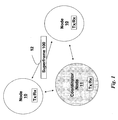
- Figure 1 is a schematic of a wireless network of nodes according to an embodiment of the invention.
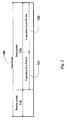
- Figure 2 is a block diagram of a structure of a superframe according to an embodiment of the invention.
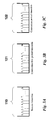
- Figures 3A-3C are block diagrams showing timeslot partitioning for the superframe of Figure 2 ;
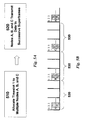
- Figure 4 is a timing diagram of periodic timeslot allocation according to an embodiment of the invention.
- Figures 5A-5B show a respective flow diagram and illustration of a method for transmitting data according to an embodiment of the invention
- Figure 6 is a flow diagram for time sharing in a beacon period in a distributed mode according to an embodiment of the invention.
- Figures 7A-7B are timing diagrams for periodic timeslots for a beacon period according to embodiments of the invention.
- Figure 8 is a flow diagram for time sharing in a beacon period in a coordinated network.
- Figure 9 is a timing diagram for period timeslots for a contention free period according to embodiments of the invention.
- FIG. 1 shows a wireless network according to an embodiment of the invention.
- the network includes transceivers (nodes) 10-11, and each node includes a transmitter (Tx) and a receiver (Rx), which form a transceiver.
- the nodes communicate data 12 with each other during superframes 100 using a shared media, i.e., a common wireless channel.
- one of the nodes 11 can be designated as a coordinator node.
- the coordinator node can manage network synchronization and resource allocation, such as the timeslot according to the embodiment of the invention described below.
- the network management can be ad hoc, distributed, or central.
- a node can be designated as the coordinator on the following basis: a node is arbitrarily chosen; the node is the first to join (or start) a network; a node designated as a backup coordinator becomes the designator in the event the original coordinator leaves the network; the node has special hardware or software.
- coordinator there is no coordinator in purely distributed networks. In a coordinated or managed networks, coordinator may or may not have different hardware or software. As examples, in an 802.11 network (WiFi), an Access Point has special hardware and software and acts as a coordinator. In an 802.15.4 network, only full functional node can be a coordinator.
- WiFi 802.11 network
- 802.15.4 802.15.4 network
- FIG. 2 shows the superframe 100 according to an embodiment of the invention in greater detail.
- the superframe includes a beacon period 110 and a data period 120.
- the data period includes a contention free period (CFP) 121, and a contention access period (CAP) 122.
- CCP contention free period
- CAP contention access period
- the specific structure of the superframe is network dependent.
- Figures 3A-3C show periodic timeslots for the beacon period, CFP and CAP periods, respectively.
- the number of timeslots, k , m , and n can vary in each of the periods.
- nodes periodically transmit beacons.
- the beacons provide synchronization and network management information, which are propagated (or broadcasted) through the network.
- Each node can be allocated a particular timeslot in the beacon period to transmit its beacon.
- a node A, B, or C
- the same timeslot can be shared periodically with other nodes that similarly transmit periodically.
- This periodic timeslot sharing reduces the total number of beacon slots needed, and hence reduces the length of the beacon period 110.
- This sharing of timeslots also increases the length of data transmission period 120, and consequently improves network efficiency.
- the patterns available for the sharing of the timeslot are not limited to the pattern shown in Figure 4 where a pattern of periodicity of three is shown as ABC, etc.
- the pattern may also be ACB, A-C, or ABB as examples, where "-" indicates the slot is unoccupied. In other words, the pattern may be specified parametrically or procedurally.
- a single timeslot 1 is allocated to a set of multiple nodes A, B, and C, and in step 520 each node transmits data periodically in subsequent superframes 530 according to the periodicity of the allocated timeslots such that during any one superframe only one of the nodes in the set of multiple nodes transmits. Subsequent is defined herein as following at some later time.
- the first timeslot in the beacon period 110 in the first superframe 101 is allocated to node A, to node B in the second superframe 102, to node C in the third superframe 103, and then in the fourth frame, to node A again.
- the periodicity of the timeslot sharing is three. Other regular or irregular periodicities can also be used.
- a particular node A selects an unallocated timeslot in step 610, and broadcasts a sharability status of the selected timeslot in its beacon in step 620.
- other nodes such as Node B, can then request to join this node to share its timeslot. The decision to join or not can depend on the periodicity that node A transmits in its beacon.
- Figure 7A shows a protocol where node A transmits its beacon every four superframes.
- the node A is assigned to beacon timeslot 3.
- Node B can request to share timeslot 3 with node A in superframes in which node A does not transmit a beacon.
- node B transmits every other superframe, as shown in Figure 7B , in superframes in which Node A is not transmitting.
- the timeslot sharing information is propagated (broadcast) in the network so that no beacon collisions are caused.
- the term propagate is used to indicate that all nodes may not be in range of the broadcasting node, and the information may need to be relayed via intermediate nodes.
- a node can change its beacon transmission periodicity and timeslot at any time and re-select or join a desirable timeslot to transmit its beacon.
- CSMA/CD carrier sense-multi access/collision detect
- the timeslot for a node can also change over time to reduce the length of the beacon period, as long as a desirable timeslot is available.
- An exact allocation and sharing of timeslots is implementation specific, and independent of the invention. As an example, if initially, a node is transmitting in the K th slot at the transmission frequency of once every two superframes. If an earlier slot, the L th slot, becomes available to nodes with this transmission frequency, the node which initially transmits in the K th slot can relinquish the K th slot and request to join the L th slot.
- node A informs the network coordinator 11 of its beacon transmission periodicity during a process of joining the network in step 810.
- the network coordinator can then assign a node beacon transmission periodicity by negotiation with the node.
- network coordinator 11 allocates a timeslot to the node A based on the desired transmission periodicity for the beacon of the requesting node.
- the allocated timeslot can be sharable as long as the periodic transmission of the beacon for the requesting node is guaranteed.
- the network coordinator can maintain a record of the beacon transmission periodicity and timeslot number allocation for all nodes in a memory.
- a node can request the network coordinator to change its beacon transmission periodicity and timeslot allocation at any time.
- the network coordinator can also change the allocation timeslots to adapt the length of the beacon period to maximize network efficiency.
- a node declares or is allocated a sharable timeslot satisfying its beacon transmission periodicity, then in step 830 the node A can locate its superframe for beacon transmission by scanning a sufficient number of successive superframes to determine when it transmits.
- a node A transmits its beacon every four superframes as shown in Figure 7A .
- the node A scans beacons for at least four successive superframes. If the sharable timeslot is identified as occupied in four successive superframes, then this sharable timeslot is not available. If a sharable timeslot is identified as unallocated in one or more superframes, then the node A can take its turn and transmit its beacon in an unoccupied timeslot of a superframe.
- the timeslots in the contention free period are allocated to or reserved by a set of multiple nodes, typically to transmit streaming data, such as in audio-visual (AV) and sensor networks. Similar to the timeslots in the beacon period, the timeslots in the CFP can also be shared by sets of nodes if the set of nodes to which the timeslot is assigned or the set that initially allocated the timeslot does not transmit data in every superframe.
- the timeslot sharing according to the embodiment of the invention increases data throughput and efficiency of the network.
- an initial set of nodes that first reserves an unoccupied timeslot broadcasts (propagates) the sharability of its allocated timeslot, and its data transmission pattern.
- the nodes with a set of nodes can manage themselves in a distributed manner as described above. Other nodes can join this set to share its timeslot if this timeslot satisfies their data transmission needs.
- the establishment of an initial set of nodes, or the priority given to a node within a set of nodes may be accomplished with a "decree" or by design as was discussed above in regards to selecting a coordinator node.
- Figure 9 shows timeslot sharing for the CFP according to an embodiment of the invention. For example, if a set A of nodes announces that it transmits data during two of every three superframes, then a set B of nodes that transmits data in every one of every three superframes can join the set A to share the timeslot of set A.
- the timeslot sharing information is propagated in the network so that no data collision is caused.
- a node transmits its data transmission information and data destination information to the network coordinator 11 during the process of requesting a CFP timeslot.
- the network coordinator allocates the timeslots to the requesting node based on the data transmission information.
- the allocated timeslots can be shared with other nodes, as long as the requesting node's data transmission is guaranteed.
- the network coordinator can dynamically request each node to report its data transmission information and allocated sharable timeslots as long as there is no transmission collision.
- the network coordinator informs nodes of timeslot sharing information.
- the coordinating node also can record in a memory each node's timeslot assignment in the CFP and the nodes allocated to each timeslot. Any node as well as the network coordinator can initiate a timeslot allocation change at any time based on node requirements or network conditions.
- the node determines its turn for data transmission.
- a node should listen for data transmission in the channel for a sufficient successive number of superframes to determine its turn. For example, if a node wants to transmit data every three superframes, then the node listens for data transmission for at least three successive superframes. If there is data transmission in the timeslot in each successive superframe, then this timeslot is not available. If the timeslot is idle in one or more superframes, then the node can take its turn and transmit data.
- a node can change its data transmission information (schedule) at any time and reserve a desirable timeslot to transmit its data in the distributed network, or report its new data transmission information to the network coordinator to request new timeslot assignment in the controlled or managed network.
Landscapes
- Engineering & Computer Science (AREA)
- Computer Networks & Wireless Communication (AREA)
- Signal Processing (AREA)
- Mobile Radio Communication Systems (AREA)
- Time-Division Multiplex Systems (AREA)
Applications Claiming Priority (2)
| Application Number | Priority Date | Filing Date | Title |
|---|---|---|---|
| US3028108P | 2008-02-21 | 2008-02-21 | |
| US12/193,911 US8571003B2 (en) | 2008-02-21 | 2008-08-19 | Timeslot sharing protocol for wireless communication networks |
Publications (2)
| Publication Number | Publication Date |
|---|---|
| EP2094052A2 true EP2094052A2 (fr) | 2009-08-26 |
| EP2094052A3 EP2094052A3 (fr) | 2009-09-23 |
Family
ID=40622239
Family Applications (1)
| Application Number | Title | Priority Date | Filing Date |
|---|---|---|---|
| EP09002465A Withdrawn EP2094052A3 (fr) | 2008-02-21 | 2009-02-20 | Protocole de partage de créneaux pour réseaux de communication sans fil |
Country Status (3)
| Country | Link |
|---|---|
| US (1) | US8571003B2 (fr) |
| EP (1) | EP2094052A3 (fr) |
| JP (1) | JP2009246955A (fr) |
Cited By (3)
| Publication number | Priority date | Publication date | Assignee | Title |
|---|---|---|---|---|
| WO2016048712A3 (fr) * | 2014-09-26 | 2016-06-23 | Qualcomm Incorporated | Opération de spectre partagé |
| US9794792B2 (en) | 2014-09-26 | 2017-10-17 | Qualcomm Incorporated | Shared spectrum operation |
| EP4135268A1 (fr) * | 2021-08-09 | 2023-02-15 | Schneider Electric Industries SAS | Procédés, systèmes et dispositifs permettant de coordonner une pluralité de n uds dans un réseau ethernet 10base-t1s |
Families Citing this family (27)
| Publication number | Priority date | Publication date | Assignee | Title |
|---|---|---|---|---|
| US7756101B2 (en) * | 2005-12-30 | 2010-07-13 | Nokia Corporation | Efficient resolution of relinquishment requests in a wireless communications network |
| CN101815286B (zh) * | 2009-02-23 | 2014-05-07 | 华为技术有限公司 | 基于信标的网络、加入网络的方法、帧传输方法和装置 |
| US8189526B2 (en) | 2009-03-06 | 2012-05-29 | Samsung Electronics Co., Ltd. | Method and system for shared communication medium in wireless communication systems |
| US8885559B2 (en) | 2009-03-20 | 2014-11-11 | Innovative Wireless Technologies, Inc. | Method and apparatus for reliable communications in underground and hazardous areas |
| WO2010107441A1 (fr) * | 2009-03-20 | 2010-09-23 | Innovative Wireless Technologies, Inc. | Protocole de réseau maillé ad hoc distribué pour des communications en zones minières souterraines et des zones à risques |
| KR101506041B1 (ko) * | 2009-07-13 | 2015-03-26 | 삼성전자주식회사 | Wban에서 통신 방법 및 장치 |
| KR101269550B1 (ko) * | 2009-09-02 | 2013-07-04 | 고려대학교 산학협력단 | 센서 네트워크를 위한 통신 방법 및 시스템 |
| US8653935B2 (en) * | 2009-09-30 | 2014-02-18 | Ixys Ch Gmbh | Low-power wireless network beacon for turning off and on fluorescent lamps |
| US8184674B2 (en) * | 2009-09-30 | 2012-05-22 | Ixys Ch Gmbh | Time-hopping low-power wireless network for turning off and on fluorescent lamps |
| US9736763B2 (en) * | 2009-12-30 | 2017-08-15 | Nokia Technologies Oy | Method and apparatus for autonomous OFDMA beacon reception measurement |
| US8861570B2 (en) | 2010-02-03 | 2014-10-14 | Qualcomm Incorporated | Methods and apparatuses for beacon transmission |
| US20110211562A1 (en) * | 2010-02-03 | 2011-09-01 | Qualcomm Incorporated | Methods and apparatuses for beacon transmission |
| US20110206017A1 (en) * | 2010-02-03 | 2011-08-25 | Qualcomm Incorporated | Methods and apparatuses for beacon transmission |
| US8576809B2 (en) * | 2010-10-07 | 2013-11-05 | Qualcomm Incorporated | Facilitating distributed channel access for a plurality of access terminals transmitting in a wireless communication environment |
| JP5010745B1 (ja) * | 2011-02-08 | 2012-08-29 | 株式会社東芝 | 無線ユニット及びこの無線ユニットを備えた移動通信端末装置 |
| KR101404016B1 (ko) | 2012-12-27 | 2014-06-13 | 전자부품연구원 | 전송 스케줄링 장치 및 방법 |
| KR102221395B1 (ko) * | 2013-02-20 | 2021-03-02 | 삼성전자주식회사 | 무선 통신 시스템에서 통신을 수행하는 방법 및 장치 |
| KR101449370B1 (ko) * | 2014-03-17 | 2014-10-10 | 연세대학교 산학협력단 | 센서 네트워크의 노드 및 허브 제어 방법 |
| WO2015180043A1 (fr) * | 2014-05-27 | 2015-12-03 | 华为技术有限公司 | Procédé pour déterminer des ressources de transmission, point d'accès et station |
| TWI526106B (zh) | 2014-06-06 | 2016-03-11 | 財團法人工業技術研究院 | 基地台與無線網路排程方法 |
| US9451612B2 (en) * | 2014-12-12 | 2016-09-20 | Huawei Technologies Co., Ltd. | Method and system for joint coordination and coexistence in unlicensed spectrum |
| US9596558B2 (en) * | 2015-03-19 | 2017-03-14 | Texas Instruments Incorporated | Wireless sensor network and association request transmission method |
| JP6878972B2 (ja) * | 2017-03-15 | 2021-06-02 | 沖電気工業株式会社 | 無線通信装置、無線通信プログラム、及び無線通信方法 |
| US10425981B2 (en) * | 2017-04-04 | 2019-09-24 | Roku, Inc. | Network-based user identification |
| EP3694287B1 (fr) * | 2019-02-06 | 2024-05-22 | Hitachi Energy Ltd | Planification à créneaux temporels de paquets dans un réseau sans fil industriel |
| CN114585032B (zh) * | 2022-03-21 | 2023-12-12 | 沈阳中科奥维科技股份有限公司 | 一种wia-pa节点网络漫游的方法 |
| CN114900274B (zh) * | 2022-04-20 | 2023-07-11 | 珠海中慧微电子有限公司 | 相同台区内多个载波网络的协调通信方法、装置及存储介质 |
Citations (5)
| Publication number | Priority date | Publication date | Assignee | Title |
|---|---|---|---|---|
| EP1199848A2 (fr) | 2000-10-17 | 2002-04-24 | Eastman Kodak Company | Reseau partagé en temp pour l'access multiple universel |
| WO2003030459A2 (fr) | 2001-10-03 | 2003-04-10 | Xtremespectrum, Inc. | Procede de commande d'un controleur d'acces aux media |
| US20030199272A1 (en) | 2002-03-11 | 2003-10-23 | Shvodian William M. | Method of using sub-rate slots in an ultrawide bandwidth system |
| WO2005076544A1 (fr) | 2004-02-06 | 2005-08-18 | Koninklijke Philips Electronics, N.V. | Systeme et procede pour un protocole de reservation repartie de commande d'acces au support a bande ultra large |
| US20060092909A1 (en) | 2004-10-29 | 2006-05-04 | Jin-Meng Ho | System and method for access and management of beacon periods in distributed wireless networks |
Family Cites Families (3)
| Publication number | Priority date | Publication date | Assignee | Title |
|---|---|---|---|---|
| US7110380B2 (en) * | 2001-02-07 | 2006-09-19 | Freescale Semiconductor, Inc. | System, method, and computer program product for sharing bandwidth in a wireless personal area network or a wireless local area network |
| US20030128787A1 (en) * | 2002-01-10 | 2003-07-10 | Daisuke Terasawa | Method and apparatus for mitigating interference between base stations in a wideband CDMA system |
| WO2003063415A2 (fr) * | 2002-01-22 | 2003-07-31 | Xtremespectrum, Inc. | Procede de gestion de creneaux temporels dans un reseau sans fil par l'utilisation de groupes de contention |
-
2008
- 2008-08-19 US US12/193,911 patent/US8571003B2/en not_active Expired - Fee Related
-
2009
- 2009-02-20 JP JP2009037808A patent/JP2009246955A/ja active Pending
- 2009-02-20 EP EP09002465A patent/EP2094052A3/fr not_active Withdrawn
Patent Citations (5)
| Publication number | Priority date | Publication date | Assignee | Title |
|---|---|---|---|---|
| EP1199848A2 (fr) | 2000-10-17 | 2002-04-24 | Eastman Kodak Company | Reseau partagé en temp pour l'access multiple universel |
| WO2003030459A2 (fr) | 2001-10-03 | 2003-04-10 | Xtremespectrum, Inc. | Procede de commande d'un controleur d'acces aux media |
| US20030199272A1 (en) | 2002-03-11 | 2003-10-23 | Shvodian William M. | Method of using sub-rate slots in an ultrawide bandwidth system |
| WO2005076544A1 (fr) | 2004-02-06 | 2005-08-18 | Koninklijke Philips Electronics, N.V. | Systeme et procede pour un protocole de reservation repartie de commande d'acces au support a bande ultra large |
| US20060092909A1 (en) | 2004-10-29 | 2006-05-04 | Jin-Meng Ho | System and method for access and management of beacon periods in distributed wireless networks |
Cited By (7)
| Publication number | Priority date | Publication date | Assignee | Title |
|---|---|---|---|---|
| WO2016048712A3 (fr) * | 2014-09-26 | 2016-06-23 | Qualcomm Incorporated | Opération de spectre partagé |
| US9686689B2 (en) | 2014-09-26 | 2017-06-20 | Qualcomm Incorporated | Shared spectrum operation |
| CN107079497A (zh) * | 2014-09-26 | 2017-08-18 | 高通股份有限公司 | 共享频谱操作 |
| US9794792B2 (en) | 2014-09-26 | 2017-10-17 | Qualcomm Incorporated | Shared spectrum operation |
| CN107079497B (zh) * | 2014-09-26 | 2018-07-13 | 高通股份有限公司 | 共享频谱操作 |
| EP4135268A1 (fr) * | 2021-08-09 | 2023-02-15 | Schneider Electric Industries SAS | Procédés, systèmes et dispositifs permettant de coordonner une pluralité de n uds dans un réseau ethernet 10base-t1s |
| WO2023016959A1 (fr) * | 2021-08-09 | 2023-02-16 | Schneider Electric Industries Sas | Procédés, systèmes et dispositifs pour coordonner une pluralité de nœuds dans un réseau ethernet 10base-t1s |
Also Published As
| Publication number | Publication date |
|---|---|
| JP2009246955A (ja) | 2009-10-22 |
| US20090213816A1 (en) | 2009-08-27 |
| US8571003B2 (en) | 2013-10-29 |
| EP2094052A3 (fr) | 2009-09-23 |
Similar Documents
| Publication | Publication Date | Title |
|---|---|---|
| US8571003B2 (en) | Timeslot sharing protocol for wireless communication networks | |
| US8989211B2 (en) | Apparatus and method for managing channel resource | |
| EP2554013B1 (fr) | Procédé et appareil pour découverte de dispositif au moyen d'une fonction de balise | |
| US7447180B2 (en) | Wireless media access method | |
| US7430601B2 (en) | Systems and methods for network coordination with limited explicit message exchange | |
| US7508811B2 (en) | Beacon scheduling in wireless personal area networks with multiple coordinators | |
| EP2253174B1 (fr) | Procédé de communication dans un réseau sans fil comportant une pluralité de noeuds | |
| EP2335440B1 (fr) | Protocole mac pour réseaux sans fil multicanaux | |
| KR101594525B1 (ko) | 무선 네트워크에서 매체접근제어 프로토콜에 의한 통신방법 및 시스템 | |
| US7555004B2 (en) | Coordinating communications in a heterogeneous communications network using different signal formats | |
| CN105960022B (zh) | 用于传输资源的分布式调度的系统和方法 | |
| WO2014171895A1 (fr) | Procédé de réalisation d'une opération d'un réseau de communication et composant de réseau | |
| KR102024352B1 (ko) | 무선 센서 네트워크에서의 채널 관리 방법 및 데이터 전송 방법 | |
| US20110268055A1 (en) | Techniques for supporting harmonized co-existence of multiple co-located body area networks | |
| CA3081639A1 (fr) | Utilisation de frequence coordonnee dans des environnements a ap multiples | |
| US6885651B1 (en) | Maintaining an adaptive broadcast channel using both transmitter directed and receiver directed broadcasts | |
| US20130089049A1 (en) | Method and apparatus for beacon scheduling in wireless communication system | |
| KR101639388B1 (ko) | 채널 자원 관리 장치 및 방법 | |
| CN111371483A (zh) | 一种波束调度方法、装置及系统 | |
| Hu et al. | Cog-PRMA protocol for CR users sharing a common channel with TDMA primary users | |
| Guo et al. | Efficient Medium Access Protocol for Wireless Sensor Networks | |
| KR20250176181A (ko) | 수중 음파 네트워크를 위한 매체 접속 제어 시스템 및 그 방법 | |
| Rangnekar et al. | Multiple Access Protocols and Scheduling Algorithms for Multiple Channel Wireless Networks. | |
| KR20070111723A (ko) | 개인영역 무선통신에서 매쉬 형태로 연결된 장치의 결집한채널자원할당 방법 |
Legal Events
| Date | Code | Title | Description |
|---|---|---|---|
| PUAI | Public reference made under article 153(3) epc to a published international application that has entered the european phase |
Free format text: ORIGINAL CODE: 0009012 |
|
| PUAL | Search report despatched |
Free format text: ORIGINAL CODE: 0009013 |
|
| AK | Designated contracting states |
Kind code of ref document: A2 Designated state(s): AT BE BG CH CY CZ DE DK EE ES FI FR GB GR HR HU IE IS IT LI LT LU LV MC MK MT NL NO PL PT RO SE SI SK TR |
|
| AX | Request for extension of the european patent |
Extension state: AL BA RS |
|
| AK | Designated contracting states |
Kind code of ref document: A3 Designated state(s): AT BE BG CH CY CZ DE DK EE ES FI FR GB GR HR HU IE IS IT LI LT LU LV MC MK MT NL NO PL PT RO SE SI SK TR |
|
| AX | Request for extension of the european patent |
Extension state: AL BA RS |
|
| RIC1 | Information provided on ipc code assigned before grant |
Ipc: H04W 84/12 20090101ALN20090817BHEP Ipc: H04W 74/04 20090101AFI20090817BHEP |
|
| 17P | Request for examination filed |
Effective date: 20090928 |
|
| 17Q | First examination report despatched |
Effective date: 20091023 |
|
| AKX | Designation fees paid |
Designated state(s): DE |
|
| STAA | Information on the status of an ep patent application or granted ep patent |
Free format text: STATUS: THE APPLICATION HAS BEEN WITHDRAWN |
|
| 18W | Application withdrawn |
Effective date: 20111229 |