EP2094155B1 - System und verfahren zur erkennung von arrhythmie mit atrioventrikulärer dissoziation - Google Patents
System und verfahren zur erkennung von arrhythmie mit atrioventrikulärer dissoziation Download PDFInfo
- Publication number
- EP2094155B1 EP2094155B1 EP07873550A EP07873550A EP2094155B1 EP 2094155 B1 EP2094155 B1 EP 2094155B1 EP 07873550 A EP07873550 A EP 07873550A EP 07873550 A EP07873550 A EP 07873550A EP 2094155 B1 EP2094155 B1 EP 2094155B1
- Authority
- EP
- European Patent Office
- Prior art keywords
- interval
- value
- given
- current
- duration
- Prior art date
- Legal status (The legal status is an assumption and is not a legal conclusion. Google has not performed a legal analysis and makes no representation as to the accuracy of the status listed.)
- Not-in-force
Links
Images




Classifications
-
- A—HUMAN NECESSITIES
- A61—MEDICAL OR VETERINARY SCIENCE; HYGIENE
- A61B—DIAGNOSIS; SURGERY; IDENTIFICATION
- A61B5/00—Measuring for diagnostic purposes; Identification of persons
- A61B5/24—Detecting, measuring or recording bioelectric or biomagnetic signals of the body or parts thereof
- A61B5/316—Modalities, i.e. specific diagnostic methods
- A61B5/318—Heart-related electrical modalities, e.g. electrocardiography [ECG]
- A61B5/346—Analysis of electrocardiograms
- A61B5/349—Detecting specific parameters of the electrocardiograph cycle
- A61B5/363—Detecting tachycardia or bradycardia
-
- A—HUMAN NECESSITIES
- A61—MEDICAL OR VETERINARY SCIENCE; HYGIENE
- A61B—DIAGNOSIS; SURGERY; IDENTIFICATION
- A61B5/00—Measuring for diagnostic purposes; Identification of persons
- A61B5/72—Signal processing specially adapted for physiological signals or for diagnostic purposes
- A61B5/7235—Details of waveform analysis
- A61B5/7264—Classification of physiological signals or data, e.g. using neural networks, statistical classifiers, expert systems or fuzzy systems
-
- A—HUMAN NECESSITIES
- A61—MEDICAL OR VETERINARY SCIENCE; HYGIENE
- A61N—ELECTROTHERAPY; MAGNETOTHERAPY; RADIATION THERAPY; ULTRASOUND THERAPY
- A61N1/00—Electrotherapy; Circuits therefor
- A61N1/18—Applying electric currents by contact electrodes
- A61N1/32—Applying electric currents by contact electrodes alternating or intermittent currents
- A61N1/36—Applying electric currents by contact electrodes alternating or intermittent currents for stimulation
- A61N1/362—Heart stimulators
- A61N1/3621—Heart stimulators for treating or preventing abnormally high heart rate
-
- A—HUMAN NECESSITIES
- A61—MEDICAL OR VETERINARY SCIENCE; HYGIENE
- A61N—ELECTROTHERAPY; MAGNETOTHERAPY; RADIATION THERAPY; ULTRASOUND THERAPY
- A61N1/00—Electrotherapy; Circuits therefor
- A61N1/18—Applying electric currents by contact electrodes
- A61N1/32—Applying electric currents by contact electrodes alternating or intermittent currents
- A61N1/36—Applying electric currents by contact electrodes alternating or intermittent currents for stimulation
- A61N1/362—Heart stimulators
- A61N1/3621—Heart stimulators for treating or preventing abnormally high heart rate
- A61N1/3624—Heart stimulators for treating or preventing abnormally high heart rate occurring in the atrium, i.e. atrial tachycardia
-
- A—HUMAN NECESSITIES
- A61—MEDICAL OR VETERINARY SCIENCE; HYGIENE
- A61N—ELECTROTHERAPY; MAGNETOTHERAPY; RADIATION THERAPY; ULTRASOUND THERAPY
- A61N1/00—Electrotherapy; Circuits therefor
- A61N1/18—Applying electric currents by contact electrodes
- A61N1/32—Applying electric currents by contact electrodes alternating or intermittent currents
- A61N1/38—Applying electric currents by contact electrodes alternating or intermittent currents for producing shock effects
- A61N1/39—Heart defibrillators
- A61N1/395—Heart defibrillators for treating atrial fibrillation
-
- A—HUMAN NECESSITIES
- A61—MEDICAL OR VETERINARY SCIENCE; HYGIENE
- A61N—ELECTROTHERAPY; MAGNETOTHERAPY; RADIATION THERAPY; ULTRASOUND THERAPY
- A61N1/00—Electrotherapy; Circuits therefor
- A61N1/18—Applying electric currents by contact electrodes
- A61N1/32—Applying electric currents by contact electrodes alternating or intermittent currents
- A61N1/38—Applying electric currents by contact electrodes alternating or intermittent currents for producing shock effects
- A61N1/39—Heart defibrillators
- A61N1/3956—Implantable devices for applying electric shocks to the heart, e.g. for cardioversion
Definitions
- the present invention relates generally to implantable medical devices (IMDs) and more specifically to implantable cardioverter defibrillators (ICDs) that sense cardiac parameters and are capable of delivering a high energy therapy to cardiovert or defibrillate a heart.
- IMDs implantable medical devices
- ICDs implantable cardioverter defibrillators
- ICDs are well known, cost effective, life saving medical devices that provide various cardiac therapies including pacing, cardioversion and/or defibrillation.
- Pacing is most commonly provided for bradycardia; however, there are numerous pacing therapies useful with tachycardia such as overdrive pacing and anti-tachy pacing (ATP).
- ATP anti-tachy pacing
- Defibrillation delivers a high energy waveform across a portion of the heart, often on the order of 20-40 joules. Defibrillation interrupts a chaotic rhythm, such as for example, atrial or ventricular fibrillation, and allows a normal sinus rhythm to emerge intrinsically or via subsequent pacing.
- tachycardia may originate from the atria, the ventricles or both simultaneously (double tachycardia).
- An arrhythmia in either the ventricles or the atria may affect the other. That is, an abnormally fast atrial rhythm may conduct to the ventricles causing a correspondingly high ventricular rate. Conversely, an abnormally fast ventricular arrhythmia may conduct retrograde into the atria.
- ventricular tachycardia is more serious and often requires more immediate therapy than atrial tachycardia.
- VT ventricular tachycardia
- FVT fast ventricular tachycardia
- VF ventricular fibrillation
- ventricular tachycardia The general distinction between the immediate affect of atrial versus ventricular tachycardia as well as the gradation of seriousness in ventricular tachycardia provide for several therapy options.
- therapy may be withheld and the condition may self correct or may be tolerated by the patient. For example, AF may spontaneously terminate.
- less aggressive therapies may be provided such as overdrive pacing, ATP, or drug titration. Some of these less aggressive options may be appropriate in atrial tachycardia and with some VT, provided the rate is below a threshold.
- the most aggressive therapy is the delivery of a high energy defibrillation shock, which is highly effective.
- ATP may be provided while the ICD prepares. The ATP may terminate the arrhythmia in some cases before the device actually delivers defibrillation, which then inhibits that delivery.
- the basic guiding principle for defibrillation is to deliver the therapy whenever necessary, withhold when not necessary, and deliver if uncertain. As indicated, some events such as AF may self terminate or other therapies terminate the AF and many IMDs provide patients with the ability to elect or withhold defibrillation for AF and similar arrhythmias. This is important in that defibrillation therapy can be uncomfortable. Further, from a physical and psychological perspective there may be patient frustration in receiving defibrillation therapy for misclassified events. From a device perspective, the delivery of unnecessary therapy depletes the internal power supply.
- ICDs need to provide therapy delivery capabilities but must also provide accurate and reliable sensing and arrhythmia discrimination capabilities.
- US-A-2003/144700 discloses determining if AV dissociation is likely to be present by computing the mean of the most recent 8 P-R intervals. An individual ventricular event is judged dissociated from the previous atrial event if the absolute difference between the current P-R interval and the mean P-R interval is greater than a predetermined amount, for example 40 ms, or if there are no P events in the current R-R interval. If this criterion is met for at least 4 of the last 8 ventricular events, AV dissociation is detected.
- US-A-5 280 792 discloses considering the rhythm to be dissociated if twice the atrial period is greater than three times the ventricular period; or alternatively, if the instantaneous ventricular rate is more than 1.5 times faster than the instantaneous atrial rate.
- US-A-2005/010257 discloses measuring a time interval between a first fiducial marker correlative to a ventricular depolarization (e.g., a QRS complex, a Q-wave, an R-wave, etc.) and a second fiducial marker correlative to a subsequent mitral valve closure occurring during the same cardiac cycle, using said time intervals for detecting AV dissociation and identifying VT or discriminating between SVT and VT based on said detection.
- a first fiducial marker correlative to a ventricular depolarization e.g., a QRS complex, a Q-wave, an R-wave, etc.
- US-A-4 860 749 discloses that AV dissociation during ventricular tachycardia would be apparent for tachycardia at rates above the crossover rate (below the crossover value) up to the point at which 1:1 VA conduction during the tachycardia fails.
- the invention addresses the problem of providing an alternative ways of detecting AV dissociation.
- FIG. 1 is a block diagram of an ICD 10 and the various operably interconnected components and modules.
- ICD 10 includes a housing 12 containing a microprocessor 14, memory 16, and a power supply 18, such as a battery. Also included is a pulse generator 20, a high energy therapy circuit 22 for providing defibrillation, a signal processor 24 to process data received via an atrial input 26 and a ventricular input 28 according to algorithms retained in memory 16, encoded into firmware or otherwise provided.
- An atrial output module 30 and ventricular output module 32 are provided to control delivered therapies, typically via atrial lead(s) 34 and ventricular lead(s) 36.
- FIG. 1 is not meant to illustrate each component of an ICD as this is generally well known in the art.
- the present invention may be utilized in a classic ICD having a housing implanted subcutaneously or submuscularly with lead(s) extending into the heart transvenously or extending to an epicardial portion or the heart.
- the present invention may be utilized in an implantable subcutaneous defibrillator that is without having lead transvenously implanted into or onto the heart.
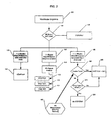
- FIG. 2 is a highly simplified overview of a decision tree useful in classifying arrhythmias, according to a set of rules such as PR Logic TM .
- This process is set out in greater detail in Singer's Interventional Electrophysiology, 2 nd edition (June, 2001), Chapter 21 titled “Dual-Chamber Sensing and Detection for Implantable Cardioverter-Defibrillators", by Gillberg and Olson.
- Each ventricular interval i.e., an R-R interval
- R-R interval is a discrete unit that is evaluated and at block 100, a determination is made that there is some evidence of a possible ventricular arrhythmia.
- the ICD 10 evaluates the R-R intervals based upon an historic or expected value, such as a median value of a predetermined number of immediately prior cycles (e.g., 12 R-R intervals). This median R-R value is one parameter that may be used to initially trigger the ventricular arrhythmia indication (100).
- the ICD 10 compares (110) the median R-R interval to an SVT (supraventricular tachycardia) limit. If the median R-R interval value is under (i.e., rate is faster; thus, the interval is shorter) the SVT limit, then the ICD 10 determines that VT, FVT or VF is occurring and provides defibrillation. In other words, the ventricular rate is so high that immediate therapy is warranted and further discrimination of the arrhythmia is not provided.
- SVT sinpraventricular tachycardia
- the median R-R interval may be above the SVT limit (110) and further discrimination is permitted.
- the easiest type of rhythm to classify is designated as "less than” a one to one rhythm (130). That is, most of the R-R intervals are devoid of any atrial activity. This is a strong indication that the arrhythmia is VT, FVT, or VF (140) and again, therapy is delivered.
- the next class of rhythms is designated as 1:1 (150). That is, most R-R intervals include a single atrial event.
- the ICD 10 performs a pattern analysis algorithm (160) based on the PR interval and is able to discriminate between VT/VFT/VF (170), sinus tachycardia (172), or other SVTs (174).
- This is a highly simplified overview as a more detailed description of the PR pattern analysis (160) is not required for the present invention and various examples are provided in the cited prior art.
- other mechanisms for discriminating 1:1 rhythms are available and may be employed herein.
- the third class of rhythms is designated as having a greater than 1:1 correlation. That is, most of the R-R intervals have more than 1 atrial event. This may mean, for example, that out of every 5 R-R intervals, at least three (3) of those intervals have two (2) or more atrial events. This is the most complex type of rhythm to further discriminate.
- the first step (180) is to determine if double tachycardia is occurring; if so, VT/FVT/VF is occurring and therapy is delivered (200). That is, if double tachycardia is present then by definition both the atria and the ventricles have tachy rhythms and the appropriate therapy for the relevant ventricular rhythm is provided (e.g., defibrillation).
- PR dissociation An important element in determining if double tachycardia is occurring is PR dissociation (182).
- Association or dissociation means that a given atrial event (P) is associated with a subsequent ventricular event (R). That is, that atrial event (P) conducted and initiated the ventricular event (R). If there is PR dissociation, then the ventricular depolarization is occurring independently from the atrial event. As a generalization, if there is PR dissociation this indicates VT/FVT/VF and if there is PR association then the event is likely SVT. Again, this description is grossly simplified and discrimination criteria other than PR dissociation (182) are used to fully determine double tachycardia (180). These criteria include PR patterning, RR regularity, and a determination of the ventricular arrhythmia component (e.g., is it VF or VT).
- the next step is to determine (210) if there is ST (sinus tachycardia) or AF/AFL (atrial fibrillation / atrial flutter).
- the ICD 10 utilizes various discrimination criteria such as PR patterning, PP irregularity, FFRW oversensing (far field R wave), and RR regularity in making this determination. If present, then the ICD 10 may determine (220) that there is no VT/FVT/VF and withhold therapy. Conversely, if not present then this indicates that VT/FVT/VF is present (200).
- FIG. 3 is a flowchart describing a process of determining if a given R-R interval is dissociated and if an overall rhythm is dissociated.
- the process begins (300) with an identification of an R-R interval.
- the PR interval is determined (310). This is the time interval from the last atrial event within the RR interval to the second R event. While most events will have multiple atrial events, there may be R-R intervals that have no atrial (P) events (320). If this is the case, then this particular cycle is classified as dissociated (360).
- this interval is compared with an historic or target PR value, such as a median PR value (330).
- the median PR interval is based upon a predetermined number of cycles, such as the last 12 RR intervals.
- the comparison (340) includes determining a difference between the current PR interval and the median PR interval. If the absolute value of this difference exceeds some predetermined quantity (e.g., 40 ms) then the current R-R cycle is classified as dissociated (360). Conversely, if the current PR interval is within 40 ms of the median, then the R-R interval is not classified as dissociated (350) and the process continues. The median value is updated accordingly.
- step (360) if the R-R interval is classified as dissociated then a counter is incremented (370) and the ICD 10 determines (380) if the criteria is met to classify the rhythm as dissociated.
- the criteria are whether 4 of the last 8 R-R intervals were each individually dissociated. If not, the process returns to step (300), if so then the ICD 10 classifies (390) the rhythm as being dissociated. This parameter (positive or negative) is used, for example, in the arrhythmia discrimination as described in FIG. 2 where PR dissociation is relevant.
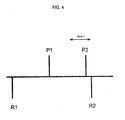
- FIG. 4 illustrates a given R-R interval (R1 - R2).
- R1 - R2 There are two atrial events P1 (penultimate), P2 (final).
- P1 penultimate
- P2 final
- the PR interval would be P2 - R2 and would likely be dissociated from a median PR interval.
- P2 is the final atrial event that precedes in time the ventricular event R2; however, P2 is not clinically meaningful with respect to R2 because it is too close in time to have conducted. That is, the present invention provides for a consideration zone or consideration value, which in one embodiment is 60 ms. It should be appreciated that the numerical value may be varied while remaining within the scope of the present invention. Atrial events within the consideration zone are given further scrutiny in the dissociation determination.
- FIG. 5 is a flowchart describing a method of determining a PR interval that is then utilized in the dissociation process of FIG. 3 .
- the individual R-R interval (R1 - R2) is identified (400).
- the ICD 10 determines (410) if there was an atrial event (P) in the R1-R2 interval. If not (420), there is no PR interval and the RR interval is dissociated ( FIG. 3 ). If there was an atrial event (410), the ICD 10 determines if there was more than one atrial event P within the same R1R2 interval. If not, then the PR interval is equal to P to R2 (regardless of whether P is within the consideration zone).
- the one immediately prior to R2 is designated (450) as P last .
- the interval from P last to R2 is calculated and if greater than, e.g., 60 ms this value is used as the PR interval for R1 - R2. That is, if P last is outside the consideration zone (e.g., 60 ms), the ICD 10 uses this value to determine the PR interval. If the interval from P last to R2 is less than or equal to 60 ms, then the penultimate atrial event prior to R2 and therefore logically immediately prior to P last is identified (P second ) and the interval between the two is designated as: P second - P last .
- the ICD 10 may determine the PR value immediately upon first evaluating the R-R interval if the immediately prior atrial event (as compared with R2) is outside of the consideration zone, without further analysis of other atrial events that may have occurred in the same R-R interval.
- FIG. 6 is a timing diagram that graphically illustrates an example of the above with R1 - R2 having multiple atrial events and P last being within the consideration zone (e.g., 60 ms) thus, leading to the consideration of P second .
- PR final therefore becomes P second - - R2 which is also the same as ((P second to P last ) + (P last to R2)).
- P second will be the latest occurring atrial event outside the consideration zone.
- dissociation is an indicator of VT/FVT/VF
- improperly classifying an interval as dissociated may contribute to unnecessary shocks and conversely, improving the accuracy of dissociation determinations will reduce the number of unnecessary shock thereby improving patient satisfaction with the implantable medical device.
Landscapes
- Health & Medical Sciences (AREA)
- Life Sciences & Earth Sciences (AREA)
- Cardiology (AREA)
- Heart & Thoracic Surgery (AREA)
- Molecular Biology (AREA)
- Pathology (AREA)
- Engineering & Computer Science (AREA)
- Biomedical Technology (AREA)
- Physics & Mathematics (AREA)
- Medical Informatics (AREA)
- Biophysics (AREA)
- Surgery (AREA)
- Animal Behavior & Ethology (AREA)
- General Health & Medical Sciences (AREA)
- Public Health (AREA)
- Veterinary Medicine (AREA)
- Electrotherapy Devices (AREA)
- Measurement And Recording Of Electrical Phenomena And Electrical Characteristics Of The Living Body (AREA)
Claims (17)
- Verfahren zum Bestimmen einer PR-Dissoziation, das umfasst:Erzeugen eines Soll-PR-Wertes aus mehreren vorhergehenden R-R-Intervallen;Identifizieren eines gegebenen R-R-Intervalls;Einstellen eines momentanen PR-Intervalls für das gegebene R-R-Intervall auf eine erste Dauer, die als das Intervall zwischen einem letzten atrialen Ereignis innerhalb des gegebenen R-R-Intervalls und dem Ende des R-R-Intervalls definiert ist, falls die erste Dauer einen Betrachtungswert überschreitet, und Einstellen des momentanen PR-Intervalls auf eine zweite Dauer, falls die erste Dauer gleich oder kleiner als der Betrachtungswert ist, wobei die zweite Dauer gleich der ersten Dauer zuzüglich eines PP-Intervalls ist, das als das Intervall zwischen einem vorletzten atrialen Ereignis in dem gegebenen R-R-Intervall und dem letzten atrialen Ereignis definiert ist;Vergleichen des momentanen PR-Intervalls mit dem Soll-PR-Wert; undBestimmen, ob das momentane PR-Intervall dissoziiert ist, anhand des Vergleichs.
- Verfahren zum Bestimmen einer PR-Dissoziation, das umfasst:Erzeugen eines Soll-PR-Werts aus mehreren vorhergehenden R-R-Intervallen;Identifizieren eines gegebenen R-R-Intervalls;Betreiben eines ersten Puffers, um ein letztes PR-Intervall in dem R-R-Intervall einzufangen, falls es in dem R-R-Intervall vorhanden ist;Betreiben eines zweiten Puffers, um ein vorletztes PR-Intervall in dem R-R-Intervall einzufangen, falls es in dem R-R-Intervall vorhanden ist;Vergleichen des letzten PR-Intervalls von dem ersten Puffer und des vorletzten PR-Intervalls von dem zweiten Puffer mit dem Soll-PR-Wert; undBestimmen, ob das momentane RR-Intervall dissoziiert ist, anhand des Vergleichs.
- Verfahren nach Anspruch 1 oder 2, das ferner das Aktualisieren des Soll-PR-Werts mit dem momentanen PR-Wert für ein R-R-Intervall, das dem gegebenen R-R-Intervall nachfolgt, umfasst.
- Verfahren nach Anspruch 1 oder 2, wobei der Soll-PR-Wert ein Median von PR-Intervallen aus einer vorgegebenen Anzahl von R-R-Intervallen ist.
- Verfahren nach Anspruch 1, wobei das Vergleichen das Erhalten eines Absolutwerts einer Differenz zwischen dem Soll-PR-Wert und dem momentanen PR-Intervall umfasst und das Bestimmen ferner das Anzeigen einer Dissoziation umfasst, falls der Absolutwert der Differenz einen ersten vorgegebenen Wert überschreitet.
- Verfahren nach Anspruch 5, wobei der erste vorgegebene Wert 40 ms beträgt.
- Verfahren nach Anspruch 1 oder 2, das ferner umfasst:Bestimmen, ob es keine atrialen Ereignisse, ein einzelnes atriales Ereignis oder mehrere atriale Ereignisse innerhalb des gegebenen R-R-Intervalls gab;Klassifizieren des gegebenen R-R-Intervalls als dissoziiert, falls es in dem gegebenen R-R-Intervall keine atrialen Ereignisse gab; undEinstellen des momentanen PR-Intervalls gleich der Dauer zwischen dem einzelnen atrialen Ereignis und dem Ende des gegebenen R-R-Intervalls.
- Verfahren nach Anspruch 1 oder 2, das ferner umfasst:Detektieren einer Tachyarrhythmie, die größer als 1:1 ist; undVerwenden der Bestimmung der Dissoziation bei der Unterscheidung zwischen einer atrialen und einer ventrikulären Arrhythmie.
- Verfahren nach Anspruch 8, wobei das Unterscheiden zwischen atrialen und ventrikulären Arrhythmien das Identifizieren, ob eine doppelte Tachyarrhythmie auftritt, umfasst.
- Implantierbare medizinische Vorrichtung (IMD), die enthält:Mittel zum Erzeugen eines Soll-PR-Werts aus mehreren vorhergehenden R-R-Intervallen;Mittel zum Identifizieren eines gegebenen R-R-Intervalls;Mittel zum Einstellen eines momentanen PR-Intervalls für das gegebene R-R-Intervall auf eine erste Dauer, die als das Intervall zwischen einem letzten atrialen Ereignis in dem gegebenen R-R-Intervall und dem Ende des R-R-Intervalls definiert ist, falls die erste Dauer einen Betrachtungswert überschreitet, und zum Einstellen des momentanen PR-Intervalls auf eine zweite Dauer, falls die erste Dauer gleich oder kleiner als der Betrachtungswert ist, wobei die zweite Dauer gleich der ersten Dauer zuzüglich eines PP-Intervalls ist, das als das Intervall zwischen einem vorletzten atrialen Ereignis in dem gegebenen R-R-Intervall und dem letzten atrialen Ereignis definiert ist; undMittel zum Vergleichen des momentanen PR-Intervalls mit dem Soll-PR-Wert; undMittel zum Bestimmen, ob das momentanen PR-Intervall dissoziiert ist, anhand des Vergleichs.
- Implantierbare medizinische Vorrichtung (IMD), die enthält:Mittel zum Erzeugen eines Soll-PR-Werts aus mehreren vorhergehenden R-R-Intervallen;Mittel zum Identifizieren eines gegebenen R-R-Intervalls;Mittel zum Betreiben eines ersten Puffers, um ein letztes PR-Intervall in dem R-R-Intervall einzufangen, falls es in dem R-R-Intervall vorhanden ist;Mittel zum Betreiben eines zweiten Puffers, um ein vorletztes PR-Intervall in dem R-R-Intervall einzufangen, falls es in dem R-R-Intervall vorhanden ist;Mittel zum Vergleichen des letzten PR-Intervalls von dem ersten Puffer und des vorletzten PR-Intervalls von dem zweiten Puffer mit dem Soll-PR-Wert; undMittel zum Bestimmen, ob das momentane RR-Intervall dissoziiert ist, anhand des Vergleichs.
- IMD nach Anspruch 10, wobei die Mittel zum Vergleichen ferner Mittel enthalten, um einen Absolutwert einer Differenz zwischen dem Soll-PR-Wert und dem momentanen PR-Intervall zu erhalten und um eine Dissoziation anzugeben, falls der Absolutwert der Differenz einen ersten vorgegebenen Wert überschreitet.
- IMD nach Anspruch 10 oder 11, die ferner enthält:Mittel zum Bestimmen, ob es in dem gegebenen R-R-Intervall keine atrialen Ereignisse, ein einzelnes atriales Ereignis oder mehrere atriale Ereignisse gab;Mittel zum Klassifizieren des gegebenen R-R-Intervalls als dissoziiert, falls es in dem gegebenen R-R-Intervall keine atrialen Ereignisse gab; undMittel zum Einstellen des momentanen PR-Intervalls gleich der Dauer zwischen dem einzelnen atrialen Ereignis und dem Ende des gegebenen R-R-Intervalls.
- Computerlesbares Medium, das Befehle enthält, die dann, wenn sie in einem Prozessor einer implantierbaren medizinischen Vorrichtung (IMD) ausgeführt werden, die IMD dazu veranlassen:aus mehreren vorhergehenden R-R-Intervallen einen Soll-PR-Wert zu erzeugen;ein gegebenes R-R-Intervall zu identifizieren;ein momentanes PR-Intervall für das gegebene R-R-Intervall auf eine erste Dauer einzustellen, die als das Intervall zwischen einem letzten atrialen Ereignis in dem gegebenen R-R-Intervall und dem Ende des R-R-Intervalls definiert ist, falls die erste Dauer einen Betrachtungswert überschreitet, und das momentane PR-Intervall auf eine zweite Dauer einzustellen, falls die erste Dauer gleich oder kleiner als der Betrachtungswert ist, wobei die zweite Dauer gleich der ersten Dauer zuzüglich eines PP-Intervalls ist, das als das Intervall zwischen einem vorletzten atrialen Ereignis in dem gegebenen R-R-Intervall und dem letzten atrialen Ereignis definiert ist;Vergleichen des momentanen PR-Intervalls mit dem Soll-PR-Wert; undBestimmen, ob das momentane PR-Intervall dissoziiert ist, anhand des Vergleichs.
- Computerlesbares Medium, das Befehle enthält, die dann, wenn sie in einem Prozessor einer implantierbaren medizinischen Vorrichtung (IMD) ausgeführt werden, die IMD dazu veranlassen:einen Soll-PR-Wert aus mehreren vorhergehenden R-R-Intervallen zu erzeugen;ein gegebenes R-R-Intervall zu identifizieren;einen ersten Puffer zu betreiben, um ein letztes PR-Intervall in dem R-R-Intervall einzufangen, falls es in dem R-R-Intervall vorhanden ist;einen zweiten Puffer zu betreiben, um ein vorletztes PR-Intervall in dem R-R-Intervall einzufangen, falls es in dem R-R-Intervall vorhanden ist;Vergleichen des letzten PR-Intervalls von dem ersten Puffer und des vorletzten PR-Intervalls von dem zweiten Puffer mit dem Soll-PR-Wert; undBestimmen, ob das momentane RR-Intervall dissoziiert ist, anhand des Vergleichs.
- Verfahren nach Anspruch 2, wobei das Vergleichen das Erhalten eines Absolutwerts einer Differenz zwischen dem Soll-PR-Wert und sowohl dem letzten PR-Intervall als auch dem vorletzten PR-Intervall enthält und das Bestimmen ferner das Anzeigen einer Dissoziation enthält, falls der Absolutwert der Differenz jeweils einen ersten vorgegebenen Wert überschreitet.
- IMD nach Anspruch 11, wobei die Mittel zum Vergleichen ferner Mittel enthalten, um einen Absolutwert einer Differenz zwischen dem Soll-PR-Wert und sowohl dem letzten PR-Intervall als auch dem vorletzten PR-Intervall zu erhalten und um eine Dissoziation anzuzeigen, falls der Absolutwert der Differenz jeweils einen ersten vorgegebenen Wert überschreitet.
Applications Claiming Priority (2)
| Application Number | Priority Date | Filing Date | Title |
|---|---|---|---|
| US11/554,323 US7729754B2 (en) | 2006-10-30 | 2006-10-30 | System and method for arrhythmia discrimination with atrial-ventricular dissociation |
| PCT/US2007/081575 WO2008127374A2 (en) | 2006-10-30 | 2007-10-17 | System and method for arrhythmia discrimination with atrialventricular dissociation |
Publications (2)
| Publication Number | Publication Date |
|---|---|
| EP2094155A2 EP2094155A2 (de) | 2009-09-02 |
| EP2094155B1 true EP2094155B1 (de) | 2012-10-03 |
Family
ID=39365666
Family Applications (1)
| Application Number | Title | Priority Date | Filing Date |
|---|---|---|---|
| EP07873550A Not-in-force EP2094155B1 (de) | 2006-10-30 | 2007-10-17 | System und verfahren zur erkennung von arrhythmie mit atrioventrikulärer dissoziation |
Country Status (3)
| Country | Link |
|---|---|
| US (1) | US7729754B2 (de) |
| EP (1) | EP2094155B1 (de) |
| WO (1) | WO2008127374A2 (de) |
Families Citing this family (14)
| Publication number | Priority date | Publication date | Assignee | Title |
|---|---|---|---|---|
| US7761142B2 (en) | 2006-03-29 | 2010-07-20 | Medtronic, Inc. | Method and apparatus for detecting arrhythmias in a medical device |
| US9440036B2 (en) * | 2012-10-12 | 2016-09-13 | InovaLabs, LLC | Method and systems for the delivery of oxygen enriched gas |
| US9717437B2 (en) | 2014-10-22 | 2017-08-01 | Medtronic, Inc. | Atrial arrhythmia detection during intermittent instances of ventricular pacing in a cardiac medical device |
| US10219718B2 (en) | 2014-10-22 | 2019-03-05 | Medtronic, Inc. | Atrial arrhythmia episode detection in a cardiac medical device |
| US10213125B2 (en) | 2015-01-23 | 2019-02-26 | Medtronic, Inc. | Atrial arrhythmia episode detection in a cardiac medical device |
| US9561005B2 (en) | 2015-01-23 | 2017-02-07 | Medtronic, Inc. | Method and apparatus for beat acquisition during template generation in a medical device having dual sensing vectors |
| US10188867B2 (en) | 2015-01-23 | 2019-01-29 | Medtronic, Inc. | Method and apparatus for beat acquisition during template generation in a medical device having dual sensing vectors |
| EP3247453B1 (de) | 2015-01-23 | 2020-11-25 | Medtronic Inc. | Detektion einer episode einer atrialen arhythmie in einer kardialen medizinischen vorrichtung |
| US10004418B2 (en) | 2015-01-23 | 2018-06-26 | Medtronic, Inc. | Atrial arrhythmia episode detection in a cardiac medical device |
| US9901276B2 (en) | 2015-02-18 | 2018-02-27 | Medtronic, Inc. | Method and apparatus for identifying sick sinus syndrome in an implantable cardiac monitoring device |
| US9962102B2 (en) | 2015-02-18 | 2018-05-08 | Medtronic, Inc. | Method and apparatus for atrial arrhythmia episode detection |
| US10045710B2 (en) | 2016-03-30 | 2018-08-14 | Medtronic, Inc. | Atrial arrhythmia episode detection in a cardiac medical device |
| US10039469B2 (en) | 2016-03-30 | 2018-08-07 | Medtronic, Inc. | Atrial arrhythmia episode detection in a cardiac medical device |
| US11458274B2 (en) | 2016-05-03 | 2022-10-04 | Inova Labs, Inc. | Method and systems for the delivery of oxygen enriched gas |
Family Cites Families (19)
| Publication number | Priority date | Publication date | Assignee | Title |
|---|---|---|---|---|
| US4860749A (en) | 1988-01-06 | 1989-08-29 | Wayne State University | Tachycardia detection for automatic implantable cardioverter/defibrillator with atrial and ventricular sensing capability |
| US5280792A (en) | 1991-09-20 | 1994-01-25 | The University Of Sydney | Method and system for automatically classifying intracardiac electrograms |
| US5327900A (en) | 1991-11-01 | 1994-07-12 | Telectronics Pacing Systems, Inc. | Apparatus and method for discriminating between heart rhythms with similar atrial and ventricular rates |
| FR2685643B1 (fr) * | 1991-12-31 | 1994-03-11 | Ela Medical | Procede de commande d'un defibrillateur implante. |
| FR2685624B1 (fr) * | 1991-12-31 | 1994-03-11 | Ela Medical | Systeme d'analyse de l'activite cardiaque pour dispositif implantable de traitement des tachycardies. |
| FR2705576B1 (fr) * | 1993-05-28 | 1995-07-07 | Ela Medical Sa | Procédé d'analyse de l'activité cardiaque pour déterminer si une tachyarythmie est susceptible d'être interrompue par stimulation. |
| US5466245A (en) * | 1994-11-15 | 1995-11-14 | Cardiac Pacemakers, Inc. | Method and apparatus to continuously optimize the A-V delay in a dual chamber pacemaker |
| US5545186A (en) | 1995-03-30 | 1996-08-13 | Medtronic, Inc. | Prioritized rule based method and apparatus for diagnosis and treatment of arrhythmias |
| US5620471A (en) * | 1995-06-16 | 1997-04-15 | Pacesetter, Inc. | System and method for discriminating between atrial and ventricular arrhythmias and for applying cardiac therapy therefor |
| WO1997043002A1 (en) | 1996-05-14 | 1997-11-20 | Medtronic, Inc. | Prioritized rule based method and apparatus for diagnosis and treatment of arrhythmias |
| US5755737A (en) * | 1996-12-13 | 1998-05-26 | Medtronic, Inc. | Method and apparatus for diagnosis and treatment of arrhythmias |
| US5978700A (en) | 1997-05-07 | 1999-11-02 | Biotronik Mess-Und Therapiegeraete Gmbh & Co. Ingenierbuero Berlin | Recognizing ventricular tachycardia condition using dual chamber sense information |
| FR2817154B1 (fr) * | 2000-11-27 | 2003-06-06 | Ela Medical Sa | Dispositif medical actif du type defibrillateur/ cardioverteur implantable a discrimination perfectionnee des fibrillations auriculaires |
| US6748269B2 (en) | 2001-10-17 | 2004-06-08 | Cardiac Pacemakers, Inc. | Algorithm for discrimination of 1:1 tachycardias |
| EP2018004B1 (de) * | 2001-11-09 | 2019-03-06 | Panasonic Intellectual Property Corporation of America | Sicherstellung des Mediumzugriffs in einem drahtlosen Netzwerk |
| DE60233157D1 (de) * | 2001-12-03 | 2009-09-10 | Medtronic Inc | Zweikammer-herzschrittmacher-system zur diagnose und behebung von arrhythmien |
| US7103405B2 (en) * | 2002-12-04 | 2006-09-05 | Medtronic, Inc. | Methods and apparatus for discriminating polymorphic tachyarrhythmias from monomorphic tachyarrhythmias facilitating detection of fibrillation |
| US7177685B2 (en) | 2003-07-11 | 2007-02-13 | Cardiac Pacemakers, Inc. | Classifying tachyarrhythmia using time interval between ventricular depolarization and mitral valve closure |
| US7899533B2 (en) * | 2005-10-25 | 2011-03-01 | Medtronic, Inc. | System and method of AV interval selection in an implantable medical device |
-
2006
- 2006-10-30 US US11/554,323 patent/US7729754B2/en not_active Expired - Fee Related
-
2007
- 2007-10-17 WO PCT/US2007/081575 patent/WO2008127374A2/en not_active Ceased
- 2007-10-17 EP EP07873550A patent/EP2094155B1/de not_active Not-in-force
Also Published As
| Publication number | Publication date |
|---|---|
| US20080103404A1 (en) | 2008-05-01 |
| US7729754B2 (en) | 2010-06-01 |
| WO2008127374A2 (en) | 2008-10-23 |
| EP2094155A2 (de) | 2009-09-02 |
| WO2008127374A3 (en) | 2008-12-31 |
Similar Documents
| Publication | Publication Date | Title |
|---|---|---|
| EP2094155A2 (de) | System und verfahren zur erkennung von arrhythmie mit atrioventrikulärer dissoziation | |
| US7515956B2 (en) | Template based AV/VA interval comparison for the discrimination of cardiac arrhythmias | |
| US8909331B2 (en) | Robust rate calculation in an implantable cardiac stimulus or monitoring device | |
| US8483813B2 (en) | System and method for establishing episode profiles of detected tachycardia episodes | |
| US6636764B1 (en) | Safety backup in arrhythmia discrimination algorithm | |
| US7930020B2 (en) | Morphology based arrhythmia detection | |
| US7930024B2 (en) | Reducing inappropriate delivery of therapy for suspected non-lethal arrhythmias | |
| EP1112756B1 (de) | Implantierbarer Herzschrittmacher und Verfahren zur Unterscheidung zwischen atrialen und ventrikulären Arrhythmien | |
| US5411530A (en) | Sensing algorithm for anti-tachycardia devices using dual chamber sensing | |
| US5730141A (en) | Tachyarrhythmia detection method | |
| CA2215899C (en) | Prioritized rule based method and apparatus for diagnosis and treatment of arrhythmias | |
| US7228176B2 (en) | Systems, devices, and methods for tachyarrhythmia discrimination or therapy decisions | |
| US8265751B2 (en) | Method and apparatus for detecting non-sustaining ventricular tachyarrhythmia | |
| US20060224075A1 (en) | Implantable medical device with real time T-wave oversensing detection | |
| US20040019287A1 (en) | Similarity recovery post shock | |
| US8271081B2 (en) | Systems and methods for use with an implantable medical device for discriminating VT and SVT be selectively adjusting atrial channel sensing parameters | |
| US20080103540A1 (en) | System and Method for Arrhythmia Discrimination with Atrial-Ventricular Dissociation | |
| EP2389225B1 (de) | Hybrid-einzelkammer zu gleichzeitiges pacing-gerät zur diskriminierung von tachykardien |
Legal Events
| Date | Code | Title | Description |
|---|---|---|---|
| PUAI | Public reference made under article 153(3) epc to a published international application that has entered the european phase |
Free format text: ORIGINAL CODE: 0009012 |
|
| 17P | Request for examination filed |
Effective date: 20090527 |
|
| AK | Designated contracting states |
Kind code of ref document: A2 Designated state(s): AT BE BG CH CY CZ DE DK EE ES FI FR GB GR HU IE IS IT LI LT LU LV MC MT NL PL PT RO SE SI SK TR |
|
| GRAP | Despatch of communication of intention to grant a patent |
Free format text: ORIGINAL CODE: EPIDOSNIGR1 |
|
| RIC1 | Information provided on ipc code assigned before grant |
Ipc: A61N 1/362 20060101ALN20120405BHEP Ipc: A61B 5/0464 20060101AFI20120405BHEP Ipc: A61N 1/39 20060101ALN20120405BHEP |
|
| DAX | Request for extension of the european patent (deleted) | ||
| GRAS | Grant fee paid |
Free format text: ORIGINAL CODE: EPIDOSNIGR3 |
|
| GRAA | (expected) grant |
Free format text: ORIGINAL CODE: 0009210 |
|
| AK | Designated contracting states |
Kind code of ref document: B1 Designated state(s): AT BE BG CH CY CZ DE DK EE ES FI FR GB GR HU IE IS IT LI LT LU LV MC MT NL PL PT RO SE SI SK TR |
|
| REG | Reference to a national code |
Ref country code: GB Ref legal event code: FG4D |
|
| REG | Reference to a national code |
Ref country code: AT Ref legal event code: REF Ref document number: 577595 Country of ref document: AT Kind code of ref document: T Effective date: 20121015 Ref country code: CH Ref legal event code: EP |
|
| REG | Reference to a national code |
Ref country code: IE Ref legal event code: FG4D |
|
| REG | Reference to a national code |
Ref country code: DE Ref legal event code: R096 Ref document number: 602007025933 Country of ref document: DE Effective date: 20121206 |
|
| REG | Reference to a national code |
Ref country code: AT Ref legal event code: MK05 Ref document number: 577595 Country of ref document: AT Kind code of ref document: T Effective date: 20121003 |
|
| PG25 | Lapsed in a contracting state [announced via postgrant information from national office to epo] |
Ref country code: SI Free format text: LAPSE BECAUSE OF FAILURE TO SUBMIT A TRANSLATION OF THE DESCRIPTION OR TO PAY THE FEE WITHIN THE PRESCRIBED TIME-LIMIT Effective date: 20121003 |
|
| REG | Reference to a national code |
Ref country code: NL Ref legal event code: VDEP Effective date: 20121003 |
|
| REG | Reference to a national code |
Ref country code: LT Ref legal event code: MG4D |
|
| PG25 | Lapsed in a contracting state [announced via postgrant information from national office to epo] |
Ref country code: ES Free format text: LAPSE BECAUSE OF FAILURE TO SUBMIT A TRANSLATION OF THE DESCRIPTION OR TO PAY THE FEE WITHIN THE PRESCRIBED TIME-LIMIT Effective date: 20130114 Ref country code: FI Free format text: LAPSE BECAUSE OF FAILURE TO SUBMIT A TRANSLATION OF THE DESCRIPTION OR TO PAY THE FEE WITHIN THE PRESCRIBED TIME-LIMIT Effective date: 20121003 Ref country code: IS Free format text: LAPSE BECAUSE OF FAILURE TO SUBMIT A TRANSLATION OF THE DESCRIPTION OR TO PAY THE FEE WITHIN THE PRESCRIBED TIME-LIMIT Effective date: 20130203 Ref country code: SE Free format text: LAPSE BECAUSE OF FAILURE TO SUBMIT A TRANSLATION OF THE DESCRIPTION OR TO PAY THE FEE WITHIN THE PRESCRIBED TIME-LIMIT Effective date: 20121003 Ref country code: LT Free format text: LAPSE BECAUSE OF FAILURE TO SUBMIT A TRANSLATION OF THE DESCRIPTION OR TO PAY THE FEE WITHIN THE PRESCRIBED TIME-LIMIT Effective date: 20121003 Ref country code: NL Free format text: LAPSE BECAUSE OF FAILURE TO SUBMIT A TRANSLATION OF THE DESCRIPTION OR TO PAY THE FEE WITHIN THE PRESCRIBED TIME-LIMIT Effective date: 20121003 |
|
| PG25 | Lapsed in a contracting state [announced via postgrant information from national office to epo] |
Ref country code: LV Free format text: LAPSE BECAUSE OF FAILURE TO SUBMIT A TRANSLATION OF THE DESCRIPTION OR TO PAY THE FEE WITHIN THE PRESCRIBED TIME-LIMIT Effective date: 20121003 Ref country code: PL Free format text: LAPSE BECAUSE OF FAILURE TO SUBMIT A TRANSLATION OF THE DESCRIPTION OR TO PAY THE FEE WITHIN THE PRESCRIBED TIME-LIMIT Effective date: 20121003 Ref country code: PT Free format text: LAPSE BECAUSE OF FAILURE TO SUBMIT A TRANSLATION OF THE DESCRIPTION OR TO PAY THE FEE WITHIN THE PRESCRIBED TIME-LIMIT Effective date: 20130204 Ref country code: CY Free format text: LAPSE BECAUSE OF FAILURE TO SUBMIT A TRANSLATION OF THE DESCRIPTION OR TO PAY THE FEE WITHIN THE PRESCRIBED TIME-LIMIT Effective date: 20121003 Ref country code: GR Free format text: LAPSE BECAUSE OF FAILURE TO SUBMIT A TRANSLATION OF THE DESCRIPTION OR TO PAY THE FEE WITHIN THE PRESCRIBED TIME-LIMIT Effective date: 20130104 Ref country code: MC Free format text: LAPSE BECAUSE OF NON-PAYMENT OF DUE FEES Effective date: 20121031 Ref country code: BE Free format text: LAPSE BECAUSE OF FAILURE TO SUBMIT A TRANSLATION OF THE DESCRIPTION OR TO PAY THE FEE WITHIN THE PRESCRIBED TIME-LIMIT Effective date: 20121003 |
|
| REG | Reference to a national code |
Ref country code: CH Ref legal event code: PL |
|
| PG25 | Lapsed in a contracting state [announced via postgrant information from national office to epo] |
Ref country code: AT Free format text: LAPSE BECAUSE OF FAILURE TO SUBMIT A TRANSLATION OF THE DESCRIPTION OR TO PAY THE FEE WITHIN THE PRESCRIBED TIME-LIMIT Effective date: 20121003 |
|
| REG | Reference to a national code |
Ref country code: IE Ref legal event code: MM4A |
|
| PG25 | Lapsed in a contracting state [announced via postgrant information from national office to epo] |
Ref country code: LI Free format text: LAPSE BECAUSE OF NON-PAYMENT OF DUE FEES Effective date: 20121031 Ref country code: BG Free format text: LAPSE BECAUSE OF FAILURE TO SUBMIT A TRANSLATION OF THE DESCRIPTION OR TO PAY THE FEE WITHIN THE PRESCRIBED TIME-LIMIT Effective date: 20130103 Ref country code: EE Free format text: LAPSE BECAUSE OF FAILURE TO SUBMIT A TRANSLATION OF THE DESCRIPTION OR TO PAY THE FEE WITHIN THE PRESCRIBED TIME-LIMIT Effective date: 20121003 Ref country code: IE Free format text: LAPSE BECAUSE OF NON-PAYMENT OF DUE FEES Effective date: 20121017 Ref country code: CH Free format text: LAPSE BECAUSE OF NON-PAYMENT OF DUE FEES Effective date: 20121031 Ref country code: DK Free format text: LAPSE BECAUSE OF FAILURE TO SUBMIT A TRANSLATION OF THE DESCRIPTION OR TO PAY THE FEE WITHIN THE PRESCRIBED TIME-LIMIT Effective date: 20121003 Ref country code: SK Free format text: LAPSE BECAUSE OF FAILURE TO SUBMIT A TRANSLATION OF THE DESCRIPTION OR TO PAY THE FEE WITHIN THE PRESCRIBED TIME-LIMIT Effective date: 20121003 Ref country code: CZ Free format text: LAPSE BECAUSE OF FAILURE TO SUBMIT A TRANSLATION OF THE DESCRIPTION OR TO PAY THE FEE WITHIN THE PRESCRIBED TIME-LIMIT Effective date: 20121003 |
|
| PLBE | No opposition filed within time limit |
Free format text: ORIGINAL CODE: 0009261 |
|
| STAA | Information on the status of an ep patent application or granted ep patent |
Free format text: STATUS: NO OPPOSITION FILED WITHIN TIME LIMIT |
|
| PG25 | Lapsed in a contracting state [announced via postgrant information from national office to epo] |
Ref country code: IT Free format text: LAPSE BECAUSE OF FAILURE TO SUBMIT A TRANSLATION OF THE DESCRIPTION OR TO PAY THE FEE WITHIN THE PRESCRIBED TIME-LIMIT Effective date: 20121003 Ref country code: RO Free format text: LAPSE BECAUSE OF FAILURE TO SUBMIT A TRANSLATION OF THE DESCRIPTION OR TO PAY THE FEE WITHIN THE PRESCRIBED TIME-LIMIT Effective date: 20121003 |
|
| 26N | No opposition filed |
Effective date: 20130704 |
|
| GBPC | Gb: european patent ceased through non-payment of renewal fee |
Effective date: 20130103 |
|
| REG | Reference to a national code |
Ref country code: DE Ref legal event code: R097 Ref document number: 602007025933 Country of ref document: DE Effective date: 20130704 |
|
| PG25 | Lapsed in a contracting state [announced via postgrant information from national office to epo] |
Ref country code: GB Free format text: LAPSE BECAUSE OF NON-PAYMENT OF DUE FEES Effective date: 20130103 Ref country code: MT Free format text: LAPSE BECAUSE OF FAILURE TO SUBMIT A TRANSLATION OF THE DESCRIPTION OR TO PAY THE FEE WITHIN THE PRESCRIBED TIME-LIMIT Effective date: 20121003 |
|
| PG25 | Lapsed in a contracting state [announced via postgrant information from national office to epo] |
Ref country code: TR Free format text: LAPSE BECAUSE OF FAILURE TO SUBMIT A TRANSLATION OF THE DESCRIPTION OR TO PAY THE FEE WITHIN THE PRESCRIBED TIME-LIMIT Effective date: 20121003 |
|
| PG25 | Lapsed in a contracting state [announced via postgrant information from national office to epo] |
Ref country code: LU Free format text: LAPSE BECAUSE OF NON-PAYMENT OF DUE FEES Effective date: 20121017 |
|
| PG25 | Lapsed in a contracting state [announced via postgrant information from national office to epo] |
Ref country code: HU Free format text: LAPSE BECAUSE OF FAILURE TO SUBMIT A TRANSLATION OF THE DESCRIPTION OR TO PAY THE FEE WITHIN THE PRESCRIBED TIME-LIMIT Effective date: 20071017 |
|
| REG | Reference to a national code |
Ref country code: FR Ref legal event code: PLFP Year of fee payment: 9 |
|
| REG | Reference to a national code |
Ref country code: FR Ref legal event code: PLFP Year of fee payment: 10 |
|
| PGFP | Annual fee paid to national office [announced via postgrant information from national office to epo] |
Ref country code: DE Payment date: 20161027 Year of fee payment: 10 Ref country code: FR Payment date: 20161025 Year of fee payment: 10 |
|
| REG | Reference to a national code |
Ref country code: DE Ref legal event code: R119 Ref document number: 602007025933 Country of ref document: DE |
|
| REG | Reference to a national code |
Ref country code: FR Ref legal event code: ST Effective date: 20180629 |
|
| PG25 | Lapsed in a contracting state [announced via postgrant information from national office to epo] |
Ref country code: DE Free format text: LAPSE BECAUSE OF NON-PAYMENT OF DUE FEES Effective date: 20180501 |
|
| PG25 | Lapsed in a contracting state [announced via postgrant information from national office to epo] |
Ref country code: FR Free format text: LAPSE BECAUSE OF NON-PAYMENT OF DUE FEES Effective date: 20171031 |