EP2094520B1 - Procédé de reconnaissance de l'état d'accouplement des organes de transmission d'un véhicule automobile - Google Patents
Procédé de reconnaissance de l'état d'accouplement des organes de transmission d'un véhicule automobile Download PDFInfo
- Publication number
- EP2094520B1 EP2094520B1 EP07822606A EP07822606A EP2094520B1 EP 2094520 B1 EP2094520 B1 EP 2094520B1 EP 07822606 A EP07822606 A EP 07822606A EP 07822606 A EP07822606 A EP 07822606A EP 2094520 B1 EP2094520 B1 EP 2094520B1
- Authority
- EP
- European Patent Office
- Prior art keywords
- iges
- transmission ratio
- schalt
- speed
- clutch state
- Prior art date
- Legal status (The legal status is an assumption and is not a legal conclusion. Google has not performed a legal analysis and makes no representation as to the accuracy of the status listed.)
- Not-in-force
Links
- 238000000034 method Methods 0.000 title claims abstract description 70
- 230000005540 biological transmission Effects 0.000 claims abstract description 46
- 238000001514 detection method Methods 0.000 claims description 8
- 230000001105 regulatory effect Effects 0.000 claims 1
- 230000008878 coupling Effects 0.000 description 11
- 238000010168 coupling process Methods 0.000 description 11
- 238000005859 coupling reaction Methods 0.000 description 11
- DGAQECJNVWCQMB-PUAWFVPOSA-M Ilexoside XXIX Chemical compound C[C@@H]1CC[C@@]2(CC[C@@]3(C(=CC[C@H]4[C@]3(CC[C@@H]5[C@@]4(CC[C@@H](C5(C)C)OS(=O)(=O)[O-])C)C)[C@@H]2[C@]1(C)O)C)C(=O)O[C@H]6[C@@H]([C@H]([C@@H]([C@H](O6)CO)O)O)O.[Na+] DGAQECJNVWCQMB-PUAWFVPOSA-M 0.000 description 3
- 229910052708 sodium Inorganic materials 0.000 description 3
- 239000011734 sodium Substances 0.000 description 3
- QXNVGIXVLWOKEQ-UHFFFAOYSA-N Disodium Chemical compound [Na][Na] QXNVGIXVLWOKEQ-UHFFFAOYSA-N 0.000 description 2
- 238000004364 calculation method Methods 0.000 description 2
- 238000002485 combustion reaction Methods 0.000 description 2
- 230000005484 gravity Effects 0.000 description 2
- 230000003247 decreasing effect Effects 0.000 description 1
- 230000001419 dependent effect Effects 0.000 description 1
- 238000011161 development Methods 0.000 description 1
- 230000018109 developmental process Effects 0.000 description 1
- 238000010586 diagram Methods 0.000 description 1
- 230000000694 effects Effects 0.000 description 1
- 238000001914 filtration Methods 0.000 description 1
- 230000007062 hydrolysis Effects 0.000 description 1
- 238000006460 hydrolysis reaction Methods 0.000 description 1
Images
Classifications
-
- F—MECHANICAL ENGINEERING; LIGHTING; HEATING; WEAPONS; BLASTING
- F16—ENGINEERING ELEMENTS AND UNITS; GENERAL MEASURES FOR PRODUCING AND MAINTAINING EFFECTIVE FUNCTIONING OF MACHINES OR INSTALLATIONS; THERMAL INSULATION IN GENERAL
- F16D—COUPLINGS FOR TRANSMITTING ROTATION; CLUTCHES; BRAKES
- F16D48/00—External control of clutches
- F16D48/06—Control by electric or electronic means, e.g. of fluid pressure
-
- B—PERFORMING OPERATIONS; TRANSPORTING
- B60—VEHICLES IN GENERAL
- B60W—CONJOINT CONTROL OF VEHICLE SUB-UNITS OF DIFFERENT TYPE OR DIFFERENT FUNCTION; CONTROL SYSTEMS SPECIALLY ADAPTED FOR HYBRID VEHICLES; ROAD VEHICLE DRIVE CONTROL SYSTEMS FOR PURPOSES NOT RELATED TO THE CONTROL OF A PARTICULAR SUB-UNIT
- B60W10/00—Conjoint control of vehicle sub-units of different type or different function
- B60W10/02—Conjoint control of vehicle sub-units of different type or different function including control of driveline clutches
-
- B—PERFORMING OPERATIONS; TRANSPORTING
- B60—VEHICLES IN GENERAL
- B60W—CONJOINT CONTROL OF VEHICLE SUB-UNITS OF DIFFERENT TYPE OR DIFFERENT FUNCTION; CONTROL SYSTEMS SPECIALLY ADAPTED FOR HYBRID VEHICLES; ROAD VEHICLE DRIVE CONTROL SYSTEMS FOR PURPOSES NOT RELATED TO THE CONTROL OF A PARTICULAR SUB-UNIT
- B60W2510/00—Input parameters relating to a particular sub-units
- B60W2510/02—Clutches
- B60W2510/0208—Clutch engagement state, e.g. engaged or disengaged
-
- B—PERFORMING OPERATIONS; TRANSPORTING
- B60—VEHICLES IN GENERAL
- B60W—CONJOINT CONTROL OF VEHICLE SUB-UNITS OF DIFFERENT TYPE OR DIFFERENT FUNCTION; CONTROL SYSTEMS SPECIALLY ADAPTED FOR HYBRID VEHICLES; ROAD VEHICLE DRIVE CONTROL SYSTEMS FOR PURPOSES NOT RELATED TO THE CONTROL OF A PARTICULAR SUB-UNIT
- B60W2510/00—Input parameters relating to a particular sub-units
- B60W2510/10—Change speed gearings
- B60W2510/1005—Transmission ratio engaged
-
- F—MECHANICAL ENGINEERING; LIGHTING; HEATING; WEAPONS; BLASTING
- F16—ENGINEERING ELEMENTS AND UNITS; GENERAL MEASURES FOR PRODUCING AND MAINTAINING EFFECTIVE FUNCTIONING OF MACHINES OR INSTALLATIONS; THERMAL INSULATION IN GENERAL
- F16D—COUPLINGS FOR TRANSMITTING ROTATION; CLUTCHES; BRAKES
- F16D2500/00—External control of clutches by electric or electronic means
- F16D2500/30—Signal inputs
- F16D2500/304—Signal inputs from the clutch
- F16D2500/30401—On-off signal indicating the engage or disengaged position of the clutch
-
- F—MECHANICAL ENGINEERING; LIGHTING; HEATING; WEAPONS; BLASTING
- F16—ENGINEERING ELEMENTS AND UNITS; GENERAL MEASURES FOR PRODUCING AND MAINTAINING EFFECTIVE FUNCTIONING OF MACHINES OR INSTALLATIONS; THERMAL INSULATION IN GENERAL
- F16D—COUPLINGS FOR TRANSMITTING ROTATION; CLUTCHES; BRAKES
- F16D2500/00—External control of clutches by electric or electronic means
- F16D2500/30—Signal inputs
- F16D2500/306—Signal inputs from the engine
- F16D2500/3067—Speed of the engine
-
- F—MECHANICAL ENGINEERING; LIGHTING; HEATING; WEAPONS; BLASTING
- F16—ENGINEERING ELEMENTS AND UNITS; GENERAL MEASURES FOR PRODUCING AND MAINTAINING EFFECTIVE FUNCTIONING OF MACHINES OR INSTALLATIONS; THERMAL INSULATION IN GENERAL
- F16D—COUPLINGS FOR TRANSMITTING ROTATION; CLUTCHES; BRAKES
- F16D2500/00—External control of clutches by electric or electronic means
- F16D2500/30—Signal inputs
- F16D2500/308—Signal inputs from the transmission
- F16D2500/30806—Engaged transmission ratio
- F16D2500/30807—Estimation of the engaged transmission ratio
-
- F—MECHANICAL ENGINEERING; LIGHTING; HEATING; WEAPONS; BLASTING
- F16—ENGINEERING ELEMENTS AND UNITS; GENERAL MEASURES FOR PRODUCING AND MAINTAINING EFFECTIVE FUNCTIONING OF MACHINES OR INSTALLATIONS; THERMAL INSULATION IN GENERAL
- F16D—COUPLINGS FOR TRANSMITTING ROTATION; CLUTCHES; BRAKES
- F16D2500/00—External control of clutches by electric or electronic means
- F16D2500/30—Signal inputs
- F16D2500/31—Signal inputs from the vehicle
- F16D2500/3108—Vehicle speed
Definitions
- the invention relates to a method for detecting the coupling state in the drive train of a motor vehicle according to the preamble of claim 1.
- To detect the coupling state is in accordance with the DE 102 38 464 A1 provided to determine the engine speed and a wheel speed and to calculate a transmission ratio. From a comparison of the transmission ratio with a stored limit, the coupling state can be detected. It is at this limit to a fixed threshold, the vehicle must be individually stored in a control unit.
- a signal representing the clutch state is determined from a signal representing a ratio of vehicle speed to engine speed and a signal representing the time derivative of the engine speed.
- the invention has for its object to provide a simple measures to implement and variable usable method for detecting the coupling state in the drive train of a motor vehicle.
- a transmission ratio of engine speed and speed in particular from a quotient of engine speed and vehicle speed, formed and the comparison based on a reference value.
- the coupling state is determined by the size ratio between the current transmission ratio and the reference value.
- the reference value is equated with the gear ratio from a first time step, and then the difference between the current gear ratio and the reference value is formed in a subsequent time step. If this difference exceeds a limit, the clutch is in the disengaged state, otherwise in the engaged state.
- the advantage of this procedure lies in the variable determination of the reference value for the gear ratio formed from engine speed and speed.
- the reference value is occupied in an initialization step, namely with the value of the transmission ratio from a first time step. If, in one of the subsequent time steps, the value of the current transmission ratio changes and the difference from the reference value exceeds a predefined limit value, then it can be assumed that the drive train is in the disengaged clutch state. Thereupon, appropriate further measures can be taken to take account of the disengaged coupling state. These measures relate in particular to an engine drag torque control MSR.
- the reference value is no longer stored in advance as a defined value in the control unit, but determined during the current method from current values. This makes the method flexibly applicable to different vehicles or vehicle types, since no fixed reference values are required that previously had to be determined for different gear ratios of the vehicle. The reference value is now determined in the current process from the algorithm.
- the detection of the clutch state is used for the engine drag torque control MSR, but also other applications, in particular for other driver assistance systems such as traction control ASR, electronic stability systems ESP, anti-lock brakes ABS or other systems are conceivable.
- this is deactivated when detected disengaged state to preclude an increase in the engine torque during the switching process.
- engine drag torque control is re-activated to generate additional engine torque that increases vehicle driveability, which is to be fed to a trailing drive wheel that has fallen into slippage.
- the reference value is continuously updated in a recursive algorithm.
- the reference value is set equal to the transmission ratio, if, following a disengaged clutch state, it is recognized again that the clutch is engaged.
- the newly engaged gear step being assigned a new reference value which corresponds to the gear ratio calculated for the first time for these gear steps. Removes itself in the course of the gear ratio of this new reference value beyond an additional level, again from a disengaged state is assumed, whereupon the appropriate measures are taken again, in particular the engine drag torque control is disabled again.
- a recursive algorithm is created, which takes into account the currently engaged gear ratio by assigning to each gear ratio a reference value from the transmission ratio currently determined after the transmission of this gear ratio.
- an engaged state is appropriate for the case that the difference between the current transmission ratio and the transmission ratio from the immediately preceding time step falls below a limit.
- the engaged state ie in a continuous flow of power between the drive motor and the driven wheels, the difference between the gear ratios in two immediately successive time steps is either equal to or approximately equal to zero, but at least smaller than a relatively small limit, since with continuous power flow between the practically no change in the transmission ratio is to be expected in immediately consecutive time steps. This criterion can therefore be used to determine the engaged state.
- the amount of the difference between two gear ratios is considered both for the detection of the disengaged state as well as for the detection of the engaged state.
- the detection of the engaged state may be linked to other conditions in addition to the consideration of the difference between the gear ratios in two immediately consecutive time steps. For example, it is expedient to determine an engaged state only if the considered difference exceeds the assigned limit value over a minimum period of time below.
- the engine speed should preferably be above a minimum speed, which is in particular the idle speed; This is to ensure that the engine drag torque control can only take place when the engine is running at a higher speed.
- the signal of the transmission ratio which is formed by dividing the engine speed by the speed, is filtered by a first-order delay element (PT 1 element). Due to this filtering, the signal in the engaged state is relatively constant and gives the actual transmission ratio well even in the event of disturbances or wheel vibrations that may occur, for example, in the case of ABS braking.
- PT 1 element first-order delay element
- the average drive axle speed is preferably used.
- other longitudinal speed values come into consideration, for example the speed in the center of gravity of the vehicle or in the area of the wheels.
- the method according to the invention can be used particularly advantageously in a vehicle with an internal combustion engine as the drive motor. Furthermore, the method is used in particular in vehicles with a manual transmission, which in principle also comes into consideration in vehicles with automatic gearboxes in which is changed between different gear ratios.
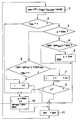
- FIG. 1 shows a block diagram with the sequence of a method for detecting the coupling state in the drive train of a motor vehicle.
- the transmission ratio iges for the drive train is first determined from the quotient of the engine speed n Mot and the average axle speed V axis, M. This quotient is additionally multiplied by a constant const, moreover, the signal is filtered using a first-order delay element (PT 1 element). The PT 1 filter provides one smoothed course of the signal safely. The gear ratio iges is determined anew each time the method is run.
- a speed query takes place. It is checked whether the current absolute speed v abs of the vehicle, based on the vehicle's center of gravity, exceeds a predetermined speed threshold v threshold , which is set to, for example, a value of 5.55 m / sec. Only above this speed threshold v threshold is the disengaging detector activated. Accordingly, at a vehicle speed v abs below the threshold value of the no branch, the method continues to step 10, in which an initialization of parameters and parameters is performed, which are required for the subsequent execution of the Auskuppelerkennung. In this way, it is ensured that, when the vehicle starts up, the initialization values required for disengaging detection are determined, which are required for the subsequent method steps.
- a parameter switching ⁇ which represents the coupling state and is implemented as a logical flag, is set to the value "false".
- a time counter t switching is set to the value zero.
- a reference value iges Ref for the gear ratio is set to the current value iges of the gear ratio, whereby the reference value igeS Ref is initialized.
- the engine drag torque control MSR is fundamentally activated, so that engine drag torque control can be carried out, provided that the further prerequisites for carrying out the closed-loop control are present.
- method step 10 After passing through the method step 10, the method continues with method step 11, in which the value for old is equated with the current transmission ratio iges and thereby initialized as a further parameter.
- This parameter is IGES old needed for the query according to method step 6, whether in the Connection to the disengaged transmission state can be assumed again from a coupled state.
- the system After the initialization in method step 11, the system returns to the beginning of the method and in method step 1 a new, current calculation of the transmission ratio iges is performed.
- the entire process is cycled, typically with a time interval ⁇ t of 0.02 sec.
- step 3 the method proceeds to the next interrogation in method step 3 in step 2, in which it is checked whether the clutch state shift ⁇ to the value "false" is set. If this is the case, it is assumed that a coupled state, ie a continuous flow of power in the drive train, and the Y-branch continues to the next step 4.
- step 4 a query is made as to whether the conditions for the engaged state are still present. This is checked by the relationship sodium - sodium re ⁇ f ⁇ ⁇ sodium .
- step 11 where after each pass of the method, the parameter iges old is set to the current value iges of the transmission ratio.
- the clutch is in the disengaged state and the no-branching is proceeded to method step 6, in which a query is carried out whether the disengaged condition is still present. This is based on the query sodium - sodium old ⁇ ⁇ ⁇ sodium re ⁇ s . checked, according to the is examined for the ratio of the amount of the difference strength of current gear ratio and the gear ratio sodium old from the immediately hydrolysis with time step falls below a clutch-on threshold ⁇ iges Res. If the engagement limit value ⁇ iges res is undershot, then the transmission ratio has not changed or changed very little in two successive time steps, from which it is possible to conclude the engaged state.
- step 6 it is additionally checked-characterized by a logical AND-whether the engine speed n Mot of the internal combustion engine is above the idling speed. This excludes that in the decoupled and steady idle state of the engine erroneously the switch switch ⁇ is set to "false" and thus to the value for engaged state.
- the yes branch is followed by proceeding to method block 7, in which a time counter t shift is increased by a time interval ⁇ t, which is the clock rate with which the entire method is carried out.
- the query is whether the time counter t switching exceeds a minimum duration T switching, min . This query ensures that the reset of the clutch state switching ⁇ to the value "false” is performed only if the conditions of the method step 6 are met for a certain minimum duration. If so, the yes branch is followed and proceed to process block 10, in which Among other things, the switching parameter switching ⁇ is set from "true” to "false", so that is assumed for the next process cycle again from a coupled state.
- method step 6 If the query in method step 6 reveals that at least one of the two conditions to be checked there is not fulfilled, then the no-branch is proceeded to method step 9, in which the time counter t switch to the initial value zero is set. Subsequently, the method is continued via method block 11 and back again to method step 1. A reset of the coupling state from "true” to "false”, that is from disengaged to engaged, is then not yet carried out in this method run.
Landscapes
- Engineering & Computer Science (AREA)
- General Engineering & Computer Science (AREA)
- Mechanical Engineering (AREA)
- Physics & Mathematics (AREA)
- Fluid Mechanics (AREA)
- Chemical & Material Sciences (AREA)
- Combustion & Propulsion (AREA)
- Transportation (AREA)
- Control Of Transmission Device (AREA)
- Hydraulic Clutches, Magnetic Clutches, Fluid Clutches, And Fluid Joints (AREA)
- Control Of Vehicle Engines Or Engines For Specific Uses (AREA)
- Electric Propulsion And Braking For Vehicles (AREA)
Claims (12)
- Procédé de reconnaissance de l'état d'accouplement dans la chaîne cinématique d'un véhicule automobile, notamment pendant une régulation du couple de glissement du moteur (MSR), dans lequel le régime du moteur (nmot) du moteur d'entraînement et une vitesse (VAchs, m), notamment une vitesse d'essieu, sont détectés, un rapport de multiplication (iges) du régime du moteur (nmot) et de la vitesse (VAchs, m) est formé et est déterminé à partir d'une comparaison du rapport de multiplication (iges) avec une valeur de référence (igesRef) de l'état d'embrayage (Schaltκ),
la valeur de référence (igesRef) étant égalisée avec le rapport de multiplication (iges) à partir d'une première étape temporelle, puis, dans une deuxième étape temporelle, la différence entre le rapport de multiplication (iges) actuel et la valeur de référence (igesRef) est formée, un état d'embrayage (Schaltκ) désembrayé étant reconnu si la différence dépasse une valeur limite (Δiges), caractérisé en ce que la régulation du couple de glissement du moteur (MSR), lorsqu'un état d'embrayage (Schaltκ) désembrayé est détecté, est désactivée, et est activée lorsque l'état d'embrayage (Schaltκ) est embrayé. - Procédé selon la revendication 1,
caractérisé en ce que l'on reconnaît à partir de l'état d'embrayage (Schaltκ) désembrayé, si la valeur de la différence entre le rapport de multiplication (iges) actuel et la valeur de référence (igesRef) dépasse la valeur limite (Δiges). - Procédé selon l'une quelconque des revendications 1 à 2,
caractérisé en ce que l'on reconnaît un état d'embrayage (Schaltκ) embrayé si la différence entre le rapport de multiplication (iges) actuel et le rapport de multiplication (igesalt) provenant d'une étape temporelle antérieure est inférieure à une valeur limite (ΔigesRes). - Procédé selon la revendication 3,
caractérisé en ce que l'on reconnaît un état d'embrayage (Schaltκ) embrayé si la valeur de la différence entre le rapport de multiplication (iges) actuel et le rapport de multiplication (igesalt) provenant de l'étape temporelle antérieure est inférieure à la valeur limite (ΔigesRes). - Procédé selon la revendication 3 ou 4,
caractérisé en ce que l'on reconnaît un état d'embrayage (Schaltκ) embrayé si la différence entre le rapport de multiplication (iges) actuel et le rapport de multiplication (igesalt) provenant de l'étape temporelle antérieure est inférieure à la valeur limite (ΔigesRes) pendant au moins une durée minimale (TSchalt,min). - Procédé selon l'une quelconque des revendications 3 à 5,
caractérisé en ce que l'on ne reconnaît un état d'embrayage (Schaltκ) embrayé que si le régime du moteur (nmot) actuel dépasse un régime minimum (nLeerlauf). - Procédé selon l'une quelconque des revendications 1 à 6,
caractérisé en ce que la valeur de référence (igesRef) est égalisée avec le rapport de multiplication (iges) si l'on reconnaît, à la suite d'un état d'embrayage (Schaltκ) débrayé, à nouveau un état d'embrayage (Schaltκ) embrayé. - Procédé selon l'une quelconque des revendications 1 à 7,
caractérisé en ce que le signal du rapport de multiplication (iges) est filtré avec un facteur de retard de premier ordre (PT1-Glied). - Procédé selon l'une quelconque des revendications 1 à 8,
caractérisé en ce que l'on prend pour base la vitesse d'essieu d'entraînement moyenne (VAchs, m) pour la détection du rapport de multiplication (iges). - Procédé selon l'une quelconque des revendications 1 à 9,
caractérisé en ce que la reconnaissance de l'état d'embrayage (Schaltκ) n'est effectuée que dans le cas où la vitesse du véhicule (Vabs) est supérieure à une valeur de vitesse seuil (VSchwelle). - Procédé selon la revendication 1, caractérisé en ce que le rapport de multiplication (iges) est formé en fonction d'un quotient du régime du moteur (nmot) et de la vitesse (VAchs, m), le rapport de multiplication (iges) étant notamment obtenu par une constante multipliée par le quotient du régime du moteur (nmot) et de la vitesse (VAchs, m).
- Appareil de régulation et/ou de commande pour mettre en oeuvre le procédé selon l'une quelconque des revendications 1 à 10.
Applications Claiming Priority (2)
| Application Number | Priority Date | Filing Date | Title |
|---|---|---|---|
| DE102006054702A DE102006054702A1 (de) | 2006-11-21 | 2006-11-21 | Verfahren zur Erkennung des Kupplungszustandes im Antriebsstrang eines Kraftfahrzeugs |
| PCT/EP2007/062359 WO2008061927A1 (fr) | 2006-11-21 | 2007-11-15 | Procédé de reconnaissance de l'état d'accouplement des organes de transmission d'un véhicule automobile |
Publications (2)
| Publication Number | Publication Date |
|---|---|
| EP2094520A1 EP2094520A1 (fr) | 2009-09-02 |
| EP2094520B1 true EP2094520B1 (fr) | 2011-02-02 |
Family
ID=38984334
Family Applications (1)
| Application Number | Title | Priority Date | Filing Date |
|---|---|---|---|
| EP07822606A Not-in-force EP2094520B1 (fr) | 2006-11-21 | 2007-11-15 | Procédé de reconnaissance de l'état d'accouplement des organes de transmission d'un véhicule automobile |
Country Status (6)
| Country | Link |
|---|---|
| US (1) | US8401754B2 (fr) |
| EP (1) | EP2094520B1 (fr) |
| JP (1) | JP2009540242A (fr) |
| AT (1) | ATE497453T1 (fr) |
| DE (2) | DE102006054702A1 (fr) |
| WO (1) | WO2008061927A1 (fr) |
Families Citing this family (3)
| Publication number | Priority date | Publication date | Assignee | Title |
|---|---|---|---|---|
| DE102010039181B4 (de) * | 2010-08-11 | 2022-06-15 | Robert Bosch Gmbh | Verfahren zum Erkennen des Kupplungszustandes |
| CA2938170A1 (fr) * | 2014-02-25 | 2015-09-03 | Tesmec S.P.A. | Procede pour gerer un vehicule ferroviaire et vehicule ferroviaire fonctionnant selon ce procede |
| US12680582B2 (en) | 2024-08-21 | 2026-07-14 | Robert Bosch Gmbh | Clutch engagement ratio detection |
Family Cites Families (6)
| Publication number | Priority date | Publication date | Assignee | Title |
|---|---|---|---|---|
| US6167996B1 (en) * | 1997-12-10 | 2001-01-02 | Zf Meritor, Llc | Method and system for determining clutch status in a vehicle |
| JP3899943B2 (ja) * | 2002-01-24 | 2007-03-28 | 日産自動車株式会社 | 定速走行制御装置 |
| DE10238464B4 (de) | 2002-03-26 | 2020-07-09 | Robert Bosch Gmbh | Erkennung des Kupplungszustandes während einer Motorschleppmomentenregelung |
| JP4383072B2 (ja) | 2002-03-26 | 2009-12-16 | ロベルト・ボッシュ・ゲゼルシャフト・ミト・ベシュレンクテル・ハフツング | 車両のクラッチ状態の判定方法およびそれを実施する装置 |
| DE102004012158A1 (de) * | 2004-03-12 | 2005-09-29 | Adam Opel Ag | Verfahren zur Überwachung einer Kupplung und Anwendungen dafür |
| FR2881491B1 (fr) * | 2005-01-31 | 2007-03-23 | Renault Sas | Procede de reconnaissance de l'etat d'un dispositif d'embrayage entre un moteur et une boite de vitesse |
-
2006
- 2006-11-21 DE DE102006054702A patent/DE102006054702A1/de not_active Withdrawn
-
2007
- 2007-11-15 DE DE502007006432T patent/DE502007006432D1/de active Active
- 2007-11-15 JP JP2009514819A patent/JP2009540242A/ja active Pending
- 2007-11-15 WO PCT/EP2007/062359 patent/WO2008061927A1/fr not_active Ceased
- 2007-11-15 AT AT07822606T patent/ATE497453T1/de active
- 2007-11-15 EP EP07822606A patent/EP2094520B1/fr not_active Not-in-force
- 2007-11-15 US US12/304,706 patent/US8401754B2/en not_active Expired - Fee Related
Also Published As
| Publication number | Publication date |
|---|---|
| DE102006054702A1 (de) | 2008-05-29 |
| JP2009540242A (ja) | 2009-11-19 |
| DE502007006432D1 (de) | 2011-03-17 |
| EP2094520A1 (fr) | 2009-09-02 |
| US20090306869A1 (en) | 2009-12-10 |
| ATE497453T1 (de) | 2011-02-15 |
| US8401754B2 (en) | 2013-03-19 |
| WO2008061927A1 (fr) | 2008-05-29 |
Similar Documents
| Publication | Publication Date | Title |
|---|---|---|
| EP2496458B1 (fr) | Procédé de commande de la fonction de roulement au point mort ou de roulement moteur coupé d'un véhicule | |
| DE102007051064B4 (de) | Fehlererkennungsverfahren für automatisierte Kraftfahrzeuggetriebe | |
| DE102011007716B4 (de) | Verfahren und Vorrichtung zum Betrieb einer Start/Stopp-Automatik in einem Kraftfahrzeug | |
| DE102011083332B4 (de) | Verfahren und Vorrichtung zum automatischen Aktivieren bzw. Deaktivieren einer Segel-Betriebsart bei einem Kraftfahrzeug mit Verbrennungsmotor | |
| DE102014117732B4 (de) | Verfahren und System zum Verhindern von Überhitzung einer Kupplung mittels erzwungenen Kriechens | |
| WO2000035697A2 (fr) | Vehicule a moteur | |
| EP2240709B1 (fr) | Dispositif et procede empechant le passage de rapports inadequats dans des transmissions automatiques de vehicules motorises | |
| WO2001033093A1 (fr) | Dispositif d'actionnement pour un dispositif d'accouplement | |
| EP2160524A1 (fr) | Procédé et dispositif pour commander l'arrêt en marche à vide d'un véhicule | |
| DE102009052227A1 (de) | Verfahren zum Betreiben eines Kraftfahrzeugs | |
| EP0651182A2 (fr) | Procédé de commande d'une variable de réglage, déterminant la différence de vitesse de rotation d'un embrayage d'automobile | |
| DE102009015165A1 (de) | Verfahren zur Steuerung des Gangwechsels in einem Kraftfahrzeug | |
| WO2002099301A1 (fr) | Procede pour commander un vehicule a embrayage automatique dans le cadre de la descente d'une cote | |
| EP1609658B1 (fr) | Procédé et dispositif du démarrage automatique d'un véhicule automobile | |
| DE102012221896A1 (de) | Verfahren zur Ermittlung eines Tastpunkts einer Reibungskupplung | |
| WO2002092377A1 (fr) | Procede de commande et/ou de regulation d'un systeme de transmission de couple dans la chaine cinematique d'un vehicule | |
| EP2094520A1 (fr) | Procédé de reconnaissance de l'état d'accouplement des organes de transmission d'un véhicule automobile | |
| EP3221617B1 (fr) | Procédé permettant de faire fonctionner une boîte de vitesses d'un véhicule automobile et boîte de vitesses correspondante | |
| DE10238464B4 (de) | Erkennung des Kupplungszustandes während einer Motorschleppmomentenregelung | |
| DE102011006386B4 (de) | Verfahren zur Freigabe einer Rückschaltung in einem automatischen Fahrzeuggetriebe | |
| DE102010028074A1 (de) | Verfahren zur Unterstützung des Fahrers eines Kraftfahrzeugs bei Anfahrvorgängen | |
| DE102016202693A1 (de) | Schutzvorrichtung für einen Antriebsstrang eines Kraftfahrzeugs | |
| EP1426229B1 (fr) | Appareil et procédé de commande d'un moteur à combustion | |
| DE102013218664A1 (de) | Verfahren und Vorrichtung zur Steuerung eines Freischaukelmodus eines Fahrzeugs | |
| DE102011080293A1 (de) | System und Verfahren zur Unterstützung des Anfahrens eines Kraftfahrzeugs |
Legal Events
| Date | Code | Title | Description |
|---|---|---|---|
| PUAI | Public reference made under article 153(3) epc to a published international application that has entered the european phase |
Free format text: ORIGINAL CODE: 0009012 |
|
| 17P | Request for examination filed |
Effective date: 20090622 |
|
| AK | Designated contracting states |
Kind code of ref document: A1 Designated state(s): AT BE BG CH CY CZ DE DK EE ES FI FR GB GR HU IE IS IT LI LT LU LV MC MT NL PL PT RO SE SI SK TR |
|
| DAX | Request for extension of the european patent (deleted) | ||
| 17Q | First examination report despatched |
Effective date: 20100208 |
|
| GRAP | Despatch of communication of intention to grant a patent |
Free format text: ORIGINAL CODE: EPIDOSNIGR1 |
|
| RTI1 | Title (correction) |
Free format text: METHOD FOR DETECTING THE STATUS OF THE CLUTCH IN THE DRIVE TRAIN OF A MOTOR VEHICLE |
|
| GRAS | Grant fee paid |
Free format text: ORIGINAL CODE: EPIDOSNIGR3 |
|
| GRAA | (expected) grant |
Free format text: ORIGINAL CODE: 0009210 |
|
| AK | Designated contracting states |
Kind code of ref document: B1 Designated state(s): AT BE BG CH CY CZ DE DK EE ES FI FR GB GR HU IE IS IT LI LT LU LV MC MT NL PL PT RO SE SI SK TR |
|
| REG | Reference to a national code |
Ref country code: GB Ref legal event code: FG4D Free format text: NOT ENGLISH |
|
| REG | Reference to a national code |
Ref country code: CH Ref legal event code: EP |
|
| REG | Reference to a national code |
Ref country code: IE Ref legal event code: FG4D Free format text: LANGUAGE OF EP DOCUMENT: GERMAN |
|
| REF | Corresponds to: |
Ref document number: 502007006432 Country of ref document: DE Date of ref document: 20110317 Kind code of ref document: P |
|
| REG | Reference to a national code |
Ref country code: DE Ref legal event code: R096 Ref document number: 502007006432 Country of ref document: DE Effective date: 20110317 |
|
| REG | Reference to a national code |
Ref country code: NL Ref legal event code: VDEP Effective date: 20110202 |
|
| LTIE | Lt: invalidation of european patent or patent extension |
Effective date: 20110202 |
|
| PG25 | Lapsed in a contracting state [announced via postgrant information from national office to epo] |
Ref country code: GR Free format text: LAPSE BECAUSE OF FAILURE TO SUBMIT A TRANSLATION OF THE DESCRIPTION OR TO PAY THE FEE WITHIN THE PRESCRIBED TIME-LIMIT Effective date: 20110503 Ref country code: LT Free format text: LAPSE BECAUSE OF FAILURE TO SUBMIT A TRANSLATION OF THE DESCRIPTION OR TO PAY THE FEE WITHIN THE PRESCRIBED TIME-LIMIT Effective date: 20110202 Ref country code: SE Free format text: LAPSE BECAUSE OF FAILURE TO SUBMIT A TRANSLATION OF THE DESCRIPTION OR TO PAY THE FEE WITHIN THE PRESCRIBED TIME-LIMIT Effective date: 20110202 Ref country code: LV Free format text: LAPSE BECAUSE OF FAILURE TO SUBMIT A TRANSLATION OF THE DESCRIPTION OR TO PAY THE FEE WITHIN THE PRESCRIBED TIME-LIMIT Effective date: 20110202 Ref country code: PT Free format text: LAPSE BECAUSE OF FAILURE TO SUBMIT A TRANSLATION OF THE DESCRIPTION OR TO PAY THE FEE WITHIN THE PRESCRIBED TIME-LIMIT Effective date: 20110602 Ref country code: ES Free format text: LAPSE BECAUSE OF FAILURE TO SUBMIT A TRANSLATION OF THE DESCRIPTION OR TO PAY THE FEE WITHIN THE PRESCRIBED TIME-LIMIT Effective date: 20110513 Ref country code: IS Free format text: LAPSE BECAUSE OF FAILURE TO SUBMIT A TRANSLATION OF THE DESCRIPTION OR TO PAY THE FEE WITHIN THE PRESCRIBED TIME-LIMIT Effective date: 20110602 |
|
| PG25 | Lapsed in a contracting state [announced via postgrant information from national office to epo] |
Ref country code: PL Free format text: LAPSE BECAUSE OF FAILURE TO SUBMIT A TRANSLATION OF THE DESCRIPTION OR TO PAY THE FEE WITHIN THE PRESCRIBED TIME-LIMIT Effective date: 20110202 Ref country code: NL Free format text: LAPSE BECAUSE OF FAILURE TO SUBMIT A TRANSLATION OF THE DESCRIPTION OR TO PAY THE FEE WITHIN THE PRESCRIBED TIME-LIMIT Effective date: 20110202 Ref country code: BG Free format text: LAPSE BECAUSE OF FAILURE TO SUBMIT A TRANSLATION OF THE DESCRIPTION OR TO PAY THE FEE WITHIN THE PRESCRIBED TIME-LIMIT Effective date: 20110502 Ref country code: SI Free format text: LAPSE BECAUSE OF FAILURE TO SUBMIT A TRANSLATION OF THE DESCRIPTION OR TO PAY THE FEE WITHIN THE PRESCRIBED TIME-LIMIT Effective date: 20110202 Ref country code: FI Free format text: LAPSE BECAUSE OF FAILURE TO SUBMIT A TRANSLATION OF THE DESCRIPTION OR TO PAY THE FEE WITHIN THE PRESCRIBED TIME-LIMIT Effective date: 20110202 Ref country code: CY Free format text: LAPSE BECAUSE OF FAILURE TO SUBMIT A TRANSLATION OF THE DESCRIPTION OR TO PAY THE FEE WITHIN THE PRESCRIBED TIME-LIMIT Effective date: 20110202 |
|
| REG | Reference to a national code |
Ref country code: IE Ref legal event code: FD4D |
|
| PG25 | Lapsed in a contracting state [announced via postgrant information from national office to epo] |
Ref country code: IE Free format text: LAPSE BECAUSE OF FAILURE TO SUBMIT A TRANSLATION OF THE DESCRIPTION OR TO PAY THE FEE WITHIN THE PRESCRIBED TIME-LIMIT Effective date: 20110202 Ref country code: EE Free format text: LAPSE BECAUSE OF FAILURE TO SUBMIT A TRANSLATION OF THE DESCRIPTION OR TO PAY THE FEE WITHIN THE PRESCRIBED TIME-LIMIT Effective date: 20110202 Ref country code: DK Free format text: LAPSE BECAUSE OF FAILURE TO SUBMIT A TRANSLATION OF THE DESCRIPTION OR TO PAY THE FEE WITHIN THE PRESCRIBED TIME-LIMIT Effective date: 20110202 |
|
| PG25 | Lapsed in a contracting state [announced via postgrant information from national office to epo] |
Ref country code: CZ Free format text: LAPSE BECAUSE OF FAILURE TO SUBMIT A TRANSLATION OF THE DESCRIPTION OR TO PAY THE FEE WITHIN THE PRESCRIBED TIME-LIMIT Effective date: 20110202 Ref country code: SK Free format text: LAPSE BECAUSE OF FAILURE TO SUBMIT A TRANSLATION OF THE DESCRIPTION OR TO PAY THE FEE WITHIN THE PRESCRIBED TIME-LIMIT Effective date: 20110202 Ref country code: RO Free format text: LAPSE BECAUSE OF FAILURE TO SUBMIT A TRANSLATION OF THE DESCRIPTION OR TO PAY THE FEE WITHIN THE PRESCRIBED TIME-LIMIT Effective date: 20110202 |
|
| PLBE | No opposition filed within time limit |
Free format text: ORIGINAL CODE: 0009261 |
|
| STAA | Information on the status of an ep patent application or granted ep patent |
Free format text: STATUS: NO OPPOSITION FILED WITHIN TIME LIMIT |
|
| 26N | No opposition filed |
Effective date: 20111103 |
|
| REG | Reference to a national code |
Ref country code: DE Ref legal event code: R097 Ref document number: 502007006432 Country of ref document: DE Effective date: 20111103 |
|
| BERE | Be: lapsed |
Owner name: ROBERT BOSCH G.M.B.H. Effective date: 20111130 |
|
| PG25 | Lapsed in a contracting state [announced via postgrant information from national office to epo] |
Ref country code: MC Free format text: LAPSE BECAUSE OF NON-PAYMENT OF DUE FEES Effective date: 20111130 |
|
| REG | Reference to a national code |
Ref country code: CH Ref legal event code: PL |
|
| GBPC | Gb: european patent ceased through non-payment of renewal fee |
Effective date: 20111115 |
|
| PG25 | Lapsed in a contracting state [announced via postgrant information from national office to epo] |
Ref country code: CH Free format text: LAPSE BECAUSE OF NON-PAYMENT OF DUE FEES Effective date: 20111130 Ref country code: LI Free format text: LAPSE BECAUSE OF NON-PAYMENT OF DUE FEES Effective date: 20111130 |
|
| REG | Reference to a national code |
Ref country code: FR Ref legal event code: ST Effective date: 20120731 |
|
| PG25 | Lapsed in a contracting state [announced via postgrant information from national office to epo] |
Ref country code: BE Free format text: LAPSE BECAUSE OF NON-PAYMENT OF DUE FEES Effective date: 20111130 |
|
| PG25 | Lapsed in a contracting state [announced via postgrant information from national office to epo] |
Ref country code: GB Free format text: LAPSE BECAUSE OF NON-PAYMENT OF DUE FEES Effective date: 20111115 |
|
| PG25 | Lapsed in a contracting state [announced via postgrant information from national office to epo] |
Ref country code: FR Free format text: LAPSE BECAUSE OF NON-PAYMENT OF DUE FEES Effective date: 20111130 |
|
| PG25 | Lapsed in a contracting state [announced via postgrant information from national office to epo] |
Ref country code: MT Free format text: LAPSE BECAUSE OF FAILURE TO SUBMIT A TRANSLATION OF THE DESCRIPTION OR TO PAY THE FEE WITHIN THE PRESCRIBED TIME-LIMIT Effective date: 20110202 |
|
| PG25 | Lapsed in a contracting state [announced via postgrant information from national office to epo] |
Ref country code: LU Free format text: LAPSE BECAUSE OF NON-PAYMENT OF DUE FEES Effective date: 20111115 |
|
| PG25 | Lapsed in a contracting state [announced via postgrant information from national office to epo] |
Ref country code: TR Free format text: LAPSE BECAUSE OF FAILURE TO SUBMIT A TRANSLATION OF THE DESCRIPTION OR TO PAY THE FEE WITHIN THE PRESCRIBED TIME-LIMIT Effective date: 20110202 |
|
| PG25 | Lapsed in a contracting state [announced via postgrant information from national office to epo] |
Ref country code: HU Free format text: LAPSE BECAUSE OF FAILURE TO SUBMIT A TRANSLATION OF THE DESCRIPTION OR TO PAY THE FEE WITHIN THE PRESCRIBED TIME-LIMIT Effective date: 20110202 |
|
| REG | Reference to a national code |
Ref country code: AT Ref legal event code: MM01 Ref document number: 497453 Country of ref document: AT Kind code of ref document: T Effective date: 20121130 |
|
| PG25 | Lapsed in a contracting state [announced via postgrant information from national office to epo] |
Ref country code: AT Free format text: LAPSE BECAUSE OF NON-PAYMENT OF DUE FEES Effective date: 20121130 |
|
| PGFP | Annual fee paid to national office [announced via postgrant information from national office to epo] |
Ref country code: IT Payment date: 20181122 Year of fee payment: 12 |
|
| PGFP | Annual fee paid to national office [announced via postgrant information from national office to epo] |
Ref country code: DE Payment date: 20200124 Year of fee payment: 13 |
|
| PG25 | Lapsed in a contracting state [announced via postgrant information from national office to epo] |
Ref country code: IT Free format text: LAPSE BECAUSE OF NON-PAYMENT OF DUE FEES Effective date: 20191115 |
|
| REG | Reference to a national code |
Ref country code: DE Ref legal event code: R119 Ref document number: 502007006432 Country of ref document: DE |
|
| PG25 | Lapsed in a contracting state [announced via postgrant information from national office to epo] |
Ref country code: DE Free format text: LAPSE BECAUSE OF NON-PAYMENT OF DUE FEES Effective date: 20210601 |