EP2095667B1 - Procédé et appareil de translation de srns dans des systèmes de communication sans fil - Google Patents
Procédé et appareil de translation de srns dans des systèmes de communication sans fil Download PDFInfo
- Publication number
- EP2095667B1 EP2095667B1 EP07864072A EP07864072A EP2095667B1 EP 2095667 B1 EP2095667 B1 EP 2095667B1 EP 07864072 A EP07864072 A EP 07864072A EP 07864072 A EP07864072 A EP 07864072A EP 2095667 B1 EP2095667 B1 EP 2095667B1
- Authority
- EP
- European Patent Office
- Prior art keywords
- node
- target
- relocation
- sending
- target node
- Prior art date
- Legal status (The legal status is an assumption and is not a legal conclusion. Google has not performed a legal analysis and makes no representation as to the accuracy of the status listed.)
- Active
Links
Images

Classifications
-
- H—ELECTRICITY
- H04—ELECTRIC COMMUNICATION TECHNIQUE
- H04W—WIRELESS COMMUNICATION NETWORKS
- H04W16/00—Network planning, e.g. coverage or traffic planning tools; Network deployment, e.g. resource partitioning or cells structures
- H04W16/18—Network planning tools
-
- H—ELECTRICITY
- H04—ELECTRIC COMMUNICATION TECHNIQUE
- H04W—WIRELESS COMMUNICATION NETWORKS
- H04W24/00—Supervisory, monitoring or testing arrangements
- H04W24/02—Arrangements for optimising operational condition
-
- H—ELECTRICITY
- H04—ELECTRIC COMMUNICATION TECHNIQUE
- H04W—WIRELESS COMMUNICATION NETWORKS
- H04W36/00—Hand-off or reselection arrangements
- H04W36/0005—Control or signalling for completing the hand-off
- H04W36/0055—Transmission or use of information for re-establishing the radio link
Definitions
- the present invention relates generally to wireless communications and more specifically to Serving Radio Network Subsystem (SRNS) relocation procedures in wireless communication systems.
- SRNS Serving Radio Network Subsystem
- Wireless communication system are widely deployed to provide various types of communication content such as voice, data, and so on.
- These systems may be multiple-access systems capable of supporting communication with multiple users by sharing the available system resources (e.g., bandwidth and transmit power).
- Examples of such multiple-access systems include code division multiple access (CDMA) systems, time division multiple access (TDMA) systems, frequency division multiple access (FDMA) systems, 3GPP Long Term Evolution (LTE) systems, and orthogonal frequency division multiple access (OFDMA) systems.
- CDMA code division multiple access
- TDMA time division multiple access
- FDMA frequency division multiple access
- LTE 3GPP Long Term Evolution
- OFDMA orthogonal frequency division multiple access
- a wireless multiple-access communication system can simultaneously support communication for multiple wireless terminate.
- Each terminal communicates with one or more base stations via transmissions on the forward and reverse links.
- the forward link (or downlink) refers to the communication link from the base stations to the terminals
- the reverse link (or uplink) refers to the communication link from the terminals to the base stations.
- This communication link may be established via a single-in-single-out, multiple-in-signal-out or a multiple-in-multiple-out (MIMO) system.
- MIMO multiple-in-multiple-out
- High-Speed Packet Access (HSPA) Evolution also called Evolved HSPA or HSPA+ is currently discussed within the 3 rd Generation Partnership Project (GGPP) as a transition between current HSPA systems and Long Term Evolution (LTE) systems.
- GGPP 3 rd Generation Partnership Project
- LTE Long Term Evolution
- SRNS Serving Radio Network Subsystem
- a method for SRNS relocation comprises sending a relocation request from a Source Node B+ to a Target Node B+ based on measurements received from a User Equipment; sending a Physical Channel reconfiguration message from the Source Node B+ to the UE; forwarding Packet Data Units (PDU) from the source Node B+ to the Target Node B+; and performing physical layer synchronization and radio link establishment with a. target cell of the Target Node B+.
- PDU Packet Data Units
- the one or more aspects comprise the features hereinafter fully described and particularly pointed out in the claims.
- the following description and the annexed drawings set forth in detail certain illustrative aspects of the one or more aspects. Those aspects are indicative, however, of but a few of the various ways in which the principles of various aspects may be employed and the described aspects are intended to include all such aspects and their equivalents.
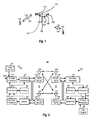
- FIG. 1 illustrates a multiple access wireless communication system according to one embodiment
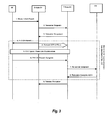
- FIG. 2 illustrates an examplary a block diagram of a communication system
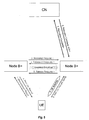
- FIG. 3 illustrates an examplary embodiment of signaling flow for enhanced SRNS relocation with hard handover
- FIG. 4 illustrates an examplary embodiment of a current SRNS relocation procedure
- FIG. 5 illustrates an exemplary embodiment of an enhanced SRNS relocation with hard handover.
- a wireless multiple-access communication system can simultaneously support communication for multiple wireless terminus.
- Each terminal communicates with one or more base stations via transmissions on the forward and reverse links.
- the forward link (or downlink) refers to the communication link from the base stations to the terminals
- the reverse link (or uplink) refers to the communication link from the terminals to the base stations.
- This communication link may be established via a single-in-single-out, multiple-in-signal-out or a multiple-in-multiple-out (MIMO) system.
- MIMO multiple-in-multiple-out
- a MIMO system employs multiple (NT) transmit antennas and multiple (NR) receive antennas for data transmission.
- a MIMO channel formed by the NT transmit and NR receive antennas may be decomposed into NS independent channels, which are also referred to as spatial channels, where N S ⁇ min N T , N N .
- NS independent channels corresponds to a dimension.
- the MIMO system can provide improved performance (e.g., higher throughput and/or greater reliability) if the additional dimensionalities created by the multiple transmit and receive antennas are utilized.
- a MIMO system supports a time division duplex (TDD) and frequency division duplex (FDO) systems.
- TDD time division duplex
- FDO frequency division duplex
- the forward and reverse link transmissions are on the same frequency region so that the reciprocity principle allows the estimation of the forward link channel from the reverse link channel. This enables the access point to extract transmit beam forming gain on the forward link when multiple antennas are available at the access point.
- SC-FDDA Single carrier frequency division multiple access
- SC-FDMA has similar performance and essentially the same overall complexity as those of OFDMA system.
- SC-FDMA signal has lower peak-to-average power ratio (PAPR) because of its inherent single carrier structure.
- PAPR peak-to-average power ratio
- SC-FDMA has drawn great attention, especially in the uplink communications where lower PAPR greatly benefits the mobile terminal in terms of transmit power efficiency. It is currently a working assumption for uplink multiple access scheme in 3GPP Long Term Evolution (LTE), or Evolved UTRA.
- LTE Long Term Evolution
- a access point 100 includes multiple antenna groups, one including 104 and 106, another including 108 and 110, and an additional including 112 and 114. In Fig. 1 , only two antennas are shown for each antenna group, however, more or fewer antennas may be utilized for each antenna group.
- Access terminal 116 is in communication with antenna 112 and 114, where antennas 112 and 114 transmit information to access terminal 116 over forward link 120 and receive information from access terminal 116 over reverse link 118.
- Access terminal 122 is in communication with antennas 106 and 108, where antennas 106 and 108 transmit information to access terminal 122 over forward link 126 and receive information from access terminal 122 over reverse link 124.
- communication links 118, 120, 124 and 126 may use different frequency for communication.
- forward link 120 may use a different frequency then that used by reverse link 118.
- antenna groups each are designed to communicate to access terminals in a sector, , of the areas covered by access point 100.
- the transmitting antennas of access point 100 utilize beamforming in order to improve the signal-to-noise ratio of forward links for the different access terminals 116 and 124. Also, an access point using beamforming to transmit to access terminals scattered randomly through its coverage causes less interference to access terminals in neighboring cells than an access point transmitting through a single antenna to all its access terminals.
- An access point may be a fixed station used for communicating with the terminals and may also be referred to as an access point, a Node B, or some other terminology.
- An access terminal may also be called an access terminal, user equipment (UE), a wireless communication device, terminal, access terminal or some other terminology.
- UE user equipment
- FIG. 2 is a block diagram of an embodiment of a transmitter system 210 (also known as the access point) and a receiver system 250 (also known as access terminal) in a MIMO system 200.
- a transmitter system 210 also known as the access point
- a receiver system 250 also known as access terminal
- traffic data for a number of data streams is provided from a data source 212 to a transmit (TX) data processor 214.
- TX transmit
- each data stream is transmitted over a respective transmit antenna.
- TX data processor 214 formats, codes, and interleaves the traffic data for each data stream based on a particular coding scheme selected for that data stream to provide coded data.
- the coded data for each data stream may be multiplexed with pilot data using OFDM techniques.
- the pilot data is typically a known data pattern that is processed in a known manner and may be used at the receive system to estimate the channel response.
- the multiplexed pilot and coded data for each data stream is then modulated (i.e., symbol mapped) based on a particular modulation scheme (e.g., BPSK, QSPK, M-PSK, or M-QAM) selected for that data stream to provide modulation symbols.
- the data rate, coding, and modulation for each data stream may be determined by instructions performed by processor 230.
- TX MIMO processor 220 which may further process die modulation symbols (e.g., for OFDM).
- TX MIMO processor 220 then provides NT modulation symbol streams to NT transmitter (TMTR) 222a through 222t.
- TMTR NT transmitter
- TX MIMO processor 220 applies beamforming weights to the symbols of the data streams and to the antenna from which the symbol is being transmitted.
- Each transmitter 222 receives and processes a respective symbol stream to provide one or more analog signals, and further conditions (e.g., amplifies, filters, and upconverts) the analog signals to provide a modulated signal suitable for transmission over the MIMO channel.
- NT modulated signals from transmitters 222a through 222t are then transmitted from NT antennas 224a through 224t, respectively.
- the transmitted modulated signal are received by NR antennas 252a through 252r and the received signal from each antenna 252 is provided to a respective receiver (RCVR) 254a through 254r.
- Each receiver 254 conditions (e.g., filters, amplifies, and downconverts) a respective received signal, digitizes the conditioned signal to provide samples, and further processes the sampler to provide a corresponding "received" symbol stream.
- An RX data processor 260 then receives and processes the NR received symbol streams from NR receivers 254 based on a particular receiver processing technique to provide NT "detected" symbol streams.
- the RX data processor 260 then demodulates, deinterleaves, and decodes each detected symbol stream to recover the traffic data for the data stream.
- the processing by RX data processor 260 is complementary to that performed by TX MIMO processor 220 and TX data processor 214 at transmitter system 210.
- a processor 270 periodically determines which pre-coding matrix to use (discussed below). Processor 270 formulates a reverse link message comprising a matrix index portion and a rank value portion.
- the reverse link message may comprise various types of information regarding the communication link and/or the received data stream.
- the reverse link message is then processed by a TX data processor 238, which also receives traffic data for a number of data streams from a data source 236, modulated by a modulator 280, conditioned by transmitters 254a through 254r, and transmitted back to transmitter system 210.
- the modulated signals from receiver system 250 are received by antennas 224, conditioned by receivers 222, demodulated by a demodulator 240, and processed by a RX data processor 242 to extract the reserve link message transmitted by the receiver system 250.
- Processor 230 determines which pre-coding matrix to use for determining the beamforming weights then processes the extracted message.
- Logical Control Channels comprise Broadcast Control Channel (BCCH) which is DL channel for broadcasting system control information. Paging Control Channel (PCCH) which is DL channel that transfer paging information.
- Multicast Control Channel (MCCH) which is Point-to-multipoint DL channel used for transmitting Multimedia Broadcast and Multicast Service (MBMS) scheduling and control information for one or several MTCHs. Generally, after establishing RRC connection this channel is only used by UEs that receive MBMS (Note: old MCCH+MSCH).
- Dedicated Control Channel DCCH is Point-to-point bi-directional channel that transmits dedicated control information and used by UEs having an RRC connection.
- Logical Traffic Channel compries a Dedicated Traffic Channel (DTCH) which is Point-to-point bi-directional channel, dedicated to one UE, for the transfer of user information. Also, a Multicast traffic Channel (MTCH) for Point-to-multipoint DL channel for transmitting traffic data.
- DTCH Dedicated Traffic Channel
- MTCH Multicast traffic Channel
- Transport Channels arc classified into DL and UL.
- DL Transport Channels comprises a Broadcast Channel (BCH), Downlink Shared Data Channel (DL-SDCH) and a Paging Channel (PCH), the PCH for support of UE power saving (DRX cycle is indicated by the network to the UE), broadcasted over entire cell and mapped to PHY resources which can be used for other control/traffic channel.
- the UL Transport Channels comprises a Random Access Channel (RACH), a Request Channel (REQCH), a Uplink Shared Data Channel (UL-SDCH) and plurality of PHY channels.
- the PHY channels comprises a set of DL channels and UL channels.
- Radio Network Controller RNC
- the SRNS relocation procedure will be extensively used to handle the inter-Node B+ mobility.
- the current procedure is not efficient to handle this kind of mobility.
- This specification discloses an enhanced SRNS relocation procedure, which is more in line with the way inter-eNode B mobility is handled in LTE.
- the proposed scheme can also be seen as an optimized intra-SGSN SRNS relocation procedure.
- the proposed enhanced mobility scheme achieves reduced handover delay and reduced processing load at the Core Network (CN). It requires less signaling messages and mainly relies on the Node B+ to Node B+ communication.
- CN Core Network
- FIG. 3 there is depicted a signaling flow for the enhanced SRNS relocation procedure with hard handover.
- the allowing steps apply:
- the source Node B+ decides to handover the UE to a cell controlled by the target Node B+.
- the source Node B+ issues a Relocation Request to the target Node B+ passing the necessary information (context transfer) to prepare the HO at the target side. After performing Admission Control, the target Node B+ configures the required resources.
- a Relocation Response message is sent to the source Node B+ with the necessary information for the UE to reconfigure the radio path towards the target Node B+.
- a PHYSICAL CHANNEL RECONFIGURATION message is sent by the source Node B+ with the information to access the cell in the target Node B+.
- the source Node B+ can start forwarding GTP Packet Data Units (PDU) of the different Radio Access Bearers (RAB) to the target Node B+, depending on their QoS Profile (including means for minimizing/avoiding packet loss)
- PDU GTP Packet Data Units
- RAB Radio Access Bearers
- the UE sends a PHYSICAL CHANNEL RECONFIGURATION COMPLETE message to the target cell of target Node B+.
- the target Node B+ sends a Relocation Complete message to the Core Network (CN) with a request to establish the different RABs between target Node B+ and CN.
- CN Core Network
- the CN responds with a Relocation Complete Acknowledge message and starts to forward the data in the new path.
- the target Node B+ finally initiates the release of the resources in the source Node B+.
- the enhanced procedure ( FIG. 5 ) can be compared to the current SRNS relocation ( FIG. 4 ) with hard handover. Referring to these figures, it can be seen that the enhanced procedure achieves: reduced handover delay; reduced processing load at the CN; and does not require any change over the air, and therefore is backward compatible with respect to legacy UEs.
- User plane handling in the current SRNS relocation procedure is based on the relocation of RoHC.
- user plane handling is based instead on a "Fresh Start" approach. In this approach:
- the source Node B+ After receiving the Relocation Response message, the source Node B+ starts to buffer a copy of the incoming GTP-U PDUs before transmitting them to its header compression entity.
- the source Node B+ After sending the CHANNEL RECONFIGURATION message, the source Node B+ forwards all buffered GTP-U PDUs, whose transmission has not been acknowledged, to the target Node B+.
- the target Node B+ After receiving the PHYSICAL CHANNEL RECONFIGURATION COMPLETE message, the target Node B+ can start compressing/transmitting all the GTP-U PDUs already received by the source Node B+.
- the target Node B+ After receiving the Relocation Complete Ack. message, the target Node B+ can hold the GTP-PDUs arriving from the new route (i.e. directly from the CN) for a certain amount or time in case GTP-PDUs still arrive from the old route (i.e. forwarded by the source Node B+)
- RoHC v2 If RoHC v2 is used, then packets arriving out of orders are not an issue and therefore the target Node B+ can start compressing and transmitting GTP-U PDUs packets as soon as it receives the PHYSICAL CHANNEL RECONFIGURATION COMPLETE message.
- DSP digital signal processor
- ASIC application specific integrated circuit
- FPGA field programmable gate array
- a general purpose processor may be a microprocessor, but in the alternative, the processor may be any conventional processor, controller, microcontroller, or state machine.
- a processor may also be implemented as a combination of computing devices, e.g., a combination of a DSP and a microprocessor, a plurality of microprocessors, one or more microprocessors in conjunction with a DSP core, or any other such configuration.
- a software module may reside in RAM memory, flash memory. ROM memory, EPROM memory, EEPROM memory, registers, hard disk, a removable disk, a CD-ROM, or any other form of storage medium known is the art.
- An exemplary storage medium is coupled to the processor such the processor can read information from, and write information to, the storage medium.
- the storage medium may be integral to the processor.
- the processor and the storage medium may reside in an ASIC.
- the ASIC may reside in a user terminal.
- the processor and the storage medium may reside as discrete components in a user terminal.
Landscapes
- Engineering & Computer Science (AREA)
- Computer Networks & Wireless Communication (AREA)
- Signal Processing (AREA)
- Mobile Radio Communication Systems (AREA)
Abstract
Claims (2)
- Procédé pour réaliser une relocalisation d'un Sous-Système de Réseau Radio Servant, SRNS, dans des réseaux de communication, comprenant les étapes suivantes :envoyer une demande de relocalisation à partir d'un Noeud Source B+ (S-Node B+) vers un Noeud Cible B+ (T-Node B+) sur la base de mesures reçues d'un équipement d'utilisateur (UE) ;envoyer un message de reconfiguration de Canal Physique à partir du Noeud Source B+ (S-Node B+) vers l'équipement d'utilisateur (UE) ;transférer des Unités de Paquets de Données, PDU, à partir du Noeud Source B+ (S-Node B+) vers le Noeud Cible B+ (T-Node B+) ;réaliser une synchronisation de couche physique et un établissement de liaison radio avec une cellule cible du Noeud Cible B+ (T-Node B+) ;envoyer un message d'Achèvement de Reconfiguration de Canal Physique à partir de l'équipement d'utilisateur (UE) vers la cellule cible du Noeud Cible B+ (T-Node B+) ;envoyer un message d'Achèvement de Relocalisation à partir du Noeud Cible B+ (T-Node B+) vers le réseau central (CN) ;répondre par le réseau central (CN) avec un message d'Accusé de Réception d'Achèvement de Relocalisation ; etlancer par le Noeud Cible B+ (T-Node B+) la libération des ressources dans le Noeud Source B+ (S-Node B+).
- Système pour réaliser une relocalisation d'un Sous-Système de Réseau Radio Servant, SRNS, dans des réseaux de communication, comprenant :des moyens pour envoyer une demande de relocalisation à partir d'un Noeud Source B+ (D-Node B+) vers un Noeud Cible B+ (T-Node B+) sur la base de mesures reçues d'un équipement d'utilisateur (UE) ;des moyens pour envoyer un message de reconfiguration de Canal Physique à partir du Noeud Source B+ (S-Node B+) vers l'équipement d'utilisateur (UE) ;des moyens pour transférer des Unités de Paquets de Données, PDU, à partir du Noeud Source B+ (S-Node B+) vers le Noeud Cible B+ (T-Node B+) ; etdes moyens pour réaliser une synchronisation de couche physique et un établissement de liaison radio avec une cellule cible du Noeud Cible B+ (T-Node B+) ;des moyens pour envoyer un message d'Achèvement de Reconfiguration de Canal Physique à partir de l'équipement d'utilisateur (UE) vers la cellule cible du Noeud Cible B+ (T-Node B+) ;des moyens pour envoyer un message d'Achèvement de Relocalisation à partir du Noeud Cible B+ (T-Node B+) vers le réseau central (CN) ;des moyens pour répondre par le réseau central (CN) avec un message d'Accusé de Réception d'Achèvement de Relocalisation ; etdes moyens pour lancer par le Noeud Cible B+ (T-Node B+) la libération des ressources dans le Noeud Source B+ (S-Node B+).
Applications Claiming Priority (2)
| Application Number | Priority Date | Filing Date | Title |
|---|---|---|---|
| US86476106P | 2006-11-07 | 2006-11-07 | |
| PCT/US2007/084000 WO2008058224A2 (fr) | 2006-11-07 | 2007-11-07 | Procédé et appareil de translation de srns dans des systèmes de communication sans fil |
Publications (2)
| Publication Number | Publication Date |
|---|---|
| EP2095667A2 EP2095667A2 (fr) | 2009-09-02 |
| EP2095667B1 true EP2095667B1 (fr) | 2012-08-08 |
Family
ID=39276311
Family Applications (1)
| Application Number | Title | Priority Date | Filing Date |
|---|---|---|---|
| EP07864072A Active EP2095667B1 (fr) | 2006-11-07 | 2007-11-07 | Procédé et appareil de translation de srns dans des systèmes de communication sans fil |
Country Status (10)
| Country | Link |
|---|---|
| US (1) | US7995534B2 (fr) |
| EP (1) | EP2095667B1 (fr) |
| JP (2) | JP2010509870A (fr) |
| KR (2) | KR101097532B1 (fr) |
| CN (1) | CN101536576B (fr) |
| BR (1) | BRPI0718869B1 (fr) |
| CA (1) | CA2667611C (fr) |
| ES (1) | ES2391588T3 (fr) |
| RU (1) | RU2419254C2 (fr) |
| WO (1) | WO2008058224A2 (fr) |
Families Citing this family (10)
| Publication number | Priority date | Publication date | Assignee | Title |
|---|---|---|---|---|
| EP3934123A1 (fr) | 2007-10-31 | 2022-01-05 | Telefonaktiebolaget LM Ericsson (publ) | Selection du mode de transmission pendant une procedure d'acces aleatoire |
| US8498647B2 (en) * | 2008-08-28 | 2013-07-30 | Qualcomm Incorporated | Distributed downlink coordinated multi-point (CoMP) framework |
| US8675511B2 (en) * | 2008-12-10 | 2014-03-18 | Qualcomm Incorporated | List elimination for distributed downlink coordinated multi-point (CoMP) framework |
| EP2282418A3 (fr) * | 2009-06-23 | 2011-03-09 | Alcatel Lucent | Station comportant au moins deux antennes de transmission, et son procédé de transmission |
| CN101883427B (zh) * | 2010-07-07 | 2013-09-18 | 新邮通信设备有限公司 | 一种长期演进技术的后续演进系统中的定位方法 |
| EP2647145A2 (fr) * | 2010-12-02 | 2013-10-09 | Interdigital Patent Holdings, Inc. | Procédé et appareil pour minimiser des interférences au niveau d'une station mobile au moyen d'un n ud partagé |
| WO2013027399A1 (fr) * | 2011-08-23 | 2013-02-28 | 日本電気株式会社 | Système, procédé, dispositif de traitement de l'information, et procédé et programme pour les commander |
| CN103200635B (zh) | 2012-01-05 | 2016-06-29 | 华为技术有限公司 | 用户设备在无线网络控制器之间迁移的方法、装置及系统 |
| US10979937B2 (en) | 2013-03-19 | 2021-04-13 | Sony Corporation | Communication control device and communication control method for controlling frequency channel sharing and handover arrangements between primary system and secondary system |
| CN106211244B (zh) * | 2015-05-07 | 2021-01-22 | 中兴通讯股份有限公司 | 一种实现蜂窝网络重定位的方法和基站 |
Family Cites Families (26)
| Publication number | Priority date | Publication date | Assignee | Title |
|---|---|---|---|---|
| FI101763B (fi) * | 1995-12-01 | 1998-08-14 | Nokia Mobile Phones Ltd | Siirrettävän tiedon koostumuksen säilyttäminen tukiaseman vaihdon yhte ydessä |
| US6947399B1 (en) * | 1999-07-19 | 2005-09-20 | Nortel Networks Limited | Handoff mechanisms to support real-time delay-critical services in a next generation network |
| GB2356770A (en) * | 1999-11-23 | 2001-05-30 | Ericsson Telefon Ab L M | SRNS relocation in a UMTS network |
| KR100595583B1 (ko) * | 2001-07-09 | 2006-07-03 | 엘지전자 주식회사 | 이동통신시스템에서 핸드오버에 따른 패킷 데이터 전송 방법 |
| US6725040B2 (en) * | 2001-07-09 | 2004-04-20 | Asustek Computer Inc. | Lossless SRNS relocation procedure in a wireless communications system |
| US7171204B2 (en) * | 2001-10-16 | 2007-01-30 | Motorola, Inc. | Method for handling a call establishment request during location management in 3G wireless networks |
| CN1204724C (zh) * | 2002-02-08 | 2005-06-01 | 华硕电脑股份有限公司 | 用于无线通信系统的数据传输的确认方法 |
| NO20020667D0 (no) * | 2002-02-11 | 2002-02-11 | Ericsson Telefon Ab L M | Fremgangsmåte for å unngå unödig okkupering av ressurser i pakkesvitsjede mobilnett |
| US20030210714A1 (en) * | 2002-05-10 | 2003-11-13 | Chih-Hsiang Wu | Method for avoiding loss of pdcp pdus in a wireless communications system |
| EP1361706B1 (fr) * | 2002-05-10 | 2007-03-14 | Innovative Sonic Limited | Méthode de détermination de déclenchement d'une procédure de synchronisation d'une séquence PDCP |
| US7227857B2 (en) * | 2002-06-21 | 2007-06-05 | Innovative Sonic Limited | Correction to HFN initialization for RB2 during SRNS relocation |
| US7068636B2 (en) * | 2002-06-21 | 2006-06-27 | Asustek Computer Inc. | Method for determining RLC entity re-establishment during SRNS relocation |
| FR2843522B1 (fr) * | 2002-08-12 | 2004-10-15 | Evolium Sas | Procede pour la protection d'integrite de messages transmis dans un systeme de radiocommunications mobiles |
| KR20040016540A (ko) * | 2002-08-17 | 2004-02-25 | 삼성전자주식회사 | 멀티캐스트 멀티미디어 방송 서비스를 제공하는 이동 통신시스템에서 핸드오버시 데이터 송수신 장치 및 방법 |
| CN1499760A (zh) * | 2002-11-05 | 2004-05-26 | ��������ͨ�ż����о�����˾ | 多媒体广播与组播业务在Iu接口的信令承载连接方法 |
| KR100580244B1 (ko) * | 2003-01-23 | 2006-05-16 | 삼성전자주식회사 | 무선랜상의 핸드오프 방법 |
| KR100689508B1 (ko) * | 2003-09-04 | 2007-03-02 | 삼성전자주식회사 | 통신 시스템에서 핸드오버 수행 방법 |
| RU2332796C2 (ru) | 2004-03-05 | 2008-08-27 | Самсунг Электроникс Ко., Лтд. | Система и способ для передачи обслуживания, чтобы минимизировать задержку обслуживания вследствие эффекта "пинг-понга" в системе связи bwa |
| EP1583292A1 (fr) * | 2004-03-30 | 2005-10-05 | Matsushita Electric Industrial Co., Ltd. | Relocalisation de stations de base retardée dans un réseau d'accès radio distribué |
| FI20045345A0 (fi) * | 2004-09-17 | 2004-09-17 | Nokia Corp | Tiedonsiirtomenetelmä ja verkkoelementti |
| GB0422192D0 (en) * | 2004-10-06 | 2004-11-03 | Nokia Corp | Transfer of a user equipment in a communication system |
| AU2006228384C1 (en) * | 2005-03-30 | 2010-09-16 | Qualcomm Incorporated | Utilizing a same target cell during circuit-switched and packet switched handover |
| WO2007103369A2 (fr) * | 2006-03-07 | 2007-09-13 | Interdigital Technology Corporation | Procédé et appareil pour la prise en charge du transfert intercellulaire dans un système de communication sans fil lte gtp |
| US20070254667A1 (en) * | 2006-04-28 | 2007-11-01 | Joanna Jokinen | Inter-MME handover in evolved communication systems |
| TW200826590A (en) * | 2006-10-19 | 2008-06-16 | Interdigital Tech Corp | HSPA protocol and architecture |
| TWI481263B (zh) * | 2006-10-20 | 2015-04-11 | Interdigital Tech Corp | Lte增強b節點自行配置方法及裝置 |
-
2007
- 2007-11-07 EP EP07864072A patent/EP2095667B1/fr active Active
- 2007-11-07 RU RU2009121554/09A patent/RU2419254C2/ru active
- 2007-11-07 ES ES07864072T patent/ES2391588T3/es active Active
- 2007-11-07 BR BRPI0718869-2 patent/BRPI0718869B1/pt active IP Right Grant
- 2007-11-07 KR KR1020097011829A patent/KR101097532B1/ko active Active
- 2007-11-07 WO PCT/US2007/084000 patent/WO2008058224A2/fr not_active Ceased
- 2007-11-07 CA CA2667611A patent/CA2667611C/fr not_active Expired - Fee Related
- 2007-11-07 KR KR1020117026456A patent/KR20110139309A/ko not_active Withdrawn
- 2007-11-07 JP JP2009536466A patent/JP2010509870A/ja active Pending
- 2007-11-07 CN CN2007800412940A patent/CN101536576B/zh active Active
- 2007-11-07 US US11/936,735 patent/US7995534B2/en active Active
-
2012
- 2012-03-21 JP JP2012063797A patent/JP5405612B2/ja not_active Expired - Fee Related
Also Published As
| Publication number | Publication date |
|---|---|
| KR20110139309A (ko) | 2011-12-28 |
| EP2095667A2 (fr) | 2009-09-02 |
| JP2010509870A (ja) | 2010-03-25 |
| KR20090081015A (ko) | 2009-07-27 |
| CA2667611A1 (fr) | 2008-05-15 |
| ES2391588T3 (es) | 2012-11-28 |
| BRPI0718869A2 (pt) | 2014-01-14 |
| CN101536576A (zh) | 2009-09-16 |
| CN101536576B (zh) | 2012-08-29 |
| US7995534B2 (en) | 2011-08-09 |
| RU2419254C2 (ru) | 2011-05-20 |
| CA2667611C (fr) | 2013-01-08 |
| JP2012186812A (ja) | 2012-09-27 |
| JP5405612B2 (ja) | 2014-02-05 |
| WO2008058224A2 (fr) | 2008-05-15 |
| US20080181177A1 (en) | 2008-07-31 |
| RU2009121554A (ru) | 2010-12-20 |
| BRPI0718869B1 (pt) | 2019-12-10 |
| KR101097532B1 (ko) | 2011-12-22 |
| WO2008058224A3 (fr) | 2008-07-03 |
Similar Documents
| Publication | Publication Date | Title |
|---|---|---|
| JP5405612B2 (ja) | 無線通信システムにおけるsrns再割当のための方法及び装置 | |
| EP2802185B1 (fr) | Procédé et appareil permettant d'ajouter des cellules de desserte dans un système de communication sans fil | |
| KR101617555B1 (ko) | 사용자 장비 중계기들에 대한 슬립 모드 | |
| EP3267608B1 (fr) | Procédé et appareil de signalisation d'expansion et de préservation à compatibilité amont dans des systèmes de communication sans fil | |
| US8804742B2 (en) | PDCP packet transmission method | |
| US8391239B2 (en) | Bearer count alignment during inter-rat handover | |
| US20100034169A1 (en) | Packet data convergence protocal end of handover indication | |
| US20130016649A1 (en) | System design for user equipment relays | |
| US20160057612A1 (en) | Method and apparatus for performing membership verification or access control in wireless communication system | |
| EP2688357B1 (fr) | Procédé et appareil de réduction de l'effort de signalisation dans un réseau de communication sans fil | |
| US10470097B2 (en) | Method for performing a handover procedure in a communication system and device therefor | |
| KR20160074477A (ko) | 이중 연결성에서의 상향링크 데이터 전송 방법 및 이를 위한 장치 | |
| JP2019516319A (ja) | データユニットを受信する方法及び装置 | |
| US20120314690A1 (en) | Method and Apparatus for Performing Handover Procedure in Wireless Communication System | |
| JP2019514249A (ja) | データユニットを送信する方法及び装置 | |
| EP2809017A1 (fr) | Procédé et appareil pour groupage TTI (intervalle de temps de transmission) pour des améliorations de petites cellules dans un système de communication sans fil | |
| US20240292308A1 (en) | Method and apparatus for handover of a user equipment for network energy saving in next generation mobile communication system | |
| EP2706794A2 (fr) | Procédé et appareil pour indiquer des préférences de puissance (PPI) dans un système de communication sans fil | |
| EP2725763B1 (fr) | Appareil, procédé et programme informatique permettant de relayer des données de charge utile entre deux n'uds de réseau | |
| WO2009086654A1 (fr) | Procédé, appareil et système de traitement de données pour la réduction d'informations de longueur redondantes | |
| HK1136145A (en) | Method and apparatus for srns relocation in wireless communication systems | |
| KR20250009158A (ko) | 차세대 이동통신 시스템에서 SCG(secondary cell group) 해제 및 비활성화 시 단말이 QoE 관련 정보를 처리하는 방법 및 장치 | |
| Biswas | LONG TERM EVOLUTION: NEXT GENERATION NETWORK. |
Legal Events
| Date | Code | Title | Description |
|---|---|---|---|
| PUAI | Public reference made under article 153(3) epc to a published international application that has entered the european phase |
Free format text: ORIGINAL CODE: 0009012 |
|
| 17P | Request for examination filed |
Effective date: 20090527 |
|
| AK | Designated contracting states |
Kind code of ref document: A2 Designated state(s): AT BE BG CH CY CZ DE DK EE ES FI FR GB GR HU IE IS IT LI LT LU LV MC MT NL PL PT RO SE SI SK TR |
|
| RIC1 | Information provided on ipc code assigned before grant |
Ipc: H04W 4/00 20090101AFI20090810BHEP |
|
| 17Q | First examination report despatched |
Effective date: 20090915 |
|
| RIN1 | Information on inventor provided before grant (corrected) |
Inventor name: TENNY, NATHAN EDWARD Inventor name: KAPOOR, ROHIT Inventor name: FLORE, ORONZO Inventor name: AHMAVAARA, KALLE I. |
|
| DAX | Request for extension of the european patent (deleted) | ||
| REG | Reference to a national code |
Ref country code: DE Ref legal event code: R079 Ref document number: 602007024681 Country of ref document: DE Free format text: PREVIOUS MAIN CLASS: H04W0004000000 Ipc: H04W0036000000 |
|
| GRAP | Despatch of communication of intention to grant a patent |
Free format text: ORIGINAL CODE: EPIDOSNIGR1 |
|
| RIC1 | Information provided on ipc code assigned before grant |
Ipc: H04W 36/00 20090101AFI20120201BHEP Ipc: H04W 36/04 20090101ALI20120201BHEP |
|
| GRAS | Grant fee paid |
Free format text: ORIGINAL CODE: EPIDOSNIGR3 |
|
| GRAA | (expected) grant |
Free format text: ORIGINAL CODE: 0009210 |
|
| AK | Designated contracting states |
Kind code of ref document: B1 Designated state(s): AT BE BG CH CY CZ DE DK EE ES FI FR GB GR HU IE IS IT LI LT LU LV MC MT NL PL PT RO SE SI SK TR |
|
| REG | Reference to a national code |
Ref country code: GB Ref legal event code: FG4D |
|
| REG | Reference to a national code |
Ref country code: AT Ref legal event code: REF Ref document number: 570284 Country of ref document: AT Kind code of ref document: T Effective date: 20120815 Ref country code: CH Ref legal event code: EP |
|
| REG | Reference to a national code |
Ref country code: IE Ref legal event code: FG4D |
|
| REG | Reference to a national code |
Ref country code: DE Ref legal event code: R096 Ref document number: 602007024681 Country of ref document: DE Effective date: 20121004 |
|
| REG | Reference to a national code |
Ref country code: ES Ref legal event code: FG2A Ref document number: 2391588 Country of ref document: ES Kind code of ref document: T3 Effective date: 20121128 |
|
| REG | Reference to a national code |
Ref country code: NL Ref legal event code: VDEP Effective date: 20120808 |
|
| REG | Reference to a national code |
Ref country code: AT Ref legal event code: MK05 Ref document number: 570284 Country of ref document: AT Kind code of ref document: T Effective date: 20120808 |
|
| REG | Reference to a national code |
Ref country code: LT Ref legal event code: MG4D Effective date: 20120808 |
|
| PG25 | Lapsed in a contracting state [announced via postgrant information from national office to epo] |
Ref country code: AT Free format text: LAPSE BECAUSE OF FAILURE TO SUBMIT A TRANSLATION OF THE DESCRIPTION OR TO PAY THE FEE WITHIN THE PRESCRIBED TIME-LIMIT Effective date: 20120808 Ref country code: IS Free format text: LAPSE BECAUSE OF FAILURE TO SUBMIT A TRANSLATION OF THE DESCRIPTION OR TO PAY THE FEE WITHIN THE PRESCRIBED TIME-LIMIT Effective date: 20121208 Ref country code: FI Free format text: LAPSE BECAUSE OF FAILURE TO SUBMIT A TRANSLATION OF THE DESCRIPTION OR TO PAY THE FEE WITHIN THE PRESCRIBED TIME-LIMIT Effective date: 20120808 Ref country code: LT Free format text: LAPSE BECAUSE OF FAILURE TO SUBMIT A TRANSLATION OF THE DESCRIPTION OR TO PAY THE FEE WITHIN THE PRESCRIBED TIME-LIMIT Effective date: 20120808 Ref country code: CY Free format text: LAPSE BECAUSE OF FAILURE TO SUBMIT A TRANSLATION OF THE DESCRIPTION OR TO PAY THE FEE WITHIN THE PRESCRIBED TIME-LIMIT Effective date: 20120808 |
|
| PG25 | Lapsed in a contracting state [announced via postgrant information from national office to epo] |
Ref country code: BE Free format text: LAPSE BECAUSE OF FAILURE TO SUBMIT A TRANSLATION OF THE DESCRIPTION OR TO PAY THE FEE WITHIN THE PRESCRIBED TIME-LIMIT Effective date: 20120808 Ref country code: GR Free format text: LAPSE BECAUSE OF FAILURE TO SUBMIT A TRANSLATION OF THE DESCRIPTION OR TO PAY THE FEE WITHIN THE PRESCRIBED TIME-LIMIT Effective date: 20121109 Ref country code: PT Free format text: LAPSE BECAUSE OF FAILURE TO SUBMIT A TRANSLATION OF THE DESCRIPTION OR TO PAY THE FEE WITHIN THE PRESCRIBED TIME-LIMIT Effective date: 20121210 Ref country code: SE Free format text: LAPSE BECAUSE OF FAILURE TO SUBMIT A TRANSLATION OF THE DESCRIPTION OR TO PAY THE FEE WITHIN THE PRESCRIBED TIME-LIMIT Effective date: 20120808 Ref country code: SI Free format text: LAPSE BECAUSE OF FAILURE TO SUBMIT A TRANSLATION OF THE DESCRIPTION OR TO PAY THE FEE WITHIN THE PRESCRIBED TIME-LIMIT Effective date: 20120808 Ref country code: PL Free format text: LAPSE BECAUSE OF FAILURE TO SUBMIT A TRANSLATION OF THE DESCRIPTION OR TO PAY THE FEE WITHIN THE PRESCRIBED TIME-LIMIT Effective date: 20120808 Ref country code: LV Free format text: LAPSE BECAUSE OF FAILURE TO SUBMIT A TRANSLATION OF THE DESCRIPTION OR TO PAY THE FEE WITHIN THE PRESCRIBED TIME-LIMIT Effective date: 20120808 |
|
| PG25 | Lapsed in a contracting state [announced via postgrant information from national office to epo] |
Ref country code: NL Free format text: LAPSE BECAUSE OF FAILURE TO SUBMIT A TRANSLATION OF THE DESCRIPTION OR TO PAY THE FEE WITHIN THE PRESCRIBED TIME-LIMIT Effective date: 20120808 |
|
| PG25 | Lapsed in a contracting state [announced via postgrant information from national office to epo] |
Ref country code: RO Free format text: LAPSE BECAUSE OF FAILURE TO SUBMIT A TRANSLATION OF THE DESCRIPTION OR TO PAY THE FEE WITHIN THE PRESCRIBED TIME-LIMIT Effective date: 20120808 Ref country code: DK Free format text: LAPSE BECAUSE OF FAILURE TO SUBMIT A TRANSLATION OF THE DESCRIPTION OR TO PAY THE FEE WITHIN THE PRESCRIBED TIME-LIMIT Effective date: 20120808 Ref country code: CZ Free format text: LAPSE BECAUSE OF FAILURE TO SUBMIT A TRANSLATION OF THE DESCRIPTION OR TO PAY THE FEE WITHIN THE PRESCRIBED TIME-LIMIT Effective date: 20120808 Ref country code: EE Free format text: LAPSE BECAUSE OF FAILURE TO SUBMIT A TRANSLATION OF THE DESCRIPTION OR TO PAY THE FEE WITHIN THE PRESCRIBED TIME-LIMIT Effective date: 20120808 |
|
| PG25 | Lapsed in a contracting state [announced via postgrant information from national office to epo] |
Ref country code: SK Free format text: LAPSE BECAUSE OF FAILURE TO SUBMIT A TRANSLATION OF THE DESCRIPTION OR TO PAY THE FEE WITHIN THE PRESCRIBED TIME-LIMIT Effective date: 20120808 |
|
| PLBE | No opposition filed within time limit |
Free format text: ORIGINAL CODE: 0009261 |
|
| STAA | Information on the status of an ep patent application or granted ep patent |
Free format text: STATUS: NO OPPOSITION FILED WITHIN TIME LIMIT |
|
| REG | Reference to a national code |
Ref country code: CH Ref legal event code: PL |
|
| 26N | No opposition filed |
Effective date: 20130510 |
|
| PG25 | Lapsed in a contracting state [announced via postgrant information from national office to epo] |
Ref country code: CH Free format text: LAPSE BECAUSE OF NON-PAYMENT OF DUE FEES Effective date: 20121130 Ref country code: LI Free format text: LAPSE BECAUSE OF NON-PAYMENT OF DUE FEES Effective date: 20121130 Ref country code: BG Free format text: LAPSE BECAUSE OF FAILURE TO SUBMIT A TRANSLATION OF THE DESCRIPTION OR TO PAY THE FEE WITHIN THE PRESCRIBED TIME-LIMIT Effective date: 20121108 |
|
| REG | Reference to a national code |
Ref country code: IE Ref legal event code: MM4A |
|
| REG | Reference to a national code |
Ref country code: DE Ref legal event code: R097 Ref document number: 602007024681 Country of ref document: DE Effective date: 20130510 |
|
| PG25 | Lapsed in a contracting state [announced via postgrant information from national office to epo] |
Ref country code: IE Free format text: LAPSE BECAUSE OF NON-PAYMENT OF DUE FEES Effective date: 20121107 |
|
| PG25 | Lapsed in a contracting state [announced via postgrant information from national office to epo] |
Ref country code: MT Free format text: LAPSE BECAUSE OF FAILURE TO SUBMIT A TRANSLATION OF THE DESCRIPTION OR TO PAY THE FEE WITHIN THE PRESCRIBED TIME-LIMIT Effective date: 20120808 |
|
| PG25 | Lapsed in a contracting state [announced via postgrant information from national office to epo] |
Ref country code: TR Free format text: LAPSE BECAUSE OF FAILURE TO SUBMIT A TRANSLATION OF THE DESCRIPTION OR TO PAY THE FEE WITHIN THE PRESCRIBED TIME-LIMIT Effective date: 20120808 Ref country code: MC Free format text: LAPSE BECAUSE OF NON-PAYMENT OF DUE FEES Effective date: 20121130 |
|
| PG25 | Lapsed in a contracting state [announced via postgrant information from national office to epo] |
Ref country code: LU Free format text: LAPSE BECAUSE OF NON-PAYMENT OF DUE FEES Effective date: 20121107 |
|
| PG25 | Lapsed in a contracting state [announced via postgrant information from national office to epo] |
Ref country code: HU Free format text: LAPSE BECAUSE OF FAILURE TO SUBMIT A TRANSLATION OF THE DESCRIPTION OR TO PAY THE FEE WITHIN THE PRESCRIBED TIME-LIMIT Effective date: 20071107 |
|
| REG | Reference to a national code |
Ref country code: FR Ref legal event code: PLFP Year of fee payment: 9 |
|
| REG | Reference to a national code |
Ref country code: FR Ref legal event code: PLFP Year of fee payment: 10 |
|
| REG | Reference to a national code |
Ref country code: FR Ref legal event code: PLFP Year of fee payment: 11 |
|
| REG | Reference to a national code |
Ref country code: FR Ref legal event code: PLFP Year of fee payment: 12 |
|
| PGFP | Annual fee paid to national office [announced via postgrant information from national office to epo] |
Ref country code: IT Payment date: 20201117 Year of fee payment: 14 Ref country code: ES Payment date: 20201202 Year of fee payment: 14 |
|
| PGFP | Annual fee paid to national office [announced via postgrant information from national office to epo] |
Ref country code: FR Payment date: 20211025 Year of fee payment: 15 |
|
| PG25 | Lapsed in a contracting state [announced via postgrant information from national office to epo] |
Ref country code: IT Free format text: LAPSE BECAUSE OF NON-PAYMENT OF DUE FEES Effective date: 20211107 |
|
| REG | Reference to a national code |
Ref country code: ES Ref legal event code: FD2A Effective date: 20230214 |
|
| PG25 | Lapsed in a contracting state [announced via postgrant information from national office to epo] |
Ref country code: ES Free format text: LAPSE BECAUSE OF NON-PAYMENT OF DUE FEES Effective date: 20211108 |
|
| PG25 | Lapsed in a contracting state [announced via postgrant information from national office to epo] |
Ref country code: FR Free format text: LAPSE BECAUSE OF NON-PAYMENT OF DUE FEES Effective date: 20221130 |
|
| PGFP | Annual fee paid to national office [announced via postgrant information from national office to epo] |
Ref country code: DE Payment date: 20251013 Year of fee payment: 19 |
|
| PGFP | Annual fee paid to national office [announced via postgrant information from national office to epo] |
Ref country code: GB Payment date: 20251009 Year of fee payment: 19 |