EP2095682B1 - Réalisation d'un appel - Google Patents
Réalisation d'un appel Download PDFInfo
- Publication number
- EP2095682B1 EP2095682B1 EP08856028.9A EP08856028A EP2095682B1 EP 2095682 B1 EP2095682 B1 EP 2095682B1 EP 08856028 A EP08856028 A EP 08856028A EP 2095682 B1 EP2095682 B1 EP 2095682B1
- Authority
- EP
- European Patent Office
- Prior art keywords
- party
- messaging service
- message
- network
- call
- Prior art date
- Legal status (The legal status is an assumption and is not a legal conclusion. Google has not performed a legal analysis and makes no representation as to the accuracy of the status listed.)
- Not-in-force
Links
Images


Classifications
-
- H—ELECTRICITY
- H04—ELECTRIC COMMUNICATION TECHNIQUE
- H04W—WIRELESS COMMUNICATION NETWORKS
- H04W4/00—Services specially adapted for wireless communication networks; Facilities therefor
- H04W4/16—Communication-related supplementary services, e.g. call-transfer or call-hold
-
- H—ELECTRICITY
- H04—ELECTRIC COMMUNICATION TECHNIQUE
- H04L—TRANSMISSION OF DIGITAL INFORMATION, e.g. TELEGRAPHIC COMMUNICATION
- H04L51/00—User-to-user messaging in packet-switching networks, transmitted according to store-and-forward or real-time protocols, e.g. e-mail
- H04L51/07—User-to-user messaging in packet-switching networks, transmitted according to store-and-forward or real-time protocols, e.g. e-mail characterised by the inclusion of specific contents
- H04L51/10—Multimedia information
-
- H—ELECTRICITY
- H04—ELECTRIC COMMUNICATION TECHNIQUE
- H04L—TRANSMISSION OF DIGITAL INFORMATION, e.g. TELEGRAPHIC COMMUNICATION
- H04L51/00—User-to-user messaging in packet-switching networks, transmitted according to store-and-forward or real-time protocols, e.g. e-mail
- H04L51/56—Unified messaging, e.g. interactions between e-mail, instant messaging or converged IP messaging [CPM]
-
- H—ELECTRICITY
- H04—ELECTRIC COMMUNICATION TECHNIQUE
- H04M—TELEPHONIC COMMUNICATION
- H04M3/00—Automatic or semi-automatic exchanges
- H04M3/42—Systems providing special services or facilities to subscribers
- H04M3/42382—Text-based messaging services in telephone networks such as PSTN/ISDN, e.g. User-to-User Signalling or Short Message Service for fixed networks
-
- H—ELECTRICITY
- H04—ELECTRIC COMMUNICATION TECHNIQUE
- H04W—WIRELESS COMMUNICATION NETWORKS
- H04W4/00—Services specially adapted for wireless communication networks; Facilities therefor
- H04W4/12—Messaging; Mailboxes; Announcements
-
- H—ELECTRICITY
- H04—ELECTRIC COMMUNICATION TECHNIQUE
- H04M—TELEPHONIC COMMUNICATION
- H04M2203/00—Aspects of automatic or semi-automatic exchanges
- H04M2203/65—Aspects of automatic or semi-automatic exchanges related to applications where calls are combined with other types of communication
- H04M2203/651—Text message transmission triggered by call
-
- H—ELECTRICITY
- H04—ELECTRIC COMMUNICATION TECHNIQUE
- H04W—WIRELESS COMMUNICATION NETWORKS
- H04W76/00—Connection management
- H04W76/10—Connection setup
Definitions
- This invention in general, relates to messaging services. More particularly, this invention relates to completing a call attempt made by a first party on a first network to a second party on a second network.
- a caller When a caller attempts to call a recipient on a network, multiple conditions may cause the call attempt to be terminated. For example, the call may be terminated due to a busy signal, an unanswered signal, an unreachable signal, manual termination by the caller, etc. The caller may thereafter wish to send a message to the recipient to complete the call attempt.
- a messaging service to enable the caller to create and deliver messages including short messaging service (SMS) messages, voice SMS messages, multimedia messaging service (MMS) messages, and multimodal messages without making another call, or re-initiating the call to the recipient.
- SMS short messaging service
- MMS multimedia messaging service
- multimodal messages without making another call, or re-initiating the call to the recipient.
- SMS short messaging service
- MMS multimedia messaging service
- multimodal messages without making another call, or re-initiating the call to the recipient.
- a messaging service that enables the recipient to retrieve the message sent by the caller without difficulty.
- US Patent Publication No. US 2003/169865 discloses a method, apparatus and system for completing a call when a called party has not answered the call.
- EP Patent No. 1 657 937 discloses a method and system for selective call completion.
- US Patent No. 6 766 001 discloses a process and apparatus for messaging upon incomplete call.
- the method and system disclosed herein addresses the need for completing a call attempt made by a first party on a first network to a second party on a second network by providing a messaging service, where availability of messaging service for sending a message to the second party is communicated to the first party before or after manual termination of the call attempt.
- the second network may be the same as the first network, or one of any other networks excluding the first network.
- the first network detects termination of the call attempt made by the first party on the first network to contact the second party on the second network.
- the call attempt may, for example, be terminated due to occurrence of a busy signal, an out of coverage signal, an unreachable signal, congestion of one or more of the first network and the second network, an unanswered signal from the second party, or manual call termination by the first party.
- the first network communicates availability of a messaging service to the first party on detection of termination of the call attempt.
- the messaging service may, for example, be a short messaging service (SMS), a voice SMS service, a multimedia messaging service, and a multimodal messaging service.
- the first network may communicate the availability of the messaging service to the first party via, for example, a voice call, an SMS message, or an alert based on unstructured supplementary service data.
- the first network may communicate the availability of the messaging service to the first party prior to manual call termination by the first party or after the manual call termination by the first party.
- the first network may communicate the availability of the messaging service to the first party after manual call termination by the first party via a voice call.
- the first party is not billed for the communication of the availability of the messaging service.
- Acceptance and declination of the messaging service by the first party may, for example, be detected by an explicit dual tone multi frequency input, an implicit predefined timeout, or a subscription of the first party to the messaging service.
- the first party On acceptance of the messaging service by the first party, the first party creates a message to be delivered to the second party on the second network. Creating the message by the first party may, for example, comprise recording one or more of a text SMS message, a voice SMS message, a multimedia messaging service message, and a multimodal message on a communication device of the first party.
- the first network delivers the created message to the second party on the second network.
- the text SMS message, the voice SMS message, the multimedia service message, and the multimodal message are delivered to the second party in a text short messaging service message format, a voice SMS message format, a multimedia messaging service message format, and a multimodal message format respectively.
- the first party is billed for the delivery of the created message.
- the first network On declination of the messaging service by the first party, the first network sends a missed call notification to the second party.
- the first network may send a missed call notification to the second party on declination of the messaging service by the first party.
- FIG. 1 illustrates a method of completing a call attempt made by a first party 201 on a first network 203 to a second party 205 on a second network 204 .
- the first party 201 , the first network 203 , the second party 205 , and the second network 204 are illustrated in FIG. 2 .
- the second network 204 may be the first network 203 , or one of multiple networks excluding the first network 203 .
- the call may be initiated on a wireless telephony network or a wired telephony network.
- the first network 203 detects 101 termination of the call attempt.
- the call attempt may, for example, be terminated due to occurrence of a busy signal, an out of coverage signal, an unreachable signal, congestion of one or more of the first network 203 and the second network 204 , an unanswered signal from the second party 205 , and manual call termination by the first party 201 .
- the first network 203 communicates 102 availability of a messaging service to the first party 201 .
- the messaging service may, for example, be a short messaging service (SMS), a voice SMS service, a multimedia messaging service, and a multimodal messaging service.
- SMS short messaging service
- voice SMS voice SMS service
- multimedia messaging service multimedia messaging service
- multimodal messaging refers to a mode of communication that seamlessly combines graphics, text, and audio output with speech, text, and touch input to provide an enhanced user interface.
- the multimodal messaging service combines voice data and other modalities, for example, image, video, etc. with a text SMS message.
- the multimodal messaging service enables use of multiple modalities of communication based on requirements of the first party 201 and the usage environment.
- modalities refer to any human mode of interaction on the input side of an application, for example, the first party's 201 voice, any visual mode, or combination of voice and any visual mode, etc., that allows the first party 201 to speak, hear, type, touch or see in that application, and one or more human interaction modes on the output side of the application such as the second party's 205 ability to hear, visually see, or simultaneously hear and visually see the output.
- Multimodal interactions thereby extend web or other application user interface to allow multiple modes of interaction, offering the first party 201 , for example, the choice of using their voice, or an input device such as a key pad, keyboard, mouse or stylus.
- the second party 205 will, for example, be able to listen to spoken prompts and audio, to view information on graphical displays, and to simultaneously listen to and view an output.
- Multimodal messaging enables users to send and receive voice messages associated directly with text SMS messages.
- the first party 201 composes a message to be sent using SMS technology using a text input device, for example, a keypad of a mobile phone.
- the composed text message is associated and combined with a voice message recorded by the first party 201 .
- the combined message is sent to the second party 205 via a multimodal messaging platform.
- the multimodal messaging platform synchronizes and processes input voice and text information and transfers the synchronized and processed information to a mobile phone of the second party 205 .
- the multimodal platform enables wireless carriers and service providers to offer applications with integrated voice and visual interfaces.
- the second party 205 may then read the received text message and retrieve the associated voice message via a link provided in the received text message or in a separate text message by the multimodal platform.
- a speech recognition engine may be used for control of the playback and recording of voice messages as well as control of other messaging functions.
- Multimodal messaging may be implemented using wireless telephone devices capable of sending and receiving SMS text messages and may also be extended to different device types and network technologies.
- the first network 203 may communicate the availability of the messaging service to the first party 201 by, for example, a voice call, an SMS message, or an alert based on unstructured supplementary service data (USSD).
- the first network 203 may communicate the availability of the messaging service to the first party 201 prior to manual call termination by the first party 201 or after the manual call termination by the first party 201 . For example, if the first party 201 attempts to call the second party 205 and encounters a busy signal, the availability of the messaging service may be communicated to the first party 201 before the first party 201 manually terminates the call by pressing an "END" key on the first party's 201 communication device 202 .
- the first network 203 may communicate the availability of the messaging service after the manual call termination by placing a voice call to the first party 201 .
- the first party 201 is not billed for the communication of the availability of the messaging service.
- the first party 201 accepts 103 the messaging service.
- the first network 203 detects the acceptance or declination of the messaging service by the first party 201 by an explicit dual tone multi frequency (DTMF) input, for example, by the first party 201 pressing a "#" key on the communication device 202 , an implicit predefined timeout, for example, by the first party 201 waiting on the line for a predefined period of time, or a subscription of the first party 201 to the messaging service. If the first party 201 declines the messaging service, the first network 203 sends a missed call notification to the second party 205 . When the first party 201 accepts the messaging service, the first party 201 creates 104 a message to be sent to the second party 205 on the second network 204 .
- DTMF dual tone multi frequency
- the first party 201 may create the message, for example, by typing a text SMS message, recording a voice SMS message, and by composing an MMS message or a multimodal message on the first party's 201 communication device 202 .
- the first network 203 then delivers 105 the created message to the second party 205 on the second network 204 .
- the call attempt made by the first party 201 on the first network 203 to the second party 205 on the second network 204 is thereby completed.
- the first network 203 delivers the created message by transmitting the created message to the second party 205 in a suitable format.
- the created text SMS message is delivered in a text SMS format.
- the recorded voice SMS message is delivered in a voice SMS message format.
- the recorded MMS message is delivered in an MMS message format.
- the recorded multimodal message is delivered in a multimodal message format.
- the first network 203 may bill the first party 201 for the delivery of the created message.
- FIG. 2 illustrates a system for completing a call attempt made by a first party 201 on a first network 203 to a second party 205 on a second network 204 .
- the second network 204 may be the first network 203 , or one of multiple networks excluding the first network 203 .
- a system for completing a call attempt made by the first party 201 to the second party 205 within the first network 203 is exemplarily illustrated in FIG. 3 .
- the system disclosed herein comprises a call termination detection module 203a , a service communication module 203b, an acceptance and declination detection module 203c , a delivery engine 203d , a billing engine 203e , a message database 203f , and a message creation module 202a .
- the call termination detection module 203a , the service communication module 203b, the acceptance and declination detection module 203c , the delivery engine 203d , the billing engine 203e , and the message database 203f may be part of the first network 203 .
- the message creation module 202a may be provided on a communication device 202 of the first party 201 .
- the call termination detection module 203a detects termination of a call attempt made by the first party 201 to contact the second party 205 .
- the call termination detection module 203a may, for example, detect the termination of the call attempt due to occurrence of a busy signal, an out of coverage signal, an unreachable signal, congestion of one or more of the first network 203 and the second network 204 , an unanswered signal from the second party 205 , and a manual call termination by the first party 201 .
- the service communication module 203b communicates availability of a messaging service to the first party 201 .
- the service communication module 203b may, for example, communicate availability of the messaging service by a voice call, a short message service message, or an alert based on unstructured supplementary service data.
- the messaging service may, for example, be one or more of a short messaging service (SMS), a voice short messaging service, a multimedia messaging service (MMS), and a multimodal messaging service.
- SMS short messaging service
- MMS multimedia messaging service
- the service communication module 203b may communicate the availability of the messaging service prior to manual call termination by the first party 201 or after the manual call termination by the first party 201 .
- the first party 201 may accept or decline use of the messaging service.
- the acceptance and declination detection module 203c may, for example, detect the acceptance or the declination of the messaging service by the first party 201 by an explicit dual tone multi frequency (DTMF) input, an implicit predefined timeout, or a subscription of the first party 201 to the messaging service.
- DTMF dual tone multi frequency
- the first party 201 may create a message to be sent to the second party 205 on the second network 204 using the message creation module 202a .
- the message creation module 202a may, for example, enable the first party 201 to create a text SMS message, and record a voice SMS message, an MMS message, or a multimodal message on the communication device 202 .
- the message database 203f may store the created message.
- the delivery engine 203d then delivers the created message to the second party 205 on the second network 204 .
- the delivery engine 203d delivers the created message by transmitting the created message to the second party 205 in a suitable format.
- the delivery engine 203d delivers the text SMS message in a text SMS format, the recorded voice SMS message in a voice SMS message format, the composed MMS message in an MMS message format, and the composed multimodal message in a multimodal message format.
- the delivery engine 203d may also deliver a missed call notification to the second party 205 if the first party 201 declines use of the messaging service.
- the billing engine 203e bills the first party 201 for the delivery of the created message.
- the billing engine 203e determines the bill amount to be paid by the first party 201 for the delivery of the created message.
- the billing engine 203e does not bill the first party 201 for the communication of the availability of the messaging service.
- the message database 203f stores communication information of the messaging service, missed call notifications sent to the second party 205 , and billing information of the first party 201 .
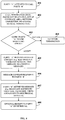
- FIG. 4 exemplarily illustrates a flowchart of the steps for completing a call attempt made by a first party 201 to a second party 205 within a first network 203 .
- party "A" who attempts 401 to call party "B”. Due to conditions such as occurrence of a busy signal, an out of coverage signal, an unreachable signal, congestion of the first network 203 , an unanswered signal from the party "B", or manual termination by the party "A", the call attempt may be terminated.
- the first network 203 detects the termination 402 of the call attempt.
- the first network 203 queries 403 party "A" to use the messaging service. If party "A" declines the use of the messaging service, the first network 203 terminates 404 the call.
- party "A” accepts the messaging service, party “A” provides 405 message content by typing a text SMS message, recording a voice SMS message, an MMS message, or a multimodal message on party "A"'s communication device 202 .
- the first network 203 then delivers 406 the message content created by party “A” to party "B".
- Party “B” then retrieves 407 the message content from the first network 203 .
- Party “B” may, for example, read the SMS, listen to the voice SMS, view the MMS, or view and listen to the multimodal message.
- party "A” may be notified of the receipt 408 by the party "B".
- John is a subscriber of a first network 203 Network1 and Jane is a subscriber of a second network 204 Network2.
- both John and Jane may be subscribers of Network1.
- John attempts to call Jane Jane may be out of reach of Network2 and the call may be terminated.
- Network1 detects the termination of the call attempt by John and informs John about the availability of the messaging service.
- Network1 may inform John about the availability of the messaging service before he manually terminates the call by pressing the "END" key on his mobile phone.
- Network1 may send John an SMS message or may contact John via a voice call to inform him about the availability of the messaging service. John is not billed for the information about the availability of the messaging service.
- Network1 may provide John the option to send a message to Jane by pressing the "#" key on his mobile phone. If John does not want to send a message to Jane, Network1 will send a missed call notification to Jane. Jane receives the missed call notification when she comes back into the reach of Network2. If John decides to send a message to Jane, he creates the message on his mobile phone. Network1 delivers the created message to Jane and bills John for the delivery of the message.
- a processor for e.g., one or more microprocessors will receive instructions from a memory or like device, and execute those instructions, thereby performing one or more processes defined by those instructions.
- programs that implement such methods and algorithms may be stored and transmitted using a variety of media, for e.g., computer readable media in a number of manners.
- hard-wired circuitry or custom hardware may be used in place of, or in combination with, software instructions for implementation of the processes of various embodiments.
- embodiments are not limited to any specific combination of hardware and software.
- a “processor” means any one or more microprocessors, Central Processing Unit (CPU) devices, computing devices, microcontrollers, digital signal processors or like devices.
- the term "computer-readable medium” refers to any medium that participates in providing data, for example instructions that may be read by a computer, a processor or a like device. Such a medium may take many forms, including but not limited to, non-volatile media, volatile media, and transmission media.
- Non-volatile media include, for example, optical or magnetic disks and other persistent memory volatile media include Dynamic Random Access Memory (DRAM), which typically constitutes the main memory.
- Transmission media include coaxial cables, copper wire and fiber optics, including the wires that comprise a system bus coupled to the processor.
- Transmission media may include or convey acoustic waves, light waves and electromagnetic emissions, such as those generated during Radio Frequency (RF) and Infrared (IR) data communications.
- RF Radio Frequency
- IR Infrared
- Common forms of computer-readable media include, for example, a floppy disk, a flexible disk, hard disk, magnetic tape, any other magnetic medium, a Compact Disc-Read Only Memory (CD-ROM), Digital Versatile Disc (DVD), any other optical medium, punch cards, paper tape, any other physical medium with patterns of holes, a Random Access Memory (RAM), a Programmable Read Only Memory (PROM), an Erasable Programmable Read Only Memory (EPROM), an Electrically Erasable Programmable Read Only Memory (EEPROM), a flash memory, any other memory chip or cartridge, a carrier wave as described hereinafter, or any other medium from which a computer can read.
- RAM Random Access Memory
- PROM Programmable Read Only Memory
- EPROM Erasable Programmable Read Only Memory
- the computer-readable programs may be implemented in any programming language. Some examples of languages that can be used include C, C++, C#, .NET or JAVA.
- the software programs may be stored on or in one or more mediums as an object code.
- a computer program product comprising computer executable instructions embodied in a computer-readable medium comprises computer parsable codes for the implementation of the processes of various embodiments.
- databases such as the message database 203f , it will be understood by one of ordinary skill in the art that (i) alternative database structures to those described may be readily employed, and (ii) other memory structures besides databases may be readily employed. Any illustrations or descriptions of any sample databases presented herein are illustrative arrangements for stored representations of information. Any number of other arrangements may be employed besides those suggested by, e.g., tables illustrated in drawings or elsewhere. Similarly, any illustrated entries of the databases represent exemplary information only; one of ordinary skill in the art will understand that the number and content of the entries can be different from those described herein.
- databases may, in a known manner, be stored locally or remotely from a device that accesses data in such a database.
- the present invention can be implemented using standard wireless telephone devices capable of sending and receiving text SMS messages, voice SMS messages, MMS messages, multimodal messages and may be extended to other device types, and network technologies. Further, the present invention is not limited to wireless phones but will also work with wired line phones with SMS and MMS capabilities and services over such wired line devices.
- the present invention may be configured to work in a network environment including a computer that is in communication, via a communications network, with one or more devices.
- the computer may communicate with the devices directly or indirectly, via a wired or wireless medium such as the Internet, Local Area Network (LAN), Wide Area Network (WAN) or Ethernet, Token Ring, or via any appropriate communications means or combination of communications means.
- LAN Local Area Network
- WAN Wide Area Network
- Ethernet Token Ring
- Each of the devices may comprise computers, such as those based on the Intel® processors, AMD® processors, UltraSPARC® processors, etc. that are adapted to communicate with the computer. Any number and type of machines may be in communication with the computer.
- computers such as those based on the Intel® processors, AMD® processors, UltraSPARC® processors, etc. that are adapted to communicate with the computer. Any number and type of machines may be in communication with the computer.
- the foregoing examples have been provided merely for the purpose of explanation and are in no way to be construed as limiting of the present method and system disclosed herein. While the invention has been described with reference to various embodiments, it is understood that the words, which have been used herein, are words of description and illustration, rather than words of limitation.
Landscapes
- Engineering & Computer Science (AREA)
- Computer Networks & Wireless Communication (AREA)
- Signal Processing (AREA)
- Multimedia (AREA)
- Telephonic Communication Services (AREA)
- Telephone Function (AREA)
- Mobile Radio Communication Systems (AREA)
Claims (14)
- Procédé (FIG. 4) de terminaison d'une tentative d'appel faite par une première partie (201) vers une seconde partie (205), comprenant les étapes :de détection d'une fin de ladite tentative d'appel (401-402) faite par ladite première partie (201) sur un premier réseau (203) pour contacter ladite seconde partie (205) sur un second réseau (204), avant ou après que ladite première partie (201) finisse ladite tentative d'appel, dans lequel ledit second réseau (204) est un dudit premier réseau (203) et un d'une pluralité de réseaux excluant le premier réseau (203) ;de terminaison de la tentative d'appel (403-406), comprenant les étapes :de communication d'une disponibilité d'un service de messagerie (403) à la première partie (201) à partir du premier réseau (203) ;de réception d'une action explicite ou implicite à partir de la première partie (201) indiquant un d'une acceptation dudit service de messagerie et d'un refus dudit service de messagerie (403), caractérisé en outre par le fait de comprendre :une détection d'un de ladite acceptation dudit service de messagerie et dudit refus dudit service de messagerie (403) sur la base d'une d'une entrée multifréquence double tonalité explicite reçue à partir de la première partie (201), et d'une période d'expiration prédéfinie implicite ; et une réalisation :d'une réception (405) d'un message créé par la première partie (201) et d'une distribution (406) dudit message créé à la seconde partie (205) sur le second réseau (204) lors de ladite acceptation dudit service de messagerie ; etd'une distribution (406) d'une notification d'appel manqué à la seconde partie (205) sur le second réseau (204) lors dudit refus dudit service de messagerie ;moyennant quoi la tentative d'appel faite par la première partie (201) à la seconde partie (205) est terminée.
- Procédé selon la revendication 1, dans lequel le service de messagerie est un ou plusieurs d'un service de messagerie court, d'un service de messagerie court vocal, d'un service de messagerie multimédia, et d'un service de messagerie multimodal (405) ; ou éventuellement dans lequel la tentative d'appel est finie (402) en raison d'une survenue d'un d'un signal d'occupation, d'un signal hors zone de couverture, d'un signal de non disponibilité, d'un encombrement d'un ou de plusieurs du premier réseau (203) et du second réseau (204), d'un signal sans réponse de la seconde partie (205), et d'une fin manuelle de la tentative d'appel par la première partie (201) ; ou éventuellement dans lequel ladite disponibilité du service de messagerie est communiquée (403) par un d'un appel vocal, d'un message de service de messagerie court, et d'une alerte sur la base de données de service supplémentaires non structurées ; ou éventuellement dans lequel lesdits acceptation et refus du service de messagerie (403) par la première partie (201) sont détectés par une souscription de la première partie (201) au service de messagerie.
- Procédé selon la revendication 1, comprenant en outre une étape de facturation de la première partie (201) pour ladite distribution du message créé.
- Procédé selon la revendication 1, dans lequel la première partie (201) n'est pas facturée pour ladite communication de ladite disponibilité du service de messagerie.
- Procédé selon la revendication 1, dans lequel au moins une de ladite disponibilité du service de messagerie est communiquée à la première partie (201) avant une fin manuelle de la tentative d'appel par la première partie (201) ; ou dans lequel ladite disponibilité du service de messagerie est communiquée à la première partie (201) après une fin manuelle de la tentative d'appel par la première partie (201) via un appel vocal.
- Procédé selon la revendication 1, dans lequel ladite étape (405) de création du message par la première partie (201) comprend un enregistrement d'un ou de plusieurs d'un message de service de messagerie court textuel, d'un message de service de messagerie court vocal, d'un message de service de messagerie multimédia, et d'un message multimodal sur un dispositif de communication (202) de la première partie (201).
- Procédé selon la revendication 6, dans lequel ledit message de service de messagerie court textuel, ledit message de service de messagerie court vocal, ledit message de service multimédia, et ledit message multimodal sont distribués (406) à la seconde partie (205) dans un format de message de service de messagerie court textuel, un format de message de service de messagerie court vocal, un format de message de service de messagerie multimédia, et un format de message multimodal respectivement.
- Système (FIG. 2) pour une terminaison d'une tentative d'appel faite par une première partie (201) à une seconde partie (205), comprenant :un module de détection de fin d'appel (203a) pour une détection d'une fin de ladite tentative d'appel faite par ladite première partie (201) sur un premier réseau (203) pour contacter ladite seconde partie (205) sur un second réseau (204), avant ou après que ladite première partie (201) finisse ladite tentative d'appel, dans lequel ledit second réseau (204) est un dudit premier réseau (203) et un d'une pluralité de réseaux excluant le premier réseau (203) ;un module de communication de service (203b) pour une communication d'une disponibilité d'un service de messagerie à la première partie (201) par le premier réseau (203) ;caractérisé parun module de détection d'acceptation et de refus (203c) pour une réception d'un d'une acceptation dudit service de messagerie et d'un refus du service de messagerie par la première partie (201) sur la base d'une d'une entrée multifréquence double tonalité explicite fournie par la première partie (201), et d'une période d'expiration prédéfinie implicite ;un module de création de message (202a) pour une réception d'entrées à partir de la première partie (201) pour créer un message à distribuer à la seconde partie (205) lors d'une acceptation dudit service de messagerie ; etun moteur de distribution (203d) pour une réalisation :d'une distribution dudit message créé à la seconde partie (205) sur le second réseau (204) sur la base de ladite acceptation dudit service de messagerie ; etd'une distribution d'une notification d'appel manqué à la seconde partie (205) sur le second réseau (204) sur la base dudit refus dudit service de messagerie.
- Système selon la revendication 8, dans lequel ledit module de détection de fin d'appel (203a) est adapté pour une détection d'une fin de la tentative d'appel en raison de la survenue d'un d'un signal d'occupation, d'un signal hors zone de couverture, d'un signal de non disponibilité, d'un encombrement d'un ou de plusieurs du premier réseau (203) et du second réseau (204), d'un signal sans réponse de la seconde partie (205), et d'une fin manuelle de la tentative d'appel par la première partie (201) ; ou éventuellement dans lequel ledit module de création de message (202a) permet à la première partie (201) de créer un ou plusieurs d'un message de service de messagerie court textuel, d'un message de service de messagerie court vocal, d'un message de service de messagerie multimédia, et d'un message multimodal sur un dispositif de communication (202) de la première partie (201).
- Système selon la revendication 8, dans lequel ledit module de détection d'acceptation et de refus (203c) est adapté pour une détection d'une acceptation du service de messagerie par la première partie (201) en détectant une souscription de la première partie (201) au service de messagerie.
- Système selon la revendication 8, dans lequel ledit module de communication de service (203b) est adapté pour communiquer ladite disponibilité du service de messagerie par un d'un appel vocal, d'un message de service de messagerie court, et d'une alerte sur la base de données de service supplémentaires non structurées ; ou pour communiquer ladite disponibilité du service de messagerie avant une fin manuelle de la tentative d'appel par la première partie (201) ; ou pour communiquer ladite disponibilité du service de messagerie après une fin manuelle de la tentative d'appel par la première partie (201).
- Système selon la revendication 8, comprenant en outre au moins un d'un moteur de facturation (203e) pour une facturation de la première partie (201) pour ladite distribution du message créé ; ou d'une base de données de messages (203f) pour un stockage de messages créés par la première partie (201), d'informations de communication du service de messagerie, de notifications d'appel manqué envoyées à la seconde partie (205), et d'informations sur une facturation de la première partie (201) pour ladite distribution du message créé.
- Système selon la revendication 12, dans lequel ledit moteur de facturation (203e) est adapté pour ne pas facturer la première partie (201) pour la communication de la disponibilité du service de messagerie.
- Produit de programme informatique comprenant des instructions exécutables par ordinateur intégrées dans un support lisible par ordinateur, dans lequel ledit produit de programme informatique comprend :un premier code de programme analysable par ordinateur pour une détection d'une fin de ladite tentative d'appel faite par une première partie (201) sur un premier réseau (203) pour contacter une seconde partie (205) sur un second réseau (204), avant ou après que ladite première partie (201) finisse ladite tentative d'appel, dans lequel ledit second réseau (204) est un dudit premier réseau (203) et un d'une pluralité de réseaux excluant le premier réseau (203) ;un deuxième code de programme analysable par ordinateur pour une communication de disponibilité d'un service de messagerie à ladite première partie (201) ;un troisième code de programme analysable par ordinateur pour une réception d'une action explicite ou implicite à partir de la première partie (201) indiquant un d'une acceptation dudit service de messagerie et d'un refus dudit service de messagerie ;caractérisé parun quatrième code de programme analysable par ordinateur pour une détection d'un de ladite acceptation dudit service de messagerie et dudit refus dudit service de messagerie sur la base d'une d'une entrée multifréquence double tonalité explicite par la première partie (201) et d'une période d'expiration prédéfinie implicite ;un cinquième code de programme analysable par ordinateur pour permettre à la première partie (201) de créer un message à distribuer à la seconde partie (205) sur ledit second réseau (204) sur la base de ladite acceptation dudit service de messagerie ; etun sixième code de programme analysable par ordinateur pour une réalisation :d'une distribution dudit message créé à la seconde partie (205) sur le second réseau (204) lors de ladite acceptation dudit service de messagerie ; etd'une distribution d'une notification d'appel manqué à la seconde partie (205) sur ledit second réseau (204) lors dudit refus dudit service de messagerie.
Priority Applications (1)
| Application Number | Priority Date | Filing Date | Title |
|---|---|---|---|
| EP18199956.6A EP3461154B1 (fr) | 2007-12-04 | 2008-11-30 | Réalisation d'un appel |
Applications Claiming Priority (3)
| Application Number | Priority Date | Filing Date | Title |
|---|---|---|---|
| US526807P | 2007-12-04 | 2007-12-04 | |
| US12/272,806 US8559984B2 (en) | 2007-12-04 | 2008-11-18 | Call completion |
| PCT/US2008/085093 WO2009073587A2 (fr) | 2007-12-04 | 2008-11-30 | Réalisation d'un appel |
Related Child Applications (1)
| Application Number | Title | Priority Date | Filing Date |
|---|---|---|---|
| EP18199956.6A Division EP3461154B1 (fr) | 2007-12-04 | 2008-11-30 | Réalisation d'un appel |
Publications (3)
| Publication Number | Publication Date |
|---|---|
| EP2095682A2 EP2095682A2 (fr) | 2009-09-02 |
| EP2095682A4 EP2095682A4 (fr) | 2015-07-08 |
| EP2095682B1 true EP2095682B1 (fr) | 2018-10-17 |
Family
ID=40676263
Family Applications (2)
| Application Number | Title | Priority Date | Filing Date |
|---|---|---|---|
| EP18199956.6A Not-in-force EP3461154B1 (fr) | 2007-12-04 | 2008-11-30 | Réalisation d'un appel |
| EP08856028.9A Not-in-force EP2095682B1 (fr) | 2007-12-04 | 2008-11-30 | Réalisation d'un appel |
Family Applications Before (1)
| Application Number | Title | Priority Date | Filing Date |
|---|---|---|---|
| EP18199956.6A Not-in-force EP3461154B1 (fr) | 2007-12-04 | 2008-11-30 | Réalisation d'un appel |
Country Status (7)
| Country | Link |
|---|---|
| US (2) | US8559984B2 (fr) |
| EP (2) | EP3461154B1 (fr) |
| CN (1) | CN101653017B (fr) |
| BR (1) | BRPI0811759A2 (fr) |
| MX (1) | MX2010006258A (fr) |
| WO (1) | WO2009073587A2 (fr) |
| ZA (1) | ZA200904670B (fr) |
Families Citing this family (11)
| Publication number | Priority date | Publication date | Assignee | Title |
|---|---|---|---|---|
| US8355396B1 (en) * | 2007-11-01 | 2013-01-15 | Sprint Communications Company L.P. | Customized network congestion messaging for terminal adapters |
| US10016617B2 (en) | 2009-11-11 | 2018-07-10 | The Trustees Of The University Of Pennsylvania | Combination immuno therapy and radiotherapy for the treatment of Her-2-positive cancers |
| JP5516297B2 (ja) * | 2010-09-30 | 2014-06-11 | 日本電気株式会社 | 情報処理システム、メッセージサーバ、その制御方法及び制御プログラム |
| WO2012138377A2 (fr) | 2010-10-01 | 2012-10-11 | Trustees Of The University Of Pennsylvania | Utilisation de vecteurs de vaccin de listeria pour renverser l'insensibilité au vaccin chez des individus infectés par des parasites |
| BR112014009863A2 (pt) * | 2011-09-09 | 2017-06-13 | Zipdial Mobile Solutions Pvt Ltd | administração de grupos mediante o uso de telefones |
| WO2013138337A1 (fr) | 2012-03-12 | 2013-09-19 | Advaxis | Inhibition de la fonction des cellules suppresseurs après traitement par un vaccin à base de listeria |
| US9185227B2 (en) * | 2012-12-14 | 2015-11-10 | Kirusa, Inc. | Sender driven call completion system |
| TR201516062A2 (tr) * | 2015-12-15 | 2017-07-21 | Turkcell Teknoloji Arastirma Ve Gelistirme Anonim Sirketi | Katma değerli̇ servi̇slere i̇li̇şki̇n bi̇ldi̇ri̇mleri̇n i̇leti̇mi̇ i̇çi̇n bi̇r si̇stem |
| US11089152B2 (en) * | 2016-02-08 | 2021-08-10 | Aawaaz Inc. | Placement of a missed call |
| WO2017139292A1 (fr) * | 2016-02-08 | 2017-08-17 | Kirusa, Inc. | Passage d'un appel manqué |
| US20240396950A1 (en) * | 2023-05-26 | 2024-11-28 | Comcast Cable Communications, Llc | Systems and methods for telephony network management |
Family Cites Families (24)
| Publication number | Priority date | Publication date | Assignee | Title |
|---|---|---|---|---|
| US4932042A (en) * | 1989-03-03 | 1990-06-05 | At&T Bell Laboratories | Spontaneous voice and data messaging |
| US6169786B1 (en) * | 1997-02-28 | 2001-01-02 | At&T Corp | Method for accomplishing complete re-dial |
| US6507735B1 (en) * | 1998-12-23 | 2003-01-14 | Nortel Networks Limited | Automated short message attendant |
| KR100295414B1 (ko) * | 1999-05-25 | 2001-07-12 | 조정남 | 이동전화 리콜 서비스 방법 |
| US6766001B1 (en) * | 2000-03-30 | 2004-07-20 | World Com, Inc. | Process and apparatus for messaging upon incomplete call |
| US20010049745A1 (en) * | 2000-05-03 | 2001-12-06 | Daniel Schoeffler | Method of enabling transmission and reception of communication when current destination for recipient is unknown to sender |
| GB2365254B (en) * | 2000-07-21 | 2004-04-14 | Orange Personal Comm Serv Ltd | Call processing |
| US20020065067A1 (en) * | 2000-11-30 | 2002-05-30 | Arjun Khare | Method for determining whether data service connectivity is supported in a wireless communication system |
| US20020160757A1 (en) * | 2001-04-26 | 2002-10-31 | Moshe Shavit | Selecting the delivery mechanism of an urgent message |
| US7724878B2 (en) * | 2001-05-25 | 2010-05-25 | Timmins Timothy A | Technique for assisting a user with information services at an information/call center |
| US7342917B2 (en) * | 2001-10-02 | 2008-03-11 | Comverse, Inc. | Multimedia personalized call management (MPCM) |
| US7843835B2 (en) * | 2001-11-16 | 2010-11-30 | Ibasis, Inc. | System and method of monitoring an internet based telephone call routing system |
| US6795541B2 (en) * | 2002-03-11 | 2004-09-21 | Ericsson Inc. | Method, apparatus and system for completing a call when a called party has not answered the call |
| WO2003077570A1 (fr) * | 2002-03-12 | 2003-09-18 | Welgate Corp. | Procede et dispositif permettant de fournir des informations relatives a une communication dont l'etablissement n'est pas acheve |
| US7072641B2 (en) * | 2002-03-19 | 2006-07-04 | Sprint Spectrum L.P. | Reactive management of dropped calls in a wireless communication system |
| US20040198327A1 (en) * | 2002-04-22 | 2004-10-07 | Mavis Bates | Telecommunications call completion |
| US6639973B1 (en) * | 2002-04-26 | 2003-10-28 | Motorola, Inc. | Mobile originator call control |
| KR20040102954A (ko) * | 2003-05-30 | 2004-12-08 | 유티스타콤코리아 유한회사 | 호 완료 서비스 방법 |
| WO2004109576A1 (fr) * | 2003-06-09 | 2004-12-16 | National University Of Singapore | Procede et systeme permettant de fournir un service |
| KR20030069136A (ko) * | 2003-07-15 | 2003-08-25 | (주) 로커스네트웍스 | 영상사서함 시스템 및 방법 |
| EP1702481B1 (fr) | 2003-12-23 | 2012-02-22 | Kirusa, Inc. | Techniques permettant de combiner voix et services de messages courts textuels sans fil |
| US20060104429A1 (en) | 2004-11-12 | 2006-05-18 | Wim Wouterse | Method and apparatus for selective call completion handling of user equipment |
| CN100563281C (zh) * | 2005-01-27 | 2009-11-25 | 华为技术有限公司 | 一种实现未完成来电短消息通知业务的设备及方法 |
| US7970107B2 (en) * | 2005-08-08 | 2011-06-28 | On-Q Telecom Systems Co., Inc. | Method and system for automated and selective determination of call completion services |
-
2008
- 2008-11-18 US US12/272,806 patent/US8559984B2/en active Active
- 2008-11-30 EP EP18199956.6A patent/EP3461154B1/fr not_active Not-in-force
- 2008-11-30 WO PCT/US2008/085093 patent/WO2009073587A2/fr not_active Ceased
- 2008-11-30 MX MX2010006258A patent/MX2010006258A/es active IP Right Grant
- 2008-11-30 CN CN200880003207.7A patent/CN101653017B/zh not_active Expired - Fee Related
- 2008-11-30 EP EP08856028.9A patent/EP2095682B1/fr not_active Not-in-force
- 2008-11-30 BR BRPI0811759-4A2A patent/BRPI0811759A2/pt not_active Application Discontinuation
-
2009
- 2009-07-03 ZA ZA200904670A patent/ZA200904670B/xx unknown
-
2013
- 2013-09-12 US US14/024,763 patent/US8825024B2/en active Active
Non-Patent Citations (1)
| Title |
|---|
| None * |
Also Published As
| Publication number | Publication date |
|---|---|
| US8825024B2 (en) | 2014-09-02 |
| WO2009073587A3 (fr) | 2009-07-23 |
| US20090143085A1 (en) | 2009-06-04 |
| WO2009073587A2 (fr) | 2009-06-11 |
| EP3461154A1 (fr) | 2019-03-27 |
| CN101653017B (zh) | 2014-09-17 |
| US20140011486A1 (en) | 2014-01-09 |
| BRPI0811759A2 (pt) | 2014-11-11 |
| EP2095682A4 (fr) | 2015-07-08 |
| EP2095682A2 (fr) | 2009-09-02 |
| EP3461154B1 (fr) | 2021-02-17 |
| CN101653017A (zh) | 2010-02-17 |
| ZA200904670B (en) | 2010-09-29 |
| US8559984B2 (en) | 2013-10-15 |
| MX2010006258A (es) | 2010-12-15 |
Similar Documents
| Publication | Publication Date | Title |
|---|---|---|
| EP2095682B1 (fr) | Réalisation d'un appel | |
| CN110891124B (zh) | 一种人工智能代接来电的系统 | |
| US10367937B1 (en) | Providing data messaging support by intercepting and redirecting received short message service (SMS) messages | |
| US7966181B1 (en) | System and method for processing speech files | |
| CN101053264B (zh) | 用于识别消息和与多模式消息业务的用户进行通信的方法 | |
| US10601743B1 (en) | Providing data messaging support by intercepting and processing received short message service (SMS) messages at a customer support service | |
| US8706912B2 (en) | Unified LTE cloud system | |
| US9313328B2 (en) | Active call processing and notifications | |
| US8989713B2 (en) | Selection of a link in a received message for speaking reply, which is converted into text form for delivery | |
| US8428228B1 (en) | Unified communication system | |
| US10552845B1 (en) | Providing data messaging support by intercepting and processing received short message service (SMS) messages at a customer support service | |
| US8315361B1 (en) | Voice message transmission and retrieval | |
| US9294890B1 (en) | Intercepting and processing received short message service (SMS) messages to provide an automated response | |
| WO2014093733A1 (fr) | Système d'achèvement d'appel commandé par l'envoyeur | |
| US10425783B1 (en) | Providing data messaging support by intercepting and processing received short message service (SMS) messages at a customer support service | |
| US8671149B1 (en) | Unified messaging platform with intelligent voice recognition (IVR) | |
| US7929949B2 (en) | Interactive multimodal messaging | |
| US8340640B2 (en) | Transcription systems and methods | |
| CN108390814B (zh) | 增强在移动设备上的个人联系信息显示的方法 | |
| US8260256B2 (en) | Billing off-net users for telecom services | |
| CN111131621A (zh) | 来电处理方法、装置、电子设备以及存储介质 | |
| KR20200040691A (ko) | 링리스 보이스메일 제공 방법 및 그 장치 | |
| WO2012080734A1 (fr) | Acheminement de messages vocaux |
Legal Events
| Date | Code | Title | Description |
|---|---|---|---|
| PUAI | Public reference made under article 153(3) epc to a published international application that has entered the european phase |
Free format text: ORIGINAL CODE: 0009012 |
|
| 17P | Request for examination filed |
Effective date: 20090623 |
|
| AK | Designated contracting states |
Kind code of ref document: A2 Designated state(s): AT BE BG CH CY CZ DE DK EE ES FI FR GB GR HR HU IE IS IT LI LT LU LV MC MT NL NO PL PT RO SE SI SK TR |
|
| DAX | Request for extension of the european patent (deleted) | ||
| A4 | Supplementary search report drawn up and despatched |
Effective date: 20150609 |
|
| RIC1 | Information provided on ipc code assigned before grant |
Ipc: H04L 12/58 20060101ALI20150602BHEP Ipc: H04W 76/06 20090101ALN20150602BHEP Ipc: H04W 4/12 20090101AFI20150602BHEP Ipc: H04W 76/02 20090101ALN20150602BHEP Ipc: H04M 3/42 20060101ALN20150602BHEP Ipc: H04W 4/16 20090101ALI20150602BHEP |
|
| 17Q | First examination report despatched |
Effective date: 20160729 |
|
| STAA | Information on the status of an ep patent application or granted ep patent |
Free format text: STATUS: EXAMINATION IS IN PROGRESS |
|
| RAP1 | Party data changed (applicant data changed or rights of an application transferred) |
Owner name: KIRUSA, INC. Owner name: ANDERL, EWALD C. Owner name: MOORTHY, RAJA |
|
| RAP1 | Party data changed (applicant data changed or rights of an application transferred) |
Owner name: KIRUSA, INC. |
|
| GRAP | Despatch of communication of intention to grant a patent |
Free format text: ORIGINAL CODE: EPIDOSNIGR1 |
|
| STAA | Information on the status of an ep patent application or granted ep patent |
Free format text: STATUS: GRANT OF PATENT IS INTENDED |
|
| RIC1 | Information provided on ipc code assigned before grant |
Ipc: H04M 3/42 20060101ALN20180403BHEP Ipc: H04W 4/16 20090101ALI20180403BHEP Ipc: H04W 4/12 20090101AFI20180403BHEP Ipc: H04L 12/58 20060101ALI20180403BHEP |
|
| RIC1 | Information provided on ipc code assigned before grant |
Ipc: H04L 12/58 20060101ALI20180417BHEP Ipc: H04W 4/16 20090101ALI20180417BHEP Ipc: H04M 3/42 20060101ALN20180417BHEP Ipc: H04W 4/12 20090101AFI20180417BHEP |
|
| INTG | Intention to grant announced |
Effective date: 20180502 |
|
| GRAS | Grant fee paid |
Free format text: ORIGINAL CODE: EPIDOSNIGR3 |
|
| GRAA | (expected) grant |
Free format text: ORIGINAL CODE: 0009210 |
|
| STAA | Information on the status of an ep patent application or granted ep patent |
Free format text: STATUS: THE PATENT HAS BEEN GRANTED |
|
| AK | Designated contracting states |
Kind code of ref document: B1 Designated state(s): AT BE BG CH CY CZ DE DK EE ES FI FR GB GR HR HU IE IS IT LI LT LU LV MC MT NL NO PL PT RO SE SI SK TR |
|
| REG | Reference to a national code |
Ref country code: GB Ref legal event code: FG4D |
|
| REG | Reference to a national code |
Ref country code: CH Ref legal event code: EP |
|
| REG | Reference to a national code |
Ref country code: IE Ref legal event code: FG4D |
|
| REG | Reference to a national code |
Ref country code: DE Ref legal event code: R096 Ref document number: 602008057486 Country of ref document: DE Ref country code: AT Ref legal event code: REF Ref document number: 1055448 Country of ref document: AT Kind code of ref document: T Effective date: 20181115 |
|
| REG | Reference to a national code |
Ref country code: NL Ref legal event code: MP Effective date: 20181017 |
|
| REG | Reference to a national code |
Ref country code: LT Ref legal event code: MG4D |
|
| REG | Reference to a national code |
Ref country code: AT Ref legal event code: MK05 Ref document number: 1055448 Country of ref document: AT Kind code of ref document: T Effective date: 20181017 |
|
| PG25 | Lapsed in a contracting state [announced via postgrant information from national office to epo] |
Ref country code: NL Free format text: LAPSE BECAUSE OF FAILURE TO SUBMIT A TRANSLATION OF THE DESCRIPTION OR TO PAY THE FEE WITHIN THE PRESCRIBED TIME-LIMIT Effective date: 20181017 |
|
| PG25 | Lapsed in a contracting state [announced via postgrant information from national office to epo] |
Ref country code: ES Free format text: LAPSE BECAUSE OF FAILURE TO SUBMIT A TRANSLATION OF THE DESCRIPTION OR TO PAY THE FEE WITHIN THE PRESCRIBED TIME-LIMIT Effective date: 20181017 Ref country code: IS Free format text: LAPSE BECAUSE OF FAILURE TO SUBMIT A TRANSLATION OF THE DESCRIPTION OR TO PAY THE FEE WITHIN THE PRESCRIBED TIME-LIMIT Effective date: 20190217 Ref country code: NO Free format text: LAPSE BECAUSE OF FAILURE TO SUBMIT A TRANSLATION OF THE DESCRIPTION OR TO PAY THE FEE WITHIN THE PRESCRIBED TIME-LIMIT Effective date: 20190117 Ref country code: HR Free format text: LAPSE BECAUSE OF FAILURE TO SUBMIT A TRANSLATION OF THE DESCRIPTION OR TO PAY THE FEE WITHIN THE PRESCRIBED TIME-LIMIT Effective date: 20181017 Ref country code: AT Free format text: LAPSE BECAUSE OF FAILURE TO SUBMIT A TRANSLATION OF THE DESCRIPTION OR TO PAY THE FEE WITHIN THE PRESCRIBED TIME-LIMIT Effective date: 20181017 Ref country code: LT Free format text: LAPSE BECAUSE OF FAILURE TO SUBMIT A TRANSLATION OF THE DESCRIPTION OR TO PAY THE FEE WITHIN THE PRESCRIBED TIME-LIMIT Effective date: 20181017 Ref country code: PL Free format text: LAPSE BECAUSE OF FAILURE TO SUBMIT A TRANSLATION OF THE DESCRIPTION OR TO PAY THE FEE WITHIN THE PRESCRIBED TIME-LIMIT Effective date: 20181017 Ref country code: BG Free format text: LAPSE BECAUSE OF FAILURE TO SUBMIT A TRANSLATION OF THE DESCRIPTION OR TO PAY THE FEE WITHIN THE PRESCRIBED TIME-LIMIT Effective date: 20190117 Ref country code: FI Free format text: LAPSE BECAUSE OF FAILURE TO SUBMIT A TRANSLATION OF THE DESCRIPTION OR TO PAY THE FEE WITHIN THE PRESCRIBED TIME-LIMIT Effective date: 20181017 Ref country code: LV Free format text: LAPSE BECAUSE OF FAILURE TO SUBMIT A TRANSLATION OF THE DESCRIPTION OR TO PAY THE FEE WITHIN THE PRESCRIBED TIME-LIMIT Effective date: 20181017 |
|
| PG25 | Lapsed in a contracting state [announced via postgrant information from national office to epo] |
Ref country code: SE Free format text: LAPSE BECAUSE OF FAILURE TO SUBMIT A TRANSLATION OF THE DESCRIPTION OR TO PAY THE FEE WITHIN THE PRESCRIBED TIME-LIMIT Effective date: 20181017 Ref country code: PT Free format text: LAPSE BECAUSE OF FAILURE TO SUBMIT A TRANSLATION OF THE DESCRIPTION OR TO PAY THE FEE WITHIN THE PRESCRIBED TIME-LIMIT Effective date: 20190217 Ref country code: GR Free format text: LAPSE BECAUSE OF FAILURE TO SUBMIT A TRANSLATION OF THE DESCRIPTION OR TO PAY THE FEE WITHIN THE PRESCRIBED TIME-LIMIT Effective date: 20190118 |
|
| REG | Reference to a national code |
Ref country code: CH Ref legal event code: PL |
|
| REG | Reference to a national code |
Ref country code: DE Ref legal event code: R097 Ref document number: 602008057486 Country of ref document: DE |
|
| PG25 | Lapsed in a contracting state [announced via postgrant information from national office to epo] |
Ref country code: CZ Free format text: LAPSE BECAUSE OF FAILURE TO SUBMIT A TRANSLATION OF THE DESCRIPTION OR TO PAY THE FEE WITHIN THE PRESCRIBED TIME-LIMIT Effective date: 20181017 Ref country code: IT Free format text: LAPSE BECAUSE OF FAILURE TO SUBMIT A TRANSLATION OF THE DESCRIPTION OR TO PAY THE FEE WITHIN THE PRESCRIBED TIME-LIMIT Effective date: 20181017 Ref country code: DK Free format text: LAPSE BECAUSE OF FAILURE TO SUBMIT A TRANSLATION OF THE DESCRIPTION OR TO PAY THE FEE WITHIN THE PRESCRIBED TIME-LIMIT Effective date: 20181017 Ref country code: LU Free format text: LAPSE BECAUSE OF NON-PAYMENT OF DUE FEES Effective date: 20181130 |
|
| REG | Reference to a national code |
Ref country code: BE Ref legal event code: MM Effective date: 20181130 |
|
| REG | Reference to a national code |
Ref country code: IE Ref legal event code: MM4A |
|
| PLBE | No opposition filed within time limit |
Free format text: ORIGINAL CODE: 0009261 |
|
| STAA | Information on the status of an ep patent application or granted ep patent |
Free format text: STATUS: NO OPPOSITION FILED WITHIN TIME LIMIT |
|
| PG25 | Lapsed in a contracting state [announced via postgrant information from national office to epo] |
Ref country code: EE Free format text: LAPSE BECAUSE OF FAILURE TO SUBMIT A TRANSLATION OF THE DESCRIPTION OR TO PAY THE FEE WITHIN THE PRESCRIBED TIME-LIMIT Effective date: 20181017 Ref country code: RO Free format text: LAPSE BECAUSE OF FAILURE TO SUBMIT A TRANSLATION OF THE DESCRIPTION OR TO PAY THE FEE WITHIN THE PRESCRIBED TIME-LIMIT Effective date: 20181017 Ref country code: CH Free format text: LAPSE BECAUSE OF NON-PAYMENT OF DUE FEES Effective date: 20181130 Ref country code: LI Free format text: LAPSE BECAUSE OF NON-PAYMENT OF DUE FEES Effective date: 20181130 Ref country code: SK Free format text: LAPSE BECAUSE OF FAILURE TO SUBMIT A TRANSLATION OF THE DESCRIPTION OR TO PAY THE FEE WITHIN THE PRESCRIBED TIME-LIMIT Effective date: 20181017 Ref country code: MC Free format text: LAPSE BECAUSE OF FAILURE TO SUBMIT A TRANSLATION OF THE DESCRIPTION OR TO PAY THE FEE WITHIN THE PRESCRIBED TIME-LIMIT Effective date: 20181017 |
|
| 26N | No opposition filed |
Effective date: 20190718 |
|
| PG25 | Lapsed in a contracting state [announced via postgrant information from national office to epo] |
Ref country code: SI Free format text: LAPSE BECAUSE OF FAILURE TO SUBMIT A TRANSLATION OF THE DESCRIPTION OR TO PAY THE FEE WITHIN THE PRESCRIBED TIME-LIMIT Effective date: 20181017 Ref country code: IE Free format text: LAPSE BECAUSE OF NON-PAYMENT OF DUE FEES Effective date: 20181130 |
|
| PG25 | Lapsed in a contracting state [announced via postgrant information from national office to epo] |
Ref country code: BE Free format text: LAPSE BECAUSE OF NON-PAYMENT OF DUE FEES Effective date: 20181130 |
|
| PG25 | Lapsed in a contracting state [announced via postgrant information from national office to epo] |
Ref country code: MT Free format text: LAPSE BECAUSE OF NON-PAYMENT OF DUE FEES Effective date: 20181130 |
|
| PG25 | Lapsed in a contracting state [announced via postgrant information from national office to epo] |
Ref country code: TR Free format text: LAPSE BECAUSE OF FAILURE TO SUBMIT A TRANSLATION OF THE DESCRIPTION OR TO PAY THE FEE WITHIN THE PRESCRIBED TIME-LIMIT Effective date: 20181017 |
|
| PG25 | Lapsed in a contracting state [announced via postgrant information from national office to epo] |
Ref country code: HU Free format text: LAPSE BECAUSE OF FAILURE TO SUBMIT A TRANSLATION OF THE DESCRIPTION OR TO PAY THE FEE WITHIN THE PRESCRIBED TIME-LIMIT; INVALID AB INITIO Effective date: 20081130 Ref country code: CY Free format text: LAPSE BECAUSE OF FAILURE TO SUBMIT A TRANSLATION OF THE DESCRIPTION OR TO PAY THE FEE WITHIN THE PRESCRIBED TIME-LIMIT Effective date: 20181017 |
|
| PGFP | Annual fee paid to national office [announced via postgrant information from national office to epo] |
Ref country code: GB Payment date: 20221123 Year of fee payment: 15 Ref country code: FR Payment date: 20221128 Year of fee payment: 15 |
|
| REG | Reference to a national code |
Ref country code: GB Ref legal event code: 732E Free format text: REGISTERED BETWEEN 20230112 AND 20230118 |
|
| PGFP | Annual fee paid to national office [announced via postgrant information from national office to epo] |
Ref country code: DE Payment date: 20231129 Year of fee payment: 16 |
|
| GBPC | Gb: european patent ceased through non-payment of renewal fee |
Effective date: 20231130 |
|
| PG25 | Lapsed in a contracting state [announced via postgrant information from national office to epo] |
Ref country code: GB Free format text: LAPSE BECAUSE OF NON-PAYMENT OF DUE FEES Effective date: 20231130 |
|
| PG25 | Lapsed in a contracting state [announced via postgrant information from national office to epo] |
Ref country code: FR Free format text: LAPSE BECAUSE OF NON-PAYMENT OF DUE FEES Effective date: 20231130 |
|
| PG25 | Lapsed in a contracting state [announced via postgrant information from national office to epo] |
Ref country code: GB Free format text: LAPSE BECAUSE OF NON-PAYMENT OF DUE FEES Effective date: 20231130 Ref country code: FR Free format text: LAPSE BECAUSE OF NON-PAYMENT OF DUE FEES Effective date: 20231130 |
|
| REG | Reference to a national code |
Ref country code: DE Ref legal event code: R119 Ref document number: 602008057486 Country of ref document: DE |
|
| PG25 | Lapsed in a contracting state [announced via postgrant information from national office to epo] |
Ref country code: DE Free format text: LAPSE BECAUSE OF NON-PAYMENT OF DUE FEES Effective date: 20250603 |