EP2095713A1 - Zusammensetzung für die regeneration und stimulation des wachstums von pflanzen und für die anpassung von pflanzen an unterschiedliche stressfaktoren - Google Patents
Zusammensetzung für die regeneration und stimulation des wachstums von pflanzen und für die anpassung von pflanzen an unterschiedliche stressfaktoren Download PDFInfo
- Publication number
- EP2095713A1 EP2095713A1 EP06849603A EP06849603A EP2095713A1 EP 2095713 A1 EP2095713 A1 EP 2095713A1 EP 06849603 A EP06849603 A EP 06849603A EP 06849603 A EP06849603 A EP 06849603A EP 2095713 A1 EP2095713 A1 EP 2095713A1
- Authority
- EP
- European Patent Office
- Prior art keywords
- plants
- plant
- composition
- portions
- culture
- Prior art date
- Legal status (The legal status is an assumption and is not a legal conclusion. Google has not performed a legal analysis and makes no representation as to the accuracy of the status listed.)
- Withdrawn
Links
Images

Classifications
-
- A—HUMAN NECESSITIES
- A01—AGRICULTURE; FORESTRY; ANIMAL HUSBANDRY; HUNTING; TRAPPING; FISHING
- A01N—PRESERVATION OF BODIES OF HUMANS OR ANIMALS OR PLANTS OR PARTS THEREOF; BIOCIDES, e.g. AS DISINFECTANTS, AS PESTICIDES OR AS HERBICIDES; PEST REPELLANTS OR ATTRACTANTS; PLANT GROWTH REGULATORS
- A01N57/00—Biocides, pest repellants or attractants, or plant growth regulators containing organic phosphorus compounds
- A01N57/18—Biocides, pest repellants or attractants, or plant growth regulators containing organic phosphorus compounds having phosphorus-to-carbon bonds
- A01N57/22—Biocides, pest repellants or attractants, or plant growth regulators containing organic phosphorus compounds having phosphorus-to-carbon bonds containing aromatic radicals
-
- A—HUMAN NECESSITIES
- A01—AGRICULTURE; FORESTRY; ANIMAL HUSBANDRY; HUNTING; TRAPPING; FISHING
- A01N—PRESERVATION OF BODIES OF HUMANS OR ANIMALS OR PLANTS OR PARTS THEREOF; BIOCIDES, e.g. AS DISINFECTANTS, AS PESTICIDES OR AS HERBICIDES; PEST REPELLANTS OR ATTRACTANTS; PLANT GROWTH REGULATORS
- A01N35/00—Biocides, pest repellants or attractants, or plant growth regulators containing organic compounds containing a carbon atom having two bonds to hetero atoms with at the most one bond to halogen, e.g. aldehyde radical
- A01N35/06—Biocides, pest repellants or attractants, or plant growth regulators containing organic compounds containing a carbon atom having two bonds to hetero atoms with at the most one bond to halogen, e.g. aldehyde radical containing keto or thioketo groups as part of a ring, e.g. cyclohexanone, quinone; Derivatives thereof, e.g. ketals
Definitions
- the present invention relates to bioengineering and can be used for stimulating the regeneration of plants from tissue and undifferentiated cells, which are cultivated in simulated conditions.
- Said invention can also be used in agriculture for accelerating seed germination, increasing the germination of old, time-expired seeds and for raising the resistance of plants to biotic and abiotic stresses.
- Regeneration of plants is an indispensable and oft. limiting stage of biotechnologies, such as cell selection, genetic engineering, somatic hybridization, production of haploid and dihaploid plants, microclonal multiplication.
- Microclonal multiplication is a method of vegetative multiplication of plants by activating quiescent buds, the induction of formation of new buds (adventive) or callus tissue, with plants produced therefrom later on. This method also provides for the partial sanitation of planting material from fungous, bacterial and viral diseases in addition to multiplication.
- a great interest is shown in the clonal multiplication of trees [ Ahuja, M.R. and W.J. Libby (Eds.). 1993. Clonal Forestry I: Genetics and biotechnology, Clonal Forestry II: Conservation and application. Springer - Verlag. Berl in].
- haploid plants are used for affixing a heterosis effect in hybrides.
- the optimal combination of parental genomes disintegrates in no time and, therefore, the heterosis does not last more than 1-2 generations.
- F 2 To fix hybrid genotypes, from the pollen of the best plants F 2 there are produced haploid plants, with the number of chromosomes redoubled thereafter.
- the dihaploid plants so obtained can normally blossom and produce seeds. Owing to the fact that the pairing chromosomes are identical, the properties of such a hybrid remain invariable in multiplication.
- an in vitro culture is added with anthers or isolated pollen grains at the earlier stages of development and induced is somatic embryogenesis or callusogenesis.
- the probability of producing a haploid plant does not exceed 5-10% of the number of sown anthers and much depends on the genotype of initial plants. As a rule, albinism is more often than not met among the regenerants.
- the major task in producing the haploids is reprogramming of the pollen grains from normal development (germination) to somatic embryogenesis. Exogenous regulation with phytohormones performs poorly in this particular case. Some signals are necessary to change the synthesis or activity of endogenic growth regulators.
- Somatic hybridization is a process of fusion of isolated protoplasts which are derived from plant cells. It permits surmounting barriers of lack of capacity for hybridization with remote hybridization, allows to obtain the unique combinations of neuclear and plastome genomes of the parents.
- Methodically the somatic hybridization is based on variously induced fusion of the protoplasts with the subsequent restoration of a cell wall on special culture media, division of a hybrid cell and formation of a callus. Plants are then regenerated from the callus.
- the simplest in these methods are derivation and fusion of the protoplasts; it is more difficult to succeed in dividing the hybrid cell and the most difficult moment is the regeneration of plants from the calluses formed.
- a major obstacle to a wide variety of utilization of cell cultures in selection is a low regenerative ability of many lines and varieties.
- a high capacity to morphogenesis is featured by variety Coker and derivatives thereof and a majority of the rest of varieties have a reduced or zero regeneration potential ( Theor Appl Genet. 2004 Aug; 109(3):472-9 ).
- a great problem is production of regenerants in some legumes, specifically soya that is of substantive importance ( Planta. 2004 Oct; 219(6): 1042-9 ).
- a real capability to morphogenesis is shown by only cell cultures being produced from germs ( Vasil V., Chin Yu.L., Vasil I.K.
- Variations of hormonal culture medium formation The main method to change over cells from disorganized growth to a way of differentiation is a change in the concentration and relationship of hormones.
- concentration should be increased in a medium of cytokinins ( Adv Biochem Eng Biotechnol. 2001; 72:157 - 82 ).
- the morphogenesis optimal relationship and concentration of phytohormones in a culture medium are species - and even variety-specific owing to which fact in case of new varieties or species of plants being introduced one will have to select the conditions of morphogenesis anew. In some cases, said morphogenesis is made more likely in replacement of conventionally usable natural and synthetic phytohormones with substances of a different chemical nature but having hormonal activity.
- Ethylene produced distinct effects on the regenerative capacity of a callus.
- abscisic acid In some cases, the addition to a medium, of abscisic acid intensifies morhogenesis.
- treatment with abscisic acid (ABA) in a micromolar concentration inhibited the early germination of isolated germs and stimulated the formation of an embryogenic callus [ Brown C., Brooks F.J., Pearson D., Mathias R.J. Control of embryogenesis and organogenesis in immature wheat embryo callus using increased medium osmolarity and abscisic acid//J. Plant Physiol, 1989, v.133, p. 727-733 ; Carman J.G.
- the proline is recommended for use in high concentrations for the purpose of increasing the frequency of formation of a porous embriogenic callus retaining a regenerative capacity for a remarkably long time [ Duncan D.R., Williams M.E., Zehr B.E., Widholm J.M. The production of callus capable of plant regeneration from immature embryos of numerous Zea mays genotypes //Planta, 1985, v. 165, p. 322-332 ]. According to Rapela's data, incorporation in media of 400 mg/I proline increased 2-3 times the frequency of formation of the embryogenic callus and plant regeneration [ Rapela M.A.
- oligosaccharides form during disintegration of the cell walls of plants. With that so, a xyloglucan pentasaccharide enhances 1.5-2 times the morphogenesis of wheat tissue culture [ Pavlova Z.N., Ash O.A., Vnuchkova V.A., Babakov A.V., Torgov V.L, Nechaev O.A., Usov A.I., Shibaev V.N. Biological Activity of a Synthetic Pentasaccharide Fragment of Xyloglucan//Plant Sci. 1992 V. 85.
- Electrostimulation of morphogenesis It has been found that weak d.c. (1-2 mcA) passed thru calluses stimulates shoot regeneration. Tobacco callus mass increased under the action of I mcA current by 70% and the number of formable shoots increased five times [ Goldsworthy A. The electric compass of plants //New Sci., 1986, N I, pp. 22-23 .]. Shown on a wheat callus was a double potentiation of rhisogenesis and the formation of shoots with a full absence thereof in the control [ Rathore K.S., Goldsworthy A.Electrical control of shoot regeneration in plant tissue culture //Bio/technology, 1985, v.3, p.1107-1109 ].
- Such an approach allowed to reduce a dosage of usable active bioactive substances many a time; it is directed at effectively acting on the mitochondrions which are a key element in the most important intracellular processes, which fact, as appeared, affords an opportunity to reduce the likelihood and power of undesirable side effects many times.
- the main aspect of the present invention is a method of acting on plants using compositions containing bioactive substances, with address delivery thereof to a mitochondrion.
- the general chemical structure of address-directed bioactive compounds has the following general formula (1): wherein A - effector group-antioxidant and/or its restored form wherein m - integer from 1 to 3; Y - different or identical substituents representing lower alkyl or lower alkoxy; or two vicinal Y are so interrelated as to form the structure: and/or its restored form wherein R1 and R2 are different or identical substituents, each independently being lower alkyl or lower alkoxy; L - linker unit representing:
- a further aspect of the present invention is a composition for surmounting various stress factors by plants that includes a compound of the structure (1) - SkQ1
- a still further aspect of the present invention is a substance conforming to the structure (1), which can be used for stimulating plant regeneration from tissue and undifferentiated cells cultivated in simulated conditions; for accelerating seed germination; for increasing the germination of old, time-expired seeds; for stimulating plant regeneration from the cuttings (rooting); for increasing the time of florescence; for increasing the time of stand of the sheared flowers; for increasing a biomass of plants and fruits; for preventing a falling-off of fruits; for raising the resistance of plants to toxic chemicals; for enhancing the resistance of plants to biotic and abiotic stresses (salinity, temperature gradients, changes in light conditions) as well as for raising a resistance towards phytopathogenes.
- One more aspect of the present invention is an agrochemically or physiologically acceptable composition for acting on plants and/or seeds of plants, conrtaining the agrochemically or physiologically justifiable amount of a compound of structure (1) and at least one agrochemically or physiologically acceptable diluent or a filler.
- the physiologically acceptable diluent or filler may represent a solvent, a solid carrier or a surfactant.
- the agrochemically or physiologically acceptable composition for acting on plants and/or seeds of plants that is in compliance with the present invention can be used in the form of sprays, emulsified concentrates, suspended concentrates, concentrated solvents, spreading pastes, diluted emulsions, soluble powders, dispersive powders, wettable powders, dust, granules or incapsulated in polymeric material.
- alcohols ethanol, propanol or butanol; glycols and ethers or esters thereof; such as propylene glycol, dipropylene glycol ethers, ethylene glycols or ethylene glycol monomethyl ethers; ketones, such as cyclohexanon, isophorone; water, non-epoxided or epoxided vegetable oils, such as non-epoxided or epoxided rape, castor, coconut or soya oils.
- alcohols ethanol, propanol or butanol
- glycols and ethers or esters thereof such as propylene glycol, dipropylene glycol ethers, ethylene glycols or ethylene glycol monomethyl ethers
- ketones such as cyclohexanon, isophorone
- water non-epoxided or epoxided vegetable oils, such as non-epoxided or epoxided rape, castor, coconut or so
- Examples illustrating acceptable solid carriers include natural minerals, such as calcite, talc, kaolin, montmorillonite or attapulgite. Also used are other granulated inorganic or organic compounds, for example, dolomite or crushed plant fragments.
- nonionic, cation and/or anionic surfactants depending on the type of an active ingredient within a composition.
- plants suitable for action with an active ingredient or a composition conforming to the present invention is implied any biological object relating to a kingdom of plants according to a classification universally adopted in biology.
- the compound of structure (1) can be used both alone and in combination with the addition of natural and synthetic phytohormones (for example, 2,4-dichlorophenoxyacetic acid, cytokinins, abscisic acid, 3,6-dichloro-orthoanisic acid, chloramben, tricambu, to mention only few), the compounds inhibiting the physiological action of ethylene (for example, norbomadiene, silver nitrate, etc.), individual acids, oligosaccharides as well as with the subsequent electrostimulation or other physical actions.
- natural and synthetic phytohormones for example, 2,4-dichlorophenoxyacetic acid, cytokinins, abscisic acid, 3,6-dichloro-orthoanisic acid, chloramben, tricambu, to mention only few
- the compounds inhibiting the physiological action of ethylene for example, norbomadiene, silver nitrate, etc.
- individual acids for example, norbomadiene, silver nitrate
- sugar cane shoots formable under the action of 10 nM SkQ1 were transferred to an agarose rooting medium containing the same optimal concentration of SkQ1 (10 nM).
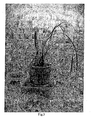
- plants were transferred to an aqueous medium and replanted in the earth. The state of plants was assessed at each and every stage. It is shown that the sugar cane shoots formable with the induction of the 10 nM SkQ1 normally take roots and provide full value viable plants - Fig. 3 .
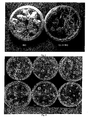
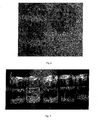
- the immature germs of maize on the most favourable stage of development were placed on a culture medium containing SkQ1 in various concentrations of between 0.5 and 10 nM. Higher concentrations were not used because in concentrations of 20 nM and higher, SkQ1 inhibited morphogenesis and more than that influence on shoot formation was stronger than on rhizogenesis ( Fig. 5 ).
- the germs were cultivated on said media either constantly for a month or were replanted on a SkQ1-free medium a week later.
- Luchistaya in the control there formed only a nonembryogenic callus.
- a silver nitrate medium morphogenesis standard inductor
- part of germs formed an embryogenic callus, the best variant being that of incubation of germs on the 10 nM SkQ1 medium during a week followed by replanting on a medium lacking same (Table 5).
- Table 5 Table 5.
- SkQ1 influence on induction of embryogenic callus of maize (variety Luchistaya) Medium variant Number of germs Germs with embryogenic, callus, % Preservation of embriogenic property in passage 2, % Standart (II) 70 0 - ⁇ +AgNO 3 98 14,3 4,1 ⁇ +5 nM SkQ 96 4,2 2,1 ⁇ +10 nM SkQ 62 16,4 0,0 ⁇ +10 nM SkQ 1 week 39 46,2 23,1
- the embryogenic callus so obtained was replanted on a SkQ1-free medium. Regenerative capacity was retained substantially only in a callus induction variant on a 10 nM medium during a week.
- SkQ1 influence on induction of embryogenic callus of maize (variety LG-1) Medium, variant Number of germs Germs with embryogenic, callus, % Standart (II) 80 2,5 ⁇ +AgNO 3 44 8,3 ⁇ +0,5 nM SkQ1 78 5,1 ⁇ +1,0 nM SkQ1 40 10,0 ⁇ +5 nM SkQ1 86 0 ⁇ +10 nM SkQ1 88 0 ⁇ +AgNO3+0,5nM SkQ1 56 7,1 AgNO 3 +1,0 nM SkQ1 54 7,5 AgNO 3 +5 nM SkQ1 54 7,5
- SkQ1 influence on growth and formation of morphogenic callus in lucerne of species Medicago glutinosa (variety ⁇ -66) Concentration SkQ1, nM Number of calluses Callus, average weight Number of calluses with "green" foci mg %, to control pieces % 0 (control) 32 287 ⁇ 19 100 16 50 0,5 nM 32 231 ⁇ 17 80 19 59,4 1 nM 43 242 ⁇ 17 84 15 34,9 5 nM 30 300 ⁇ 15 104 30 100 10 nM 32 178 ⁇ 10 86 6 18,8 Table 9.
- SkQ1 influence on growth and formation of morphogenic callus in lucerne of species Medicago falcata_ (variety T-425) Concentration SkQ1, nM Number of calluses Callus, average weight Number of calluses with "green” foci mg %, to control pieces % 0 (control) 31 180 ⁇ 16 100 10 32,3 0,5 nM 32 153 ⁇ 12 85 0 0 1 nM 30 160 ⁇ 15 89 2 6,7 5 nM 30 190 ⁇ 11 105 28 93,3 10 nM 30 154 ⁇ 15 86 0 0
- SkQ1 influence on morphogenesis in passivated callus of maize Concentration SkQ1, nM 0 1 5 10 20 30 05 Portion of calluses with shoots, % 25,6 47,5 71,8 31,7 14,6 2,5 4,6 Average number of shoots per callus 1,1 1,6 2,0 1,6 1,0 0,5 0,5 Portion of calluses with roots, % 51,3 45,0 47,5 58,5 32,8 20,0 34,1 Average number of roots per callus 2,4 4,4 5,1 4,7 3,1 4,4 2,5
- morphogenesis can be induced directly in explant cells with no callus formation. This type of differentiation is called direct plant regeneration.
- the stem explants of potatoes were placed on a medium for inducing morphogenesis. The formation of shoots was observed a month later. The formation of regenerants was fixed only in the presence of 1 nM SkQ1 whose number was insignificant, though, even in this case (Table 14). Table 14. State of stem explants of potatoes Medium, variant Number of explants Morphogenic explants Regenerants 0 (control) 170 159 0 1 nM 127 127 2 10 nM 134 119 0 10 ⁇ M 92 79 0
- Counted was a callus mass of two varieties of lucerne during one month. Growth index - relation of a final raw mass to the initial. Two varieties of lucerne featured stimulation of growth (Tables 15, 16). Table 15. Lucerne growth index of species Medicago falcate (T-425) Variant Grow index %, to control Control 4,43 100 0,5 nM 6,65 150 1 nM 6,5 147 5 nM 6,62 149 10 nM 4,27 96 Table 16. Lucerne growth index one month after cultivation of Medicago Glutinosa ( ⁇ -66) Variant Grow index %, to control Control 1,85 100 5 nM 4,52 244 10 nM 1,14 62
- the optimal concentration of SkQ1 even in this case is between 0.5 and 5 nM.
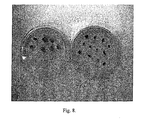
- a quantitative evaluation of an influence exerted by SkQ1 on the viability of sugar cane calluses was made, which were incubated in anoxia conditions.
- the calluses of two lines were used.
- Stable line calluses are capable of maintaining viability (if only in part) with a substantially longer period of incubation in anaerobic conditions in comparison with sensitive line calluses.
- the calluses were incubated for 48 hrs (sensitive line) or 168 hrs (stable line) and then transferred in aerobic conditions to a medium containing 10 nM SkQ1 or not containing SkQ1.
- the viability of calluses was judged by a growth index thereof.
Landscapes
- Life Sciences & Earth Sciences (AREA)
- Dentistry (AREA)
- Plant Pathology (AREA)
- Health & Medical Sciences (AREA)
- Engineering & Computer Science (AREA)
- Agronomy & Crop Science (AREA)
- General Health & Medical Sciences (AREA)
- Wood Science & Technology (AREA)
- Zoology (AREA)
- Environmental Sciences (AREA)
- Pest Control & Pesticides (AREA)
- Breeding Of Plants And Reproduction By Means Of Culturing (AREA)
- Pretreatment Of Seeds And Plants (AREA)
- Agricultural Chemicals And Associated Chemicals (AREA)
Applications Claiming Priority (1)
| Application Number | Priority Date | Filing Date | Title |
|---|---|---|---|
| PCT/RU2006/000547 WO2008048135A1 (fr) | 2006-10-20 | 2006-10-20 | Composition destinée à la régénération, la stimulation de la croissance et l'adaptation de plantes à tous types de facteurs de stress |
Publications (1)
| Publication Number | Publication Date |
|---|---|
| EP2095713A1 true EP2095713A1 (de) | 2009-09-02 |
Family
ID=39314259
Family Applications (1)
| Application Number | Title | Priority Date | Filing Date |
|---|---|---|---|
| EP06849603A Withdrawn EP2095713A1 (de) | 2006-10-20 | 2006-10-20 | Zusammensetzung für die regeneration und stimulation des wachstums von pflanzen und für die anpassung von pflanzen an unterschiedliche stressfaktoren |
Country Status (4)
| Country | Link |
|---|---|
| US (1) | US8557733B2 (de) |
| EP (1) | EP2095713A1 (de) |
| EA (1) | EA200900583A1 (de) |
| WO (1) | WO2008048135A1 (de) |
Cited By (1)
| Publication number | Priority date | Publication date | Assignee | Title |
|---|---|---|---|---|
| RU2454864C1 (ru) * | 2011-02-17 | 2012-07-10 | Государственное образовательное учреждение высшего профессионального образования "Мордовский государственный университет им. Н.П. Огарева" | Способ повышения антиоксидантной активности тканей растений |
Families Citing this family (4)
| Publication number | Priority date | Publication date | Assignee | Title |
|---|---|---|---|---|
| US8518915B2 (en) * | 2007-06-29 | 2013-08-27 | Mitotech Sa | Use of mitochondrially-addressed compounds for preventing and treating cardiovascular diseases |
| WO2012167236A1 (en) | 2011-06-03 | 2012-12-06 | Mitotech Sa | Oral formulations of mitochondrially-targeted antioxidants and their preparation and use |
| CN115551476A (zh) * | 2019-12-10 | 2022-12-30 | 米陀科技有限公司 | 用于线粒体靶向抗氧化剂的不同组合物的聚合物基质 |
| CN111528100B (zh) * | 2020-06-16 | 2022-07-26 | 上海市农业科学院 | 一种获得青花菜与甘蓝型油菜远缘杂交后代的方法 |
Family Cites Families (17)
| Publication number | Priority date | Publication date | Assignee | Title |
|---|---|---|---|---|
| SU384200A3 (de) * | 1970-03-11 | 1973-05-23 | ||
| US4053501A (en) * | 1973-04-03 | 1977-10-11 | Monsanto Company | Alkoxycarbonylbenzyltrialkylphosphonium salts |
| US4173462A (en) * | 1977-12-16 | 1979-11-06 | Gaf Corporation | Phenoxybenzylphosphonium salt herbicides and plant growth regulants |
| US5538974A (en) | 1994-01-27 | 1996-07-23 | Senju Pharamceutical Co., Ltd. | Ophthalmic composition for lowering intraocular pressure |
| NZ505352A (en) | 1997-11-25 | 2002-12-20 | Univ Otago | Mitochondrially targeted antioxidants |
| US6331532B1 (en) * | 1998-11-25 | 2001-12-18 | University Of Otago | Mitochondrially targeted antioxidants |
| US20080275005A1 (en) | 1998-11-25 | 2008-11-06 | Murphy Michael P | Mitochondrially targeted antioxidants |
| US20070270381A1 (en) | 2000-05-25 | 2007-11-22 | Antipodean Pharmaceuticals, Inc. | Mitochondrially targeted antioxidants |
| ITRM20010755A1 (it) | 2001-12-20 | 2003-06-20 | Simonelli Giuseppe | Uso del chinone q10 per il trattamento delle malattie oculari. |
| US6984636B2 (en) | 2002-08-12 | 2006-01-10 | Medical Research Council | Mitochondrially targeted antioxidants |
| WO2005033092A1 (en) | 2003-09-19 | 2005-04-14 | Galileo Pharmaceuticals, Inc. | Chroman derivatives |
| CN1997403A (zh) | 2004-07-13 | 2007-07-11 | 奥里迪斯生物医学研究及开发有限责任公司 | 靶向线粒体的抗氧化剂在治疗肝病和上皮癌中的用途 |
| WO2006025247A1 (ja) | 2004-08-30 | 2006-03-09 | Kaneka Corporation | ミトコンドリア賦活剤 |
| RU2318500C2 (ru) | 2005-10-18 | 2008-03-10 | Общество С Ограниченной Ответственностью "Митотехнология" | Способ воздействия на организм путем адресной доставки биологически активных веществ в митохондрии, фармацевтическая композиция для его осуществления и соединение, применяемое для этой цели |
| EP2119436A4 (de) | 2006-10-20 | 2010-03-03 | Ltd Liability Company Mitotech | Pharmazeutische zusammensetzungen zur verhinderung und behandlung von augenkrankheiten |
| US8518915B2 (en) | 2007-06-29 | 2013-08-27 | Mitotech Sa | Use of mitochondrially-addressed compounds for preventing and treating cardiovascular diseases |
| WO2009158348A1 (en) | 2008-06-25 | 2009-12-30 | Edison Pharmaceuticals, Inc. | 2-heterocyclylaminoalkyl-(p-quinone) derivatives for treatment of oxidative stress diseases |
-
2006
- 2006-10-20 WO PCT/RU2006/000547 patent/WO2008048135A1/ru not_active Ceased
- 2006-10-20 US US12/445,902 patent/US8557733B2/en not_active Expired - Fee Related
- 2006-10-20 EA EA200900583A patent/EA200900583A1/ru unknown
- 2006-10-20 EP EP06849603A patent/EP2095713A1/de not_active Withdrawn
Non-Patent Citations (1)
| Title |
|---|
| See references of WO2008048135A1 * |
Cited By (1)
| Publication number | Priority date | Publication date | Assignee | Title |
|---|---|---|---|---|
| RU2454864C1 (ru) * | 2011-02-17 | 2012-07-10 | Государственное образовательное учреждение высшего профессионального образования "Мордовский государственный университет им. Н.П. Огарева" | Способ повышения антиоксидантной активности тканей растений |
Also Published As
| Publication number | Publication date |
|---|---|
| US8557733B2 (en) | 2013-10-15 |
| WO2008048135A1 (fr) | 2008-04-24 |
| US20110077159A1 (en) | 2011-03-31 |
| EA200900583A1 (ru) | 2009-08-28 |
Similar Documents
| Publication | Publication Date | Title |
|---|---|---|
| Doctrinal et al. | In vitro gynogenesis in Beta vulgaris L.: Effects of plant growth regulators, temperature, genotypes and season | |
| Nitsch | Perennation through seeds and other structures: fruit development | |
| Ramakrishnan et al. | Efficacious somatic embryogenesis and fertile plant recovery from shoot apex explants of onion (Allium cepa. L.) | |
| CN107980620A (zh) | 一种植物染色体的复合加倍剂及加倍方法 | |
| Pandey et al. | In vitro propagation of Aconitum balfourii Stapf.: an important aconite of the Himalayan alpines | |
| Kumar et al. | Plant growth regulators and their implication in ornamental horticulture: an overview | |
| Sridevi et al. | In vitro shoot growth, direct organogenesis and somatic embryogenesis promoted by silver nitrate in Coffea dewevrei | |
| Bhatnagar et al. | TDZ-mediated differentiation in commercially valuable Indian mulberry, Morus indica cultivars K2 and DD | |
| EP2095713A1 (de) | Zusammensetzung für die regeneration und stimulation des wachstums von pflanzen und für die anpassung von pflanzen an unterschiedliche stressfaktoren | |
| US7445932B2 (en) | Development of a highly efficient in vitro system of micropropagation of solanum viarum | |
| Novak et al. | Onion, garlic and leek (Allium species) | |
| Lakshmi et al. | In vitro propagation of Hoya wightii ssp. palniensis KT Mathew, a highly vulnerable and endemic species of Western Ghats of Tamil Nadu, India | |
| Momeni et al. | Direct organogenesis from shoot tip explants of Juniperus polycarpos L.: Optimizing basal media and plant growth regulators on proliferation and root formation | |
| Mohiuddin et al. | Enhancement of adventitious shoot regeneration in Cucumis sativus L. using AgNO3 | |
| Curtis et al. | Influence of surfactants on growth and regeneration from mature internodal stem segments of sweet orange (Citrus sinensis) cv. Hamlin | |
| Das | Mass cloning of Rose and Mussaenda, popular garden plants, via somatic embryogenesis | |
| Roy et al. | Synthetic seed of rice: an emerging avenue of applied biotechnology | |
| Schwarz | 6. Plant growth regulator effects in the in vitro propagation of three hardwood tree genera: Castanea, Juglans, and Quercus | |
| Bonga et al. | Clonal propagation | |
| González-Sandoval et al. | Biotechnological and Molecular Approaches to Carnation (Dianthus caryophyllus L.) Breeding | |
| Opabode et al. | Plant regeneration via somatic embryogenesis from immature leaves in Tetrapleura tetraptera (Schum. & Thonn.) Taub. | |
| Patel et al. | In Vitro Culture of Haploids | |
| Goyal | Improving the efficiency of detached tiller culture and plant regeneration in wheat× maize system of doubled haploid production in wheat | |
| Baharuddin et al. | Revisiting In Vitro Micropropagation Protocols of Mimosa pudica for Enhanced Seed Germination, Shoot Multiplication, and Root Initiation. | |
| KHAGTA | IN VITRO ROOT REGENERATION IN KIWIBERRY [Actinidia arguta (Siebold & Zucc.) Planch. ex. Miq. var. Arguta] |
Legal Events
| Date | Code | Title | Description |
|---|---|---|---|
| PUAI | Public reference made under article 153(3) epc to a published international application that has entered the european phase |
Free format text: ORIGINAL CODE: 0009012 |
|
| 17P | Request for examination filed |
Effective date: 20090520 |
|
| AK | Designated contracting states |
Kind code of ref document: A1 Designated state(s): AT BE BG CH CY CZ DE DK EE ES FI FR GB GR HU IE IS IT LI LT LU LV MC NL PL PT RO SE SI SK TR |
|
| DAX | Request for extension of the european patent (deleted) | ||
| STAA | Information on the status of an ep patent application or granted ep patent |
Free format text: STATUS: THE APPLICATION IS DEEMED TO BE WITHDRAWN |
|
| 18D | Application deemed to be withdrawn |
Effective date: 20110503 |