EP2095848B1 - Système hybride de fourniture de mousse - Google Patents
Système hybride de fourniture de mousse Download PDFInfo
- Publication number
- EP2095848B1 EP2095848B1 EP09153410.7A EP09153410A EP2095848B1 EP 2095848 B1 EP2095848 B1 EP 2095848B1 EP 09153410 A EP09153410 A EP 09153410A EP 2095848 B1 EP2095848 B1 EP 2095848B1
- Authority
- EP
- European Patent Office
- Prior art keywords
- foam
- conduit
- proportioning system
- water
- high flow
- Prior art date
- Legal status (The legal status is an assumption and is not a legal conclusion. Google has not performed a legal analysis and makes no representation as to the accuracy of the status listed.)
- Active
Links
Images

Classifications
-
- A—HUMAN NECESSITIES
- A62—LIFE-SAVING; FIRE-FIGHTING
- A62C—FIRE-FIGHTING
- A62C5/00—Making of fire-extinguishing materials immediately before use
- A62C5/02—Making of fire-extinguishing materials immediately before use of foam
-
- Y—GENERAL TAGGING OF NEW TECHNOLOGICAL DEVELOPMENTS; GENERAL TAGGING OF CROSS-SECTIONAL TECHNOLOGIES SPANNING OVER SEVERAL SECTIONS OF THE IPC; TECHNICAL SUBJECTS COVERED BY FORMER USPC CROSS-REFERENCE ART COLLECTIONS [XRACs] AND DIGESTS
- Y10—TECHNICAL SUBJECTS COVERED BY FORMER USPC
- Y10T—TECHNICAL SUBJECTS COVERED BY FORMER US CLASSIFICATION
- Y10T137/00—Fluid handling
- Y10T137/0318—Processes
- Y10T137/0324—With control of flow by a condition or characteristic of a fluid
- Y10T137/0363—For producing proportionate flow
Definitions
- the present invention generally relates to firefighting equipment, and more specifically, to a hybrid foam proportioning system for fighting fires.
- foaming agents to fire fighting fluids or water streams is well known and can be particularly useful for fighting fires, for example, fires in industrial factories, chemical plants, petrochemical plants, petroleum refineries, forests, and structures.
- the use of fire fighting foam requires that a foam concentrate be mixed and added at constant proportions to the water stream.
- the foam solution When the foam solution is delivered, the foam solution effectively extinguishes the flames of chemical, petroleum, and ordinary combustable fires which would otherwise not be effectively extinguished by the application of water alone.
- a typical foam proportioning system includes a foam injector system and a water pumping system.
- a typical CAFS includes a foam injector, a water pumping system, and an air system including an air compressor for supplying air under pressure.
- CFM cubic feet per minute
- GPM gallon per minute
- Class A foams are also typically proportioned at 0.1% to 1.0% with an average of 0.4% to 0.5% foam chemical and most often used at flows below 1000 GPM (typically 150-250 GPM).
- Class B foams are proportioned at much higher rates of about 1% to 6% foam chemical typically at about 250 GPM per discharge line for larger hazards. Therefore, for a high flow Class B foam, a much higher foam proportioning capacity is required.
- typical electrical systems on fire apparatus such as a fire engine, can only support up to a 6 GPM electric pump system.
- Class A foams which typically require up to 1.25 GPM of Class A foam concentrate to treat up to 250 GPM of water
- Class B applications which require about 7.5 GPM or more of foam concentrate to treat about 250 GPM water for a 3% foam chemical.
- Class A and Class B relate to fire classes A and B. Class A fires typically involve burning wood whereas Class B fires involve liquid combustible fuels.
- Venturi devices are known proportioning devices creating pressure drops that vary with fluid flow rate in order to proportion foam concentrate into a fire fighting fluid conduit in accordance with varying fire fighting fluid flow rates.
- Conventional venturi devices accomplish this task with a certain degree of accuracy and efficiency at a fixed flow. In general, the greater the fire fighting fluid flow rate the greater the pressure drop through the venturi, thus drawing in a greater amount of foam concentrate.
- venturi devices alone are not accurate at low flow rates and their efficiency decreases with high flow rates. The efficiency drops because total pressure drop is in proportion to flow rate and pressure recovery downstream is limited to a maximum efficiency range in the order of 65% to 85% of the pressure drop.
- venturi devices are not controllable by a user so that such inefficiencies and under or over proportioned foam solutions result due to out-of-control operating conditions of the venturi.
- the operator has no feedback for adjustment of flow or backpressure which are critical operational parameters for venturi (also know as an eductor) operation. Too much back pressure, for instance will lower or stop foam flow.
- EP 0 978 296 A1 an automatic mechanical foam-metering system is disclosed.
- a multiple-stage pump pre-mixing unit and two metering devices allow a quantity of foaming material in a single foam tank to be drawn through the pump pre-mixing unit and added in continuously variable foam admixing percentage rates to fire-extinguishing water.
- EP 0 978 296 A1 does not disclose a combination of a low flow and high flow foam proportioning system.
- U.S. 6,138,797 a system for adding foam concentrate into a water stream used for fire fighting operations.
- the system comprises a pressurized water supply source, an in-line venturi/modulating valve assembly, a single additive source, an in-line fluid pump drive and one or more terminal foam/water delivery devices.
- the venturi/modulating valve assembly uses the motive force of the pressurized water source for foam eduction and is placed in the system upstream of the pump drive. Fluid line pressure lost in passage through the "venturi/modulating valve assembly" is increased by the subsequent fluid pump which then transmits the fluid to a downstream terminal fire fighting solution delivery device.
- U.S. 6,138,797 does not disclose a combination of a low flow and high flow foam proportioning system.
- a system for supplying a pre-determined ratio of liquid foam concentrate and water to a mixing device immediately upstream from a fire fighting nozzle.
- the system comprises a source of pressurized water, a water supply system in fluid communication with the source of pressurized water, and a foam mixing device in fluid communication with the water supply system.
- Liquid foam concentrate stored in a foam tank is pumped to the foam mixing device by a foam pump.
- the foam mixing device has a metering valve and a fluid pressure drop inducing device associated therewith. The valve operates to open and close the liquid foam additive conduit just prior to the foam mixing device and to vary the amount of foam concentrate to be mixed with the water.
- the foam pump is powered by a fixed displacement piston motor which in turn is electronically modulated independently of the level of operation of the water pump by a control system that is responsive both to the water pressure developed by the water pump and to the foam liquid concentrate pressure developed by the additive pump.
- a control system that is responsive both to the water pressure developed by the water pump and to the foam liquid concentrate pressure developed by the additive pump.
- the present invention provides for a hybrid foam system according to claim 1 comprising: a low flow foam proportioning system; a high flow foam proportioning system operatively associated with the low flow foam proportioning system; a water source connected to the low flow and high flow foam proportioning systems; and a system controller operatively in communication with the low flow and high flow foam proportioning systems.
- the present invention also provides for a method of producing a variety of foam solutions according to claim 13 comprising the steps of: providing a low flow foam proportioning system; providing a high flow foam proportioning system operatively associated with the low flow foam proportioning system; and providing a system controller operatively associated with the low flow and high flow foam proportioning systems for controlling the operation of the low flow and high flow foam proportioning systems.
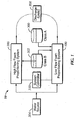
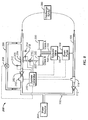
- the present invention provides for a hybrid foam system 10.
- the hybrid foam system 10 includes a low flow foam proportioning system 100, a high flow foam proportioning system 200, a Class A foam tank 300, a Class B foam tank 302, a discharge unit 308, and a system controller 310.
- the hybrid foam system 10 can optionally include a water pump 306 for providing additional water pressure to the high flow 200 and low flow 100 foam proportioning systems from a water source as shown in Fig. 2 .
- the water source 304 can be a fire hydrant, fire truck, water tower, stand pipe or any other source for providing water and water pressure through the hybrid foam system 10.
- the low flow 100 and high flow 200 foam proportioning systems can be configured in a parallel configuration (as shown in Fig. 1 ) or in a series configuration (as shown in Fig. 3 ). It is to be understood that while the present embodiment is described with respect to Class A and Class B foam tanks, any number of foam tanks containing any class of fire fighting foam to be within the scope of the present embodiment.
- the low flow foam proportioning system 100 can be any conventional foam proportioning system such as a FoamLogix ® Electronic Foam Proportioning System from Hale Products Inc, of Conshohocken, PA, a compressed air foam system, or similar electronic discharge side foam proportioning system that does not, by itself, have the capacity for large Class B foam flow.
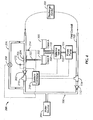
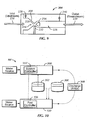
- the low flow foam proportioning system 100 as shown in Fig. 4 includes a selector valve 102 and a foam pump 104, each operatively in communication with the system controller 310, and a first conduit 105.
- the selector valve 102 of the low flow foam proportioning system 100 is connected to the Class B foam tank 302 and the Class A foam tank 300 by connection lines 108 and 110.
- the connection lines 108, 110 can be any connection means readily known in the art such as piping, hoses, etc. sufficient for its intended use.
- the foam pump 104 operates to pump either Class A or Class B foam (depending on the setting of the selector valve 102) from the respective tanks 300, 302 to the first conduit 105.
- the first conduit 105 provides a fluid path between the water source 304, the foam pump 104, and the discharge unit 308.
- the foam pump 104 can also include a foam pump flow meter (not shown) to provide real time feedback to the system controller 310 on the rate of foam flow to the first conduit 105.
- a typical foam pump 104 is capable of pumping about 5.0 gallons per minute (GPM).
- Operation of the selector valve 102 is used to determine whether Class A or Class B foam is pumped at any given time.
- the selector valve 102 and foam pump 104 are both operatively connected to the system controller 310 that can automatically control the type and rate of foam being pumped in response to an input, such as an operator input, to advantageously provide a more accurate percentage foam solution.
- the low flow foam proportioning system 100 can optionally include a check valve 112 and a water flow sensor 114 operatively in communication with the system controller 310.
- the system controller 310 is preferably configured to be operatively in communication with the selector valve 102, the foam pump 104, and the water flow sensor 114.
- the system controller 310 is used to control the foam pump 104 which regulates the amount of foam concentrate from the foam tanks to the first conduit 105.
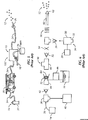
- the low flow foam proportioning system 100 can be a conventional compressed air foam system 100' as shown in Fig. 5 and as described in U.S. Patent No. 6,357,532 .
- the compressed air foam system 100' is a self contained module that adds foam chemical or foam concentrate 16 and air 18 to a water flow 14 to make a compressed air foam solution 12 i.e., a foam solution 12.
- a plain water flow from any water pumping device (such as a fire truck 20) or a hydrant 22 of sufficient flow and pressure can be used to generate compressed air foam 12 by running the water through the compressed air foam system 100'.
- Fire hose 24 can be used to connect the compressed air foam system 100' to the source of supply water and to a discharge unit such as a nozzle 26 or a plurality of nozzles (not shown) operated by a fireman for delivery of the foam solution 12 to the fire.
- a discharge unit such as a nozzle 26 or a plurality of nozzles (not shown) operated by a fireman for delivery of the foam solution 12 to the fire.
- foam chemicals 16 can be used with the low flow foam proportioning system 100 or the high flow foam proportioning system 200 to generate the foam solution 12.
- the foam chemical 16 generally refers to firefighting foam chemical additives of the Class A or B variety. These firefighting foam chemicals are generally known in the art and used in the firefighting service and a detailed description of such foam chemicals is not necessary for a complete understanding of the present invention. While foam chemicals are presently preferred, it is to be understood that any chemical additive capable of facilitating fire suppression to be within the scope of the present embodiment.
- the compressed air foam system 100' has a power source 28 or is connected to a power source 28.
- the power source 28 can be any conventional power source readily known in the art and suitable for its intended purpose.
- Exemplary power sources 28 include a Briggs and Stratton 18 horsepower gasoline engine, a gas or diesel power source, an electric motor or hydraulic drive system, and a power take-off drive from a gear box or a fire truck transmission.
- the power source 28 is operatively coupled to an air compressor 30 and provides sufficient power and speed to run the air compressor 30.
- the air compressor 30 typically runs at a constant speed in the compressed air foam system 100'.
- the air compressor 30 can be a rotary compressor, a reciprocating type compressor, or any other compressor readily known in the art.
- the air compressor 30 is fitted with an intake throttling valve 32 which allows control of the air discharge pressure from the air compressor 30 by throttling the air intake of the compressor 30 at an air inlet 34.
- Suitable air intake throttling valves 32 are available from AirCon, Erie, Pa. Decreasing the air flow into the air compressor 30 reduces the airflow out of the air compressor 30. This allows the outlet air pressure to be controlled across any compressor discharge orifice.
- the air intake valve 32 can be pilot operated and controlled by a pilot regulator, such as those available from AirCon, Erie Pa., in a fashion common to industrial compressors.
- Water 14 from a water source enters the compressed air foam system 100' at a water inlet 36 and passes through a water flow path 38 through the compressed air foam system 100'.
- a portion of the water flow in the compressed air foam system 100' can be bled off and fed to a heat exchanger 40, such as a water to oil heat exchanger, to cool the air compressor 30.
- the water 14 leaving the heat exchanger 40 can be fed to any desired location, such as back to a water tank on the fire truck, for example.
- the water 14 provided to the heat exchanger 40 does not contain the foam chemical 16.
- the water 14 flows from the water inlet 36 through a check valve 42 to prevent any foam chemical 16 from back flowing into the water source 14 or the heat exchanger 40.
- the water 14 next enters a water and foam chemical mixer 44 to mix together the water 14 and foam chemical 16.
- the foam chemical 16 may be fed into the water and foam chemical mixer 44 by a pump 46.
- the foam chemical 16 is added in the correct proportion to the water flow. Typically Class A foam chemical is added at about 0.1 to 1.0 percent by volume foam chemical.
- the foam solution (i.e., foam chemical and water solution) is then passed through a tee 48 to provide plain foam solution 50 to specified firefighting discharges, if desired.
- the remaining foam solution 50 passes through another check valve 52 to prevent backflow of compressed air foam solution 12 into the foam solution lines.
- a ball valve 54 controls the rate but does not shut off the foam solution flow.
- the air is injected from an air outlet of the air compressor 30 through an air discharge check valve 56.
- the foam solution can then be turned into the compressed air foam solution 12 using for example, motionless mixers 58, such as those described in U.S. Patent No. 5,427,181 to Laskaris et al. .
- the finished compressed air foam solution 12 is routed to one or more hose lines 60 with shut off valves 62 (such as a nozzle) for controlling the application of the compressed air foam on the fire.
- the compressed air foam system 100' can utilize a control system (not shown) which may be constructed of mechanical relays, electronic circuits, a computer, combinations thereof or any other control system readily known in the art:
- the control system can completely close the air intake valve 32 on the compressor 30 which will stop the flow of air. Water cannot flow from the mixer 58 back into the compressor 30 because the air discharge check valve 56 shuts as soon as the air flow from the compressor 30 stops. Reducing the discharge pressure of the air compressor 30 places less load on the engine used to run the compressor 30, such as a small air cooled engine, when no air flow is required.
- Additional sensors can also be included in the control system to control the air flow into and out of the compressor 30.
- the sensors detect a particular parameter and have a parameter signal indicative of the parameter.
- the control system utilizes the parameter signals to actuate the air flow controller 32 based on the parameter signals.
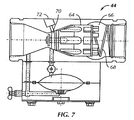
- the water and foam chemical mixer 44 (i.e., a foam proportioning device) is shown in greater detail.
- the water and foam chemical mixer 44 contains a non-metallic piston 64 that resides inside a non-ferrous venturi 66.
- the piston 64 displacement against a spring 68 is caused by water flow and can be utilized for sensing water flow.
- the piston 64 has a portion which is a corrosion resistant magnetic alloy, such as a stainless steel washer 70.
- An inductive proximity switch 72 can also be used to sense the position of the piston 64 by sensing the metallic portion 70.
- the amount of water flow can be determined by knowing the position of the piston 64 in the water and foam chemical mixer 44.
- the water flow signal from the proximity sensor 72 can be used to trip a solenoid that sends a signal to the intake valve 32 on the air compressor 30 to adjust the air intake. In this manner, the output pressure of the air compressor 30 can be controlled.
- the low flow foam proportioning system 100 can be a conventional electronic foam proportioning system (not shown). Exemplary foam proportioning systems are described in U.S. Patent No. 5,996,700 , entitled Foam Proportioner System.
- the high flow foam proportioning system 200 includes a control valve 202, a venturi based foam proportioner 204, a bypass conduit 206, and a bypass valve 208.
- the bypass conduit 206 in conjunction with the bypass valve 208 is configured to divert the complete or partial flow of water from the venturi based foam proportioner 204 to the discharge unit 308.
- the high flow foam proportioning system 200 can advantageously be operated to provide a high output water stream or a foam solution, such as a Class B foam solution.
- the bypass conduit 206 advantageously allows for additional control of the amount of foam being proportioned by operation of the bypass valve 208 that indirectly controls the amount of water flowing through the venturi 204.
- the high flow foam proportioning system 200 can optionally include an inlet flow sensor 210, an inlet pressure sensor 212, and an outlet pressure sensor 214.
- the high flow foam proportioning system 200 can include a foam inlet valve 216 and a foam inlet pressure sensor 218.
- the foam inlet pressure sensor 218 is preferably disposed upstream from the foam inlet valve 216 to sense the pressure of foam concentrate as it is being transferred from the foam tank 302 to the venturi based foam proportioner 204.
- the pressure sensor 218 can provide feedback as to the amount of foam concentrate flow entering the venturi based foam proportioner 204.
- the sensor 218 can advantageously provide feedback to the system controller 310 to indicate if the high flow foam proportioning system 200 is operating within the correct range to produce the proper percentage of foam concentrate to water solution.
- the foam inlet pressure sensor 218 and foam inlet valve 216 can be independently and operatively in communication with the system controller 310.
- Inlet valves such as the foam inlet valve 216, a restrictor valve, etc., are readily known in the art and a detailed explanation of their structure and function is not necessary for a complete understanding of the present embodiment.
- the venturi based foam proportioner 204 is connected to the Class B foam tank 302 by connection line 222.
- the Class B foam tank 302 can be the same Class B foam tank 302 as used by the low flow foam proportioning system 100 or a separate stand alone Class B foam tank (not shown).
- the venturi based foam proportioned 204 can be connected to both the Class B foam tank 302 and the Class A foam tank 300 with a selector valve (not shown) similar to the selector valve 102 of the low flow foam proportioner 100.
- the venturi based foam proportioner 204 includes a venturi 205 that has a converging section 224, a diverging section 226, a vena contracta 228, a liquid inlet 230 configured to receive a flow of a liquid (e.g., a fire fighting fluid) upstream from the converging section 224, a foam inlet 232 configured for receiving a flow of a foam concentrate, an outlet 234 for the exit of the foam solution downstream from the diverging section 226, and a piston 236 operatively associated with the venturi 205.
- a liquid e.g., a fire fighting fluid
- the liquid inlet 230 is configured to receive the flow of a liquid upstream from the converging section 224, for example, for receiving the flow of liquid from the low flow foam proportioning system 100 or a water source 304 such as a fire truck 20 or a water hydrant 22.
- the foam inlet 232 is configured for receiving a flow of a foam chemical or foam concentrate from, for example, a foam tank 302.
- the outlet 234 is configured for the exit of the liquid and foam flow i.e., foam solution downstream from the diverging section 226.
- the outlet 234 can then be connected to a discharge unit 308 such as a fire hose with shut off valves for use on fires.
- the venturi based foam proportioner 204 is preferably configured with first 238 and second 240 pressure sensors.
- the first pressure sensor 238 is disposed upstream of the converging section 224 for sensing upstream pressure.
- the second pressure sensor 240 is disposed downstream of the diverging section 226 for sensing downstream pressure.
- the pressure sensors can be any conventional pressure sensors such as a Wheatstone bridge strain gauge pressure sensor or a variable capacitance pressure transducer such as those manufactured by GEMS.
- any conventional flow meter or flow sensor can be used instead of or in combination with the pressure sensors 238, 240.
- Each pressure sensor can be independently in communication with the system controller 310.
- the venturi based foam proportioner 204 is configured to allow a flow of about 250 GPM of fire fighting fluid.
- the foam concentrate is proportioned with the fire fighting fluid at a rate of about 0.1% to about 6% by volume foam concentrate and more preferably at a rate of about 2.5% to about 3.5% by volume foam concentrate.
- the venturi based foam proportioner 204 can also be configured to proportion about 15 GPM of foam with the fire fighting fluid.
- the piston 236 in combination with the venturi 205 allows for higher velocities at lower flow rates by occluding the area of the vena contracta 228 in the venturi 205.
- the overall result is a variable area venturi that can create increased local velocities which in turn can increase the negative pressure and thus increase the amount of foam concentrate injected at low inlet flow rates. This advantageously allows for the production of Class B foam from low volume flow pumping systems.
- the piston 236 is configured to move axially along the diverging section 226 of the venturi 205 toward or away from the vena contracta 228 and its position can be controlled by the system controller 310.
- Such pistons are readily known in the art and a detailed description of them is not necessary for a complete understanding of this embodiment.
- the piston 236 can be configured to be balanced against its own drag force through the use of a spring (such as shown in Fig. 7 ).
- the position of the piston 236 operates to control the pressure differential between the converging 224 and diverging sections 226 of the venturi 205. This controllable pressure differential advantageously allows for greater pressure differences at low inlet flow rates and therefore higher outlet flow rates.
- the rate of flow through the venturi 205 also effects that amount of foam concentrate received through the foam inlet 232.
- the pressure drop created withdrawals or "sucks" the foam concentrate from the foam tank 302, which is typically maintained at atmospheric pressure, into the fire fighting fluid stream.
- the high flow foam proportion system 200 is operatively associated with the low flow foam proportioning system 100.
- the high flow foam proportioning system 200 can be connected with the low flow foam proportioning system 100 such that the high flow foam proportioning system 200 operates in parallel with or in series with the low flow foam proportioning system 100.
- Fig. 4 illustrates the hybrid foam system 10 configured with the high flow foam proportioning system 200 connected in parallel with the low flow foam proportioning system 100.
- Fig. 3 illustrates the hybrid foam system 10 configured with the high flow foam proportioning system 200 connected in series with the low flow foam proportioning system 100.
- the system controller 310 is configured to be operatively in communication with the low flow foam proportioning system 100 and the high flow foam proportioning system 200 for controlling the overall operation of the hybrid foam system 10.
- the system controller 310 is configured to be operatively in communication with the bypass valve 208, inlet flow sensor 210, inlet pressure sensor 212, outlet pressure sensor 214, foam inlet valve 216, foam inlet pressure sensor 218, and the first and second pressure sensors 238 and 240 of the venturi-based foam proportioner 204.
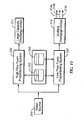
- the low flow 100 and high flow 200 foam proportioning systems are configured as a modular hybrid foam system 10' as shown in Fig. 10 .
- the low flow foam proportioning system 100 can operate as a stand alone unit having its own first controller 106.
- the high flow foam proportioning system 200 can also function as a stand alone unit having its own system controller 310'.
- the low flow 100 and high flow 200 foam proportioning systems are configurable such that the system controller 310' can be operatively in communication with the first controller 106.
- the present embodiment advantageously provides for a modular hybrid foam system 10' that can function to provide Class A foam solution for class A fires and high volume Class B foam solution for class B fires.
- the system controller 310 can be, for example, a programmable logic controller or a computer that includes a display for displaying various operating parameters.
- exemplary controllers can include a computer, a programmable logic controller (PLC), pneumatic controllers, mechanical relays, etc.
- PLC programmable logic controller
- the various operating parameters are displayed in a graphical mode such as a colored bar graph to illustrate when the system is no longer operating within standard operating parameters and no longer functioning at optimal conditions.
- a graphical display mode advantageously allows an operator to quickly visually check if the system is not functioning properly or needs to be adjusted as opposed to a numerical display, especially when being used in a busy fire fighting situation.
- Typical parameters to be displayed on the display can include fire fighting fluid flow rate, pump pressure, and back pressure.
- the system controller 310 can also be configured with a set of stored instructions for automatically controlling the low flow 100 and high flow 200 foam proportioning systems to maintain a desired proportion of foam concentrate to fire fighting fluid volume.
- Such instructions can be stored as a computer program, in a microprocessor, or through logic controls ( e.g., via ladder logic).
- the system controller 310 controls the foam solution percentage discharged from the low flow foam proportioning system 100 by controlling the foam pump 104 which controls the rate of foam concentrate flow to the first conduit 105. Moreover, the system controller 310 can automatically adjust the rate of foam concentrate flow in response to feed back from a foam pump flow meter (not shown).
- the system controller 310 controls the foam solution percentage discharged from the high flow foam proportioning system 200 by controlling the rate of flow of water into the venturi 204 by controlling the control valve 202.
- the rate of flow of water passing through the venturi 204 directly controls the amount of foam concentrate entering the venturi 204 and mixing with the water flow to form the foam solution.
- the system controller 310 can automatically adjust the rate of foam concentrate flow in response to feed back from the foam inlet pressure sensor 218. This is accomplished by the system controller 310 automatically adjusting the control valve 202 or the foam inlet valve 216.
- the hybrid foam system 10 advantageously provides operational feedback, such as inlet and outlet pressures and flow rates, to an operator or a system controller such that modifications can be made semi-automatically or automatically to operate the hybrid foam system 10 within its optimal parameters.
- operational feedback such as inlet and outlet pressures and flow rates
- the discharge unit 308 can be any discharge unit such as fire hoses, nozzles, or the like or a series of such fire hoses.
- the discharge unit can include a large capacity discharge unit 312 (or a plurality of discharge units) connected to the high flow foam proportioning system 200 and a plurality of smaller discharge units 314a, 314b, 314c connected to the low flow foam proportioning system 100.
- the smaller discharge units 314a, 314b, 314c are hoses with nozzles having an outlet diameter of about 2.5 inches.
- the hybrid foam system 10 in operation, for the hybrid foam system 10 in a parallel configuration, water is pumped through the hybrid foam system 10 by the water source 304.
- the hybrid foam system 10 can be set to operate only the low flow foam proportioning system 100, only the high flow foam proportioning system 200, or both the low flow 100 and high flow 200 foam proportioning systems.
- an operator can select to have plain water pumped through the high flow foam proportioning system 200 by operation of the control valve 202 and the bypass valve 208.
- the operator can select to have a foam solution pumped out by allowing the flow of water, completely or partially, through the venturi 204.
- This configuration advantageously provides significant benefits over conventional foam proportioning systems. For example, as shown in Fig.
- both the low flow foam proportioning system 100 and the high flow foam proportioning system 200 outputs to a discharge unit 308.
- the low flow foam proportioning system 100 can operate in its normal mode and the fire fighting fluid flowing through the high flow foam proportioning system 110 can be water.
- additional Class B foam solution can be added to the discharge unit 308 by the high flow foam proportioning system 200. This advantageously allows for a high output volume of Class B foam for use on Class B fires which cannot be typically provided for by conventional Class A foam proportioning systems.
- the hybrid foam system 10 in a series configuration, water is pumped through the hybrid foam system 10 by the water source 304. An operator can then select to operate either the low flow foam proportioning system 100 or the high flow foam proportioning system 200 by way of valves (not shown).
- This configuration advantageously allows an operator to select the appropriate fire fighting fluid. That is, the hybrid foam system 10 can be used to provide water, Class A foam solution, or a Class B foam solution as necessary, all of which can be advantageously controlled automatically or semi-automatically through a system controller.
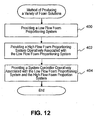
- the present invention also provides for a method of providing a variety of fire fighting solutions.
- the method includes the steps of providing a low flow foam proportioning system (Step 400), providing a high flow foam proportioning system operatively associated with the low flow foam proportioning system (Step 402), and providing a system controller operatively associated with the low flow foam proportioning system and the high flow foam proportioning system for controlling the operation of the low flow foam proportioning system and the high flow foam proportioning system (Step 404).
- the present method can further include the step of providing a set of stored instructions for the system controller for automatically controlling the operation of the low flow foam proportioning system 100 and the high flow foam proportioning system 200 to maintain operations within normal processing parameters.
Landscapes
- Health & Medical Sciences (AREA)
- Public Health (AREA)
- Business, Economics & Management (AREA)
- Emergency Management (AREA)
- Fire-Extinguishing By Fire Departments, And Fire-Extinguishing Equipment And Control Thereof (AREA)
Claims (14)
- Système de mousse hybride (10) comprenant :un système de dosage de mousse à faible débit (100) qui mélange de la mousse et de l'eau, le système de dosage de mousse à faible débit (100) ayant un premier conduit (105) pour recevoir un approvisionnement en eau au niveau d'un orifice d'entrée du premier conduit ;un système de dosage de mousse à haut débit (200) qui mélange de la mousse et de l'eau, le système de dosage de mousse à haut débit (200) ayant un second conduit pour recevoir un approvisionnement en eau au niveau d'un orifice d'entrée du second conduit ;une source d'eau (304) reliée à l'orifice d'entrée du premier conduit et à l'orifice d'entrée du second conduit pour fournir de l'eau au système de dosage de mousse à faible débit (100) et au système de dosage de mousse à haut débit (200), respectivement ;un contrôleur de système (310) en communication opérationnelle avec le système de dosage de mousse à faible débit (100) et avec le système de dosage de mousse à haut débit (200) ; etune unité d'évacuation (308) en communication de fluide avec le système de dosage de mousse à faible débit (100) et le système de dosage de mousse à haut débit (200),dans lequel le système de dosage de mousse à faible débit (100) est associé d'une manière opérationnelle avec le système de dosage de mousse à haut débit (200) et le système de mousse hybride (10) est en outre caractérisé en ce que :le système de dosage de mousse à faible débit (100) comporte :une pompe à mousse (104) en communication de fluide avec le premier conduit (105) ;une soupape de sélecteur (102) comportant :un premier orifice d'entrée de soupape de sélecteur en communication de fluide avec un premier réservoir de mousse (300) ;un second orifice d'entrée de soupape de sélecteur en communication de fluide avec un second réservoir de mousse (302) ; etun orifice de sortie de soupape de sélecteur en communication de fluide avec la pompe à mousse (104), etun premier orifice de sortie de conduit positionné en aval de la pompe à mousse (104), et le système de dosage de mousse à haut débit (200) comporte :un dispositif de dosage de mousse basé sur un venturi (204) pour introduire de la mousse dans le second conduit ; etun conduit de dérivation (206) comportant :un orifice d'entrée de conduit de dérivation en communication de fluide avec le second conduit et positionné en amont du dispositif de dosage de mousse basé sur un venturi (204) ; etun orifice de sortie de conduit de dérivation en communication de fluide avec le second conduit et positionné en aval du dispositif de dosage de mousse basé sur un venturi (204).
- Système de mousse hybride (10) selon la revendication 1, dans lequel le contrôleur de système (310) est en communication opérationnelle avec le dispositif de dosage de mousse basé sur un venturi (204).
- Système de mousse hybride (10) selon la revendication 1, dans lequel le système de dosage de mousse à haut débit (200) comprend en outre au moins l'un d'un capteur de débit d'entrée (210) d'un capteur de pression d'entrée (212), et d'un capteur de pression de sortie (214), reliés au dispositif de dosage de mousse basé sur un venturi (204) et en communication avec le contrôleur de système.
- Système de mousse hybride (10) selon la revendication 1, dans lequel le système de dosage de mousse à haut débit (200) comporte en outre une soupape de commande (202) reliée au dispositif de dosage de mousse basé sur un venturi (204) et une soupape de dérivation (208) reliée au conduit de dérivation (206).
- Système de mousse hybride (10) selon la revendication 4, dans lequel le dispositif de dosage de mousse basé sur un venturi (204) comprend une soupape d'entrée de mousse (216).
- Système de mousse hybride (10) selon la revendication 1, dans lequel la soupape de sélecteur (102) et la pompe à mousse (104) sont associées d'une manière opérationnelle au contrôleur de système (310).
- Système de mousse hybride (10) selon la revendication 1, dans lequel le système de dosage de mousse à faible débit (100) comporte en outre un capteur de débit d'eau (114) relié au premier conduit (105) et en communication avec le contrôleur de système (310).
- Système de mousse hybride (10) selon la revendication 1, dans lequel le système de dosage de mousse à faible débit (100) et le système de dosage de mousse à haut débit (200) sont montés en série ou en parallèle.
- Système de mousse hybride (10) selon la revendication 1, dans lequel le contrôleur de système (310) est un contrôleur logique programmable ou un ordinateur.
- Système de mousse hybride (10) selon la revendication 1, dans lequel le contrôleur de système (310) comporte en outre un ensemble d'instructions mémorisées pour commander automatiquement le système de dosage de mousse à faible débit (100) et le système de dosage de mousse à haut débit (200).
- Système de mousse hybride (10) selon la revendication 1, dans lequel le dispositif de dosage de mousse basé sur un venturi (204) comprend une soupape d'entrée de mousse (216) en communication de fluide avec au moins l'un du premier réservoir de mousse (300) et du second réservoir de mousse (302).
- Système de mousse hybride selon la revendication 1, dans lequel le dispositif de dosage de mousse basé sur un venturi (204) comprend un venturi (205) comportant : une section de convergence (224) ; une section de divergence (226) ; une section contractée (228) ; et un piston (236) configuré pour se déplacer axialement le long de la section de divergence (226).
- Procédé de production d'une variété de solutions de mousse comprenant les étapes consistant à :fournir un système de dosage de mousse à faible débit (100) qui mélange de la mousse et de l'eau, le système de dosage de mousse à faible débit (100) ayant un premier conduit (105) pour recevoir un approvisionnement en eau au niveau d'un orifice d'entrée du premier conduit ;fournir un système de dosage de mousse à haut débit (200) qui mélange de la mousse et de l'eau, le système de dosage de mousse à haut débit (200) ayant un second conduit pour recevoir un approvisionnement en eau au niveau d'un orifice d'entrée du second conduit ;fournir une source d'eau reliée à l'orifice d'entrée du premier conduit et à l'orifice d'entrée du second conduit ;fournir un contrôleur de système (310) associé d'une manière opérationnelle opérationnelle avec le système de dosage de mousse à faible débit (100) et avec le système de dosage de mousse à haut débit (200) pour commander un fonctionnement du système de dosage de mousse à faible débit (100) et du système de dosage de mousse à haut débit (200) ; etfournir une unité d'évacuation (308) en communication de fluide avec le système de dosage de mousse à faible débit (100) et le système de dosage de mousse à haut débit (200),dans lequel le système de dosage de mousse à haut débit (200) est associé d'une manière opérationnelle avec le système de dosage de mousse à faible débit (100),etdans lequel le procédé de production d'une variété de solutions de mousse est en outre caractérisé en ce que :le système de dosage de mousse à faible débit (100) comporte :une pompe à mousse (104) en communication de fluide avec le premier conduit ;une soupape de sélecteur (102) comprenant :un premier orifice d'entrée de soupape de sélecteur relié à un premier réservoir de mousse (300) ;un second orifice d'entrée de soupape de sélecteur relié à un second réservoir de mousse (302) ; etun orifice de sortie de soupape de sélecteur en communication de fluide avec la pompe à mousse (104), etun premier orifice de sortie de conduit positionné en aval de la pompe à mousse, et le système de dosage de mousse à haut débit (200) comprend :un dispositif de dosage de mousse basé sur un venturi (204) pour introduire de la mousse dans le second conduit ;un conduit de dérivation (206) comprend :un orifice d'entrée de conduit de dérivation en communication de fluide avec le second conduit et positionné en amont du dispositif de dosage de mousse basé sur un venturi (204) ; etun orifice de sortie de conduit de dérivation en communication de fluide avec le second conduit et positionné en aval du dispositif de dosage de mousse basé sur un venturi (204).
- Procédé selon la revendication 13, comportant en outre l'étape consistant à fournir un ensemble d'instructions mémorisées pour le contrôleur de système (310) afin de commander automatiquement le fonctionnement du système de dosage de mousse à faible débit (100) et le système de dosage de mousse à haut débit (200).
Applications Claiming Priority (1)
| Application Number | Priority Date | Filing Date | Title |
|---|---|---|---|
| US12/039,067 US8307907B2 (en) | 2008-02-28 | 2008-02-28 | Hybrid foam proportioning system |
Publications (2)
| Publication Number | Publication Date |
|---|---|
| EP2095848A1 EP2095848A1 (fr) | 2009-09-02 |
| EP2095848B1 true EP2095848B1 (fr) | 2016-01-27 |
Family
ID=40755448
Family Applications (1)
| Application Number | Title | Priority Date | Filing Date |
|---|---|---|---|
| EP09153410.7A Active EP2095848B1 (fr) | 2008-02-28 | 2009-02-23 | Système hybride de fourniture de mousse |
Country Status (5)
| Country | Link |
|---|---|
| US (1) | US8307907B2 (fr) |
| EP (1) | EP2095848B1 (fr) |
| AU (1) | AU2009200618B2 (fr) |
| CA (1) | CA2654545C (fr) |
| NZ (1) | NZ575066A (fr) |
Families Citing this family (24)
| Publication number | Priority date | Publication date | Assignee | Title |
|---|---|---|---|---|
| US8245790B2 (en) | 2007-07-17 | 2012-08-21 | Elkhart Brass Manufacturing Corporation, Inc. | Firefighting device feedback control |
| US20100175897A1 (en) * | 2009-01-13 | 2010-07-15 | Stephen Douglas Crump | Self-sustaining compressed air foam system |
| US8606373B2 (en) | 2009-04-22 | 2013-12-10 | Elkhart Brass Manufacturing Company, Inc. | Firefighting monitor and control system therefor |
| US9557199B2 (en) | 2010-01-21 | 2017-01-31 | Elkhart Brass Manufacturing Company, Inc. | Firefighting monitor |
| US8839876B2 (en) * | 2010-07-13 | 2014-09-23 | Rom Acquisition Corporation | Hydraulic system and method for delivering electricity, water, air, and foam in a firefighting apparatus |
| US20140027533A1 (en) * | 2011-01-21 | 2014-01-30 | Shower Power International B.V. | Device for Adding and Additive to Tap Water |
| DE102011007125A1 (de) * | 2011-03-28 | 2014-02-13 | Aktiebolaget Skf | Dosiervorrichtung, Schmiersystem und Verfahren zum Abgeben einer vorbestimmten Schmiermittelmenge |
| US9399151B1 (en) | 2011-08-16 | 2016-07-26 | Elkhart Brass Manufacturing Company, Inc. | Fire fighting systems and methods |
| US9744388B2 (en) * | 2011-08-23 | 2017-08-29 | Spartan Motors, Inc. | Compressed air foam system with simplified user interface |
| US9480867B2 (en) | 2011-11-11 | 2016-11-01 | Waterous Company | Proportional dynamic ratio control for compressed air foam delivery |
| JP6232212B2 (ja) * | 2012-08-09 | 2017-11-15 | 芝浦メカトロニクス株式会社 | 洗浄液生成装置及び基板洗浄装置 |
| US9939822B2 (en) | 2013-02-11 | 2018-04-10 | Graco Minnesota Inc. | Remote monitoring for fluid applicator system |
| US10969805B2 (en) | 2013-02-11 | 2021-04-06 | Graco Minnesota Inc. | Paint sprayer distributed control and output volume monitoring architectures |
| US10076760B2 (en) * | 2013-02-22 | 2018-09-18 | Innovative Cleaning Equipment, Inc. | Pneumatically powered foam sprayer |
| JP2016150030A (ja) * | 2015-02-16 | 2016-08-22 | 日本ドライケミカル株式会社 | 泡消火設備の泡消火薬剤混合方法及び泡消火設備の泡消火薬剤混合システム |
| US10286237B2 (en) * | 2015-04-22 | 2019-05-14 | Hale Products, Inc. | Integrated controls for a fire suppression system |
| KR101666036B1 (ko) * | 2016-03-17 | 2016-10-14 | 주식회사 엠티케이방재시스템 | 압축공기포 혼합장치 |
| US10018195B1 (en) * | 2017-02-15 | 2018-07-10 | John E. McLoughlin | Intake pressure control system |
| US11185728B2 (en) | 2017-07-14 | 2021-11-30 | Oshkosh Corporation | Fluid delivery system for a fire apparatus |
| US11065490B2 (en) | 2019-01-08 | 2021-07-20 | Tyco Fire Products Lp | Method for addition of fire suppression additive to base foam solutions |
| EP3958988B1 (fr) * | 2019-04-24 | 2026-01-21 | Tyco Fire Products LP | Mécanisme d'alimentation en fluide de lutte contre l'incendie intégré et procédés associés |
| EP4013519A4 (fr) | 2019-08-14 | 2024-01-10 | Akron Brass Company | Système de commande de lutte contre l'incendie |
| CN110541936A (zh) * | 2019-09-18 | 2019-12-06 | 浙江工业大学 | 一种基于文丘里管的泡沫液比例可调节的混合器 |
| CN115634403B (zh) * | 2022-11-09 | 2023-07-21 | 徐工消防安全装备有限公司 | 泡沫混合装置、系统、泡沫消防车以及方法 |
Citations (1)
| Publication number | Priority date | Publication date | Assignee | Title |
|---|---|---|---|---|
| US6725940B1 (en) * | 2000-05-10 | 2004-04-27 | Pierce Manufacturing Inc. | Foam additive supply system for rescue and fire fighting vehicles |
Family Cites Families (13)
| Publication number | Priority date | Publication date | Assignee | Title |
|---|---|---|---|---|
| US3322350A (en) * | 1964-12-14 | 1967-05-30 | Heinicke Instr Company | Mobile washing apparatus for vehicles or aircraft having chemical mixing means therein |
| DE3817852C1 (fr) | 1988-05-26 | 1989-07-27 | Total Walther Feuerschutz Gmbh, 5000 Koeln, De | |
| US5284174A (en) * | 1992-08-18 | 1994-02-08 | Chubb National Foam, Inc. | System and method for producing and maintaining predetermined proportionate mixtures of fluids |
| US5427181A (en) * | 1993-06-14 | 1995-06-27 | Hale Fire Pump Company | Mixer for compressed air foam system |
| US5494112A (en) * | 1993-10-29 | 1996-02-27 | Hypro Corporation | System for introduction of concentrated liquid chemical foamant into a water stream for fighting fires |
| US5960887A (en) * | 1996-12-16 | 1999-10-05 | Williams Fire & Hazard Control, Inc. | By-pass eductor |
| US6138767A (en) * | 1997-06-13 | 2000-10-31 | Williams Fire & Hazard Control, Inc. | Through the pump foam system |
| US5996700A (en) * | 1998-01-15 | 1999-12-07 | Hale Products, Inc. | Foam proportioner system |
| DE19802240B4 (de) | 1998-01-22 | 2004-08-05 | Vigh, Andreas, Dipl.-Ing. (Fh) | Stufenloses automatisch-mechanisches Schaum-Dosiersystem für Hoch- und Normaldruck Feuerlöschkreiselpumpen |
| US6357532B1 (en) * | 1999-09-17 | 2002-03-19 | Hale Products, Inc. | Compressed air foam systems |
| US6708901B2 (en) * | 2001-01-12 | 2004-03-23 | Johnsondiversey, Inc. | Multiple function dispenser |
| JP2005537464A (ja) | 2002-07-19 | 2005-12-08 | マイクロリス コーポレイション | 流体フロー測定および比例流体フロー制御デバイス |
| US6991041B2 (en) * | 2003-02-28 | 2006-01-31 | Hale Products, Inc. | Compressed air foam pumping system |
-
2008
- 2008-02-28 US US12/039,067 patent/US8307907B2/en active Active
-
2009
- 2009-02-17 AU AU2009200618A patent/AU2009200618B2/en active Active
- 2009-02-17 CA CA2654545A patent/CA2654545C/fr active Active
- 2009-02-23 NZ NZ575066A patent/NZ575066A/en unknown
- 2009-02-23 EP EP09153410.7A patent/EP2095848B1/fr active Active
Patent Citations (1)
| Publication number | Priority date | Publication date | Assignee | Title |
|---|---|---|---|---|
| US6725940B1 (en) * | 2000-05-10 | 2004-04-27 | Pierce Manufacturing Inc. | Foam additive supply system for rescue and fire fighting vehicles |
Also Published As
| Publication number | Publication date |
|---|---|
| CA2654545A1 (fr) | 2009-08-28 |
| AU2009200618B2 (en) | 2014-07-24 |
| AU2009200618A1 (en) | 2009-09-17 |
| NZ575066A (en) | 2010-06-25 |
| US8307907B2 (en) | 2012-11-13 |
| CA2654545C (fr) | 2016-10-11 |
| US20090218110A1 (en) | 2009-09-03 |
| EP2095848A1 (fr) | 2009-09-02 |
Similar Documents
| Publication | Publication Date | Title |
|---|---|---|
| US8307907B2 (en) | Hybrid foam proportioning system | |
| US6357532B1 (en) | Compressed air foam systems | |
| US6991041B2 (en) | Compressed air foam pumping system | |
| US8517696B2 (en) | Comprehensive control system for mobile pumping apparatus | |
| US5411100A (en) | Compressed air foam system | |
| EP0746383B1 (fr) | Systeme de formation de mousse a air comprime | |
| US20230024953A1 (en) | Surrogate foam test system | |
| US20140352985A1 (en) | Self-Regulating Foam Dispensing System | |
| US11590374B2 (en) | Mobile compressed foam firefighting system | |
| US20130048094A1 (en) | Continuous additive proportioning | |
| RU2501588C2 (ru) | Система пропорционирования пены с простым контроллером | |
| WO2005100463A2 (fr) | Systeme de distribution de mousse par injection directe a commande electronique et procede permettant de reguler le debit de mousse dans un flux d'eau en fonction d'une mesure de conductivite e | |
| US20170259091A1 (en) | Fire-fighting system | |
| KR20160053494A (ko) | 소방차의 소화수와 폼 원액 혼합 시스템 | |
| CN117839129A (zh) | 一种泡沫消防车多剂泡沫混合系统及控制方法 | |
| CN115634403A (zh) | 泡沫混合装置、系统、泡沫消防车以及方法 | |
| CN115671633A (zh) | 一种压缩空气泡沫灭火装置及具有其的消防设备 | |
| RU195411U1 (ru) | Автоматическая установка дозирования пенообразователя | |
| JP2023519057A (ja) | 改良型空気管理システムを備えるcafsシステム | |
| US20070002679A1 (en) | Liquid proportioning system | |
| CN222752475U (zh) | 泡沫比例混合系统和消防车 | |
| JP5980477B2 (ja) | 泡消火設備 | |
| CN114502243A (zh) | 用于灭火设备的混合系统和用于运行这种混合系统的方法 | |
| US20190099629A1 (en) | Foam fire suppressant system | |
| JP2012075582A (ja) | 泡消火設備 |
Legal Events
| Date | Code | Title | Description |
|---|---|---|---|
| PUAI | Public reference made under article 153(3) epc to a published international application that has entered the european phase |
Free format text: ORIGINAL CODE: 0009012 |
|
| AK | Designated contracting states |
Kind code of ref document: A1 Designated state(s): AT BE BG CH CY CZ DE DK EE ES FI FR GB GR HR HU IE IS IT LI LT LU LV MC MK MT NL NO PL PT RO SE SI SK TR |
|
| AX | Request for extension of the european patent |
Extension state: AL BA RS |
|
| 17P | Request for examination filed |
Effective date: 20100226 |
|
| AKX | Designation fees paid |
Designated state(s): AT BE BG CH CY CZ DE DK EE ES FI FR GB GR HR HU IE IS IT LI LT LU LV MC MK MT NL NO PL PT RO SE SI SK TR |
|
| 17Q | First examination report despatched |
Effective date: 20141121 |
|
| GRAP | Despatch of communication of intention to grant a patent |
Free format text: ORIGINAL CODE: EPIDOSNIGR1 |
|
| INTG | Intention to grant announced |
Effective date: 20150724 |
|
| GRAS | Grant fee paid |
Free format text: ORIGINAL CODE: EPIDOSNIGR3 |
|
| GRAA | (expected) grant |
Free format text: ORIGINAL CODE: 0009210 |
|
| AK | Designated contracting states |
Kind code of ref document: B1 Designated state(s): AT BE BG CH CY CZ DE DK EE ES FI FR GB GR HR HU IE IS IT LI LT LU LV MC MK MT NL NO PL PT RO SE SI SK TR |
|
| REG | Reference to a national code |
Ref country code: GB Ref legal event code: FG4D |
|
| REG | Reference to a national code |
Ref country code: CH Ref legal event code: EP |
|
| REG | Reference to a national code |
Ref country code: AT Ref legal event code: REF Ref document number: 772416 Country of ref document: AT Kind code of ref document: T Effective date: 20160215 |
|
| REG | Reference to a national code |
Ref country code: IE Ref legal event code: FG4D |
|
| REG | Reference to a national code |
Ref country code: DE Ref legal event code: R096 Ref document number: 602009035946 Country of ref document: DE |
|
| REG | Reference to a national code |
Ref country code: FR Ref legal event code: PLFP Year of fee payment: 8 |
|
| REG | Reference to a national code |
Ref country code: LT Ref legal event code: MG4D |
|
| PG25 | Lapsed in a contracting state [announced via postgrant information from national office to epo] |
Ref country code: BE Free format text: LAPSE BECAUSE OF NON-PAYMENT OF DUE FEES Effective date: 20160229 |
|
| REG | Reference to a national code |
Ref country code: NL Ref legal event code: MP Effective date: 20160127 |
|
| PG25 | Lapsed in a contracting state [announced via postgrant information from national office to epo] |
Ref country code: NL Free format text: LAPSE BECAUSE OF FAILURE TO SUBMIT A TRANSLATION OF THE DESCRIPTION OR TO PAY THE FEE WITHIN THE PRESCRIBED TIME-LIMIT Effective date: 20160127 |
|
| PG25 | Lapsed in a contracting state [announced via postgrant information from national office to epo] |
Ref country code: HR Free format text: LAPSE BECAUSE OF FAILURE TO SUBMIT A TRANSLATION OF THE DESCRIPTION OR TO PAY THE FEE WITHIN THE PRESCRIBED TIME-LIMIT Effective date: 20160127 Ref country code: IT Free format text: LAPSE BECAUSE OF FAILURE TO SUBMIT A TRANSLATION OF THE DESCRIPTION OR TO PAY THE FEE WITHIN THE PRESCRIBED TIME-LIMIT Effective date: 20160127 Ref country code: FI Free format text: LAPSE BECAUSE OF FAILURE TO SUBMIT A TRANSLATION OF THE DESCRIPTION OR TO PAY THE FEE WITHIN THE PRESCRIBED TIME-LIMIT Effective date: 20160127 Ref country code: GR Free format text: LAPSE BECAUSE OF FAILURE TO SUBMIT A TRANSLATION OF THE DESCRIPTION OR TO PAY THE FEE WITHIN THE PRESCRIBED TIME-LIMIT Effective date: 20160428 Ref country code: NO Free format text: LAPSE BECAUSE OF FAILURE TO SUBMIT A TRANSLATION OF THE DESCRIPTION OR TO PAY THE FEE WITHIN THE PRESCRIBED TIME-LIMIT Effective date: 20160427 Ref country code: ES Free format text: LAPSE BECAUSE OF FAILURE TO SUBMIT A TRANSLATION OF THE DESCRIPTION OR TO PAY THE FEE WITHIN THE PRESCRIBED TIME-LIMIT Effective date: 20160127 |
|
| PG25 | Lapsed in a contracting state [announced via postgrant information from national office to epo] |
Ref country code: PT Free format text: LAPSE BECAUSE OF FAILURE TO SUBMIT A TRANSLATION OF THE DESCRIPTION OR TO PAY THE FEE WITHIN THE PRESCRIBED TIME-LIMIT Effective date: 20160527 Ref country code: SE Free format text: LAPSE BECAUSE OF FAILURE TO SUBMIT A TRANSLATION OF THE DESCRIPTION OR TO PAY THE FEE WITHIN THE PRESCRIBED TIME-LIMIT Effective date: 20160127 Ref country code: PL Free format text: LAPSE BECAUSE OF FAILURE TO SUBMIT A TRANSLATION OF THE DESCRIPTION OR TO PAY THE FEE WITHIN THE PRESCRIBED TIME-LIMIT Effective date: 20160127 Ref country code: LT Free format text: LAPSE BECAUSE OF FAILURE TO SUBMIT A TRANSLATION OF THE DESCRIPTION OR TO PAY THE FEE WITHIN THE PRESCRIBED TIME-LIMIT Effective date: 20160127 Ref country code: LV Free format text: LAPSE BECAUSE OF FAILURE TO SUBMIT A TRANSLATION OF THE DESCRIPTION OR TO PAY THE FEE WITHIN THE PRESCRIBED TIME-LIMIT Effective date: 20160127 Ref country code: IS Free format text: LAPSE BECAUSE OF FAILURE TO SUBMIT A TRANSLATION OF THE DESCRIPTION OR TO PAY THE FEE WITHIN THE PRESCRIBED TIME-LIMIT Effective date: 20160527 |
|
| REG | Reference to a national code |
Ref country code: CH Ref legal event code: PL |
|
| REG | Reference to a national code |
Ref country code: DE Ref legal event code: R097 Ref document number: 602009035946 Country of ref document: DE |
|
| PG25 | Lapsed in a contracting state [announced via postgrant information from national office to epo] |
Ref country code: LI Free format text: LAPSE BECAUSE OF NON-PAYMENT OF DUE FEES Effective date: 20160229 Ref country code: DK Free format text: LAPSE BECAUSE OF FAILURE TO SUBMIT A TRANSLATION OF THE DESCRIPTION OR TO PAY THE FEE WITHIN THE PRESCRIBED TIME-LIMIT Effective date: 20160127 Ref country code: MC Free format text: LAPSE BECAUSE OF FAILURE TO SUBMIT A TRANSLATION OF THE DESCRIPTION OR TO PAY THE FEE WITHIN THE PRESCRIBED TIME-LIMIT Effective date: 20160127 Ref country code: EE Free format text: LAPSE BECAUSE OF FAILURE TO SUBMIT A TRANSLATION OF THE DESCRIPTION OR TO PAY THE FEE WITHIN THE PRESCRIBED TIME-LIMIT Effective date: 20160127 Ref country code: CH Free format text: LAPSE BECAUSE OF NON-PAYMENT OF DUE FEES Effective date: 20160229 |
|
| PG25 | Lapsed in a contracting state [announced via postgrant information from national office to epo] |
Ref country code: RO Free format text: LAPSE BECAUSE OF FAILURE TO SUBMIT A TRANSLATION OF THE DESCRIPTION OR TO PAY THE FEE WITHIN THE PRESCRIBED TIME-LIMIT Effective date: 20160127 Ref country code: SK Free format text: LAPSE BECAUSE OF FAILURE TO SUBMIT A TRANSLATION OF THE DESCRIPTION OR TO PAY THE FEE WITHIN THE PRESCRIBED TIME-LIMIT Effective date: 20160127 Ref country code: CZ Free format text: LAPSE BECAUSE OF FAILURE TO SUBMIT A TRANSLATION OF THE DESCRIPTION OR TO PAY THE FEE WITHIN THE PRESCRIBED TIME-LIMIT Effective date: 20160127 |
|
| REG | Reference to a national code |
Ref country code: IE Ref legal event code: MM4A |
|
| PLBE | No opposition filed within time limit |
Free format text: ORIGINAL CODE: 0009261 |
|
| STAA | Information on the status of an ep patent application or granted ep patent |
Free format text: STATUS: NO OPPOSITION FILED WITHIN TIME LIMIT |
|
| PG25 | Lapsed in a contracting state [announced via postgrant information from national office to epo] |
Ref country code: BE Free format text: LAPSE BECAUSE OF FAILURE TO SUBMIT A TRANSLATION OF THE DESCRIPTION OR TO PAY THE FEE WITHIN THE PRESCRIBED TIME-LIMIT Effective date: 20160127 |
|
| 26N | No opposition filed |
Effective date: 20161028 |
|
| PG25 | Lapsed in a contracting state [announced via postgrant information from national office to epo] |
Ref country code: IE Free format text: LAPSE BECAUSE OF NON-PAYMENT OF DUE FEES Effective date: 20160223 |
|
| REG | Reference to a national code |
Ref country code: FR Ref legal event code: PLFP Year of fee payment: 9 |
|
| PG25 | Lapsed in a contracting state [announced via postgrant information from national office to epo] |
Ref country code: SI Free format text: LAPSE BECAUSE OF FAILURE TO SUBMIT A TRANSLATION OF THE DESCRIPTION OR TO PAY THE FEE WITHIN THE PRESCRIBED TIME-LIMIT Effective date: 20160127 Ref country code: BG Free format text: LAPSE BECAUSE OF FAILURE TO SUBMIT A TRANSLATION OF THE DESCRIPTION OR TO PAY THE FEE WITHIN THE PRESCRIBED TIME-LIMIT Effective date: 20160427 |
|
| PG25 | Lapsed in a contracting state [announced via postgrant information from national office to epo] |
Ref country code: MT Free format text: LAPSE BECAUSE OF FAILURE TO SUBMIT A TRANSLATION OF THE DESCRIPTION OR TO PAY THE FEE WITHIN THE PRESCRIBED TIME-LIMIT Effective date: 20160127 |
|
| REG | Reference to a national code |
Ref country code: FR Ref legal event code: PLFP Year of fee payment: 10 |
|
| PG25 | Lapsed in a contracting state [announced via postgrant information from national office to epo] |
Ref country code: HU Free format text: LAPSE BECAUSE OF FAILURE TO SUBMIT A TRANSLATION OF THE DESCRIPTION OR TO PAY THE FEE WITHIN THE PRESCRIBED TIME-LIMIT; INVALID AB INITIO Effective date: 20090223 Ref country code: CY Free format text: LAPSE BECAUSE OF FAILURE TO SUBMIT A TRANSLATION OF THE DESCRIPTION OR TO PAY THE FEE WITHIN THE PRESCRIBED TIME-LIMIT Effective date: 20160127 |
|
| PG25 | Lapsed in a contracting state [announced via postgrant information from national office to epo] |
Ref country code: TR Free format text: LAPSE BECAUSE OF FAILURE TO SUBMIT A TRANSLATION OF THE DESCRIPTION OR TO PAY THE FEE WITHIN THE PRESCRIBED TIME-LIMIT Effective date: 20160127 Ref country code: LU Free format text: LAPSE BECAUSE OF NON-PAYMENT OF DUE FEES Effective date: 20160223 Ref country code: MT Free format text: LAPSE BECAUSE OF FAILURE TO SUBMIT A TRANSLATION OF THE DESCRIPTION OR TO PAY THE FEE WITHIN THE PRESCRIBED TIME-LIMIT Effective date: 20160229 Ref country code: MK Free format text: LAPSE BECAUSE OF FAILURE TO SUBMIT A TRANSLATION OF THE DESCRIPTION OR TO PAY THE FEE WITHIN THE PRESCRIBED TIME-LIMIT Effective date: 20160127 |
|
| REG | Reference to a national code |
Ref country code: AT Ref legal event code: UEP Ref document number: 772416 Country of ref document: AT Kind code of ref document: T Effective date: 20160127 |
|
| REG | Reference to a national code |
Ref country code: DE Ref legal event code: R082 Ref document number: 602009035946 Country of ref document: DE Representative=s name: BOBZIEN, HANS CHRISTOPH, DIPL.-ING, DE Ref country code: DE Ref legal event code: R082 Ref document number: 602009035946 Country of ref document: DE Representative=s name: WAGNER ALBIGER & PARTNER PATENTANWAELTE MBB, DE Ref country code: DE Ref legal event code: R082 Ref document number: 602009035946 Country of ref document: DE |
|
| REG | Reference to a national code |
Ref country code: DE Ref legal event code: R082 Ref document number: 602009035946 Country of ref document: DE Representative=s name: BOBZIEN, HANS CHRISTOPH, DIPL.-ING, DE Ref country code: DE Ref legal event code: R082 Ref document number: 602009035946 Country of ref document: DE Representative=s name: WAGNER ALBIGER & PARTNER PATENTANWAELTE MBB, DE |
|
| P01 | Opt-out of the competence of the unified patent court (upc) registered |
Effective date: 20230520 |
|
| REG | Reference to a national code |
Ref country code: DE Ref legal event code: R082 Ref document number: 602009035946 Country of ref document: DE Representative=s name: BOBZIEN, HANS CHRISTOPH, DIPL.-ING, DE |
|
| PGFP | Annual fee paid to national office [announced via postgrant information from national office to epo] |
Ref country code: GB Payment date: 20260219 Year of fee payment: 18 |
|
| PGFP | Annual fee paid to national office [announced via postgrant information from national office to epo] |
Ref country code: DE Payment date: 20260218 Year of fee payment: 18 |
|
| PGFP | Annual fee paid to national office [announced via postgrant information from national office to epo] |
Ref country code: AT Payment date: 20260219 Year of fee payment: 18 |
|
| PGFP | Annual fee paid to national office [announced via postgrant information from national office to epo] |
Ref country code: FR Payment date: 20260218 Year of fee payment: 18 |