EP2096542B1 - System und Verfahren zur redundanten Speicherung und Datenrückgewinnung mit kooperierenden Speichervorrichtungen - Google Patents
System und Verfahren zur redundanten Speicherung und Datenrückgewinnung mit kooperierenden Speichervorrichtungen Download PDFInfo
- Publication number
- EP2096542B1 EP2096542B1 EP08164691.1A EP08164691A EP2096542B1 EP 2096542 B1 EP2096542 B1 EP 2096542B1 EP 08164691 A EP08164691 A EP 08164691A EP 2096542 B1 EP2096542 B1 EP 2096542B1
- Authority
- EP
- European Patent Office
- Prior art keywords
- data
- storage device
- storage
- storage devices
- parity
- Prior art date
- Legal status (The legal status is an assumption and is not a legal conclusion. Google has not performed a legal analysis and makes no representation as to the accuracy of the status listed.)
- Active
Links
Images




Classifications
-
- G—PHYSICS
- G06—COMPUTING OR CALCULATING; COUNTING
- G06F—ELECTRIC DIGITAL DATA PROCESSING
- G06F11/00—Error detection; Error correction; Monitoring
- G06F11/07—Responding to the occurrence of a fault, e.g. fault tolerance
- G06F11/08—Error detection or correction by redundancy in data representation, e.g. by using checking codes
- G06F11/10—Adding special bits or symbols to the coded information, e.g. parity check, casting out 9's or 11's
- G06F11/1076—Parity data used in redundant arrays of independent storages, e.g. in RAID systems
-
- G—PHYSICS
- G06—COMPUTING OR CALCULATING; COUNTING
- G06F—ELECTRIC DIGITAL DATA PROCESSING
- G06F2211/00—Indexing scheme relating to details of data-processing equipment not covered by groups G06F3/00 - G06F13/00
- G06F2211/10—Indexing scheme relating to G06F11/10
- G06F2211/1002—Indexing scheme relating to G06F11/1076
- G06F2211/1038—LFS, i.e. Log Structured File System used in RAID systems with parity
-
- G—PHYSICS
- G06—COMPUTING OR CALCULATING; COUNTING
- G06F—ELECTRIC DIGITAL DATA PROCESSING
- G06F2211/00—Indexing scheme relating to details of data-processing equipment not covered by groups G06F3/00 - G06F13/00
- G06F2211/10—Indexing scheme relating to G06F11/10
- G06F2211/1002—Indexing scheme relating to G06F11/1076
- G06F2211/1054—Parity-fast hardware, i.e. dedicated fast hardware for RAID systems with parity
Definitions
- This invention relates to computer systems and, more particularly but not exclusively, to data storage subsystems within computer systems.
- Computer systems frequently include data storage subsystems for storing data.
- computer systems that include multiple clients interconnected by a network increasingly share one or more data storage subsystems via a network.
- the data storage subsystems may include or be further coupled to storage consisting of one or more disk storage devices, tape drives, or other storage media.
- a computer system may also include one or more servers in which metadata describing the contents of the included storage devices is maintained.
- Data storage subsystems may store data with some redundancy to allow for recovery from storage errors.
- There are a variety of techniques to store data redundantly including erasure coding techniques such as Reed-Solomon encodings and RAID (Redundant Array of Independent Disks) using a variety of layouts, such as RAID-1, RAID-5, or RAID-6.
- RAID layouts may be implemented within an object-based file system in which each independent storage device is treated as a disk.
- Each client device may convey data to the storage devices via a network.
- Some way of arbitrating write access requests from multiple clients may be needed to avoid introducing inconsistencies into the redundant data.
- One arbitration approach is to require each client to obtain a lock before accessing a storage location.
- each client be responsible for and trusted to perform all of the functions involved in sequencing writes using the lock mechanism.
- these functions may include reading old data and old parity, computing new parity, logging the new data and new parity, and writing the new data and new parity to their respective storage locations that together constitute a part of or the whole of a row in the RAID layout.
- a client may be required to retrieve information from the Meta Data Server (MDS) for each write to an individual location in the RAID layout.
- MDS Meta Data Server
- data storage subsystems are designed to minimize the loss of data that may occur when one or more devices fail.
- RAID layouts are intended to provide high availability and fault tolerance, there may be periods of increased vulnerability to device failure during complex write operations if clients are responsible for maintaining the redundancy.
- a more effective system and method for managing writes to data storage subsystems that accounts for these issues are desired.
- WO03/009124 describes data transmission from RAID devices in which a redundant array includes a plurality of disks, a bus coupling the disks, a receiving device, and a device to reconstruct a block stored in one of the disks.
- the device reconstructs the block with associated data and parity blocks from other disks.
- the device transmits the reconstructed block to the receiving device in response to the one of the disks being unavailable or degraded.
- a computer system includes a client coupled to a storage subsystem.
- the storage subsystem comprises a plurality of data storage locations addressable as rows and columns in an array.
- Each column of the array comprises a separate storage device.
- Data stored in each row of the array includes at least some redundant data.
- a predetermined one of the plurality of storage devices is designated as a coordinating storage device.
- At least two of the plurality of storage devices are designated as coordinating storage devices in separate sets of one or more rows.
- the coordinating storage device is configured to receive data from the client for storage in the given row, forward one or more portions of the received data to one or more other ones of the plurality of storage devices, and coordinate the computation and storage of the at least some redundant data in the given row.
- a non-volatile, temporary storage device that is associated with the separate storage device that includes the given storage location is configured to buffer the received portion of data.
- the coordinating storage device is configured to convey a write completion message to the client in response to detecting that the one or more portions of the data have been buffered in the non-volatile, temporary storage devices.
- the system is further configured to detect a failure of at least one of the plurality of storage devices. If the failure occurred after a write completion message has been conveyed and before at least a portion of the buffered data has been transferred from the non-volatile temporary storage devices to associated storage locations in a given row, the system is further configured to rebuild the data stored in the given row including the at least some redundant data from the data that was stored in the non-volatile temporary storage devices.
- the system is further configured to rebuild the data stored in the given row including the at least some redundant data from the data that was stored in the given row.
- the coordinating storage device is further configured to compute parity values or erasure-coding values of a plurality of portions of data stored in the given row.
- each non-volatile, temporary storage device in response to a signal indicating that parity or erasure-coding values have been computed for the given row, each non-volatile, temporary storage device is further configured to transfer a buffered portion of data to a storage location in the given row of the associated separate storage device.
- each non-volatile, temporary storage device in response to a signal indicating that data for computing parity or erasure-coding values have been received by the coordinating storage device for the given row, is further configured to transfer a buffered portion of data to a storage location in the given row of the associated separate storage device.
- the redundant array comprises a RAID-5 layout, a RAID-6 layout, a RAID-1 layout, or other redundant or erasure-coded layout.
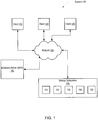
- FIG. 1 illustrates one aspect of a computer system 100.
- system 100 includes clients 110, 120, and 130, a storage subsystem 150, and a metadata server (MDS) 160 interconnected through a network 180.
- Clients 110, 120, and 130 are representative of any number of stationary or mobile computers such as desktop PCs, workstations, laptops, handheld computers, blade servers, etc.
- system 100 is described as including client and servers, in alternative modes of realisation the functions performed by clients and servers may be performed by peers in a peer-to-peer configuration or by a combination of clients, servers, and peers.
- the number and type of clients, servers, and storage devices is not limited to those shown in FIG. 1 .
- Almost any number and combination of servers, desktop, and mobile clients may be interconnected in system 100 via various combinations of modem banks, direct LAN connections, wireless connections, WAN links, etc.
- one or more clients may operate offline.
- individual client connection types may change as mobile users travel from place to place connecting, disconnecting, and reconnecting to system 100.
- Subsystem 150 may include individual storage devices 151-155.
- Storage devices 151-155 may be any of a variety of devices such as hard disks, server blades, or specialized devices, and may include a variety of memory devices such as RAM, Flash RAM, MEMS (MicroElectroMechanical Systems) storage, battery-backed RAM, and/or non-volatile RAM (NVRAM), etc.
- Client data may be stored within storage subsystem 150 in one of a variety of well-known layouts, such as RAID-1, RAID-DP, RAID-5, RAID-6, an erasure-coded data representation scheme, etc.
- Metadata describing the layout of data stored in storage subsystem 150 may be stored in MDS 160.
- a client may retrieve metadata from MDS 160 in order to identify a desired data storage location within storage subsystem 150.
- the functions of MDS 160 may be performed by any of a variety of components such as a volume configuration daemon or other storage management processes or servers depending on the type and layout of storage devices in storage subsystem 150.
- data may be stored in stripe units of a given size that depends on the capacity of individual storage device locations. These stripe units may be data objects, data portions, chunks, or any other segment of data suited to the individual storage devices.
- data stripe units may be of a different size.
- a client may convey data to a storage subsystem in stripe units of a size sufficient to fill a row across a number of storage devices arranged in an array.
- a client may also convey data in a size smaller than a stripe unit.
- stripe layouts are possible and contemplated, some of which are described in further detail below.
- one of the storage devices may be designated as a coordinating storage device.
- data may be stored without parity and the coordinating storage device in each row may coordinate storage of individual stripe units in the other storage devices in the row.
- the coordinating storage device may coordinate storage of data as well as coordinating parity computation. Numerous such alternatives are possible and are contemplated.
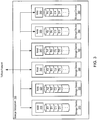
- storage subsystem 150 includes storage devices 210, 220, 230, 240, and 250, arranged in a RAID-5 layout.
- Each of storage devices 210, 220, 230, 240, and 250 includes a corresponding one of a set of temporary storage devices 215, 225, 235, 245, and 255 such as random access memory (RAM).
- storage devices 215, 225, 235, 245, and 255 may include non-volatile RAM (NVRAM). Data may be stored in stripe units striped in rows across the storage devices.
- NVRAM non-volatile RAM
- a parity storage device there may be a parity storage device and at least two data storage devices in each row, depending on the number of storage devices in the layout.
- a row may be defined as five stripe units each stored on one of storage devices 210, 220, 230, 240, and 250. Data may be striped across a portion of a row, a full row, or more than one row.
- Each row may include four data stripe units and a parity stripe unit. More particularly, the first row in the illustrated mode of realisation may include data stripe units A1, A2, A3, and A4 and parity stripe unit Ap stored in storage devices 210, 220, 230, 240, and 250, respectively.
- the second row may include data stripe units B1, B2, B3, and B4 and parity stripe unit Bp.
- the parity stripe unit Bp may be stored in storage device 240, while the data stripe units B1, B2, B3, and B4 may be stored in storage devices 210, 220, 230, and 250, respectively.
- the location of the parity stripe unit may be rotated among the storage devices on each successive row such as rows C and D, etc.
- a client may write data to a given row as if writing to a RAID-0 layout. More specifically, the client may be told that the data is striped such that for each RAID-5 row, the entire row is stored in the storage device holding the parity stripe unit that is designated for that row and the stripe size is equal to the combined size of the other, non-parity stripe units in the row. The client may then send data for the entire row to the parity storage device. The parity storage device may then forward the one or more portions of the data to the component data storage devices in the given row according to a process that will be described in more detail below.
- Each storage device may store the parity or data in its associated RAM until the new parity has been calculated, at which time the write operation may be committed and the data and parity may be transferred from RAM to the associated stripe unit locations.
- the storage subsystem may return a write completion message to the client after the data and parity stripe units are stored in RAM but before the data and parity are transferred from RAM to the associated stripe unit locations, minimizing write latency.
- a dataset that is larger than the capacity of a single row may be written through a series of write operations, each having a width of one row or less and each being addressed to the corresponding parity storage device in its respective row.
- Read operations may be handled in a similar manner. For example, a read request may also be sent from a client to the parity storage device in a given row. If the requested data is stored in the RAM associated with the parity storage device, the data may be retrieved and sent directly to the client in a response to the request. If the requested data is located on one or more other storage devices making up the row, the parity storage device may convey a corresponding read request to each storage device in the layout and receive in return a portion of the requested data. The parity storage device may then assemble the data and return it to the requesting client. If one or more portions of the data are located on a storage device that has failed, the parity storage device may retrieve the data from a sufficient number of the remaining storage devices making up the row and then reconstruct the missing data using the available data and parity.
- FIG. 3 is a detailed block diagram of an alternative aspect of storage subsystem 150.
- data may be stored in storage subsystem 150 as stripe units.
- Storage subsystem 150 includes storage devices 310, 320, 330, 340, 350, and 360, arranged in a RAID-6 layout.
- Each of storage devices 310, 320, 330, 340, 350, and 360 includes a corresponding one of a set of temporary storage devices 315, 325, 335, 345, 355, and 365 such as random access memory (RAM).
- RAM random access memory
- storage devices 315, 325, 335, 345, 355, and 365 may include Flash RAM, MEMS (MicroElectroMechanical Systems) storage, battery-backed RAM, non-volatile RAM (NVRAM), or other persistent storage devices. Data may be striped across stripe units in rows on the storage devices.
- MEMS MicroElectroMechanical Systems
- NVRAM non-volatile RAM
- a row may be defined as six stripe units each stored on one of storage devices 310, 320, 330, 340, 350, and 360.
- Data may be striped across a portion of a row, a full row, or more than one row.
- Each row may include four data stripe units and two parity stripe units.
- the first row in the illustrated mode of realisation may include data stripe units A1, A2, A3, and A4 and parity stripe units Ap and Aq stored in storage devices 310, 320, 330, 340, 350, and 360, respectively.
- the second row may include data stripe units B1, B2, B3, and B4 and parity stripe units Bp and Bq.
- the parity stripe unit Bp may be stored in storage device 340 and Bq may be stored storage device 350
- the data stripe units B1, B2, B3, and B4 may be stored in storage devices 310, 320, 330, and 360, respectively.
- the location of the parity storage devices may be rotated among the storage devices on each successive row such as rows C and D, etc.
- a client may write data to a given row as if writing to a RAID-0 layout. More specifically, the client may be told that data is striped such that for each RAID-6 row, the entire row is stored in the primary parity storage device that is designated for that row (designated above with suffix letter "p") and the client stripe unit is equal to the combined size of the other, non-parity stripe units in the row. The client may then send data for the entire row to the primary parity storage device. The primary parity storage device may then forward the data to the component data storage devices and the secondary parity storage device (designated above with suffix letter "q") in the given row according to a process that will be described in more detail below.
- Each storage device may store the parity and/or data in its associated RAM until the new parity has been calculated, at which time the write operation may be committed and the data and parity may be transferred from RAM to the associated storage device.
- the storage subsystem may return a write completion message to the client after the data and parity stripe units are stored in RAM but before the data and parity are transferred from RAM to the associated storage device, minimizing write latency.
- a dataset that is larger than the capacity of a single row may be written through a series of write operations, each having a width of one row or less and each being addressed to the corresponding primary parity storage device in its respective row.
- Read operations may be handled in a similar manner. For example, a read request may also be sent from a client to the primary parity storage device in a given row. If the requested data is stored in the RAM associated with the primary parity storage device, the data may be retrieved and sent directly to the client in a response to the request. If the requested data is located on one or more other storage devices making up the row, the primary parity storage device may convey a corresponding read request to each storage device in the layout and receive in return a portion of the requested data. The primary parity storage device may then assemble the data and return it to the requesting client.
- the primary parity storage device may retrieve the data from a sufficient number of the remaining storage devices making up the row and then reconstruct the missing data using the available data and parity. Note that in the case of RAID-6 and other layouts with a significant amount of redundancy, it may not be necessary to retrieve data from all of the data and parity storage units; a subset of the data portions may be sufficient to reconstruct the missing data.
- FIG. 4 is a detailed block diagram of yet another alternative aspect of storage subsystem 150.
- data may be stored in storage subsystem 150 as stripe units.
- Storage subsystem 150 includes storage devices 410 and 420 arranged in a RAID-1 layout. In the illustrated aspect, two storage devices are shown although in alternative RAID-1 layouts, more than two storage devices may be employed to increase the degree of redundancy.
- Each of storage devices 410 and 420 includes a corresponding one of a set of temporary storage devices 415 and 425 such as random access memory (RAM).
- RAM random access memory
- storage devices 415 and 425 may include Flash RAM, MEMS (MicroElectroMechanical Systems) storage, battery-backed RAM, non-volatile RAM (NVRAM), or other persistent storage devices.
- Flash RAM Flash RAM
- MEMS MicroElectroMechanical Systems
- NVRAM non-volatile RAM
- Data may be mirrored between storage devices 410 and 420. Data may be stored in a portion of a row, a full row, or more than one row. Each row may include a primary data stripe unit and a secondary stripe unit.
- the first row in the illustrated mode of realisation may include data stripe unit A1 stored in storage devices 410 and data stripe unit A2 stored in storage device 420.
- the second row may include data stripe units B1 stored in storage devices 410 and data stripe unit B2 stored in storage device 420, etc.
- the location of the primary data storage device may be varied among the storage devices, such as alternating for each successive row or any other pattern that causes storage devices 410 and 420 to share responsibility for storing the primary data stripe unit.
- a client may be told that the data is striped such that for each row of data, the data is stored in the primary device for the row.
- the client may send the data to the primary data storage device.
- the primary data storage device may then forward the data to the secondary data storage device in the given row.
- Each storage device may store the data in its associated RAM until the stripe unit is ready to be committed, providing an opportunity to sequence multiple write requests in the storage devices.
- the storage subsystem may return a write completion message to the client after the data stripe units are stored in RAM but before the data is transferred from RAM to the associated storage device, minimizing write latency.
- a dataset that is larger than the capacity of a single row may be written through a series of write operations, each having a width of one row or less and each being addressed to the corresponding primary data storage device in its respective row. It will be apparent to one of ordinary skill in the art that read operations may be similarly coordinated through the primary data storage device.
- an erasure-coding method may be employed.
- the coordinating storage device may perform a calculation on K blocks of received data to produce M erasure-coded blocks such that only N of M blocks are needed to recover the original data, where N ⁇ M and usually, K ⁇ N.
- FIG. 5 is a sequence diagram illustrating one aspect of a write transaction between a client and a row in a RAID-5 layout.
- a client 510 is shown writing data to a row consisting of data storage devices 501-504 and parity storage device 505. The data size is assumed to be equal to the capacity of one row.
- client 510 may send data to parity storage device 505 in message 520 including data to be stored in each of data storage devices 501-504.
- Client 510 need not be aware of the individual components of the row. Rather, client 510 may obtain the layout of the data storage including the location of parity storage device 505 and the size of the row from a metadata server.
- parity storage device 505 may calculate a new parity stripe unit and store it and/or the data in its associated temporary storage device (block 525).
- storage device 505 may begin a process of forwarding a portion of data to each of data storage devices 501-504 in messages 531-534, respectively.
- Each of storage devices 501-504 may store received data in its associated temporary storage device.
- storage device 505 may begin receiving acknowledgements from each of data storage devices 501-504 in messages 541-544, respectively. Once all of the acknowledgements have been received, at time t4, storage device 505 may send write complete message 550 to client 510. It is noted that write complete message 550 may not be sent to the client until the new data has been received and acknowledged by the data storage devices. This ensures that the data is redundantly stored and can be recovered in the event of the failure of any single device.
- storage device 505 may calculate the new parity values based on the new data in it's associated temporary storage device and write it to its parity stripe unit location (block 560) or, if the new parity is already stored in its associated temporary storage device, write the new parity values from its associated temporary storage device to its parity stripe unit location (block 560).
- each of data storage devices 501-504 may write data from its associated temporary storage device to its data stripe unit location, completing the write transaction (block 570).
- the parity storage device may detect the failure and send a message to the MDS to report the device failure.
- the parity storage device may send an error message to the client in lieu of a write completion message.
- the client may contact the MDS to report the error.
- the MDS may select a new storage device to replace the failed device and cause the contents of the stripe to be rebuilt based on the data stored in the remaining storage devices. If the device failure occurs before all of the devices in the row have received and stored their respective portions of data, a complete copy of the write data may be obtained from the parity storage device to complete the write operation.
- the MDS may recognize the failure of the parity storage device via conventional techniques such as polling, etc. and select a new storage device to replace it.
- the new parity storage device may recalculate parity values by reading the data from the other storage devices and storing the resulting values in the new storage location.
- parity recalculation may be performed by another device, such as the MDS.
- FIG. 6 is a sequence diagram illustrating one aspect of a write transaction between a client and a partial row in a RAID-5 layout.
- a client 610 is shown writing data to a row consisting of data storage devices 601-604 and parity storage device 605. The data size is assumed to be less than the capacity of one row.
- client 610 may send data to parity storage device 605 in message 620 including data to be stored in each of data storage devices 601 and 602.
- Client 610 need not be aware of the individual components of the row. Rather, client 610 may obtain or be told the layout of the data storage including the location of parity storage device 605 and the size of the data stripe unit needed to store the data from a metadata server.
- parity storage device 605 may store the data in its associated temporary storage device (block 625).
- storage device 605 may begin a process of forwarding a portion of the data to each of data storage devices 601 and 602 in messages 631 and 632, respectively. Each of storage devices 601 and 602 may store received data in its associated temporary storage device. At time t3, storage device 605 may begin receiving acknowledgements from each of data storage devices 601 and 602 in messages 641 and 642, respectively. Once all of the acknowledgements have been received, at time t4, storage device 605 may send write complete message 650 to client 610. Subsequently, at time t5, each of data storage devices 601 and 602 may send a copy of the old data that was stored in its associated data storage location to storage device 605 in messages 661 and 662, respectively.
- storage device 605 may send acknowledgements to each of data storage devices 601 and 602 in messages 671 and 672, respectively. Subsequently, at time t7, storage device 605 may use old data received from storage devices 601 and 602 and new data received from client 610 to compute new parity values, storing the results in its associated temporary storage device (block 682). At time t8, each of data storage devices 601 and 602 may write data from its associated temporary storage device to its data storage location (block 684). At time t9, storage device 605 may write the new parity values from its associated temporary storage device to its parity data storage location, completing the write transaction (block 686). As may be apparent to one or ordinary skill in the art, error recovery is similar to the process described above regarding a write transaction between a client and a complete row in a RAID-5 layout and therefore will not be described further.
- FIG. 7 is a sequence diagram illustrating one aspect of a write transaction between a client and a row in a RAID-6 layout.
- a client 710 is shown writing data to a row consisting of data storage devices 702-705 and parity storage devices 701 and 706.
- the data size is assumed to be equal to the capacity of one row.
- client 710 may send data to parity storage device 706 in message 720 including data to be stored in each of data storage devices 702-705.
- Client 710 need not be aware of the individual components of the row. Rather, client 710 may obtain or be told the layout of the data storage including the location of primary parity storage device 706 and the size of the row from a metadata server.
- primary parity storage device 706 may store the new data in its associated temporary storage device, calculate new primary parity values, and store the primary parity values in its associated temporary storage device (block 725).
- storage device 706 may send the new data to secondary parity storage device 701 in message 731.
- Secondary parity storage device 701 may store the new data in its associated temporary storage device.
- secondary parity storage device 701 may send an acknowledgment back to primary parity storage device 706 in message 732.
- storage device 706 may begin a process of forwarding a portion of data to each of data storage devices 705-702 in messages 741-744, respectively.
- Each of storage devices 705-702 may store received data in its associated temporary storage device.
- storage device 706 may begin receiving acknowledgements from each of data storage devices 702-705 in messages 751-754, respectively.
- storage device 706 may send a write complete message to storage device 701 in message 761.
- Storage device 701 may compute the value of the new parity stripe unit based on the data, set the state of the secondary parity stripe unit location to complete, and send an acknowledgement back to storage device 706 in message 762 at time t7.
- storage device 706 may send write complete message 770 to client 710. Subsequently, at time t9, storage devices 706 and 701 may write the new parity values from their associated temporary storage devices to their parity stripe unit locations (block 780). At time t10, each of data storage devices 702-705 may write data from its associated temporary storage device to its data stripe unit location, completing the write transaction (block 790).
- primary parity storage device 706 may compute new primary parity values at time t1 and secondary storage device 701 may compute new primary parity values at time t7
- storage devices 701 and 706 may compute new parity values from the new data at any time after receiving the new data and before time t9.
- either of the parity storage devices may detect the failure and send a message to the MDS to report the device failure.
- the primary parity storage device may send an error message to the client in lieu of a write completion message.
- the client may contact the MDS to report the error.
- the MDS may select a new storage device to replace the failed device and cause the contents of the stripe to be rebuilt based on the data stored in the remaining storage devices. If the device failure occurs before all of the devices in the row have received and stored their respective portions of data, a complete copy of the write data may be obtained from either of the parity storage devices to complete the write operation.
- the MDS may recognize the failure of the parity storage device via conventional techniques such as polling, etc. and select a new storage device to replace it.
- the new parity storage device may recalculate parity values by reading the data from the other storage devices and storing the resulting values in the new storage location.
- parity recalculation may be performed by another device, such as the MDS.
- FIG. 8 is a sequence diagram illustrating one aspect of a write transaction between a client and a partial row in a RAID-6 layout.
- a client 810 is shown writing data to a row consisting of data storage devices 802-805 and parity storage devices 801 and 806.
- the data size is assumed to be less than the capacity of one row.
- client 810 may send data to parity storage device 806 in message 820 including data to be stored in storage device 805.
- Client 810 need not be aware of the individual components of the row. Rather, client 810 may obtain or be told the layout of the data storage including the location of primary parity storage device 806 and the size of the data stripe unit needed to store the data from a metadata server.
- parity storage device 806 may store the data in its associated temporary storage device (block 825).
- storage device 806 may send the new data to secondary parity storage device 801 in message 831.
- Secondary parity storage device 801 may store the new data in its associated temporary storage device.
- secondary parity storage device 801 may send an acknowledgment back to primary parity storage device 806 in message 832.
- storage device 806 may begin a process of forwarding a portion of data to storage device 805 in message 841.
- Storage device 805 may store received data in its associated temporary storage device.
- storage device 806 may receive an acknowledgement from storage device 805 in message 842. Once the acknowledgement has been received, at time t6, storage device 805 may send write complete message 850 to client 810.
- data storage device 805 may send a copy of the old data that was stored in its associated data stripe unit location to storage device 806 in message 861 and to storage device 801 in message 862.
- storage device 806 may send an acknowledgement to data storage device 805 in message 871.
- storage device 801 may send an acknowledgement to data storage device 805 in message 872.
- storage device 806 may use old data received from storage device 805 and new data received from client 810 to compute new parity values, storing the results in its associated temporary storage device (block 882).
- data storage device 805 may write data from its associated temporary storage device to its associated data stripe unit location (block 884).
- storage device 806 may write the new parity values from its associated temporary storage device to its parity stripe unit location (block 886).
- storage device 801 may use old data received from storage device 805 and new data received from storage device 806 to compute new parity values, storing the results in its associated temporary storage device (block 892).
- storage device 801 may write the new parity values from its associated temporary storage device to its parity stripe unit location, completing the write transaction (block 894).
- error recovery is similar to the process described above regarding a write transaction between a client and a complete row in a RAID-6 layout and therefore will not be described further.
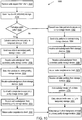
- FIG. 9 illustrates one aspect of a process 900 that may be used during a write transaction between a client and a row in a RAID-5 layout by a parity storage device in the RAID 5 layout.
- Process 900 may begin when the parity storage device receives a write request from a client (block 910).
- the primary parity storage device may store the new data in an associated temporary storage device (block 915). If the write request contains data for the full width of a RAID-5 row (decision block 920), then the parity storage device may calculate new parity values and store them along with the new data in an associated temporary storage device (block 932).
- the parity storage device may send portions of data to each of the data storage devices in the RAID-5 row (block 934) and wait for acknowledgements.
- the parity storage device may return a write completion message to the client (block 938).
- the parity storage device may write the new parity values from the associated temporary storage device to the parity stripe unit location within the parity storage device, completing the write operation (block 940).
- the parity storage device may send the new data from the write request to the corresponding storage devices that are data storage devices in its RAID-5 row (block 954) and wait for acknowledgements.
- the parity storage device may return a write completion message to the client (block 958). After the write completion message has been sent, the parity storage device may receive copies of old portions of data from each of the storage devices that are data storage devices in its RAID-5 row (block 960).
- the parity storage device may send acknowledgements to each of the corresponding storage devices that are data storage devices in its RAID-5 row (block 970) and calculate new parity values from the old parity values, the old portions of data, and the new portions of data, and write the resulting values into an associated temporary storage device (block 980). The parity storage device may then write the new parity values from the associated temporary storage device to the parity stripe unit location within the parity storage device, completing the write operation (block 940).
- FIG. 10 illustrates one aspect of a process 1000 that may be used during a write transaction between a client and a row in a RAID-6 layout by a primary parity storage device in the RAID-6 layout.
- Process 1000 may begin when the primary parity storage device receives a write request from a client (block 1010).
- the primary parity storage device may store the new data in an associated temporary storage device (block 1015). If the write request contains data for the full width of a RAID-6 row (decision block 1020), then the primary parity storage device may calculate new primary parity values and store them in an associated temporary storage device (block 1032). Subsequently, the primary parity storage device may send the new data to the secondary parity storage device and wait for acknowledgement (block 1034).
- the primary parity storage device may send portions of data to each of the data storage devices in the RAID-6 row (block 1038) and wait for acknowledgements.
- acknowledgements have been received from all of the data storage devices in the RAID-6 row (block 1040)
- the primary parity storage device may return a write completion message to the secondary parity storage device and wait for an acknowledgement (block 1042).
- primary parity storage device may return a write completion message to the client (block 1046). Once the write completion message has been sent, the primary parity storage device may write the new parity values from the associated temporary storage device to the primary parity stripe unit location within the primary parity storage device, completing the write operation (block 1050).
- the primary parity storage device may forward a copy of the new data to the storage device that is the secondary parity storage device in its RAID-6 row (block 1062).
- the primary parity storage device may also send the new data from the write request to the storage devices that are targeted data storage devices in its RAID-6 row (block 1064) and wait for acknowledgements.
- acknowledgements have been received from all of the data storage devices to which data was sent (block 1066) and from the secondary parity storage device in its RAID-6 row (block 1068), the primary parity storage device may return a write completion message to the client (block 1070).
- the primary parity storage device may receive copies of old portions of data from each of the storage devices that received new data in its RAID-6 row (block 1072).
- the primary parity storage device may send acknowledgements to each of the storage devices from which it received old portions of data (block 1074), calculate new parity values from the old parity values, the old portions of data, and the new portions of data, and write the resulting values into an associated temporary storage device (block 1076).
- the primary parity storage device may then write the new parity values from the associated temporary storage device to the parity stripe unit locations within the primary parity storage device, completing the write operation (block 1050).
- FIG. 11 illustrates one aspect of a process 1100 that may be used during a write transaction between a client and a row in a RAID-6 layout by a secondary parity storage device in the RAID-6 layout.
- Process 1100 may begin when the secondary parity storage device receives a message from the primary parity storage device in its RAID-6 row including new data (block 1110). If the message includes new data sufficient to fill a complete row in the RAID-6 layout (decision block 1120), the secondary parity storage device may store the new data in an associated temporary storage device (block 1132) and send an acknowledgement to the primary parity storage device (block 1134). Subsequently, the secondary parity storage device may receive a write completion message from the primary parity storage device in its RAID-6 row (block 1136).
- the secondary parity storage device may send an acknowledgement to the primary parity storage device (block 1138), calculate new secondary parity values, and write the new secondary parity values from the associated temporary storage device to the parity stripe unit location within the secondary parity storage device (block 1140).
- the secondary parity storage device may then write the new parity values from the associated temporary storage device to the parity stripe unit location within the secondary parity storage device (block 1170), completing the write operation (block 1180).
- the secondary parity storage device may store the new data portions in an associated temporary storage device (block 1160) and send an acknowledgement to the primary parity storage device (block 1162). Subsequently, the secondary parity storage device may receive a copy of the old portions of data for which new data is targeted from their respective data storage devices (block 1164). The secondary parity storage device may send an acknowledgement to each of the storage devices from which it received old portions of data (block 1166).
- the secondary parity storage device may calculate new secondary parity values from the old secondary parity values, the old portions of data, and the new portions of data, and write the resulting values into an associated temporary storage device (block 1168).
- the secondary parity storage device may then write the new parity values from the associated temporary storage device to the parity stripe unit location within the secondary parity storage device (block 1170), completing the write operation (block 1180).
- time t6 at which each of data storage devices 501-504 may write data from its associated temporary storage device to its data stripe unit location (block 570), may occur prior to time t5, at which storage device 505 may calculate the new parity values based on the new data in it's associated temporary storage device and write it to its parity stripe unit location (block 560).
- time t8 may occur before time t7 and in FIG. 8 , time t11 may occur before time t10, etc.
- FIG. 6 time t8 may occur before time t7 and in FIG. 8 , time t11 may occur before time t10, etc.
- the parity storage device may write the new parity values from the associated temporary storage device to the parity stripe unit location within the parity storage device, completing the write operation (block 940) before the write completion message has been sent to the client (block 938).
- the primary parity storage device may write the new parity values from the associated temporary storage device to the primary parity stripe unit location within the primary parity storage device (block 1050) before the write completion message has been sent to the client (block 1046), etc. Numerous such alternatives are possible and are contemplated. Additionally, some of the flow chart elements may not be present in various aspect, or may be combined with other elements. All such alternatives are contemplated.
- the above-described modes of realisation may comprise software.
- the program instructions that implement the methods and/or mechanisms may be conveyed or stored on a computer readable medium.
- a computer readable medium Numerous types of media which are configured to store program instructions are available and include hard disks, floppy disks, CD-ROM, DVD, flash memory, Programmable ROMs (PROM), random access memory (RAM), and various other forms of volatile or non-volatile storage.
Landscapes
- Engineering & Computer Science (AREA)
- Theoretical Computer Science (AREA)
- Quality & Reliability (AREA)
- Physics & Mathematics (AREA)
- General Engineering & Computer Science (AREA)
- General Physics & Mathematics (AREA)
- Information Retrieval, Db Structures And Fs Structures Therefor (AREA)
- Techniques For Improving Reliability Of Storages (AREA)
Claims (16)
- Computersystem, das Folgendes umfasst:einen Client (110) undein Speicheruntersystem (150), das an den Client gekoppelt ist, wobei das Speicheruntersystem eine Vielzahl von Datenspeicherorten umfasst, die als Zeilen und Spalten in einem Array adressierbar sind, wobei das Array ein RAID-Layout verwendet, wobei jede Spalte des Arrays eine separate Speichervorrichtung einer Vielzahl von Speichervorrichtungen (210, 220, 230, 240, 250) umfasst;wobei mindestens zwei der Vielzahl von Speichervorrichtungen im Array als koordinierende Speichervorrichtungen für verschiedene Zeilen des Arrays vorbestimmt sind und wobei für eine entsprechende Zeile im Array nur eine einzige Speichervorrichtung (706) ausgelegt ist, zu einer gegebenen Zeit als koordinierende Speichervorrichtung zu fungieren;wobei für eine gegebene Zeile im Array eine koordinierende Speichervorrichtung für Folgendes ausgelegt ist:Empfangen von Daten vom Client zur Speicherung in der gegebenen Zeile;Weiterleiten eines oder mehrerer Abschnitte der empfangenen Daten zu einer oder mehreren anderen der Vielzahl von Speichervorrichtungen undKoordinieren der Berechnung und Speicherung redundanter Daten in der gegebenen Zeile.
- System nach Anspruch 1, wobei in Reaktion auf das Empfangen eines Abschnitts von Daten, die zur Speicherung an einem gegebenen Speicherort einer bestimmten Speichervorrichtung vorgesehen sind, eine nichtflüchtige temporäre Speichervorrichtung, die mit der bestimmten Speichervorrichtung verknüpft ist, dazu ausgelegt ist, den empfangenen Abschnitt von Daten zu puffern, bevor der empfangene Abschnitt von Daten am gegebenen Speicherort gespeichert wird.
- System nach Anspruch 2, wobei die koordinierende Speichervorrichtung ferner dazu ausgelegt ist, in Reaktion auf das Detektieren, dass eine oder mehrere Kopien des einen oder der mehreren Abschnitte von Daten in nichtflüchtigen temporären Speichervorrichtungen gepuffert wurden, die mit einer oder mehreren Speichervorrichtungen der gegebenen Zeile verknüpft sind, eine Schreibabschlussnachricht an den Client zu übermitteln.
- System nach einem der vorhergehenden Ansprüche, wobei das System für Folgendes ausgelegt ist:Detektieren eines Ausfalls mindestens einer der Vielzahl von Speichervorrichtungen undwenn der Ausfall erfolgte, nachdem eine Schreibabschlussnachricht übermittelt und bevor mindestens ein Abschnitt der gepufferten Daten von den nichtflüchtigen temporären Speichervorrichtungen zu verknüpften Speicherorten in einer gegebenen Zeile übertragen wurde, Neuaufbauen der in der gegebenen Zeile gespeicherten Daten einschließlich mindestens einiger redundanter Daten aus den Daten, die in den nichtflüchtigen temporären Speichervorrichtungen gespeichert waren; undwenn der Ausfall erfolgte, nachdem die gepufferten Daten von den nichtflüchtigen temporären Speichervorrichtungen zu verknüpften Speicherorten in einer gegebenen Zeile übertragen wurden, Neuaufbauen der in der gegebenen Zeile gespeicherten Daten einschließlich der mindestens einigen redundanten Daten aus den Daten, die in der gegebenen Zeile gespeichert waren.
- System nach einem der vorhergehenden Ansprüche, wobei die koordinierende Speichervorrichtung ferner dazu ausgelegt ist, erste Paritätswerte einer Vielzahl von Abschnitten von Daten zu berechnen, die in der gegebenen Zeile gespeichert sind.
- System nach Anspruch 5, wobei in Reaktion auf das Detektieren, dass Daten zum Berechnen von Paritätswerten von der koordinierenden Speichervorrichtung für die gegebene Zeile empfangen wurden, nichtflüchtige temporäre Speichervorrichtungen, die mit jeder der Vielzahl von Speichervorrichtungen verknüpft sind, ferner dazu ausgelegt sind, einen gepufferten Abschnitt von Daten zu einem Speicherort in der gegebenen Zeile der verknüpften Speichervorrichtung zu übertragen.
- System nach Anspruch 5,
wobei für eine gegebene Zeile im Array die koordinierende Speichervorrichtung ferner dazu ausgelegt ist, den einen oder die mehreren empfangenen Abschnitte von Daten zu einer zweiten der separaten Speichervorrichtungen in der gegebenen Zeile weiterzuleiten; und
wobei die zweite der separaten Speichervorrichtungen dazu ausgelegt ist, unter Verwendung der weitergeleiteten Abschnitte von Daten zweite Paritätswerte einer Vielzahl von Abschnitten von Daten zu berechnen, die in der gegebenen Zeile gespeichert sind. - System nach einem der vorhergehenden Ansprüche, wobei das Array mindestens eines von einem RAID-1-Layout, einem RAID-5-Layout, einem RAID-6-Layout oder ein anderes löschcodiertes Layout nutzt.
- Verfahren zum Speichern von Daten an Speicherorten eines Arrays, das eine Vielzahl von Speichervorrichtungen (210, 220, 230, 240, 250) umfasst, wobei das Array ein RAID-Layout nutzt, wobei die Speicherorte als Zeilen und Spalten adressierbar sind, wobei jede Spalte des Arrays eine separate Speichervorrichtung umfasst, wobei das Verfahren Folgendes umfasst:Benennen mindestens zweier der Vielzahl von Speichervorrichtungen im Array als koordinierende Speichervorrichtungen für verschiedene Zeilen des Arrays, wobei für eine entsprechende Zeile im Array nur eine einzige Speichervorrichtung (706) ausgelegt ist, zu einer gegebenen Zeit als koordinierende Speichervorrichtung zu fungieren;Empfangen von Daten an einer vorbestimmten der Vielzahl von Speichervorrichtungen, die als eine koordinierende Speichervorrichtung für eine gegebene Zeile des Arrays benannt ist, wobei die Daten zur Speicherung in der gegebenen Zeile vorgesehen sind; undWeiterleiten eines oder mehrerer Abschnitte von Daten von der vorbestimmten koordinierenden Speichervorrichtung zu einer oder mehreren anderen der Vielzahl von Speichervorrichtungen.
- Verfahren nach Anspruch 9, wobei in Reaktion auf das Empfangen eines Abschnitts von Daten, die zur Speicherung an einem gegebenen Speicherort einer bestimmten Speichervorrichtung vorgesehen sind, das Verfahren ferner eine nichtflüchtige temporäre Speichervorrichtung umfasst, die mit der bestimmten Speichervorrichtung verknüpft ist und den empfangenen Abschnitt von Daten puffert, bevor der empfangene Abschnitt von Daten am gegebenen Speicherort gespeichert wird.
- Verfahren nach Anspruch 10, das ferner in Reaktion auf das Detektieren, dass eine oder mehrere Kopien des einen oder der mehreren Abschnitte von Daten in nichtflüchtigen temporären Speichervorrichtungen gepuffert wurden, die mit einer oder mehreren Speichervorrichtungen der gegebenen Zeile verknüpft sind, das Übermitteln einer Schreibabschlussnachricht zum Client umfasst.
- Verfahren nach Anspruch 11, das ferner Folgendes umfasst:Detektieren eines Ausfalls mindestens einer der Vielzahl von Speichervorrichtungen undwenn der Ausfall erfolgte, nachdem eine Schreibabschlussnachricht übermittelt und bevor mindestens ein Abschnitt der gepufferten Daten von den nichtflüchtigen temporären Speichervorrichtungen zu verknüpften Speicherorten in einer gegebenen Zeile übertragen wurde, Neuaufbauen der in der gegebenen Zeile gespeicherten Daten einschließlich der mindestens einigen redundanten Daten aus den Daten, die in den nichtflüchtigen temporären Speichervorrichtungen gespeichert waren; undwenn der Ausfall erfolgte, nachdem die gepufferten Daten von den nichtflüchtigen temporären Speichervorrichtungen zu verknüpften Speicherorten in einer gegebenen Zeile übertragen wurden, Neuaufbauen der in der gegebenen Zeile gespeicherten Daten einschließlich der mindestens einigen redundanten Daten aus den Daten, die in der gegebenen Zeile gespeichert waren.
- Verfahren nach einem der Ansprüche 9 bis 12, das ferner das Berechnen von Paritätswerten einer Vielzahl von Abschnitten von Daten, die in der gegebenen Zeile gespeichert sind, durch die koordinierende Speichervorrichtung umfasst.
- Verfahren nach Anspruch 13, wobei in Reaktion auf das Detektieren, dass Daten zum Berechnen von Paritätswerten von der koordinierenden Speichervorrichtung für die gegebene Zeile empfangen wurden, das Verfahren ferner nichtflüchtige temporäre Speichervorrichtungen umfasst, die mit jeder der Vielzahl von Speichervorrichtungen verknüpft sind und einen gepufferten Abschnitt von Daten zu einem Speicherort in der gegebenen Zeile der verknüpften Speichervorrichtung übertragen.
- Verfahren nach einem der Ansprüche 9 bis 14, wobei das Array mindestens eines von einem RAID-1-Layout, einem RAID-5-Layout, einem RAID-6-Layout oder ein anderes löschcodiertes Layout nutzt.
- Vielzahl von computerlesbaren Speichermedien, auf denen Computeranweisungen gespeichert sind, die von einem Prozessor ausführbar sind, um das Verfahren nach einem der Ansprüche 9 bis 15 durchzuführen.
Applications Claiming Priority (2)
| Application Number | Priority Date | Filing Date | Title |
|---|---|---|---|
| US97630207P | 2007-09-28 | 2007-09-28 | |
| US12/208,882 US7827439B2 (en) | 2007-09-28 | 2008-09-11 | System and method of redundantly storing and retrieving data with cooperating storage devices |
Publications (3)
| Publication Number | Publication Date |
|---|---|
| EP2096542A2 EP2096542A2 (de) | 2009-09-02 |
| EP2096542A3 EP2096542A3 (de) | 2010-07-28 |
| EP2096542B1 true EP2096542B1 (de) | 2018-02-21 |
Family
ID=40509762
Family Applications (1)
| Application Number | Title | Priority Date | Filing Date |
|---|---|---|---|
| EP08164691.1A Active EP2096542B1 (de) | 2007-09-28 | 2008-09-19 | System und Verfahren zur redundanten Speicherung und Datenrückgewinnung mit kooperierenden Speichervorrichtungen |
Country Status (4)
| Country | Link |
|---|---|
| US (1) | US7827439B2 (de) |
| EP (1) | EP2096542B1 (de) |
| JP (1) | JP5254725B2 (de) |
| CN (1) | CN101415024B (de) |
Families Citing this family (214)
| Publication number | Priority date | Publication date | Assignee | Title |
|---|---|---|---|---|
| US8200930B2 (en) | 2008-10-14 | 2012-06-12 | Digital Lifeboat, Inc. | Interacting with data in hidden storage |
| US20100100587A1 (en) * | 2008-10-14 | 2010-04-22 | Digital Lifeboat, Inc. | Systems and methods for a data management recovery in a peer-to-peer network |
| WO2010049928A1 (en) * | 2008-10-27 | 2010-05-06 | Kaminario Tehnologies Ltd. | System and methods for raid writing and asynchronous parity computation |
| US20100138717A1 (en) * | 2008-12-02 | 2010-06-03 | Microsoft Corporation | Fork codes for erasure coding of data blocks |
| US8732396B2 (en) * | 2009-06-08 | 2014-05-20 | Lsi Corporation | Method and apparatus for protecting the integrity of cached data in a direct-attached storage (DAS) system |
| US9501782B2 (en) * | 2010-03-20 | 2016-11-22 | Arthur Everett Felgate | Monitoring system |
| US9460448B2 (en) | 2010-03-20 | 2016-10-04 | Nimbelink Corp. | Environmental monitoring system which leverages a social networking service to deliver alerts to mobile phones or devices |
| US8468135B2 (en) * | 2010-04-14 | 2013-06-18 | International Business Machines Corporation | Optimizing data transmission bandwidth consumption over a wide area network |
| US11614893B2 (en) | 2010-09-15 | 2023-03-28 | Pure Storage, Inc. | Optimizing storage device access based on latency |
| US12008266B2 (en) | 2010-09-15 | 2024-06-11 | Pure Storage, Inc. | Efficient read by reconstruction |
| US8589640B2 (en) | 2011-10-14 | 2013-11-19 | Pure Storage, Inc. | Method for maintaining multiple fingerprint tables in a deduplicating storage system |
| CN102819406A (zh) * | 2012-07-04 | 2012-12-12 | 浙江宇视科技有限公司 | 一种前端数据存储方法及装置 |
| US9037799B2 (en) * | 2013-02-11 | 2015-05-19 | Avago Technologies General Ip (Singapore) Pte Ltd | Rebuild of redundant secondary storage cache |
| US9298398B2 (en) | 2013-04-16 | 2016-03-29 | International Business Machines Corporation | Fine-grained control of data placement |
| US9104597B2 (en) * | 2013-04-16 | 2015-08-11 | International Business Machines Corporation | Destaging cache data using a distributed freezer |
| US9298617B2 (en) | 2013-04-16 | 2016-03-29 | International Business Machines Corporation | Parallel destaging with replicated cache pinning |
| US9423981B2 (en) | 2013-04-16 | 2016-08-23 | International Business Machines Corporation | Logical region allocation with immediate availability |
| US9329938B2 (en) | 2013-04-16 | 2016-05-03 | International Business Machines Corporation | Essential metadata replication |
| US9619404B2 (en) | 2013-04-16 | 2017-04-11 | International Business Machines Corporation | Backup cache with immediate availability |
| US9104332B2 (en) | 2013-04-16 | 2015-08-11 | International Business Machines Corporation | Managing metadata and data for a logical volume in a distributed and declustered system |
| US10574754B1 (en) | 2014-06-04 | 2020-02-25 | Pure Storage, Inc. | Multi-chassis array with multi-level load balancing |
| US9612952B2 (en) | 2014-06-04 | 2017-04-04 | Pure Storage, Inc. | Automatically reconfiguring a storage memory topology |
| US12341848B2 (en) | 2014-06-04 | 2025-06-24 | Pure Storage, Inc. | Distributed protocol endpoint services for data storage systems |
| US9213485B1 (en) | 2014-06-04 | 2015-12-15 | Pure Storage, Inc. | Storage system architecture |
| US9367243B1 (en) | 2014-06-04 | 2016-06-14 | Pure Storage, Inc. | Scalable non-uniform storage sizes |
| US11652884B2 (en) | 2014-06-04 | 2023-05-16 | Pure Storage, Inc. | Customized hash algorithms |
| US8850108B1 (en) | 2014-06-04 | 2014-09-30 | Pure Storage, Inc. | Storage cluster |
| US9836234B2 (en) | 2014-06-04 | 2017-12-05 | Pure Storage, Inc. | Storage cluster |
| US11399063B2 (en) | 2014-06-04 | 2022-07-26 | Pure Storage, Inc. | Network authentication for a storage system |
| US9218244B1 (en) * | 2014-06-04 | 2015-12-22 | Pure Storage, Inc. | Rebuilding data across storage nodes |
| US12137140B2 (en) | 2014-06-04 | 2024-11-05 | Pure Storage, Inc. | Scale out storage platform having active failover |
| US9003144B1 (en) | 2014-06-04 | 2015-04-07 | Pure Storage, Inc. | Mechanism for persisting messages in a storage system |
| US11960371B2 (en) | 2014-06-04 | 2024-04-16 | Pure Storage, Inc. | Message persistence in a zoned system |
| US11068363B1 (en) | 2014-06-04 | 2021-07-20 | Pure Storage, Inc. | Proactively rebuilding data in a storage cluster |
| US11886308B2 (en) | 2014-07-02 | 2024-01-30 | Pure Storage, Inc. | Dual class of service for unified file and object messaging |
| US9836245B2 (en) | 2014-07-02 | 2017-12-05 | Pure Storage, Inc. | Non-volatile RAM and flash memory in a non-volatile solid-state storage |
| US11604598B2 (en) | 2014-07-02 | 2023-03-14 | Pure Storage, Inc. | Storage cluster with zoned drives |
| US8868825B1 (en) | 2014-07-02 | 2014-10-21 | Pure Storage, Inc. | Nonrepeating identifiers in an address space of a non-volatile solid-state storage |
| US9021297B1 (en) | 2014-07-02 | 2015-04-28 | Pure Storage, Inc. | Redundant, fault-tolerant, distributed remote procedure call cache in a storage system |
| US10114757B2 (en) | 2014-07-02 | 2018-10-30 | Pure Storage, Inc. | Nonrepeating identifiers in an address space of a non-volatile solid-state storage |
| US9811677B2 (en) | 2014-07-03 | 2017-11-07 | Pure Storage, Inc. | Secure data replication in a storage grid |
| US9747229B1 (en) | 2014-07-03 | 2017-08-29 | Pure Storage, Inc. | Self-describing data format for DMA in a non-volatile solid-state storage |
| US12182044B2 (en) | 2014-07-03 | 2024-12-31 | Pure Storage, Inc. | Data storage in a zone drive |
| US10853311B1 (en) | 2014-07-03 | 2020-12-01 | Pure Storage, Inc. | Administration through files in a storage system |
| US8874836B1 (en) | 2014-07-03 | 2014-10-28 | Pure Storage, Inc. | Scheduling policy for queues in a non-volatile solid-state storage |
| US10983859B2 (en) | 2014-08-07 | 2021-04-20 | Pure Storage, Inc. | Adjustable error correction based on memory health in a storage unit |
| US9558069B2 (en) | 2014-08-07 | 2017-01-31 | Pure Storage, Inc. | Failure mapping in a storage array |
| US12158814B2 (en) | 2014-08-07 | 2024-12-03 | Pure Storage, Inc. | Granular voltage tuning |
| US9495255B2 (en) | 2014-08-07 | 2016-11-15 | Pure Storage, Inc. | Error recovery in a storage cluster |
| US9766972B2 (en) | 2014-08-07 | 2017-09-19 | Pure Storage, Inc. | Masking defective bits in a storage array |
| US9483346B2 (en) | 2014-08-07 | 2016-11-01 | Pure Storage, Inc. | Data rebuild on feedback from a queue in a non-volatile solid-state storage |
| US9082512B1 (en) | 2014-08-07 | 2015-07-14 | Pure Storage, Inc. | Die-level monitoring in a storage cluster |
| US10079711B1 (en) | 2014-08-20 | 2018-09-18 | Pure Storage, Inc. | Virtual file server with preserved MAC address |
| US9948615B1 (en) | 2015-03-16 | 2018-04-17 | Pure Storage, Inc. | Increased storage unit encryption based on loss of trust |
| US11294893B2 (en) | 2015-03-20 | 2022-04-05 | Pure Storage, Inc. | Aggregation of queries |
| US9940234B2 (en) | 2015-03-26 | 2018-04-10 | Pure Storage, Inc. | Aggressive data deduplication using lazy garbage collection |
| US10082985B2 (en) | 2015-03-27 | 2018-09-25 | Pure Storage, Inc. | Data striping across storage nodes that are assigned to multiple logical arrays |
| US10178169B2 (en) | 2015-04-09 | 2019-01-08 | Pure Storage, Inc. | Point to point based backend communication layer for storage processing |
| US9672125B2 (en) | 2015-04-10 | 2017-06-06 | Pure Storage, Inc. | Ability to partition an array into two or more logical arrays with independently running software |
| US12379854B2 (en) | 2015-04-10 | 2025-08-05 | Pure Storage, Inc. | Two or more logical arrays having zoned drives |
| US10140149B1 (en) | 2015-05-19 | 2018-11-27 | Pure Storage, Inc. | Transactional commits with hardware assists in remote memory |
| US9817576B2 (en) | 2015-05-27 | 2017-11-14 | Pure Storage, Inc. | Parallel update to NVRAM |
| US10846275B2 (en) | 2015-06-26 | 2020-11-24 | Pure Storage, Inc. | Key management in a storage device |
| US10983732B2 (en) | 2015-07-13 | 2021-04-20 | Pure Storage, Inc. | Method and system for accessing a file |
| US11232079B2 (en) | 2015-07-16 | 2022-01-25 | Pure Storage, Inc. | Efficient distribution of large directories |
| US10498820B2 (en) * | 2015-08-06 | 2019-12-03 | Koc University | Efficient dynamic proofs of retrievability |
| US10108355B2 (en) | 2015-09-01 | 2018-10-23 | Pure Storage, Inc. | Erase block state detection |
| US10157112B2 (en) | 2015-09-03 | 2018-12-18 | Toshiba Memory Corporation | Storage device |
| US11341136B2 (en) | 2015-09-04 | 2022-05-24 | Pure Storage, Inc. | Dynamically resizable structures for approximate membership queries |
| US11269884B2 (en) | 2015-09-04 | 2022-03-08 | Pure Storage, Inc. | Dynamically resizable structures for approximate membership queries |
| US10762069B2 (en) | 2015-09-30 | 2020-09-01 | Pure Storage, Inc. | Mechanism for a system where data and metadata are located closely together |
| US12271359B2 (en) | 2015-09-30 | 2025-04-08 | Pure Storage, Inc. | Device host operations in a storage system |
| US10853266B2 (en) | 2015-09-30 | 2020-12-01 | Pure Storage, Inc. | Hardware assisted data lookup methods |
| US9768953B2 (en) | 2015-09-30 | 2017-09-19 | Pure Storage, Inc. | Resharing of a split secret |
| US9843453B2 (en) | 2015-10-23 | 2017-12-12 | Pure Storage, Inc. | Authorizing I/O commands with I/O tokens |
| EP3173930A1 (de) * | 2015-11-25 | 2017-05-31 | Strato Scale Ltd. | Datenplatzierung auf basis von wahrscheinlichkeiten von korrelierten speichervorrichtungsfehlern |
| US10007457B2 (en) | 2015-12-22 | 2018-06-26 | Pure Storage, Inc. | Distributed transactions with token-associated execution |
| US10133503B1 (en) | 2016-05-02 | 2018-11-20 | Pure Storage, Inc. | Selecting a deduplication process based on a difference between performance metrics |
| US10261690B1 (en) | 2016-05-03 | 2019-04-16 | Pure Storage, Inc. | Systems and methods for operating a storage system |
| US11231858B2 (en) | 2016-05-19 | 2022-01-25 | Pure Storage, Inc. | Dynamically configuring a storage system to facilitate independent scaling of resources |
| US12235743B2 (en) | 2016-06-03 | 2025-02-25 | Pure Storage, Inc. | Efficient partitioning for storage system resiliency groups |
| US10691567B2 (en) | 2016-06-03 | 2020-06-23 | Pure Storage, Inc. | Dynamically forming a failure domain in a storage system that includes a plurality of blades |
| US10114694B2 (en) * | 2016-06-07 | 2018-10-30 | Storart Technology Co. Ltd. | Method and controller for recovering data in event of program failure and storage system using the same |
| US11706895B2 (en) | 2016-07-19 | 2023-07-18 | Pure Storage, Inc. | Independent scaling of compute resources and storage resources in a storage system |
| US11861188B2 (en) | 2016-07-19 | 2024-01-02 | Pure Storage, Inc. | System having modular accelerators |
| US12210476B2 (en) | 2016-07-19 | 2025-01-28 | Pure Storage, Inc. | Disaggregated compute resources and storage resources in a storage system |
| US9672905B1 (en) | 2016-07-22 | 2017-06-06 | Pure Storage, Inc. | Optimize data protection layouts based on distributed flash wear leveling |
| US12487884B1 (en) | 2017-10-31 | 2025-12-02 | Pure Storage, Inc. | Writing parity data to a targeted wordline |
| US10768819B2 (en) | 2016-07-22 | 2020-09-08 | Pure Storage, Inc. | Hardware support for non-disruptive upgrades |
| US11449232B1 (en) | 2016-07-22 | 2022-09-20 | Pure Storage, Inc. | Optimal scheduling of flash operations |
| US11080155B2 (en) | 2016-07-24 | 2021-08-03 | Pure Storage, Inc. | Identifying error types among flash memory |
| US11604690B2 (en) | 2016-07-24 | 2023-03-14 | Pure Storage, Inc. | Online failure span determination |
| US10216420B1 (en) | 2016-07-24 | 2019-02-26 | Pure Storage, Inc. | Calibration of flash channels in SSD |
| US10366004B2 (en) | 2016-07-26 | 2019-07-30 | Pure Storage, Inc. | Storage system with elective garbage collection to reduce flash contention |
| US11797212B2 (en) | 2016-07-26 | 2023-10-24 | Pure Storage, Inc. | Data migration for zoned drives |
| US11886334B2 (en) | 2016-07-26 | 2024-01-30 | Pure Storage, Inc. | Optimizing spool and memory space management |
| US10203903B2 (en) | 2016-07-26 | 2019-02-12 | Pure Storage, Inc. | Geometry based, space aware shelf/writegroup evacuation |
| US11734169B2 (en) | 2016-07-26 | 2023-08-22 | Pure Storage, Inc. | Optimizing spool and memory space management |
| US11422719B2 (en) | 2016-09-15 | 2022-08-23 | Pure Storage, Inc. | Distributed file deletion and truncation |
| US12039165B2 (en) | 2016-10-04 | 2024-07-16 | Pure Storage, Inc. | Utilizing allocation shares to improve parallelism in a zoned drive storage system |
| US10756816B1 (en) | 2016-10-04 | 2020-08-25 | Pure Storage, Inc. | Optimized fibre channel and non-volatile memory express access |
| US10613974B2 (en) | 2016-10-04 | 2020-04-07 | Pure Storage, Inc. | Peer-to-peer non-volatile random-access memory |
| US20180095788A1 (en) | 2016-10-04 | 2018-04-05 | Pure Storage, Inc. | Scheduling operations for a storage device |
| US9747039B1 (en) | 2016-10-04 | 2017-08-29 | Pure Storage, Inc. | Reservations over multiple paths on NVMe over fabrics |
| US10481798B2 (en) | 2016-10-28 | 2019-11-19 | Pure Storage, Inc. | Efficient flash management for multiple controllers |
| US10359942B2 (en) | 2016-10-31 | 2019-07-23 | Pure Storage, Inc. | Deduplication aware scalable content placement |
| US11550481B2 (en) | 2016-12-19 | 2023-01-10 | Pure Storage, Inc. | Efficiently writing data in a zoned drive storage system |
| US11307998B2 (en) | 2017-01-09 | 2022-04-19 | Pure Storage, Inc. | Storage efficiency of encrypted host system data |
| US9747158B1 (en) | 2017-01-13 | 2017-08-29 | Pure Storage, Inc. | Intelligent refresh of 3D NAND |
| US11955187B2 (en) | 2017-01-13 | 2024-04-09 | Pure Storage, Inc. | Refresh of differing capacity NAND |
| US10255134B2 (en) | 2017-01-20 | 2019-04-09 | Samsung Electronics Co., Ltd. | Control plane method and apparatus for providing erasure code protection across multiple storage devices |
| US10979223B2 (en) | 2017-01-31 | 2021-04-13 | Pure Storage, Inc. | Separate encryption for a solid-state drive |
| US10528488B1 (en) | 2017-03-30 | 2020-01-07 | Pure Storage, Inc. | Efficient name coding |
| US11016667B1 (en) | 2017-04-05 | 2021-05-25 | Pure Storage, Inc. | Efficient mapping for LUNs in storage memory with holes in address space |
| US10516645B1 (en) | 2017-04-27 | 2019-12-24 | Pure Storage, Inc. | Address resolution broadcasting in a networked device |
| US10141050B1 (en) | 2017-04-27 | 2018-11-27 | Pure Storage, Inc. | Page writes for triple level cell flash memory |
| US10944671B2 (en) | 2017-04-27 | 2021-03-09 | Pure Storage, Inc. | Efficient data forwarding in a networked device |
| US11467913B1 (en) | 2017-06-07 | 2022-10-11 | Pure Storage, Inc. | Snapshots with crash consistency in a storage system |
| US11138103B1 (en) | 2017-06-11 | 2021-10-05 | Pure Storage, Inc. | Resiliency groups |
| US11782625B2 (en) | 2017-06-11 | 2023-10-10 | Pure Storage, Inc. | Heterogeneity supportive resiliency groups |
| US11947814B2 (en) | 2017-06-11 | 2024-04-02 | Pure Storage, Inc. | Optimizing resiliency group formation stability |
| US10425473B1 (en) | 2017-07-03 | 2019-09-24 | Pure Storage, Inc. | Stateful connection reset in a storage cluster with a stateless load balancer |
| US10402266B1 (en) | 2017-07-31 | 2019-09-03 | Pure Storage, Inc. | Redundant array of independent disks in a direct-mapped flash storage system |
| US10831935B2 (en) | 2017-08-31 | 2020-11-10 | Pure Storage, Inc. | Encryption management with host-side data reduction |
| US10210926B1 (en) | 2017-09-15 | 2019-02-19 | Pure Storage, Inc. | Tracking of optimum read voltage thresholds in nand flash devices |
| US10877827B2 (en) | 2017-09-15 | 2020-12-29 | Pure Storage, Inc. | Read voltage optimization |
| US10789211B1 (en) | 2017-10-04 | 2020-09-29 | Pure Storage, Inc. | Feature-based deduplication |
| US10884919B2 (en) | 2017-10-31 | 2021-01-05 | Pure Storage, Inc. | Memory management in a storage system |
| US11024390B1 (en) | 2017-10-31 | 2021-06-01 | Pure Storage, Inc. | Overlapping RAID groups |
| US11354058B2 (en) | 2018-09-06 | 2022-06-07 | Pure Storage, Inc. | Local relocation of data stored at a storage device of a storage system |
| US11520514B2 (en) | 2018-09-06 | 2022-12-06 | Pure Storage, Inc. | Optimized relocation of data based on data characteristics |
| US10496330B1 (en) | 2017-10-31 | 2019-12-03 | Pure Storage, Inc. | Using flash storage devices with different sized erase blocks |
| US10515701B1 (en) | 2017-10-31 | 2019-12-24 | Pure Storage, Inc. | Overlapping raid groups |
| US12067274B2 (en) | 2018-09-06 | 2024-08-20 | Pure Storage, Inc. | Writing segments and erase blocks based on ordering |
| US12032848B2 (en) | 2021-06-21 | 2024-07-09 | Pure Storage, Inc. | Intelligent block allocation in a heterogeneous storage system |
| US10545687B1 (en) | 2017-10-31 | 2020-01-28 | Pure Storage, Inc. | Data rebuild when changing erase block sizes during drive replacement |
| US10860475B1 (en) | 2017-11-17 | 2020-12-08 | Pure Storage, Inc. | Hybrid flash translation layer |
| US10990566B1 (en) | 2017-11-20 | 2021-04-27 | Pure Storage, Inc. | Persistent file locks in a storage system |
| US10929053B2 (en) | 2017-12-08 | 2021-02-23 | Pure Storage, Inc. | Safe destructive actions on drives |
| US10719265B1 (en) | 2017-12-08 | 2020-07-21 | Pure Storage, Inc. | Centralized, quorum-aware handling of device reservation requests in a storage system |
| US10929031B2 (en) | 2017-12-21 | 2021-02-23 | Pure Storage, Inc. | Maximizing data reduction in a partially encrypted volume |
| US10467527B1 (en) | 2018-01-31 | 2019-11-05 | Pure Storage, Inc. | Method and apparatus for artificial intelligence acceleration |
| US10976948B1 (en) | 2018-01-31 | 2021-04-13 | Pure Storage, Inc. | Cluster expansion mechanism |
| US10733053B1 (en) | 2018-01-31 | 2020-08-04 | Pure Storage, Inc. | Disaster recovery for high-bandwidth distributed archives |
| US11036596B1 (en) | 2018-02-18 | 2021-06-15 | Pure Storage, Inc. | System for delaying acknowledgements on open NAND locations until durability has been confirmed |
| US11494109B1 (en) | 2018-02-22 | 2022-11-08 | Pure Storage, Inc. | Erase block trimming for heterogenous flash memory storage devices |
| US12393340B2 (en) | 2019-01-16 | 2025-08-19 | Pure Storage, Inc. | Latency reduction of flash-based devices using programming interrupts |
| US11416144B2 (en) | 2019-12-12 | 2022-08-16 | Pure Storage, Inc. | Dynamic use of segment or zone power loss protection in a flash device |
| US11847331B2 (en) | 2019-12-12 | 2023-12-19 | Pure Storage, Inc. | Budgeting open blocks of a storage unit based on power loss prevention |
| US11995336B2 (en) | 2018-04-25 | 2024-05-28 | Pure Storage, Inc. | Bucket views |
| US12001688B2 (en) | 2019-04-29 | 2024-06-04 | Pure Storage, Inc. | Utilizing data views to optimize secure data access in a storage system |
| US12175124B2 (en) | 2018-04-25 | 2024-12-24 | Pure Storage, Inc. | Enhanced data access using composite data views |
| US10853146B1 (en) | 2018-04-27 | 2020-12-01 | Pure Storage, Inc. | Efficient data forwarding in a networked device |
| US11385792B2 (en) | 2018-04-27 | 2022-07-12 | Pure Storage, Inc. | High availability controller pair transitioning |
| US10931450B1 (en) | 2018-04-27 | 2021-02-23 | Pure Storage, Inc. | Distributed, lock-free 2-phase commit of secret shares using multiple stateless controllers |
| US12079494B2 (en) | 2018-04-27 | 2024-09-03 | Pure Storage, Inc. | Optimizing storage system upgrades to preserve resources |
| US11436023B2 (en) | 2018-05-31 | 2022-09-06 | Pure Storage, Inc. | Mechanism for updating host file system and flash translation layer based on underlying NAND technology |
| US10802914B2 (en) | 2018-07-23 | 2020-10-13 | Cisco Technology, Inc. | Method of using common storage of parity data for unique copy recording |
| US11438279B2 (en) | 2018-07-23 | 2022-09-06 | Pure Storage, Inc. | Non-disruptive conversion of a clustered service from single-chassis to multi-chassis |
| US11068365B2 (en) | 2018-08-23 | 2021-07-20 | Micron Technology, Inc. | Data recovery within a memory sub-system without moving or processing the data through a host |
| US11868309B2 (en) | 2018-09-06 | 2024-01-09 | Pure Storage, Inc. | Queue management for data relocation |
| US11500570B2 (en) | 2018-09-06 | 2022-11-15 | Pure Storage, Inc. | Efficient relocation of data utilizing different programming modes |
| US10454498B1 (en) | 2018-10-18 | 2019-10-22 | Pure Storage, Inc. | Fully pipelined hardware engine design for fast and efficient inline lossless data compression |
| US10976947B2 (en) | 2018-10-26 | 2021-04-13 | Pure Storage, Inc. | Dynamically selecting segment heights in a heterogeneous RAID group |
| US10922178B2 (en) | 2018-10-31 | 2021-02-16 | Hewlett Packard Enterprise Development Lp | Masterless raid for byte-addressable non-volatile memory |
| EP3889778B1 (de) * | 2018-12-22 | 2023-05-10 | Huawei Cloud Computing Technologies Co., Ltd. | Verteiltes speichersystem und computerprogrammprodukt |
| US11194473B1 (en) | 2019-01-23 | 2021-12-07 | Pure Storage, Inc. | Programming frequently read data to low latency portions of a solid-state storage array |
| US12547317B2 (en) | 2019-03-29 | 2026-02-10 | Pure Storage, Inc. | Managing voltage threshold shifts |
| US11334254B2 (en) | 2019-03-29 | 2022-05-17 | Pure Storage, Inc. | Reliability based flash page sizing |
| US12373340B2 (en) | 2019-04-03 | 2025-07-29 | Pure Storage, Inc. | Intelligent subsegment formation in a heterogeneous storage system |
| US11775189B2 (en) | 2019-04-03 | 2023-10-03 | Pure Storage, Inc. | Segment level heterogeneity |
| US12087382B2 (en) | 2019-04-11 | 2024-09-10 | Pure Storage, Inc. | Adaptive threshold for bad flash memory blocks |
| US11099986B2 (en) | 2019-04-12 | 2021-08-24 | Pure Storage, Inc. | Efficient transfer of memory contents |
| US11487665B2 (en) | 2019-06-05 | 2022-11-01 | Pure Storage, Inc. | Tiered caching of data in a storage system |
| US11714572B2 (en) | 2019-06-19 | 2023-08-01 | Pure Storage, Inc. | Optimized data resiliency in a modular storage system |
| US11281394B2 (en) | 2019-06-24 | 2022-03-22 | Pure Storage, Inc. | Replication across partitioning schemes in a distributed storage system |
| US11893126B2 (en) | 2019-10-14 | 2024-02-06 | Pure Storage, Inc. | Data deletion for a multi-tenant environment |
| US12475041B2 (en) | 2019-10-15 | 2025-11-18 | Pure Storage, Inc. | Efficient data storage by grouping similar data within a zone |
| US11157179B2 (en) | 2019-12-03 | 2021-10-26 | Pure Storage, Inc. | Dynamic allocation of blocks of a storage device based on power loss protection |
| US11704192B2 (en) | 2019-12-12 | 2023-07-18 | Pure Storage, Inc. | Budgeting open blocks based on power loss protection |
| US12001684B2 (en) | 2019-12-12 | 2024-06-04 | Pure Storage, Inc. | Optimizing dynamic power loss protection adjustment in a storage system |
| US11210002B2 (en) * | 2020-01-29 | 2021-12-28 | Samsung Electronics Co., Ltd. | Offloaded device-driven erasure coding |
| US11188432B2 (en) | 2020-02-28 | 2021-11-30 | Pure Storage, Inc. | Data resiliency by partially deallocating data blocks of a storage device |
| US11507297B2 (en) | 2020-04-15 | 2022-11-22 | Pure Storage, Inc. | Efficient management of optimal read levels for flash storage systems |
| US11256587B2 (en) | 2020-04-17 | 2022-02-22 | Pure Storage, Inc. | Intelligent access to a storage device |
| US11474986B2 (en) | 2020-04-24 | 2022-10-18 | Pure Storage, Inc. | Utilizing machine learning to streamline telemetry processing of storage media |
| US12056365B2 (en) | 2020-04-24 | 2024-08-06 | Pure Storage, Inc. | Resiliency for a storage system |
| US11416338B2 (en) | 2020-04-24 | 2022-08-16 | Pure Storage, Inc. | Resiliency scheme to enhance storage performance |
| KR20210150149A (ko) * | 2020-06-03 | 2021-12-10 | 삼성전자주식회사 | 신드롬과 부분 계수 정보를 병렬적으로 생성하는 에러 정정 장치 및 방법 |
| US11768763B2 (en) | 2020-07-08 | 2023-09-26 | Pure Storage, Inc. | Flash secure erase |
| US11681448B2 (en) | 2020-09-08 | 2023-06-20 | Pure Storage, Inc. | Multiple device IDs in a multi-fabric module storage system |
| US11513974B2 (en) | 2020-09-08 | 2022-11-29 | Pure Storage, Inc. | Using nonce to control erasure of data blocks of a multi-controller storage system |
| US12153818B2 (en) | 2020-09-24 | 2024-11-26 | Pure Storage, Inc. | Bucket versioning snapshots |
| US11487455B2 (en) | 2020-12-17 | 2022-11-01 | Pure Storage, Inc. | Dynamic block allocation to optimize storage system performance |
| US11847324B2 (en) | 2020-12-31 | 2023-12-19 | Pure Storage, Inc. | Optimizing resiliency groups for data regions of a storage system |
| US11614880B2 (en) | 2020-12-31 | 2023-03-28 | Pure Storage, Inc. | Storage system with selectable write paths |
| US12229437B2 (en) | 2020-12-31 | 2025-02-18 | Pure Storage, Inc. | Dynamic buffer for storage system |
| US12093545B2 (en) | 2020-12-31 | 2024-09-17 | Pure Storage, Inc. | Storage system with selectable write modes |
| US12067282B2 (en) | 2020-12-31 | 2024-08-20 | Pure Storage, Inc. | Write path selection |
| US12061814B2 (en) | 2021-01-25 | 2024-08-13 | Pure Storage, Inc. | Using data similarity to select segments for garbage collection |
| US11630593B2 (en) | 2021-03-12 | 2023-04-18 | Pure Storage, Inc. | Inline flash memory qualification in a storage system |
| US12099742B2 (en) | 2021-03-15 | 2024-09-24 | Pure Storage, Inc. | Utilizing programming page size granularity to optimize data segment storage in a storage system |
| US11507597B2 (en) | 2021-03-31 | 2022-11-22 | Pure Storage, Inc. | Data replication to meet a recovery point objective |
| US20220374310A1 (en) * | 2021-05-18 | 2022-11-24 | Hewlett Packard Enterprise Development Lp | Write request completion notification in response to partial hardening of write data |
| US11832410B2 (en) | 2021-09-14 | 2023-11-28 | Pure Storage, Inc. | Mechanical energy absorbing bracket apparatus |
| US11994723B2 (en) | 2021-12-30 | 2024-05-28 | Pure Storage, Inc. | Ribbon cable alignment apparatus |
| US12439544B2 (en) | 2022-04-20 | 2025-10-07 | Pure Storage, Inc. | Retractable pivoting trap door |
| US12314163B2 (en) | 2022-04-21 | 2025-05-27 | Pure Storage, Inc. | Die-aware scheduler |
| CN115454339A (zh) * | 2022-09-02 | 2022-12-09 | 济南浪潮数据技术有限公司 | 一种数据存储方法、装置以及介质 |
| US12481442B2 (en) | 2023-02-28 | 2025-11-25 | Pure Storage, Inc. | Data storage system with managed flash |
| US12204788B1 (en) | 2023-07-21 | 2025-01-21 | Pure Storage, Inc. | Dynamic plane selection in data storage system |
| US12572421B2 (en) | 2024-03-13 | 2026-03-10 | Pure Storage, Inc. | Wear-efficient error correction in a storage system |
| US12487920B2 (en) | 2024-04-30 | 2025-12-02 | Pure Storage, Inc. | Storage system with dynamic data management functions |
| US12524309B2 (en) | 2024-04-30 | 2026-01-13 | Pure Storage, Inc. | Intelligently forming data stripes including multiple shards in a single failure domain |
Family Cites Families (31)
| Publication number | Priority date | Publication date | Assignee | Title |
|---|---|---|---|---|
| JPS6464047A (en) * | 1987-09-04 | 1989-03-09 | Fujitsu Ltd | Disk cache control system |
| US5708668A (en) * | 1992-05-06 | 1998-01-13 | International Business Machines Corporation | Method and apparatus for operating an array of storage devices |
| JPH05324579A (ja) * | 1992-05-25 | 1993-12-07 | Hitachi Ltd | 分散ファイルシステム及び記憶装置 |
| US5745671A (en) * | 1995-02-28 | 1998-04-28 | International Business Machines Corporation | Data storage system with localized XOR function |
| US5966706A (en) | 1997-02-19 | 1999-10-12 | At&T Corp | Local logging in a distributed database management computer system |
| US5878414A (en) | 1997-06-06 | 1999-03-02 | International Business Machines Corp. | Constructing a transaction serialization order based on parallel or distributed database log files |
| JPH1145203A (ja) * | 1997-07-28 | 1999-02-16 | Matsushita Electric Ind Co Ltd | ファイル管理装置 |
| US6098114A (en) * | 1997-11-14 | 2000-08-01 | 3Ware | Disk array system for processing and tracking the completion of I/O requests |
| CA2316239A1 (en) * | 1997-12-24 | 1999-07-08 | Avid Technology, Inc. | Computer system and process for transferring multiple high bandwidth streams of data between multiple storage units and multiple applications in a scalable and reliable manner |
| US6457098B1 (en) | 1998-12-23 | 2002-09-24 | Lsi Logic Corporation | Methods and apparatus for coordinating shared multiple raid controller access to common storage devices |
| US6553509B1 (en) | 1999-07-28 | 2003-04-22 | Hewlett Packard Development Company, L.P. | Log record parsing for a distributed log on a disk array data storage system |
| US6895415B1 (en) | 1999-08-18 | 2005-05-17 | International Business Machines Corporation | System and method for concurrent distributed snapshot management |
| US6851005B1 (en) | 2000-03-03 | 2005-02-01 | International Business Machines Corporation | Apparatus and method for implementing raid devices in a cluster computer system |
| US6654831B1 (en) * | 2000-03-07 | 2003-11-25 | International Business Machine Corporation | Using multiple controllers together to create data spans |
| US6880062B1 (en) | 2001-02-13 | 2005-04-12 | Candera, Inc. | Data mover mechanism to achieve SAN RAID at wire speed |
| JP2002244906A (ja) * | 2001-02-13 | 2002-08-30 | Information & Mathematical Science Laboratory Inc | ネットワークシステム及びその情報共有方法 |
| US20020194428A1 (en) * | 2001-03-30 | 2002-12-19 | Intransa, Inc., A Delaware Corporation | Method and apparatus for distributing raid processing over a network link |
| US6871228B2 (en) | 2001-06-29 | 2005-03-22 | International Business Machines Corporation | Methods and apparatus in distributed remote logging system for remote adhoc data analysis customized with multilevel hierarchical logger tree |
| US6950966B2 (en) | 2001-07-17 | 2005-09-27 | Seachange International, Inc. | Data transmission from raid services |
| JP4054182B2 (ja) | 2001-09-25 | 2008-02-27 | 株式会社東芝 | 仮想的なraid装置を有するクラスタシステム及び同システム用のコンピュータ |
| US6877109B2 (en) | 2001-11-19 | 2005-04-05 | Lsi Logic Corporation | Method for the acceleration and simplification of file system logging techniques using storage device snapshots |
| JP3590381B2 (ja) | 2001-12-18 | 2004-11-17 | 株式会社東芝 | ディスクアレイ装置及び同装置におけるデータ更新方法 |
| US7206989B2 (en) * | 2002-11-20 | 2007-04-17 | Intel Corporation | Integrated circuit having multiple modes of operation |
| JP4270371B2 (ja) * | 2003-05-09 | 2009-05-27 | インターナショナル・ビジネス・マシーンズ・コーポレーション | 記憶システム、制御装置、制御方法、及び、プログラム |
| US7096316B1 (en) | 2003-06-30 | 2006-08-22 | Veritas Operating Corporation | Multi-host environment with coordinated distributed logging for writes to a raid storage volume |
| JP2005056200A (ja) * | 2003-08-05 | 2005-03-03 | Hitachi Ltd | データ管理方法、ディスク記憶装置およびディスク記憶システム |
| JP2005316762A (ja) * | 2004-04-28 | 2005-11-10 | Toshiba Corp | ディスク記憶装置及びraid構築方法 |
| US7516354B2 (en) | 2004-08-25 | 2009-04-07 | International Business Machines Corporation | Storing parity information for data recovery |
| US7702850B2 (en) * | 2005-03-14 | 2010-04-20 | Thomas Earl Ludwig | Topology independent storage arrays and methods |
| US7401253B2 (en) * | 2005-05-09 | 2008-07-15 | International Business Machines Corporation | Convolution-encoded data storage on a redundant array of independent devices |
| CN100581172C (zh) * | 2006-04-19 | 2010-01-13 | 杭州华三通信技术有限公司 | 一种对目的磁盘进行访问的方法和扩展磁盘容量的系统 |
-
2008
- 2008-09-11 US US12/208,882 patent/US7827439B2/en not_active Expired - Fee Related
- 2008-09-19 EP EP08164691.1A patent/EP2096542B1/de active Active
- 2008-09-27 CN CN2008101680810A patent/CN101415024B/zh active Active
- 2008-09-29 JP JP2008250313A patent/JP5254725B2/ja active Active
Non-Patent Citations (1)
| Title |
|---|
| None * |
Also Published As
| Publication number | Publication date |
|---|---|
| JP2009087348A (ja) | 2009-04-23 |
| US20090089612A1 (en) | 2009-04-02 |
| US7827439B2 (en) | 2010-11-02 |
| EP2096542A2 (de) | 2009-09-02 |
| EP2096542A3 (de) | 2010-07-28 |
| CN101415024A (zh) | 2009-04-22 |
| CN101415024B (zh) | 2013-10-16 |
| JP5254725B2 (ja) | 2013-08-07 |
Similar Documents
| Publication | Publication Date | Title |
|---|---|---|
| EP2096542B1 (de) | System und Verfahren zur redundanten Speicherung und Datenrückgewinnung mit kooperierenden Speichervorrichtungen | |
| EP2207098B1 (de) | Fehlerhandhabung unter Verwendung von Überlagerungsobjekten auf einem Dateisystem mit objektbasierten Speichervorrichtungen | |
| JP5102776B2 (ja) | ストレージアレイにおける三重故障からの効率的な復旧を可能にする三重パリティ技術 | |
| JP5124792B2 (ja) | RAID(RedundantArrayofIndependentDisks)システム用のファイルサーバ | |
| US7752389B1 (en) | Techniques for determining physical data layout of RAID devices | |
| US7979779B1 (en) | System and method for symmetric triple parity for failing storage devices | |
| EP2250563B1 (de) | Speicherredundantes array unabhängiger laufwerke | |
| JP5518201B2 (ja) | 最大n個までの記憶装置故障からの復旧を可能にするnウェイパリティ技術 | |
| US8132044B1 (en) | Concurrent and incremental repair of a failed component in an object based storage system for high availability | |
| US20090055682A1 (en) | Data storage systems and methods having block group error correction for repairing unrecoverable read errors | |
| US8484506B2 (en) | Redundant array of independent disks level 5 (RAID 5) with a mirroring functionality | |
| US8006127B2 (en) | File server for redundant array of independent disks (RAID) system | |
| US9489254B1 (en) | Verification of erasure encoded fragments | |
| US9552254B1 (en) | Verification of erasure encoded fragments | |
| US10901843B2 (en) | Managing data storage |
Legal Events
| Date | Code | Title | Description |
|---|---|---|---|
| PUAI | Public reference made under article 153(3) epc to a published international application that has entered the european phase |
Free format text: ORIGINAL CODE: 0009012 |
|
| AK | Designated contracting states |
Kind code of ref document: A2 Designated state(s): AT BE BG CH CY CZ DE DK EE ES FI FR GB GR HR HU IE IS IT LI LT LU LV MC MT NL NO PL PT RO SE SI SK TR |
|
| AX | Request for extension of the european patent |
Extension state: AL BA MK RS |
|
| PUAL | Search report despatched |
Free format text: ORIGINAL CODE: 0009013 |
|
| AK | Designated contracting states |
Kind code of ref document: A3 Designated state(s): AT BE BG CH CY CZ DE DK EE ES FI FR GB GR HR HU IE IS IT LI LT LU LV MC MT NL NO PL PT RO SE SI SK TR |
|
| AX | Request for extension of the european patent |
Extension state: AL BA MK RS |
|
| 17P | Request for examination filed |
Effective date: 20110121 |
|
| AKX | Designation fees paid |
Designated state(s): AT BE BG CH CY CZ DE DK EE ES FI FR GB GR HR HU IE IS IT LI LT LU LV MC MT NL NO PL PT RO SE SI SK TR |
|
| 17Q | First examination report despatched |
Effective date: 20110317 |
|
| GRAP | Despatch of communication of intention to grant a patent |
Free format text: ORIGINAL CODE: EPIDOSNIGR1 |
|
| STAA | Information on the status of an ep patent application or granted ep patent |
Free format text: STATUS: GRANT OF PATENT IS INTENDED |
|
| INTG | Intention to grant announced |
Effective date: 20170705 |
|
| GRAJ | Information related to disapproval of communication of intention to grant by the applicant or resumption of examination proceedings by the epo deleted |
Free format text: ORIGINAL CODE: EPIDOSDIGR1 |
|
| STAA | Information on the status of an ep patent application or granted ep patent |
Free format text: STATUS: EXAMINATION IS IN PROGRESS |
|
| INTC | Intention to grant announced (deleted) | ||
| GRAR | Information related to intention to grant a patent recorded |
Free format text: ORIGINAL CODE: EPIDOSNIGR71 |
|
| GRAS | Grant fee paid |
Free format text: ORIGINAL CODE: EPIDOSNIGR3 |
|
| STAA | Information on the status of an ep patent application or granted ep patent |
Free format text: STATUS: GRANT OF PATENT IS INTENDED |
|
| GRAA | (expected) grant |
Free format text: ORIGINAL CODE: 0009210 |
|
| STAA | Information on the status of an ep patent application or granted ep patent |
Free format text: STATUS: THE PATENT HAS BEEN GRANTED |
|
| AK | Designated contracting states |
Kind code of ref document: B1 Designated state(s): AT BE BG CH CY CZ DE DK EE ES FI FR GB GR HR HU IE IS IT LI LT LU LV MC MT NL NO PL PT RO SE SI SK TR |
|
| INTG | Intention to grant announced |
Effective date: 20180115 |
|
| REG | Reference to a national code |
Ref country code: GB Ref legal event code: FG4D |
|
| REG | Reference to a national code |
Ref country code: CH Ref legal event code: EP |
|
| REG | Reference to a national code |
Ref country code: AT Ref legal event code: REF Ref document number: 972452 Country of ref document: AT Kind code of ref document: T Effective date: 20180315 |
|
| REG | Reference to a national code |
Ref country code: IE Ref legal event code: FG4D |
|
| REG | Reference to a national code |
Ref country code: DE Ref legal event code: R096 Ref document number: 602008054070 Country of ref document: DE |
|
| REG | Reference to a national code |
Ref country code: NL Ref legal event code: MP Effective date: 20180221 |
|
| REG | Reference to a national code |
Ref country code: LT Ref legal event code: MG4D |
|
| REG | Reference to a national code |
Ref country code: AT Ref legal event code: MK05 Ref document number: 972452 Country of ref document: AT Kind code of ref document: T Effective date: 20180221 |
|
| PG25 | Lapsed in a contracting state [announced via postgrant information from national office to epo] |
Ref country code: NO Free format text: LAPSE BECAUSE OF FAILURE TO SUBMIT A TRANSLATION OF THE DESCRIPTION OR TO PAY THE FEE WITHIN THE PRESCRIBED TIME-LIMIT Effective date: 20180521 Ref country code: FI Free format text: LAPSE BECAUSE OF FAILURE TO SUBMIT A TRANSLATION OF THE DESCRIPTION OR TO PAY THE FEE WITHIN THE PRESCRIBED TIME-LIMIT Effective date: 20180221 Ref country code: ES Free format text: LAPSE BECAUSE OF FAILURE TO SUBMIT A TRANSLATION OF THE DESCRIPTION OR TO PAY THE FEE WITHIN THE PRESCRIBED TIME-LIMIT Effective date: 20180221 Ref country code: HR Free format text: LAPSE BECAUSE OF FAILURE TO SUBMIT A TRANSLATION OF THE DESCRIPTION OR TO PAY THE FEE WITHIN THE PRESCRIBED TIME-LIMIT Effective date: 20180221 Ref country code: CY Free format text: LAPSE BECAUSE OF FAILURE TO SUBMIT A TRANSLATION OF THE DESCRIPTION OR TO PAY THE FEE WITHIN THE PRESCRIBED TIME-LIMIT Effective date: 20180221 Ref country code: LT Free format text: LAPSE BECAUSE OF FAILURE TO SUBMIT A TRANSLATION OF THE DESCRIPTION OR TO PAY THE FEE WITHIN THE PRESCRIBED TIME-LIMIT Effective date: 20180221 Ref country code: NL Free format text: LAPSE BECAUSE OF FAILURE TO SUBMIT A TRANSLATION OF THE DESCRIPTION OR TO PAY THE FEE WITHIN THE PRESCRIBED TIME-LIMIT Effective date: 20180221 |
|
| PG25 | Lapsed in a contracting state [announced via postgrant information from national office to epo] |
Ref country code: GR Free format text: LAPSE BECAUSE OF FAILURE TO SUBMIT A TRANSLATION OF THE DESCRIPTION OR TO PAY THE FEE WITHIN THE PRESCRIBED TIME-LIMIT Effective date: 20180522 Ref country code: BG Free format text: LAPSE BECAUSE OF FAILURE TO SUBMIT A TRANSLATION OF THE DESCRIPTION OR TO PAY THE FEE WITHIN THE PRESCRIBED TIME-LIMIT Effective date: 20180521 Ref country code: SE Free format text: LAPSE BECAUSE OF FAILURE TO SUBMIT A TRANSLATION OF THE DESCRIPTION OR TO PAY THE FEE WITHIN THE PRESCRIBED TIME-LIMIT Effective date: 20180221 Ref country code: LV Free format text: LAPSE BECAUSE OF FAILURE TO SUBMIT A TRANSLATION OF THE DESCRIPTION OR TO PAY THE FEE WITHIN THE PRESCRIBED TIME-LIMIT Effective date: 20180221 Ref country code: AT Free format text: LAPSE BECAUSE OF FAILURE TO SUBMIT A TRANSLATION OF THE DESCRIPTION OR TO PAY THE FEE WITHIN THE PRESCRIBED TIME-LIMIT Effective date: 20180221 |
|
| REG | Reference to a national code |
Ref country code: FR Ref legal event code: PLFP Year of fee payment: 11 |
|
| PG25 | Lapsed in a contracting state [announced via postgrant information from national office to epo] |
Ref country code: IT Free format text: LAPSE BECAUSE OF FAILURE TO SUBMIT A TRANSLATION OF THE DESCRIPTION OR TO PAY THE FEE WITHIN THE PRESCRIBED TIME-LIMIT Effective date: 20180221 Ref country code: EE Free format text: LAPSE BECAUSE OF FAILURE TO SUBMIT A TRANSLATION OF THE DESCRIPTION OR TO PAY THE FEE WITHIN THE PRESCRIBED TIME-LIMIT Effective date: 20180221 Ref country code: RO Free format text: LAPSE BECAUSE OF FAILURE TO SUBMIT A TRANSLATION OF THE DESCRIPTION OR TO PAY THE FEE WITHIN THE PRESCRIBED TIME-LIMIT Effective date: 20180221 Ref country code: PL Free format text: LAPSE BECAUSE OF FAILURE TO SUBMIT A TRANSLATION OF THE DESCRIPTION OR TO PAY THE FEE WITHIN THE PRESCRIBED TIME-LIMIT Effective date: 20180221 |
|
| REG | Reference to a national code |
Ref country code: DE Ref legal event code: R097 Ref document number: 602008054070 Country of ref document: DE |
|
| PG25 | Lapsed in a contracting state [announced via postgrant information from national office to epo] |
Ref country code: CZ Free format text: LAPSE BECAUSE OF FAILURE TO SUBMIT A TRANSLATION OF THE DESCRIPTION OR TO PAY THE FEE WITHIN THE PRESCRIBED TIME-LIMIT Effective date: 20180221 Ref country code: SK Free format text: LAPSE BECAUSE OF FAILURE TO SUBMIT A TRANSLATION OF THE DESCRIPTION OR TO PAY THE FEE WITHIN THE PRESCRIBED TIME-LIMIT Effective date: 20180221 Ref country code: DK Free format text: LAPSE BECAUSE OF FAILURE TO SUBMIT A TRANSLATION OF THE DESCRIPTION OR TO PAY THE FEE WITHIN THE PRESCRIBED TIME-LIMIT Effective date: 20180221 |
|
| PLBE | No opposition filed within time limit |
Free format text: ORIGINAL CODE: 0009261 |
|
| STAA | Information on the status of an ep patent application or granted ep patent |
Free format text: STATUS: NO OPPOSITION FILED WITHIN TIME LIMIT |
|
| 26N | No opposition filed |
Effective date: 20181122 |
|
| PG25 | Lapsed in a contracting state [announced via postgrant information from national office to epo] |
Ref country code: SI Free format text: LAPSE BECAUSE OF FAILURE TO SUBMIT A TRANSLATION OF THE DESCRIPTION OR TO PAY THE FEE WITHIN THE PRESCRIBED TIME-LIMIT Effective date: 20180221 |
|
| PG25 | Lapsed in a contracting state [announced via postgrant information from national office to epo] |
Ref country code: MC Free format text: LAPSE BECAUSE OF FAILURE TO SUBMIT A TRANSLATION OF THE DESCRIPTION OR TO PAY THE FEE WITHIN THE PRESCRIBED TIME-LIMIT Effective date: 20180221 |
|
| REG | Reference to a national code |
Ref country code: CH Ref legal event code: PL |
|
| REG | Reference to a national code |
Ref country code: BE Ref legal event code: MM Effective date: 20180930 |
|
| REG | Reference to a national code |
Ref country code: IE Ref legal event code: MM4A |
|
| PG25 | Lapsed in a contracting state [announced via postgrant information from national office to epo] |
Ref country code: LU Free format text: LAPSE BECAUSE OF NON-PAYMENT OF DUE FEES Effective date: 20180919 |
|
| PG25 | Lapsed in a contracting state [announced via postgrant information from national office to epo] |
Ref country code: IE Free format text: LAPSE BECAUSE OF NON-PAYMENT OF DUE FEES Effective date: 20180919 |
|
| PG25 | Lapsed in a contracting state [announced via postgrant information from national office to epo] |
Ref country code: LI Free format text: LAPSE BECAUSE OF NON-PAYMENT OF DUE FEES Effective date: 20180930 Ref country code: CH Free format text: LAPSE BECAUSE OF NON-PAYMENT OF DUE FEES Effective date: 20180930 Ref country code: BE Free format text: LAPSE BECAUSE OF NON-PAYMENT OF DUE FEES Effective date: 20180930 |
|
| PG25 | Lapsed in a contracting state [announced via postgrant information from national office to epo] |
Ref country code: MT Free format text: LAPSE BECAUSE OF NON-PAYMENT OF DUE FEES Effective date: 20180919 |
|
| PG25 | Lapsed in a contracting state [announced via postgrant information from national office to epo] |
Ref country code: TR Free format text: LAPSE BECAUSE OF FAILURE TO SUBMIT A TRANSLATION OF THE DESCRIPTION OR TO PAY THE FEE WITHIN THE PRESCRIBED TIME-LIMIT Effective date: 20180221 |
|
| PG25 | Lapsed in a contracting state [announced via postgrant information from national office to epo] |
Ref country code: HU Free format text: LAPSE BECAUSE OF FAILURE TO SUBMIT A TRANSLATION OF THE DESCRIPTION OR TO PAY THE FEE WITHIN THE PRESCRIBED TIME-LIMIT; INVALID AB INITIO Effective date: 20080919 Ref country code: PT Free format text: LAPSE BECAUSE OF FAILURE TO SUBMIT A TRANSLATION OF THE DESCRIPTION OR TO PAY THE FEE WITHIN THE PRESCRIBED TIME-LIMIT Effective date: 20180221 |
|
| PG25 | Lapsed in a contracting state [announced via postgrant information from national office to epo] |
Ref country code: IS Free format text: LAPSE BECAUSE OF FAILURE TO SUBMIT A TRANSLATION OF THE DESCRIPTION OR TO PAY THE FEE WITHIN THE PRESCRIBED TIME-LIMIT Effective date: 20180621 |
|
| P01 | Opt-out of the competence of the unified patent court (upc) registered |
Effective date: 20230523 |
|
| PGFP | Annual fee paid to national office [announced via postgrant information from national office to epo] |
Ref country code: DE Payment date: 20250820 Year of fee payment: 18 |
|
| PGFP | Annual fee paid to national office [announced via postgrant information from national office to epo] |
Ref country code: GB Payment date: 20250822 Year of fee payment: 18 |
|
| PGFP | Annual fee paid to national office [announced via postgrant information from national office to epo] |
Ref country code: FR Payment date: 20250820 Year of fee payment: 18 |
|
| REG | Reference to a national code |
Ref country code: DE Ref legal event code: R081 Ref document number: 602008054070 Country of ref document: DE Owner name: GEN DIGITAL INC., TEMPE, US Free format text: FORMER OWNER: SYMANTEC CORPORATION, CUPERTINO, CALIF., US Ref country code: DE Ref legal event code: R081 Ref document number: 602008054070 Country of ref document: DE Owner name: GEN DIGITAL INC., TEMPE, US Free format text: FORMER OWNER: NORTONLIFELOCK INC., TEMPE, AZ, US Ref country code: DE Ref legal event code: R081 Ref document number: 602008054070 Country of ref document: DE Owner name: GEN DIGITAL INC., TEMPE, US Free format text: FORMER OWNER: NORTONLIFELOCK INC., MOUNTAIN VIEW, CA, US Ref country code: DE Ref legal event code: R081 Ref document number: 602008054070 Country of ref document: DE Owner name: GEN DIGITAL INC., TEMPE, US Free format text: FORMER OWNER: SYMANTEC CORP., MOUNTAIN VIEW, CA, US |