EP2096546B1 - Dispositif d'enregistrement inscriptible - Google Patents
Dispositif d'enregistrement inscriptible Download PDFInfo
- Publication number
- EP2096546B1 EP2096546B1 EP07850339.8A EP07850339A EP2096546B1 EP 2096546 B1 EP2096546 B1 EP 2096546B1 EP 07850339 A EP07850339 A EP 07850339A EP 2096546 B1 EP2096546 B1 EP 2096546B1
- Authority
- EP
- European Patent Office
- Prior art keywords
- write once
- region
- data
- recording
- access device
- Prior art date
- Legal status (The legal status is an assumption and is not a legal conclusion. Google has not performed a legal analysis and makes no representation as to the accuracy of the status listed.)
- Active
Links
Images







Classifications
-
- G—PHYSICS
- G06—COMPUTING OR CALCULATING; COUNTING
- G06F—ELECTRIC DIGITAL DATA PROCESSING
- G06F3/00—Input arrangements for transferring data to be processed into a form capable of being handled by the computer; Output arrangements for transferring data from processing unit to output unit, e.g. interface arrangements
- G06F3/06—Digital input from, or digital output to, record carriers, e.g. RAID, emulated record carriers or networked record carriers
- G06F3/0601—Interfaces specially adapted for storage systems
- G06F3/0628—Interfaces specially adapted for storage systems making use of a particular technique
- G06F3/0638—Organizing or formatting or addressing of data
- G06F3/0643—Management of files
-
- G—PHYSICS
- G06—COMPUTING OR CALCULATING; COUNTING
- G06F—ELECTRIC DIGITAL DATA PROCESSING
- G06F3/00—Input arrangements for transferring data to be processed into a form capable of being handled by the computer; Output arrangements for transferring data from processing unit to output unit, e.g. interface arrangements
- G06F3/06—Digital input from, or digital output to, record carriers, e.g. RAID, emulated record carriers or networked record carriers
- G06F3/0601—Interfaces specially adapted for storage systems
- G06F3/0602—Interfaces specially adapted for storage systems specifically adapted to achieve a particular effect
- G06F3/0614—Improving the reliability of storage systems
- G06F3/0619—Improving the reliability of storage systems in relation to data integrity, e.g. data losses, bit errors
-
- G—PHYSICS
- G06—COMPUTING OR CALCULATING; COUNTING
- G06F—ELECTRIC DIGITAL DATA PROCESSING
- G06F3/00—Input arrangements for transferring data to be processed into a form capable of being handled by the computer; Output arrangements for transferring data from processing unit to output unit, e.g. interface arrangements
- G06F3/06—Digital input from, or digital output to, record carriers, e.g. RAID, emulated record carriers or networked record carriers
- G06F3/0601—Interfaces specially adapted for storage systems
- G06F3/0668—Interfaces specially adapted for storage systems adopting a particular infrastructure
- G06F3/0671—In-line storage system
- G06F3/0673—Single storage device
- G06F3/0679—Non-volatile semiconductor memory device, e.g. flash memory, one time programmable memory [OTP]
Definitions
- the present invention relates to a write once recording device, a controller, an access device, and a write once recording system where the access device is able to know an accurate remaining recordable capacity when data is recorded to the write once recording device employing a memory of a write once type able to record the data only once.
- a memory card that is a type of the recording media mainly employs a semiconductor memory, for example, a flash ROM as a recording element, and rapidly spreads mainly in a small-size portable apparatus, for example, a digital still camera and a mobile phone terminal because the recording medium can be downsized.
- a semiconductor element called a NAND type flash memory is mainly used as the recording element.
- the NAND type flash memory is a recording memory able to store, after preliminarily erasing already-stored data, other data again, and can constitute a memory card able to be rewritten more than once in a manner similar to a conventional hard disk.
- OTP One Time Programmable
- the OTP memory is a write once memory that restricts an identical physical memory region to be recorded only once. This memory may spread especially as a recording element of a memory card used for long-term storage of data as well as media such as the DVD-R because of a low manufacturing cost.
- these recording elements can be used in accordance with user needs by preparing: a relatively high-priced memory card for sale employing the NAND type flash memory for a purpose requiring the rewriting many times as in the conventional memory card; and a relatively low-priced memory card for sale employing the OTP memory for a purpose not requiring the rewriting after recording data once.
- data stored in the memory card is conventionally managed by a file system, and a user can easily handle the stored data as a file.
- a FAT file system a UDF file system (Universal Disk Format), and a NTFS file system (New Technology File System) exist as the conventionally used file system. Since being able to share a file with an apparatus able to interpret the same file system, the memory card that manages data by using the file system is able to receive and send data from and to the apparatus.
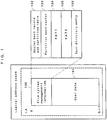
- a region for storing the user data 101 such as data of a file body exists following the region for retaining the file system management information 100.
- the user data 101 is divided and managed in management units called a cluster having a size of 16kB or 32kB, and each cluster stores data included in a file.
- a file storing lots of data stores the data striding over a plurality of clusters, links between the clusters are managed by link information stored in the FATs (104 and 105).
- a file existing in a directory immediately below a root directory and information of subdirectory (the directory entry) are stored by using a part of the user data 101.
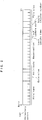
- Fig. 2 is a view showing a configuration of the directory entry.
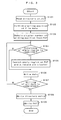
- Fig. 3 is a view showing a procedure of file data writing process.
- Fig. 4 is a view showing one example of a directory entry 107, the FATs (104 and 105), and the user data 101 before the writing.
- Fig. 5 is a view showing one example of the directory entry 107, the FATs (104 and 105), and the user data 101 after the writing.
- the directory entry 107 storing information, for example, a file name, file size, and file attribution shown in Fig. 5(a) is stored in the root directory entry 106 and a part of the user data 101.
- the directory entry 107 in the FAT file system is composed of 32 bytes and stores a file name, attributes, last update date and time, a starting cluster number, a file size, and so on.
- An access device calculates a remaining capacity on the basis of the FATs (104 and 105) read from the information recording device into a RAM on the access device. Since a value of the FAT entry corresponding to an empty cluster is set to "0", the remaining capacity can be calculated by retrieving all FAT entries and counting the number of entries whose values are set to "0". In addition, reading of the FATs (104 and 105) is preliminarily completed, for example, immediately after attachment of the information recording device to the access device.
- the access device searches an empty region with a data size written in a single file data recording on the FAT and allocates a recording region on the FAT by setting a FAT entry of the region to a value other than "0" on the RAM.
- the access device sends a command for writing the file data to the recording region allocated at S203.
- the information recording device receives the write command issued from the access device at S204.
- the information recording device searches a recordable region on recording elements such as the NAND type flash memory and records the file data.
- the information recording device updates address management information so that a physical address of the region where the file data was recorded at S206 can correspond to a logical address designated in the writing command by the access device at S204.
- Patent document 1 Japanese Unexamined Patent Publication No. 2006-85859 .
- US 6 138 203 A discloses an information processing apparatus and method enabling a write-once recording medium to be utilized as a rewritable recording medium. An address control mechanism is realized wherein even if the physical recording position is changed, the logical address of the same block is not changed by controlling the physical recording position on the recording medium on an imaginary address space in correspondence to the logical address. The writable residual capacity is also monitored. Thus the write once type recording medium can be realized as a rewritable recording medium.
- EP1628302 discloses that in a write-once media, by using a selected area such as an area starting from a postscript-recording point in the main data area as an alternate area, by determining whether or not an address specified in a request such as a write request is an address at which data has been recorded on the basis of information on a sequential recording range and by recording pieces of alternate-address management information for replacing defective locations on the media and for renewing data recorded on the media in a table by letting the pieces of information coexist in the table, defective locations on the media can be replaced with other locations and data already recorded on the media can thus be renewed even without providing pre-allocated alternate area on the media.
- a selected region in the main data area can be used as a region supplementary to the insufficient alternate area.
- An example of the region is an area starting from a postscript-recording point mentioned above.
- JP2006085859 discloses improving an effective use of a main data area, and recording and reproduction performance, while making write-once media rewritable.
- defect alternation and data rewrite are enabled without preparing a fixed alternate area by using a selected area such as a postscript point etc. in the main data area as an alternate destination area, by making it possible to determine whether the address of an object of a write-in request or the like is recorded/un-recorded by continuous recording area information and further by consolidating and mixing the alternation management information for defective alteration and data rewriting.
- the selected area such as the postscript points in the main data area is used as an alternate destination area.
- the above-mentioned conventional technique has following problems.
- the conventional method it is required to allocate new physical memory region in order to realize the pseudo overwriting to the OTP memory, and the physical memory region is consumed in each occurrence of the overwriting processing. Since the OTP memory can record data only once, the consumed region mentioned above cannot record data again and the remaining recordable capacity reduces in each occurrence of the overwriting processing. Since the reduction of this capacity is caused by the address conversion processing in a memory card, a file system control part on the access device side for accessing the memory card cannot know change of the capacity, resulting in inconsistency between a remaining recordable capacity recognized by the file system control part and a capacity actually recordable to the memory card.
- the access device cannot know a remaining recordable capacity only by referring to the FAT.
- the OPT memory does not have an empty region to cause an error even though the file system control part sends a command for recording data after judging the recording is possible.
- the present invention intends to provide a write once recording device, a controller, an access device, and a write once recording system which notify the file system control part on the access device side of an accurate remaining recordable empty capacity in a case of realizing the pseudo overwriting to the OTP memory.
- the present invention relates to an acces device according to claim 1, a write once recording system according to claim 2.
- an access device can know an accurate remaining recordable empty capacity in a case of realizing the pseudo overwriting to a memory card having the OTP memory, and accordingly a following problem can be avoided; file data is recorded even though the memory card does not have an empty region.
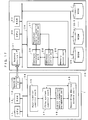
- Fig. 7 is a configuration view of an access device 1 and a write once recording device 2A in embodiment 1 of the present invention.
- the access device 1 includes a CPU 11, a RAM 12, a recording device interface (recording device IF) 13, and a ROM 14.
- the recording device interface 13 is a connecting portion between the access device 1 and the write once recording device 2A, and is an interface for sending and receiving a control signal and data.
- the ROM 14 stores a program for controlling the access device 1, and the program uses the RAM 12 as a temporal memory region and runs on the CPU 11.
- the ROM 14 includes an application control part 15, a logical-physical empty capacity management part 16, a file system control part 17, and a recording device access part 18.
- the application control part 15 controls whole of the access device 1, for example, generation of data and control of power supply.
- the logical-physical empty capacity management part 16 issues a remaining capacity obtaining command before data recording to the write once recording device. And, the logical-physical empty capacity management part 16 judges whether the recording to the write once recording device is possible or not on the basis of: a remaining capacity on a logical address space obtained from region management information managed by the file system control part 17; and a physically remaining recordable capacity obtained from the write once recording device 2A, and notifies the file system control part 17 of the judgment.
- the file system control part 17 is the same as a file system control part mounted to a conventional access device, and carries out control for managing data as a file by using, for example, a FAT file system.
- the access device designates a logical address.
- the recording device access part 18 controls sending and receiving data and a command to the write once recording device 2A, for example, the recording device access part 18 receives data, its size, and a logical address from the file system control part 17 and records the data of the designated size into a recording region of the write once recording device 2A.
- the write once recording device 2A includes a controller having: an access device interface (access device IF) 21; a CPU 22; a RAM 23; and a ROM 24, and a write once memory (WOM) 25.
- access device IF access device interface
- CPU 22 CPU 22
- RAM 23 RAM 23
- ROM 24 write once memory
- WOM write once memory
- the access device interface 21 is a connecting portion between the write once recording device 2A and the access device 1, and is an interface for sending and receiving a control signal and data in a similar manner to the recording device interface 13.
- the write once memory (WOM) 25 is a memory allowing data writing to each region only once, and, for example, an OTP memory is employed. Data to be recorded to this memory includes file system management information, user data, address management information indicating a correspondence relationship between a logical address and a physical address, and the like.
- the command interpretation part 26 interprets a command sent from the access device 1.
- the command includes a write command, a reading command, as well as a remaining capacity obtaining command for obtaining data of a remaining capacity and a changing information command for obtaining changing information of the remaining capacity.
- the physical empty capacity management part 27 calculates and manages a remaining recordable capacity existing on the write once memory 25. In a case where the access device 1 issues the remaining capacity obtaining command, the physical empty capacity management part 27 notifies the access device 1 of a remaining capacity managed by the physical empty capacity management part 27 as a physically-remaining recordable capacity.
- the address conversion control part 28 divides the write once memory in units of fixed-length management units and manages the divided regions, converts a logical address used in a communication with the access device 1 into a physical region of each management unit on the write once memory 25, and retains its correspondence relationship. In addition, when the access device issues a writing request, the address conversion control part 28 allocates an unrecorded region in the write once memory 25 as a data recording region, and carries out the address conversion processing for relating the data recording region to a logical address designated by the access device in the writing request.
- the address conversion control part 28 retains a correspondence relationship between a physical address and a logical address, and, in a case where the same logical address is related to a plurality of physical addresses, treats data stored in a region of the biggest-numbered physical address as valid data stored in a region of the logical address.
- the memory access part 29 accesses the write once memory 25 on the basis of a physical address designated by the address conversion part 28, and writes and reads data. When writing data, the memory access part 29 sequentially writes data in ascending order of the physical address in the write once memory.
- Fig. 8 is a view showing a whole configuration of the write once memory 25 in embodiment 1.
- the write once memory 25 is composed of a plurality of continuously-arranged pages, and is managed with allocating page numbers PN, 0 to M-1, to the respective pages as the physical address.
- each page of the write once memory 25 is a management unit.
- Each page is composed of: a data region to which data can be written by the access device 1; and a redundant region used for a management region in the write once recording device 2A.
- the physical empty capacity management part 27 manages a remaining recordable capacity on the write once memory 25, and when the access device 1 orders data recording, the address conversion control part 28 updates the correspondence relationship between a logical address and a physical address after allocating new physical address and recording data and realizes pseudo overwriting processing and additional writing processing to the write once memory 25. Moreover, when the remaining capacity obtaining command has been issued from the access device 1, the address conversion control part 28 notifies the access device 1 of the remaining capacity managed by the physical empty capacity management part 27. In this manner, in a case where the access device 1 writes data to the write once recording device 2A, the access device 1 can know an accurate remaining recordable capacity, resulting in avoiding a problem of recording file data even though the write once recording device 2A has no empty region.
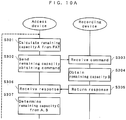
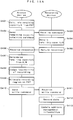
- the access device 1 calculates a remaining capacity A in the logical space on the basis of the FATs (104 and 105) read from the write once recording device 2A into the RAM 12 on the access device 1.
- the write once recording device 2A returns information, as a response to the remaining capacity obtaining command, of a remaining capacity B on the physical space obtained at S304 with a response notifying completion of a remaining capacity obtaining process to the access device 1.
- the access device 1 sends a write command to the write once recording device 2A in order to record file data to the recording region allocated at S309.
- the recording device updates address management information so that a physical address of the region where the file data was recorded at 312 can correspond to the logical address designated by the write command from the access device 1.
- the write once recording device 2A returns a response notifying completion of the recording to the access device 1, and the access device 1 receives the response.
- the access device 1 issues the remaining capacity obtaining command to the write once recording device 2A, and obtains a physically-remaining recordable capacity and then knows an actually-remaining recordable capacity with comparing the physically-remaining recordable capacity with the remaining capacity on the FATs (104 and 105). This enables the write once recording device 2A to know an accurate remaining capacity in a case of carrying out the pseudo overwriting to the write once memory 25.
- Figs. 11 to 14 are views each showing change of retained information of the write once memory 25 and of the logical address space LAS corresponding thereto in the data recording.
- the logical address space LAS represented by a dashed line shows this logical address LA and data corresponding thereto.
- Fig. 11 shows a state where no data is recorded to the write once memory 25, all the data regions of page numbers PN 0 to PN (M-1) that are physical addresses in the write once memory 25 and all regions in the redundant regions for storing the logical address LA each have an initial value.
- PN 0 to PN (M-1) that are physical addresses in the write once memory 25 and all regions in the redundant regions for storing the logical address LA each have an initial value.
- 0xFF is set as the initial value of the data region is supposed.
- the case indicates the page is not allocated to any logical address. That is, since no page is allocated to all logical pages in the state of Fig. 11 , the initial value (0xFF) is read when the access device 1 reads data stored in each logical address from the write once recording device 2A.
- the write once memory 25 changes to the state of Fig. 12 .
- data is recorded to the write once memory 25 in ascending order from a starting position in all physical addresses.
- the memory access part 29 records data (Data 1) to a page (PN 0) of physical address 0 and sets a logical address corresponding to the page to 0 (accurately 0x00000000) in the redundant region.
- Data 1 stored in the page (PN 0) of physical address 0 is read.
- the physical empty capacity management part 27 in the write once recording device 2A judges the page to be a recordable page. For this reason, a remaining recordable capacity in the write once memory 25 can be calculated by counting the number of pages where the value 0xFFFFFFFF is set to the region for storing information of a logical address.
- the write once memory 25 sequentially records data from the starting position in physical addresses to be consumed.
- the first page of the physical address where the value 0xFFFFFF is set to the region for storing information of a logical address or later are all recordable pages. Accordingly, a remaining capacity can be easily calculated by subtracting a page number found here from the total number of pages.
- Fig. 15A and Fig. 15B are flowcharts showing modified example 1.
- steps S401 to S413 are the same as S301 to S313 shown in Fig. 8 .
- a remaining capacity D retained by the physical empty capacity management part 27 is obtained at S414 after recording data and updating the address management information at S412 and S413, and a response notifying completion of the recording is sent with information of the remaining capacity D.
- the access device receives this information and completes the process if further recording is not required.
- a remaining capacity E on the logical address space is calculated based on the FAT at S417.
- the access device 1 notifies the write once recording device 2A of information of an address and size of a region to be recorded now before actually issuing the write command, and obtains information showing how the remaining capacity is changed by the recording.
- the recording feasibility judgment is carried out at S501 and S502 on the basis of the remaining capacity calculated from the FATs (104 and 105). This is the same as the conventional processing procedure shown in Fig. 6 . However, continued processing after that is different from that of the conventional processing procedure. As shown in Fig.
- the file system when recording file data, the file system requires recording the directory entry 107 and the FATs (104 and 105) with the recording of file data. For this reason, an address and size in the recording process carried out in a series of process of the file system are determined at S503.
- the access device 1 records file data, and determines an address and size in the recording process related to recording of the directory entry 107 and the FATs (104 and 105) required with the file data recording. Then, the access device 1 issues a command for obtaining information indicating change of a remaining capacity by using the address and size as arguments (hereinafter referred to as a change information command) to the write once recording device 2A at S504.
- the logical-physical empty capacity management part 16 achieves a function for, prior to data recording to the write once recording device, issuing the change information command related to change of a remaining capacity after designating an address and size related to a recording process and obtaining a physically-remaining recordable capacity in the write once recording device.
- the physical empty capacity management part 27 In accepting the change information command issued by the access device prior to data recording, the physical empty capacity management part 27 knows information related to change of a remaining recordable capacity in the write once memory before and after carrying out a recording process designated by the access device on the basis of: the address management information; and information of an address and size related to the recording process designated with a command by the access device, and notifies the access device of the information.
- the configuration of the address management information explained in embodiment 1 of the present invention is one example, and the information may employ another configuration.
- the management unit is a page unit having a size of 2 kB here, however, a different size may be employed as the management unit.
- the management unit may be configured by aggregating a plurality of pages, and the address conversion may be carried out in this units.
- the case where the address management information is dispersed and stored in the redundant regions in the write once memory 25 has been explained as an example, however, the information may be aggregated and stored in one portion.
- Fig. 17 is a configuration view of an access device and a write once recording device in embodiment 2 of the present invention.
- a write once recording device 2B has P (P is a natural number) write once memories.
- P is a natural number
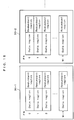
- Fig. 18 is a view showing a configuration of the write once memory in embodiment 2 of the present invention.
- Memory numbers 1, 2, to P are allocated to the respective write once memories as an identifier.
- a region in each write once memory includes a plurality of pages composed of the data region and the redundant region same as in Fig. 8 . Accordingly, a unique physical address is determined by combining a memory number and a page number.
- each write once memory is managed by being allocated to a specific logical address. For example, the write once memory 30-1 of the memory number 1 is allocated to a logical address space of logical addresses 0 to (N-1), and the write once memory 30-2 of the memory number 2 is allocated to a logical address space of logical addresses N to (2N-1). By allocating each write once memory to a specific logical address space in this manner, an address space for an address conversion becomes small, resulting in merit of being able to keep an overhead of the address conversion process low.
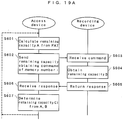
- the access device 1 calculate a remaining capacity A on the basis of information of the FATs (104 and 105) read from the write once recording device 2B into the RAM 12 on the access device 1. On this occasion, a logical address space allocated to each write once memory is specified, and only a region included in the logical address space corresponding to a piece of the write once memory is treated as a calculation object.
- the access device 1 issues the remaining capacity obtaining command to the write once recording device 2B.
- This command designates the memory number i corresponding to the logical address specified as an argument at S601 and demands information of a remaining capacity of the write once memory 30-i.
- the write once recording device 2B returns information of the remaining capacity B included in the specified write once memory, with a response notifying completion of a remaining capacity obtaining process, to the access device 1.
- the access device 1 receives this response, and determines a smaller value, the remaining capacity A calculated at S601 or the remaining capacity B obtained at S604, as an actually-remaining recordable capacity Ci of the write once memory of the memory number i.
- the processes from S601 to S607 are repeatedly carried out to all write once memories included in the write once recording device 2A.
- the access device 1 judges on the basis of the remaining capacity D determined at S608 whether the file data recording is possible or not. The access device 1 finishes the processing if impossible.
- the access device 1 issues a write command to the write once recording device 2B to record file data to the recording region allocated at S610.
- the present invention may be applied to a case of managing a piece of the write once memory by dividing the memory into a plurality of regions and by allocating each of the regions to a specific logical region.
Landscapes
- Engineering & Computer Science (AREA)
- Theoretical Computer Science (AREA)
- Human Computer Interaction (AREA)
- Physics & Mathematics (AREA)
- General Engineering & Computer Science (AREA)
- General Physics & Mathematics (AREA)
- Computer Security & Cryptography (AREA)
- Information Retrieval, Db Structures And Fs Structures Therefor (AREA)
Claims (2)
- Dispositif d'accès (1) qui est configuré pour accéder à un dispositif d'enregistrement à écriture unique (2A), ledit dispositif d'enregistrement à écriture unique ayant une mémoire à écriture unique (25) permettant l'écriture de données une seule fois et une partie de contrôle de conversion d'adresse (28) configurée pour- diviser la mémoire à écriture unique (25) en unités d'unités de gestion de longueur fixe et gérer les régions divisées,- convertir une adresse logique utilisée dans une communication avec le dispositif d'accès (1) en une région physique de chaque unité de gestion sur la mémoire à écriture unique (25),- lorsque le dispositif d'accès émet une demande d'écriture, allouer une région non enregistrée dans la mémoire à écriture unique (25) comme une région d'enregistrement de données, et effectuer un traitement de conversion d'adresse pour lier une région d'enregistrement de données à une adresse logique désignée par le dispositif d'accès dans la demande d'écriture,- conserver une relation de correspondance entre une adresse physique et une adresse logique, et, dans un cas où la même adresse logique est liée à une pluralité d'adresses physiques, traiter des données stockées dans une région de l'adresse physique à numéro le plus grand comme des données valides stockées dans une région de l'adresse logique,ledit dispositif d'accès comprenant :une partie de contrôle de système de fichier (17) configurée pour contrôler des données comme un fichier sur la base d'informations de système de fichier construites dans une région d'enregistrement dans ledit dispositif d'enregistrement à écriture unique ;caractérisé en ce que le dispositif d'accès (1) comprend en outreune partie de gestion de capacité vide logique-physique (16) qui est configurée pour :- obtenir une capacité restante (A) sur un espace d'adresse logique à partir des informations de système de fichier ;- émettre une commande, vers ledit dispositif d'enregistrement à écriture unique (2A), pour obtenir une capacité restante physique (B) sur un espace d'adresse physique à partir de la mémoire à écriture unique (25) et recevoir ladite capacité restante physique (B) en provenance dudit dispositif d'enregistrement à écriture unique (2A) ;- déterminer une valeur plus petite, la capacité restante physique (B) obtenue en réponse à la commande ou la capacité restante (A) sur l'espace d'adresse logique obtenue à partir des informations de système de fichier, comme une capacité d'enregistrement disponible (C) sur le dispositif d'enregistrement à écriture unique (2A).
- Système d'enregistrement à écriture unique comprenant :un dispositif d'enregistrement à écriture unique (2A) ayant une mémoire à écriture unique (25) permettant l'écriture de données une seule fois et une partie de contrôle de conversion d'adresse (28) configurée pour- diviser la mémoire à écriture unique (25) en unités d'unités de gestion de longueur fixe et gérer les régions divisées,- convertir une adresse logique utilisée dans une communication avec le dispositif d'accès (1) en une région physique de chaque unité de gestion sur la mémoire à écriture unique (25),- lorsque le dispositif d'accès émet une demande d'écriture, allouer une région non enregistrée dans la mémoire à écriture unique (25) comme une région d'enregistrement de données, et effectuer un traitement de conversion d'adresse pour lier une région d'enregistrement de données à une adresse logique désignée par le dispositif d'accès dans la demande d'écriture,- conserver une relation de correspondance entre une adresse physique et une adresse logique, et, dans un cas où la même adresse logique est liée à une pluralité d'adresses physiques, traiter des données stockées dans une région de l'adresse physique à numéro le plus grand comme des données valides stockées dans une région de l'adresse logique,et le dispositif d'accès (1) selon la revendication 1,dans lequel : ledit dispositif d'enregistrement à écriture unique inclut :
un contrôleur qui est configuré pour notifier audit dispositif d'accès une taille enregistrable physiquement comme une capacité restante sur l'espace d'adresse physique à partir de la mémoire à écriture unique.
Applications Claiming Priority (2)
| Application Number | Priority Date | Filing Date | Title |
|---|---|---|---|
| JP2006337925 | 2006-12-15 | ||
| PCT/JP2007/073765 WO2008072590A1 (fr) | 2006-12-15 | 2007-12-10 | Dispositif d'enregistrement inscriptible |
Publications (3)
| Publication Number | Publication Date |
|---|---|
| EP2096546A1 EP2096546A1 (fr) | 2009-09-02 |
| EP2096546A4 EP2096546A4 (fr) | 2011-09-21 |
| EP2096546B1 true EP2096546B1 (fr) | 2018-08-08 |
Family
ID=39511610
Family Applications (1)
| Application Number | Title | Priority Date | Filing Date |
|---|---|---|---|
| EP07850339.8A Active EP2096546B1 (fr) | 2006-12-15 | 2007-12-10 | Dispositif d'enregistrement inscriptible |
Country Status (5)
| Country | Link |
|---|---|
| US (1) | US8589617B2 (fr) |
| EP (1) | EP2096546B1 (fr) |
| JP (1) | JP5129156B2 (fr) |
| CN (1) | CN101542447B (fr) |
| WO (1) | WO2008072590A1 (fr) |
Families Citing this family (18)
| Publication number | Priority date | Publication date | Assignee | Title |
|---|---|---|---|---|
| WO2009150810A1 (fr) | 2008-06-09 | 2009-12-17 | パナソニック株式会社 | Dispositif d’accès et procédé pour calculer une capacité restante |
| US8090692B2 (en) * | 2008-09-10 | 2012-01-03 | Infinite Memory Ltd | Method for using an OTP storage device |
| JP5962918B2 (ja) * | 2012-03-09 | 2016-08-03 | パナソニックIpマネジメント株式会社 | 記憶装置、ホスト装置、記憶システム |
| US9201784B2 (en) * | 2012-09-07 | 2015-12-01 | Kabushiki Kaisha Toshiba | Semiconductor storage device and method for controlling nonvolatile semiconductor memory |
| US10528529B1 (en) * | 2014-12-23 | 2020-01-07 | EMC IP Holding Company LLC | Multi-core journal system and method |
| EP3384393B1 (fr) * | 2015-12-02 | 2020-03-11 | Telefonaktiebolaget LM Ericsson (publ) | Procédé et module de gestion de disponibilité de mémoire pour gérer la disponibilité de pages de mémoire |
| US10228856B2 (en) * | 2016-01-28 | 2019-03-12 | Hewlett Packard Enterprise Development Lp | Storage space management in a thin provisioned virtual environment |
| JP6877134B2 (ja) * | 2016-12-15 | 2021-05-26 | 株式会社東芝 | 電子装置、通信装置及びプログラム |
| IL275147B2 (en) * | 2017-12-05 | 2024-09-01 | Defender Cyber Tech Ltd | Secure content routing using one-time pads |
| KR102545229B1 (ko) * | 2018-05-04 | 2023-06-21 | 에스케이하이닉스 주식회사 | 메모리 시스템 및 그것의 동작 방법 |
| CN109273041B (zh) * | 2018-08-29 | 2020-09-01 | 珠海市一微半导体有限公司 | 一种otp的写入方法 |
| CN109326307B (zh) * | 2018-09-07 | 2020-12-11 | 江苏菲利斯通信息科技有限公司 | 光盘流式刻录方法 |
| JP2022516352A (ja) | 2019-01-08 | 2022-02-25 | ディフェンダー サイバー テクノロジーズ リミテッド | ワンタイムパッド暗号化ハブ |
| CN111240884B (zh) * | 2019-12-25 | 2024-06-07 | 上海亮牛半导体科技有限公司 | Efuse的纠错方法 |
| US11656773B2 (en) * | 2020-04-28 | 2023-05-23 | EMC IP Holding Company LLC | Automatic management of file system capacity using predictive analytics for a storage system |
| CN113568560A (zh) * | 2020-04-29 | 2021-10-29 | 瑞昱半导体股份有限公司 | 存取一次性可编程记忆体的方法及相关的电路 |
| US11740789B2 (en) | 2020-05-18 | 2023-08-29 | EMC IP Holding Company LLC | Automated storage capacity provisioning using machine learning techniques |
| CN117725024A (zh) | 2022-09-08 | 2024-03-19 | 戴尔产品有限公司 | 使用文件系统利用率预测的自动文件系统容量管理 |
Family Cites Families (10)
| Publication number | Priority date | Publication date | Assignee | Title |
|---|---|---|---|---|
| US6138203A (en) * | 1995-11-10 | 2000-10-24 | Sony Corporation | Information processing apparatus and method enabling a write-once recording medium to be utilized as a rewriteable recording medium |
| JP2002050131A (ja) * | 2000-08-03 | 2002-02-15 | Hitachi Ltd | 追記型記録媒体の記録制御方法 |
| US6857054B2 (en) * | 2002-06-28 | 2005-02-15 | Hewlett-Packard Development Company, L.P. | Write-once memory storage device |
| US20040160799A1 (en) * | 2003-02-17 | 2004-08-19 | Park Yong Cheol | Write-once optical disc, and method and apparatus for allocating spare area on write-once optical disc |
| CN1641785A (zh) * | 2004-01-06 | 2005-07-20 | 联发科技股份有限公司 | 计算光盘片内一轨道的数据容量的方法 |
| EP1768407A1 (fr) * | 2004-06-14 | 2007-03-28 | Matsushita Electric Industrial Co., Ltd. | Méthode d'utilisation de contenu et dispositif d'enregistrement de contenu |
| JP4379276B2 (ja) | 2004-08-16 | 2009-12-09 | ソニー株式会社 | 記録方法、記録装置、再生方法、再生装置、記録媒体 |
| US7752412B2 (en) * | 2006-09-29 | 2010-07-06 | Sandisk Corporation | Methods of managing file allocation table information |
| JP2008139908A (ja) * | 2006-11-29 | 2008-06-19 | Matsushita Electric Ind Co Ltd | メモリ制御装置、コンピュータシステム及びデータ再生記録装置 |
| US7680991B2 (en) * | 2007-05-31 | 2010-03-16 | International Business Machines Corporation | Correlated analysis of wasted space and capacity efficiency in complex storage infrastructures |
-
2007
- 2007-12-10 JP JP2008549293A patent/JP5129156B2/ja active Active
- 2007-12-10 US US12/517,844 patent/US8589617B2/en active Active
- 2007-12-10 EP EP07850339.8A patent/EP2096546B1/fr active Active
- 2007-12-10 WO PCT/JP2007/073765 patent/WO2008072590A1/fr not_active Ceased
- 2007-12-10 CN CN200780043286XA patent/CN101542447B/zh active Active
Non-Patent Citations (1)
| Title |
|---|
| None * |
Also Published As
| Publication number | Publication date |
|---|---|
| US20110022807A1 (en) | 2011-01-27 |
| CN101542447A (zh) | 2009-09-23 |
| EP2096546A1 (fr) | 2009-09-02 |
| WO2008072590A1 (fr) | 2008-06-19 |
| JP5129156B2 (ja) | 2013-01-23 |
| CN101542447B (zh) | 2013-06-05 |
| US8589617B2 (en) | 2013-11-19 |
| JPWO2008072590A1 (ja) | 2010-03-25 |
| EP2096546A4 (fr) | 2011-09-21 |
Similar Documents
| Publication | Publication Date | Title |
|---|---|---|
| EP2096546B1 (fr) | Dispositif d'enregistrement inscriptible | |
| US8161225B2 (en) | Semiconductor memory card, access device and method | |
| CN100419714C (zh) | 闪存存取方法、闪存文件系统的块替换方法及其管理装置 | |
| KR101087906B1 (ko) | 파일기록장치 | |
| KR100877448B1 (ko) | 비휘발성 기억 시스템 | |
| US7877569B2 (en) | Reduction of fragmentation in nonvolatile memory using alternate address mapping | |
| US8185705B2 (en) | Information recording medium, information recording medium accessing apparatus and accessing method | |
| CN101268449B (zh) | 数据记录装置以及数据记录方法 | |
| US7752412B2 (en) | Methods of managing file allocation table information | |
| US7681008B2 (en) | Systems for managing file allocation table information | |
| US20100005226A1 (en) | Nonvolatile memory device, access device, and nonvolatile memory system | |
| JP2010515162A (ja) | 連続論理アドレス空間インターフェイスを備えるダイレクトデータファイルシステムの使用 | |
| KR101329068B1 (ko) | 블록 관리를 가지는 비휘발성 메모리 | |
| JP4130808B2 (ja) | フォーマット方法 | |
| JP2006072441A (ja) | メモリ装置および不揮発性メモリの制御方法 | |
| JP2009503743A (ja) | データファイルを直接記憶するメモリブロックの管理 | |
| JP4547028B2 (ja) | ブロック管理を伴う不揮発性メモリ | |
| WO2008042594A1 (fr) | Gestion d'informations d'une table d'allocation de fichiers | |
| US20050169058A1 (en) | Data management apparatus and method used for flash memory | |
| JP2009503740A (ja) | データファイルを直接記憶する再プログラム可能な不揮発性メモリ内のファイルデータの索引付け | |
| CN100468361C (zh) | 信息记录介质、对信息记录介质的访问装置以及访问方法 | |
| JP2005149620A (ja) | 記憶装置およびファイルシステム |
Legal Events
| Date | Code | Title | Description |
|---|---|---|---|
| PUAI | Public reference made under article 153(3) epc to a published international application that has entered the european phase |
Free format text: ORIGINAL CODE: 0009012 |
|
| 17P | Request for examination filed |
Effective date: 20090520 |
|
| AK | Designated contracting states |
Kind code of ref document: A1 Designated state(s): AT BE BG CH CY CZ DE DK EE ES FI FR GB GR HU IE IS IT LI LT LU LV MC MT NL PL PT RO SE SI SK TR |
|
| DAX | Request for extension of the european patent (deleted) | ||
| A4 | Supplementary search report drawn up and despatched |
Effective date: 20110823 |
|
| RIC1 | Information provided on ipc code assigned before grant |
Ipc: G06F 12/02 20060101ALI20110817BHEP Ipc: G11B 27/034 20060101ALI20110817BHEP Ipc: G06F 12/00 20060101AFI20110817BHEP Ipc: G06F 3/06 20060101ALI20110817BHEP Ipc: G11B 27/32 20060101ALI20110817BHEP |
|
| 17Q | First examination report despatched |
Effective date: 20131105 |
|
| GRAP | Despatch of communication of intention to grant a patent |
Free format text: ORIGINAL CODE: EPIDOSNIGR1 |
|
| STAA | Information on the status of an ep patent application or granted ep patent |
Free format text: STATUS: GRANT OF PATENT IS INTENDED |
|
| INTG | Intention to grant announced |
Effective date: 20180207 |
|
| GRAS | Grant fee paid |
Free format text: ORIGINAL CODE: EPIDOSNIGR3 |
|
| GRAA | (expected) grant |
Free format text: ORIGINAL CODE: 0009210 |
|
| STAA | Information on the status of an ep patent application or granted ep patent |
Free format text: STATUS: THE PATENT HAS BEEN GRANTED |
|
| AK | Designated contracting states |
Kind code of ref document: B1 Designated state(s): AT BE BG CH CY CZ DE DK EE ES FI FR GB GR HU IE IS IT LI LT LU LV MC MT NL PL PT RO SE SI SK TR |
|
| REG | Reference to a national code |
Ref country code: GB Ref legal event code: FG4D |
|
| REG | Reference to a national code |
Ref country code: CH Ref legal event code: EP Ref country code: AT Ref legal event code: REF Ref document number: 1027803 Country of ref document: AT Kind code of ref document: T Effective date: 20180815 |
|
| REG | Reference to a national code |
Ref country code: IE Ref legal event code: FG4D |
|
| REG | Reference to a national code |
Ref country code: DE Ref legal event code: R096 Ref document number: 602007055693 Country of ref document: DE |
|
| REG | Reference to a national code |
Ref country code: NL Ref legal event code: MP Effective date: 20180808 |
|
| REG | Reference to a national code |
Ref country code: LT Ref legal event code: MG4D |
|
| REG | Reference to a national code |
Ref country code: AT Ref legal event code: MK05 Ref document number: 1027803 Country of ref document: AT Kind code of ref document: T Effective date: 20180808 |
|
| PG25 | Lapsed in a contracting state [announced via postgrant information from national office to epo] |
Ref country code: GR Free format text: LAPSE BECAUSE OF FAILURE TO SUBMIT A TRANSLATION OF THE DESCRIPTION OR TO PAY THE FEE WITHIN THE PRESCRIBED TIME-LIMIT Effective date: 20181109 Ref country code: SE Free format text: LAPSE BECAUSE OF FAILURE TO SUBMIT A TRANSLATION OF THE DESCRIPTION OR TO PAY THE FEE WITHIN THE PRESCRIBED TIME-LIMIT Effective date: 20180808 Ref country code: PL Free format text: LAPSE BECAUSE OF FAILURE TO SUBMIT A TRANSLATION OF THE DESCRIPTION OR TO PAY THE FEE WITHIN THE PRESCRIBED TIME-LIMIT Effective date: 20180808 Ref country code: LT Free format text: LAPSE BECAUSE OF FAILURE TO SUBMIT A TRANSLATION OF THE DESCRIPTION OR TO PAY THE FEE WITHIN THE PRESCRIBED TIME-LIMIT Effective date: 20180808 Ref country code: FI Free format text: LAPSE BECAUSE OF FAILURE TO SUBMIT A TRANSLATION OF THE DESCRIPTION OR TO PAY THE FEE WITHIN THE PRESCRIBED TIME-LIMIT Effective date: 20180808 Ref country code: AT Free format text: LAPSE BECAUSE OF FAILURE TO SUBMIT A TRANSLATION OF THE DESCRIPTION OR TO PAY THE FEE WITHIN THE PRESCRIBED TIME-LIMIT Effective date: 20180808 Ref country code: IS Free format text: LAPSE BECAUSE OF FAILURE TO SUBMIT A TRANSLATION OF THE DESCRIPTION OR TO PAY THE FEE WITHIN THE PRESCRIBED TIME-LIMIT Effective date: 20181208 Ref country code: NL Free format text: LAPSE BECAUSE OF FAILURE TO SUBMIT A TRANSLATION OF THE DESCRIPTION OR TO PAY THE FEE WITHIN THE PRESCRIBED TIME-LIMIT Effective date: 20180808 Ref country code: BG Free format text: LAPSE BECAUSE OF FAILURE TO SUBMIT A TRANSLATION OF THE DESCRIPTION OR TO PAY THE FEE WITHIN THE PRESCRIBED TIME-LIMIT Effective date: 20181108 |
|
| PG25 | Lapsed in a contracting state [announced via postgrant information from national office to epo] |
Ref country code: LV Free format text: LAPSE BECAUSE OF FAILURE TO SUBMIT A TRANSLATION OF THE DESCRIPTION OR TO PAY THE FEE WITHIN THE PRESCRIBED TIME-LIMIT Effective date: 20180808 Ref country code: ES Free format text: LAPSE BECAUSE OF FAILURE TO SUBMIT A TRANSLATION OF THE DESCRIPTION OR TO PAY THE FEE WITHIN THE PRESCRIBED TIME-LIMIT Effective date: 20180808 |
|
| PG25 | Lapsed in a contracting state [announced via postgrant information from national office to epo] |
Ref country code: EE Free format text: LAPSE BECAUSE OF FAILURE TO SUBMIT A TRANSLATION OF THE DESCRIPTION OR TO PAY THE FEE WITHIN THE PRESCRIBED TIME-LIMIT Effective date: 20180808 Ref country code: IT Free format text: LAPSE BECAUSE OF FAILURE TO SUBMIT A TRANSLATION OF THE DESCRIPTION OR TO PAY THE FEE WITHIN THE PRESCRIBED TIME-LIMIT Effective date: 20180808 Ref country code: RO Free format text: LAPSE BECAUSE OF FAILURE TO SUBMIT A TRANSLATION OF THE DESCRIPTION OR TO PAY THE FEE WITHIN THE PRESCRIBED TIME-LIMIT Effective date: 20180808 Ref country code: CZ Free format text: LAPSE BECAUSE OF FAILURE TO SUBMIT A TRANSLATION OF THE DESCRIPTION OR TO PAY THE FEE WITHIN THE PRESCRIBED TIME-LIMIT Effective date: 20180808 |
|
| REG | Reference to a national code |
Ref country code: DE Ref legal event code: R097 Ref document number: 602007055693 Country of ref document: DE |
|
| PG25 | Lapsed in a contracting state [announced via postgrant information from national office to epo] |
Ref country code: SK Free format text: LAPSE BECAUSE OF FAILURE TO SUBMIT A TRANSLATION OF THE DESCRIPTION OR TO PAY THE FEE WITHIN THE PRESCRIBED TIME-LIMIT Effective date: 20180808 Ref country code: DK Free format text: LAPSE BECAUSE OF FAILURE TO SUBMIT A TRANSLATION OF THE DESCRIPTION OR TO PAY THE FEE WITHIN THE PRESCRIBED TIME-LIMIT Effective date: 20180808 |
|
| PLBE | No opposition filed within time limit |
Free format text: ORIGINAL CODE: 0009261 |
|
| STAA | Information on the status of an ep patent application or granted ep patent |
Free format text: STATUS: NO OPPOSITION FILED WITHIN TIME LIMIT |
|
| 26N | No opposition filed |
Effective date: 20190509 |
|
| REG | Reference to a national code |
Ref country code: CH Ref legal event code: PL |
|
| GBPC | Gb: european patent ceased through non-payment of renewal fee |
Effective date: 20181210 |
|
| PG25 | Lapsed in a contracting state [announced via postgrant information from national office to epo] |
Ref country code: SI Free format text: LAPSE BECAUSE OF FAILURE TO SUBMIT A TRANSLATION OF THE DESCRIPTION OR TO PAY THE FEE WITHIN THE PRESCRIBED TIME-LIMIT Effective date: 20180808 Ref country code: LU Free format text: LAPSE BECAUSE OF NON-PAYMENT OF DUE FEES Effective date: 20181210 Ref country code: MC Free format text: LAPSE BECAUSE OF FAILURE TO SUBMIT A TRANSLATION OF THE DESCRIPTION OR TO PAY THE FEE WITHIN THE PRESCRIBED TIME-LIMIT Effective date: 20180808 |
|
| REG | Reference to a national code |
Ref country code: IE Ref legal event code: MM4A |
|
| REG | Reference to a national code |
Ref country code: BE Ref legal event code: MM Effective date: 20181231 |
|
| PG25 | Lapsed in a contracting state [announced via postgrant information from national office to epo] |
Ref country code: IE Free format text: LAPSE BECAUSE OF NON-PAYMENT OF DUE FEES Effective date: 20181210 Ref country code: FR Free format text: LAPSE BECAUSE OF NON-PAYMENT OF DUE FEES Effective date: 20181231 |
|
| PG25 | Lapsed in a contracting state [announced via postgrant information from national office to epo] |
Ref country code: BE Free format text: LAPSE BECAUSE OF NON-PAYMENT OF DUE FEES Effective date: 20181231 |
|
| PG25 | Lapsed in a contracting state [announced via postgrant information from national office to epo] |
Ref country code: CH Free format text: LAPSE BECAUSE OF NON-PAYMENT OF DUE FEES Effective date: 20181231 Ref country code: LI Free format text: LAPSE BECAUSE OF NON-PAYMENT OF DUE FEES Effective date: 20181231 Ref country code: GB Free format text: LAPSE BECAUSE OF NON-PAYMENT OF DUE FEES Effective date: 20181210 |
|
| PG25 | Lapsed in a contracting state [announced via postgrant information from national office to epo] |
Ref country code: MT Free format text: LAPSE BECAUSE OF NON-PAYMENT OF DUE FEES Effective date: 20181210 |
|
| PG25 | Lapsed in a contracting state [announced via postgrant information from national office to epo] |
Ref country code: TR Free format text: LAPSE BECAUSE OF FAILURE TO SUBMIT A TRANSLATION OF THE DESCRIPTION OR TO PAY THE FEE WITHIN THE PRESCRIBED TIME-LIMIT Effective date: 20180808 |
|
| PG25 | Lapsed in a contracting state [announced via postgrant information from national office to epo] |
Ref country code: PT Free format text: LAPSE BECAUSE OF FAILURE TO SUBMIT A TRANSLATION OF THE DESCRIPTION OR TO PAY THE FEE WITHIN THE PRESCRIBED TIME-LIMIT Effective date: 20180808 |
|
| PG25 | Lapsed in a contracting state [announced via postgrant information from national office to epo] |
Ref country code: CY Free format text: LAPSE BECAUSE OF FAILURE TO SUBMIT A TRANSLATION OF THE DESCRIPTION OR TO PAY THE FEE WITHIN THE PRESCRIBED TIME-LIMIT Effective date: 20180808 Ref country code: HU Free format text: LAPSE BECAUSE OF FAILURE TO SUBMIT A TRANSLATION OF THE DESCRIPTION OR TO PAY THE FEE WITHIN THE PRESCRIBED TIME-LIMIT; INVALID AB INITIO Effective date: 20071210 |
|
| PGFP | Annual fee paid to national office [announced via postgrant information from national office to epo] |
Ref country code: DE Payment date: 20251211 Year of fee payment: 19 |