EP2096561B1 - Verfahren zur Extraktion relevanter Inhalte aus einer Markup-Language-Datei, insbesondere aus einer HTML-Datei - Google Patents
Verfahren zur Extraktion relevanter Inhalte aus einer Markup-Language-Datei, insbesondere aus einer HTML-Datei Download PDFInfo
- Publication number
- EP2096561B1 EP2096561B1 EP08152105A EP08152105A EP2096561B1 EP 2096561 B1 EP2096561 B1 EP 2096561B1 EP 08152105 A EP08152105 A EP 08152105A EP 08152105 A EP08152105 A EP 08152105A EP 2096561 B1 EP2096561 B1 EP 2096561B1
- Authority
- EP
- European Patent Office
- Prior art keywords
- cluster
- content
- relevancy
- markup
- content element
- Prior art date
- Legal status (The legal status is an assumption and is not a legal conclusion. Google has not performed a legal analysis and makes no representation as to the accuracy of the status listed.)
- Not-in-force
Links
Images



Classifications
-
- G—PHYSICS
- G06—COMPUTING OR CALCULATING; COUNTING
- G06F—ELECTRIC DIGITAL DATA PROCESSING
- G06F16/00—Information retrieval; Database structures therefor; File system structures therefor
- G06F16/90—Details of database functions independent of the retrieved data types
- G06F16/95—Retrieval from the web
- G06F16/958—Organisation or management of web site content, e.g. publishing, maintaining pages or automatic linking
- G06F16/986—Document structures and storage, e.g. HTML extensions
-
- G—PHYSICS
- G06—COMPUTING OR CALCULATING; COUNTING
- G06F—ELECTRIC DIGITAL DATA PROCESSING
- G06F40/00—Handling natural language data
- G06F40/10—Text processing
- G06F40/12—Use of codes for handling textual entities
- G06F40/14—Tree-structured documents
- G06F40/143—Markup, e.g. Standard Generalized Markup Language [SGML] or Document Type Definition [DTD]
-
- G—PHYSICS
- G06—COMPUTING OR CALCULATING; COUNTING
- G06F—ELECTRIC DIGITAL DATA PROCESSING
- G06F40/00—Handling natural language data
- G06F40/20—Natural language analysis
- G06F40/205—Parsing
- G06F40/221—Parsing markup language streams
Definitions
- the present invention generally relates to automatic extraction of information content from markup language files, in particular from HTML files as widely available on the Internet.
- Markup languages combine content that has informational value, e.g. a primary text, with extra information.
- the extra information including e.g. structure, layout, or other information, is commonly referred to as "markup", which is typically intermixed with the primary text.
- the most widespread markup language currently in use is HTML (HyperText Markup Language), which is used for visual rendering of web pages from the World Wide Web.
- HTML HyperText Markup Language
- the present invention is in principle not limited to HTML but generally applicable to other markup languages such as SGML, XML, XHTML, XSML, the following description focuses on HTML as a specific and widespread example of a markup language.
- HTML describes how text and images should be rendered visible, usually by a software program called a "browser".
- the browser interprets a mixture of natural language text to be rendered and the markup instructions in a HTML file and creates the desired visual effect.
- the result should allow a human reader to easily distinguish between various elements to be displayed such as, for instance, main article text, sidebar, navigation elements, etc.
- the effect of the markup instructions is in general purely visual. Information about the role of a particular piece of text in the HTML file can hardly ever be determined from the markup instructions related to this piece of text.
- HTML instructions commonly referred to as "tags” have descriptive names (e.g. ⁇ title>, or ⁇ p> for paragraph), there are no generally adopted rules for the use of these tags.
- a normal HTML page contains many content elements, e.g. pieces of text, that are not directly related to the relevant content, which is typically the main article text, or that do not otherwise represent relevant information content of interest to a user.
- content elements e.g. pieces of text
- Typical examples of such irrelevant elements are descriptions of hyperlinks pointing to various parts of the website or summaries of other web pages that can be found on the same or another website.
- Other typical examples are advertisements, navigation bars, copyright or legal notices, etc.
- the 'raw' text of these pages would contain many text passages that are not related to the main article text or that are otherwise not of interest to the user and could therefore be discarded in many applications (e.g. Media Monitoring or IR applications).
- An example of an IR system is described in European Patent EP 0 774 722 B1 . Such IR systems could be significantly enhanced if there was an efficient and reliable method of providing them with relevant content only.
- One way to attempt to derive the main article content could consist in producing a virtual rendering of the data, grouping the elements in a suitable data structure which captures the intended positional information of text on a screen and focusing on text that would render more or less in the area where a human reader would normally expect the most relevant text.
- the main drawback of this approach is that its complexity approaches that of a fully featured browser software.
- wrappers that identify data of interest and map such data to some suitable format.
- the main drawback of the wrapper approach is that normally a given wrapper is suitable only for a specific set of similarly formatted web pages e.g. from the same webservice.
- Recently emerging software programs for fully automatic wrapper generation may reduce the required amount of user effort and increase flexibility as to the web page formats that can be processed but such programs are highly complex and thus require considerable computing resources.
- Another drawback of most known approaches, including the wrapper approach is that they require comparison between various similar web pages in order to determine relevant information content in one given HTML file. Obviously such approaches do not allow extracting relevant content from isolated HTML files, e.g. of single page web domains such as blogs.
- the former approach although allowing efficient extraction of content that is relevant to users in a given situation, has the drawback that the users are required to have a minimum a priori knowledge of the content of the page that they want to search in order to formulate a search criterion. Moreover, the latter approach is not suitable for many other applications, such as media monitoring or information retrieval.
- the method further includes:
- the proposed method for extracting relevant content relies on properties or characteristics that are intrinsic to the given markup language file itself.
- the method After creating candidate clusters according to criteria that may depend on the file itself, the method performs operations on certain properties or characteristics of the file and of the candidate clusters. These operations have comparatively low demands in terms of computing resources.
- the first function will attribute more importance to candidate clusters that have a large average content element size.
- the second function will attribute additional importance to candidate clusters containing one or more content elements of comparatively large size.
- the third function in turn reduces the relative importance of any candidate clusters that contain, with respect to other clusters, many markup instructions and/or markup instructions of high dimension.
- the method can efficiently distinguish relevant content from any content that is of little if any interest.
- the present invention also relates to a computer program product comprising program code which, when loaded on a computer, is suitable for executing a method as set out above.
- the present invention further relates to a computer system comprising a processor or a programmable computing device programmed to perform the method as set out above.
- a computer system comprising a processor or a programmable computing device programmed to perform the method as set out above.
- such system can be beneficially integrated e.g. into a media monitoring system, an information extraction system, a web server, a mobile communication server or into a mobile communication device for example.
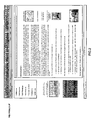
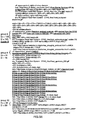
- FIG.1 shows a flowchart illustrating the operation of a computerized method or program for automatic extraction of relevant content from a markup language file. An execution of this program will now be described in the order of the various consecutive phases PHASE1 to PHASE6 illustrated in FIG.1 with reference to the HTML file reproduced in FIGS.3A-E as a specific example of a markup language file.
- the program retrieves a HTML file or data stream from a data storage which can be local or remote, e.g. from a server, usually via a network such as the Internet or e.g. a local area network LAN.
- a server will be a webserver accepting HTTP requests and serving HTTP responses.
- the response includes a HTML data stream and possibly linked objects (images, etc.).
- the HTML data stream is stored as a file in a local memory in step S100, whereas linked objects such as graphic files are ignored.
- the HTML file contains data content, such as natural language text, intermixed with markup instructions.
- FIGS.3A-E content elements have been underlined in order to facilitate their distinction with respect to HTML markup instructions.
- a data structure suitable for further processing is created based on the HTML file.
- a parse tree is created as data structure.
- the concept of parse trees and program modules for creating such trees, in particular HTML parse trees are well known to the skilled person and therefore no detailed description thereof will be given here. The reader may refer e.g. to Principles of Compiler Design, by Alfred Aho and Jeffrey D. Ullman.
- the parse tree is created in step S110 by scanning the HTML file for markup instructions, i.e. HTML instructions and for content elements, i.e. separate elements of data content (see underlined content elements in FIGS.3A-E ).
- the resulting parse tree will include either a root node or a branch node for each HTML instruction (in the following referred to as tag ).
- tag For each content element, e.g. a natural text element or sequence encountered while parsing the HTML file, the parser creates a leaf node in the parse tree. Certain nodes of the tree thus contain or point to all those content elements of the HTML file that are not markup instructions or otherwise irrelevant data. The remaining nodes contain or point to the markup instructions, i.e. HTML tags.
- markup instructions or other data that is unnecessary to the subsequent extraction of relevant content, such as e.g.
- META tags and the related META content as shown in lines 4-28 of FIG.3A or SCRIPT data as shown in lines 29-66 of FIG.3A-B may be discarded.
- any unnecessary data may simply be ignored by the parser, i.e. not included in the parse tree.
- Table 1 shows an allocation table by means of which a value is allocated to certain types of HTML tags such as table, frameset, etc and certain formatting tags.
- the values allocated according to Table 1 express a hierarchy of tags in order to resolve any problems relating to improperly coded markup instructions, in particular problems related to missing "closing" tags, e.g. a missing end tag ⁇ /a> relating to a previously "opened" start tag ⁇ a>.
- the hierarchy of values in Table 1 expresses which tags and related content elements can or cannot be contained or nested within other tags according to HTML specifications. For example, a ⁇ table> expression cannot be nested within a ⁇ a> expression.
- any tags that have been improperly "left open” in the HTML file can be automatically closed on occurrence of a tag having a higher hierarchy value. More preferably, all previously opened tags having a lower hierarchy value than a newly encountered tag will be automatically closed (and any subsequent closing tags relating to lower hierarchy tags that occurred previously will be ignored).
- values according to Table 1 are allocated before creation of the parse tree and used when scanning the HTML file for markup instructions in order to create a proper parse tree.
- Other approaches for creating a proper parse tree representation of the HTML data stream are not excluded however, the hierarchy approach based on Table 1 being merely an improvement for very fast but proper creation of a parse tree data structure.
- step S112 provides an allocation of a dimension to HTML tags.
- Table 2 is an example allocation table of dimensions, preferably integer values, to be allocated to markup instructions i.e. HTML tags, which has proven suitable in practice.
- An empirically predetermined dimension is allocated to all standard HTML tags (e.g. according to HTML 4.01 "standard” published as a W3C Recommendation or according to ISO/IEC 15445:2000: “ISO HTML"), for example as indicated by Table 2.
- a default dimension, e.g. of value 0, is allocated to all (e.g. non-standard or user-defined) tags unknown to the routine that allocates coordinates (see below).
- these dimensions are values representing a heuristic expressing a concept of "distance measure" by which content elements are separated in a one-dimensional markup space (see below) due to tags associated to the content elements.
- two content elements separated by a ⁇ form> tag dimension: 50
- a ⁇ b> tag dimension: 0
- the respective dimension are associated the tags as shown in Table 2.
- step S112 may of course be provided at initialisation, i.e. even before creation of the parse tree data structure.
- HTML One-dimensional
- step 114 serves to determine, for each content element identified by scanning the HTML file, a coordinate in terms of a one-dimensional markup space on the basis of the dimensions allocated to the tags.
- This coordinate is then associated to an item (e.g. a tree node) that represents the given content element in the data structure.
- the coordinate may be expressed as an absolute or a relative coordinate.
- An absolute coordinate may e.g. be equal to the sum of the dimensions of all tags scanned when starting from the beginning of the file up to the given content element. More preferably, however, when using a parse tree, coordinates can be determined by summing the tag dimensions of tag nodes encountered when "walking" the tree to the leaf node that represents the given content element.
- an equivalent approach consists in determining relative coordinates, i.e. only the relative distance between consecutive content elements (which amounts to the difference in absolute coordinates) and associating this "relative" distance with respect to its preceding content element to each scanned content element.
- step S114 of PHASE 2 the program thus walks through the parse tree and labels the root node and branch nodes of the parse tree that represent a tag with the respective dimension allocated to the tag of the given node according to Table 2.
- the distance for a given content element is then determined as the sum of all dimensions allocated to the HTML tags (see Table 1) that are located in between the given content element and the preceding content element considered in the order of occurrence of the HTML file.
- Table 1 As an illustrative example, reference is made to content element 5 of FIG.3C .
- the following tags are found between the preceding content element, i.e.
- the distance associated to the first content element is not crucial for operation of the method and, in principle, could be arbitrary (corresponding to a mere change of coordinate reference frame).
- the above procedure determines locations i.e. coordinates, either absolute or relative, of the content elements in a one-dimensional markup space.
- a distance or absolute coordinate is preferably associated to each node of the tree, i.e. also to the nodes representing a markup instruction.
- the present preferred embodiment uses relative coordinates (i.e. distances to the respectively preceding content element).
- Step S114 thereby produces information that is used in the subsequent steps in order to discriminate relevant content.
- step S120 the proposed program determines the total length of the HTML file or data stream, e.g. in terms of total character length of the file. For the sample HTML file reproduced in FIGS.3A-E , the program determines a total length of 12'126 characters in step S120.
- step S120 the program determines a reference distance value. To this end it determines the different distance values associated to content elements that occur for the given HTML file. For each occurring distance value, the program then calculates the sum of the respective size of each content element to which the given distance is associated. In the present preferred embodiment, the size of a given content elements corresponds to the character count of a given content element. The resulting sum is allocated to the respective occurring distance value.
- Table 3 gives the result for the example HTML file of FIGS.3A-E . In other words, the program calculates a histogram with the distance values being the disjoint categories (or "bins") and the summed size (i.e.
- the distance value for which there is the highest amount of observations i.e. the largest summed size of content elements having this associated distance, is distance value 0 with a total occurrence of 854 characters.
- the distance value for which there is the largest summed size of the corresponding content elements is used in step S120 as a basis to determine a reference distance value.
- This reference distance value used subsequently to define candidate content clusters, is suitably set to be proportional to the peak distance value, the proportionality factor being determined empirically.
- the reference distance value is simply set equal to the peak distance value. Accordingly, for the example of FIGS.3A-E , the reference distance value determined in step S120 is thus set to a value of 0. As will be understood, this value may typically be higher with other examples of HTML files.
- determining a reference distance value may be based on a histogram in which the amount of observations corresponds to the amount of content elements having the given associated distance, i.e. by determining the amount of occurrences of each occurring distance value and allocating its respective amount of occurrences to each given occurring distance value to create a histogram similar to that of Table 3.
- the reference distance value is set to an empirically determined fixed value, e.g. based on statistics of typical HTML files.
- step S122 the program creates groups of content elements based on a grouping criterion using, among others, the previously determined reference distance value.
- the grouping criterion based on which content elements are grouped together is formed in step S122 or at another suitable time in the sequence of the method.
- a grouping criterion is to be understood as establishing conditions by means of program code, e.g. using relational operations, and includes the formulation of at least one such condition that must be satisfied for content elements to be grouped.
- the grouping criterion includes the following three conditions:
- Condition 1 taking into account distance between adjacent content elements
- Each group comprises only consecutive content elements (in the order of appearance in the HTML file) that have an associated distance value, i.e. that have a distance with respect to the preceding content element in terms of said one-dimensional HTML space, less than or equal to the reference distance value determined in step S120.
- FIGS.3A-E in which the different content groups created by the program have been identified as "group 1" to "group 10".
- content elements 15-24 of group 7 are grouped in step S122 together since the markup instructions occurring in between content elements 15-24 (i.e. ⁇ P>, ⁇ LI>, ⁇ UL>, ⁇ STRONG>) all have an associated dimension of 0.
- Condition 1 which is based on a reference distance value previously established, allows to group only those content elements that are "separated” by a distance that is relatively small in terms of the overall formatting of the HTML file (note that the reference distance value may be >0 in cases other than shown in FIGS.3A-E , e.g. in case a list of many and comparatively long consistently formatted text items is found in the HTML file).
- Condition 2 taking into account a set of exceptions
- Condition 2 takes into account a set of exceptions that allows defining certain types of markup instructions (tags) to be treated in special manner.
- the set of exceptions includes the set of "anchoring" tags ⁇ A> and ⁇ /A> only, but further exceptions may be readily defined by the skilled person, especially in case of other types of markup language.
- the anchoring" tag ⁇ A> is often used in HTML to make a certain content element "clickable" i.e. refer to another location within the same file or to a different HTML file by means of a hyperlink.
- condition 1 content elements that have an immediately preceding opening ⁇ A> tag and an immediately following closing ⁇ /A> tag could be considered (depending on the reference distance value) to form separate groups of content elements, which is generally not desirable in case the content element to which the anchoring" tag ⁇ A> relates is truly embedded within other content elements, e.g. within a text passage (see e.g. content elements 6 & 8 in FIG.3C ).
- content element that only have the purpose of forming clickable links without being integral part of a text passage might be considered as representing groups of content elements although they generally do not confer any informative content (see e.g. content elements underlined in FIG.3B ).
- condition 2 requires that a content element is not retained for grouping, i.e. is simply discarded, if the ⁇ A> and ⁇ /A> tags directly relating to, i.e. immediately preceding and following, are not immediately preceded and followed themselves by respective content elements.
- content element 2 of FIG.3C is discarded and therefore does not form part of group 1, because its closing tag is not immediately followed by a content element (but by a ⁇ /DIV> tag).
- the preferred embodiment discards the underlined content elements between groups 7 and 8 on FIGS.3C-D for the same reason.
- Condition 2 further requires that, in case the set of ⁇ A> and ⁇ /A> tags directly relating to the given content element are immediately preceded and followed by respective content elements, a content element is not retained for grouping if the content element respectively following does not have a size (see definition of "size” below) that exceeds a predefined minimum size.
- a content element is not retained for grouping if the content element respectively following does not have a size (see definition of "size” below) that exceeds a predefined minimum size.
- size see definition of "size” below
- condition 2 allows to entirely discard any content that merely relates to "clickable links" as for example the corresponding content elements underlined in FIG.3B .
- condition 2 any content elements to which ⁇ A> and ⁇ /A> tags directly relate will be merged with the preceding and subsequent content elements in case condition 2 is fulfilled, irrespective of the dimension allocated to the ⁇ A> and ⁇ /A> tags. For this reason, content elements 5-9 of FIG.3C for example will be merged into a single element and form group 4 irrespective of the dimension associated to the ⁇ A> and ⁇ /A> tags occurring e.g. between content elements 5 and 6.
- Condition 2 thus serves to incorporate content elements that represent "clickable" informative content that is "truly” embedded within other informative content and to eliminate any "clickable” content elements that represent less useful or irrelevant information (such as navigation sidebars).
- Condition 3 is based on a predefined set of top level structural markup instructions which are defined by the program, e.g. at initialisation.
- the set of top level structural markup instructions is determined to comprise the following HTML tags:
- the program indexes each root or branch node of the parse tree that was created for and thus represents one of the above top level structural markup instructions with a unique structural index (e.g. a positive integer).
- the leaf nodes are also indexed with the structural index of the nearest parent node.
- Condition 3 which takes into account the parse tree structure, is that adjacent i.e. consecutive content elements are grouped into the same group only if the nearest parent node, which represents a top level structural markup instruction, of the leaf node for the preceding content element has the same structural index as the nearest parent node, which represents a top level structural markup instruction, of the leaf node for the given content element.
- each node depending on the same structural markup instruction node may be labelled with the structural index of this same structural markup instruction node.
- group 4 has a different structural index, namely that associated to the ⁇ TBODY> tag in line 135 of FIG.3C than group 3, namely the index associated to the preceding ⁇ DIV> tag.
- Clustering criterion taking into account the size of content element groups
- the program On the basis of the groups of content elements determined previously on the basis of the grouping criterion, e.g. "group 1" to "group 10" in FIGS.3A-E , the program identifies and creates candidate content clusters, with respect to which further operations are carried out in order to identify and extract relevant content, e.g. the relevant text.
- the definition of content clusters is carried out in straightforward manner by eliminating all those groups of content elements that have a size that is less then a given predefined lower limit.
- the clustering criterion comprises the condition, that a respective separate candidate cluster is created only for each group of content elements that has a size exceeding a predefined minimum clustering size.
- the size of a content element or of a group of content elements corresponds to the total amount (i.e. a positive integer) of literal characters and character codes (such as markup character references) in the given content element or the given group and represent letters (e.g. basic written symbols representing a phoneme of a spoken language) of a predetermined alphabet, e.g. the Latin alphabet (as in the example of FIGS.3A-E ) or any other alphabet, including logographic and syllabic scripts, according to the HTML file to be processed.
- a predetermined alphabet e.g. the Latin alphabet (as in the example of FIGS.3A-E ) or any other alphabet, including logographic and syllabic scripts, according to the HTML file to be processed.
- Other examples are the Arabic, Cyrillic, traditional Chinese or Japanese alphabets.
- the metric "size” differs from the amount of literal or coded characters as such, since any non-letter characters, for example formatting characters, such as e.g. the bracket (")") following content element 25 in FIG.3D , special character codes, such as blank spaces ( ), numbers, etc. are not taken into account as representative of the content element size / group size.
- this definition of size in connection with other criteria e.g. condition 2 above allows eliminating irrelevant content (e.g. the underlined content elements of FIG.3B ).
- the total amount of literal/coded characters for each group of content elements is indicated in FIGS.3A-E as " ⁇ c" whereas the content element size is indicated as " ⁇ I".
- a lower limit i.e. a predefined minimum clustering size that has proven successful in practice is e.g. 32 letters. Any group of content elements having a total size (i.e. sum of content element sizes) of less than, e.g. 32 letters is thus not retained as candidate content cluster according to the clustering criterion.
- the proposed method identifies 6 content clusters, indicated as "cluster 1" to "cluster 6".
- the following content element groups of FIGS.3A-E therefore do not represent candidate clusters: "group 1 ", "group 3", "group 9” and "group 10".
- the remaining content elements e.g. as underlined in FIGS.3A-E , that do not form part of any groups, e.g. because they have been discarded as not satisfying condition 2 of the grouping criterion, do not form part of any cluster either and are thus rejected as irrelevant.
- the predefined minimum size used in condition 2 of the grouping criterion can be set to the same value as the minimum clustering size, as is the case in the proposed embodiment. Differing values for these respective minimum sizes are however not excluded.
- Step S130 of the method initially determines information relating to the content element(s) in each cluster, i.e. certain properties for each cluster.
- this information includes the amount of content elements grouped in the given cluster and the total size of the content elements in the given cluster (i.e. " ⁇ I" for the example of FIGS.3A-E ).
- this information further includes the sum of the square of the respective size of each content element in the given cluster and a factor expressed as a sum of the ratio of the respective distance values of the content elements to the reference distance value, with a constant, e.g. 1, being added to the latter sum.
- Table 4 indicates the aforementioned information (cluster properties) calculated for clusters 1 to 6 as shown in FIGS.3A-E : Table 4 Property: nElements sumL sumL2 sumElement Weight Cluster 1 1 107 11449 1 Cluster 2 1 283 80089 1 Cluster 3 1 447 199809 1 Cluster 4 1 276 76176 1 Cluster 5 1 648 47738 1 Cluster 6 1 105 2801 1
- step 130 further determines the maximum average size per content element among all clusters (i.e. "max(sumL / nElements)”) and the total size of all content elements found in all clusters (i.e. " ⁇ (sumL)”). These values will be used in subsequent processing as will become apparent below.
- step S130 of the method calculates an initial unadjusted relevancy (i.e. a numerical expression, e.g. a number of a certain precision) for each cluster using the predetermined properties.
- the unadjusted relevancy will be used subsequently, after adjustment or correction, to identify clusters that contain relevant content.
- An exemplary extract of program code calculates the unadjusted relevancy as follows:
- m c (corresponding to the variable magic) denotes the relevancy for cluster c
- l i the size of the ith content element in cluster c
- n represents the amount of content elements in cluster c (corresponding to nElements)
- d i represents the distance value determined for the ith content element in the given cluster
- d max represents said reference distance value
- i n j represents the maximum average size per content element among all clusters (corresponding to max_avg).
- calculating the unadjusted relevancy comprises:
- Table 5 indicates each unadjusted interim cluster relevancy m c as calculated for clusters 1 to 6 shown in FIGS.3A-E : Table 5 Cluster 1 Cluster 2 Cluster 3 Cluster 4 Cluster 5 Cluster6 cluster relevancy 20,908 124,735 308,347 118,096 220,508 11,822
- PHASE 5 Adjusting/correcting cluster relevancy and determining minimum required relevancy for each cluster
- step 140 corrects the "unadjusted" relevancy calculated for each cluster in view of the relative distance in terms of the one-dimensional markup space between each cluster and the cluster that so far has the largest “unadjusted” relevancy.
- This relative distance more specifically the distance calculated by subtracting the distance (relative coordinate) of the first content element in the cluster having the largest unadjusted relevancy and the distance (relative coordinate) of the first content element in the given cluster, is used to determine a correction factor.
- the program identifies the cluster with the largest (unadjusted) cluster relevancy in step S140, which is in the example of FIGS.3A-E : "cluster 3".
- the program also identifies the relative coordinate (i.e. distance) associated to the first content element of the first cluster occurring in terms of the one dimensional markup space (i.e. "cluster 1 ") and the relative coordinate (i.e. distance) associated to the node in the parse tree created for the last markup instruction or content element in the HTML file. in order to determine a "span" i.e. a distance in terms of said one dimensional markup space within which the candidate clusters are located.
- the span is calculated by subtracting the latter two mentioned relative coordinates relating to the first candidate cluster and the end of the HTML file respectively.
- the span may be calculated e.g.
- the determined span is used to render the correction factor dimensionless as set out below.
- the span may be referred to the first cluster that has the same depth in the parse tree as the cluster having the largest unadjusted relevancy.
- Step S140 then calculates for each cluster a correction factor for adjusting/correcting its unadjusted interim cluster relevancy based on the distance (in terms of the previously mentioned coordinates) between the cluster having the largest (unadjusted) relevancy and the given cluster under consideration and using the aforementioned span.
- the program determines the "starting location", e.g. the coordinate of the cluster occurring first within the HTML file, and the "span" of the HTML file, i.e. the dimension of an interval that contains the candidate clusters.
- the "starting location" (of cluster 1) is at a distance of 680, the greatest coordinate (i.e. that of the node created for the last content element / HTML tag) at 1117 and the span thus has a value of 437.
- the final relevancy is then calculated in step S140 by multiplying the unadjusted relevancy of each cluster by the correction factor determined for the given cluster in question as set out above.
- Table 6 indicates the correction factors and the adjusted minimum relevancy for clusters 1 to 6 shown in FIGS.3A-E : Table 6 Cluster 1 Cluster 2 Cluster 3 Cluster 4 Cluster 5 Cluster 6 starting loc. 680 745 749 751 753 869 correction 0,8421 0,9908 1,0 0,9954 0,9908 0,7254 final cluster relevancy 17,668 123,594 308,347 117,555 218,490 8,575
- step S140 leads to improved results, this step may be omitted, i.e. the unadjusted relevancy may be used as a final relevance in a simplified embodiment.
- step S142 the program determines a minimum required relevancy for selecting relevant clusters among the candidate clusters based on their final relevancy.
- the minimum required relevancy is determined using the largest final relevancy, a weighted average relevancy and a content proportion factor.
- step S142 calculates a content proportion factor based on based on the total size of all grouped content elements among all candidate clusters and the total length of the markup language file.
- the latter total length corresponds to total amount of characters in the HTML file determined in step S120 (in terms of characters of any kind).
- the total size of the HTML file including the size of non-grouped content elements and the size of groups that do have not been retained as candidate clusters
- the content proportion factor i.e.
- ⁇ k 1 p L k L tot
- L k the total size of all content elements that are grouped in cluster k
- p the total amount of clusters
- L tot the total length (or total size) of the markup language file.
- step 142 the method determines the largest final relevancy among all clusters, which in the example of FIGS.3A-E is the relevancy of "cluster 3" (i.e. 308,347).
- m req denotes the minimum required relevancy
- m max denotes the largest final relevancy among all clusters
- m k denotes the relevancy of cluster k
- L k represents the total size of all content elements in cluster k
- p represents the total amount of clusters
- L tot represents the total length (or alternatively, the total size) of the markup language file.
- An exemplary extract of Java programming code for calculating the minimum required relevancy according to the above formula is as follows:
- Table 7 indicates the values of the aforementioned variables for clusters 1 to 3 as shown in FIGS.3A-E :
- the minimum required relevancy determined as set out above can be used without any further computations to select clusters among the candidate clusters that are deemed to contain relevant information content by retaining all and only those content clusters their relevancy is greater than (or greater than or equal to) the minimum required relevancy.
- information relating to the parse tree structure is further taken into account for selecting clusters among the candidate clusters, as set out below.
- a structural depth (e.g. a positive integer) is determined for each content element or at least for each candidate cluster.
- This structural depth corresponds to, in terms of the parse tree, the number (i.e. the amount) of parent nodes that represent markup instructions with an allocated respective dimension greater than a predetermined minimum dimension, which may be set to a value that eliminates taking into account nodes that represent pure formatting tags when determining the structural depth.
- the minimum dimension is in the preferred embodiment set to 0. In other words, when determining the structural depth of a leaf node representing a content element, only those nodes are counted that represent a HTML tag having an associated dimension > 0.
- step S142 the structural depth of the first content element in each candidate cluster is associated as one item of tree related information to the given cluster.
- Step S142 further determines, with respect to the parse tree, a structural index for each cluster.
- the structural index of a given cluster corresponds to the structural index of the nearest parent node that represents a top level structural markup instruction, where the nearest parent node is conveniently the nearest parent node of the first content element in the given cluster.
- the structural index corresponds to that determined as set out above (see condition 3). In fact, by virtue of condition 3, all content elements in a given candidate cluster have the same structural index (since a new group is created in case there is a change of structural index).
- step 142 further calculates a "structural factor” and a "depth factor” to be applied to the minimum required relevancy in order to determine the specific required relevancy for each cluster.
- An exemplary program code routine for calculating the "structural factor” and a "depth factor”, as set out above is as follows:
- the depth factor allows correcting for a difference in structural depth between the cluster under consideration and the cluster having the largest adjusted relevancy.
- the structural factor allows to take into account differences in terms of top level structural tags on which the two compared clusters depend.
- a specific required relevancy for each cluster can then be calculated by multiplying the (general) minimum required relevancy with both the "structural factor” (i.e. structFactor or f s (c)) and the "depth factor” (i.e. depthFactor or f d (c)).
- Table 8 indicates the values of the aforementioned variables and the respectively required specific minimum relevancy and repeats the adjusted relevancy for clusters 1 to 6 shown in FIGS.3A-E : Table 8 Cluster 1 Cluster 2 Cluster 3 Cluster 4 Cluster 5 Cluster 6 structFactor 9 1 1 1 1 1 1 depthFactor 9 1 1 1 16 adj. cluster relevancy 17,668 123, 594 308,347 117,555 218,490 8,575 specific req. min. relevancy 1523,367 18,807 18,807 18,807 18,807 300,912
- step S150 selects relevant clusters among the candidate clusters based on the relevancies of the latter. To this effect, step S150 compares the adjusted cluster relevancy with the specific required minimum relevancy for each cluster (see Table 8). If the latter is greater than (or alternatively greater than or equal to) the former for a given cluster, all the content, e.g. natural language text, contained in this cluster is considered as relevant content. Accordingly, content contained in those clusters that do not satisfy the inequality:
- step S154 the content of all clusters satisfying the mentioned inequality is combined into a single piece of relevant content and delivered as output of the proposed program by suitable program code routines.
- the result of phase 6 provides as output the combined content of "cluster 2", “cluster 3", “cluster 4" and cluster 5" whereas the content of clusters 1 and 6 is not considered as relevant content. Furthermore, the content of groups 2, 4 and 5 is not considered relevant due to an appropriate choice of candidate clusters.
Landscapes
- Engineering & Computer Science (AREA)
- Theoretical Computer Science (AREA)
- Physics & Mathematics (AREA)
- General Engineering & Computer Science (AREA)
- General Physics & Mathematics (AREA)
- Databases & Information Systems (AREA)
- Health & Medical Sciences (AREA)
- Artificial Intelligence (AREA)
- Audiology, Speech & Language Pathology (AREA)
- Computational Linguistics (AREA)
- General Health & Medical Sciences (AREA)
- Data Mining & Analysis (AREA)
- Multimedia (AREA)
- Information Transfer Between Computers (AREA)
- Information Retrieval, Db Structures And Fs Structures Therefor (AREA)
Claims (30)
- Computerimplementiertes Verfahren zum Extrahieren eines relevanten Inhalts aus einer Markup-Language-Datei, insbesondere aus einer HTML-Datei, umfassend:Abrufen einer Markup-Language-Datei (S100) von einem lokalen oder entfernten Datenspeicher oder -server, insbesondere von einem Webserver, wobei die Datei einen Dateninhalt, beispielsweise Text in natürlicher Sprache, und Markup-Befehle, insbesondere HTML-Tags, enthält;Bereitstellen einer Zuordnung (S112), die Markup-Befehlen der Markup Language eine jeweilige Dimension zuordnet;Erzeugen einer Datenstruktur (S110) auf Basis der abgerufenen Markup-Language-Datei, wobei das Erzeugen der Datenstruktur Folgendes umfasst:- Durchsuchen der Markup-Language-Datei auf Markup-Befehle und auf Inhaltselemente des Dateninhalts, wobei jedes Inhaltselement eine Größe hat;- Erzeugen eines separaten Eintrags in der Datenstruktur zumindest für jedes Inhaltselement;- für jedes Inhaltselement, Ermitteln einer relativen oder absoluten Koordinate in einem eindimensionalen Markup-Zwischenraum auf Basis der Dimension(en), die dem bzw. den Markup-Befehlen zugeordnet ist bzw. sind, der bzw. die vor dem bestimmten Inhaltselement durchsucht wurden, und Zuordnen (S114) der ermittelten relativen oder absoluten Koordinate zu dem für das bestimmte Inhaltselement erzeugten Eintrag;Bilden eines Gruppierungskriteriums zum Gruppieren von Inhaltselementen, wobei das Gruppierungskriterium mindestens eine Bedingung umfasst,die den Abstand zwischen benachbarten Inhaltselementen in Form des eindimensionalen Markup-Zwischenraums berücksichtigt;Definieren von Inhaltsclustern (S122) unter Verwendung der Datenstruktur,wobei das Definieren der Inhaltscluster Folgendes umfasst:- Erzeugen von Gruppen eines oder mehrerer Inhaltselemente auf Basis des Gruppierungskriteriums;- Erzeugen eines separaten Clusters für jede Gruppe von Inhaltselementen, die einem Clustereinteilungskriterium genügt;- Zuordnen, zu jedem Cluster, einer Information, die sich auf das bzw. die Inhaltselemente in dem bestimmten Cluster bezieht, wobei die Information zumindest die Größe jedes Inhaltselements in dem bestimmten Cluster und die Menge der in dem bestimmten Cluster gruppierten Inhaltselemente umfasst;Berechnen einer Relevanz (S130) für jedes Cluster, wobei das Berechnen der Relevanz Folgendes umfasst:• Ermitteln des Ergebnisses einer ersten Funktion, welche mit einer zunehmenden Größe des bzw. der Inhaltselemente in dem bestimmten Cluster zunimmt und mit einer zunehmenden Menge von Inhaltselementen in dem bestimmten Cluster abnimmt; und• Ermitteln von mindestens einem von:- dem Ergebnis einer zweiten Funktion, welche mit einer zunehmenden Summe der n-ten Potenz der Größe jedes Inhaltselements in dem bestimmten Cluster zunimmt und mit einer zunehmenden Menge von Inhaltselementen in dem bestimmten Cluster abnimmt; oder- dem Ergebnis einer dritten Funktion, welche mit zunehmendem Abstand in Form des eindimensionalen Markup-Zwischenraums zwischen den Inhaltselementen in dem bestimmten Cluster zunimmt;• Gewichten des Ergebnisses der ersten Funktion mit mindestens einem von dem Ergebnis der zweiten Funktion und/oder der dritten Funktion;Auswählen relevanter Cluster (S150) auf Basis von deren Relevanz;Kombinieren der Inhaltselemente (S154) der relevanten Cluster zu einem relevanten Inhalt;Ausgeben des relevanten Inhalts.
- Verfahren nach Anspruch 1, wobei das Berechnen der Relevanz (S130) die Gewichtung des Ergebnisses der ersten Funktion sowohl mit dem Ergebnis der zweiten Funktion als auch mit dem Ergebnis der dritten Funktion umfasst.
- Verfahren nach Anspruch 1 oder 2, wobei das Bilden des Gruppierungskriteriums Folgendes umfasst:- Ermitteln, in Form des eindimensionalen Markup-Zwischenraums, von vorkommenden Abstandswerten zwischen benachbarten Inhaltselementen unter Verwendung der den Einträgen zugeordneten Koordinaten;- für jeden vorkommenden Abstandswert, Berechnen der Summe der Größe jedes Inhaltselements, das um diesen Abstand von einem benachbarten Inhaltselement, vorzugsweise von einem vorangehenden Inhaltselement, getrennt ist, und Zuordnen dieser Summe zu dem bestimmten vorkommenden Abstandswert;- Ermitteln eines Referenzabstandswerts (S120) auf Basis dieses vorkommenden Abstandswerts, für welchen die zugeordnete Summe von Inhaltselementgrößen die größte ist, vorzugsweise durch Einstellen des Referenzabstandswerts derart, dass er dem vorkommenden Abstandswert gleicht, für welchen die zugeordnete Summe von Inhaltselementgrößen die größte ist;und wobei das Gruppierungskriterium zumindest die Bedingung, welche den Abstand berücksichtigt, umfasst, dass benachbarte Inhaltselemente nur gruppiert werden, wenn der Abstand zwischen den benachbarten Inhaltselementen kleiner als oder gleich wie der Referenzabstandswert ist.
- Verfahren nach Anspruch 1 oder 2, wobei das Bilden des Gruppierungskriteriums Folgendes umfasst:- Ermitteln, in Form des eindimensionalen Markup-Zwischenraums, von vorkommenden Abstandswerten zwischen benachbarten Inhaltselementen unter Verwendung der den Einträgen zugeordneten Koordinaten;- für jeden vorkommenden Abstandswert, Ermitteln der Menge von Vorkommen des Abstandswerts und Zuordnen dieser Menge von Vorkommen zu dem bestimmten vorkommenden Abstandswert;- Ermitteln eines Referenzabstandswerts (S120) auf Basis dieses vorkommenden Abstandswerts, welcher die höchste Menge von Vorkommen aufweist, vorzugsweise durch Einstellen des Referenzabstandswerts derart, dass er dem vorkommenden Abstandswert gleicht, welcher die höchste Menge von Vorkommen aufweist;und wobei das Gruppierungskriterium zumindest die Bedingung, welche den Abstand berücksichtigt, umfasst, dass benachbarte Inhaltselemente nur gruppiert werden, wenn der Abstand zwischen den benachbarten Inhaltselementen kleiner als oder gleich wie der Referenzabstandswert ist.
- Verfahren nach Anspruch 1 oder 2, wobei das Bilden des Gruppierungskriteriums Folgendes umfasst:- Einstellen eines festen Referenzabstandswerts;und wobei das Gruppierungskriterium zumindest die Bedingung, welche den Abstand berücksichtigt, umfasst, dass benachbarte Inhaltselemente nur gruppiert werden, wenn der Abstand zwischen den benachbarten Inhaltselementen kleiner als oder gleich wie der Referenzabstandswert ist.
- Verfahren nach irgendeinem der Ansprüche 1 bis 5, wobei das Gruppierungskriterium eine weitere Bedingung, welche einen Satz von Ausnahmen berücksichtigt, umfasst, dass ein Inhaltselement nicht für die Gruppierung beibehalten wird, wenn:- ein Satz von sich direkt auf das bestimmte Inhaltselement beziehenden Markup-Befehlen, wobei der Satz einen Öffnungs- und einen Schließbefehl aufweist, zu einem vorher definierten Satz von Ausnahmen gehört und dem sich direkt auf das bestimmte Inhaltselement beziehenden Öffnungsbefehl nicht unmittelbar ein Inhaltselement vorangeht und dem Inhaltselement nicht unmittelbar ein Inhaltselement folgt, und ferner vorzugsweise, falls den sich direkt auf das bestimmte Inhaltselement beziehenden Markup-Befehlen des Satzes jeweilige Inhaltselemente unmittelbar vorangehen und folgen, ein Inhaltselement nicht für die Gruppierung beibehalten wird, wenn das jeweils dem Schließbefehl folgende Inhaltselement nicht eine Größe aufweist, die eine vorher definierte Minimalgröße überschreitet.
- Verfahren nach irgendeinem der Ansprüche 1 bis 6, wobei die erste Funktion die Durchschnittsgröße der Inhaltselemente in dem bestimmten Cluster ermittelt und ausdrückbar ist als:

- Verfahren nach Anspruch 7, wobei das Berechnen der Relevanz (S130) ferner das Dividieren des Ergebnisses der ersten Funktion durch die maximale Durchschnittsgröße von Inhaltselementen für jedes unter allen Clustern in Betracht gezogene Cluster umfasst.
- Verfahren nach irgendeinem der Ansprüche 1 bis 8, wobei die zweite Funktion ausdrückbar ist als:

- Verfahren nach irgendeinem der Ansprüche 1 bis 9, wobei die dritte Funktion ausdrückbar ist als:

- Verfahren nach irgendeinem der Ansprüche 1 bis 10, wobei das Berechnen der Relevanz (S130) das Berechnen einer vorläufigen oder endgültigen Relevanz durch eine Formel umfasst, die ausdrückbar ist als:


- Verfahren nach irgendeinem der Ansprüche 1 bis 11, wobei das Erzeugen der Datenstruktur (S110) das Erzeugen eines Syntaxbaums, insbesondere eines HTML-Syntaxbaums, umfasst, ferner umfassend:- Durchsuchen der Markup-Language-Datei auf Markup-Befehle und auf Inhaltselemente des Dateninhalts, wobei jedes Inhaltselement eine Größe hat;- Erzeugen eines Wurzelknotens oder eines separaten Verzweigungsknotens in dem Syntaxbaum für jeden durchsuchten Markup-Befehl;- Erzeugen eines separaten Blattknotens in dem Syntaxbaum für jedes Inhaltselement;- für jedes Inhaltselement, Ermitteln einer relativen oder absoluten Koordinate in einem eindimensionalen Markup-Zwischenraum auf Basis der Dimension(en), die dem bzw. den Markup-Befehlen zugeordnet ist bzw. sind, der bzw. die vor dem bestimmten Inhaltselement durchsucht wurden, und Zuordnen (S114) der ermittelten relativen oder absoluten Koordinate, vorzugsweise des Abstands zwischen dem bestimmten Inhaltselement und dem vorangehenden Inhaltselement als relative Koordinate in dem eindimensionalen Markup-Zwischenraum, zu dem für das bestimmte Inhaltselement erzeugten Blattknoten in dem Syntaxbaum.
- Verfahren nach Anspruch 12, ferner umfassend:Ermitteln eines Satzes von auf der höchsten Ebene befindlichen strukturellen Markup-Befehlen;Indexieren jedes Wurzel- oder Verzweigungsknotens des Syntaxbaums, der einen auf der höchsten Ebene befindlichen strukturellen Markup-Befehl mit einem einmaligen Strukturindex repräsentiert.
- Verfahren nach Anspruch 13, und wobei das Gruppenkriterium die weitere Bedingung, welche die Syntaxbaumstruktur berücksichtigt, umfasst, dass benachbarte Inhaltselemente nur gruppiert werden, wenn, in Form des Syntaxbaums, ihre jeweiligen nächsten Elternknoten, die einen auf der höchsten Ebene befindlichen strukturellen Markup-Befehl repräsentieren, den gleichen Strukturindex aufweisen.
- Verfahren nach irgendeinem der vorangehenden Ansprüche, wobei das Auswählen relevanter Cluster (S150) auf Basis von deren Relevanz ferner Folgendes umfasst:- Ermitteln einer minimalen erforderlichen Relevanz (S142) und- Beibehalten von Clustern nur (S152), wenn deren Relevanz größer als oder gleich wie die minimale erforderliche Relevanz ist.
- Verfahren nach Anspruch 13 oder 14, wobei das Auswählen relevanter Cluster (S150) auf Basis von deren Relevanz ferner Folgendes umfasst:- für jedes Cluster, Ermitteln einer Strukturtiefe in dem Syntaxbaum, wobei die Tiefe, in Form des Syntaxbaums, der Menge derjenigen Elternknoten des bestimmten Clusters, vorzugsweise des ersten Inhaltselements in dem bestimmten Cluster, entspricht, die Markup-Befehle mit einer zugeordneten jeweiligen Dimension repräsentieren, die größer als eine vorgegebene minimale Dimension ist;- für jedes Cluster, Berechnen eines Tiefenfaktors auf Basis der Differenz zwischen der Strukturtiefe des Clusters mit der größten Relevanz und der Strukturtiefe des bestimmten Clusters, vorzugsweise durch eine Formel, die ausdrückbar ist als:
 - für jedes Cluster, Ermitteln eines Strukturindexes in dem Syntaxbaum, wobei der Strukturindex eines bestimmten Clusters dem Strukturindex, in Form des Syntaxbaums, des nächsten Elternknotens entspricht, der einen auf der höchsten Ebene befindlichen strukturellen Markup-Befehl des bestimmten Clusters, vorzugsweise des ersten Inhaltselements in dem bestimmten Cluster, repräsentiert;- für jedes Cluster, Berechnen eines Strukturfaktors auf Basis der Differenz zwischen dem Strukturindex des Clusters mit der größten Relevanz und dem Strukturindex des bestimmten Clusters, vorzugsweise durch eine Formel, die ausdrückbar ist als:
 - Ermitteln einer minimalen erforderlichen Relevanz (S142) und- Beibehalten von Clustern nur, wenn deren Relevanz einer relationalen Operation auf Basis der minimalen erforderlichen Relevanz, von deren Tiefenfaktor und von deren Strukturfaktor genügt, vorzugsweise gemäß einer relationalen Operation, die ausdrückbar ist als:
- Verfahren nach Anspruch 12, 13, 14 oder 16, wobei die Markup-Language-Datei eine HTML-Datei ist und der Satz von auf der höchsten Ebene befindlichen Markup-Befehlen folgende HTML-Tags umfasst: "html", "table", "tbody", "div", "form".
- Verfahren nach Anspruch 15, 16 oder 17, wobei das Bestimmen der minimalen erforderlichen Relevanz (S142) Folgendes umfasst:- Berechnen eines Inhalts-Proportionalfaktors auf Basis der Gesamtgröße aller gruppierten Inhaltselemente unter allen Clustern und der Gesamtlänge oder Gesamtgröße der Markup-Language-Datei, wobei der Inhalts-Proportionalfaktor vorzugsweise ausdrückbar ist als:
 - Berechnen einer gewichteten Durchschnittsrelevanz, vorzugsweise durch eine Formel, die ausdrückbar ist als:
 - Ermitteln der größten Relevanz unter den Relevanzen aller Cluster;- Berechnen der minimalen erforderlichen Relevanz auf Basis der größten Relevanz, der gewichteten Durchschnittsrelevanz und des Inhalts-Proportionalfaktors, vorzugsweise durch eine Formel, die ausdrückbar ist als:
- Verfahren nach irgendeinem der vorangehenden Ansprüche, wobei das Berechnen der Relevanz (S130) Folgendes umfasst:• für jedes Cluster, Ermitteln einer nicht eingestellten Relevanz als Ergebnis der Gewichtung des Ergebnisses der ersten Funktion mit zumindest dem Ergebnis der zweiten Funktion und/oder der dritten Funktion;• für jedes Cluster, Ermitteln eines Korrekturfaktors auf Basis des Abstands, in Form des Markup-Zwischenraums, zwischen dem Cluster mit der größten nicht eingestellten Relevanz und dem bestimmten Cluster, vorzugsweise zwischen dem ersten Inhaltselement in dem Cluster mit der größten nicht eingestellten Relevanz und dem ersten Inhaltselement in dem bestimmten Cluster, wobei der Korrekturfaktor vorzugsweise einen dimensionslosen Wert verwendet, der durch Dividieren des Abstands, in Form des Markup-Zwischenraums, zwischen dem Cluster mit der größten nicht eingestellten Relevanz und dem bestimmten Cluster durch eine Spanne erhalten wird, wobei die Spanne vorzugsweise gleich ist einem Abstand zwischen einem von:- dem ersten Inhaltselement in dem Cluster mit der größten nicht eingestellten Relevanz; oder- dem ersten Inhaltselement in dem ersten Cluster, das in Form des Markup-Zwischenraums vorkommt; und einem von- der Koordinate des letzten Markup-Befehls in der Markup-Language-Datei in Form des Markup-Zwischenraums; oder- dem ersten Inhaltselement des letzten Clusters, das in Form des Markup-Zwischenraums vorkommt; oder- dem letzten Inhaltselement des letzten Clusters, das in Form des Markup-Zwischenraums vorkommt;wobei der Korrekturfaktor vorzugsweise ausdrückbar ist als:
 • Ermitteln der Relevanz durch Einstellen der nicht eingestellten Relevanz (S140) jedes Clusters mittels des für das bestimmte Cluster ermittelten Korrekturfaktors, vorzugsweise durch Multiplizieren der nicht eingestellten Relevanz des bestimmten Clusters mit dem für das bestimmte Cluster ermittelten Korrekturfaktor.
 - Verfahren nach irgendeinem der vorangehenden Ansprüche, wobei das Ermitteln einer Koordinate in einem eindimensionalen Markup-Zwischenraum auf Basis der Dimension(en), die dem bzw. den Markup-Befehlen zugeordnet ist bzw. sind, der bzw. die vor dem bestimmten Inhaltselement durchsucht wurden, Folgendes umfasst:- für jedes Inhaltselement, dem ein anderes Inhaltselement in der Markup-Language-Datei vorangeht, Berechnen der Summe der Dimension(en), die dem bzw. den Markup-Befehlen zugeordnet ist bzw. sind, der bzw. die nach dem vorangehenden Inhaltselement und vor dem bestimmten Inhaltselement durchsucht wurden, und Zuordnen der Summe als eine relative Koordinate, die den Abstand zu dem vorangehenden Inhaltselement ausdrückt, zu dem für das bestimmte Inhaltselement erzeugten Eintrag; und- für das erste Inhaltselement, das in der Markup-Language-Datei vorkommt:o Berechnen der Summe der Dimension(en), die dem bzw. den Markup-Befehlen zugeordnet ist bzw. sind, der bzw. die vor dem ersten Inhaltselement durchsucht wurden, und Zuordnen (S114) der Summe als eine Koordinate, die den Abstand zu dem Anfang der Datei ausdrückt, zu dem für das erste Inhaltselement erzeugten Eintrag; odero Zuordnen einer vorgegebenen Koordinate zu dem für das erste Inhaltselement erzeugten Eintrag.
- Verfahren nach irgendeinem der vorangehenden Ansprüche, wobei das Clustereinteilungskriterium zumindest die Bedingung, welche die Größe der Inhaltselementgruppen berücksichtigt, umfasst, dass ein jeweiliges separates Cluster nur für jede Gruppe von Inhaltselementen erzeugt wird, die eine Größe aufweist, die eine vorher definierte minimale Clustereinteilungsgröße überschreitet.
- Verfahren nach irgendeinem der vorangehenden Ansprüche, wobei die Größe eines Inhaltselements oder einer Gruppe von Inhaltselementen ausdrückbar ist als Gesamtmenge derjenigen Literalzeichen und durch Zeichencodes repräsentierten Zeichen, beispielsweise Markup-Zeichenreferenzen, in dem bestimmten Inhaltselement oder der bestimmten Gruppe, welche Buchstaben in einem vorgegebenen Alphabet repräsentieren.
- Computerprogrammprodukt umfassend einen Programmcode, welcher, wenn er auf einem Computer geladen ist, für die Ausführung eines Verfahrens nach irgendeinem der vorangehenden Ansprüche geeignet ist.
- Computersystem zum Extrahieren eines relevanten Inhalts aus einer Markup-Language-Datei, insbesondere aus einer HTML-Datei, wobei das System einen Prozessor oder eine programmierbare Rechenvorrichtung umfasst, der bzw. die dafür programmiert ist:eine Markup-Language-Datei (S100) von einem lokalen oder entfernten Datenspeicher oder -server, insbesondere von einem Webserver, abzurufen, wobei die Datei einen Dateninhalt, beispielsweise Text in natürlicher Sprache, und Markup-Befehle, insbesondere HTML-Tags, enthält;eine Zuordnung (S112) bereitzustellen, die Markup-Befehlen der Markup Language eine jeweilige Dimension zuordnet;eine Datenstruktur (S110) auf Basis der abgerufenen Markup-Language-Datei zu erzeugen, wobei das Erzeugen der Datenstruktur Folgendes umfasst:- Durchsuchen der Markup-Language-Datei auf Markup-Befehle und auf Inhaltselemente des Dateninhalts, wobei jedes Inhaltselement eine Größe hat;- Erzeugen eines separaten Eintrags in der Datenstruktur zumindest für jedes Inhaltselement;- für jedes Inhaltselement, Ermitteln einer relativen oder absoluten Koordinate in einem eindimensionalen Markup-Zwischenraum auf Basis der Dimension(en), die dem bzw. den Markup-Befehlen zugeordnet ist bzw. sind, der bzw. die vor dem bestimmten Inhaltselement durchsucht wurden, und Zuordnen (S114) der ermittelten relativen oder absoluten Koordinate zu dem für das bestimmte Inhaltselement erzeugten Eintrag;ein Gruppierungskriterium zum Gruppieren von Inhaltselementen zu bilden, wobei das Gruppierungskriterium mindestens eine Bedingung umfasst, die den Abstand zwischen benachbarten Inhaltselementen in Form des eindimensionalen Markup-Zwischenraums berücksichtigt;Inhaltscluster (S122) unter Verwendung der Datenstruktur zu definieren, wobei das Definieren der Inhaltscluster Folgendes umfasst:- Erzeugen von Gruppen eines oder mehrerer Inhaltselemente auf Basis des Gruppierungskriteriums;- Erzeugen eines separaten Clusters für jede Gruppe von Inhaltselementen, die einem Clustereinteilungskriterium genügt;- Zuordnen, zu jedem Cluster, einer Information, die sich auf das bzw. die Inhaltselemente in dem bestimmten Cluster bezieht, wobei die Information zumindest die Größe jedes Inhaltselements in dem bestimmten Cluster und die Menge der in dem bestimmten Cluster gruppierten Inhaltselemente umfasst;eine Relevanz (S130) für jedes Cluster zu berechnen, wobei das Berechnen der Relevanz Folgendes umfasst:• Ermitteln des Ergebnisses einer ersten Funktion, welche mit einer zunehmenden Größe des bzw. der Inhaltselemente in dem bestimmten Cluster zunimmt und mit einer zunehmenden Menge von Inhaltselementen in dem bestimmten Cluster abnimmt; und• Ermitteln von mindestens einem von:- dem Ergebnis einer zweiten Funktion, welche mit einer zunehmenden Summe der n-ten Potenz der Größe jedes Inhaltselements in dem bestimmten Cluster zunimmt und mit einer zunehmenden Menge von Inhaltselementen in dem bestimmten Cluster abnimmt; oder- dem Ergebnis einer dritten Funktion, welche mit zunehmendem Abstand in Form des eindimensionalen Markup-Zwischenraums zwischen den Inhaltselementen in dem bestimmten Cluster abnimmt;• Gewichten des Ergebnisses der ersten Funktion mit mindestens einem von dem Ergebnis der zweiten Funktion und/oder der dritten Funktion;relevante Cluster (S150) auf Basis von deren Relevanz auszuwählen;die Inhaltselemente (S154) der relevanten Cluster zu einem relevanten Inhalt zu kombinieren;den relevanten Inhalt auszugeben.
- Computersystem nach Anspruch 24, wobei der Prozessor oder die programmierbare Rechenvorrichtung ferner dafür programmiert ist, das Verfahren nach irgendeinem der Ansprüche 2 bis 22 durchzuführen.
- Medienüberwachungssystem umfassend das Computersystem nach Anspruch 24 oder 25.
- Informationsextraktionssystem umfassend das Computersystem nach Anspruch 24 oder 25.
- Webserver umfassend das Computersystem nach Anspruch 24 oder 25.
- Mobiler Kommunikationsserver umfassend das Computersystem nach Anspruch 24 oder 25.
- Mobiles Kommunikationsgerät umfassend das Computersystem nach Anspruch 24 oder 25.
Priority Applications (1)
| Application Number | Priority Date | Filing Date | Title |
|---|---|---|---|
| EP08152105A EP2096561B1 (de) | 2008-02-28 | 2008-02-28 | Verfahren zur Extraktion relevanter Inhalte aus einer Markup-Language-Datei, insbesondere aus einer HTML-Datei |
Applications Claiming Priority (1)
| Application Number | Priority Date | Filing Date | Title |
|---|---|---|---|
| EP08152105A EP2096561B1 (de) | 2008-02-28 | 2008-02-28 | Verfahren zur Extraktion relevanter Inhalte aus einer Markup-Language-Datei, insbesondere aus einer HTML-Datei |
Publications (2)
| Publication Number | Publication Date |
|---|---|
| EP2096561A1 EP2096561A1 (de) | 2009-09-02 |
| EP2096561B1 true EP2096561B1 (de) | 2012-06-06 |
Family
ID=39434002
Family Applications (1)
| Application Number | Title | Priority Date | Filing Date |
|---|---|---|---|
| EP08152105A Not-in-force EP2096561B1 (de) | 2008-02-28 | 2008-02-28 | Verfahren zur Extraktion relevanter Inhalte aus einer Markup-Language-Datei, insbesondere aus einer HTML-Datei |
Country Status (1)
| Country | Link |
|---|---|
| EP (1) | EP2096561B1 (de) |
Families Citing this family (2)
| Publication number | Priority date | Publication date | Assignee | Title |
|---|---|---|---|---|
| WO2012054788A1 (en) | 2010-10-21 | 2012-04-26 | Rillip Inc. | Method and system for performing a comparison |
| CN110968807A (zh) * | 2018-09-27 | 2020-04-07 | 北京国双科技有限公司 | 网页正文的提取方法及装置 |
Family Cites Families (4)
| Publication number | Priority date | Publication date | Assignee | Title |
|---|---|---|---|---|
| US5907837A (en) | 1995-07-17 | 1999-05-25 | Microsoft Corporation | Information retrieval system in an on-line network including separate content and layout of published titles |
| US6003046A (en) | 1996-04-15 | 1999-12-14 | Sun Microsystems, Inc. | Automatic development and display of context information in structured documents on the world wide web |
| FI103546B (fi) | 1996-09-16 | 1999-07-15 | Nokia Telecommunications Oy | Datapalvelu matkaviestinverkossa |
| ATE377897T1 (de) | 2003-02-14 | 2007-11-15 | Research In Motion Ltd | System und verfahren für kompakte nachrichtenübermittlung in der netzwerkkommunikation |
-
2008
- 2008-02-28 EP EP08152105A patent/EP2096561B1/de not_active Not-in-force
Also Published As
| Publication number | Publication date |
|---|---|
| EP2096561A1 (de) | 2009-09-02 |
Similar Documents
| Publication | Publication Date | Title |
|---|---|---|
| US7480858B2 (en) | Analyzing webpages using function-based object models for web page display in a mobile device | |
| Sun et al. | Dom based content extraction via text density | |
| KR100849272B1 (ko) | 마크업 문서 자동 요약 방법 | |
| US8122345B2 (en) | Function-based object model for use in WebSite adaptation | |
| US10599721B2 (en) | Method and apparatus for automatically summarizing the contents of electronic documents | |
| US8166037B2 (en) | Semantic reconstruction | |
| US9069855B2 (en) | Modifying a hierarchical data structure according to a pseudo-rendering of a structured document by annotating and merging nodes | |
| US8196037B2 (en) | Method and device for extracting web information | |
| US8015171B2 (en) | Document analysis and retrieval | |
| US20130191111A1 (en) | Language identification for documents containing multiple languages | |
| EP1650680B1 (de) | Vorrichtung, Verfahren, Prozessoranordnung und computerlesbares Datenträgerspeicherprogramm zur Dokumentklassifizierung | |
| US20040236566A1 (en) | System and method for identifying special word usage in a document | |
| KR20040038458A (ko) | 소형 화면 단말기를 위한 웹 컨텐츠 변환 시스템 및 방법 | |
| CN103810251B (zh) | 一种文本提取方法及装置 | |
| CN112380337A (zh) | 基于富文本的高亮方法及装置 | |
| CN111339457A (zh) | 用于从网页抽取信息的方法和设备及存储介质 | |
| EP2096561B1 (de) | Verfahren zur Extraktion relevanter Inhalte aus einer Markup-Language-Datei, insbesondere aus einer HTML-Datei | |
| CN118797027B (zh) | 一种基于数据分析的英语文本数据处理方法 | |
| CN119884527A (zh) | 一种基于预训练大模型的网络数据自适应采集方法和系统 | |
| CN112632421B (zh) | 一种自适应结构化的文档抽取方法 | |
| CN113806667A (zh) | 一种支持网页分类的方法和系统 | |
| CN109597879B (zh) | 一种基于“引文关系”数据的业务行为关系抽取方法及装置 | |
| JP5338363B2 (ja) | ハイパーリンク生成装置、方法及びプログラム | |
| CN121959285A (zh) | 新闻多标签分类方法、装置、设备及介质 | |
| CN120050253A (zh) | 信息推送方法、装置、设备、介质和程序产品 |
Legal Events
| Date | Code | Title | Description |
|---|---|---|---|
| PUAI | Public reference made under article 153(3) epc to a published international application that has entered the european phase |
Free format text: ORIGINAL CODE: 0009012 |
|
| AK | Designated contracting states |
Kind code of ref document: A1 Designated state(s): AT BE BG CH CY CZ DE DK EE ES FI FR GB GR HR HU IE IS IT LI LT LU LV MC MT NL NO PL PT RO SE SI SK TR |
|
| AX | Request for extension of the european patent |
Extension state: AL BA MK RS |
|
| 17P | Request for examination filed |
Effective date: 20100119 |
|
| 17Q | First examination report despatched |
Effective date: 20100216 |
|
| AKX | Designation fees paid |
Designated state(s): AT BE BG CH CY CZ DE DK EE ES FI FR GB GR HR HU IE IS IT LI LT LU LV MC MT NL NO PL PT RO SE SI SK TR |
|
| RAP1 | Party data changed (applicant data changed or rights of an application transferred) |
Owner name: EUROPEAN UNION |
|
| RAP1 | Party data changed (applicant data changed or rights of an application transferred) |
Owner name: THE EUROPEAN UNION, REPRESENTED BY THE EUROPEAN CO |
|
| GRAP | Despatch of communication of intention to grant a patent |
Free format text: ORIGINAL CODE: EPIDOSNIGR1 |
|
| GRAS | Grant fee paid |
Free format text: ORIGINAL CODE: EPIDOSNIGR3 |
|
| GRAA | (expected) grant |
Free format text: ORIGINAL CODE: 0009210 |
|
| AK | Designated contracting states |
Kind code of ref document: B1 Designated state(s): AT BE BG CH CY CZ DE DK EE ES FI FR GB GR HR HU IE IS IT LI LT LU LV MC MT NL NO PL PT RO SE SI SK TR |
|
| REG | Reference to a national code |
Ref country code: GB Ref legal event code: FG4D |
|
| REG | Reference to a national code |
Ref country code: AT Ref legal event code: REF Ref document number: 561329 Country of ref document: AT Kind code of ref document: T Effective date: 20120615 Ref country code: CH Ref legal event code: EP |
|
| REG | Reference to a national code |
Ref country code: IE Ref legal event code: FG4D |
|
| REG | Reference to a national code |
Ref country code: DE Ref legal event code: R096 Ref document number: 602008016128 Country of ref document: DE Effective date: 20120802 |
|
| REG | Reference to a national code |
Ref country code: NL Ref legal event code: VDEP Effective date: 20120606 |
|
| PG25 | Lapsed in a contracting state [announced via postgrant information from national office to epo] |
Ref country code: LT Free format text: LAPSE BECAUSE OF FAILURE TO SUBMIT A TRANSLATION OF THE DESCRIPTION OR TO PAY THE FEE WITHIN THE PRESCRIBED TIME-LIMIT Effective date: 20120606 Ref country code: NO Free format text: LAPSE BECAUSE OF FAILURE TO SUBMIT A TRANSLATION OF THE DESCRIPTION OR TO PAY THE FEE WITHIN THE PRESCRIBED TIME-LIMIT Effective date: 20120906 Ref country code: FI Free format text: LAPSE BECAUSE OF FAILURE TO SUBMIT A TRANSLATION OF THE DESCRIPTION OR TO PAY THE FEE WITHIN THE PRESCRIBED TIME-LIMIT Effective date: 20120606 Ref country code: CY Free format text: LAPSE BECAUSE OF FAILURE TO SUBMIT A TRANSLATION OF THE DESCRIPTION OR TO PAY THE FEE WITHIN THE PRESCRIBED TIME-LIMIT Effective date: 20120606 Ref country code: SE Free format text: LAPSE BECAUSE OF FAILURE TO SUBMIT A TRANSLATION OF THE DESCRIPTION OR TO PAY THE FEE WITHIN THE PRESCRIBED TIME-LIMIT Effective date: 20120606 |
|
| REG | Reference to a national code |
Ref country code: AT Ref legal event code: MK05 Ref document number: 561329 Country of ref document: AT Kind code of ref document: T Effective date: 20120606 |
|
| REG | Reference to a national code |
Ref country code: LT Ref legal event code: MG4D Effective date: 20120606 |
|
| PG25 | Lapsed in a contracting state [announced via postgrant information from national office to epo] |
Ref country code: HR Free format text: LAPSE BECAUSE OF FAILURE TO SUBMIT A TRANSLATION OF THE DESCRIPTION OR TO PAY THE FEE WITHIN THE PRESCRIBED TIME-LIMIT Effective date: 20120606 Ref country code: LV Free format text: LAPSE BECAUSE OF FAILURE TO SUBMIT A TRANSLATION OF THE DESCRIPTION OR TO PAY THE FEE WITHIN THE PRESCRIBED TIME-LIMIT Effective date: 20120606 Ref country code: GR Free format text: LAPSE BECAUSE OF FAILURE TO SUBMIT A TRANSLATION OF THE DESCRIPTION OR TO PAY THE FEE WITHIN THE PRESCRIBED TIME-LIMIT Effective date: 20120907 Ref country code: SI Free format text: LAPSE BECAUSE OF FAILURE TO SUBMIT A TRANSLATION OF THE DESCRIPTION OR TO PAY THE FEE WITHIN THE PRESCRIBED TIME-LIMIT Effective date: 20120606 |
|
| PG25 | Lapsed in a contracting state [announced via postgrant information from national office to epo] |
Ref country code: SK Free format text: LAPSE BECAUSE OF FAILURE TO SUBMIT A TRANSLATION OF THE DESCRIPTION OR TO PAY THE FEE WITHIN THE PRESCRIBED TIME-LIMIT Effective date: 20120606 Ref country code: IS Free format text: LAPSE BECAUSE OF FAILURE TO SUBMIT A TRANSLATION OF THE DESCRIPTION OR TO PAY THE FEE WITHIN THE PRESCRIBED TIME-LIMIT Effective date: 20121006 Ref country code: NL Free format text: LAPSE BECAUSE OF FAILURE TO SUBMIT A TRANSLATION OF THE DESCRIPTION OR TO PAY THE FEE WITHIN THE PRESCRIBED TIME-LIMIT Effective date: 20120606 Ref country code: EE Free format text: LAPSE BECAUSE OF FAILURE TO SUBMIT A TRANSLATION OF THE DESCRIPTION OR TO PAY THE FEE WITHIN THE PRESCRIBED TIME-LIMIT Effective date: 20120606 Ref country code: RO Free format text: LAPSE BECAUSE OF FAILURE TO SUBMIT A TRANSLATION OF THE DESCRIPTION OR TO PAY THE FEE WITHIN THE PRESCRIBED TIME-LIMIT Effective date: 20120606 Ref country code: CZ Free format text: LAPSE BECAUSE OF FAILURE TO SUBMIT A TRANSLATION OF THE DESCRIPTION OR TO PAY THE FEE WITHIN THE PRESCRIBED TIME-LIMIT Effective date: 20120606 Ref country code: AT Free format text: LAPSE BECAUSE OF FAILURE TO SUBMIT A TRANSLATION OF THE DESCRIPTION OR TO PAY THE FEE WITHIN THE PRESCRIBED TIME-LIMIT Effective date: 20120606 |
|
| PG25 | Lapsed in a contracting state [announced via postgrant information from national office to epo] |
Ref country code: PL Free format text: LAPSE BECAUSE OF FAILURE TO SUBMIT A TRANSLATION OF THE DESCRIPTION OR TO PAY THE FEE WITHIN THE PRESCRIBED TIME-LIMIT Effective date: 20120606 Ref country code: PT Free format text: LAPSE BECAUSE OF FAILURE TO SUBMIT A TRANSLATION OF THE DESCRIPTION OR TO PAY THE FEE WITHIN THE PRESCRIBED TIME-LIMIT Effective date: 20121008 |
|
| PLBE | No opposition filed within time limit |
Free format text: ORIGINAL CODE: 0009261 |
|
| STAA | Information on the status of an ep patent application or granted ep patent |
Free format text: STATUS: NO OPPOSITION FILED WITHIN TIME LIMIT |
|
| PG25 | Lapsed in a contracting state [announced via postgrant information from national office to epo] |
Ref country code: DK Free format text: LAPSE BECAUSE OF FAILURE TO SUBMIT A TRANSLATION OF THE DESCRIPTION OR TO PAY THE FEE WITHIN THE PRESCRIBED TIME-LIMIT Effective date: 20120606 Ref country code: ES Free format text: LAPSE BECAUSE OF FAILURE TO SUBMIT A TRANSLATION OF THE DESCRIPTION OR TO PAY THE FEE WITHIN THE PRESCRIBED TIME-LIMIT Effective date: 20120917 |
|
| 26N | No opposition filed |
Effective date: 20130307 |
|
| REG | Reference to a national code |
Ref country code: DE Ref legal event code: R097 Ref document number: 602008016128 Country of ref document: DE Effective date: 20130307 |
|
| PG25 | Lapsed in a contracting state [announced via postgrant information from national office to epo] |
Ref country code: BG Free format text: LAPSE BECAUSE OF FAILURE TO SUBMIT A TRANSLATION OF THE DESCRIPTION OR TO PAY THE FEE WITHIN THE PRESCRIBED TIME-LIMIT Effective date: 20120906 |
|
| PG25 | Lapsed in a contracting state [announced via postgrant information from national office to epo] |
Ref country code: MC Free format text: LAPSE BECAUSE OF NON-PAYMENT OF DUE FEES Effective date: 20130228 |
|
| REG | Reference to a national code |
Ref country code: CH Ref legal event code: PL |
|
| PG25 | Lapsed in a contracting state [announced via postgrant information from national office to epo] |
Ref country code: LI Free format text: LAPSE BECAUSE OF NON-PAYMENT OF DUE FEES Effective date: 20130228 Ref country code: CH Free format text: LAPSE BECAUSE OF NON-PAYMENT OF DUE FEES Effective date: 20130228 |
|
| REG | Reference to a national code |
Ref country code: IE Ref legal event code: MM4A |
|
| PG25 | Lapsed in a contracting state [announced via postgrant information from national office to epo] |
Ref country code: IE Free format text: LAPSE BECAUSE OF NON-PAYMENT OF DUE FEES Effective date: 20130228 |
|
| PG25 | Lapsed in a contracting state [announced via postgrant information from national office to epo] |
Ref country code: MT Free format text: LAPSE BECAUSE OF FAILURE TO SUBMIT A TRANSLATION OF THE DESCRIPTION OR TO PAY THE FEE WITHIN THE PRESCRIBED TIME-LIMIT Effective date: 20120606 |
|
| PG25 | Lapsed in a contracting state [announced via postgrant information from national office to epo] |
Ref country code: TR Free format text: LAPSE BECAUSE OF FAILURE TO SUBMIT A TRANSLATION OF THE DESCRIPTION OR TO PAY THE FEE WITHIN THE PRESCRIBED TIME-LIMIT Effective date: 20120606 |
|
| PG25 | Lapsed in a contracting state [announced via postgrant information from national office to epo] |
Ref country code: LU Free format text: LAPSE BECAUSE OF NON-PAYMENT OF DUE FEES Effective date: 20130228 Ref country code: HU Free format text: LAPSE BECAUSE OF FAILURE TO SUBMIT A TRANSLATION OF THE DESCRIPTION OR TO PAY THE FEE WITHIN THE PRESCRIBED TIME-LIMIT; INVALID AB INITIO Effective date: 20080228 |
|
| REG | Reference to a national code |
Ref country code: FR Ref legal event code: PLFP Year of fee payment: 9 |
|
| REG | Reference to a national code |
Ref country code: FR Ref legal event code: PLFP Year of fee payment: 10 |
|
| REG | Reference to a national code |
Ref country code: FR Ref legal event code: PLFP Year of fee payment: 11 |
|
| REG | Reference to a national code |
Ref country code: DE Ref legal event code: R079 Ref document number: 602008016128 Country of ref document: DE Free format text: PREVIOUS MAIN CLASS: G06F0017300000 Ipc: G06F0016000000 |
|
| PGFP | Annual fee paid to national office [announced via postgrant information from national office to epo] |
Ref country code: GB Payment date: 20190227 Year of fee payment: 12 Ref country code: IT Payment date: 20190221 Year of fee payment: 12 |
|
| PGFP | Annual fee paid to national office [announced via postgrant information from national office to epo] |
Ref country code: BE Payment date: 20190225 Year of fee payment: 12 Ref country code: FR Payment date: 20190226 Year of fee payment: 12 |
|
| PGFP | Annual fee paid to national office [announced via postgrant information from national office to epo] |
Ref country code: DE Payment date: 20190426 Year of fee payment: 12 |
|
| REG | Reference to a national code |
Ref country code: DE Ref legal event code: R119 Ref document number: 602008016128 Country of ref document: DE |
|
| GBPC | Gb: european patent ceased through non-payment of renewal fee |
Effective date: 20200228 |
|
| REG | Reference to a national code |
Ref country code: BE Ref legal event code: MM Effective date: 20200229 |
|
| PG25 | Lapsed in a contracting state [announced via postgrant information from national office to epo] |
Ref country code: GB Free format text: LAPSE BECAUSE OF NON-PAYMENT OF DUE FEES Effective date: 20200228 Ref country code: DE Free format text: LAPSE BECAUSE OF NON-PAYMENT OF DUE FEES Effective date: 20200901 Ref country code: FR Free format text: LAPSE BECAUSE OF NON-PAYMENT OF DUE FEES Effective date: 20200229 |
|
| PG25 | Lapsed in a contracting state [announced via postgrant information from national office to epo] |
Ref country code: BE Free format text: LAPSE BECAUSE OF NON-PAYMENT OF DUE FEES Effective date: 20200229 |
|
| PG25 | Lapsed in a contracting state [announced via postgrant information from national office to epo] |
Ref country code: IT Free format text: LAPSE BECAUSE OF NON-PAYMENT OF DUE FEES Effective date: 20200228 |