EP2096588A1 - Désignation d'un délégué pour modifier une définition de réunion électronique à l'aide d'un logiciel de gestion d'agenda électronique - Google Patents
Désignation d'un délégué pour modifier une définition de réunion électronique à l'aide d'un logiciel de gestion d'agenda électronique Download PDFInfo
- Publication number
- EP2096588A1 EP2096588A1 EP08152189A EP08152189A EP2096588A1 EP 2096588 A1 EP2096588 A1 EP 2096588A1 EP 08152189 A EP08152189 A EP 08152189A EP 08152189 A EP08152189 A EP 08152189A EP 2096588 A1 EP2096588 A1 EP 2096588A1
- Authority
- EP
- European Patent Office
- Prior art keywords
- meeting
- electronic
- definition
- account
- delegate
- Prior art date
- Legal status (The legal status is an assumption and is not a legal conclusion. Google has not performed a legal analysis and makes no representation as to the accuracy of the status listed.)
- Ceased
Links
Images



Classifications
-
- G—PHYSICS
- G06—COMPUTING OR CALCULATING; COUNTING
- G06Q—INFORMATION AND COMMUNICATION TECHNOLOGY [ICT] SPECIALLY ADAPTED FOR ADMINISTRATIVE, COMMERCIAL, FINANCIAL, MANAGERIAL OR SUPERVISORY PURPOSES; SYSTEMS OR METHODS SPECIALLY ADAPTED FOR ADMINISTRATIVE, COMMERCIAL, FINANCIAL, MANAGERIAL OR SUPERVISORY PURPOSES, NOT OTHERWISE PROVIDED FOR
- G06Q10/00—Administration; Management
- G06Q10/10—Office automation; Time management
- G06Q10/109—Time management, e.g. calendars, reminders, meetings or time accounting
Definitions
- the present disclosure pertains generally to electronic calendaring software, and more particularly to the designation of a delegate for modifying an electronic meeting definition defined using electronic calendaring software.
- Collaborative software (or "groupware”) applications i.e. software applications designed to help a group of people involved in a common task achieve their goals, are ubiquitous in the contemporary business world.
- Collaborative software typically includes such capabilities as electronic calendaring, project management tools, workflow tools, video or data conferencing, electronic mail (email), and instant messaging for example, with the exact set of capabilities varying from vendor to vendor.
- Commercially available collaborative software includes, at the time of this writing, Microsoft® Exchange Server, Novell® Group Wise®, and IBM® Lotus Domino®, to name but a few.
- Each person in the group typically accesses the collaborative software using his or her electronic user account, which may be a network account on a corporate computer network, having a unique usemame and password for example.
- a meeting organizer may schedule a meeting and specify a list of invitees.
- the act of scheduling the meeting automatically causes an invitation to be sent to each invitee, e.g. via email to each invitee's user account.
- the scheduled meeting appears within the invitee's calendar in a client software application, which may either be a software application executed on a wired desktop computer (e.g. Microsoft® Outlook® client) or a software application executed on a wireless communication device (e.g. Pocket OutlookTM).
- the organizer may opt to post meeting-related documents to a repository that is accessible only to meeting invitees.
- the meeting organizer may later decide that some aspect of the scheduled meeting should be modified. For example, the meeting length may need to be extended or additional meeting-related documents may need to be posted to the repository.
- the organizer By default operation of conventional collaborative software applications, only the organizer of the meeting is permitted to modify the scheduled meeting in this way. If the organizer wishes to delegate the responsibility of making the necessary modification to another user, the organizer could use the collaborative software application to designate a delegate who would then be able to modify the meeting as desired. However, in conventional collaborative software applications this designation would be a universal (“blanket") designation that would not be limited to just that meeting. As such, modify permissions may inadvertently or undesirably be granted to other meetings.
- delegated privileges may unnecessarily remain in place even after the meeting has concluded, unless the meeting organizer has remembered to revoke them.
- delegation capabilities may be limited or unavailable when the electronic calendaring software is accessed by way of a wireless communication device-based client. Therefore, a meeting organizer, having only a wireless communication device, who is desirous of designating a delegate, say, during an ongoing meeting, may be unable to do so.
- the above-noted disadvantages may impact upon not only the modification electronic meeting definitions defined using the electronic calendaring component of a collaborative software application, but generally upon the modification of electronic meeting definitions scheduled using any electronic calendaring software that permits meetings to be scheduled with other users.
- a meeting organizer using a wireless communication device may invoke an "appoint delegate" command in respect of an electronic meeting definition representing a (possibly recurring) meeting scheduled using electronic calendaring software.
- the meeting may have been scheduled by the meeting organizer, using his or her electronic user account (e.g. a user account on a corporate computer network), through intercommunication with the server-based electronic calendaring software.
- the purpose of the command may be to designate another electronic user account, such as a meeting invitee's electronic user account, as a delegate account of the meeting organizer account for modifying that electronic meeting definition, but not necessarily for modifying other electronic meeting definitions.
- the meeting organizer may be prompted for various delegation parameters.
- the delegation parameters include the identity of a user to act as the delegate, and may further include an enumeration of delegated privileges (optional) and a delegation expiry time (also optional).
- the command and parameters may be sent to a middleware server, which is where wireless communication device-originated commands destined for the server-based electronic calendaring software are conventionally sent before being relayed to, and implemented by, the electronic calendaring software.
- the latter software may be a component of a collaborative software application.
- the middleware server may create a rule specifying that the delegate account shall be authorized to modify the identified electronic meeting definition with the enumerated privileges (if enumerated) until the specified time of expiry of the delegation (if any).
- the middleware server may seek confirmation from the prospective delegate that he/she accepts the designation or may at least send a notification message to the delegate's account to inform the delegate of the designation.
- the middleware server may perform a lookup in its rules database to determine whether the user is a delegate for modifying the specified meeting definition and to confirm that the delegation has not expired (if an expiry time was set).
- the middleware server may generate a version of the command understood by the electronic calendaring software that appears to originate from the meeting organizer (or a user having like privileges), and sends the generated command to the electronic calendaring software for implementation.
- This operation may continue until the delegation is revoked or until the delegation expires (if an expiry time has been specified). Because the designation is meeting-specific, a request or command to modify an electronic meeting definition for which no delegate has been designated that originates from anyone other than the organizer will be rejected.
- a method of modifying an electronic meeting definition created using electronic calendaring software may comprise: receiving a command identifying the electronic meeting definition and a modification to be made thereto, the command originating from a first user account that is distinct from a meeting organizer account used to create the electronic meeting definition; based on the identified electronic meeting definition, determining that the first user account is a delegate account of the meeting organizer account for modifying the identified electronic meeting definition; based on the determining, generating a command for causing the electronic calendaring software to make the modification to the electronic meeting definition, the generating resulting in a generated command, the generated command being made to appear to the electronic calendaring software as having originated from a second user account distinct from the first user account, the second user account having sufficient privileges to make the modification to the electronic meeting definition; and providing the generated command to the electronic calendaring software to make the modification to the electronic meeting definition.
- a machine-readable medium storing instructions which, when executed by a processor of a computing device, may cause the computing device to: receive a command identifying the electronic meeting definition and a modification to be made thereto, the command originating from a first user account that is distinct from a meeting organizer account used to create the electronic meeting definition; based on the identified electronic meeting definition, determine that the first user account is a delegate account of the meeting organizer account for modifying the electronic meeting definition identified by the command; based on the determining, generate a command to make the modification to the electronic meeting definition, the generating resulting in generated command, the generated command being made to appear to the electronic calendaring software as having originated from a second user account distinct from the first user account, the second user account having sufficient privileges to make the modification to the electronic meeting definition; and provide the generated command to the electronic calendaring software to make the modification to the electronic meeting definition.
- a method may comprise: displaying a graphical user interface (GUI) containing: a first GUI element for selecting an electronic meeting definition created using a meeting organizer account using electronic calendaring software; and a second GUI element for selecting a user account to serve as a delegate account of the meeting organizer account for modifying the electronic meeting definition selected using the first GUI element; and based on a selection made using the first and second GUI elements, causing a data record to be stored for future use in determining whether commands from the user account to modify the electronic meeting definition shall be effected.
- GUI graphical user interface
- a wireless communication device comprising: a processor; and memory interconnected with the processor storing instructions which, when executed by the processor, cause the device to: display a graphical user interface containing: a first GUI element for selecting an electronic meeting definition created using a meeting organizer account using electronic calendaring software; and a second GUI element for selecting a user account to serve as a delegate account of the meeting organizer account for modifying the electronic meeting definition selected using the first GUI element; and based on a selection made using the first and second GUI elements, cause a data record to be stored for future use in determining whether commands from the user account to modify the electronic meeting definition shall be effected.
- FIG. 1 is a schematic diagram of an exemplary system permitting designation of a delegate for modifying an electronic meeting definition defined using electronic calendaring software
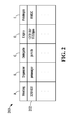
- FIG. 2 is a schematic diagram of a data record stored within the system of FIG. 1 upon the designation of a delegate;
- FIG. 3 is a sequence diagram illustrating interaction between various components of the system of FIG. 1 during system operation.
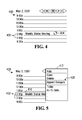
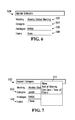
- FIGS. 4 -8 illustrate a graphical user interfaces for designation of a delegate that are presented at a wireless communication device of the system of FIG. 1 .
- FIG. 1 schematically illustrates an exemplary system 10 that permits user 12 of electronic calendaring software 14 (which, in the present embodiment, is an electronic calendaring component of a collaborative software application, such as Microsoft® Exchange Server, Novell® GroupWise®, or IBM® Lotus Domino®), who has earlier used the software 14 to schedule a meeting with one or more other users of the software ("meeting invitees"), to designate one of those users as a delegate for the purpose of modifying the electronically scheduled meeting.
- electronic calendaring software 14 which, in the present embodiment, is an electronic calendaring component of a collaborative software application, such as Microsoft® Exchange Server, Novell® GroupWise®, or IBM® Lotus Domino®
- the system includes a server 16 which executes the electronic calendaring software 14, as well as a middleware server 18, a computer 20, two wireless communication devices 26 and 28, and a number of other components as described hereinafter.
- Server 16 is a conventional server executing conventional electronic calendaring software 14.
- the software 14 may be loaded into volatile or non-volatile memory of middleware server 16 from a machine-readable medium 15, such as an optical disk or magnetic storage medium, prior to its execution.
- the electronic calendaring software 14 maintains or distinguishes between accounts for different users and permits a meeting organizer 12 to electronically schedule a meeting using his/her account, such that meeting invitations are automatically sent to other users' accounts including the account of user 32.
- User accounts are accessed via client software applications executing on client computing devices. In the present embodiment, this includes client software application 24 executing on computer 20 and client software 30 executing on wireless communication device 26 and 28.
- the middleware server 18 is a server executing middleware software 19 effecting automatic synchronization of users' collaborative software records (including electronic calendars) between server 16 and wireless communication devices 26 and 28, according to a "push" content delivery model.
- Middleware software 19 conventionally has full access (i.e. read/write/delete/create access) to the calendar of all users, including users 12 and 32, to facilitate its synchronization responsibilities.
- the synchronization responsibilities of software 19 may involve encrypting and compressing communication traffic with wireless communication devices 26 and 28 in a known manner.
- the middleware software 19 differs from conventional middleware software, however, in that it is designed to support the modification of electronic meeting definitions by delegate users as outlined above.
- the software 19 may be loaded into volatile or non-volatile memory of middleware server 18 from a machine-readable medium 21, such as an optical disk or magnetic storage medium, prior to its execution.
- Middleware server 18 is capable of intercommunication with server 16 by way of a local area network (LAN) 22, to which both devices are connected.
- LAN local area network
- the middleware server 18 is interconnected to the Internet 34 by way of a conventional firewall.
- Computer 20 is a conventional computer, such as a Intel® or AMDTM processor-based desktop personal computer or laptop computer having a display such as a liquid crystal display.
- Computer 20 executes a client software application 24 having electronic calendaring capabilities that, in conjunction with electronic calendar software 14, permit users to schedule meetings with other users.
- the client software 24 has been enhanced from a conventional client software application, such as Microsoft® Outlook® or the like, in order to provide delegate designation capabilities, as will be described.
- the software 24 may be loaded into volatile or non-volatile memory of computer 20 from a machine-readable medium 25, such as an optical disk or magnetic storage medium, prior to its execution.
- Computer 20 is used by a first user 12 who will act as a meeting organizer. In the present embodiment the user 12 is named "Paul Manager" has accordingly has an electronic user account with username "pmanager".
- Computer 20 intercommunicates with server 16 by way of LAN 22.
- Wireless communication devices 26 and 28 are two-way paging devices, each having an input device (a keyboard), an output device (a liquid crystal display), a processor in communication with volatile and non-volatile memory, and various other conventional components.
- the first wireless communication device 26 is assigned to the meeting organizer 12, while the second wireless communication device 28 is assigned to a second user 32 whom the meeting organizer intends to designate as his delegate.
- the second user 32 is named "John Smith” has accordingly has an electronic user account with username "jsmith”.
- the memory of each of devices 26 and 28 stores client software application 30, which provides similar capabilities to those of client software application 24, but is designed for execution at a wireless computing device.
- the client software application 30 is designed to support a delegate designation capability, as described hereinafter.
- Both devices 26 and 28 intercommunicate with server 16 by way of middleware server 18, the public Internet 34, relay 36 within wide area network (WAN) 38, and a wireless network 40. More specifically, the middleware server 18 coordinates intercommunication between client software 30 at the wireless communication devices 26, 28 and electronic calendaring software 14 at server 16, e.g. for the purpose of synchronizing a remote copy of the user's electronic calendar at the wireless communication device 26, 28 with a centrally maintained electronic calendar at server 16.
- WAN wide area network
- Wide area network 38 hosts a relay 36 whose purpose is essentially to buffer electronic calendaring synchronization commands destined for wireless communication devices 26 and/or 28 while those devices are inaccessible (e.g. powered down or out of communication range of wireless network 40) and to forward the commands to the devices 26 and/or 28 once they have become accessible.
- Relay 36 may maintain information regarding a current network 40 with which the devices 26, 28 are communicating.
- WAN 38 is interconnected to the Internet 34 by way of a conventional firewall.
- Wireless network 40 supports data communication between the relay 36 and the wireless communication devices 26 and 28.
- the network 40 may employ the MobitexTM, DataTACTM or General Packet Radio Service (GPRS) mobile data communication technologies.
- GPRS General Packet Radio Service
- the network 40 may also support voice communication.
- a data record 202 stored within a table 200 of a rules database at middleware server 18 is illustrated.
- the record 200 has a meeting identifier field A, an organizer identifier field B, a delegate identifier field C, an expiry field D and a privileges field E.
- the record 200 is created upon the designation of user 32 as a delegate of meeting organizer 12. It is intended for use by the middleware server 18 for determining whether commands to modify an electronic meeting definition received from users other than the meeting organizer should be effected.
- a sequence diagram 300 illustrates the operation of the present embodiment in two phases: designation of a user as a delegate of a meeting organizer (phase I) and modification by the delegate of an electronic meeting definition previously defined by the meeting organizer (phase II).
- the illustrated sequence diagram 300 shows intercommunication between four components of system 10: electronic calendaring software 14, middleware server 18, wireless communication device 26 and wireless communication device 28, during system operation.
- the meeting organizer 12 initially interacts with the collaborative client software 30 at the wireless communication device 26 to schedule a meeting using the meeting organizer's electronic user account (the "meeting organizer account").
- the meeting organizer may perform such conventional steps as selecting a time for the meeting, identifying a list of meeting invitees, and providing a textual label (e.g. "Weekly Status Meeting") for the meeting.
- the interaction causes a "create meeting" command 302 ( FIG. 3 ) with the above-noted information to be sent from the device 26 to the middleware server 18, so as to cause an electronic meeting definition reflective of the scheduled meeting to be created within electronic calendaring software 14.
- the nature of the electronic meeting definition is specific to the electronic calendaring software 14, and may for example comprise a data structure, data record or instance of an object-oriented class.
- the command 302 is communicated to server 16 by way of wireless network 40, WAN 38, relay 36 and Internet 34, in a conventional manner.
- the command 302 may conform to the proprietary Compressed iCalendar (CICAL) protocol that is conventionally used for calendar synchronization between certain types of wireless communication devices and middleware server 18.
- CICAL Compressed iCalendar
- the middleware server 18 Upon receiving the command 302, the middleware server 18 generates an equivalent command 304 in a proprietary format understood by electronic calendaring software 14 (i.e. "translates" the command 302 from a format understood by middleware server into a format that is understood by electronic calendaring software 14) and sends it to the server 16 for execution by electronic calendaring software 14.
- a convention is adopted in FIG. 3 whereby the arrows used to represent the sending of semantically equivalent commands are horizontally aligned head to tail within sequence diagram 300. Receipt of the command 304 causes the electronic calendaring software 14 to create an electronic meeting definition representative of the meeting.
- meeting organizer 12 could have alternatively scheduled the meeting using client software application 24 executing at computer 20, rather than client software 30 executing at wireless communication device 26.
- client software application 24 executing at computer 20
- client software 30 executing at wireless communication device 26.
- the "create meeting" command would have been sent from computer 20 to server 16, and commands 302 and 304 would not have been sent.
- the meeting organizer 12 specifies a list of meeting invitees including user 32 ( FIG. 1 ) by way of their account usernames.
- the act of scheduling the meeting automatically causes an invitation to be sent to each invitee, including user 32.
- the invitation is pushed to the device 28 (by way of middleware server 18, Internet 34, relay 36 within WAN 38, and wireless network 40) through conventional calendar synchronization techniques.
- This is illustrated in FIG. 3 as a first communication 306 from server 16 to middleware server 18 and a second communication 308 from middleware server 18 to the device 28.
- communications 306 and 308 are aligned within sequence diagram 300 to connote their semantic equivalence. It will be appreciated that communication 306 may actually represent active monitoring of electronic calendaring software 14 by middleware server 18.
- a communication 310 reflective of this acceptance is sent from device 28 to the middleware server 18, and is relayed by server 18 as communication 312 to the electronic calendaring software 14, again through conventional techniques.
- the scheduled meeting appears as an appointment 402 within the GUI 400 ( FIG. 4 ) at the device 28 of the user 32.
- the scheduled meeting also appears as an appointment within the GUI 400 at the device 26 of the meeting organizer 30, but this is not contingent upon acceptance of the invitation by user 32.
- an icon 404 ( FIG. 4 ) is displayed within GUI 400 at both devices 26 and 28 to indicate this fact.
- the meeting organizer 12 uses features of client software 30 which distinguish it from conventional versions of such software, interacts with GUI 400 at wireless communication device 26 for the purpose of appointing a delegate for modifying the electronic meeting definition associated with the newly scheduled meeting (320, FIG. 3 ).
- the meeting organizer 12 highlights the appointment 402 as shown at 410 and selects appropriate controls (e.g. depresses a thumbwheel) at the wireless communication device 26 to cause a menu 412 to be displayed.
- the menu 412 includes a number of menu items representing user-selectable actions. Some of the actions are meeting-specific, i.e. pertain to the currently highlighted appointment (e.g. Open, Delete, Appoint Delegate) while other actions are not specific to the currently selected appointment (e.g. Help, Today, Go to Date). All menu items but the Appoint Delegate menu item 420 are conventional.
- the meeting organizer selects Appoint Delegate menu item 420.
- an Appoint Delegate GUI 500 of FIG. 6 is displayed.
- the GUI 500 prompts the meeting organizer for various delegation parameters including the identity of the user to act as a delegate, the delegated privileges and the expiry time of the delegation (if any). More specifically GUI 500 includes a meeting identifier field 502, a delegate identifier field 504, a delegation expiry time field 506 and a privileges field 508. These fields are initially populated with the default values shown in FIG. 6 .
- Meeting identifier field 502 identifies the electronic meeting definition within electronic calendaring software 14 in respect of which a delegate is to be appointed.
- the relevant meeting definition is known to be the one associated with appointment 402. Accordingly, the textual label of the associated electronic meeting definition, i.e. "Weekly Status Meeting", appears within field 502.
- the user may change the value in field 502 to indicate another electronic meeting definition. This may involve selecting a meeting from a list of previously scheduled meetings.
- the value of field 502 may initially be blank.
- Delegate identifier field 504 identifies the user to be appointed as a delegate for modifying the electronic meeting definition identified by meeting identifier field 502.
- the delegate identifier field 504 is initially blank.
- field 504 may initially be populated with a default value identifying, e.g., the username of the first meeting invitee or of a pre-designated default delegate user.
- a GUI element such as a drop-down list may be used to provide a list of meeting invitees by their usernames (user accounts), from which one user may be selected as the delegate.
- Privileges field 506 specifies the exact privileges to be granted to the delegate for modifying the meeting definition. By default, read/write/delete/create privileges are granted. This permits the delegate to change one or more of the start time of the meeting, the end time of the meeting, the duration of the meeting and documents posted in conjunction with the meeting, as well as to delete the meeting outright or create a new meeting.
- Delegation expiry time field 508 specifies an expiry time for the delegation after which the user is to cease being a delegate for modifying the electronic meeting definition in question. Completion of this field is optional. If left blank, the delegate designation remains effective until it is revoked by the meeting organizer.
- the setting of delegation parameters is illustrated in FIG. 7 .
- the only two fields whose values are changed from their default values are delegate field 504 and delegation expiry time field 508.
- the username "jsmith" is specified.
- the value of field 508 is set by selecting that field and activating a control to cause menu 510 to be displayed.
- the menu 510 lists three menu items (options). Selection of the first menu item, "None”, indicates that the delegation is to persist until it is revoked by the meeting organizer. Selection of the second menu item, "End of meeting”, indicates that the delegation shall expire at the scheduled end time of the meeting (which, in the example, is 3:00 PM, May 2, 2007 - see FIG. 4 ).
- Selection of the third menu item permits specification of a date and time at which the delegation shall expire.
- the third option is selected, as shown in FIG. 7 , and that an expiry time of December 31, 2007, 11:59 PM is specified.
- the resultant values of the delegation parameters are as shown in FIG. 8 .
- the wireless communication device 26 Upon confirmation by the meeting organizer 12 of the desired set of delegation parameters, as shown in FIG. 8 (which confirmation may be performed by selecting an "OK” button or similar GUI element), the wireless communication device 26 sends an "appoint delegate” command 322 ( FIG. 3 ), along with these delegation parameters, to the middleware server 18.
- Receipt of this command 322 at middleware server 18 causes middleware server 18 to send a communication 324 to the wireless communication device 28 for seeking confirmation from the prospective delegate 32 as to whether the designation is accepted. Assuming that the user 32 accepts the designation at 326, confirmation 330 of the acceptance is communicated to the middleware server 18. Receipt of confirmation 330 triggers special processing 332 ( FIG. 3 ) at middleware server 18 for configuring the server 18 to communicate any future commands originating from delegate 32 as though they originate from the meeting organizer 12. This special processing 332 constitutes creating of a data record 202 ( FIG. 2 ), described above, within table 200 of the rules database at middleware server 18. This concludes phase I of the system operation shown in FIG. 3 .
- the middleware server 18 may not seek confirmation of the designation, but may instead simply send a notification message to the wireless communication device 28 of the delegate 32 simply to inform him/her of the designation.
- the delegate 32 enters a command to modify the electronic meeting definition using software 30 at wireless communication device 28.
- Command entry may involve using GUI 400 ( FIG. 4 ) to select the appointment 402 and then causing a menu similar to the menu 412, but without the "Appoint Delegate” option (which is reserved for the meeting organizer 12 in the present embodiment), to be displayed.
- the delegate 32 selects the "Open" menu option within menu 412. This causes a GUI page to be displayed with appointment details, such as start time, end time, invitees, recurrence, a list of posted documents, and so forth.
- the delegate 32 can make one or more modifications to the electronic meeting definition including: changing the meeting start time, meeting end time or meeting duration; adding to, removing from or changing a set of documents posted in conjunction with the electronic meeting definition; adding to, removing from or changing a list of meeting invitees; deleting the electronic meeting definition; causing a unique meeting to become a recurring meeting (or vice-versa); creating a new electronic meeting definition; adding/deleting new attachments; adding/modifying hyperlinks in the body (notes modifications); modifying reminder times; modifying free/busy status; changing importance (e.g. low/medium/high); and changing attendee status (required, tentative, etc.)
- a "modify meeting" command 340 ( FIG. 3 ) indicating the identity of the delegate 32 (jsmith), the identity of the electronic meeting definition to be modified (3201031), and the modification(s) to be made is sent from the device 28 to the middleware server 18.
- the middleware server 18 Upon receiving command 340 from the account of user jsmith, the middleware server 18 performs a lookup in its rules database to determine whether the indicated user jsmith is a delegate (delegate account) for making the specified modifications the specified electronic meeting definition 3201031 and to confirm that the delegation has not expired (342, FIG. 3 ).
- the middleware server 18 When this determination is made in the positive, the middleware server 18 generates a version 344 of command 340 that is understood by the electronic calendaring software 14 and which appears to originate from the account of meeting organizer 12, as indicated by the dotted arrow 335 of FIG. 3 .
- the identity of the meeting organizer 12 ("pmanager") from whom the command 344 is made to ostensibly originate may be taken from field B of record 202 ( FIG. 2 ).
- the command 344 is sent to the electronic calendaring software 14 at server 16, which accepts and performs the command (346) as if it originated from the account of meeting organizer 12. This is possible because the middleware server 18 has full access to the calendar of all users, including user 12.
- the delegate is authorized to modify electronic meeting definitions on a meeting-specific basis, the security of any other electronic meeting definitions scheduled by the meeting organizer (to which delegate access may not be desired) is enhanced, and inadvertent modification of such other electronic meeting definitions by the delegate may be prevented. Also, to the extent that the delegated authority has an associated expiry time, the possibility of later inadvertent modification of the meeting definition by the delegate is eliminated. As well, when an expiry time has been specified, automatic withdrawal of the delegate's authority reduces the burden on a meeting organizer by eliminating the need for positive action to be taken to withdraw the delegate's authority once access to the electronic meeting definition is no longer desirable. Finally, to the extent that the delegation is performed via a wireless communication device, it may be conveniently performed without regard to the presence of a wired computer terminal.
- command 340 had arrived from a non-delegate user account or had arrived after the specified delegation expiry time, the command 340 would have been rejected during operation 342 ( FIG. 3 ), and command 344 would not have been generated or sent.
- the record 202 ( FIG. 2 ) is removed from the table 200.
- the meeting-specific delegate appointment by meeting organizer 12 as described above in conjunction with FIG. 3 could have been performed using the client software 24 at computer 20 rather than client software 30 at wireless communication device 26.
- the client software 24 provides a similar user interface to that shown in FIGS. 5-8 for appointing a delegate. The result of the designation would the same: record 202 would be created in table 200 ( FIG. 2 ).
- requests to modify a meeting that are received from a wired computer 20 executing the client software application 24, even if from the account of a delegate, may be rejected, because the request may bypass the middleware server 18, which is the component that "fools" the electronic calendaring software 14 into modifying the definitions. This may be the case when it is anticipated that delegates will only modify meetings using their wireless communication devices. However, in other embodiments, a mechanism may be in place to ensure that such requests are honored, even from wired computers. For example, all requests to modify a meeting that are generated by a client software application 24 executing on a wired computer 20 could be "intercepted" by the middleware server 18, regardless of whether the requests are from the account of a delegate or another user.
- the interception could be implemented by physically intercepting data destined for electronic calendaring software 14 or through the use of "callbacks" to the middleware server 18 from the from the electronic calendaring software 14 and/or server 16 which are triggered by the receipt of such a request.
- callback mechanisms are well understood in the art, although they are not known to be used in this context.
- modification privileges are granted to electronic meeting definitions on a meeting-specific basis, which prevents a delegate from inadvertently modifying other electronic meeting definitions (as may occur when a universal delegate is designated). Delegated privileges may be made to expire if desired.
- both the appointment of a delegation and the delegate's subsequent modification of the relevant electronic meeting definition may be performed from a wireless communication device-based client. As a result, these tasks may even be performed from a meeting room which lacks conventional networked computers, e.g. during an ongoing meeting.
- the command 344 generated by the middleware server 18 for causing the electronic calendaring software 14 to make the desired modification(s) to the relevant electronic meeting definition is made to appear as having originated from the meeting organizer. This is not absolutely required. In some embodiments, the command could be made to appear as having originated from the account of another user, such as a "super-user" having the necessary privileges to make any desired modification to the relevant electronic meeting definitions.
Landscapes
- Business, Economics & Management (AREA)
- Human Resources & Organizations (AREA)
- Engineering & Computer Science (AREA)
- Strategic Management (AREA)
- Entrepreneurship & Innovation (AREA)
- Operations Research (AREA)
- Economics (AREA)
- Marketing (AREA)
- Data Mining & Analysis (AREA)
- Quality & Reliability (AREA)
- Tourism & Hospitality (AREA)
- Physics & Mathematics (AREA)
- General Business, Economics & Management (AREA)
- General Physics & Mathematics (AREA)
- Theoretical Computer Science (AREA)
- Information Transfer Between Computers (AREA)
Priority Applications (2)
| Application Number | Priority Date | Filing Date | Title |
|---|---|---|---|
| EP08152189A EP2096588A1 (fr) | 2008-02-29 | 2008-02-29 | Désignation d'un délégué pour modifier une définition de réunion électronique à l'aide d'un logiciel de gestion d'agenda électronique |
| CA 2653087 CA2653087A1 (fr) | 2008-02-29 | 2009-02-06 | Designation de delegue permettant de modifier la definition d'une reunion electronique au moyen d'un logiciel de gestion d'agenda electronique |
Applications Claiming Priority (1)
| Application Number | Priority Date | Filing Date | Title |
|---|---|---|---|
| EP08152189A EP2096588A1 (fr) | 2008-02-29 | 2008-02-29 | Désignation d'un délégué pour modifier une définition de réunion électronique à l'aide d'un logiciel de gestion d'agenda électronique |
Publications (1)
| Publication Number | Publication Date |
|---|---|
| EP2096588A1 true EP2096588A1 (fr) | 2009-09-02 |
Family
ID=39529387
Family Applications (1)
| Application Number | Title | Priority Date | Filing Date |
|---|---|---|---|
| EP08152189A Ceased EP2096588A1 (fr) | 2008-02-29 | 2008-02-29 | Désignation d'un délégué pour modifier une définition de réunion électronique à l'aide d'un logiciel de gestion d'agenda électronique |
Country Status (2)
| Country | Link |
|---|---|
| EP (1) | EP2096588A1 (fr) |
| CA (1) | CA2653087A1 (fr) |
Cited By (3)
| Publication number | Priority date | Publication date | Assignee | Title |
|---|---|---|---|---|
| US9871801B2 (en) | 2015-08-28 | 2018-01-16 | Microsoft Technology Licensing, Llc | Secure computing system record access control |
| US9954863B2 (en) | 2015-08-28 | 2018-04-24 | Microsoft Technology Licensing, Llc | Computing system record security architecture |
| US10169547B2 (en) | 2015-08-28 | 2019-01-01 | Microsoft Technology Licensing, Llc | Secure computing system record transfer control |
Citations (3)
| Publication number | Priority date | Publication date | Assignee | Title |
|---|---|---|---|---|
| US6101480A (en) | 1998-06-19 | 2000-08-08 | International Business Machines | Electronic calendar with group scheduling and automated scheduling techniques for coordinating conflicting schedules |
| WO2005053323A2 (fr) * | 2003-11-19 | 2005-06-09 | Idea Place Corporation | Systemes de methodes de logiciel de groupe |
| US20070174104A1 (en) * | 2006-01-26 | 2007-07-26 | O'sullivan Patrick J | Method and system for rotating roles in calendar events |
-
2008
- 2008-02-29 EP EP08152189A patent/EP2096588A1/fr not_active Ceased
-
2009
- 2009-02-06 CA CA 2653087 patent/CA2653087A1/fr not_active Abandoned
Patent Citations (3)
| Publication number | Priority date | Publication date | Assignee | Title |
|---|---|---|---|---|
| US6101480A (en) | 1998-06-19 | 2000-08-08 | International Business Machines | Electronic calendar with group scheduling and automated scheduling techniques for coordinating conflicting schedules |
| WO2005053323A2 (fr) * | 2003-11-19 | 2005-06-09 | Idea Place Corporation | Systemes de methodes de logiciel de groupe |
| US20070174104A1 (en) * | 2006-01-26 | 2007-07-26 | O'sullivan Patrick J | Method and system for rotating roles in calendar events |
Non-Patent Citations (4)
| Title |
|---|
| EZEDIN BARKA AND RAVI SANDHU AND RAVI S: "A Role-Based Delegation Model and Some Extensions", 2000, Retrieved from the Internet <URL:http://www.list.gmu.edu/confrnc/nissc/rbdm00.pdf> [retrieved on 20090806] * |
| THORSTEN HAMPEL ED - UFFEKOCK WIIL: "Access Rights - The Keys to Cooperative Work/Learning", METAINFORMATICS LECTURE NOTES IN COMPUTER SCIENCE;;LNCS, SPRINGER-VERLAG, BE, vol. 3511, 1 January 2005 (2005-01-01), pages 14 - 31, XP019012355, ISBN: 978-3-540-27328-8 * |
| UFFEKOCK WILL: "Meta-informatics Lecture Notes in Computer Science", vol. 3511, 1 January 2005, SPRINGER-VERLAG, article "Access Rights - The keys to co-operative work/ learning", pages: 14 - 31 |
| ZHIYONG ZHANG; LIN YANG; QINGQI PEI; JIANFENG MA: "Research on Usage Control Model with Delegation Characteristics Based on OM-AM Methodology", 21 September 2007 (2007-09-21), pages 238 - 242, Retrieved from the Internet <URL:http://ieeexplore.ieee.org/stamp/stamp.jsp?arnumber=04351491> [retrieved on 20090806] * |
Cited By (3)
| Publication number | Priority date | Publication date | Assignee | Title |
|---|---|---|---|---|
| US9871801B2 (en) | 2015-08-28 | 2018-01-16 | Microsoft Technology Licensing, Llc | Secure computing system record access control |
| US9954863B2 (en) | 2015-08-28 | 2018-04-24 | Microsoft Technology Licensing, Llc | Computing system record security architecture |
| US10169547B2 (en) | 2015-08-28 | 2019-01-01 | Microsoft Technology Licensing, Llc | Secure computing system record transfer control |
Also Published As
| Publication number | Publication date |
|---|---|
| CA2653087A1 (fr) | 2009-08-29 |
Similar Documents
| Publication | Publication Date | Title |
|---|---|---|
| US20090222747A1 (en) | Designation of delegate for modifying an electronic meeting definition defined using electronic calendaring software | |
| USRE49719E1 (en) | Managing a virtual waiting room for online meetings | |
| CN1744488B (zh) | 在即时消息传送会话内共享数据 | |
| JP7183154B2 (ja) | タスク管理アプリケーションにおける効率向上 | |
| JP4900798B2 (ja) | インスタント・メッセージング・インターフェースを介してカレンダ・エントリをスケジュールする方法 | |
| US8577974B2 (en) | Conference server simplifying management of subsequent meetings for participants of a meeting in progress | |
| US20060200374A1 (en) | Automatic scheduling method and apparatus | |
| US8091035B2 (en) | System and method for sharing data | |
| US11770354B2 (en) | Facilitating cross-organization communications | |
| US20150120577A1 (en) | Systems and methods for enterprise management using contextual graphs | |
| US20040141005A1 (en) | System and method for integrating online meeting materials in a place | |
| US20140207511A1 (en) | System and method for providing temporary and limited grants of calendar access | |
| US20090281843A1 (en) | Calendar scheduling systems | |
| CN114667527B (zh) | 跨域的智能事件时间桥 | |
| US20190244156A1 (en) | A computerized method and a system for dynamic communication | |
| US11049076B2 (en) | Routing of meeting requests and follow-up queries by digital assistants | |
| US20240121124A1 (en) | Scheduled synchronous multimedia collaboration sessions | |
| CA2653087A1 (fr) | Designation de delegue permettant de modifier la definition d'une reunion electronique au moyen d'un logiciel de gestion d'agenda electronique | |
| JP2015170032A (ja) | スケジュール調整プログラム、スケジュール調整方法、及びスケジュール調整装置 | |
| WO2001037541A2 (fr) | Systeme et technique d'ordonnancement reparti |
Legal Events
| Date | Code | Title | Description |
|---|---|---|---|
| PUAI | Public reference made under article 153(3) epc to a published international application that has entered the european phase |
Free format text: ORIGINAL CODE: 0009012 |
|
| 17P | Request for examination filed |
Effective date: 20080308 |
|
| AK | Designated contracting states |
Kind code of ref document: A1 Designated state(s): AT BE BG CH CY CZ DE DK EE ES FI FR GB GR HR HU IE IS IT LI LT LU LV MC MT NL NO PL PT RO SE SI SK TR |
|
| AX | Request for extension of the european patent |
Extension state: AL BA MK RS |
|
| 17Q | First examination report despatched |
Effective date: 20090818 |
|
| AKX | Designation fees paid |
Designated state(s): AT BE BG CH CY CZ DE DK EE ES FI FR GB GR HR HU IE IS IT LI LT LU LV MC MT NL NO PL PT RO SE SI SK TR |
|
| AXX | Extension fees paid |
Extension state: RS Payment date: 20080308 Extension state: MK Payment date: 20080308 Extension state: BA Payment date: 20080308 Extension state: AL Payment date: 20080308 |
|
| RAP1 | Party data changed (applicant data changed or rights of an application transferred) |
Owner name: BLACKBERRY LIMITED |
|
| RAP1 | Party data changed (applicant data changed or rights of an application transferred) |
Owner name: BLACKBERRY LIMITED |
|
| STAA | Information on the status of an ep patent application or granted ep patent |
Free format text: STATUS: THE APPLICATION HAS BEEN REFUSED |
|
| 18R | Application refused |
Effective date: 20131001 |