EP2096860A2 - Appareil de traitement d'images, procédé de traitement d'images et produit de programme informatique - Google Patents
Appareil de traitement d'images, procédé de traitement d'images et produit de programme informatique Download PDFInfo
- Publication number
- EP2096860A2 EP2096860A2 EP09250415A EP09250415A EP2096860A2 EP 2096860 A2 EP2096860 A2 EP 2096860A2 EP 09250415 A EP09250415 A EP 09250415A EP 09250415 A EP09250415 A EP 09250415A EP 2096860 A2 EP2096860 A2 EP 2096860A2
- Authority
- EP
- European Patent Office
- Prior art keywords
- image
- color
- images
- image data
- unit
- Prior art date
- Legal status (The legal status is an assumption and is not a legal conclusion. Google has not performed a legal analysis and makes no representation as to the accuracy of the status listed.)
- Granted
Links
- 238000012545 processing Methods 0.000 title claims abstract description 361
- 238000004590 computer program Methods 0.000 title claims description 8
- 238000003672 processing method Methods 0.000 title description 5
- 238000006243 chemical reaction Methods 0.000 claims abstract description 127
- 238000000034 method Methods 0.000 claims description 58
- 230000005540 biological transmission Effects 0.000 description 46
- 230000008569 process Effects 0.000 description 42
- 238000012937 correction Methods 0.000 description 34
- 238000007639 printing Methods 0.000 description 18
- 238000010586 diagram Methods 0.000 description 17
- 239000003086 colorant Substances 0.000 description 12
- 238000009499 grossing Methods 0.000 description 8
- 238000007796 conventional method Methods 0.000 description 6
- 238000005516 engineering process Methods 0.000 description 5
- 230000006870 function Effects 0.000 description 5
- 230000002708 enhancing effect Effects 0.000 description 4
- 238000004891 communication Methods 0.000 description 3
- 230000006866 deterioration Effects 0.000 description 3
- 238000009792 diffusion process Methods 0.000 description 3
- 238000002310 reflectometry Methods 0.000 description 3
- 238000004088 simulation Methods 0.000 description 3
- 239000000470 constituent Substances 0.000 description 2
- 230000008094 contradictory effect Effects 0.000 description 2
- 238000009877 rendering Methods 0.000 description 2
- XUIMIQQOPSSXEZ-UHFFFAOYSA-N Silicon Chemical compound [Si] XUIMIQQOPSSXEZ-UHFFFAOYSA-N 0.000 description 1
- 230000015572 biosynthetic process Effects 0.000 description 1
- 230000000295 complement effect Effects 0.000 description 1
- 238000007906 compression Methods 0.000 description 1
- 230000006835 compression Effects 0.000 description 1
- 238000010276 construction Methods 0.000 description 1
- 238000013144 data compression Methods 0.000 description 1
- 238000013500 data storage Methods 0.000 description 1
- 238000011161 development Methods 0.000 description 1
- 230000002427 irreversible effect Effects 0.000 description 1
- 239000004973 liquid crystal related substance Substances 0.000 description 1
- 229910044991 metal oxide Inorganic materials 0.000 description 1
- 150000004706 metal oxides Chemical class 0.000 description 1
- 238000012986 modification Methods 0.000 description 1
- 230000004048 modification Effects 0.000 description 1
- 230000006855 networking Effects 0.000 description 1
- 230000002093 peripheral effect Effects 0.000 description 1
- 239000004065 semiconductor Substances 0.000 description 1
- 229910052710 silicon Inorganic materials 0.000 description 1
- 239000010703 silicon Substances 0.000 description 1
- 238000012546 transfer Methods 0.000 description 1
Images




Classifications
-
- H—ELECTRICITY
- H04—ELECTRIC COMMUNICATION TECHNIQUE
- H04N—PICTORIAL COMMUNICATION, e.g. TELEVISION
- H04N1/00—Scanning, transmission or reproduction of documents or the like, e.g. facsimile transmission; Details thereof
- H04N1/46—Colour picture communication systems
- H04N1/56—Processing of colour picture signals
- H04N1/60—Colour correction or control
- H04N1/6072—Colour correction or control adapting to different types of images, e.g. characters, graphs, black and white image portions
-
- H—ELECTRICITY
- H04—ELECTRIC COMMUNICATION TECHNIQUE
- H04N—PICTORIAL COMMUNICATION, e.g. TELEVISION
- H04N1/00—Scanning, transmission or reproduction of documents or the like, e.g. facsimile transmission; Details thereof
- H04N1/387—Composing, repositioning or otherwise geometrically modifying originals
- H04N1/3872—Repositioning or masking
- H04N1/3873—Repositioning or masking defined only by a limited number of coordinate points or parameters, e.g. corners, centre; for trimming
- H04N1/3875—Repositioning or masking defined only by a limited number of coordinate points or parameters, e.g. corners, centre; for trimming combined with enlarging or reducing
Definitions
- Figs. 1 to 9 are diagrams for explaining an image processing apparatus, an image processing method, and an image processing computer program product according to an embodiment of the present invention.
- Fig. 1 is a block diagram of an MFP 1 according to the embodiment.
- the reading unit 2 scans the fed original in a main scanning direction and in a sub-scanning direction, reads an image on the original at a predetermined resolution based on image density information of the original, generates digital image data of predetermined bits (e.g., 8 bits) of RGB color model, and sends the RGB image data to the first image-data processing unit 3.
- the reading unit 2 can also be configured to use a contact image sensor (CIS) or a complementary metal oxide semiconductor (CMOS) for reading originals.
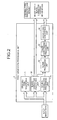
- the first image-data processing unit 3 performs image processing of the digital image data output by the reading unit 2 such that the image data possesses predetermined characteristics.
- the predetermined characteristics of the image data provided by the first image-data processing unit 3 vary according to the destination to which the image data stored in the MFP 1 is to be sent for further processing. The details of the predetermined characteristics of the image data are given later.
- the plotter I/F unit 9 receives digital image data of CMYK via the standard I/F integrated in the CPU 7. Subsequently, the plotter I/F unit 9 performs bus-bridge processing and sends the image data to a dedicated I/F for the plotter unit 10. Meanwhile, a PCI-Express bus is used as the standard I/F integrated in the CPU 7.
- the ROM 15 is used to store basic programs of the MFP 1, an image processing program described later in detail, and necessary system data. Based on the software programs stored in the ROM 15, the CPU 7 controls operations such as basic operations and image processing operations of the MFP 1. While controlling the operations of the MFP 1, the CPU 7 uses the memory 8 as a work memory.
- the line I/F unit 12 is used to connect the expansion bus 17 of PCI-Express standard to a telephone line. That enables the MFP 1 to communicate data with external telecommunication devices such as a facsimile device FX.
- the external I/F unit 13 is used to connect the expansion bus 17 of PCI-Express standard to an external device and enables data communication therebetween.
- the external I/F unit 13 can be connected to a network such as Ethernet (registered trademark) that includes the external device.
- the external I/F unit 13 is also connected to an external medium via the external-medium connecting unit 16 such as a universal serial bus (USB).
- a typical example of the external device is a PC. In that case, a user can use an application program or a driver installed in the PC to control the operations of the MFP 1 or to perform input-output of data with respect to the MFP 1.
- An example of the external medium is a memory device such as a Compact Flash (registered trademark) card or a secure digital (SD) card that is used to store digital data such as image data.
- the external I/F unit 13 enables communication of image data between the MFP 1 and the external medium.
- the black-character identifying unit 22 identifies portions of black characters from the received digital image data under characteristics based on reflectivity property. Subsequently, the black-character identifying unit 22 appends black-character portion information to the image data and sends the appended image data to a subsequent processing block as well as to the filter processing unit 24.
- the black-character identifying unit 22 can be configured to identify portions of black-characters by using any known technique (see, for example, Japanese Patent No. 3983101 ).
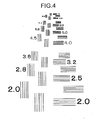
- the filter processing unit 24 performs predetermined filter processing on gamma-corrected image data and corrects modulation transfer function (MTF) characteristics of the reading unit 2 to predetermined characteristics. More particularly, when the reading unit 2 scans patterns of a standard chart as shown in Fig. 4 , the filter processing unit 24 converts scan lines per inch to predetermined MTF characteristic values Moreover, based on the black-character portion information, the filter processing unit 24 varies the processes performed by the second image-data processing unit 5.
- MTF modulation transfer function
- the color-conversion processing unit 25 converts the color space of the reading unit 2 to a predetermined color space. It is desirable that the color space in the color-conversion processing unit 25 is sufficiently large with respect to the image data received from the reading unit 2 such that the image data is not clipped or compressed. However, if the color space in the color-conversion processing unit 25 is too large, then problem might occur in gradation adjustment. Thus, in the MFP 1, when the reading unit 2 scans a chart as shown in Fig. 3 , the color-conversion processing unit 25 converts the color space to AdobeRGB, which is one of the standardized color spaces.
- the resolution converting unit 26 converts the resolution of the image data received from the reading unit 2 to a predetermined resolution of, although not limited to, 600 dots per inch (dpi).
- the first image-data processing unit 3 provides predetermined characteristics to the image data and sends that image data as well as the black-character portion information to the bus control unit 4.
- the original-type identifying unit (image identifying unit) 21 in the first image-data processing unit 3 performs auto color select (ACS) processing to determine whether the image data received from the reading unit 2 is image data on a color original or image data on a monochrome original, and obtains original-type identification result regarding the image data.
- ACS auto color select
- the image data and the corresponding original-type identification result can be sent to various data buses.
- the CPU 7 reads only the original-type identification result after ACS processing is performed with respect to each frame of image data.
- the bus control unit 4 receives the image data appended with the black-character portion information from the first image-data processing unit 3 and stores that data into the memory 8 via the CPU 7.
- the MFP 1 also stores that data in the HDD 6. Moreover, the MFP 1 sends the image data appended with the black-character portion information from the memory 8 to the second image-data processing unit 5 via the CPU 7 and the bus control unit 4.
- the resolution converting unit 33 converts the resolution of the CMYK image data to a resolution suitable for the plotter unit 10. Thus, e.g., if the plotter unit 10 can output an image at 600 dpi and if the resolution converting unit 26 in the first image-data processing unit 3 has already converted the resolution to 600 dpi, then the resolution converting unit 33 does not perform resolution conversion.
- the bus control unit 4 stores the image data processed by the second image-data processing unit 5 in the memory 8 via the CPU 7.
- the MFP 1 is configured to read an image processing program, which is used to implement an image processing method according to the embodiment, from a computer-readable recording medium, install the image processing program in the ROM 15 or the HDD 6, and execute the image processing program for implementing the image processing method.
- the image processing program is a computer-executable program written in a legacy programming language or an object-oriented programming language (e.g., assembler language, C language, C++ language, c# language, and Java (registered trademark) language) and can be stored in a computer-readable recording medium for distribution.
- the plotter unit 10 prints image data read by the reading unit 2.
- the user sets an original in the reading unit 2, and inputs an image processing mode and photocopying instructions from the operation display unit 11.
- the bus control unit 4 stores the image data appended with the black-character portion information into the memory 8 via the CPU 7.
- the MFP 1 sends the image data appended with the black-character portion information from the memory 8 to the second image-data processing unit 5 via the CPU 7 and the bus control unit 4.
- the second image-data processing unit 5 converts the RGB image data appended with the black-character portion information into CMYK image data suitable for the plotter unit 10. More particularly, first, the filter processing unit 31 in the second image-data processing unit 5 performs sharpness correction or S/N ratio correction of the RGB image data. That enhances the reproducibility of the image data before being output to the plotter unit 10.
- the color-conversion processing unit 32 receives the 8-bit RGB image data processed by the filter processing unit 31 and converts the image data into, e.g., 8-bit CMYK image data suitable for the plotter unit 10.
- the color-conversion processing unit 32 follows the original-type identification result obtained from the first image-data processing unit 3 and, if the original-type identification result indicates a color original, performs color conversion to reproduce image data in CMYK color space; while, if original-type identification result indicates a monochrome original, performs color conversion to reproduce image data in black. Moreover, when the color output mode is selected as the color mode of the MFP 1, then the color-conversion processing unit 32 performs color conversion to reproduce image data in CMYK color space; while when the monochrome output mode is selected as the color mode of the MFP 1, then the color-conversion processing unit 32 performs color conversion to reproduce image data in black.
- the color-conversion processing unit 32 performs color conversion to reproduce pixel data in black irrespective of the color mode of the MFP 1.
- the resolution converting unit 33 converts the resolution of the CMYK image data to the resolution (e.g., 600 dpi) suitable for the plotter unit 10.
- the gamma-correction processing unit 34 converts the gamma characteristics of the CMYK image data according to the process characteristics of the plotter unit 10.
- the halftone processing unit 35 receives the 8-bit CMYK image data from the gamma-correction processing unit 34 and performs halftone processing of the image data according to the gradation processing capacity of the plotter unit 10.
- the halftone processing unit 35 performs halftone processing on 2-bit CMYK image data by using an error diffusion technique, which is one of the pseudo halftone processing techniques, and sends the halftone-processed 2-bit CMYK image data to the bus control unit 4.
- an error diffusion technique which is one of the pseudo halftone processing techniques
- the plotter unit 10 Based on the CMYK image data, the plotter unit 10 performs an electrophotographic process and outputs images on a recording medium such as paper or film to generate a photocopy of the original read by the reading unit 2.
- the MFP 1 can also be configured to perform data compression/data expansion as necessary to ensure efficient data transmission via a bus or efficient data storage in the HDD 6.
- the operation display unit 11 converts the user-specified information into control command data of the MFP 1 and sends the control command data to the CPU 7 via the expansion bus 17 of PCI-Express standard. Based on the control command data about starting the facsimile transmission process, the CPU 7 executes a facsimile transmission program and performs necessary settings for facsimile transmission.
- the bus control unit 4 stores the image data appended with the black-character portion information into the memory 8 via the CPU 7. In addition, depending on the need of retrieving the image data appended with the black-character portion information for further processing, the MFP 1 also stores that data in the HDD 6.
- the MFP 1 sends the image data appended with the black-character portion information from the memory 8 to the second image-data processing unit 5 via the CPU 7 and the bus control unit 4.
- the second image-data processing unit 5 refers to the black-character portion information and converts the image data into monochrome two-value image data suitable for facsimile transmission.
- the filter processing unit 31 in the second image-data processing unit 5 performs sharpness correction of the received RGB image data to enhance its reproducibility for facsimile transmission. That is, the filter processing unit 31 performs sharpening or smoothing of the image data depending on a desired image processing mode.
- the filter processing unit 31 performs sharpening of characters in the image; while in the photo processing mode, the filter processing unit 31 performs smoothing to ensure smoother gradation of the image.
- the color-conversion processing unit 32 receives the 8-bit RGB image data processed by the filter processing unit 31 and converts the image data into 8-bit monochrome image data, which is the type of image data generally used in facsimile transmission. However, if the destination for facsimile transmission (facsimile device FX) is compatible to color facsimiles, then the color-conversion processing unit 32 performs color conversion similar to that described above in the photocopying process.
- the color-conversion processing unit 32 follows the original-type identification result obtained from the first image-data processing unit 3 and, if the original-type identification result indicates a color original, performs color conversion to reproduce image data in RGB color space; while, if the original-type identification result indicates a monochrome original, performs color conversion to reproduce image data in black (grayscale). Moreover, when the color output mode is selected as the color mode of the MFP 1, the color-conversion processing unit 32 performs color conversion to reproduce image data in RGB color space; while when the monochrome output mode is selected as the color mode of the MFP 1, the color-conversion processing unit 32 performs color conversion to reproduce image data in black (grayscale).
- the resolution converting unit 33 converts the resolution of the monochrome image data to a resolution suitable for the facsimile device FX.
- the resolution converting unit 33 converts the resolution of the monochrome image data to 200 dpi in main scanning direction and 100 dpi in sub-scanning direction.
- the gamma-correction processing unit 34 then converts the gamma characteristics of the monochrome image data to enhance its reproducibility for facsimile transmission.
- the gamma-correction processing unit 34 performs gamma correction with higher contrast to sharpen the characters in the image; while in the photo processing mode, the filter processing unit 31 performs relatively moderate gamma correction to ensure smoother gradation of the image.
- the halftone processing unit 35 receives the 8-bit monochrome image data from the gamma-correction processing unit 34 and performs halftone processing of the image data according to the gradation processing capacity of the plotter unit 10. For that, the halftone processing unit 35 uses an error diffusion technique, which is one of the pseudo halftone processing techniques, to obtain the monochrome two-value image data. However, in the case of color facsimile transmission, the halftone processing unit 35 outputs the 8-bit monochrome image data without performing the halftone processing.
- the bus control unit 4 receives the monochrome two-value image data from the second image-data processing unit 5 and stores it in the memory 8 via the CPU 7. Subsequently, the bus control unit 4 sends the monochrome two-value image data from the memory 8 to the line I/F unit 12, which in turn sends the monochrome two-value image data to the facsimile device FX via the telephone line.
- the operation display unit 11 converts the user-specified information into control command data of the MFP 1 and sends the control command data to the CPU 7 via the expansion bus 17 of PCI-Express standard. Based on the control command data about starting the scanner distribution process, the CPU 7 executes a scanner distribution program and performs necessary settings for scanner distribution.
- the reading unit 2 reads images from the set original and outputs the images as, e.g., 8-bit RGB image data to the first image-data processing unit 3.
- each of the gamma-correction processing unit 23, the filter processing unit 24, the color-conversion processing unit 25, and the resolution converting unit 26 performs image processing of the image data received from the reading unit 2 whereby the processed image data possesses predetermined characteristics.
- the black-character identifying unit 22 identifies portions of black characters from the image data and appends black-character portion information to the image data.
- the original-type identifying unit 21 obtains original-type identification result from the image data.
- the details of the image processing performed in the first image-data processing unit 3 are identical to those described in the photocopying process.
- the bus control unit 4 receives the image data appended with the black-character portion information from the first image-data processing unit 3 and stores it into the memory 8 via the CPU 7. In addition, depending on the need of retrieving the image data appended with the black-character portion information for further processing, the bus control unit 4 can also store that data in the HDD 6.
- the MFP 1 sends the RGB image data appended with the black-character portion information from the memory 8 to the second image-data processing unit 5 via the CPU 7 and the bus control unit 4.
- the second image-data processing unit 5 converts the received RGB image data into a format suitable for scanner distribution (e.g., RGB multivalued image data, grayscale image data, or monochrome two-value image data) and output the converted image data to the bus control unit 4.
- the filter processing unit 31 in the second image-data processing unit 5 performs sharpness correction of the received RGB image data to enhance its reproducibility for scanner distribution. That is, the filter processing unit 31 performs sharpening or smoothing of the image data depending on the specified image processing mode. For example, in the character processing mode, the filter processing unit 31 performs sharpening of characters in the image; while in the photo processing mode, the filter processing unit 31 performs smoothing to ensure smoother gradation of the image.
- the color-conversion processing unit 32 receives the 8-bit RGB image data processed by the filter processing unit 31 and converts the image data into, although not limited to, 8-bit image data in sRGB color space generally used for scanner distribution.
- the color-conversion processing unit 32 can be configured to convert the image data into a suitable format according to the requirement.
- the color-conversion processing unit 32 follows the original-type identification result obtained from the first image-data processing unit 3 and, if the original-type identification result indicates a color original, performs color conversion to reproduce image data in sRGB color space; while, if the original-type identification result indicates a monochrome (B&W) original, performs color conversion to reproduce image data in black (grayscale).
- the color-conversion processing unit 32 when the color output mode is selected as the color mode of the MFP 1, the color-conversion processing unit 32 performs color conversion to reproduce image data in sRGB color space; while when the monochrome output mode is selected as the color mode of the MFP 1, the color-conversion processing unit 32 performs color conversion to reproduce image data in black (grayscale).
- the resolution converting unit 33 converts the resolution of the image data in sRGB color space to a resolution suitable for scanner distribution. For example, the resolution converting unit 33 converts the resolution of the image data in sRGB color space to 200 dpi in main scanning direction and 200 dpi in sub-scanning direction.
- the bus control unit 4 receives the image data from the second image-data processing unit 5 and stores it in the memory 8 via the CPU 7. Subsequently, the bus control unit 4 sends the image data from the memory 8 to the external I/F unit 13, which in turn sends the image data to the external device (e.g., a PC) via the network.
- the external device e.g., a PC
- the user attaches the external medium to the external-medium connecting unit 16 such that the external medium is connected with the external I/F unit 13. Then, the user inputs an image processing mode and printing instructions from the operation display unit 11. To instruct the printing of image data from the external device, the user inputs an image processing mode and printing instructions from the external device.
- the external I/F unit 13 converts the user-specified information into control command data of the MFP 1 and sends the control command data to the CPU 7 via the expansion bus 17 of PCI-Express standard.
- the CPU 7 executes a printing process program and performs necessary settings for printing.
- the MFP 1 receives digital image data based on an 8-bit RGB color space from the external medium or digital image data based on a rendered 8-bit RGB color space from the external device via the external I/F unit 13.
- the MFP 1 stores such image data with its original color space in the memory 8 via the CPU 7.
- sRGB color space and AdobeRGB color space are the commonly used color spaces.
- the MFP 1 can store that data in the HDD 6 along with the memory 8.
- the original-type identification result can be obtained at the time of receiving image data via the external I/F unit 13 by instructing the CPU 7 to execute a software process of original type identification or by installing a new hardware block for original type identification.
- a measure takes identify processing time with respect to each frame of the image data.
- the software process of original type identification executed by the CPU 7 reduces the productivity of the MFP 1.
- productivity of the MFP 1 is an issue, then image processing can be performed under the assumption that the original-type identification result always indicates a color original.
- the external device can also perform black character identification with respect to the image data by using a software program and append black-character portion information to the image data.
- black character identification In the case of common print data, a character object in black color is considered as a black character.
- the black-character portion information can be obtained at the time of receiving image data via the external I/F unit 13 by instructing the CPU 7 to execute a software process of black character identification or by installing a new hardware block for black character identification.
- the black-character identifying unit 22 can be removed from the first image-data processing unit 3 (see Fig. 6 ) and included in the second image-data processing unit 5 (see Fig. 7 ).
- the second image-data processing unit 5 shown in Fig. 7 receives image data stored in the memory 8 or in the HDD 6 via the bus control unit 4. Subsequently, the black-character identifying unit 22 identifies portions of black characters from the image data and outputs the black-character portion information to the filter processing unit 31. Based on the black-character portion information, the filter processing unit 31 performs sharpening or smoothing of the image data depending on a desired image processing mode. For example, in the character processing mode, the filter processing unit 31 performs sharpening of characters in the image; while in the photo processing mode, the filter processing unit 31 performs smoothing to ensure smoother gradation of the image.
- black character identification is performed after retrieving the image data from the memory 8 or the HDD 6.
- the black-character portion information there is no need to store the black-character portion information in the memory 8.
- irreversible compression/expansion is used to store the image data in the memory 8
- there is a possibility of deterioration in the image quality thereby affecting the accuracy of black character identification.
- the software process of black character identification executed by the CPU 7 reduces the productivity of the MFP 1.
- productivity of the MFP 1 is an issue, then the process of black character identification can be skipped and image processing can be performed under the assumption that there are no black characters in the image data.
- the MFP 1 sends the RGB image data in a standardized color space and the corresponding black-character portion information from the memory 8 to the second image-data processing unit 5 via the CPU 7 and the bus control unit 4.
- the second image-data processing unit 5 refers to the black-character portion information, converts the image data into CMYK image data suitable for printing, and sends the converted image data to the bus control unit 4.
- the details of the image processing performed in the second image-data processing unit 5 are identical to those described in the photocopying process.
- the bus control unit 4 stores the CMYK image data in the memory 8 via the CPU 7. Then, the CPU 7 sends the CMYK image data in the memory 8 to the plotter unit 10 via the plotter I/F unit 9.
- the plotter unit 10 Upon receiving the CMYK image data, the plotter unit 10 outputs images in the image data on a recording medium to generate a print image of the image data received from the external medium or the external device via the external I/F unit 13.
- the user attaches the external medium to the external-medium connecting unit 16 such that the external medium is connected with the external I/F unit 13. Then, the user inputs an image processing mode and facsimile transmission instructions from the operation display unit 11. To instruct the facsimile transmission of image data from the external device, the user specifies a destination for facsimile transmission as well as and inputs an image processing mode and facsimile transmission instructions from the external device.
- the operation display unit 11 or the external I/F unit 13 converts the user-specified information into control command data of the MFP 1 and sends the control command data to the CPU 7 via the expansion bus 17 of PCI-Express standard.
- the CPU 7 executes a facsimile transmission program and performs necessary settings for facsimile transmission.
- the MFP 1 receives digital image data based on an 8-bit RGB color space from the external medium or digital image data based on a rendered 8-bit RGB color space from the external device via the external I/F unit 13.
- the MFP 1 stores such image data with its original color space in the memory 8 via the CPU 7.
- the MFP 1 can store that data in the HDD 6 along with the memory 8.
- the MFP 1 then sends the RGB image data in a standardized color space and the corresponding black-character portion information from the memory 8 to the second image-data processing unit 5 via the CPU 7 and the bus control unit 4.
- the second image-data processing unit 5 refers to the black-character portion information, converts the image data into monochrome two-value image data suitable for facsimile transmission, and sends the monochrome two-value image data to the bus control unit 4.
- the CPU 7 executes a scanner distribution program and performs necessary settings for scanner distribution.
- the MFP 1 receives digital image data based on an 8-bit RGB color space from the external medium via the external I/F unit 13 or receives digital image data for printing based on a rendered 8-bit RGB color space from the external device.
- the MFP 1 stores such image data with its original color space in the memory 8 via the CPU 7.
- the MFP 1 can store that data in the HDD 6 along with the memory 8.
- the MFP 1 then sends the RGB image data in a standardized color space and the corresponding black-character portion information from the memory 8 to the second image-data processing unit 5 via the CPU 7 and the bus control unit 4.
- the second image-data processing unit 5 refers to the black-character portion information, converts the image data into a format suitable for scanner distribution (e.g., RGB multivalued image data, grayscale image data, or monochrome two-value image data), and outputs the converted image data to the bus control unit 4.
- a format suitable for scanner distribution e.g., RGB multivalued image data, grayscale image data, or monochrome two-value image data
- the details of the image processing performed in the second image-data processing unit 5 are identical to those described in the scanner distribution process of image data read by the reading unit 2.
- the bus control unit 4 stores the converted image data in the memory 8 via the CPU 7. Then, the CPU 7 sends the image data from the memory 8 to the external I/F unit 13, which in turn sends the image data to the external device (e.g., a PC) via the network.
- the external device e.g., a PC
- the MFP 1 receives image data via the reading unit 2, the line I/F unit 12, or the external I/F unit 13 that functions as a data input unit.
- the abovementioned processes can also be performed with respect to image data stored in advance in the HDD 6 or the memory 8.
- the image data to be combined can include image data read by the reading unit 2, image data received from the facsimile device FX via the line I/F unit 12, and image data received from the external medium or the external device via the external I/F unit 13.
- image data namely, two-in-one output in which two pages of image data is combined on a single page, four-in-one output in which four pages of image data is combined on a single page, and eight-in-one output in which eight pages of image data is combined on a single page.
- the following description is given for a case of two-in-one output in which two A4-size pages of image data is combined on a single A4-size page.
- the reading unit 2 reads the image data from two A4-size originals. Then, the first image-data processing unit 3 and the second image-data processing unit 5 perform image processing of the image data from each original in an identical manner to the image processing described above in the photocopying process of scanned image data.
- the processed image data in both originals is stored in the memory 8 or the HDD 6.
- the second image-data processing unit 5 performs image processing in an identical manner to the image processing described above in the photocopying process of scanned image data, or the facsimile transmission process of scanned image data, or the scanner distribution process of scanned image data.
- the resolution converting unit 33 in the second image-data processing unit 5 reduces the resolution of the image data by 50%.
- the resolution converting unit 33 reduces the resolution of the two A4-size pages of image data from 600 dpi to 300 dpi.
- the bus control unit 4 receives the two A4-size pages of image data with reduced resolution from the second image-data processing unit 5 and stores it in the memory 8 via the CPU 7. Subsequently, the bus control unit 4 loads the two A4-size pages of image data in a specific sequence in the memory 8 and sends it to the plotter unit 10 via the plotter I/F unit 9. The plotter unit 10 sequentially prints the two A4-size pages of image data on a recording medium to obtain an output image in two-in-one format.
- the two A4-size pages of image data can be arranged in its original form on the A3-size page.
- the resolution converting unit 33 in the second image-data processing unit 5 does not have to reduce the resolution of the image data. That is, the image data of 600 dpi on each of the two A4-size pages is output as it is on the A3-size page.
- image processing other than resolution conversion is not altered according to the type of combined output.
- image processing such as filter processing or color conversion can be performed depending on resolution conversion processing.
- the image data is stored at read resolution in the memory 8 or the HDD 6.
- resolution conversion processing can be performed entirely by the resolution converting unit 33 in the second image-data processing unit 5 or can be performed in a phased manner by using the combination of the resolution converting unit 26 in the first image-data processing unit 3 and the resolution converting unit 33 in the second image-data processing unit 5.
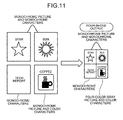
- Fig. 8 is a diagram for explaining an exemplary four-in-one output for printing.
- one original having image data of monochrome characters, two originals having image data of a monochrome picture and monochrome characters, and one original having image data of color characters and a monochrome picture are combined on a single page.
- the single page of combined image data includes one page of monochrome characters, two pages of a picture in grayscale using four colors and monochrome characters, and one page of a picture in grayscale using four colors and monochrome characters.
- the original-type identification result obtained by the original-type identifying unit 21 indicates that only the page having color characters (bottom right original in Fig. 8 ) is a color page, while the remaining three pages are monochrome pages.
- the first image-data processing unit 3 and the second image-data processing unit 5 perform image processing of the four pages of image data in an identical manner to the image processing described above in the photocopying process or the printing process. Subsequently, the four pages of image data is combined on a single page and output on a recording medium. If the image processing mode (a user-specified mode or a default mode) of the MFP 1 is a photo processing mode focusing on pictures in all of the image data, then, irrespective of the original-type identification result, the image data in the monochrome pages is subjected to color output.
- the image processing mode a user-specified mode or a default mode
- the black characters in the monochrome pages are output in a monochrome manner based on the black-character portion information, the problem of image quality deterioration such as toner scattering does not occur.
- the specified image processing mode of the MFP 1 is not the photo processing mode focusing on pictures in image data, then image processing suitable to the specified image processing mode is performed. For example, consider a case when the specified image processing mode of the MFP 1 is a mode focusing on granularity in image data, or a mode focusing on gloss while outputting image data on a coated paper, or a mode focusing on reproducing image data on high-consistency recording medium such as developing paper. In that case, the image data in the monochrome pages is subjected to color output such that the combined image data has uniformity and enhanced image quality.
- the specified image processing mode of the MFP 1 is a character processing mode focusing only on characters in image data, then image processing is performed according to the original-type identification result because there is no demand to enhance the image quality.
- image processing is performed according to the original-type identification result.
- monochrome output can be selected as the output mode.
- Fig. 9 is a diagram for explaining an exemplary four-in-one output for facsimile transmission or distribution.
- one original having image data of monochrome characters, two originals having image data of a monochrome picture and monochrome characters, and one original having image data of color characters and a monochrome picture are combined on a single page.
- the single page of combined image data includes one page of RGB gray characters, two pages of a RGB gray picture and RGB gray characters, and one page of a RGB gray picture and RGB color characters.
- the original-type identification result obtained by the original-type identifying unit 21 indicates that only the page having color characters (bottom right original in Fig. 9 ) is a color page, while the remaining three pages are monochrome pages.
- the first image-data processing unit 3 and the second image-data processing unit 5 perform image processing of the four pages of image data in an identical manner to the image processing described above in the facsimile transmission of scanned image data or the scanner distribution of scanned image data. Subsequently, the four pages of image data is combined on a single page and the single page of combined image data is subjected to facsimile transmission or distribution.
- the image processing mode (a user-specified mode or a default mode) of the MFP 1 is a photo processing mode focusing on pictures in all of the image data
- the image data in the monochrome pages is subjected to color output for color facsimile transmission. More particularly, in four-in-one output, based on the black-character portion information obtained by the black-character identifying unit 22, only the black characters in all of the image data are output in grayscale having equal values for R, G, and B.
- image data other than the black characters is output in grayscale by using color output. In that case, the RGB balance of the grayscale output is maintained identical to the RGB balance of the original image data.
- Such a method of image reproduction is identical to reproducing a monochrome picture from a color page.
- images in the combined output have uniformity as well as enhanced image quality.
- gray image reproduction is performed with RGB color simulation.
- the image quality of reproduced image data is maintained constant with the original monochrome color.
- the black characters are output in grayscale having equal values for R, G, and B based on the black-character portion information.
- a printer driver at the destination for facsimile transmission recognizes the characters in the combined image data as monochrome data and is able to print high-quality characters without any image quality deterioration such as toner scattering.
- the specified image processing mode of the MFP 1 is not the photo processing mode focusing on pictures in image data, then image processing suitable to the specified image processing mode is performed to generate combined image data for facsimile transmission or distribution.
- the specified image processing mode of the MFP 1 is a mode focusing on granularity in image data, or a mode focusing on gloss while outputting image data on a coated paper, or a mode focusing on reproducing image data on high-consistency recording medium such as developing paper, or a mode focusing on exact monochrome reproduction of colors based on printer simulation or user registration.
- the image data in the monochrome pages is subjected to color output such that the combined image data for facsimile transmission or distribution has uniformity and enhanced image quality.
- the specified image processing mode of the MFP 1 is a character processing mode focusing only on characters in image data, then image processing is performed according to the original-type identification result because there is no demand to enhance the image quality.
- image processing is performed according to the original-type identification result to obtain image quality with uniformity.
- the black-character identifying unit 22 identifies portions of black characters from each image to be combined.
- the color-conversion processing unit 25 and the color-conversion processing unit 32 perform color conversion (color conversion or monochrome conversion) with respect to the images to be combined and also convert the portions of black characters identified in each image into black color. More particularly, the original-type identifying unit 21 determines whether each image to be combined is a color image or a monochrome image and, if it is determined that the images to be combined include one or more color images, then color conversion is performed according to the specified image processing mode and the original-type identification result. Subsequently, the images subjected to color conversion are combined on a single page and output for printing, facsimile transmission, or distribution.
- Such image processing enables high-quality reproduction of black characters as well as generation of high-quality combined image data at low image forming cost.
- the original-type identification result obtained by the original-type identifying unit 21 indicates that the images to be combined are monochrome images and when the images include characters, then it is desirable to output the combined images in monochrome.
- the images include characters as well as pictures, it is desirable to output the pictures in grayscale using four colors for good image quality.
- the output in grayscale.using four colors results in depiction of monochrome pictures in full color thereby giving a uniform tone to the combined output. That enhances the image quality of the combined output.
- the monochrome characters are determined to be black characters and are output in monochrome. That enhances the quality of characters in the combined output.
- the images to be combined are determined to be monochrome images, it is possible to obtain a uniform tone in the combined output as well as to obtain combined output in grayscale using four colors that has better image quality than monochrome reproduction as long as the image forming cost is not affected.
- the MFP 1 can be configured to display the page of combined image data on the user display of the operation display unit 11 such that the user can confirm the page and accordingly decide on the desired color conversion.
- Such a configuration enables the MFP 1 to generate the combined image data in adherence to the user requirement.
- the image processing mode of the MFP 1 is a photo processing mode focusing on pictures in image data, then, irrespective of the original-type identification result obtained by the original-type identifying unit 21, the image data in the monochrome pages is subjected to color output.
- the MFP 1 can generate high-quality combined image data with focus on pictures in adherence to the user requirement.
- the image processing mode of the MFP 1 is a character processing mode focusing only on characters in image data, then color conversion is performed according to the original-type identification result.
- the image processing mode of the MFP 1 is a mode focusing on any one of granularity, gloss, color reproducibility, and reproduction on high-consistency recording medium, then color output is performed irrespective of the original-type identification result.
- the images to be combined include an image with respect to which it is not possible to determine an image processing mode and the original-type identifying unit 21 is unable to identify the type of the image.
- color conversion is performed based on the original-type identification result with respect to each image to be combined. That ensures appropriate image processing to generate the combined image data.
- the MFP 1 determines whether the originals to be combined includes at least one color original, the image processing in the MFP 1 is performed to obtain identical image quality at each image processing mode. Thus, there is no need to switch between image processing for a color original and image processing for a monochrome original. That improves the productivity of the MFP 1.
- the combined image data is reproduced in grayscale having equal values for R, G, and B based on the original-type identification result.
- the combined image data includes a color image
- the combined image data is output in a color image format. In other words, only when all the images in the combined image data are monochrome images, the combined image data is output in a monochrome image format.
- the combined image data in color image format.
- the combined image data is converted to grayscale even if the combined image data includes a color image.
Landscapes
- Engineering & Computer Science (AREA)
- Multimedia (AREA)
- Signal Processing (AREA)
- Facsimile Image Signal Circuits (AREA)
- Image Processing (AREA)
- Editing Of Facsimile Originals (AREA)
- Record Information Processing For Printing (AREA)
- Color, Gradation (AREA)
- Color Image Communication Systems (AREA)
Applications Claiming Priority (1)
| Application Number | Priority Date | Filing Date | Title |
|---|---|---|---|
| JP2008044542A JP5097574B2 (ja) | 2008-02-26 | 2008-02-26 | 画像処理装置、画像処理方法、画像処理プログラム及び記録媒体 |
Publications (3)
| Publication Number | Publication Date |
|---|---|
| EP2096860A2 true EP2096860A2 (fr) | 2009-09-02 |
| EP2096860A3 EP2096860A3 (fr) | 2009-12-02 |
| EP2096860B1 EP2096860B1 (fr) | 2012-09-26 |
Family
ID=40627171
Family Applications (1)
| Application Number | Title | Priority Date | Filing Date |
|---|---|---|---|
| EP09250415A Ceased EP2096860B1 (fr) | 2008-02-26 | 2009-02-18 | Appareil de traitement d'images, procédé de traitement d'images et produit de programme informatique |
Country Status (3)
| Country | Link |
|---|---|
| US (1) | US8228518B2 (fr) |
| EP (1) | EP2096860B1 (fr) |
| JP (1) | JP5097574B2 (fr) |
Cited By (1)
| Publication number | Priority date | Publication date | Assignee | Title |
|---|---|---|---|---|
| EP2424218A1 (fr) * | 2010-08-26 | 2012-02-29 | Samsung Electronics Co., Ltd. | Appareil de formation d'images et son procédé de traitement d'images |
Families Citing this family (10)
| Publication number | Priority date | Publication date | Assignee | Title |
|---|---|---|---|---|
| JP4870700B2 (ja) * | 2008-03-11 | 2012-02-08 | 株式会社リコー | 通信システム |
| JP5648409B2 (ja) * | 2009-11-20 | 2015-01-07 | 株式会社リコー | 画像処理装置、画像処理方法およびプログラム |
| JP5678584B2 (ja) * | 2009-12-16 | 2015-03-04 | 株式会社リコー | 画像処理装置、画像処理方法、およびプログラム |
| JP5741171B2 (ja) * | 2010-04-23 | 2015-07-01 | 株式会社リコー | 画像処理装置及び画像処理プログラム |
| JP5748473B2 (ja) * | 2010-12-15 | 2015-07-15 | キヤノン株式会社 | 画像形成装置、その制御方法、およびプログラム |
| US10534422B2 (en) * | 2013-08-09 | 2020-01-14 | Novatek Microelectronics Corp. | Data compression system for liquid crystal display and related power saving method |
| JP6379723B2 (ja) * | 2014-06-24 | 2018-08-29 | セイコーエプソン株式会社 | 印刷装置及び制御装置 |
| JP6277984B2 (ja) * | 2015-03-23 | 2018-02-14 | 株式会社Jvcケンウッド | 画像補正装置、画像補正方法及び画像補正プログラム |
| JP6573375B2 (ja) * | 2015-06-24 | 2019-09-11 | キヤノン株式会社 | 画像処理装置、画像処理装置の制御方法およびプログラム |
| WO2018140060A1 (fr) * | 2017-01-30 | 2018-08-02 | Hewlett-Packard Development Company, L.P. | Valeurs d'espace de couleurs correspondant à des identifiants de classification |
Citations (4)
| Publication number | Priority date | Publication date | Assignee | Title |
|---|---|---|---|---|
| JPH09138608A (ja) | 1995-11-13 | 1997-05-27 | Minolta Co Ltd | 画像形成装置 |
| JP3772610B2 (ja) | 1999-11-01 | 2006-05-10 | 富士ゼロックス株式会社 | 画像形成装置およびその制御方法 |
| JP3983101B2 (ja) | 2001-05-25 | 2007-09-26 | 株式会社リコー | 画像処理装置、画像読み取り装置、画像形成装置およびカラー複写装置 |
| JP2008044542A (ja) | 2006-08-17 | 2008-02-28 | Kenji Shirai | 自転車のブレーキ装置 |
Family Cites Families (6)
| Publication number | Priority date | Publication date | Assignee | Title |
|---|---|---|---|---|
| JPH10155076A (ja) * | 1996-11-23 | 1998-06-09 | Ricoh Co Ltd | カラー画像形成装置 |
| JP2000175031A (ja) | 1998-12-07 | 2000-06-23 | Fuji Xerox Co Ltd | 画像処理装置、画像処理方法および画像入力装置 |
| US20040095587A1 (en) | 2002-11-14 | 2004-05-20 | Brown Mark L. | Apparatus and method for reducing resources used by an image communication and printing device |
| JP3847719B2 (ja) * | 2003-01-24 | 2006-11-22 | 京セラミタ株式会社 | 画像形成装置 |
| JP4148511B2 (ja) | 2003-04-11 | 2008-09-10 | 株式会社リコー | 画像処理装置、描画データ処理方法及び該方法を実行するためのプログラム |
| JP2006238024A (ja) * | 2005-02-24 | 2006-09-07 | Ricoh Co Ltd | 画像処理装置、画像処理方法、プログラムおよび記録媒体 |
-
2008
- 2008-02-26 JP JP2008044542A patent/JP5097574B2/ja not_active Expired - Fee Related
-
2009
- 2009-02-11 US US12/379,023 patent/US8228518B2/en not_active Expired - Fee Related
- 2009-02-18 EP EP09250415A patent/EP2096860B1/fr not_active Ceased
Patent Citations (4)
| Publication number | Priority date | Publication date | Assignee | Title |
|---|---|---|---|---|
| JPH09138608A (ja) | 1995-11-13 | 1997-05-27 | Minolta Co Ltd | 画像形成装置 |
| JP3772610B2 (ja) | 1999-11-01 | 2006-05-10 | 富士ゼロックス株式会社 | 画像形成装置およびその制御方法 |
| JP3983101B2 (ja) | 2001-05-25 | 2007-09-26 | 株式会社リコー | 画像処理装置、画像読み取り装置、画像形成装置およびカラー複写装置 |
| JP2008044542A (ja) | 2006-08-17 | 2008-02-28 | Kenji Shirai | 自転車のブレーキ装置 |
Cited By (2)
| Publication number | Priority date | Publication date | Assignee | Title |
|---|---|---|---|---|
| EP2424218A1 (fr) * | 2010-08-26 | 2012-02-29 | Samsung Electronics Co., Ltd. | Appareil de formation d'images et son procédé de traitement d'images |
| US8941900B2 (en) | 2010-08-26 | 2015-01-27 | Samsung Electronics Co., Ltd. | Image forming apparatus and method of processing image thereof |
Also Published As
| Publication number | Publication date |
|---|---|
| EP2096860A3 (fr) | 2009-12-02 |
| US20090213396A1 (en) | 2009-08-27 |
| EP2096860B1 (fr) | 2012-09-26 |
| JP2009206610A (ja) | 2009-09-10 |
| JP5097574B2 (ja) | 2012-12-12 |
| US8228518B2 (en) | 2012-07-24 |
Similar Documents
| Publication | Publication Date | Title |
|---|---|---|
| US8228518B2 (en) | Image processing apparatus, image processing method, and computer program product | |
| US8451476B2 (en) | Image processing apparatus, image processing method, and computer program product | |
| JP3797669B2 (ja) | 画像形成装置および画像形成方法 | |
| CN109327646B (zh) | 图像处理装置、图像处理方法以及计算机可读存储介质 | |
| KR101309369B1 (ko) | 화상 처리 장치 및 제어 방법 | |
| US8542419B2 (en) | Image processing apparatus and image processing program | |
| JP5293514B2 (ja) | 画像処理装置及び画像処理プログラム | |
| JP2009272774A (ja) | 画像処理装置、画像形成装置、画像処理方法、及びコンピュータプログラム | |
| JP3333894B2 (ja) | 画像処理装置 | |
| KR100757631B1 (ko) | 화상 처리 장치 및 그 방법 | |
| JP5021578B2 (ja) | 画像処理装置及び画像処理方法 | |
| US20070086068A1 (en) | Image processing apparatus | |
| JP4903851B2 (ja) | 画像処理装置、画像形成装置、画像処理方法、画像処理プログラムおよび記録媒体 | |
| US8274684B2 (en) | Image processing apparatus and image processing method for proceesing reading blocks | |
| US8294954B2 (en) | Image forming apparatus and method for reducing the difference of image qualities between the image data read by a plurality of reading units | |
| JP4555192B2 (ja) | 画像処理装置、画像処理方法、およびその方法をコンピュータに実行させるプログラム | |
| JP4990340B2 (ja) | 画像処理装置、画像形成装置、画像処理方法、画像処理プログラムおよび記録媒体 | |
| JP2004128664A (ja) | 画像処理装置及び方法 | |
| JP2009225274A (ja) | 画像処理装置 | |
| JP2006333200A (ja) | カラー画像入出力装置 | |
| JP2006287707A (ja) | 画像処理装置 | |
| JP2003037739A (ja) | データ転送制御装置、その制御方法、及び制御プログラム | |
| JP2007030352A (ja) | 多色画像印刷装置 | |
| JP2007025112A (ja) | 画像入出力装置 | |
| JP2004166172A (ja) | 画像処理装置、画像形成装置、画像読取装置、プログラム及び記憶媒体 |
Legal Events
| Date | Code | Title | Description |
|---|---|---|---|
| PUAI | Public reference made under article 153(3) epc to a published international application that has entered the european phase |
Free format text: ORIGINAL CODE: 0009012 |
|
| AK | Designated contracting states |
Kind code of ref document: A2 Designated state(s): AT BE BG CH CY CZ DE DK EE ES FI FR GB GR HR HU IE IS IT LI LT LU LV MC MK MT NL NO PL PT RO SE SI SK TR |
|
| AX | Request for extension of the european patent |
Extension state: AL BA RS |
|
| PUAL | Search report despatched |
Free format text: ORIGINAL CODE: 0009013 |
|
| AK | Designated contracting states |
Kind code of ref document: A3 Designated state(s): AT BE BG CH CY CZ DE DK EE ES FI FR GB GR HR HU IE IS IT LI LT LU LV MC MK MT NL NO PL PT RO SE SI SK TR |
|
| AX | Request for extension of the european patent |
Extension state: AL BA RS |
|
| RIC1 | Information provided on ipc code assigned before grant |
Ipc: H04N 1/387 20060101ALI20091026BHEP Ipc: H04N 1/60 20060101AFI20090519BHEP |
|
| 17P | Request for examination filed |
Effective date: 20100308 |
|
| AKX | Designation fees paid |
Designated state(s): DE FR GB |
|
| 17Q | First examination report despatched |
Effective date: 20110303 |
|
| GRAP | Despatch of communication of intention to grant a patent |
Free format text: ORIGINAL CODE: EPIDOSNIGR1 |
|
| RIN1 | Information on inventor provided before grant (corrected) |
Inventor name: TOGAMI, ATSUSHIC/O RICOH COMPANY, LIMITED |
|
| GRAS | Grant fee paid |
Free format text: ORIGINAL CODE: EPIDOSNIGR3 |
|
| GRAA | (expected) grant |
Free format text: ORIGINAL CODE: 0009210 |
|
| AK | Designated contracting states |
Kind code of ref document: B1 Designated state(s): DE FR GB |
|
| REG | Reference to a national code |
Ref country code: GB Ref legal event code: FG4D |
|
| REG | Reference to a national code |
Ref country code: DE Ref legal event code: R096 Ref document number: 602009009987 Country of ref document: DE Effective date: 20121122 |
|
| PLBE | No opposition filed within time limit |
Free format text: ORIGINAL CODE: 0009261 |
|
| STAA | Information on the status of an ep patent application or granted ep patent |
Free format text: STATUS: NO OPPOSITION FILED WITHIN TIME LIMIT |
|
| 26N | No opposition filed |
Effective date: 20130627 |
|
| REG | Reference to a national code |
Ref country code: DE Ref legal event code: R097 Ref document number: 602009009987 Country of ref document: DE Effective date: 20130627 |
|
| REG | Reference to a national code |
Ref country code: FR Ref legal event code: PLFP Year of fee payment: 8 |
|
| REG | Reference to a national code |
Ref country code: FR Ref legal event code: PLFP Year of fee payment: 9 |
|
| REG | Reference to a national code |
Ref country code: FR Ref legal event code: PLFP Year of fee payment: 10 |
|
| PGFP | Annual fee paid to national office [announced via postgrant information from national office to epo] |
Ref country code: GB Payment date: 20180216 Year of fee payment: 10 Ref country code: DE Payment date: 20180219 Year of fee payment: 10 |
|
| PGFP | Annual fee paid to national office [announced via postgrant information from national office to epo] |
Ref country code: FR Payment date: 20180223 Year of fee payment: 10 |
|
| REG | Reference to a national code |
Ref country code: DE Ref legal event code: R119 Ref document number: 602009009987 Country of ref document: DE |
|
| GBPC | Gb: european patent ceased through non-payment of renewal fee |
Effective date: 20190218 |
|
| PG25 | Lapsed in a contracting state [announced via postgrant information from national office to epo] |
Ref country code: DE Free format text: LAPSE BECAUSE OF NON-PAYMENT OF DUE FEES Effective date: 20190903 Ref country code: GB Free format text: LAPSE BECAUSE OF NON-PAYMENT OF DUE FEES Effective date: 20190218 |
|
| PG25 | Lapsed in a contracting state [announced via postgrant information from national office to epo] |
Ref country code: FR Free format text: LAPSE BECAUSE OF NON-PAYMENT OF DUE FEES Effective date: 20190228 |