EP2097622B1 - System und verfahren zur regeneration einer vorrichtung zum katalytischen zwischenspeichern von stickoxiden - Google Patents
System und verfahren zur regeneration einer vorrichtung zum katalytischen zwischenspeichern von stickoxiden Download PDFInfo
- Publication number
- EP2097622B1 EP2097622B1 EP07822598A EP07822598A EP2097622B1 EP 2097622 B1 EP2097622 B1 EP 2097622B1 EP 07822598 A EP07822598 A EP 07822598A EP 07822598 A EP07822598 A EP 07822598A EP 2097622 B1 EP2097622 B1 EP 2097622B1
- Authority
- EP
- European Patent Office
- Prior art keywords
- oxides
- nitrogen
- mass
- eliminating
- phase
- Prior art date
- Legal status (The legal status is an assumption and is not a legal conclusion. Google has not performed a legal analysis and makes no representation as to the accuracy of the status listed.)
- Ceased
Links
Images

Classifications
-
- F—MECHANICAL ENGINEERING; LIGHTING; HEATING; WEAPONS; BLASTING
- F02—COMBUSTION ENGINES; HOT-GAS OR COMBUSTION-PRODUCT ENGINE PLANTS
- F02D—CONTROLLING COMBUSTION ENGINES
- F02D41/00—Electrical control of supply of combustible mixture or its constituents
- F02D41/02—Circuit arrangements for generating control signals
- F02D41/021—Introducing corrections for particular conditions exterior to the engine
- F02D41/0235—Introducing corrections for particular conditions exterior to the engine in relation with the state of the exhaust gas treating apparatus
- F02D41/027—Introducing corrections for particular conditions exterior to the engine in relation with the state of the exhaust gas treating apparatus to purge or regenerate the exhaust gas treating apparatus
- F02D41/0275—Introducing corrections for particular conditions exterior to the engine in relation with the state of the exhaust gas treating apparatus to purge or regenerate the exhaust gas treating apparatus the exhaust gas treating apparatus being a NOx trap or adsorbent
- F02D41/028—Desulfurisation of NOx traps or adsorbent
-
- F—MECHANICAL ENGINEERING; LIGHTING; HEATING; WEAPONS; BLASTING
- F01—MACHINES OR ENGINES IN GENERAL; ENGINE PLANTS IN GENERAL; STEAM ENGINES
- F01N—GAS-FLOW SILENCERS OR EXHAUST APPARATUS FOR MACHINES OR ENGINES IN GENERAL; GAS-FLOW SILENCERS OR EXHAUST APPARATUS FOR INTERNAL-COMBUSTION ENGINES
- F01N3/00—Exhaust or silencing apparatus having means for purifying, rendering innocuous, or otherwise treating exhaust
- F01N3/08—Exhaust or silencing apparatus having means for purifying, rendering innocuous, or otherwise treating exhaust for rendering innocuous
- F01N3/0807—Exhaust or silencing apparatus having means for purifying, rendering innocuous, or otherwise treating exhaust for rendering innocuous by using absorbents or adsorbents
- F01N3/0814—Exhaust or silencing apparatus having means for purifying, rendering innocuous, or otherwise treating exhaust for rendering innocuous by using absorbents or adsorbents combined with catalytic converters, e.g. NOx absorption/storage reduction catalysts
-
- F—MECHANICAL ENGINEERING; LIGHTING; HEATING; WEAPONS; BLASTING
- F01—MACHINES OR ENGINES IN GENERAL; ENGINE PLANTS IN GENERAL; STEAM ENGINES
- F01N—GAS-FLOW SILENCERS OR EXHAUST APPARATUS FOR MACHINES OR ENGINES IN GENERAL; GAS-FLOW SILENCERS OR EXHAUST APPARATUS FOR INTERNAL-COMBUSTION ENGINES
- F01N3/00—Exhaust or silencing apparatus having means for purifying, rendering innocuous, or otherwise treating exhaust
- F01N3/08—Exhaust or silencing apparatus having means for purifying, rendering innocuous, or otherwise treating exhaust for rendering innocuous
- F01N3/0807—Exhaust or silencing apparatus having means for purifying, rendering innocuous, or otherwise treating exhaust for rendering innocuous by using absorbents or adsorbents
- F01N3/0828—Exhaust or silencing apparatus having means for purifying, rendering innocuous, or otherwise treating exhaust for rendering innocuous by using absorbents or adsorbents characterised by the absorbed or adsorbed substances
- F01N3/0842—Nitrogen oxides
-
- F—MECHANICAL ENGINEERING; LIGHTING; HEATING; WEAPONS; BLASTING
- F01—MACHINES OR ENGINES IN GENERAL; ENGINE PLANTS IN GENERAL; STEAM ENGINES
- F01N—GAS-FLOW SILENCERS OR EXHAUST APPARATUS FOR MACHINES OR ENGINES IN GENERAL; GAS-FLOW SILENCERS OR EXHAUST APPARATUS FOR INTERNAL-COMBUSTION ENGINES
- F01N3/00—Exhaust or silencing apparatus having means for purifying, rendering innocuous, or otherwise treating exhaust
- F01N3/08—Exhaust or silencing apparatus having means for purifying, rendering innocuous, or otherwise treating exhaust for rendering innocuous
- F01N3/0807—Exhaust or silencing apparatus having means for purifying, rendering innocuous, or otherwise treating exhaust for rendering innocuous by using absorbents or adsorbents
- F01N3/0871—Exhaust or silencing apparatus having means for purifying, rendering innocuous, or otherwise treating exhaust for rendering innocuous by using absorbents or adsorbents using means for controlling, e.g. purging, the absorbents or adsorbents
-
- F—MECHANICAL ENGINEERING; LIGHTING; HEATING; WEAPONS; BLASTING
- F01—MACHINES OR ENGINES IN GENERAL; ENGINE PLANTS IN GENERAL; STEAM ENGINES
- F01N—GAS-FLOW SILENCERS OR EXHAUST APPARATUS FOR MACHINES OR ENGINES IN GENERAL; GAS-FLOW SILENCERS OR EXHAUST APPARATUS FOR INTERNAL-COMBUSTION ENGINES
- F01N3/00—Exhaust or silencing apparatus having means for purifying, rendering innocuous, or otherwise treating exhaust
- F01N3/08—Exhaust or silencing apparatus having means for purifying, rendering innocuous, or otherwise treating exhaust for rendering innocuous
- F01N3/0807—Exhaust or silencing apparatus having means for purifying, rendering innocuous, or otherwise treating exhaust for rendering innocuous by using absorbents or adsorbents
- F01N3/0871—Exhaust or silencing apparatus having means for purifying, rendering innocuous, or otherwise treating exhaust for rendering innocuous by using absorbents or adsorbents using means for controlling, e.g. purging, the absorbents or adsorbents
- F01N3/0885—Regeneration of deteriorated absorbents or adsorbents, e.g. desulfurization of NOx traps
-
- F—MECHANICAL ENGINEERING; LIGHTING; HEATING; WEAPONS; BLASTING
- F01—MACHINES OR ENGINES IN GENERAL; ENGINE PLANTS IN GENERAL; STEAM ENGINES
- F01N—GAS-FLOW SILENCERS OR EXHAUST APPARATUS FOR MACHINES OR ENGINES IN GENERAL; GAS-FLOW SILENCERS OR EXHAUST APPARATUS FOR INTERNAL-COMBUSTION ENGINES
- F01N9/00—Electrical control of exhaust gas treating apparatus
- F01N9/007—Storing data relevant to operation of exhaust systems for later retrieval and analysis, e.g. to research exhaust system malfunctions
-
- F—MECHANICAL ENGINEERING; LIGHTING; HEATING; WEAPONS; BLASTING
- F02—COMBUSTION ENGINES; HOT-GAS OR COMBUSTION-PRODUCT ENGINE PLANTS
- F02D—CONTROLLING COMBUSTION ENGINES
- F02D2200/00—Input parameters for engine control
- F02D2200/02—Input parameters for engine control the parameters being related to the engine
- F02D2200/08—Exhaust gas treatment apparatus parameters
- F02D2200/0806—NOx storage amount, i.e. amount of NOx stored on NOx trap
-
- F—MECHANICAL ENGINEERING; LIGHTING; HEATING; WEAPONS; BLASTING
- F02—COMBUSTION ENGINES; HOT-GAS OR COMBUSTION-PRODUCT ENGINE PLANTS
- F02D—CONTROLLING COMBUSTION ENGINES
- F02D2250/00—Engine control related to specific problems or objectives
- F02D2250/11—Oil dilution, i.e. prevention thereof or special controls according thereto
-
- F—MECHANICAL ENGINEERING; LIGHTING; HEATING; WEAPONS; BLASTING
- F02—COMBUSTION ENGINES; HOT-GAS OR COMBUSTION-PRODUCT ENGINE PLANTS
- F02D—CONTROLLING COMBUSTION ENGINES
- F02D41/00—Electrical control of supply of combustible mixture or its constituents
- F02D41/30—Controlling fuel injection
- F02D41/38—Controlling fuel injection of the high pressure type
- F02D41/40—Controlling fuel injection of the high pressure type with means for controlling injection timing or duration
- F02D41/402—Multiple injections
- F02D41/405—Multiple injections with post injections
-
- Y—GENERAL TAGGING OF NEW TECHNOLOGICAL DEVELOPMENTS; GENERAL TAGGING OF CROSS-SECTIONAL TECHNOLOGIES SPANNING OVER SEVERAL SECTIONS OF THE IPC; TECHNICAL SUBJECTS COVERED BY FORMER USPC CROSS-REFERENCE ART COLLECTIONS [XRACs] AND DIGESTS
- Y02—TECHNOLOGIES OR APPLICATIONS FOR MITIGATION OR ADAPTATION AGAINST CLIMATE CHANGE
- Y02A—TECHNOLOGIES FOR ADAPTATION TO CLIMATE CHANGE
- Y02A50/00—TECHNOLOGIES FOR ADAPTATION TO CLIMATE CHANGE in human health protection, e.g. against extreme weather
- Y02A50/20—Air quality improvement or preservation, e.g. vehicle emission control or emission reduction by using catalytic converters
-
- Y—GENERAL TAGGING OF NEW TECHNOLOGICAL DEVELOPMENTS; GENERAL TAGGING OF CROSS-SECTIONAL TECHNOLOGIES SPANNING OVER SEVERAL SECTIONS OF THE IPC; TECHNICAL SUBJECTS COVERED BY FORMER USPC CROSS-REFERENCE ART COLLECTIONS [XRACs] AND DIGESTS
- Y02—TECHNOLOGIES OR APPLICATIONS FOR MITIGATION OR ADAPTATION AGAINST CLIMATE CHANGE
- Y02T—CLIMATE CHANGE MITIGATION TECHNOLOGIES RELATED TO TRANSPORTATION
- Y02T10/00—Road transport of goods or passengers
- Y02T10/10—Internal combustion engine [ICE] based vehicles
- Y02T10/40—Engine management systems
Definitions
- the present invention relates to a system and a method of regeneration of a catalytic trap device of nitrogen oxides disposed in the exhaust line of a diesel-type internal combustion engine, in particular of a motor vehicle.
- nitrogen oxides NO x cause respiratory infections and allergies, or play a role in influencing the formation of acid rain, so that most countries have imposed standards limiting the emission of oxides of nitrogen by vehicles.
- most vehicles, and particularly diesel-type motor vehicles are provided with catalytic trapping devices for nitrogen oxides.
- the management of the sulfur oxidation of the catalytic trapping device is generally based on an open-loop model for loading and unloading sulfur oxides of the catalytic trapping device. This model is calibrated for the worst case of operation, that is to say in which all the sulfur passing through the catalytic trapping device is trapped.
- physicochemical phenomena occurring during sulfur oxide removal phases are extremely sensitive, since a small parameter variation can lead to a large variation in the efficiency of the removal of sulfur oxides.
- an underestimation of the amount of sulfur oxides present in the catalytic trapping device can lead to a drift of emissions of nitrogen oxides above the acceptable thresholds.
- an excessive overestimation of the amount of sulfur present in the catalytic trapping device leads to carrying out a number of sulfur oxide removal phases that are too large compared to the needs of the system, which can lead to a significant dilution of fuel in the engine lubricating oil.
- the European patent EP 1 121 519 B1 relates to a process for removing sulfur oxides from a nitrogen oxide storage catalyst in which the state of sulfur loading of the catalyst is determined, the operation of the catalyst is monitored, and if the catalyst is exceeded, a sulfur load threshold value, or the observation of an irregularity in the activity of the catalyst, it is checked whether it is advisable to start a phase of elimination of the sulfur oxides by checking whether the operating mode of the components concerned by the security is correct and checking if the predetermined driving parameters are respected in the current driving situation.
- the European patent EP 1 161 618 B1 relates to a process for removing sulfur oxides from a nitrogen oxide storage catalyst. If a threshold value of sulfur load and authorization is exceeded, a phase for the removal of sulfur oxides is started, but is delayed if the emission level of nitrogen oxides is less than one. predetermined value of at least one predetermined tolerance threshold, until this tolerance threshold is exceeded or until a characteristic deviation pattern occurs. The readjustment of the delay separating two consecutive phases of removal of the sulfur oxides from the catalyst is carried out from the engine exhaust gas control system.
- the invention proposes a system and a method for removing sulfur oxides from a catalytic nitrogen oxide trapping device disposed in the exhaust line of a diesel-type internal combustion engine, in particular motor vehicle, which improves the management of releases of sulfur oxide removal phases, at low cost, and to limit the risk of overconsumption of fuel and dilution of fuel in the engine lubricating oil.
- the system comprises first means for determining the mass of nitrogen oxides removed during a phase of removal of nitrogen oxides from the catalytic trapping device and second means for determining the mass of nitrogen oxides present. in the catalytic trapping device during the triggering of said phase of elimination of nitrogen oxides.
- the system comprises control means able to determine the triggering of the next phase of removal of the sulfur oxides as a function of values of a criterion dependent on said mass of nitrogen oxides removed and said mass of oxides of sulfur. nitrogen present.
- the system comprises storage means adapted to store a first set of values of said criterion relating to nitrogen oxide removal phases prior to the last phase of removal of the sulfur oxides, and for memorizing a second set of values of said criteria relating to elimination phases of nitrogen oxides subsequent to the last phase of elimination of sulfur oxides.
- Calculating a plurality of criterion values improves the accuracy and reliability of the system.
- the system comprises first means for calculating a first average value of said criterion from said first set of values and a second average value of said criterion from said second set of values.
- the system further comprises second means for calculating a first difference between said second average value of said criterion and said first average value of said criterion, and third means for determining a first mass of sulfur oxides eliminated. during the last phase of removing the sulfur oxides from said first difference.
- the system further comprises fourth means for determining, by an open-loop calculation, a second mass of sulfur oxides removed during the last phase of removal of the sulfur oxides, and third means for calculating a second difference between said second mass of sulfur oxides and said first mass of sulfur oxides.
- said control means are further adapted to delay by a first delay the triggering of the next phase of removal of sulfur oxides when said second difference is below a negative threshold.
- the system further comprises fifth means for determining a third mass of sulfur oxides present in the catalytic trapping device, and fourth means for calculating the sum of said third mass of sulfur oxides present in the catalytic trapping device and said second difference.
- said control means are further adapted to immediately trigger a phase of removal of sulfur oxides from the catalytic trapping device, when said sum is greater than a maximum threshold.
- said control means are further adapted to decrease said maximum threshold by the value of said second difference.
- system further comprises means for validating the values of said mass of nitrogen oxides removed and said mass of nitrogen oxides present to allow the determination of said criterion with said values.
- the validation criteria correspond to values of operating parameters, such as the temperature in the catalytic trapping device, the hourly volume velocity of the engine exhaust gases passing through the catalytic trapping device, or the mass of nitrogen oxides. present in the catalytic trapping device, included in predefined ranges of values.
- a regeneration method of a catalytic trap device for nitrogen oxides disposed in the exhaust line of a diesel-type internal combustion engine, in particular motor vehicle in which the mass of nitrogen oxides eliminated during a phase of removal of nitrogen oxides of the catalytic trapping device is determined and the mass of nitrogen oxides present in the catalytic trapping device is determined; during the initiation of said phase of elimination of nitrogen oxides.
- the onset of the next phase of removal of the sulfur oxides is determined as a function of values of a criterion dependent on the said mass of nitrogen oxides removed and on the said mass of nitrogen oxides present.
- a first set of values of said criterion relating to phases of elimination of nitrogen oxides prior to the last phase of elimination of the sulfur oxides
- a second set of values of said criterion relating to phases of elimination of the nitrogen oxides subsequent to the last phase of removal of the sulfur oxides.
- the catalytic device 1 is fed with exhaust gas comprising a low fuel content, which is specific to the operation of the engine 3 fueled with a fuel-poor mixture.
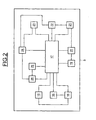
- the system comprises an electronic control unit 5 connected with the engine 3, as well as with many elements of the vehicle 4, not shown.
- the electronic control unit 5 is capable of controlling or managing the operation of the engine 3 during sulfur oxide removal phases SO x or nitrogen oxides removal phases NO x of the trapping device catalytic 1.
- a sulfur oxide removal phase of the catalytic trapping device 1 corresponds to a phase during which SO x sulfur oxides are removed which block the adsorption sites. of the catalytic phase present in the catalytic trapping device 1.
- a desorption phase must be carried out in a high temperature range, delimited by a lower limit temperature and an upper limit temperature.
- the lower limit temperature is the temperature to be achieved in the catalytic trap 1 so that the removal of sulfur oxides from the catalytic phase of trapping device 1 can take place.
- This lower limit temperature, in the catalytic trapping device 1 is generally obtained by means of a heating phase carried out by an increase in the temperature of the exhaust gas of the engine 3 fed by a fuel-rich mixture.
- the electronic control unit 5 controls the operation of the engine 3 so that it successively alternates a supply phase of the engine 3 with a fuel-rich mixture, during which the sulfur is desorbed and the temperature inside the catalytic trapping device 1 increases, and a phase of supplying the engine 3 with a lean fuel mixture, during which the temperature inside the catalytic trapping device 1 decreases.
- the electronic control unit 5 manages the phase of elimination of the sulfur oxides so that this temperature inside the catalytic trapping device 1 oscillates in the high temperature range.
- the upper limit temperature of the high temperature range corresponds to the limit temperature above which the catalytic phase could deteriorate.
- the lower limit temperature of the high temperature range may be of the order of 650 ° C
- the upper limit temperature of the high temperature range may be of the order of 750 ° C, for classical catalytic phases.
- the electronic control unit 5 is connected to a temperature sensor 6 arranged upstream of the catalytic trapping device 1 in the exhaust line 2, via a connection 7.
- the electronic control unit 5 is connected to a first oxygen sensor 8 and a second oxygen sensor 9 disposed in the exhaust line 2, respectively upstream and downstream of the catalytic trapping device 1, by connections 10 and 11.
- the upstream sensor 8 makes it possible to control and regulate the richness of the mixture supplying the engine 3.
- the electronic control unit 5 is also connected to the engine 3 by a connection 12.
- the electronic control unit 5 comprises a first module for determining the mass of nitrogen oxides NO x removed during a phase of elimination of nitrogen oxides from the catalytic trapping device 1.
- the control unit electronics 5 further comprises a second determination module 16 of the mass of nitrogen oxides NO x present in the catalytic trapping device 1, in particular during the initiation of a phase of removal of the nitrogen oxides NO x.
- the evaluation criterion C is performed for nitrogen oxides removal phases NOx preceding a phase of removal of sulfur oxides SO x, as well as for the elimination phases of nitrogen oxides NO x succeeding at said SO x sulfur oxidation phase.
- Using a set of C-criteria values improves the quality of the data used by the system and thus improves the accuracy of the system.
- the system may comprise an optional validation module 18 making it possible to validate or not the data provided by the first and second determination modules 15 and 16 for the purpose of calculating the criterion C.
- the validation module 18 for example takes into account values of the temperature of the catalytic trapping device, the hourly volume velocity of the gases passing through the catalytic trapping device 1, or the mass of nitrogen oxides present in the catalytic trapping device 1. If the values of these parameters are included in predetermined intervals of values, then the validation module 18 allows the module of order 17 to evaluate criterion C for the phase of removal of nitrogen oxides.
- the estimated values of criterion C for nitrogen oxide removal phases prior to the last phase of removal of sulfur oxides form a first set of values of criterion C stored in a storage module 19.
- a second set of Values of the criterion C relating to nitrogen oxides removal phases subsequent to the last phase of removal of the sulfur oxides is also stored in the storage module 19.
- a first calculation module 20 calculates a first average value C 1 of said criterion C from the first set of stored values, and a second average value C 2 of the criterion C from the second set of stored values.
- a second calculation module 21 makes the difference between said second average value C 2 of the criterion C and said first average value C 1 of the criterion C, and a third determination module 22 estimates a first mass of dmS 1 of sulfur oxides eliminated during the last phase of removal of the sulfur oxides from the first difference developed by the second calculation module 21.
- the third determination module 22 may, for example, implement a stored map of the first sulfur oxide oxide mass dmS1 removed as a function of parameters representative of the aging of the catalyst and the first difference between the second average value C 2 and the first average value C 1 of criterion C.
- a fourth determination module 23 determines, by an open-loop calculation, a second mass of sulfur oxides dmS2 removed during the last phase of removal of sulfur oxides.
- a third calculation module 24 makes a second difference between the second mass dmS2 of sulfur oxides determined by the fourth determination module 23, and the first mass dmS1 of sulfur oxides produced by the third determination module 22.
- the control module 17 is capable of delaying by a first delay the triggering of the next sulfur oxide removal phase when the second difference provided by the third calculation module 24, dmS2-dmS1, is below a negative threshold. .
- the system further comprises a fifth module for determining a third mass of sulfur oxides mS3 present in the catalytic trapping device 1 and a fourth calculation module 26 for summing the third mass of sulfur oxides.
- the control module 17, is further adapted to immediately trigger a sulfur oxide removal phase of the catalytic trapping device 1, when the sum made by said fourth calculation module 26, mS3 + (dmS2 - dmS1), is greater than a maximum threshold.
- control module 17 is capable of decreasing said maximum threshold of the value of said second difference provided by the third module of calculation 24.
Landscapes
- Engineering & Computer Science (AREA)
- Chemical & Material Sciences (AREA)
- Combustion & Propulsion (AREA)
- Mechanical Engineering (AREA)
- General Engineering & Computer Science (AREA)
- Chemical Kinetics & Catalysis (AREA)
- Exhaust Gas After Treatment (AREA)
- Exhaust Gas Treatment By Means Of Catalyst (AREA)
- Solid-Sorbent Or Filter-Aiding Compositions (AREA)
Claims (11)
- System zur Regeneration einer Vorrichtung zur katalytischen Einlagerung von Stickoxiden (1), die in der Auspuffanlage (2) eines Verbrennungsmotors (3) vom Typ Diesel, insbesondere eines Kraftfahrzeugs, angeordnet ist, mit ersten Einrichtungen (15) zur Bestimmung der während einer Eliminierungsphase der Stickoxide aus der Vorrichtung zur katalytischen Einlagerung (1) eliminierten Masse von Stickoxiden, und mit zweiten Einrichtungen (16) zur Bestimmung der Masse von Stickoxiden, die in der Vorrichtung zur katalytischen Einlagerung (1) beim Start der Eliminierungsphase der Stickoxide vorhanden ist, dadurch gekennzeichnet, dass es Steuereinrichtungen (17) enthält, die den Start der nächsten Eliminierungsphase der Schwefeloxide in Abhängigkeit von Werten eines Kriteriums bestimmen können, das von der eliminierten Masse von Stickoxiden und von der vorhandenen Masse von Stickoxiden abhängt.
- System nach Anspruch 1, das weiter Speichereinrichtungen (19) enthält, die geeignet sind, um eine erste Einheit von Werten des Kriteriums bezüglich von Eliminierungsphasen der Stickoxide vor der letzten Eliminierungsphase der Schwefeloxide zu speichern, und um eine zweite Einheit von Werten des Kriteriums bezüglich von Eliminierungsphasen der Stickoxide nach der letzten Eliminierungsphase der Schwefeloxide zu speichern.
- System nach Anspruch 2, das außerdem erste Einrichtungen (20) zur Berechnung eines ersten Mittelwerts des Kriteriums ausgehend von der ersten Einheit von Werten und eines zweiten Mittelwerts des Kriteriums ausgehend von der zweiten Einheit von Werten, zweite Einrichtungen (21) zur Berechnung einer ersten Differenz zwischen dem zweiten Mittelwert des Kriteriums und dem ersten Mittelwert des Kriteriums, und dritte Einrichtungen (22) zur Bestimmung einer ersten Masse von Schwefeloxiden, die während der letzten Eliminierungsphase der Schwefeloxide eliminiert wurde, ausgehend von der ersten Differenz enthält.
- System nach Anspruch 3, das außerdem vierte Einrichtungen (23) zur Bestimmung, durch eine Berechnung in offener Schleife, einer zweiten Masse von Schwefeloxiden, die während der letzten Eliminierungsphase der Schwefeloxide eliminiert wird, und dritte Einrichtungen (24) zur Berechnung einer zweiten Differenz zwischen der zweiten Masse von Schwefeloxiden und der ersten Masse von Schwefeloxiden enthält.
- System nach Anspruch 4, bei dem die Steuereinrichtungen (17) außerdem geeignet sind, um den Start der nächsten Eliminierungsphase der Schwefeloxide um eine erste Verzögerung zu verzögern, wenn die zweite Differenz unter einem negativen Schwellwert liegt.
- System nach Anspruch 4 oder 5, das außerdem fünfte Einrichtungen (25) zur Bestimmung einer dritten Masse von Schwefeloxiden, die in der Vorrichtung zur katalytischen Einlagerung vorhanden ist, und vierte Einrichtungen (26) zur Berechnung der Summe der dritten in der Vorrichtung zur katalytischen Einlagerung vorhandenen Masse von Schwefeloxiden und der zweiten Differenz enthält.
- System nach Anspruch 6, bei dem die Steuereinrichtungen (17) außerdem geeignet sind, um sofort eine Eliminierungsphase der Schwefeloxide aus der Vorrichtung zur katalytischen Einlagerung zu starten, wenn die Summe höher als ein maximaler Schwellwert ist.
- System nach Anspruch 6 oder 7, bei dem die Steuereinrichtungen (17) außerdem geeignet sind, um den maximalen Schwellwert des Werts der zweiten Differenz zu verringern, wenn die Summe geringer als der oder gleich dem maximalen Schwellwert ist.
- System nach einem der vorhergehenden Ansprüche, das außerdem Validierungseinrichtungen (18) der Werte der eliminierten Masse von Stickoxiden und der vorhandenen Masse von Stickoxiden enthält, um die Bestimmung des Kriteriums mit den Werten zu erlauben.
- Verfahren zur Regeneration einer Vorrichtung zur katalytischen Einlagerung von Stickoxiden (1), die in der Auspuffleitung (2) eines Verbrennungsmotors (3) vom Typ Diesel, insbesondere eines Kraftfahrzeugs, angeordnet ist, bei dem die während einer Eliminierungsphase der Stickoxide aus der Vorrichtung zur katalytischen Einlagerung (1) eliminierte Masse von Stickoxiden bestimmt wird und die beim Start der Eliminierungsphase der Stickoxide in der Vorrichtung zur katalytischen Einlagerung (1) vorhandene Masse von Stickoxiden bestimmt wird, dadurch gekennzeichnet, dass der Start der nächsten Eliminierungsphase der Schwefeloxide in Abhängigkeit von Werten eines Kriteriums bestimmt wird, das von der eliminierten Masse von Stickoxiden und von der vorhandenen Masse von Stickoxiden abhängt.
- Verfahren nach Anspruch 10, bei dem eine erste Einheit von Werten des Kriteriums bezüglich von Eliminierungsphasen der Stickoxide vor der letzten Eliminierungsphase der Schwefeloxide und eine zweite Einheit von Werten des Kriteriums bezüglich von Eliminierungsphasen der Stickoxide nach der letzten Eliminierungsphase der Schwefeloxide gespeichert wird.
Applications Claiming Priority (2)
| Application Number | Priority Date | Filing Date | Title |
|---|---|---|---|
| FR0655346A FR2909712B1 (fr) | 2006-12-06 | 2006-12-06 | Systeme et procede de regeneration d'un dispositif de piegeage catalytique d'oxydes d'azote |
| PCT/EP2007/062349 WO2008068134A1 (fr) | 2006-12-06 | 2007-11-14 | Systeme et procede de regeneration d'un dispositif de piegeage catalytique d'oxydes d'azote |
Publications (2)
| Publication Number | Publication Date |
|---|---|
| EP2097622A1 EP2097622A1 (de) | 2009-09-09 |
| EP2097622B1 true EP2097622B1 (de) | 2010-03-31 |
Family
ID=38181103
Family Applications (1)
| Application Number | Title | Priority Date | Filing Date |
|---|---|---|---|
| EP07822598A Ceased EP2097622B1 (de) | 2006-12-06 | 2007-11-14 | System und verfahren zur regeneration einer vorrichtung zum katalytischen zwischenspeichern von stickoxiden |
Country Status (5)
| Country | Link |
|---|---|
| EP (1) | EP2097622B1 (de) |
| AT (1) | ATE462876T1 (de) |
| DE (1) | DE602007005694D1 (de) |
| FR (1) | FR2909712B1 (de) |
| WO (1) | WO2008068134A1 (de) |
Family Cites Families (5)
| Publication number | Priority date | Publication date | Assignee | Title |
|---|---|---|---|---|
| DE19847875A1 (de) | 1998-10-16 | 2000-04-20 | Volkswagen Ag | Verfahren und Vorrichtung zur De-Sulfatierung eines NOx-Speicherkatalysators |
| DE19910664A1 (de) | 1999-03-11 | 2000-09-14 | Volkswagen Ag | Verfahren zur De-Sulfatierung eines NOx-Speicherkatalysators |
| DE19921972A1 (de) * | 1999-05-12 | 2000-11-16 | Volkswagen Ag | Verfahren zur Entschwefelung |
| DE10036390B4 (de) * | 2000-07-26 | 2010-05-12 | Volkswagen Ag | Verfahren und Vorrichtung zur Entschwefelung eines NOx-Speicherkatalysators |
| DE102004015129A1 (de) * | 2004-03-27 | 2005-10-13 | Robert Bosch Gmbh | Verfahren zum Betreiben einer Brennkraftmaschine |
-
2006
- 2006-12-06 FR FR0655346A patent/FR2909712B1/fr not_active Expired - Fee Related
-
2007
- 2007-11-14 EP EP07822598A patent/EP2097622B1/de not_active Ceased
- 2007-11-14 WO PCT/EP2007/062349 patent/WO2008068134A1/fr not_active Ceased
- 2007-11-14 AT AT07822598T patent/ATE462876T1/de not_active IP Right Cessation
- 2007-11-14 DE DE602007005694T patent/DE602007005694D1/de active Active
Also Published As
| Publication number | Publication date |
|---|---|
| WO2008068134A1 (fr) | 2008-06-12 |
| DE602007005694D1 (de) | 2010-05-12 |
| ATE462876T1 (de) | 2010-04-15 |
| EP2097622A1 (de) | 2009-09-09 |
| FR2909712A1 (fr) | 2008-06-13 |
| FR2909712B1 (fr) | 2009-02-27 |
Similar Documents
| Publication | Publication Date | Title |
|---|---|---|
| FR2927361B1 (fr) | Procede de regeneration d'une installation de post-traitement des gaz d'echappement | |
| EP2501909B1 (de) | Verfahren zur kontrolle der schadstoffemissionen aus einem verbrennungsmotor | |
| FR2971811A1 (fr) | Procede de gestion d'une installation de gaz d'echappement d'un moteur a combustion interne | |
| EP1639239B1 (de) | Verfahren und vorrichtung zur abschätzung einer in einer katalytischen auffangvorrichtung eines kraftfahrzeugs eingespeicherten stickoxidmasse | |
| EP2097622B1 (de) | System und verfahren zur regeneration einer vorrichtung zum katalytischen zwischenspeichern von stickoxiden | |
| FR2930290A3 (fr) | Procede de gestion de cycle de regeneration d'un systeme de moteur a combustion. | |
| EP1413720B1 (de) | Verfahren zum Ermitteln der Innentemperatur eines Partikelfilters, Verfahren zur Steuerung der Regeneration des Partikelfilters, sowie Steuerungssystem und Partikelfilter | |
| EP1963635A1 (de) | Verfahren und system zur wiederherstellung eines teilchenfilters für einen verbrennungsmotor | |
| EP3760845B1 (de) | Steuerverfahren eines kraftfahrzeugs, das mit einer stickoxidfalle zur desoxydierung dieser falle ausgestattet ist | |
| FR2970040A1 (fr) | Dispositif de regeneration d'un filtre a particules equipant une ligne d'echappement d'un moteur thermique | |
| EP3060769B1 (de) | Verfahren zur diagnose einer stickoxidfalle und zugehörige vorrichtung | |
| EP1957768B1 (de) | SYSTEM ZUR REGELMÄßIGEN REGENERATION EINER STICKSTOFFOXID-KATALYSIERENDEN FALLENVORRICHTUNG | |
| WO2010000981A1 (fr) | Gestion combinee de la regeneration et de la desulfuration pour vehicule automobile | |
| EP2014884A1 (de) | Evaluierung der Ladung eines Partikelfilters | |
| EP2312137A2 (de) | Diagnoseverfahren einer Anomalie in der Abgasleitung eines mit einem Partikelfilter ausgestatteten Verbrennungsmotors | |
| EP3034827B1 (de) | Diagnoseverfahren eines stickoxidspeichers und entsprechende vorrichtung | |
| FR2933445A1 (fr) | Gestion combinee de la regeneration et de la desulfuration pour vehicule automobile | |
| WO2006097647A1 (fr) | Procede de commande d'un moteur diesel | |
| FR2926109A1 (fr) | Procede de regulation de la temperature des gaz d'echappement d'un moteur a combustion interne. | |
| FR2920824A1 (fr) | Procede de gestion du fonctionnement d'au moins un convertisseur catalytique pour moteur a combustion interne | |
| FR2930967A1 (fr) | Systeme et procede d'optimisation de l'automate de declenchement des purges soufre | |
| FR2933447A1 (fr) | Gestion combinee de la regeneration et de la desulfuration pour vehicule automobile | |
| FR2983522A1 (fr) | Regeneration d'un dispositif de post-traitement de gaz d'echappement a modulation de temperature de consigne | |
| FR2908669A1 (fr) | Systeme et procede d'elimination des oxydes de soufre sox d'un dispositif de piegeage catalytique d'oxydes d'azote | |
| FR2933446A1 (fr) | Gestion combinee de la regeneration et de la desulfuration pour vehicule automobile |
Legal Events
| Date | Code | Title | Description |
|---|---|---|---|
| PUAI | Public reference made under article 153(3) epc to a published international application that has entered the european phase |
Free format text: ORIGINAL CODE: 0009012 |
|
| 17P | Request for examination filed |
Effective date: 20090514 |
|
| AK | Designated contracting states |
Kind code of ref document: A1 Designated state(s): AT BE BG CH CY CZ DE DK EE ES FI FR GB GR HU IE IS IT LI LT LU LV MC MT NL PL PT RO SE SI SK TR |
|
| GRAP | Despatch of communication of intention to grant a patent |
Free format text: ORIGINAL CODE: EPIDOSNIGR1 |
|
| DAX | Request for extension of the european patent (deleted) | ||
| GRAS | Grant fee paid |
Free format text: ORIGINAL CODE: EPIDOSNIGR3 |
|
| GRAA | (expected) grant |
Free format text: ORIGINAL CODE: 0009210 |
|
| AK | Designated contracting states |
Kind code of ref document: B1 Designated state(s): AT BE BG CH CY CZ DE DK EE ES FI FR GB GR HU IE IS IT LI LT LU LV MC MT NL PL PT RO SE SI SK TR |
|
| REG | Reference to a national code |
Ref country code: CH Ref legal event code: EP Ref country code: GB Ref legal event code: FG4D Free format text: NOT ENGLISH |
|
| REG | Reference to a national code |
Ref country code: IE Ref legal event code: FG4D |
|
| REF | Corresponds to: |
Ref document number: 602007005694 Country of ref document: DE Date of ref document: 20100512 Kind code of ref document: P |
|
| REG | Reference to a national code |
Ref country code: NL Ref legal event code: VDEP Effective date: 20100331 |
|
| PG25 | Lapsed in a contracting state [announced via postgrant information from national office to epo] |
Ref country code: LT Free format text: LAPSE BECAUSE OF FAILURE TO SUBMIT A TRANSLATION OF THE DESCRIPTION OR TO PAY THE FEE WITHIN THE PRESCRIBED TIME-LIMIT Effective date: 20100331 |
|
| LTIE | Lt: invalidation of european patent or patent extension |
Effective date: 20100331 |
|
| PG25 | Lapsed in a contracting state [announced via postgrant information from national office to epo] |
Ref country code: AT Free format text: LAPSE BECAUSE OF FAILURE TO SUBMIT A TRANSLATION OF THE DESCRIPTION OR TO PAY THE FEE WITHIN THE PRESCRIBED TIME-LIMIT Effective date: 20100331 Ref country code: LV Free format text: LAPSE BECAUSE OF FAILURE TO SUBMIT A TRANSLATION OF THE DESCRIPTION OR TO PAY THE FEE WITHIN THE PRESCRIBED TIME-LIMIT Effective date: 20100331 Ref country code: PL Free format text: LAPSE BECAUSE OF FAILURE TO SUBMIT A TRANSLATION OF THE DESCRIPTION OR TO PAY THE FEE WITHIN THE PRESCRIBED TIME-LIMIT Effective date: 20100331 Ref country code: SI Free format text: LAPSE BECAUSE OF FAILURE TO SUBMIT A TRANSLATION OF THE DESCRIPTION OR TO PAY THE FEE WITHIN THE PRESCRIBED TIME-LIMIT Effective date: 20100331 Ref country code: FI Free format text: LAPSE BECAUSE OF FAILURE TO SUBMIT A TRANSLATION OF THE DESCRIPTION OR TO PAY THE FEE WITHIN THE PRESCRIBED TIME-LIMIT Effective date: 20100331 |
|
| REG | Reference to a national code |
Ref country code: IE Ref legal event code: FD4D |
|
| PG25 | Lapsed in a contracting state [announced via postgrant information from national office to epo] |
Ref country code: ES Free format text: LAPSE BECAUSE OF FAILURE TO SUBMIT A TRANSLATION OF THE DESCRIPTION OR TO PAY THE FEE WITHIN THE PRESCRIBED TIME-LIMIT Effective date: 20100712 Ref country code: EE Free format text: LAPSE BECAUSE OF FAILURE TO SUBMIT A TRANSLATION OF THE DESCRIPTION OR TO PAY THE FEE WITHIN THE PRESCRIBED TIME-LIMIT Effective date: 20100331 Ref country code: CY Free format text: LAPSE BECAUSE OF FAILURE TO SUBMIT A TRANSLATION OF THE DESCRIPTION OR TO PAY THE FEE WITHIN THE PRESCRIBED TIME-LIMIT Effective date: 20100331 Ref country code: SE Free format text: LAPSE BECAUSE OF FAILURE TO SUBMIT A TRANSLATION OF THE DESCRIPTION OR TO PAY THE FEE WITHIN THE PRESCRIBED TIME-LIMIT Effective date: 20100331 Ref country code: RO Free format text: LAPSE BECAUSE OF FAILURE TO SUBMIT A TRANSLATION OF THE DESCRIPTION OR TO PAY THE FEE WITHIN THE PRESCRIBED TIME-LIMIT Effective date: 20100331 Ref country code: NL Free format text: LAPSE BECAUSE OF FAILURE TO SUBMIT A TRANSLATION OF THE DESCRIPTION OR TO PAY THE FEE WITHIN THE PRESCRIBED TIME-LIMIT Effective date: 20100331 |
|
| PG25 | Lapsed in a contracting state [announced via postgrant information from national office to epo] |
Ref country code: IS Free format text: LAPSE BECAUSE OF FAILURE TO SUBMIT A TRANSLATION OF THE DESCRIPTION OR TO PAY THE FEE WITHIN THE PRESCRIBED TIME-LIMIT Effective date: 20100731 Ref country code: SK Free format text: LAPSE BECAUSE OF FAILURE TO SUBMIT A TRANSLATION OF THE DESCRIPTION OR TO PAY THE FEE WITHIN THE PRESCRIBED TIME-LIMIT Effective date: 20100331 Ref country code: CZ Free format text: LAPSE BECAUSE OF FAILURE TO SUBMIT A TRANSLATION OF THE DESCRIPTION OR TO PAY THE FEE WITHIN THE PRESCRIBED TIME-LIMIT Effective date: 20100331 |
|
| PG25 | Lapsed in a contracting state [announced via postgrant information from national office to epo] |
Ref country code: DK Free format text: LAPSE BECAUSE OF FAILURE TO SUBMIT A TRANSLATION OF THE DESCRIPTION OR TO PAY THE FEE WITHIN THE PRESCRIBED TIME-LIMIT Effective date: 20100331 Ref country code: PT Free format text: LAPSE BECAUSE OF FAILURE TO SUBMIT A TRANSLATION OF THE DESCRIPTION OR TO PAY THE FEE WITHIN THE PRESCRIBED TIME-LIMIT Effective date: 20100802 Ref country code: IE Free format text: LAPSE BECAUSE OF FAILURE TO SUBMIT A TRANSLATION OF THE DESCRIPTION OR TO PAY THE FEE WITHIN THE PRESCRIBED TIME-LIMIT Effective date: 20100331 |
|
| PLBE | No opposition filed within time limit |
Free format text: ORIGINAL CODE: 0009261 |
|
| STAA | Information on the status of an ep patent application or granted ep patent |
Free format text: STATUS: NO OPPOSITION FILED WITHIN TIME LIMIT |
|
| 26N | No opposition filed |
Effective date: 20110104 |
|
| PG25 | Lapsed in a contracting state [announced via postgrant information from national office to epo] |
Ref country code: IT Free format text: LAPSE BECAUSE OF FAILURE TO SUBMIT A TRANSLATION OF THE DESCRIPTION OR TO PAY THE FEE WITHIN THE PRESCRIBED TIME-LIMIT Effective date: 20100331 |
|
| BERE | Be: lapsed |
Owner name: RENAULT S.A.S. Effective date: 20101130 |
|
| PG25 | Lapsed in a contracting state [announced via postgrant information from national office to epo] |
Ref country code: MC Free format text: LAPSE BECAUSE OF NON-PAYMENT OF DUE FEES Effective date: 20101130 |
|
| PG25 | Lapsed in a contracting state [announced via postgrant information from national office to epo] |
Ref country code: BE Free format text: LAPSE BECAUSE OF NON-PAYMENT OF DUE FEES Effective date: 20101130 |
|
| PG25 | Lapsed in a contracting state [announced via postgrant information from national office to epo] |
Ref country code: MT Free format text: LAPSE BECAUSE OF FAILURE TO SUBMIT A TRANSLATION OF THE DESCRIPTION OR TO PAY THE FEE WITHIN THE PRESCRIBED TIME-LIMIT Effective date: 20100331 |
|
| REG | Reference to a national code |
Ref country code: CH Ref legal event code: PL |
|
| PG25 | Lapsed in a contracting state [announced via postgrant information from national office to epo] |
Ref country code: LI Free format text: LAPSE BECAUSE OF NON-PAYMENT OF DUE FEES Effective date: 20111130 Ref country code: CH Free format text: LAPSE BECAUSE OF NON-PAYMENT OF DUE FEES Effective date: 20111130 |
|
| PG25 | Lapsed in a contracting state [announced via postgrant information from national office to epo] |
Ref country code: BG Free format text: LAPSE BECAUSE OF FAILURE TO SUBMIT A TRANSLATION OF THE DESCRIPTION OR TO PAY THE FEE WITHIN THE PRESCRIBED TIME-LIMIT Effective date: 20100331 Ref country code: LU Free format text: LAPSE BECAUSE OF NON-PAYMENT OF DUE FEES Effective date: 20101114 Ref country code: HU Free format text: LAPSE BECAUSE OF FAILURE TO SUBMIT A TRANSLATION OF THE DESCRIPTION OR TO PAY THE FEE WITHIN THE PRESCRIBED TIME-LIMIT Effective date: 20101001 |
|
| PG25 | Lapsed in a contracting state [announced via postgrant information from national office to epo] |
Ref country code: TR Free format text: LAPSE BECAUSE OF FAILURE TO SUBMIT A TRANSLATION OF THE DESCRIPTION OR TO PAY THE FEE WITHIN THE PRESCRIBED TIME-LIMIT Effective date: 20100331 |
|
| PG25 | Lapsed in a contracting state [announced via postgrant information from national office to epo] |
Ref country code: BG Free format text: LAPSE BECAUSE OF FAILURE TO SUBMIT A TRANSLATION OF THE DESCRIPTION OR TO PAY THE FEE WITHIN THE PRESCRIBED TIME-LIMIT Effective date: 20100630 |
|
| PG25 | Lapsed in a contracting state [announced via postgrant information from national office to epo] |
Ref country code: GR Free format text: LAPSE BECAUSE OF FAILURE TO SUBMIT A TRANSLATION OF THE DESCRIPTION OR TO PAY THE FEE WITHIN THE PRESCRIBED TIME-LIMIT Effective date: 20100331 |
|
| REG | Reference to a national code |
Ref country code: FR Ref legal event code: PLFP Year of fee payment: 9 |
|
| REG | Reference to a national code |
Ref country code: FR Ref legal event code: PLFP Year of fee payment: 10 |
|
| REG | Reference to a national code |
Ref country code: FR Ref legal event code: PLFP Year of fee payment: 11 |
|
| PGFP | Annual fee paid to national office [announced via postgrant information from national office to epo] |
Ref country code: FR Payment date: 20171121 Year of fee payment: 11 Ref country code: DE Payment date: 20171121 Year of fee payment: 11 |
|
| PGFP | Annual fee paid to national office [announced via postgrant information from national office to epo] |
Ref country code: GB Payment date: 20171123 Year of fee payment: 11 |
|
| REG | Reference to a national code |
Ref country code: DE Ref legal event code: R119 Ref document number: 602007005694 Country of ref document: DE |
|
| GBPC | Gb: european patent ceased through non-payment of renewal fee |
Effective date: 20181114 |
|
| PG25 | Lapsed in a contracting state [announced via postgrant information from national office to epo] |
Ref country code: DE Free format text: LAPSE BECAUSE OF NON-PAYMENT OF DUE FEES Effective date: 20190601 Ref country code: FR Free format text: LAPSE BECAUSE OF NON-PAYMENT OF DUE FEES Effective date: 20181130 |
|
| PG25 | Lapsed in a contracting state [announced via postgrant information from national office to epo] |
Ref country code: GB Free format text: LAPSE BECAUSE OF NON-PAYMENT OF DUE FEES Effective date: 20181114 |