EP2098015B1 - Réseau non cellulaire sans fil - Google Patents
Réseau non cellulaire sans fil Download PDFInfo
- Publication number
- EP2098015B1 EP2098015B1 EP07858343.2A EP07858343A EP2098015B1 EP 2098015 B1 EP2098015 B1 EP 2098015B1 EP 07858343 A EP07858343 A EP 07858343A EP 2098015 B1 EP2098015 B1 EP 2098015B1
- Authority
- EP
- European Patent Office
- Prior art keywords
- cellular
- tdma
- node
- nodes
- destination
- Prior art date
- Legal status (The legal status is an assumption and is not a legal conclusion. Google has not performed a legal analysis and makes no representation as to the accuracy of the status listed.)
- Not-in-force
Links
- 230000001413 cellular effect Effects 0.000 title claims description 154
- 238000000034 method Methods 0.000 claims description 24
- 238000012544 monitoring process Methods 0.000 claims description 17
- 238000012545 processing Methods 0.000 claims description 17
- 238000004590 computer program Methods 0.000 claims description 7
- 230000008569 process Effects 0.000 claims description 4
- 239000002609 medium Substances 0.000 description 12
- 230000005540 biological transmission Effects 0.000 description 11
- 238000004891 communication Methods 0.000 description 8
- 230000006870 function Effects 0.000 description 6
- 238000010586 diagram Methods 0.000 description 4
- 230000006855 networking Effects 0.000 description 4
- 230000011664 signaling Effects 0.000 description 3
- 108700026140 MAC combination Proteins 0.000 description 2
- 101100172132 Mus musculus Eif3a gene Proteins 0.000 description 2
- 230000008901 benefit Effects 0.000 description 2
- 238000005516 engineering process Methods 0.000 description 2
- 238000010295 mobile communication Methods 0.000 description 2
- 230000001360 synchronised effect Effects 0.000 description 2
- 206010003591 Ataxia Diseases 0.000 description 1
- 206010010947 Coordination abnormal Diseases 0.000 description 1
- 235000008694 Humulus lupulus Nutrition 0.000 description 1
- 230000010267 cellular communication Effects 0.000 description 1
- 230000001276 controlling effect Effects 0.000 description 1
- 230000036541 health Effects 0.000 description 1
- 208000028756 lack of coordination Diseases 0.000 description 1
- 230000007246 mechanism Effects 0.000 description 1
- 230000003287 optical effect Effects 0.000 description 1
- 230000001105 regulatory effect Effects 0.000 description 1
- 239000004065 semiconductor Substances 0.000 description 1
- 230000003595 spectral effect Effects 0.000 description 1
- 238000012546 transfer Methods 0.000 description 1
- 239000006163 transport media Substances 0.000 description 1
Images

Classifications
-
- H—ELECTRICITY
- H04—ELECTRIC COMMUNICATION TECHNIQUE
- H04W—WIRELESS COMMUNICATION NETWORKS
- H04W16/00—Network planning, e.g. coverage or traffic planning tools; Network deployment, e.g. resource partitioning or cells structures
- H04W16/14—Spectrum sharing arrangements between different networks
-
- H—ELECTRICITY
- H04—ELECTRIC COMMUNICATION TECHNIQUE
- H04B—TRANSMISSION
- H04B7/00—Radio transmission systems, i.e. using radiation field
- H04B7/24—Radio transmission systems, i.e. using radiation field for communication between two or more posts
- H04B7/26—Radio transmission systems, i.e. using radiation field for communication between two or more posts at least one of which is mobile
- H04B7/2643—Radio transmission systems, i.e. using radiation field for communication between two or more posts at least one of which is mobile using time-division multiple access [TDMA]
- H04B7/2656—Radio transmission systems, i.e. using radiation field for communication between two or more posts at least one of which is mobile using time-division multiple access [TDMA] for structure of frame, burst
-
- H—ELECTRICITY
- H04—ELECTRIC COMMUNICATION TECHNIQUE
- H04W—WIRELESS COMMUNICATION NETWORKS
- H04W72/00—Local resource management
- H04W72/50—Allocation or scheduling criteria for wireless resources
- H04W72/54—Allocation or scheduling criteria for wireless resources based on quality criteria
- H04W72/542—Allocation or scheduling criteria for wireless resources based on quality criteria using measured or perceived quality
-
- H—ELECTRICITY
- H04—ELECTRIC COMMUNICATION TECHNIQUE
- H04W—WIRELESS COMMUNICATION NETWORKS
- H04W84/00—Network topologies
- H04W84/18—Self-organising networks, e.g. ad-hoc networks or sensor networks
Definitions
- the invention relates to a wireless non-cellular network, to a method, to a non-cellular node, and to a computer-readable computer distribution medium.
- Wireless non-cellular networks such as mesh networks
- the wireless mesh networks contain low-cost, self-configuring nodes that automatically establish and maintain mesh connectivity.
- Examples of applications related to wireless mesh networks include: broadband home networking, community and neighborhood networking, enterprise networking, metropolitan area networking, transportation systems, building automation, health and medical systems and security surveillance systems.
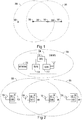
- FIG. 1 shows an example of a wireless mesh network and a hidden node problem.
- the exemplary mesh network of Figure 1 comprises mesh access points 100, 101, 102 and 103, hence referred to as mesh nodes.
- Mesh nodes 100 and 101 of Figure 1 communicate with coverage/interference areas 200 and 201.
- Mesh node 102 is in the vicinity of mesh node 101. Packet collisions may appear if mesh nodes 100 and 102 try simultaneous communication 202, 204 with mesh node 101.
- Time division multiple access is known to be more efficient access method than CSMA but its implementation in mesh networks is difficult due to various problems. Firstly, time synchronization between mesh nodes is missing. Secondly, a suitable distributed control mechanism should be found.
- EP1678975A1 presents a method for operating two radio communication systems which have locally overlapping radio coverage areas, wherein the problem is that lack of coordination may result in unwanted interference or incomplete utilisation of the available resources.
- An object of the invention is to provide an improved method, a wireless non-cellular network, a non-cellular node for a wireless non-cellular network, and a computer-readable program distribution medium.
- a method comprising: monitoring a time division multiple access (TDMA) frame structure of a cellular system by a plurality of non-cellular nodes of a non-cellular network operating in a license exempt frequency band by using a common channel of the cellular system for synchronization between the non-cellular nodes; and using the time division multiple access (TDMA) frame structure of the cellular system in the wireless non-cellular network for exchanging data between at least some of the plurality of non-cellular nodes.
- TDMA time division multiple access
- a wireless non-cellular network operating in a license exempt frequency band comprising a plurality of non-cellular nodes, wherein at least some of the non-cellular nodes include: a receiver for monitoring a time division multiple access (TDMA) frame structure of a cellular system by using a common channel of the cellular system for synchronization between the non-cellular nodes; and a processing unit for using the time division multiple access (TDMA) frame structure of the cellular system in the wireless non-cellular network for exchanging data with at least some of the plurality of non-cellular nodes.
- TDMA time division multiple access
- a non-cellular node for a wireless non-cellular network operating in a license exempt frequency band
- the non-cellular node comprising: a receiver for monitoring a time division multiple access (TDMA) frame structure of a cellular system by using a common channel of the cellular system for synchronization between the non-cellular nodes; and a processing unit for using the time division multi-ple access (TDMA) frame structure of the cellular system in the wireless non-cellular network for exchanging data with one or more of a plurality of non-cellular nodes of the wireless non-cellular network.
- TDMA time division multiple access
- a computer-readable program distribution medium encoding a computer program of instructions for executing a computer process in a wireless non-cellular network operating in a license exempt frequency band, the process comprising: monitoring a time division multiple access (TDMA) frame structure of a cellular system by a plurality of non-cellular nodes of a wireless non-cellular network by using a common channel of the cellular system for synchronization between the non-cellular nodes; and using the time division multiple access (TDMA) frame structure of the cellular system in the wireless non-cellular network for exchanging data between at least some of the plurality of non-cellular nodes.
- TDMA time division multiple access
- a wireless non-cellular network operating in a license exempt frequency band comprising a plurality of non-cellular nodes, wherein at least some of the non-cellular nodes include: receiving means for monitoring a time division multiple access (TDMA) frame structure of a cellular system by using a common channel of the cellular system for synchronization between the non-cellular nodes; and processing means for using the time division multiple access (TDMA) frame structure of the cellular system in the wireless non-cellular network for exchanging data with at least some of the plurality of non-cellular nodes.
- TDMA time division multiple access
- a non-cellular node for a wireless non-cellular network operating in a license exempt frequency band comprising: receiving means for monitoring a time division multiple access (TDMA) frame structure of a cellular system by using a common channel of the cellular system for synchronization between the non-cellular nodes; and processing means for using the time division multiple access (TDMA) frame structure of the cellular system in the wireless non-cellular network for exchanging data with one or more of a plurality of non-cellular nodes of the wireless non-cellular network.
- TDMA time division multiple access
- the invention provides several advantages.
- TDMA communication is enabled in a non-cellular network. Spectral efficiency is improved. TDMA frame structure of a cellular system can be adopted to non-cellular communication. Synchronization is enabled also indoors. Packet collisions can be prevented because the mesh nodes near the source and destination have the knowledge of the numbers of the occupied TDMA frames.
- the system comprises a plurality of non-cellular nodes 100 to 103, such as mesh nodes, each communicating data with the nearby non-cellular nodes.
- the non-cellular nodes are referred to as mesh nodes.
- Each mesh node 100 to 103 can be connected to several other mesh nodes.
- the mesh nodes 100 to 103 can be fixed or mobile terminals, for example.
- Data is communicated in the system via different mesh nodes such that data hops from one mesh node to another until it reaches it is destination.
- Each mesh node 100 to 103 is required to send data only as far as the next mesh node.
- Each mesh node 100 to 103 is required to inform it's routing information to every mesh node 100 to 103 it connects with. Different routing algorithms can be used for choosing the best route for communicating data via the mesh nodes.
- Each mesh node 100 to 103 comprises a processing unit 140 to 143 to control functions of the devices.
- the processing unit 140, 141, 142, 143 handles establishment, operation and termination of radio connections in the mesh nodes 100, 101, 102, 103.
- the processing unit 140, 141, 142, 143 controls reception of information by controlling the processing of reception signals.
- the processing unit 140, 141, 142, 143 may be implemented by a digital signal processor with suitable software embedded in a computer readable medium, or by separate logic circuits, for example with ASIC (Application Specific Integrated Circuit).
- ASIC Application Specific Integrated Circuit
- Each of the mesh nodes 100, 101, 102, 103 comprises capability to transmit and receive information signals to one or more other mesh nodes.
- the mesh nodes 100, 101, 102, 103 comprise antenna units 120, 122, 124, 126 for transmitting and receiving signals.
- the mesh node 103 is within coverage area 200 and the mesh node 102 is within coverage area 201.
- the mesh nodes 100 and 101 are within an area covering at least part of both coverage areas 200 and 201.
- the mesh node 100 can communicate with the mesh nodes 122 and 126. Further, the mesh node 101 can communicate with the mesh nodes 100 and 102.
- a base station 120 of a cellular system 206 may be a base transceiver station of a mobile communication system, such as UMTS (Universal Mobile Telecommunications System).
- the base station 120 comprises a first communication interface 112 to provide an air interface connection to the mesh nodes 100 to 103.
- the base station 120 may further comprise a second communication interface 114 to provide a wired connection to the network 118 of a telecommunication system.
- the base station 120 further comprises a processing unit 116 to control functions of the base station 120.
- the base station 120 may provide mesh nodes 100 to 103 with information related to transmission parameters the mesh nodes 100 to 103 should use in data transmission.
- the processing unit 116 may be implemented by a digital signal processor with suitable software embedded in a computer-readable medium, or by separate logic circuits, for example with ASIC.
- the mesh nodes 100, 101, 102, 103 comprise a cellular receiver 120, 122, 124, 126 for monitoring a time division multiple access (TDMA) frame structure of a cellular system 206 via a common channel of the cellular system, and a processing unit 140, 141, 142, 143 for using the time division multiple access (TDMA) frame structure of the cellular system 206 in the non-cellular network for exchanging data with at least some of the plurality of mesh nodes.
- TDMA time division multiple access
- the cellular system 206 is used by the mesh nodes for taking synchronization/timing information from the TDMA frame structure of the cellular system 206. At least part of the plurality of mesh nodes uses this information for synchronization between the mesh nodes. After the synchronization between the mesh nodes is complete, then any TDMA frame structure can be used for exchanging data between the mesh nodes. Thus, the TDMA frame structure actually used in communication between the mesh nodes does not have to be the same TDMA frame structure that is used in the cellular system.
- control information exchange of MAC protocol between the mesh nodes 100 to 103 is carried out in a certain frequency bandwidth using a modified DCF (distributed coordination function).
- Data transmission which may contain some control information, between the mesh nodes 100 to 103 is carried out in another bandwidth by using TDMA (time division multiple access).
- TDMA time division multiple access
- time synchronization at a frame level as well as superframe structure that are applied in the data transfer between the mesh nodes 100 to 103 may be adopted from the GSM system, for example. Also synchronization with some other cellular system can be used.
- the solution may operate in a license exempt or regulated band.
- each mesh node 100 to 103 comprises a processing unit 140, 141, 142, 143 for synchronizing with a time division multiple access (TDMA) frame structure of a cellular system via a synchronization channel.
- the mesh nodes 100 to 103 further comprise a monitoring unit 140, 141, 142, 143 for monitoring occupied TDMA frames in the non-cellular network.
- the mesh nodes 100, 101, 102, 103 further comprise transmission units 120, 122, 124, 126 for transmitting control messages to other mesh nodes in the non-cellular network.
- cellular transmitters are not required in the mesh nodes.
- the transmission unit 120 of the source mesh node 100 is configured to transmit a control message from the source mesh node 100 to the destination mesh node 102 for requesting approval of one or more TDMA frames.
- the processing unit 141 of the source mesh node 101 is configured to approve the requested one or more TDMA frames when the one or more TDMA frames are available within the coverage area 201 of the destination mesh node 101. If the requested TDMA frames are approved, the processing unit of the source mesh node 100 controls transmission of packet data to the destination mesh node 101 in the approved one or more TDMA frames.
- control messages between the source mesh node 100 and the destination mesh node 101 are exchanged by using a distributed control function (DCF).
- DCF distributed control function
- one or more numbers of the requested TDMA frames are transmitted within a request-to-send message from the source mesh node 100 to the destination mesh node 101, and the requested one or more TDMA frames are approved by transmitting a clear-to-send message from the destination mesh node 101 to the source mesh node 100.
- the clear-to-send message includes the numbers of the TDMA frames included in the request-to-send message.
- transmitting of the clear-to-send message is suspended when the requested TDMA frames are occupied within the coverage area 201 of the destination mesh node 101.
- the request-to-send message is retransmitted from the source mesh node 100 to the destination mesh node 101 when a clear-to-send message has not been received during a predetermined period of time.
- a new request-to-send message with new TDMA frame numbers is transmitted from the source mesh node 100 to the destination mesh node 101 when a clear-to-send message has not been received during a predetermined period of time.
- the DFC is modified such that a frame number(s) from a cellular (e.g. GSM) system is included in the request-to-send message (RTS) of the source mesh node 100 to be accepted by the destination mesh node 101 with a clear-to-send message (CTS). If the destination mesh node 101 does not accept the suggested frame number(s), then the destination mesh node 101 does not send the clear-to-send message. This may happen when the suggested frame(s) is already used in other transmissions, e.g. by a nearby mesh node 102 of the destination mesh node 101.
- a cellular e.g. GSM
- MAC protocol packet collisions can be prevented since all the mesh nodes near the source mesh node 100 and the destination mesh node 101 know the numbers of occupied TDMA frames. Further, suitable time reference for TDMA is enabled by synchronization with the GSM TDMA frame structure.
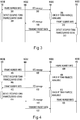
- FIG 3 illustrates a signaling diagram in a wireless non-cellular network, such as a mesh network, according to an embodiment of the invention.
- the mesh node numbering refers to the situation of Figures 1 and 2 .
- a mesh node 100, 101, 102, 103 can communicate with other mesh nodes 100, 101, 102, 103. Let us assume that the mesh nodes 100 and 101 are synchronized, and a source mesh node 100 wishes to send data to a destination mesh node 101.
- the source mesh node 100 sends a request-to-send message in control frequency to the destination mesh node 101 for requesting approval of one or more TDMA frames.
- the request-to-send message comprises the proposed TDMA frame numbers.
- a mesh node 103 monitors the TDMA frame number information by monitoring the signals.
- the mesh node 103 has detected that the proposed TDMA frames may become occupied and, thus avoids using them.
- the destination mesh node 101 has received the request-to-send message and checks if the proposed TDMA frames are available. In 308, the destination mesh node 101 transmits an approval of the requested one or more TDMA frames in the form of a clear-to-send message to the source mesh node 100 when the one or more TDMA frames are available within the coverage area of the destination mesh node 101. In 310, a mesh node 102 monitors the TDMA frame number information by monitoring the signals, and in 312, the mesh node 102 detects the occupied TDMA frames and avoids using them.
- the source mesh node 100 When the source mesh node 100 has received the clear-to-send message from the destination mesh node 101, the source mesh node 100 starts transmitting packet data to the destination mesh node 101 in 314.
- Figure 4 illustrates a signaling diagram in a wireless mesh network according to an embodiment of the invention.
- the mesh node numbering refers to the situation of Figures 1 and 2 .
- a mesh node 100, 101, 102, 103 can communicate with other mesh nodes 100, 101, 102, 103.
- the mesh nodes 100 and 101 are synchronized, and the source mesh node 100 wishes to send data to a destination mesh node 101.
- the destination mesh node 101 monitors TDMA frame information from another mesh node 102 within the coverage area of the destination mesh node 101.
- the destination mesh node 101 now knows to avoid using the TDMA frames that were included in the monitored information.
- the source mesh node 100 sends a request-to-send message in control frequency to the destination mesh node 101 for requesting approval of one or more TDMA frames.
- the request-to-send message comprises the proposed TDMA frame numbers.
- a mesh node 103 monitors the TDMA frame number information by monitoring the signals.
- the mesh node 103 has detected that the proposed TDMA frames may become occupied and, thus avoids using them.
- the destination mesh node 101 has received the request-to-send message from the source mesh node 100 but since the proposed TDMA frames are already reserved by the mesh node 102, the destination mesh node 101 does not send a clear-to-send message to the source node 100.
- the source mesh node 100 After a predetermined period of time, the source mesh node 100 retransmits a request-to-send message to the destination mesh node 101 in 410.
- the request-to-send message may propose the same TDMA frame numbers than in the previous request-to-send message or new TDMA frame numbers.
- the mesh node 103 monitors the TDMA frame number information by monitoring the signals in 412. In 414, the mesh node 103 has detected that the proposed TDMA frames may become occupied and, thus avoids using them.
- the destination mesh node 101 detects that the proposed TDMA frames are now available, and sends a clear-to-send message to the source mesh node 100 in 418.
- the mesh node 102 monitors the signaling in 420, and knows to avoid using the proposed TDMA frames.
- the source mesh node 100 transmits packet data to the destination mesh node 101 in the accepted TDMA frames.
- Figure 5 illustrates a superframe/access structure for use in a wireless non-cellular network according to an embodiment of the invention.
- Control information is exchanged in a bandwidth 520 using the modified DCF.
- Data transmission is carried out in another bandwidth 530 using TDMA.
- the modified DCF comprises proposed TDMA frame number(s) included in the RTS messages 511 to 514 and approval of the proposed TDMA frame number(s) in the form of the CTS messages 521 to 542. If proposed frames are not in use, then CTS message containing the frame number(s) originally proposed can be sent to the requesting mesh node (source mesh node). Data packet is sent in the agreed TDMA frame(s). If the proposed TDMA frame(s) is in use, then CTS transmission is suspended. After a predetermined period of time, a new RTS message can be transmitted.
- Time synchronization at a frame level and a superframe structure may be adopted from the GSM system.
- GSM common channels such as synchronization channels (SCH)
- SCH can be transmitted e.g. 5 times (each 10 TDMA frame) during a common channel multiframe.
- One common channel multiframe comprises 51 TDMA frames, i.e. 235ms.
- SCH contains a TDMA frame number as well as a base station identity code (BSIC).
- a mesh node While initializing and maintaining the connection to other nodes, a mesh node monitors the GSM TDMA frame structure, e.g. via SCH, in order to find superframe boundaries, denoted by 501 and 502 in Figure 5 .
- a GSM transmitter is not needed in the mesh nodes. Any multiple of GSM TDMA frame period (4.615ms) other than the ones used in these examples can be used to define superframe boundaries.
- the TDMA structure is thus borrowed from another system where it is already available by only listening to the other system.
- the length of the TDMA frames within the superframes can be defined according to the underlying cellular system taking into account the accuracy requirements of the synchronization.
- one control bandwidth can be assigned with more than one data frequencies.
- the mesh nodes can monitor more than one GSM base station synchronization channel, especially when located in cell border areas.
- BSIC base station identity code
- a GSM macro base station coverage area is typically kilometers, and thus the mesh nodes are usually located under a certain GSM base station coverage area. Also suitable guard periods between TDMA frames can be used. Further, the lowest frequency variant of GSM can be used if different variants are used in the same area. In case of a conflict in timing between the mesh nodes, a conventional DCF may be used. For that purpose, some data channels may be preserved for DCF usage.
- Figure 6 illustrates a flow diagram of a method according to an embodiment of the invention.
- the method starts in 600.
- a plurality of non-cellular nodes of a wireless non-cellular network monitor a time division multiple access (TDMA) frame structure of a cellular system via a common channel of the cellular system.
- occupied TDMA frames in the non-cellular network are monitored by the plurality of non-cellular nodes.
- an approval of one or more TDMA frames is requested by a control message from a source non-cellular node to a destination non-cellular node.
- the requested one or more TDMA frames are approved when the one or more TDMA frames are available within the coverage area of the destination non-cellular node.
- packet data is transmitted to the destination non-cellular node in the approved one or more TDMA frames.
- the method ends in 612.
- the embodiments of the invention may be realized in a non-cellular node entity, comprising a controller.
- the controller may be configured to perform at least some of the steps described in connection with the flowchart of Figure 6 and in connection with Figures 3 and 4 .
- the embodiments may be implemented as a computer program comprising instructions for executing a computer process for communicating.
- the computer program may be stored on a computer program distribution medium readable by a computer or a processor.
- the computer program medium may be, for example but not limited to, an electric, magnetic, optical, infrared or semiconductor system, device or transmission medium.
- the computer program medium may include at least one of the following media: a computer readable medium, a program storage medium, a record medium, a computer readable memory, a random access memory, an erasable programmable read-only memory, a computer readable software distribution package, a computer readable signal, a computer readable telecommunications signal, computer readable printed matter, and a computer readable compressed software package.
Landscapes
- Engineering & Computer Science (AREA)
- Computer Networks & Wireless Communication (AREA)
- Signal Processing (AREA)
- Mobile Radio Communication Systems (AREA)
Claims (15)
- Procédé comprenant :le contrôle d'une structure de trame d'accès multiple par répartition dans le temps, AMRT, d'un système cellulaire (206) par une pluralité de noeuds non cellulaires (100, 101, 102, 103) d'un réseau non cellulaire (200, 201) fonctionnant dans une bande de fréquences exemptée de licence au moyen d'un canal commun du système cellulaire pour la synchronisation entre les noeuds non cellulaires (100, 101, 102, 103) ; etl'utilisation de la structure de trame d'accès multiple par répartition dans le temps, AMRT, du système cellulaire (206) dans le réseau non cellulaire (200, 201) pour échanger des données entre au moins certains de la pluralité de noeuds non cellulaires (100, 101, 102, 103).
- Procédé selon la revendication 1, comprenant en outre :l'échange d'informations de commande d'un protocole de commande d'accès au support dans une première largeur de bande de fréquences par au moins certains de la pluralité de noeuds non cellulaires (100, 101, 102, 103) du réseau non cellulaire (200, 201) ; et la transmission de données dans une seconde largeur de bande de fréquences en utilisant une structure de trame d'accès multiple par répartition dans le temps, AMRT.
- Procédé selon l'une quelconque des revendications 1-2, comprenant en outre : l'échange de messages de commande entre un noeud non cellulaire source (100) et un noeud non cellulaire destinataire (101) au moyen d'une fonction de coordination distribuée.
- Procédé selon l'une quelconque des revendications 1 à 3, comprenant en outre : la synchronisation avec la structure de trame d'accès multiple par répartition dans le temps, AMRT, du système cellulaire (206) par l'intermédiaire d'un canal de synchronisation par au moins une partie de la pluralité de noeuds non cellulaires (100, 101, 102, 103) du réseau non cellulaire sans fil (200, 201).
- Procédé selon l'une quelconque des revendications 1 à 4, comprenant en outre :le contrôle de trames AMRT occupées dans le réseau non cellulaire (200, 201) par la pluralité de noeuds non cellulaires (100, 101, 102, 103) ;la requête d'une approbation d'une ou de plusieurs trames AMRT par un message de commande allant d'un noeud non cellulaire source (100) à un noeud non cellulaire destinataire (101) ;l'approbation des une ou plusieurs trames AMRT requises quand les une ou plusieurs trames AMRT sont disponibles dans la zone de couverture du noeud non cellulaire destinataire (101) ; etla transmission de données par paquets au noeud non cellulaire destinataire (101) dans les une ou plusieurs trames AMRT approuvées.
- Procédé selon la revendication 5, comprenant en outre : la transmission d'un ou de plusieurs nombres des trames AMRT requises dans un message de demande d'envoi du noeud non cellulaire source (100) au noeud non cellulaire destinataire (101), et l'approbation des une ou plusieurs trames AMRT requises en transmettant un message prêt à envoyer du noeud non cellulaire destinataire (101) au noeud non cellulaire source (100).
- Procédé selon la revendication 6, dans lequel le message prêt à envoyer comporte les nombres des trames AMRT incluses dans le message de demande d'envoi.
- Procédé selon l'une quelconque des revendications 6-7, comprenant en outre : la suspension de la transmission du message prêt à envoyer quand les trames AMRT requises sont occupées dans la zone de couverture du noeud non cellulaire destinataire (101).
- Procédé selon l'une quelconque des revendications 6 à 8, comprenant en outre : la retransmission du message de demande d'envoi du noeud non cellulaire source (100) au noeud non cellulaire destinataire (101) quand un message prêt à envoyer n'a pas été reçu durant une période de temps prédéterminée.
- Procédé selon l'une quelconque des revendications 6 à 9, comprenant en outre : la transmission d'un nouveau message de demande d'envoi avec de nouveaux nombres de trames AMRT du noeud non cellulaire source (100) au noeud non cellulaire destinataire (101) quand un message prêt à envoyer n'a pas été reçu durant une période de temps prédéterminée.
- Réseau non cellulaire sans fil (200, 201) fonctionnant dans une bande de fréquences exemptée de licence comprenant une pluralité de noeuds non cellulaires (100, 101, 102, 103), dans lequel au moins certains des noeuds non cellulaires (100, 101, 102, 103) comprennent :un moyen de récepteur pour contrôler une structure de trame d'accès multiple par répartition dans le temps, AMRT, d'un système cellulaire (206) au moyen d'un canal commun du système cellulaire (206) pour la synchronisation entre les noeuds non cellulaires (100, 101, 102, 103) ; etun moyen de traitement pour utiliser la structure de trame d'accès multiple par répartition dans le temps, AMRT, du système cellulaire (206) dans le réseau non cellulaire sans fil (200, 201) pour échanger des données avec au moins certains de la pluralité de noeuds non cellulaires (100, 101, 102, 103).
- Réseau non cellulaire sans fil (200, 201) selon la revendication 11, comprenant une pluralité de noeuds non cellulaires (100, 101, 102, 103), dans lequel au moins certains des noeuds non cellulaires (100, 101, 102, 103) comprennent en outre un moyen pour inciter l'exécution de l'une quelconque des revendications 2 à 10.
- Noeud non cellulaire (100, 101, 102, 103) d'un réseau non cellulaire sans fil (200, 201) fonctionnant dans une bande de fréquences exemptée de licence, le noeud non cellulaire comprenant (100, 101, 102, 103) :un récepteur pour contrôler une structure de trame d'accès multiple par répartition dans le temps, AMRT, d'un système cellulaire (206) au moyen d'un canal commun du système cellulaire (206) pour la synchronisation entre les noeuds non cellulaires (100, 101, 102, 103) ; etune unité de traitement pour utiliser la structure de trame d'accès multiple par répartition dans le temps, AMRT, du système cellulaire (206) dans le réseau non cellulaire sans fil (200, 201) pour échanger des données avec un ou plusieurs d'une pluralité de noeuds non cellulaires (100, 101, 102, 103) du réseau non cellulaire sans fil (200, 201).
- Noeud non cellulaire (100, 101, 102, 103) d'un réseau non cellulaire sans fil (200, 201) selon la revendication 13, le noeud non cellulaire (100, 101, 102, 103) comprenant en outre un moyen pour inciter l'exécution de l'une quelconque des revendications 2 à 10.
- Support de distribution de programme lisible par ordinateur codant un programme informatique d'instructions pour exécuter un processus informatique dans un réseau non cellulaire sans fil (200, 201) fonctionnant dans une bande de fréquences exemptée de licence, et inciter l'exécution de l'une quelconque des revendications 1 à 10.
Applications Claiming Priority (2)
| Application Number | Priority Date | Filing Date | Title |
|---|---|---|---|
| FI20065810A FI20065810A0 (fi) | 2006-12-15 | 2006-12-15 | Langaton ei-solukkoverkko |
| PCT/FI2007/050692 WO2008071854A1 (fr) | 2006-12-15 | 2007-12-14 | Réseau non cellulaire sans fil |
Publications (3)
| Publication Number | Publication Date |
|---|---|
| EP2098015A1 EP2098015A1 (fr) | 2009-09-09 |
| EP2098015A4 EP2098015A4 (fr) | 2013-10-09 |
| EP2098015B1 true EP2098015B1 (fr) | 2017-01-25 |
Family
ID=37623826
Family Applications (1)
| Application Number | Title | Priority Date | Filing Date |
|---|---|---|---|
| EP07858343.2A Not-in-force EP2098015B1 (fr) | 2006-12-15 | 2007-12-14 | Réseau non cellulaire sans fil |
Country Status (5)
| Country | Link |
|---|---|
| US (1) | US8121059B2 (fr) |
| EP (1) | EP2098015B1 (fr) |
| CN (1) | CN101601324B (fr) |
| FI (1) | FI20065810A0 (fr) |
| WO (1) | WO2008071854A1 (fr) |
Families Citing this family (3)
| Publication number | Priority date | Publication date | Assignee | Title |
|---|---|---|---|---|
| CN101631316B (zh) * | 2008-07-16 | 2011-07-06 | 中国移动通信集团公司 | 在tdd系统中提高频谱利用率的方法和设备 |
| US9113478B2 (en) * | 2008-08-20 | 2015-08-18 | Qualcomm Incorporated | Methods and apparatus for requesting and allocating resources in multiple transmission opportunities |
| CN109690984B (zh) * | 2016-09-29 | 2021-10-08 | 英特尔公司 | 通信方法和系统 |
Family Cites Families (13)
| Publication number | Priority date | Publication date | Assignee | Title |
|---|---|---|---|---|
| US5481539A (en) * | 1994-06-29 | 1996-01-02 | General Electric Company | Datagram communication service over a cellular telephone network |
| US6108321A (en) * | 1996-06-28 | 2000-08-22 | Lucent Technologies Inc. | Interference based dynamic channel assignment |
| FI109953B (fi) | 2000-02-17 | 2002-10-31 | Nokia Corp | Yhteyksien käsitteleminen matkaviestinverkossa |
| WO2001072080A1 (fr) * | 2000-03-23 | 2001-09-27 | Siemens Information And Communication Networks S.P.A. | Programmation de canal d'acces dans un systeme de radiocommunication |
| US6807165B2 (en) * | 2000-11-08 | 2004-10-19 | Meshnetworks, Inc. | Time division protocol for an ad-hoc, peer-to-peer radio network having coordinating channel access to shared parallel data channels with separate reservation channel |
| US6904055B2 (en) * | 2002-06-24 | 2005-06-07 | Nokia Corporation | Ad hoc networking of terminals aided by a cellular network |
| EP1389856A1 (fr) * | 2002-08-13 | 2004-02-18 | Siemens Aktiengesellschaft | Procède d'allocation de ressources de radio dans un système de radiocommunication ad-hoc |
| DE10350890B4 (de) | 2003-10-31 | 2005-12-01 | Siemens Ag | Verfahren zum Betreiben zweier Funkkommunikationssysteme |
| US8031650B2 (en) * | 2004-03-03 | 2011-10-04 | Sipco, Llc | System and method for monitoring remote devices with a dual-mode wireless communication protocol |
| CN100574491C (zh) * | 2004-06-15 | 2009-12-23 | 皇家飞利浦电子股份有限公司 | 无线通信系统中在集中式tdma mac和第二mac之间达到共存的方法 |
| EP1638265A1 (fr) | 2004-09-15 | 2006-03-22 | Institut Eurecom G.I.E. | Procédé pour régler le trafic dans un réseau adhoc |
| US20060203841A1 (en) * | 2005-03-09 | 2006-09-14 | Fischer Matthew J | Coordination of multiple protocols using a shared communication medium |
| CN1953406B (zh) * | 2005-10-19 | 2011-06-01 | 株式会社Ntt都科摩 | 接入混合网的方法和网关设备、无线终端以及通信系统 |
-
2006
- 2006-12-15 FI FI20065810A patent/FI20065810A0/fi not_active Application Discontinuation
-
2007
- 2007-11-15 US US11/984,286 patent/US8121059B2/en not_active Expired - Fee Related
- 2007-12-14 CN CN2007800506168A patent/CN101601324B/zh not_active Expired - Fee Related
- 2007-12-14 EP EP07858343.2A patent/EP2098015B1/fr not_active Not-in-force
- 2007-12-14 WO PCT/FI2007/050692 patent/WO2008071854A1/fr not_active Ceased
Non-Patent Citations (1)
| Title |
|---|
| None * |
Also Published As
| Publication number | Publication date |
|---|---|
| EP2098015A4 (fr) | 2013-10-09 |
| CN101601324A (zh) | 2009-12-09 |
| FI20065810A0 (fi) | 2006-12-15 |
| WO2008071854A1 (fr) | 2008-06-19 |
| CN101601324B (zh) | 2013-07-10 |
| US8121059B2 (en) | 2012-02-21 |
| US20080144564A1 (en) | 2008-06-19 |
| EP2098015A1 (fr) | 2009-09-09 |
Similar Documents
| Publication | Publication Date | Title |
|---|---|---|
| JP5136590B2 (ja) | 無線通信システム、無線通信装置、無線通信方法及びコンピュータプログラム | |
| CN100531076C (zh) | 通过无线电传输提供多个站间的同时通信的方法和接入点 | |
| KR102014830B1 (ko) | 제1 및 제2의 분리되는 결합을 확립하는 방법 | |
| JP4622503B2 (ja) | 無線通信システム、無線通信装置及び無線通信方法、並びにコンピュータ・プログラム | |
| US6928061B1 (en) | Transmission-scheduling coordination among collocated internet radios | |
| US20020093929A1 (en) | System and method for sharing bandwidth between co-located 802.11a/e and HIPERLAN/2 systems | |
| JP5419980B2 (ja) | ネットワークにおいて通信するための方法、並びにその方法のためのシステム及び一次局 | |
| US20120163349A1 (en) | Transmission method implemented by a node and corresponding reception method | |
| CN106131799B (zh) | 非时隙信道跳跃介质接入控制中的增强型广播传输方法 | |
| EP1998499A1 (fr) | Sondage pour trafic de poste à poste | |
| CN104168657B (zh) | 一种同频组网无线局域网的通信方法及设备 | |
| JP4582098B2 (ja) | 無線通信システム、通信装置、通信方法及びプログラム | |
| US20060280152A1 (en) | Multi-channel MAC method for WLAN devices with a single radio interface and system for implementing the same | |
| CN113632580A (zh) | 随机接入过程中消息3的cot共享指示符 | |
| EP2098015B1 (fr) | Réseau non cellulaire sans fil | |
| WO2007008174A1 (fr) | Procede et systeme de communication sans fil entre des dispositifs | |
| CN113950865A (zh) | 信息传输方法及相关产品 | |
| WO2012176633A1 (fr) | Machine permettant un échange entre des systèmes disparates et procédé permettant un échange entre des systèmes disparates | |
| WO2006129959A1 (fr) | Procede mac a canaux multiples destine a des dispositifs wlan a interface radio unique et systeme de mise en oeuvre de ce procede | |
| HK1137581A1 (en) | A serial clear to send to self messaging procedure | |
| HK1137581B (en) | A serial clear to send to self messaging procedure |
Legal Events
| Date | Code | Title | Description |
|---|---|---|---|
| PUAI | Public reference made under article 153(3) epc to a published international application that has entered the european phase |
Free format text: ORIGINAL CODE: 0009012 |
|
| 17P | Request for examination filed |
Effective date: 20090611 |
|
| AK | Designated contracting states |
Kind code of ref document: A1 Designated state(s): AT BE BG CH CY CZ DE DK EE ES FI FR GB GR HU IE IS IT LI LT LU LV MC MT NL PL PT RO SE SI SK TR |
|
| DAX | Request for extension of the european patent (deleted) | ||
| A4 | Supplementary search report drawn up and despatched |
Effective date: 20130910 |
|
| RIC1 | Information provided on ipc code assigned before grant |
Ipc: H04W 16/14 20090101AFI20130904BHEP Ipc: H04W 84/18 20090101ALN20130904BHEP Ipc: H04W 72/12 20090101ALN20130904BHEP |
|
| RAP1 | Party data changed (applicant data changed or rights of an application transferred) |
Owner name: NOKIA CORPORATION |
|
| RAP1 | Party data changed (applicant data changed or rights of an application transferred) |
Owner name: NOKIA TECHNOLOGIES OY |
|
| REG | Reference to a national code |
Ref country code: DE Ref legal event code: R079 Ref document number: 602007049691 Country of ref document: DE Free format text: PREVIOUS MAIN CLASS: H04L0012280000 Ipc: H04W0016140000 |
|
| GRAP | Despatch of communication of intention to grant a patent |
Free format text: ORIGINAL CODE: EPIDOSNIGR1 |
|
| RIC1 | Information provided on ipc code assigned before grant |
Ipc: H04W 16/14 20090101AFI20160810BHEP Ipc: H04W 84/18 20090101ALN20160810BHEP Ipc: H04W 72/12 20090101ALN20160810BHEP |
|
| INTG | Intention to grant announced |
Effective date: 20160824 |
|
| RIC1 | Information provided on ipc code assigned before grant |
Ipc: H04W 84/18 20090101ALN20160812BHEP Ipc: H04W 16/14 20090101AFI20160812BHEP Ipc: H04W 72/12 20090101ALN20160812BHEP |
|
| GRAS | Grant fee paid |
Free format text: ORIGINAL CODE: EPIDOSNIGR3 |
|
| GRAA | (expected) grant |
Free format text: ORIGINAL CODE: 0009210 |
|
| AK | Designated contracting states |
Kind code of ref document: B1 Designated state(s): AT BE BG CH CY CZ DE DK EE ES FI FR GB GR HU IE IS IT LI LT LU LV MC MT NL PL PT RO SE SI SK TR |
|
| REG | Reference to a national code |
Ref country code: GB Ref legal event code: FG4D |
|
| REG | Reference to a national code |
Ref country code: CH Ref legal event code: EP |
|
| REG | Reference to a national code |
Ref country code: AT Ref legal event code: REF Ref document number: 864736 Country of ref document: AT Kind code of ref document: T Effective date: 20170215 |
|
| REG | Reference to a national code |
Ref country code: IE Ref legal event code: FG4D |
|
| REG | Reference to a national code |
Ref country code: DE Ref legal event code: R096 Ref document number: 602007049691 Country of ref document: DE |
|
| REG | Reference to a national code |
Ref country code: LT Ref legal event code: MG4D |
|
| REG | Reference to a national code |
Ref country code: NL Ref legal event code: MP Effective date: 20170125 |
|
| REG | Reference to a national code |
Ref country code: AT Ref legal event code: MK05 Ref document number: 864736 Country of ref document: AT Kind code of ref document: T Effective date: 20170125 |
|
| PG25 | Lapsed in a contracting state [announced via postgrant information from national office to epo] |
Ref country code: NL Free format text: LAPSE BECAUSE OF FAILURE TO SUBMIT A TRANSLATION OF THE DESCRIPTION OR TO PAY THE FEE WITHIN THE PRESCRIBED TIME-LIMIT Effective date: 20170125 |
|
| PG25 | Lapsed in a contracting state [announced via postgrant information from national office to epo] |
Ref country code: LT Free format text: LAPSE BECAUSE OF FAILURE TO SUBMIT A TRANSLATION OF THE DESCRIPTION OR TO PAY THE FEE WITHIN THE PRESCRIBED TIME-LIMIT Effective date: 20170125 Ref country code: GR Free format text: LAPSE BECAUSE OF FAILURE TO SUBMIT A TRANSLATION OF THE DESCRIPTION OR TO PAY THE FEE WITHIN THE PRESCRIBED TIME-LIMIT Effective date: 20170426 Ref country code: FI Free format text: LAPSE BECAUSE OF FAILURE TO SUBMIT A TRANSLATION OF THE DESCRIPTION OR TO PAY THE FEE WITHIN THE PRESCRIBED TIME-LIMIT Effective date: 20170125 Ref country code: IS Free format text: LAPSE BECAUSE OF FAILURE TO SUBMIT A TRANSLATION OF THE DESCRIPTION OR TO PAY THE FEE WITHIN THE PRESCRIBED TIME-LIMIT Effective date: 20170525 |
|
| PG25 | Lapsed in a contracting state [announced via postgrant information from national office to epo] |
Ref country code: PT Free format text: LAPSE BECAUSE OF FAILURE TO SUBMIT A TRANSLATION OF THE DESCRIPTION OR TO PAY THE FEE WITHIN THE PRESCRIBED TIME-LIMIT Effective date: 20170525 Ref country code: LV Free format text: LAPSE BECAUSE OF FAILURE TO SUBMIT A TRANSLATION OF THE DESCRIPTION OR TO PAY THE FEE WITHIN THE PRESCRIBED TIME-LIMIT Effective date: 20170125 Ref country code: ES Free format text: LAPSE BECAUSE OF FAILURE TO SUBMIT A TRANSLATION OF THE DESCRIPTION OR TO PAY THE FEE WITHIN THE PRESCRIBED TIME-LIMIT Effective date: 20170125 Ref country code: SE Free format text: LAPSE BECAUSE OF FAILURE TO SUBMIT A TRANSLATION OF THE DESCRIPTION OR TO PAY THE FEE WITHIN THE PRESCRIBED TIME-LIMIT Effective date: 20170125 Ref country code: AT Free format text: LAPSE BECAUSE OF FAILURE TO SUBMIT A TRANSLATION OF THE DESCRIPTION OR TO PAY THE FEE WITHIN THE PRESCRIBED TIME-LIMIT Effective date: 20170125 Ref country code: BG Free format text: LAPSE BECAUSE OF FAILURE TO SUBMIT A TRANSLATION OF THE DESCRIPTION OR TO PAY THE FEE WITHIN THE PRESCRIBED TIME-LIMIT Effective date: 20170425 Ref country code: PL Free format text: LAPSE BECAUSE OF FAILURE TO SUBMIT A TRANSLATION OF THE DESCRIPTION OR TO PAY THE FEE WITHIN THE PRESCRIBED TIME-LIMIT Effective date: 20170125 |
|
| REG | Reference to a national code |
Ref country code: DE Ref legal event code: R097 Ref document number: 602007049691 Country of ref document: DE |
|
| PG25 | Lapsed in a contracting state [announced via postgrant information from national office to epo] |
Ref country code: SK Free format text: LAPSE BECAUSE OF FAILURE TO SUBMIT A TRANSLATION OF THE DESCRIPTION OR TO PAY THE FEE WITHIN THE PRESCRIBED TIME-LIMIT Effective date: 20170125 Ref country code: RO Free format text: LAPSE BECAUSE OF FAILURE TO SUBMIT A TRANSLATION OF THE DESCRIPTION OR TO PAY THE FEE WITHIN THE PRESCRIBED TIME-LIMIT Effective date: 20170125 Ref country code: EE Free format text: LAPSE BECAUSE OF FAILURE TO SUBMIT A TRANSLATION OF THE DESCRIPTION OR TO PAY THE FEE WITHIN THE PRESCRIBED TIME-LIMIT Effective date: 20170125 Ref country code: CZ Free format text: LAPSE BECAUSE OF FAILURE TO SUBMIT A TRANSLATION OF THE DESCRIPTION OR TO PAY THE FEE WITHIN THE PRESCRIBED TIME-LIMIT Effective date: 20170125 Ref country code: IT Free format text: LAPSE BECAUSE OF FAILURE TO SUBMIT A TRANSLATION OF THE DESCRIPTION OR TO PAY THE FEE WITHIN THE PRESCRIBED TIME-LIMIT Effective date: 20170125 |
|
| PG25 | Lapsed in a contracting state [announced via postgrant information from national office to epo] |
Ref country code: DK Free format text: LAPSE BECAUSE OF FAILURE TO SUBMIT A TRANSLATION OF THE DESCRIPTION OR TO PAY THE FEE WITHIN THE PRESCRIBED TIME-LIMIT Effective date: 20170125 |
|
| PLBE | No opposition filed within time limit |
Free format text: ORIGINAL CODE: 0009261 |
|
| STAA | Information on the status of an ep patent application or granted ep patent |
Free format text: STATUS: NO OPPOSITION FILED WITHIN TIME LIMIT |
|
| 26N | No opposition filed |
Effective date: 20171026 |
|
| PG25 | Lapsed in a contracting state [announced via postgrant information from national office to epo] |
Ref country code: SI Free format text: LAPSE BECAUSE OF FAILURE TO SUBMIT A TRANSLATION OF THE DESCRIPTION OR TO PAY THE FEE WITHIN THE PRESCRIBED TIME-LIMIT Effective date: 20170125 |
|
| REG | Reference to a national code |
Ref country code: CH Ref legal event code: PL |
|
| GBPC | Gb: european patent ceased through non-payment of renewal fee |
Effective date: 20171214 |
|
| REG | Reference to a national code |
Ref country code: IE Ref legal event code: MM4A |
|
| PG25 | Lapsed in a contracting state [announced via postgrant information from national office to epo] |
Ref country code: LU Free format text: LAPSE BECAUSE OF NON-PAYMENT OF DUE FEES Effective date: 20171214 Ref country code: MT Free format text: LAPSE BECAUSE OF NON-PAYMENT OF DUE FEES Effective date: 20171214 |
|
| REG | Reference to a national code |
Ref country code: FR Ref legal event code: ST Effective date: 20180831 |
|
| REG | Reference to a national code |
Ref country code: BE Ref legal event code: MM Effective date: 20171231 |
|
| PG25 | Lapsed in a contracting state [announced via postgrant information from national office to epo] |
Ref country code: IE Free format text: LAPSE BECAUSE OF NON-PAYMENT OF DUE FEES Effective date: 20171214 Ref country code: FR Free format text: LAPSE BECAUSE OF NON-PAYMENT OF DUE FEES Effective date: 20180102 |
|
| PG25 | Lapsed in a contracting state [announced via postgrant information from national office to epo] |
Ref country code: LI Free format text: LAPSE BECAUSE OF NON-PAYMENT OF DUE FEES Effective date: 20171231 Ref country code: GB Free format text: LAPSE BECAUSE OF NON-PAYMENT OF DUE FEES Effective date: 20171214 Ref country code: BE Free format text: LAPSE BECAUSE OF NON-PAYMENT OF DUE FEES Effective date: 20171231 Ref country code: CH Free format text: LAPSE BECAUSE OF NON-PAYMENT OF DUE FEES Effective date: 20171231 |
|
| PG25 | Lapsed in a contracting state [announced via postgrant information from national office to epo] |
Ref country code: MC Free format text: LAPSE BECAUSE OF FAILURE TO SUBMIT A TRANSLATION OF THE DESCRIPTION OR TO PAY THE FEE WITHIN THE PRESCRIBED TIME-LIMIT Effective date: 20170125 Ref country code: HU Free format text: LAPSE BECAUSE OF FAILURE TO SUBMIT A TRANSLATION OF THE DESCRIPTION OR TO PAY THE FEE WITHIN THE PRESCRIBED TIME-LIMIT; INVALID AB INITIO Effective date: 20071214 |
|
| PG25 | Lapsed in a contracting state [announced via postgrant information from national office to epo] |
Ref country code: CY Free format text: LAPSE BECAUSE OF NON-PAYMENT OF DUE FEES Effective date: 20170125 |
|
| PG25 | Lapsed in a contracting state [announced via postgrant information from national office to epo] |
Ref country code: TR Free format text: LAPSE BECAUSE OF FAILURE TO SUBMIT A TRANSLATION OF THE DESCRIPTION OR TO PAY THE FEE WITHIN THE PRESCRIBED TIME-LIMIT Effective date: 20170125 |
|
| PGFP | Annual fee paid to national office [announced via postgrant information from national office to epo] |
Ref country code: DE Payment date: 20201201 Year of fee payment: 14 |
|
| REG | Reference to a national code |
Ref country code: DE Ref legal event code: R119 Ref document number: 602007049691 Country of ref document: DE |
|
| PG25 | Lapsed in a contracting state [announced via postgrant information from national office to epo] |
Ref country code: DE Free format text: LAPSE BECAUSE OF NON-PAYMENT OF DUE FEES Effective date: 20220701 |