EP2098023B1 - Mise en grappe de postes sans fil dans des communications coopératives - Google Patents
Mise en grappe de postes sans fil dans des communications coopératives Download PDFInfo
- Publication number
- EP2098023B1 EP2098023B1 EP07859454.6A EP07859454A EP2098023B1 EP 2098023 B1 EP2098023 B1 EP 2098023B1 EP 07859454 A EP07859454 A EP 07859454A EP 2098023 B1 EP2098023 B1 EP 2098023B1
- Authority
- EP
- European Patent Office
- Prior art keywords
- cluster
- data
- stas
- leads
- wireless
- Prior art date
- Legal status (The legal status is an assumption and is not a legal conclusion. Google has not performed a legal analysis and makes no representation as to the accuracy of the status listed.)
- Active
Links
Images
Classifications
-
- H—ELECTRICITY
- H04—ELECTRIC COMMUNICATION TECHNIQUE
- H04W—WIRELESS COMMUNICATION NETWORKS
- H04W40/00—Communication routing or communication path finding
- H04W40/24—Connectivity information management, e.g. connectivity discovery or connectivity update
- H04W40/32—Connectivity information management, e.g. connectivity discovery or connectivity update for defining a routing cluster membership
-
- H—ELECTRICITY
- H04—ELECTRIC COMMUNICATION TECHNIQUE
- H04L—TRANSMISSION OF DIGITAL INFORMATION, e.g. TELEGRAPHIC COMMUNICATION
- H04L1/00—Arrangements for detecting or preventing errors in the information received
- H04L1/02—Arrangements for detecting or preventing errors in the information received by diversity reception
- H04L1/06—Arrangements for detecting or preventing errors in the information received by diversity reception using space diversity
- H04L1/0618—Space-time coding
- H04L1/0625—Transmitter arrangements
-
- H—ELECTRICITY
- H04—ELECTRIC COMMUNICATION TECHNIQUE
- H04L—TRANSMISSION OF DIGITAL INFORMATION, e.g. TELEGRAPHIC COMMUNICATION
- H04L45/00—Routing or path finding of packets in data switching networks
- H04L45/46—Cluster building
-
- H—ELECTRICITY
- H04—ELECTRIC COMMUNICATION TECHNIQUE
- H04L—TRANSMISSION OF DIGITAL INFORMATION, e.g. TELEGRAPHIC COMMUNICATION
- H04L1/00—Arrangements for detecting or preventing errors in the information received
- H04L2001/0092—Error control systems characterised by the topology of the transmission link
-
- H—ELECTRICITY
- H04—ELECTRIC COMMUNICATION TECHNIQUE
- H04L—TRANSMISSION OF DIGITAL INFORMATION, e.g. TELEGRAPHIC COMMUNICATION
- H04L5/00—Arrangements affording multiple use of the transmission path
- H04L5/0001—Arrangements for dividing the transmission path
- H04L5/0003—Two-dimensional division
- H04L5/0005—Time-frequency
- H04L5/0007—Time-frequency the frequencies being orthogonal, e.g. OFDM(A) or DMT
-
- H—ELECTRICITY
- H04—ELECTRIC COMMUNICATION TECHNIQUE
- H04W—WIRELESS COMMUNICATION NETWORKS
- H04W40/00—Communication routing or communication path finding
- H04W40/02—Communication route or path selection, e.g. power-based or shortest path routing
- H04W40/22—Communication route or path selection, e.g. power-based or shortest path routing using selective relaying for reaching a BTS [Base Transceiver Station] or an access point
-
- H—ELECTRICITY
- H04—ELECTRIC COMMUNICATION TECHNIQUE
- H04W—WIRELESS COMMUNICATION NETWORKS
- H04W40/00—Communication routing or communication path finding
- H04W40/24—Connectivity information management, e.g. connectivity discovery or connectivity update
Definitions
- Wireless communication technology has significantly advanced making the wireless medium a viable alternative to wired solutions.
- wireless connectivity in data and voice communications continues to increase.
- These devices include mobile telephones, portable computers in wireless networks (e.g., wireless local area networks (WLANs), stationary computers in wireless networks, portable handsets, to name only a few).
- WLANs wireless local area networks
- stationary computers in wireless networks e.g., portable handsets, to name only a few.
- wireless devices are increasingly relied upon to provide reliable service at higher data rates.
- One way to increase the bandwidth capability of a wireless device, or to improve the reliability of the device, or both, is through the use of multiple antennas.
- multiple antennae require additional 'real estate' on the device and add to the cost of the device due to both the antennae and the supporting circuitry.
- a wireless system includes a cluster of wireless stations (STAs) and at least one cluster lead adapted to receive data from the STAs and to provide the data to other cluster leads, or to an access point (AP), or both.
- STAs wireless stations
- AP access point
- a method of wireless communication includes forming a cluster of STAs from among STAs of a wireless network and designating at least one of the STAs of the cluster to be a cluster lead. The method also includes exchanging data between the STAs and the cluster lead and re-transmitting the data from the cluster lead to an access point (AP) of the network.
- AP access point
- a method of wireless communication includes transmitting an instruction to a wireless station (STA) of a wireless network to form a cluster and to function as a cluster lead.
- the method also includes forming the cluster of STAs by transmitting an invitation from the cluster lead to other STAs of the wireless network to join the cluster; and transmitting respective sets of sub-carriers.
- WO 2006/083535 relates to a system for clustering mobile devices in a wireless network.
- the system includes a wireless access point and a plurality of mobile units.
- Each of the mobile units has a wireless transducer.
- At least two mobile units of the mobile units are grouped, based on a predetermined parameter, into a cluster which includes a head mobile unit and at least one member mobile unit. Communications between the at least one member mobile unit and the access point are conducted via the head mobile unit.
- WO 03/084160 relates to a communication device which determines whether to operate as a cluster head in a network of communication devices.
- the device performs a self-assessment regarding its ability to operate as a cluster head based on a formula that assigns weights to factors related to its capabilities and preferably its environment.
- the ability of the device is combined with a random value component in determining whether to operate as a cluster head.
- the device Upon assumption of cluster head status, the device communicates with neighboring devices to signal its cluster head status, and to invite others to participate in the formation of a cluster.
- the terms 'a' and 'an' mean one or more; and the term 'plurality' means two or more.
- the network may be a wireless network with a centralized architecture or a decentralized architecture.
- the network may be one which functions under IEEE 802.11b medium access (MAC) control layer, commonly referred to as WiFi.
- MAC medium access
- the network(s) function under a DSA MAC layer, such as to be defined under IEEE 802.22, or as defined under the ECMA 368 standard, IEEE 802.16, IEEE 802.11, or IEEE 802.15.
- the network may be a cellular network; a wireless local area network (WLAN); a wireless personal area network (WPAN); a wireless body area network or a wireless regional area network (WRAN).
- the MAC protocol may be a time division multiple access (TDMA) protocol; a carrier sense multiple access (CSMA) protocol; a CSMA with collision avoidance (CSMA/CA) protocol; a Code Division Multiple Access (CDMA) protocol; or a frequency division multiple access (FDMA) protocol; or orthogonal FDMA (OFDMA).
- TDMA time division multiple access
- CSMA carrier sense multiple access
- CSMA/CA CSMA with collision avoidance
- CDMA Code Division Multiple Access
- FDMA frequency division multiple access
- OFDMA orthogonal FDMA
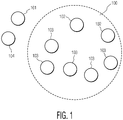
- Fig. 1 is a simplified schematic view of a cluster 100 of wireless stations (STAs) (also referred to as nodes or Customer Premise Equipment (CPE)) of a wireless network in accordance with an illustrative embodiment.
- the cluster 100 may be a part of a centralized network.
- the network includes an access point (AP) 101, which is also referred to as a base station (BS).
- AP access point
- BS base station
- cluster leads 103 also referred to as moderators
- solidary STAs 102 solidary STAs 102
- solitary STAs 104 optionally, solitary STAs 104.
- certain STAs that join the network are not part of the cluster of STAs.
- Solitary STAs are not cooperative or stand alone STAs.
- STA 104 which has joined the network governed by the AP 101, is capable of achieving a required communication rate and QoS without the assistance of the STAs 102,103.
- STAs 104 may be referred to as solitary STAs.
- STAs, which are part of the cluster 100 e.g., STAs 102,103
- solidary e.g., solidary
- the present teachings may be generalized to distributed wireless networks.
- the AP 101 is not provided. Rather, another STA(s) controls access to the medium, and fulfills the functionality of the AP 101. While the description that follows relates primarily to a centralized network with AP 101, applications to distributed networks are contemplated by the present teachings.
- the STAs 102, 103, 104 may be computers, mobile telephones, personal digital assistants (PDA), wireless sensors, or similar device that typically operate in such networks.
- PDA personal digital assistants
- at least one of the STAs is stationary. It is contemplated that the STAs are adapted to function in restricted frequency channels of a frequency band that requires protection of incumbent users or in frequency channels of an unlicensed frequency band.
- Each STA 102-104 in the network has a single antenna element and the AP 101 can have single or multiple receive antennas.
- the total bandwidth 'W' is split into two non-overlapping disjoint parts 'W1' and 'W2' and are allocated to the solidary and solitary STAs, respectively.
- the size of 'W1' and 'W2' depends on number of STAs in each group, available power, and rate and QoS requirements.
- the allocation of the bandwidth can be carried out by the AP 101 during quiet periods (QPs) or other house-keeping periods with a Superframe.
- allocation of bandwidth via channels or sub-carriers refers to allocation of bandwidth W1 to the solidary STAs.
- the exchange of information and transmission to the AP 101 by solidary STAs 102,103 will not create interference in non-cooperative solitary nodes (e.g., STA 104) that are directly transmitting to the AP 101.
- orthogonal frequency division multiplexing (OFDM) transmission is usefully implemented.
- OFDM is particularly robust against frequency selective fading.
- STAs 102,103 implement orthogonal frequency division multiple access (OFDMA) as a desired transmission technique.
- OFDMA orthogonal frequency division multiple access
- the sub-carriers are assigned to each STA based on specific requirements.
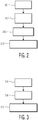
- Fig. 2 is a flow-chart of a method of wireless communication in accordance with a representative example. The method is best understood when reviewed in conjunction with the network described in connection with Fig. 1 . Notably, certain features described in connection with Fig. 1 are common to the method described presently. Many of these details are not repeated so as to avoid obscuring the description of the present embodiment.
- a cluster is initiated.
- the initiation comprises transmitting one or more invitation signals by one or more of the STAs 102,103 to join a cluster.
- This initiation step occurs during a data exchange period of a Superframe.
- the STAs 102, 103 that transmit the invitation may be referred to as 'initiators.
- ' Initiators transmit invitation signals on respective assigned sets of sub-carriers so that the other STAs (non-initiator STAs) can identify the initiator (s) .
- the invitation signal includes predefined criteria to join the cluster 100. These criteria may include, but are not limited to: a minimum data rate requirement; a minimum quality of service (QoS); and a certain threshold SNR( ⁇ th ). For example, if the receiving STA has an SNR greater than the threshold SNR, the STA accepts to join that cluster; and, if not the STA declines.
- An STA can receive multiple invitations; however can join only one cluster for the full duration of the signaling period. Notably, the STAs can switch to a different cluster at the end of one signaling period.
- an initiator To form a cluster, an initiator must have acceptance from at least one more STA 102,103, otherwise its invitation call is dropped and the initiator itself may join another cluster or remain a solitary STA.
- the maximum number of cluster leads 103 in a cluster cannot exceed half of the total number of STAs 102,103 in a cluster. In certain embodiment, the number of cluster leads 103 is limited to between two and four.
- step 202 with the cluster(s) formed, information (data) is exchanged between each STA 102,103 of the cluster 100.
- This data exchange includes data rate and minimum QoS requirements, cluster information and pilot symbols for channel measurement to the AP 101.
- the overhead requirement for cluster information is log 2 M bits for each STA 102,103 since the STAs need to mention only the sub-carrier set index of its initiator (there are 'M' sub-carrier set indices and it requires log 2 M bits to represent these indices).
- the AP 101 evaluates the received signals and measures the signal strength of each node.
- the AP 101 reassigns sub-carriers as needed, among STAs 102,103 in the cluster.
- Each STA 102,103 retains respective sub-carrier sets and STAs 102,103 with higher rate requirements are given additional sub-carriers from other sets.
- the re-assignment may be a selective assignment of sub-carriers from an STA 102,103 that have a bandwidth surplus to those with a bandwidth deficiency.
- cluster leads 103 do not transmit in a first signaling period. The AP 101 can therefore redistribute the idle sub-carriers of the cluster leads 103 to STAs 102 that require additional bandwidth.
- the AP 101 selects one or more cluster leads 103 for every cluster 100.
- the number of cluster leads 103 in the cluster 100 depends, inter alia, on number of STAs 102,103 in the cluster, required spatial diversity (QoS) and channel coherence time.
- the cluster leads 103 are the only STAs in a cluster that transmit to the AP 101 and a suitable space-time block code is selected according to the number of cluster leads 103 and rate/QoS requirements.
- Each node has a maximum transmission power of P Watts; hence the total system power is limited to MP Watts at any instant of the signaling period.
- transmitting very high rate data within the cluster takes opportunistic advantage of good channel conditions within the cluster 100.
- the cluster leads 103 are more likely to provide line-of-sight communications with certain STAs 102, and with the AP 101 than would be available if STAs of the network were not clustered according to the present teachings.
- the use of space-time block codes to transmit data to the AP 101 can provide spatial diversity to mitigate the channel adversity between the cluster 100 and the AP 101.
- the STAs 102,103 are half-duplex devices and thus are not adapted for transmitting and receiving at the same time.
- TDM time domain multiplexing
- the cluster leads 103 remain quiet; while the rest of the STAs 102 transmit their own signal to the cluster leads 103.
- the channel links among the STAs 102,103 within the cluster 100 are more robust than the channel links between the cluster 100 and the AP 101.
- the channel links among STAs 102, 103 in the cluster 100 are likely to have strong line-of-sight, insignificant path loss and shadowing, and reduced delay spread.
- the STAs 102,103 can take advantage of the channel quality and can transmit at very high data rate.
- FEC forward error correction
- Reed-Solomon or Convolution code may be implemented to protect signals transmitted from the STAs 102 to the cluster leads 103.
- the cluster leads 103 decode the received signals and retain them to re-encode until all the cluster leads 103 also share their own information among themselves.
- the cluster leads 103 combine all information from STAs 102 nodes and transmit jointly to the AP 101.
- the cluster leads 103 implement a time division multiplexing (TDM) scheme among themselves to share information and thus transmit during different non-overlapping signaling periods.
- TDM time division multiplexing
- the leads 103 can transmit at very high data rate (number of bits per OFDM symbol duration) or in a power limited system, they can switch to a lower constellation with strong FEC.
- TDM is implemented among the cluster leads 103.
- the MAC layer provides that some of the cluster leads 103 transmit while one or more remain quiet. For example, consider four cluster leads 103. At first, any three cluster leads will transmit their signals using OFDMA to the fourth cluster lead 103. The receiving cluster lead 103 decodes the received signals, re-encodes the received signals and also injects its data into the packet. The packet is transmitted back to the other cluster leads 103. This approach requires only two (2) signaling periods to exchange information among all four cluster leads 103, while a TDM approach requires four (4) signaling periods. At the end of this process, each cluster lead 103 has information from other cluster leads 103, in addition to information from STAs 102 in the cluster.
- the transfer of data from one cluster lead to the next is sequential.
- One cluster lead 103 may transmit to the cluster lead with which it shares the best channel link (SNR).
- the data from this cluster lead 103 is added to the receiving cluster lead's data.
- the next cluster lead 103 transmits the first two cluster leads' data to a third cluster lead 103, which then transmits to the AP 101.
- the cluster lead that transmits to the AP 101 does not necessarily re-encode the received data or inject any of its data into the packet transmitted to the AP 101.
- Fig. 3 is a flow-chart of a method of wireless communication in accordance with another representative example. The method is best understood when reviewed in conjunction with the network described in connection with Fig. 1 . Moreover, certain features described in connection with Figs. 1 and 2 are common to the method described presently. Many of these details are not repeated so as to avoid obscuring the description of the present example.
- the AP 101 selects at least one limited responsibility node (LRN) from among the STAs 102.
- LRN limited responsibility node
- all STAs are initially of the group of STAs 102 and are not yet designated as cluster leads.
- the AP 101 transmits a signal to an STA 102 in a beacon period.
- the selected STA 102 may be selected randomly in each signaling period or can be based on certain criteria.
- the signal requests that the STA 102 share limited responsibility (SLR) by taking initiative to form the cluster 100 and also act as a cluster lead 103.
- the selected LRN (now cluster lead 103) transmits invitations to other STAs 102 to join in its network and form the cluster 100.
- the receiving STAs 102 transmit their decisions based on threshold SNR, and rate/QoS requirements based on their assigned sets of sub-carriers in a manner such as described previously.
- the LRN then takes the role of a cluster lead 103 and sends specific instructions to each participating STA 102 on its respective sets of sub-carriers in one OFDM symbol.
- the STAs 102 are either instructed to transmit their information or stay quiet and work as additional cluster leads 103.
- the present example differs from the examples described in connection with Fig. 2 as the AP 101 delegates some responsibility to a local node. For example, selecting additional cluster leads 103 may be effected by the LRN. This process would be beneficial, for example, in adhoc networking architectures and emergency situations where groups of nodes can operate somewhat independently to form cooperative clusters.
- communications within the cluster 100 and between the cluster leads 103 and the AP 101 are carried out in ways similar to those described previously.
- a group of cooperative (solidary) STAs 103 may choose to form a cluster 100 when their independent attempts to transmit to the AP 101 do not meet QoS requirements.
- the members of a cluster 100 are usually the STAs 102, 103 that suffer from large scale shadowing, high path loss exponent, longer distance from the AP 101, or longer delay spread of the channel, or a combination thereof.
- the methods and systems of the representative embodiments are adapted to achieve spatial diversity (in addition to the presence of frequency or time diversity, if any) by creating an array of geographically dispersed moderators who share their single antenna elements to form a MIMO environment.
- the number of cluster leads 103 depends on number of nodes in a cluster, channel adversity and QoS (in terms of spatial diversity) requirements. In previous sections we have discussed a strategy to exchange information within the cluster.
- a suitable space-time block code is selected according to the number of cluster leads 103 and rate-diversity trade-off requirements. Several examples of space-time block codes for 2, 3 and 4 transmit antennas are known.
- the cluster leads 103 split the received high data-rate symbols into multiple low data-rate symbols, for example, if cluster leads 103 receive 16 QAM symbols from other nodes in the cluster, each 16QAM symbol can be split into two QPSK symbols or four BPSK symbols depending on the structure of the STBC.
- the overall spatial diversity also depends on the number of receive antennas at the AP 101.
- STBC requires the channel to remain static over the duration of the code block. If a 4X4 STBC is selected when there are four cluster leads 103, it means that the channel between the cluster leads 103 and the AP 101 has to remain fixed over four OFDM symbol durations. In a fast varying channel condition this assumption may not hold, and the STBC has to be spread over four consecutive sub-carriers in one OFDM symbol instead of spreading over four consecutive OFDM symbols. We will still need four OFDM symbols from each cluster lead (moderator) to achieve the target rate. This provides an additional degree of freedom to use STBC in both slow and fast varying channel.
- the four cluster leads 103 select a STBC of size four by four (4X4) to transmit to the AP 101 in 8 (two blocks of STBC, each STBC consumes 4 symbol periods) consecutive symbol periods consuming power 32 P (each cluster lead transmits symbols of all nodes, hence requires 8P power and there are 4 cluster leads 103). Therefore, the total time required is 16 T (8 T +8 T ) and total consumed power is 40 P (32 P + 8 P ).
Landscapes
- Engineering & Computer Science (AREA)
- Computer Networks & Wireless Communication (AREA)
- Signal Processing (AREA)
- Mobile Radio Communication Systems (AREA)
Claims (12)
- Système sans fil comprenant :un point d'accès AP (101) ;une grappe (100) de postes sans fil STA (102) ;un ou plusieurs conducteurs de grappe (103), les conducteurs de grappe étant ceux des STA conçus pour recevoir des données des STA et fournir les données à d'autres conducteurs de grappe ou à l'AP (101) ou aux deux ;caractérisé en ce que :
l'AP est configuré pour sélectionner les un ou plusieurs conducteurs de grappe (103) en fonction de forces mesurées de signaux reçus, dans lequel le nombre de conducteurs de grappe dépend d'un temps de cohérence de canal. - Système sans fil selon la revendication 1, dans lequel la grappe (100) est formée en invitant une ou plusieurs STA d'un réseau à joindre la grappe sur la base d'un critère prédéfini, notamment un ou plusieurs des critères suivants : une exigence de débit de données minimal ; une qualité de service QoS minimale ; et un rapport signal/bruit SNR supérieur à un certain SNR de seuil.
- Système sans fil selon la revendication 1, dans lequel l'AP (101) est à même d'affecter des sous-porteuses à chaque STA de la grappe.
- Système sans fil selon la revendication 1, comprenant en outre un STA solitaire (104) qui est à même de fonctionner dans un réseau sans fil du système sans joindre la grappe (100).
- Système sans fil selon la revendication 1, dans lequel le au moins un conducteur de grappe (103) est à même de transmettre des données en utilisant un code de blocs espace-temps.
- Système sans fil selon la revendication 1, dans lequel chaque STA est configuré pour transmettre les données et les conducteurs de grappe échangent les données.
- Système sans fil selon la revendication 6, dans lequel les conducteurs de grappe (103) sont configurés pour transmettre les données à l'AP (101).
- Procédé de communication sans fil, le procédé comprenant :la formation d'une grappe de postes sans fil STA (102) à partir de STA (102, 103) d'un réseau sans fil ;la désignation (203) d'un ou plusieurs STA de la grappe pour être des conducteurs de grappe (103) pour ladite grappe formée ;l'échange de données (204) entre les STA et les conducteurs de grappe (103) ; etla retransmission des données des conducteurs de grappe (103) à un point d'accès AP (101) du réseau ;caractérisé en ce que le procédé comprend :
la sélection par l'AP (101) des un ou plusieurs conducteurs de grappe (103) en fonction des forces mesurées de signaux reçus, dans lequel le nombre de conducteurs de grappe dépend d'un temps de cohérence de canal. - Procédé selon la revendication 8, dans lequel la désignation comprend en outre :la transmission de données de chacun des STA de la grappe à l'AP ;sur la base des données, la sélection des un ou plusieurs conducteurs de grappe.
- Procédé selon la revendication 9, dans lequel les données comprennent une exigence de débit de données minimal et une qualité de service QoS minimale.
- Procédé selon la revendication 8, dans lequel l'échange comprend en outre :la réception d'au moins une partie des données dans chacun des conducteurs de grappe ; etla retransmission de la partie des données reçues à d'autres conducteurs de grappe jusqu'à ce que tous les conducteurs de grappe aient les données.
- Procédé selon la revendication 11, dans lequel l'échange comprend en outre :la transmission d'une partie des données d'un conducteur de grappe à un autre conducteur de grappe ;l'addition d'une autre partie des données à la partie et la retransmission de la partie et de la une autre partie ;la continuation de l'addition et de la retransmission jusqu'à ce qu'un dernier conducteur de grappe de la pluralité de conducteurs de grappe reçoive les données.
Applications Claiming Priority (2)
| Application Number | Priority Date | Filing Date | Title |
|---|---|---|---|
| US87199806P | 2006-12-27 | 2006-12-27 | |
| PCT/IB2007/055229 WO2008081381A1 (fr) | 2006-12-27 | 2007-12-19 | Mise en grappe de postes sans fil dans des communications coopératives |
Publications (2)
| Publication Number | Publication Date |
|---|---|
| EP2098023A1 EP2098023A1 (fr) | 2009-09-09 |
| EP2098023B1 true EP2098023B1 (fr) | 2020-04-08 |
Family
ID=39272070
Family Applications (1)
| Application Number | Title | Priority Date | Filing Date |
|---|---|---|---|
| EP07859454.6A Active EP2098023B1 (fr) | 2006-12-27 | 2007-12-19 | Mise en grappe de postes sans fil dans des communications coopératives |
Country Status (5)
| Country | Link |
|---|---|
| US (1) | US9173157B2 (fr) |
| EP (1) | EP2098023B1 (fr) |
| JP (1) | JP5266249B2 (fr) |
| CN (1) | CN101573924B (fr) |
| WO (1) | WO2008081381A1 (fr) |
Families Citing this family (8)
| Publication number | Priority date | Publication date | Assignee | Title |
|---|---|---|---|---|
| JP5360651B2 (ja) * | 2009-05-28 | 2013-12-04 | 株式会社国際電気通信基礎技術研究所 | 無線通信システム |
| US8441975B2 (en) * | 2009-06-05 | 2013-05-14 | Broadcom Corporation | Medium accessing mechanisms within multiple user, multiple access, and/or MIMO wireless communications |
| CN102598740B (zh) * | 2009-11-23 | 2016-12-07 | 上海贝尔股份有限公司 | 蜂窝网络中的协作通信 |
| KR101374823B1 (ko) * | 2010-01-13 | 2014-03-17 | 울산대학교 산학협력단 | 무선 센서 네트워크 시스템 및 그 협력통신방법 |
| US10327197B2 (en) | 2014-01-31 | 2019-06-18 | Qualcomm Incorporated | Distributed clustering of wireless network nodes |
| KR101645456B1 (ko) * | 2014-07-28 | 2016-08-08 | 대한민국 | 선택적 포워딩 기반의 서비스 거부 공격을 방지하는 장치 및 방법 |
| CN107666717A (zh) | 2016-07-29 | 2018-02-06 | 索尼公司 | 电子设备和用于电子设备的方法 |
| US11017790B2 (en) * | 2018-11-30 | 2021-05-25 | International Business Machines Corporation | Avoiding speech collisions among participants during teleconferences |
Citations (1)
| Publication number | Priority date | Publication date | Assignee | Title |
|---|---|---|---|---|
| WO2001045437A1 (fr) * | 1999-12-15 | 2001-06-21 | Gte Service Corporation | Noeud appartenant a plusieurs grappes dans un reseau sans fil ad hoc |
Family Cites Families (14)
| Publication number | Priority date | Publication date | Assignee | Title |
|---|---|---|---|---|
| US5790516A (en) * | 1995-07-14 | 1998-08-04 | Telefonaktiebolaget Lm Ericsson | Pulse shaping for data transmission in an orthogonal frequency division multiplexed system |
| DE19950005A1 (de) * | 1999-10-18 | 2001-04-19 | Bernhard Walke | Verfahren zum Betrieb drahtloser Basisstationen für paketvermittelnde Funksysteme mit garantierter Dienstgüte |
| US6381467B1 (en) * | 2000-06-22 | 2002-04-30 | Motorola, Inc. | Method and apparatus for managing an ad hoc wireless network |
| US6493759B1 (en) * | 2000-07-24 | 2002-12-10 | Bbnt Solutions Llc | Cluster head resignation to improve routing in mobile communication systems |
| US6934540B2 (en) * | 2000-12-22 | 2005-08-23 | Seekernet, Inc. | Network formation in asset-tracking system based on asset class |
| US7203729B2 (en) * | 2001-04-20 | 2007-04-10 | Motorola Inc. | Method and apparatus for a communication network with nodes capable of selective cluster head operation |
| US7286481B2 (en) * | 2002-12-17 | 2007-10-23 | Intel Corporation | Wireless network adapted to transmit channel side information and method thereof |
| US20070025317A1 (en) * | 2003-05-12 | 2007-02-01 | Edgar Bolinth | Signaling for bit allocation in a wireless lan |
| JP2005252677A (ja) * | 2004-03-04 | 2005-09-15 | Kddi Corp | マルチホップセルラーシステムにおける基地局及び中継通信装置、並びに無線リソース割当て方法 |
| CA2584527A1 (fr) | 2004-10-21 | 2006-05-04 | Marc J. Sachnoff | Procede et systeme d'appel en groupe |
| US7428268B2 (en) | 2004-12-07 | 2008-09-23 | Adaptix, Inc. | Cooperative MIMO in multicell wireless networks |
| US20060172756A1 (en) * | 2005-01-31 | 2006-08-03 | Jacob Sharony | System and method for clustering mobile devices in a wireless network |
| US20090061767A1 (en) * | 2005-03-30 | 2009-03-05 | Matsushita Electric Industrial Co., Ltd. | Wireless communication apparatus and wireless communication method |
| US7623589B2 (en) * | 2006-07-14 | 2009-11-24 | Intel Corporation | Cooperative multiple-access using user-clustering and space-time-frequency coding techniques for higher reliability reception |
-
2007
- 2007-12-19 EP EP07859454.6A patent/EP2098023B1/fr active Active
- 2007-12-19 CN CN2007800483452A patent/CN101573924B/zh active Active
- 2007-12-19 US US12/517,820 patent/US9173157B2/en active Active
- 2007-12-19 WO PCT/IB2007/055229 patent/WO2008081381A1/fr not_active Ceased
- 2007-12-19 JP JP2009543559A patent/JP5266249B2/ja active Active
Patent Citations (1)
| Publication number | Priority date | Publication date | Assignee | Title |
|---|---|---|---|---|
| WO2001045437A1 (fr) * | 1999-12-15 | 2001-06-21 | Gte Service Corporation | Noeud appartenant a plusieurs grappes dans un reseau sans fil ad hoc |
Also Published As
| Publication number | Publication date |
|---|---|
| JP2010515328A (ja) | 2010-05-06 |
| WO2008081381A1 (fr) | 2008-07-10 |
| US20100309842A1 (en) | 2010-12-09 |
| EP2098023A1 (fr) | 2009-09-09 |
| CN101573924A (zh) | 2009-11-04 |
| US9173157B2 (en) | 2015-10-27 |
| JP5266249B2 (ja) | 2013-08-21 |
| CN101573924B (zh) | 2013-02-13 |
Similar Documents
| Publication | Publication Date | Title |
|---|---|---|
| CN114762262B (zh) | 用于网络协作通信中波束故障恢复的方法和装置 | |
| EP2098023B1 (fr) | Mise en grappe de postes sans fil dans des communications coopératives | |
| US10764909B2 (en) | System and method for sectorized transmission in a wireless network | |
| CN109906661B (zh) | 用于无线系统中的随机接入的方法和装置 | |
| Wu et al. | FlashLinQ: A synchronous distributed scheduler for peer-to-peer ad hoc networks | |
| Cheng et al. | Simple channel sensing order in cognitive radio networks | |
| KR101296021B1 (ko) | 무선 통신 시스템에서의 디바이스 대 디바이스 통신을 위한 동적 통신 자원 할당을 위한 장치 및 방법 | |
| US7313126B2 (en) | Control system and multiple access method in wireless communication system | |
| US8565773B2 (en) | Method and apparatus for enabling soft handoff in an OFDMA-based communication system | |
| CN104798329A (zh) | 用于发送数据的方法和设备以及用于发送数据的方法和设备 | |
| CN110870358B (zh) | 无线lan系统中的信号发送/接收方法及其装置 | |
| US10374760B2 (en) | Method for transmitting data in unlicensed band-secondary carrier and device for same | |
| BRPI0616383A2 (pt) | método e equipamento para comunicação piloto em um sistema de comunicação sem fio de multi-antenas | |
| US10715288B2 (en) | Wireless local area network sounding protocol | |
| CN107852395A (zh) | 用于宽带lte单个ofdm符号上行链路传输的设备、网络和方法 | |
| KR20230119271A (ko) | 다중 사용자 무선 통신 방법 및 이를 사용하는 무선통신 단말 | |
| WO2018233568A1 (fr) | Procédé d'apprentissage de faisceau, dispositif d'initiation et dispositif de réponse | |
| CN106656217A (zh) | 一种多射频单元基站系统的全双工传输方法 | |
| WO2015064442A1 (fr) | Terminal d'utilisateur, station de base sans fil, et procédé de communication sans fil | |
| US10805883B2 (en) | Method for transmitting/receiving signal based on PS mode in WLAN system and apparatus thereof | |
| EP2317686B1 (fr) | Procédé et appareil pour demander et attribuer des ressources de réseau | |
| Choi et al. | Exploiting multiuser MIMO in the IEEE 802.11 wireless LAN systems | |
| KR102932361B1 (ko) | 네트워크 협력 통신에서 빔 실패 회복 방법 및 장치 | |
| KR102862764B1 (ko) | 무선 통신 시스템에서 전송들의 충돌을 처리하기 위한 장치 및 방법 | |
| Yaacoub et al. | Distributed probabilistic scheduling in OFDMA uplink using subcarrier sensing |
Legal Events
| Date | Code | Title | Description |
|---|---|---|---|
| PUAI | Public reference made under article 153(3) epc to a published international application that has entered the european phase |
Free format text: ORIGINAL CODE: 0009012 |
|
| 17P | Request for examination filed |
Effective date: 20090727 |
|
| AK | Designated contracting states |
Kind code of ref document: A1 Designated state(s): AT BE BG CH CY CZ DE DK EE ES FI FR GB GR HU IE IS IT LI LT LU LV MC MT NL PL PT RO SE SI SK TR |
|
| DAX | Request for extension of the european patent (deleted) | ||
| RAP1 | Party data changed (applicant data changed or rights of an application transferred) |
Owner name: KONINKLIJKE PHILIPS N.V. |
|
| 17Q | First examination report despatched |
Effective date: 20160429 |
|
| STAA | Information on the status of an ep patent application or granted ep patent |
Free format text: STATUS: EXAMINATION IS IN PROGRESS |
|
| REG | Reference to a national code |
Ref country code: DE Ref legal event code: R079 Ref document number: 602007060080 Country of ref document: DE Free format text: PREVIOUS MAIN CLASS: H04L0012560000 Ipc: H04W0040320000 |
|
| GRAP | Despatch of communication of intention to grant a patent |
Free format text: ORIGINAL CODE: EPIDOSNIGR1 |
|
| STAA | Information on the status of an ep patent application or granted ep patent |
Free format text: STATUS: GRANT OF PATENT IS INTENDED |
|
| RIC1 | Information provided on ipc code assigned before grant |
Ipc: H04W 40/22 20090101ALN20190924BHEP Ipc: H04W 40/32 20090101AFI20190924BHEP Ipc: H04W 40/24 20090101ALN20190924BHEP |
|
| INTG | Intention to grant announced |
Effective date: 20191028 |
|
| GRAS | Grant fee paid |
Free format text: ORIGINAL CODE: EPIDOSNIGR3 |
|
| GRAA | (expected) grant |
Free format text: ORIGINAL CODE: 0009210 |
|
| STAA | Information on the status of an ep patent application or granted ep patent |
Free format text: STATUS: THE PATENT HAS BEEN GRANTED |
|
| RAP1 | Party data changed (applicant data changed or rights of an application transferred) |
Owner name: KONINKLIJKE PHILIPS N.V. |
|
| AK | Designated contracting states |
Kind code of ref document: B1 Designated state(s): AT BE BG CH CY CZ DE DK EE ES FI FR GB GR HU IE IS IT LI LT LU LV MC MT NL PL PT RO SE SI SK TR |
|
| REG | Reference to a national code |
Ref country code: GB Ref legal event code: FG4D |
|
| REG | Reference to a national code |
Ref country code: AT Ref legal event code: REF Ref document number: 1256077 Country of ref document: AT Kind code of ref document: T Effective date: 20200415 Ref country code: CH Ref legal event code: EP |
|
| REG | Reference to a national code |
Ref country code: DE Ref legal event code: R096 Ref document number: 602007060080 Country of ref document: DE |
|
| REG | Reference to a national code |
Ref country code: IE Ref legal event code: FG4D |
|
| REG | Reference to a national code |
Ref country code: NL Ref legal event code: MP Effective date: 20200408 |
|
| REG | Reference to a national code |
Ref country code: LT Ref legal event code: MG4D |
|
| PG25 | Lapsed in a contracting state [announced via postgrant information from national office to epo] |
Ref country code: NL Free format text: LAPSE BECAUSE OF FAILURE TO SUBMIT A TRANSLATION OF THE DESCRIPTION OR TO PAY THE FEE WITHIN THE PRESCRIBED TIME-LIMIT Effective date: 20200408 Ref country code: IS Free format text: LAPSE BECAUSE OF FAILURE TO SUBMIT A TRANSLATION OF THE DESCRIPTION OR TO PAY THE FEE WITHIN THE PRESCRIBED TIME-LIMIT Effective date: 20200808 Ref country code: SE Free format text: LAPSE BECAUSE OF FAILURE TO SUBMIT A TRANSLATION OF THE DESCRIPTION OR TO PAY THE FEE WITHIN THE PRESCRIBED TIME-LIMIT Effective date: 20200408 Ref country code: FI Free format text: LAPSE BECAUSE OF FAILURE TO SUBMIT A TRANSLATION OF THE DESCRIPTION OR TO PAY THE FEE WITHIN THE PRESCRIBED TIME-LIMIT Effective date: 20200408 Ref country code: GR Free format text: LAPSE BECAUSE OF FAILURE TO SUBMIT A TRANSLATION OF THE DESCRIPTION OR TO PAY THE FEE WITHIN THE PRESCRIBED TIME-LIMIT Effective date: 20200709 Ref country code: PT Free format text: LAPSE BECAUSE OF FAILURE TO SUBMIT A TRANSLATION OF THE DESCRIPTION OR TO PAY THE FEE WITHIN THE PRESCRIBED TIME-LIMIT Effective date: 20200817 Ref country code: LT Free format text: LAPSE BECAUSE OF FAILURE TO SUBMIT A TRANSLATION OF THE DESCRIPTION OR TO PAY THE FEE WITHIN THE PRESCRIBED TIME-LIMIT Effective date: 20200408 |
|
| REG | Reference to a national code |
Ref country code: AT Ref legal event code: MK05 Ref document number: 1256077 Country of ref document: AT Kind code of ref document: T Effective date: 20200408 |
|
| PG25 | Lapsed in a contracting state [announced via postgrant information from national office to epo] |
Ref country code: BG Free format text: LAPSE BECAUSE OF FAILURE TO SUBMIT A TRANSLATION OF THE DESCRIPTION OR TO PAY THE FEE WITHIN THE PRESCRIBED TIME-LIMIT Effective date: 20200708 Ref country code: LV Free format text: LAPSE BECAUSE OF FAILURE TO SUBMIT A TRANSLATION OF THE DESCRIPTION OR TO PAY THE FEE WITHIN THE PRESCRIBED TIME-LIMIT Effective date: 20200408 |
|
| REG | Reference to a national code |
Ref country code: DE Ref legal event code: R097 Ref document number: 602007060080 Country of ref document: DE |
|
| PG25 | Lapsed in a contracting state [announced via postgrant information from national office to epo] |
Ref country code: CZ Free format text: LAPSE BECAUSE OF FAILURE TO SUBMIT A TRANSLATION OF THE DESCRIPTION OR TO PAY THE FEE WITHIN THE PRESCRIBED TIME-LIMIT Effective date: 20200408 Ref country code: RO Free format text: LAPSE BECAUSE OF FAILURE TO SUBMIT A TRANSLATION OF THE DESCRIPTION OR TO PAY THE FEE WITHIN THE PRESCRIBED TIME-LIMIT Effective date: 20200408 Ref country code: ES Free format text: LAPSE BECAUSE OF FAILURE TO SUBMIT A TRANSLATION OF THE DESCRIPTION OR TO PAY THE FEE WITHIN THE PRESCRIBED TIME-LIMIT Effective date: 20200408 Ref country code: AT Free format text: LAPSE BECAUSE OF FAILURE TO SUBMIT A TRANSLATION OF THE DESCRIPTION OR TO PAY THE FEE WITHIN THE PRESCRIBED TIME-LIMIT Effective date: 20200408 Ref country code: DK Free format text: LAPSE BECAUSE OF FAILURE TO SUBMIT A TRANSLATION OF THE DESCRIPTION OR TO PAY THE FEE WITHIN THE PRESCRIBED TIME-LIMIT Effective date: 20200408 Ref country code: EE Free format text: LAPSE BECAUSE OF FAILURE TO SUBMIT A TRANSLATION OF THE DESCRIPTION OR TO PAY THE FEE WITHIN THE PRESCRIBED TIME-LIMIT Effective date: 20200408 Ref country code: IT Free format text: LAPSE BECAUSE OF FAILURE TO SUBMIT A TRANSLATION OF THE DESCRIPTION OR TO PAY THE FEE WITHIN THE PRESCRIBED TIME-LIMIT Effective date: 20200408 |
|
| PLBE | No opposition filed within time limit |
Free format text: ORIGINAL CODE: 0009261 |
|
| STAA | Information on the status of an ep patent application or granted ep patent |
Free format text: STATUS: NO OPPOSITION FILED WITHIN TIME LIMIT |
|
| PG25 | Lapsed in a contracting state [announced via postgrant information from national office to epo] |
Ref country code: PL Free format text: LAPSE BECAUSE OF FAILURE TO SUBMIT A TRANSLATION OF THE DESCRIPTION OR TO PAY THE FEE WITHIN THE PRESCRIBED TIME-LIMIT Effective date: 20200408 Ref country code: SK Free format text: LAPSE BECAUSE OF FAILURE TO SUBMIT A TRANSLATION OF THE DESCRIPTION OR TO PAY THE FEE WITHIN THE PRESCRIBED TIME-LIMIT Effective date: 20200408 |
|
| 26N | No opposition filed |
Effective date: 20210112 |
|
| PG25 | Lapsed in a contracting state [announced via postgrant information from national office to epo] |
Ref country code: SI Free format text: LAPSE BECAUSE OF FAILURE TO SUBMIT A TRANSLATION OF THE DESCRIPTION OR TO PAY THE FEE WITHIN THE PRESCRIBED TIME-LIMIT Effective date: 20200408 |
|
| REG | Reference to a national code |
Ref country code: CH Ref legal event code: PL |
|
| PG25 | Lapsed in a contracting state [announced via postgrant information from national office to epo] |
Ref country code: MC Free format text: LAPSE BECAUSE OF FAILURE TO SUBMIT A TRANSLATION OF THE DESCRIPTION OR TO PAY THE FEE WITHIN THE PRESCRIBED TIME-LIMIT Effective date: 20200408 |
|
| REG | Reference to a national code |
Ref country code: BE Ref legal event code: MM Effective date: 20201231 |
|
| PG25 | Lapsed in a contracting state [announced via postgrant information from national office to epo] |
Ref country code: IE Free format text: LAPSE BECAUSE OF NON-PAYMENT OF DUE FEES Effective date: 20201219 Ref country code: LU Free format text: LAPSE BECAUSE OF NON-PAYMENT OF DUE FEES Effective date: 20201219 |
|
| PG25 | Lapsed in a contracting state [announced via postgrant information from national office to epo] |
Ref country code: LI Free format text: LAPSE BECAUSE OF NON-PAYMENT OF DUE FEES Effective date: 20201231 Ref country code: CH Free format text: LAPSE BECAUSE OF NON-PAYMENT OF DUE FEES Effective date: 20201231 |
|
| PG25 | Lapsed in a contracting state [announced via postgrant information from national office to epo] |
Ref country code: TR Free format text: LAPSE BECAUSE OF FAILURE TO SUBMIT A TRANSLATION OF THE DESCRIPTION OR TO PAY THE FEE WITHIN THE PRESCRIBED TIME-LIMIT Effective date: 20200408 Ref country code: MT Free format text: LAPSE BECAUSE OF FAILURE TO SUBMIT A TRANSLATION OF THE DESCRIPTION OR TO PAY THE FEE WITHIN THE PRESCRIBED TIME-LIMIT Effective date: 20200408 Ref country code: CY Free format text: LAPSE BECAUSE OF FAILURE TO SUBMIT A TRANSLATION OF THE DESCRIPTION OR TO PAY THE FEE WITHIN THE PRESCRIBED TIME-LIMIT Effective date: 20200408 |
|
| PG25 | Lapsed in a contracting state [announced via postgrant information from national office to epo] |
Ref country code: BE Free format text: LAPSE BECAUSE OF NON-PAYMENT OF DUE FEES Effective date: 20201231 |
|
| PGFP | Annual fee paid to national office [announced via postgrant information from national office to epo] |
Ref country code: GB Payment date: 20251223 Year of fee payment: 19 |
|
| PGFP | Annual fee paid to national office [announced via postgrant information from national office to epo] |
Ref country code: FR Payment date: 20251222 Year of fee payment: 19 |
|
| PGFP | Annual fee paid to national office [announced via postgrant information from national office to epo] |
Ref country code: DE Payment date: 20251229 Year of fee payment: 19 |