EP2098044B1 - Auto-configuration simplifiée et découverte de service dans des réseaux ad hoc - Google Patents
Auto-configuration simplifiée et découverte de service dans des réseaux ad hoc Download PDFInfo
- Publication number
- EP2098044B1 EP2098044B1 EP07870904A EP07870904A EP2098044B1 EP 2098044 B1 EP2098044 B1 EP 2098044B1 EP 07870904 A EP07870904 A EP 07870904A EP 07870904 A EP07870904 A EP 07870904A EP 2098044 B1 EP2098044 B1 EP 2098044B1
- Authority
- EP
- European Patent Office
- Prior art keywords
- station
- peer
- local station
- network address
- network
- Prior art date
- Legal status (The legal status is an assumption and is not a legal conclusion. Google has not performed a legal analysis and makes no representation as to the accuracy of the status listed.)
- Active
Links
Images







Classifications
-
- H—ELECTRICITY
- H04—ELECTRIC COMMUNICATION TECHNIQUE
- H04W—WIRELESS COMMUNICATION NETWORKS
- H04W48/00—Access restriction; Network selection; Access point selection
- H04W48/16—Discovering, processing access restriction or access information
-
- H—ELECTRICITY
- H04—ELECTRIC COMMUNICATION TECHNIQUE
- H04L—TRANSMISSION OF DIGITAL INFORMATION, e.g. TELEGRAPHIC COMMUNICATION
- H04L41/00—Arrangements for maintenance, administration or management of data switching networks, e.g. of packet switching networks
- H04L41/08—Configuration management of networks or network elements
- H04L41/0803—Configuration setting
-
- H—ELECTRICITY
- H04—ELECTRIC COMMUNICATION TECHNIQUE
- H04L—TRANSMISSION OF DIGITAL INFORMATION, e.g. TELEGRAPHIC COMMUNICATION
- H04L61/00—Network arrangements, protocols or services for addressing or naming
- H04L61/50—Address allocation
- H04L61/5084—Providing for device mobility
-
- H—ELECTRICITY
- H04—ELECTRIC COMMUNICATION TECHNIQUE
- H04L—TRANSMISSION OF DIGITAL INFORMATION, e.g. TELEGRAPHIC COMMUNICATION
- H04L61/00—Network arrangements, protocols or services for addressing or naming
- H04L61/50—Address allocation
- H04L61/5092—Address allocation by self-assignment, e.g. picking addresses at random and testing if they are already in use
-
- H—ELECTRICITY
- H04—ELECTRIC COMMUNICATION TECHNIQUE
- H04W—WIRELESS COMMUNICATION NETWORKS
- H04W76/00—Connection management
- H04W76/10—Connection setup
- H04W76/11—Allocation or use of connection identifiers
-
- H—ELECTRICITY
- H04—ELECTRIC COMMUNICATION TECHNIQUE
- H04W—WIRELESS COMMUNICATION NETWORKS
- H04W8/00—Network data management
- H04W8/26—Network addressing or numbering for mobility support
-
- H—ELECTRICITY
- H04—ELECTRIC COMMUNICATION TECHNIQUE
- H04W—WIRELESS COMMUNICATION NETWORKS
- H04W84/00—Network topologies
- H04W84/18—Self-organising networks, e.g. ad-hoc networks or sensor networks
-
- H—ELECTRICITY
- H04—ELECTRIC COMMUNICATION TECHNIQUE
- H04L—TRANSMISSION OF DIGITAL INFORMATION, e.g. TELEGRAPHIC COMMUNICATION
- H04L2101/00—Indexing scheme associated with group H04L61/00
- H04L2101/60—Types of network addresses
- H04L2101/618—Details of network addresses
- H04L2101/622—Layer-2 addresses, e.g. medium access control [MAC] addresses
-
- H—ELECTRICITY
- H04—ELECTRIC COMMUNICATION TECHNIQUE
- H04L—TRANSMISSION OF DIGITAL INFORMATION, e.g. TELEGRAPHIC COMMUNICATION
- H04L41/00—Arrangements for maintenance, administration or management of data switching networks, e.g. of packet switching networks
- H04L41/08—Configuration management of networks or network elements
- H04L41/0876—Aspects of the degree of configuration automation
- H04L41/0886—Fully automatic configuration
-
- H—ELECTRICITY
- H04—ELECTRIC COMMUNICATION TECHNIQUE
- H04L—TRANSMISSION OF DIGITAL INFORMATION, e.g. TELEGRAPHIC COMMUNICATION
- H04L61/00—Network arrangements, protocols or services for addressing or naming
- H04L61/50—Address allocation
- H04L61/5007—Internet protocol [IP] addresses
-
- H—ELECTRICITY
- H04—ELECTRIC COMMUNICATION TECHNIQUE
- H04W—WIRELESS COMMUNICATION NETWORKS
- H04W28/00—Network traffic management; Network resource management
- H04W28/02—Traffic management, e.g. flow control or congestion control
- H04W28/06—Optimizing the usage of the radio link, e.g. header compression, information sizing, discarding information
-
- H—ELECTRICITY
- H04—ELECTRIC COMMUNICATION TECHNIQUE
- H04W—WIRELESS COMMUNICATION NETWORKS
- H04W8/00—Network data management
- H04W8/005—Discovery of network devices, e.g. terminals
-
- H—ELECTRICITY
- H04—ELECTRIC COMMUNICATION TECHNIQUE
- H04W—WIRELESS COMMUNICATION NETWORKS
- H04W88/00—Devices specially adapted for wireless communication networks, e.g. terminals, base stations or access point devices
- H04W88/02—Terminal devices
Definitions
- ad-hoc wireless networks The ability to organize wireless electronic devices into ad-hoc wireless networks holds promise for meeting user demands for seamless, transparent connectivity and interoperability between digital devices and between digital devices and available services.
- existing ad-hoc network implementations are overly complex and burdensome and fall short of meeting user needs.
- Existing ad-hoc networks e.g., such as ad-hoc networks based on the IEEE 802.11 standard, require a level of complexity that increases device processing and memory requirements, increases device production costs, and decreases operational efficiency.
- the ad-hoc network approach described below addresses network address assignment, name resolution and service discovery in ad-hoc networks.
- the size of the ad-hoc network may be reduced below a size that could otherwise be supported by a selected address format, e.g., a 4 byte IP address format, a 6 byte address format, etc.
- a selected address format e.g., a 4 byte IP address format, a 6 byte address format, etc.
- a first portion, e.g., the first three bytes, of network addresses assigned to stations joining the ad-hoc network may be fixed by design.
- a second portion, e.g., the fourth or last byte, of the network addresses may be selected dynamically, as each new station joins the ad-hoc network, respectively.
- the maximum number of stations allowed to join an ad-hoc network may be increased to a number greater that 256 , or reduced to a number less than 256 .
- the number of bits fixed in the address first portion, and the number of bits dynamically selected in the address second portion may be adjusted to support the maximum number of stations allowed to join the ad-hoc network at any one time.
- An exemplary information element may include: (1) a last byte of the ad-hoc network address, e.g., an ad-hoc IP network address, associated with the transmitting station; (2) a 4-byte timestamp field which indicates a number of milliseconds since the station claimed the network address; (3) a user-friendly name to identify the station; (4) a universally unique identifier (UUID) for each service offered by the transmitting station; and (5) a network-address-in-usebitmap, as addressed in greater detail below.
- UUID universally unique identifier
- Stations configured to support embodiments of the described ad-hoc network may synchronize their local clocks based on timestamp information included within received messages. For example, each station may be configured to update its local-clock based on timestamp information included in a received message whenever the received timestamp data is greater than its own clock value. In this manner, peer stations within the ad-hoc network may synchronize their respective local clocks, and may thereby synchronize their respective actions.
- the network-address-in-usebitmap may be included in outgoing ad-hoc network messages. Regardless of the size of the network-address-in-use bitmap, the bitmap may be compressed to reduce the size of the bitmap prior to transmission in an ad-hoc message.
- the network-address-in-usebitmap may be reduced in size using any desired size reduction and/or compression technique. For example, stations may be configured to choose the lowest network address available to reduce the number of bits required to identify the set of allocated network addresses and unnecessary bits may be truncated.
- Fig. 2 is a schematic diagram of an exemplary ad-hoc network formed by two stations, such as the station presented in Fig. 1 ;
- Fig. 4 is a schematic diagram of an exemplary ad-hoc network formed by exemplary stations within a home or small office environment;
- Fig. 6 and Fig. 7 present a flow diagram of an exemplary process executed by a station that supports simplified auto-configuration and service discovery in ad-hoc networks;
- Fig. 8 is a flow diagram of an exemplary process executed by a station to detect and correct a network address conflict
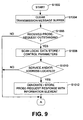
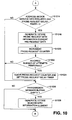
- Fig. 9 , Fig. 10 and Fig. 11 present a flow diagram of an exemplary process executed by a station to generate one of a beacon, probe-requestor probe-response for transmission.
- FIG. 1 is a block level diagram of an exemplary wireless device, or station, that supports simplified auto-configuration and service discovery in ad-hoc networks.
- a station 100 may include a controller 102 in communication with a clock control unit 104, non-volatile memory 106, volatile memory 108 and a network physical layer unit 110.
- station 100 may include and controller 102 may communicate with a local data store unit 112, an address bitmap generator 114, a message generating unit 116, and a message parsing unit 118.
- station 100 may be integrated within one or more user electronic devices such as a desktop or laptop computer, cell phone, digital camera, scanner, printer, plotter, or any other electronic device, thereby allowing the respective electronic devices to support formation of an ad-hoc network that provides seamless, transparent connectivity between the respective electronic devices.
- user electronic devices such as a desktop or laptop computer, cell phone, digital camera, scanner, printer, plotter, or any other electronic device, thereby allowing the respective electronic devices to support formation of an ad-hoc network that provides seamless, transparent connectivity between the respective electronic devices.
- Clock control unit 104 may control a local oscillator, or clock, and may provide controller 102 with a clock which may be used by controller 102 to schedule actions for execution. For example, controller 102 may set/update a time maintained by clock control unit 104 based on messages received via an ad-hoc network that station 100 has joined. For example, should the station receive a message with an Independent Basic Service Set (IBSS) timestamp greater that the time maintained by the station, controller 102 may instruct clock control unit 104 to update the time maintained by clock control unit 104 based on the received IBSS timestamp.
- IBSS Independent Basic Service Set
- the local data store may also be configured to include information about the local station, e.g., the local station's selected network address, user-friendly name, and UUID for each service offered by the local station.
- Table 1 provides a summary of information items that may be included within a record within a station's local data store.
- Information stored in the local data store by local data store unit 112 may be received from controller 102, and/or directly from other units such as message parsing unit 118, message generating unit 116, clock control unit 104, and address bitmap generator 114.
- MAC Address MAC address of peer station to which information described in the fields below pertains 2 IBSS Timestamp IBSS clock synchronization timestamp included in last message received from the identified peer station 3 A selected second portion, e.g., a last byte, of local network address A selected second portion of the peer station's selected network address 4 4-byte timestamp Number of milliseconds since the peer station selected its selected network address 5 User-friendly name User-friendly name that may be used to identify the peer station 6 Offered Service UUIDs A list of UUID's; an QUID for each service supported by the peer station 7 network-address-in-usebitmap Bitmap identifying which of the available network addresses within a predetermined set of network addresses have been allocated
- Message parsing unit 118 may receive a message from network physical layer unit 110 and may parse the received message content to retrieve data that may be passed to controller 102 and/or local data store 112. For example, message parsing unit 118 may parse a received message to obtain the MAC address, IBSS timestamp and other information from the message header, and may parse and retrieve information contained within the message such as the information element containing information that supports simplified auto-configuration and service discovery, as addressed in greater detail below. Information retrieved from a received message may be passed to controller 102 for further processing and decision making and/or portions of the retrieved information may be passed directly to local data store unit 112 for generating updates to the local data store.
- controller 102 may instruct local data store unit 112 to update information stored in the local data store based on peer station information received from message parsing unit 118.
- An entry for a peer station within a station's local data store may expire and may be deleted from the station's local data store if a message, e.g., a beacon, probe-request and/or probe-response is not received from the corresponding peer station within a configurable time duration, e.g. 5 minutes.
- message generating unit 116 may receive additional information from controller 102 and/or may request additional information from local data store unit 112 and/or address bitmap generator 114, as addressed in greater detail below. Once the message is generated, message generating unit 116 may send the message to network physical layer unit 110 for transmission.
- message generating unit 116 may send the message to network physical layer unit 110 for transmission.
- Address bitmap generator 114 may, based on a request from either controller 102 or message generating unit 116, contact local data store unit 112 to retrieve network-address information received from each peer station represented in the local data store. Address bitmap generator 114 may generate a network-address-in-usebitmap that may be used to record which network addresses, within a predetermined set of allowed network addresses in the ad-hoc network, have been allocated to stations within the ad-hoc network. For example, if network address 169.254.1.4, network address 169.254.1.87 and network address 169.254.1.235 are used by three stations forming an ad-hoc network, bits 4, 87 and 235 of the network-address-in-use bitmap may be set to 1.
- the network-address-in-usebitmap may be compressed to reduce the size of the transmitted bitmap. For example, stations may be configured to choose the lowest network address available to reduce the number of bits required to identify the set of network addresses in use. In such an approach, the bitmap could be reduced to the number of bits that have been allocated. In another approach, the network-address-in-usebitmap could be compressed by any algorithm that results in a reduced number of transmitted bits by, for example, the use of run-length coding, i.e., representing groups of zeros and/or groups of ones with a reduced number of bits.
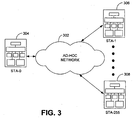
- Fig. 3 is a schematic diagram of an exemplary ad-hoc network that may include up to a predetermined number of stations, e.g., up to 256 concurrently connected stations.
- station hardware and processing requirements associated with forming the ad-hoc network may be greatly reduced by pre-configuring the first three bytes of each station's network address, as described above.
- such an approach may limit the number of concurrently connected ad-hoc network stations, e.g., a maximum of 256 stations, because the fourth byte of the network address may be configured with a maximum of 256 unique values, i.e., 0 through 255.
- the described ad-hoc network approach may limit the number of stations that may join the ad-hoc network, the connectivity provided to stations within the ad-hoc network is not reduced.
- the described approach reduces hardware and processing requirements associated with providing such connectivity, thereby allowing more electronic devices to be cost effectively configured to support such connectivity.
- step S612 the controller determines whether an ad-hoc message has been received from another compatible device. If a message has been received, processing proceeds to step S614, otherwise processing proceeds to step S618.
- step S618 controller 102 determines whether the previously set startup period timer has expired. If the timer has expired, processing proceeds to step S620. If the startup period has not expired, processing returns to step S612.
- controller 102 may set a beacon contention window that is shorter in duration than the default IBSS beacon contention window, and processing proceeds to step S624.
- the controller reduces its beacon contention window in order to increase the likelihood that it will be allowed to transmit a beacon at an upcoming TBTT. For example, decreasing the beacon contention window increases the probability that the random TBTT-delay, generated in step S624, will be shorter than the random TBTT-delay generated by another station. This increases the likelihood that the station will be allowed to transmit its beacon message at the next TBTT, as described in greater detail with respect to Fig. 6 and Fig. 7 , below.
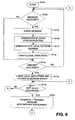
- Fig. 6 and Fig. 7 present a flow diagram of an exemplary process that may be used to control operation of a station that that has joined an ad-hoc network that supports simplified auto-configuration and service discovery.
- the process below assumes that the ad-hoc network, or IBSS, has stabilized and that TBTT and pre-TBTT timeouts are periodically generated by clock control unit 104 based on a clock that is synchronized with peer stations in the ad-hoc network.
- operation of the process may begin at step S702 and processing proceeds to step S704.
- controller 102 may determine whether a message, e.g., a beacon, probe-request, or probe-response has been received from a peer station. If controller 102 determines that no message has been received, processing proceeds to step S714, otherwise, processing proceeds to step S706.
- a message e.g., a beacon, probe-request, or probe-response
- step S706 message parsing unit 118 parses the received message to retrieve information contained within, including the information element described above with respect to Table 2, and processing proceeds to step S708.
- step S708 the IBSS timestamp received with the message is compared with the receiving station's IBSS clock time and the received timestamp may be used to update the receiving station's IBSS clock time. For example, if the received timestamp is greater than the receiving station's IBSS clock time, controller 102 may adjust the receiving stations IBSS clock based on the received timestamp. For example, the local IBSS clock time may be updated to a value based on the received timestamp adjusted for internal processing delays and/or transmission time. Once the received timestamp is assessed, and the local IBSS time is either verified or updated, processing proceeds to step S710.
- step S710 the last byte of a transmitting station's selected network address may be assessed to determine whether a network address conflict exists between the receiving station's selected network address and the transmitting station's network address, as described in greater detail with respect to Fig. 8 below, and processing proceeds to step S712.
- the local data store is updated by local data store unit 112 to reflect information contained in the received message.
- the local data store may update an existing record to reflect information received in a message, or may create and populate a new record if the message was received from a station from which no messages have previously been received.
- the local data store may record that a probe-request is outstanding for the station that transmitted the message.
- the local data store may be updated reflect that the probe-request has been satisfied and that the probe-request is, therefore, no longer outstanding.
- step S714 controller 102 determines whether a pre-TBTT timeout has occurred. If a pre-TBTT timeout has occurred processing proceeds to step S716, otherwise, processing returns to step S704.
- the controller may instruct network-address bitmap generator 102 to parse local data store unit 112 and to generate a network-address-in-use bitmap, as described above, that indicates which of the available network addresses, e.g., between 0 and 255 have been allocated to stations within the ad-hoc network.
- the network-address-in-use bitmap may be compressed using any number of allocation strategies and/or compression techniques.
- controller 102 determines whether a TBTT plus TBTT delay time has occurred. Such a timeout may be determined based on the IBSS TBTT time extended by a random TBTT delay period that may be independently generated by each station in the network based on either a default IBSS beacon contention window, or a shortened contention window selected by a station. For example, the TBTT delay may be randomly generated by each peer station for each subsequent TBTT. In this manner, over a period of time that includes a large number of TBTTs, each peer station will have a statistically equal chance of transmitting a message an equal number of times as other stations in the network. If, in step S718, a TBTT plus TBTT delay timeout has occurred processing proceeds to step S720, otherwise, processing proceeds to step S724.
- controller 102 may instruct message generating unit 116 to generate and transmit a message, e.g., a beacon, probe-request, probe-response, etc., that includes the information element described above with respect to Table 2. Processing related to determining the type of message to generate and transmit is addressed in greater detail below with respect to Figs. 10-12 . Once a message has been transmitted, processing returns to step S704.
- message generating unit 116 may instruct message generating unit 116 to generate and transmit a message, e.g., a beacon, probe-request, probe-response, etc., that includes the information element described above with respect to Table 2. Processing related to determining the type of message to generate and transmit is addressed in greater detail below with respect to Figs. 10-12 .
- step S718 if in step S718 a TBTT plus TBTT delay timeout has not occurred, processing proceeds to step S724.
- controller 102 may determine whether a message has been received from a peer station. If a message has been received from a peer station, processing proceeds to step S726, otherwise processing returns to step S718.
- controller 102 may update a local control parameter to suppress transmission of a message by the station for the current TBTT.
- a single station in the ad-hoc network may be allowed to transmit at each TBTT.
- each peer station will have a statistically equal chance of transmitting a message an approximately equal number of times as other stations in network.
- step S736 if power to the local station is turned off, or if the controller has received an instruction to restart, processing proceeds to step S738 and the process terminates, otherwise, processing returns to step S704, and the process may repeat for another TBTT interval.
- Fig. 8 is a flow diagram of an exemplary process executed by a station to detect and correct a network address conflict.
- the process described below with respect to Fig. 8 is referred to above with respect to Fig. 6 at step S710 and step S730, and may be executed to assess the validity of the network address assigned to the local station each time a message from a peer station is received. Such an approach assures that the network address selected by the local station is unique among peer stations connected to the network.
- step S902 operation of the process may begin at step S902 and processing proceeds to step S904.
- controller 102 may assess the last byte of the network address of a transmitting peer station, as received in the information element included in a message received from the transmitting peer station. If the last byte of the transmitting station's network address matches the last byte of the network address selected by the receiving station, processing proceeds to step S906, otherwise, processing proceeds to step S918 and the process terminates.
- controller 102 may assess the 4-byte timestamp received in the information element included in the message received from the transmitting peer station. As described above with respect to Table 2, the 4-byte timestamp may represent the number of milliseconds since the transmitting peer station selected the network address. If controller 102 of the receiving station determines that the value in the 4-byte timestamp received in the information element from a peer station is greater than the number of milliseconds since the receiving station selected the network address, processing proceeds to step S908, otherwise processing proceeds to step S918 and the process terminates.
- controller 102 may select a new network address based on the information contained within the updated network-address-in-use bitmap, and processing proceeds to step S912.
- controller 102 may select a reduced beacon contention window. As described above, reducing the contention window of a station in an ad-hoc network increases the likelihood that a message generated by the station will be transmitted following upcoming TBTTs. Once the beacon contention window is reduced, processing proceeds to step S914.
- controller 102 may select a new random TBTT-delay based on the reduced beacon contention window.
- the station may increase its chance that a small random TBTT-delay may be selected, and may thereby increase the likelihood that it will be allowed to transmit a message that includes its new network address at an upcoming TBTT.
- processing proceeds to step S916.
- controller 102 may reset a TBTT counter to zero.
- the TBTT counter may be incremented each time a TBTT occurs and the local station is using a reduced beacon contention window. Once the contention window has been reduced for a predetermined number of TBTTs, the contention window may be restored to a default IBSS beacon contention window. Once the TBTT counter has been set to zero, processing proceeds to step S918 and the process terminates.
- step S 1002 operation of the process may begin at step S 1002 and processing proceeds to step S 1004.
- controller 102 may instruct message generating unit 1 16 to clear a transmission message buffer that is used to store components to be included in an outgoing message, and processing proceeds to step 1006.
- controller 102 may scan local control parameters and/or may scan the local data store to determine whether a probe-request received from a peer station remains outstanding. If a probe-request is outstanding, processing proceeds to step S 1008, otherwise, processing proceeds to step S1014.
- controller 102 may scan the local data store, and/or control parameters maintained in volatile memory, to determine whether the local station holds information and/or is capable of providing services and/or information requested by the probe-request, and processing proceeds to step S1010.
- step S 10 controller 102 determines that the local station holds information and/or is capable of providing services requested by the probe-request, processing proceeds to step S1012, otherwise processing proceeds to step S1014.
- controller 102 may instruct message generating unit 118 to generate a probe-response and to store the generated probe-response within the transmission message buffer. For example, if the probe-request included a list of desired service UUIDs, and the controller determines that the receiving station or a peer station listed in the receiving station's local data store may provide the requested service, the controller may instruct message generating unit 118 to construct a probe-response containing records retrieved from the local data store pertaining to the one or more stations capable of providing the desired service.
- the controller may instruct message generating unit 118 to construct a probe-response containing records retrieved from the local data store pertaining to the one or more desired user-friendly names.
- the receiving station may efficiently provide both a name resolution service and a service discovery service for peer stations of the ad-hoc network.
- controller 102 determines that a network address of one or more peer stations are needed, and/or determines that a desired service needs to be located within the network, and or decides any other information is required from peer stations that may be addressed by issuing a probe-request, and any probe-request-delay-timer, if previously set, has expired, processing proceeds to step 1018, otherwise, processing proceeds to step S1026.
- controller 102 may instruct message generating unit 116 to generate, and store within the transmission message buffer, a probe-request message containing parameters requesting the needed information and the information element described above with respect to Table 2, and processing proceeds to step S1020.
- controller 102 may increment a probe-request counter that may be used to track how many times a probe-request has been issued, and processing proceeds to step S 1022.
- step 1022 controller 102 determines that a predetermined number of probe-requests has been reached, processing proceeds to step S1024, otherwise, processing proceeds to step S 1026.
- controller 102 may clear the probe-request counter and may set the probe-request delay timer addressed, above with respect to step S1014, to a pre-determined period of time, e.g., 30 seconds.
- a probe-request may be transmitted up to a predetermined number of times, e.g., 2, 4, 6 or any other integer N, based on a preconfigured default control parameter stored in the station's memory at startup, and/or a user configurable control parameter, and/or based on a shared IBSS control parameter that may be statical ly determined by the first station in the ad-hoc network, and/or dynamically determined based on information stored in a station's local data store, e.g., based on the number of stations currently in the network.
- step S1026 if the controller determines that the transmission message buffer is empty, processing proceeds to step S1028, otherwise, processing proceeds to step S1030.
- controller 102 may instruct message generating unit 116 to generate and store in the transmission message buffer, a beacon message that includes the information element described above with respect to Table 2, and processing proceeds to step S1030.
- controller 102 may determine whether the local station is operating with a reduced contention window. This may be performed, for example, by either checking a control parameter that indicates whether a reduced contention window has been set, or by comparing the default IBSS beacon contention window to the contention window that is currently in use. If in step S1030, controller 102 determines that a reduced contention window is in use, processing proceeds to step S1032, otherwise processing proceeds to step S 1040.
- controller 102 may increment a reduced contention window TBTT counter that may be used to track the number ofTBTTs that a reduced contention window has used, and processing proceeds to step S 1034.
- step S1034 controller 102 determines that the reduced contention window TBTT counter is greater than an allowed maximum, processing may proceed to step S1036, otherwise, processing may proceed to step S1040.
- controller 102 may set the beacon contention window used by the local station to the default IBSS beacon contention window and may set the reduced contention window TBTT counter to zero, and processing proceeds to step S 103 8.
- controller 102 may generate a new random TBTT delay based on the default IBSS beacon contention window, and processing proceeds to step S1040.
- controller 102 may instruct message generating unit 116 to send the contents of the transmission message buffer to network physical layer unit 110 for transmission, and processing terminates at step S1042.
- the described stations that support embodiments of the described ad-hoc network with simplified auto-configuration and service discovery may be integrated within virtually any portable and/or stationary device including, but not limited to, cell phones, personal digital assistants, laptop computers, workstation computers, printers, scanners, network routers and/or other access points to local and/or wide area networks, cameras, child tracking/monitoring devices etc. Further, the described stations may also be integrated within devices such as household/office/factory equipment including, but not limited to, refrigerators, heating and cooling systems, lock mechanisms, fire alarms and/or other security/safety monitoring devices, lighting systems, environmental monitoring systems, etc.
- the described stations that support embodiments of the described ad-hoc network may be integrated within any device from which a user benefit may be derived by passing information to and/or receiving information from the device.
- the described stations that support embodiments of the described ad-hoc network with simplified auto-configuration and service discovery may include any commercially available operating system (e.g., Windows, OS/2, Unix, Linux, DOS, etc.), any commercially available and/or custom software (e.g., communication software, etc.) and any types of input/output devices (e.g., keyboard, mouse, probes, I/O port, etc.).
- any commercially available operating system e.g., Windows, OS/2, Unix, Linux, DOS, etc.
- any commercially available and/or custom software e.g., communication software, etc.
- input/output devices e.g., keyboard, mouse, probes, I/O port, etc.
- Control software, or firmware, for the described stations that support embodiments of the described ad-hoc network with simplified auto-configuration and service discovery may be implemented in any desired computer language, and may be developed by one of ordinary skill in the computer and/or programming arts based on the functional description contained herein and illustrated in the drawings.
- the described system may be written using the C++ programming language or the JAVA programming language.
- the present invention is not limited to being implemented in any specific programming language or combination of programming languages.
- Any software associated with the described stations that support embodiments of the described ad-hoc network with simplified auto-configuration and service discovery may be distributed via any suitable media (e.g., removable memory cards, CD-ROM, tape or other storage media diskette, ad-hoc network connection).
- Software and/or default control parameters may be installed in any manner (e.g., an install program, copying files, entering an execute command, etc.).
- the described stations that support embodiments of the described ad-hoc network with simplified auto-configuration and service discovery may accommodate any quantity and any type of data set files and/or databases or other structures containing stored data in any desired format (e.g., ASCII, plain text, or other format, etc.).
- the format and structure of internal information structures, such as the described local data stores and control parameters, used to hold intermediate information in support of the described stations may include any and all structures and fields and may include, but are not limited to files, arrays, matrices, status and control booleans/variables.
Landscapes
- Engineering & Computer Science (AREA)
- Computer Networks & Wireless Communication (AREA)
- Signal Processing (AREA)
- Computer Security & Cryptography (AREA)
- Databases & Information Systems (AREA)
- Mobile Radio Communication Systems (AREA)
- Small-Scale Networks (AREA)
- Radio Relay Systems (AREA)
Claims (15)
- Une méthode réalisée par une station locale pour configurer celle-ci afin de communiquer avec une ou plusieurs stations associées à travers un réseau ad hoc, cette méthode comprenant :la récupération, à partir d'une mémoire de la station locale, d'une première portion d'une adresse de réseau pour la station locale ;la réception d'un message à partir d'une station associée ;l'analyse syntaxique du message reçu afin de récupérer un élément d'information de la station associée, l'élément d'information de la station associée comprenant un topogramme binaire de la station associée qui indique au moins une des adresses de réseau attribuées et non attribuées d'un ensemble d'adresses de réseau ; etla sélection d'une deuxième portion de l'adresse de réseau pour la station locale correspondant à une adresse de réseau indiquée comme non attribuée dans le topogramme binaire de la station associée.
- La méthode de la revendication 1, comprenant également :la génération d'un horodatage contenant des informations relatives à un moment auquel la deuxième portion de l'adresse de réseau de la station locale a été attribuée par la station locale.
- La méthode de la revendication 2, dans laquelle l'élément d'information de la station associée comprend également :une deuxième portion d'une adresse de réseau attribuée par la station associée ; etun horodatage contenant des informations relatives à un moment auquel la deuxième portion de l'adresse de réseau de la station associée a été attribuée par la station associée.
- La méthode de la revendication 3, comprenant également :la réception dans la station locale d'un message provenant d'une station associée après que la station locale a sélectionné la deuxième portion de l'adresse de réseau de la station locale ;la comparaison de la deuxième portion de l'adresse de réseau de la station associée attribuée par la station associée à la deuxième portion de l'adresse de réseau de la station locale attribuée par la station locale ;la détermination que la deuxième portion de l'adresse de réseau de la station associée est la même que la deuxième portion de l'adresse de réseau de la station locale;la détermination que la deuxième portion de l'adresse de réseau de la station associée a été ou non attribuée par la station associée avant que la deuxième portion de l'adresse de réseau de la station locale ait été attribuée par la station locale ; etla nouvelle sélection d'une deuxième portion de l'adresse de réseau de la station locale pour la station locale correspondant à une adresse de réseau indiquée comme non attribuée dans le topogramme binaire de la station associée si la deuxième portion de l'adresse de réseau de la station associée a été attribuée par la station associée avant que la deuxième portion de l'adresse de réseau de la station locale ait été attribuée par la station locale.
- La méthode de la revendication 4, dans laquelle la détermination que la deuxième portion de l'adresse de réseau de la station associée a été ou non attribuée par la station associée avant que la deuxième portion de l'adresse de réseau de la station locale ait été attribuée par la station locale est basée sur une comparaison de l'horodatage provenant de la station associée et de l'horodatage généré par la station locale.
- La méthode de la revendication 1, comprenant également :la génération et la transmission d'un message contenant un élément d'information de la station locale, l'élément d'information de la station locale comprenant la deuxième portion de l'adresse de réseau de la station locale sélectionnée par la station locale et un horodatage contenant des informations relatives à un moment auquel la deuxième portion de l'adresse de réseau de la station locale a été attribuée par la station locale.
- La méthode de la revendication 6, comprenant également :la génération d'un topogramme binaire de la station locale qui indique au moins une des adresses de réseau attribuées et non attribuées parmi l'ensemble d'adresses de réseau ; etl'inclusion du topogramme binaire de la station locale généré dans l'élément d'information de la station locale inclus dans le message transmis.
- La méthode de la revendication 6, comprenant également :la réduction d'une fenêtre de contention de balise pour un nombre prédéterminé de temps d'émission de balise cible.
- Procédé selon la revendication 1, consistant en outre à :stocker un identifiant qui identifie un service fourni par la station associée dans un système de stockage de données en association avec la station associée, l'identifiant étant extrait < l'élément d'information de la station associée à l'intérieur du message reçu ; et àsupprimer l'identifiant du système de stockage de données si un message ultérieur n'est pas reçu en provenance de la même station associée dans une période de temps prédéterminée.
- Une station locale qui communique avec une ou plusieurs stations associées par le biais d'un réseau ad hoc, comprenant :un contrôleur qui contrôle les communications par le biais du réseau ad hoc, le contrôleur récupérant dans une mémoire une première portion d'une adresse de réseau attribuée à la station locale ;une unité de réseau physique qui reçoit un message d'une station associée; etune unité d'analyse syntaxique du message qui réalise une analyse syntaxique du message afin de récupérer un élément d'information de la station associée, l'élément d'information de la station associée comprenant un topogramme binaire de station associée qui indique au moins une des adresses de réseau attribuées et non attribuées d'un ensemble d'adresses de réseau,dans laquelle le contrôleur sélectionne une deuxième portion de l'adresse de réseau pour la station locale en se basant sur les informations contenues dans le topogramme binaire de la station associée.
- La station locale de la revendication 10, comprenant également :une unité de contrôle à horloge qui génère un horodatage comprenant des informations relatives à un moment auquel la deuxième portion de l'adresse de réseau de la station locale a été attribuée par la station locale.
- La station locale de la revendication 11, comprenant également :une unité de génération de message qui génère un message contenant un élément d'information de la station locale, l'élément d'information de la station locale comprenant la deuxième portion de l'adresse de réseau de la station locale sélectionnée par la station locale et l'horodatage comportant les informations relatives au moment auquel la station locale a attribué la deuxième portion de l'adresse de réseau de la station locale.
- La station locale de la revendication 12, dans laquelle l'élément d'information de la station locale comprend également :un identificateur identifiant un service fourni par la station locale.
- La station locale de la revendication 13, dans laquelle l'identificateur pour le service est un identificateur universellement unique.
- La station locale de la revendication 10, dans laquelle l'unité d'analyse syntaxique de message est configurée pour recevoir un élément d'information de la station associée qui comprend également :une deuxième portion d'une adresse de réseau attribuée par la station associée ; etun horodatage comprenant des informations relatives à un moment auquel la deuxième portion de l'adresse de réseau de la station associée a été attribuée par la station associée.
Applications Claiming Priority (3)
| Application Number | Priority Date | Filing Date | Title |
|---|---|---|---|
| US86749506P | 2006-11-28 | 2006-11-28 | |
| US11/944,980 US7848263B2 (en) | 2006-11-28 | 2007-11-26 | Simplified auto-configuration and service discovery in ad-hoc networks |
| PCT/US2007/024370 WO2008066777A2 (fr) | 2006-11-28 | 2007-11-27 | Auto-configuration simplifiée et découverte de service dans des réseaux ad hoc |
Publications (2)
| Publication Number | Publication Date |
|---|---|
| EP2098044A2 EP2098044A2 (fr) | 2009-09-09 |
| EP2098044B1 true EP2098044B1 (fr) | 2010-03-24 |
Family
ID=39323889
Family Applications (1)
| Application Number | Title | Priority Date | Filing Date |
|---|---|---|---|
| EP07870904A Active EP2098044B1 (fr) | 2006-11-28 | 2007-11-27 | Auto-configuration simplifiée et découverte de service dans des réseaux ad hoc |
Country Status (8)
| Country | Link |
|---|---|
| US (4) | US7848263B2 (fr) |
| EP (1) | EP2098044B1 (fr) |
| JP (1) | JP5153782B2 (fr) |
| CN (2) | CN102904973B (fr) |
| AT (1) | ATE462268T1 (fr) |
| DE (1) | DE602007005519D1 (fr) |
| TW (1) | TWI452874B (fr) |
| WO (1) | WO2008066777A2 (fr) |
Cited By (1)
| Publication number | Priority date | Publication date | Assignee | Title |
|---|---|---|---|---|
| CN110087195A (zh) * | 2019-04-22 | 2019-08-02 | 希诺麦田技术(深圳)有限公司 | 无线自组网中数据的传播方法、装置及存储介质 |
Families Citing this family (48)
| Publication number | Priority date | Publication date | Assignee | Title |
|---|---|---|---|---|
| US7685311B2 (en) * | 1999-05-03 | 2010-03-23 | Digital Envoy, Inc. | Geo-intelligent traffic reporter |
| US6757740B1 (en) * | 1999-05-03 | 2004-06-29 | Digital Envoy, Inc. | Systems and methods for determining collecting and using geographic locations of internet users |
| JP4136771B2 (ja) | 2003-04-23 | 2008-08-20 | キヤノン株式会社 | 通信システム、通信装置、及びその制御方法、並びにコンピュータプログラム |
| JP4125173B2 (ja) * | 2003-04-23 | 2008-07-30 | キヤノン株式会社 | 情報処理装置の接続制御方法、情報処理装置、及びコンピュータプログラム |
| JP4886463B2 (ja) | 2006-10-20 | 2012-02-29 | キヤノン株式会社 | 通信パラメータ設定方法、通信装置及び通信パラメータを管理する管理装置 |
| US9060325B2 (en) * | 2006-12-04 | 2015-06-16 | Intel Corporation | Method and apparatus for creating and connecting to an ad hoc wireless cell |
| EP1947819A1 (fr) * | 2007-01-18 | 2008-07-23 | Matsushita Electric Industrial Co., Ltd. | Réduction d'en-tête de paquets de données par procédure d'optimisation d'itinéraire |
| JP5230249B2 (ja) * | 2008-04-24 | 2013-07-10 | キヤノン株式会社 | 通信装置、通信装置の制御方法、プログラム、記憶媒体 |
| US8116233B2 (en) | 2008-07-11 | 2012-02-14 | Marvell World Trade Ltd. | IP assignment scheme for dynamic peer-to-peer networks |
| US8392606B2 (en) * | 2008-09-23 | 2013-03-05 | Synapse Wireless, Inc. | Wireless networks and methods using multiple valid network identifiers |
| US8315278B2 (en) * | 2008-12-23 | 2012-11-20 | Nokia Corporation | Network synchronization method |
| US9496620B2 (en) | 2013-02-04 | 2016-11-15 | Ubiquiti Networks, Inc. | Radio system for long-range high-speed wireless communication |
| US8836601B2 (en) | 2013-02-04 | 2014-09-16 | Ubiquiti Networks, Inc. | Dual receiver/transmitter radio devices with choke |
| TWI601024B (zh) * | 2009-07-06 | 2017-10-01 | Alibaba Group Holding Ltd | Sampling methods, systems and equipment |
| US8478820B2 (en) * | 2009-08-26 | 2013-07-02 | Qualcomm Incorporated | Methods and systems for service discovery management in peer-to-peer networks |
| US8478776B2 (en) * | 2009-10-30 | 2013-07-02 | Qualcomm Incorporated | Methods and systems for peer-to-peer network discovery using multi-user diversity |
| US8825818B2 (en) * | 2009-11-10 | 2014-09-02 | Qualcomm Incorporated | Host initiated connection to a device |
| US8443107B2 (en) * | 2009-11-11 | 2013-05-14 | Digital Envoy, Inc. | Method, computer program product and electronic device for hyper-local geo-targeting |
| US9391853B2 (en) | 2009-12-23 | 2016-07-12 | Apple Inc. | Efficient service advertisement and discovery in a peer-to-peer networking environment with dynamic advertisement and discovery periods based on operating conditions |
| US8819219B2 (en) * | 2009-12-23 | 2014-08-26 | Apple Inc. | Efficient service advertisement and discovery in multiple wireless networks |
| US8730928B2 (en) | 2010-02-23 | 2014-05-20 | Qualcomm Incorporated | Enhancements for increased spatial reuse in ad-hoc networks |
| US8983902B2 (en) * | 2010-12-10 | 2015-03-17 | Sap Se | Transparent caching of configuration data |
| US8837346B2 (en) * | 2011-06-01 | 2014-09-16 | General Electric Company | Repeater pass-through messaging |
| US9113500B2 (en) * | 2011-07-10 | 2015-08-18 | Qualcomm Incorporated | Device and method for communication of management information in ad-hoc wireless networks |
| JP5826090B2 (ja) * | 2011-10-13 | 2015-12-02 | Kddi株式会社 | ゲートウェイ、およびプログラム |
| US9084180B2 (en) | 2011-12-14 | 2015-07-14 | Qualcomm Incorporated | Systems and methods for transmitting and receiving discovery and paging messages |
| CN103200646B (zh) * | 2012-01-09 | 2016-03-30 | 华为技术有限公司 | 一种终端以及终端主动扫描的方法 |
| CN103200685B (zh) * | 2012-01-09 | 2017-04-12 | 华为技术有限公司 | 一种对用户终端主动扫描的反馈方法及接入点 |
| HUE049778T2 (hu) * | 2012-02-17 | 2020-10-28 | Nokia Technologies Oy | Pásztázás vezeték nélküli hálózatokban |
| US20130288601A1 (en) * | 2012-04-26 | 2013-10-31 | Apple Inc. | Automatic configuration of electronic devices |
| US9852636B2 (en) * | 2012-05-18 | 2017-12-26 | International Business Machines Corproation | Traffic event data source identification, data collection and data storage |
| US8761142B2 (en) | 2012-10-19 | 2014-06-24 | Ubiquiti Networks, Inc. | Distributed seamless roaming in wireless networks |
| WO2014089252A1 (fr) | 2012-12-05 | 2014-06-12 | Intel Corporation | Procédés et agencements pour une synchronisation temporelle et une découverte de service |
| US9543635B2 (en) | 2013-02-04 | 2017-01-10 | Ubiquiti Networks, Inc. | Operation of radio devices for long-range high-speed wireless communication |
| US9397820B2 (en) | 2013-02-04 | 2016-07-19 | Ubiquiti Networks, Inc. | Agile duplexing wireless radio devices |
| US9531067B2 (en) | 2013-02-08 | 2016-12-27 | Ubiquiti Networks, Inc. | Adjustable-tilt housing with flattened dome shape, array antenna, and bracket mount |
| US9173161B2 (en) * | 2013-03-06 | 2015-10-27 | Qualcomm Incorporated | Peer-to-peer pre-association discovery operations |
| BR112016007701B1 (pt) | 2013-10-11 | 2023-01-31 | Ubiquiti Inc | Método para controlar a recepção de um rádio de banda larga sem fio |
| US10172068B2 (en) * | 2014-01-22 | 2019-01-01 | Cisco Technology, Inc. | Service-oriented routing in software-defined MANETs |
| EP3114884B1 (fr) | 2014-03-07 | 2019-10-23 | Ubiquiti Inc. | Identification et authentification d'un dispositif de nuage informatique |
| WO2015134755A2 (fr) | 2014-03-07 | 2015-09-11 | Ubiquiti Networks, Inc. | Dispositifs et procédés pour espaces de vie et de travail en réseau |
| US9368870B2 (en) | 2014-03-17 | 2016-06-14 | Ubiquiti Networks, Inc. | Methods of operating an access point using a plurality of directional beams |
| US9912034B2 (en) | 2014-04-01 | 2018-03-06 | Ubiquiti Networks, Inc. | Antenna assembly |
| KR20160070471A (ko) * | 2014-12-10 | 2016-06-20 | 한국전자통신연구원 | 직접통신 단말기에서 ip를 할당하는 방법 및 장치 |
| US10051516B2 (en) * | 2015-01-15 | 2018-08-14 | Qualcomm Incorporated | Wi-Fi compatible channel access |
| US10285084B2 (en) | 2015-12-15 | 2019-05-07 | Dc Mobility Holdings, Llc | Apparatus, system and method for testing of communication networks with prescribed communication traffic |
| JP7643533B2 (ja) * | 2021-03-31 | 2025-03-11 | 日本電気株式会社 | 通信装置、通信システム、及び、通信方法 |
| US12034588B1 (en) * | 2022-12-30 | 2024-07-09 | Juniper Networks, Inc. | Diagnostics reporting for wide area network assurance system |
Family Cites Families (21)
| Publication number | Priority date | Publication date | Assignee | Title |
|---|---|---|---|---|
| US5185860A (en) * | 1990-05-03 | 1993-02-09 | Hewlett-Packard Company | Automatic discovery of network elements |
| US6101499A (en) * | 1998-04-08 | 2000-08-08 | Microsoft Corporation | Method and computer program product for automatically generating an internet protocol (IP) address |
| DE69930918T2 (de) * | 1999-01-25 | 2006-11-30 | International Business Machines Corp. | Dienstankündigungen in drahtlosen lokalen Netzen |
| US7152099B1 (en) * | 2000-10-31 | 2006-12-19 | Hewlett-Packard Development Company, Lp. | Friend configuration and method for network devices |
| US20030028610A1 (en) * | 2001-08-03 | 2003-02-06 | Pearson Christopher Joel | Peer-to-peer file sharing system and method using user datagram protocol |
| US20030048806A1 (en) * | 2001-09-13 | 2003-03-13 | Jacobus Haartsen | Method for address allocation in ad-hoc networks |
| US7370093B2 (en) * | 2002-03-07 | 2008-05-06 | Brother Kogyo Kabushiki Kaisha | Electronic apparatus and system capable of assigning appropriate address |
| JP3872368B2 (ja) * | 2002-03-27 | 2007-01-24 | インターナショナル・ビジネス・マシーンズ・コーポレーション | 情報処理装置、該情報処理装置を含むネットワーク構成方法、および該ネットワーク構成方法のためのプログラム |
| US7484225B2 (en) * | 2002-08-08 | 2009-01-27 | Sun Microsystems, Inc. | System and method for describing and identifying abstract software modules in peer-to-peer network environments |
| GB2398704B (en) * | 2003-02-21 | 2005-07-06 | Toshiba Res Europ Ltd | Address autoconfiguration in ad hoc networks |
| EP1599975A1 (fr) * | 2003-02-27 | 2005-11-30 | Koninklijke Philips Electronics N.V. | Gestion de puissance dans un reseau wlan a ensemble ibss de norme ieee 802.11 fondee sur l'utilisation d'une fenetre atim adaptative |
| KR100948383B1 (ko) * | 2003-03-04 | 2010-03-22 | 삼성전자주식회사 | Ad hoc 네트워크 환경에서의 효율적인 ip 주소할당 및 중복 검출 방법 |
| KR100562900B1 (ko) * | 2003-06-19 | 2006-03-21 | 삼성전자주식회사 | 모바일 애드 혹 네트워크 환경에서 중복된 ip주소를검출하기 위한 장치 및 ip주소 중복 검출 방법 |
| WO2005055560A1 (fr) * | 2003-12-01 | 2005-06-16 | Cardinal Health 303, Inc. | Systeme et procede pour detection reseau et gestion de connexion |
| JP4125223B2 (ja) * | 2003-12-09 | 2008-07-30 | キヤノン株式会社 | 通信装置及び撮像装置並びにその制御方法及びネットワークシステム |
| CN100502331C (zh) * | 2004-03-19 | 2009-06-17 | 华为技术有限公司 | 一种ip地址管理的方法 |
| JP4086304B2 (ja) * | 2004-04-23 | 2008-05-14 | 株式会社東芝 | 通信装置、通信システム、および通信制御プログラム |
| US7782845B2 (en) * | 2004-11-19 | 2010-08-24 | International Business Machines Corporation | Arbitrated loop address management apparatus method and system |
| US7639681B2 (en) * | 2004-11-23 | 2009-12-29 | Microsoft Corporation | System and method for a distributed server for peer-to-peer networks |
| US7333464B2 (en) * | 2006-02-01 | 2008-02-19 | Microsoft Corporation | Automated service discovery and wireless network set-up |
| US8116233B2 (en) * | 2008-07-11 | 2012-02-14 | Marvell World Trade Ltd. | IP assignment scheme for dynamic peer-to-peer networks |
-
2007
- 2007-11-26 US US11/944,980 patent/US7848263B2/en not_active Expired - Fee Related
- 2007-11-27 DE DE602007005519T patent/DE602007005519D1/de active Active
- 2007-11-27 JP JP2009538416A patent/JP5153782B2/ja active Active
- 2007-11-27 WO PCT/US2007/024370 patent/WO2008066777A2/fr not_active Ceased
- 2007-11-27 AT AT07870904T patent/ATE462268T1/de not_active IP Right Cessation
- 2007-11-27 CN CN201210353317.4A patent/CN102904973B/zh active Active
- 2007-11-27 EP EP07870904A patent/EP2098044B1/fr active Active
- 2007-11-27 CN CN2007800422872A patent/CN101589600B/zh active Active
- 2007-11-28 TW TW096145222A patent/TWI452874B/zh not_active IP Right Cessation
-
2010
- 2010-11-22 US US12/952,061 patent/US8755306B1/en active Active
-
2014
- 2014-06-16 US US14/305,526 patent/US9237067B1/en active Active
-
2015
- 2015-12-14 US US14/967,942 patent/US9585087B1/en active Active
Cited By (1)
| Publication number | Priority date | Publication date | Assignee | Title |
|---|---|---|---|---|
| CN110087195A (zh) * | 2019-04-22 | 2019-08-02 | 希诺麦田技术(深圳)有限公司 | 无线自组网中数据的传播方法、装置及存储介质 |
Also Published As
| Publication number | Publication date |
|---|---|
| TW200835231A (en) | 2008-08-16 |
| WO2008066777A3 (fr) | 2008-07-17 |
| EP2098044A2 (fr) | 2009-09-09 |
| CN101589600B (zh) | 2012-11-07 |
| US8755306B1 (en) | 2014-06-17 |
| CN102904973B (zh) | 2016-08-03 |
| US9585087B1 (en) | 2017-02-28 |
| DE602007005519D1 (de) | 2010-05-06 |
| US7848263B2 (en) | 2010-12-07 |
| WO2008066777A2 (fr) | 2008-06-05 |
| JP5153782B2 (ja) | 2013-02-27 |
| US20080123558A1 (en) | 2008-05-29 |
| CN102904973A (zh) | 2013-01-30 |
| US9237067B1 (en) | 2016-01-12 |
| JP2010511323A (ja) | 2010-04-08 |
| TWI452874B (zh) | 2014-09-11 |
| ATE462268T1 (de) | 2010-04-15 |
| CN101589600A (zh) | 2009-11-25 |
Similar Documents
| Publication | Publication Date | Title |
|---|---|---|
| EP2098044B1 (fr) | Auto-configuration simplifiée et découverte de service dans des réseaux ad hoc | |
| US8116233B2 (en) | IP assignment scheme for dynamic peer-to-peer networks | |
| US12156135B2 (en) | Method and system for wirelessly transmitting data | |
| US10277519B2 (en) | Response time for a gateway connecting a lower bandwidth network with a higher speed network | |
| US10637681B2 (en) | Method and system for synchronization and remote control of controlling units | |
| US8089874B2 (en) | Node repair in a mesh network | |
| US8724532B2 (en) | Using battery-powered nodes in a mesh network | |
| US10602448B2 (en) | Remote wakeup method, connection server, and networking apparatus having sleep mode | |
| US20170005819A1 (en) | Method and system for synchronization and remote control of controlling units | |
| US20100169677A1 (en) | Remotely Powering On-Off Network Devices via a Network Interface Device | |
| US20150131485A1 (en) | Mapping connected devices in a home area network to ip addresses in a local area network | |
| WO2004107658A9 (fr) | Systeme de reseau domestique et son systeme de configuration | |
| US7085292B1 (en) | Wireless networked device installation | |
| Hu et al. | PLI-sync: Prefetch loss-insensitive sync for NDN group streaming | |
| US20230073061A1 (en) | Mesh network update system and method thereof | |
| CN121605658A (zh) | 消息处理方法、装置、设备及存储介质 | |
| CN116803059A (zh) | 用于配置分布式智能网络的设备、网络、方法和计算机程序 | |
| CN119364556A (zh) | 一种用于终端建立通信连接的方法和装置 |
Legal Events
| Date | Code | Title | Description |
|---|---|---|---|
| PUAI | Public reference made under article 153(3) epc to a published international application that has entered the european phase |
Free format text: ORIGINAL CODE: 0009012 |
|
| 17P | Request for examination filed |
Effective date: 20090511 |
|
| AK | Designated contracting states |
Kind code of ref document: A2 Designated state(s): AT BE BG CH CY CZ DE DK EE ES FI FR GB GR HU IE IS IT LI LT LU LV MC MT NL PL PT RO SE SI SK TR |
|
| GRAP | Despatch of communication of intention to grant a patent |
Free format text: ORIGINAL CODE: EPIDOSNIGR1 |
|
| 111L | Licence recorded |
Free format text: 0101 MARVELL INTERNATIONAL LTD. Effective date: 20090617 |
|
| GRAS | Grant fee paid |
Free format text: ORIGINAL CODE: EPIDOSNIGR3 |
|
| GRAA | (expected) grant |
Free format text: ORIGINAL CODE: 0009210 |
|
| DAX | Request for extension of the european patent (deleted) | ||
| AK | Designated contracting states |
Kind code of ref document: B1 Designated state(s): AT BE BG CH CY CZ DE DK EE ES FI FR GB GR HU IE IS IT LI LT LU LV MC MT NL PL PT RO SE SI SK TR |
|
| REG | Reference to a national code |
Ref country code: GB Ref legal event code: FG4D |
|
| REG | Reference to a national code |
Ref country code: CH Ref legal event code: EP Ref country code: CH Ref legal event code: PK Free format text: ERGAENZUNG LIZENZEINTRAG: AUSSCHLIESSLICHE LIZENZ |
|
| REG | Reference to a national code |
Ref country code: IE Ref legal event code: FG4D |
|
| REF | Corresponds to: |
Ref document number: 602007005519 Country of ref document: DE Date of ref document: 20100506 Kind code of ref document: P |
|
| REG | Reference to a national code |
Ref country code: NL Ref legal event code: VDEP Effective date: 20100324 |
|
| PG25 | Lapsed in a contracting state [announced via postgrant information from national office to epo] |
Ref country code: LT Free format text: LAPSE BECAUSE OF FAILURE TO SUBMIT A TRANSLATION OF THE DESCRIPTION OR TO PAY THE FEE WITHIN THE PRESCRIBED TIME-LIMIT Effective date: 20100324 |
|
| LTIE | Lt: invalidation of european patent or patent extension |
Effective date: 20100324 |
|
| PG25 | Lapsed in a contracting state [announced via postgrant information from national office to epo] |
Ref country code: PL Free format text: LAPSE BECAUSE OF FAILURE TO SUBMIT A TRANSLATION OF THE DESCRIPTION OR TO PAY THE FEE WITHIN THE PRESCRIBED TIME-LIMIT Effective date: 20100324 Ref country code: LV Free format text: LAPSE BECAUSE OF FAILURE TO SUBMIT A TRANSLATION OF THE DESCRIPTION OR TO PAY THE FEE WITHIN THE PRESCRIBED TIME-LIMIT Effective date: 20100324 Ref country code: SI Free format text: LAPSE BECAUSE OF FAILURE TO SUBMIT A TRANSLATION OF THE DESCRIPTION OR TO PAY THE FEE WITHIN THE PRESCRIBED TIME-LIMIT Effective date: 20100324 Ref country code: AT Free format text: LAPSE BECAUSE OF FAILURE TO SUBMIT A TRANSLATION OF THE DESCRIPTION OR TO PAY THE FEE WITHIN THE PRESCRIBED TIME-LIMIT Effective date: 20100324 Ref country code: FI Free format text: LAPSE BECAUSE OF FAILURE TO SUBMIT A TRANSLATION OF THE DESCRIPTION OR TO PAY THE FEE WITHIN THE PRESCRIBED TIME-LIMIT Effective date: 20100324 |
|
| PG25 | Lapsed in a contracting state [announced via postgrant information from national office to epo] |
Ref country code: SE Free format text: LAPSE BECAUSE OF FAILURE TO SUBMIT A TRANSLATION OF THE DESCRIPTION OR TO PAY THE FEE WITHIN THE PRESCRIBED TIME-LIMIT Effective date: 20100324 Ref country code: ES Free format text: LAPSE BECAUSE OF FAILURE TO SUBMIT A TRANSLATION OF THE DESCRIPTION OR TO PAY THE FEE WITHIN THE PRESCRIBED TIME-LIMIT Effective date: 20100705 Ref country code: EE Free format text: LAPSE BECAUSE OF FAILURE TO SUBMIT A TRANSLATION OF THE DESCRIPTION OR TO PAY THE FEE WITHIN THE PRESCRIBED TIME-LIMIT Effective date: 20100324 Ref country code: BE Free format text: LAPSE BECAUSE OF FAILURE TO SUBMIT A TRANSLATION OF THE DESCRIPTION OR TO PAY THE FEE WITHIN THE PRESCRIBED TIME-LIMIT Effective date: 20100324 Ref country code: GR Free format text: LAPSE BECAUSE OF FAILURE TO SUBMIT A TRANSLATION OF THE DESCRIPTION OR TO PAY THE FEE WITHIN THE PRESCRIBED TIME-LIMIT Effective date: 20100625 Ref country code: NL Free format text: LAPSE BECAUSE OF FAILURE TO SUBMIT A TRANSLATION OF THE DESCRIPTION OR TO PAY THE FEE WITHIN THE PRESCRIBED TIME-LIMIT Effective date: 20100324 Ref country code: RO Free format text: LAPSE BECAUSE OF FAILURE TO SUBMIT A TRANSLATION OF THE DESCRIPTION OR TO PAY THE FEE WITHIN THE PRESCRIBED TIME-LIMIT Effective date: 20100324 |
|
| PG25 | Lapsed in a contracting state [announced via postgrant information from national office to epo] |
Ref country code: IS Free format text: LAPSE BECAUSE OF FAILURE TO SUBMIT A TRANSLATION OF THE DESCRIPTION OR TO PAY THE FEE WITHIN THE PRESCRIBED TIME-LIMIT Effective date: 20100724 Ref country code: CZ Free format text: LAPSE BECAUSE OF FAILURE TO SUBMIT A TRANSLATION OF THE DESCRIPTION OR TO PAY THE FEE WITHIN THE PRESCRIBED TIME-LIMIT Effective date: 20100324 Ref country code: BG Free format text: LAPSE BECAUSE OF FAILURE TO SUBMIT A TRANSLATION OF THE DESCRIPTION OR TO PAY THE FEE WITHIN THE PRESCRIBED TIME-LIMIT Effective date: 20100624 Ref country code: SK Free format text: LAPSE BECAUSE OF FAILURE TO SUBMIT A TRANSLATION OF THE DESCRIPTION OR TO PAY THE FEE WITHIN THE PRESCRIBED TIME-LIMIT Effective date: 20100324 |
|
| PLBE | No opposition filed within time limit |
Free format text: ORIGINAL CODE: 0009261 |
|
| STAA | Information on the status of an ep patent application or granted ep patent |
Free format text: STATUS: NO OPPOSITION FILED WITHIN TIME LIMIT |
|
| PG25 | Lapsed in a contracting state [announced via postgrant information from national office to epo] |
Ref country code: PT Free format text: LAPSE BECAUSE OF FAILURE TO SUBMIT A TRANSLATION OF THE DESCRIPTION OR TO PAY THE FEE WITHIN THE PRESCRIBED TIME-LIMIT Effective date: 20100726 Ref country code: DK Free format text: LAPSE BECAUSE OF FAILURE TO SUBMIT A TRANSLATION OF THE DESCRIPTION OR TO PAY THE FEE WITHIN THE PRESCRIBED TIME-LIMIT Effective date: 20100324 |
|
| 26N | No opposition filed |
Effective date: 20101228 |
|
| PG25 | Lapsed in a contracting state [announced via postgrant information from national office to epo] |
Ref country code: IT Free format text: LAPSE BECAUSE OF FAILURE TO SUBMIT A TRANSLATION OF THE DESCRIPTION OR TO PAY THE FEE WITHIN THE PRESCRIBED TIME-LIMIT Effective date: 20100324 |
|
| PG25 | Lapsed in a contracting state [announced via postgrant information from national office to epo] |
Ref country code: MC Free format text: LAPSE BECAUSE OF NON-PAYMENT OF DUE FEES Effective date: 20101130 |
|
| PG25 | Lapsed in a contracting state [announced via postgrant information from national office to epo] |
Ref country code: IE Free format text: LAPSE BECAUSE OF NON-PAYMENT OF DUE FEES Effective date: 20101127 |
|
| PG25 | Lapsed in a contracting state [announced via postgrant information from national office to epo] |
Ref country code: MT Free format text: LAPSE BECAUSE OF FAILURE TO SUBMIT A TRANSLATION OF THE DESCRIPTION OR TO PAY THE FEE WITHIN THE PRESCRIBED TIME-LIMIT Effective date: 20100324 |
|
| REG | Reference to a national code |
Ref country code: CH Ref legal event code: PL |
|
| PG25 | Lapsed in a contracting state [announced via postgrant information from national office to epo] |
Ref country code: LI Free format text: LAPSE BECAUSE OF NON-PAYMENT OF DUE FEES Effective date: 20111130 Ref country code: CH Free format text: LAPSE BECAUSE OF NON-PAYMENT OF DUE FEES Effective date: 20111130 |
|
| PG25 | Lapsed in a contracting state [announced via postgrant information from national office to epo] |
Ref country code: CY Free format text: LAPSE BECAUSE OF FAILURE TO SUBMIT A TRANSLATION OF THE DESCRIPTION OR TO PAY THE FEE WITHIN THE PRESCRIBED TIME-LIMIT Effective date: 20100324 |
|
| PG25 | Lapsed in a contracting state [announced via postgrant information from national office to epo] |
Ref country code: LU Free format text: LAPSE BECAUSE OF NON-PAYMENT OF DUE FEES Effective date: 20101127 Ref country code: HU Free format text: LAPSE BECAUSE OF FAILURE TO SUBMIT A TRANSLATION OF THE DESCRIPTION OR TO PAY THE FEE WITHIN THE PRESCRIBED TIME-LIMIT Effective date: 20100925 |
|
| PG25 | Lapsed in a contracting state [announced via postgrant information from national office to epo] |
Ref country code: TR Free format text: LAPSE BECAUSE OF FAILURE TO SUBMIT A TRANSLATION OF THE DESCRIPTION OR TO PAY THE FEE WITHIN THE PRESCRIBED TIME-LIMIT Effective date: 20100324 |
|
| REG | Reference to a national code |
Ref country code: FR Ref legal event code: PLFP Year of fee payment: 9 |
|
| REG | Reference to a national code |
Ref country code: FR Ref legal event code: PLFP Year of fee payment: 10 |
|
| REG | Reference to a national code |
Ref country code: FR Ref legal event code: PLFP Year of fee payment: 11 |
|
| REG | Reference to a national code |
Ref country code: DE Ref legal event code: R082 Ref document number: 602007005519 Country of ref document: DE Representative=s name: GRUENECKER PATENT- UND RECHTSANWAELTE PARTG MB, DE Ref country code: DE Ref legal event code: R081 Ref document number: 602007005519 Country of ref document: DE Owner name: MARVELL ASIA PTE, LTD., SG Free format text: FORMER OWNER: MARVELL WORLD TRADE LTD., ST. MICHAEL, BB |
|
| REG | Reference to a national code |
Ref country code: GB Ref legal event code: 732E Free format text: REGISTERED BETWEEN 20200709 AND 20200715 |
|
| PGFP | Annual fee paid to national office [announced via postgrant information from national office to epo] |
Ref country code: FR Payment date: 20201126 Year of fee payment: 14 |
|
| REG | Reference to a national code |
Ref country code: DE Ref legal event code: R079 Ref document number: 602007005519 Country of ref document: DE Free format text: PREVIOUS MAIN CLASS: H04L0029120000 Ipc: H04L0067286900 |
|
| PG25 | Lapsed in a contracting state [announced via postgrant information from national office to epo] |
Ref country code: FR Free format text: LAPSE BECAUSE OF NON-PAYMENT OF DUE FEES Effective date: 20211130 |
|
| P01 | Opt-out of the competence of the unified patent court (upc) registered |
Effective date: 20230508 |
|
| PGFP | Annual fee paid to national office [announced via postgrant information from national office to epo] |
Ref country code: GB Payment date: 20241126 Year of fee payment: 18 |
|
| PGFP | Annual fee paid to national office [announced via postgrant information from national office to epo] |
Ref country code: DE Payment date: 20251126 Year of fee payment: 19 |