EP2098065B1 - Schwarmbildaufnahme - Google Patents
Schwarmbildaufnahme Download PDFInfo
- Publication number
- EP2098065B1 EP2098065B1 EP07871513.3A EP07871513A EP2098065B1 EP 2098065 B1 EP2098065 B1 EP 2098065B1 EP 07871513 A EP07871513 A EP 07871513A EP 2098065 B1 EP2098065 B1 EP 2098065B1
- Authority
- EP
- European Patent Office
- Prior art keywords
- images
- image
- devices
- data
- requestor
- Prior art date
- Legal status (The legal status is an assumption and is not a legal conclusion. Google has not performed a legal analysis and makes no representation as to the accuracy of the status listed.)
- Not-in-force
Links
Images





Classifications
-
- G—PHYSICS
- G06—COMPUTING OR CALCULATING; COUNTING
- G06T—IMAGE DATA PROCESSING OR GENERATION, IN GENERAL
- G06T11/00—Two-dimensional [2D] image generation
-
- G—PHYSICS
- G06—COMPUTING OR CALCULATING; COUNTING
- G06F—ELECTRIC DIGITAL DATA PROCESSING
- G06F16/00—Information retrieval; Database structures therefor; File system structures therefor
- G06F16/50—Information retrieval; Database structures therefor; File system structures therefor of still image data
- G06F16/58—Retrieval characterised by using metadata, e.g. metadata not derived from the content or metadata generated manually
-
- H—ELECTRICITY
- H04—ELECTRIC COMMUNICATION TECHNIQUE
- H04N—PICTORIAL COMMUNICATION, e.g. TELEVISION
- H04N1/00—Scanning, transmission or reproduction of documents or the like, e.g. facsimile transmission; Details thereof
- H04N1/387—Composing, repositioning or otherwise geometrically modifying originals
- H04N1/3876—Recombination of partial images to recreate the original image
-
- H—ELECTRICITY
- H04—ELECTRIC COMMUNICATION TECHNIQUE
- H04N—PICTORIAL COMMUNICATION, e.g. TELEVISION
- H04N21/00—Selective content distribution, e.g. interactive television or video on demand [VOD]
- H04N21/40—Client devices specifically adapted for the reception of or interaction with content, e.g. set-top-box [STB]; Operations thereof
- H04N21/47—End-user applications
- H04N21/478—Supplemental services, e.g. displaying phone caller identification, shopping application
- H04N21/4788—Supplemental services, e.g. displaying phone caller identification, shopping application communicating with other users, e.g. chatting
-
- H—ELECTRICITY
- H04—ELECTRIC COMMUNICATION TECHNIQUE
- H04N—PICTORIAL COMMUNICATION, e.g. TELEVISION
- H04N21/00—Selective content distribution, e.g. interactive television or video on demand [VOD]
- H04N21/80—Generation or processing of content or additional data by content creator independently of the distribution process; Content per se
- H04N21/83—Generation or processing of protective or descriptive data associated with content; Content structuring
- H04N21/84—Generation or processing of descriptive data, e.g. content descriptors
-
- H—ELECTRICITY
- H04—ELECTRIC COMMUNICATION TECHNIQUE
- H04N—PICTORIAL COMMUNICATION, e.g. TELEVISION
- H04N9/00—Details of colour television systems
- H04N9/79—Processing of colour television signals in connection with recording
- H04N9/80—Transformation of the television signal for recording, e.g. modulation, frequency changing; Inverse transformation for playback
- H04N9/82—Transformation of the television signal for recording, e.g. modulation, frequency changing; Inverse transformation for playback the individual colour picture signal components being recorded simultaneously only
- H04N9/8205—Transformation of the television signal for recording, e.g. modulation, frequency changing; Inverse transformation for playback the individual colour picture signal components being recorded simultaneously only involving the multiplexing of an additional signal and the colour video signal
-
- H—ELECTRICITY
- H04—ELECTRIC COMMUNICATION TECHNIQUE
- H04N—PICTORIAL COMMUNICATION, e.g. TELEVISION
- H04N2201/00—Indexing scheme relating to scanning, transmission or reproduction of documents or the like, and to details thereof
- H04N2201/32—Circuits or arrangements for control or supervision between transmitter and receiver or between image input and image output device, e.g. between a still-image camera and its memory or between a still-image camera and a printer device
- H04N2201/3201—Display, printing, storage or transmission of additional information, e.g. ID code, date and time or title
- H04N2201/3212—Display, printing, storage or transmission of additional information, e.g. ID code, date and time or title of data relating to a job, e.g. communication, capture or filing of an image
- H04N2201/3214—Display, printing, storage or transmission of additional information, e.g. ID code, date and time or title of data relating to a job, e.g. communication, capture or filing of an image of a date
-
- H—ELECTRICITY
- H04—ELECTRIC COMMUNICATION TECHNIQUE
- H04N—PICTORIAL COMMUNICATION, e.g. TELEVISION
- H04N2201/00—Indexing scheme relating to scanning, transmission or reproduction of documents or the like, and to details thereof
- H04N2201/32—Circuits or arrangements for control or supervision between transmitter and receiver or between image input and image output device, e.g. between a still-image camera and its memory or between a still-image camera and a printer device
- H04N2201/3201—Display, printing, storage or transmission of additional information, e.g. ID code, date and time or title
- H04N2201/3212—Display, printing, storage or transmission of additional information, e.g. ID code, date and time or title of data relating to a job, e.g. communication, capture or filing of an image
- H04N2201/3215—Display, printing, storage or transmission of additional information, e.g. ID code, date and time or title of data relating to a job, e.g. communication, capture or filing of an image of a time or duration
-
- H—ELECTRICITY
- H04—ELECTRIC COMMUNICATION TECHNIQUE
- H04N—PICTORIAL COMMUNICATION, e.g. TELEVISION
- H04N2201/00—Indexing scheme relating to scanning, transmission or reproduction of documents or the like, and to details thereof
- H04N2201/32—Circuits or arrangements for control or supervision between transmitter and receiver or between image input and image output device, e.g. between a still-image camera and its memory or between a still-image camera and a printer device
- H04N2201/3201—Display, printing, storage or transmission of additional information, e.g. ID code, date and time or title
- H04N2201/3225—Display, printing, storage or transmission of additional information, e.g. ID code, date and time or title of data relating to an image, a page or a document
- H04N2201/3253—Position information, e.g. geographical position at time of capture, GPS data
-
- H—ELECTRICITY
- H04—ELECTRIC COMMUNICATION TECHNIQUE
- H04N—PICTORIAL COMMUNICATION, e.g. TELEVISION
- H04N5/00—Details of television systems
- H04N5/76—Television signal recording
- H04N5/78—Television signal recording using magnetic recording
- H04N5/781—Television signal recording using magnetic recording on disks or drums
Definitions
- Individuals may desire images or other data pertaining to a particular location or subject matter. In addition, these individuals may wish to obtain detailed data describing general as well as specific details of the particular location. The individuals may wish to obtain images of a certain geographic location. However, the individuals would have to obtain a camera or other device for capturing images and travel to the geographic location to take the image. Alternatively, the individuals may obtain an image of the geographic location if an image can be found elsewhere (e.g., on the Internet or in a book).
- the images stored at the external source may be outdated. It is likely that the images were obtained in the past and changes (e.g., demolitions or new construction, etc.) may have occurred at the location since the acquisition of the stored image. In such a case, the images obtained would not reflect the present condition of the location.
- the images obtained would likely be limited by the quality of the available images or the inherent limitations of the camera (or other device) used for obtaining the images.
- WO 2005/099423 A2 discloses an automatic system that uses one to three grids of overhead cameras to first video an event area. Overall bandwidth is greatly reduced by intelligent hubs that extract foreground blocks based upon initial and continuously updated background images.
- the hubs also analyze current images to constantly locate, classify and track in 3D the limited number of expected foreground objects. As objects of interest are tracked, the system automatically directs ptz perspective view cameras to follow the activities. These asynchronous cameras limit their images to defined repeatable pt angles and zoom depths. Pre-captured venue backgrounds at each repeatable ptz setting facilitate perspective foreground extraction.;
- the moving background, such as spectator is removed with various techniques including stereoscopic side cameras and flanking each perspective camera.
- the tracking data derived from the overhead view establishes event performance measurement and analysis data. The analysis results in statistics and descriptive performance tokens translatable via speech synthesis into audible descriptions of the event activities corresponding to overhead and perspective video.
- EP 1 241 898 A2 relates to deriving a three-dimensional panorama from a plurality of images of a scene generated by a range imaging camera of the type that produces ambiguities in range information includes the steps of: (a) acquiring a plurality of adjacent images of the scene, wherein there is an overlap region between the adjacent images and at least some of the adjacent images are range images; (b) providing offset data for the range images in order to recover corrected relative scene spatial information and provide a corrected range image, and (c) deriving a three-dimensional panorama from the corrected range image.
- a relative range difference is detected between adjacent range images as a constant offset between the adjacent images; and the constant offset is applied to at least one of adjacent range images to correct for ambiguities in the relative ranges of the range images.
- US 6,618,074 B1 relates to a video security system for simultaneously monitoring a number of premises and to an alarm computer responsive to an alarm indication from any site to command the transmittal of video and audio information from that site, to have the video and audio displayed and played at one of a plurality of workstations used by system operators at a central station where the premises are monitored, and to further provide pertinent data about the site from which the alarm was received for display in the computer.
- US 2006/0210166 A1 relates to an image extracting technique for extracting a moving-image constituting image to be output as a still image from moving images including a plurality of moving-image constituting images.
- a method for synthesizing an image based on a plurality of received images For example, a request for an image of a subject is received and devices capable of providing images of the requested subject are identified. A request is sent to the identified devices for producing the images. The images from the devices may be used to synthesize an image of the requested subject. For example, the images from the devices may be stitched together to create a panoramic or 3-dimensional image of the requested subject matter.
- a computer-readable medium having computer executable instructions stored thereon for instructing devices to provide images of requested subject matter and assembling the images to generate a panoramic image of the subject matter.
- a system generates a synthesized image or model of a real-world subject.
- a plurality of images is requested from and collected from data capture devices.
- the requested images may be connected together to create a synthesized image.
- a method and system for facilitating federation of devices in a network for data capture and processing is described.
- a synthetic image or model is created of a real-world subject.
- the synthetic image or model may further be created by stitching together multiple images where the multiple images may be requested and received from data capture devices.
- FIG. 1 is a partial block diagram illustrating an example of a network of federated devices for capturing and/or processing data requested from a requestor.
- a requestor 103A, 103B, 103C, 103D may request data from a location of interest.
- the data may include any data pertaining to the location such as images of the location or an aspect of the location, video of the location, sound, etc.
- four requestors are illustrated in FIG. 1 (Requestors 103A, 103B, 103C, and 103D)
- any number of requestors may request data.
- different requestors may have a different priority such that requests from certain requestors may be serviced prior to other requestors with lower priority.
- no requestors are included in the network and data is provided by data capture devices as described below without a request for the data.
- the network may include a service component 101 for receiving requests from requestors for data capture and determining devices for providing the requested data.
- the service component 101 may store and/or process information corresponding to the devices for data capture or requestor devices and may further determine devices for providing the requested data. The determination of devices may be based, for example, on the information corresponding to the devices stored and/or processed in the service component 101.
- the service component 101 may also include an image processing component for processing, modifying, manipulating and/or storing image data or other data associated with the requested data.
- the service component 101 may determine at least one device for providing the requested data. Any number of devices may be determined to be capable of providing the requested data. Such a determination may be based, for example, on the type of data requested and the characteristics and/or location of the devices. Although FIG. 1 illustrates four devices (102A, 102B, 102C, and 102D) in communication with the service component 101 for providing the requested data, any number of devices may be used.
- the service component 101 may also receive location information or other pertinent data corresponding to the devices 102A, 102B, 102C, 102D.
- the location or other information of the devices may be stored and/or processed in the service component 101 for determining the location of the respective devices (e.g., 102A, 102B, 102C, or 102D).
- the requested information from any one of the requestors e.g., requestor 103A, 103B, 103C, and/or 103D
- the service component 101 receives the request from the requestor and determines the location and capabilities of the devices (e.g., device 102A, 102B, 102C, and/or 102D). For devices that are located in or around the requested location that have capabilities of obtaining the requested information, the service component 101 may send a request to those devices for the requested data from the requestor. In some cases, the service component 101 may also provide instructions to the devices regarding obtaining the images. For example, the service component 101 may determine an orientation and location of a device and, based on this determination, may instruct the device to point in a certain direction or move to a particular location to obtain the desired image.
- the devices e.g., device 102A, 102B, 102C, and/or 102D.
- the service component 101 may send a request to those devices for the requested data from the requestor.
- the service component 101 may also provide instructions to the devices regarding obtaining the images. For example, the service component 101 may determine an orientation and location of a device and, based on
- the service component 101 may receive the data from the devices and may further process the images. For example, the service component may receive a request for image data from a particular location from a requestor and may determine a plurality of devices for providing the requested image data. The service component 101 may further instruct at least some of the devices in the plurality of devices how to obtain the image data (e.g., which direction to point, distance and direction to relocate, etc.). The devices may receive the request for data and/or instructions on how to obtain the requested data and may obtain the image data and return the data to the service component 101. The service component 101 may receive a plurality of image data from the devices, the plurality of image data being a plurality of images of a common subject matter.
- the plurality of images may include images of different aspects of the same subject matter, different angles of the same subject matter, different portions of the same subject matter, different magnifications, different components of a subject matter, different components of related subject matter, different aspects of co-located subject matter, etc.
- the service component 101 may receive the plurality of images and may process, modify, manipulate, and/or synthesize an image of the requested subject matter from the received images as described in more detail below.
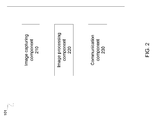
- FIG. 2 is a partial block diagram illustrating one example of a service component 101.
- the service component 101 in this example includes an image capturing component 210 that may receive a request for data capture from a requestor and may determine a device or a plurality of devices for obtaining the requested data capture.
- the image capturing component 210 of the service component 101 may have additional functions for processing a request for data from a requestor and selecting a device or plurality of devices for providing the data.
- the service component 101 may receive multiple requests for an image from different locations from different requestors.
- the service component 101 may process each of the different requests in a first-come-first-serve manner. However, in another example, the service component 101 may process each of the different requests based on a priority scheme.
- a priority value may be assigned to each of the requestors so that the service component 101 may service the requests based on which requestor has the highest priority.
- the priority values may be determined for each of the requestor devices and stored at the service component 101.
- the service component 101 may compare the priority values for each of the requesting requestors and service the request from the requestor with the highest priority first.
- the service component 101 may further include an image processing component 220 for processing, modifying, manipulating, or enhancing the requested data received from devices.
- the service component 101 in this example receives a request for image data from a requestor, determines devices capable of providing the requested data, and instructs the devices capable of providing the requested data to obtain the image data.
- the service component 101 may further instruct any of the devices how to obtain the image data or provide further instructions on additional requirements of the data desired.
- the image processing component 220 of the service component 101 may receive the requested image data from the devices and may further process the image data. For example, the image processing component 220 may receive a plurality of images associated with a requested subject matter where each of the images in the plurality of images portrays the requested subject matter from a different angle, a different magnification, different exposure, different component of a subject matter, or a different portion of the requested subject matter, etc. The image processing component 220 of the service component 101 may modify the images as necessary and may further connect the images together to provide a detailed image that encompasses a large portion of the subject matter or substantially all of the requested subject matter.
- a panoramic, 3-dimensional view of the requested subject matter may be created at the image processing component 220 of the service component 101 based on the images received from the devices.
- the image processing component 220 may stitch different images received from the different devices together to create the panoramic and/or 3-dimensional image of the requested subject matter.
- images of at least a portion of the requested subject matter may be included such that a requestor may obtain detailed views of at least a portion of the requested subject matter.
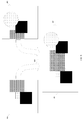
- FIG. 8 illustrates an example of processing of a plurality of images received from devices.
- a first image 801 of a subject matter is received at the service component 101 from a first device and a second image 802 of the subject matter is received at the service component 101 from a second device.
- the first image 801 and the second image 802 in this example represent different portions of the subject matter of interest.
- the service component 101 may further process the first image 801 and/or the second image 802 such as adjusting the contrast, magnification, brightness, sharpness, etc.
- the first image 801 and the second image 802 in this example are connected or stitched together to form a composite image 803.
- the composite image 803 may be a panoramic, 3-dimensional image of the subject matter as illustrated in FIG. 8 .
- a requestor may desire an image of the Brooklyn Bridge.
- the requestor may submit a request for the image to the service component 101 which may receive the request via the image capturing component 210.
- the service component 101 may further determine a plurality of devices capable of providing the image of the Brooklyn Bridge.
- the image capturing component 210 may contain a database that stores information on each participating device. The information may include capabilities of the device and/or location of the device.
- the service component 101 may further contain a device tracking system for determining the location of each of the devices.
- the service component may identify devices at the Brooklyn Bridge or within a specified distance from the Brooklyn Bridge.
- additional devices may be identified that may have a certain vantage point of the bridge even if the devices are not within a specified distance from the bridge (e.g., a device may be included if atop the Empire State Building or World Financial Center or at a coastal vantage point in New Jersey if a special vantage point is determined for obtaining the requested image).
- the service component 101 may send a request to the identified devices.
- the service component 101 may further send instructions to the devices for obtaining the image data. As one example, if a device is determined to be located in Brooklyn Heights, the service component 101 may send instructions to that device to point the device westward to capture the data. If a device is determined to have image enhancing capabilities, the service component 101 may instruct that device to activate those capabilities.
- the service component 101 may instruct the user of that device where to go, which direction, or further instructions on how to obtain the desired image as well as the desired angle, distance, exposure, magnification, etc. of the image desired.
- the service component 101 may facilitate a transaction between the requestor(s) and the devices for providing the requested data. For example, the requestor may be charged a fee for the requested data while the devices may be paid a fee for providing the requested data.
- the requestor may send a request for data to the service component 101 as well as a desired price.
- the service component 101 may determine devices capable of providing the requested data at the requested price. In this example, the service component 101 may either receive pricing information from the devices in real-time or may have stored information corresponding to each of the devices such that the service component 101 may compare the requested price from the requestor with each of the stored values of the corresponding devices. If a match is determined, then the corresponding device may be included in the request for data.
- the service component 101 may facilitate bidding among the devices for providing the requested data. Any type of bidding or auctions may be implemented (e.g. basic auction, Dutch auction, open market, or multi-unit English descending auction, to name a few).
- the devices capable of providing the requested data may submit bids corresponding to the fee requested for providing the data.
- the requestor may select the devices for providing the data based on the fees provided by the different devices (e.g., the requestor may include any device which quotes a fee that is lower than a certain amount).
- the requestor may provide a minimum (or maximum) amount such that devices may be eliminated if the stated fee is out of range.
- Certain devices may request a fee that is out of range but the requestor may wish to include the devices anyway. There are many reasons for this, for example, a device may have a particularly desirable vantage point and may charge a premium for the data from that vantage point. The requestor may have the option to include devices that quote fees out of range, if desired.
- the service component may determine which requestor to service first based on a priority system. For example, a first requestor may have a high assigned priority value while a second requestor may have a lower assigned priority. In this case, the first requestor would have priority over the second requestor and the request from the first requestor would be processed first.
- a first requestor may be an emergency service and may request image data of an accident scene on the Brooklyn Bridge.
- a second requestor may be a tourist requesting image data of Niagara Falls. If the first requestor (the emergency service) has higher priority than the second requestor (the tourist), then the service component 101 may process the request for images of the accident scene prior to processing the request for Niagara Falls.
- Certain entities may have a high priority value assigned to them. These entities may include police officers, paramedics or emergency medical technicians, emergency rooms, firefighters, military, government agencies, 911 emergency services, etc.
- a requestor may be capable of "commandeering" the network device for obtaining desired data in an "ultra-high priority" scenario.
- the requestor may have high priority such that a request from such a requestor may preempt all other requests.
- An example of one application of the "ultra-high priority" is an emergency service requesting images or other data of an accident or disaster scene. For example, a hurricane may be closely approaching a particular location.
- An emergency service may desire images or other data of the scene to ensure that the location has been properly evacuated or otherwise prepared for the storm.
- the emergency service may submit an "ultra-high priority" request for data from the scene. Because the emergency service has ultra-high priority, the service may preempt all other requests and service the request from the emergency service.
- a request is received from the ultra-high priority device at the service component 101 which identifies devices capable of providing the requested data. Responsive to the request from the device, the service component 101 may transmit an interrupt command to the identified devices capable of providing the requested data. The interrupt command may interrupt or suspend activity of the identified devices such that the identified devices terminate their current activities, if any, and perform the operations requested by the service component 101.
- the service component 101 may further include an image processing component 220 for processing the data received from the devices.
- the service component 101 may receive a plurality of images of the Brooklyn Bridge from different devices.
- Each of the images may be different in that the images may include different portions of the bridge or the images may be at different magnifications. Also, the images may differ in quality, contrast, exposure, distance, etc.
- the image processing component 220 may receive the plurality of images of the Brooklyn Bridge in this example, and may optionally modify the images to improve image quality. For example, edges may be sharpened on images that are out of focus or exposure levels may be modified in certain images that may benefit from such modifications. Also, the different images having been obtained by different devices may vary in color, exposure, etc. The image processing component 220 may modify the images such that the images may be compatible with each other in terms of technical quality.
- the image processing component 220 may connect or stitch together different images of different portions of the Brooklyn Bridge to create a panoramic 3-dimensional view of the bridge.
- certain detailed images of smaller aspects of the bridge may be included if additional details are desired.
- more detailed images e.g., close-up images of the accident scene at different angles and magnifications
- These detailed images may be based on additional images received from devices providing the detailed images. For example, motorists and/or passersby at the scene of the accident may provide images of the accident scene on the bridge.
- a requestor may receive a panoramic, 3-dimensional view of the Brooklyn Bridge and may further be able to navigate around the location via the panoramic image derived from the multiple images received from the plurality of devices. Also, a requestor may select a portion of the panoramic view of the Brooklyn Bridge such as the accident scene on the bridge and may enlarge the view of the accident scene to obtain a detailed 3-dimensional view of the accident scene on the bridge. In the example in which the requestor is emergency personnel, the requestor may determine by navigating through the scene the extent of the accident, potentially life-threatening conditions, or may determine a course of action of deployment.
- the data received from the device may also be stored for future analysis, if desired.
- Devices in a network may return data, such as image or audio data, from a scene of interest.
- the data may be stored in memory.
- the data may also be stored with identifying information corresponding to the data. For example, the data may be stored with a description of the scene, a precise location of the scene, a date and time that the image was taken, or any other pertinent information associated with the data.
- the data may thus be fully analyzed along with ancillary information associated with the data.
- the data may be stored and later accessed to create a virtual reality environment.
- Multiple devices provide information of a subject matter which may be pooled to create in-depth information of the subject matter.
- multiple devices may provide image data of a particular subject matter from different angles and perspectives. This information may be assembled to create a virtual reality environment.
- the present description is not limited to any single use of the received data as the data generated by the service may be used in a variety of ways.
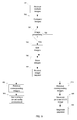
- FIG. 9 is a flowchart illustrating an example of generating requested information from captured data.
- the method of FIG. 9 is similar to the method of FIG. 7 .
- Multiple images are received at the service component (STEP 701 and compared (STEP 702).
- Image processing of the received images may be performed (STEP 703) including editing of the images (STEP 704).
- the images may be brought into mutual conformity, if necessary or if desired.
- the images are stored (STEP 705) for subsequent retrieval.
- the service component retrieves the requested images stored in memory (STEPS 902, 904) based on the request received from the requestor.
- the requested image data is identified in memory and retrieved for delivery to the requestor.
- the retrieved image data may be further processed in many ways, As one example in FIG. 9 , the retrieved images may be assembled to generate a virtual reality environment (STEP 903) as described above.
- owners or users of network devices for capturing data may provide the data without a specific request for the data.
- a owner or user of a network device may observe an object, entity, or event of interest. Even if a request for the entity is not received by the owner/user of the network device, the owner/user may nevertheless obtain data of the entity.
- the owner/user may capture an image of the entity and upload the image to the service.
- the service component 101 receives the image and stores the image for potential later use.
- the owner/user of the device may send descriptive information or other relevant information pertaining to the image to the service component 101. This information may include, for example, location, time, date, angle, orientation, or other descriptive information of the subject matter in the image provided. This information may also be stored at the service component 101 with the corresponding image data.
- FIG. 9 also illustrates an example in which requested information is retrieved from storage at the service component and stitched together to create a panoramic and/or 3-dimensional image.
- the requested information may be pre-stored in storage or may be obtained in real-time.
- the information is pre-stored in memory and retrieved when requested by a requestor.
- the data is captured at a time prior to receiving a request from a requestor for the data.
- the service component may further negotiate payment for the image(s).
- the owner/user of the network device may provide a price quote with the image data to indicate a price the owner/user is willing to accept for providing the image data.
- other owners/users of network devices may provide similar image data of the subject matter along with any additional descriptive information or pricing information.
- the service component 101 may provide the information to the requestor which may include price of the image. The requestor may determine if he is willing to pay the requested price or may provide a counteroffer.
- the service component may further mediate a negotiation for image or other data between a requestor and provider(s) of the data.
- data may be received from federated devices at different times.
- a particular subject matter may thus be imaged or otherwise captured at various different times.
- This data may be returned to the service component 101 where it may be stored along with the time indicator or indication.
- the time indicator or indication corresponds to a data capture time of the image such that the time at which the image was captured may be known.
- a requestor may wish to receive data of a particular subject matter at a particular time.
- the service component 101 determines available information corresponding to the requested time and subject matter. For example, a requestor may wish to receive image data of an accident scene that occurred at a particular location 3 days prior.
- the service component 101 identifies stored image data corresponding to the accident scene at the specified time and assembles the requested image data by connecting or stitching together the relevant images.
- the requestor may receive transmitted images that indicate a short term evolution of a subject matter.
- the requestor receives images over time of an accident scene, the images depicting the course of development or evolution of events during the accident over the period of time.
- images may depict development or evolution of events for a long-term event.
- images indicating long-term evolution of the course of a subject matter or event is a large-scale construction project.
- a requestor may request images of the construction of a skyscraper over a long-term time course. Images may have been collected from data capture devices of the construction project over the time period during which the construction project was being performed. These images may be retrieved and transmitted to the requestor. Also, images captured at about the same time may be stitched together to generate a panoramic or 3-dimensional image of the construction project. Such synthesized images may also be transmitted to the requestor.
- multiple images taken at different times of a subject matter of interest may be captured and stored at the service component 101.
- the multiple images may be obtained from any number of federated devices in a network.
- Each of the images may be stored with a corresponding time indication or indicator for indicating the time or date that the image was captured.
- the time indication or indicator may take many forms.
- the indicator may be a time-stamp or a data field for indicating the time or date. Any indicator capable of indicating the time of data capture may be used.
- a requestor may thus request images or other data of subject matter of interest at a specified time.
- a requestor submits a request for data of a particular entity in which the request also includes a time or date.
- the service component 101 identifies data corresponding to the requested data from the requestor.
- the requestor may submit a request for an image of a particular building at 10:52PM the previous night.
- the service component 101 accesses a database of images and extracts images matching the requested criteria.
- the images thus obtained are stitched together at the service component 101 and otherwise processed as described above to generate a panoramic and/or 3-dimensional image of the requested building at the requested time/date.
- FIG. 10 is a flowchart illustrating another example of generating image data from data capture network devices based on a specified time.
- multiple images of a particular subject matter may be received from data capture network devices (STEP 701) and stored (STEP 705).
- the captured data may be stored in memory with an associated time of capture (STEP 705).
- the service component may access a database in which the previously captured data is stored and retrieve the requested image data ("NO" branch of STEP 1001 and STEP 904).
- the service component selects images from the images retrieved from the database that correspond to the requested time. For example, if the request for a particular subject matter further specifies that the images must be captured at 2:06 AM on a particular date, then the service component identifies those images of the subject matter that were captured at 2:06 AM on the specified date.
- the service component 101 may further process the selected images (of the requested subject matter and captured at the requested time/date) by generating a panoramic or 3-dimensional image (STEP 905).
- the selected images may include images of different portions, components or sections of the requested subject matter and may be stitched together to create the panoramic or 3-dimensional image of the subject matter (STEP 905).
- the service component may further negotiate for payment of the images (STEP 906) as previously described.
- Data over a time period of a particular entity, object or event may also be generated and provided.
- An owner/user of a data capture device in a federated network may capture data of a particular entity or event, for example, and may send the captured data to the service component 101 with an indication of the time/date the data was captured.
- the device or another device in the network may capture additional data of the entity or event at a subsequent time. This process may be repeated any number of times with any number of devices to obtain multiple instances of data capture of the entity or event over a period of time.
- Any of the devices may specify a price or price range for the images. The price or price range may also vary depending on the age of the images.
- a request for the image is processed within a predetermined period of time of the date/time of capture, one price may be quoted but if the request for the image is processed a greater period of time after the data/time of capture, a different price may be specified.
- the service component 101 may store the captured data and may provide images of the entity or event over time to a user or requestor.
- a user/requestor may request image data from an accident scene and may further request the images over time such that the images returned depict the evolution of the accident.
- the service component 101 identifies image data corresponding to the requested accident scene over the desired period of time. Images captured at the same date/time reflecting different aspects, portions, or components of the scene may be connected or stitched together to generate a panoramic and/or 3-dimensional image at that date/time.
- a price may be quoted for the requestor based on the stated prices or price ranges from the data capture devices.
- the requestor may accept the quoted price or price range or may provide a counteroffer.
- the service component 101 may thus mediate negotiations of the purchase of requested image data.
- the requestor may receive multiple images of an entity or event of interest including panoramic and/or 3-dimensional images formed by stitching together images of the subject matter of interest.
- FIG. 11 is a flowchart illustrating an example of providing image data to a requestor based on timing of the images.
- Data may be captured by network devices even without a specific request from a service component.
- the captured data is returned to the service component that stores the received data.
- an event may have occurred and a device or devices at the scene may be used to capture various images of the event.
- the images may include images of different components, portions or angles/perspectives of the events.
- the images may include images taken at different times during the event.
- the returned images may include not only different images of different portions of the subject matter, but also images taken at different times throughout a period of time.
- the received images may be stored (STEP 1102) with corresponding times of data capture for each of the stored images.
- images may be retrieved from memory with an indication of when each image was captured or obtained.
- a request may be subsequently received for the subject matter (STEP 1103) and, responsive to receiving the request, the service component may retrieve the selected images (STEP 1104).
- the request from the requestor may also include a specified time period of interest ("YES" branch of STEP 1105).
- a requestor may request images of a particular event and also specify a time period over which images of the event are desired.
- the service component retrieves the images of the desired subject matter within the specified time period (STEP 904).
- Some of the retrieved images may include simultaneous images of the subject matter of interest ("YES" branch of STEP 1106).
- Images taken at the same time may be pieced together or stitched together (STEP 1108) to form a panoramic and/or 3-dimensional image of the subject matter.
- multiple images taken at the same time of a subject matter may include images of different portions or different components of one entity.
- the images may be stitched together to form a single panoramic image of the entity.
- the images may be sent to the requestor (STEP 1108).
- the panoramic and/or 3-dimensional image may be transmitted to the requestor (STEP 1108).
- the service component may negotiate for payment of the image data by the requestor (STEP 1107) as described above.
- the service component 101 may further include a communication component 230 for providing communication between devices and between a requestor and the devices at the scene.
- the service component 101 may communicate information, commands, data, or other transmission from the requestor to the devices or from one device to another device to provide instructions to individuals at the scene.
- a requestor may be emergency services and may receive a requested panoramic or 3-dimensional image of the Brooklyn Bridge, including an image of an accident on the bridge. Emergency services may navigate through the panoramic image of the bridge and may further enlarge a detailed 3-dimensional image of the accident scene. After navigating through the accident scene, emergency services may communicate instructions via the communication component 230 of the service component 101 to devices at the scene. For example, emergency services may instruct individuals at the scene to administer first-aid or perform other services pending the arrival of emergency personnel.
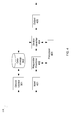
- FIG. 3A is a partial block diagram illustrating an example of the image capturing component.
- the image capturing component includes a device tracker 301 for tracking the location of devices.
- the location of devices are received and updated at the image capturing component 210 periodically or continuously such that the location information of the devices is current.
- the location of each of the devices may be stored in data storage 302 and may be updated as needed when new location information for the devices is received at the device tracker 301.
- FIG. 3B illustrates an example of device information stored in data storage 302.
- each participating device may have an identifier or Device ID.
- the device ID may be used to identify the individual devices for obtaining requested data.
- the corresponding location of each of the devices may be stored corresponding to the associated device ID.
- additional characteristics or capabilities of each of the devices may be received via the device tracker 301 and stored in data storage 302 as illustrated in FIG. 3B .
- the data storage 302 may store the device information (e.g., location and capabilities or characteristics) and may compare the location and capabilities of each of the devices to the request from the requestor.
- the service component 101 may further select devices for providing the data based on the device location and characteristics/capabilities.
- FIG. 4 is another partial block diagram of an example of the image capturing component.
- the image capturing component 210 has the device tracker 301 and data storage 302 as described above.
- the image capturing component 210 contains an input 401 for receiving a request from a requestor (not shown).
- the request may be further processed via the processor 403 and a requestor prioritizer 402.
- the requestor prioritizer 402 determines a priority of the requestor and assigns a corresponding priority value to the requestor.
- the identity of the requestor with the corresponding priority value may be used to determine the order of processing of requests for data capture.
- a requestor with a high priority may have priority over a requestor with a low priority.
- the image capturing component 210 illustrated in FIG. 4 further includes a device identifier 404 for identifying devices capable of providing the requested data.
- the processor 403 may control the device identifier 404 to select devices matching criteria for providing the requested data.
- the device identifier 404 may access the data storage 302 to obtain information on the devices. For example, the device identifier 404 may obtain location information of the devices such that devices located within a predetermined distance from the requested site may be selected as devices for providing the requested data. Also, devices may be selected based on other characteristics or capabilities such as, for example, capabilities of the devices, special features of the devices, availability of the devices, reliability of the devices, etc.
- the image capturing component 210 may output a request via the output 405 to the devices for obtaining the requested information. Also, the image capturing component 210 may transmit further instructions or information to the devices via the output 405 such as instructions on how to obtain the desired images.
- the devices obtain the requested information and transmit the data back to the service component 101.
- the service component may further include an image processing component 220 for processing or manipulating the images.
- FIG. 5 is a partial block diagram illustrating an example of an image processing component 220 of the service component 101.
- Data captured by the devices may be received at an input 501.
- the data may be any type of requested data such as image data, video data, audio data, etc.
- image data may be received from a plurality of devices at input 501 and may be compared by data comparator 505 of the image processing component 220.
- the data comparator 505 may extract coordinate data or other features of each of the images received. Based on the data extracted, the data may be stored in data storage 506 and/or synthesized with other images received via input 501.
- multiple images may be received of a particular location or a particular scene at a particular location.
- the multiple images are compared and processed in the data comparator 505. Areas of overlap and congruency in the multiple images are determined such that the images may be further processed in the image synthesizer 502, which connects the multiple images together to produce a seamless panoramic, 3-dimensional view of the location.
- the 3-dimensional image is transmitted to the requestor via output 504.
- FIG. 6A is a flowchart illustrating an example of a method for providing data to a requesting device.
- a request for data is received at the service component 101.
- Requests for data may be received from a plurality of requestors ("Yes" branch of STEP 611), each of the requestors having a priority value.
- the priority values of each of the requestors is compared. If a requestor does not have priority ("No" branch of STEP 61 2), then the priority value of other requestors are examined (“Yes" branch of Step 613 and STEP 614).
- the request from the requesting device with the highest priority is processed first ("Yes" branch of STEP 612). If only one request is received from a single requestor ("No" branch of STEP 611), then the request is processed for that requestor.
- the service component 101 identifies devices capable of providing the requested data (STEP 61 5). This identification may be based on stored location data or stored information on capabilities or characteristics of the devices. For example, a device that has capabilities of capturing an image (e.g., camera) may be selected if a photograph is desired. Also, information corresponding to the location or capabilities of the devices may be updated in memory at the service component 101.
- the service component 101 may further generate instructions for data capture for the devices (STEP 616). For example, the service component 101 may determine that a device is capable of providing the requested data and may also desire a particular view of an image of the desired subject matter. The service component 101 in this example generates instructions and transmits the generated instructions to the device to orient the device in a particular position to obtain the desired image and transmit the instructions to the device (STEP 61 7).
- the devices receive the request for data and capture the requested data according to the instructions provided by the service component.
- the service component 101 may facilitate bidding between the devices and the requestor as described above.
- the devices transmit the captured images to the service component (STEP 61 8).
- the service component 101 receives the images from the devices and processes the images (STEP 619) for transmission to the requestor.
- FIG. 6B is a flowchart illustrating another example of a method for providing data to a requesting device.
- a data request is received from a requestor as in the method of FIG. 6A (STEP 610).
- the service component 101 may receive the request and, responsive to the request, may access a database to determine if the requesting device is an ultra priority device (STEP 621).
- An example of an ultra priority device includes an emergency service or government agency such as the Federal Emergency Management Agency (FEMA). If the requesting device is an ultra priority device ("YES" branch of STEP 621), then the service component 101 services the request of the device (STEPS 615-619).
- FEMA Federal Emergency Management Agency
- the service component 101 may send an interrupt (STEP 622) to devices identified as capable of providing the requested data to suspend current activity of the devices.
- the identified devices terminate other actions (at least temporarily) to perform the requested actions. If other requests have been received from other requestors where the other requestors are not ultra priority devices, then the request from the ultra priority device usurps the other requests such that the request from the ultra priority device is serviced out of turn and in front of the other requests from other requestors.
- the request is serviced similar to STEPS 615-619 of FIG. 6A .
- the request from the requesting device is serviced based on the priority system as described in FIG. 6A (STEPS 612-614).
- the system may be "commandeered" by the ultra priority requestor.
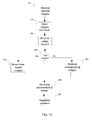
- FIG. 7 is a flowchart illustrating an example of processing of images at the service component 101.
- the service component 101 receives the requested images from the devices. There may be many images of the subject matter of interest and each of the images may vary from the other images in terms of which portion of the subject matter each image represents, angle, resolution, or magnification of the subject matter. In addition, the images may differ in exposure, contrast, brightness, or any other technical quality.
- the images are compared to each other (STEP 703). Based on the comparison, the images may be determined to be compatible to form a single image. Alternatively, it may be determined that further processing of at least some of the images may be needed to correlate the different images.
- the corresponding images determined to benefit from further processing are edited (STEP 704).
- the image may be modified by image processing methods to increase the brightness of the image to match the other images. In this way, the underexposed image is modified so that the image conforms with the other images.
- the images may be assembled to create a composite image that includes the received images connected together (STEP 705).
- the requested image may have been of subject matter that is large, for example, the Grand Canyon. With a single photographic image of the Grand Canyon, it is likely that the single image will include only a small portion of the site.
- multiple images of the site are received (e.g., STEP 701). These images may be received from multiple devices that are identified as capable of providing the desired images of the Grand Canyon. The devices may be located in proximity to the site and may be identified as devices having photo-imaging capabilities (e.g., having a camera).
- the images received from the identified devices are compared and further modified, if desired (STEPS 702-704).
- the images may include different portions of the Grand Canyon. As the number of different images increases, the depth and scope of the coverage of the site increases.
- the images of the different portions of the Grand Canyon are assembled together (STEP 705) to create a panoramic image of the canyon.
- the requestor after receiving the panoramic image (STEP 706), may navigate through the 3-D image as if actually moving through the site. If close up images of certain points of interest are included in the returned images from the data capture devices, the requestor may further enlarge those regions, if desired, to obtain a more detailed image of the enlarged regions, the detailed images corresponding to the close up images received from the data capture devices.
- the requestor or any other party may transmit further instructions to devices and persons at the scene. After navigating through the scene and analyzing the conditions at the scene, the requestor (or other party) may transmit instructions back to the devices.
- the system may further include a communication device for providing two-way communication between the devices, the requestor, or any other party. This may be beneficial, for example, in an emergency situation (e.g., accident scene, crime scene, etc.) in which after a survey of the scene, emergency personnel (e.g., paramedics, police officers, firefighters, etc.) may further instruct persons at the scene via the data capture devices on what immediate actions to take.
- emergency personnel e.g., paramedics, police officers, firefighters, etc.
- the service component 101 may determine that devices are capable of providing requested data and may instruct users of the devices to deploy the devices to capture the desired images. For example, the service component 101 may determine that multiple devices are present at a conference and may be capable of providing requested image data from the conference. The service component 101 may send instructions to each of the devices to coordinate data capture among the devices in order to capture the conference.
- the devices for providing the data may include video-capable and/or audio-capable devices such that video and audio may also be provided to the requestor.
- the data capture devices may be sensors that are video-capable and may each provide a video of desired subject matter.
- individuals with video-capable devices may be participating in a conference. Each participating individual may arrange his/her respective video-capable device to capture the conference. Each individual video capture may be returned and may be assembled together to provide video coverage of the conference to a remote requestor.
- video images from each of the video-capable devices may be stitched together to form a panoramic video image or a 360 degree video image of the conference in this example.
- the data capture devices may be capable of providing audio information. For example, multiple users with audio-capable devices may be attending a speech or conference. Each of the audio-capable devices may capture the audio portion of a speaker at the conference and provide the captured audio data to a requestor.
- the audio data returned from the devices contains the audio data of an audio source (e.g., a speaker at a conference) collected from different orientations, directions and distances from the audio source.
- the collected audio data from the audio-capable devices may be used to determine the location of the audio source (e.g., speaker) or used in identifying the audio source.
- the data captured by the devices may be used in scene modeling.
- multiple users and devices may be attending a sporting event.
- a requestor may desire image, video or audio data of the sporting event (e.g., for real-time game analysis).
- the devices may capture images or video from the sporting event which may be calibrated and assembled or stitched together to provide a 3-dimensional image or video image of the sporting event.
- automatic 3-dimensional scene reconstructions from image or video sequences may be obtained.
- Real-time game analysis may be performed based on the scene reconstructions in this example.
- different data capture devices may be partitioned to provide a particular aspect of the requested data.
- Requested subject matter may include different aspects or different components of which images are desired.
- a building may contain different sides (e.g., front side, back side, left, right, top view, etc) or images of a sporting event such as a baseball game may include different parts of the field or stadium.
- Multiple data capture devices may be present at the desired site or in the vicinity of the desired site.
- a first group of devices may be located at the front of the building
- a second group of devices may be located at the back of the building
- a third group of devices may be located at the right side of the building
- a fourth group of devices may be located at the left side of the building
- a fifth group of devices may be located above the building (e.g., in a plane or in a tree overhanging the building).
- a service component 101 may determine the locations of each of the data capture devices and may partition the devices to provide a particular aspect of the building.
- the first group of devices may be requested to provide images of the front aspect of the building
- the second group of devices may be requested to provide images of the back aspect of the building
- Each of the devices may provide the requested image of the requested corresponding aspect of the subject matter to enhance the scope of the final synthesis of the image.
- a 3-dimensional image of the building may be provided which includes images of each aspect of the building.
- a computer-readable medium having computer-executable instructions stored thereon is provided in which execution of the computer-executable instructions performs a method of providing an image of requested subject matter as described above.
- the computer-readable medium may be included in a system or computer and may include, for example, a hard disk, a magnetic disk, an optical disk, a CD-ROM, etc.
- a computer-readable medium may also include any type of computer-readable storage media that can store data that is accessible by computer such as random access memories (RAMs), read only memories (ROMs), and the like.
Landscapes
- Engineering & Computer Science (AREA)
- Multimedia (AREA)
- Signal Processing (AREA)
- Theoretical Computer Science (AREA)
- General Engineering & Computer Science (AREA)
- General Physics & Mathematics (AREA)
- Physics & Mathematics (AREA)
- Data Mining & Analysis (AREA)
- Databases & Information Systems (AREA)
- Library & Information Science (AREA)
- Processing Or Creating Images (AREA)
- Image Processing (AREA)
- Testing, Inspecting, Measuring Of Stereoscopic Televisions And Televisions (AREA)
- Studio Devices (AREA)
- Closed-Circuit Television Systems (AREA)
- Editing Of Facsimile Originals (AREA)
Claims (15)
- Verfahren zum Erzeugen eines Bildes von einem Objekt, wobei das Verfahren umfasst:Empfangen (610), an einer Dienstkomponente (101), einer Anforderung eines Bildes des Objekts von einem Anforderer, wobei dem Anforderer ein Prioritätswert zugewiesen ist und der Prioritätswert dazu dient, eine Anforderung von einem Anforderer mit einer höchsten Priorität zuerst zu bedienen;Identifizieren (615), durch die Dienstkomponente, einer Vielzahl von Vorrichtungen zum Bereitstellen des Bildes basierend auf der Anforderung, wobei die Vorrichtungen Bildaufnahmevorrichtungen sind, wobei das Identifizieren auf gespeicherten Positionsdaten und Merkmalen einer Vorrichtung aus der Vielzahl von Vorrichtungen basiert, wobei die Merkmale Vorrichtungsfähigkeiten beinhalten;Senden (617), durch die Dienstkomponente, einer Vorrichtungsanforderung des Bildes an die identifizierten Vorrichtungen;Empfangen (618), durch die Dienstkomponente, einer Vielzahl von Bildern des Objekts von den identifizierten Vorrichtungen; undSynthetisieren (619), durch die Dienstkomponente, des angeforderten Bildes basierend auf der Vielzahl der empfangenen Bilder.
- Verfahren nach Anspruch 1, wobei der Schritt zum Empfangen einer Anforderung das Empfangen einer Vielzahl von Anforderungen von einer Vielzahl von Anforderern umfasst, wobei jeder der Anforderer einen Prioritätswert hat.
- Verfahren nach Anspruch 2, des Weiteren umfassend das Auswählen eines Anforderers aus der Vielzahl von Anforderern basierend auf entsprechenden Prioritätswerten, wobei die Vorrichtungsanforderung die Anforderung von dem ausgewählten Anforderer beinhaltet.
- Verfahren nach Anspruch 1, wobei der Schritt zum Identifizieren umfasst:Bestimmen einer Position einer Vorrichtung zum Bereitstellen des Bildes;Auswählen der Vorrichtung basierend auf der Position.
- Verfahren nach Anspruch 4, wobei der Schritt zum Auswählen das Auswählen der Vorrichtung beinhaltet, wenn die Vorrichtungsposition innerhalb einer vorgegebenen Distanz zu dem Objekt liegt.
- Verfahren nach Anspruch 4, des Weiteren umfassend:Empfangen der Positionsinformationen für die Vorrichtungen aus der Vielzahl von Vorrichtungen; undSpeichern der Positionsinformationen,wobei der Schritt zum Auswählen der Vorrichtung das Vergleichen der gespeicherten Positionsinformationen mit entsprechenden vorgegebenen Positionsinformationen der Vorrichtung beinhaltet.
- Verfahren nach Anspruch 1, wobei der Schritt zum Identifizieren umfasst:Bestimmen einer Fähigkeit einer Vorrichtung zum Bereitstellen des Bildes;Auswählen der Vorrichtung basierend auf der Fähigkeit.
- Verfahren nach Anspruch 7, wobei die Fähigkeit eine Fotoabbildungsfähigkeit beinhaltet.
- Verfahren nach Anspruch 1, wobei der Schritt zum Senden das Senden von Befehlen zum Abrufen des Bildes an die identifizierten Vorrichtungen beinhaltet.
- Verfahren nach Anspruch 9, wobei die Befehle zum Abrufen des Bildes eines aus Befehlen zur Ausrichtung der Vorrichtung und Bewegung der Vorrichtung beinhaltet.
- Verfahren nach Anspruch 10, wobei die Befehle zur Ausrichtung der Vorrichtung eine Anzeige einer Richtung beinhalten, in welche die Vorrichtung zeigen soll, und Befehle zur Bewegung der Vorrichtung eine Anzeige von einem aus einer Richtung und einer Richtung beinhalten, in welche die Vorrichtung bewegt werden soll.
- Verfahren nach Anspruch 1, wobei die empfangene Vielzahl von Bildern des Objekts eines aus Bildern von verschiedenen Teilen des Objekts, Bildern von verschiedenen Ansichten des Objekts, Bilder von verschiedenen Winkeln des Objekts, Bilder von verschiedenen Vergrößerungen des Objekts, Bilder von verschiedenen Komponenten des Objekts und Bilder von verschiedenen Aspekten eines Gegenstandes beinhalten, der sich an derselben Position wie das Objekt befindet.
- Verfahren nach Anspruch 1, wobei der Schritt zum Synthetisieren das Erstellen eines dreidimensionalen Modells des Objekts mit der Vielzahl der empfangenen Bilder umfasst.
- Verfahren nach Anspruch 1, wobei der Schritt zum Synthetisieren das Zusammenfügen der Vielzahl der Bilder beinhaltet.
- Computerlesbares Medium, auf dem computerlesbare Befehle zum Ausführen eines Verfahrens nach einem der Ansprüche 1 bis 14 gespeichert sind.
Applications Claiming Priority (2)
| Application Number | Priority Date | Filing Date | Title |
|---|---|---|---|
| US11/561,378 US8498497B2 (en) | 2006-11-17 | 2006-11-17 | Swarm imaging |
| PCT/US2007/085020 WO2008067197A2 (en) | 2006-11-17 | 2007-11-16 | Swarm imaging |
Publications (3)
| Publication Number | Publication Date |
|---|---|
| EP2098065A2 EP2098065A2 (de) | 2009-09-09 |
| EP2098065A4 EP2098065A4 (de) | 2012-04-04 |
| EP2098065B1 true EP2098065B1 (de) | 2016-10-19 |
Family
ID=39416538
Family Applications (1)
| Application Number | Title | Priority Date | Filing Date |
|---|---|---|---|
| EP07871513.3A Not-in-force EP2098065B1 (de) | 2006-11-17 | 2007-11-16 | Schwarmbildaufnahme |
Country Status (7)
| Country | Link |
|---|---|
| US (3) | US8498497B2 (de) |
| EP (1) | EP2098065B1 (de) |
| JP (1) | JP5491864B2 (de) |
| CN (1) | CN101536490B (de) |
| CA (1) | CA2666377C (de) |
| ES (1) | ES2611328T3 (de) |
| WO (1) | WO2008067197A2 (de) |
Families Citing this family (38)
| Publication number | Priority date | Publication date | Assignee | Title |
|---|---|---|---|---|
| US9100702B2 (en) | 2006-09-11 | 2015-08-04 | Tivo Inc. | Personal content distribution network |
| US8270819B2 (en) * | 2006-10-31 | 2012-09-18 | Tivo Inc. | Performing trick play functions in a digital video recorder with efficient use of resources |
| CA2662825C (en) * | 2006-10-31 | 2014-07-15 | Tivo Inc. | Method and apparatus for downloading ancillary program data to a dvr |
| US8498497B2 (en) * | 2006-11-17 | 2013-07-30 | Microsoft Corporation | Swarm imaging |
| US20090094113A1 (en) * | 2007-09-07 | 2009-04-09 | Digitalsmiths Corporation | Systems and Methods For Using Video Metadata to Associate Advertisements Therewith |
| JP5044817B2 (ja) * | 2007-11-22 | 2012-10-10 | インターナショナル・ビジネス・マシーンズ・コーポレーション | 仮想空間を構築するための画像処理方法、装置 |
| KR101065339B1 (ko) * | 2008-07-02 | 2011-09-16 | 삼성전자주식회사 | 휴대 단말기 및 휴대 단말기 간 분할 촬영 방법 |
| US8359612B2 (en) | 2008-08-13 | 2013-01-22 | Tivo Inc. | Content distribution system using transportable memory devices |
| WO2011026528A1 (en) * | 2009-09-07 | 2011-03-10 | Nokia Corporation | An apparatus |
| KR100971777B1 (ko) * | 2009-09-16 | 2010-07-22 | (주)올라웍스 | 파노라마 이미지 사이의 중복을 제거하기 위한 방법, 시스템 및 컴퓨터 판독 가능한 기록 매체 |
| JP2011188210A (ja) * | 2010-03-08 | 2011-09-22 | Olympus Imaging Corp | 撮影機器及び撮影システム |
| US9025810B1 (en) * | 2010-04-05 | 2015-05-05 | Google Inc. | Interactive geo-referenced source imagery viewing system and method |
| JP5567522B2 (ja) * | 2011-05-02 | 2014-08-06 | 株式会社日立ソリューションズ | 単画像からのステレオペア検索装置及びステレオペア検索方法 |
| US9639959B2 (en) | 2012-01-26 | 2017-05-02 | Qualcomm Incorporated | Mobile device configured to compute 3D models based on motion sensor data |
| US10600235B2 (en) | 2012-02-23 | 2020-03-24 | Charles D. Huston | System and method for capturing and sharing a location based experience |
| CA2864003C (en) | 2012-02-23 | 2021-06-15 | Charles D. Huston | System and method for creating an environment and for sharing a location based experience in an environment |
| US10937239B2 (en) | 2012-02-23 | 2021-03-02 | Charles D. Huston | System and method for creating an environment and for sharing an event |
| US9488489B2 (en) * | 2012-09-28 | 2016-11-08 | Google Inc. | Personalized mapping with photo tours |
| US9325861B1 (en) * | 2012-10-26 | 2016-04-26 | Google Inc. | Method, system, and computer program product for providing a target user interface for capturing panoramic images |
| US9270885B2 (en) * | 2012-10-26 | 2016-02-23 | Google Inc. | Method, system, and computer program product for gamifying the process of obtaining panoramic images |
| KR101979017B1 (ko) * | 2012-11-02 | 2019-05-17 | 삼성전자 주식회사 | 근접 촬영 방법 및 이를 지원하는 단말기 |
| US20140317511A1 (en) * | 2013-04-18 | 2014-10-23 | Google Inc. | Systems and Methods for Generating Photographic Tours of Geographic Locations |
| US9244940B1 (en) | 2013-09-27 | 2016-01-26 | Google Inc. | Navigation paths for panorama |
| US9046996B2 (en) | 2013-10-17 | 2015-06-02 | Google Inc. | Techniques for navigation among multiple images |
| KR101561628B1 (ko) * | 2013-12-30 | 2015-10-20 | 주식회사 케이티 | 스마트 글래스의 영상 정보를 제공하는 검색 장치 및 검색 방법 |
| KR102151705B1 (ko) * | 2014-02-20 | 2020-09-03 | 삼성전자주식회사 | 영상 획득 방법 및 그 방법을 처리하는 전자 장치 |
| US9912743B2 (en) | 2014-02-28 | 2018-03-06 | Skycapital Investors, Llc | Real-time collection and distribution of information for an event organized according to sub-events |
| US9189839B1 (en) | 2014-04-24 | 2015-11-17 | Google Inc. | Automatically generating panorama tours |
| US9002647B1 (en) | 2014-06-27 | 2015-04-07 | Google Inc. | Generating turn-by-turn direction previews |
| US9418472B2 (en) | 2014-07-17 | 2016-08-16 | Google Inc. | Blending between street view and earth view |
| US10171793B2 (en) * | 2015-08-26 | 2019-01-01 | Telefonaktiebolaget Lm Ericsson (Publ) | Image capturing device and method thereof |
| US20170155572A1 (en) * | 2015-11-30 | 2017-06-01 | International Business Machines Corporation | Relative positioning of a mobile computing device in a network |
| US10217283B2 (en) | 2015-12-17 | 2019-02-26 | Google Llc | Navigation through multidimensional images spaces |
| US10306212B2 (en) * | 2017-03-31 | 2019-05-28 | Verizon Patent And Licensing Inc. | Methods and systems for capturing a plurality of three-dimensional sub-frames for use in forming a volumetric frame of a real-world scene |
| CN107147918A (zh) * | 2017-06-12 | 2017-09-08 | 北京佰才邦技术有限公司 | 一种数据处理方法、系统、设备和服务器 |
| WO2020247032A1 (en) * | 2019-06-07 | 2020-12-10 | Livongo Health, Inc. | Health device with remote health services |
| CN111061556A (zh) * | 2019-12-26 | 2020-04-24 | 深圳前海环融联易信息科技服务有限公司 | 执行优先级任务的优化方法、装置、计算机设备及介质 |
| JP7723861B1 (ja) * | 2025-03-31 | 2025-08-14 | Kddi株式会社 | 情報処理装置、無線端末及び情報処理方法 |
Family Cites Families (73)
| Publication number | Priority date | Publication date | Assignee | Title |
|---|---|---|---|---|
| JPS61166289A (ja) * | 1985-01-18 | 1986-07-26 | Hitachi Ltd | 画像伝送システム |
| JPS63163681A (ja) | 1986-12-26 | 1988-07-07 | Matsushita Electric Ind Co Ltd | 自動監視装置 |
| US5187571A (en) * | 1991-02-01 | 1993-02-16 | Bell Communications Research, Inc. | Television system for displaying multiple views of a remote location |
| US5200818A (en) * | 1991-03-22 | 1993-04-06 | Inbal Neta | Video imaging system with interactive windowing capability |
| US5359363A (en) * | 1991-05-13 | 1994-10-25 | Telerobotics International, Inc. | Omniview motionless camera surveillance system |
| GB9119964D0 (en) * | 1991-09-18 | 1991-10-30 | Sarnoff David Res Center | Pattern-key video insertion |
| US5649032A (en) * | 1994-11-14 | 1997-07-15 | David Sarnoff Research Center, Inc. | System for automatically aligning images to form a mosaic image |
| US5850352A (en) * | 1995-03-31 | 1998-12-15 | The Regents Of The University Of California | Immersive video, including video hypermosaicing to generate from multiple video views of a scene a three-dimensional video mosaic from which diverse virtual video scene images are synthesized, including panoramic, scene interactive and stereoscopic images |
| US5798762A (en) * | 1995-05-10 | 1998-08-25 | Cagent Technologies, Inc. | Controlling a real-time rendering engine using a list-based control mechanism |
| JP3210209B2 (ja) * | 1995-06-13 | 2001-09-17 | 松下電器産業株式会社 | 監視システム |
| JP3223473B2 (ja) | 1995-09-26 | 2001-10-29 | キヤノン株式会社 | 画像管理装置及びその制御方法 |
| US6549681B1 (en) * | 1995-09-26 | 2003-04-15 | Canon Kabushiki Kaisha | Image synthesization method |
| JP3618891B2 (ja) * | 1996-04-08 | 2005-02-09 | キヤノン株式会社 | カメラ制御装置及びカメラ制御情報の表示方法 |
| US6618074B1 (en) * | 1997-08-01 | 2003-09-09 | Wells Fargo Alarm Systems, Inc. | Central alarm computer for video security system |
| US6304284B1 (en) | 1998-03-31 | 2001-10-16 | Intel Corporation | Method of and apparatus for creating panoramic or surround images using a motion sensor equipped camera |
| US6954229B1 (en) * | 1998-05-01 | 2005-10-11 | Canon Kabushiki Kaisha | Storing image data to digital cameras |
| JPH11328443A (ja) | 1998-05-12 | 1999-11-30 | Synergy:Kk | 三次元パノラマ画像生成システム、三次元パノラマ画像生成方法及び記録媒体 |
| JP2000059682A (ja) | 1998-06-02 | 2000-02-25 | Sony Corp | 撮像制御装置および方法、画像提供装置および方法、画像提供システム、並びに提供媒体 |
| GB2343347B (en) * | 1998-06-20 | 2002-12-31 | Central Research Lab Ltd | A method of synthesising an audio signal |
| US6654814B1 (en) * | 1999-01-26 | 2003-11-25 | International Business Machines Corporation | Systems, methods and computer program products for dynamic placement of web content tailoring |
| KR20010112433A (ko) * | 1999-04-16 | 2001-12-20 | 마츠시타 덴끼 산교 가부시키가이샤 | 화상처리장치 및 감시시스템 |
| US7015954B1 (en) * | 1999-08-09 | 2006-03-21 | Fuji Xerox Co., Ltd. | Automatic video system using multiple cameras |
| WO2001022728A1 (en) | 1999-09-20 | 2001-03-29 | The Trustees Of Columbia University In The City Of New York | Systems and methods for generating spherical mosaic images |
| US6940998B2 (en) * | 2000-02-04 | 2005-09-06 | Cernium, Inc. | System for automated screening of security cameras |
| DE60137655D1 (de) | 2000-02-29 | 2009-03-26 | Panasonic Corp | Bildaufnahmesystem und fahrzeugmontiertes Sensorsystem |
| US7373017B2 (en) * | 2005-10-04 | 2008-05-13 | Sony Corporation | System and method for capturing adjacent images by utilizing a panorama mode |
| US7196722B2 (en) * | 2000-05-18 | 2007-03-27 | Imove, Inc. | Multiple camera video system which displays selected images |
| JP3269056B2 (ja) * | 2000-07-04 | 2002-03-25 | 松下電器産業株式会社 | 監視システム |
| CA2421775C (en) * | 2000-09-08 | 2013-03-12 | Kargo Inc. | Video interaction |
| US6677982B1 (en) * | 2000-10-11 | 2004-01-13 | Eastman Kodak Company | Method for three dimensional spatial panorama formation |
| IL139995A (en) * | 2000-11-29 | 2007-07-24 | Rvc Llc | System and method for spherical stereoscopic photographing |
| US6567502B2 (en) * | 2000-12-19 | 2003-05-20 | Bellsouth Intellectual Property Corporation | Multimedia emergency services |
| JP4045748B2 (ja) * | 2001-02-26 | 2008-02-13 | 日本電気株式会社 | モニタリングシステムおよびその方法 |
| US20020122073A1 (en) * | 2001-03-02 | 2002-09-05 | Abrams David Hardin | Visual navigation history |
| US7194112B2 (en) | 2001-03-12 | 2007-03-20 | Eastman Kodak Company | Three dimensional spatial panorama formation with a range imaging system |
| JP2002366558A (ja) | 2001-06-11 | 2002-12-20 | Shiro Saito | コミュニケーションツール提供システム及び方法及びプログラム |
| US7003795B2 (en) * | 2001-06-26 | 2006-02-21 | Digeo, Inc. | Webcam-based interface for initiating two-way video communication |
| US7034820B2 (en) * | 2001-12-03 | 2006-04-25 | Canon Kabushiki Kaisha | Method, apparatus and program for processing a three-dimensional image |
| US6658091B1 (en) * | 2002-02-01 | 2003-12-02 | @Security Broadband Corp. | LIfestyle multimedia security system |
| JP3838150B2 (ja) | 2002-05-02 | 2006-10-25 | ソニー株式会社 | モニタリングシステムおよび方法並びにプログラムおよび記録媒体 |
| EP1359554B1 (de) * | 2002-05-02 | 2008-04-09 | Sony Corporation | Überwachungsverfahren und -vorrichtung, sowie zugehöriges Programm- und Aufzeichnungsmedium |
| JP2003337940A (ja) | 2002-05-17 | 2003-11-28 | Synergy:Kk | 三次元パノラマ画像編集方法および三次元パノラマ画像表示装置 |
| GB0222211D0 (en) * | 2002-09-25 | 2002-10-30 | Fortkey Ltd | Imaging and measurement system |
| JP3880495B2 (ja) * | 2002-09-25 | 2007-02-14 | キヤノン株式会社 | 撮像装置の制御方法及び画像配信装置 |
| US7574378B2 (en) * | 2002-11-15 | 2009-08-11 | Kodak Il Ltd. | System for stock images peer-to-peer services over the world wide web |
| JP2004288131A (ja) | 2003-03-19 | 2004-10-14 | Hideyuki Nakajima | 「お墓」をライブ中継して提供するビジネス方法 |
| JP2004334467A (ja) | 2003-05-07 | 2004-11-25 | Canon Inc | モザイク画像生成サービス |
| JP2005039580A (ja) | 2003-07-16 | 2005-02-10 | Matsushita Electric Ind Co Ltd | 画像管理装置、画像閲覧装置、画像配信システム及び画像配信方法 |
| GB2408885B (en) * | 2003-12-03 | 2006-02-15 | Safehouse Internat Inc | Displaying graphical output |
| JP4438396B2 (ja) | 2003-12-12 | 2010-03-24 | ソニー株式会社 | 監視装置 |
| WO2006022855A2 (en) * | 2004-03-18 | 2006-03-02 | Northrop Grumman Corporation | Multi-camera image stitching for a distributed aperture system |
| JP4424031B2 (ja) * | 2004-03-30 | 2010-03-03 | 株式会社日立製作所 | 画像生成装置、システムまたは画像合成方法。 |
| EP1757087A4 (de) | 2004-04-16 | 2009-08-19 | James A Aman | Automatische videoaufnahme von ereignissen, verfolgung und system zur inhaltserstellung |
| WO2006137829A2 (en) * | 2004-08-10 | 2006-12-28 | Sarnoff Corporation | Method and system for performing adaptive image acquisition |
| US8312132B2 (en) * | 2004-08-20 | 2012-11-13 | Core Wireless Licensing S.A.R.L. | Context data in UPNP service information |
| US20060136977A1 (en) * | 2004-12-16 | 2006-06-22 | Averill Henry | Select view television system |
| JP4926400B2 (ja) | 2004-12-27 | 2012-05-09 | 京セラ株式会社 | 移動カメラシステム |
| JP2006202062A (ja) | 2005-01-20 | 2006-08-03 | Toshiba Corp | 施設監視システム |
| US7920169B2 (en) * | 2005-01-31 | 2011-04-05 | Invention Science Fund I, Llc | Proximity of shared image devices |
| US7860301B2 (en) * | 2005-02-11 | 2010-12-28 | Macdonald Dettwiler And Associates Inc. | 3D imaging system |
| JP4470759B2 (ja) * | 2005-02-28 | 2010-06-02 | ソニー株式会社 | 情報処理システム、情報処理装置および情報処理方法、プログラム、並びに記録媒体 |
| JP4504322B2 (ja) * | 2005-03-03 | 2010-07-14 | 富士フイルム株式会社 | 画像抽出装置、画像抽出方法、及び画像抽出プログラム |
| US9819490B2 (en) * | 2005-05-04 | 2017-11-14 | Invention Science Fund I, Llc | Regional proximity for shared image device(s) |
| WO2007073420A1 (en) * | 2005-08-24 | 2007-06-28 | Peter Renzi | Streaming video network system |
| US7706578B2 (en) * | 2006-06-19 | 2010-04-27 | Xerox Corporation | Image compilation production system and method |
| US7797383B2 (en) * | 2006-06-21 | 2010-09-14 | Cisco Technology, Inc. | Techniques for managing multi-window video conference displays |
| US7634733B2 (en) * | 2006-09-18 | 2009-12-15 | Agfa Inc. | Imaging history display system and method |
| US20080085096A1 (en) * | 2006-10-04 | 2008-04-10 | Aws Convergence Technologies, Inc. | Method, system, apparatus and computer program product for creating, editing, and publishing video with dynamic content |
| US8270819B2 (en) * | 2006-10-31 | 2012-09-18 | Tivo Inc. | Performing trick play functions in a digital video recorder with efficient use of resources |
| US7603436B2 (en) | 2006-11-17 | 2009-10-13 | Microsoft Corporation | Data capture and fusion from a population of device users |
| US8498497B2 (en) | 2006-11-17 | 2013-07-30 | Microsoft Corporation | Swarm imaging |
| KR100866278B1 (ko) * | 2007-04-26 | 2008-10-31 | 주식회사 코아로직 | 파노라마 영상 생성 장치, 방법 및 상기 방법을프로그램화하여 수록한 컴퓨터로 읽을 수 있는 기록매체 |
| US8570358B2 (en) * | 2009-11-06 | 2013-10-29 | Sony Corporation | Automated wireless three-dimensional (3D) video conferencing via a tunerless television device |
-
2006
- 2006-11-17 US US11/561,378 patent/US8498497B2/en not_active Expired - Fee Related
- 2006-12-14 US US11/611,098 patent/US7734116B2/en active Active
-
2007
- 2007-11-16 EP EP07871513.3A patent/EP2098065B1/de not_active Not-in-force
- 2007-11-16 JP JP2009537398A patent/JP5491864B2/ja not_active Expired - Fee Related
- 2007-11-16 CN CN2007800428116A patent/CN101536490B/zh not_active Expired - Fee Related
- 2007-11-16 WO PCT/US2007/085020 patent/WO2008067197A2/en not_active Ceased
- 2007-11-16 CA CA2666377A patent/CA2666377C/en active Active
- 2007-11-16 ES ES07871513.3T patent/ES2611328T3/es active Active
-
2013
- 2013-06-25 US US13/927,031 patent/US9042677B2/en not_active Expired - Fee Related
Also Published As
| Publication number | Publication date |
|---|---|
| WO2008067197A3 (en) | 2008-08-14 |
| CA2666377A1 (en) | 2008-06-05 |
| CN101536490B (zh) | 2011-12-14 |
| US8498497B2 (en) | 2013-07-30 |
| ES2611328T3 (es) | 2017-05-08 |
| JP2010510589A (ja) | 2010-04-02 |
| US20080117311A1 (en) | 2008-05-22 |
| EP2098065A4 (de) | 2012-04-04 |
| JP5491864B2 (ja) | 2014-05-14 |
| WO2008067197A2 (en) | 2008-06-05 |
| US9042677B2 (en) | 2015-05-26 |
| CN101536490A (zh) | 2009-09-16 |
| US20130287317A1 (en) | 2013-10-31 |
| US7734116B2 (en) | 2010-06-08 |
| US20080118184A1 (en) | 2008-05-22 |
| EP2098065A2 (de) | 2009-09-09 |
| CA2666377C (en) | 2015-12-29 |
Similar Documents
| Publication | Publication Date | Title |
|---|---|---|
| CA2666377C (en) | Swarm imaging | |
| US20190199941A1 (en) | Communication terminal, image management apparatus, image processing system, method for controlling display, and computer program product | |
| RU2491638C2 (ru) | Агрегация 3d контента, встроенная в устройства | |
| US9747502B2 (en) | Systems and methods for automated cloud-based analytics for surveillance systems with unmanned aerial devices | |
| KR101634966B1 (ko) | Vr 기반의 객체인식 정보를 이용한 영상 추적시스템, 그리고 영상 추적방법 | |
| CN113412479A (zh) | 混合现实显示装置和混合现实显示方法 | |
| JP2020086983A (ja) | 画像処理装置、画像処理方法、及びプログラム | |
| JP4361484B2 (ja) | 映像生成処理装置、映像生成処理方法および映像記憶装置 | |
| JP2016213808A (ja) | カメラ選択方法及び映像配信システム | |
| JP2017139725A (ja) | 映像表示方法及び映像表示装置 | |
| JP7167134B2 (ja) | 自由視点画像生成方法、自由視点画像表示方法、自由視点画像生成装置及び表示装置 | |
| JPH09139956A (ja) | 電子シーン分析および強調のための装置および方法 | |
| US20140176416A1 (en) | Capturing photos without a camera | |
| JP2019016862A (ja) | 情報処理装置、情報処理システム、情報処理装置の制御方法及びプログラム | |
| JP7202935B2 (ja) | 注目度算出装置、注目度算出方法、および注目度算出プログラム | |
| JP2009290798A (ja) | 映像検索装置及び映像検索方法 | |
| CN107683604A (zh) | 生成装置 | |
| US20250139677A1 (en) | Video Sharing via a Searchable Database | |
| WO2014100448A1 (en) | Collecting and selecting photos | |
| JP2001184044A (ja) | 画像合成装置 | |
| US20260051111A1 (en) | Information processing system, information processing method, and storage medium | |
| CN115665552B (zh) | 跨镜追踪方法、装置、电子设备及可读存储介质 | |
| JP7861583B2 (ja) | 通信システム、情報処理システム、映像再生方法、プログラム | |
| CN112233228B (zh) | 基于无人机的城市三维重建方法、装置及存储介质 | |
| JP2025158872A (ja) | 映像提供システム、映像提供方法および映像提供プログラム |
Legal Events
| Date | Code | Title | Description |
|---|---|---|---|
| PUAI | Public reference made under article 153(3) epc to a published international application that has entered the european phase |
Free format text: ORIGINAL CODE: 0009012 |
|
| 17P | Request for examination filed |
Effective date: 20090615 |
|
| AK | Designated contracting states |
Kind code of ref document: A2 Designated state(s): AT BE BG CH CY CZ DE DK EE ES FI FR GB GR HU IE IS IT LI LT LU LV MC MT NL PL PT RO SE SI SK TR |
|
| DAX | Request for extension of the european patent (deleted) | ||
| A4 | Supplementary search report drawn up and despatched |
Effective date: 20120305 |
|
| RIC1 | Information provided on ipc code assigned before grant |
Ipc: H04N 5/225 20060101AFI20120228BHEP Ipc: G06T 3/40 20060101ALI20120228BHEP Ipc: H04N 5/232 20060101ALI20120228BHEP Ipc: G06T 7/00 20060101ALI20120228BHEP Ipc: H04N 1/387 20060101ALI20120228BHEP |
|
| 17Q | First examination report despatched |
Effective date: 20140312 |
|
| RAP1 | Party data changed (applicant data changed or rights of an application transferred) |
Owner name: MICROSOFT TECHNOLOGY LICENSING, LLC |
|
| GRAP | Despatch of communication of intention to grant a patent |
Free format text: ORIGINAL CODE: EPIDOSNIGR1 |
|
| RIC1 | Information provided on ipc code assigned before grant |
Ipc: H04N 21/84 20110101ALI20160408BHEP Ipc: G06T 3/40 20060101ALI20160408BHEP Ipc: H04N 5/225 20060101AFI20160408BHEP Ipc: H04N 1/387 20060101ALI20160408BHEP Ipc: G06T 7/00 20060101ALI20160408BHEP Ipc: H04N 5/232 20060101ALI20160408BHEP |
|
| INTG | Intention to grant announced |
Effective date: 20160506 |
|
| GRAS | Grant fee paid |
Free format text: ORIGINAL CODE: EPIDOSNIGR3 |
|
| GRAA | (expected) grant |
Free format text: ORIGINAL CODE: 0009210 |
|
| AK | Designated contracting states |
Kind code of ref document: B1 Designated state(s): AT BE BG CH CY CZ DE DK EE ES FI FR GB GR HU IE IS IT LI LT LU LV MC MT NL PL PT RO SE SI SK TR |
|
| REG | Reference to a national code |
Ref country code: GB Ref legal event code: FG4D |
|
| REG | Reference to a national code |
Ref country code: FR Ref legal event code: PLFP Year of fee payment: 10 |
|
| REG | Reference to a national code |
Ref country code: CH Ref legal event code: EP |
|
| REG | Reference to a national code |
Ref country code: AT Ref legal event code: REF Ref document number: 839184 Country of ref document: AT Kind code of ref document: T Effective date: 20161115 |
|
| REG | Reference to a national code |
Ref country code: IE Ref legal event code: FG4D |
|
| REG | Reference to a national code |
Ref country code: DE Ref legal event code: R096 Ref document number: 602007048422 Country of ref document: DE |
|
| REG | Reference to a national code |
Ref country code: NL Ref legal event code: FP |
|
| REG | Reference to a national code |
Ref country code: LT Ref legal event code: MG4D |
|
| PG25 | Lapsed in a contracting state [announced via postgrant information from national office to epo] |
Ref country code: LV Free format text: LAPSE BECAUSE OF FAILURE TO SUBMIT A TRANSLATION OF THE DESCRIPTION OR TO PAY THE FEE WITHIN THE PRESCRIBED TIME-LIMIT Effective date: 20161019 Ref country code: BE Free format text: LAPSE BECAUSE OF NON-PAYMENT OF DUE FEES Effective date: 20161130 |
|
| REG | Reference to a national code |
Ref country code: AT Ref legal event code: MK05 Ref document number: 839184 Country of ref document: AT Kind code of ref document: T Effective date: 20161019 |
|
| PG25 | Lapsed in a contracting state [announced via postgrant information from national office to epo] |
Ref country code: LT Free format text: LAPSE BECAUSE OF FAILURE TO SUBMIT A TRANSLATION OF THE DESCRIPTION OR TO PAY THE FEE WITHIN THE PRESCRIBED TIME-LIMIT Effective date: 20161019 Ref country code: GR Free format text: LAPSE BECAUSE OF FAILURE TO SUBMIT A TRANSLATION OF THE DESCRIPTION OR TO PAY THE FEE WITHIN THE PRESCRIBED TIME-LIMIT Effective date: 20170120 Ref country code: SE Free format text: LAPSE BECAUSE OF FAILURE TO SUBMIT A TRANSLATION OF THE DESCRIPTION OR TO PAY THE FEE WITHIN THE PRESCRIBED TIME-LIMIT Effective date: 20161019 |
|
| REG | Reference to a national code |
Ref country code: ES Ref legal event code: FG2A Ref document number: 2611328 Country of ref document: ES Kind code of ref document: T3 Effective date: 20170508 |
|
| PG25 | Lapsed in a contracting state [announced via postgrant information from national office to epo] |
Ref country code: FI Free format text: LAPSE BECAUSE OF FAILURE TO SUBMIT A TRANSLATION OF THE DESCRIPTION OR TO PAY THE FEE WITHIN THE PRESCRIBED TIME-LIMIT Effective date: 20161019 Ref country code: AT Free format text: LAPSE BECAUSE OF FAILURE TO SUBMIT A TRANSLATION OF THE DESCRIPTION OR TO PAY THE FEE WITHIN THE PRESCRIBED TIME-LIMIT Effective date: 20161019 Ref country code: BE Free format text: LAPSE BECAUSE OF FAILURE TO SUBMIT A TRANSLATION OF THE DESCRIPTION OR TO PAY THE FEE WITHIN THE PRESCRIBED TIME-LIMIT Effective date: 20161019 Ref country code: PL Free format text: LAPSE BECAUSE OF FAILURE TO SUBMIT A TRANSLATION OF THE DESCRIPTION OR TO PAY THE FEE WITHIN THE PRESCRIBED TIME-LIMIT Effective date: 20161019 Ref country code: PT Free format text: LAPSE BECAUSE OF FAILURE TO SUBMIT A TRANSLATION OF THE DESCRIPTION OR TO PAY THE FEE WITHIN THE PRESCRIBED TIME-LIMIT Effective date: 20170220 Ref country code: IS Free format text: LAPSE BECAUSE OF FAILURE TO SUBMIT A TRANSLATION OF THE DESCRIPTION OR TO PAY THE FEE WITHIN THE PRESCRIBED TIME-LIMIT Effective date: 20170219 |
|
| REG | Reference to a national code |
Ref country code: CH Ref legal event code: PL |
|
| REG | Reference to a national code |
Ref country code: DE Ref legal event code: R097 Ref document number: 602007048422 Country of ref document: DE |
|
| PG25 | Lapsed in a contracting state [announced via postgrant information from national office to epo] |
Ref country code: DK Free format text: LAPSE BECAUSE OF FAILURE TO SUBMIT A TRANSLATION OF THE DESCRIPTION OR TO PAY THE FEE WITHIN THE PRESCRIBED TIME-LIMIT Effective date: 20161019 Ref country code: MC Free format text: LAPSE BECAUSE OF FAILURE TO SUBMIT A TRANSLATION OF THE DESCRIPTION OR TO PAY THE FEE WITHIN THE PRESCRIBED TIME-LIMIT Effective date: 20161019 Ref country code: EE Free format text: LAPSE BECAUSE OF FAILURE TO SUBMIT A TRANSLATION OF THE DESCRIPTION OR TO PAY THE FEE WITHIN THE PRESCRIBED TIME-LIMIT Effective date: 20161019 Ref country code: RO Free format text: LAPSE BECAUSE OF FAILURE TO SUBMIT A TRANSLATION OF THE DESCRIPTION OR TO PAY THE FEE WITHIN THE PRESCRIBED TIME-LIMIT Effective date: 20161019 Ref country code: SK Free format text: LAPSE BECAUSE OF FAILURE TO SUBMIT A TRANSLATION OF THE DESCRIPTION OR TO PAY THE FEE WITHIN THE PRESCRIBED TIME-LIMIT Effective date: 20161019 Ref country code: CH Free format text: LAPSE BECAUSE OF NON-PAYMENT OF DUE FEES Effective date: 20161130 Ref country code: LI Free format text: LAPSE BECAUSE OF NON-PAYMENT OF DUE FEES Effective date: 20161130 Ref country code: CZ Free format text: LAPSE BECAUSE OF FAILURE TO SUBMIT A TRANSLATION OF THE DESCRIPTION OR TO PAY THE FEE WITHIN THE PRESCRIBED TIME-LIMIT Effective date: 20161019 |
|
| REG | Reference to a national code |
Ref country code: IE Ref legal event code: MM4A |
|
| PLBE | No opposition filed within time limit |
Free format text: ORIGINAL CODE: 0009261 |
|
| STAA | Information on the status of an ep patent application or granted ep patent |
Free format text: STATUS: NO OPPOSITION FILED WITHIN TIME LIMIT |
|
| PG25 | Lapsed in a contracting state [announced via postgrant information from national office to epo] |
Ref country code: BG Free format text: LAPSE BECAUSE OF FAILURE TO SUBMIT A TRANSLATION OF THE DESCRIPTION OR TO PAY THE FEE WITHIN THE PRESCRIBED TIME-LIMIT Effective date: 20170119 |
|
| 26N | No opposition filed |
Effective date: 20170720 |
|
| PG25 | Lapsed in a contracting state [announced via postgrant information from national office to epo] |
Ref country code: LU Free format text: LAPSE BECAUSE OF NON-PAYMENT OF DUE FEES Effective date: 20161130 |
|
| REG | Reference to a national code |
Ref country code: FR Ref legal event code: PLFP Year of fee payment: 11 |
|
| PG25 | Lapsed in a contracting state [announced via postgrant information from national office to epo] |
Ref country code: IE Free format text: LAPSE BECAUSE OF NON-PAYMENT OF DUE FEES Effective date: 20161116 Ref country code: SI Free format text: LAPSE BECAUSE OF FAILURE TO SUBMIT A TRANSLATION OF THE DESCRIPTION OR TO PAY THE FEE WITHIN THE PRESCRIBED TIME-LIMIT Effective date: 20161019 |
|
| PG25 | Lapsed in a contracting state [announced via postgrant information from national office to epo] |
Ref country code: HU Free format text: LAPSE BECAUSE OF FAILURE TO SUBMIT A TRANSLATION OF THE DESCRIPTION OR TO PAY THE FEE WITHIN THE PRESCRIBED TIME-LIMIT; INVALID AB INITIO Effective date: 20071116 Ref country code: CY Free format text: LAPSE BECAUSE OF FAILURE TO SUBMIT A TRANSLATION OF THE DESCRIPTION OR TO PAY THE FEE WITHIN THE PRESCRIBED TIME-LIMIT Effective date: 20161019 |
|
| PG25 | Lapsed in a contracting state [announced via postgrant information from national office to epo] |
Ref country code: TR Free format text: LAPSE BECAUSE OF FAILURE TO SUBMIT A TRANSLATION OF THE DESCRIPTION OR TO PAY THE FEE WITHIN THE PRESCRIBED TIME-LIMIT Effective date: 20161019 |
|
| PG25 | Lapsed in a contracting state [announced via postgrant information from national office to epo] |
Ref country code: MT Free format text: LAPSE BECAUSE OF NON-PAYMENT OF DUE FEES Effective date: 20161116 |
|
| REG | Reference to a national code |
Ref country code: FR Ref legal event code: PLFP Year of fee payment: 12 |
|
| REG | Reference to a national code |
Ref country code: DE Ref legal event code: R079 Ref document number: 602007048422 Country of ref document: DE Free format text: PREVIOUS MAIN CLASS: H04N0005225000 Ipc: H04N0023000000 |
|
| P01 | Opt-out of the competence of the unified patent court (upc) registered |
Effective date: 20230505 |
|
| PGFP | Annual fee paid to national office [announced via postgrant information from national office to epo] |
Ref country code: NL Payment date: 20231020 Year of fee payment: 17 |
|
| PGFP | Annual fee paid to national office [announced via postgrant information from national office to epo] |
Ref country code: GB Payment date: 20231019 Year of fee payment: 17 |
|
| PGFP | Annual fee paid to national office [announced via postgrant information from national office to epo] |
Ref country code: ES Payment date: 20231201 Year of fee payment: 17 |
|
| PGFP | Annual fee paid to national office [announced via postgrant information from national office to epo] |
Ref country code: IT Payment date: 20231019 Year of fee payment: 17 Ref country code: FR Payment date: 20231019 Year of fee payment: 17 Ref country code: DE Payment date: 20231019 Year of fee payment: 17 |
|
| REG | Reference to a national code |
Ref country code: DE Ref legal event code: R119 Ref document number: 602007048422 Country of ref document: DE |
|
| REG | Reference to a national code |
Ref country code: NL Ref legal event code: MM Effective date: 20241201 |
|
| GBPC | Gb: european patent ceased through non-payment of renewal fee |
Effective date: 20241116 |
|
| PG25 | Lapsed in a contracting state [announced via postgrant information from national office to epo] |
Ref country code: NL Free format text: LAPSE BECAUSE OF NON-PAYMENT OF DUE FEES Effective date: 20241201 |
|
| PG25 | Lapsed in a contracting state [announced via postgrant information from national office to epo] |
Ref country code: DE Free format text: LAPSE BECAUSE OF NON-PAYMENT OF DUE FEES Effective date: 20250603 |
|
| PG25 | Lapsed in a contracting state [announced via postgrant information from national office to epo] |
Ref country code: IT Free format text: LAPSE BECAUSE OF NON-PAYMENT OF DUE FEES Effective date: 20241116 |
|
| PG25 | Lapsed in a contracting state [announced via postgrant information from national office to epo] |
Ref country code: GB Free format text: LAPSE BECAUSE OF NON-PAYMENT OF DUE FEES Effective date: 20241116 |
|
| PG25 | Lapsed in a contracting state [announced via postgrant information from national office to epo] |
Ref country code: FR Free format text: LAPSE BECAUSE OF NON-PAYMENT OF DUE FEES Effective date: 20241130 |
|
| REG | Reference to a national code |
Ref country code: ES Ref legal event code: FD2A Effective date: 20251230 |
|
| PG25 | Lapsed in a contracting state [announced via postgrant information from national office to epo] |
Ref country code: ES Free format text: LAPSE BECAUSE OF NON-PAYMENT OF DUE FEES Effective date: 20241117 |