EP2098082B1 - Procédé et appareil de service de messagerie SMS sous contrôle parental - Google Patents
Procédé et appareil de service de messagerie SMS sous contrôle parental Download PDFInfo
- Publication number
- EP2098082B1 EP2098082B1 EP07853406A EP07853406A EP2098082B1 EP 2098082 B1 EP2098082 B1 EP 2098082B1 EP 07853406 A EP07853406 A EP 07853406A EP 07853406 A EP07853406 A EP 07853406A EP 2098082 B1 EP2098082 B1 EP 2098082B1
- Authority
- EP
- European Patent Office
- Prior art keywords
- sms
- short message
- message service
- communication device
- access control
- Prior art date
- Legal status (The legal status is an assumption and is not a legal conclusion. Google has not performed a legal analysis and makes no representation as to the accuracy of the status listed.)
- Ceased
Links
- 238000000034 method Methods 0.000 title claims abstract description 22
- 238000004891 communication Methods 0.000 claims abstract description 42
- 238000012545 processing Methods 0.000 claims abstract description 11
- 230000008569 process Effects 0.000 claims description 3
- 230000006870 function Effects 0.000 description 8
- 230000015654 memory Effects 0.000 description 6
- 238000010586 diagram Methods 0.000 description 5
- 230000011664 signaling Effects 0.000 description 5
- 230000003287 optical effect Effects 0.000 description 4
- 238000012216 screening Methods 0.000 description 4
- 230000005540 biological transmission Effects 0.000 description 2
- 210000004027 cell Anatomy 0.000 description 2
- 238000004590 computer program Methods 0.000 description 2
- 230000009471 action Effects 0.000 description 1
- 210000004271 bone marrow stromal cell Anatomy 0.000 description 1
- 238000010276 construction Methods 0.000 description 1
- 230000000694 effects Effects 0.000 description 1
- 230000008571 general function Effects 0.000 description 1
- 230000002452 interceptive effect Effects 0.000 description 1
- 230000007246 mechanism Effects 0.000 description 1
- 230000005055 memory storage Effects 0.000 description 1
- 238000010295 mobile communication Methods 0.000 description 1
- 238000012986 modification Methods 0.000 description 1
- 230000004048 modification Effects 0.000 description 1
- 230000000644 propagated effect Effects 0.000 description 1
- 230000000717 retained effect Effects 0.000 description 1
- 239000000126 substance Substances 0.000 description 1
Images



Classifications
-
- H—ELECTRICITY
- H04—ELECTRIC COMMUNICATION TECHNIQUE
- H04W—WIRELESS COMMUNICATION NETWORKS
- H04W4/00—Services specially adapted for wireless communication networks; Facilities therefor
- H04W4/12—Messaging; Mailboxes; Announcements
- H04W4/14—Short messaging services, e.g. short message services [SMS] or unstructured supplementary service data [USSD]
-
- H—ELECTRICITY
- H04—ELECTRIC COMMUNICATION TECHNIQUE
- H04W—WIRELESS COMMUNICATION NETWORKS
- H04W4/00—Services specially adapted for wireless communication networks; Facilities therefor
- H04W4/12—Messaging; Mailboxes; Announcements
-
- H—ELECTRICITY
- H04—ELECTRIC COMMUNICATION TECHNIQUE
- H04W—WIRELESS COMMUNICATION NETWORKS
- H04W8/00—Network data management
- H04W8/18—Processing of user or subscriber data, e.g. subscribed services, user preferences or user profiles; Transfer of user or subscriber data
-
- H—ELECTRICITY
- H04—ELECTRIC COMMUNICATION TECHNIQUE
- H04W—WIRELESS COMMUNICATION NETWORKS
- H04W88/00—Devices specially adapted for wireless communication networks, e.g. terminals, base stations or access point devices
- H04W88/18—Service support devices; Network management devices
- H04W88/184—Messaging devices, e.g. message centre
Definitions
- This invention relates generally to short message service (SMS) and, more particularly, to a method and apparatus for allowing subscribers (e.g ., parents) to control the short message access of others who may use their mobile phones (e.g ., children).
- SMS short message service
- subscribers e.g ., parents
- MMS multimedia message service
- the invention is also amenable to other applications.
- the invention may be implemented for clients with enhanced message service (EMS), multimedia message service (MMS), and other types of message services.
- EMS enhanced message service
- MMS multimedia message service
- SMS short message service
- IP Internet protocol
- WO-01/78428 describes a method of controlling the use of a short message service (SMS) in a telecommunication network
- EP-1 662 815 describes a method of handling short messages (SMS) in a CDMA based network
- WO-2004/012469 describes a method for handling short messages (SMS) in a mobile switching center
- US-2005/0113119 describes a method for short message (SMS) barring.
- SMS Short Messages
- GSM global system for mobile communications
- CDMA code division multiple access
- TDMA time division multiple access
- PSTN public switched telephone network
- PSTN public switched telephone network
- private telephone networks private telephone networks
- Internet private intranets and internets
- SMS is particularly suited for these kinds of short messages because SMS is much cheaper than calling some one and giving the same message. Calling some one to give the same message would invariably take more time and hence more cost.
- e-mail service over SMS. Every user is assigned an e-mail address at signup and any message delivered to that email is converted to short messages and delivered to the mobile. It is possible to send e-mail messages (less than 160 characters) from a mobile phone to any e-mail address via SMS. Further, information services like news, weather, entertainment and stock prices etc. can be availed just by sending a keyword like NEWS, WEATH etc. to the short message center number.
- SMS has become a convenient way for youngsters to communicate with their friends and classmates without invoking a voice call.
- SMS calls are even billed at a lower rate than regular voice calls.
- uninvited or inappropriate messages may get delivered to subscribers.
- some of the youngsters' friends may send improper short messages to them.
- the present invention contemplates a new and improved method and apparatus that resolve the above-referenced difficulties and others.
- a method and apparatus for allowing subscribers (e.g ., parents) to control the short message access of others who may use their mobile phones ( e.g ., children) are provided.
- SMS short message service
- an apparatus for processing short messages according to claim 4 is provided.
- a storage medium storing a set of program instructions executable on a data processing device and usable to processing short messages according to claim 7 is provided.
- FIG. 1 provides a view of a basic communication system 10 into which the presently described embodiments may be incorporated.
- the system 10 may include wireless (CDMA, GSM, UMTS), wireline (PSTN, PLMN) and/or 3GPP/3GPP2 multimedia components, for example.
- ANSI-41 aka TIA/EIA-41 or IS-411
- MAP Mobile Application Protocol
- a first communication device 12 represents the subscriber's communication device and is shown as being in communication with the system 10.
- the first communication device 12 may be of any type of communication device suitable for receiving and sending short messages, including mobile telephones, handheld computing or digital devices such as personal digital assistants (PDAs), or any other such devices.
- PDAs personal digital assistants
- the first communication device 12 is shown as a mobile station that will be used, at least part of the time, by others, such as the subscriber's children.
- the first mobile station 12 communicates with a first mobile switching center (MSC) 14 that directs communications between the first mobile station 12 and various communication channels in the system 10.
- MSC mobile switching center
- the main function of the first MSC 14 is to route calls and perform call handling functions.
- the first MSC 14 generally routes calls by accessing information in a database such as a Home Location Register (HLR) 16.
- HLR Home Location Register
- the system 10 may include multiple MSCs 14 that are collocated or spaced geographically apart.
- a first SMSC (Short Message Service Center) 18 is the entity that performs the jobs of storing and forwarding messages to and from the first mobile station 12.
- a first SMS Gateway MSC (SMS GMSC) 20 is a gateway MSC that can also receive short messages.
- the first SMS GMSC 20 is a mobile network's point of contact with the ANSI-41 Networks 21.
- Telephony networks contain many highly computerized elements that need to communicate by sending messages. This is known as signaling.
- SS7 Signaling System Number 7
- SS7 is a digital signaling system that connects the telephony network together. It has largely replaced older, tone-based signaling systems, particularly in the core network.
- SS7 is ideally suited for transporting ANSI-41 messages. It has the ability to transport messages between any two points on the network (e.g . between an MSC and an HLR).
- SS7 messages are addressed either by point-code (a unique numeric address assigned to every telephony network) or by global title (use of a telephony-oriented address, such as a calling card number, IMSI or phone number).
- point-code a unique numeric address assigned to every telephony network
- global title use of a telephony-oriented address, such as a calling card number, IMSI or phone number.
- the point-code corresponds to the IP address on the internet (it even has a subsystem number that corresponds to the port number used by TCP and other higher-level IP protocols) and the global title corresponds to a domain name.
- ANSI-41 networks either use the ANSI SS7 network, or have a method of directly addressing ANSI point codes.
- the first SMS GMSC 20 may use the ANSI SS7 network to interrogate the current position of the first mobile station 12 from the first HLR 16.
- the first HLR 16 typically contains subscriber/customer profile information, and it may also contain mobility management information, in the case of wireless networks, i.e. , the area (covered by a MSC) where the first mobile station 12 is currently situated. The first SMS GMSC 20 is thus able to pass on the short message to the correct MSC.
- the first HLR 16 may also include an Authentication Center (not shown), which contains cryptographic information that allows the network to determine that a mobile station is valid.
- a VLR Visitor Location Register
- the system 10 includes a first VLR 22, which is in communication with the first MSC 14.
- the first MSC 14 is able to switch the information (short message) to a corresponding first Base Station (BS) 24, which transmits the short message to (or receives the short message from) the first mobile station 12.
- the first BS 24 consists of transceivers that send and receive information over the air interface to and from the first mobile station 12. This information is passed over the signaling channels so the mobile can receive messages even if a voice or data call is going on.
- any number of additional communication devices (or mobile stations) 32 may receive and send short messages.
- a corresponding set of network components such as a second MSC 34, a second VLR 36, a second SMSC 38, a second SMS GMSC 40, a second HLR 42, and a second BS 44, enable the additional mobile stations 32 to perform these functions as described above.
- the first SMSC 18 includes a special Family Access Control (FAC) database 46, which stores the control rules for SMS with respect to the first mobile station 12, as described more fully below.
- the subscriber 48 may communicate with the SMSC 18 through an IP network 50 or other suitable network in order to input (set-up and update) the parental control data applicable to the mobile station 12 and stored in the FAC database 46.
- the system 10 may include a Prepaid function 52, which includes information concerning the status of the subscriber's prepaid account, if applicable. Prepaid in general means that subscriber pays a certain amount of money first and then the service provider deducts the appropriate amount based on the real usage. The Usage Quota as described herein is specifically used with the Prepaid function 52.
- originating and terminatating refers to the endpoints of a call. That is, originating refers to the caller making the call and to the corresponding network elements necessary to make the call, and terminating refers to the person receiving the call and to the corresponding network elements necessary to receive the call.
- the first operation is for the subscriber (e.g ., a parent) to set up the parameters of controlled SMS for a given mobile station, which may then be used by others (e.g ., one or more children).
- the subscriber must access his or her account on the service provider's Web site or call the service provider directly.
- the subscriber then inputs the desired rules controls that are to be loaded into a special Family Access Control (FAC) database 46 at the SMSC 18.
- FAC Family Access Control
- the parental control rules are applicable for both outgoing and incoming calls and short messages.
- the Always Allowed, Always Barred, and Allowed Periods rules can be selectively applied to either voice or SMS, or both.
- the end-user(s) (children) of the mobile station 12 may be able to query the parental control information through the service provider's Web site as well as by calling the service provider directly.
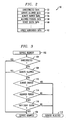
- the FAC database 46 may include a number of data sub-blocks for each subscriber, as illustrated in FIG. 2 . They are shown as a super block 50, not all of whose fields are filled for a particular subscriber.
- the super block can be accessed from the identity of any one of several fields in the super block.
- the super block 50 may include the following data sub-blocks: a block 52 containing "Unrestricted” data; a block 54 containing "Always Allowed” data; a block 56 containing "Always Barred” data; a block 58 containing "Allowed Periods” data; and a block 60 containing "Usage Quota" data.
- any number of additional blocks 62 may be provided in the super block 50 for storing other subscriber data.
- FIG. 3 A flow chart outlining an example of the SMSC 18 performing parental control for a short message is shown in FIG. 3 .
- an SMS request with respect to a given directory number is made by the mobile station 12 (102).
- the SMSC 18 accesses the FAC database 46 to check whether the subscriber has enabled the parent control, which means that the "Unrestricted” field is set to "No” (104). If the "Unrestricted” field is set to "Yes,” then service (i.e. , the SMS request) will be granted (106). If the "Unrestricted” field is set to "No,” then the "Always Allowed” field will be checked (108).
- the SMS request will be granted (106). If there is not sufficient quota available, then the SMS request will be rejected (112).
- FIGS. 4-7 show various call flows in accordance with aspects of the present invention.
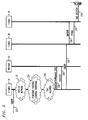
- FIG. 4 covers the situation where the user (i.e ., a child) attempts to send a short message via the mobile station 12, but the call is rejected or blocked.
- an ANSI-41 SMSDeliveryPointToPoint (SMDPP) message containing a short message from the first mobile station 12 for the second mobile station 32 is received by the originating SMSC 18 (202).
- the originating SMSC 18 sends an ANSI-41 SMSRequest message to the FAC 46 to perform parental control screening as outlined in FIG. 3 (204).
- the call is rejected and the short message is discarded (206).
- An SMS Rejection Notification is then forwarded from the originating SMSC 18 to the mobile station 12 (208).
- the originating SMSC 18 also forwards an SMS Rejection Notification to the terminating MSC 34 (210), which forwards it to one or more of the subscriber's designated numbers or IP addresses (212).
- the Rejection Notification may also include the directory number that was blocked or other information.
- FIG. 5 covers the situation where the user ( i.e. , a child) attempts to send a short message via the mobile station 12, and the call is allowed.
- an SMDPP message containing a short message from the first mobile station 12 for the second mobile station 32 is received by the originating SMSC 18 (222).
- the originating SMSC 18 sends an ANSI-41 SMSRequest message to the FAC 46 to perform parental control screening as outlined in FIG. 3 (224). Based on the data in the FAC database 46, the call is allowed (226).
- the originating SMSC 18 then sends a DebitServiceRequest to the Prepaid function 52, if applicable, which checks its database and determines that sufficient funds are still available in the account to complete the call (228).
- the Prepaid function 52 responds with a Success message (230).
- the originating SMSC 18 then sends the short message in an SMDPP message to the terminating SMSC 38 (232), which forwards it to the terminating MSC 34 (234).
- the terminating MSC 34 responds with an smdpp acknowledgement message (236).
- the terminating MSC 34 forwards the SMDPP message with the short message to the second mobile station 32 (238).
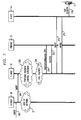
- FIG. 6 covers the situation where a short message is directed to the first mobile station 12, but the call is blocked.
- an SMDPP message containing a short message is received by the originating SMSC 38 (242).
- the originating SMSC 38 sends an SMDPP message to the terminating SMSC 18 to find out the location of the first mobile station 12 and whether it is eligible to receive the short message (244).
- the terminating SMSC 18 sends an SMSRequest message to the FAC 46 to perform parental control screening as outlined in FIG. 3 (246). Based on the data in the FAC database 46, the call is rejected and the short message is discarded (248).
- An SMDPP message containing an SMS Rejection Notification is forwarded from the terminating SMSC 18 to the originating SMSC 38 (250), which forwards the SMDPP message to the second mobile station 32, which had initiated the call (252).
- the terminating SMSC 18 also forwards the SMDPP message with the SMS Rejection Notification to the terminating MSC 34 (254), which forwards it to one or more of the subscriber's designated numbers or IP addresses (256).
- the Rejection Notification may also include the directory number that was blocked or other information.
- FIG. 7 covers the situation where a short message is directed to the first mobile station 12, and the call is allowed.
- an incoming SMDPP message containing a short message is received by the originating SMSC 38 (262).
- the originating SMSC 38 sends an SMDPP message to the terminating SMSC 18 to find out the location of the first mobile station 12 and whether it is eligible to receive the short message (264).
- the terminating SMSC 18 sends an SMSRequest message to the FAC 46 to perform parental control screening as outlined in FIG. 3 (266). Based on the data in the FAC database 46, the call is granted (268).
- the terminating SMSC 38 then sends a DebitServiceRequest to the Prepaid function 52 (270), if applicable, which checks its database and determines that sufficient funds are still available in the account to complete the call and responds with a Success message (272).
- the terminating SMSC 38 then sends the short message in the SMDPP message to the terminating MSC 34 (274), which responds with an smdpp acknowledgement message (276) and forwards the SMDPP message to the first mobile station 12 (278). If the mobile is not able to receive a short message at that time, it can be retained by the terminating SMSC 18, and then forwarded when the terminating MSC 14 and the HLR 16 inform it that the mobile station 12 is again available.
- SMS is a first generation GSM service.
- Enhanced Messaging Service is an extension of SMS that permits messages with special text formatting (i.e. , bold or italic), animations, pictures, icons, sound effects, and special ring tones.
- the service is very much based on the existing SMS. It basically extends the User Data Header (UDH) in SMS (UDH makes it possible to include binary information in the message header) and in fact needs no upgrade to the network infrastructure.
- the handsets need to be EMS compliant.
- MMS Multimedia Messaging Service
- the present invention also relates to systems for performing the operations herein. These systems may be specially constructed for the required purposes, or they may comprise one or more general-purpose computers selectively activated or reconfigured by one or more computer programs stored in the computer(s). Such computer program(s) may be stored in a computer readable storage medium, such as, but is not limited to, any type of disk including floppy disks, optical disks, CD-ROMs, and magnetic-optical disks, read-only memories (ROMs), random access memories (RAMs), EPROMs, EEPROMs, magnetic or optical cards, or any type of media suitable for storing electronic instructions, and each coupled to a computer system bus.
- a machine-readable medium includes any mechanism for storing or transmitting information in a form readable by a machine (e.g ., a computer).
- a machine-readable medium includes read only memory ("ROM”); random access memory (“RAM”); magnetic disk storage media; optical storage media; flash memory devices; electrical, optical, acoustical or other form of propagated signals (e.g ., carrier waves, infrared signals, digital signals, etc.); etc.
Landscapes
- Engineering & Computer Science (AREA)
- Computer Networks & Wireless Communication (AREA)
- Signal Processing (AREA)
- Mobile Radio Communication Systems (AREA)
- Telephonic Communication Services (AREA)
- Fittings On The Vehicle Exterior For Carrying Loads, And Devices For Holding Or Mounting Articles (AREA)
Claims (8)
- Procédé de traitement d'appels de service de messages courts, SMS, pour un appareil de communication d'abonné (12) dans un réseau de communication, le procédé comprenant:réception (102) d'une demande de SMS impliquant l'appareil de communication sur un centre de service de messages courts SMS (18) ;accès (104) à une base de données de contrôle d'accès familial (46), qui stocke les règles de contrôle des SMS en relation avec l'appareil de communication (12), les règles comprenant des informations de contrôle d'accès familial reçues pour l'appareil de communication ; etdétermination (106, 108, 110, 112, 114, 116) afin de savoir si la demande de service de messages courts doit être autorisée ou rejetée sur la base des informations contenues dans la base de données, dans lequel le procédé comprend, lorsque la demande de SMS est rejetée :envoi (208) d'une première notification de rejet de SMS à l'appareil de communication (12), la première notification de rejet de SMS étant transférée du centre de service de messages courts (18) à l'appareil de communication (12) qui tente d'envoyer un SMS, etenvoi (210, 212) d'une deuxième notification de rejet de SMS à l'abonné, la deuxième notification de rejet de SMS étant transférée du centre de service de messages courts (18) à un centre de commutation mobile de terminaison (34), le centre de commutation mobile de terminaison (34) transférant la deuxième notification de rejet de SMS à un ouplusieurs des numéros ou des adresses IP désignés de l'abonné.
- Procédé selon la revendication 1, dans lequel les informations de contrôle d'accès familial stockées dans la base de données de contrôle d'accès familial (46) comprennent au moins l'un des types de données suivants :si le service de contrôle d'accès familial est activé ou désactivé (104) ;une liste de numéros de répertoire pour lesquels tous les appels SMS sortants et entrants sont toujours autorisés (108) ;une liste de numéros de répertoire pour lesquels tous les appels SMS sortants et entrants sont toujours interdits (110) ;une liste des périodes d'appel durant lesquelles les demandes de service de messages courts vers et depuis les numéros du répertoire ne se trouvant pas dans les listes autorisée et interdite sont seulement autorisées (114) ; etun quota d'utilisation (116) se référant à la durée d'appel autorisée pour l'appareil de communication (12).
- Procédé selon la revendication 1, comprenant en outre :réception des informations de contrôle d'accès familial de l'abonné pour l'appareil de communication via l'Internet.
- Appareil de traitement d'appels de service de messages courts SMS pour un appareil de communication d'abonné dans un réseau de communication, le système comprenant :une base de données de contrôle d'accès familial (46), qui stocke les règles de contrôle des SMS en relation avec l'appareil de communication (12), les règles comprenant des informations de contrôle d'accès familial pour l'appareil de communication ; etun centre de service de messages courts (18), dans lequel le centre de service de messages courts fonctionne pour accéder à la base de données de contrôle d'accès familial et déterminer si une demande de service de messages courts doit être autorisée ou rejetée sur la base des informations de la base de données, dans lequel lorsque la demande de SMS est rejetée :une première notification de rejet de SMS est envoyée (208) à l'appareil de communication (12), la première notification de rejet de SMS étant transférée du centre de service de messages courts (18) à l'appareil de communication (12) qui tente d'envoyer un SMS, etune deuxième notification de rejet de SMS est envoyée (210, 212) à l'abonné, la deuxième notification de rejet de SMS étant transférée du centre de service de messages courts (18) à un centre de commutation mobile de terminaison (34), le centre de commutation mobile de terminaison (34) transférant la deuxième notification de rejet de SMS à un ou plusieurs des numéros ou des adresses IP désignés de l'abonné.
- Appareil selon la revendication 4, dans lequel les informations de contrôle d'accès familial stockées dans la base de données de contrôle d'accès familial comprennent au moins l'un des types de données suivants :si le service de contrôle d'accès familial est activé ou désactivé (104) ;une liste de numéros de répertoire pour lesquels tous les appels SMS sortants et entrants sont toujours autorisés (108) ;une liste de numéros de répertoire pour lesquels tous les appels SMS sortants et entrants sont toujours interdits (110) ;une liste des périodes d'appel durant lesquelles les demandes de service de messages courts vers et depuis les numéros du répertoire ne se trouvant pas dans les listes autorisée et interdite sont seulement autorisées (114) ; etun quota d'utilisation (116) se référant à la durée d'appel autorisée pour la station mobile.
- Appareil selon la revendication 4, dans lequel le centre de service de messages courts (18) peut en outre fonctionner pour recevoir des informations de contrôle d'accès familial d'un abonné pour l'appareil de communication via l'Internet.
- Support de stockage stockant un ensemble d'instructions de programme exécutables sur un dispositif de traitement de données et utilisable pour traiter des appels de service de messages courts, SMS, pour un appareil de communication dans un réseau de communication, l'ensemble d'instructions de programme comprenant :instructions pour recevoir une demande de SMS sur un centre de service de messages courts (102) ;instructions pour accéder à une base de données de contrôle d'accès familial (46), qui stocke les règles de contrôle des SMS en relation avec l'appareil de communication (12),les règles comprenant des informations de contrôle d'accès familial pour l'appareil de communication (104) ;instructions pour déterminer si la demande de service de messages courts doit être autorisée ou rejetée sur la base des instructions de la base de données (106, 108, 110, 112, 114, 116) et des instructions pour, lorsque la demande de SMS est rejetée :envoyer (208) une première notification de rejet de SMS à l'appareil de communication (12), la première notification de rejet de SMS étant transférée du centre de service de messages courts (18) à l'appareil de communication (12) qui tente d'envoyer un SMS, et envoyer (210, 212) une deuxième notification de rejet de SMS à l'abonné, la deuxième notification de rejet de SMS étant transférée du centre de service de messages courts (18) à un centre de commutation mobile de terminaison (34), le centre de commutation mobile de terminaison (34) transférant la deuxième notification de rejet de SMS à un ou plusieurs des numéros ou des adresses IP désignés de l'abonné.
- Support de stockage selon la revendication 7, dans lequel les informations de contrôle d'accès familial stockées dans la base de données de contrôle d'accès familial comprennent au moins l'un des types de données suivants :si le service de contrôle d'accès familial est activé ou désactivé (104) ;une liste de numéros de répertoire pour lesquels tous les appels SMS sortants et entrants sont toujours autorisés (108) ;une liste de numéros de répertoire pour lesquels tous les appels SMS sortants et entrants sont toujours interdits (110) ;une liste des périodes d'appel durant lesquelles les demandes de service de messages courts vers et depuis les numéros du répertoire ne se trouvant pas dans les listes autorisée et interdite sont seulement autorisées (114) ; etun quota d'utilisation (116) se référant à la durée d'appel autorisée pour la station mobile.
Applications Claiming Priority (2)
| Application Number | Priority Date | Filing Date | Title |
|---|---|---|---|
| US11/641,512 US8526979B2 (en) | 2006-12-19 | 2006-12-19 | Method and apparatus for parent-controlled short message service |
| PCT/US2007/025734 WO2008085329A1 (fr) | 2006-12-19 | 2007-12-17 | Procédé et appareil de service de messagerie sms sous contrôle parental |
Publications (2)
| Publication Number | Publication Date |
|---|---|
| EP2098082A1 EP2098082A1 (fr) | 2009-09-09 |
| EP2098082B1 true EP2098082B1 (fr) | 2010-10-06 |
Family
ID=39271182
Family Applications (1)
| Application Number | Title | Priority Date | Filing Date |
|---|---|---|---|
| EP07853406A Ceased EP2098082B1 (fr) | 2006-12-19 | 2007-12-17 | Procédé et appareil de service de messagerie SMS sous contrôle parental |
Country Status (8)
| Country | Link |
|---|---|
| US (1) | US8526979B2 (fr) |
| EP (1) | EP2098082B1 (fr) |
| JP (1) | JP5158890B2 (fr) |
| KR (1) | KR101140691B1 (fr) |
| CN (1) | CN101569215A (fr) |
| AT (1) | ATE484164T1 (fr) |
| DE (1) | DE602007009723D1 (fr) |
| WO (1) | WO2008085329A1 (fr) |
Families Citing this family (25)
| Publication number | Priority date | Publication date | Assignee | Title |
|---|---|---|---|---|
| US8302164B2 (en) * | 2004-07-22 | 2012-10-30 | Facebook, Inc. | Authorization and authentication based on an individual's social network |
| TW200805992A (en) * | 2006-07-04 | 2008-01-16 | Benq Corp | Method and apparatus for barring short message |
| CN101267592B (zh) * | 2007-03-12 | 2013-04-17 | 华为技术有限公司 | 短消息增值业务处理方法和短消息增值业务处理中心 |
| US7945238B2 (en) | 2007-06-28 | 2011-05-17 | Kajeet, Inc. | System and methods for managing the utilization of a communications device |
| US8929857B2 (en) | 2007-06-28 | 2015-01-06 | Kajeet, Inc. | Policy management of electronic devices |
| US8574393B2 (en) * | 2007-12-21 | 2013-11-05 | Tsinghua University | Method for making touch panel |
| US8194581B1 (en) | 2008-11-04 | 2012-06-05 | Cellco Partnership | Account holder notification for an infracting mobile station or mobile directory number (MDN) |
| US9130779B2 (en) * | 2009-06-02 | 2015-09-08 | Qualcomm Incorporated | Method and apparatus for providing enhanced SMS/EMS/MMS |
| US8401577B2 (en) * | 2009-06-29 | 2013-03-19 | Alcatel Lucent | Message delivery control based on destination point codes |
| CN101594588B (zh) * | 2009-06-30 | 2012-05-23 | 中兴通讯股份有限公司 | 一种短信终呼流量控制方法和系统 |
| KR101304788B1 (ko) * | 2009-12-15 | 2013-09-05 | 한국전자통신연구원 | 등록자 고스트 처리 장치 및 방법 |
| US8620362B2 (en) * | 2009-12-18 | 2013-12-31 | Alcatel Lucent | Method and apparatus for selective message service blocking |
| CN102104850B (zh) * | 2009-12-22 | 2015-04-08 | 华为终端有限公司 | 呼叫处理方法及呼叫处理中心设备 |
| US8406740B2 (en) * | 2010-01-08 | 2013-03-26 | Kohorts It Services, Llc | Computerized system and method of recording communications between parties using telecommunications devices |
| CN101820599B (zh) * | 2010-01-28 | 2014-10-22 | 中兴通讯股份有限公司 | 一种屏蔽接收短信功能的方法及数据卡 |
| GB2482498A (en) * | 2010-08-03 | 2012-02-08 | Pinesoft | Controlling the transmission of mobile messages originating from third party content providers |
| US8699998B2 (en) | 2011-08-10 | 2014-04-15 | Qualcomm Incorporated | Controlling text messages on a mobile device |
| US9137389B2 (en) | 2011-11-08 | 2015-09-15 | Kajeet, Inc. | Master limits and filters for electronic devices |
| US8918080B2 (en) | 2012-01-17 | 2014-12-23 | Kajeet, Inc. | Mobile device management |
| CN103369116A (zh) * | 2012-04-01 | 2013-10-23 | 中兴通讯股份有限公司 | 通过用户识别卡拨打被拒电话的方法和装置 |
| CN103686596A (zh) * | 2012-09-26 | 2014-03-26 | 阿尔卡特朗讯公司 | 用于控制呼叫的方法、网络单元和系统 |
| US10313532B2 (en) | 2013-06-13 | 2019-06-04 | Kajeet, Inc. | Platform for enabling users to sign up for sponsored functions on computing devices |
| US10757267B2 (en) | 2013-06-13 | 2020-08-25 | Kajeet, Inc. | Platform for enabling sponsors to sponsor functions of a computing device |
| FR3158230B3 (fr) | 2024-01-17 | 2026-02-13 | Oreal | Compositions de gommage de la peau |
| WO2025030088A1 (fr) | 2023-08-03 | 2025-02-06 | L'oreal | Compositions exfoliantes |
Family Cites Families (26)
| Publication number | Priority date | Publication date | Assignee | Title |
|---|---|---|---|---|
| US5603081A (en) * | 1993-11-01 | 1997-02-11 | Telefonaktiebolaget Lm Ericsson | Method for communicating in a wireless communication system |
| US5907831A (en) * | 1997-04-04 | 1999-05-25 | Lotvin; Mikhail | Computer apparatus and methods supporting different categories of users |
| US20040230495A1 (en) * | 1997-04-04 | 2004-11-18 | Mikhail Lotvin | Computer systems and methods supporting on-line interaction with content, purchasing, and searching |
| FI111681B (fi) | 2000-04-10 | 2003-08-29 | Sonera Oyj | Palvelun käytön estäminen tietoliikennejärjestelmässä |
| US7099475B2 (en) * | 2000-12-07 | 2006-08-29 | Road Runner Holdco Llc | System and method for password authentication for non-LDAP regions |
| US7177934B2 (en) * | 2001-03-19 | 2007-02-13 | Sun Microsystems, Inc. | Method and apparatus for providing application specific strategies to a JAVA platform including start and stop policies |
| US20030137536A1 (en) * | 2001-11-30 | 2003-07-24 | Hugh Harlan M. | Method and apparatus for communicating changes from and to a shared associative database using one-way communications techniques |
| GB2384330A (en) * | 2002-01-17 | 2003-07-23 | Nick Rayne | System for synchronising a local database using SMS messages |
| AU2003250131A1 (en) | 2002-07-25 | 2004-02-16 | Telefonaktiebolaget Lm Ericsson (Publ) | Method for restricting the transmission of short messages |
| SE0203188D0 (sv) * | 2002-10-29 | 2002-10-29 | Ericsson Telefon Ab L M | Automatic provisioning including mms greeting |
| US7428580B2 (en) * | 2003-11-26 | 2008-09-23 | Aol Llc | Electronic message forwarding |
| US7197321B2 (en) * | 2003-02-25 | 2007-03-27 | Boston Communications Group, Inc. | Method and system for providing supervisory control over wireless phone usage |
| WO2005031544A2 (fr) * | 2003-09-26 | 2005-04-07 | Disney Enterprises, Inc. | Controle parental de telephone mobile |
| US7646741B2 (en) * | 2003-10-23 | 2010-01-12 | Alcatel-Lucent Usa Inc. | Method for client-based multicast message transmission |
| TWI230004B (en) * | 2003-11-11 | 2005-03-21 | Benq Corp | Short message service barring system and method |
| US7251495B2 (en) * | 2004-02-04 | 2007-07-31 | Microsoft Corporation | Command based group SMS with mobile message receiver and server |
| US20050186943A1 (en) * | 2004-02-25 | 2005-08-25 | Lucent Technologies Inc. | System and method for voicemail retrieval notification |
| US20050197110A1 (en) * | 2004-03-08 | 2005-09-08 | Lucent Technologies Inc. | Method and apparatus for enhanced directory assistance in wireless networks |
| US7120455B1 (en) * | 2004-05-20 | 2006-10-10 | Cellco Partnership | Method and system for mobile instant messaging using multiple interfaces |
| US7574471B2 (en) * | 2004-09-02 | 2009-08-11 | Gryphon Networks Corp. | System and method for exchanging information with a relationship management system |
| GB2418330B (en) * | 2004-09-17 | 2006-11-08 | Jeroen Oostendorp | Platform for intelligent Email distribution |
| US20060077956A1 (en) * | 2004-10-08 | 2006-04-13 | Saksena Vikram R | Common telephony services to multiple devices associated with multiple networks |
| EP1662815A1 (fr) | 2004-11-26 | 2006-05-31 | Alcatel | Gestion de SMS élevée dans un système de communication à base de CDMA |
| JP2006243837A (ja) * | 2005-02-28 | 2006-09-14 | Kddi Corp | Smsフィルタ装置およびsmsシステムならびにプログラム |
| US20060223584A1 (en) * | 2005-03-30 | 2006-10-05 | Lucent Technologies Inc. | Notify me service in wireless networks |
| US20070060109A1 (en) * | 2005-09-14 | 2007-03-15 | Jorey Ramer | Managing sponsored content based on user characteristics |
-
2006
- 2006-12-19 US US11/641,512 patent/US8526979B2/en not_active Expired - Fee Related
-
2007
- 2007-12-17 WO PCT/US2007/025734 patent/WO2008085329A1/fr not_active Ceased
- 2007-12-17 EP EP07853406A patent/EP2098082B1/fr not_active Ceased
- 2007-12-17 JP JP2009542829A patent/JP5158890B2/ja not_active Expired - Fee Related
- 2007-12-17 DE DE602007009723T patent/DE602007009723D1/de active Active
- 2007-12-17 KR KR1020097012893A patent/KR101140691B1/ko not_active Expired - Fee Related
- 2007-12-17 CN CNA2007800473889A patent/CN101569215A/zh active Pending
- 2007-12-17 AT AT07853406T patent/ATE484164T1/de not_active IP Right Cessation
Also Published As
| Publication number | Publication date |
|---|---|
| KR101140691B1 (ko) | 2012-07-13 |
| EP2098082A1 (fr) | 2009-09-09 |
| ATE484164T1 (de) | 2010-10-15 |
| US20080146259A1 (en) | 2008-06-19 |
| WO2008085329A1 (fr) | 2008-07-17 |
| KR20090100368A (ko) | 2009-09-23 |
| JP5158890B2 (ja) | 2013-03-06 |
| DE602007009723D1 (de) | 2010-11-18 |
| JP2010514361A (ja) | 2010-04-30 |
| US8526979B2 (en) | 2013-09-03 |
| CN101569215A (zh) | 2009-10-28 |
Similar Documents
| Publication | Publication Date | Title |
|---|---|---|
| EP2098082B1 (fr) | Procédé et appareil de service de messagerie SMS sous contrôle parental | |
| EP1726171B1 (fr) | Messagerie fondée sur la position | |
| US8620362B2 (en) | Method and apparatus for selective message service blocking | |
| EP2149271B1 (fr) | Insertion de contenu publicitaire dans un message texte | |
| CA2311335C (fr) | Reception selective de messages par un service de messages de courte duree dans un reseau de telephone cellulaire | |
| JP2009534935A (ja) | ワイヤレス・ネットワークの中でショート・メッセージの配信を制御するための方法 | |
| JP2001016632A (ja) | モバイル電話を用いて発呼者により送られるショートメッセージのためのダイナミックルーティングシステム | |
| GB2327571A (en) | Sending short messages to groups of users | |
| EP1836863B1 (fr) | Procede, systeme et appareil permettant de fournir un service numero de telephone mobile virtuel | |
| EP1619907B1 (fr) | Procédé de gestion des demandes de service dans un réseau de communication mobile | |
| KR100988232B1 (ko) | 이동통신망과 인터넷망을 연계한 그룹 단문메시지 서비스시스템 및 방법 | |
| KR101741811B1 (ko) | 웹투폰 메시지 전송 제어 방법 및 이를 수행하는 메시지 게이트웨이 장치 | |
| GB2435156A (en) | Communication system for accessing more than one device at a single address | |
| WO2008099222A1 (fr) | Contrôle de messagerie sur un réseau de téléphone cellulaire | |
| KR20040028427A (ko) | 이동통신단말기의 수신 단문 메시지 표시방법 | |
| KR20040064031A (ko) | 특정 메시지 전송 차단 기능을 구비한 이동통신 시스템 및특정 메시지 전송 차단 방법 | |
| KR20070043145A (ko) | 단문 메시지 서비스 시스템 및 그 방법 |
Legal Events
| Date | Code | Title | Description |
|---|---|---|---|
| PUAI | Public reference made under article 153(3) epc to a published international application that has entered the european phase |
Free format text: ORIGINAL CODE: 0009012 |
|
| 17P | Request for examination filed |
Effective date: 20090720 |
|
| AK | Designated contracting states |
Kind code of ref document: A1 Designated state(s): AT BE BG CH CY CZ DE DK EE ES FI FR GB GR HU IE IS IT LI LT LU LV MC MT NL PL PT RO SE SI SK TR |
|
| 17Q | First examination report despatched |
Effective date: 20091005 |
|
| DAX | Request for extension of the european patent (deleted) | ||
| RIC1 | Information provided on ipc code assigned before grant |
Ipc: H04W 4/12 20090101AFI20100317BHEP |
|
| GRAP | Despatch of communication of intention to grant a patent |
Free format text: ORIGINAL CODE: EPIDOSNIGR1 |
|
| RTI1 | Title (correction) |
Free format text: A METHOD AND APPARATUS FOR PARENT-CONTROLLED SHORT MESSAGE SERVICE |
|
| GRAS | Grant fee paid |
Free format text: ORIGINAL CODE: EPIDOSNIGR3 |
|
| GRAA | (expected) grant |
Free format text: ORIGINAL CODE: 0009210 |
|
| AK | Designated contracting states |
Kind code of ref document: B1 Designated state(s): AT BE BG CH CY CZ DE DK EE ES FI FR GB GR HU IE IS IT LI LT LU LV MC MT NL PL PT RO SE SI SK TR |
|
| REG | Reference to a national code |
Ref country code: GB Ref legal event code: FG4D |
|
| REG | Reference to a national code |
Ref country code: CH Ref legal event code: EP |
|
| REG | Reference to a national code |
Ref country code: IE Ref legal event code: FG4D |
|
| REF | Corresponds to: |
Ref document number: 602007009723 Country of ref document: DE Date of ref document: 20101118 Kind code of ref document: P |
|
| REG | Reference to a national code |
Ref country code: NL Ref legal event code: T3 |
|
| PG25 | Lapsed in a contracting state [announced via postgrant information from national office to epo] |
Ref country code: SI Free format text: LAPSE BECAUSE OF FAILURE TO SUBMIT A TRANSLATION OF THE DESCRIPTION OR TO PAY THE FEE WITHIN THE PRESCRIBED TIME-LIMIT Effective date: 20101006 |
|
| LTIE | Lt: invalidation of european patent or patent extension |
Effective date: 20101006 |
|
| PG25 | Lapsed in a contracting state [announced via postgrant information from national office to epo] |
Ref country code: LT Free format text: LAPSE BECAUSE OF FAILURE TO SUBMIT A TRANSLATION OF THE DESCRIPTION OR TO PAY THE FEE WITHIN THE PRESCRIBED TIME-LIMIT Effective date: 20101006 |
|
| PG25 | Lapsed in a contracting state [announced via postgrant information from national office to epo] |
Ref country code: FI Free format text: LAPSE BECAUSE OF FAILURE TO SUBMIT A TRANSLATION OF THE DESCRIPTION OR TO PAY THE FEE WITHIN THE PRESCRIBED TIME-LIMIT Effective date: 20101006 Ref country code: BG Free format text: LAPSE BECAUSE OF FAILURE TO SUBMIT A TRANSLATION OF THE DESCRIPTION OR TO PAY THE FEE WITHIN THE PRESCRIBED TIME-LIMIT Effective date: 20110106 Ref country code: AT Free format text: LAPSE BECAUSE OF FAILURE TO SUBMIT A TRANSLATION OF THE DESCRIPTION OR TO PAY THE FEE WITHIN THE PRESCRIBED TIME-LIMIT Effective date: 20101006 Ref country code: LV Free format text: LAPSE BECAUSE OF FAILURE TO SUBMIT A TRANSLATION OF THE DESCRIPTION OR TO PAY THE FEE WITHIN THE PRESCRIBED TIME-LIMIT Effective date: 20101006 Ref country code: SE Free format text: LAPSE BECAUSE OF FAILURE TO SUBMIT A TRANSLATION OF THE DESCRIPTION OR TO PAY THE FEE WITHIN THE PRESCRIBED TIME-LIMIT Effective date: 20101006 Ref country code: IS Free format text: LAPSE BECAUSE OF FAILURE TO SUBMIT A TRANSLATION OF THE DESCRIPTION OR TO PAY THE FEE WITHIN THE PRESCRIBED TIME-LIMIT Effective date: 20110206 Ref country code: PT Free format text: LAPSE BECAUSE OF FAILURE TO SUBMIT A TRANSLATION OF THE DESCRIPTION OR TO PAY THE FEE WITHIN THE PRESCRIBED TIME-LIMIT Effective date: 20110207 |
|
| PG25 | Lapsed in a contracting state [announced via postgrant information from national office to epo] |
Ref country code: BE Free format text: LAPSE BECAUSE OF FAILURE TO SUBMIT A TRANSLATION OF THE DESCRIPTION OR TO PAY THE FEE WITHIN THE PRESCRIBED TIME-LIMIT Effective date: 20101006 Ref country code: GR Free format text: LAPSE BECAUSE OF FAILURE TO SUBMIT A TRANSLATION OF THE DESCRIPTION OR TO PAY THE FEE WITHIN THE PRESCRIBED TIME-LIMIT Effective date: 20110107 |
|
| PG25 | Lapsed in a contracting state [announced via postgrant information from national office to epo] |
Ref country code: CZ Free format text: LAPSE BECAUSE OF FAILURE TO SUBMIT A TRANSLATION OF THE DESCRIPTION OR TO PAY THE FEE WITHIN THE PRESCRIBED TIME-LIMIT Effective date: 20101006 Ref country code: ES Free format text: LAPSE BECAUSE OF FAILURE TO SUBMIT A TRANSLATION OF THE DESCRIPTION OR TO PAY THE FEE WITHIN THE PRESCRIBED TIME-LIMIT Effective date: 20110117 Ref country code: EE Free format text: LAPSE BECAUSE OF FAILURE TO SUBMIT A TRANSLATION OF THE DESCRIPTION OR TO PAY THE FEE WITHIN THE PRESCRIBED TIME-LIMIT Effective date: 20101006 Ref country code: MC Free format text: LAPSE BECAUSE OF NON-PAYMENT OF DUE FEES Effective date: 20101231 |
|
| PLBE | No opposition filed within time limit |
Free format text: ORIGINAL CODE: 0009261 |
|
| STAA | Information on the status of an ep patent application or granted ep patent |
Free format text: STATUS: NO OPPOSITION FILED WITHIN TIME LIMIT |
|
| PG25 | Lapsed in a contracting state [announced via postgrant information from national office to epo] |
Ref country code: RO Free format text: LAPSE BECAUSE OF FAILURE TO SUBMIT A TRANSLATION OF THE DESCRIPTION OR TO PAY THE FEE WITHIN THE PRESCRIBED TIME-LIMIT Effective date: 20101006 Ref country code: DK Free format text: LAPSE BECAUSE OF FAILURE TO SUBMIT A TRANSLATION OF THE DESCRIPTION OR TO PAY THE FEE WITHIN THE PRESCRIBED TIME-LIMIT Effective date: 20101006 Ref country code: PL Free format text: LAPSE BECAUSE OF FAILURE TO SUBMIT A TRANSLATION OF THE DESCRIPTION OR TO PAY THE FEE WITHIN THE PRESCRIBED TIME-LIMIT Effective date: 20101006 Ref country code: SK Free format text: LAPSE BECAUSE OF FAILURE TO SUBMIT A TRANSLATION OF THE DESCRIPTION OR TO PAY THE FEE WITHIN THE PRESCRIBED TIME-LIMIT Effective date: 20101006 |
|
| 26N | No opposition filed |
Effective date: 20110707 |
|
| PG25 | Lapsed in a contracting state [announced via postgrant information from national office to epo] |
Ref country code: IE Free format text: LAPSE BECAUSE OF NON-PAYMENT OF DUE FEES Effective date: 20101217 |
|
| REG | Reference to a national code |
Ref country code: DE Ref legal event code: R097 Ref document number: 602007009723 Country of ref document: DE Effective date: 20110707 |
|
| PG25 | Lapsed in a contracting state [announced via postgrant information from national office to epo] |
Ref country code: IT Free format text: LAPSE BECAUSE OF NON-PAYMENT OF DUE FEES Effective date: 20101217 Ref country code: MT Free format text: LAPSE BECAUSE OF FAILURE TO SUBMIT A TRANSLATION OF THE DESCRIPTION OR TO PAY THE FEE WITHIN THE PRESCRIBED TIME-LIMIT Effective date: 20101006 |
|
| REG | Reference to a national code |
Ref country code: CH Ref legal event code: PL |
|
| PG25 | Lapsed in a contracting state [announced via postgrant information from national office to epo] |
Ref country code: CY Free format text: LAPSE BECAUSE OF FAILURE TO SUBMIT A TRANSLATION OF THE DESCRIPTION OR TO PAY THE FEE WITHIN THE PRESCRIBED TIME-LIMIT Effective date: 20101006 |
|
| PG25 | Lapsed in a contracting state [announced via postgrant information from national office to epo] |
Ref country code: HU Free format text: LAPSE BECAUSE OF FAILURE TO SUBMIT A TRANSLATION OF THE DESCRIPTION OR TO PAY THE FEE WITHIN THE PRESCRIBED TIME-LIMIT Effective date: 20110407 Ref country code: LU Free format text: LAPSE BECAUSE OF NON-PAYMENT OF DUE FEES Effective date: 20101217 |
|
| PG25 | Lapsed in a contracting state [announced via postgrant information from national office to epo] |
Ref country code: LI Free format text: LAPSE BECAUSE OF NON-PAYMENT OF DUE FEES Effective date: 20111231 Ref country code: CH Free format text: LAPSE BECAUSE OF NON-PAYMENT OF DUE FEES Effective date: 20111231 Ref country code: TR Free format text: LAPSE BECAUSE OF FAILURE TO SUBMIT A TRANSLATION OF THE DESCRIPTION OR TO PAY THE FEE WITHIN THE PRESCRIBED TIME-LIMIT Effective date: 20101006 |
|
| REG | Reference to a national code |
Ref country code: FR Ref legal event code: CD Owner name: ALCATEL-LUCENT USA INC. Effective date: 20131122 |
|
| REG | Reference to a national code |
Ref country code: FR Ref legal event code: GC Effective date: 20140410 |
|
| REG | Reference to a national code |
Ref country code: FR Ref legal event code: RG Effective date: 20141015 |
|
| PGFP | Annual fee paid to national office [announced via postgrant information from national office to epo] |
Ref country code: NL Payment date: 20141219 Year of fee payment: 8 |
|
| PGFP | Annual fee paid to national office [announced via postgrant information from national office to epo] |
Ref country code: IT Payment date: 20141217 Year of fee payment: 8 |
|
| REG | Reference to a national code |
Ref country code: FR Ref legal event code: PLFP Year of fee payment: 9 |
|
| REG | Reference to a national code |
Ref country code: NL Ref legal event code: MM Effective date: 20160101 |
|
| PG25 | Lapsed in a contracting state [announced via postgrant information from national office to epo] |
Ref country code: NL Free format text: LAPSE BECAUSE OF NON-PAYMENT OF DUE FEES Effective date: 20160101 |
|
| REG | Reference to a national code |
Ref country code: FR Ref legal event code: PLFP Year of fee payment: 10 |
|
| PG25 | Lapsed in a contracting state [announced via postgrant information from national office to epo] |
Ref country code: IT Free format text: LAPSE BECAUSE OF NON-PAYMENT OF DUE FEES Effective date: 20151217 |
|
| REG | Reference to a national code |
Ref country code: FR Ref legal event code: PLFP Year of fee payment: 11 |
|
| PGFP | Annual fee paid to national office [announced via postgrant information from national office to epo] |
Ref country code: FR Payment date: 20171221 Year of fee payment: 11 Ref country code: DE Payment date: 20171211 Year of fee payment: 11 |
|
| PGFP | Annual fee paid to national office [announced via postgrant information from national office to epo] |
Ref country code: GB Payment date: 20171221 Year of fee payment: 11 |
|
| REG | Reference to a national code |
Ref country code: DE Ref legal event code: R119 Ref document number: 602007009723 Country of ref document: DE |
|
| GBPC | Gb: european patent ceased through non-payment of renewal fee |
Effective date: 20181217 |
|
| PG25 | Lapsed in a contracting state [announced via postgrant information from national office to epo] |
Ref country code: DE Free format text: LAPSE BECAUSE OF NON-PAYMENT OF DUE FEES Effective date: 20190702 Ref country code: FR Free format text: LAPSE BECAUSE OF NON-PAYMENT OF DUE FEES Effective date: 20181231 |
|
| PG25 | Lapsed in a contracting state [announced via postgrant information from national office to epo] |
Ref country code: GB Free format text: LAPSE BECAUSE OF NON-PAYMENT OF DUE FEES Effective date: 20181217 |