EP2098504A1 - Oxidation von Kohlenwasserstoffen - Google Patents
Oxidation von Kohlenwasserstoffen Download PDFInfo
- Publication number
- EP2098504A1 EP2098504A1 EP08004146A EP08004146A EP2098504A1 EP 2098504 A1 EP2098504 A1 EP 2098504A1 EP 08004146 A EP08004146 A EP 08004146A EP 08004146 A EP08004146 A EP 08004146A EP 2098504 A1 EP2098504 A1 EP 2098504A1
- Authority
- EP
- European Patent Office
- Prior art keywords
- catalyst
- hydrocarbon
- independently selected
- effluent
- general formula
- Prior art date
- Legal status (The legal status is an assumption and is not a legal conclusion. Google has not performed a legal analysis and makes no representation as to the accuracy of the status listed.)
- Ceased
Links
- 229930195733 hydrocarbon Natural products 0.000 title claims abstract description 61
- 150000002430 hydrocarbons Chemical class 0.000 title claims abstract description 56
- 238000007254 oxidation reaction Methods 0.000 title description 51
- 230000003647 oxidation Effects 0.000 title description 49
- -1 cyclic imide Chemical class 0.000 claims abstract description 67
- 239000004215 Carbon black (E152) Substances 0.000 claims abstract description 49
- 238000000034 method Methods 0.000 claims abstract description 47
- 239000003054 catalyst Substances 0.000 claims abstract description 45
- 230000008569 process Effects 0.000 claims abstract description 40
- 239000002594 sorbent Substances 0.000 claims abstract description 33
- LFQSCWFLJHTTHZ-UHFFFAOYSA-N Ethanol Chemical compound CCO LFQSCWFLJHTTHZ-UHFFFAOYSA-N 0.000 claims abstract description 30
- 125000004432 carbon atom Chemical group C* 0.000 claims abstract description 28
- 150000003949 imides Chemical class 0.000 claims abstract description 27
- 229910052757 nitrogen Inorganic materials 0.000 claims abstract description 26
- MHAJPDPJQMAIIY-UHFFFAOYSA-N Hydrogen peroxide Chemical compound OO MHAJPDPJQMAIIY-UHFFFAOYSA-N 0.000 claims abstract description 25
- 239000007787 solid Substances 0.000 claims abstract description 22
- 239000007789 gas Substances 0.000 claims abstract description 19
- 229910052739 hydrogen Inorganic materials 0.000 claims abstract description 19
- 125000004429 atom Chemical group 0.000 claims abstract description 14
- QVGXLLKOCUKJST-UHFFFAOYSA-N atomic oxygen Chemical compound [O] QVGXLLKOCUKJST-UHFFFAOYSA-N 0.000 claims abstract description 12
- 239000001301 oxygen Substances 0.000 claims abstract description 12
- 229910052760 oxygen Inorganic materials 0.000 claims abstract description 12
- 125000001183 hydrocarbyl group Chemical group 0.000 claims abstract description 11
- 230000000737 periodic effect Effects 0.000 claims abstract description 11
- 229910006069 SO3H Inorganic materials 0.000 claims abstract description 9
- 229910052799 carbon Inorganic materials 0.000 claims abstract description 9
- 150000002576 ketones Chemical class 0.000 claims abstract description 9
- 230000001590 oxidative effect Effects 0.000 claims abstract description 9
- 229910052698 phosphorus Inorganic materials 0.000 claims abstract description 9
- 125000000020 sulfo group Chemical group O=S(=O)([*])O[H] 0.000 claims abstract description 9
- 229910052717 sulfur Inorganic materials 0.000 claims abstract description 9
- OFOBLEOULBTSOW-UHFFFAOYSA-N Malonic acid Chemical compound OC(=O)CC(O)=O OFOBLEOULBTSOW-UHFFFAOYSA-N 0.000 claims abstract description 6
- 150000001735 carboxylic acids Chemical class 0.000 claims abstract description 6
- CFMZSMGAMPBRBE-UHFFFAOYSA-N 2-hydroxyisoindole-1,3-dione Chemical compound C1=CC=C2C(=O)N(O)C(=O)C2=C1 CFMZSMGAMPBRBE-UHFFFAOYSA-N 0.000 claims description 40
- 229910044991 metal oxide Inorganic materials 0.000 claims description 32
- 150000004706 metal oxides Chemical class 0.000 claims description 32
- 239000000203 mixture Substances 0.000 claims description 32
- ZJMWRROPUADPEA-UHFFFAOYSA-N sec-butylbenzene Chemical compound CCC(C)C1=CC=CC=C1 ZJMWRROPUADPEA-UHFFFAOYSA-N 0.000 claims description 25
- JHIVVAPYMSGYDF-UHFFFAOYSA-N cyclohexanone Chemical compound O=C1CCCCC1 JHIVVAPYMSGYDF-UHFFFAOYSA-N 0.000 claims description 18
- 125000004122 cyclic group Chemical group 0.000 claims description 13
- 125000000217 alkyl group Chemical group 0.000 claims description 11
- 150000001875 compounds Chemical class 0.000 claims description 11
- RWGFKTVRMDUZSP-UHFFFAOYSA-N cumene Chemical compound CC(C)C1=CC=CC=C1 RWGFKTVRMDUZSP-UHFFFAOYSA-N 0.000 claims description 10
- 239000001257 hydrogen Substances 0.000 claims description 10
- 229910052751 metal Inorganic materials 0.000 claims description 10
- 239000002184 metal Substances 0.000 claims description 10
- ISWSIDIOOBJBQZ-UHFFFAOYSA-N Phenol Chemical compound OC1=CC=CC=C1 ISWSIDIOOBJBQZ-UHFFFAOYSA-N 0.000 claims description 9
- HPXRVTGHNJAIIH-UHFFFAOYSA-N cyclohexanol Chemical compound OC1CCCCC1 HPXRVTGHNJAIIH-UHFFFAOYSA-N 0.000 claims description 9
- YNQLUTRBYVCPMQ-UHFFFAOYSA-N Ethylbenzene Chemical compound CCC1=CC=CC=C1 YNQLUTRBYVCPMQ-UHFFFAOYSA-N 0.000 claims description 8
- HHNHBFLGXIUXCM-GFCCVEGCSA-N cyclohexylbenzene Chemical compound [CH]1CCCC[C@@H]1C1=CC=CC=C1 HHNHBFLGXIUXCM-GFCCVEGCSA-N 0.000 claims description 7
- 125000004435 hydrogen atom Chemical group [H]* 0.000 claims description 7
- XDTMQSROBMDMFD-UHFFFAOYSA-N Cyclohexane Chemical compound C1CCCCC1 XDTMQSROBMDMFD-UHFFFAOYSA-N 0.000 claims description 6
- UFHFLCQGNIYNRP-UHFFFAOYSA-N Hydrogen Chemical compound [H][H] UFHFLCQGNIYNRP-UHFFFAOYSA-N 0.000 claims description 6
- 125000000113 cyclohexyl group Chemical group [H]C1([H])C([H])([H])C([H])([H])C([H])(*)C([H])([H])C1([H])[H] 0.000 claims description 6
- 239000004927 clay Substances 0.000 claims description 5
- VULCFZQVCFIKNK-UHFFFAOYSA-N (4-phenylcyclohexyl)benzene Chemical compound C1CC(C=2C=CC=CC=2)CCC1C1=CC=CC=C1 VULCFZQVCFIKNK-UHFFFAOYSA-N 0.000 claims description 4
- WNLRTRBMVRJNCN-UHFFFAOYSA-N adipic acid Chemical compound OC(=O)CCCCC(O)=O WNLRTRBMVRJNCN-UHFFFAOYSA-N 0.000 claims description 4
- JBKVHLHDHHXQEQ-UHFFFAOYSA-N epsilon-caprolactam Chemical compound O=C1CCCCCN1 JBKVHLHDHHXQEQ-UHFFFAOYSA-N 0.000 claims description 4
- 239000003456 ion exchange resin Substances 0.000 claims description 4
- 229920003303 ion-exchange polymer Polymers 0.000 claims description 4
- LWCFXYMSEGQWNB-UHFFFAOYSA-N 1-Methyl-4-(1-methylpropyl)-benzene Chemical compound CCC(C)C1=CC=C(C)C=C1 LWCFXYMSEGQWNB-UHFFFAOYSA-N 0.000 claims description 3
- CYBSWFUWEZFKNJ-UHFFFAOYSA-N 2-phenylhexane Chemical compound CCCCC(C)C1=CC=CC=C1 CYBSWFUWEZFKNJ-UHFFFAOYSA-N 0.000 claims description 3
- 150000001299 aldehydes Chemical class 0.000 claims description 3
- IISBACLAFKSPIT-UHFFFAOYSA-N bisphenol A Chemical compound C=1C=C(O)C=CC=1C(C)(C)C1=CC=C(O)C=C1 IISBACLAFKSPIT-UHFFFAOYSA-N 0.000 claims description 3
- LTHAIAJHDPJXLG-UHFFFAOYSA-N pentan-2-ylbenzene Chemical compound CCCC(C)C1=CC=CC=C1 LTHAIAJHDPJXLG-UHFFFAOYSA-N 0.000 claims description 3
- NWUYHJFMYQTDRP-UHFFFAOYSA-N 1,2-bis(ethenyl)benzene;1-ethenyl-2-ethylbenzene;styrene Chemical compound C=CC1=CC=CC=C1.CCC1=CC=CC=C1C=C.C=CC1=CC=CC=C1C=C NWUYHJFMYQTDRP-UHFFFAOYSA-N 0.000 claims description 2
- BVKZGUZCCUSVTD-UHFFFAOYSA-M Bicarbonate Chemical compound OC([O-])=O BVKZGUZCCUSVTD-UHFFFAOYSA-M 0.000 claims description 2
- BVKZGUZCCUSVTD-UHFFFAOYSA-L Carbonate Chemical compound [O-]C([O-])=O BVKZGUZCCUSVTD-UHFFFAOYSA-L 0.000 claims description 2
- 239000001361 adipic acid Substances 0.000 claims description 2
- 235000011037 adipic acid Nutrition 0.000 claims description 2
- 238000004064 recycling Methods 0.000 claims description 2
- 239000012074 organic phase Substances 0.000 abstract description 4
- XLYOFNOQVPJJNP-UHFFFAOYSA-N water Substances O XLYOFNOQVPJJNP-UHFFFAOYSA-N 0.000 description 64
- 239000000463 material Substances 0.000 description 39
- IJGRMHOSHXDMSA-UHFFFAOYSA-N Atomic nitrogen Chemical compound N#N IJGRMHOSHXDMSA-UHFFFAOYSA-N 0.000 description 34
- VYPSYNLAJGMNEJ-UHFFFAOYSA-N Silicium dioxide Chemical compound O=[Si]=O VYPSYNLAJGMNEJ-UHFFFAOYSA-N 0.000 description 31
- 229910001868 water Inorganic materials 0.000 description 29
- VHUUQVKOLVNVRT-UHFFFAOYSA-N Ammonium hydroxide Chemical compound [NH4+].[OH-] VHUUQVKOLVNVRT-UHFFFAOYSA-N 0.000 description 27
- 239000012153 distilled water Substances 0.000 description 27
- 238000003756 stirring Methods 0.000 description 22
- 239000004743 Polypropylene Substances 0.000 description 19
- MCMNRKCIXSYSNV-UHFFFAOYSA-N Zirconium dioxide Chemical compound O=[Zr]=O MCMNRKCIXSYSNV-UHFFFAOYSA-N 0.000 description 19
- 229920001155 polypropylene Polymers 0.000 description 19
- 238000001914 filtration Methods 0.000 description 18
- 239000002002 slurry Substances 0.000 description 17
- 239000000908 ammonium hydroxide Substances 0.000 description 16
- QGZKDVFQNNGYKY-UHFFFAOYSA-N Ammonia Chemical compound N QGZKDVFQNNGYKY-UHFFFAOYSA-N 0.000 description 15
- CURLTUGMZLYLDI-UHFFFAOYSA-N Carbon dioxide Chemical compound O=C=O CURLTUGMZLYLDI-UHFFFAOYSA-N 0.000 description 14
- QAOWNCQODCNURD-UHFFFAOYSA-N Sulfuric acid Chemical compound OS(O)(=O)=O QAOWNCQODCNURD-UHFFFAOYSA-N 0.000 description 14
- 239000000377 silicon dioxide Substances 0.000 description 14
- 238000006243 chemical reaction Methods 0.000 description 13
- PNEYBMLMFCGWSK-UHFFFAOYSA-N aluminium oxide Inorganic materials [O-2].[O-2].[O-2].[Al+3].[Al+3] PNEYBMLMFCGWSK-UHFFFAOYSA-N 0.000 description 12
- 229910052681 coesite Inorganic materials 0.000 description 12
- 229910052906 cristobalite Inorganic materials 0.000 description 12
- 238000002156 mixing Methods 0.000 description 12
- 229910052682 stishovite Inorganic materials 0.000 description 12
- 229910052905 tridymite Inorganic materials 0.000 description 12
- 229910002092 carbon dioxide Inorganic materials 0.000 description 11
- 238000003776 cleavage reaction Methods 0.000 description 11
- 239000002808 molecular sieve Substances 0.000 description 11
- 150000003254 radicals Chemical class 0.000 description 11
- URGAHOPLAPQHLN-UHFFFAOYSA-N sodium aluminosilicate Chemical compound [Na+].[Al+3].[O-][Si]([O-])=O.[O-][Si]([O-])=O URGAHOPLAPQHLN-UHFFFAOYSA-N 0.000 description 11
- 239000000758 substrate Substances 0.000 description 11
- 238000004128 high performance liquid chromatography Methods 0.000 description 10
- QTBSBXVTEAMEQO-UHFFFAOYSA-N Acetic acid Chemical compound CC(O)=O QTBSBXVTEAMEQO-UHFFFAOYSA-N 0.000 description 9
- UHOVQNZJYSORNB-UHFFFAOYSA-N Benzene Chemical compound C1=CC=CC=C1 UHOVQNZJYSORNB-UHFFFAOYSA-N 0.000 description 9
- 229910052593 corundum Inorganic materials 0.000 description 9
- 229910001845 yogo sapphire Inorganic materials 0.000 description 9
- NNPPMTNAJDCUHE-UHFFFAOYSA-N isobutane Chemical compound CC(C)C NNPPMTNAJDCUHE-UHFFFAOYSA-N 0.000 description 8
- 238000004519 manufacturing process Methods 0.000 description 8
- 229910000069 nitrogen hydride Inorganic materials 0.000 description 8
- 230000007017 scission Effects 0.000 description 8
- 235000012239 silicon dioxide Nutrition 0.000 description 8
- 229910018072 Al 2 O 3 Inorganic materials 0.000 description 7
- 229910004298 SiO 2 Inorganic materials 0.000 description 7
- 239000002243 precursor Substances 0.000 description 7
- 238000012360 testing method Methods 0.000 description 7
- VXNZUUAINFGPBY-UHFFFAOYSA-N 1-Butene Chemical compound CCC=C VXNZUUAINFGPBY-UHFFFAOYSA-N 0.000 description 6
- 230000029936 alkylation Effects 0.000 description 6
- 238000005804 alkylation reaction Methods 0.000 description 6
- 229910052746 lanthanum Inorganic materials 0.000 description 6
- 238000001179 sorption measurement Methods 0.000 description 6
- GWEVSGVZZGPLCZ-UHFFFAOYSA-N Titan oxide Chemical compound O=[Ti]=O GWEVSGVZZGPLCZ-UHFFFAOYSA-N 0.000 description 5
- 239000002168 alkylating agent Substances 0.000 description 5
- 229940100198 alkylating agent Drugs 0.000 description 5
- IAQRGUVFOMOMEM-UHFFFAOYSA-N butene Natural products CC=CC IAQRGUVFOMOMEM-UHFFFAOYSA-N 0.000 description 5
- 238000004817 gas chromatography Methods 0.000 description 5
- 239000001307 helium Substances 0.000 description 5
- 229910052734 helium Inorganic materials 0.000 description 5
- SWQJXJOGLNCZEY-UHFFFAOYSA-N helium atom Chemical compound [He] SWQJXJOGLNCZEY-UHFFFAOYSA-N 0.000 description 5
- GJKFIJKSBFYMQK-UHFFFAOYSA-N lanthanum(3+);trinitrate;hexahydrate Chemical compound O.O.O.O.O.O.[La+3].[O-][N+]([O-])=O.[O-][N+]([O-])=O.[O-][N+]([O-])=O GJKFIJKSBFYMQK-UHFFFAOYSA-N 0.000 description 5
- 239000007800 oxidant agent Substances 0.000 description 5
- 239000002798 polar solvent Substances 0.000 description 5
- PAWQVTBBRAZDMG-UHFFFAOYSA-N 2-(3-bromo-2-fluorophenyl)acetic acid Chemical compound OC(=O)CC1=CC=CC(Br)=C1F PAWQVTBBRAZDMG-UHFFFAOYSA-N 0.000 description 4
- CSCPPACGZOOCGX-UHFFFAOYSA-N Acetone Chemical compound CC(C)=O CSCPPACGZOOCGX-UHFFFAOYSA-N 0.000 description 4
- KAKZBPTYRLMSJV-UHFFFAOYSA-N Butadiene Chemical compound C=CC=C KAKZBPTYRLMSJV-UHFFFAOYSA-N 0.000 description 4
- NBIIXXVUZAFLBC-UHFFFAOYSA-N Phosphoric acid Chemical compound OP(O)(O)=O NBIIXXVUZAFLBC-UHFFFAOYSA-N 0.000 description 4
- 150000001336 alkenes Chemical class 0.000 description 4
- 229910000329 aluminium sulfate Inorganic materials 0.000 description 4
- DIZPMCHEQGEION-UHFFFAOYSA-H aluminium sulfate (anhydrous) Chemical compound [Al+3].[Al+3].[O-]S([O-])(=O)=O.[O-]S([O-])(=O)=O.[O-]S([O-])(=O)=O DIZPMCHEQGEION-UHFFFAOYSA-H 0.000 description 4
- 125000003118 aryl group Chemical group 0.000 description 4
- KHADDDTZDWSVIZ-UHFFFAOYSA-N butan-2-ylbenzene;hydrogen peroxide Chemical compound OO.CCC(C)C1=CC=CC=C1 KHADDDTZDWSVIZ-UHFFFAOYSA-N 0.000 description 4
- 239000001282 iso-butane Substances 0.000 description 4
- 235000013847 iso-butane Nutrition 0.000 description 4
- KTUFCUMIWABKDW-UHFFFAOYSA-N oxo(oxolanthaniooxy)lanthanum Chemical compound O=[La]O[La]=O KTUFCUMIWABKDW-UHFFFAOYSA-N 0.000 description 4
- 238000002360 preparation method Methods 0.000 description 4
- 150000003839 salts Chemical class 0.000 description 4
- 238000005406 washing Methods 0.000 description 4
- 229910009112 xH2O Inorganic materials 0.000 description 4
- ZWEHNKRNPOVVGH-UHFFFAOYSA-N 2-Butanone Chemical compound CCC(C)=O ZWEHNKRNPOVVGH-UHFFFAOYSA-N 0.000 description 3
- MYMOFIZGZYHOMD-UHFFFAOYSA-N Dioxygen Chemical compound O=O MYMOFIZGZYHOMD-UHFFFAOYSA-N 0.000 description 3
- OKKJLVBELUTLKV-UHFFFAOYSA-N Methanol Chemical compound OC OKKJLVBELUTLKV-UHFFFAOYSA-N 0.000 description 3
- HEMHJVSKTPXQMS-UHFFFAOYSA-M Sodium hydroxide Chemical compound [OH-].[Na+] HEMHJVSKTPXQMS-UHFFFAOYSA-M 0.000 description 3
- 229910003101 Y(NO3)3·6H2O Inorganic materials 0.000 description 3
- 229910021536 Zeolite Inorganic materials 0.000 description 3
- 239000002250 absorbent Substances 0.000 description 3
- 230000002745 absorbent Effects 0.000 description 3
- 239000002253 acid Substances 0.000 description 3
- 230000002378 acidificating effect Effects 0.000 description 3
- 150000001335 aliphatic alkanes Chemical group 0.000 description 3
- 229910021529 ammonia Inorganic materials 0.000 description 3
- 230000015572 biosynthetic process Effects 0.000 description 3
- 238000001354 calcination Methods 0.000 description 3
- 239000001569 carbon dioxide Substances 0.000 description 3
- CETPSERCERDGAM-UHFFFAOYSA-N ceric oxide Chemical compound O=[Ce]=O CETPSERCERDGAM-UHFFFAOYSA-N 0.000 description 3
- 238000000354 decomposition reaction Methods 0.000 description 3
- AFABGHUZZDYHJO-UHFFFAOYSA-N dimethyl butane Natural products CCCC(C)C AFABGHUZZDYHJO-UHFFFAOYSA-N 0.000 description 3
- HNPSIPDUKPIQMN-UHFFFAOYSA-N dioxosilane;oxo(oxoalumanyloxy)alumane Chemical compound O=[Si]=O.O=[Al]O[Al]=O HNPSIPDUKPIQMN-UHFFFAOYSA-N 0.000 description 3
- 230000000694 effects Effects 0.000 description 3
- 239000002638 heterogeneous catalyst Substances 0.000 description 3
- FGGJBCRKSVGDPO-UHFFFAOYSA-N hydroperoxycyclohexane Chemical compound OOC1CCCCC1 FGGJBCRKSVGDPO-UHFFFAOYSA-N 0.000 description 3
- 239000003999 initiator Substances 0.000 description 3
- MRELNEQAGSRDBK-UHFFFAOYSA-N lanthanum oxide Inorganic materials [O-2].[O-2].[O-2].[La+3].[La+3] MRELNEQAGSRDBK-UHFFFAOYSA-N 0.000 description 3
- 238000001556 precipitation Methods 0.000 description 3
- 239000011541 reaction mixture Substances 0.000 description 3
- 238000005070 sampling Methods 0.000 description 3
- CXWXQJXEFPUFDZ-UHFFFAOYSA-N tetralin Chemical compound C1=CC=C2CCCCC2=C1 CXWXQJXEFPUFDZ-UHFFFAOYSA-N 0.000 description 3
- 238000004448 titration Methods 0.000 description 3
- 238000004457 water analysis Methods 0.000 description 3
- 229910052727 yttrium Inorganic materials 0.000 description 3
- 239000010457 zeolite Substances 0.000 description 3
- 229910017119 AlPO Inorganic materials 0.000 description 2
- VEXZGXHMUGYJMC-UHFFFAOYSA-N Hydrochloric acid Chemical compound Cl VEXZGXHMUGYJMC-UHFFFAOYSA-N 0.000 description 2
- VQTUBCCKSQIDNK-UHFFFAOYSA-N Isobutene Chemical compound CC(C)=C VQTUBCCKSQIDNK-UHFFFAOYSA-N 0.000 description 2
- 229910021193 La 2 O 3 Inorganic materials 0.000 description 2
- PXHVJJICTQNCMI-UHFFFAOYSA-N Nickel Chemical compound [Ni] PXHVJJICTQNCMI-UHFFFAOYSA-N 0.000 description 2
- GRYLNZFGIOXLOG-UHFFFAOYSA-N Nitric acid Chemical compound O[N+]([O-])=O GRYLNZFGIOXLOG-UHFFFAOYSA-N 0.000 description 2
- KDLHZDBZIXYQEI-UHFFFAOYSA-N Palladium Chemical compound [Pd] KDLHZDBZIXYQEI-UHFFFAOYSA-N 0.000 description 2
- 239000004372 Polyvinyl alcohol Substances 0.000 description 2
- ATUOYWHBWRKTHZ-UHFFFAOYSA-N Propane Chemical compound CCC ATUOYWHBWRKTHZ-UHFFFAOYSA-N 0.000 description 2
- RAHZWNYVWXNFOC-UHFFFAOYSA-N Sulphur dioxide Chemical compound O=S=O RAHZWNYVWXNFOC-UHFFFAOYSA-N 0.000 description 2
- DKGAVHZHDRPRBM-UHFFFAOYSA-N Tert-Butanol Chemical compound CC(C)(C)O DKGAVHZHDRPRBM-UHFFFAOYSA-N 0.000 description 2
- WGLPBDUCMAPZCE-UHFFFAOYSA-N Trioxochromium Chemical compound O=[Cr](=O)=O WGLPBDUCMAPZCE-UHFFFAOYSA-N 0.000 description 2
- 238000002441 X-ray diffraction Methods 0.000 description 2
- 229910008334 ZrO(NO3)2 Inorganic materials 0.000 description 2
- 229910052768 actinide Inorganic materials 0.000 description 2
- 150000001255 actinides Chemical class 0.000 description 2
- 150000001339 alkali metal compounds Chemical class 0.000 description 2
- 229910000147 aluminium phosphate Inorganic materials 0.000 description 2
- 150000004945 aromatic hydrocarbons Chemical class 0.000 description 2
- 239000002585 base Substances 0.000 description 2
- WTEOIRVLGSZEPR-UHFFFAOYSA-N boron trifluoride Chemical compound FB(F)F WTEOIRVLGSZEPR-UHFFFAOYSA-N 0.000 description 2
- 230000003197 catalytic effect Effects 0.000 description 2
- 229910000422 cerium(IV) oxide Inorganic materials 0.000 description 2
- 239000013078 crystal Substances 0.000 description 2
- 150000001924 cycloalkanes Chemical class 0.000 description 2
- 229910001882 dioxygen Inorganic materials 0.000 description 2
- 239000003822 epoxy resin Substances 0.000 description 2
- 150000004820 halides Chemical class 0.000 description 2
- LNEPOXFFQSENCJ-UHFFFAOYSA-N haloperidol Chemical compound C1CC(O)(C=2C=CC(Cl)=CC=2)CCN1CCCC(=O)C1=CC=C(F)C=C1 LNEPOXFFQSENCJ-UHFFFAOYSA-N 0.000 description 2
- 238000005984 hydrogenation reaction Methods 0.000 description 2
- 150000002432 hydroperoxides Chemical class 0.000 description 2
- PQNFLJBBNBOBRQ-UHFFFAOYSA-N indane Chemical compound C1=CC=C2CCCC2=C1 PQNFLJBBNBOBRQ-UHFFFAOYSA-N 0.000 description 2
- QWTDNUCVQCZILF-UHFFFAOYSA-N isopentane Chemical compound CCC(C)C QWTDNUCVQCZILF-UHFFFAOYSA-N 0.000 description 2
- 229910052747 lanthanoid Inorganic materials 0.000 description 2
- 150000002602 lanthanoids Chemical class 0.000 description 2
- 239000010410 layer Substances 0.000 description 2
- 239000006193 liquid solution Substances 0.000 description 2
- 229910017604 nitric acid Inorganic materials 0.000 description 2
- VLTRZXGMWDSKGL-UHFFFAOYSA-N perchloric acid Chemical compound OCl(=O)(=O)=O VLTRZXGMWDSKGL-UHFFFAOYSA-N 0.000 description 2
- 150000002989 phenols Chemical class 0.000 description 2
- 125000001997 phenyl group Chemical group [H]C1=C([H])C([H])=C(*)C([H])=C1[H] 0.000 description 2
- 239000004417 polycarbonate Substances 0.000 description 2
- 229920000515 polycarbonate Polymers 0.000 description 2
- 229920000647 polyepoxide Polymers 0.000 description 2
- 229920002451 polyvinyl alcohol Polymers 0.000 description 2
- 238000012545 processing Methods 0.000 description 2
- 239000012429 reaction media Substances 0.000 description 2
- 239000011347 resin Substances 0.000 description 2
- 229920005989 resin Polymers 0.000 description 2
- 238000004230 steam cracking Methods 0.000 description 2
- 239000000126 substance Substances 0.000 description 2
- 125000001424 substituent group Chemical group 0.000 description 2
- AKEJUJNQAAGONA-UHFFFAOYSA-N sulfur trioxide Chemical compound O=S(=O)=O AKEJUJNQAAGONA-UHFFFAOYSA-N 0.000 description 2
- 238000003786 synthesis reaction Methods 0.000 description 2
- CIHOLLKRGTVIJN-UHFFFAOYSA-N tert‐butyl hydroperoxide Chemical compound CC(C)(C)OO CIHOLLKRGTVIJN-UHFFFAOYSA-N 0.000 description 2
- JOXIMZWYDAKGHI-UHFFFAOYSA-N toluene-4-sulfonic acid Chemical compound CC1=CC=C(S(O)(=O)=O)C=C1 JOXIMZWYDAKGHI-UHFFFAOYSA-N 0.000 description 2
- WSWCOQWTEOXDQX-MQQKCMAXSA-M (E,E)-sorbate Chemical compound C\C=C\C=C\C([O-])=O WSWCOQWTEOXDQX-MQQKCMAXSA-M 0.000 description 1
- 0 *CC(*)c1ccccc1 Chemical compound *CC(*)c1ccccc1 0.000 description 1
- OKIRBHVFJGXOIS-UHFFFAOYSA-N 1,2-di(propan-2-yl)benzene Chemical compound CC(C)C1=CC=CC=C1C(C)C OKIRBHVFJGXOIS-UHFFFAOYSA-N 0.000 description 1
- 229910015900 BF3 Inorganic materials 0.000 description 1
- 229910002492 Ce(NO3)3·6H2O Inorganic materials 0.000 description 1
- RYGMFSIKBFXOCR-UHFFFAOYSA-N Copper Chemical compound [Cu] RYGMFSIKBFXOCR-UHFFFAOYSA-N 0.000 description 1
- OTMSDBZUPAUEDD-UHFFFAOYSA-N Ethane Chemical compound CC OTMSDBZUPAUEDD-UHFFFAOYSA-N 0.000 description 1
- 229910021578 Iron(III) chloride Inorganic materials 0.000 description 1
- 229910002339 La(NO3)3 Inorganic materials 0.000 description 1
- 229910017493 Nd 2 O 3 Inorganic materials 0.000 description 1
- 229910003205 Nd(NO3)3·6H2O Inorganic materials 0.000 description 1
- 239000004677 Nylon Substances 0.000 description 1
- 229920002292 Nylon 6 Polymers 0.000 description 1
- 229920002302 Nylon 6,6 Polymers 0.000 description 1
- CTQNGGLPUBDAKN-UHFFFAOYSA-N O-Xylene Chemical compound CC1=CC=CC=C1C CTQNGGLPUBDAKN-UHFFFAOYSA-N 0.000 description 1
- BPQQTUXANYXVAA-UHFFFAOYSA-N Orthosilicate Chemical compound [O-][Si]([O-])([O-])[O-] BPQQTUXANYXVAA-UHFFFAOYSA-N 0.000 description 1
- 230000010718 Oxidation Activity Effects 0.000 description 1
- 229910019142 PO4 Inorganic materials 0.000 description 1
- 229910002828 Pr(NO3)3·6H2O Inorganic materials 0.000 description 1
- KJTLSVCANCCWHF-UHFFFAOYSA-N Ruthenium Chemical compound [Ru] KJTLSVCANCCWHF-UHFFFAOYSA-N 0.000 description 1
- XUIMIQQOPSSXEZ-UHFFFAOYSA-N Silicon Chemical compound [Si] XUIMIQQOPSSXEZ-UHFFFAOYSA-N 0.000 description 1
- 229910002852 Sm(NO3)3·6H2O Inorganic materials 0.000 description 1
- 229910010413 TiO 2 Inorganic materials 0.000 description 1
- 229910010298 TiOSO4 Inorganic materials 0.000 description 1
- 150000001242 acetic acid derivatives Chemical class 0.000 description 1
- 150000007513 acids Chemical class 0.000 description 1
- 239000003463 adsorbent Substances 0.000 description 1
- 230000002411 adverse Effects 0.000 description 1
- 150000004703 alkoxides Chemical class 0.000 description 1
- 230000002152 alkylating effect Effects 0.000 description 1
- ANBBXQWFNXMHLD-UHFFFAOYSA-N aluminum;sodium;oxygen(2-) Chemical compound [O-2].[O-2].[Na+].[Al+3] ANBBXQWFNXMHLD-UHFFFAOYSA-N 0.000 description 1
- QGZKDVFQNNGYKY-UHFFFAOYSA-O ammonium group Chemical group [NH4+] QGZKDVFQNNGYKY-UHFFFAOYSA-O 0.000 description 1
- 238000004458 analytical method Methods 0.000 description 1
- 239000012298 atmosphere Substances 0.000 description 1
- 230000001588 bifunctional effect Effects 0.000 description 1
- 239000001273 butane Substances 0.000 description 1
- OCKPCBLVNKHBMX-UHFFFAOYSA-N butylbenzene Chemical class CCCCC1=CC=CC=C1 OCKPCBLVNKHBMX-UHFFFAOYSA-N 0.000 description 1
- BVKZGUZCCUSVTD-UHFFFAOYSA-N carbonic acid Chemical class OC(O)=O BVKZGUZCCUSVTD-UHFFFAOYSA-N 0.000 description 1
- 150000004649 carbonic acid derivatives Chemical class 0.000 description 1
- 238000004523 catalytic cracking Methods 0.000 description 1
- 238000005119 centrifugation Methods 0.000 description 1
- 229920001429 chelating resin Polymers 0.000 description 1
- 239000003153 chemical reaction reagent Substances 0.000 description 1
- 150000001868 cobalt Chemical class 0.000 description 1
- 229910017052 cobalt Inorganic materials 0.000 description 1
- 239000010941 cobalt Substances 0.000 description 1
- GUTLYIVDDKVIGB-UHFFFAOYSA-N cobalt atom Chemical compound [Co] GUTLYIVDDKVIGB-UHFFFAOYSA-N 0.000 description 1
- 238000010960 commercial process Methods 0.000 description 1
- 229910052802 copper Inorganic materials 0.000 description 1
- 239000010949 copper Substances 0.000 description 1
- 230000008878 coupling Effects 0.000 description 1
- 238000010168 coupling process Methods 0.000 description 1
- 238000005859 coupling reaction Methods 0.000 description 1
- 150000001925 cycloalkenes Chemical class 0.000 description 1
- 125000000753 cycloalkyl group Chemical group 0.000 description 1
- OECMNLAWCROQEE-UHFFFAOYSA-N cyclohexylbenzene;hydrogen peroxide Chemical compound OO.C1CCCCC1C1=CC=CC=C1 OECMNLAWCROQEE-UHFFFAOYSA-N 0.000 description 1
- 229930007927 cymene Natural products 0.000 description 1
- 230000007423 decrease Effects 0.000 description 1
- 239000008367 deionised water Substances 0.000 description 1
- 229910021641 deionized water Inorganic materials 0.000 description 1
- 230000002939 deleterious effect Effects 0.000 description 1
- GUJOJGAPFQRJSV-UHFFFAOYSA-N dialuminum;dioxosilane;oxygen(2-);hydrate Chemical compound O.[O-2].[O-2].[O-2].[Al+3].[Al+3].O=[Si]=O.O=[Si]=O.O=[Si]=O.O=[Si]=O GUJOJGAPFQRJSV-UHFFFAOYSA-N 0.000 description 1
- 238000004821 distillation Methods 0.000 description 1
- 238000006735 epoxidation reaction Methods 0.000 description 1
- 150000002170 ethers Chemical class 0.000 description 1
- 238000000605 extraction Methods 0.000 description 1
- 230000002349 favourable effect Effects 0.000 description 1
- 125000000524 functional group Chemical group 0.000 description 1
- 239000008246 gaseous mixture Substances 0.000 description 1
- 239000003254 gasoline additive Substances 0.000 description 1
- 239000002815 homogeneous catalyst Substances 0.000 description 1
- 229910052809 inorganic oxide Inorganic materials 0.000 description 1
- 238000011835 investigation Methods 0.000 description 1
- RBTARNINKXHZNM-UHFFFAOYSA-K iron trichloride Chemical compound Cl[Fe](Cl)Cl RBTARNINKXHZNM-UHFFFAOYSA-K 0.000 description 1
- 230000001788 irregular Effects 0.000 description 1
- FZLIPJUXYLNCLC-UHFFFAOYSA-N lanthanum atom Chemical compound [La] FZLIPJUXYLNCLC-UHFFFAOYSA-N 0.000 description 1
- 239000003915 liquefied petroleum gas Substances 0.000 description 1
- 239000007788 liquid Substances 0.000 description 1
- 239000007791 liquid phase Substances 0.000 description 1
- YIXJRHPUWRPCBB-UHFFFAOYSA-N magnesium nitrate Inorganic materials [Mg+2].[O-][N+]([O-])=O.[O-][N+]([O-])=O YIXJRHPUWRPCBB-UHFFFAOYSA-N 0.000 description 1
- 230000007246 mechanism Effects 0.000 description 1
- 150000002739 metals Chemical class 0.000 description 1
- 229910003455 mixed metal oxide Inorganic materials 0.000 description 1
- 229910052901 montmorillonite Inorganic materials 0.000 description 1
- ZTJARVRVROMAGX-UHFFFAOYSA-N n-(iminomethylidene)hydroxylamine Chemical compound ON=C=N ZTJARVRVROMAGX-UHFFFAOYSA-N 0.000 description 1
- IJDNQMDRQITEOD-UHFFFAOYSA-N n-butane Chemical compound CCCC IJDNQMDRQITEOD-UHFFFAOYSA-N 0.000 description 1
- OFBQJSOFQDEBGM-UHFFFAOYSA-N n-pentane Natural products CCCCC OFBQJSOFQDEBGM-UHFFFAOYSA-N 0.000 description 1
- PLDDOISOJJCEMH-UHFFFAOYSA-N neodymium oxide Inorganic materials [O-2].[O-2].[O-2].[Nd+3].[Nd+3] PLDDOISOJJCEMH-UHFFFAOYSA-N 0.000 description 1
- 229910052759 nickel Inorganic materials 0.000 description 1
- 150000002823 nitrates Chemical class 0.000 description 1
- 229920001778 nylon Polymers 0.000 description 1
- IXQGCWUGDFDQMF-UHFFFAOYSA-N o-Hydroxyethylbenzene Natural products CCC1=CC=CC=C1O IXQGCWUGDFDQMF-UHFFFAOYSA-N 0.000 description 1
- JRZJOMJEPLMPRA-UHFFFAOYSA-N olefin Natural products CCCCCCCC=C JRZJOMJEPLMPRA-UHFFFAOYSA-N 0.000 description 1
- 150000002894 organic compounds Chemical class 0.000 description 1
- 239000003960 organic solvent Substances 0.000 description 1
- KADRTWZQWGIUGO-UHFFFAOYSA-L oxotitanium(2+);sulfate Chemical compound [Ti+2]=O.[O-]S([O-])(=O)=O KADRTWZQWGIUGO-UHFFFAOYSA-L 0.000 description 1
- HFPZCAJZSCWRBC-UHFFFAOYSA-N p-cymene Chemical compound CC(C)C1=CC=C(C)C=C1 HFPZCAJZSCWRBC-UHFFFAOYSA-N 0.000 description 1
- 238000012856 packing Methods 0.000 description 1
- 229910052763 palladium Inorganic materials 0.000 description 1
- 239000002245 particle Substances 0.000 description 1
- 239000011236 particulate material Substances 0.000 description 1
- 150000002978 peroxides Chemical class 0.000 description 1
- NKFNKCQNUBQGQP-UHFFFAOYSA-N phenylcyclododecane Chemical compound C1CCCCCCCCCCC1C1=CC=CC=C1 NKFNKCQNUBQGQP-UHFFFAOYSA-N 0.000 description 1
- 235000021317 phosphate Nutrition 0.000 description 1
- 150000003013 phosphoric acid derivatives Chemical class 0.000 description 1
- 239000012286 potassium permanganate Substances 0.000 description 1
- 230000001376 precipitating effect Effects 0.000 description 1
- 239000001294 propane Substances 0.000 description 1
- 230000005855 radiation Effects 0.000 description 1
- 230000009257 reactivity Effects 0.000 description 1
- 230000008707 rearrangement Effects 0.000 description 1
- 238000011084 recovery Methods 0.000 description 1
- 229910052707 ruthenium Inorganic materials 0.000 description 1
- FKTOIHSPIPYAPE-UHFFFAOYSA-N samarium(III) oxide Inorganic materials [O-2].[O-2].[O-2].[Sm+3].[Sm+3] FKTOIHSPIPYAPE-UHFFFAOYSA-N 0.000 description 1
- 229920006395 saturated elastomer Polymers 0.000 description 1
- 229930195734 saturated hydrocarbon Natural products 0.000 description 1
- 238000000926 separation method Methods 0.000 description 1
- 229910052710 silicon Inorganic materials 0.000 description 1
- 239000010703 silicon Substances 0.000 description 1
- 239000002356 single layer Substances 0.000 description 1
- 229910021647 smectite Inorganic materials 0.000 description 1
- 229910001388 sodium aluminate Inorganic materials 0.000 description 1
- 239000002904 solvent Substances 0.000 description 1
- 238000000638 solvent extraction Methods 0.000 description 1
- 229940075554 sorbate Drugs 0.000 description 1
- 238000001228 spectrum Methods 0.000 description 1
- 229910001220 stainless steel Inorganic materials 0.000 description 1
- 239000010935 stainless steel Substances 0.000 description 1
- 238000010561 standard procedure Methods 0.000 description 1
- 150000003467 sulfuric acid derivatives Chemical class 0.000 description 1
- APSPVJKFJYTCTN-UHFFFAOYSA-N tetramethylazanium;silicate Chemical compound C[N+](C)(C)C.C[N+](C)(C)C.C[N+](C)(C)C.C[N+](C)(C)C.[O-][Si]([O-])([O-])[O-] APSPVJKFJYTCTN-UHFFFAOYSA-N 0.000 description 1
- 125000000383 tetramethylene group Chemical group [H]C([H])([*:1])C([H])([H])C([H])([H])C([H])([H])[*:2] 0.000 description 1
- 238000002411 thermogravimetry Methods 0.000 description 1
- IAQRGUVFOMOMEM-ONEGZZNKSA-N trans-but-2-ene Chemical compound C\C=C\C IAQRGUVFOMOMEM-ONEGZZNKSA-N 0.000 description 1
- 229930195735 unsaturated hydrocarbon Natural products 0.000 description 1
- 239000008096 xylene Substances 0.000 description 1
- QBAZWXKSCUESGU-UHFFFAOYSA-N yttrium(3+);trinitrate;hexahydrate Chemical compound O.O.O.O.O.O.[Y+3].[O-][N+]([O-])=O.[O-][N+]([O-])=O.[O-][N+]([O-])=O QBAZWXKSCUESGU-UHFFFAOYSA-N 0.000 description 1
Images



Classifications
-
- C—CHEMISTRY; METALLURGY
- C07—ORGANIC CHEMISTRY
- C07C—ACYCLIC OR CARBOCYCLIC COMPOUNDS
- C07C409/00—Peroxy compounds
- C07C409/02—Peroxy compounds the —O—O— group being bound between a carbon atom, not further substituted by oxygen atoms, and hydrogen, i.e. hydroperoxides
- C07C409/04—Peroxy compounds the —O—O— group being bound between a carbon atom, not further substituted by oxygen atoms, and hydrogen, i.e. hydroperoxides the carbon atom being acyclic
- C07C409/08—Compounds containing six-membered aromatic rings
- C07C409/10—Cumene hydroperoxide
-
- C—CHEMISTRY; METALLURGY
- C07—ORGANIC CHEMISTRY
- C07C—ACYCLIC OR CARBOCYCLIC COMPOUNDS
- C07C37/00—Preparation of compounds having hydroxy or O-metal groups bound to a carbon atom of a six-membered aromatic ring
- C07C37/08—Preparation of compounds having hydroxy or O-metal groups bound to a carbon atom of a six-membered aromatic ring by decomposition of hydroperoxides, e.g. cumene hydroperoxide
-
- C—CHEMISTRY; METALLURGY
- C07—ORGANIC CHEMISTRY
- C07C—ACYCLIC OR CARBOCYCLIC COMPOUNDS
- C07C37/00—Preparation of compounds having hydroxy or O-metal groups bound to a carbon atom of a six-membered aromatic ring
- C07C37/11—Preparation of compounds having hydroxy or O-metal groups bound to a carbon atom of a six-membered aromatic ring by reactions increasing the number of carbon atoms
- C07C37/20—Preparation of compounds having hydroxy or O-metal groups bound to a carbon atom of a six-membered aromatic ring by reactions increasing the number of carbon atoms using aldehydes or ketones
-
- C—CHEMISTRY; METALLURGY
- C07—ORGANIC CHEMISTRY
- C07C—ACYCLIC OR CARBOCYCLIC COMPOUNDS
- C07C407/00—Preparation of peroxy compounds
-
- C—CHEMISTRY; METALLURGY
- C07—ORGANIC CHEMISTRY
- C07C—ACYCLIC OR CARBOCYCLIC COMPOUNDS
- C07C407/00—Preparation of peroxy compounds
- C07C407/003—Separation; Purification; Stabilisation; Use of additives
-
- C—CHEMISTRY; METALLURGY
- C07—ORGANIC CHEMISTRY
- C07C—ACYCLIC OR CARBOCYCLIC COMPOUNDS
- C07C409/00—Peroxy compounds
- C07C409/02—Peroxy compounds the —O—O— group being bound between a carbon atom, not further substituted by oxygen atoms, and hydrogen, i.e. hydroperoxides
- C07C409/04—Peroxy compounds the —O—O— group being bound between a carbon atom, not further substituted by oxygen atoms, and hydrogen, i.e. hydroperoxides the carbon atom being acyclic
- C07C409/08—Compounds containing six-membered aromatic rings
-
- C—CHEMISTRY; METALLURGY
- C07—ORGANIC CHEMISTRY
- C07C—ACYCLIC OR CARBOCYCLIC COMPOUNDS
- C07C409/00—Peroxy compounds
- C07C409/02—Peroxy compounds the —O—O— group being bound between a carbon atom, not further substituted by oxygen atoms, and hydrogen, i.e. hydroperoxides
- C07C409/14—Peroxy compounds the —O—O— group being bound between a carbon atom, not further substituted by oxygen atoms, and hydrogen, i.e. hydroperoxides the carbon atom belonging to a ring other than a six-membered aromatic ring
-
- C—CHEMISTRY; METALLURGY
- C07—ORGANIC CHEMISTRY
- C07C—ACYCLIC OR CARBOCYCLIC COMPOUNDS
- C07C2601/00—Systems containing only non-condensed rings
- C07C2601/12—Systems containing only non-condensed rings with a six-membered ring
- C07C2601/14—The ring being saturated
Definitions
- the present invention relates to a process for oxidizing hydrocarbons and, in particular, alkylaromatic hydrocarbons to produce for example phenol and substituted phenols.
- oxidation of hydrocarbons is an important reaction in industrial organic chemistry.
- the oxidation of cyclohexane is used commercially to produce cyclohexanol and cyclohexanone, which are important precursors in the production of nylon, whereas oxidation of alkylaromatic hydrocarbons is used to produce phenol, a precursor in the production of polycarbonates and epoxy resins.
- Oxidation of hydrocarbons can be conducted using well-known oxidizing agents, such as KMnO 4 , CrO 3 and HNO 3 .
- oxidizing agents such as KMnO 4 , CrO 3 and HNO 3 .
- these oxidizing agents have the disadvantage of being relatively expensive, and moreover their use is accompanied by the production of unwanted coupling products which can represent disposal problems and ecological pollution.
- oxidizing agents based on peroxides or N 2 O are used.
- the cheapest oxidizing agent is molecular oxygen, either in pure form or as atmospheric oxygen.
- oxygen itself is usually unsuitable for oxidizing hydrocarbons, since the reactivity of the O 2 molecule, which occurs in the energetically favorable triplet form, is not sufficient.
- redox metal catalysts By using redox metal catalysts it is possible to utilize molecular oxygen for oxidizing organic compounds and hence a great number of industrial processes are based on the metal-catalyzed autooxidation of hydrocarbons.
- the oxidation of cyclohexane with O 2 to cyclohexanol and/or cyclohexanone proceeds with the use of cobalt salts.
- These industrial processes are based on a free-radical chain mechanism, in which the bi-radical oxygen reacts with a hydrocarbon free radical, with formation of a peroxy radical and subsequent chain propagation by abstraction of an H atom from a further hydrocarbon.
- organic molecules can also act as free-radical initiators.
- N-hydroxyphthalimide N-hydroxyphthalimide
- U.S. Patent Nos. 6,852,893 and 6,720,462 describe methods for oxidizing hydrocarbon substrates by contacting the substrate with an oxygen-containing gas, in which the oxygen content is from 5 to 100% by volume, in the presence of a free radical initiator and a catalyst, typically a N-hydroxycarbodiimide catalyst, such as N-hydroxyphthalimide (NHPI).
- a free radical initiator and a catalyst typically a N-hydroxycarbodiimide catalyst, such as N-hydroxyphthalimide (NHPI).
- the process is conducted at a temperature between 0°C and 500°C and a pressure between atmospheric and 100 bar (100 and 10,000 kPa).
- the molar ratio of the catalyst to the hydrocarbon substrate can range from 10 -6 mol % to 1 mol %, whereas the molar ratio of free-radical initiator to the catalyst can be 4:1 or less, such as 1:1 to 0.5:1.
- Suitable substrates that may be oxidized by this process include cumene, cyclohexylbenzene, cyclododecylbenzene and sec-butylbenzene.
- U.S. Patent No. 7,038,089 discloses a process for preparing a hydroperoxide from a hydrocarbon selected from a group consisting of primary hydrocarbons, secondary hydrocarbons and mixtures thereof corresponding to said hydroperoxide which comprises conducting oxidation of said hydrocarbon at a temperature in the range between 130 and 160°C with an oxygen-containing gas in a reaction mixture containing said hydrocarbon and a catalyst comprising a cyclic imide compound and an alkali metal compound.
- Suitable hydrocarbons are said to include C 4 to C 20 tertiary alkanes (e.g., iso-butane, iso-pentane, iso-hexane, and the like), C 7 to C 20 (alkyl) aromatic hydrocarbons with 1 to 6 aromatic rings or C 9 to C 20 (cycloalkyl) aromatic hydrocarbons with 1 to 6 aromatic rings (e.g., xylene, cumene, cymene, ethylbenzene, diisopropylbenzene, cyclohexylbenzene, tetrahydronaphthalene (tetraline), indane, etc.), and the like.
- C 4 to C 20 tertiary alkanes e.g., iso-butane, iso-pentane, iso-hexane, and the like
- the amount of the cyclic imide compound used may be from 0.0001 to 1%, preferably from 0.0005 to 0.5%, by weight based on the reaction mixture, whereas the amount of the alkali metal compound may be from 0.000005 to 0.01%, preferably from 0.00001 to 0.005%, by weight based on the reaction mixture
- unreacted imide catalyst and its decomposition products can be at least partially removed from the effluent of the catalytic oxidation of alkylaromatic compounds by treatment of the effluent with a solid sorbent having basic properties.
- the unreacted imide is selectively removed from the effluent leaving a product that is essentially free of the imide species.
- the imide species can be recovered for recycle to the oxidation step.
- the present invention resides in a process for oxidizing a hydrocarbon to a corresponding hydroperoxide, alcohol, ketone, carboxylic acid or dicarboxylic acid, the process comprising
- said solid sorbent comprises a metal oxide, a metal carbonate, a hydrogen carbonate, a clayor an ion exchange resin.
- said metal oxide has a molar ratio of chemisorption of CO 2 per gram of metal oxide to the chemisorption of NH 3 per gram of metal oxide greater than 0.5, such as greater than 0.75, for example greater than 1.0.
- the process further comprises recovering the unreacted imide catalyst removed by said solid sorbent and recycling the catalyst to (a).
- the unreacted imide catalyst is recovered from said solid sorbent by washing the solid sorbent with a polar solvent.
- said hydrocarbon is an alkane or cycloalkane, such as isobutane or cyclohexane.
- said hydrocarbon is an alkylaromatic compound of general formula (II): wherein R 4 and R 5 each independently represents hydrogen or an alkyl group having from 1 to 4 carbon atoms, provided that R 4 and R 5 may be joined to form a cyclic group having from 4 to 10 carbon atoms, said cyclic group being optionally substituted, and R 6 represents hydrogen, one or more alkyl groups having from 1 to 4 carbon atoms or a cyclohexyl group.
- R 4 and R 5 each independently represents hydrogen or an alkyl group having from 1 to 4 carbon atoms, provided that R 4 and R 5 may be joined to form a cyclic group having from 4 to 10 carbon atoms, said cyclic group being optionally substituted
- R 6 represents hydrogen, one or more alkyl groups having from 1 to 4 carbon atoms or a cyclohexyl group.
- said alkylaromatic compound of general formula (II) is selected from ethyl benzene, cumene, sec-butylbenzene, sec-pentylbenzene, p-methyl-sec-butylbenzene, 1,4-diphenylcyclohexane, sec-hexylbenzene, and cyclohexylbenzene.
- said cyclic imide obeys the general formula (III): wherein each of R 7 , R 8 , R 9 , and R 10 is independently selected from hydrocarbyl and substituted hydrocarbyl radicals having 1 to 20 carbon atoms, or from the groups SO 3 H, NH 2 , OH and NO 2 , or from the atoms H, F, Cl, Br and I; each of X and Z is independently selected from C, S, CH 2 , N, P and an element of Group 4 of the Periodic Table;
- said cyclic imide comprises N-hydroxyphthalimide.
- the present invention resides in a process for producing a phenol, said process comprising:
- said contacting (a) is conducted at a temperature of between about 20°C and about 150°C, such as between about 70°C and about 130°C.
- the pressure at which the contacting (a) is conducted is conveniently between about 15 kPa and about 500kPa, such as between 100kPa to about 150kPa.
- Figure 1 is a graph plotting conversion and sec-butylbenzene hydroperoxide (SBBHP) selectivity against time on stream (T.O.S.) in the oxidation of sec-butylbenzene (SBB) in the presence of 0.46 wt% NHPI at 690 kPag (100 psig) according to the process of Example 2.
- SBBHP sec-butylbenzene hydroperoxide
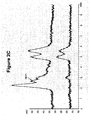
- Figures 2(a) to (c) are high pressure liquid chromatography (HPLC) spectra of the effluent of the process of Example 2 after extraction of the effluent with various sorbents according to the process of Example 3.
- HPLC high pressure liquid chromatography
- Figure 3 is a graph plotting sec-butylbenzene (SBB) conversion against time on stream in the oxidation of SBB at atmospheric pressure in the presence of 0.11 wt% NHPI, both with and without the addition of ethanol, according to the process of Example 4.
- SBB sec-butylbenzene
- Figure 4 is a graph plotting sec-butylbenzene hydroperoxide (SBBHP) selectivity against SBB conversion in the process of Example 4.
- SBBHP sec-butylbenzene hydroperoxide
- hydrocarbyl radical is defined to be a radical, which contains hydrogen atoms and up to 20 carbon atoms and which may be linear, branched, or cyclic, and when cyclic, aromatic or non-aromatic.
- Substituted hydrocarbyl radicals are radicals in which at least one hydrogen atom in a hydrocarbyl radical has been substituted with at least one functional group or where at least one non-hydrocarbon atom or group has been inserted within the hydrocarbyl radical.
- each of R 1 and R 2 is independently selected from aliphatic alkoxy or aromatic alkoxy radicals, carboxy radicals, alkoxy-carbonyl radicals and hydrocarbon radicals, each of which radicals has H 0 20 carbon atoms.
- the present invention provides a process for oxidizing a hydrocarbon to at least one of the corresponding hydroperoxide, alcohol, ketone, carboxylic acid or dicarboxylic acid.
- the process comprises contacting a reaction medium comprising a hydrocarbon with an oxygen-containing gas in the presence of a catalyst comprising a cyclic imide of the general formula (I): wherein each of R 1 and R 2 is independently selected from hydrocarbyl and substituted hydrocarbyl radicals having 1 to 20 carbon atoms, or the groups SO 3 H, NH 2 , OH and NO 2 , or the atoms H, F, Cl, Br and I, provided that R 1 and R 2 can be linked to one another via a covalent bond; each of Q 1 and Q 2 is independently selected from C, CH, N and CR 3 ; each of X and Z is independently selected from C, S, CH 2 , N, P and elements of Group 4 of the Periodic Table; Y is O or OH; k is 0, 1, or 2; 1 is
- the contacting produces an effluent comprising the desired oxidized hydrocarbon product together with unreacted imide catalyst of said formula (I).
- the effluent is then treated, before or after concentration of the oxidized hydrocarbon product, with solid sorbent so as to remove at least part, and typically to remove substantially all, of said unreacted imide catalyst from the effluent and produce a treated effluent comprising the oxidized hydrocarbon product.
- the oxidized hydrocarbon product can then be recovered for further processing.
- the unreacted imide catalyst can be recovered for possible recycle to the oxidation step.
- a polar solvent such as ethanol
- substituted or unsubstituted saturated or unsaturated hydrocarbons such as alkanes, cycloalkanes, alkenes, cycloalkenes, and aromatics, can be selectively oxidized.
- the process has utility in the selective oxidation of isobutane to tertiary butyl hydroperoxide and tertiary butanol, the selective oxidation of cyclohexane to cyclohexyl hydroperoxide, cyclohexanol and cyclohexanone and the selective oxidation to the corresponding hydroperoxides of alkylaromatic compounds of the general formula (II): in which R 4 and R 5 each independently represents hydrogen or an alkyl group having from 1 to 4 carbon atoms, provided that R 4 and R 5 may be joined to form a cyclic group having from 4 to 10 carbon atoms, said cyclic group being optionally substituted, and R 6 represents hydrogen, one or more alkyl groups having from 1 to 4 carbon atoms or a cyclohexyl group.
- R 4 and R 5 are joined to form a cyclic group having from 4 to 10 carbon atoms, conveniently a cyclohexyl group, substituted with one or more alkyl group having from 1 to 4 carbon atoms or with one or more phenyl groups.
- suitable alkylaromatic compounds are ethyl benzene, cumene, sec-butylbenzene, sec-pentylbenzene, p-methyl-sec-butylbenzene, 1,4-diphenylcyclohexane, sec-hexylbenzene, and cyclohexylbenzene, with sec-butylbenzene and cyclohexylbenzene being preferred.
- R 4 and R 5 are joined to form a cyclic group
- the number of carbons forming the cyclic ring is from 4 to 10.
- that ring may itself carry one or more substituents, such as one or more alkyl groups having from 1 to 4 carbon atoms or one or more phenyl groups, as in the case of 1,4- diphenylcyclohexane.
- the alkylaromatic compound of general formula (II) is sec-butylbenzene and is produced by alkylating benzene with at least one C 4 alkylating agent under alkylation conditions and in the presence of a heterogeneous catalyst, such as zeolite Beta or more preferably at least one molecular sieve of the MCM-22 family (as defined below).
- the alkylation conditions conveniently include a temperature of from about 60°C to about 260°C, for example between about 100°C and about 200°C.
- the alkylation pressure is conveniently 7000 kPa or less, for example from about 1000 to about 3500 kPa.
- the alkylation is conveniently carried out at a weight hourly space velocity (WHSV) based on C 4 alkylating agent of between about 0.1 and about 50 hr -1 , for example between about 1 and about 10 hr -1 .
- WHSV weight hourly space velocity
- the C 4 alkylating agent conveniently comprises at least one linear butene, namely butene-1, butene-2 or a mixture thereof.
- the alkylating agent can also be an olefinic C 4 hydrocarbon mixture containing linear butenes, such as can be obtained by steam cracking of ethane, propane, butane, LPG and light naphthas, catalytic cracking of naphthas and other refinery feedstocks and by conversion of oxygenates, such as methanol, to lower olefins.
- C 4 hydrocarbon mixtures are generally available in any refinery employing steam cracking to produce olefins and are suitable for use as the C 4 alkylating agent: a crude steam cracked butene stream, Raffinate-1 (the product remaining after solvent extraction or hydrogenation to remove butadiene from the crude steam cracked butene stream) and Raffinate-2 (the product remaining after removal of butadiene and isobutene from the crude steam cracked butene stream).
- the alkylaromatic compound of general formula (II) is cyclohexylbenzene and is produced by contacting benzene with hydrogen in the presence of a heterogeneous bifunctional catalyst which comprises at least one metal having hydrogenation activity, typically selected from the group consisting of palladium, ruthenium, nickel and cobalt, and a crystalline inorganic oxide material having alkylation activity, typically at least one molecular sieve of the MCM-22 family (as defined below).
- the contacting step is conveniently conducted at a temperature of about 50°C to about 350°C.
- Thecontacting pressure may be, for example, from about 100 to about 7000 kPa.
- the benzene to hydrogen molar ratio in the contacting step is preferably from about 0.01 to about 100.
- the WHSV during the contacting step is preferably in the range of about 0.01 to about 100.
- MCM-22 family material includes one or more of:
- Molecular sieves of the MCM-22 family include those molecular sieves having an X-ray diffraction pattern including d-spacing maxima at 12.4 ⁇ 0.25, 6.9 ⁇ 0.15, 3.57 ⁇ 0.07 and 3.42 ⁇ 0.07 Angstrom.
- the X-ray diffraction data used to characterize the material are obtained by standard techniques such as using the K-alpha doublet of copper as incident radiation and a diffractometer equipped with a scintillation counter and associated computer as the collection system.
- MCM-22 Materials of the MCM-22 family include MCM-22 (described in U.S. Patent No. 4,954,325 ), PSH-3 (described in U.S. Patent No. 4,439,409 ), SSZ-25 (described in U.S. Patent No. 4,826,667 ), ERB-1 (described in European Patent No. 0293032 ), ITQ-1 (described in U.S. Patent No 6,077,498 ), ITQ-2 (described in International Patent Publication No. WO97/17290 ), MCM-36 (described in U.S. Patent No. 5,250,277 ), MCM-49 (described in U.S. Patent No. 5,236,575 ), MCM-56 (described in U.S. Patent No.
- the molecular sieve is selected from (a) MCM-49, (b) MCM-56 and (c) isotypes of MCM-49 and MCM-56, such as ITQ-2.
- the oxidation step in the present process is accomplished by contacting the hydrocarbon substrate with an oxygen-containing gas in the presence of a catalyst comprising a cyclic imide of the general formula (I): wherein each of R 1 and R 2 is independently selected from hydrocarbyl and substituted hydrocarbyl radicals having 1 to 20 carbon atoms, or the groups SO 3 H, NH 2 , OH and NO 2 , or the atoms H, F, Cl, Br and I, provided that R 1 and R 2 can be linked to one another via a covalent bond; each of Q 1 and Q 2 is independently selected from C, CH, N and CR 3 ; each of X and Z is independently selected from C, S, CH 2 , N, P and elements of Group 4 of the Periodic Table; Y is O or OH; k is 0, 1, or 2; 1 is 0, 1, or 2; m is 1 to 3, and R 3 can be any of the entities (radicals, groups, or atoms) listed for R 1 .
- a catalyst comprising
- each of R 1 and R 2 is independently selected from aliphatic alkoxy or aromatic alkoxy radicals, carboxyl radicals, alkoxy-carbonyl radicals and hydrocarbon radicals, each of which radicals has 1 to 20 carbon atoms.
- the cyclic imide employed as the oxidation catalyst obeys the general formula wherein each of R 7 , R 8 , R 9 , and R 10 is independently selected from hydrocarbyl and substituted hydrocarbyl radicals having 1 to 20 carbon atoms, or the groups SO 3 H, NH 2 , OH and NO 2 , or the atoms H, F, Cl, Br and I; each of X and Z is independently selected from C, S, CH 2 , N, P and elements of Group 4 of the Periodic Table; Y is O or OH; k is 0, 1, or 2, and I is 0, 1, or 2.
- each of R 7 , R 8 , R 9 , and R 10 is independently selected from aliphatic alkoxy or aromatic alkoxy radicals, carboxyl radicals, alkoxy-carbonyl radicals and hydrocarbon radicals, each of which radicals has 1 to 20 carbon atoms.
- the cyclic imide catalyst comprises N-hydroxyphthalimide.
- the conditions used to effect the oxidation step vary significantly with the type of hydrocarbon substrate to be oxidized, but generally suitable conditions include a temperature of between about 20°C and about 150°C, such as between about 70°C and about 130°C.
- the oxidation step is preferably carried out at a pressure between about 15 kPa and about 500kPa, such as between 15kPa to about 150kPa.
- the product of the oxidation step may include one or more of a hydroperoxide, alcohol, ketone, carboxylic acid or dicarboxylic acid of the corresponding hydrocarbon.
- the effluent from the oxidation process may contain unreacted cyclic imide catalyst in addition to the desired hydrocarbon oxidation product.
- the oxidation effluent is treated with a solid sorbent, which is effective to remove some or substantially all of the unreacted imide catalyst, so as to produce a treated effluent which is rich in said oxidized hydrocarbon product and which contains a reduced or zero level of cyclic imide.
- the sorption process is conducted so as to reduce the level of the imide in the organic phase to less than 100 ppm, such as less than 50 ppm, for example less than 10 ppm, of the organic phase.
- This is desirable not only because the imide is expensive but also because it can have deleterious effects on downstream operations and separations such as hydroperoxide cleavage.
- Suitable solid sorbents are those having basic properties, including metal carbonates and/or hydrogen carbonates, which may be provided on a porous support, clays, ion exchange resins and metal oxides, particularly mixed metal oxides.
- Metal oxides having sufficient basic properties to be effective sorbents in the present process may be determined by the molar ratio of chemisorption of CO 2 and NH 3 over these metal oxide materials.
- CO 2 a mild acid
- NH3 a strong base
- Many factors determine the actual amount of chemisorption such as surface area of the material (often significantly affected by the metal oxide preparation method), the temperature at which the chemisorption is tested, and the pressure at which the chemisorption is tested.
- a "basic" oxide is defined as an oxide having a molar ratio of chemisorption of CO 2 per gram of metal oxide to the chemisorption of NH 3 per gram of metal oxide greater than 0.5, typically greater than 0.75, and especially greater than 1.0, when tested as described below.
- the sample After being weighed, the sample is subjected to a number of pulses (about 12 seconds/pulse) of a gaseous mixture containing helium and either carbon dioxide or ammonia until a constant weight was obtained.
- the gas mixture contains about 10 weight percent carbon dioxide or ammonia with the remainder being helium.
- the metal oxide sample is flushed with flowing helium for about 3 minutes. About 20 separate pulses of the gas mixture is used in each test.
- the increase in weight of the sample in terms of mg/g metal oxide based on the metal oxide sample weight after calcination is used to determine the moles of CO 2 or NH 3 adsorbed per gram of metal oxide.
- Metal oxides suitable for use as solid sorbents in the present process include oxides and mixed oxides of metals of Group 2, Group 3, Group 4, Lanthanide Series, or Actinide Series of the Periodic Table.
- the sorbent comprises two or more metal oxides, preferably one Group 4 metal oxide and one or more selected from Group 2, Group 3, Lanthanide Series, and Actinide Series metal oxides.
- the oxides can be prepared using a variety of methods, although generally are prepared by conversion of a suitable precursor by precipitation from solution and/or calcination. Suitable precursors include metal salts, such as halides, sulfates, phosphates, halides, nitrates, oxychlorides, alkoxides and acetates.
- the metal oxide is produced by first preparing a liquid solution comprising a salt of the metal in a solvent, such as water.
- a solvent such as water.
- the resultant solution is then subjected to conditions sufficient to cause precipitation of the solid oxide material, such as by the addition of a precipitating reagent, typically a base such as sodium hydroxide or ammonium hydroxide.
- the liquid solution is generally maintained at a temperature at or below 200°C during the precipitation, for example in the range of from about 0°C to about 200°C, such as from about 20°C to about 100°C.
- the resulting gel is preferably then hydrothermally treated at a temperature of at least 80°C, preferably at least 100°C, for up to 10 days, such as up to 5 days, for example up to 3 days.
- the resulting material is then recovered, for example by filtration or centrifugation, washed, and dried.
- the resulting particulate material is typically then calcined, normally in an oxidizing atmosphere, at a temperature of at least 400°C, such as from about 400°C to about 800°C, for up to 48 hours, such as for about 0.5 hours to about 24 hours, for example for about 1 hour to about 10 hours.
- metal oxides When two or more metal oxides are used, they may either be co-precipitated or precipitated separately and combined with each other at any later stage of processing including as calcined solid particles.
- Suitable ion exchange resins for use as the solid sorbent include those resins conventionally employed for removing acidic or basic species, such as_Amberlyst exchange resins.
- the conditions used in the cyclic imide sorption step are not closely controlled but generally include a temperature of about 10°C to about 130°C, such as about 20°C to about 80°C.
- the time of sorption may be, for example, from about 1 minute to about 30 minutes, such as about 5 minutes to about 10 minutes.
- the unreacted cyclic imide can readily be recovered by washing the sorbent with a polar solvent, for example with ethanol or acetone.
- the recovered imide can then be recycled to the oxidation step, with or without prior removal of the ethanol, since it is found that the presence of ethanol with the imide does not adversely affect the oxidation activity or selectivity of the catalyst (see Figures 3 and 4 ).
- the product of the present oxidation process depends on the nature of the hydrocarbon substrate being oxidized but in general is a hydroperoxide, alcohol, ketone, carboxylic acid or dicarboxylic acid, especially a hydroperoxide.
- the oxidation product comprises tertiary butyl hydroperoxide (which is useful as an oxidizing agent e.g., for olefin epoxidation) and tertiary butanol (which is useful as a gasoline additive).
- the oxidation product comprises cyclohexyl hydroperoxide, cyclohexanol and cyclohexanone.
- Cyclohexyl hydroperoxide is readily decomposed to additional cyclohexanol and cyclohexanone, either thermally or with the assistance of a catalyst.
- Cyclohexanol can be oxidized with aqueous nitric acid to produce adipic acid, which is a precursor in the synthesis of Nylon 6,6, whereas cyclohexanone can be converted to cyclohexanoxime which undergoes acid-catalyzed rearrangement to produce caprolactam, a precursor in the synthesis of Nylon 6.
- the product of the oxidation reaction includes a hydroperoxide of general formula (IV): in which R 4 , R 5 and R 6 have the same meaning as in formula (II).
- the hydroperoxide is sec-butylbenzene hydroperoxide or cyclohexylbenzene hydroperoxide.
- This hydroperoxide can then be converted by acid cleavage to phenol or a substituted phenol and an aldehyde or ketone of the general formula R 4 COCH 2 R 5 (V), in which R 4 and R 5 have the same meaning as in formula (II).
- Phenol can of course be reacted with acetone to produce bisphenol A, a precursor in the production of polycarbonates and epoxy resins.
- the hydroperoxide cleavage reaction is conveniently effected by contacting the hydroperoxide with a catalyst in the liquid phase at a temperature of about 20°C to about 150°C, such as about 40°C to about 120°C, and/or a pressure of about 50 to about 2500 kPa, such as about 100 to about 1000 kPa and/or a liquid hourly space velocity (LHSV) based on the hydroperoxide of about 0.1 to about 100 hr -1 , preferably about 1 to about 50 hr -1 .
- a catalyst in the liquid phase at a temperature of about 20°C to about 150°C, such as about 40°C to about 120°C, and/or a pressure of about 50 to about 2500 kPa, such as about 100 to about 1000 kPa and/or a liquid hourly space velocity (LHSV) based on the hydroperoxide of about 0.1 to about 100 hr -1 , preferably about 1 to about 50 hr -1 .
- the hydroperoxide is preferably diluted in an organic solvent inert to the cleavage reaction, such as methyl ethyl ketone, phenol or sec-butylbenzene, to assist in heat removal.
- the cleavage reaction is conveniently conducted in a catalytic distillation unit.
- the catalyst employed in the cleavage step can be a homogeneous catalyst or a heterogeneous catalyst.
- Suitable homogeneous cleavage catalysts include sulfuric acid, perchloric acid, phosphoric acid, hydrochloric acid and p-toluenesulfonic acid.
- Ferric chloride, boron trifluoride, sulfur dioxide and sulfur trioxide are also effective homogeneous cleavage catalysts.
- the preferred homogeneous cleavage catalyst is sulfuric acid
- a suitable heterogeneous catalyst for use in the cleavage of sec-butylbenzene hydroperoxide includes a smectite clay, such as an acidic montmorillonite silica-alumina clay, as described in U.S. Patent No. 4,870,217 (Texaco ), the entire disclosure of which is incorporated herein by reference.
- a solution was prepared consisting of 7.79 grams of lanthanum nitrate hexahydrate and 30 grams of deionized (DI) water. This solution was slowly added to 61.3 grams of the zirconia prepared in preparation (d) described hereinafter. The product was dried overnight at 80°C and then calcined in air at 700°C for 3 hours.
- DI deionized
- a solution was prepared consisting of 4.3 grams of yttrium nitrate hexahydrate and 30 grams of DI water. This solution was slowly added to 28.65 grams of alumina. The product was dried overnight at 80°C and then calcined in air at 700°C for 3 hours.
- a solution was prepared consisting of 7.79 grams of lanthanum nitrate hexahydrate and 30 grams of DI water. This solution was slowly added to 56 grams of silica. The product was dried overnight at 80°C and then calcined in air at 500°C for 3 hours.
- a solution was prepared consisting of 3.9 grams of lanthanum nitrate hexahydrate and 30 grams of DI water. This solution was slowly added to 28.65 grams of alumina. The product was dried overnight at 80°C and then calcined in air at 700°C for 3 hours.
- a solution was prepared consisting of 7.79 grams of lanthanum nitrate hexahydrate and 30 grams of DI water. This solution was slowly added to 56 grams of silica extrudate. The product was dried overnight at 80°C and was then calcined in air at 500°C for 3 hours.
- a solution was prepared by mixing 1000 grams of water and 310 grams of a TMAsilicate (tetramethylammonium silicate) solution containing 10% SiO 2 by weight. Another solution was prepared containing 1300 grams of water and 14 grams or lanthanum nitrate hexahydrate. These two solutions were combined with stirring. The pH of the product was adjusted to 9 with the addition of concentrated sulfuric acid. The material was placed in a polypropylene bottle and put in a steam box (100°C) for 72 hours. The material was then filtered and washed and dried at about 85°C. A portion of the material was air calcined to 500°C for three hours.
- TMAsilicate tetramethylammonium silicate
- the material was then combined with a solution of 1N ammonium nitrate in a ratio of 100ml of ammonium nitrate solution per 10 grams of silicate material. This mixture was stirred for one hour at room temperature and then filtered. This exchange procedure was repeated a total of four times with fresh ammonium nitrate solution for each time. The material was then washed with deionized water and dried overnight at about 85°C. Finally the material was air calcined at 500°C for three hours. The chemical analyses were: lanthanum - 13.6 weight %, silicon - 39.12 weight %. The surface area of the calcined material was 218 m 2 /g.
- a solution was prepared consisting of 500 grams of DI water, 45 grams of concentrated phosphoric acid, and 75 grams of concentrated sulfuric acid.
- Another solution was prepared consisting of 1600 grams of DI water and 300 grams of sodium aluminate These two solutions were combined with stirring and the pH was adjusted, if needed, to 9 with the addition of concentrated sulfuric acid.
- This mixture was then placed in a polypropylene bottle and placed in a steambox at 100°C for 48 hours. The mixture was then filtered, washed, and dried at 80°C overnight. The material was then calcined in air at 540°C for three hours and subsequently ammonium exchanged by slurrying 10 grams of the material per 100ml of 1N ammonium nitrate solution. This exchange procedure was repeated for a total of 4 times. The exchanged product was then filtered, washed, and then dried overnight at 80°C. Finally, the product was air calcined at 500°C for three hours.
- Example 2 A series of tests were run in each of which a 5 gm sample of the oxidation product from Example 2 was passed through a column which was filled with 1 gm of solid sorbent. Each test was conducted at room temperature (25°C) under nitrogen flow. The NHPI content was analyzed before and after the sorption treatment, using an HPLC analysis method. The HPLC instrument was attached to two detectors i) UV detector and ii) nitrogen conductive detector. The sorbents employed included polyvinyl alcohol supplied by Aldrich (for comparison purposes only), a basic clay (Natka Kholin, 02-77681) supplied by W. Grace., and the 5% La/ZrO 2 and 5% Y/Al 2 O 3 produced in preparations (a) and (b) respectively of Example 1.
- Example 4 SBB oxidation in the presence of NHPI and ethanol 150 gm of sec-butylbenzene (SBB) supplied by TCI America and 0.16 gm (0.11 wt%) of N-hydroxyphthalimide (NHPI) and 7.5 gm ethanol were weighed into a Parr reactor fitted with a stirrer, thermocouple, gas inlet, sampling port and a condenser containing a Dean Stark trap for water removal. The reactor and contents were stirred at 1000 rpm and sparged with nitrogen at a flow rate of 250 cc/minute for 5 minutes. The reactor, while maintained under a nitrogen sparge, was then heated to 125°C.
- SBB sec-butylbenzene
- NHPI N-hydroxyphthalimide
- Example 5 A portion of the oxidation product from Example 5 was concentrated by stripping SBB from the product at a temperature of 80°C and under 13.3 Pa (0.1 mm Hg) vacuum. A series of tests were run in each of which a 5 gm sample of the concentrated product was mixed with various metal oxide species produced in Example 1 and the mixture was heated at 80°C for 15 minutes. The NHPI content (ppm by weight) and the mixture composition were analyzed before and after the sorption treatment, using an HPLC and GC analysis methods. The HPLC instrument was attached to two detectors i) UV detector and ii) nitrogen conductive detector. The results are shown in Table 3.
- Example 7 NHPI removal from the oxidation mixture using sorbent packed column then removal of the NHPI from the column using polar solvent
- a 0.64 cm (1/4 inch) diameter by 15.2 cm (6 inch)long stainless steel column was packed with 3.3 gm La SiO2 extrudate or AlPO samples.
- the column was heated to 80°C then 15 gms of the concentrated oxidation product from Example 6 (heated to 80°C) was pumped through the column at approximately 2 cc/ min. Then the column was cooled down to 65°C and 25 gm ethanol (heated to 65°C) was pumped through the column.
- the results show the absorbent removed the NHPI from the concentrated oxidation products at 80°C, and the ethanol removed completely the NHPI from the absorbent.
- the data showed that the amount of NHPI recovered by ethanol wash is 2144 ppm.
Landscapes
- Chemical & Material Sciences (AREA)
- Organic Chemistry (AREA)
- Chemical Kinetics & Catalysis (AREA)
- Organic Low-Molecular-Weight Compounds And Preparation Thereof (AREA)
Priority Applications (1)
| Application Number | Priority Date | Filing Date | Title |
|---|---|---|---|
| EP08004146A EP2098504A1 (de) | 2008-03-06 | 2008-03-06 | Oxidation von Kohlenwasserstoffen |
Applications Claiming Priority (1)
| Application Number | Priority Date | Filing Date | Title |
|---|---|---|---|
| EP08004146A EP2098504A1 (de) | 2008-03-06 | 2008-03-06 | Oxidation von Kohlenwasserstoffen |
Publications (1)
| Publication Number | Publication Date |
|---|---|
| EP2098504A1 true EP2098504A1 (de) | 2009-09-09 |
Family
ID=39708395
Family Applications (1)
| Application Number | Title | Priority Date | Filing Date |
|---|---|---|---|
| EP08004146A Ceased EP2098504A1 (de) | 2008-03-06 | 2008-03-06 | Oxidation von Kohlenwasserstoffen |
Country Status (1)
| Country | Link |
|---|---|
| EP (1) | EP2098504A1 (de) |
Cited By (2)
| Publication number | Priority date | Publication date | Assignee | Title |
|---|---|---|---|---|
| ITMI20101159A1 (it) * | 2010-06-25 | 2011-12-26 | Polimeri Europa Spa | Procedimento per l'ossidazione di idrocarburi alchilaromatici catalizzata da n-idrossiderivati |
| WO2012134549A1 (en) * | 2011-03-28 | 2012-10-04 | Exxonmobil Chemical Patents Inc. | Production of cyclohexylbenzene hydroperoxide |
Citations (17)
| Publication number | Priority date | Publication date | Assignee | Title |
|---|---|---|---|---|
| US4439409A (en) | 1981-04-30 | 1984-03-27 | Bayer Aktiengesellschaft | Crystalline aluminosilicate PSH-3 and its process of preparation |
| EP0198351A2 (de) * | 1985-04-17 | 1986-10-22 | F. Hoffmann-La Roche Ag | Katalytische Oxidation mit N-Hydroxydicarbonsäureimid |
| EP0293032A2 (de) | 1987-05-26 | 1988-11-30 | ENIRICERCHE S.p.A. | Synthetisches, kristallines, poröses Material enthaltend Oxiden von Silicium und Bor |
| US4826667A (en) | 1986-01-29 | 1989-05-02 | Chevron Research Company | Zeolite SSZ-25 |
| US4870217A (en) | 1988-10-24 | 1989-09-26 | Texaco Chemical Company | Method for production of phenol/acetone from cumene hydroperoxide |
| US4954325A (en) | 1986-07-29 | 1990-09-04 | Mobil Oil Corp. | Composition of synthetic porous crystalline material, its synthesis and use |
| US5236575A (en) | 1991-06-19 | 1993-08-17 | Mobil Oil Corp. | Synthetic porous crystalline mcm-49, its synthesis and use |
| US5250277A (en) | 1991-01-11 | 1993-10-05 | Mobil Oil Corp. | Crystalline oxide material |
| US5362697A (en) | 1993-04-26 | 1994-11-08 | Mobil Oil Corp. | Synthetic layered MCM-56, its synthesis and use |
| WO1997017290A1 (en) | 1995-11-08 | 1997-05-15 | Shell Internationale Research Maatschappij B.V. | Oxide materials and catalyst compositions containing them |
| US6077498A (en) | 1995-11-23 | 2000-06-20 | Consejo Superior Investigaciones Cientificas | Zeolite ITQ-1 |
| JP2001192354A (ja) * | 2000-01-06 | 2001-07-17 | Daicel Chem Ind Ltd | β−アシルオキシカルボン酸又はβ−アシルオキシケトンの製造法 |
| US6720462B2 (en) | 2000-03-30 | 2004-04-13 | Degussa Ag | Method for producing aromatic alcohols, especially phenol |
| US6756030B1 (en) | 2003-03-21 | 2004-06-29 | Uop Llc | Crystalline aluminosilicate zeolitic composition: UZM-8 |
| US6852893B2 (en) | 2000-03-30 | 2005-02-08 | Creavis Gesellschaft Fuer Technologie And Innovation Mbh | Method for oxidizing hydrocarbons |
| US7038089B2 (en) | 2003-09-24 | 2006-05-02 | Respol Quimica, S.A. | Process for preparation of hydroperoxides |
| WO2007073916A1 (en) * | 2005-12-27 | 2007-07-05 | Exxonmobil Chemical Patents Inc. | Selective oxidation of alkylbenzenes |
-
2008
- 2008-03-06 EP EP08004146A patent/EP2098504A1/de not_active Ceased
Patent Citations (17)
| Publication number | Priority date | Publication date | Assignee | Title |
|---|---|---|---|---|
| US4439409A (en) | 1981-04-30 | 1984-03-27 | Bayer Aktiengesellschaft | Crystalline aluminosilicate PSH-3 and its process of preparation |
| EP0198351A2 (de) * | 1985-04-17 | 1986-10-22 | F. Hoffmann-La Roche Ag | Katalytische Oxidation mit N-Hydroxydicarbonsäureimid |
| US4826667A (en) | 1986-01-29 | 1989-05-02 | Chevron Research Company | Zeolite SSZ-25 |
| US4954325A (en) | 1986-07-29 | 1990-09-04 | Mobil Oil Corp. | Composition of synthetic porous crystalline material, its synthesis and use |
| EP0293032A2 (de) | 1987-05-26 | 1988-11-30 | ENIRICERCHE S.p.A. | Synthetisches, kristallines, poröses Material enthaltend Oxiden von Silicium und Bor |
| US4870217A (en) | 1988-10-24 | 1989-09-26 | Texaco Chemical Company | Method for production of phenol/acetone from cumene hydroperoxide |
| US5250277A (en) | 1991-01-11 | 1993-10-05 | Mobil Oil Corp. | Crystalline oxide material |
| US5236575A (en) | 1991-06-19 | 1993-08-17 | Mobil Oil Corp. | Synthetic porous crystalline mcm-49, its synthesis and use |
| US5362697A (en) | 1993-04-26 | 1994-11-08 | Mobil Oil Corp. | Synthetic layered MCM-56, its synthesis and use |
| WO1997017290A1 (en) | 1995-11-08 | 1997-05-15 | Shell Internationale Research Maatschappij B.V. | Oxide materials and catalyst compositions containing them |
| US6077498A (en) | 1995-11-23 | 2000-06-20 | Consejo Superior Investigaciones Cientificas | Zeolite ITQ-1 |
| JP2001192354A (ja) * | 2000-01-06 | 2001-07-17 | Daicel Chem Ind Ltd | β−アシルオキシカルボン酸又はβ−アシルオキシケトンの製造法 |
| US6720462B2 (en) | 2000-03-30 | 2004-04-13 | Degussa Ag | Method for producing aromatic alcohols, especially phenol |
| US6852893B2 (en) | 2000-03-30 | 2005-02-08 | Creavis Gesellschaft Fuer Technologie And Innovation Mbh | Method for oxidizing hydrocarbons |
| US6756030B1 (en) | 2003-03-21 | 2004-06-29 | Uop Llc | Crystalline aluminosilicate zeolitic composition: UZM-8 |
| US7038089B2 (en) | 2003-09-24 | 2006-05-02 | Respol Quimica, S.A. | Process for preparation of hydroperoxides |
| WO2007073916A1 (en) * | 2005-12-27 | 2007-07-05 | Exxonmobil Chemical Patents Inc. | Selective oxidation of alkylbenzenes |
Non-Patent Citations (3)
| Title |
|---|
| "Industrial Organic Chemistry", vol. 261, 1994, VCH-VERLAG, article "Industrielle Organische Chemie" |
| CHEMICAL AND ENGINEERING NEWS, vol. 63, no. 5, 1985, pages 27 |
| DATABASE WPI Week 200169, Derwent World Patents Index; AN 2001-605343, XP002493669 * |
Cited By (7)
| Publication number | Priority date | Publication date | Assignee | Title |
|---|---|---|---|---|
| US9169181B2 (en) | 2009-09-17 | 2015-10-27 | Exxonmobil Chemical Patents Inc. | Production of cyclohexylbenzene hydroperoxide |
| ITMI20101159A1 (it) * | 2010-06-25 | 2011-12-26 | Polimeri Europa Spa | Procedimento per l'ossidazione di idrocarburi alchilaromatici catalizzata da n-idrossiderivati |
| WO2011161523A1 (en) * | 2010-06-25 | 2011-12-29 | Polimeri Europa S.P.A. | Process for the oxidation of alkylaromatic hydrocarbons catalyzed by n-hydroxy derivatives |
| CN103080057A (zh) * | 2010-06-25 | 2013-05-01 | 维尔萨利斯股份公司 | N-羟基衍生物催化的烷基芳烃的氧化方法 |
| WO2012134549A1 (en) * | 2011-03-28 | 2012-10-04 | Exxonmobil Chemical Patents Inc. | Production of cyclohexylbenzene hydroperoxide |
| CN103476751A (zh) * | 2011-03-28 | 2013-12-25 | 埃克森美孚化学专利公司 | 生产氢过氧化环己基苯的方法 |
| CN103476751B (zh) * | 2011-03-28 | 2016-03-09 | 埃克森美孚化学专利公司 | 生产氢过氧化环己基苯的方法 |
Similar Documents
| Publication | Publication Date | Title |
|---|---|---|
| US8658839B2 (en) | Oxidation of hydrocarbons | |
| US8487138B2 (en) | Oxidation of hydrocarbons | |
| EP2401248B1 (de) | Verfahren zur herstellung von phenol | |
| US8658836B2 (en) | Oxidation of hydrocarbons | |
| US8445730B2 (en) | Process for producing phenol | |
| US8658835B2 (en) | Oxidation of hydrocarbons | |
| US8461397B2 (en) | Oxidation of hydrocarbons | |
| WO2012036829A1 (en) | Oxidation of hydrocarbons | |
| CN102177121B (zh) | 生产苯酚的方法 | |
| US8921609B2 (en) | Oxidation of hydrocarbons | |
| EP2098505A1 (de) | Oxidation von Kohlenwasserstoffen |
Legal Events
| Date | Code | Title | Description |
|---|---|---|---|
| PUAI | Public reference made under article 153(3) epc to a published international application that has entered the european phase |
Free format text: ORIGINAL CODE: 0009012 |
|
| AK | Designated contracting states |
Kind code of ref document: A1 Designated state(s): AT BE BG CH CY CZ DE DK EE ES FI FR GB GR HR HU IE IS IT LI LT LU LV MC MT NL NO PL PT RO SE SI SK TR |
|
| AX | Request for extension of the european patent |
Extension state: AL BA MK RS |
|
| STAA | Information on the status of an ep patent application or granted ep patent |
Free format text: STATUS: THE APPLICATION HAS BEEN REFUSED |
|
| 18R | Application refused |
Effective date: 20090926 |